




Abstract
Expanded Learning Time (ELT) measures have been implemented internationally to reduce the likelihood of academic underachievement among students at risk. The goal of this article is to examine the components of an ELT initiative aimed at supporting students at risk of academic failure in order to optimize the components that can improve its use and organization. Through a mixed method research approach, we have analyzed the experiences of 1,786 5th through 10th graders, 238 teachers and 126 instructors of a city-wide after-school initiative in Spain. This within-group study examines the design of the support, the environment, and the interactions between stakeholders as key components to optimize this support and promote equity. The results show which support components are related to greater support use. The results also suggest understanding these measures as additional support placed within an enriched support network. Implications for practice, research and policy towards this type of initiative are also discussed.
Introduction
International guidelines on inclusive education place emphasis on quality and equity by linking them as two sides of the same coin to achieve quality education and overcome educational inequalities (UNESCO, 2017). As regards inequalities in Europe, Spain is among the countries with higher rates (Marcos and Ubrich, 2017). The European Union (2010) sought to address this by reducing the school dropout rate below 10% by 2020. This was a goal that was almost achieved in 2018, when statistics showed that, on average, only 10.6% of young people (aged 18–24) in the EU had completed a lower secondary education and did not follow further education or training (Eurostat, 2019). The proportion of early dropouts in Spain, however, was the highest (17.9%) among the EU Member States and remained far from EU goals (Eurostat, 2019). These data do not point out a particular individual’s problem, but a generalized one at all levels of the education system, which has implications on policies and practices. Thus, policymakers should seriously consider measures aimed at reducing inequalities, specifically, the deployment of educational reinforcement policies targeted at students at risk of academic failure or dropping out. Educational support is essential to eliminate the barriers of each context and accelerate the learning of disadvantaged students inside and outside schools (Puigdellívol et al., 2017).
UNESCO (2005) has emphasized non-formal education as one solution to the educational needs of the most vulnerable groups. Moreover, public support policies in non-school hours play a relevant role when considering indicators that are strongly associated with the risk of school dropout – underachievement, low participation in school, low levels of attention or not doing homework (UNICEF and UIS, 2016) – because some of these internationally implemented after-school initiatives are specifically thus aimed (Jez and Wassmer, 2015; Kanchewa, et al., 2016). However, the proportion of children (aged 6 to 11) in centre-based out-of-school-hours care services differs considerably across OECD countries. The lowest participation rates are in Croatia, Spain, the United States (US) and Italy (6–8%) while the highest are in Denmark and Sweden (about 60%); the OECD average is 28% (OECD, 2018).
Educational Support in Expanded Learning Time (ELT)
The OECD (2015) defines ‘centre-based out-of-school-hours care services’ as those that provide care for school-going children outside of school hours, inside or outside the school building. The activities carried out should be aimed at some ‘care’ element, not only leisure. This out-of-school time can be supported following different structures such as small group tutoring (Cappella et al., 2017) or one-on-one tutoring (Beckett et al., 2009; Raposa et al., 2017). Jean Rhodes referred to this as mentoring, enhancing the bond formed between mentor and mentee based on empathy, trust and mutuality (Rhodes, 2002). Mentoring can be classified into two types: formal and natural mentoring. Formal mentoring is designed and monitored throughout a program while natural mentoring considers unrefined relationships between youth and older individuals within their regular network (Van Dam et al., 2018). This additional support can be placed within schools or out of school, it can be publicly or privately promoted, and found in religious/non-religious settings.
To understand out-of-school initiatives, the people who support students and their profile should also be considered. This supporting stakeholder has been named differently: mentor, monitor, instructor, big brother/sister, etc. They can be familial such as a sibling or extended family or non-parental (e.g., neighbours, teacher, friends or schoolmates) (Ahrens et al., 2010; Lahoz, 2015; Liao and Sanchez, 2016). Some studies only recognized people as mentors if they met characteristics such as being an unpaid volunteer; being at least a 20-year-old-person, five years older than the youth; somebody with a relationship with the youth for at least two years; or somebody similar to the youth with respect to ethnicity and socioeconomic background (Ahrens et al., 2010; Hurd et al., 2016; Liao and Sanchez, 2016; Raposa et al., 2017); however, peers are not usually included as possible agents of support. Mentor background may have an effect on mentoring. Van Dam et al. (2018) found a larger effect size in natural mentoring when the mentor had a helping profession (teacher, counsellor, religious leader, etc.). Comparing US and European programs, Preston et al. (2018) reported that the typical mentor in the US is a working adult while in Europe they are college students or older youths. Others have shown that there is no substantially lower effect size depending on mentor background regardless of whether they are high school or college students (Herrera et al., 2011).
Access to extracurricular activities and their design differs depending on the target population. The OECD report on out-of-school care services shows that there are statistically significant differences in participation rates across income groups; children from relatively advantaged socioeconomic backgrounds are most likely to use centre-based out-of-school-hours care services (OECD, 2018). Differences according to socioeconomic status (SES) not only depend on the availability and access to extracurricular opportunities, but inequalities can also be found in the type of activity or the main purpose of the extracurricular initiative. Its design can be different depending on the SES of students to whom the programs are addressed at as shown in Roda (2017): depending on the school SES, schools were offering creative extracurricular activities or school reinforcement. Thus, in low SES contexts, after-school programs tend to be focused on overcoming challenges and obstacles (Guest, 2018). This left the most vulnerable students without the most imaginative or according-to-interests’ activities, not to mention the effects that this sort of discrimination can have on student’s self-efficacy. However, other studies highlighted that with the mere provision of successful learning experiences within the ELT program, the staff perceived improvements in students’ self-efficacy (Manzanares and Ulla, 2012).
Publicly run after-school programs are usually aimed at reducing school failure and improving academic achievements and social and emotional development (Durlak et al., 2010; Jez and Wassmer, 2015). The target population are usually children and youths at risk (including academic, behavioural, psychosocial, poverty, homelessness, themselves or their parents being incarcerated, of a racial, ethnic or sexual minority and refugee or migrant youth) (Preston, Prieto-Flores and Rhodes, 2018). However, there are contextual differences: the comparative study of Preston and colleagues (2018) showed that most programs in the US have focused on addressing the needs of SES youth and fostering positive outcomes, while in Europe programs are commonly addressed to migrants and refugees, with social inclusion goals. Nonetheless, in Europe, when extracurricular activities are aimed at homework support and remedial education, students tend to come from low SES backgrounds as well (Lahoz, 2015; Manzanares and Ulla, 2012; Steinmann et al., 2019; Ulla and Manzanares, 2014).
This focus on specific groups of so-called ‘vulnerable students’ can have negative connotations as it labels them (Dougherty, 2015); not to mention the negative effects from supporting students in homogeneous groups (Francis et al., 2017; McGillicuddy and Devine, 2020), effects that might also arise in out-of-school programs. Without underestimating this sort of level grouping, after-school programs provide additional opportunities to learn in reduced ratios, a support measure considered in studies on support policies (Pedró, 2012). Rodríguez et al. (2012) studying an ELT program reported an increase in interactions between students and learning acceleration, as Vygotskian theories support. The amount of learning time is important (Fitzpatrick et al., 2011), although it is not the cause of student underachievement or risk of early school leaving. The provision of time alone would not improve students’ trajectories; what matters is the quality of the time: how programs are implemented and structured (Leos-Urbel, 2015).
Research on quality of after-school programs can be organized following the three elements proposed by Smith et al. (2010): (a) ensuring a supportive environment, (b) providing opportunities for purposeful engagement, and (c) fostering structured interactions between staff and supported youth. The first refers to the structure of the program and how the group is managed to achieve a respectful climate (Cross et al., 2010), that is, the classroom ecology with its dynamics and a welcoming atmosphere (Cappella et al., 2017; Dawes and Larson, 2011). To achieve this, programs should be properly designed. Regarding after-school design, the research of Durlak et al. (2010) is relevant, despite being focused on programs aimed at fostering personal and social skills, as their recommendations can be implemented in other types of programs. They proposed the ‘SAFE’ criteria that consists of (a) providing a sequenced set of activities to foster specific goals, (b) fostering active forms of learning, (c) ensuring that program components are focused on the goals, and (d) explicitly targeting them.
The environment has an impact on student engagement (Wang and Holcombe, 2010), contributing to purposeful engagement (Smith et al., 2010). Cognitive engagement (Vance, 2016) and active participation ― including higher-order decision-making ― require programme flexibility and relevant as well as target appropriate activities (Barron, 2006; Pierce et al., 2010). Staff should encourage youth to take the lead in selecting and implementing activities, and in setting goals, and also consider the priorities of the families, schools and the program (Larson and Walker, 2010). The third element highlights the importance of organizing the interaction between youths as well as the youth-staff interaction (Pierce et al., 2010; Smith et al., 2010). Several investigations emphasize establishing close and caring relationships with non-parental adults (Kanchewa et al., 2016; Rhodes, 2005). This also has effects on self-reported engagement and learning (Grossman et al., 2007).
Focusing on the effects, investigations have reported different benefits related to extracurricular participation, such as the reduction of school dropouts (Neely and Vaquera, 2017), educational attainment (Haghighat and Knifsend, 2019) and school engagement (Forneris et al., 2015). Most research is focused on the student’s achievements and, despite studying different kinds of programs and considering different moderators, its effect size is small (Dubois et al., 2002; Thompson et al., 2016; Van Dam et al., 2018). Raposa et al. (2019), considering the empirical guidelines derived from universal prevention programs for youth, found effect sizes between medium to moderate. There are other studies that found little or no links between the amount of participation and student outcomes (Roth et al., 2010; Steinmann et al., 2019).
While accountability is important to track programs, assess their impact and improve them, further detail about experiences is needed to better understand and change what has been quantitatively found. As has been highlighted previously, ELT initiatives are one of the measures implemented to overcome inequalities, but this goal is still not achieved in Spain. Thus, support policies and practices such as ELT initiatives should be specifically studied. Prior data pointed out access barriers, but presence itself does not guarantee inclusion and equity (UNESCO, 2017). It is, therefore, important to examine the quality of the additional time provided, as well as, how programs are implemented and structured. Moreover, despite being a measure implemented in several countries (OECD, 2018), most of the existing research on out-of-school time comes from the US (Preston, Prieto-Flores and Rhodes, 2018). This study will contribute to closing these gaps in the literature. The goal of this article is to examine the components of an ELT initiative aimed at supporting students at risk of academic failure in order to optimize the components that can improve its use and organization. This study will provide insight into a Spanish ELT initiative, its key components, and how they relate to each other from the perspective of its protagonists. To this end, we analyze the experiences of the three main stakeholders of a city-wide after-school initiative in Barcelona, Catalonia (Spain). The following research questions guided this study:
How is support in ELT perceived by teachers, instructors, and students considered to be at risk of failure and/or from low SES families?
Which are the relationships between support components (in terms of design, support environment and interaction) according to each stakeholder (teachers, instructors and students)?
Are there differences between teachers and instructors in terms of how they perceive these support components?
What is seen as optimal to provide support in ELT from students’, teachers’ and instructors’ perspective?
Context and ELT initiative characteristics
The Spanish state is administratively divided into 17 regions with their own education legislation (e.g. Catalonia, Andalucía, etc.). The Catalan Education System promotes the right to a quality education favouring inclusive education, equal opportunities and language immersion, establishing Catalan as the vehicular language for learning (Catalunya, 2009). Despite having a decree-law on inclusive education that articulates the support measures addressed to all students (Catalunya, 2017), out-of-school initiatives are not included. ELT public support programs in Catalonia are usually run by municipalities, regional councils or non-profit organizations (Collet-Sabé and Martori, 2018; Longás et al., 2013). As happens at the state level and in other regions, ELT initiatives are usually focused on homework support and remedial education aimed at students with low performance in poverty contexts (Lahoz, 2015; Manzanares and Ulla, 2012). But the scarcely available research on the matter created some concerns about these designs (Collet-Sabé and Martori, 2018; Rodríguez et al., 2012).
This study analyses the support provided in a city-wide ELT initiative with explicit educational purposes run by the Barcelona Education Consortium (the education board) implemented in Barcelona (Catalonia). The three main stakeholders involved are 5th- to 10th-grade students selected by schools for being at risk of failure and dropout, their instructors and form teachers. The ELT support is free for the students and also rewards instructors through grants. Instructors are the stakeholders that support students in this ELT initiative (non-teaching staff); they should be college students, as is characteristic of European programs compared to those in the US (Preston et al., 2018). The same instructor can get up to two grants to work with two different groups on alternate days. Each group of students is supported two days a week after class (three hours per week) in their high school building. There are several school and high school groups in each high school building managed by a coordinator, forming a team. Lastly, teachers, who are the ones mainly in charge of the students during school hours, are meant to collaborate in this ELT initiative by selecting the students and getting their family’s agreement, communicating information to instructors and families and monitoring the students.
Methods
A mixed-methods approach was used to investigate how the different stakeholders involved (teachers, instructors, and students) perceive the support provided, what aspects worked well and in what ways they did so. The analysis was based on the main support components identified in previous studies (e.g., Durlak et al., 2010; Pierce et al., 2010; Smith et al., 2010; Yohalem and Wilson-Ahlstrom, 2010).
Participants
There were 1786 5th to 10th-grade students (10–16-year-olds) in the sample: 65.62% of them were in secondary school. Regarding nationalities, 63.8% of the participants self-reported as being Spanish, 21.5% South or Central American and 8% Asian. There is an over-representation of immigrant students in the ELT program with respect to Barcelona’s student population, where 12.14% is a foreign national (Department of Education, 2017). One hundred and twenty-six instructors participated in this study. Many instructors were studying or had completed education-related studies at the university (57.94%), although 51.59% had never been responsible for student groups. The study also counted with the participation of 238 teachers, of which 81.93% (n = 195) were working at a secondary school level. Finally, 43 teams of several instructors (of some primary schools and a secondary school) and a coordinator participated in the debrief meeting as to which components of the program worked well and which ones should be improved.
Instructors provided information on 176 ELT support groups. Among the participating groups, there were 66 of primary education and 110 of secondary education. Groups were organized mainly according to academic years (52.84%), although there were inter-level groups between the third and fourth year of secondary school and primary school.
The participation in this study was voluntary and participants were promised anonymity and confidentiality. The research goals were explained as well as the ethical guidelines published by the European Commission (2013a) and were agreed to by the participants before completing the instruments.
Measures
Data collection was done through four instruments. For students, we utilized a questionnaire developed by the Barcelona Education Consortium and applied annually to assess the ELT program studied. The questionnaire consisted of 54 close-ended questions (13 Likert scales with four response options) and 22 open-ended questions organized into three blocks: (a) demographic data, (b) habits and expectations and (c) support assessment. For the purpose of this study, we only focused on the questions regarding the support (9 Likert scales, for example, ‘How much do you think you have used this educational support?’ and 3 open-ended questions such as ‘Value the support received in the program and explain why’). Cronbach’s alpha showed an internal consistency of 0.767 for the 12 items.
The questionnaires for teachers and instructors were developed by the researchers for this study, based on previous investigations about after-school program quality (Pierce et al., 2010; Smith et al., 2010). Yohalem and Wilson-Ahlstrom’s (2010) synthesis of different assessment tools used in the field also guided the design of both questionnaires. From this synthesis, the components considered were routine and program structure, environment, engagement, social or behavioural norms and relationships between adults and students. Content validation was carried out by three experts in the field, the seven general coordinators and the person responsible for the ELT program during the pre-test. All comments regarding wording, answer choices and length were considered. They were also asked about the instrument’s content in terms of its relationship with their everyday reality. The final instructor questionnaire was 35 close-ended questions (23 Likert scales [0–10], example, ‘The program has been a place where the students have been able to work’ and 12 multiple choice ‘What support would you have needed to improve your educational support practices?’ and 3 open-ended questions). All the scales showed internal consistency (support deployment: α = 0.895, teamwork: α = 0.815, communication: α = 0.812, institutional procedures: α = 0.681 and support effects: α = 0.768).
The final questionnaire for teachers included 29 closed-ended questions [25 Likert scales (0–10), example, ‘Value how the relationship between your students and the instructors has worked’, four multiple choice] and 4 open-ended questions, example, ‘Among all done with the students within this program, what has been the most beneficial aspect for your students?’ The internal consistency of each dimension was calculated with Cronbach’s α: support deployment (α = 0.869), communication (α = 0.905), institutional procedures (α = 0.643) and support effects (α = 0.894). In addition to the questionnaires, the debrief meeting report of each ELT team was a source of qualitative data. These documents considered aspects that according to each team worked and that they wanted to maintain, and those that should change or improve.
Procedure
The student questionnaire was administered online and was completed at the schools during one of the final support sessions. The questionnaire for teachers was distributed on paper and collected during the debrief meeting by the coordinators. The questionnaire for instructors was administered online at the end of the support sessions. Completion time for all questionnaires was between 15 to 30 minutes. Finally, the reports of the debrief meeting were written by each team (instructors and coordinator) after the corresponding debate at the debrief meeting of the program. They wrote these conclusions in a one-page table, but extra space was provided when needed. The person responsible for the program collected all the debrief meeting reports and provided a copy of them to the researchers.
Data analysis
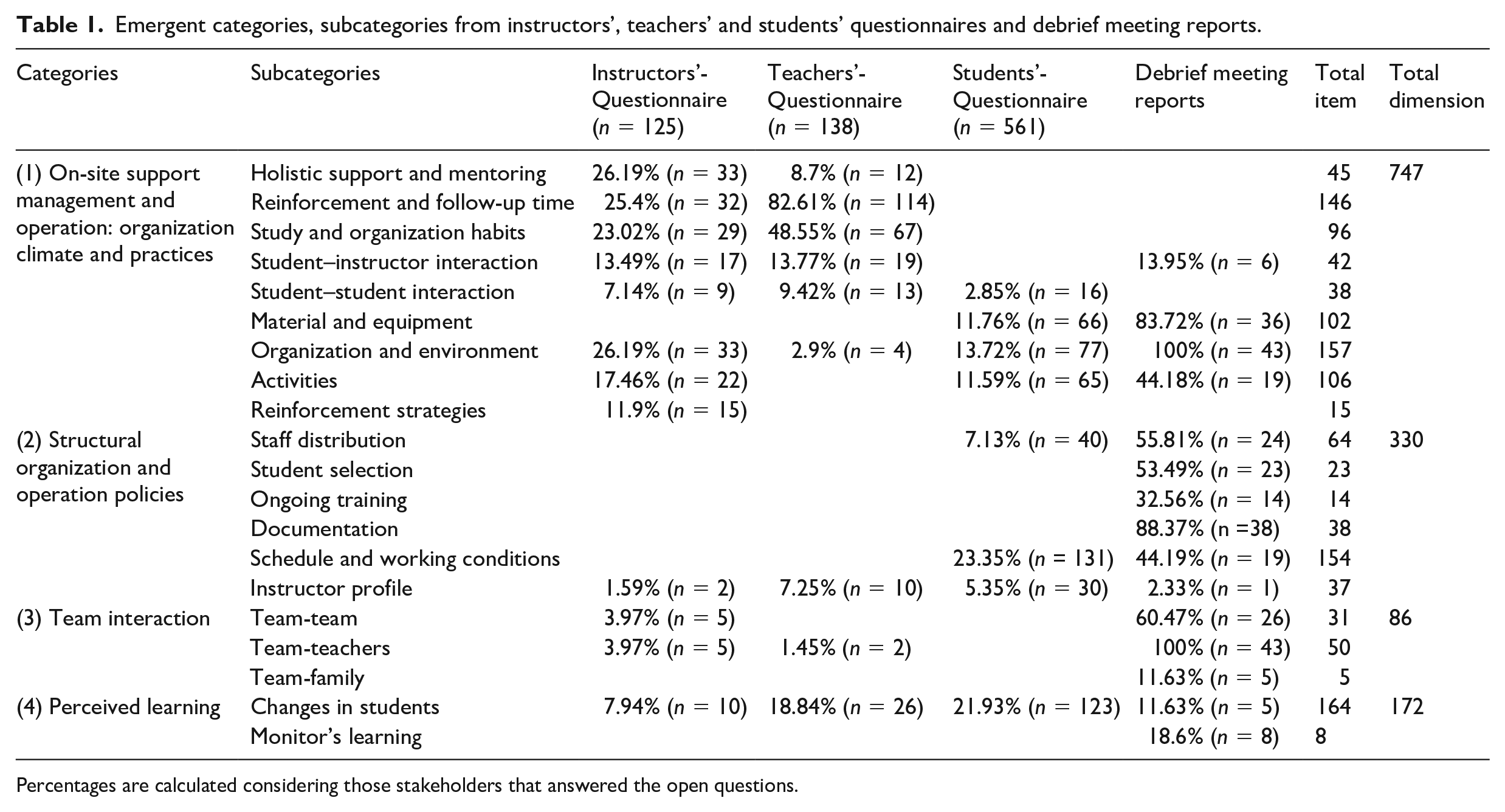
Quantitative data were analyzed with the software SPSS v. 24, which was used to compute descriptive statistics, Mann-Whitney U Tests and Spearman correlations. The analysis of the open-ended questions of the questionnaires and the reports of the debrief meeting were carried out with the Nvivo 11 Pro program, with an inductive procedure using categorical coding. After having analyzed 50% of the dataset, the first author proposed a coding scheme with categories and subcategories. The team discussed their disagreements to reach consensus on each set of coded text, obtaining internal validity. This ensured a shared understanding of the categories, subcategories and their meaning. The categories that emerged were consistent with the dimensions from the quantitative analysis. These categories and subcategories are presented in Table 1.
Emergent categories, subcategories from instructors’, teachers’ and students’ questionnaires and debrief meeting reports.
Percentages are calculated considering those stakeholders that answered the open questions.
Three kinds of triangulation were applied to achieve rigour and a better understanding of support components: (a) methodological triangulation, using quantitative and qualitative methods; (b) data triangulation, studying pieces of evidence from four data resources; (c) and stakeholder triangulation, providing an insight from their own perspective (Trainor and Graue, 2014).
Results
In each section, we present the results of the quantitative and qualitative procedures from the four instruments in an integrated way, beginning with descriptive statistics, followed by Spearman correlations and Mann-Whitney tests, ending with the qualitative part. In addition, results are also organized according to instructor, teacher and student data, following the same order in each section. Data cited along the results are compiled into seven tables.
ELT support orientation and design
The first part of the analysis focused on how instructors, teachers, and students perceived the design and goal of the ELT program. For this purpose, we looked at what activities were performed in the ELT groups and how their effects were perceived by all involved parties. Accordingly, instructors reported that their main activities were to support students with their tasks (93.75%) and exams (82.95%), followed by other topics of concern (68.75%). They also carried out activities related to what students worked on during school lessons (42.61%), activities based on their interests and needs (39.77%) and study habits (42.04%). Conversely, according to teachers (99.15%), the most important thing of the ELT initiative was that it provided a space where students could be helped (M = 9.19; SD = 1.16).
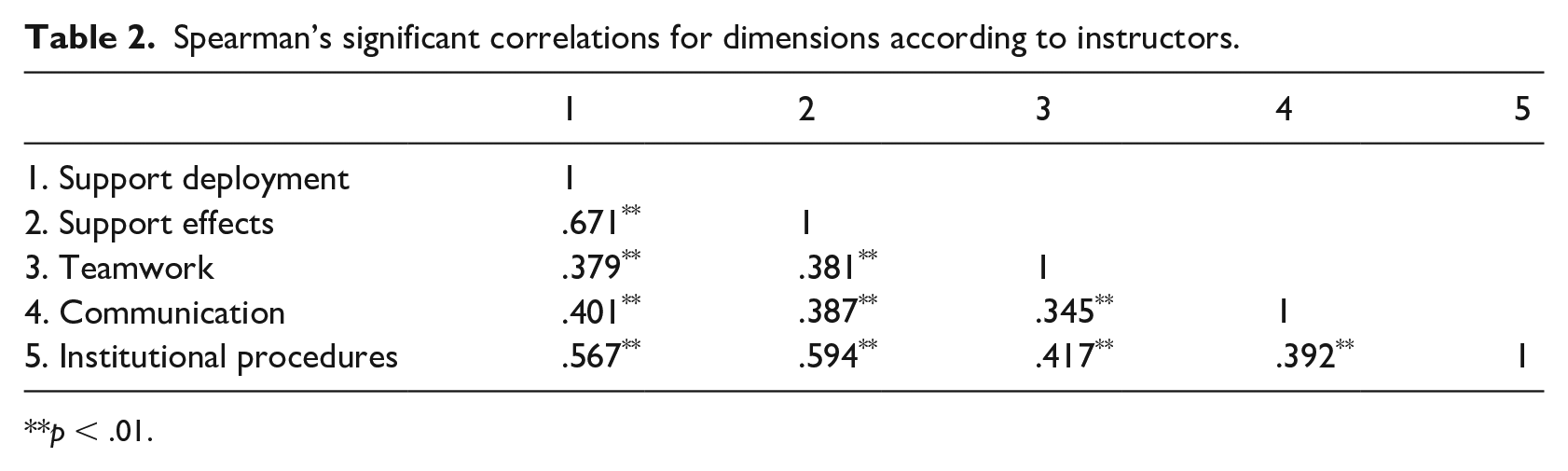
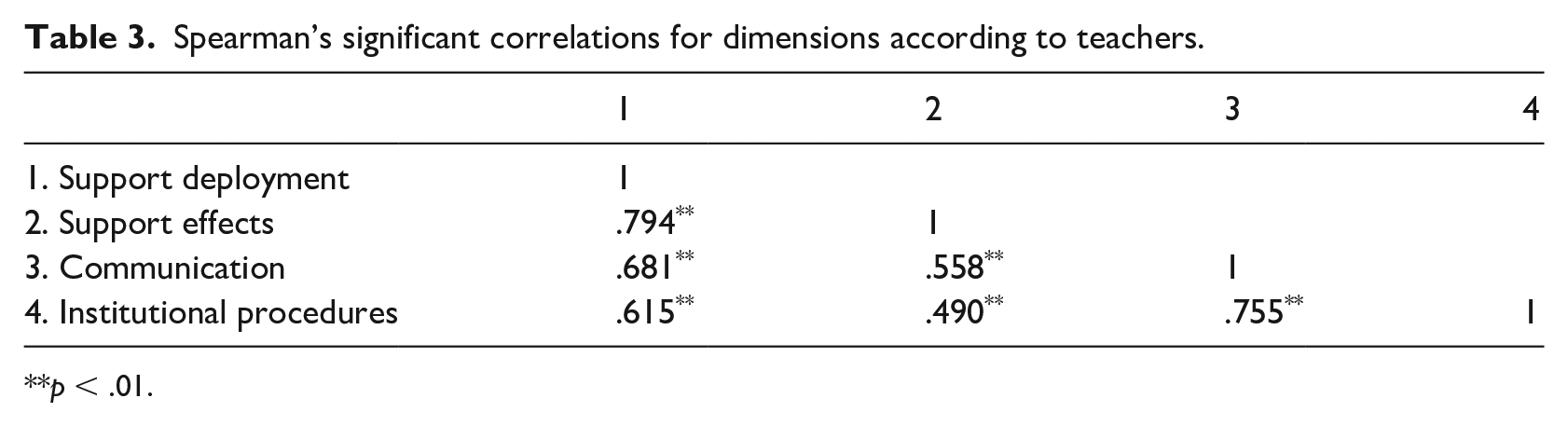
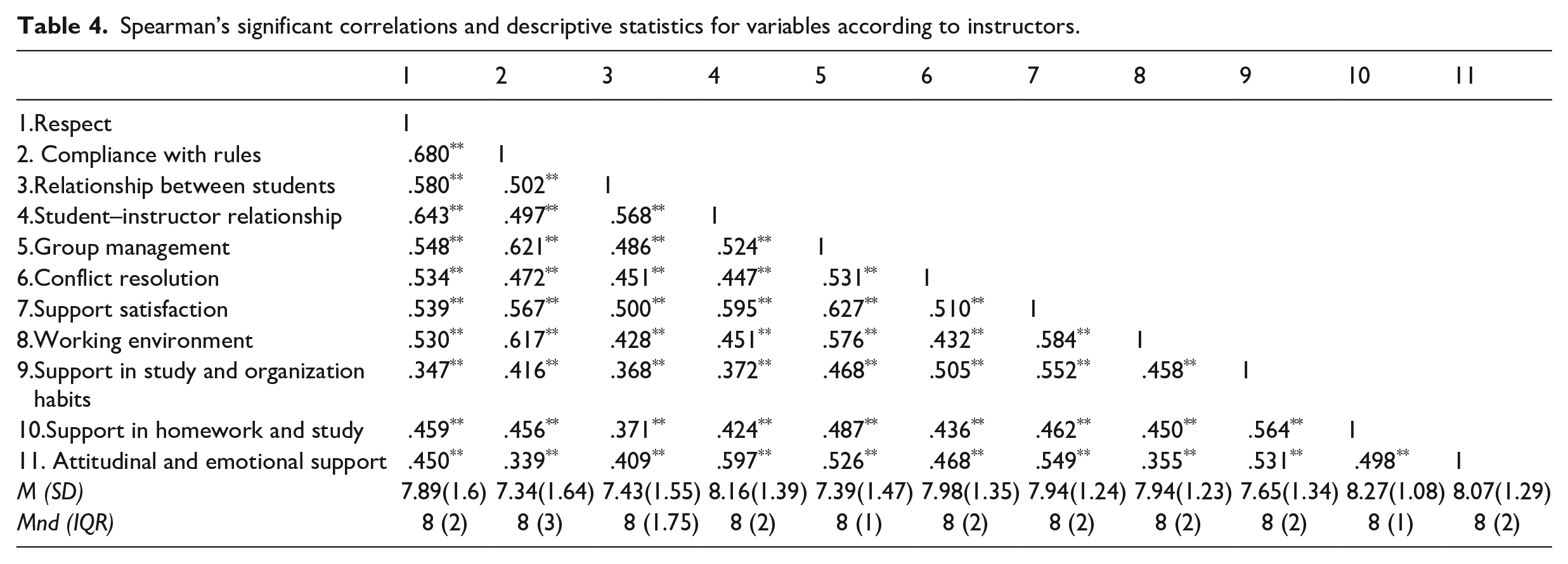
Furthermore, to understand what makes the ELT initiative effective in terms of student improvement, a series of Spearman correlations were carried out. Both instructors and teachers perceived that support deployment was the most relevant dimension with respect to support effects (see Table 2 and 3). Delving into the dimension support effects, teachers and instructors equally valued the support provided in homework and study, U = 19237, p = 0.71, r = .02. However, instructors valued attitudinal and emotional support more than teachers did, U = 16211, p = .01, r = .13, while teachers valued more than instructors the support provided in study and organization habits, U = 16611, p = .01, r = .13 (see Tables 4 and 5 for the corresponding medians and IQRs).
Spearman’s significant correlations for dimensions according to instructors.
p < .01.
Spearman’s significant correlations for dimensions according to teachers.
p < .01.
Spearman’s significant correlations and descriptive statistics for variables according to instructors.
Spearman’s significant correlations and descriptive statistics for variables according to teachers.
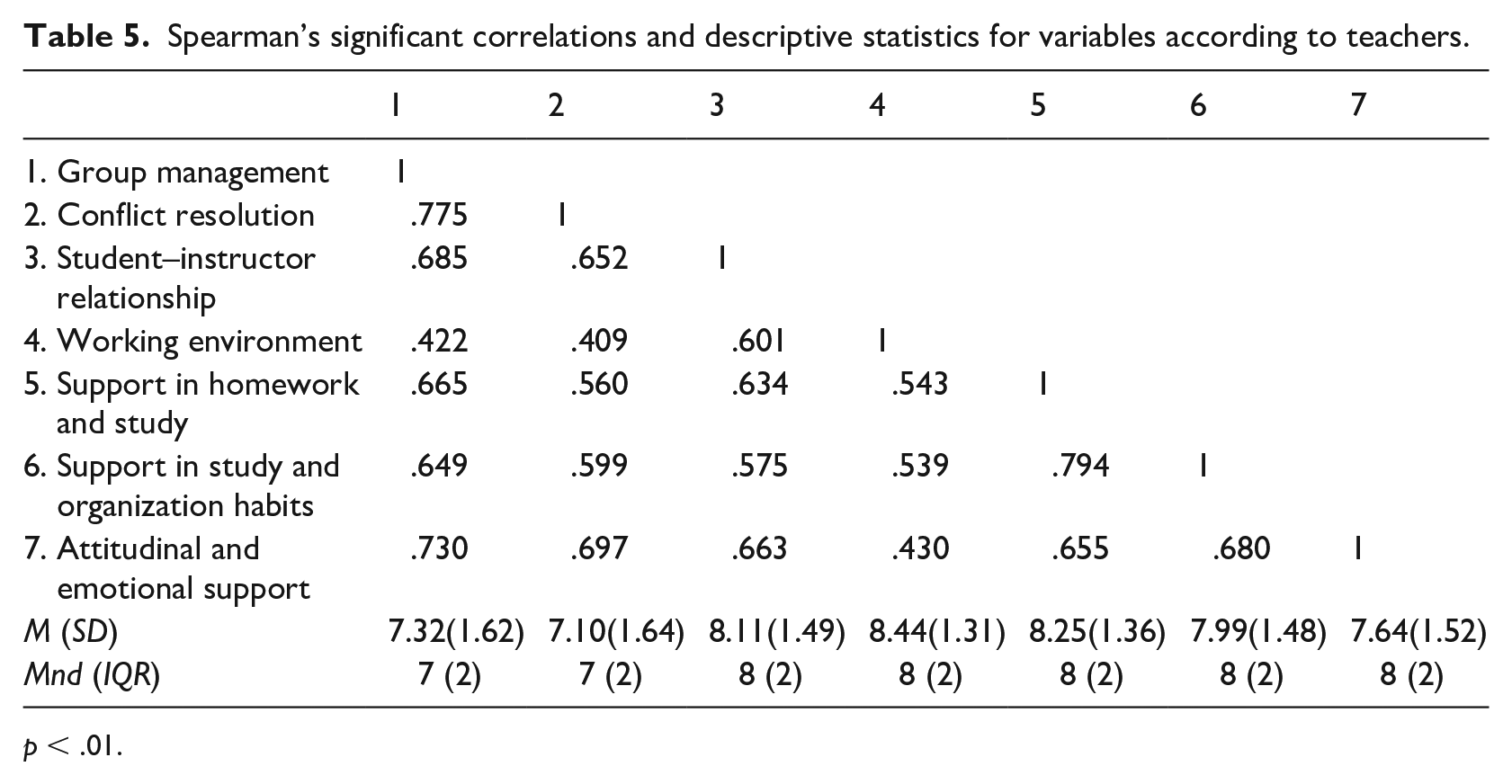
p < .01.
Finally, analyzing the students’ perception of the ELT initiative, it is worth noting that the vast majority of students (91.77%) positively valued the support received. Of these, 54.4% reported that the support helped them ‘a lot’ and 37.4% ‘enough’. What they valued most of the academic support was that it clarified concepts (59.2%) and that instructors helped them plan (39.1%). However, when asked about their use of the support provided, most of the students (59.7%) said they used the support ‘enough’. Delving further, we see that the items that maintain higher positive correlations with support use are the perception of grade improvement and enjoyment of attendance (see Table 6), which indicates that these are key components to keep them more engaged.
Spearman’s significant correlations and descriptive statistics for variables according to students.
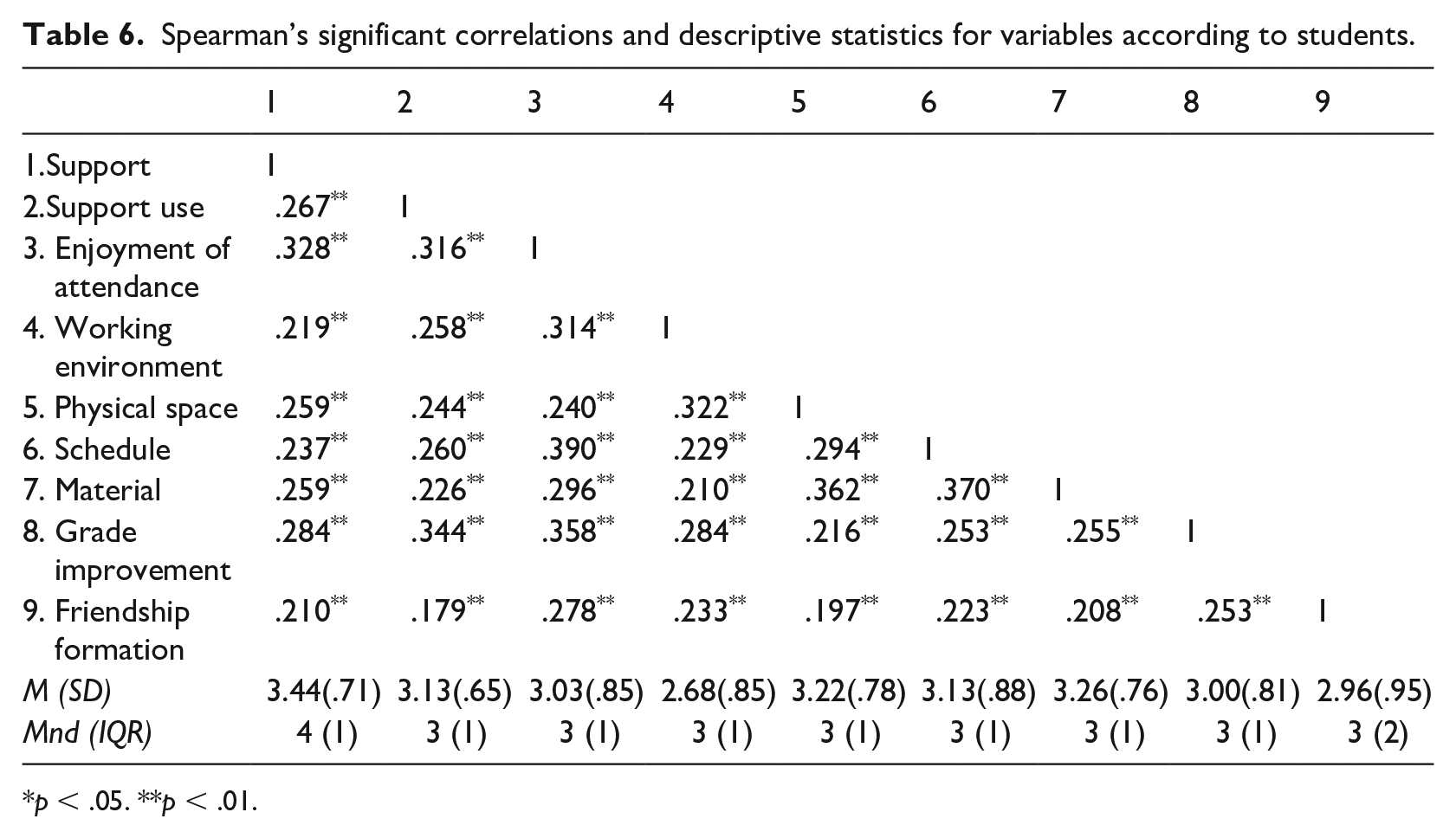
p < .05. **p < .01.
The qualitative analysis reinforces this observation since 21.93% of the 561 students that answered how the support could be improved reported self-attributed actions – e.g., I must ‘work harder’, ‘take more time to study’, ‘behave better’, etc. (Table 1, changes in students) – denoting improvements in their disposition towards learning. The acknowledgement of self-responsibilities showed the presence of internal and controllable attributions that are more favourable to learning. In order to optimize support, it is essential to consider these conditions and encourage students to perceive the usefulness of what they do, and to ensure awareness of their short- and long-term results thereby fostering high expectations about themselves. This must be considered as a strategy in this type of support. In fact, intra-psychological changes are also reported as the most beneficial by some teachers (7.97%) and instructors (4.8%): It is necessary to emphasize the positive self-concept that each of them has achieved. Now they know what they are better and worse at and where they need more help (Instructor-27) Students are more aware that without working it’s difficult to achieve their goals. (Teacher-56).
However, as stated previously in the quantitative part, the mere provision of time and space for students to study is highlighted as an important opportunity by instructors (25.4%) and teachers (82.61%): It is very beneficial to have a time during the week to devote to study and to do homework assisted by an instructor. Many [students] need it because at home they do not do their homework because they either do not understand or they do not have anyone to be with them. (Instructor-77).
Nevertheless, once they have this support, this extended learning time should be properly used to have a better impact on students. In addition to supporting students in doing homework and studying for exams, instructors (23.02%) and teachers (48.55%) expressed that support in planning and organization of tasks is very important, for example: ‘the most beneficial thing of what is done is to create the habit of working and studying, prioritizing tasks, choosing and doing them’ (Instructor-82).
The type of activity carried out is a relevant structural component of the ELT support (Table 1). For instance, some students (11.59%) would improve activities to make them more diverse and entertaining: for one student ‘Improvement would be to do half an hour of homework and the rest of the time doing academic things but in learning corners, something more interesting’ (Student-1134), for another ‘Improvement would be to make more didactic and dynamic activities, when we don’t have any homework, not wasting time’ (Student-1676). In 44.18% of the reports of the debrief meeting, the teams also proposed to improve activities by reporting more active designs as good practices to implement: ‘To propose activities or sessions aimed at working the content through leisure’ (Team-20). In this sense, in 34.66% of the groups, instructors expressed that they needed to have prepared material while 29.54%, expressed needing an initial training focused on learning better routines and dynamics. In fact, this ELT program did not give time for instructors to prepare the sessions.
Having clear goals, dynamics and activities, the qualitative analysis also showed the importance that students give to the schedules (23.35%) and space in which the support is provided, insisting on equipment and materials (11.76%) as support components to restructure. Clear examples of this were the students who claimed they did not have enough time to complete homework and study or to eat or rest between school and after-school time.
Supportive environment
The following step was to further analyze how support is implemented. For this purpose, Spearman correlations were used to identify the relationships between the items within support deployment. Considering the instructor sample, working environment correlated strongly with compliance with rules and group management (see Table 4). To properly provide support, instructors should create a safe environment where students can concentrate and work. Remarkably, group management was the item within the support deployment dimension highest correlated with the support provided in homework and study. Group management was also the item highest correlated with instructor satisfaction. However, in more than half of the groups (56.9%) instructors would improve the organization and group management carried out. In this sense, they reported needing initial training focused on group management and behaviour (32.54%), ‘ad hoc’ training according to the needs of the group (27%) and advice when there were conflicts (19.05%).
In the teacher sample (Table 5), in contrast, the working environment was more highly correlated with instructor–students relationship than with classroom management. In fact, the worst valued items by them were classroom management and conflict resolution. It is noteworthy that group management was the item among teachers that maintained the highest positive correlations with the support provided in homework and study, study and organization habits, and attitudinal and emotional support. Thus, group management is a fundamental component for achieving the goals of this ELT initiative.
A series of Mann-Whitney tests indicated that there were statistically significant differences in the perception of the working environment, which was higher for teachers than for instructors, U = 15555.5, p = .000, r = .19. In contrast, the assessment of conflict resolution was higher in instructors than in teachers (U = 11296, p = .0 r = .3). Nonetheless, teacher perceptions of group management did not seem to differ from that of the instructors’, U = 14461.5, p = 0.58, r = .03 (see Tables 2 and 3 for the corresponding medians and IQRs).
Despite its importance, the working environment was the least valued item among students: 8.8% considered that it did not help them in any way, while 30.6% considered that it helped them a little. Among students (Table 6), the items that correlated highly with the working environment were enjoyment of attendance and the perception of grade improvement, in addition to the adequacy of the physical space where support happened.
The qualitative data provides insight into how to achieve a favourable support environment (sub-category organization and environment, Table 1). Participants highlighted group management aspects such as the importance of setting limits, changing groupings to promote collaborative learning among peers, encouraging students to adopt the role of the instructor with the younger students, or decreasing the ratio. There were also references related to institutional policies regarding staff distribution such as increasing the number of instructors or retaining or maintaining stable teams (64 logs, 7.13% of the students and in 55.81% reports). In 15.34% of the groups, instructors would put an extra instructor inside the classroom, a need that some students also perceived: It would be important that there were two instructors in a classroom because sometimes it happens that one person needs help, and another person as well, and the instructor cannot be everywhere (Student-1094)
The organization and group management are essential components for the functioning of this type of support. Given the complexity of its deployment, when training and support for instructors are not ensured, the quality of the support is affected, since the instructors are not expert professionals. Thus, this has implications at group level as well as at public administration level.
Interpersonal relationships for educational support
As the instructors were the stakeholder responsible for supporting students during this extended time, they were asked about more specific items such as respect, the relationship between students and compliance with the rules. These three items, along with attitudinal and emotional support, group management and working environment, strongly correlated with instructor–students relationship (Table 4). A positive environment is not only achieved through adequate group organization and classroom management. As shown in Table 5, teacher assessment of group management, conflict resolution and the attitudinal and emotional support were highly associated with instructor–students relationship. The interpersonal bond is essential to achieve a supportive environment in which students feel comfortable in general and with their peers so that they can concentrate and be empowered to ask questions: It has been very beneficial to maintain a good environment in the class and a very good personal interaction to make students have confidence in us to express their concerns and come ask for our help. (Instructor-106)
The transcendence of interpersonal relationships is also reinforced by the 42 logs on the student–instructor relationship and the 38 on student–student relationships (table 1). In fact, instructors considered that their interaction with students should improve in 31.03% of the groups. For their part, students highlighted interactive qualities such as the patience of their instructor (53.5%) and the ability to make them feel comfortable during sessions (38%). It is evident that support is not merely academic. Some teachers (8.7%) and instructors (26.19%) reported that the comprehension of the student as a whole was the most beneficial part of the ELT support: The most important thing is talking and listening to them. Knowing what moves them to behave better or worse and talking about it; regardless of their homework, if they have someone who listens to them and can provide solutions, they value it much better. (Instructor-114). The most beneficial thing of this initiative is the attention, support and guidance that students receive because these students have often complicated family situations. (Teacher-236)
Despite the concerns about having non-professionalized staff supporting vulnerable students, some instructors (1.59%), teachers (7.25) and students (5.35%) positively highlighted the fact that support was offered by young people who were not their teachers or family members, as they were another reference or model to follow: I think that what benefits students the most is to have the opportunity to talk without problems about what concerns them without fears, from a more horizontal perspective compared to the relationship they have when they talk to teachers. (Instructor-10)
Space where, in addition to being helped, one can be heard, understood, emotionally supported and accompanied: ‘I think that the most important thing I do is believe in them when they feel that nobody has done it with enough sincerity’ (Instructor-126). In 15 groups, instructors claim to use positive reinforcement strategies to improve intrapersonal aspects such as motivation, self-concept, goals or work awareness. For an instructor ‘The most beneficial thing has been to help them see that if they make an effort, they are capable of everything they set their minds to’, contributing to generating a more favourable self-image and increasing their predisposition to learn.
Teacher–instructor interaction
In addition to the instructor–student relationship, to ensure coherent and consistent support, the interrelation of school and after-school settings is fundamental. In this regard, 58.73% of the instructors indicated in the questionnaire that they would have offered better support if they had had more contact with teachers, while some of them (63.07%) reported that school-program communication needs to be urgently addressed. Consistent with this result, instructors valued the item ‘ordinary communications by the centre’ the least.
A Mann-Whitney test indicated that ordinary communications by the program, ordinary communications by the centre and meetings were significantly greater for teachers than for instructors (see Table 7). In conflict situations, instructors perceived significantly greater communications by the program than teachers. Both stakeholders only had similar perceptions about communications regarding conflict by the centre.
Descriptive statistics and Mann-Whitney U Tests for teacher–instructor interaction variables.
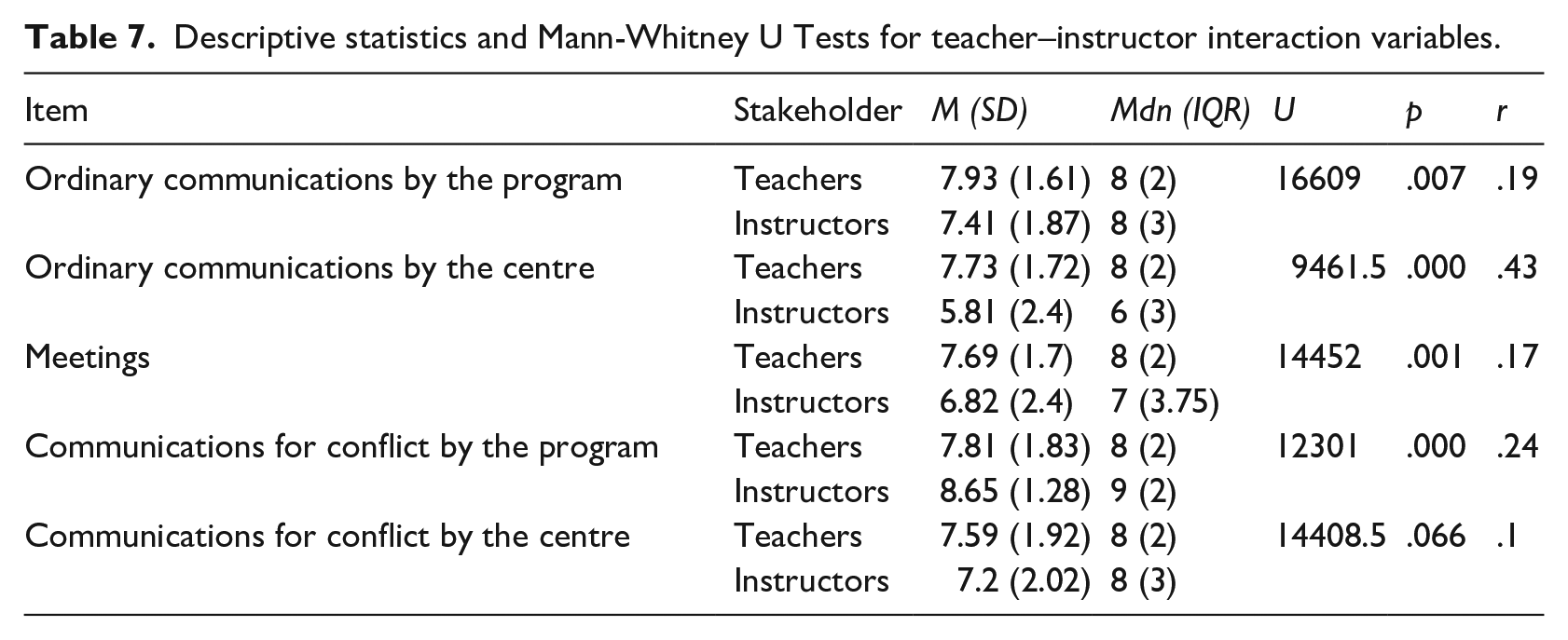
We observe that instructors and teachers value the transfer of information related to conflict situations more than ordinary issues. The interaction between teachers and instructors was a major concern: it was the most recorded item in debrief meeting reports, emerging in the conclusions of all teams on repeated occasions (Table 1). Overall, we see a predominance of interactions due to restrictive motivations in order to solve problems. To improve support, it would be important to clarify the kind of communication needed, sharing objectives, expectations and concerns. Thus, stakeholders would be coordinated, fluidly exchanging relevant information, and identifying support as a resource from the centre itself: The most beneficial thing has been the support that the school staff has given us when there has been conflict. The teacher made them [the students] see that this extended support is part of the regular functioning of the school and that rules must be respected in the same way. (Instructor-17) It is important to agree on what will be done during the support time with schools. We have to clarify expectations because, otherwise, they [teachers] do not know what we do and can expect other things that, on the other hand, we could do. (Meeting-Team-10)
The communication and interaction between instructors are also important in support practices. What instructors value most positively in support execution is the relationship with the coordinators (M = 9.02, SD = 1.28), the mentoring they do (M = 8.89, SD = 1.25) and also the internal meetings (M = 8.47, SD =1.39) of the ELT team in which they support each other. Of the teams, 60.47% reported exchanges within the instructor team in the debrief meeting: For me, the most beneficial thing was being able to share specific concerns with the coordinator as it has helped me to see that what I felt was totally understandable. Feeling that he trusted me and what I did. Also, he was open to explaining things and experiences and finding solutions for specific situations. Once, we went together to the high school to have a very important conversation with the teachers. (Instructor-126) It would be great to find moments to grow with the team, to be able to think about what happened during the support time, sharing perspectives to improve. (Team-34)
Discussion
The aim of this research was to explore the components of a city-wide after-school initiative (ELT) in Spain to better understand how ELT can be used to improve school engagement by considering ELT features and context. The results suggest that these type of support initiatives in ELT have great potential to foster greater equity because they offer free academic support to those students who are at risk of school failure. ELT initiatives focused on academic support are relevant in Europe, as trends show that some groups of young people are still encountering difficulties in educational achievement; the underachievement rates in literacy, numeracy and science are not improving (European Commission, 2018). In addition, free access for the students also reduces these inequalities present in OECD countries (2018). Participating students are aware and value this opportunity to improve academically, although they do not always get the most out of it. Hence, it is important to know the ELT support components, focusing on those that contribute to optimizing their use. The discussion, therefore, is organized by support components, and approaches the research questions accordingly.
While the structure and type of activities carried out in ELT programs are still under debate (Leos-Urbel, 2015), our results show that an appropriate distribution of learning time and more attractive and relevant designs and activities for students can contribute to better support use. This result is consistent with prior investigations showing that ‘how’ after-school programs are deployed is important and that engaging students should be a priority (Cross et al., 2010; Dawes and Larson, 2011; Vance, 2016). ELT initiatives should implement activities with school entrusted contents, fostering student participation and self-responsibilities. In this study, the enjoyment of students when attending the support, their favourable disposition, is related to greater support use and the perception of improving grades.
Our findings on ELT design also suggest that it is relevant that teachers, instructors, family and students clarify their goals and expectations for this space of educational support; they should agree with the support’s orientation and participate, at least, in structural decision-making. This helps students be aware of the benefits and have a voice in the support process, which is key to the support practices and can contribute to greater interest and involvement (Hidi and Renninger, 2010; Mortier et al., 2011; Vance, 2016).
Previous studies assessing the effects of these support programs tend to yield significant but small effects on most outcomes (DuBois et al., 2011; Raposa et al., 2019). However, they suggest that these results should be read considering mean effect size distributions for universal prevention programs. Despite the greater benefits when programs are focused on at-risk students (Dougherty, 2015; Heath et al., 2018), when selecting a group of underachieving students there can be interpretation bias because those students are facing several barriers that are not addressed within ELT initiatives. Support experiences should always be analyzed within their context considering other support policies and practices, including the point of view of all stakeholders involved. However, it is difficult to contrast contexts because European countries have failed in collecting and monitoring data to have a whole vision of students’ situations, including data from ELT initiatives (European Commission, 2013b; Preston et al., 2018).
Our investigation is not focused on outcomes, but on the experiences of the stakeholders, shedding light on possible improvements to the process. Our results link support use with greater success perception by the students. A success that, with guidance and positive reinforcement focused on learning goals, should have a continued effect, so that students are aware that learning is a process. That is, it is important that students perceive academic improvements and that they enjoy attending because, then, they make better use of the support generating a virtuous circle that brings into play fundamental intra-psychological learning factors. Making explicit small improvements, then, is a necessary strategy in this type of support to facilitate the use of working time, especially when success is not immediately noticed by the students. From the moment in which different stakeholders, including students, state an increase in the completion of homework and study, we consider that this support contributes to the change of the student’s learning behaviour. This is critical considering that this support is mostly targeted at students with previous unsatisfactory learning experiences. Therefore, this can contribute to the student’s self-concept, self-expectations and the expectations of those around them: instructors, teachers and families. As theorists have pointed out (Rosenthal and Jacobson, 1968; Zimmerman, 2000), the dynamics based on the beliefs of the stakeholders that interact in the learning process and that greatly affect self-perception come into play. Making academic progress visible empowers students, they become more involved in learning tasks and can increase their self-confidence, their expectations and the acceleration of their learning.
Overall, the design of the analyzed ELT initiative is consistent with the few reported programs that provide extra academic support to pupils outside the classroom as an intervention measure to reduce ESL in Europe (European Commission, 2013b). In contrast, one-to-one mentoring designs, despite existing studies (e.g. De Witte and Cabus, 2013; European Commission, 2013b; Preston et al., 2018), are less reported in the literature compared with those conducted in the US. Generally, publications from the US predominate in high impact journals on matters that contrast with their low participation rates in out-of-school services (OECD, 2018). This can be partially explained by language barriers, data tracking, transparency and reporting policies. In addition, the current publication tendency in Europe is more focused on health and sports promotion rather than on academic support (e.g. Løndal et al., 2020; Riiser et al., 2019) even having published a Consensus statement (Bangsbo et al., 2016). Thus, the present study attempts to contribute to filling this reporting gap.
This support is not only perceived as important in an academic sense. The different stakeholders emphasized the importance of having their concerns addressed. This initiative is understood as holistic and more personalized support where students can share their thoughts. The instructors in this study implemented a kind of mentoring that in some cases was perceived as friendlier and more affectionate, as highlighted by Davis and Fullerton (2016). This support was valued for being different from the one received from family members or teachers. Instructors, being students as well, offered valuable educational help as they might be experiencing similar learning issues, so they can interact on an even playing field. This characteristic exposed students to good models, a resource that provided protective factors, as Woodland (2016) points out.
Our results highlight the importance of creating this affective instructor–student relationship, another key component. This generates an environment that favours participation and question formulation, which is necessary to learning. Recent research, especially regarding mentoring, highlights the influence of close relationships and trust in the improvement of academic results (Liao and Sanchez, 2016; Pierce et al., 2010) and a reduction in teacher-reported behavioural evidence of rejection sensitivity (Kanchewa et al., 2016).
In addition to the bond and mutual respect between students and instructors, we see that components such as classroom management and compliance with the rules are relevant to creating an appropriate environment in which students can concentrate and work. To achieve this safe environment, some participants requested more instructors, but, even if the ratio and other institutional factors were addressed, if the type of support is not optimized, students cannot take full advantage of it. Therefore, any stakeholder responsible for student support should know how to group them and know how to optimize interactions to accelerate learning by grouping students in an inclusive manner. To contribute more effectively, the instructor should promote peer support arrangements which increase the number of possible supports. Instructors are not the only support stakeholder in ELT. With distributed academic support, the instructor can be more proactive and intervene when more specific help is required.
Moreover, instructors reported training needs on key components such as behaviour management or routines and dynamics. Quality support programs should be accompanied by training tailored to the arising needs of the instructors. As with other types of support offered by non-specialized professionals (paraprofessionals), the goodwill and effort of the team are not enough to ensure that their practices are oriented towards inclusion and contributing to reducing inequalities. As support stakeholders, they are contributing to education, but they should not make pedagogical decisions they are not prepared for, as happens with other paraprofessionals (Webster et al., 2011). Assigning support to non-specialized people without adequate follow-up and ad hoc training implies an impoverishment of the inclusive nature of support. Beckett et al. (2009) recommend specific training adjusted to the experience of the instructor in order to implement the support program while also emphasizing the importance of observation and coaching to control support quality and identify additional training needs. They advise that the organizers or coordinators should lead the instructors’ training in accord with teacher expectations. In our study, instructors claimed they would have liked to have guiding supervision throughout. In addition, moments of exchange and reflection in teams are necessary to improve practices.
Future research will further examine the interactions between the main stakeholders of this kind of educational support from an inclusive perspective with a qualitative approach as interactions were revealed as a fundamental component for its success. Despite the large sample handled in this research and its representativeness, there were limitations regarding the group of teachers as their participation was lower and biased: only those who attended the debrief meeting answered the questionnaire, possibly because of being more involved than the teachers that did not participate in this research. Another limitation was the shortage of answers in the optional open questions, which might be explained by the length of the questionnaire.
Conclusions
In this article, through the analysis of the experiences of students (described as at risk of failure and low SES), their teachers and instructors, we suggest some dimensions – highlighting the ELT support deployment, stakeholder communication and teamwork – that may theoretically contribute to framing and organizing the components of similar initiatives and that administration should purposefully address for their proper implementation. We showed the relationships among support components and how they are associated with support effects perception delving, with the qualitative part, into what would be optimal to providing support.
Regarding this ELT initiative, despite the need of getting the most out of each component, this support measure contributes to equity through providing an additional supported learning space where some learning barriers can be collaboratively addressed. Moreover, we highlight the components that have a greater effect on enhancing the perception of achievement. Thus, this article shed light on what makes students make better use of this extended support. The perception of improving grades or the awareness of little changes that could not be reflected in final marks is fundamental for the development of those students that are underachieving since it contributes to changing their self-concept and expectations. This can generate a win-win dynamic: the higher perception of improvement, the higher support use.
As to ELT initiative deployment, policymakers should structure and design these kinds of initiatives together with stakeholders to take into account contextual needs. This implies an equal evidence-based discussion between the stakeholders of each centre on specific goals, routines and activities held annually before each initiative implementation. Sharing objectives (Davis and Fullerton, 2016), rules and information will make actions more coherent and proactive and expectations towards support better adjusted. Additional support measures in ELT should be accompanied by the universal support measures of each school. Its functioning should not be conceived as segregated but as part of the set of school policies and practices (Patall et al., 2010). The connection between schools and the extracurricular support should be fostered by administrators so that this resource is deemed as being their own and not wholly external. Educational support should be conceived as a continuum, as a network activity born out of the interaction between multiple stakeholders (Puigdellívol et al., 2017).
Regarding stakeholder communication, in our study, we emphasize the need to interrelate different contexts in which learning happens, with regular exchanges with teachers. Teacher perceptions are important to improve the performance of the programs (Lahoz, 2015) because they are qualified professionals and they teach these ‘shared’ students during school time. Teachers are also the ones with most interaction opportunities with families. Purposefully not involving families is a limitation addressed in other initiatives (e.g. Collet-Sabé and Martori, 2018). This issue may be better dealt with mentoring designs, which in Europe are reported to be mostly community-based (Preston et al., 2018).
Considering that the instructors are college students (non-teaching staff) that have to perform pedagogical roles, quality training and supervision, and preparation time should be guaranteed. Instructors should know the deployment components to create support-positive environments where students can concentrate and work. This recommendation can be extended to other European ELT initiatives, as instructors are usually college students (Presto et al., 2018) but also to US initiatives because instructors or mentors are not required to be support professionals. As to the student profile of the instructors, based on the proximity and reciprocity reported, we suggest maintaining it. Future research could investigate the mutual benefits of hiring teachers-to-be as instructors in light of the reported larger effect when mentors had helping professions (e.g. teacher, therapist) (Van Dam et al., 2018). Fundamentally, public policies should ensure the quality of their support practices rather than only seeking to reach more population.
Finally, support initiatives should be seriously studied, especially if they are targeted at the so-called vulnerable population and run by public funds. Administrations should collect, monitor, analyze and share data in order to improve initiatives and contribute to society. We encourage European, as well as worldwide researchers, to partner with administrations, complementing each other to overcome the identified reporting gap.
Footnotes
Declaration of Conflicting Interests
The author(s) declare no potential conflicts of interest with respect to the research, authorship, and/or publication of this article.
Funding
The author(s) disclosed receipt of the following financial support for the research, authorship, and/or publication of this article: This work is funded by the Spanish Ministry of Education and Vocational Training and the Ministry of Science, Innovation and Universities (reference number: FPU16/00284 and BEAGAL18/00234).
