




Abstract
Internationalization at Home (IaH) has become a strategic priority in higher education research, policy and practice, although there is still a lack of conceptual clarity around its meaning and practical applications and implications.
This paper aims to shed empirical insight into how this concept is understood by higher education staff. It follows a multiple-case study design to explore bottom-up understandings of IaH by 18 staff in two universities in Brazil and the UK. Findings yielded by a thematic analysis of two focus group sessions forefront three dimensions when enacting an IaH agenda: (1) the institutional or organizational side of internationalization, (2) teaching and learning aspects, and (3) personal experiences of the social actors involved in internationalization processes. Within these dimensions, four baseline features should be considered for a bottom-up understanding of IaH: institutional strategizing, international curricula, student integration, and inclusivity of IaH.
Implications for future research highlight the importance of furthering empirically grounded definitions of IaH via a bottom-up and top-down development of the concept that clarifies the epistemology of equity it represents. Implications for practice point to the urge of attending to staff perceptions whilst exploring macro-, meso- and micro-contextual conditions and needs.
Keywords
Introduction
The current paper is situated within the growing academic debate about the values, purposes and means of internationalization of higher education. It focuses on the concept of ‘Internationalization at Home’ (IaH) as an alternative discourse to the market-driven agendas underpinning contemporary post-secondary education.
Terminologies and conceptualizations are being re-examined to clarify the end goal of higher education (HE) internationalization as an intentional process that seeks ‘to enhance the quality of education and research for all students and staff, and to make a meaningful contribution to society’ (De Wit et al., 2015: 281). Key approaches to enhancing internationalization include: internationalization of the curriculum (Leask, 2009, 2015), pedagogy (Ryan, 2013), comprehensive internationalization (Hudzik, 2011) and Internationalization at home (Beelen and Jones, 2015; Crowther et al., 2001). This paper will cast focus on the latter concept as a more equitable approach to internationalization, with the goal of producing inclusive internationalized university experiences that benefit all students. Or as put by De Wit and Jones (2018), as a stepping-stone to institutional agendas that promote internationalization for all.
The attachment of equity and access to the notion of IaH emerged in Europe in the late 1990s out of the concern that the internationalization of the HE sector was leaving out the non-mobile majority. Hence its first definition as ‘any internationally related activity with the exception of outbound student and staff mobility’ (Crowther et al., 2001: 8). More recently, Beelen and Jones (2015: 69) redefined IaH to the ‘purposeful integration of international and intercultural dimensions into the formal and informal curriculum for all students within domestic learning environments’. Since then, the concept has received heightened attention, especially after its incorporation in the European Commission’s (2013) first comprehensive internationalization strategy – ‘European Higher Education in the World’ (COM/2013/499). 1
Notwithstanding the growing political and academic interest in more inclusive internationalization practices in HE, there is still a lack of conceptual clarity around the meaning(s) of IaH (Beelen and Jones, 2015) and its practical applications and implications. There has been little exploration of what the concept means beyond the European context and how it relates to other notions like ‘Campus Internationalization’ and ‘Internationalization of the Curriculum’. To address this conceptual fog, this paper explores how IaH is understood by18 HE staff in a British and a Brazilian university. Findings yielded by these two case studies, around three umbrella themes, will be at the heart of our discussion. These themes address what is important to an IaH agenda, to Internationalized curricula and to promote graduate attributes within this agenda.
The paper is organized into four parts. We first address the meaning(s) of IaH, then, outline the study and its methodology. This is followed by presentation and discussion of the main results. A concluding section summarizes the key lessons drawn from the study, its limitations and implications for further research and practice.
Internationalization at Home: An emerging concept with distinct meanings?
In Europe, dialogue around IaH is gathering momentum as commercially driven approaches to internationalization are challenged by advocates for more sustainable, values-driven and socially responsible approaches (e.g. Beelen and Jones, 2015; De Wit et al., 2015; Pashby and Andreotti, 2016). Wächter (2003) described the concept as resting on two pillars: (a) an understanding of internationalization beyond mobility, and (b) teaching and learning in culturally diverse settings. More recently, Beelen and Jones (2015) have also related IaH strongly to the curriculum within domestic learning environments. Internationalization at Home can also serve as a means to promote common values and closer understandings between different peoples and cultures, enhance cooperation between post-secondary institutions in their internationalization efforts, while also improving the educational quality of the sector and human resources through mutual learning, comparison and exchange of good practice.
At policy level, IaH is a key priority area of the European Commission’s policy for international cooperation in education and training with non EU-countries, namely through the support offered by the Commission to assist post-secondary institutions in their internationalization efforts. Hence the Commission’s communication ‘European Higher Education in the World’ (2013) – and its three action areas: (1) international student and staff mobility; (2) the internationalization and improvement of curricula and digital learning; and (3) strategic cooperation, partnerships and capacity building. Interestingly, action (2) is interchangeably referred to as ‘Internationalization of the Curriculum’ and ‘Internationalization at home’, thus highlighting the ambiguity permeating IaH (COM, 2013: 6-9). In the academic realm, the two concepts are also used synonymously or, at times, coupled through terms such as ‘Internationalization of the Curriculum at Home’ (e.g. Green and Whitsed, 2015; Leask, 2016).
Professional educational organizations such as the Dutch Organization for Internationalization in Higher Education (Nuffic, www.nuffic.nl), in the Netherlands, the Higher Education Academy in the UK (HEA, www.advance-he.ac.uk) and the European Association for International Education (EAIE, https://www.eaie.org/) have also drawn attention to IaH. Nuffic defines it as ‘activities that allow students to gain international experience without leaving the country’. 2 Similarly, the expert community hosted by the EAIE indicates several IaH-related activities ranging from the academic curriculum to interactions between home and international students and faculty, the use of digital technology to enhance international experiences, and cultivation of internationally focused research topics.
Research efforts are also committed to identifying internationalized learning opportunities for all students. Wihlborg and Friberg (2016), for instance, demonstrate how the construction of a collaborative web-based learning community between different universities can promote internationalization in learning practices for all, including those students who do not study abroad. Furthermore, academic staff involved in such initiatives may reap similar benefits.
Attention is re-focused from organizational to individual perspectives and learning outcomes (Robson, 2011; Yemini, 2014) to enable the non-mobile majority within university communities to have the opportunity for internationalized university experiences. Offering these experiences to students through formal and non-formal curricula can develop more critically engaged, globally minded, culturally aware individuals with ‘international capital’, a form of cultural capital (Yemini, 2014).
In Brazil, internationalization of post-secondary education is also increasingly associated with the quality of educational provision and curricular reforms at home, features in the evaluation of postgraduate programs, and the National Education Plan, 2014–2024 (PNE, http://pne.mec.gov.br), albeit the dominant focus being on outward student mobility (Morosini et al., 2017; Sá et al., 2015). This process has been strongly driven by the Brazilian Federal Government and accountability to regulatory agencies such as the Coordination for the Improvement of Higher Education Personnel (CAPES) and the National Council for Scientific and Technological Development (CNPq).
Despite some policy enactment, internationalization opportunities ‘at home’ are yet to be recognized by governmental policies as a gateway to improving the quality of internationalization practices of Brazilian HE. There are tensions between the adoption of a global, regional and local stance, with attempts to internationalize academic curricula emerging mostly as isolated initiatives (e.g. Belli et al., 2016; Stallivieri, 2016), often guided by western educational models and dismissing the epistemic roots of the Brazilian context (Leal and Barreto Moraes, 2017). Although relatively recent, research about the internationalization of Brazilian HE has grown steadily over recent decades. Evidence of this is the number of Master’s and PhD studies defended in Brazil between 2011 and 2014 focusing on internationalization at institutional level, as a public good or service; or at a policy level, influencing education policies and other cultural, science, immigration, trade and employment policies (Morosini et al., 2017).
The expansion of Brazilian academic literature examining the values and purposes of internationalization processes accords with germane European literature, which has recently voiced a growing concern that the ethical, pedagogical and social aims of HE internationalization are overshadowed by instrumental and economic goals (e.g. Khoo, 2011; Pashby and Andreotti, 2016). In both contexts, there is a lack of conceptual clarity around what internationalizing ‘home campuses’ involves and the ways in which it can be understood, enacted and communicated across post-secondary institutions.
This paper, therefore, seeks to shed empirical insight into how IaH can be understood within more equitable and values-based approaches to internationalization that preserve the principle of public good as an essential element of the HE mission (De Wit et al., 2015; Pucciarelli and Kaplan, 2016,). We consider some of the dimensions in establishing a more bottom-up understanding of IaH that includes HE staff views and promotes meaningful internationalized and/or intercultural learning opportunities for all students (mobile and non-mobile).
Methodological approach
Our study adopts a multiple-case study design to explore understandings of IaH by HE staff in two universities across different national contexts. The goal is to identify dimensions in IaH that allow for and support the development of internationalized experiences for all students, particularly the non-mobile majority. To this end, two independent case studies are integrated via a common data collection protocol following a literal replication logic to predict similar results (Yin, 2014). This data collection instrument is a semi-structured interview guide developed within an Erasmus+ strategic partnerships’ project – ‘Approaches and Tools for Internationalization at Home’ (ATIAH, https://research.ncl.ac.uk/atiah/) – and tested across its three European partner universities in Belgium, Italy and the UK.
At the centre of our empirical enquiry are a public and a traditional private 3 HE institution in the UK and in Brazil, respectively. The rationale for selecting the cross-institutional case studies was the opportunity to compare understandings of IaH by staff in and outside of European HE, thus adding to the knowledge base generated by the aforementioned Erasmus+ project.
In this paper, we argue that the ways in which academic staff make meaning of IaH is key to developing a more bottom-up agenda for IaH that includes students and staff in the process, as beneficiaries and key drivers of change. In this paper, we focus on staff perspectives through the following research question.
How is IaH understood by higher education staff in two universities in the Global North and South?
By Global North and Global South we refer not just to a geographical category, but also to an epistemological notion evoking plural forms of understanding that are not simply based on a western understanding of the world (Santos, 2014). It should be noted that the Global South includes not only Brazil, but also the wider grouping of the so-called developing countries of the South, that is, low and middle-income economies connected by narratives of colonialism and neo-imperialism (Leite, 2012). From the overarching research question previously outlined, we derived two research objectives:
To compare understandings of IaH by staff in two HE contexts (UK in the north and Brazil in the south).
To identify key dimensions for developing a more bottom-up understanding of IaH in HE that accounts for staff views and contextual conditions and needs.
To provide sustained responses to our research question, we developed the theoretical propositions first and then foregrounded them in compelling empirical evidence across the two case studies. The research design and its procedural steps are outlined in Figure 1.
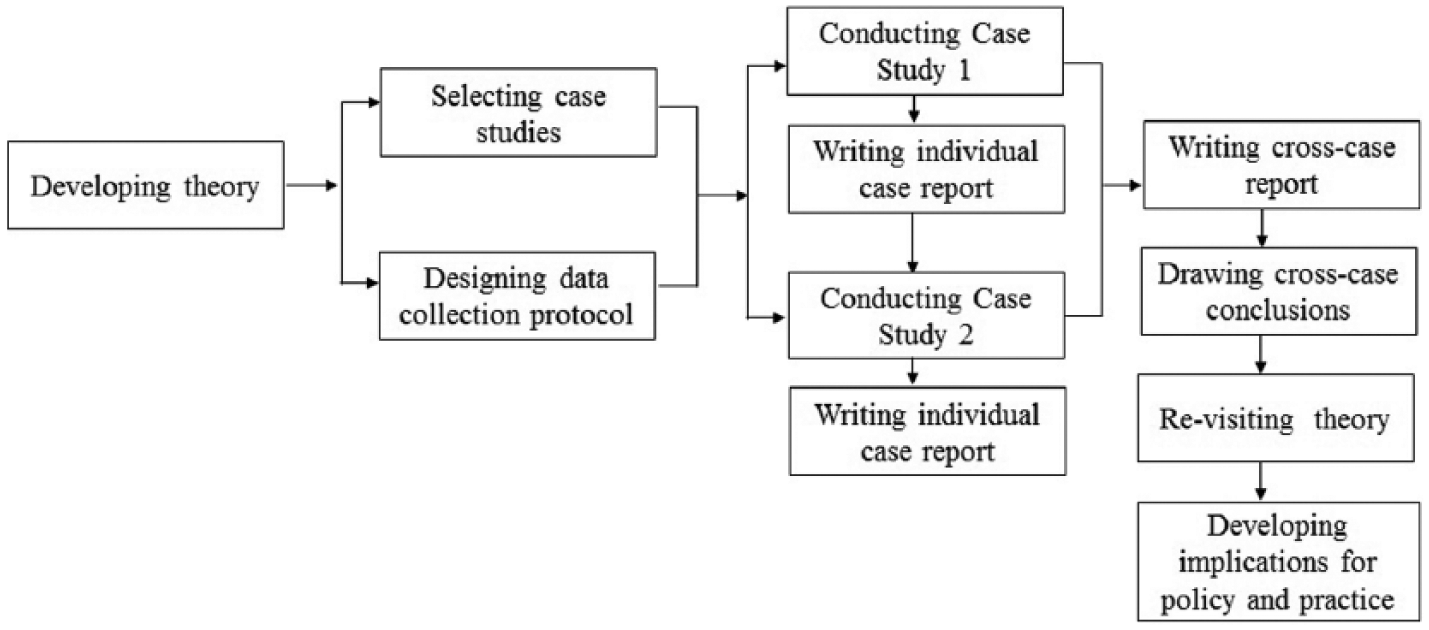
Research design: Multiple-case study procedural steps after Yin (2014: 60).
The data collection consisted of two focus groups sessions of about one hour each with eight HE staff in case study 1 (the British case) and 10 in case study 2 (the Brazilian case). Individual sessions were conducted in English and Portuguese by a bilingual researcher to minimize bias and maximize cross-case comparability. Each session had a non-participant observer who took field notes according to a template of the aforementioned Erasmus+ project.
Methods of data analysis
Data analysis methods follow a cross-case synthesis logic to aid the comparison of commonalities and differences across case studies whilst capturing the individual perspectives of interviewees. This analytic strategy is both case- and theme-based in line with our embedded multiple-case study and the robustness of findings sought (Yin, 2014). Each case study is treated as a distinct unit of analysis with different sub-units, that is, the 18 research participants. Data are contextualized in the words of participants and aggregated around themes defined in the focus group protocol. The two data sets yielded were analysed thematically according to a process of systematic pattern recognition within data set(s) wherein themes capturing the richness of the phenomenon of interest become the categories for analysis (Boyatzis, 1998; Fereday and Muir-Chochrane, 2006). In this process, selective data from the audio-files of the two focus group sessions were transcribed verbatim for each analytical theme.
In addition to transcribing data verbatim, four strategies were adopted in individual case study reports (Figure 1) following best practices in the analysis of focus groups. These strategies included: (1) written memories of the focus group debriefing between the moderator and the non-participant observers, (2) field notes taken by non-participant observers during the session, (3) flip charts and focusing exercises (Bloor et al., 2001) 4 completed by participants during the focus group, and (4) audio-recorded debriefing with participants (Krueger, 2006).
Participants
The 18 participants in this study include eight staff members in case study 1 (four males, four females) and 10 in case study 2 (two males, eight females). Similarities of interviewee roles and involvement in internationalization processes were sought to ensure comparability of data. Although participant professional duties varied between teaching and research (n=8; 44.5%), administration (n=6; 33.3%), and senior management (n=4; 22.2%), all participants had teaching responsibilities or experience within their professional duties (Table 1).
Participant roles and/or responsibilities.
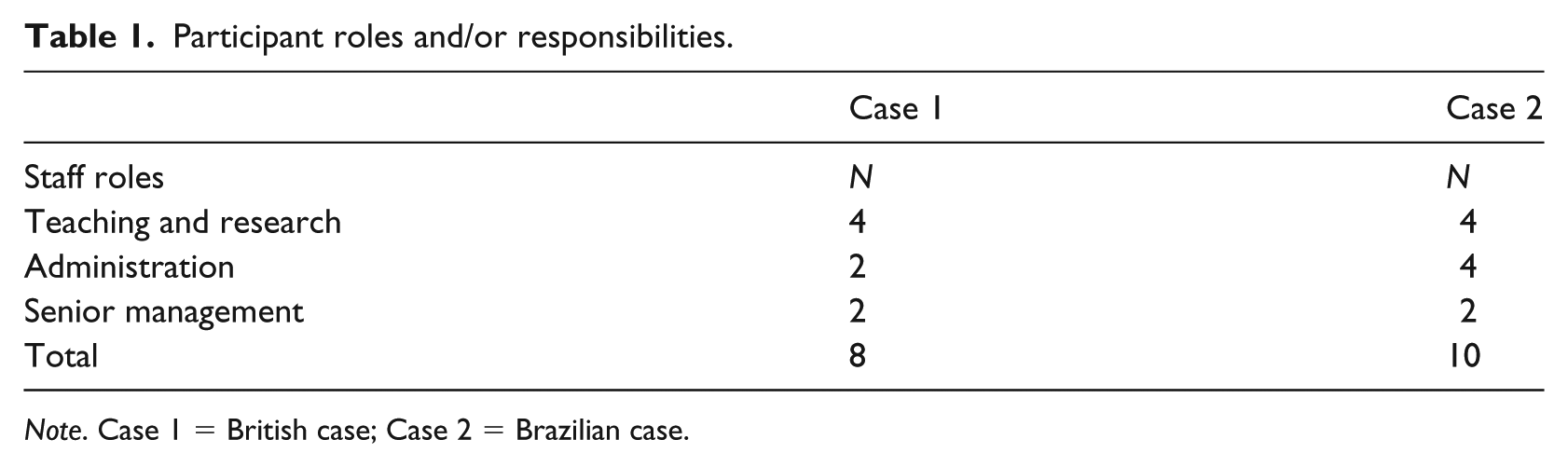
Note. Case 1 = British case; Case 2 = Brazilian case.
Interviewees ranged in age from 33 to 64 with an average age of 47.7 (SD=9.1). There are no major differences in this variable as the average age for the British cohort is 49.9 years old, and 45.9 in the Brazilian cohort.
Most participants came from the country where they are professionally affiliated – the UK and Brazil – (seven participants in case study 1 and nine in case study 2). Only one participant in each case study came from a country other than the UK or Brazil, namely Canada and Cape Vert. Institutional affiliations varied considerably in case study 2 as although all 10 participants were bound to the Brazilian institution where the focus group took place, they were professionally affiliated with other institutions or organizations of higher learning in the state of Rio Grande do Sul. The underlying reason is that only two of the 10 participants in case study 2 were professionally affiliated with the institution where the focus group took place, whereas the remaining eight pursed a PhD in this institution but were professionally affiliated in another. In the British case study, all eight participants were affiliated with the institution where the focus group occurred.
Other socio-cultural background variables relevant to our analysis are: (a) the disciplinary background of participantsand; (b) current teaching to international and/or exchange students. Participants’ disciplinary backgrounds ranged from Education to Psychology, Medical Education, Language Education and Biomedical Sciences. All case 1 participants currently work with mobile students, whereas only four out of 10 participants in case 2 work with this student population. These differences are, perhaps, unsurprising given the composition of this student population in the HE systems our case studies represent. For instance, whereas in Brazilian HE, mobile students represented 0.2% of the total student enrolments in the 2015/2016 academic year, in the UK this student population represented a 19% share in the same academic year. 5
Results and discussion
Our analysis is based on three umbrella themes of the focus group protocol that cover relevant aspects of IaH, namely:
Understandings of Internationalization at Home (and its activities).
Internationalization of the Curriculum.
Graduate Attributes.
To offer readers a comparative perspective of the main results, each umbrella theme is discussed across individual sub-sections.
Understandings of Internationalization at Home
The first theme of the focus group aimed to explore participant perceptions of the concept of IaH (and its activities) and ascertain its institutional status. To this end, participants were asked if they heard of IaH and what came to their minds when they thought about it.
Most case study participants were familiar with, or had heard of IaH. Only one participant in case study 1 and two in case study 2 were unaware of the concept. Yet, when asked to move beyond a scientific definition, all interviewees were able to provide a personal definition of IaH.
Naturally, interviewee perceptions varied, but the thematic analysis yielded common descriptors to both case studies, even if their relative importance seem to differ. Within the macro denominators, results highlight aspects related to: (a) the institutional or organizational side of internationalization, (b) teaching and learning aspects, and (c) personal experiences of the social actors involved in internationalization processes. These denominators accord with the three dimensions of the strategic framework developed by the Higher Education Academy to assist universities in preparing globally ready graduates (Higher Education Academy, 2014). These dimensions are Organization, People and Curriculum and attend to the collective, individual and teaching-and-learning levels, respectively. We, therefore, build on these dimensions and the work of Robson et al. (2018), who argue that cross-border and at home pillars for internationalizing HE should take into account these three dimensions, at least if the goal is to think holistically about internationalization. Table 2 lists the themes yielded from staff definitions of IaH against these three dimensions.
Thematic chart of understandings of Internationalization at Home.
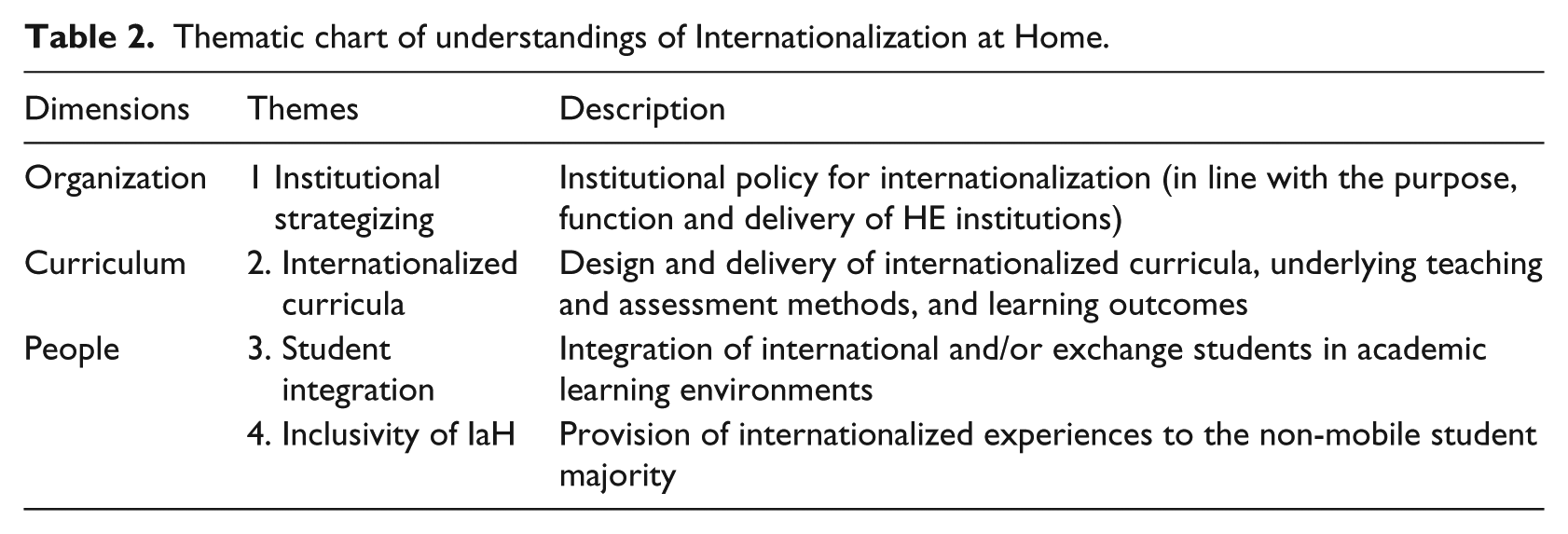
Of the 18 individual definitions given by interviewees:
Eight emphasize the institutional level (Theme 1).
Five highlight the design and/or delivery of curricula that incorporates intercultural and comparative perspectives to form globally and/or interculturally ready graduates (Theme 2).
Four point to the need to bring together international and domestic students, either in or outside the classroom (Theme 3).
One stresses the urge to provide internationalized opportunities to those who cannot study abroad (Theme 4).
Recurrence of themes varies across case studies as demonstrated by Table 3.
Cross-case analysis of understandings of Internationalization at Home.
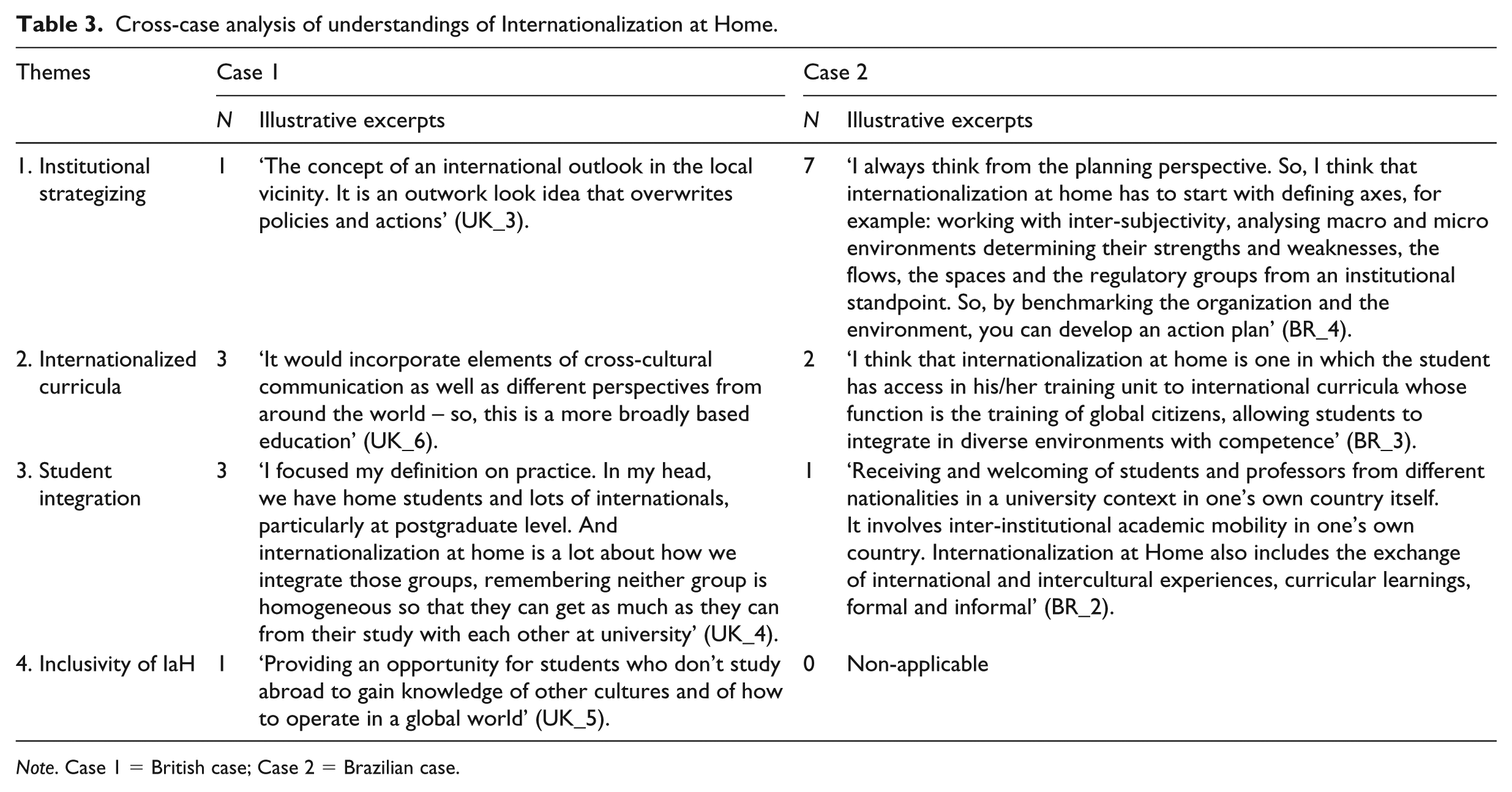
Note. Case 1 = British case; Case 2 = Brazilian case.
As Table 3 demonstrates, Institutional Strategizing (Theme 1) is more frequent in case study 2 (i.e. the Brazilian case study), with seven out of 10 definitions emphasizing the organizational level and the development of sustained policies to facilitate HE internationalization processes, in general, and IaH, in particular. In case 1, this theme represents the opinion of one interviewee only. Differences in findings may be related to interviewee professional roles given that four case study 2 participants had administrative duties, whereas there were only two administrative staff in the British cohort.
We cannot also dismiss the role of macro, meso and micro scenarios in shaping staff perceptions. Stated differently, the ways in which internationalization processes and underlying rationales are communicated and enacted across the institutions and national HE systems our case studies represent may influence how research participants envisage IaH. In fact, the recurrence of institutional strategizing (with its underlying activities) across case study 2 participants is consistent with the vision of internationalization in Brazilian HE and its focus on planning and management. In this vision, internationalization emerges as a driver for economic growth and only recently for social development, mostly after the implementation of the national system of HE evaluation, SINAES, in 2004 (Almeida Ashley et al., 2006; Bolan and Da Motta, 2007).
Given this backdrop, it is unsurprising that revenue-generating activities such as academic mobility, research and international partnerships or networks drive how internationalization efforts are perceived in Brazilian HE (Morosini et al., 2017). This prominence gained ground with the program Science Without Borders, which placed a renewed emphasis on Research and Development via academic mobility and stronger institutional links with foreign HE institutions. This emphasis is visible in the words of our participants, as illustrated below:
‘Internationalization at home involves institutional activities carried related to teaching, research and service as well as with administration. In the teaching, research and service functions (extensão), we can include activities like lectures, visits, round tables, courses, master’s, doctorates, international events, English-taught classes at undergraduate and postgraduate levels, double certification. In the administrative part, having the institutional webpage in English also helps attracting students and improving communication in a second language. And also the cultural part, taking advantage of cultural diversity.’ (BR_8)
Interestingly, although Participant BR_8 refers to the role of socio-cultural rationales in supporting inclusive IaH practices, most examples identified by this participant underscore institutional provision rather than individual experiences and outcomes.
It is also noted that although strategic internationalization was less emphasized by the British focus group, economic imperatives also predominate the internationalization of British HE. The recruitment of fee-paying international students has been a well-established feature of British HE since the 1980s. Hence the differences in findings may be connected to: (1) individual, institutional and national approaches to internationalization, (2) the level of engagement expected from faculty, (3) individual perceptions of interviewees, and (4) the administrative professional responsibilities of nearly half of case study 2 participants, who are therefore more likely to be involved in institutional strategizing.
In contrast with Theme 1 (Table 3), the remaining themes forefront engaging the entire academic community in institutional internationalization efforts to improve the quality of these processes within, that is, at home. To achieve such goal, three case study 1 participants and two participants in case study 2 consider that it is fundamental to internationalize curricula for all students (Theme 2). That is, curricula that ‘incorporates elements of cross-cultural communication as well as perspectives from around the world’ to form ‘global citizens’ as noted by Participants 6 and 3 in case study 1 and 2, respectively (see Table 3; Theme 2). These curricula should in turn lead to a well-rounded student experience wherein domestic and international students are not worlds apart (Theme 3).
Further exploration of results reveals that although the integration of mobile students emerged as an aspect of IaH (Theme 3) in the British case study, in the Brazilian cohort only one participant highlighted the integration realm. This finding may reflect the different pace of internationalization processes in the two case studies.
As discussed earlier, the proportion of mobile students in the UK is much higher than in Brazil. Added to this, diverse social challenges face the HE systems in both countries, with the inequitable expansion of the HE system in Brazil being a strong concern (McCowan, 2007). The local needs of Brazilian HE, therefore, primarily involve the integration of students who were historically excluded from Brazilian universities, namely students from public schools, minority ethnic groups such as African Brazilians and indigenous peoples, and students from lower socio-economic backgrounds (Lehmann, 2016; McCowan, 2007; Oliven and Baranzeli, 2013). Furthermore, in the last two decades Brazilian HE has promoted inter-institutional mobility as part of its admission policies, via the introduction of: (1) a new national secondary school exam and a unified national university application system permitting university candidates in any state in Brazil to apply for any listed public HE institution; and (2) a mobility program promoting inter-institutional mobility for HE teaching staff (Projects MINTER/DINTER). These policies triggered inter-institutional flows in Brazilian HE and are probably behind the reference to inter-institutional mobility by Participant BR2 (see Table 3; Theme 3) who includes inter-institutional student mobility in the integration realm of IaH.
Finally, Theme 4 is at the heart of the inclusivity ideals underpinning the IaH movement in Europe. And yet, findings suggest that the leitmotiv of the IaH is not fully understood across case studies given that only one of the 18 participants explicitly described IaH as ‘providing an opportunity for students who don’t study abroad to gain knowledge of other cultures and of how to operate in a global world’ (UK_5).
Internationalization of the Curriculum
The second moment of the focus group explored the concept of Internationalization of the Curriculum (IoC) and its institutional status. A central question ascertained the extent to which participants considered the content of the curricula of the study programs or courses they teach and/or are involved in ‘localized’ (i.e. UK-based or Brazil-based) or ‘internationalized’. To stimulate discussion, an exploratory Yes–No question was asked, followed by a focusing exercise. In this exercise, participants ranked academic curricula according to a 6-point rating scale wherein 0 represented ‘Not Internationalized’ and 5 ‘Very internationalized’.
Clear differences emerged from participant responses. Whereas the British cohort could not provide an immediate response, the Brazilian cohort was able to rank the extent to which they considered the curricula of their study programs internationalized. It should be noted that the meaning of international curricula conveyed to participants is based on the definition developed by Leask (2015: 9)
the incorporation of the international, intercultural and/or global dimensions into the content of the curriculum as well as the learning outcomes, assessment tasks, teaching methods, and support of a program of study.
Given this definition and the interactive discussions generated, a narrative approach is adopted to better understand the meanings and norms underpinning our group discussions. An excerpt of the discussion generated in case study 1 is given below.
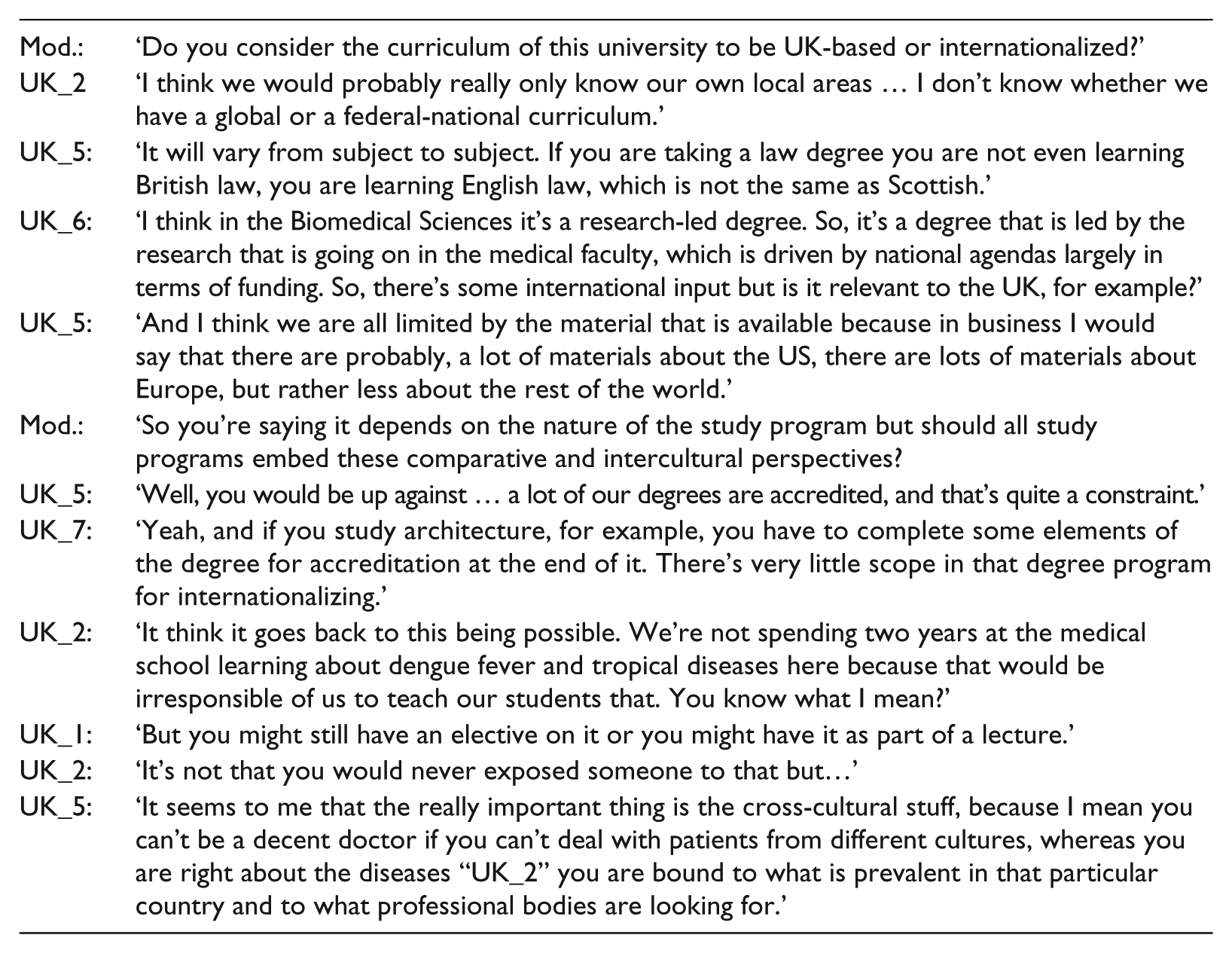
As the discussion above shows, there is no ‘one-size fits all’ approach to internationalizing academic curricula within and across disciplines or institutions. Academic staff appear to be key drivers to changing the curricula of the study programs and modules they teach.
Incorporating an international and intercultural dimension into formal and non-formal curricula is an essential part of inclusive IaH practices (Beelen and Jones, 2015) for all students’ learning (Leask, 2016). Moreover, the active engagement of faculty is required to embed these perspectives in the curriculum and promote the review and development of programs across the institution (Robson et al., 2017).
Participant UK_2 reminds us that broader institutional understanding of what an internationalized curriculum means and looks like should be communicated to avoid ad hoc initiatives and interpretations. This is all the more important given the diverse perceptions of case study 1 participants about the relevance of internationalized curricula in their own disciplines (Clifford, 2009). For instance, participants from Natural Sciences programs do not consider it essential to design and deliver internationalized curricula as there are elements of a ‘national curriculum’ that prevail. Differences across study programs and accreditation requirements can hinder the process of internationalizing curricula, as noted by Participants 5 and 7. Consistent with academic literature, the findings suggest that IoC can be associated with different activities (e.g. Green and Whitsed, 2015; Leask, 2015). Case study 1 seems to understand IoC as increasing exposure to cultural diversity in the classroom, ‘if it doesn’t actually impinge on delivering the core curriculum’ (UK_7).
The perspectives of case study 2 interviewees vary substantially. Participants were asked whether they work mostly with curricula centred on Brazilian perspectives, or whether they incorporate international and intercultural perspectives. Responses indicate that institutional curricula is mostly localized as participant institutions have not yet actively internationalized their curricula. An excerpt of the discussion is provided below:
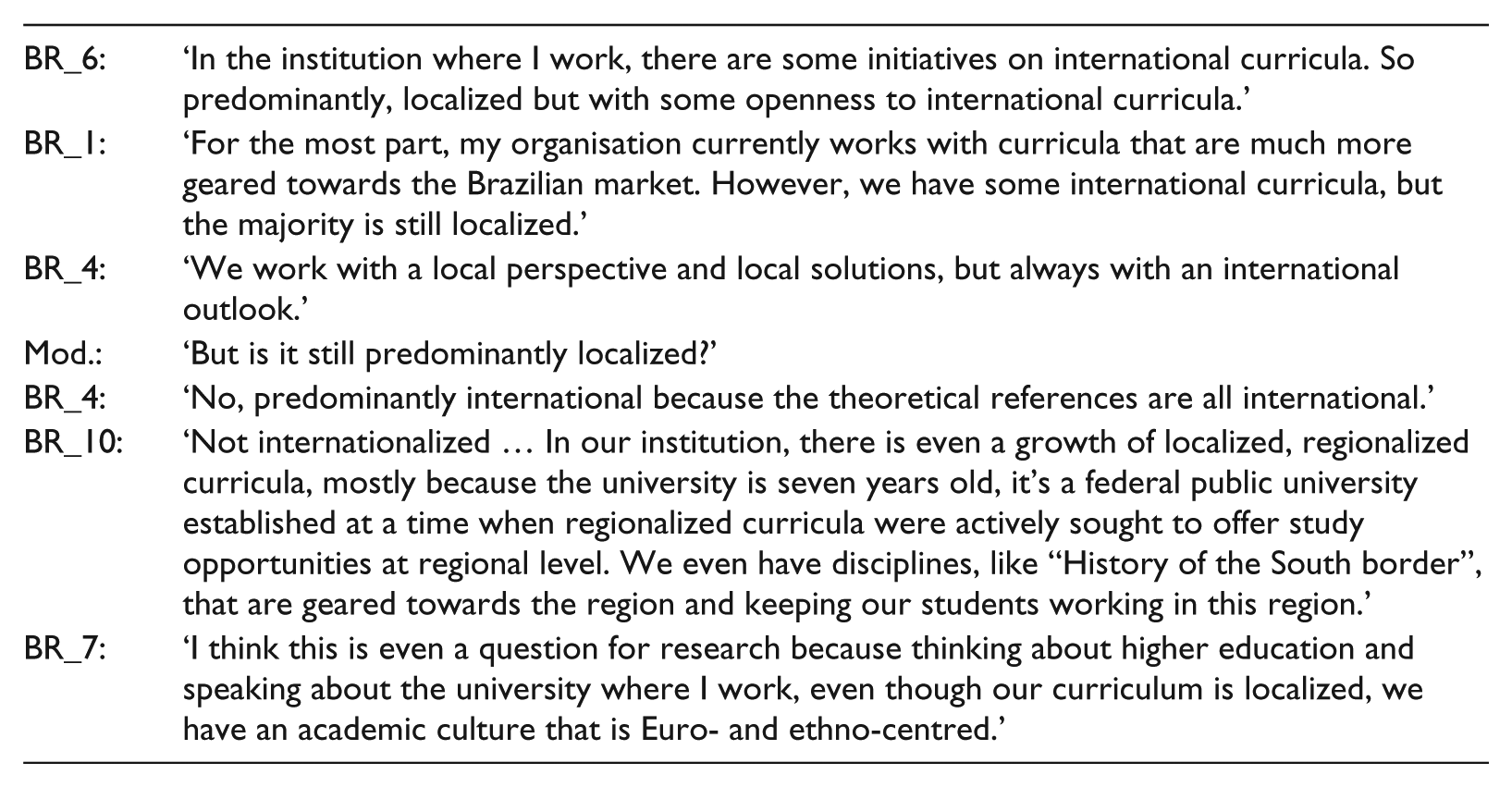
As the discussion illustrates, faculty perceptions differ not only by discipline and institution, but also according to contextual conditions, the stage of development of institutional internationalization processes and how well the ‘local-and-global nexus’ (Jones et al., 2016) is incorporated in these processes.
As noted by BR_10, the predominance of localized curricula in Brazilian HE is rooted in a conscious effort of some universities to bring development to local regions. In addition to different local realities, it is also important to note individual perceptions of what an international curriculum is or should be. Two questions arise:
Is it primarily a matter of incorporating an international bibliography or references? – as noted by participants BR_4 in case study 2, and UK_5 in case study 1; Or, is it a purposeful process of embedding comparative and intercultural perspectives in the curriculum to prepare globally and/or interculturally ready graduates (Leask, 2015)?
Finally, one cannot underestimate the powerful role of north-western epistemologies in shaping how internationalized curricula are perceived across universities in the Global South, as mentioned by Participant BR_7. A fundamental challenge for teaching staff in HE is to be reflective decision-makers instead of simply enacting standardized global policies (Leal and Barreto Moraes, 2017; Morosini and Ustárroz, 2016).
Graduate attributes
The last moment of the focus group focused on participants’ professional activities and the attributes and/or skills they promote in their students to operate successfully in global knowledge economies. This moment is based on the assumption that graduate attributes can provide institutional leverage for IoC (Jones and Killick, 2013; Leask, 2009) and broader IaH practices that increase home and international student exposure to cultural diversity.
Participants received a list of 20 intercultural attributes (Figure 2) and were invited to select the three to four most important ones. This list was derived from a framework devised by Bird et al. (2010) and operationalized in the questionnaire Internationalization of the Curriculum (version QIC2) by Betty Leask (see www.IoC.global).
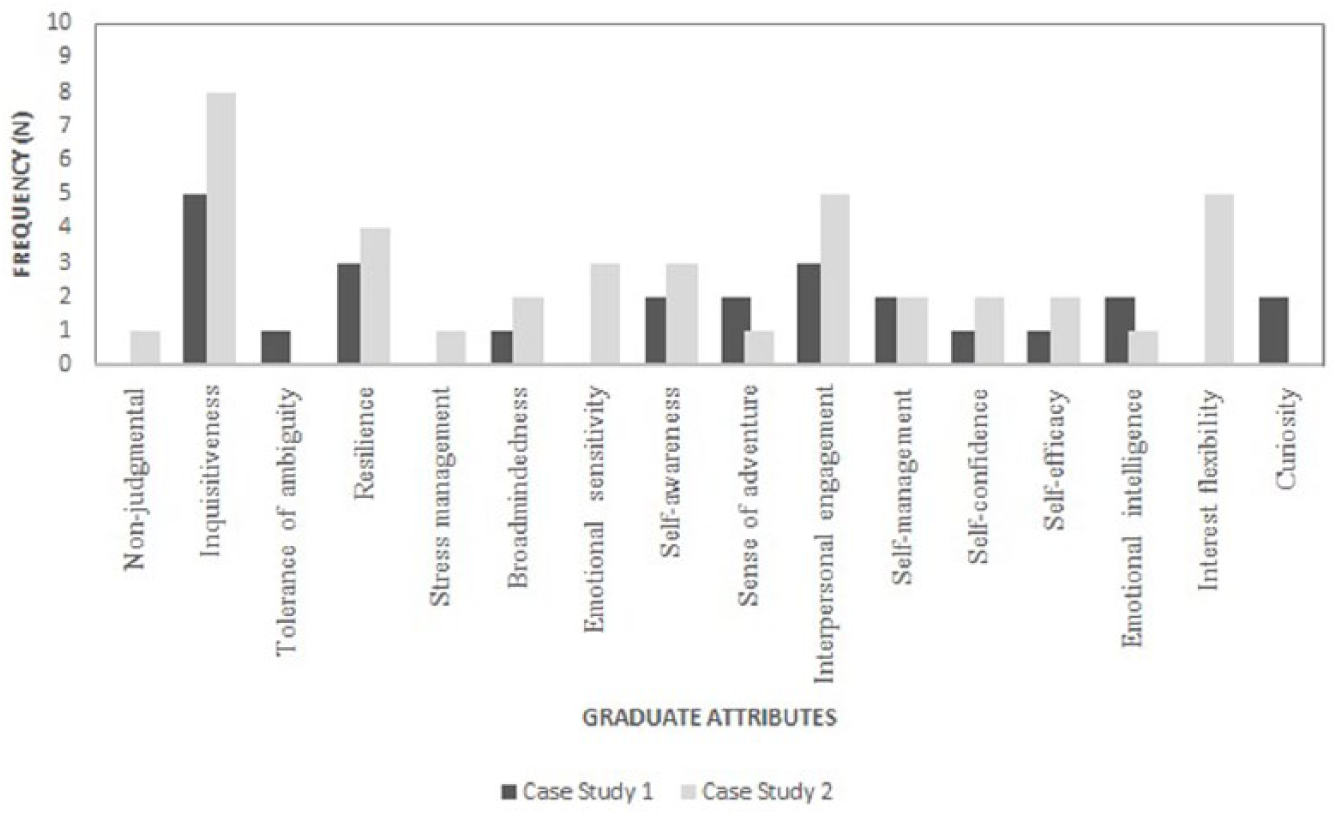
Most commonly developed student attributes according to participants.
According to Bird et al. (2010), the content domain of intercultural constructs can be categorized into three different but complementary layers:
Perception Management: Individual approaches to cultural differences. It involves mental flexibility to manage pre-judgements, avoiding stereotypes, openness and curiosity towards values, behaviours and situations different from usual;
Relationship Management: Importance of interpersonal relationships in general. It involves awareness of the self and ‘culturally different Others’, types of interaction, values, etc. This dimension focuses on the mental structures that organize behaviour, particularly the development and management of intercultural relations;
Self-management: Individuals’ ability to observe their own identities and manage emotions and stress. It involves understanding of the self and core values.
Each dimension unfolds into further facets of intercultural competence, that is, the 20 attributes and/or skills showed to research participants (Figure 2). It should be noted that participants were allowed to add new attributes to the pre-set categories, as in the case of Curiosity.
Figure 2 shows that the range of selected attributes across case 1 participants was 16 attributes, whereas case 2 participants selected 18 attributes. The three most chosen attributes across the choices of all 18 case study participants are:
Inquisitiveness, by 13 participants (72.2%);
Interpersonal Engagement, by 8 participants (44.4%);
Resilience, by 7 participants (38.9%).
The most chosen attribute, Inquisitiveness, is related to perception management, openness and active search for understanding of Others, their conceptions of the world and behaviours, but also one’s capacity to actively take advantage of opportunities for growth and learning as noted by Bird et al. (2010), and also emphasized by research participants:
UK_1: ‘I chose Inquisitiveness as it is mainly related to my teaching. Nurturing a sense of inquisitiveness, self-efficacy and a sense of adventure. They are all tied together with autonomous learners that are able to find joy in pursuing intellectual questions.’
Similarly, in the Brazilian cohort Inquisitiveness is associated with a critical mind-set, which in the Brazilian context is strongly rooted in educational theory and practice of critical pedagogy: ‘Critical mind-set is a very strong word for our theoretical founders in the field of education’ (BR_10).
Inquisitiveness is followed by Interpersonal Engagement, which while addressing relationship management can also relate to perception management and one’s sense of adventure as noted by Participant UK_1. Whilst selecting this attribute, participants also forefronted the importance of encouraging students to develop relationships with people from different cultures, as well as abilities to face new and challenging situations.
To summarize, the three most chosen attributes complement each other and address different levels of ‘interculturality’, that is, cognitive, intra and interpersonal aspects. Altogether, participant choices demonstrate that despite the distinct locations and institutions, focus group participants concur on some key characteristics to form interculturally and/or globally ready graduates. Differences in viewpoints should be also acknowledged, since although Inquisitiveness, Interpersonal Engagement and Resilience were the top two attributes for both cohorts, there is some variance in the former two. This is because in case study 1, Interpersonal Engagement emerges on par with Interest flexibility, with the third place gathering as well more than one attribute. In case study 2 (the Brazilian cohort), there is only overlap in the second most chosen attribute (Interpersonal engagement and Interest flexibility). These findings might reflect the different individual and local realities, but might also be limited by the small sample size.
Conclusions
To explore and compare bottom-up understandings of IaH by HE staff across two universities in the Global North and South, we have analysed the perceptions of 18 research participants through three umbrella themes: (1) Understandings of Internationalization at Home, (2) Internationalization of the Curriculum, and (3) Graduate Attributes.
The qualitative data concurs with the previous literature, suggesting that there is still a lack of conceptual clarity around IaH (Beelen and Jones, 2015) and a need for empirically grounded definitions through a bottom-up and top-down development of the concept (Robson et al., 2018; Wächter, 2003). Added to this, our findings highlight the importance of first establishing a common language around IaH at institutional level, particularly among staff as (one of the) key drivers of change. Among the baseline features to a bottom-up understanding, which accounts for staff views and contextual conditions and needs, are: (1) Institutional strategizing, (2) Internationalized Curricula, (3) Student Integration, and (4) Inclusivity (Table 3).
Altogether these elements suggest that although bottom-up understandings of IaH encompass internationalized curricula (Beelen and Jones, 2015) to promote all students’ learning (Leask, 2016), the singularity of the concept may lie in the epistemology of equity it embodies (Almeida, 2018). This involves not only promoting equity of access to internationalized university experiences to the non-mobile majority (Theme 4), but also integrating international student cohorts. In this sense, findings suggest that IaH is more than an alternative to the mobility imperative as per its first definition by Crowther at al. (2001). Cross-border internationalization and the integration of international students in particular, may have implications to what happens in HE ‘home campuses’ (Knight, 2012). The uniqueness of the IaH movement in Europe goes beyond the bifurcation of HE internationalization into ‘cross-border’ and ‘at home pillars’, to forefront the role that the ‘at home dimension’ can play in fostering a more contextualized, quality and inclusive approach to internationalization.
Our participants remind us that diverse social challenges face the HE systems of the two countries our case studies represent. These differences come to the fore in the dimensions highlighted in participant definitions of IaH. More specifically, the emphasis on institutional strategizing by seven of the 10 participant definitions in the Brazilian cohort, against one definition in the British cohort. It should be noted that these differences might also be related to the small sample size, the predominance of participants with administrative duties in the Brazilian cohort and the typology of surveyed institutions.
Despite these limitations, the focus on planning and management in the Brazilian cohort may also mirror a vision of the internationalization of Brazilian HE as a driver for economic growth, and only recently for social development and quality educational provision in response to accountability calls (Almeida Ashley et al., 2006; Bolan and da Motta, 2007). Not that economic concerns do not dominate the internationalization of British HE, but possibly due to the profusion of international students the British cohort highlighted more Themes 2 and 3: Internationalization of the Curriculum and Student Integration (Table 3). And yet, when probed further about the extent to which academic curricula are internationalized, these sort of curricula seem to viewed as an add-ons. The same can be said in relation to case study 2 wherein localized curricula seem to be the norm. Also noteworthy is how neo-colonial logics can shape asymmetries in knowledge production. More specifically, how Eurocentric western conceptualizations of the curriculum can increase the gap between the Global North and South, by hindering the incorporation of new perspectives (Andreotti, 2011) geared towards local needs and reflective decision makers (Leal and Barreto Moraes, 2017; Morosini and Ustárroz, 2016).
Perhaps the most striking finding is that the inclusivity ideals underpinning the IaH movement seemed not only to be underestimated by both cohorts, but also understood very differently. And yet, an important question arises from the Brazilian case study:
To what extent can tertiary education systems seek to provide internationalized learning opportunities for all when they still need to integrate students within?
Stated another way, the Global South reminds the Global North that a crucial feature of the IaH narrative is the epistemology of equity it represents.
Footnotes
Declaration of conflicting interests
The author(s) declared no potential conflicts of interest with respect to the research, authorship, and/or publication of this article.
Funding
The author(s) disclosed receipt of the following financial support for the research, authorship, and/or publication of this article: This study has been supported by funding from Newcastle University Global Excellent Fund. The qualitative data set from the British cohort was supported by funding from the strategic partnerships’ project ‘Approaches and Tools for Internationalisation at Home’ (grant number 2016-1-UK01-KA203-024354), commissioned by the European Union Erasmus+ program, Key Action 2.
