




Abstract
In the debate on the integration of information and communication technologies (ICT) into schools, the beliefs and attitudes of teachers towards ICT in teaching and learning have always been regarded as central criteria for successful implementation of new technologies. In this context, a study in 2013 by the International Association for the Evaluation of Educational Achievement, IEA, provided insights into teachers’ beliefs regarding ICT and showed that perceptions of the pedagogical advantages of technologies differ between countries. With regard to this finding, this paper seeks to determine whether there is a typology of teachers with different attitudes towards the potential of ICTs for learning. This question is addressed by conducting latent class analyses on a sample of teacher data from three European countries – the Czech Republic, Germany and Norway. Furthermore, the paper investigates how the use of computers by teachers varies between the groups to which these teachers can be assigned. In doing so the research reported at hand connects, arguably for the first time, representative data on teacher typologies of attitudes towards and beliefs about ICT in teaching and learning with data on computer use in schools.
Introduction: starting point and theoretical background
According to the IEA’s International Computer and Information Literacy Study (ICILS 2013; Fraillon et al., 2014) – and other studies – teachers in many countries use information and communication technologies (ICT) on a less regular than expected basis given the increasing potentials of ICT for teaching and learning. Many studies have shown that the use of computers in classrooms remains somewhat peripheral in the majority of schools (Teo, 2009: 302). For Europe in particular, OECD publications have identified several countries (e.g. Poland, Ireland, Belgium and Germany) where the use of ICT in schools still remains below the OECD average (see OECD, 2006, 2015). One reason for this could be the fact that teachers are regarded as the ‘keystone species’ for the implementation of ICT in learning and teaching (Davis et al., 2013; Donnelly et al., 2011). Their attitudes and beliefs towards the usefulness of using ICT are also considered crucial for their effective use in educational settings (Zhao et al., 2001).
For this reason, researchers in different fields have already looked at factors or characteristics that contribute to the use of digital technologies in schools and classrooms. They have been able to show that there are various reasons why some teachers integrate ICT in their teaching while others do not, with the need to draw a fundamental distinction between the external and internal factors that can affect teachers’ use of ICT in classrooms. Over the last two decades, quantitative and qualitative research studies alike have shown that both external and internal factors can serve as barriers (e.g. Ertmer et al., 1999; Ertmer and Ottenbreit-Leftwich, 2010; Lorenz et al., 2015). External barriers have to be located beyond the teacher’s person and can include, for example, a lack of technology-based infrastructure in schools (e.g. access to computers, the Internet, or specific software programs), time-based constraints (e.g. no time available to plan instruction with digital media), or a lack of technical or pedagogical support (e.g. BECTA, 2004; Eickelmann, 2011; Pelgrum, 2008; Petko, 2012). Internal factors are intrinsic to teachers and include their beliefs about teaching and ICT, and classroom practices, as well as their unwillingness to change educational practices (Ertmer et al., 1999; Fullan, 2012). It can therefore be concluded that external factors or barriers could be altered by allocating additional resources to schools, for example by equipping them with a sufficient number of computers and software programs or by providing additional computer training for teachers. In contrast, internal factors – especially strong affective attitudes – are likely to remain stable over time (Maio and Olson, 1995; Snyder and De Bono, 1989).
With regard to enhancing the use of ICT, internal factors are thus much more complicated to change. On the whole, the internal factors relating to teachers’ beliefs and attitudes have been shown to be prerequisites for a successful implementation and use of ICT in schools (Badia et al., 2013; Erdogan, 2011; Ertmer, 2005; Kubiatko, 2013; Kusano et al., 2013; Oye et al., 2014; Petko, 2012). A belief ‘can be understood as a subjective element of knowledge that an individual considers true and important in relation to a specific subject’ and as ‘bound up with a person’s past history, emotions, and personal values’ (Petko, 2012: 1353). Additionally, an attitude can be ‘defined as a complex, multi-dimensional construct comprised of cognitive, affective, and conative components’ (Zhang and Aikman, 2007: 1023) or simply as ‘an individual’s positive or negative feelings (evaluative affect) about performing the target behavior’ (Fishbein and Ajzen, 1975: 216). Teachers’ attitudes and beliefs would therefore seem to be crucial with regard to innovations in schools, especially those that combine pedagogics and technology.
In the next section, key approaches that distinguish the external and internal factors which contribute to the implementation of digital technologies in education will be introduced. In line with previous theoretical frameworks for the integration of technology into schools, the relevance of their components will be assessed with regard to pertinent research findings. In doing so, research gaps will then be identified, and the research questions addressed in this paper are going to be presented. To render the methodology used to answer these research questions even more transparent, we next focus in particular on the sampling procedures and instruments that were used to gather information on the attitudes and beliefs of secondary school teachers regarding the use of ICT in educational settings and on the analytic framework applied in this paper. This is followed by a summary of the most important findings of the latent class analysis on teachers’ attitudes and their relationship to ICT use in schools; we also identify the limitations of the present research, as well as its implications for further research.
Approaches to modeling the use of technology by teachers and the role of teachers’ attitudes
Integrated theoretical models pertaining to the use or implementation of technology contain various external and internal factors, with the latter comprising core teacher attitudes and beliefs regarding the use of technology in instructional settings in schools. In the following, only the most influential integrated theoretical approaches will be presented: first, to frame the relevance of teachers’ attitudes and their use of ICT in classrooms in theory; and, second, because these particular theoretical approaches can be regarded as milestones in the conceptualization of the structural prerequisites of teachers’ acceptance of technology. In this context, we have restricted ourselves to focusing on central cornerstones of the discussion in the field as well as on theoretical approaches that account for teachers’ attitudes and beliefs.
Technology adoption model
Rogers (1999) conducted an extensive review of the then extant research literature, re-analyzed existing data and summarized the main barriers that emerge when implementing new technologies in education. Her results showed that the external barriers to ICTs can be grouped into three different sub-dimensions or categories. The first of these is the ‘availability and accessibility category’ (Rogers, 1999: 8), which includes the ‘limited access to useful, relevant, and appropriate hardware and software’ (Rogers, 1999). The second is the (lack of) technological, technical, social, and institutional support that is available to teachers (see Figure 1). While technical support in this case refers to the actual support provided by schools, education authorities, or universities to assist teachers in the use and maintenance of technology, institutional support covers the encouragement provided by the (school) administration to foster the use of ICT in educational settings. The third category of external barrier is stakeholder development. This cluster subsumes all obstacles to the adoption of technology encountered both at the individual (teacher) and the institutional level (see Rogers, 1999). The time teachers are able (or willing) to spend on the development of ‘new courseware, new skills, or advanced applications’ (Rogers, 1999: 10) is, for instance, one such barrier. Indeed, a lack of time to develop ICT skills appears to be a plausible reason for teachers’ failure to use technology as a medium for teaching and learning. This lack of time is even more prominent at the institutional (e.g. school) level: a lack of institutional (e.g. compensatory hours) or personal time can hinder teachers in the acquisition of the necessary skills or adoption of a technologically-adapted curriculum. From an internal perspective, Rogers identified one central barrier, namely the attitudes and beliefs of teachers. ‘Attitudes toward technology and its uses in education as well as attitudes toward the level of institutional support available play a substantial role in determining what will and will not be considered’ (Rogers, 1999: 15).
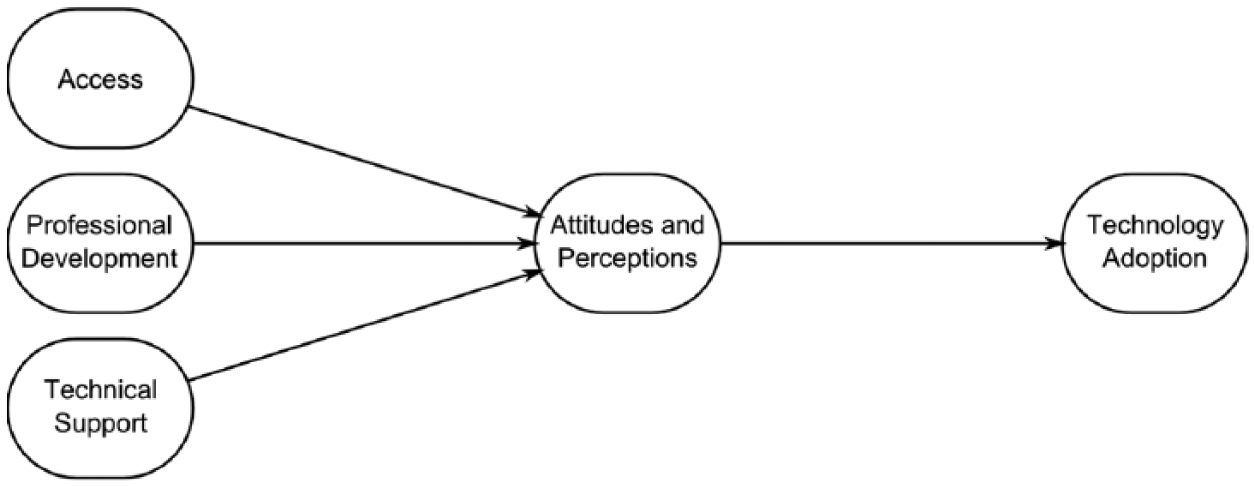
Model of technology adoption by Rogers (1999), based on Velázquez (2006).
Technology acceptance model (TAM)
The technology acceptance model (TAM) introduced by Davis (1986) is one of the first acceptance models to take account of the psychological factors that affect the acceptance of technology. Based on the theory of reasoned action (TRA, see Fishbein and Ajzen, 1975), the TAM models the causal relationships of perceived usefulness (PU), perceived ease of use (PEU), attitudes towards computer use (ATCU), external variables (EV), and behavioral intention to use ICT (see Figure 2). Its goal is ‘to provide an explanation of the determinants of computer acceptance that is general [and] capable of explaining user behavior across a broad range of end-user computing technologies and user populations’ (Davis et al., 1989: 985). According to the TAM, two central beliefs have a direct effect on attitudes towards ICT: ‘perceived usefulness’ and ‘perceived ease of use’. Perceived usefulness is defined as ‘the subjective probability that using a specific application system will increase [a person’s] job performance within an organizational setting’ (Davis et al., 1989). Perceived ease of use refers to the extent to which a person believes that using a certain computer system or application is free of effort. The latter also has an effect on PU, and both are seen to be influenced by external variables such as gender (Venkatesh and Morris, 2000), subjective norms (Schepers and Wetzels, 2007; Venkatesh and Davis, 1996, 2000), prior use of technology systems (see Legris et al., 2001 for details), or professional development. Furthermore, the behavioral intention to actually use a specific computer system or technology is hypothesized in this model as being directly and significantly influenced by the attitudes towards computer use and as being an indirect effect of PU. The TAM has already been applied in many domains and target populations, with most corresponding studies showing that it can be used to predict the behavioral intention to use ICT. There are, however, some differences between teachers and employees in more business-related environments. In this context, Petko (2012) pointed out that educators (teachers) have greater autonomy in their choice of technology than general users, whose technology use is often embedded in business contexts, where the level of peer competition is higher than in schools (see Hu et al., 2003). Accordingly, and because other researchers had investigated additional factors that moderate technology use by teachers, Venkatesh and Morris (2000) extended the original version of the TAM and added gender, experience and subjective norm to the model.
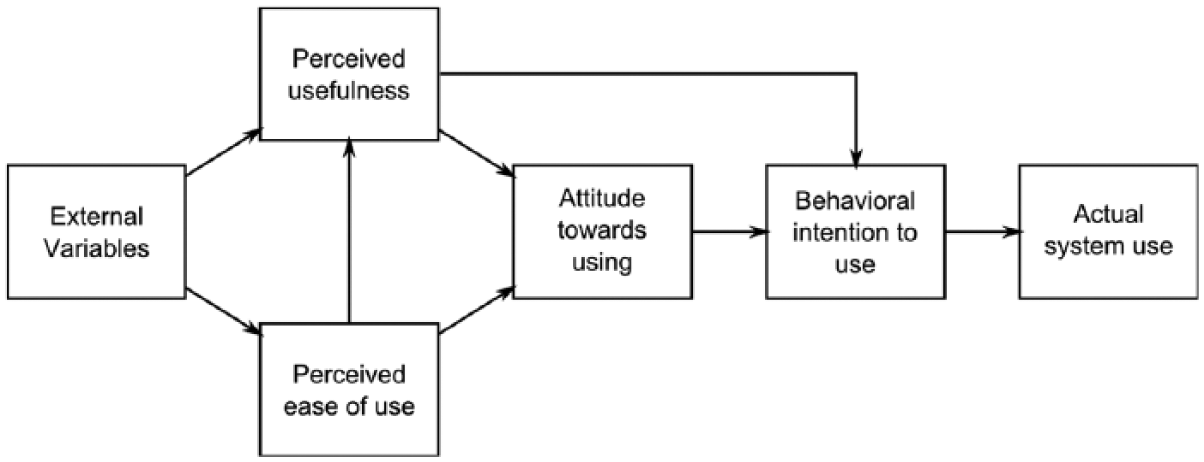
The technology acceptance model (TAM), based on Davis et al. (1989: 985).
The will, skill, tool model for technology integration (WiSTTI)
As Velázquez (2006) indicated in his literature review, the ‘Will Skill Tool’ model of technology integration (WiSTTI) comprises both internal and external factors relating to technology use and is, in the first instance, a model which conceptualizes the use of computers by school and university students. Nonetheless, further developments have led to a ‘teacher version’ of this model that also contains teachers’ attitudes and beliefs (will), abilities (skill), and access to digital technologies (tool, see Figure 3) as structural prerequisites for the integration of digital technology into classroom instruction. In addition to the two internal factors (will and skill), the model also includes an external factor (tool) that cannot be altered effectively by the teachers themselves. For example, when a school does not have appropriate computer resources for teachers to use digital media for instructional purposes, the likelihood that ICTs will be used is dramatically reduced. Knezek et al. (2000) showed that the structural components in the model are valid in this context, while other scholars have confirmed the validity of these components for the cultural settings of Switzerland (Petko, 2008), the USA and Mexico (Velázquez, 2006). Moreover, ‘will’ and ‘tool’ have been shown to be direct predictors of technology integration, while the ‘skill’ component functions as a mediating variable between ‘will’ and technology integration (see Velázquez, 2006). Accordingly, each of these factors, namely ‘will’ (Chen, 2010; Hammond et al., 2011; Knezek et al., 2003), ‘skill’ (Hammond et al., 2011; Knezek et al., 2003), and ‘tool’ (Hammond et al., 2011; Knezek et al., 2003), can be regarded as important predictors of technology integration and the use of digital media by teachers.
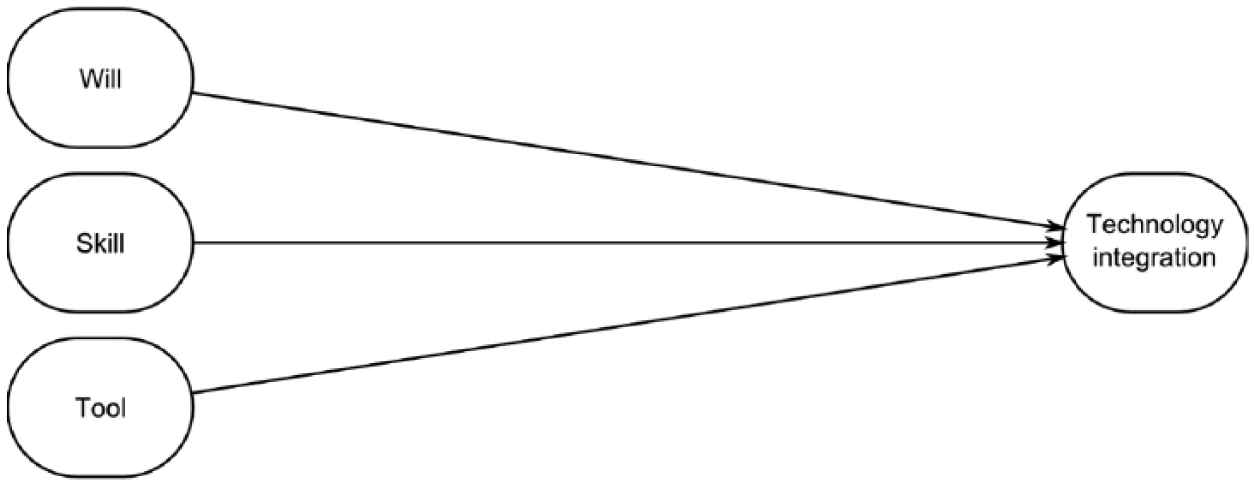
The ‘will, skill, tool model of technology integration’ (WiSTTI), based on Velázquez (2006: 27).
Another interesting take on the WiSTTI model is found in Mishra and Koehler’s (2007) concept of ‘technological pedagogical content knowledge’ (TPCK). According to Petko and Döbeli-Honegger (2011), the TPCK model can be regarded as a differentiation of the WiSTTI’s ‘skill’ component and therefore complements the competencies and knowledge teachers need to integrate technology successfully into instructional settings. Given that this paper focuses on the ‘will’ component, we refer interested readers to the relevant literature cited above for more information on the other factors.
The attitudes and beliefs that are associated with the ‘will’ component differ from instrument to instrument. Early questionnaires like the ‘computer attitude measure’ (CAM; see Kay, 1989) are based on the psychological theory that attitudes are subdivided into affective, cognitive and conative components. Here, affect reflects the feelings that a person has towards an attitude object (with semantic differentials ranging, for example, from unhappy to happy, or from bad to good), while cognition depicts the perceptions and knowledge of an attitude object (e.g. ‘computers motivate students’). Conation reflects the behavioral intentions and actions with respect to an attitude object (‘use a computer on a regular basis’). This so-called tripartite model has also been complemented by perceived control, which can be described ‘as a confidence construct aimed at specific behaviors or activities’ (Kay, 1993: 372).
The ‘Teachers’ Attitudes Toward Computers’ (TAC) questionnaire has proven to be a reliable measure and gathers information about teachers’ interest in, comfort with, accommodation of, interaction with (e-mail), concerns regarding, utility of, and semantic perceptions of computers. Indeed, it has ‘become the primary indicator of teacher attitudes or will in the Will, Skill, Tool Model of Technology Integration’ (Christensen and Knezek, 2009: 150). Furthermore, some investigations show that large degrees of variation can be explained by the model’s ‘will’ component (see Velázquez, 2006).
Empirical findings and current state of research: teachers’ attitudes and beliefs regarding the use of ICT in educational contexts
The TAM stresses above all the relevance of teachers’ attitudes and beliefs with regard to the implementation of digital technologies in educational settings, and can thus be regarded as the most influential model in this field. However, these attitudes and beliefs are important regardless of the theory or model used to research the factors which support or hinder the implementation of ICT in an educational context. Accordingly, we reviewed the literature regarding the attitudes and beliefs of teachers. Even if similar attitudes and beliefs are regarded as important in other approaches, we have restricted ourselves in the process to the terminology used in the TAM, because this is the most prominent model in the field.
Empirical evidence: the importance of single attitudes and beliefs and/or components of teachers’ will
Two key questions from an IS (information systems) research perspective are whether the findings of the TAM are culturally transferable, and whether the assumptions of the model are valid in multiple cultural settings. This is also important for the study presented at hand, which takes different countries into account. While some researchers found that the assumptions of the TAM are valid for Western countries (e.g. Switzerland and the USA) but not for non-Western countries (e.g. Japan or Uruguay; see McCoy et al., 2005; Straub et al., 1997), others concluded that PU (perceived usefulness, see above) seems to be important in Western countries, whereas PEU (perceived ease of use) is of more relevance in their non-Western counterparts (Mao et al., 2005; Schepers and Wetzels, 2007). Given that the aforementioned models comprise both external (e.g. ICT infrastructure or technological/pedagogical support) and internal (e.g. attitudes and beliefs) factors that can contribute to the use of technology by teachers, researchers – in a second step – expanded their interest to the relative importance of the investigated variables (see Chen, 2010). Following Ertmer et al. (2006), it can thus be argued that ‘based on previous literature (…), intrinsic belief systems appear to be a strong, if not the primary, contributing factor in teachers’ efforts to use technology’ (Ertmer et al., 2006: 57 f). Furthermore, most meta-analyses evaluating the TAM come to ‘…the conclusion that has been widely reached through qualitative analyses: that TAM is a powerful and robust predictive model’ (King and He, 2006: 751).
Thus the TAM and the central attitudes and beliefs of teachers can be regarded as potential predictors of the use of ICT in educational contexts. Similarly, our literature review indicated that the main assumptions of the TAM are valid in Western countries and can therefore be used to corroborate our analyses of the situation in three European nations. This confirms our decision to restrict our literature review to the attitudes and beliefs modeled in the TAM as correct. In the following we will discuss these individual attitudes and beliefs in detail.
Perceived usefulness and value
As already stated above, perceived usefulness (PU) can be broadly described as ‘the subjective probability that using a specific application system will increase [a person’s] job performance within an organizational setting’ (Davis et al., 1989: 985). As Chen (2010) pointed out, this definition is close to the definition of value used in psychology, where the expectancy–value theory seeks to explain a person’s intention to perform a specific target behavior. In fact, ‘value’ (defined as the extent to which an individual believes that there are benefits to performing a particular target behavior) has proven to be a relevant, albeit sometimes weak, predictor of the use of technology by teachers (Sang et al., 2011; Teo and Noyes, 2011; Wozney et al., 2006). Because PU and value are similar constructs, we use these terms interchangeably in this paper.
Many scholars have been able to show that PU (or value) has a direct effect on the behavioral intention (BI) to use computers in educational settings (Bertram and Waldrip, 2013; Davis et al., 1989; Ertmer et al., 1999; Fathema et al., 2015; Pynoo et al., 2011; Teo, 2009), which in turn is a relevant predictor for actual computer use. Others, in contrast, only found a weak direct effect of value on the use of technology in education (Chen, 2010).
In addition to the direct effect on behavioral intention, PU (or value) also affects other elements. In this context, Teo (2009) observed a significant effect of PU on attitudes towards computer use (ATCU), which in turn functions as a moderator variable between PU and BI. Furthermore, Teo and Noyes (2010) were able to show that this relation is less strong for pre-service teachers in the UK than it is for their counterparts in Singapore. At the same time, they were able to show that instruments to measure PU in the UK and Singapore are invariant and therefore are valid for both cultural contexts. Other research has also shown that PU is influenced by external variables such as self-efficacy (see Teo and Noyes, 2010).
Perceived ease of use: expectancy, self-confidence and self-efficacy
Perceived ease of use (PEU) ‘refers to the degree to which the prospective user expects the target system to be free of effort’ (Davis et al., 1989: 985). ‘In other words, they must have a high expectancy about their task performance’ (Chen, 2010: 34) or – in keeping with the terminology used in Banduras’ social–cognitivist learning theory – a high self-efficacy. In this context, it is noteworthy that PEU, expectancy, self-confidence and self-efficacy do not refer to the actual ICT competencies of teachers but, rather, to the extent to which they judge ‘their own capabilities to organize and execute courses of action required to achieve specific goals’ (Teo, 2009: 304). In the following, the terms PEU, expectancy and self-efficacy are used interchangeably.
Self-efficacy, or expectancy, has a direct effect on the acceptance and use of digital technologies (Chen, 2010; Hammond et al., 2011; Petko, 2012; Teo et al., 2008; Wozney et al., 2006) as well as on the behavioral intention to use computers (Davis et al., 1989; Pynoo et al., 2011). However, the findings in this regard are not consistent. Indeed, some researchers concluded that the effects of PEU on BI are weak and suggested that if there is any effect at all it is because of the indirect effects via PU (Ma et al., 2005; Teo, 2009). In fact, even meta-analyses in the field concluded ‘…that perceived ease of use appears to have limited direct effects on user acceptance’, thus indicating ‘…that teachers are unlikely to accept a technology simply because it is easy to use’ (Hu et al., 2003: 236 f). It can therefore be concluded that PU (or value) is a stronger predictor of actual computer use than PEU (see Haaparanta, 2008; Schepers and Wetzels, 2007; Sipilä, 2011).
Further characteristics fostering the engagement of teachers with technology
Together with the afore-mentioned internal factors, a substantial body of research has investigated the relation between other individual or contextual background characteristics and the implementation of ICT in instructional settings by teachers. For example, many scholars focus on gender as a mediating or influencing factor for the acceptance of technology. Recent research – especially within the TAM framework – concluded that the TAM holds for both women and men (Teo et al., 2015). However, regarding certain differences in single components, research has indicated both that attitudes are ‘broadly consistent across […] gender’ (Hammond et al., 2011: 196) and that single attitudes and/or beliefs are affected by gender (Jimoyiannis and Komis, 2008; Venkatesh and Morris, 2000).
Similar to investigations focusing on the relevance of self-efficacy as a measure for the expectation of having the appropriate skills to fulfill a task, several studies have shown that the corresponding actual skill level/experience and/or training can positively affect either actual technology use (Chen, 2010; Petko, 2008) or the extent to which teachers believe that certain factors are important (Ertmer et al., 2006). Furthermore, the level of experience seems to have a different effect on the PEU of male and female end-users (Venkatesh and Morris, 2000). Overall, the relevance of experience or skill for the adoption of ICT has been confirmed by a substantial body of research (Christensen and Knezek, 2002; Knezek et al., 2003; Knezek et al., 2000; Levine and Donitsa-Schmidt, 1998; MacCallum et al., 2014; Sipilä, 2010).
Other aspects that have been shown to have a positive effect on the use of technology by teachers include perceived enjoyment (Teo and Noyes, 2011), the level of support received (Hammond et al., 2011), subjective norms (Hu et al., 2003; Kreijns et al., 2013; Pynoo et al., 2011; Schepers and Wetzels, 2007), and constructivist orientations (Petko, 2012).
Current state of research: teacher typologies regarding attitudes and beliefs towards ICT
With regard to the implementation of ICT in schools, many studies have shown that there are many prerequisites on several levels in institutionalized education (student, teacher, school, and system levels; see Petko and Döbeli-Honegger, 2011). However, only a few studies have focused on the patterns in teachers’ attitudes and beliefs towards technology in education. Prestridge (2012), for instance, uses principal component analysis (PCA) and qualitative approaches (interview study) to differentiate four teacher groups according to their ICT use in primary education – suspecting specific beliefs to exist behind specific ICT practices. The results of Prestridge’s study of 48 teachers in four Catholic primary schools in Queensland, Australia, indicated that the major teacher group could be characterized by the belief ‘that ICT can enhance learning but they do not know how’ (Prestridge, 2012: 454). These teachers – whom Prestridge refers to as ‘foundational’ ICT users – have a basic view of teaching and learning with ICT. Teachers assigned to the ‘developing ICT practices’ group ‘could be described as believing in the use of ICT as a tool to achieve established curriculum outcomes with teacher-directed practices. A view towards facilitating the use of ICT as an embedded part of multi-disciplinary learner-enquiry is evident but not actualised’ (Prestridge, 2012: 455). Teachers whose ICT practices can be described as skill-based know about the future importance of ICT skills for participating in society – most importantly, in the labor market. ‘They acknowledge the proliferation of technology in society and are trying to ensure that their students have the ICT skills to function effectively in their future. They are focused more on the functionality of ICT than the use of ICT as a tool to enhance learning’ (Prestridge, 2012: 456). In contrast, teachers who realized fairly complex digital tasks in their classrooms were regarded by Prestridge as those who applied digital pedagogical practices and therefore showed ‘strong beliefs about both the value of ICT as a learning tool and its relevancy to working and social life’ (Prestridge, 2012: 457). In Prestridge’s study, the majority of teachers fell into the first category, i.e. were foundational ICT users who agree that ICT can enhance learning in school.
Using a similar factor analysis approach, Christensen and Knezek (2002) isolated core attitudes and beliefs of teachers in different stages of adopting digital technologies. In their study, educators with a basic level of technology adoption (‘awareness’) ‘rated themselves lower in computer enjoyment, computer avoidance, [use of] e-mail, productivity, and overall perception of computers. They rated themselves as being more anxious toward computers and more negative in their feelings about the impact of computers’ (Christensen and Knezek, 2002: 13 f). In contrast, the group of teachers at the opposite end of the technology adoption scale (stage 6) consistently showed ‘the highest mean scores among the six stages of adoption category groupings in computer enjoyment, e-mail, productivity, semantic perception of computers (…). This subset of teachers also rated themselves the lowest of all the groups of teachers in anxiety, computer avoidance, and a negative feeling toward the impact of computers’ (Christensen and Knezek, 2002: 14).
Another approach to finding patterns in teachers’ attitudes and beliefs in relation to ICT was published more recently by Mama and Hennessy (2013). Using both qualitative and quantitative measures they were able to identify four different teacher groups that differed in their beliefs regarding the value of the use of ICT in teaching and learning. Three of the four groups demonstrated fairly positive beliefs in this regard, with only one group characterized by a negative belief. This latter group believed that ICT use in teaching was ‘unnecessary’ (Mama and Hennessy, 2013: 383) and threatened the authority of the teacher. The same picture emerges with regard to the value of using ICT for learning: the teachers who reject the value of ICT for teaching also do not see any advantage of using ICT for students’ learning. The argument that ICT only distracts students from learning seems to prevail.
Research gap and research questions
While researchers essentially agree that attitudes and beliefs enable or hinder the adoption of technology by teachers and that intrinsic factors such as the perceived usefulness of a technology are important for the implementation of new technologies in educational settings, little is known about whether teachers share certain beliefs or attitudes and can therefore be assigned to teacher groups that are characterized by similar attitudes and beliefs. As seen in the literature review above, the methodological approaches that have been used to find patterns in teachers’ attitudes and beliefs towards using ICT in instructional settings are limited to basic factorial (Christensen and Knezek, 2002; Prestridge, 2012) or qualitative approaches (Mama and Hennessy, 2013). Furthermore, existing investigations regarding patterns in teachers’ attitudes and beliefs are limited to English-speaking populations and lack a wider perspective – of example, Europe. Last but not least, the samples used in existing studies are not representative for the teacher population, so that their results are subject to limitations.
This paper addresses all three of these research gaps by using an elaborate methodological approach and drawing on representative data for secondary school teachers in three different European education systems (Czech Republic, Germany and Norway). This is particularly relevant given the lack of data which allow researchers and education stakeholders to gain insights into the attitudes and beliefs of secondary school teachers in their own and other educational systems (as noted above).
Specifically, the paper addresses the following research questions.
Is there a typology of teachers with different attitudes and beliefs towards the potentials of ICT for learning?
If so, which background characteristics characterize these teacher groups?
Does the typology of attitudes and beliefs describe the computer use of teachers in the three European education systems studied?
Whereas the first question addresses the research gap with respect to patterns in teachers’ attitudes towards and beliefs about information technology, the second seeks to evaluate the extent to which a given typology could be affected by central background characteristics (age, gender, taught subjects, and school-specific lack of infrastructure). Finally, the third research question focuses on whether a possible typology could be used to describe the level of computer use by teachers. Because the data used stem from three European countries, it follows that this research also focuses on the European context.
Methodology
Secondary analysis of ICILS 2013: overview of relevant sampling procedures in ICILS 2013 and participating countries
On the basis of the theoretical (see ‘Theoretical allocation’ section, above on) and empirical synopsis (see ‘Empirical findings and current state of research concerning teachers’ attitudes and beliefs’ section, above), a categorization of teachers according to their attitudes and beliefs would extend the current state of research. Accordingly, the analysis described below endeavors to close the existing research gaps that were identified. In doing so, it draws on a representative database containing ICILS 2013 data from three countries and uses an elaborate methodological approach which covers and draws upon representative databases from three non-English-speaking countries. The ICILS 2013 study was essentially the first large-scale study to focus on the computer and information literacy (CIL) of secondary school students, measuring this in a fully computer-based test environment and drawing representative samples from 21 education systems around the world. In addition to the overall performance of students tested in ICILS 2013, a substantial body of information was gathered to allow reflection on the general requirements and conditions for the acquisition of CIL. For this purpose ICILS 2013 also administered a questionnaire to a representative cross-section of grade eight teachers (see Fraillon et al., 2014); that is, teachers teaching students with an average age of 14.4 years (Germany: 14.5 years, Czech Republic: 14.3 years, Norway: 14.8 years). The aim of the sampling routines in ICILS 2013 was to draw representative samples from the target population in every participating country. As in other large-scale IEA assessments, a multi-stage stratified cluster sampling approach was applied which first drew a sample of schools and then a representative sample of (grade eight) teachers in those schools. These teacher samples have been considered in this paper, taking into account the appropriate teacher weights. Using an untransformed total teacher weight in cross-country analyses in which countries should be treated equally would result in a bias, because more teachers from countries with large sample sizes and fewer teachers from participating countries with smaller sample sizes would be included proportionally in the analyses (see Foy, 2013). Accordingly, the IEA senate weight – a linear transformation of the total teacher weight standardized to a weighted sample size of 500 persons per country – has also been used in the analyses presented in this paper. In IEA studies, this weight is used to treat different countries equally in cross-country analyses and to prevent any bias that could arise from the different sample sizes for the participating countries (for details regarding the sampling procedures and the senate weight in ICILS 2013, see Meinck, 2015; Meinck and Cortes, 2015a, 2015b).
Because answering our research questions for every participating country in ICILS 2013 could not be regarded as purposeful, we restricted our analysis – as already mentioned – to three European states: the Czech Republic, Germany and Norway. This comparison of European countries can be justifiably regarded as purposeful, because it compares the attitudes of teachers in Germany, where the use of computers for teaching purposes was the lowest in the 21 ICILS 2013 participating countries (Eickelmann et al., 2014), with those of their counterparts in the Czech Republic, which is the top-performing country in ICILS 2013, and in Norway, where a holistic digital curriculum has already been implemented. The potential differences in the attitudes of teachers in the selected countries were expected to yield insights into the acceptance and use of digital media for teaching and learning. In total, the data of n = 4628 teachers formed the basis for the analyses in this paper (see Table 1). However, because not all teachers responded to all the items that formed the focus of our analyses, a small group had to be removed from the dataset (because they did not respond to any of the variables under consideration). Accordingly, eight teachers from both the Czech Republic and Germany were excluded from the analysis, together with 26 teachers from the Norwegian sample (see Table 1). One constraint of the analysis method is that it requires a minimum amount of information (at least one item) on a subject (in our case a teacher) in order to identify patterns in the responses given. This procedure is in line with recommendations on how to treat missing data in sample surveys (see Lüdtke et al., 2007).
Sample of grade eight secondary school teachers in ICILS 2013.
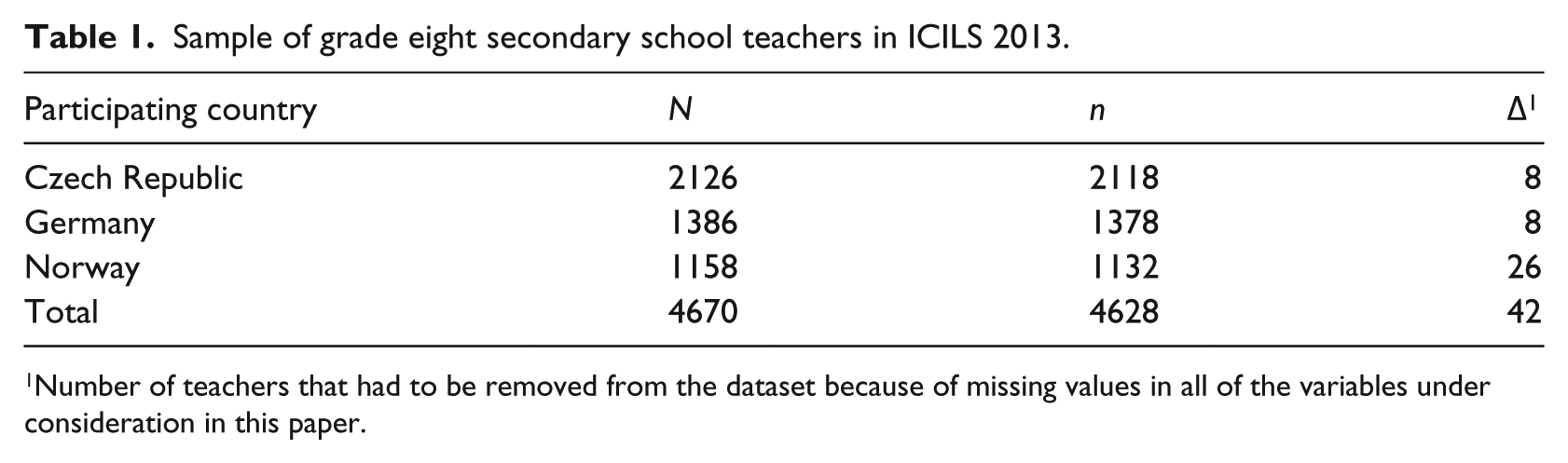
Number of teachers that had to be removed from the dataset because of missing values in all of the variables under consideration in this paper.
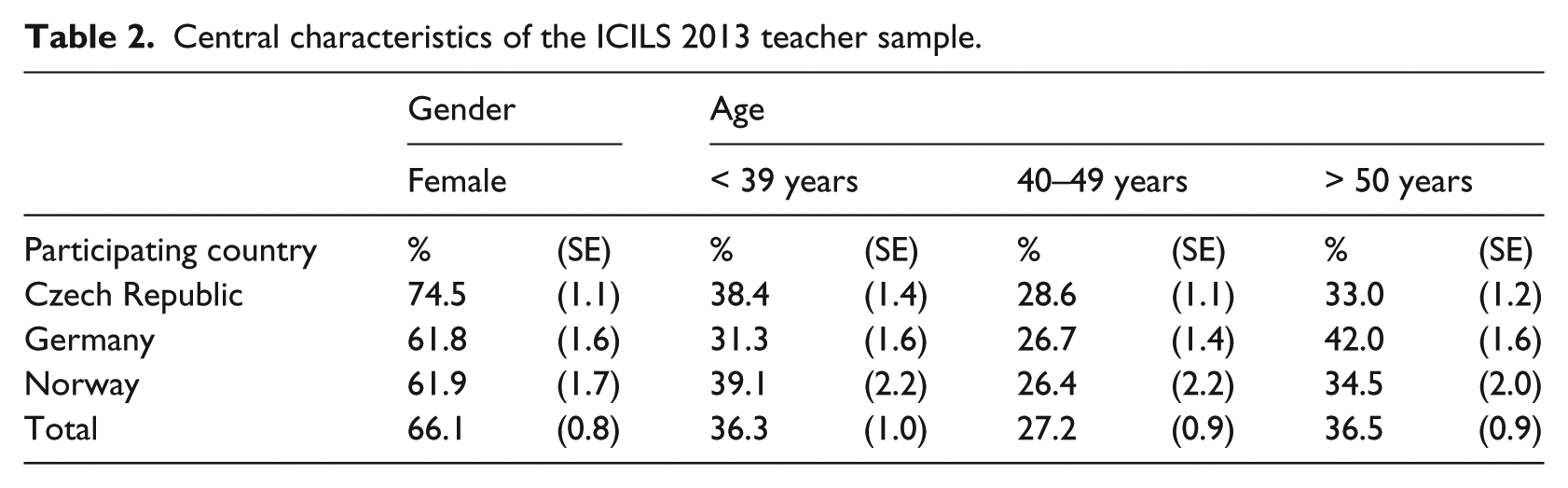
Table 2 shows further sampling characteristics, namely the proportions of female teachers (gender) and teachers in three specific age groups. As can be seen, female teachers are the majority group in grade eight in all participating countries. This is particularly obvious in the case of the Czech Republic, where nearly two thirds of the population of grade eight teachers are female. In the other two countries, about six out of ten grade eight teachers are female. Across the three participating countries, 66.1% of teachers are female. As far as teacher age groups are concerned, there is a fairly balanced distribution both within and across the three countries. The only result that could potentially be regarded as remarkable here, is the fact that 42.0% of the teachers in Germany are 50 years of age or older.
Central characteristics of the ICILS 2013 teacher sample.
To provide further insights into the general and subject-specific usage of computers by teachers’ in the selected countries, Table 3 shows the extent to which teachers reported using computers for teaching and learning in different learning areas. It is evident that teachers in Norway used computers the most, while teachers in Germany showed the lowest rates of computer use in all learning areas. Disregarding information technology as a teaching subject (where the number of teachers using computers is high in all three countries), teachers of the human sciences in the Czech Republic used ICT mostly for instruction (86 %). In contrast, teachers in Germany reported the greatest use of computers for instruction in the test language (German). 1 In Norway, nearly all science teachers (99 %) used ICT in the classroom. Overall, there is considerable variation in the subject-specific use of ICT in different learning areas, with the low usage rates in Germany being particularly evident. Teachers in Germany are outperformed in this regard by their peers in Norway and the Czech Republic in all learning areas.
National percentages of teachers using computers in teaching and learning by learning area.
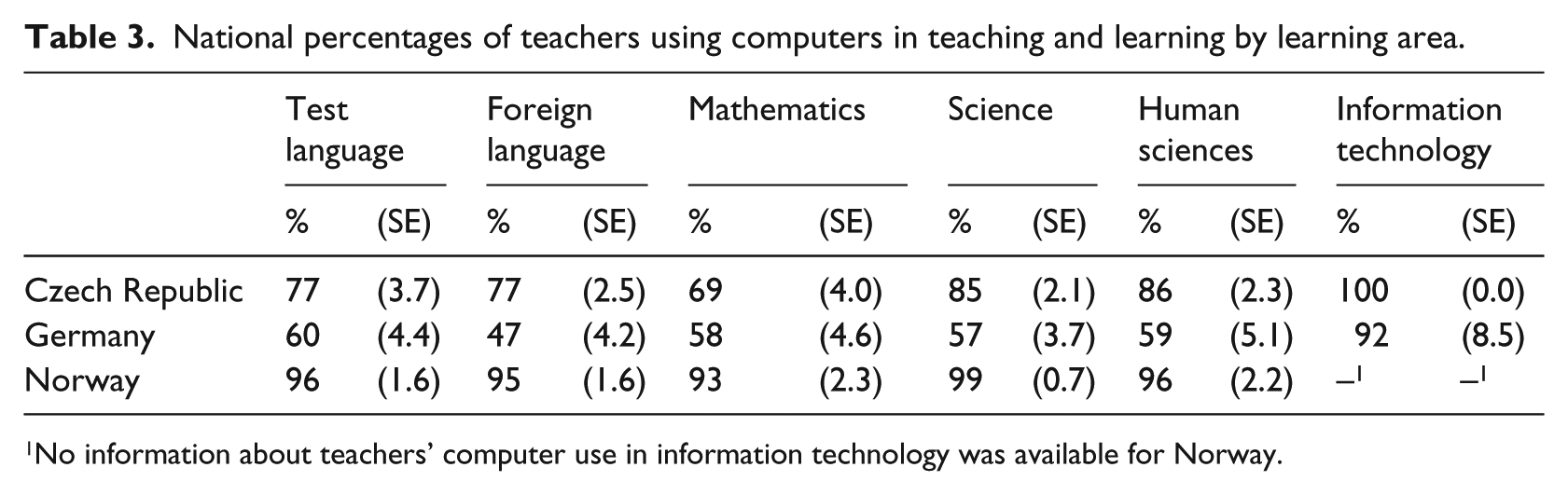
No information about teachers’ computer use in information technology was available for Norway.
Methods and instruments
Answering our first research question required a method that detects similarities and differences in given datasets. A common feature of such structure detection methods in the social sciences is that they ‘allocate objects according to similarity to preferably homogenous groups’ (Schnell et al., 2011: 453). To identify patterns in the attitudes and beliefs of teachers in the countries studied, we use a Latent Class Analysis (LCA, McCutcheon, 1987). In principle, we could also have used a cluster analysis method; however, given the lack of objective criteria that could have been used to determine the similarity of teachers – and the multiplicity of available cluster algorithms (see Schnell et al., 2011) – we decided to opt for the LCA approach. The primary reasons for this choice were that (a) the LCA requires ‘no pre-experimental hypotheses’ (Rost, 2011) regarding the number of groups, and (b) a possible group solution can be compared by measures of relative model fit in order to obtain the optimal solution for a given dataset (see Geiser, 2011). In this context, we considered several information-based measures for comparing model fit (see Rost, 2011: 155). Such measures allow researchers to compare group solutions within a latent class framework, whereby differences in the measures are represented by a different weighting of the number of parameters and the sample size. The Akaike Information Criterion (AIC; see Akaike, 1974) comprises both the final deviance (likelihood) as well as the unweighted number of parameters. The so-called Bayes Information Criterion (BIC; see Schwartz, 1978) weights the number of parameters based on the logarithm of the sample sizes and, therefore, weights the number of parameters more strongly for bigger samples than the AIC. In a direct comparison of several group solutions, the model that fits the data best is the one which is characterized by the lowest AIC or BIC respectively (see Rost, 2011).
The LCA in this contribution was realized using ten items from the ICILS 2013 teacher questionnaire to explore whether there were any patterns in the attitudes and beliefs of the participating teachers. Table 4 shows the wording of these items, which can be allocated roughly to three thematic groups, namely accessibility and usefulness of digital information, enhancement of learning processes with ICT, and improvement of students’ skills and achievement (see Table 4). This was an ad hoc allocation which was used solely to stress certain similarities and differences in the ten items.
Wording of the items used and allocation to thematic groups.
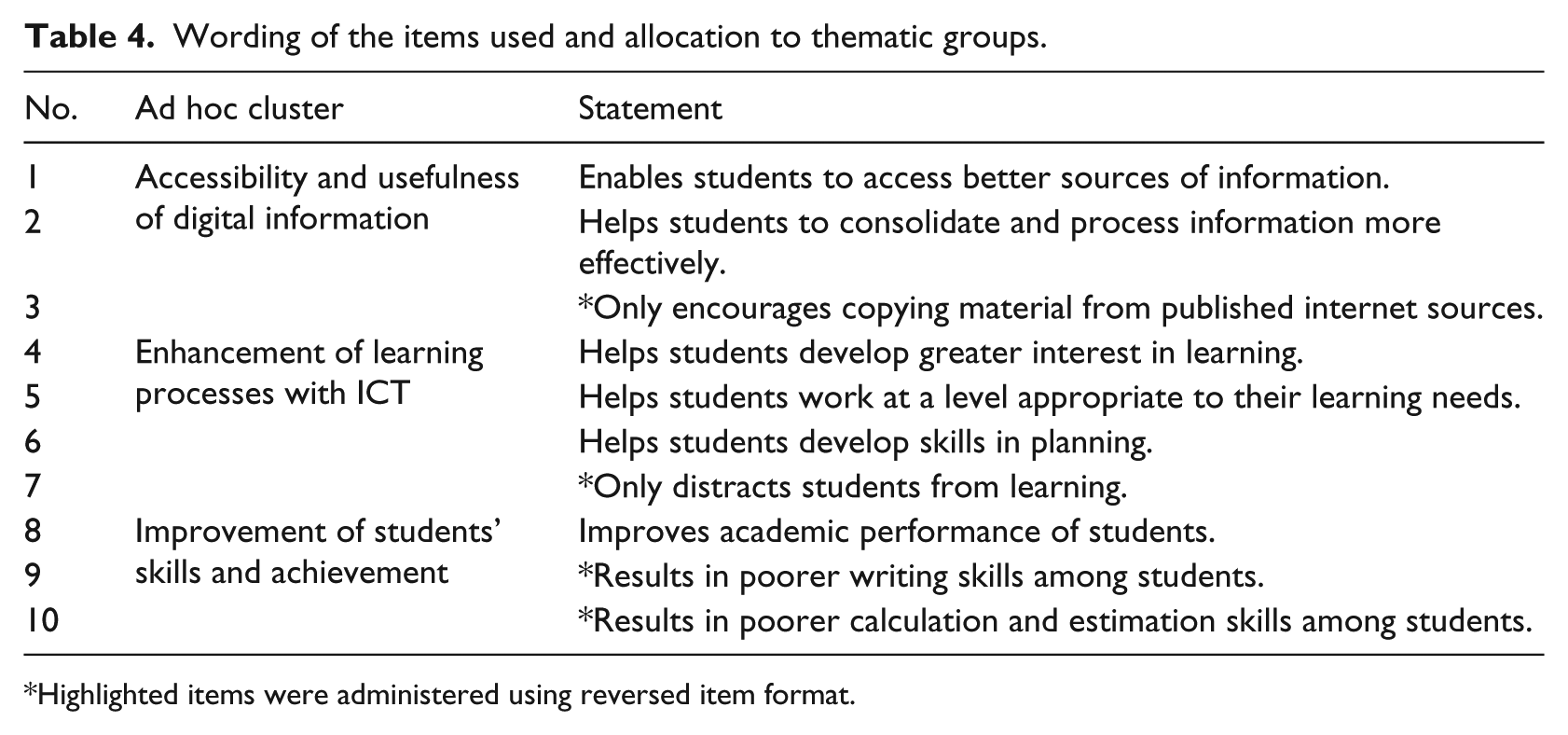
Highlighted items were administered using reversed item format.
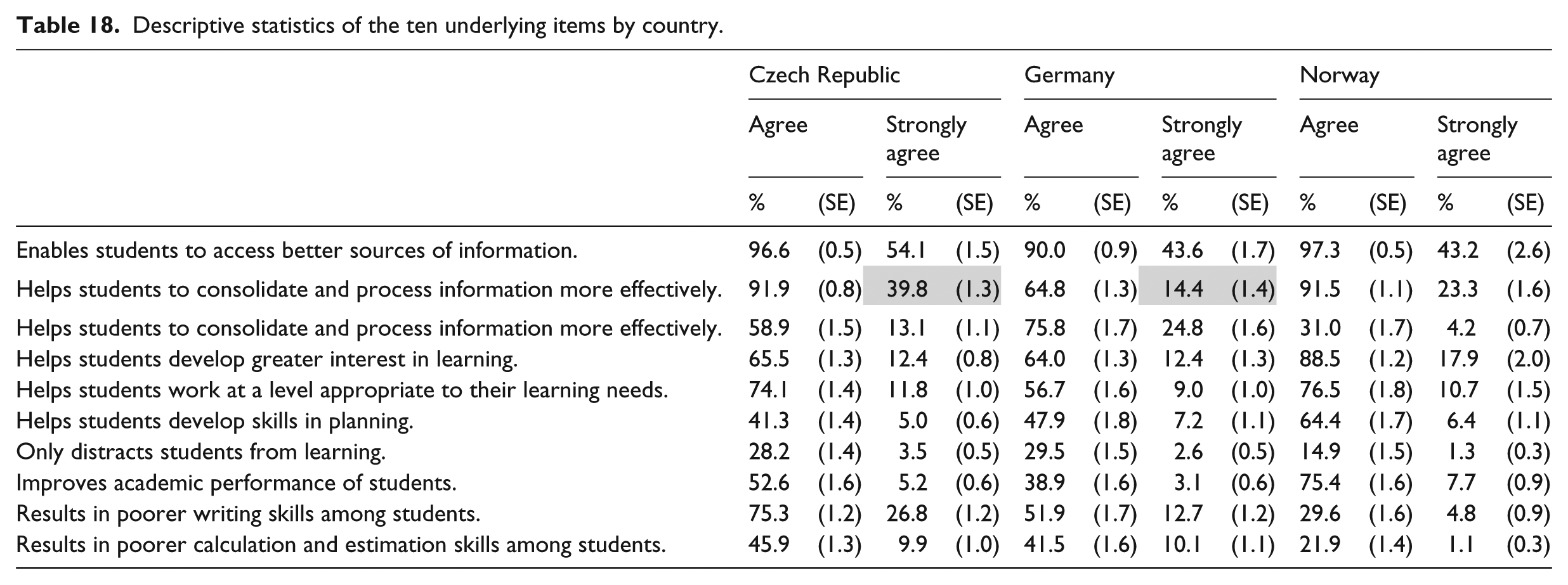
The accessibility and usefulness of digital information cluster comprises the responses of teachers to three statements intended to capture their beliefs about information processing using digital media. The second cluster captures teachers’ beliefs and attitudes about ICT and student learning processes. Here, the teachers were asked, for instance, to indicate whether or not they agreed that using ICT helps students to develop planning skills or whether or not they thought that using ICT only distracts students from learning. The third cluster of statements assesses the teachers’ responses to statements relating to the improvement of student skills and achievement. For example, teachers were asked whether or not they agreed that using ICT improves the academic performance of students or whether it results in poorer calculation and estimation skills among students (see Table 4). Expressed in the terminology used in the literature review, the items researched in this paper could be regarded as specific measures of PU. For all of the items, teachers were asked to indicate their level of agreement on a four-point Likert scale (possible responses: ‘totally agree’, ‘agree’, ‘disagree’, and ‘totally disagree’). Descriptive statistics for the ten items can be found in Table 18 in the Appendix. Independent of their allocation to themes, the ten items show sufficient internal consistency both across the participating countries (α = 0.81) as well as within the individual countries (Czech Republic: α = 0.81; Germany: α = 0.80; Norway: α = 0.81). Hence it can be assumed that the instruments used in this paper were indeed able to measure teacher’s attitudes and beliefs in a reliable manner.
For the LCA, the responses provided by the teachers were recoded to a dichotomous format that distinguishes teachers who did not agree with a statement from those who agreed with it. This approach was chosen because our LCA did not yield interpretable teacher groups using the non-dichotomized teacher data. The LCA was carried out using the statistical modeling software Mplus (Muthén and Muthén, 2012).
To answer research questions two and three we opted for the use of descriptive analysis methods. For research question two, we used the background information provided in the ICILS 2013 teacher questionnaire, which captured the gender, age, subjects taught, and perceived school-specific lack of ICT infrastructure of grade eight teachers. In the case of research question three – which focuses on the relevance of a possible typology with regard to teachers’ computer use – teachers’ reports regarding the frequency of their use of ICT in the classroom were used as the dependent variable. The teachers were asked to indicate their frequency of computer use ‘at school when teaching’ on a five-point Likert scale (possible responses: ‘never’, ‘less than once a month’, ‘at least once a month but not every week’, ‘at least once a week but not every day’, and ‘every day’). Descriptive statistics for research questions two and three were generated using the IDB Analyzer, which is also used by the IEA as a tool for secondary analyses on ICILS 2013 data (see Gonzalez, 2014). Because ICILS 2013 used a multi-staged clustered sampling approach, ICILS 2013 teachers (and students) share similar attributes – for example, the school they teach in – and therefore cannot be considered a random sample. Analytic software that assumes the given data was randomly sampled would lead to an underestimation of standard errors and, consequently, to bias. The IDB Analyzer uses the so-called Jackknife Repeated Replication Technique (Johnson and Rust, 1992; Rust, 2014), which resamples the data 75 times and calculates an averaged and unbiased standard error, thus allowing us to consider this central statistic in our analyses.
Teachers’ attitudes and beliefs towards ICT: findings regarding a typology in the three Central European countries
Model fit of the derived group solutions of teachers’ attitudes and beliefs
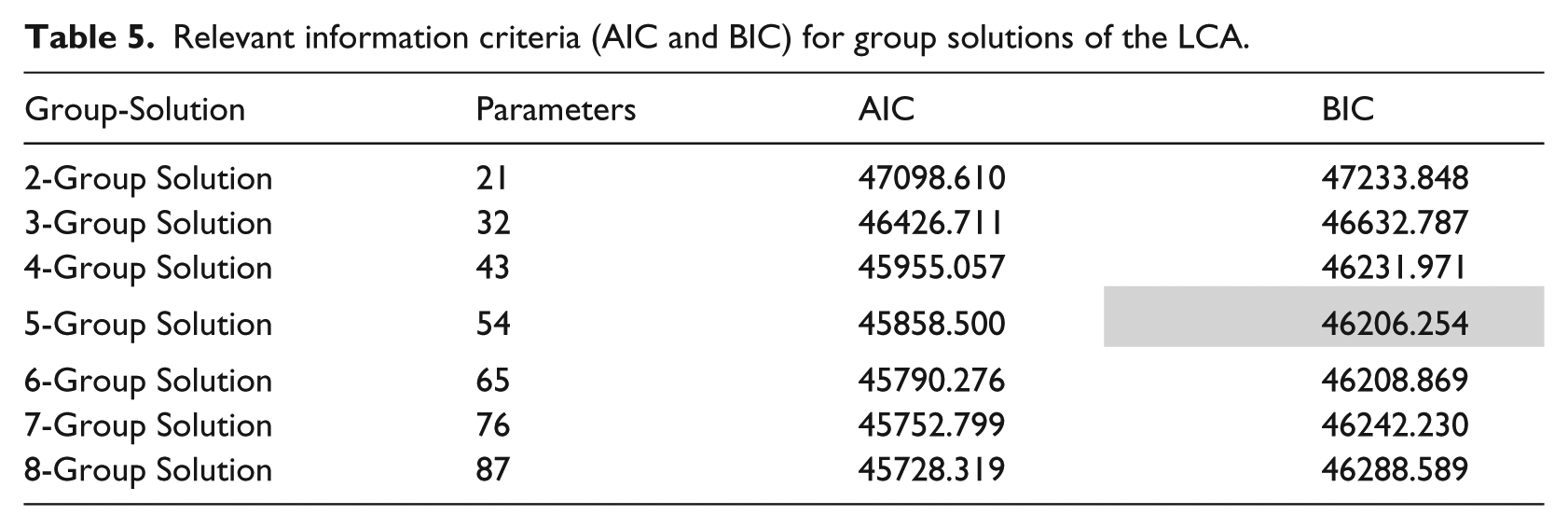
To identify patterns in teachers’ attitudes and beliefs regarding the use of ICT for teaching and learning, we used ten items from the ICILS 2013 teacher questionnaire and an LCA (see section on ‘methods and instruments’). As discussed in the previous section, the main advantage of an LCA is that no ‘pre-experimental hypotheses’ (Rost, 2011: 155) regarding the number of extracted groups are required, because the empirical information about the so-called model fit indicates which model (i.e. which number of extracted patterns) fits the data best (see ‘methods and instruments’). Table 5 summarizes the corresponding model fit information for each of the seven group solutions. The best-fit model is characterized by the lowest AIC and BIC values. As can be seen from Table 5, no group solution emerged from the LCA for the AIC because the latter is continuously reduced when the number of patterns is increased in the analyses. However, the BIC indicates that a five-group solution is the best fit for the data.
Relevant information criteria (AIC and BIC) for group solutions of the LCA.
Description of five identified cross-national groups of teachers and their distribution in the three countries
Given that a five-group solution was identified empirically as the best fit (see Table 5), these five teacher groups are described with regard to content in the following. Figure 4 shows the likelihood of agreeing to the ten items used to assess teachers’ attitudes and beliefs regarding teaching and learning with digital technologies for the five teacher groups determined by the LCA as the best fit for the data. This diagram also provides for an assessment of the differences and similarities in the attitudes and beliefs of these teacher groups.
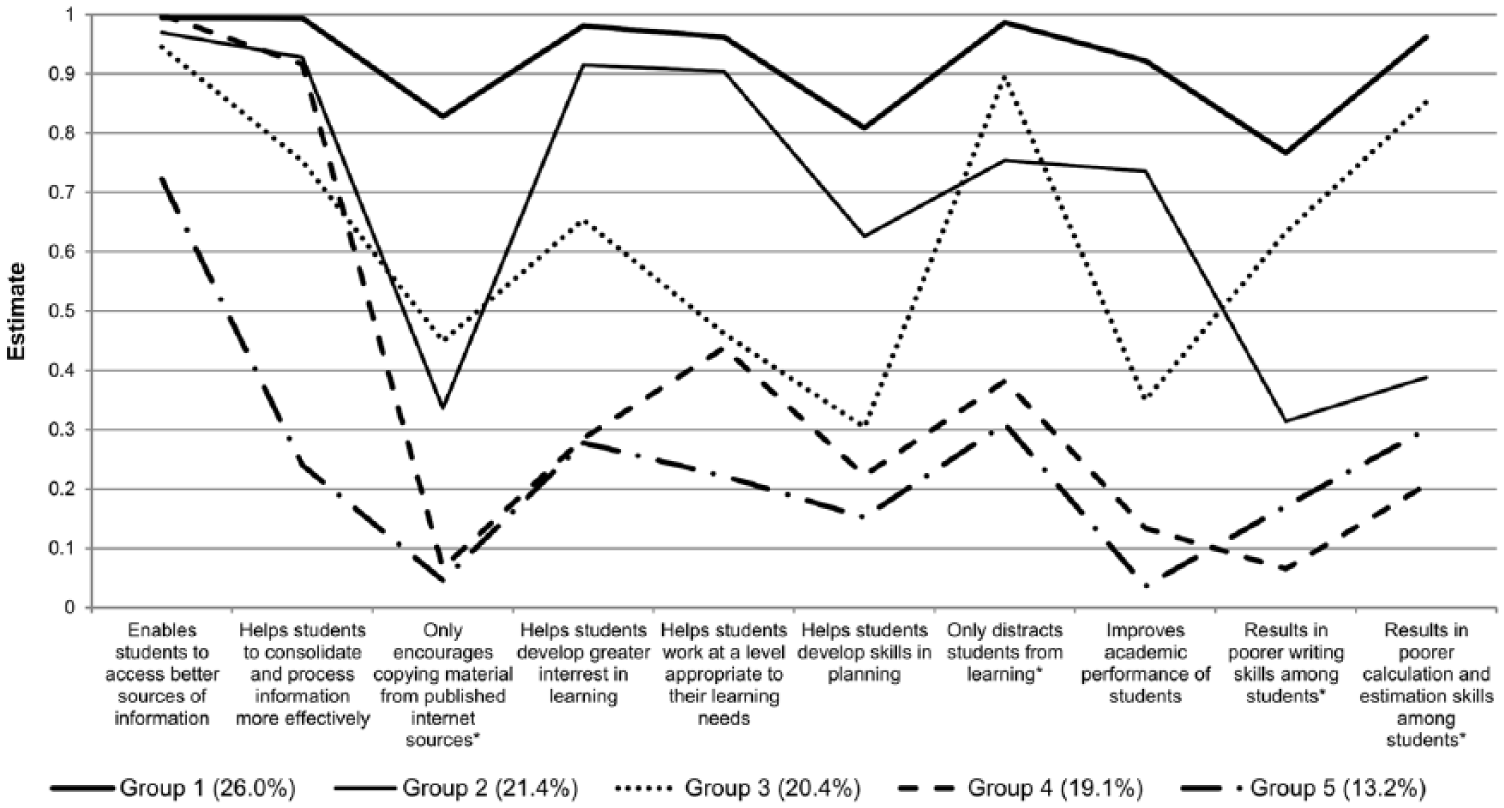
Likelihood of agreeing to the ten analyzed items from the ICILS 2013 teacher questionnaire in the five derived groups.
ICT enthusiasts (teacher group 1)
As can be seen in Figure 4, the teachers allocated to group one can be described as ‘ICT enthusiasts’. In general, they show a high level of agreement with all of the ten statements included in Figure 4. For example, they uniformly agree with the statements that using ICT enables students to access better sources of information, or that using ICT in school helps students to develop planning skills. Furthermore, they reject the reverse coded items, i.e. they do not agree, for example, with the statement that using ICT results in poorer calculation and estimation skills. Overall, these teachers seem to have a strong, positive view about the use of ICT in school education.
The ICT enthusiasts account for 26.0% of the sample and are thus the largest group. To provide a tangible description of the group, a selection of compositional characteristics has been taken into account. For the purposes of consistency, gender and age are used as compositional characteristics for each group and are summarized for the ICT enthusiasts group in Table 6. When compared to the dispersion of gender in the total grade eight teacher population of the European Union, no relevant gender-specific results emerge. However, grade eight teachers in the Czech Republic seem to be relatively young in this group: nearly half (46.4%) are under the age of 40 years, while only about one fifth (19.9%) are 50 years of age or older. For Germany and Norway, no relevant findings regarding gender and age emerge (see Table 6).
Compositional characteristics (gender and age) of the ICT enthusiasts across the three European countries.
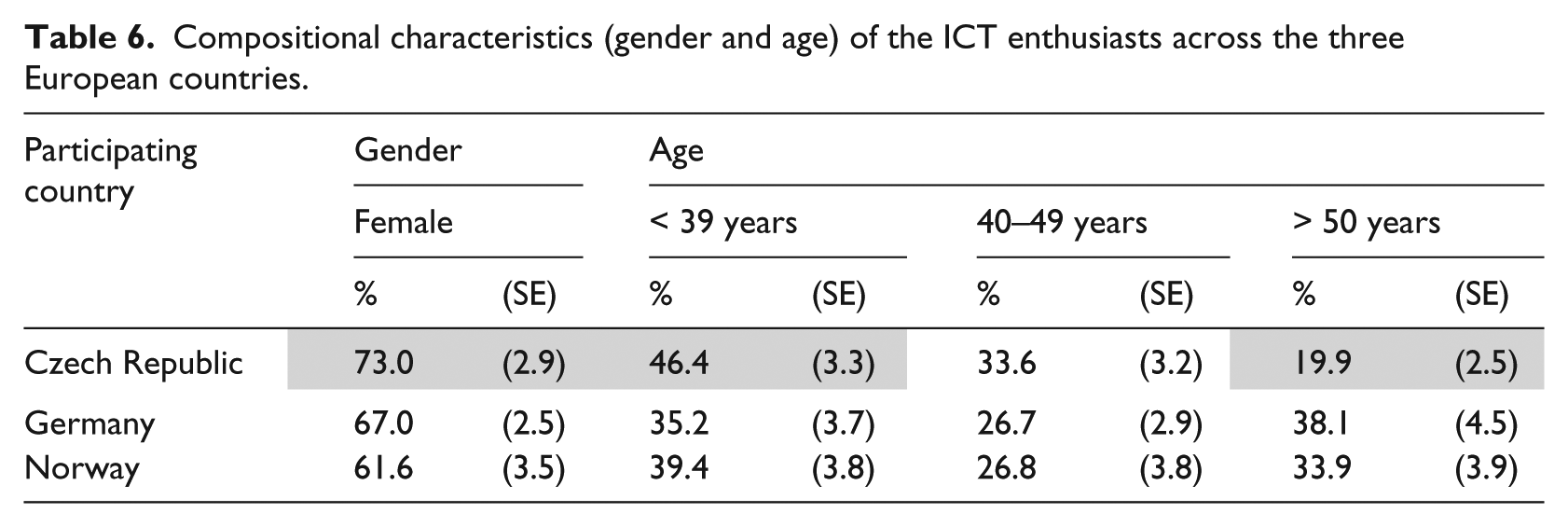
Table 7 shows the subjects taught by the teachers in teacher group 1. Nearly 40% of teachers in the ICT enthusiasts group in Norway are teachers of Norwegian (= the test language), whereas the proportion of test language teachers in the two other countries is substantially lower. Interestingly, foreign language teachers account for the largest proportion of ICT enthusiasts in Germany (36.5%). In the Czech Republic, the majority of ICT enthusiasts are science teachers (32.6%), compared to only 13.6 % in Norway. Even in Germany, the proportion of science teachers in group 1 is nearly twice as high (26.9%; see Table 7) as it is in Norway. The distribution of human sciences and information technology teachers is relatively equal.
Compositional characteristics (taught subjects) of the ICT enthusiasts across the three European countries.
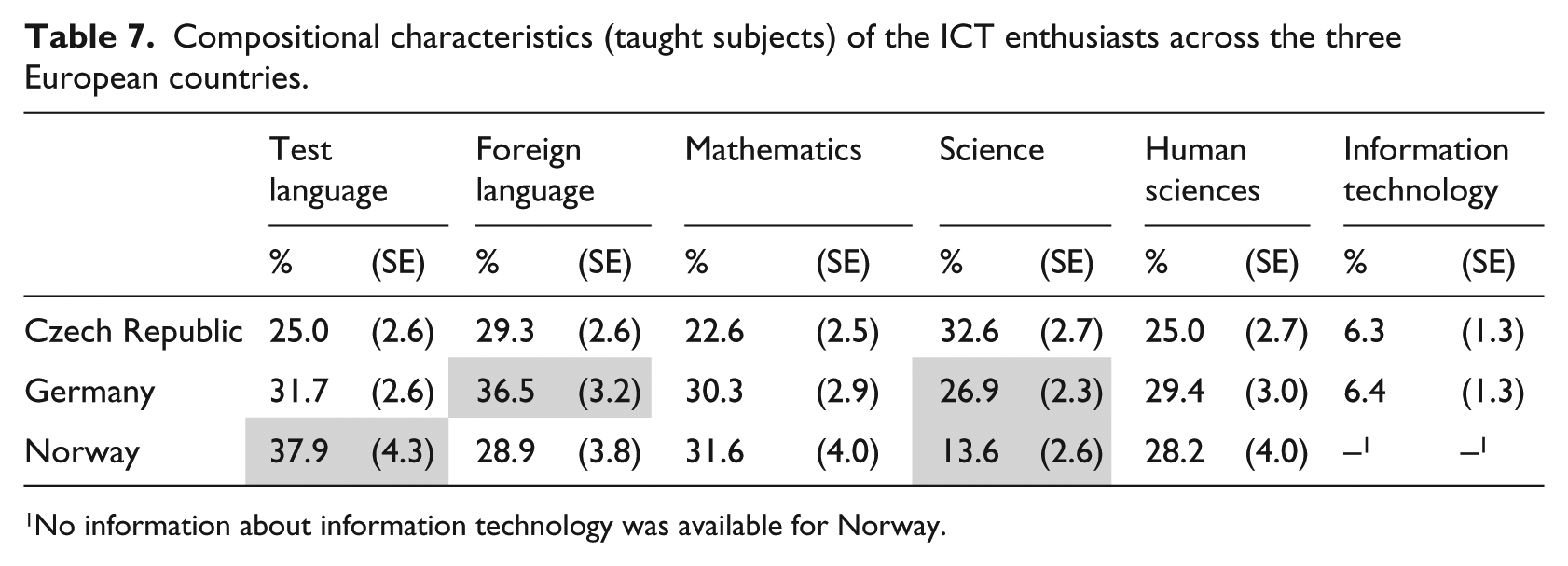
No information about information technology was available for Norway.
Partial ICT enthusiasts (teacher group 2)
The attitudes and beliefs of the second group of teachers – the so-called ‘partial ICT enthusiasts’ – contrast in part with those of their ICT enthusiast counterparts. The partial ICT enthusiasts also agree strongly with the statements that are positively related to the use of ICT in education; for example, that using ICT helps students to develop planning skills or improves their academic performance. However, in contrast to the ICT enthusiasts, the partial ICT enthusiasts agree to a greater extent with the statements that are negatively related to the use of ICT in education. For example, they seem to have concerns that students could use ICT to copy material from existing internet sources or that the use of digital technology could result in poorer student writing, calculating and estimation skills.
The teachers allocated to the partial ICT enthusiasts group account for 21.4%, or just over one fifth, of the teacher sample. Table 8 shows the central compositional characteristics of this group. With regard to age distribution, one main finding emerges: While in Norway (32.7%) and Germany (38.2%) almost or more than one third of these teachers are 50 years of age or older, the share of older teachers is clearly smaller in the Czech Republic (28.2%), while the share of younger teachers (< 39 years) in the partial ICT enthusiasts group is remarkably high (40.9%).
Compositional characteristics (gender and age) of the partial ICT enthusiasts within and across the three European countries.
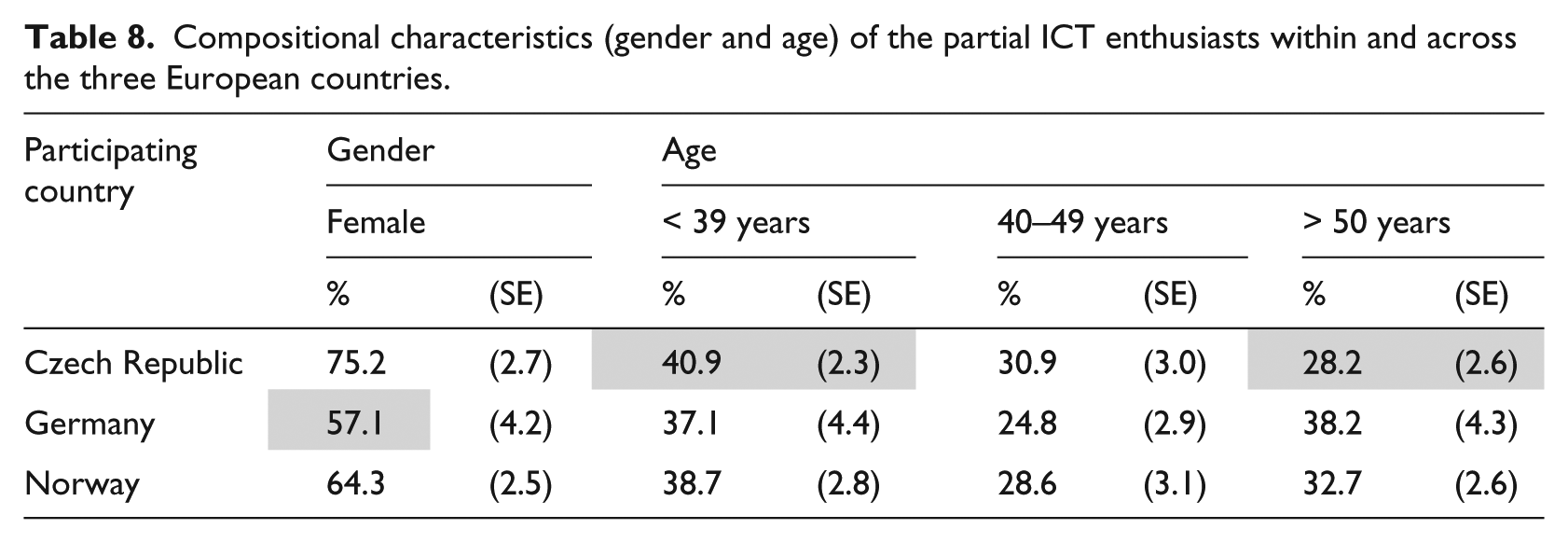
Table 9 shows the subjects taught by teachers in the partial ICT enthusiasts group. Noticeable differences between the three countries emerge only for test language and mathematics. About 40% of the teachers in this group teach the test languages German or Norwegian respectively (36.3% versus 38.1%), compared to only 20.8% who teach Czech. The spread is similar for mathematics: approximately one in five (20.1%) teachers in this group in the Czech Republic teaches mathematics to their class, whereas in Germany and Norway, the proportions are higher (31.5% versus 30.5%). For the remaining subjects (human sciences and information technology), the distribution is fairly equal. A notable finding from Table 9 is that a majority of the partial ICT enthusiasts in the Czech Republic teach science (28.7%) or a foreign language (28.8%).
Compositional characteristics (taught subjects) of the partial ICT enthusiasts across the three European countries.
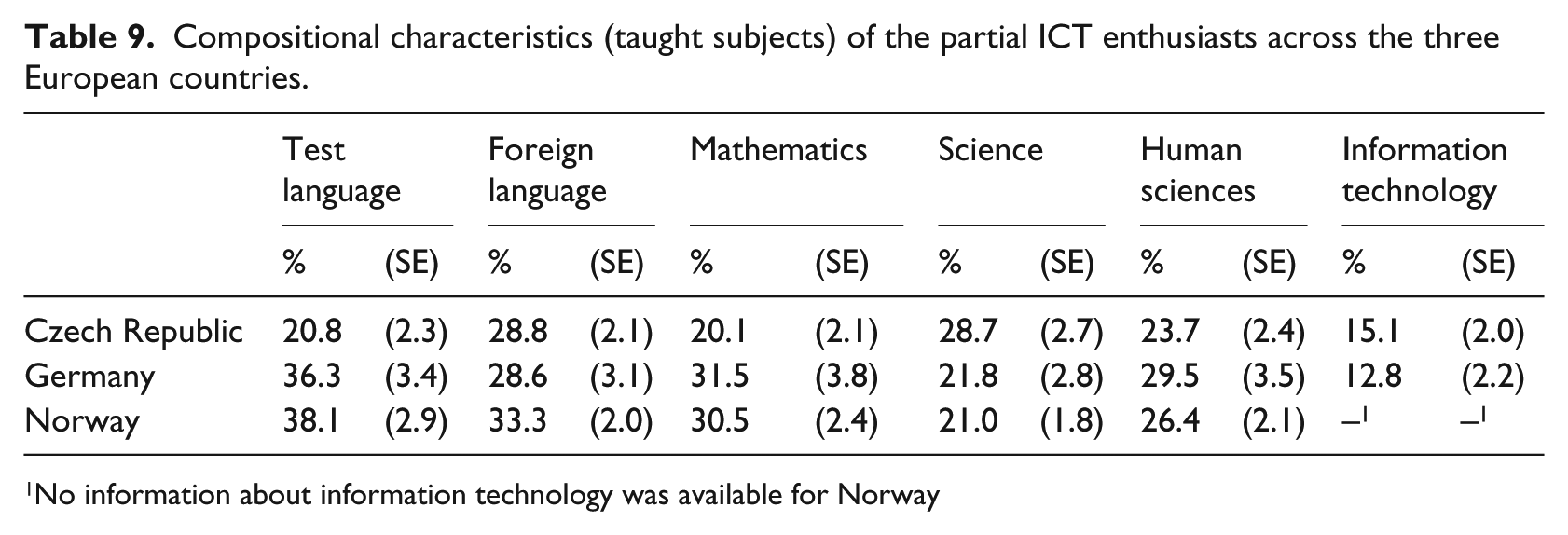
No information about information technology was available for Norway
Information-focused teachers (teacher group 3)
A third group of teachers differentiated by the LCA comprises the so-called ‘information-focused teachers’. They tended to agree with the statement that using ICT in education enables students to access better sources of information (see Figure 4). At the same time, they were relatively positive about the statements that ICT helps students to process information more effectively and that using ICT helps to develop a greater interest in learning. On the whole, however, the information-focused teachers did not agree with the statements that ICT distracts students from learning and improves the academic performance of students. The finding that, at the same time, they did not agree with the statement that ‘using ICT in education results in poorer student writing, calculation and estimation skills’ is somewhat contradictory.
This third teacher group accounts for about one fifth (20.4%) of the teacher sample and demonstrates some relevant differences in its composition from the gender and age perspectives: in Germany, for instance, the small proportion (25.9%) of younger teachers in the group is particularly noticeable. The highest proportion of older information-focused teachers can be found in Norway, where 45.2% are 50 years or older (see Table 10).
Compositional characteristics (gender and age) of the information-focused teachers within and across the three European countries.
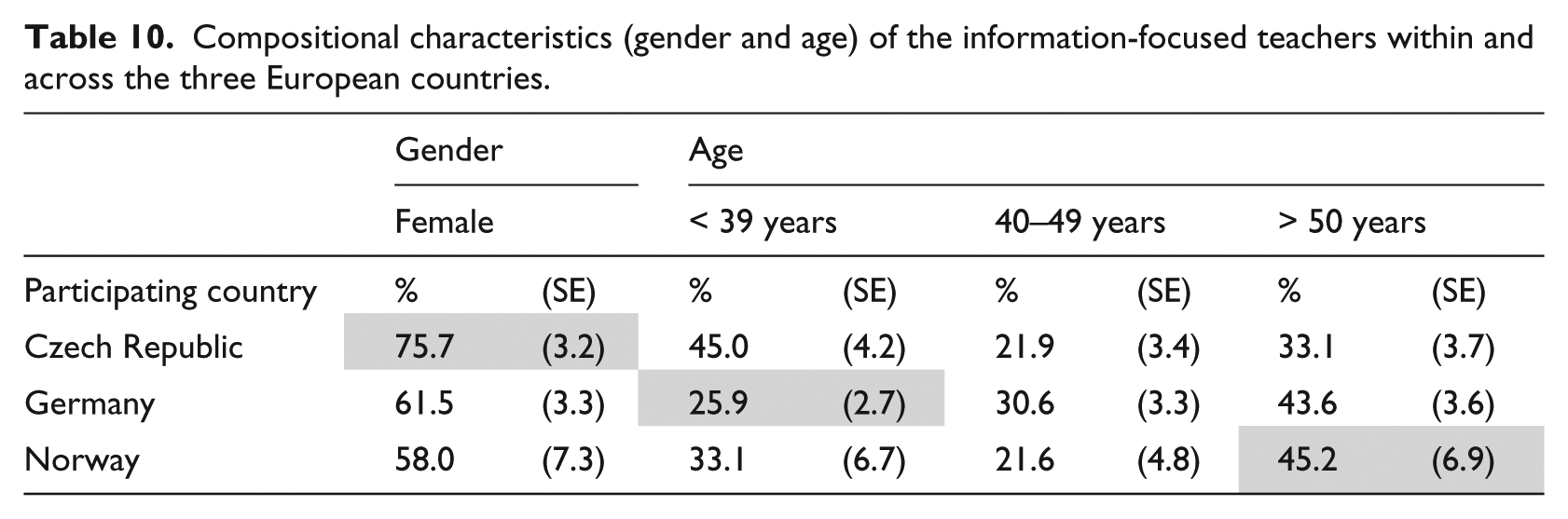
Table 11 shows the distribution of the subjects taught by teachers in the information-focused group. As can be seen, the largest proportion (39.1%) of teachers in this group in the Czech Republic and a majority (54.6%) of the teachers in Norway teach a foreign language. In Germany, this share is smaller, with only 28.2% of the information-focused teachers indicating that they teach a foreign language. The most popular subject for teacher group 3 in Germany is human sciences.
Compositional characteristics (taught subjects) of the information-focused teachers across the three European countries.
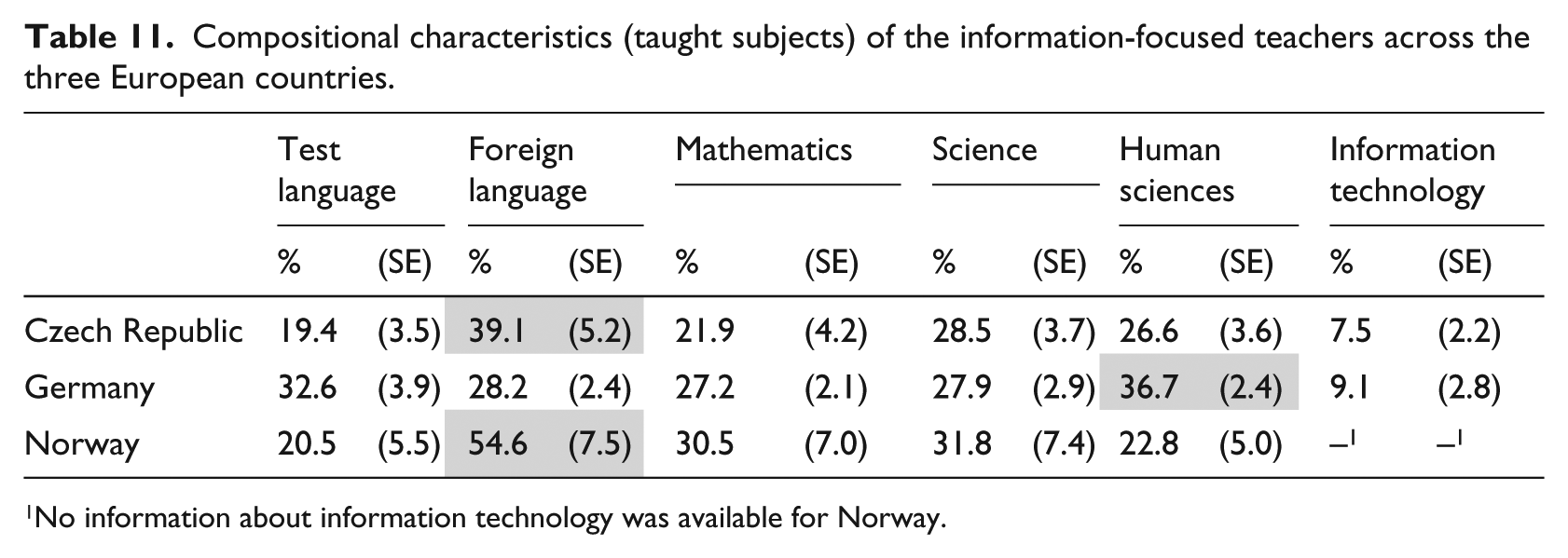
No information about information technology was available for Norway.
Partial doubters with some hope (teacher group 4)
The so-called ‘partial doubters with some hope’ emerged as a fourth group from the LCA. These teachers tended to agree that using ICT enables access to better sources of information and helps students to consolidate information more effectively. They also tended not to agree with the remainder of the positively formulated statements on ICT in schools (greater interest in learning, learning on a level appropriate to needs, planning skills, improvement of academic performance). Furthermore, the teachers in this group were concerned that the use of digital media in schools encourages students to copy from existing materials on the internet and could result in poorer writing, calculation and estimation skills. With an overall proportion of 19.1% the doubters with some hope are the fourth largest group in the teacher sample. Their distribution across gender and age groups is shown in Table 12. The distribution of male and female teachers in this group in Germany and Norway is fairly balanced, with slightly more females than males in the group (Germany = 58.5%; Norway = 54.9%). With regard to the age of the partial doubters with some hope, Table 12 shows that a high percentage in Germany are older (50 years and older), whereas in Norway, younger teachers (younger than 40 years) constitute the largest share in this group (45.9%).
Compositional characteristics (gender and age) of the ‘partial doubters with some hope’ within and across the three European countries.
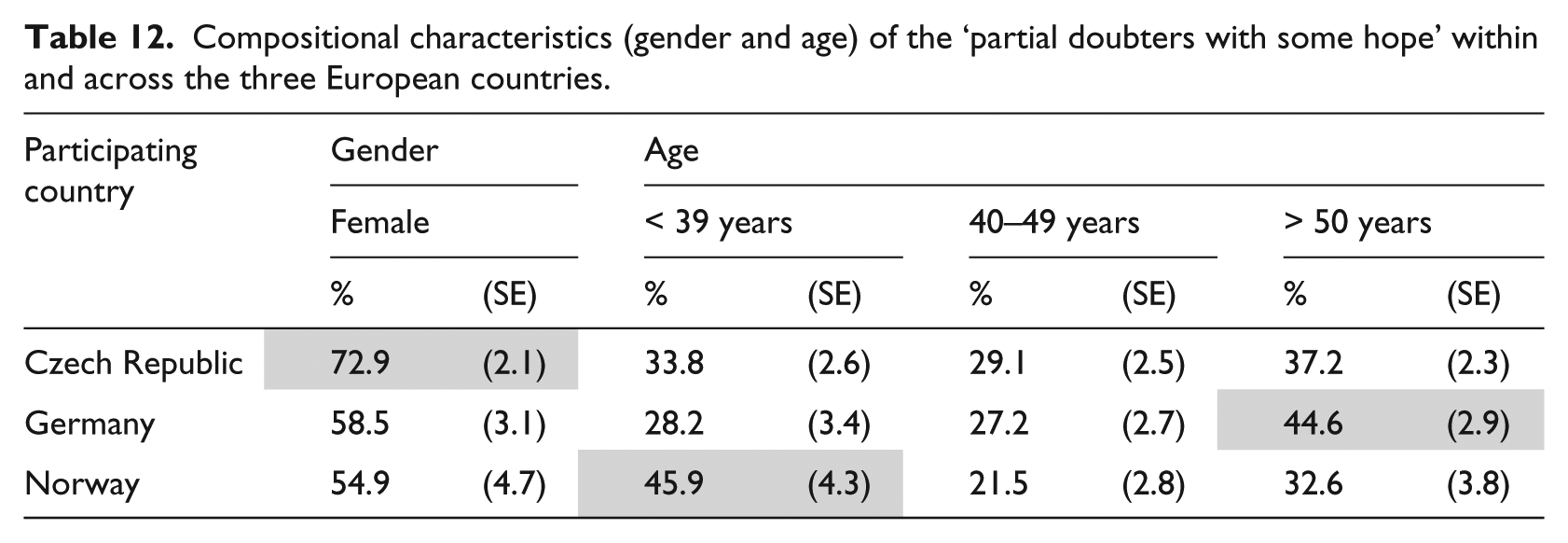
Table 13 shows the spread of subjects taught by teachers in teacher group 4 (partial doubters with some hope). With the exception of the high proportion of foreign language teachers in this group in Norway (43.6%), no striking finding is evident. From the perspective of subjects taught, the partial doubters with some hope are distributed fairly equally throughout the remaining subjects.
Compositional characteristics (taught subjects) of the ‘partial doubters with some hope’ across the three European countries.
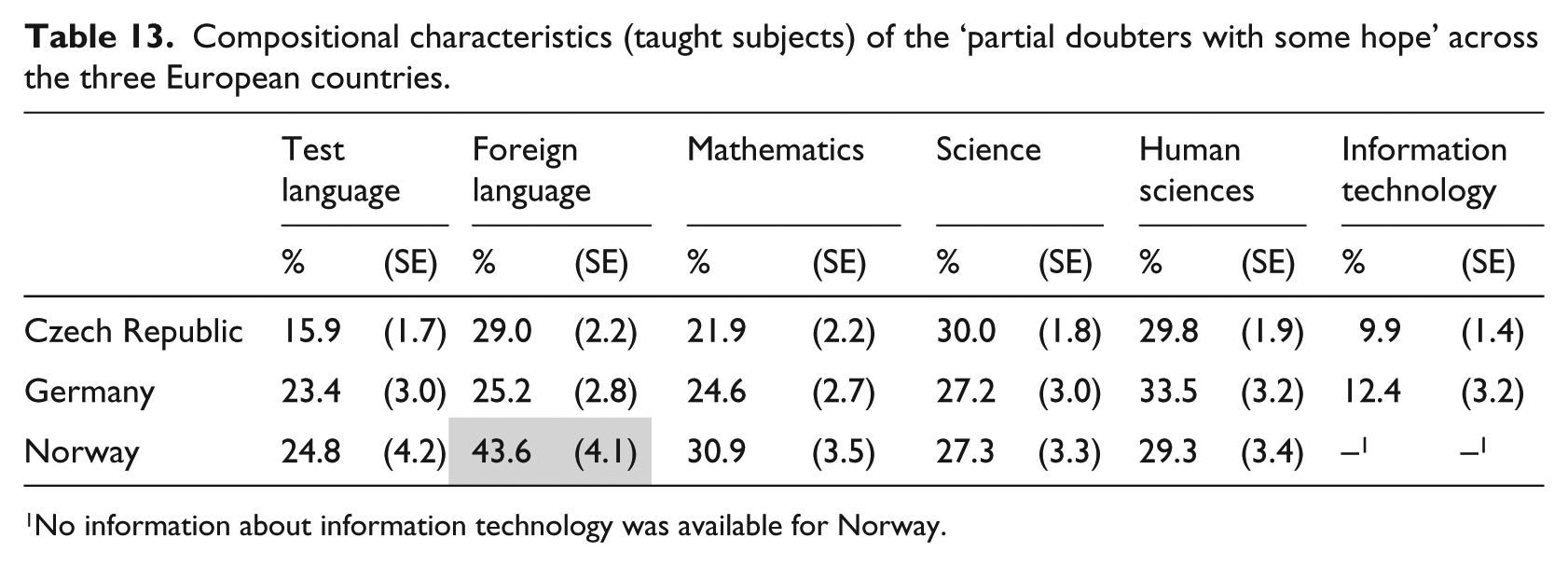
No information about information technology was available for Norway.
Absolute doubters who reject the use of ICT in school (teacher group 5)
The final group of teachers (group 5) can be regarded as ‘absolute doubters who reject the use of ICT in school’ (see Figure 4) and are characterized by their negative views on ICT in education. In contrast to the other groups of teachers, the doubters expressing rejection tended to agree, for instance, with only one of the positively connoted items in the analysis (‘ICT enables students access to better sources of information’). The rest of the positive items (e.g. that using ICT helps students to develop greater interest in learning, to learn on a level appropriate to their needs, or to develop planning skills) tended to be rejected by these teachers. Furthermore, in their view, ICT in education does not improve the academic performance of students and results in poorer writing, calculation, and estimation skills. Overall, 13.2% of the teachers belonged to this group, making it the smallest group derived from the LCA.
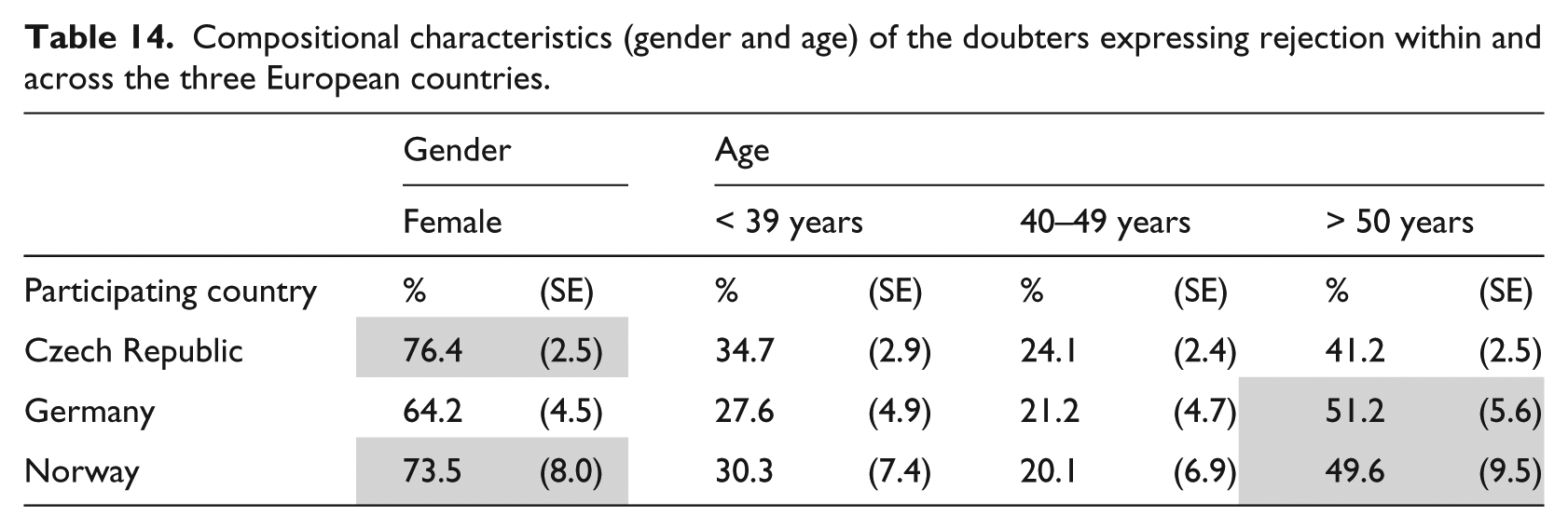
Although female teachers constitute the majority in this teacher group in all three countries, the proportions of female teachers in the Czech Republic and Norway are especially apparent. In the Czech Republic, for example, nearly eight out of ten (76.4%) teachers in this group are female (see Table 14).
Compositional characteristics (gender and age) of the doubters expressing rejection within and across the three European countries.
When considering the distribution of teachers who can be regarded as doubters expressing rejection across the subjects taught (see Table 15), it can be seen that in Norway nearly half (45.2%) reported teaching mathematics or science (42.0%). This could be an indication that STEM teachers in Norway have a particularly sceptical view on the use of ICT for teaching and learning. In the Czech Republic and Germany the distribution of doubters expressing rejection regarding the subjects taught is largely balanced.
Compositional characteristics (taught subjects) of the partial doubters expressing rejection across the three European countries.
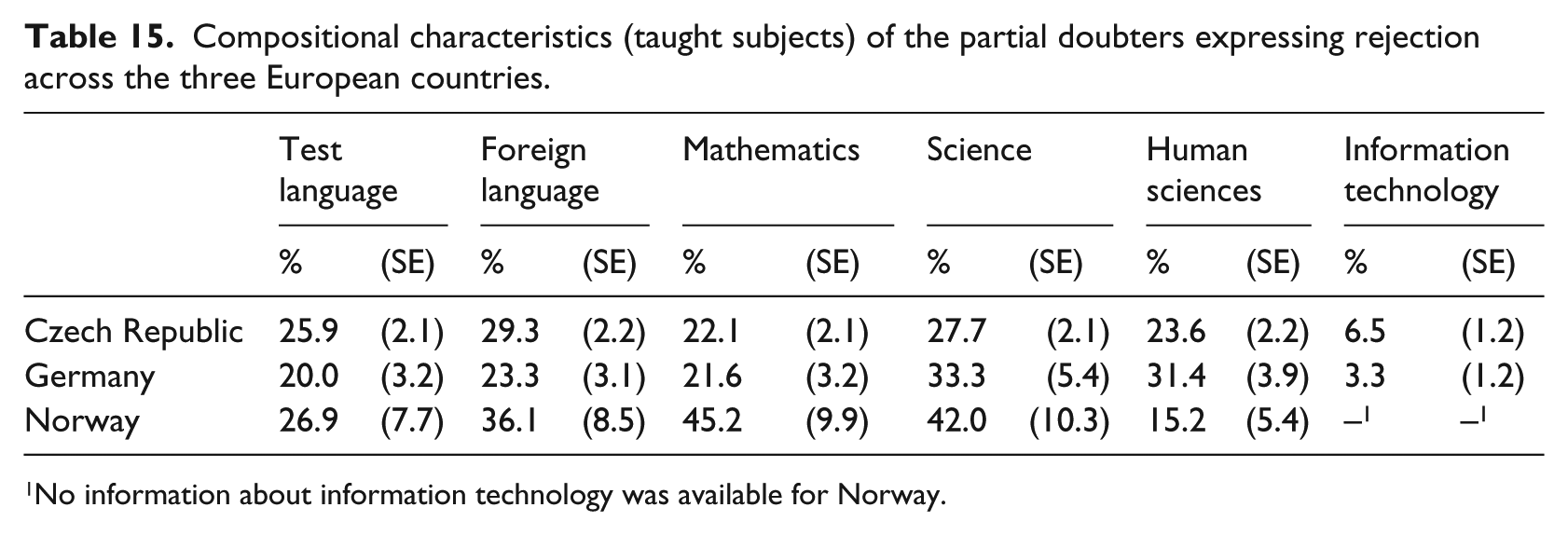
No information about information technology was available for Norway.
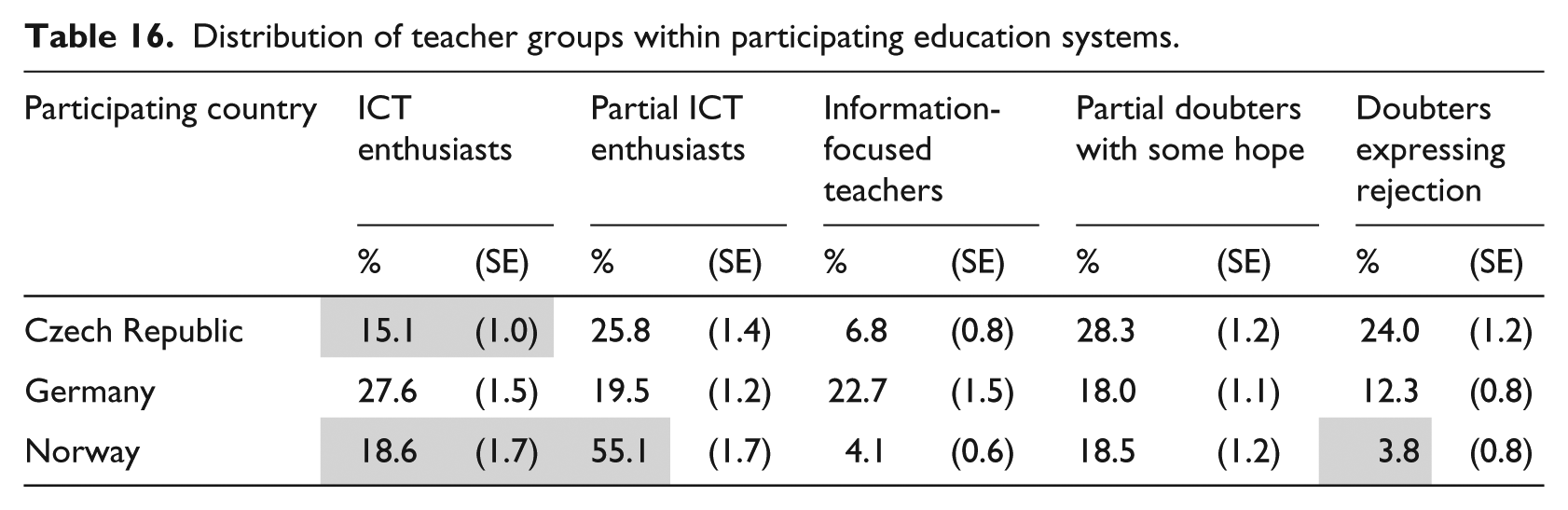
Table 16 shows the distribution of the five teacher groups within and across countries. As can be seen, ICT enthusiasts (15.1%) and information-focused teachers (6.8%) are in the minority in the Czech Republic. Bearing in mind the top performance of students in the Czech Republic, the distribution of teachers across the teacher groups in this country is worth mentioning, because more than half of them can be allocated to either the partial doubters (28.3%) or to the absolute doubters (24.0%; see Table 16). Given that teachers in Germany reported the least frequent use of computers for instructional purposes of all participating countries in ICILS 2013, the finding that the majority of teachers in Germany can be regarded as either ICT enthusiasts (27.6%) or at least information-focused teachers (22.7%) is a positive outcome. In Norway – which has implemented a holistic digital curriculum – more than half (55.1%) of the grade eight teachers can be allocated to the partial enthusiasts group, while the proportion of teachers rejecting the idea of ICT in education (doubters expressing rejection) is relatively low (3.8%).
Distribution of teacher groups within participating education systems.
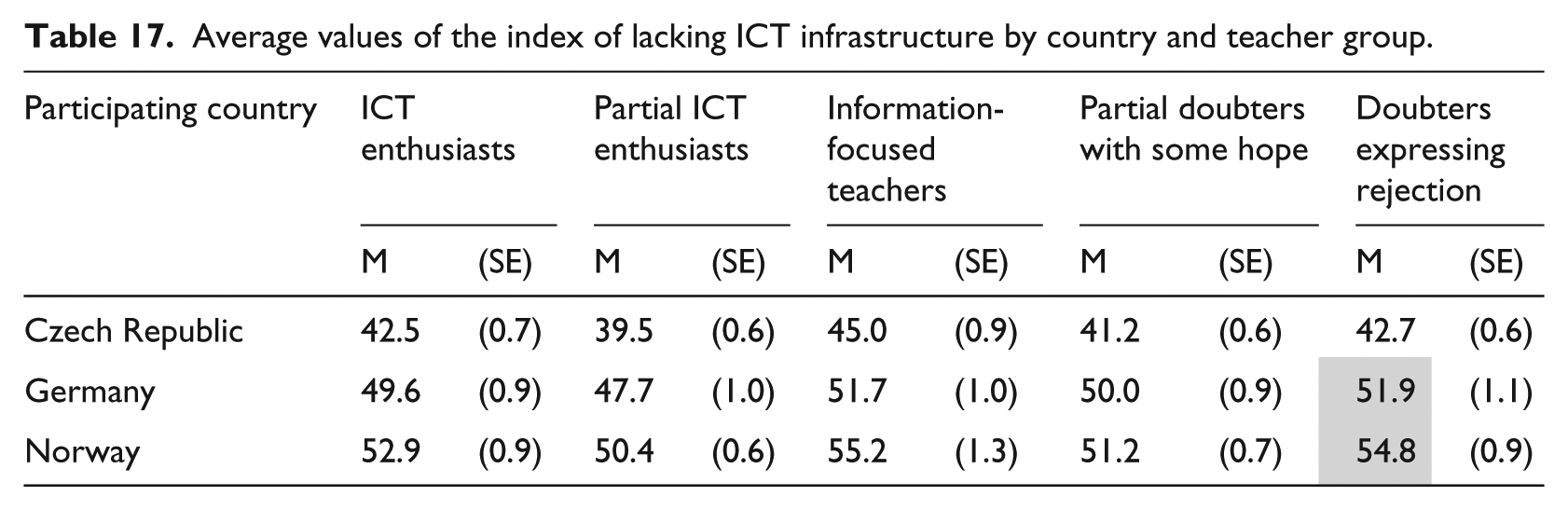
In a final analytic step, we focused on teacher groups and their perceptions of their school-specific digital infrastructure. Theoretically speaking, this step can be justified by the fact that the access to digital media for teachers is a central element of the models referred to in the sections ‘Theoretical allocation’ and ’Empirical findings and current state of research’. In ICILS 2013, teachers in the participating countries were asked to what extent they agreed or disagreed with certain statements about the use of ICT for teaching in their schools (e.g. ‘My school does not have sufficient ICT equipment [e.g. computers]’). The teachers were asked to answer these six items on a four-point Likert-scale (possible answers: ‘strongly agree’, ‘agree’, ‘disagree’, and ‘strongly disagree’). For the international ICILS 2013 report (see Fraillon et al., 2014), those items were used to set up an index of teachers’ negative perceptions about the digital school infrastructure. On an international level, this index has a mean of 50 points and an overall reliability coefficient of α = 0.81, which can be regarded as sufficient. Because the items in this scale were administered in reversed item format (see Appendix, Table 18), high scores on the index indicate high levels of discontent with the school-specific digital infrastructure.
As can be seen in Table 17, teachers in all five teacher groups in Norway reported higher values on the infrastructure index than teachers from the other groups and countries. The means that Norway exceeded the international mean (50 points) in every single teacher group, indicating that Norwegian teachers tended to be relatively dissatisfied with their digital infrastructure. In Germany, two teacher groups (partial doubters with some hope and doubters expressing rejection) yielded means of around 50 points (see Table 17). Interestingly, in Germany and Norway the teachers who expressed the most doubts about using ICT in education (doubters expressing rejection) were also those who perceived room for improvement in their school-specific digital infrastructures. In the Czech Republic, teachers’ ratings in this regard were always below the 50-point average, suggesting that problems with school-specific infrastructure were less evident in this country. Keeping in mind the overall dispersion of this index in 21 participating countries (Minimum = 24.95; Maximum = 77.03), from an ICT perspective neither the Czech Republic, Germany nor Norway appear to have especially poorly- or well-equipped schools.
Average values of the index of lacking ICT infrastructure by country and teacher group.
Attitudes, beliefs and the use of ICT for instructional purposes
A further research question in this paper was concerned with determining the extent to which use of ICT in educational settings can be attributed to teachers’ attitudes and beliefs (research question 3). In a first exploratory approach, Figure 5 contains descriptive statistics about the use of ICT for instruction by teachers in the identified teacher groups.
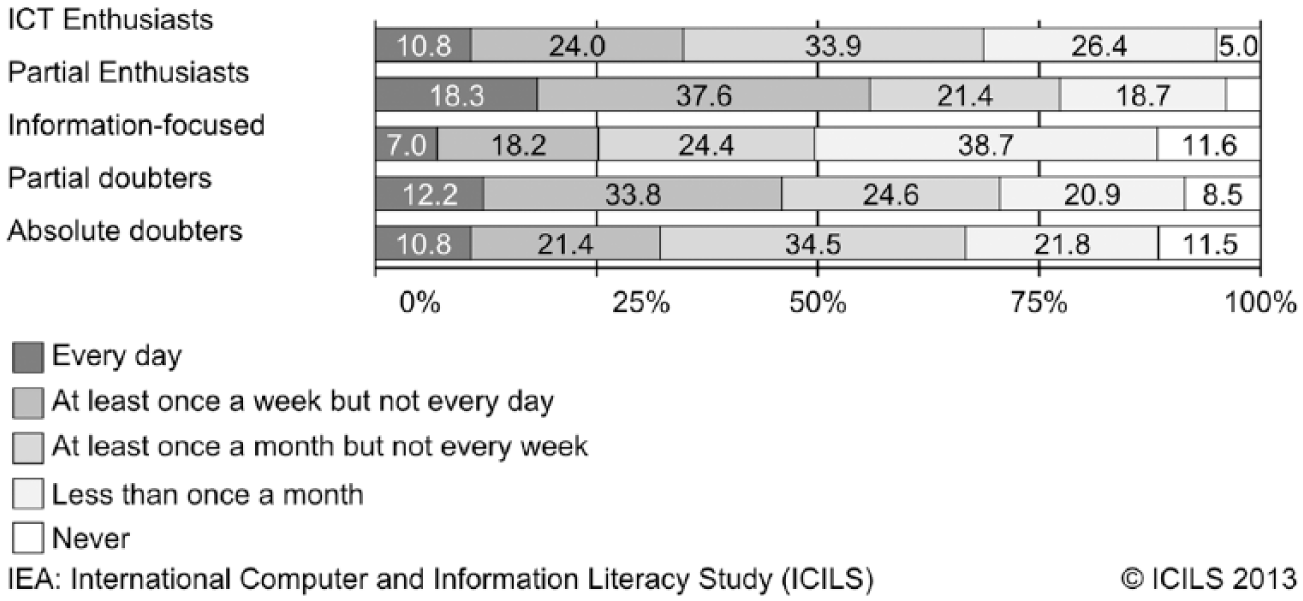
Use of computers by teachers in the identified teacher groups across participating education systems.
The bar chart in Figure 5 shows that only a minority of teachers in each of the teacher groups used ICT for instruction every day. For instance, 18.3% of the partial enthusiasts stated that they did so; a further 37.6% of the teachers in this group used ICT in their instruction at least once a week. Compared to the high occurrence among the partial doubters, the relatively low ICT use of the ICT enthusiasts is somewhat interesting: in total, 10.8% of teachers in this group used ICT for instruction on a daily basis, and a further 24.0% reported use ‘at least weekly’. Even the partial doubters used ICT more frequently in class than the ICT enthusiasts: 12.2% of the former reported a daily use of computers, while 33.8% used ICT for instructional purposes on a weekly basis. In line with our assumption, the least frequent computer use was reported by teachers in the information-focused and absolute doubters groups (see Figure 5). The largest proportions of teachers who never used ICT in class (information-focused = 11.6%; absolute doubters = 11.5%) are also found in these two groups. Overall, the descriptive statistics revealed that it is not ICT enthusiasts who use computers most frequently in class.
Discussion and conclusions
The present paper was aimed primarily at ascertaining whether there is a typology of teachers‘ attitudes toward and beliefs about the use of ICT in instructional settings in three selected European countries. Accordingly, several theories conceptualizing the acceptance of technology by teachers – namely the technology adoption model, TAM and WiSTTI – were discussed (see section on ‘Theoretical allocation’) in order to determine the relevance of attitudes and beliefs in the contexts of technology acceptance and use. This relevance is stressed by the findings of empirical research (as reviewed in the section ‘Empirical findings and current state of research’), where the main finding is that positive attitudes and beliefs (especially PU and PEU) are regarded as crucial determinants and predictors for teachers’ use of ICT in instruction. Furthermore, our literature review was able to identify clearly the research gaps that still needed to be addressed. One central gap relates to patterns in teachers’ attitudes and beliefs towards educational technology. The existing research in this field cannot be regarded as methodologically appropriate because of the sampling approaches or limited methodologies that were used. In this paper, these research gaps are addressed using – for the first time – representative samples from ICILS 2013 and an LCA which acknowledges that attitudes and beliefs have to be treated as latent constructs. Ten items from the ICILS 2013 teacher questionnaire were used to explore common patterns in attitudes and beliefs of secondary school teachers in the Czech Republic, Germany and Norway. These items could be broadly described as measures of teachers’ beliefs about the accessibility and usefulness of digital information as well as their views regarding the enhancement of learning processes with ICT and the notion that the use of ICT is able to improve students’ skills and achievement. They can therefore also be understood as measures of PU.
Based on the main criterion in the LCA (BIC; see section on ‘Methods and instruments’), the teachers in the Czech Republic, Germany and Norway could be divided into five distinct groups that share certain views on the use of ICT in the classroom. After considering their corresponding response patterns, these teachers were initially labeled as ICT enthusiasts, partial ICT enthusiasts, information-focused teachers, partial doubters with some hope, and doubters expressing rejection (see section ‘Description of five identified cross-national groups’). The ICT enthusiasts are the largest group, while the doubters expressing rejection are the smallest group, in our sample. Of the three countries studied, the distribution of the groups in Norway in particular seems to provide sufficient prerequisites for the implementation of ICT, because a large proportion of teachers in that country can be regarded as ICT enthusiasts or information-focused teachers, while the number of doubters that express rejection is low. This finding is in contrast to the Czech Republic, where more than half of the teachers were considered to be partial doubters with some hope, or doubters expressing rejection.
In a second analytic step, the background characteristics of the teachers (gender, age, and subjects taught) were taken into account, and compositional descriptive statistics presented for each group. One striking finding in this context is that nearly half of the ICT enthusiasts in the Czech Republic are relatively young (39 years or younger) and that – in turn – older teachers (50 years or older) are seldom in this group. Interestingly, the majority of ICT enthusiasts report teaching either the test language (Norway) or a foreign language (Czech Republic and Germany).
Similar findings emerge for the age of the teachers in the partial ICT enthusiasts group in the Czech Republic, where the largest proportion of such teachers is again aged 39 years or younger. As far as the subjects taught by teachers in this group are concerned, once again language subjects are the most prevalent among teachers from Germany and Norway (test language) and the Czech Republic (foreign language).
For the information-focused teachers (teacher group 3), the findings regarding age show that noticeable proportions of the teachers in Germany and Norway are older than 50 years. In contrast, nearly half of the teachers in this group in the Czech Republic are younger than 39 years. Interestingly, the largest proportions of teachers report teaching a foreign language (Czech Republic and Norway) or a human sciences subject (Germany).
The partial doubters – who are concerned, for example, that using ICT will encourage students to copy material from existing internet sources – are the fourth teacher group derived from the LCA. Here, the age distribution is also interesting because it is the only teacher group in the Czech Republic where the age distribution is fairly balanced. In Norway, the largest proportion of partial doubters is younger than 39 years, whereas in Germany a large percentage of teachers in this group is older than 50 years.
The absolute doubters were the fifth group derived in this paper. Their attitudes and beliefs can be described as relatively pessimistic. This group – which is also the smallest – is characterized by a high proportion of older teachers in all countries. Across the three selected countries, more than 4 out of 10 absolute doubters are 50 years or older. As far as the subjects taught are concerned, Norwegian teachers show the highest share of absolute doubters among teachers of mathematics or science.
There were substantial differences between the teacher groups with regard to the use of digital technologies for instructional purposes. Across all three countries, the partial ICT enthusiasts and the doubters with some hope reported using ICT most frequently, which only partly conforms to expectations (in theory, the ICT enthusiasts should – also – have been expected to do so).
Overall, the results presented in this paper raise further questions that need to be answered in order to evaluate accurately the relation between the implementation of ICT in school and the corresponding use of ICT by teachers. Bearing in mind the substantial finding of ICILS 2013 that teachers in Germany make the least frequent use of ICT of all participating education systems, our research shows that for the three focused countries in this paper, the largest proportion of ICT enthusiasts and a relatively small number of doubters expressing rejection can be found in Germany. However, it would seem that at the time of data collection education policy makers, teacher education, and teacher training in Germany were not able to transfer the potential of ICT for learning and teaching into practice. Based on the findings presented in this paper, further research might shed light on the issues raised. First, there seems to be no obvious reason why the distribution of teachers with different attitudes toward and beliefs about the usefulness of ICT in instructional contexts varies in such a substantial way in the three countries studied. In order to explain this, policies regarding ICT in schools should be taken into account. Second, the empirical validity of the models presented conceptualizing the acceptance and/or use of ICT should be elaborated further. Based on these models, it is still not clear why, for example, in the Czech Republic – where a substantial part of teachers report negative views on ICT use in schools – the integration of ICT in schools leads to high levels of student competences in dealing with ICT.
Although the analyses presented reveal some interesting findings, it is acknowledged that the methodological limitations and future research need to be addressed and discussed. Teachers were asked to estimate how often they use educational technology for instructional purposes: it could be argued that these estimations might be affected by social desirability bias and thus might not reflect the actual (self-reported) use by teachers of technology. The same is the case for the statements on which the teachers were asked to express their agreement/disagreement. Furthermore, external variables such as technological support for digital technologies in schools (as proposed by the tool part of the WiSTTI) have not yet been taken into account, and this could be an explanation for the unexpected results with regard to ICT use (see section on ‘Attitudes, beliefs, and use of ICT for instructional purposes’) and might therefore form a part of further research.
Footnotes
Appendix
Descriptive statistics of the ten underlying items by country.
| Czech Republic | Germany | Norway | ||||||||||
|---|---|---|---|---|---|---|---|---|---|---|---|---|
| Agree | Strongly agree | Agree | Strongly agree | Agree | Strongly agree | |||||||
| % | (SE) | % | (SE) | % | (SE) | % | (SE) | % | (SE) | % | (SE) | |
| Enables students to access better sources of information. | 96.6 | (0.5) | 54.1 | (1.5) | 90.0 | (0.9) | 43.6 | (1.7) | 97.3 | (0.5) | 43.2 | (2.6) |
| Helps students to consolidate and process information more effectively. | 91.9 | (0.8) | 39.8 | (1.3) | 64.8 | (1.3) | 14.4 | (1.4) | 91.5 | (1.1) | 23.3 | (1.6) |
| Helps students to consolidate and process information more effectively. | 58.9 | (1.5) | 13.1 | (1.1) | 75.8 | (1.7) | 24.8 | (1.6) | 31.0 | (1.7) | 4.2 | (0.7) |
| Helps students develop greater interest in learning. | 65.5 | (1.3) | 12.4 | (0.8) | 64.0 | (1.3) | 12.4 | (1.3) | 88.5 | (1.2) | 17.9 | (2.0) |
| Helps students work at a level appropriate to their learning needs. | 74.1 | (1.4) | 11.8 | (1.0) | 56.7 | (1.6) | 9.0 | (1.0) | 76.5 | (1.8) | 10.7 | (1.5) |
| Helps students develop skills in planning. | 41.3 | (1.4) | 5.0 | (0.6) | 47.9 | (1.8) | 7.2 | (1.1) | 64.4 | (1.7) | 6.4 | (1.1) |
| Only distracts students from learning. | 28.2 | (1.4) | 3.5 | (0.5) | 29.5 | (1.5) | 2.6 | (0.5) | 14.9 | (1.5) | 1.3 | (0.3) |
| Improves academic performance of students. | 52.6 | (1.6) | 5.2 | (0.6) | 38.9 | (1.6) | 3.1 | (0.6) | 75.4 | (1.6) | 7.7 | (0.9) |
| Results in poorer writing skills among students. | 75.3 | (1.2) | 26.8 | (1.2) | 51.9 | (1.7) | 12.7 | (1.2) | 29.6 | (1.6) | 4.8 | (0.9) |
| Results in poorer calculation and estimation skills among students. | 45.9 | (1.3) | 9.9 | (1.0) | 41.5 | (1.6) | 10.1 | (1.1) | 21.9 | (1.4) | 1.1 | (0.3) |
Declaration of conflicting interests
The author(s) declared no potential conflicts of interest with respect to the research, authorship, and/or publication of this article.
Funding
The author(s) received no financial support for the research, authorship, and/or publication of this article.