




Abstract
This paper studies the dynamics of key characteristics of the academic profession in Russia based on the analysis of university faculty in the two largest cities in Russia – Moscow and St Petersburg. We use data on Russian university faculty from two large-scale comparative studies of the academic profession (‘The Carnegie Study’ carried out in 1992 in 14 countries, including Russia, and ‘The Changing Academic Profession Study’, 2007–2012, with 19 participating countries and which Russia joined in 2012) to look at how faculty’s characteristics and attitudes toward different aspects of their academic life changed over 20 years (1992–2011) such as faculty’s views on reasons to leave or to stay at a university, on university’s management and the role of faculty in decision making. Using the example of universities in the two largest Russian cities, we demonstrate that the high degree of overall centralization of governance in Russian universities barely changed in 20 years.
Our paper provides comparisons of teaching/research preferences and views on statements concerning personal strain associated with work, academic career perspectives, etc., not only in Russian universities between the years 1992 and 2012, but also in Russia and other ‘Changing Academic Profession’ countries.
Keywords
Introduction
The last two decades constituted a period of fundamental institutional change in the Russian higher education system. The system experienced huge expansion, including the emergence and rapid growth of the private sector. In 1992, just after perestroika, the Soviet higher education system included 535 higher education institutions; none of them were private (Smolentseva, 2003). During the next 20 post-Soviet years the public higher education sector grew by 22% to more than 650 higher education institutions; in 2012, the private higher education sector comprised more than 450 institutions (Androushchak and Yudkevich, 2012). There was also an upsurge in the number of students: total student enrolment increased from just over 2.5 million in 1993 to 7.4 million in 2012 (Androushchak and Yudkevich, 2012). This resulted in significant diversity regarding the quality of institutions, their faculty and student bodies along various dimensions, including the disciplinary scope and type of institution, their selectivity and geographic location (Smolentseva, 2003). This in turn was reflected in the heterogeneity of academic salaries, working conditions and access to up-to-date teaching and research technologies (Androushchak and Yudkevich, 2012; Kozmina, 2014).
A new system of university admissions based on the unified state examination that substituted university-based exams was also introduced. This change had a substantial effect on equity and access to higher education and helped to eliminate different forms of widespread entry-level corruption (Ampilogov et al., 2013; Minina, 2010). During the last few years the Russian government has implemented a large-scale programme of state support for leading universities to become world-class institutions by improving the global competitiveness of Russian higher education and basic research (Alekseev, 2014; Androushchak, 2014; Smolentseva, 2015). Globalization and internationalization trends also pushed universities to reconsider their strategies and adjust to new circumstances.
All the described changes have significantly affected the whole academic profession in Russia. There are several channels for such an impact. First, an academic career lost its stability both in terms of providing a secure level of financial remuneration high enough to allow academics to be a part of the middle class as well as in terms of securing long-term employment opportunities (Androushchak and Yudkevich, 2012). Many academics felt insecure and uncompetitive on a broader academic market with international students coming in and international faculty being recruited (Pavlyutkin and Yudkevich, 2016). Second, as a consequence, the university sector experienced a huge brain drain (Korobkov and Zaionchkovskaia, 2012; Smolentseva, 2003) which accounted for the so-called ‘generational gap’ – the loss of young and middle-aged researchers and university faculty (Smolentseva, 2015); no less than 7% of all university employees moved abroad (Androushchak et al., 2013). Those academics who chose to stay de facto had to face a deteriorated academic environment. Third, due to numerous institutional changes academics faced new challenges and were forced to switch to a ‘more entrepreneurial’ way of thinking and functioning at the university (Gruzdev et al., 2016). Increased requirements for external reporting to government agencies also contributed to the tensions between university autonomy and government control (Johnson, 2015).
Taken together, this definitely affected the norms and values of the academic community as well as university faculty’s perceptions towards their job, administration and the university itself. These 20 years were a period of great uncertainty and turbulence in academic culture and a period of co-existence of several generations of academics who were trained and came into the profession at different times, and who often had significantly different values and expectations.
The aim of this paper is to analyse the main changes in norms and perceptions of Russian university faculty over this 20-year period as well as to put these changes into a broader context of recent transformations in the European academic space. We use data on university faculty in the two largest cities in Russia, Moscow and St Petersburg, from two large-scale comparative studies of the academic profession (The Carnegie Study (1992) and The Changing Academic Profession Study (2007–2011), with 19 participating countries and Russia joined in after 2012). These studies have many overlapping questions, which allowed us to use the same indicators to analyse the dynamics of key characteristics of the academic profession in Russia. Using a comparative international perspective, we focus on such issues as structures of decision-making processes and governance in Russian universities, faculty preferences in teaching and research, academic career prospects, attitudes toward stress, evaluation of working conditions, and self-assessment of the quality of training. In order to evaluate the prospects of Russian universities on the global academic market it is important to analyse not only quantitative indicators (such as the number of publications, share of international faculty and students or research funds size, etc.) and their recent dynamics but also structural features of the organization of university life and the status of the academic profession.
The paper is structured as follows. First, we describe available data as well as its potential limitations. Then we discuss the dynamics of different norms and perceptions of Russian academic faculty over the course of 20 years and put our findings in a broader international context. The final part contains the main conclusions and discussion.
Methodology
Data
This research is based on the data collected in two studies. The first is ‘The Academic Profession in an International Perspective’ (International Academic Profession), a project of the Carnegie Foundation, in which a unified methodology was used to collect data on the academic profession in 14 countries, including Russia (Altbach, 1996). The second is a study of the university sector in Russia conducted by the Center for Institutional studies (CInSt, National Research University Higher School of Economics) according to the methodology of the international study ‘Changing Academic Profession’ (CAP). The latter had been carried out earlier in 19 countries from various regions including Europe, the US, Latin America, Australia and Asia.
The Carnegie study was the first large-scale project where an attempt was made to analyse the academic profession in a comparative perspective and to collect data for cross-country comparisons (Arimoto, 2009). Many researchers involved in the Carnegie study also participated in the CAP project, which covers even more countries. Moreover, in the CAP study a range of key concepts that characterize the academic profession were specified and extended. The CAP study was based on a partially transformed questionnaire (many questions remained the same or were just slightly changed; however, some were added and some removed).
This allowed us not only to collect comparable data but also to carry out a more conclusive analysis. Owing to these two factors (the opportunity to assess the key characteristics of the dynamic academic profession and to compare these characteristics in different countries), the CAP study is by far the most important source of information on the characteristics and status of the academic profession in a number of countries.
Sample
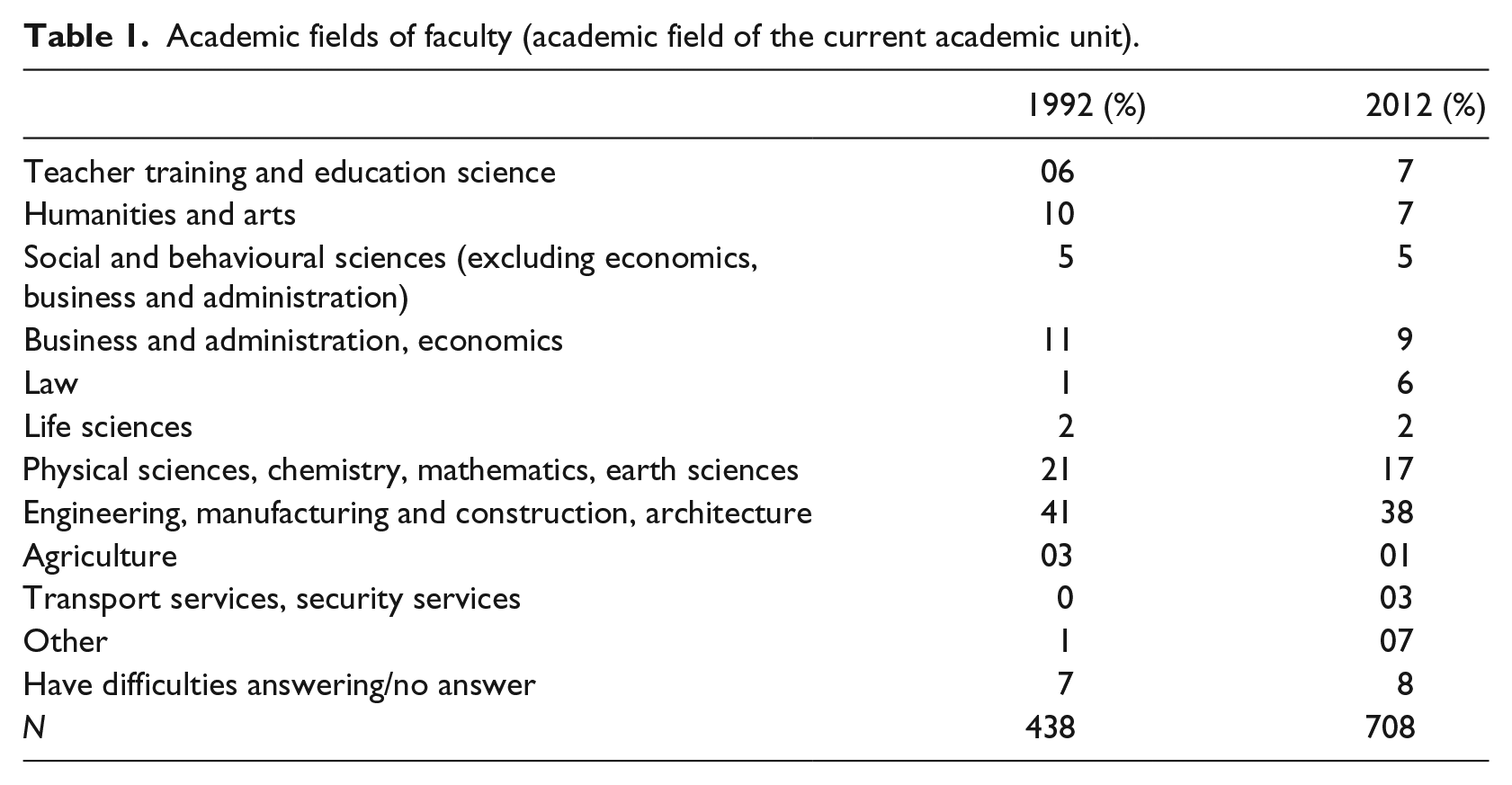
In the 1992 Carnegie study, the Russian sample was limited to Moscow and St Petersburg universities only. In 2012, the study of the academic profession in Russia was carried out in public higher educational institutions in nine regions: Moscow, St Petersburg, Nizhny Novgorod Region, Novosibirsk Region, Samara Region, Sverdlovsk Region, Rostov Region, Tomsk Region and Primorsky Krai (head institutions, without branches); all the institutions were subordinate to the Ministry of Education and Science of the Russian Federation. To ensure comparability of the data we selected a sub-sample from the 2012 sample. This sub-sample only included public universities from the two largest Russian cities. Thus, the basis for comparison consists of 400 faculty members in 1992 and more than 700 faculty members in 2012 (see Table 1). However, in some cases we refer to the results obtained for the whole Russian sample of the 2012 study in order to understand how our results based on the Moscow and St Petersburg institutions may differ (or not) from the sub-sample of other higher educational institutions in Russia.
Academic fields of faculty (academic field of the current academic unit).
Moscow and St Petersburg are not only the largest cities in Russia (with Moscow being the official capital and St Petersburg often called an unofficial capital), they are also the largest cities in terms of the concentration of higher education institutions. About one quarter of all public universities in the country (17% and 7%, respectively), excluding branches, are situated either in Moscow or St Petersburg. In Moscow there are 400,000 full-time students at public higher educational institutions, in St Petersburg nearly 200,000 (16% and 8% of all Russian full-time students at public universities, respectively).
Universities for the 2012 study were randomly selected from two groups: 1. higher educational institutions with a status of Federal University or National Research University (NRU) (these institutions basically receive more funding, including financial support of research activities and on average have better-performing students); 2. the remaining institutions. This was done to ensure that institutions with a special status are represented in the sample, and that they can be compared with other universities. As a result, in the 2012 sub-sample five of the 11 Moscow and St Petersburg universities are NRUs. Thus, there is a disproportionate share of institutions with a special status in the 2012 sample and sub-sample. A significant number of institutions which were recipients of special governmental funding projects in 2006–2008 and NRUs are concentrated in these two cities too.
Measures
In our analysis of faculty’s attitudes, we draw on the following measures, which were used in the Carnegie study and the CAP study.
Preferences: teaching versus research: to capture these preferences, participants were asked about whether they are more inclined toward teaching or research. In both studies the same question was included with a 4-point scale: 1. primarily in teaching; 2. in both but leaning towards teaching; 3. in both but leaning towards research; 4. primarily in research. 1
Work as a source of personal strain (the same measure had been used in both studies): self-assessed agreement with the statement ‘My job is a source of considerable personal strain’ on a 5-point scale (1 – strongly agree, 5 – strongly disagree).
Attractiveness of academic career (the same measure had been used in both studies): self-assessed agreement with the statement ‘This is a poor time for any young person to begin an academic career in my field’ and the statement ‘If I had to do it over again, I would not have become an academic’ on a 5-point scale (1 – strongly agree, 5 – strongly disagree). These statements were analysed separately.
Evaluation of working conditions (the same measure had been used in both studies): self-evaluation of facilities, resources and personnel (classrooms, laboratories, research equipment, technology for teaching, secretarial support, etc.) on a 5-point scale (from 1 – excellent to 5 – not available).
Assessment of the quality of training (included in the Carnegie study and the Russian 2012 study; not included in the CAP study in other countries): self-assessment of research and teaching skills on a 4-point scale (from 1 – excellent to 4 – poor).
Reasons to stay at or leave the university (included in the Carnegie study and Russian 2012 study; not included in the CAP study in other countries): self-evaluation of a number of reasons to stay at / leave the university (income, resources for research, academic reputation of institution / department, etc.) from 1 to 5, where 1 equals a strong reason to leave, and 5 – a strong reason to stay.
Models of decision-making: the participants of the Carnegie study were asked to evaluate various aspects of the decision-making process (budget priorities, selecting key administrators, overall teaching load, promotions, etc.) on a scale from 1 – completely centralized, to 5 – completely decentralized. In the 2012 study the same set of issues was proposed, while the participants were asked to indicate the most influential decision-makers (institutional managers, government or external stakeholders, faculty committees/boards, academic unit managers, individual faculty, students). In our comparative analysis we consider the answer ‘institutional managers’ as a synonym for centralized decision-making. The same measures were utilized in both studies to evaluate faculty’s own influence on decision-making: self-assessment of personal influence in decision-making at the level of the department, of the faculty/school, and at the institutional level (on a 4-point scale from 1 – very influential to 4 – not at all influential).
Control (the same measure had been used in both studies): participants’ self-assessment of who evaluates their teaching and research activities (peers, head of department, students, etc.).
In our analysis we compared distributions of these measures in the 1992/2012 samples. The significance of differences in faculty’s attitudes in 1992 and 2012 was tested by chi-square test (significance level 0.05) and t-test, when applicable (significance level 0.05).
In the following sections we discuss the results of the comparison of some important characteristics of the academic profession such as preferences for teaching versus research, reasons to leave or stay in the academic profession and the model of decision-making in universities.
Changing Academic Profession
Preferences: Teaching versus research
Individual preferences between teaching and research constitute an important characteristic that affects both the time budget of faculty, and the results of teaching and research activities (Shin et al, 2013; Gottlieb and Keith, 1997). Today a significantly greater number of faculty members indicate that their priorities are mostly in research (see Table 2).
Faculty preferences: Teaching versus research.
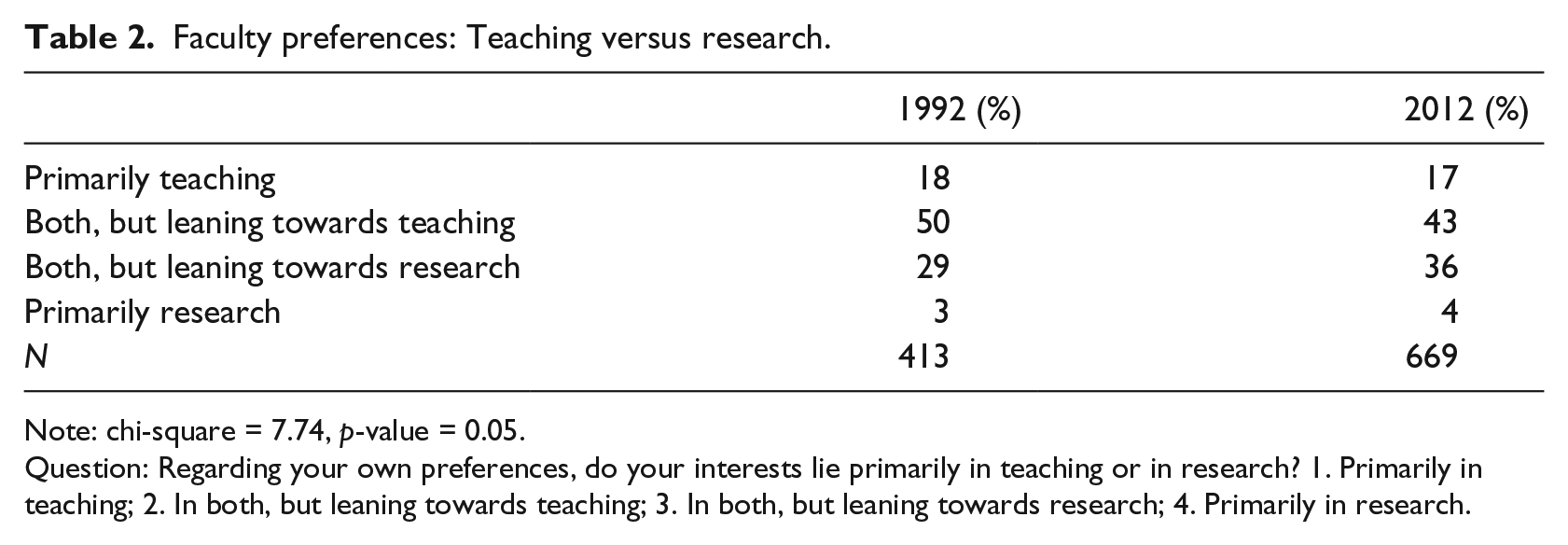
Note: chi-square = 7.74, p-value = 0.05.
Question: Regarding your own preferences, do your interests lie primarily in teaching or in research? 1. Primarily in teaching; 2. In both, but leaning towards teaching; 3. In both, but leaning towards research; 4. Primarily in research.
Despite this emerging shift from teaching to research even in the sample with a disproportionately high percentage of faculty from NRUs, the percentage of faculty members who indicated that they preferred research or were leaning towards research remains minimal in comparison with CAP-countries (see Figure 1) (Teichler et al., 2013). Other datasets that include data on teaching–research preferences also indirectly confirm that the percentage of research-oriented faculty members in Russian universities is relatively low: for instance, data from the project ‘Practices and Approaches for the Integration of Teaching and Research’ on the UK academic profession shows that approximately 67% and 53% of faculty in the Russell Group universities and non-Russell Group universities respectively prefer research or are leaning towards research (Alpay and Verschoor, 2014).
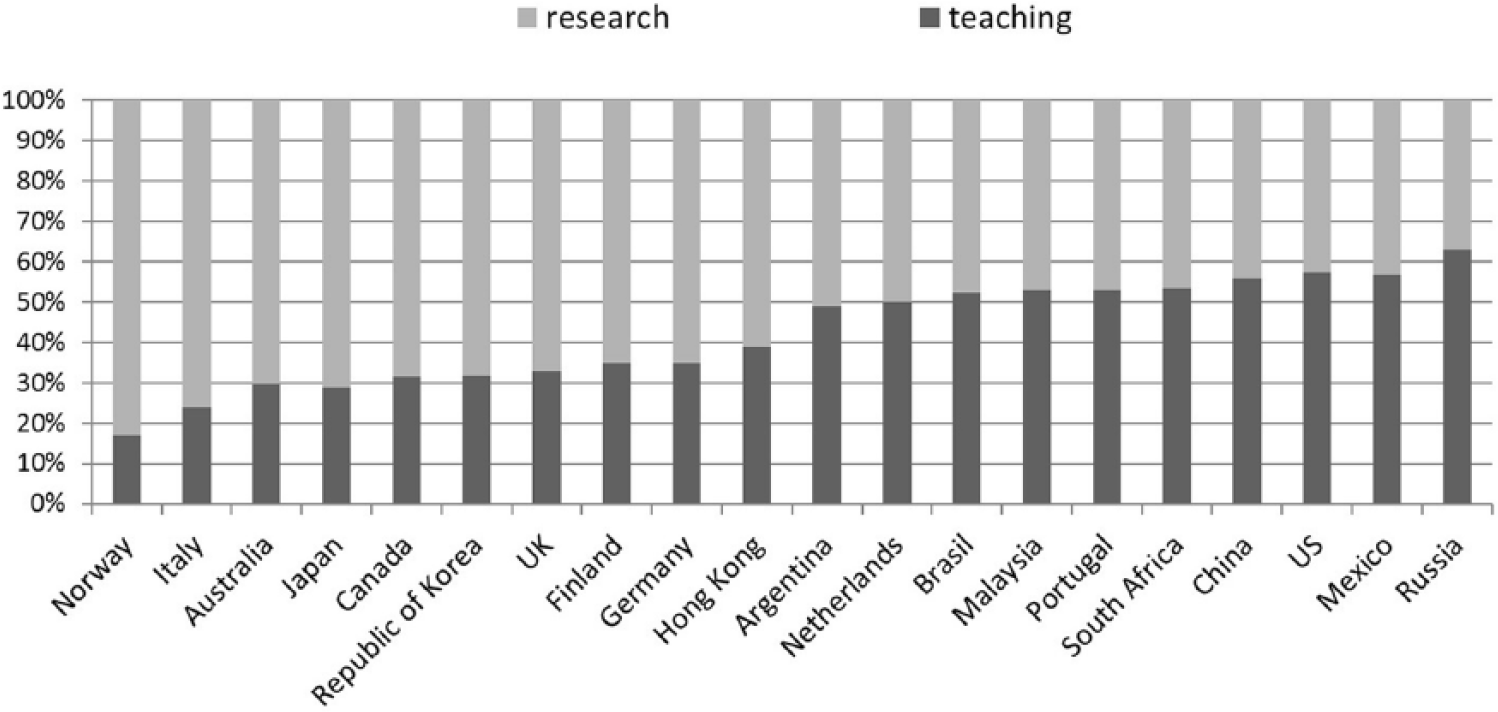
Faculty preferences: Teaching versus research 2012.
We think that such a bias toward teaching in the Russian case (which is even higher in regional universities) is to a large extent explained by the fact that there is a clear divide in Russia between the university sector and academy sector, which is represented by non-teaching research institutions of Russian Academies of Sciences (Smolentseva, 2003). Due to this long-standing divide, Russian universities are positioned mostly as entities with a teaching mission, while research mission is dominated by teaching-oriented purposes.
Both now and 20 years ago the percentage of those preferring teaching (or leaning towards teaching) is significantly lower among male rather than female respondents (confirmed by both chi-square test and t-test). However, this difference in 2012 is not as striking as in the early 1990s (in 1992, 39% of male respondents and 14% of female respondents answered that they preferred research or were leaning towards research 2 ; in 2012 – 45% of males and 34% of females 3 ).
Work as a source of personal strain
Many researchers draw attention to different factors that can contribute to an increase in personal strain associated with academic work. Such factors include the diminishing autonomy of academics and growing pressures for accountability (Altbach, 2000; Altbach et al., 2012, Musselin, 2005) as governance regimes are shifting towards decentralization and self-steering of universities (Enders, 2000; Estermann et al., 2011).
The term ‘new managerialism’ is used to conceptualize this process (Deem, 1998). The spread of new managerialism is associated with the massification of higher education, which implies standardized, external regulations, rationalization, etc. (Musselin, 2007), as well as increased financial costs for the higher education sector. External monitoring tools now interact with the self-regulation of the academic community. Demands for accountability result in increased pressure to produce socio-economically relevant research (Brennan, 2007; Enders, 2006; Kehm and Lanzendorf, 2007) and in more administrative work for faculty (evaluations, proposals, describing project progress, etc.).
Examples of increased accountability of the academic profession from European countries comprise the introduction of faculty contracts linking funding to research outcomes, like bibliometric research indicators and the number of PhD graduates in Denmark in 1999 (Schmidt, 2012); implementation of funding based on the number and level of scientific publications, relevance of research measured in terms of external funds received, the number of completed PhD degrees, etc., in Norway in 2002 (Schmidt, 2012); introduction of performance-based funding of higher education institutions and performance-based distribution of university resources among departments in Germany and Austria (Kehm and Lanzendorf, 2007) among others.
In this context it might look surprising that in the 2012 study substantially fewer respondents than 20 years earlier noted that their job ‘was a source of considerable personal strain’ for them – 15% in 2012 and 51% in 1992 agreed with that statement, 15% in 1992 and 64% in 2012 disagreed, and 34% in 1992 and 21% in 2012 expressed a neutral attitude (this difference is statistically significant, chi-square = 270.52, p-value < 10-5). However, the proportion of such respondents is still rather high, not only among academics at early stages of their career, which is typical for some other countries, 4 but also among faculty members who are already well integrated into academic structures and hold high positions in the academic hierarchy (for a detailed discussion of stress and the professional satisfaction of Russian faculty see Davydova and Kozmina, 2014).
Relatively high levels of personal strain, as registered in the Carnegie study, can be attributed to the fact that the beginning of the 1990s was a time of radical and abrupt institutional changes in higher education that led to high uncertainty for the professional community, especially for its senior members who had invested their efforts and skills into the old rules of the academic game. This is one possible interpretation of the fact that in the 1992 sample the share of those who agreed with the statement about personal strain is higher among senior faculty than among junior teaching staff: academics with high administrative status and symbolic capital had something to lose, and systemic uncertainty therefore caused more strain on them.
In contrast, in the 2012 sample (both in research universities and in the overall sub-sample of Moscow and St Petersburg universities) the percentage of respondents who agreed with the statement about personal strain was higher among young faculty, who only have a bachelor or specialist 5 degree 6 (21% in NRUs, 20% in all Moscow and St Petersburg universities included in the sample). Among faculty with a doctorate 7 this percentage is relatively low (7% both in NRUs and in the overall sub-sample). This is probably due to the low salaries of junior faculty: based on the CAP study in Moscow and St Petersburg, the average annual salary of junior faculty who did not agree with the statement about strain is 1.5 times higher than the salary of those junior faculty who agreed with this statement (among senior faculty there is no such a correlation between salary and response to the question about strain). Another survey, the Monitoring of Educational Markets and Organizations, 2012, 8 revealed that the salary of junior faculty amounted to approximately 61% of the average salary in the private sector (for professors it was 116%, for associate professors – 78%).
In general, the share of the respondents in the 2012 study who agreed with the statement concerning personal strain is relatively low compared to other countries (the lowest among all CAP countries; see Figure 2). This is probably due to the fact that academic work is characterized by relatively stable employment (with high employment guarantees), 9 and in general there is practically no correlation between salary (but not overall remuneration) and work results, i.e. the academic environment is not very competitive.
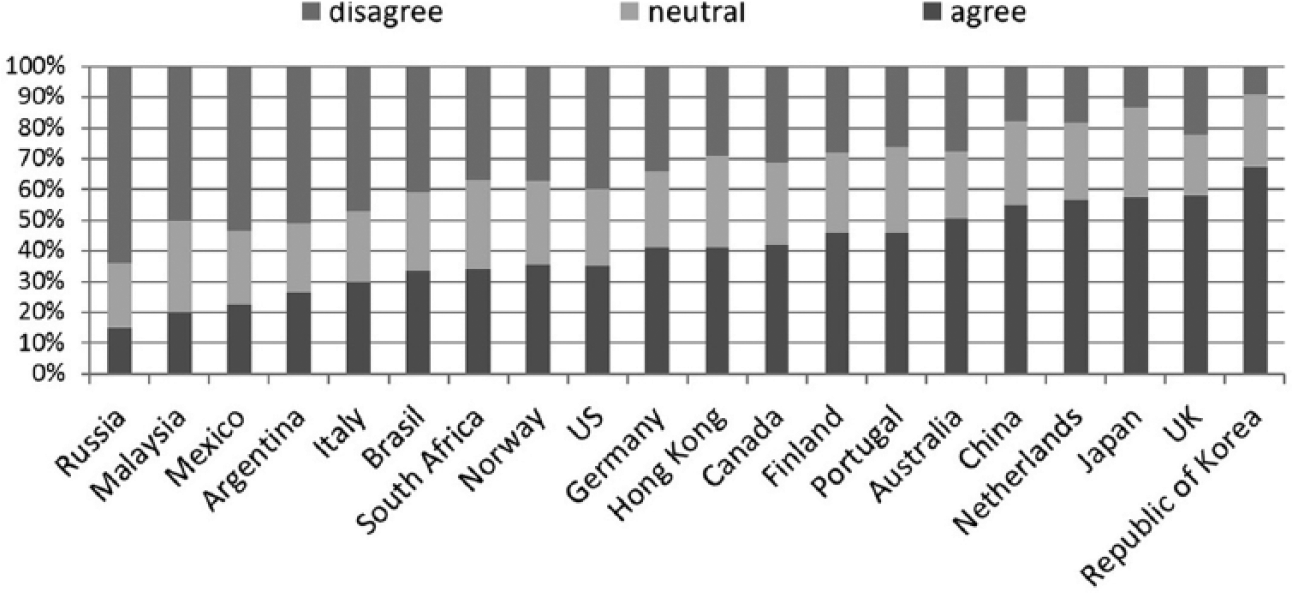
‘My job is a source of considerable personal strain’ (2012).
At the same time, as major reforms have been implemented in the Russian university sector since 2013, new managerialism is becoming an important part of the governance model. Abundant anecdotal evidence suggests that Russian university faculty start to feel less secure and more stressed. One should expect that performance measures (such as publication productivity at individual and institutional level), necessity to attract external funding for research as well as increasing accountability and growing uncertainty due to competitive pressures might change personal feelings and attitudes significantly. 10 However, these changes could be empirically evaluated in future surveys only.
Attractiveness of academic career / Evaluation of working conditions
In 2012, an academic career was still considered as less attractive in Russia compared to a career in the private sector, and this opinion is relatively common both among people working in academia and outside. 11 The share of participants in the Russian 2012 study who agreed that the present time was ‘a poor time for any young person to begin an academic career’ in their respective academic fields remains practically the same as in 1992, when the academic profession was in a deep crisis (see Table 3). However, it is difficult to identify factors that influence such attitudes in a national academic system. For example, speaking in a broader international context, among countries with relatively low average professor salaries and high competition for academic jobs, there are academic systems whose faculty members consider the current period favourable for academics in their scientific field. On the contrary, in some quite affluent countries the proportion of academics who are sceptical about the prospects for entry-level faculty is quite high (see Figure 3). In the Russian 2012 study there is a correlation between answers to the question about career prospects in one’s academic field and income (earned at the university): the average university-earned income of those who disagreed that the present time was a poor time to start an academic career is approximately 1.3 times higher than the average income of those who agreed with this statement (t-test = 4,37, p-value < 10-3).
Views on the statement ‘This is a poor time for any young person to begin an academic career in my field’.
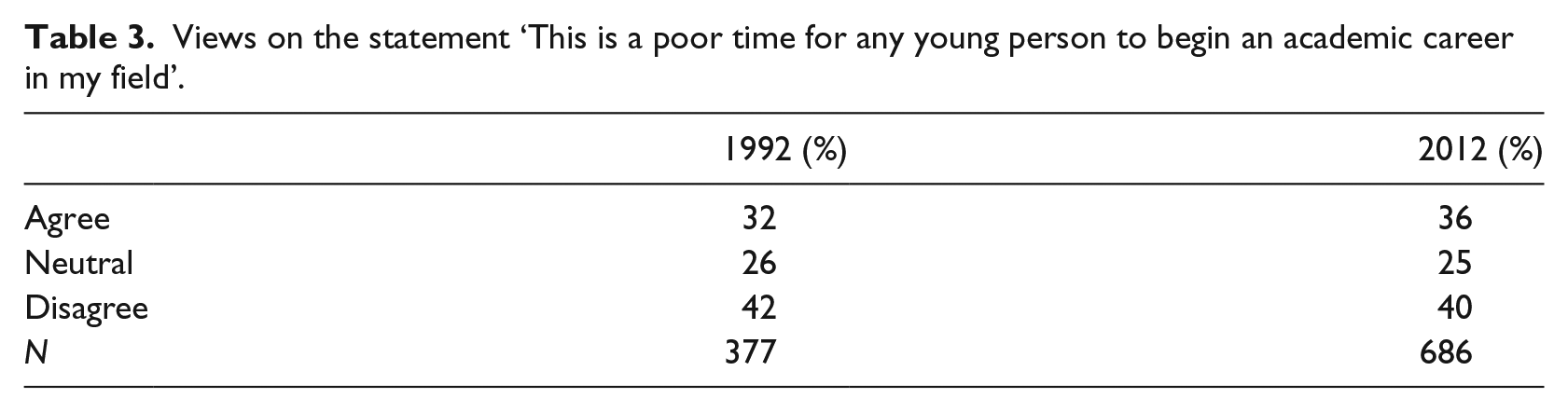
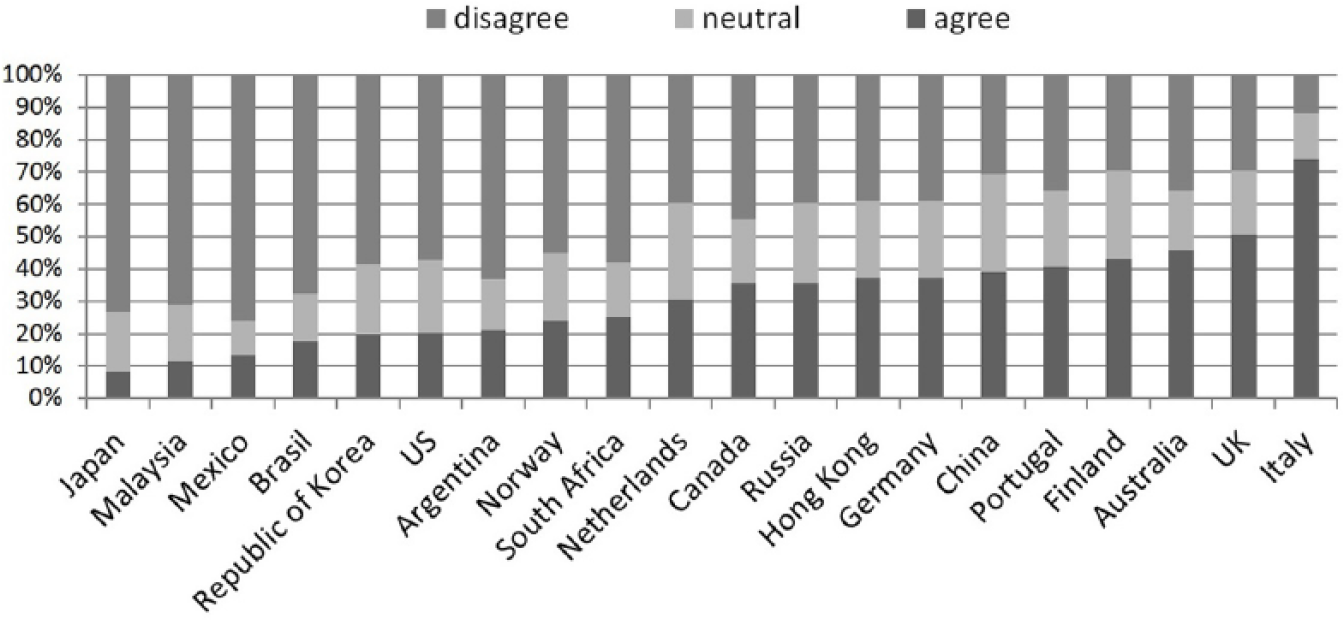
‘This is a poor time for any young person to begin an academic career in my field’ (2012).
The reasons for declined desirability of academic careers (Huisman et al., 2002) could be the increased accountability and efficiency pressures mentioned earlier, relative abatement in salary and expanded workload (Enders, 2006). In one study (Leisyte et al., 2009), faculty in the UK and the Netherlands report that the workload has intensified in the context of increasing demands and competition in both teaching and research. Based on cross-country CAP data Cavalli and Moscati (Cavalli and Moscati, 2010) argue that in general a rather pessimistic image of working conditions prevails in European countries: in every European country in the CAP sample most faculty members state that working conditions have deteriorated since they entered the academic profession.
At the same time, although subjective faculty evaluation of their working conditions was more positive in 2012 than in 1992, the percentage of Russian respondents who do not regret their choice of profession has remained at about the same level as before (see Table 4), which is rather high compared to other countries (see Figure 4). In general, one may conclude that while the composition of faculty body has changed over the last 20 years, those who stayed in academia have adopted to existing conditions and learnt how to reduce stress by selecting their individual strategies.
Views on the statement ‘If I had it to do over again, I would not become an academic’.
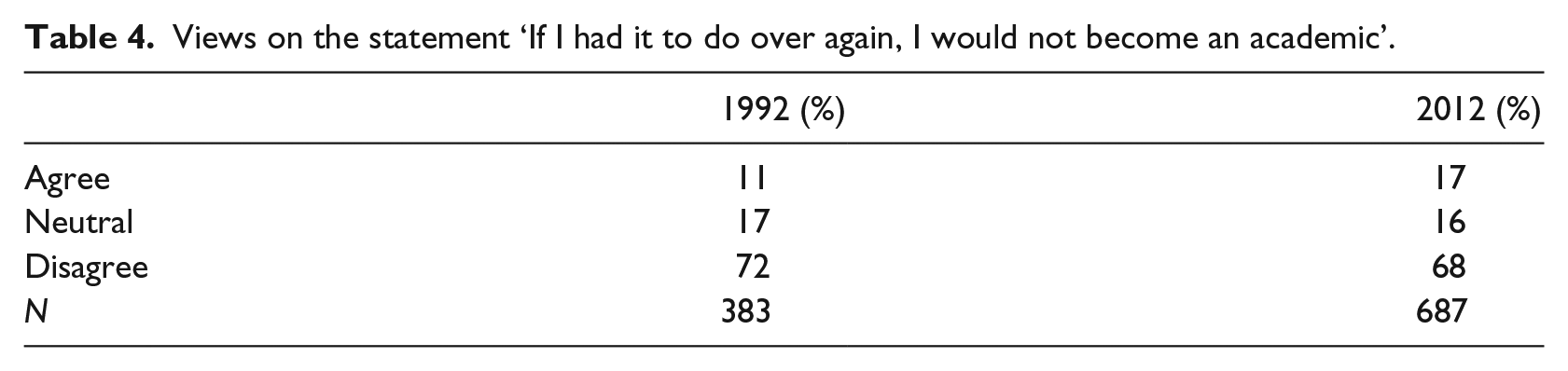
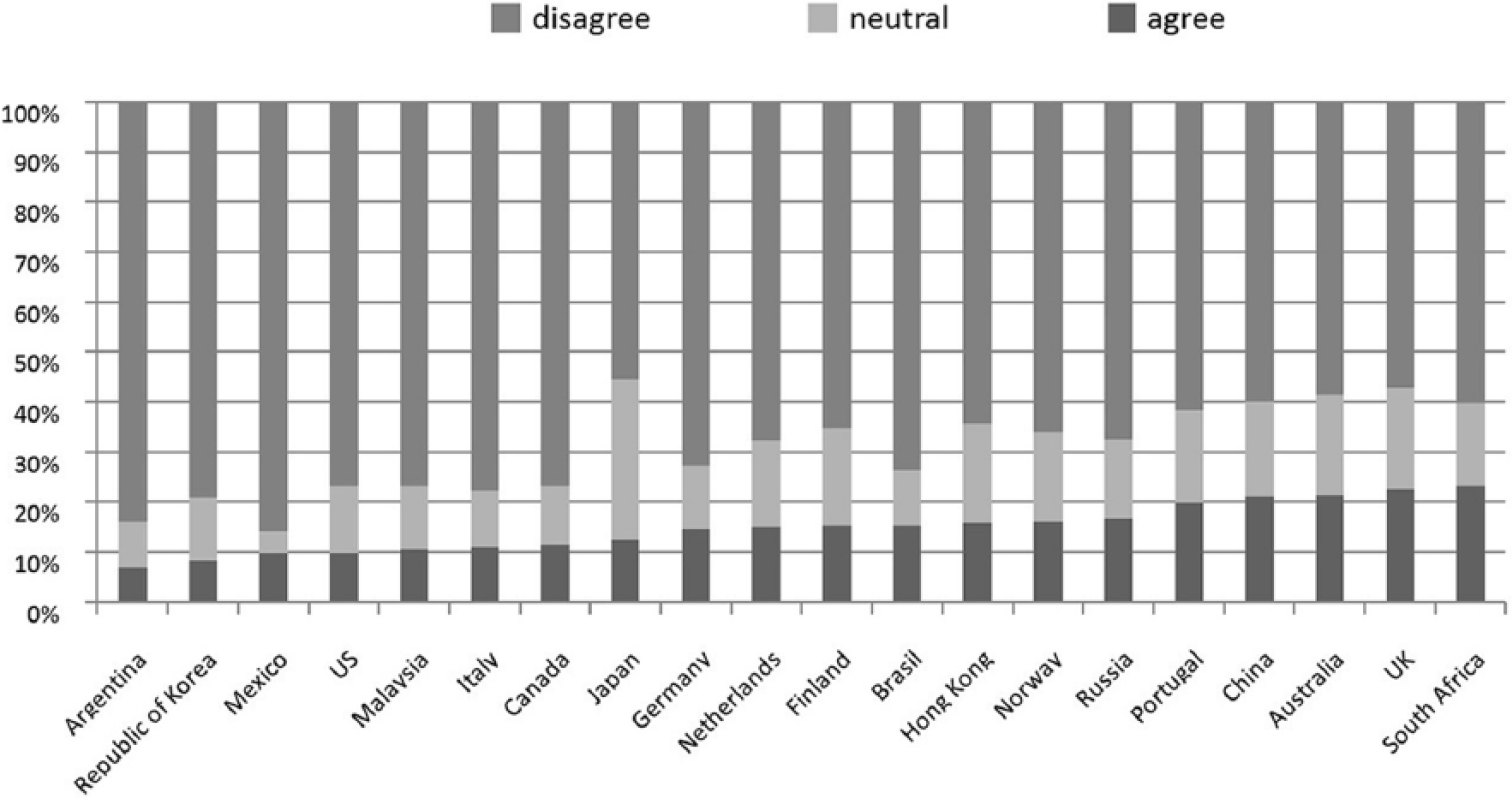
‘If I had to do it over again, I would not become an academic’ (2012).
Assessment of the quality of training
Relatively low levels of personal strain associated with the professional activities of faculty can to a certain extent be attributed to a surprisingly high self-assessment of their research and teaching skills. About two-thirds of Moscow and St Petersburg respondents in the CAP study consider their training in teaching and research to be excellent or good (in regional universities these numbers are somewhat lower, yet still substantially higher than in 1992). It should be noted here, however, that this self-assessment differs across various subject areas (lower for faculty in natural sciences and engineering than for faculty in humanities and social sciences), whereas 20 years ago no significant differences were found.
However, if one looks at Russian faculty’s research performance and their level of individual internationalization (which is low both for the Russian sample on the whole and the sub-sample of Moscow and St Petersburg universities: 23% said that they had published articles in a language other than the language of teaching in their institution in the previous three years; 21% stated that they had published articles in international journals, with no significant differences between capital and regional universities), it is clear that faculty’s self-assessment to a large extent does not relate to objective international criteria of competitive research skills and faculty’s chances of competing internationally. The percentage of those who evaluate their research training as excellent is higher among those who have international publications (published in the last three years) but the differences, although statistically significant by chi-square test, are generally small: 56% among those who have at least one publication in an international journal, 44% among those who do not have any (chi-square = 15.76, p-value = 0.003). This conclusion is supported by the fact that there are no significant differences in self-assessments of faculty in universities of different types. However, there are also no differences in faculty preferences regarding teaching and research in NRUs and other institutions (Kozmina, 2014).
Reasons to stay in or leave the university
Both in 1992 and in 2012 the most common reason for potentially leaving the university was insufficient income (63% and 25% of respondents in 1992 and 2012 studies, respectively, noted this as a strong reason to leave a university) (Table 5), although the percentage of respondents who agreed with this was lower in 2012. 12 This difference may be explained by improved funding of Russian higher educational institutions in general.
Reasons to leave a university. a
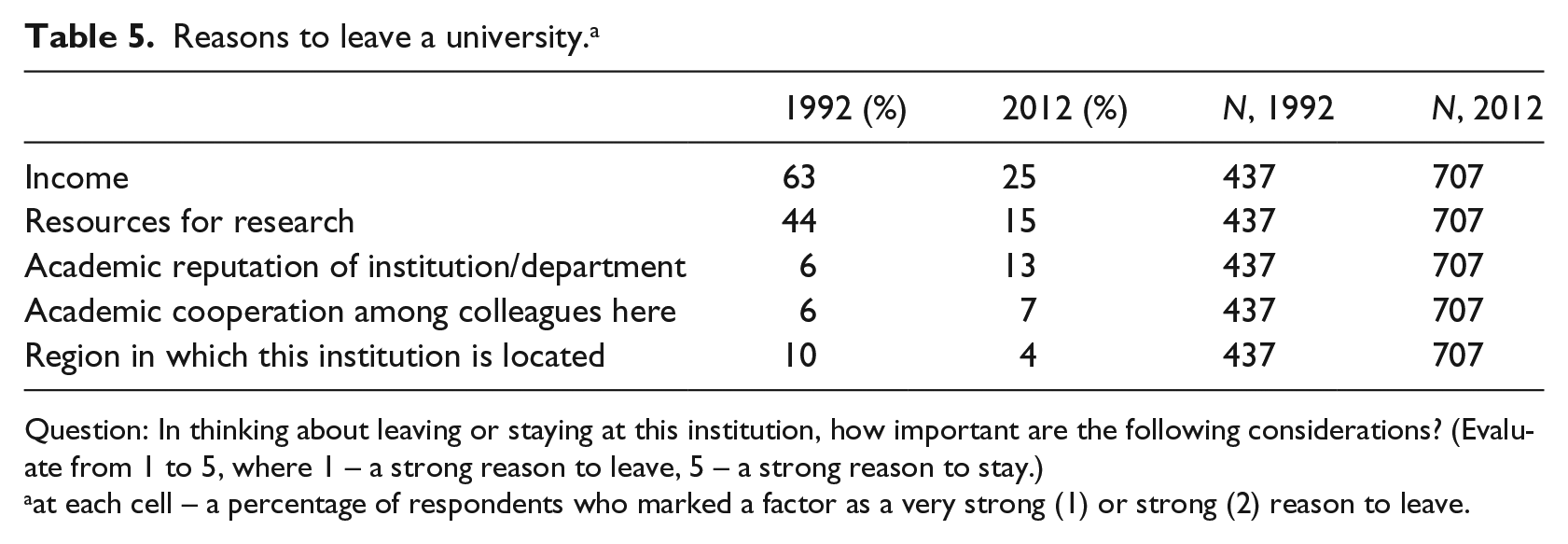
Question: In thinking about leaving or staying at this institution, how important are the following considerations? (Evaluate from 1 to 5, where 1 – a strong reason to leave, 5 – a strong reason to stay.)
at each cell – a percentage of respondents who marked a factor as a very strong (1) or strong (2) reason to leave.
The most common reason to stay is the university’s/department’s academic reputation, although in 2012 there was no general consensus on this as in 1992 (Table 6). A possible explanation is that in 1992, with very low funding allocated to salaries and minimum access to necessary resources, social esteem and recognition were the main sources of motivation to stay in the academic profession.
Reasons to stay at a university. a
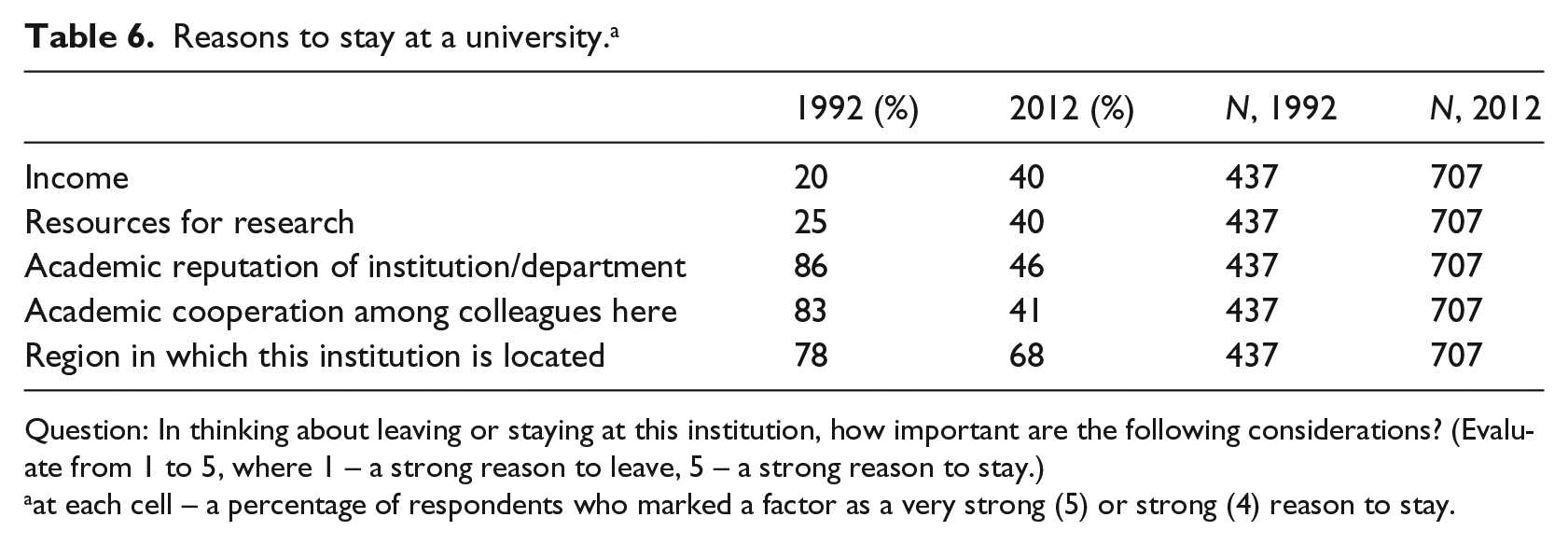
Question: In thinking about leaving or staying at this institution, how important are the following considerations? (Evaluate from 1 to 5, where 1 – a strong reason to leave, 5 – a strong reason to stay.)
at each cell – a percentage of respondents who marked a factor as a very strong (5) or strong (4) reason to stay.
The problem of insufficient resources for research as a reason to leave plays a much smaller role in 2012. In 1992, the most important factors contributing to faculty’s willingness to stay at a university were its reputation and academic environment (i.e. academic cooperation between faculty): 86% and 83% of faculty mentioned these factors as strong reasons to stay, respectively. This is consistent with the results of other studies into factors affecting job satisfaction and preventing faculty from leaving the academic profession (Barnes et al., 1998; Lacy and Sheehan, 1997). These studies indicate that the ‘sense of community’ and good relationships with colleagues are one of the strongest predictors of job satisfaction and factors that keep people in academia. In today’s situation, these factors are valid for a much smaller number of university faculty.
Models of decision-making
The analysis of roles that different actors play in institutional decision-making and faculty’s estimation of the degree of their own participation in these processes reveal strong centralization of decision-making in Russian universities. This highly centralized governance model has been quite stable in the last 20 years and has undergone only minor changes (see Tables 7 and 8).
Decision-making at the university (1992).
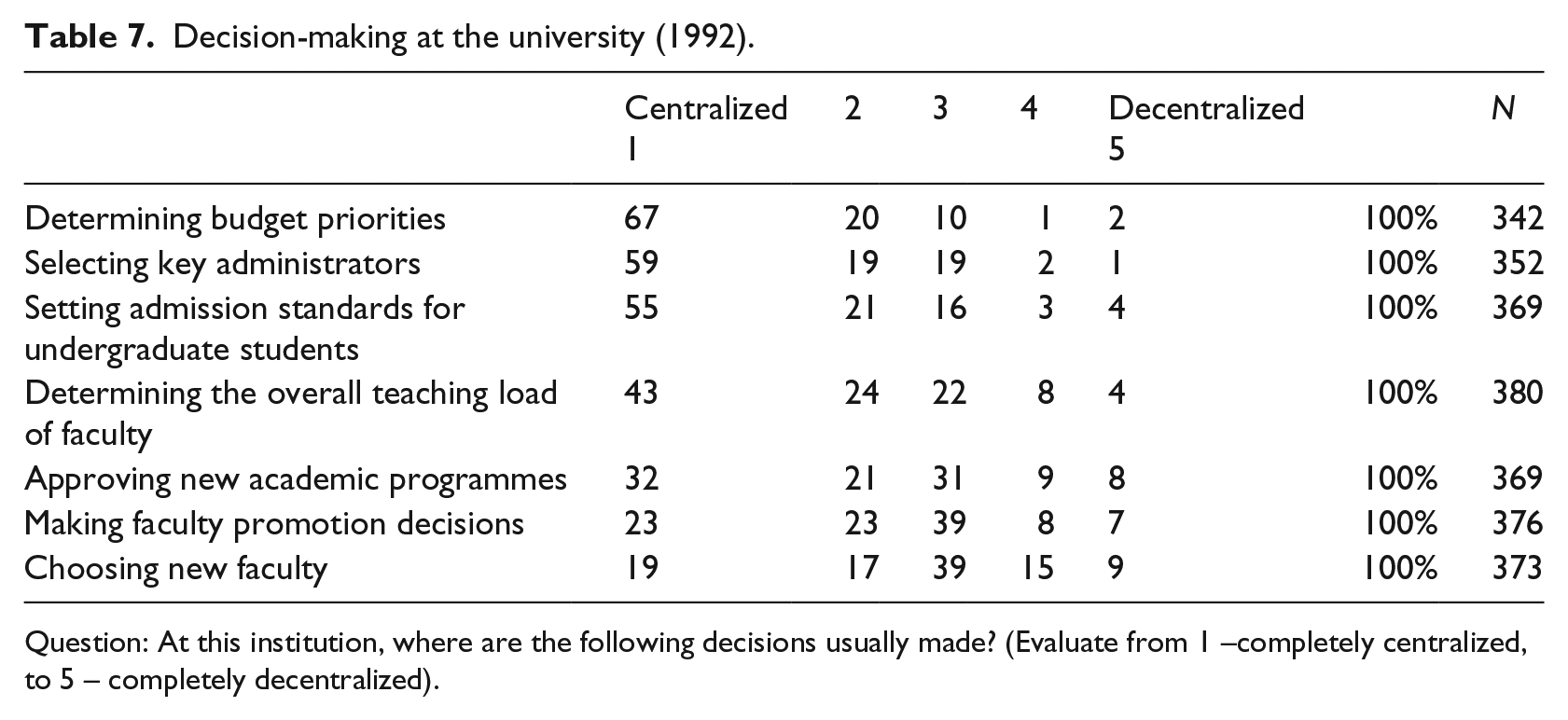
Question: At this institution, where are the following decisions usually made? (Evaluate from 1 –completely centralized, to 5 – completely decentralized).
Decision-making on different issues: Key actors (2012).
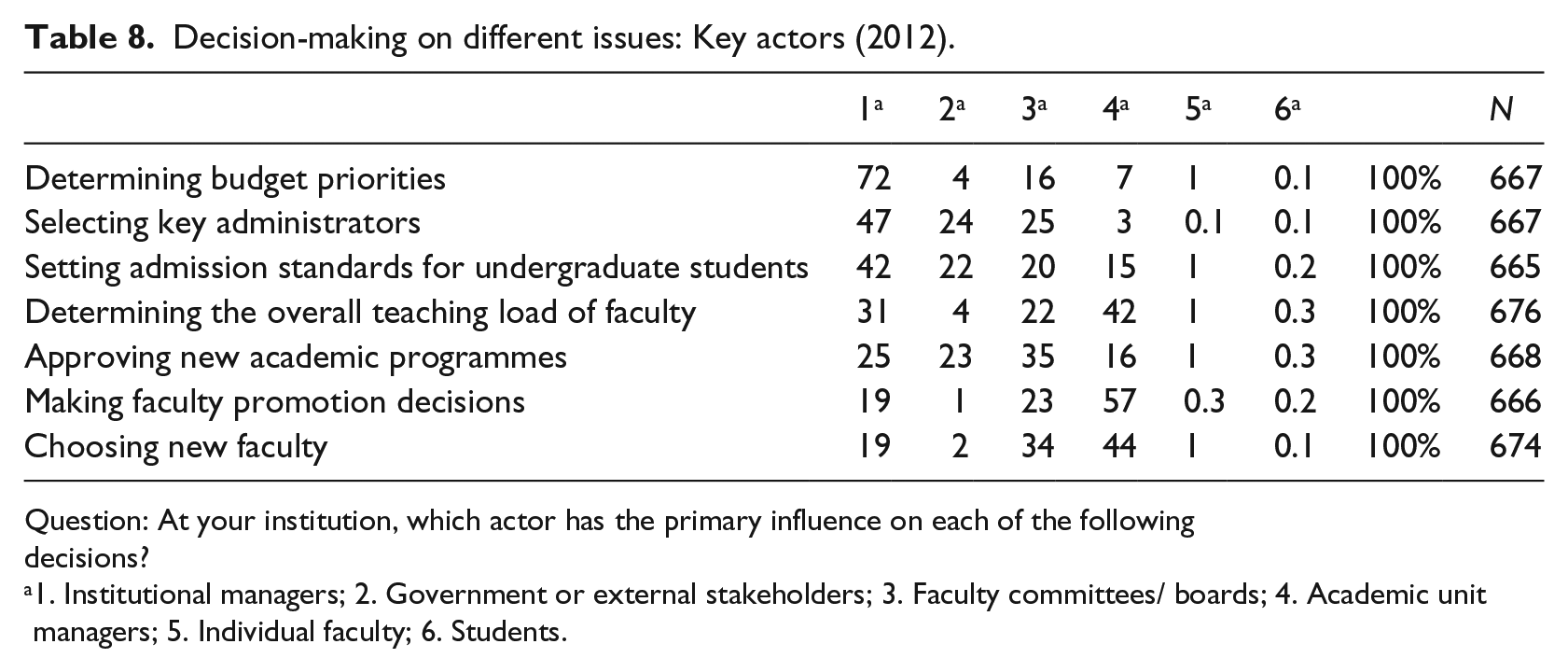
Question: At your institution, which actor has the primary influence on each of the following decisions?
1. Institutional managers; 2. Government or external stakeholders; 3. Faculty committees/ boards; 4. Academic unit managers; 5. Individual faculty; 6. Students.
Most of the respondents in both the 1992 and 2012 samples indicated that the same decisions were taken with a high degree of centralization (i.e. at the level of institutional management): determining budget priorities, selecting key administrators and setting admission standards for prospective undergraduate students. In both samples fewer faculty members stated that decisions regarding promotions and new faculty appointments were still centralized.
At the same time, today the role of institutional top-management in making the most important decisions (such as electing key executives or determining budget priorities) is stronger in federal universities and NRUs than in institutions without a special status. At first glance these findings contradict the conclusions of some existing studies concerned with the relationship between models of management and the development of the academic environment at universities (see, for example, Masten, 2006). A general conclusion of these studies is that reliance on shared governance is to a greater extent necessary in the research university sector, while management is characterized by greater centralization at other universities and colleges focused on teaching. However, this contradiction is only apparent: the main body of such studies is based on data from US institutions, where the status of a research university (according to the Carnegie classification) is awarded to a university in accordance with objective measures of university performance. At the same time, Russian universities were awarded NRU status under special development programmes that require university management to mobilize institutional human resources to achieve the results required within these programmes. That is why elements of ‘mobilizational’ management can be found in research universities.
Both in 2012 and 20 years earlier faculty members at Russian universities (both in capital cities and in regional ones) evaluated their own influence on decision-making as fairly low (see Tables 9, 10, 11). In comparison with other CAP countries, there is a relatively large percentage of Russian faculty members who perceive the participation of faculty (individual faculty or faculty committees, or university senate) in decision-making processes as high. For some institutional decisions in the Russian 2012 sample (selection of managers, budget, admissions, new programmes of study, research priorities and international linkages) the percentage of faculty who said that individual faculty members or faculty committees, or the university senate had primary influence on decisions taken was 1.5 to three times higher than the average percentage in CAP countries (see Teichler et al., 2013: 170).
Evaluation of faculty members’ own influence on decision-making.
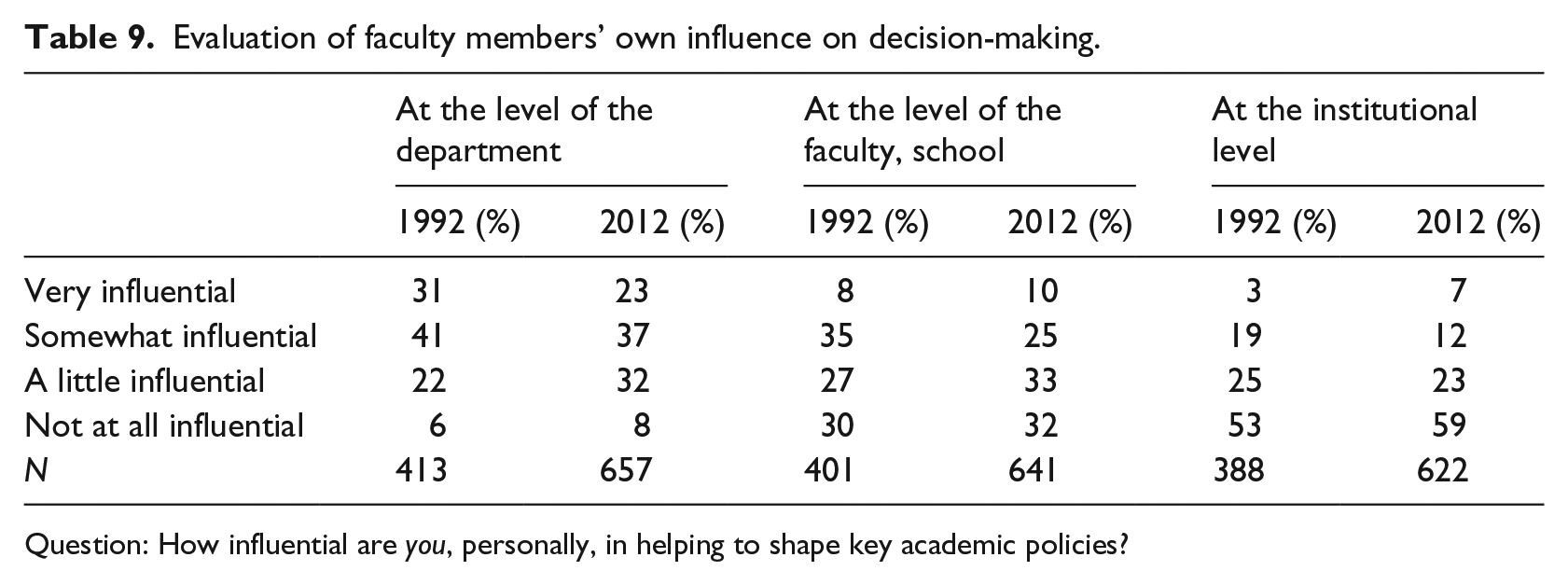
Question: How influential are you, personally, in helping to shape key academic policies?
Senior faculty (professors and associate professors).
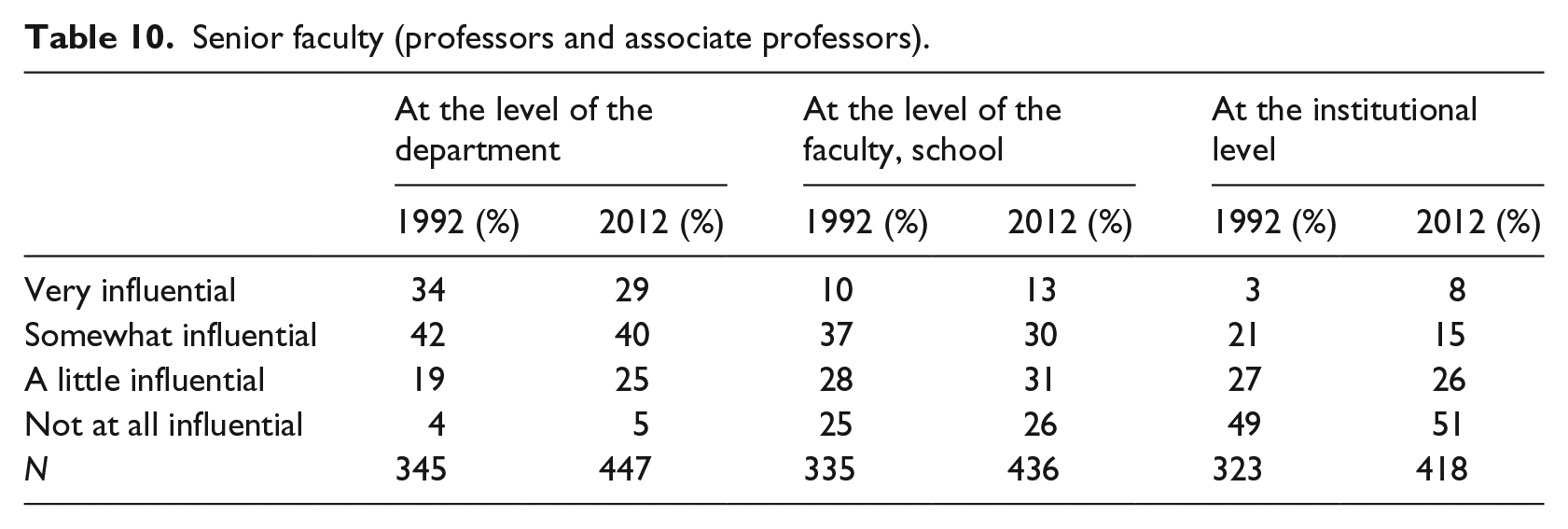
Junior academic staff.
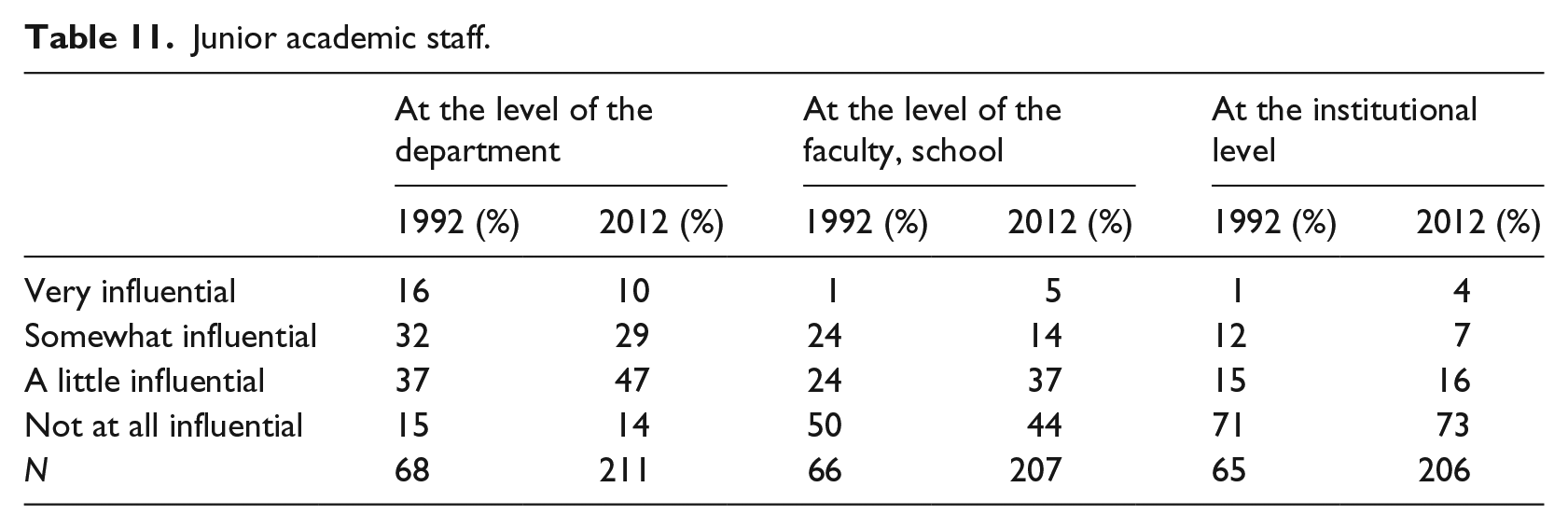
However, the CAP study is targeted at faculty employed full-time or at least at persons who spend a substantial part of their work time on teaching and/or research (Teichler et al., 2013). Meanwhile, researchers note that the number of fixed-term contracts for both teaching and research positions is growing, while the number of tenured and tenure-track positions is declining (Cavalli and Moscati, 2010; Finkelstein et al., 1998). There are many concerns over the growing ‘uncertainty’ of employment in the academic profession internationally due to reductions in funding, increases in student enrolments, diversification of academic institutions, etc. (Altbach, 2000; Enders, 2000; Finkelstein et al., 1998). The number of ‘para-academics’ (staff who specialize only in one element of the academic profession, like educational developers or research management staff) is increasing (Macfarlane, 2011). In the UK only 51.5% of those employed on academic contracts in 2008–2009 had a ‘teaching and research’ function (Higher Education Statistics Agency (HESA), 2010). Thus, additional attention should be paid to the participation of other groups of academic staff, as long as their participation in decision-making processes differs from full-time and part-time faculty.
Control
A specific feature of the present situation in the university academic sector in Russia is that significantly more faculty members (compared to the 1992 study) feel the pressure of regular monitoring of their teaching and research activities and performance (see Table 12), both by peers, direct superiors, senior administrative staff (to a lesser degree) and students. These relatively higher shares indicate that faculty are dissatisfied with increased control over their activities. At the same time, faculty members realize that this is also associated with increased requirements for contract extension and promotion.
Who evaluates the teaching and research of faculty? a
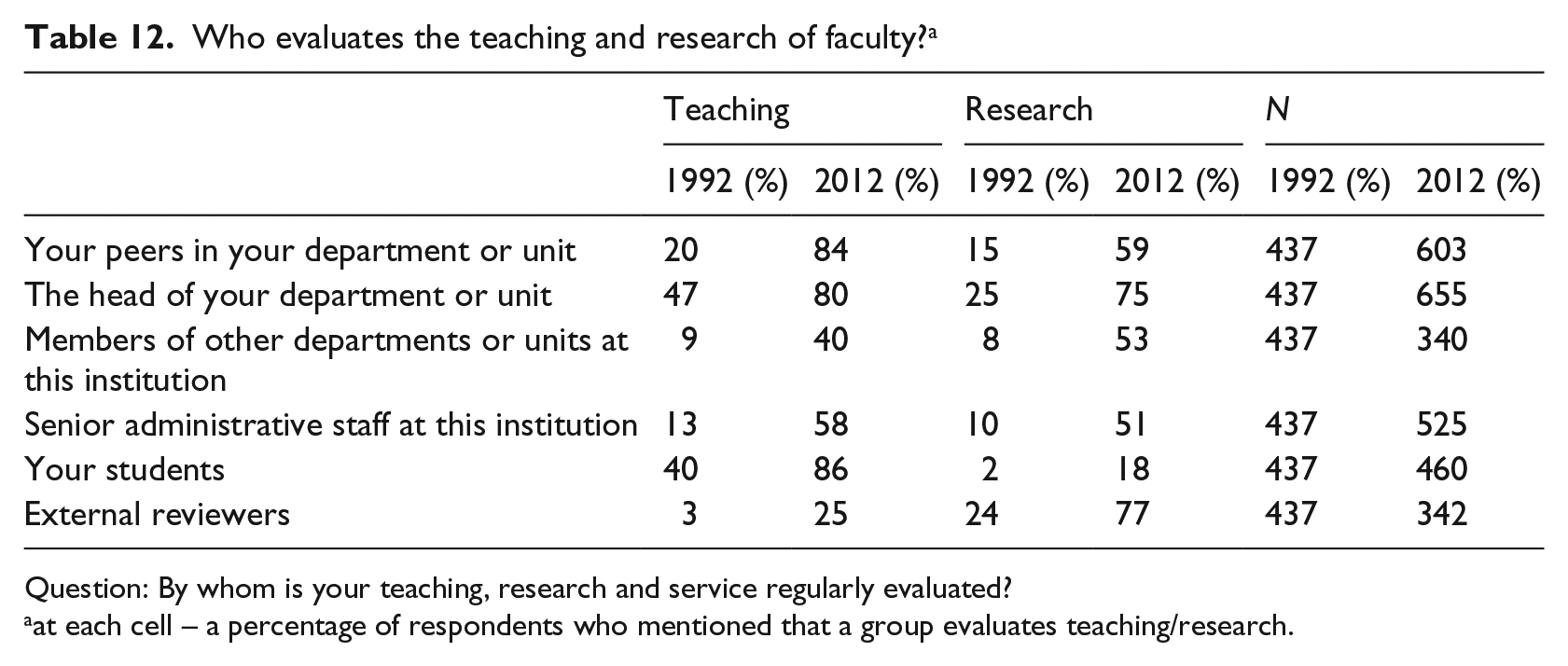
Question: By whom is your teaching, research and service regularly evaluated?
at each cell – a percentage of respondents who mentioned that a group evaluates teaching/research.
In this respect there is a difference between higher educational institutions with a special status and all other institutions. Among NRU faculty the proportion of those who noted that the head of their department evaluated their teaching is higher (84% of NRU faculty versus 76% of faculty at other institutions, chi-square = 4.39, p-value = 0.036). This also applies to the percentage of those who said that their teaching was evaluated by students (63% and 57%, respectively, chi-square = 4.59, p-value = 0.032). And vice versa, among NRU faculty fewer respondents noted that their scientific work was evaluated by the head of department (70% and 79%, chi-square = 6.27, p-value = 0.012), and that their administrative work was evaluated by external reviewers (7% and 15%, chi-square = 8.6, p-value = 0.003).
However, many faculty members indicated that continuous monitoring and high demands for increased scientific productivity negatively affected the quality of research (50% in the 2012 sample and 9% in the 1992 sample agreed with the statement ‘High expectations to increase research productivity are a threat to the quality of research’).
Conclusions
Using two broad surveys with the set of the same or comparable indicators we aimed to analyse the attitudes of Russian faculty in a comparative perspective. The Carnegie survey and the Changing Academic Profession survey were carried out in Russia with a 20-year time lag. During these 20 years the Russian higher education system underwent fundamental changes. Comparative analysis of the two datasets enabled us to observe both relatively stable and volatile characteristics of the academic profession in two major Russian cities (where a significant share of all higher education institutions is concentrated) and also investigate how the academic profession is perceived by university faculty.
Our analysis suggests that these perceptions have changed significantly. The percentage of research-oriented faculty has increased, as well as the share of those who do not consider their job as a source of personal strain. Moreover, the significance of different reasons to leave or to stay at a university has changed. These changes are probably linked, on the one hand, to higher salaries in the academic sector and availability of financial resources allocated to research activities and, on the other hand, to the dismantling of a number of highly productive scientific schools.
However, based on the results from Moscow and St Petersburg universities we can suggest that some important characteristics of the system are relatively stable. For example, the proportion of those who regret their career choice remains almost the same (as well as the share of those who believe that today is a poor time for young people to start an academic career in their field). On average, there are no changes in university governance structures and the involvement of faculty in decision-making processes at universities is still low. There is no supporting evidence to claim that Russian universities are shifting to a governance model with a significant role of the academic community in decision-making or shared governance. This is a matter of concern as empirical evidence suggests that a low level of faculty involvement in decision-making may negatively affect university performance (Brown, 2001).
While our dataset includes public institutions in two major cities, we can argue that corresponding limitations are not substantial. Indeed, the public university sector in Russia accounts for about 85% of all students in Russian higher education institutions. Moreover, private universities (with some minor exceptions) belong to a low-quality educational segment and quite often do not have their own core faculty. At the same time, a substantial part of higher educational institutions is concentrated in Moscow and St Petersburg, the biggest Russian cities, with high variations in quality, size and scope. So, limiting the sample to universities in these two cities still allows us to get a generalized picture of the academic profession in Russia.
Priorities of the higher education system, as perceived by university academics, have changed: 20 years ago faculty believed that one of the most important challenges that the higher education system faced was to prepare students to enter the labour market. Now, priorities have shifted in the direction of strengthening Russia’s competitive ability in the global community. This shift is in itself not surprising. However, it is a significant warning sign that this is probably the only (and rather ephemeral) evidence that the academic culture is adapting to the idea of competitiveness in the global academic market place.
Footnotes
Acknowledgements
We thank Philip Altbach, Martin Finkelstein and James Forest for their support for our research and gaining access to the Carnegie Study data on Russia as well as Ulrich Teichler and William Cummings for granting us access to the Changing Academic Profession database. We are also grateful to all participants of the ‘Academic Profession in Comparative Perspective’ workshop (June 2013, Moscow, Higher School of Economics) for their valuable comments on the earlier version of the paper.
Declaration of Conflicting Interest
The authors declare that there is no conflict of interest.
Funding
The article was prepared within the framework of the Basic Research Program at the National Research University Higher School of Economics (HSE) and supported within the framework of a subsidy granted to the HSE by the Government of the Russian Federation for the implementation of the Global Competitiveness Program.