




Abstract
Research conducted over recent decades show that parental involvement plays a significant role in children’s academic achievement as well as their cognitive, social and emotional development. For effective parental involvement, understanding the conceptualization of early childhood educators should be significant. This research investigated the views of Turkish early childhood educators on parental involvement and attitudes towards its types. Furthermore, it aims to find the reasons behind inefficient usage. A total of 113 educators provided a representative sample from Ankara. The results showed that Turkish early childhood educators have positive attitudes towards parental involvement and its types. In addition, the most popular type of parental involvement is home support. According to the results, the main reason for inefficient parental involvement is the unwillingness of parents to participate.
Introduction
Research conducted over last three decades shows that parental involvement has a significant role in children’s cognitive, social and emotional development as well as their academic achievement. In addition, these studies have emphasized parental involvement as a particularly important aspect of the school–home relationship, which affects children’s learning (Coleman and McNeese, 2009; Epstein and Dauber, 1991; Fan, 2001; Galindo and Sheldon, 2012; Kim, 2002; Martin et al., 2013).
The opinions of teachers as one of the main facets of education have significant implications for parental involvement; therefore, the main purpose of this study is to investigate the perspectives of Turkish early childhood educators regarding parental involvement and their attitudes towards four types of parental involvement, specified in this study as communication, home support, voluntary activity and decision making (Epstein, 2001). These types of parental involvement can be described briefly as communication, covering every kind of communication between school and family concerning the child and their schooling; home support, including all kinds of school-related activities done by parents with their children at home; voluntary activity, the sum of all voluntary participation of parents in school activities; and decision making, the involvement of parents in decision-making processes regarding school-related subjects. Also the relationship between early childhood educators’ teaching experience and their understandings about parental involvement will be investigated in addition to the relationship between their teaching experience and the types of parental involvement they use. Furthermore, the relationship between the education level of the participants and their opinions about parental involvement will be studied, while the relationship between their education level and the types of parental involvement they use will be investigated.
Furthermore, this research aims to find answers as to why specific types of parental involvement are not used efficiently. As it is stated in previous studies, parental involvement has a positive influence on children’s academic success, as well empowering the parents (Martin et al., 2013; Mattinly et al., 2002). Therefore, it is worth investigating the understandings of teachers, who can be considered as the main source of formal education, about involving parents in the curriculum.
Parental involvement in Early Childhood Education
There was a strict division of roles between schools, which handle academic issues, and parents, who focus on social aspects, by the middle of the 20th century (Hill and Taylor, 2004). Nevertheless, parents have been a part of education from past to present, through taking the role of first teacher in a child’s life. Therefore, it is hard to deny the importance of parents in children’s education (Berger, 2008). Even after formal education has started, the importance of parents in this process does not decrease; on the contrary, it increases. Educational studies show the importance of parental involvement in students’ academic achievement and motivation (Coleman and McNeese, 2009; Epstein and Dauber, 1991; Fan, 2001; Galindo and Sheldon, 2012; Kim, 2002; Martin et al., 2013).
Given a child’s need for care during the early childhood, it is especially important for schools to work with parents (Morrow and Malin, 2004). As Uludağ (2008) defines, parental involvement is “parent and teacher collaboration on children’s learning” (p.809). According to Hill and Taylor (2004), there are mainly two reasons why parental involvement has a positive influence on children’s success. These are (a) being in an environment where parents can learn from each other and from teachers; and (b) building up a common understanding about appropriate behaviours for the children in the school and at home.
According to the findings of The Effective Provision of Pre-School Education (EPPE) Project (UK; Sylva et al., 2004) a good quality Early Childhood Education (ECE) combined with home learning positively affects children’s social and cognitive development. Moreover, a curriculum that includes the parents in the decision-making process makes a positive difference in a child’s intellectual gains. The results also show that children who receive parental support in their education tend to need less special education. The effects of parental involvement are interactive, which means that, while it affects a child’s learning and development, it is also affected by this positive change (Martin et al., 2013). Gonzales-DeHass et al. (2005) mention that, with the rising success of children, the motivation of parents to be involved in the curriculum also increases. Parental involvement also influences teachers and the programme itself, as well as the families. Çakmak (2010) explains that the effectiveness of a programme could be investigated and the necessary adjustments can be done according to feedbacks from parents. Also including parents in school-related decisions helps to strengthen the programme according to the needs of families (Çakmak, 2010; Hill and Taylor, 2004).
Since the family plays a significant role in the child’s cognitive, emotional and social development, and collaborative work with parents has such an important effect on children’s academic success, there should be a well-established cooperation between the school and the family. To begin with, consideration must be given to the school climate (Berger, 2008). According to Berger (2008), a welcoming climate that is comforting to parents should be established, instead of a feeling that tells parents that they must stay away from a “teachers’ territory”. The encouragement of home–school interaction coming from teachers is also associated with the competence of parents at their parental involvement level (Epstein and Dauber, 1991).
Alongside the school environment, parents’ past experiences, cultural values and feelings affect the shape of the relationship between the school and the home (Berger, 2008). Taylor et al. (2004) state that parents’ own experiences about school have an impact on their attitudes towards parental involvement. Positive and relaxing memories lead the parents to interact with their children’s school. According to previous research, in addition to the parental characteristics and experiences, demographic characteristics such as socioeconomic status, cultural background and ethnicity are associated with the dynamics of parental involvement (Baker and Stevenson, 1986; Hindman et al., 2012). For example, parents from high socioeconomic backgrounds are more likely to attend to school activities and follow their child’s development more closely. Apart from those factors, parents’ psychological state also influences their involvement. According to the research of Hill and Taylor (2004), depressed mothers are less involved in their child’s school life. This includes both home- and school-based parental involvement, such as preparing the child for school and attending school activities.
Parental involvement and Early Childhood Education in Turkey
Even though parental involvement in Turkey is not common, it dates back to the Ottoman times. For example, in Sibyan Schools parents took part as volunteers to raise funds and to help with the maintenance of schools (Erdem, 2005). These schools can be recognized as the first ECE institutions in Turkish history. In these schools, children between the ages of 5 and 6 were educated in writing, reading the Qur’an and praying. The aim of these schools was to take care of the children, nurture and protect them. However, supporting the development of the children was not their consideration (Çelik and Gündoğdu, 2007).
During the first years of the republic, the main focus was on teaching the new alphabet. This massive education movement needed a great deal of funding and, as a result, the money reserved for ECE decreased. After a break of more than 20 years, ECE started to gain importance at the governmental level again. In the report that was prepared for the VII National Education Council in 1962, information and some statistics were presented concerning early childhood institutions in foreign countries. After the council concluded, new regulations about “Kindergartens and Nursery Classes” were published and ECE was spread through both public and private institutions (Education, Audiovisual & Culture Executive Agency, 2009/2010 and Oğuzkan and Oral, 2003, as cited in Çelik and Gündoğdu, 2007).
Although the curriculum and the system have not been settled yet, certain aims are mentioned in national law (General Law of National Education, 20th article). According to this law, ECE should support children’s physical, emotional and cognitive development and help them in gaining good habits. Besides developmental aspects, during ECE the language skills of children should be supported and educators should help children to gain behaviours such as respect, cooperation, responsibility and solidarity. Other than these behavioural habits, children should also develop creative and critical thinking as well as good communication skills to express their imagination and emotions. In addition to supporting children’s development, ECE should also create a common nurturing environment for children from disadvantaged backgrounds, as well as preparing children for elementary school (Early Childhood Education Institutions Regulations, 6th Article, as cited in Education, Audiovisual & Culture Executive Agency, 2009/2010).
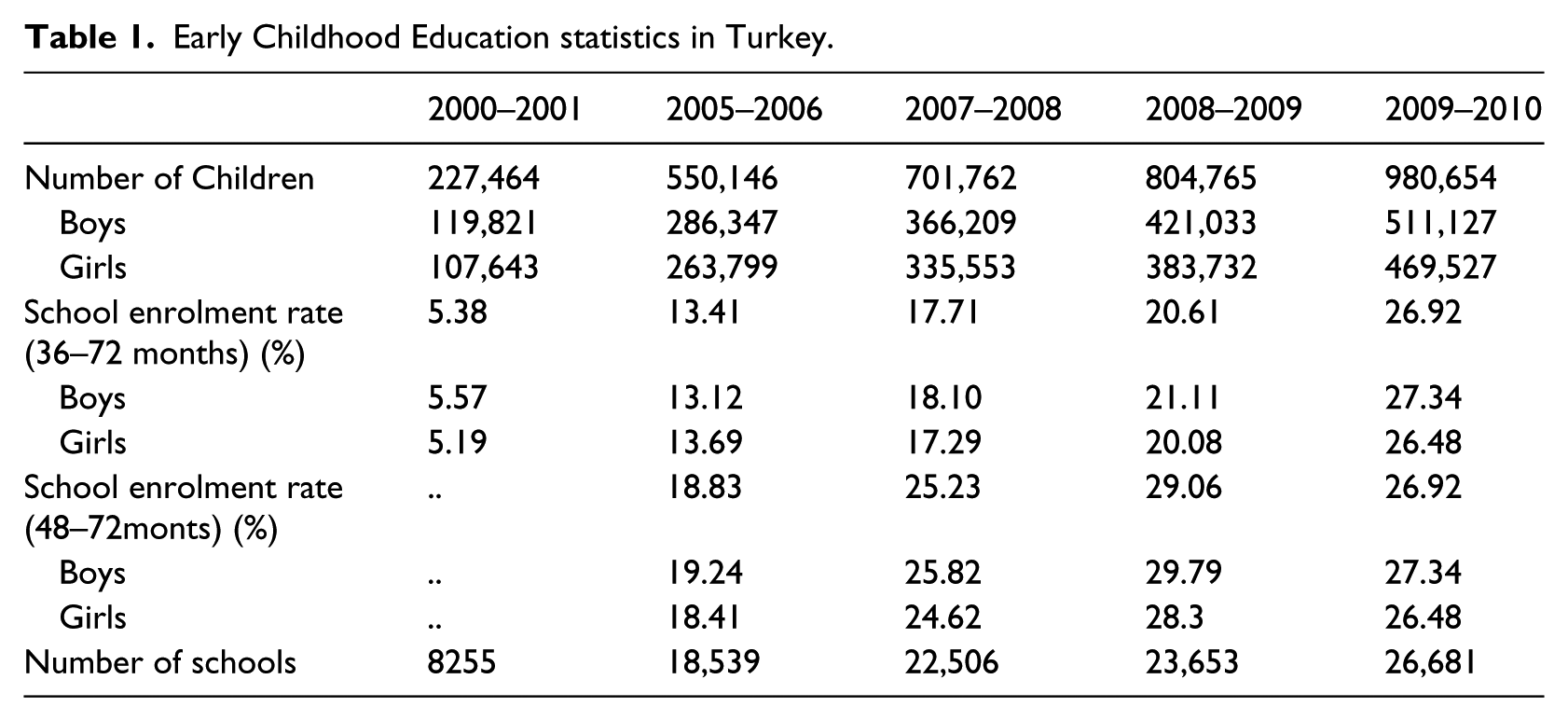
During its history, ECE developed in Turkey both at the public and the private levels. However, according to Derman and Başal (2010), this development is not enough to keep up with foreign countries because the enrolment rate is still too low. They also claim that the quality of ECE in Turkey is not adequate. According to the percentages shown in Organization for Economic Cooperation and Development (OECD) reports, the enrolment rate of the pupils younger than 5 years old is really low in Turkey; as a matter of fact, Turkey comes last on the chart (OECD, 2010). UNESCO (2006) reports that the ECE enrolment rate is 10.7% in Turkey, based on 2004/2005 statistics (as cited in Audiovisual & Culture Executive Agency, 2009/2010).
Even today, to order to enrich ECE institutions there are many projects run by the Ministry of Education as well as some civil associations. The aim of most of these projects is to reach children from disadvantaged backgrounds. In addition to these projects, there are some other projects that aim to support the quality of education in schools, improving the physical features of institutions (Audiovisual & Culture Executive Agency, 2009/2010).
Alongside the projects targeting the improvement of ECE, there are a number of projects aiming to support parental involvement and parental training. The Mother-Child Education Foundation (MCEF) runs the most significant projects of this nature. The MCEF considers parents as the main component of education and states that it is not possible to obtain better educational results without the full cooperation of parents (Tekin, 2011). Here the “parent training” concept may lead to an idea that parents need to be formally trained; however, the essential underlying motivation is to support a child’s development through strengthening the family unit, reducing the negative behaviours of children and generally supporting society (Kocabaş-Özeke, 2005).
In addition to parental trainings, there are some other types of parental involvement supported by ministry regulations. As the main participatory component in these regulations, the school–family associations (SFAs) play an important role. The SFA is formed of volunteer parents and, as defined by the National Ministry of Education (2012), the SFA is a group gathered to maintain links between schools and families, to support the communication and cooperation between parents and the school, to promote the activities that facilitate education and teaching, and to provide for the school-related needs of children where parents cannot afford the expenses.
Methods
Participants
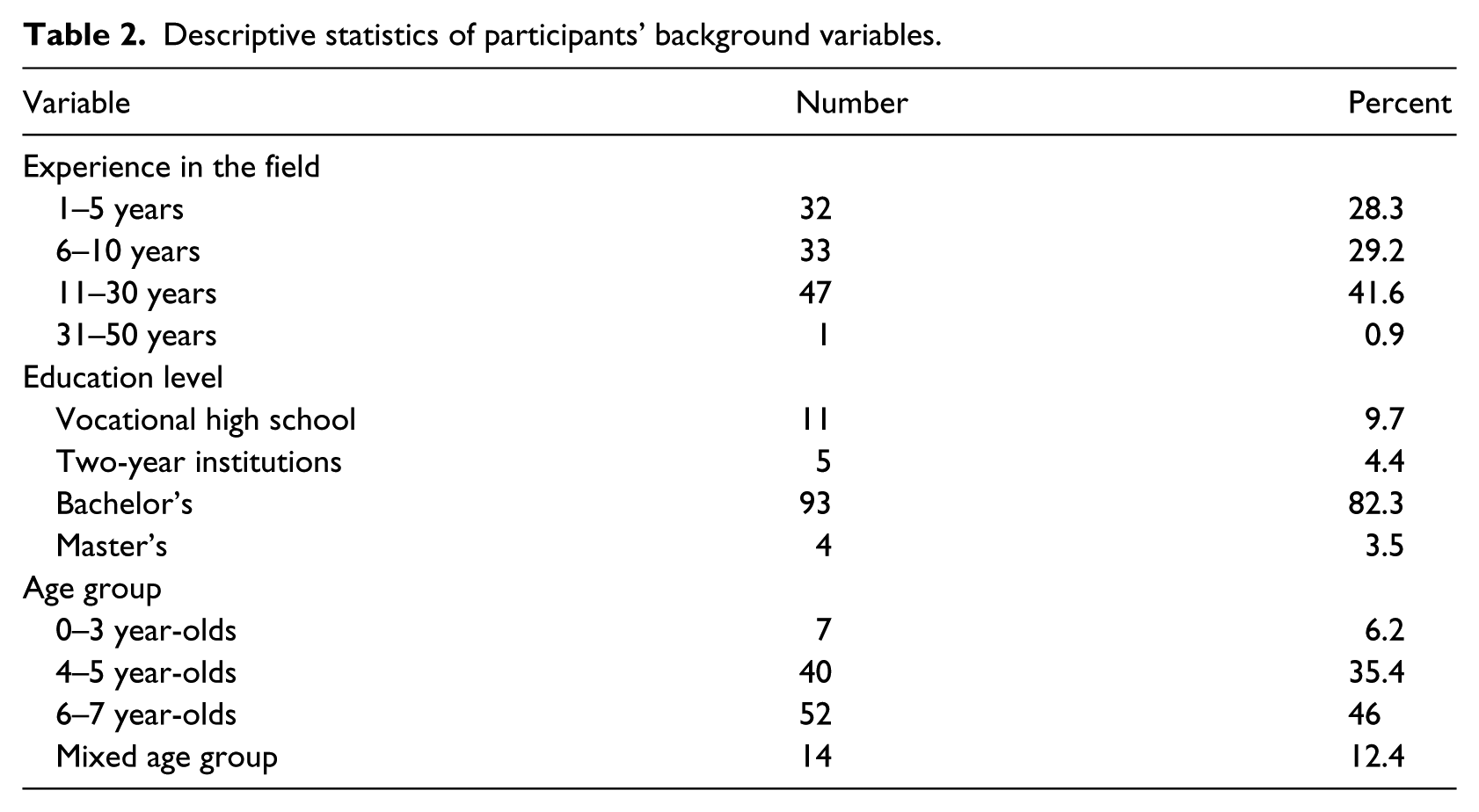
A total of 113 early childhood educators working in Ankara participated in this research in 2012. The data were collected in two waves. In the first wave, after reaching 30 participants, the questionnaires were sent via email. The response rate was low (20%); therefore, the distribution method was changed and the questionnaires were distributed by hand. Thirty randomly chosen schools were visited in Ankara and the research was explained to the administrators. Twenty-five of these institutions agreed to let the questionnaires be distributed and all the teachers who work in these schools agreed to participate in the study by completing the questionnaire (response rate 100%). Table 2 presents detailed accounts of demographics.
Early Childhood Education statistics in Turkey.
Descriptive statistics of participants’ background variables.
Instruments
The instrument of this research was a questionnaire, which contains five parts and measures the attitudes of the early childhood educators towards parental involvement and its types.
The first part, “General View”, included nine questions aimed at measuring the general attitudes towards parental involvement in ECE. The Likert scale was used in all questions ranging from 1 – Totally disagree to 5 – Totally agree. The second part, “Communication” and the third part, “Voluntary activities”, consisted of seven questions and aimed to measure the frequency of communicating with and involving parents as volunteers in the education process. The fourth part, “Home Support”, included six questions that aimed to discover the frequency of encouraging parents to support school activities at home. The fifth part, “Decision Making”, was formed by five questions examining the frequency of involving the parents in the decision-making process. For the second, third, fourth and fifth parts, all the questions used the Likert scale from 1 – Never to 5 – Always, except for one multiple choice question with an open-ended choice available for each part (participants could choose more than one option).
A reliability test was conducted for all items in the questionnaire and it was found to be highly reliable (30 items; α = .86). It was then repeated for each separated section, aiming to measure general views of teachers towards parental involvement (nine items), communication as a method of parental involvement (six items), involving parents as volunteers (six items), using home support as parental involvement (five items) and involving parents in the decision-making process (four items). Cronbach’s alphas for these groups were .72, .74, .80, .78 and .85, respectively.
Analysis
The first step was to convert all negative items. The second step was to make sure the items measure the same aspects; thus, a series of factor analyses were conducted for each part separately. After the factor analysis, a series of Spearman’s nonparametric correlations were used to test the relationship between different variables. Finally, several frequency tests were conducted in order to understand the reason behind the difficulties of using a specific parental involvement type efficiently. The first step in achieving this goal was to calculate the percentages of participants who believe that they are having problems when applying types of parental involvement. This step is followed by calculating the percentages of their selections.
Results
General views on parental involvement
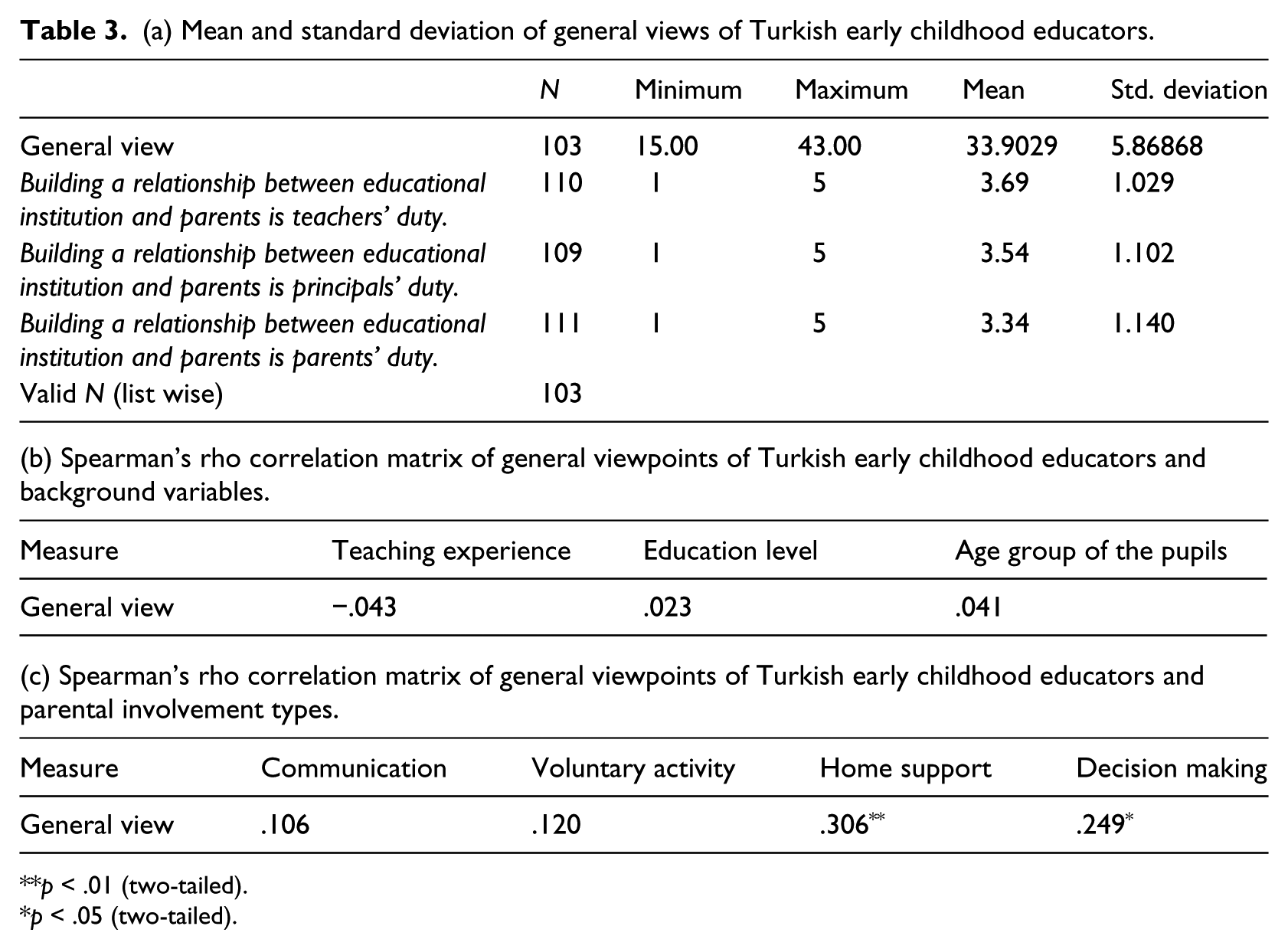
The first goal of this study was to investigate Turkish early childhood educators’ conceptions of parental involvement. Table 3(a) shows the mean score of the general view (M = 34) about parental involvement with minimum and maximum values, which implies that most of the Turkish early childhood teachers who participated this study have a positive approach on parental involvement in general.
(a) Mean and standard deviation of general views of Turkish early childhood educators.
p < .01 (two-tailed).
p < .05 (two-tailed).
The participants are also asked whose responsibility it is to establish the home–school relationship and the answers show that the responsibility is quite evenly shared (M3rd item = 4, M4th item = 4, M5th item = 3).
These mean scores are followed by a series of nonparametric correlation tests to determine the association between the general views on parental involvement and the background variables: teaching experience, education level of the participants and the age group of the pupils that they are working with. The results show no relation between those variables.
The correlation between general views of Turkish early childhood educators and types of parental involvement is checked to investigate the relationship between them. According to these results, there is a strongly significant association between the general view and the usage of home support as a type of parental involvement (r = .306, P = .002) besides the significant relationship between the general view of participants and the involvement of parents in the decision-making process (r = .249, P = .018).
Attitudes towards types of parental involvement
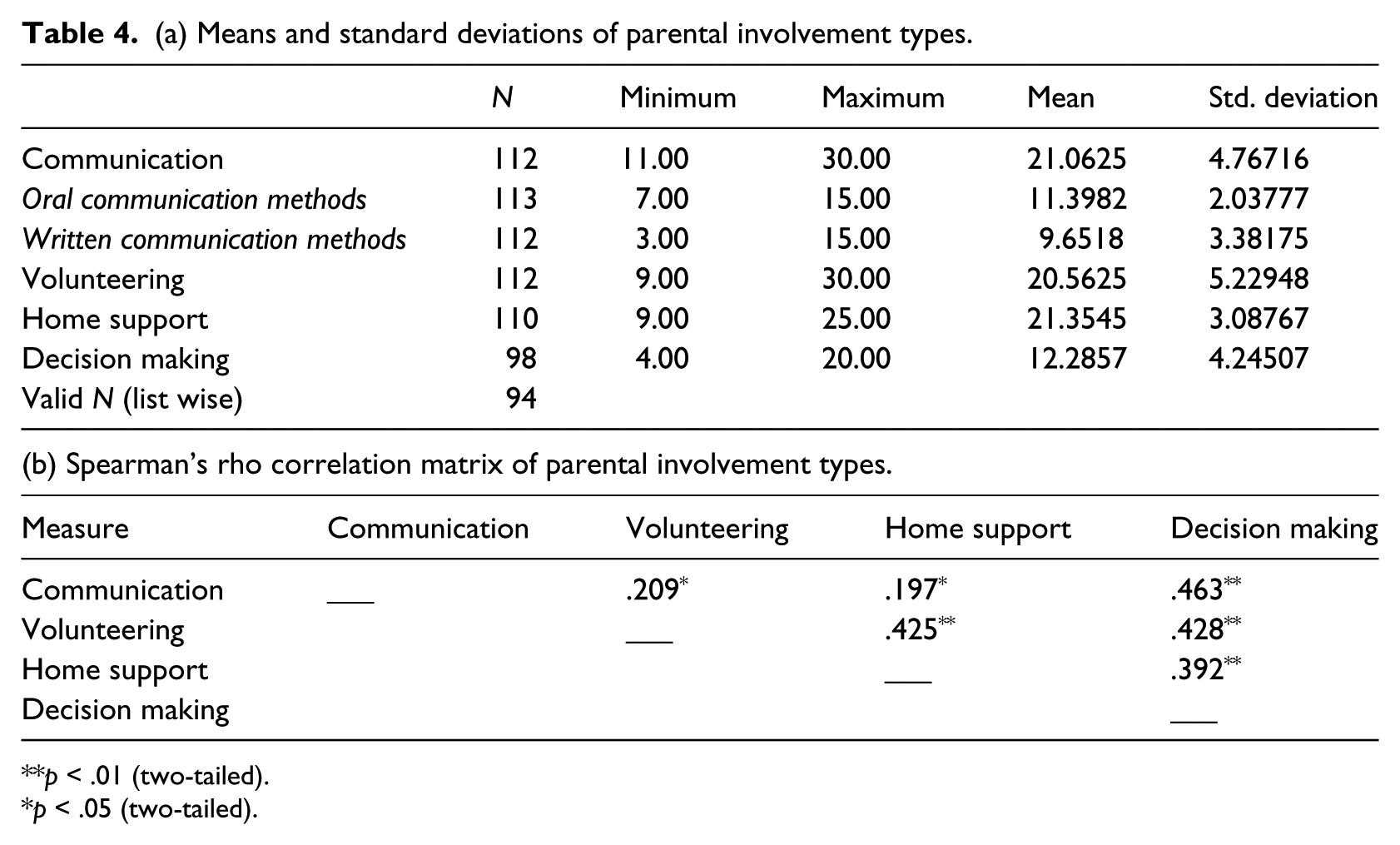
In terms of understanding the popularity of the types of parental involvement used by the participants, descriptive statistics of variables are checked. According to the results, as shown in Table 4(a), the most commonly used method is the encouragement of parents to support the learning process at home (M = 21), while the least popular type is the involvement of parents in the decision-making process (M = 12). The factor analysis shows that as the second most commonly used parental involvement type, communication has two dimensions, which are oral and written communication, and descriptive statistics show that oral communication (M = 11) is slightly more common than written communication (M = 10).
(a) Means and standard deviations of parental involvement types.
p < .01 (two-tailed).
p < .05 (two-tailed).
The correlations between the types of parental involvement are also examined to gain deeper understanding. Results point to a positive relationship between communication and voluntary activities (r = .209, P =.028). In addition, while there is a weak correlation between communication and home support (r = .197, P = .040) there is a significantly strong association between communication and decision making (r = .463, P = .000). Results also indicate that there are strongly significant correlations between voluntary activities and both home support and decision making (rh = .425, P = .000; rd = .428, P = . 000). Finally, between home support and decision making there is a significantly strong positive correlation (r = . 392, P = .000).
The reasons behind the inefficient usage of parental involvement types
To find out the most common reasons behind the difficulties of using the specific parental involvement types, frequency tests were run separately. Results presented in Figure 1 show that for all types of parental involvement, the majority of participants admit that they have troubles when applying them efficiently.
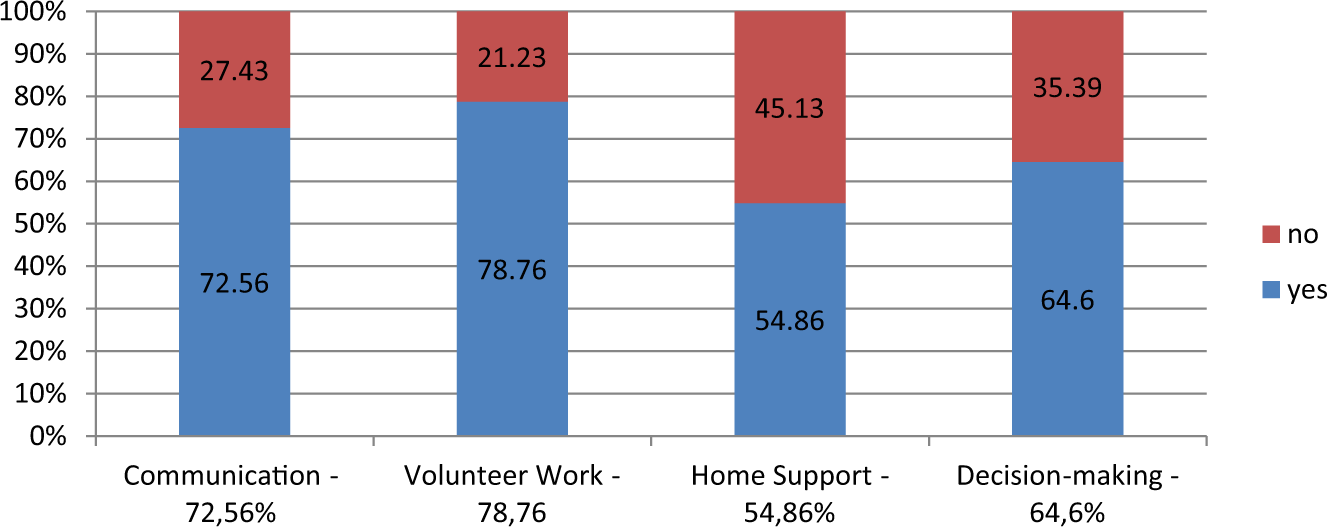
Do you believe that you use parental involvement types inefficiently?
The most common reason listed for this issue was “Parents do not want to be involved”. This applied to every type of parental involvement except for the involvement of parents in the decision-making process, for which “The Turkish educational system is not suitable for this parental involvement type” was given as an equally viable reason as was the option “Parents do not want to be involved”.
The least common reason among the participants for the inefficient usage of parental involvement types was “My education is not enough for using this parental involvement efficiently”, except for the involvement of parents in the decision-making process as a type of parental involvement. For this type of parental involvement, participants also state that this is not a proper way to involve parents. The percentages of the reasons stated by the participants are presented in Figure 2.
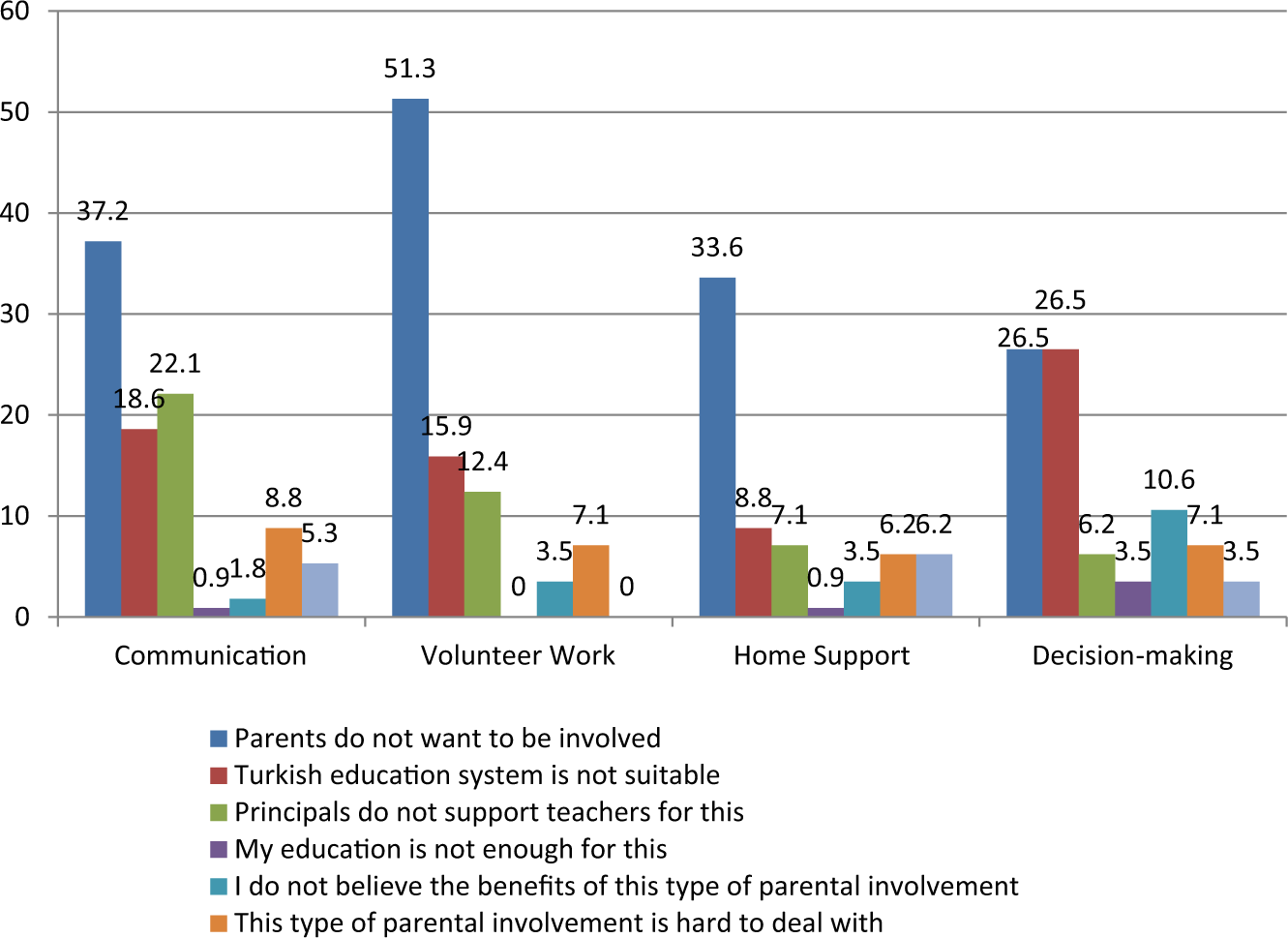
The percentages of reasons behind inefficient usage of specific parental involvement types.
Discussion
In this study, the main goal was to investigate the viewpoints of Turkish early childhood educators towards parental involvement and their usage of parental involvement types, which are specified in this piece of work as communication, involving parents as volunteers, using home support and involving parents in the decision-making process (Epstein, 2001). The findings show that Turkish early childhood educators have a quite positive attitude towards parental involvement and they admit the importance of it in education. Item-based analysis shows that they believe that parents, teachers and principals have quite equal responsibility when establishing a connection between school and home. These results differ from Swick and McKnight’s (1989) findings. According to Swick and McKnight’s research (1989), kindergarten teachers are very supportive of parental involvement; however, they are not convinced of their obligation to carry it out.
To have a better understanding about Turkish early childhood educators’ view points on parental involvement, the relationship between teaching experience in the field and educators’ opinions are investigated. Results show that there is no significant association between the years spent in the field and views on parental involvement. These results present similarities with the research conducted by Sabancı (2009). His findings also show that there is no significant relationship between work experience and attitudes on parental involvement. In addition, the relationship between education levels of educators and their general views on parental involvement is investigated. Results show that there is no correlation between what type of degree they have and their views on parental involvement. However, Sabancı (2009) stated that a significant difference was found between academic backgrounds of teachers and their attitudes on parental involvement. This difference might be caused by the fact that in Sabancı’s study the participants were not from ECE institutions. Furthermore, the relationship between general views of participants on parental involvement and the types of parental involvement they use is investigated. According to results, while general views on parental involvement correlate with how often they involve parents in the decision-making process and use methods of home support as a type of parental involvement, there is no relationship between involving parents as volunteers and the usage of communication as a parental involvement type. According to these results, Turkish early childhood educators may assume that learning at home is the type of parental involvement that best meets the children’s needs.
The other main purpose of this study was to find out the applications of parental involvement types among Turkish early childhood educators. The findings show some similarities with the research conducted by Hindman et al. (2012), which are that the most used parental involvement type is home support while the least used one is involving parents in the decision-making process. These results are also supported by the study conducted by Sabancı (2009). According to his findings, while school principals have more positive attitudes towards communication, volunteering and decision making, teachers have more positive attitudes about home support as a parental involvement type. This may show that teachers leave these three parental involvement types to principals whilst they focus on using home support. The cause of this may be because using home support is a much easier method for teachers to use to involve parents, support pupils’ learning and reduce professional burden. Additionally considering that the educators do not receive a high level of control in the decision-making process themselves, it is of no great surprise that problems exist when involving parents in the decision-making process.
As the second most common type, communication is also investigated in depth. The factor analysis pointed out two dimensions of communication, oral and written methods, and the findings point out that the usage of these two methods is slightly different. Turkish early childhood educators prefer oral communication methods somewhat more than written methods. It can be speculated that this difference is caused by the fact that written methods are more time consuming than the oral methods and oral communication covers all speech that occurred between parent and educator.
For deeper understanding on parental involvement types, investigation was carried out to see if there is a relationship between background variables, such as educational background, teaching experience and the age group they are working with, and the usage of parental involvement types. According to test results, there is no significant association between them. On the other hand, the findings of previous research show that there is a difference between the associate degree graduates and others (Bachelor’s and Master’s degree) in terms of the parental involvement types teachers use (Sabancı, 2009). This difference might come from the fact that Sabancı conducted his research on professionals from within several different branches of teaching.
Although there was no significant correlation between background variables and the usage of parental involvement types, there are strong associations between parental involvement types. Results point towards a correlation between all four of them. Communication seems like the basis for parental involvement, since it has to be used in order to use any other type of parental involvement. The strong correlation between home support and volunteering can be explained by the statement that teachers may see home supporting activities as a kind of volunteering, providing the connection between these two types.
The most significant findings of this study were the reasons behind the lack of efficient usage of parental involvement types. The frequency of results shows that the most common reason is early childhood educators do not believe that parents want to be involved. On the other hand, the least voted reason is “My education is not enough to apply this type of parental involvement”. This shows that while self-esteem of early childhood educators is quite high, they do not think that parents want to be a part of their child’s education process. The second and third most highly rated reasons indicate that teachers want more support from principals and believe that the Turkish educational system does not give them enough opportunities in terms of parental involvement. In addition, even though the rates were not so high, some of the participants mentioned the specific types of parental involvement as hard to deal with. This leads to the conclusion that although they have a high self-esteem, Turkish early childhood educators might need further help on how to involve parents.
Although home support is the most common parental involvement type among Turkish early childhood educators, over half of the participants mentioned that they cannot use it efficiently. One reason for this might be that parental involvement is a voluntary action for parents and although the educators are doing their share towards establishing an effective school–home connection, parents are not willing to sacrifice a required amount of their time and energy. Also, the answers given to the open-ended option concluded that the educational and socioeconomic backgrounds of parents create a negative factor; parents (who are not well educated) who have low self-esteem prefer not to be involved in school-related subjects. Moreover, families with low incomes may work long hours as well as physically demanding manual occupations; thus, they may not have the energy to help their children at home. As Baker and Stevenson (1986) state, the demographic characteristics of families affect the quality of parental involvement. While well-educated parents from high socioeconomic backgrounds support their child’s life through parental involvement activities, the ones with low education and income tend to avoid school-related activities.
Voluntary activity is the most voted type of parental involvement and even though the frequency of using this type of parental involvement was close to the most popular ones, early childhood educators seem to have trouble with operating with it. Here it can be assumed that teachers are giving the opportunity to parents to be involved as volunteers, but they cannot obtain positive outcomes from these attempts. Communication is next to follow with 74% of the participants stating that they cannot use communication methods efficiently as a type of parental involvement, although it is fundamental for human relations. This also points to a disconnection between school and home, which categorically needs addressing.
Decision making seemed like the most problematic issue at the beginning; however, according to results it comes third among the other types of parental involvement. Since the research methodologically allowed for not mentioning a reason to be considered as not having a problem, the missing data might be misleading at this point. Results indicate that 65% of the participants state that they cannot involve parents in the decision-making process and almost 27% of the answers point out the reasons: “Parents do not want to be involved” and “The Turkish education system is not suitable for this type of parental involvement”. As mentioned before, the SFA is almost the only way for parents to become part of the decision-making process; this explains why educators mention that one of the biggest reasons is that the Turkish education system is not suitable. As Rabusicová and Emmerová (2002) also state in their study, even though parent participation in the decision-making process is not forbidden in law, it does not create much room for parents to speak out. On the other hand, as long as the principals recognize the importance of a well-structured collaboration between school and home, and give teachers the autonomy of working with parents and involving them in the decision-making process, the schools would maintain an effective programme of parental involvement (Berger, 2008). Besides these reasons, educators also claim that involving parents in the decision-making process may cause many conflicts among parents and may affect the process negatively. Since there are so many parents from different backgrounds they believe that it is hard to have a common decision. Probably that is also why they do not consider involving parents in the decision-making process is an effective method of parental involvement. Also the demographic characteristics of parents come to prominence, since educators regard decision making as a sensitive issue.
Limitations and further studies
There are some limitations due to the data collection process. The researcher did not wait until the participants filled in the questionnaire, therefore; although the questionnaires were initially explained by the researcher when handed out, if participants had further questions they did not have the opportunity to ask. This also might explain some of the missing data.
In this research, the teachers’ viewpoints and attitudes were the chosen focus; thus, for further research the views and attitudes of the parents could also be studied, especially since according to the results of the study, it was one of the reasons why specific types of parental involvement are not used efficiently. During such a study it would be very interesting to see what the parental conceptions of the issue are.
Additionally participants in this study were chosen from schools that mostly serve the middle-class demographic. On the other hand, to compare the situations from different socio-economic classes would be useful, because according to Baker and Sevenson (1986) socioeconomic status has an impact on parental involvement applications and levels. In this case comparing public schools and private schools would be efficient.
Footnotes
Declaration of conflicting interest
The author declares that there is no conflict of interest.
Funding
This research received no specific grant from any funding agency in the public, commercial or not-for-profit sectors.