




Abstract
In representative democracies, the absence of responsiveness by elected officials to the interests of the represented often generates problems of legitimacy, accountability and effectiveness. However, responsiveness also tends to narrow the time horizons of democratic decision-making and promote short-termism. This paper advances the notion that responsiveness to interests involving distant time horizons is possible by reconfiguring the franchise in a time-sensitive and future-oriented way. It is divided into two parts. The first pinpoints a few inconsistencies in the available proposals for making responsiveness and the long term compatible (e.g., promoting youth turnout, narrowing the franchise to robust epistemic fitness, establishing future-oriented institutions). The second advances the creation of temporal electoral circles operating alongside territorial electoral circles in order to prompt responsiveness to multitemporal interests. The conclusion asserts that this kind of franchise design is the best available option for introducing temporal aspects into the character of democratic representation.
Keywords
In electoral representative democracies, the complete absence of responsiveness by elected officials to the interests of those they are supposed to represent seems highly problematic. Even though representation does not depend solely on the representatives’ responsiveness to the constituents’ prior preferences or interests, responsiveness is typically regarded as paramount to democracy's instruments of accountability and effectiveness. Even if it may not be necessarily required for establishing the existence and legitimacy of a representative democracy, it is at least relevant for assessing the quality of democracy. Elections select and authorise representatives, who are then accountable for their political actions insofar as they are expected to act in accordance with (or at least acknowledging) the interests and preferences of the franchise members. 1
However, responsiveness understood in this sense narrows the time horizons of democratic decision-making and promotes short-termism. First, political discourse tends to focus on responsiveness to interests that seem to matter the most for the purposes of the upcoming election. The constant ticking of the electoral clock leads officials and political parties to be responsive mainly to those interests and preferences, the satisfaction of which is most likely to generate trust and secure the most immediate vote. Second, low voter turnout leads officials and would-be representatives to privilege the interests of those more active in the franchise. If members of older cohorts participate more in the franchise than younger citizens (Bhatti and Hansen, 2012; Goerres, 2009; Goerres and Vanhuysse, 2012; Smets, 2012), it is only to be expected that elected officials are especially responsive to problems that are more associated with older cohorts (e.g., pension schemes, health care, economic growth) than younger ones (e.g., climate change, education, youth unemployment). Third, future generations do not exist in the present. Even if future persons could be included in today's democratic procedures, they would lack power mechanisms to bind the actions of representatives since they cannot vote, campaign, lobby, protest, choose or dismiss the decision-makers out of office. Their voice would stem exclusively from the voice of would-be representatives, who would then be utterly unresponsive to particular persons’ interests and preferences.
The upshot is that responsiveness in electoral systems, while an essential yardstick for evaluating the quality of representative democracy, seems inconsistent with the need for urgent collective decisions that take distant time horizons into consideration. Potential strategies to sidestep this inconsistency include promoting higher turnout among the young, establishing future-oriented institutions, reforming current institutions in a way that makes them future-beneficial, or giving up on responsiveness altogether – this, of course, assuming that doing nothing to counter long-term problems is not a morally robust option in contemporary representative democracies.
This paper identifies several faults with such alternative strategies and advances the notion that responsiveness to interests involving proximate and distant time horizons can be made possible and necessary by reconfiguring the franchise in a time-sensitive and future-oriented way. It is divided into two parts. The first emphasises the need for responsiveness in democratic contexts and pinpoints a few inconsistencies in the available proposals for making responsiveness and the long term compatible. The second suggests the creation of temporal electoral circles operating alongside territorial electoral circles in such a way that prevents the pitfalls of gerrymandering while promoting multitemporality within the representative framework. The conclusion asserts that, even if this kind of franchise design is not in itself a sufficient institution for introducing future-friendly and future-beneficial policymaking in representative democracies (especially in cases involving trade-offs with urgent short-term interests), it is at least the best available option for introducing temporal aspects into the character of democratic representation.
Finding responsiveness to future-oriented interests
The prevalent focus on responsiveness in representative democracies and its corresponding impact on timeframes has generated myriad responses to sidestep the difficulty – some prompted by scepticism towards the very idea of responsiveness, others driven by the priority of the long-term view. In this section, I focus on four: giving up on responsiveness, epistemic franchise design, increasing youth voter turnout, and establishing political institutions governed by the young or in favour of future generations. However, they all seem highly unsatisfying for practical or normative reasons.
One strategy to promote long-term policymaking in democratic environments is simply to liberate representative politics from responsiveness to voters (Caplan, 2006), and look elsewhere for standards of representation – for instance, in the spirit in which representation is performed (Näsström, 2015; Saward, 2010), in its capacity to empower the constituency (Montanaro, 2012) or to advocate for its interests (Urbinati, 2000), or in the qualities of the broader system in which representation takes place (Disch, 2012; Kuyper, 2016). What matters then is the soundness of formal electoral procedures and the quality of outcomes. Representatives would be better equipped to handle long-term problems if they did not have to respond to people's short-term interests.
However, this strategy seems problematic from a democratic viewpoint. Political representation broadly construed has several functions: one is ‘standing in for another’, in the sense of ensuring that the other (in this case, the demos) is never really absent; another is ‘acting on behalf of another’, in the sense of acting on the claims and duties of the other; yet another function is ‘portraying-another-as’, in the sense that representation creates the role of the representative vis-à-vis other persons and the actual persons qua represented (Fossen, 2019). But democratic representation requires an additional function: a substantive connection between the acting-on-behalf and the portrayal-as relations whereby representatives must act for someone in a certain way. This substantive element relates to ideals such as equality, fair treatment, autonomy and self-government. The latter is of crucial importance in this context insofar as, without it, there can hardly be a government by the people. Thus, the substantive element seems to pertain somehow to the interests or reasons of this people (the represented). A representative democratic government is expected to conduct itself in a manner that is not insensitive to the interests and reasons of the members of the demos that it helps to portray in the first place. An apparent disconnect between citizens’ interests and the contents of the laws and policies they are subject to is hardly consistent with the democratic ideal of self-government. 2
Isolating electoral procedures from attentiveness to people's interests seems to create, then, two sets of problems. The first is an accountability gap insofar as the absence of responsiveness diminishes the levels of scrutiny that the represented can deliver and therefore diminishes the potential of democratic control (Ingham, 2019). Responsiveness in this sense does not have to be interpreted necessarily in terms of the non-reciprocal causal influence of the represented over the representatives, operating as a one-way conveyor belt that converts pre-given preferences into actions or policies. 3 It can be something like acting on behalf of the represented, in a way that is justifiable in terms of the interests of the represented (which in no way implies that such interests have to be ontologically or genealogically independent of practices of portrayal) (Fossen, 2019), the content of which need to be liable to scrutiny by those who ultimately are to be the holders of such interests. The second is an efficacy problem. Because responsiveness tends to increase the effectiveness of government action by raising the levels of trust that citizens have in their governments (Chanley et al., 2000; Hetherington, 2005; Simonsen and Robbins, 2003), the liberation of politics from responsiveness is likely to generate discontentment with public policy and less willing compliance with the outcomes of collective decision-making.
A second strategy for avoiding democratic short-termism is to redesign the franchise in an epistemically sensitive way. ‘Competent electorates’, that is, franchises comprised of the most informed and best-prepared citizens, would improve the quality of representation by determining what is beneficial to constituents rather than mirroring indeterminate preferences (Achen and Bartels, 2016; Brennan, 2016; Mulligan, 2018). If the franchise were composed solely of members who did not prioritise their short-term self-interest, elected representatives could be legitimacy responsive to different kinds of reasons involving more or less extended time horizons.
However, three sets of reasons dismiss this strategy as insufficiently democratic: a normative, a practical, and an epistemic reason. The normative is that democracy distinguishes itself from other political regimes due to its commitment to an ideal of political equality and an ideal of self-government combined. The political relevance on equal terms of different interests in more or less extended time horizons is more likely to find its utmost expression, then, in the public sphere by means of broader inclusion in collective decision-making rather than of selective exclusion based on epistemic competencies, since such political relevance follows necessarily from the combination of democratic ideals and not from discretionary know-how of experts. Similarly, political equality requires more than sharing equal conditions for becoming a ruler and remaining a represented, thereby avoiding the capture of political influence by certain groups. The partaking of self-government requires the empowerment of citizens vis-à-vis what they can control, not simply regarding the selection of rulers but also the mechanisms by which the latter are to be made accountable.
The practical reason is that franchise design that draws away from already implemented universal suffrage is likely to be regarded as an autocratic move rather than a democratic one. The sudden implementation of an epistocratic franchise would entail taking the right to vote from citizens that have already acquired it. This structural change would spur the cognitive perception of loss aversion and, therefore, be regarded with suspicion by citizens. Even if far from perfect, even if far from decisive in collective decision-making processes, even if felt as non-democratic when participation boils down to it alone, voting rises to prominence in liberal democracies as a robust means of respecting the citizens’ autonomy. 4
Finally, the epistemic reason is that expert voters are more competent only to the extent that they can incorporate, analyse and render into actual decision-making information about interests that pertain to all members of the community. However, it is doubtful that this level of competency is achieved and developed more efficiently by exclusion from the franchise, given that elections often function as data transmitters. More diversified input facilitates the path to better decision-making outcomes (Landemore, 2012). Furthermore, the epistemic dimension of decision-making is key, not least when assessing the legitimacy of expert arrangements – granting extra political power to experts is defensible from a democratic viewpoint only if doing so contributes to better and more truth-sensitive decisions (Martí, 2006). But there is hardly any guarantee that ‘competent franchise members’ can achieve such truth-sensitive decisions for the extended future without the majority of their fellow citizens’ input. Quite the opposite: in some cases, increased expert judgement is compatible with democratic inclusion insofar as experts give citizens multiple actionable options in decision-making rather than the other way around (Jeffrey, 2018).
The third strategy in favour of long-term democratic governance consists in promoting youth voter turnout and political participation. The idea that high turnout rates fuel responsiveness to more or less extended time horizons is based on the assumption that representatives are likely to equate the represented with the active franchise. Democratic deficits (derived from low turnout) function then as forms of exclusion in collective decision-making – those who do not vote are excluded from being regarded as triggers for responsiveness.
Narrowing the gap between the represented and the representatives (concerning responsiveness) thus seems to depend on improving the conditions for active participation in universal suffrage. 5 Suggestions for narrowing this gap are myriad. Some authors call for smarter ballots – for instance, multi-mark ballot structures that allow voters to rank or grade multiple parties or candidates per contest (Maloy, 2019). Others call for smarter procedures, assuming that increased involvement and a plurality of inputs are likely to enhance the quality of decision-making (Anderson, 2006; Estlund, 2008; Fuerstein, 2008; Goodin and List, 2001; Landemore, 2012; Nelson, 2008). Others call for smarter voting rules – for instance, plural voting (Bengtson, 2020; Brighouse and Fleurbaey, 2010) or proportional representation as opposed to winner-takes-all systems (Amy, 1993; Guinier, 1994; Mulroy, 2018; Richie and Hill, 1999). Others call for smarter criteria of franchise membership – for instance, membership based on non-territorial criteria, such as age (Hayek, 1979: 113; Parijs, 1998) or any other voluntarily chosen criterion (e.g., social role or profession) (Rehfeld, 2005). What they seem to have in common is the view that current franchise composition and electoral rules are insufficient to preserve fairness, optimise decision-making results, contribute to individual empowerment, and establish a robust connection between the actions of representatives and the actual political judgements expressed by those who are to be the represented.
Most importantly, democratic deficits are not consistent across age groups. Whether because of inadequate voting rules or demographic imbalances, younger age groups tend to be less participative in elections than members of older age groups (Bhatti and Hansen, 2012; Goerres, 2009; Goerres and Vanhuysse, 2012; Smets, 2012). Responsiveness to older cohorts seems then natural to democratic politics, with all the effects that such privileging of the old has on (short-termist) democratic governance. And this is regardless of the country's demographic fluctuations. For instance, in demographically old-age-heavy Greece, the state spends six times as much on the elderly as it does on its younger citizens, whereas Sweden, with its similar demographic structure, spends 3.4 times as much on the elderly; and Poland, with its relatively younger demographic profile, spends 8.6 times more on its elderly citizens than it does on its younger citizens (Vanhuysse, 2013: 8).
However, simply narrowing democratic deficits among the young by successively increasing turnout percentages (Chou et al., 2017; Munn, 2020) also does not seem to be a sufficient guarantee of long-term-friendly responsiveness. Two reasons support this scepticism. First, there is no guarantee that young voters would necessarily express preferences that adopt the long-term view or vote for representatives who promote policies for safeguarding long-term effects. Some evidence shows that young adults are more prone to think in terms of urgency (Carstensen et al., 1999) and engage in higher risk-taking than older adults (Green et al., 1999; Palsson, 1996; Steinberg et al., 2009). Second, even if democratic deficits could be overcome across the (age group) board, and the young were successful in generating responsiveness to long-term issues, their voting weight would hardly surpass the political clout of older age groups in ageing societies. Higher investment in old-age-friendly policies is not dependent on the country's demographics, but it could easily be made so in cases of high voter turnout among all age groups. In democratic arrangements with increased life expectancy levels at birth and in which members of older age groups are more numerous than members of younger age groups, high voter turnout is likely to contribute to privileging responsiveness to older cohorts. Insofar as older cohorts remain the majority and those with the most facilitated access to means of influencing electoral outcomes (e.g., private donations to political parties, participation and decision-making capacity in civil society associations, financial-backed lobbying, etc.), responsiveness will continue to be short-termist. Unless, of course, disenfranchising the elderly would be an option (Parijs, 1998), in which case representative democracy could well be accused of ageism (Poama and Volacu, 2021).
The fourth strategy in favour of long-term democratic governance consists in the creation or reformation of future-oriented or future-beneficial democratic institutions, in which members of younger age groups could impact collective decision-making directly by becoming representatives with a time-related agenda. The clearest example of such institutional design is the proposal for youth quotas in national parliaments (Bidadanure, 2021: 209–232). Other proposals extend even further the future-oriented agenda-setting capacity of representatives by including future generations in the class of the represented – examples of such proposals are special legislative chambers for the future (Bovenkerk, 2015; Caney, 2016; Mackenzie, 2016; Read, 2012; Stein, 1998), and parliamentary quotas for future generations (Ekeli 2005; Kavka and Warren 1983).
However, appealing as it may seem to discharge our moral responsibilities towards people who will live in the future via representatives entrusted with such specific future-oriented tasks, this strategy faces several obstacles. With regard to proposals such as youth quotas in parliaments, three problems arise. First, implementing youth quotas seems independent of alterations in young voter turnout. This is likely to widen the democratic deficit. If electoral procedures continue to have low levels of youth participation, and yet young age gets privileged with specific seats in parliamentary bodies, the gap between representatives and the franchise seems to widen rather than decrease, as some (age-specified) representatives will require fewer votes to get elected than the remaining representatives – yet they will all have equal status qua representatives. Second, there is no guarantee that younger representatives are more likely to reflect their age group's long-term interests rather than the political orientations of the parties to which they belong. This scepticism follows naturally from the low age-based representativeness of the major political parties’ youth sections that do get elected to national parliaments and whose parliamentarian voting patterns and agenda-setting differ little from the rest of the party (Mycock and Tonge, 2012; Van Biezen et al., 2012). Third, proposals for youth quotas are likely to generate accusations of ageism. What is so special about young age that justifies discriminating against older citizens and in a way that is independent of demographic fluctuations? Discrimination would stem from the assumption that members of older age groups do not need to be represented directly in light of their temporal-related concerns, as opposed to members of younger age groups. However, older cohorts have politically relevant interests deriving from their age, such as pension schemes and health care concerns. The way it is presented, the proposal does not seem to differ much from territorial-based quotas, for instance, in which citizens living in one district would be entitled to have extra specific representatives, as opposed to citizens living outside such a district. It seems then that youth inclusion follows exclusively from sacrifices to democratic equality. 6
With regard to proposals for the inclusion of future generations in representative processes, the difficulties are even more significant. First, a version of representation without material referents (e.g., future persons) seems hardly compatible with responsiveness. Otherwise, it would fall into a circular argument – representatives would be responsive to interests that only exist because they contributed to their existence via representative action (Campos, 2020). Second, if future persons were allowed to enter the representative relation, the political arena would allow the represented to be treated unequally since some representatives would represent extant right-holders (actual persons), whereas other representatives would represent nonexistent right-holders (merely potential persons). Without direct accountability between the representatives and the represented, the latter would be utterly powerless in the would-be representative relation, especially in contrast to those other represented more capable of influencing the action of representatives. This imbalance of power is quite relevant in democratic frameworks. The powerlessness of future persons would contrast with the power afforded to present citizens by the very process of representation. Third, creating the political environment to counteract short-term motivational factors is no sufficient guarantee that representatives of future persons will not adopt pragmatic-inspired short-term strategies or pursue a different (future-unfriendly) agenda while in office, especially if they are left unchecked and unresponsive. In cases of conflict between long-term and short-term institutions (the former intent on representing the future, the latter representing current citizens’ immediate interests), it is challenging to develop a democratic argument in favour of long-term institutions precisely because the short-term institutions are checked, forced and strongly motivated to pursue an agenda to which they committed beforehand (González-Ricoy and Rey, 2019).
In conclusion, none of the aforementioned strategies seems to live up to its long-term-friendly ambitions. Still, because the predominance of short-term thinking in contemporary democracies appears to be significantly related to the constant ticking of the electoral clock, the cross-temporal challenge regarding elections is as straightforward as it is arduous. First, democracy requires an institutional promotion of long-term thinking that improves the quality of decision-making for distant time horizons without dismissing electoral processes and responsiveness. Second, if current franchise composition and electoral rules function as drivers of short-termism, they must be reformed in such a way that not only hinders short-termism but also constitutes a driver of long-term thinking. Third, such reforms must somehow ensure what seems impossible within the context of systemic short-termism: to establish a connection between actual political judgement expressed in elections and the subsequent attendance of long-term problems, that is, an authorised and accountable electoral structure of long-term governance. The following section explains how this can be achieved through franchise design – specifically, through the creation of temporal electoral circles.
Reshaping the franchise: Enlargement and temporal electoral circles
Representative democracies are representative qua democratic when there is some sensitivity to the elements of public opinion. In light of this assumption, the short term is typically privileged in current liberal democracies because politicians think they are entitled to govern only within the franchise's time constraints and, especially, because they believe they can only be re-elected if franchise members come to have the perception that politicians are responsive to their immediate interests – their main incentives to act (for the short term, mostly) is to win the next election.
Within this frame of reference, representative action is adequately and effectively long-term oriented only if systemic and institutional mechanisms are in place that make representatives responsive to interests in distant time horizons held prominently by franchise members. Bringing such long-term interests to the fore within the franchise in such a way that can be regarded as decisive for electoral success is, therefore, key to future-friendly democratic policymaking. The more diversified the franchise concerning time-related interests (some calling for responsiveness within proximate time horizons, others calling for responsiveness with a view towards the distant future), the more likely it is that democratic representative action will have to become equally multitemporal when developing responsiveness strategies.
The most direct way of giving centre stage to such long-term-friendly interests within the franchise is usually identified as franchise enlargement, most forcefully, child enfranchisement. The rationale behind this proposal is that if members of the youngest cohorts, who seem to have greater expectations towards distant time horizons, are given the right to vote, politicians will perhaps afford more attention to the problems involving the future. Epistemic incompetencies due to young age are then dismissed as reasons for franchise exclusion and replaced with the attribution of voting rights to children of all ages (Hinze, 2019) (albeit exercised by their parents or guardians) or of extra votes for parents to use on behalf of their children (so-called ‘demeny voting’: Kamijo et al., 2020).
However, proposals for universal child enfranchisement are highly problematic in liberal democratic contexts, especially concerning epistemically unfit children (too young to vote for themselves): (i) in practice, enfranchising all the young would result in a reinforcement of the (already predominant) votes cast (or simply booth presence) by members of age groups that are neither young nor old, as such people are already those who vote more and are most likely to be parents of children; (ii) high fertility rates would translate in more rights exercised by a specific group of persons (e.g., parents of large families); (iii) parents would have to represent their children in voting, that is, to follow a duty to exercise a right on their behalf and in their interest, in what would seem like a double-stage of representation; and (iv) parents would unlikely consider their interests as parents differently from their children's interests as children would amount to needless duplication of ballots (Campos, 2022).
These reasons do not apply to younger citizens who claim to be epistemically fit to vote. If epistemic competence is the sole reason to exclude children from the franchise, then consistency would dictate that epistemically incompetent adults would have to be excluded as well for the sake of political equality (Lau, 2012). Since this latter conclusion seems incompatible with liberal democratic principles (Mráz, 2020), the preservation of the epistemic-capacity criterion leads some supporters of child enfranchisement to reject a minimum voting age altogether (Cook, 2013) or to endorse thresholds encompassing children of around 12 (Umbers, 2020; Wald, 1974) or 16 (Grover, 2011: 237–250; Peto, 2018) to preserve political equality in the franchise. Such proposals should be taken seriously. Simply assuming a necessary connection between young age and epistemic incompetence in a way relevant to assessing political judgement seems like a case of over-exclusion. Age limits are formal thresholds that generalise assumptions about constituents, not actual determinants of (nor accurate proxies for) epistemic competence. Some children (mainly adolescents) seem to be fully capable of providing input and judgement on public opinion, even if some (or most, if we include infants and toddlers in the broad category of childhood) are not. If we continue to assume that the more epistemically competent young constituents participate in voting systems, the more likely it is that elected officials arising from those systems become responsive to long-term interests, there is no reason not to support a default rule of child exclusion from the franchise that can be dismissed in a case-by-case analysis of the epistemic competencies of each citizen. 7
Still, this solution is far from optimal in promoting long-term governance. Mere franchise enlargement to members of younger age groups would hardly ensure an increase in voter turnout. If current levels of young voter turnout persisted for each election after such franchise enlargement, the overall turnout percentage would decrease. Child enfranchisement would therefore boost the democratic deficit and contribute nothing to make elected politicians responsive to long-term interests, even if the franchise now included members with diversified interests in proximate and distant time horizons. The reason is that they would continue to be responsive primarily to active franchise members.
Suggestions for bypassing this difficulty are myriad. They typically involve policies that remove unnecessary formal and practical obstacles to the exercise of voting rights, such as making it easier for individuals to register to vote (e.g., automatic registration at birth, the elimination of irrelevant voter ID requirements [photo, parents’ names, etc.], same-day voting registration, etc.) and to cast a ballot in elections. Other measures aimed at improving the overall accessibility of elections to citizens take into account citizens’ different characteristics, including people with disabilities and age groups: mail-in voting may be a popular method of voting among older cohorts, facilitated access to ballot drop boxes (e.g., free transport, no waiting lines) is a reasonable expectation of voters with physical disabilities, protected e-voting systems are more likely to increase young adults’ participation, etc. All such methods aim to increase the number of members of the active franchise – they show that simply expanding the franchise is not enough, even if their success in establishing a full active franchise is merely contingent and hardly necessary.
A different proposal that insists on necessity rather than contingency aims at implementing compulsory voting systems (Engelen, 2007; Hill, 2014). This will hardly work in electoral systems that already recognise voting as a right, however. Reversing the right to vote into an obligation is problematic in liberal contexts. Membership of a constituency implies by itself a series of different specific entitlements vis-à-vis the representatives. When elected officials oblige and force individuals to become constituents against their will or without the possibility of opting out, franchise membership becomes a mere effect of constituted powers rather than a prior entitlement inherent in constituent power. This seems like an inversion of the primary representative relation: one is a constituent because one is an addressee of government instead of the other way around.
Because of such reasons, we should explore a different alternative: an electoral district design that builds on current turnout levels across different age groups, namely, by establishing temporal electoral circles. Rather than depending exclusively on districting systems for counting votes, elections for offices that include seats (at the local, regional, national or supranational levels) could also be distributed by age-based systems. Time thus becomes a determinant criterion in assessing results imputed to electoral circles. In age-based electoral circles, representatives are selected by votes accounted for in light of different age groups. This would ensure that representatives elected directly by younger cohorts would occupy at least some seats, regardless of the representatives’ age.
Temporal electoral circles bypass the tendency of young people not to be particularly prone to adopting the long-term view. But if it is true that young people do not vote necessarily for the long term, it is also true that they do not vote necessarily for the short term. Regardless of the time horizons they consider in political participation, in temporal electoral circles younger voters are accounted for in view of their age – this is an objective feature which points more to the long term than the short term. Responsiveness is channelled by the very nature of the electoral circle, not necessarily by the actual identities and preferences of the constituents which comprise it.
This proposal requires that all elections for collective representative institutions occur by a double-vote system, according to which each franchise member can vote for two separate lists. 8 Half the representatives are elected from the list whose votes are accounted for by territorial districts, as occurs consistently in democracies. The other half are elected from a list whose votes are accounted for by age-based circles – each previously established group of cohorts functions as if it were a territorial electoral district. Some representatives are elected only by votes expressed by older cohorts; votes expressed exclusively by younger cohorts elect others. The ‘one man, one vote’ democratic principle thus becomes time-sensitive by turning into the ‘one member of the franchise, two votes’ democratic principle, in which one of those votes counts in light of the voter's specific relation to time.
Two essential details require clarification. The first is the preference for a double-voting system rather than for transforming all electoral circles into age-based ones. The justification seems obvious. Territorial districts are distinctive components of the franchise. 9 They allow citizens to relate to power structures closer to their personal networks, are essential features of collective identities and a natural consequence of a shared sense of community, and are already established beforehand, so there would be no need to perform an elaborate redesign of electoral procedures. Voters would still go to the same voting booths in the exact locations as they do now – they would simply cast two ballots rather than one.
The second detail is the means of identifying the cohorts that ensure an appropriate variety of age differences. Merely regulating three generational age groups – young, adult and older voters – would hardly contribute to promoting interests in different future time horizons in societies characterised by increased levels of population ageing. This risk, however, can be assuaged. Not by disenfranchising older age groups a proposal that favours exclusion to inclusion and neglects the fact that members of older age groups do not necessarily endorse short-term interests and preferences. Instead, the risk diminishes by finding the right balance in the formation of temporal electoral circles between the different age groups of each population. On the one hand, enfranchising epistemically competent young adults would automatically enlarge the number of voters belonging to younger age groups thereby diminishing the potential quantitative gap between the young and the old in ageing societies. On the other, temporal electoral circles could be circumscribed in a way sensitive to demographic fluctuations.
Suppose a population with the following demographics. (Table 1)
Societal age-group demographics. 12
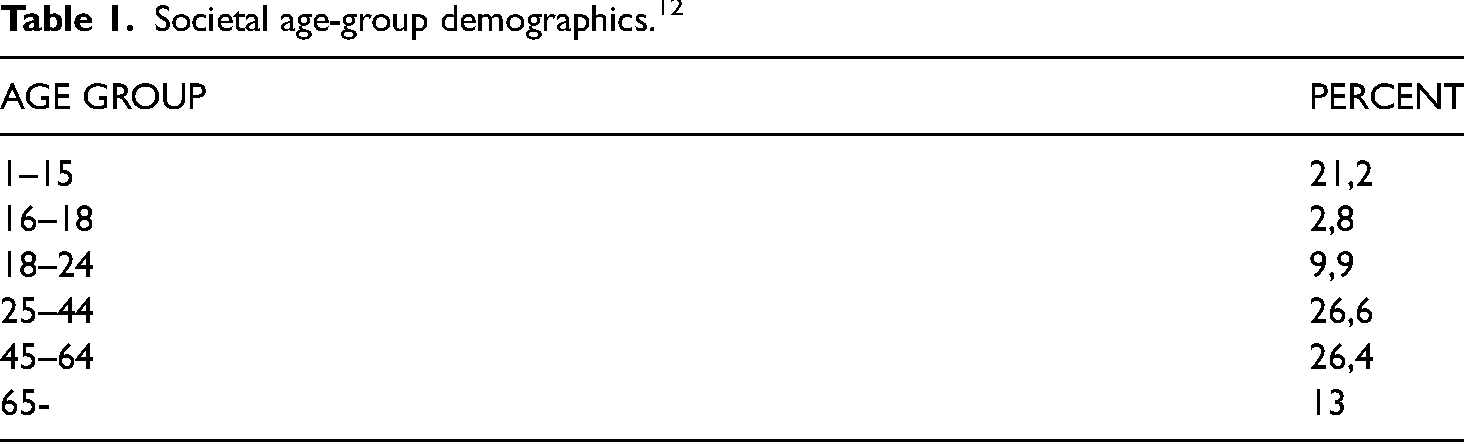
Even if the voting age were enlarged to encompass citizens over 16 years old, a possible age-based electoral circle 16–24 would contain only 12.7% of the population, even less than the age groups over 65 and less than half the age groups 25–44 and 45–64. A small operation of electoral redesign could correct this disproportion readily and favour the possibility of more robust representative responsiveness to younger age groups. It is possible, for instance, to enlarge younger age groups to increase the weight of their participation as young voters. Suppose the age group 25–44 in this same society divides more or less evenly: (Table 2).
Group 25–44 demographics.
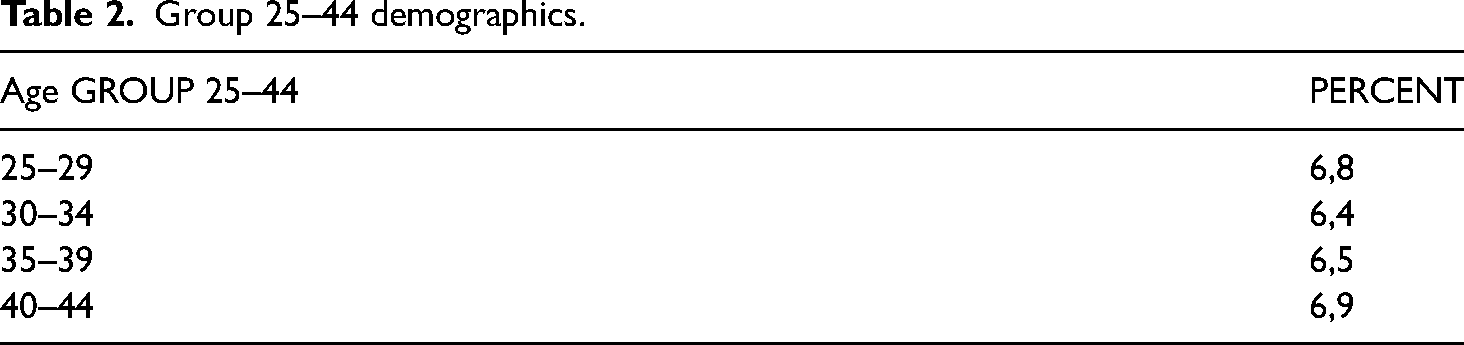
In this case, it would make sense to merge the age group 25–29 with the age group 16–24. The temporal electoral circle between 16 and 29 would then encompass 19.5% of the population, on equal terms as the age group 30–44. The underlying justification for this redesign is the proportionate equality between members of different age groups that can be said to share interests based on their position in time, 10 not any kind of temporal gerrymandering in favour of the young or against the old. In fact, in order to guarantee that the balance between age groups is preserved throughout time in a way that mirrors the demographics of the demos rather than the interests of a particular class or arbitrarily imposed age group (that is, to ensure that gerrymandering is avoided), appropriate revisions of the temporal electoral circles should be conducted periodically (every five years, or so) to accompany any relevant demographics changes and preserve equality between age groups.
Additional efforts in favour of the young could even be developed if, for instance, the age group 30–44 were split into two age groups. No other age group in the 30–44 range would come close to the 19.5% of the younger age group. The number of seats would change in proportion to the size of the electoral circle based on age groups. Hence, the electoral circle of voters belonging to the age group 16–29 would have a significant level of direct representation. Similar electoral circle design operations could occur periodically in light of substantial changes in age demographics, although always with a view to the equal treatment of constituents.
The desired homogeneity of temporal interests should also be taken into account when determining decision rules. Democracies often need to come to terms with the conflicting goals of minority representation and defractionalisation, the process of forming broad-based governing majorities. From the viewpoint of interests related to distant time horizons, the need for minority representation seems less pressing. For instance, climate change is expected to affect all living persons in the future, regardless of whether they share characteristics with majorities or minorities. Within this frame of reference, the defractionalization of temporal electoral circles seems sensible, irrespective of the size of the electoral circle. The same does not necessarily apply to territorial electoral districts, which are size-sensitive concerning the quality of representation. Territorial districts could then encompass procedures of proportionality that mix high-magnitude districts that encourage minority representation and low-magnitude districts that promote defractionalization (Rae, 1995). Despite the complexity involved, there is no apparent reason for rejecting that the same election can involve more than one kind of electoral circle and more than one kind of decision rule.
The creation of temporal electoral circles has a decisive number of advantages concerning the integration of the long-term in representative democracies. The first is that temporal electoral circles can play a symbolic role in assuring the political equality of younger cohorts. This symbolism, which is evocative of Stuart Mill's claim that ‘the spirit of an institution, the impression it makes on the mind of the citizen, is one of the most important parts of its operation’ (Mill, 1991: 307), is beneficial in two respects. On the one hand, however small the effect of age-based electoral circles on actual policy outcomes related to the long term, their very existence would pass a message to the public that relates to the positive impact of having representatives respond to groups with different relations towards time. The electoral clock would then contain features of different perceptions of time, such as life cycles and generations. 11 On the other hand, temporal electoral circles avert an often-neglected side-effect of proposals in favour of future-oriented-or-beneficial institutions – the threat of ageism. Strategies such as youth quotas, temporal bicameralism, and elderly disenfranchisement discriminate large segments of the adult population, in comparison to the young, on the basis of no other characteristic than age. The reasons for favouring the young vis-à-vis the elderly in institutional design are based neither on epistemic reasons for decision-making nor on a necessary dichotomy between short-term and long-term willingness to plan far ahead (since the elderly can often share interests and preferences in the long term), but simply on age. In such proposals, the correction of the balance of power relations between age groups bears the cost of recognising specific political rights to members of some age groups that are not recognised towards members of other age groups. Temporal electoral circles prevent ageism by showing that all age groups count equally in voting decisions and that elected representatives should strive to find the right balance between interests with different time horizons.
The symbolic advantage elevates age to a status in the franchise that surpasses other distinctions between people that we often regard as crucial for their identities as citizens. Many might ask: Is this reasonable? What is so special about age that justifies having time-related electoral circles, as opposed to electoral circles based on other features worthy of triggering political responsiveness, such as gender or race? The answer to this question lies in the distinctive nature of age. Unlike gender and race, age is not an unchangeable feature. All voters age and they do so at the same (calendric) pace, regardless of the immutable and non-universal characteristics they are born with. However, as they age, they belong to different age groups – the age group to which voters belong at each successive election is a feature as relevant and meaningful for assessing turnout as the place they live in. Space is more easily coupled with time than with other categories of social distinctiveness.
The second advantage is that this proposal ensures minimum responsiveness to long-term interests. As elected officials continue to be primarily motivated to regard representation in terms of responding to the interests and preferences of those voters that might vote for them again, the existence of age-based electoral circles would compel a significant portion of decision-makers to focus their mandates on pursuing time-related policies. Accountability requirements trigger responsiveness, and the motivations that push representatives towards responsiveness build on strategies and desires for electoral success rather than merely on far-sightedness or proxy mandates.
This detail sets a significant difference between temporal electoral circles and youth quotas. In temporal electoral circles, representatives elected by younger age groups represent the entire constituency, not just those who elected them. Still, they have incentives to be responsive primarily to those who elected them in the first place and to whom they expect to be responsive in subsequent elections. The representatives elected can be of any age group whatsoever. In youth quotas, collective decision-making bodies such as parliaments reserve specific seats for young people, thereby de-ageing representative bodies. But, once elected, apart from their age and the fact that they were elected because of their age, younger representatives do not seem to have any additional formal incentives to promote the long term. The epistemic risk of poor (long-term oriented) decision-making quality increases, along with the absence of (long-term oriented) mechanisms of accountability.
In temporal electoral circles, the epistemic risk is diluted. The fact that younger voters do not necessarily think and vote in favour of the long term would be bypassed through the symbolic role of the temporal electoral circle to the very operation of representation. Rather than developing and supporting short-term policies despite being elected by young voters unwilling to discount in favour of the future, representatives elected by younger electoral circles would regard themselves as representatives of younger electoral circles. They would be pressured into responding to problems that affect the young most particularly, regardless of the possible (exclusively short-term) preferences shared by young voters at the time of the election.
The third advantage is feasibility. Even though requiring a significant effort of creativity and reform, this proposal is reasonably conservative since it builds on the status quo. Unlike recommendations for institutions oriented explicitly towards the far-off future, whose prospects for creation and reform often seem hopeless due to the difficulty in building up substantial public support around them, electoral circles are redesigned all the time and by legislation alone. Most contemporary democracies would not even require any constitutional amendments, an obstacle often faced by proposals such as temporal bicameralism, in which one house would look forward to the far-off future, the other downwards onto the present. For temporal electoral circles, a legislative majority that would pass the initiative would suffice. The current institutional frameworks would not change, thereby preserving the levels of support they previously held and avoiding the sense of risk aversion that is often attached to the creation of new institutions. In practical terms, citizens would experience this reconfiguration as a simple bureaucratic change in the procedural rules of voting.
Fourth, the implementation of this proposal would be effective in bringing the long-term future into the political arena insofar as the aged-based electoral circles of the young are built in such a way as to allow them to carry as much (or more) weight in voting procedures as older age groups. Even though it is disputable whether voting individually is an effective way to elicit sustainable choices from successive generations, even if the rules of voting are modified (Katsuki and Hizen, 2020), the mere existence of seats whose occupation depends on voters organised around the single characteristic of being young and having more substantial expectations about the future ensures that politicians and parties would actively campaign and support policies attentive to longer timescales.
The point is not that simply identifying diverse temporal interests within existing publics guarantees a sufficient response to the powerful and material incentives that exist for short-term thinking and acting in democratic systems. As mentioned earlier, younger constituents do not necessarily prioritise long-term thinking, nor is it guaranteed that their preferences are primarily oriented to the long run, as opposed to preferences expressed by older franchise members. Rather, what appears effective in triggering responsiveness here is chiefly the (objective) quality of one's position in time, not the actual (subjective) preferences people have regarding time. Much like what occurs with territorial electoral circles, responsiveness seems triggered mostly by the perception that territorial-related issues matter politically rather than by the expression (or interpretation) of a generalised public opinion regarding what is best for each territory. It is precisely because all people in a certain (age-based) electoral circle have interests in the present, at the moment of election, that necessarily call for long-term thinking and acting (such as the young regarding education and future welfare conditions, for instance) that such interests will appear relevant for the electoral outcome.
Still, empirical findings about preference formation show a close connection between the objective elements and the shaping of subjective ones. Rather than assuming the pre-existence of preferences regarding time to which representatives are responsive at a later stage, always looking and deciding backwards – what Mansbridge has called the ‘traditional model of promissory representation’ (Mansbridge, 2003: 518) – representatives tend to look backwards to preferences that have been expressed in order to orient themselves forward in a speculative mode towards what their constituents might want or be induced to want in the upcoming election. In other words, representation is constitutive insofar as representatives are active ‘in searching out and creating’ preferences (Disch, 2011; Mansbridge 2003; Manza and Cook, 2002). By having their constituencies determined in terms of time-relatedness, representatives will tend to regard their representative actions as equally time-related, which in turn will increase awareness among constituents of specific time-related issues (to which one's position in time will be crucial in shaping preferences regarding such issues). In the end, it is unlikely that an age-based electoral circle could elect anybody without taking the time-related (objective and subjective) interests of voters seriously.
A sceptic might still claim that temporal electoral circles are not sufficiently effective to create countervailing incentives for longer-term thinking and action and rebalance power in such a way that some actors with longer-term incentives might be able to challenge wrongful short-termism within the democratic system more generally. This is probably true, which is why temporal electoral circles will have to be regarded not as the ultimate solution for long-term democratic governance but as one of the possible steps towards the long-term democratic horizon.
Conclusion
The future-oriented franchise based on temporal electoral circles, designed to take seriously the role of responsiveness to age-based interests and preferences that encompass several timescales, offers considerable promise as a mechanism for dealing with long-term interests in decision-making. It avoids the problems faced by several proposals of future-oriented-or-beneficial institutions while ensuring that elected representatives are neither slaves to the electoral clock nor time-insensitive. Moreover, it is neither overly idealistic nor parochial in the sense that it applies easily to all current democratic frameworks. And it does include strong incentives to have representatives take the long-term view seriously without running the risk of falling short of accountability mechanisms when prioritising the future.
One should not expect too much of such an exercise of institutional design, however. It can be a successful tool for introducing multitemporal aspects into electoral campaigns and party agendas, forcing representatives to put short-term and long-term issues on equal terms within representative action. Still, it is far from guaranteeing effective long-term democratic governance. Insofar as responsiveness emerges from the engagement in the time cycles of election and re-election, representative officials are likely to be responsive to the individual preferences and subjective interests displayed by younger voters rather than to the objective, cross-temporal interests that pertain to them. These preferences and subjective interests are not necessarily revealing of specific connections with the long term but are presumably more akin to the beliefs and inclinations that the young develop about their needs at different electoral moments.
Nevertheless, temporal electoral circles can be valuable tools for promoting the further inclusion of young people and their interests in representative democracy via responsiveness, and especially for calling attention to problems that are typically regarded as pertaining to the young due to the latter's expectations towards longer time horizons (concerning issues such as climate change and education, for instance). What temporal electoral circles ultimately aim to achieve is to make this sort of attentiveness acquire more determinant political clout in electoral procedures – which already generates a more robust future-oriented outlook in electoral procedures. If we are to take seriously the thought that responsibility towards the long term can materialise with more democracy, not with less, temporal electoral circles can be the starting point of a genuinely forward-looking electoral system.
Footnotes
Acknowledgements
I would like to thank the participants in the conference ‘Jovens Aqui e Agora’, which took place in September 2022, at ICS Lisbon, from which inspiration for this paper emerged. Special thanks are owed to Vítor Sérgio Ferreira and Maria Manuel Vieira, who put together the event. I also received valuable contributions from José Pereira, Diogo Pires Aurélio, and two anonymous reviewers, to whom I owe my appreciation.
Declaration of conflicting interests
The author(s) declared no potential conflicts of interest with respect to the research, authorship and/or publication of this article.
Funding
The author(s) disclosed receipt of the following financial support for the research, authorship, and/or publication of this article: Funding for this research was made available by Fundacao para a Ciencia e a Tecnologia (Portugal), via the project 'Present Democracy for Future Generations’ (PTDC/FER-FIL/6088/2020).
