



Abstract
Crises and global challenges are pervasive in contemporary politics and societies worldwide. Climate change, economic recessions, humanitarian crises, health emergencies, wars and international conflicts put tremendous pressure on the functioning of democratic political systems and other government models. This study is located in the special issue for the 25th anniversary of the British Journal of Politics and International Relations. Leveraging an original longitudinal dataset covering more than 700 governments and 400 elections in 21 democracies dating back to the 1940s, we show that completing the constitutionally mandated term is increasingly difficult for ruling parties in Western Europe. Short-termism raises serious questions about democratic governments’ ability to manage global challenges effectively. Considering the potentially detrimental consequences of short-termism, we contribute to the scientific examination of the politics of global challenges, shedding light on effective and ineffective management strategies.
Introduction
In recent years, many scientific endeavours in political science have shown that contemporary democracies are under significant pressure in the wake of several global crises (Hansen and Gordon, 2014; Kriesi, 2020; Merkel, 2018; Przeworski, 2019). In a relatively short period, European countries have faced economic and financial crises following the 2008 Great Recession, difficulties regarding international humanitarian action related to the 2015 migration crisis, health-related issues from the global pandemic beginning in early 2020 and the eruption of wars and international conflicts, namely the Russian–Ukraine war in 2022 and the Israel–Palestine conflict, which gained increased salience in late 2023. Giddens (2013) noted that Europe could be regarded as a ‘turbulent continent’ due to the severity of the Eurozone crisis. Given the increasing complexity, Europe can no longer be deemed a continent of peace (Gleditsch, 1995; Mearsheimer, 2010). In addition, looming in the background is the serious threat of climate change – a crisis that could produce irreparable consequences, according to many scholars and experts (Hitz and Smith, 2004; McNutt, 2013).
This research contributes to the scientific literature on global political challenges by providing evidence of the perils of ‘government short-termism’ in effectively managing these crises. Drawing on the concept of ‘future-oriented institutions’ (González-Ricoy and Gosseries, 2016) and the democratic quality perspective (Diamond and Morlino, 2004), the argument is made that government short-termism, or the failure to reach the constitutionally mandated end of term, poses serious issues for managing global challenges. This structural problem in contemporary democratic governments is critical and should be considered a serious issue for democratic resilience and effectiveness, especially given the current global challenges arising from multiple crises.
This study examines the ramifications of government short-termism on managing global challenges affecting European political systems and societies. To this end, novel comparative data are leveraged to contribute to the understanding of the politics of global challenges, aligning this study with the journal’s call for scientific enquiry into these fundamental matters (Anderson et al., 2022).
The remainder of this study proceeds as follows: the next section discusses the concept of government short-termism within future-oriented institutions and democratic quality frameworks. Data from an original dataset on 720 cabinets and 421 elections in 21 democracies, spanning the 1940s to 2022, document trends of increased instability in contemporary governments. Finally, the potential consequences of short-termism on managing global challenges and its impact on democratic political representation are critically examined.
Government short-termism, future-oriented perspective, and democracy
The difficulty for governments in reaching the final stages of their life cycle in office has been a relevant concern for generations of political scientists (Laver, 2003: 23). Important contributions have investigated multiple factors, such as structural attributes and critical events related to government instability and short tenure in office, demonstrating the destabilising role, inter alia, of fragmentation (Grotz and Weber, 2012) and exogenous shocks (Browne et al., 1984). However, while much is known about the factors driving instability (King et al., 1990), crucial issues related to its consequences on different components of democratic quality and proper function remain uncharted.
While governments with short survival in office may still be able to manage citizens’ short-term needs, demands and domestic-related issues, the effective management of global challenges requiring a long-term horizon and international coordination can be dramatically undermined by government short-termism. In this context, unstable governments cannot be regarded as ‘future-oriented institutions’. According to González-Ricoy and Gosseries (2016), future-oriented institutions are those that aim to correct short-term biases in political systems and produce policy outcomes that achieve the interests of the future, balancing them with the concerns of the present. In their work, González-Ricoy and Gosseries (2016: 4) argue that short-termism is ‘especially problematic in policy domains with an extended timeframe, such as environment sustainability’.
Democracies with short-term horizons risk being unsuccessful in promoting policies that address climate change, as liberal democratic decision-making implies much longer time horizons (Jones-Correa, 2019). Moreover, fragmentation and polarisation make it difficult for politicians and voters to coordinate around shared goals, as the willingness to sort themselves into ‘mutually exclusive ideological camps’ has increased over the years (Jones-Correa, 2019). Importantly, Mayhew (1974) noticed that representatives act as ‘single-minded re-election seekers’. Therefore, their activities in the legislative assemblies are primarily based on their re-election objectives. In this way, the representatives’ concerns will be dedicated to short-term goals, limiting their long-term vision.
Long-termism is necessary for climate politics and considers citizens’ preferences and demands. Syropoulos et al. (2024) demonstrated that people who hold a long-termism ‘ethical philosophy’ are more concerned about climate change, show stronger support for pro-climate policies, and advocate for initiatives in line with climate justice for future generations. A crucial role in driving this is played by responsibility to distant future generations. As noted by Anderson et al. (2022: 5) in their editorial, coming to an agreement on climate change is a ‘colossal challenge, requiring immense political will to overcome formidable obstacles’. Such obstacles are accompanied by limits of political leadership. From our perspective, short-termism is one of the most evident.
Moreover, within the framework of democratic quality, the hectic turnover of governments, with many of them experiencing a premature end, can be a critical obstacle to fully achieving responsiveness. In Diamond and Morlino’s (2004: 28) interpretation, responsiveness relates to the degree ‘to which citizens will be satisfied with the performance of democracy and view it as legitimate’. However, a crucial problem with the pursuit of responsiveness by democratic governments is the potential for manipulating the political ‘business’ cycle (Nordhaus, 1975), as ruling parties seek to maximise their re-election chances, affecting the society’s future well-being (Nordhaus, 1975: 169). Thus, they adopt a short-term perspective as their primary concern is the next election rather than the next generation. Government short-termism undermines democratic quality as citizens may develop feelings of political inefficacy and dissatisfaction with how the political system works. This is because the frequent turnover and premature end of cabinets indicate the system’s ineffectiveness in promoting policy change (e.g. Powell, 2004) and fulfilling ruling parties’ expressive function (Sartori, 2005). As a result, dissatisfied citizens may reduce their involvement in politics, increasing voter abstentionism (Blais and Rubenson, 2013; Franklin et al., 2004; Gallego, 2010). Furthermore, the extant literature shows that voter turnout has declined over the last few decades, especially in the least affluent segments of society (Angelucci et al., 2024; Blais et al., 2020). This decline aggravates the problem of unequal participation (Lijphart, 1997).
While some scholars have argued that governments’ difficulties with survival are challenges related to specific democratic models only (i.e. consensus types, Lijphart, 1999), in recent times, this problem has been affecting Westminster models as well. For instance, the frequent governmental changes observed in the British cabinets stand as a prime example of the growing pervasiveness of instability: Boris Johnson’s cabinet political crisis, which elicited his resignation, was the first symptom of such instability. As Walker (2022) noted, in July 2022, within 72 hours, 61 members of parliament resigned from ruling positions in government and in the party. Liz Truss was eventually elected as the Conservative Party’s leader, with Rishi Sunak 1 relegated to second place. However, such replacements did not solve the political crisis. The increased complexity in managing financial challenges led Truss to resign after only 44 days in office, becoming the shortest-serving cabinet head in UK history. Finally, Sunak replaced Truss as prime minister. As shown below (Figure 4), the UK governments – typically regarded as stable by political scientists (e.g. Lijphart, 1999; Müller and Strøm, 2000) – have been experiencing a significant drop in stability.
Conceptualising government short-termism
Government short-termism is conceptualised by considering the following three main domains: government duration in office, frequency of governmental premature end, and government fragmentation. Indicators of short-termism are operationalised as follows: number of days a government spends in office, terminations not related to legal requirements 2 (such as the natural end of the legislative term) and the effective number of government parties, following Laakso and Taagepera’s (1979) index of electoral fragmentation. 3 Short government duration and a high rate of premature ends are necessary and sufficient conditions for establishing a circumstance of short-termism. That is because they signal the difficulties ruling parties have in reaching the constitutionally mandated end of term (incomplete terms). Specifically, short-termism is identified if the median duration of government in a specific country is less than the median duration in our country sample. Similarly, the rate of premature ends needs to be higher than the total average. Moreover, fragmentation alone is not a sufficient condition for establishing a situation of short-termism. Indeed, a high number of parties sharing government responsibility implies that decision-making will face higher transaction costs, increasing the room for intra-coalition conflicts (e.g. Müller and Strøm, 2000). That can undermine the effectiveness of timely decision-making, undermining the quality of policy design and implementation (e.g. Mershon, 2002). However, if a country displays long government duration and low rates of premature ends with simultaneous high fragmentation, that means that ruling partners have no difficulty governing cooperatively (this is the case, for instance, of the Netherlands and Switzerland). Our final comparative results, based on this conceptualisation of short-termism, are summarised in Table 3. Figure 1 presents the synthetic conceptual scheme.
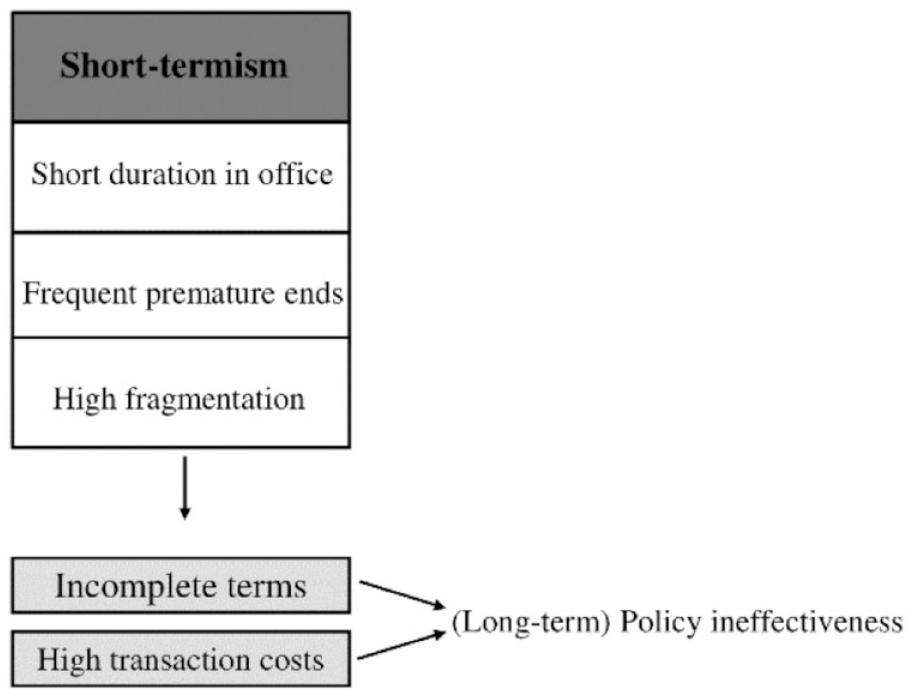
Short-termism: a synthetic conceptual scheme.
When identifying the nexus between government short-termism and the ineffective management of global challenges, it is essential to pay careful attention to some important caveats. First, it is not entirely certain that all governments are interested in managing and solving global challenges. 4 In this regard, the focus was on the issue of climate change, including only those countries for which full governmental data were available and that had signed relevant agreements to counter this problem, from the 1987 Montreal Protocol to the recent COP26. For example, when the Kyoto Protocol was established in 2005, many European Union countries announced that they would meet their targets and cut emissions. In addition, governments that had established ministerial offices for environmental issues at least once were included. Therefore, in this study, national governments of countries willing to address global challenges are considered, with the most pressing being environmental issues.
Second, it is important to stress that when dealing with government short-termism, a macro, systemic perspective is adopted. Global challenges require long-term vision, international cooperation and consistency in governmental actions. Therefore, it is important that countries display sufficient continuity in their administrations, as policies to tackle environmental crises, for example, must be consistently designed and implemented due to their time-sensitive nature. If premature ends become frequent, the political vision for managing and solving challenges collapses and important decisions are postponed, as the caretaking nature of cabinets does not allow actors to decide in the same way as those with full powers. A government that does not reach its full term or has a particularly short duration might also be perceived as weaker by international leaders, undermining the country’s reliability in concluding agreements; see, for example, the changing political preferences of cabinets in Italy due to hectic turnover. Finally, premature ends signal conflictual terminations of the democratic cycle, interrupting the chain of delegation. In this regard, Harmel and Robertson (1986: 1030) argued that government changes ‘may lead to lessened performance and general feelings of anxiety associated with perceived chaos at the top’.
Trajectories of government short-termism
Time trends
To verify whether government short-termism is indeed a growing issue in Europe, potentially undermining the effective management of global challenges, an original multilevel longitudinal dataset was collected.
Table 1 displays the dataset’s features. The dataset was manually collected. The main sources on which the dataset is based are Casal Bertoa and Enyedi (2022), Sonntag (2020) 5 and Döring and Manow (2020). Since only democratic countries were considered, the first entry year of the so-called late democratisation countries (Huntington, 1993); that is, Cyprus, Greece, Spain and Portugal, was around the 1970s, depending on the democratic instauration of the specific political system. To establish the governments’ start and termination dates, the criteria proposed by Müller and Strøm (2000) were followed. Therefore, changes of government were considered to occur when (1) the head of cabinet changed, (2) parties forming the ruling coalition changed and (3) general elections occurred.
Dataset features.
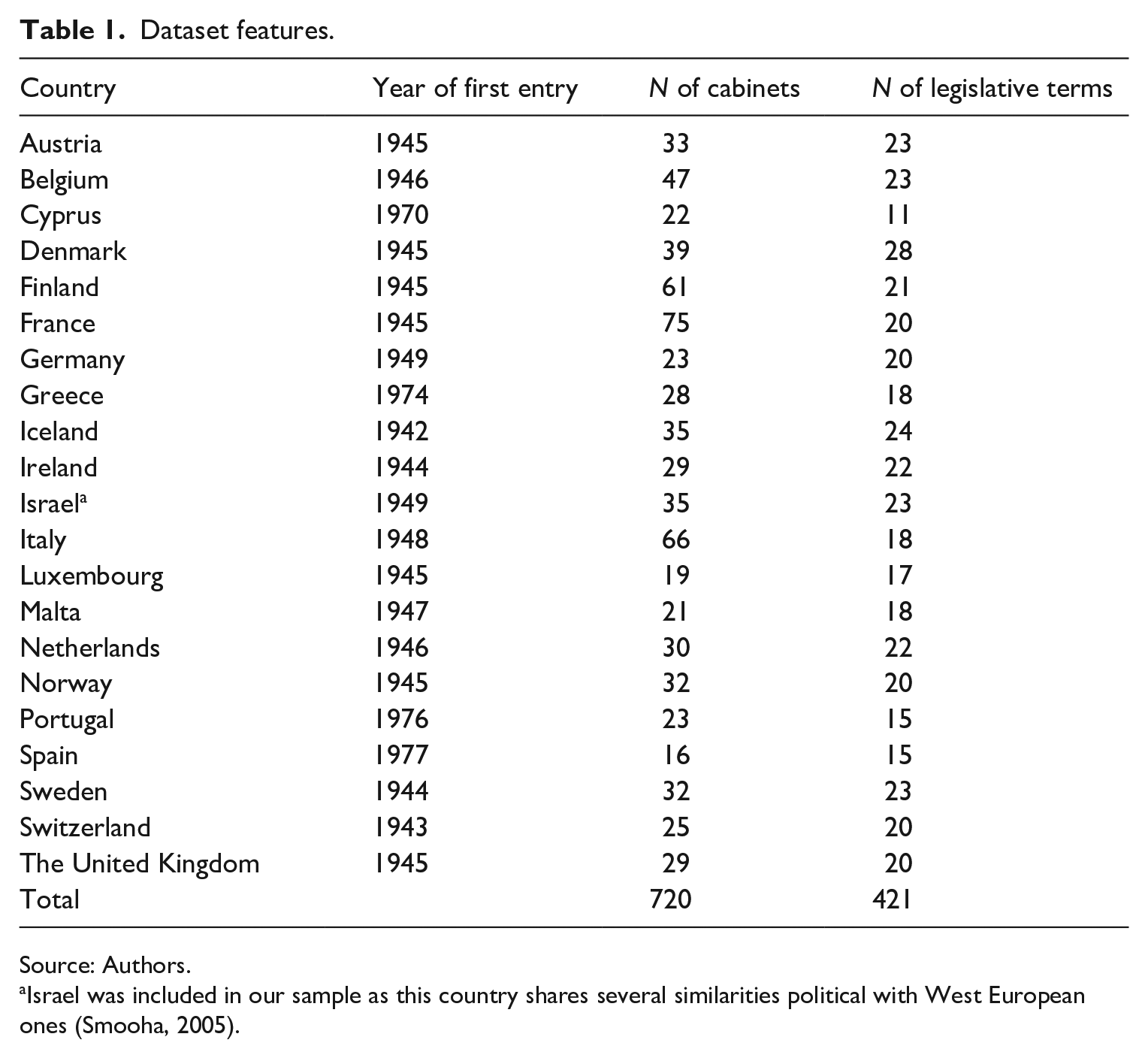
Source: Authors.
Israel was included in our sample as this country shares several similarities political with West European ones (Smooha, 2005).
Moving to the temporal trajectories, Figure 2 shows the median 6 government duration, measured in days spent in office by each specific cabinet over nine decades. Interestingly, it was observed that in the 1940s and 1950s, governments recorded a short median duration. This short duration can be explained by the difficult process of institutionalisation that ruling parties had to deal with as Western European political systems were becoming democracies – hence, unpredictability and volatility continued to dominate inter-party interactions (Savage, 2016). When the party systems reached a stage of increased maturity and institutionalisation (Casal Bértoa and Enyedi, 2021; Chiaramonte and Emanuele, 2022), the duration in office became longer compared to earlier phases. Furthermore, a peak was observed in the 1990s and 2000s, the decades during which the duration in office was more than 2.5 years, twice the median duration detected in previous decades. This period of increased stability is often regarded as the golden age of democratic consolidation in global terms (Fukuyama, 1992; Levitsky and Way, 2005). Democratic consolidation, global cooperation and international development were accompanied by increased stability in the offices of ruling parties, which encountered fewer complexities when promoting their policy agenda and fulfilling their governing tasks.
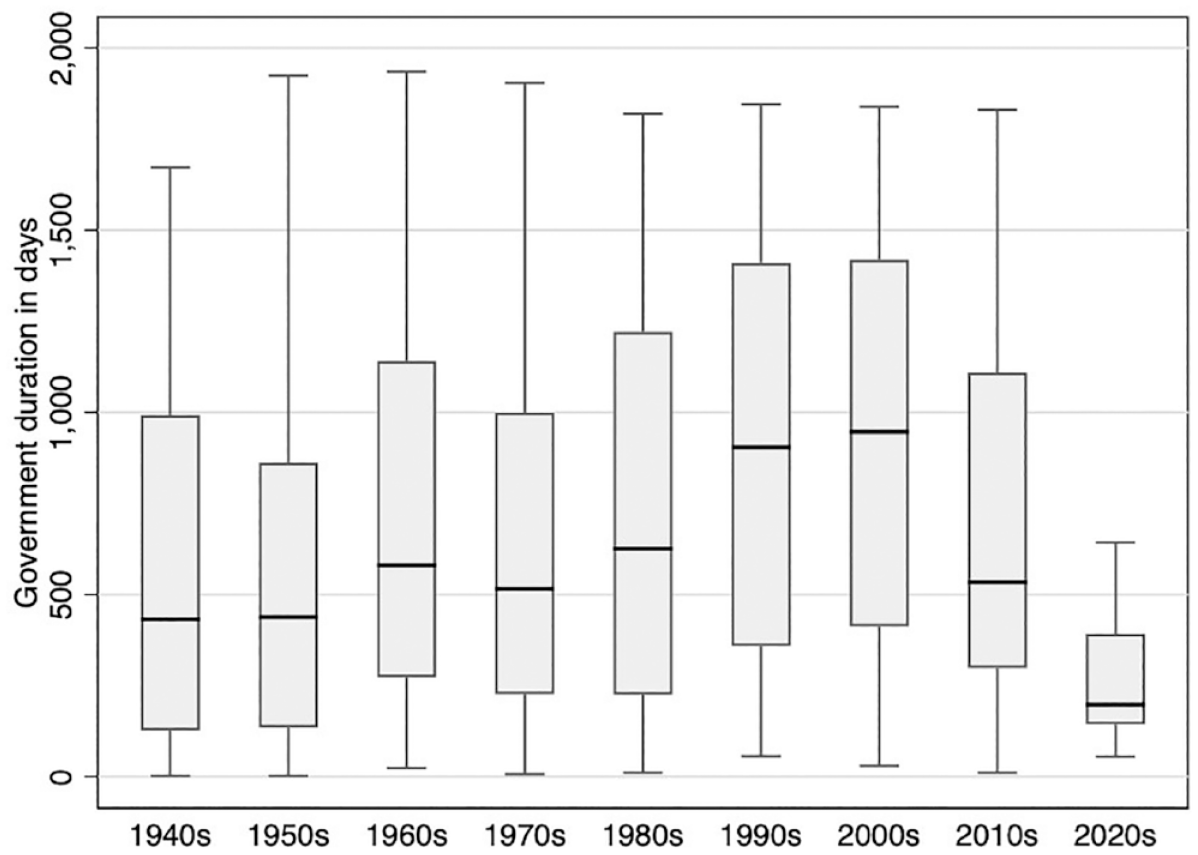
Government duration over decades.
This period of stability was severely interrupted by the outbreak of several crises. By collecting information on the causes of termination from the Representative Democracy dataset’s June 2024 archive version (Hellstrom et al., 2024), several types of crises from 2000 to 2022 were differentiated. Table 2 shows that, during this period, governments collapsed primarily because of scandal-, economy- and coalition-based crises, whereas migration and pandemic crises led to the premature end of one and three cabinets, respectively.
Crises as causes of government termination (2000–2022).
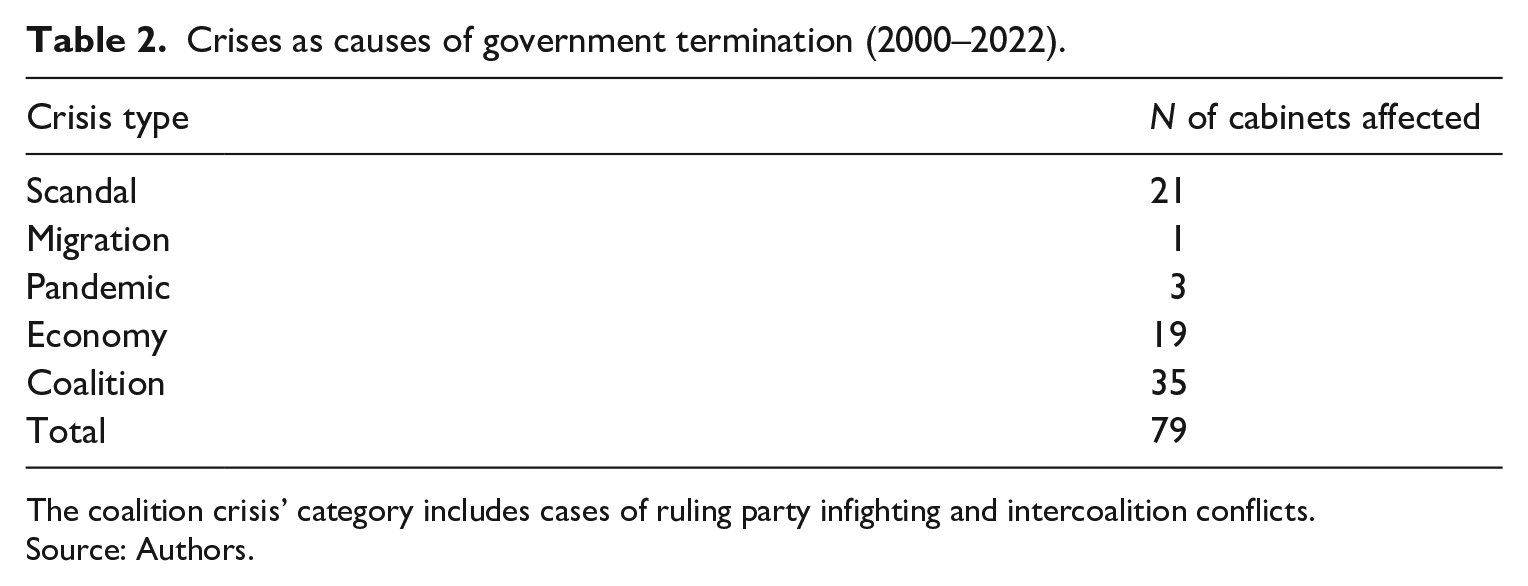
The coalition crisis’ category includes cases of ruling party infighting and intercoalition conflicts.
Source: Authors.
It was observed that government duration declined by half from the 2000s to the more turbulent 2010s and then plunged to its lowest level, which was even lower than the post-Second World War times – a period during which the slightly longer duration could be partially explained by ‘rally around the flag’ dynamics. 7 Crucially, these trends indicate that contemporary ruling parties face the hardest challenges regarding their survival in office. The short-term horizon that governments record in the 2020s is unparalleled. 8 These data should be carefully considered when reflecting on how European democracies should manage pressing global challenges.
It has been observed that the current period records the lowest duration in office for ruling parties since the post-war era. To explore this aspect further, an understanding of the most frequent causes of termination behind the hectic government turnover is sought. The literature has emphasised that not all causes of government termination are equally scientifically interesting (see Damgaard, 2008). For instance, a termination due to scheduled elections should be considered a ‘peaceful’ end to a government’s term. Conversely, discretionary terminations, resulting from early elections, voluntary enlargement of the coalition, intra- and inter-party conflicts and personal disputes, should be regarded as ‘conflictual’ modes of termination (Damgaard, 2008: 308).
Figure 3 shows data on the premature ends of cabinets over decades. From Figure 3, it is observed that the 2020s is the decade with the highest share of premature terminations, surpassing even the 1940s. This confirms that current ruling parties have difficulties reaching the constitutionally mandated end of term, whereas there were numerous peaceful terminations in the ‘golden age’ of stability (the 1990s). Overall, these data confirm that contemporary cabinets struggle to govern together (in the case of coalition governments) and to control intra-party conflict (in the case of single-party governments). This is particularly important, as recent studies have shown that citizens have higher satisfaction with democracy if they identify good policymaking processes and governmental performance (Papp et al., 2024). Achieving such goals will be complex if ruling parties are recurrently exposed to premature termination.
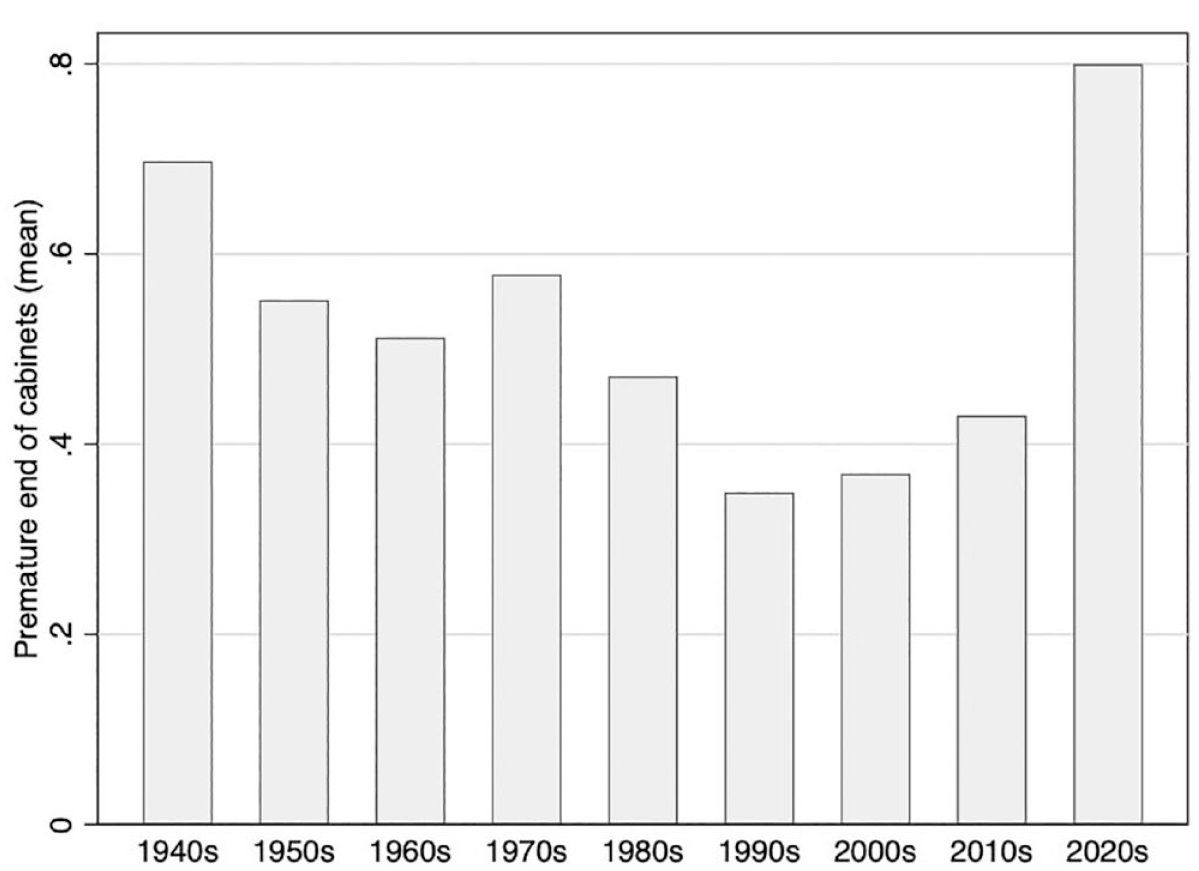
Premature end of cabinets over decades.
Finally, Figure 4 shows the level of fragmentation over decades. It is observed that higher levels of fragmentation in government were recorded during the 1940s and 2020s. This aligns with observations for other indicators, showing that the first and last periods were turbulent compared to other times.
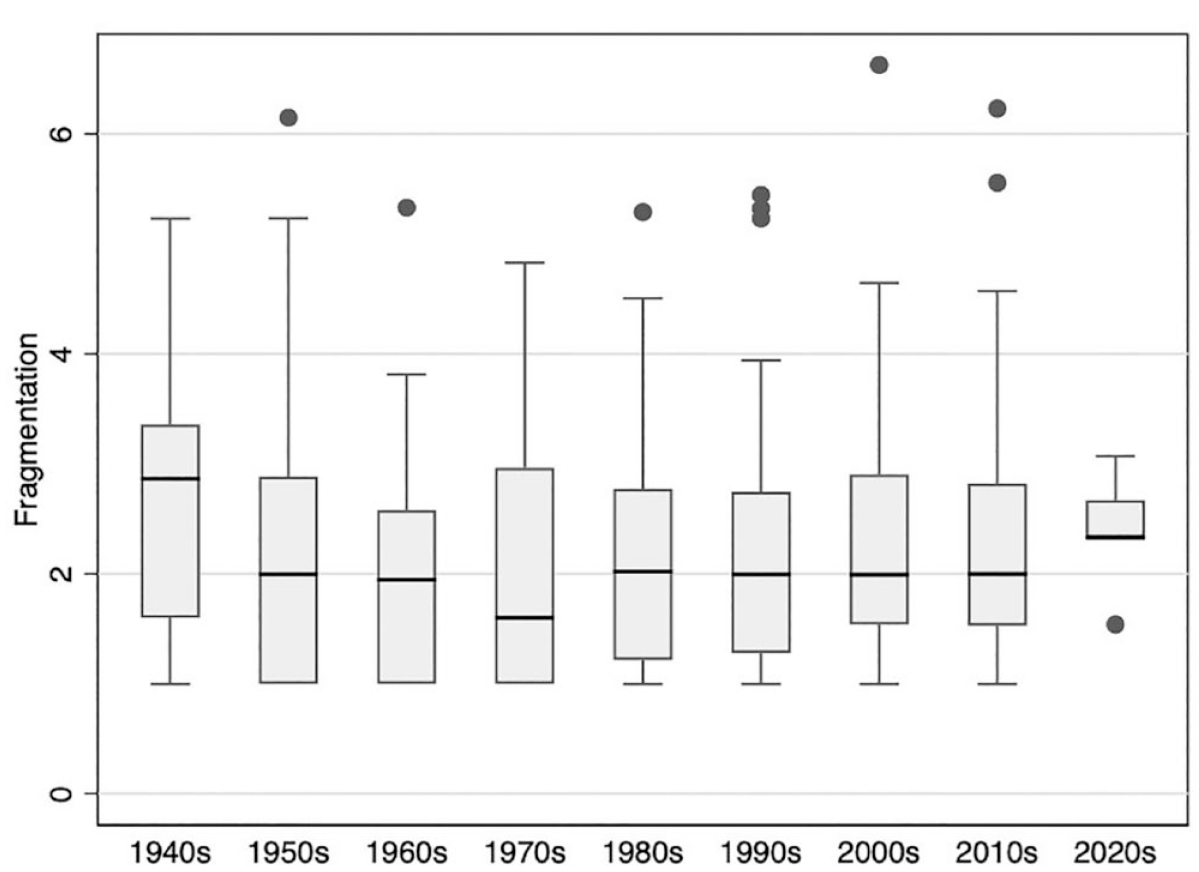
Fragmentation over decades.
National trends
After examining the temporal trajectories of government short-termism, attention is now directed towards national trajectories. To this end, Figure 5 presents information on density and median of government duration in the 21 countries examined to understand the spatial specificities of the short-termism problem.
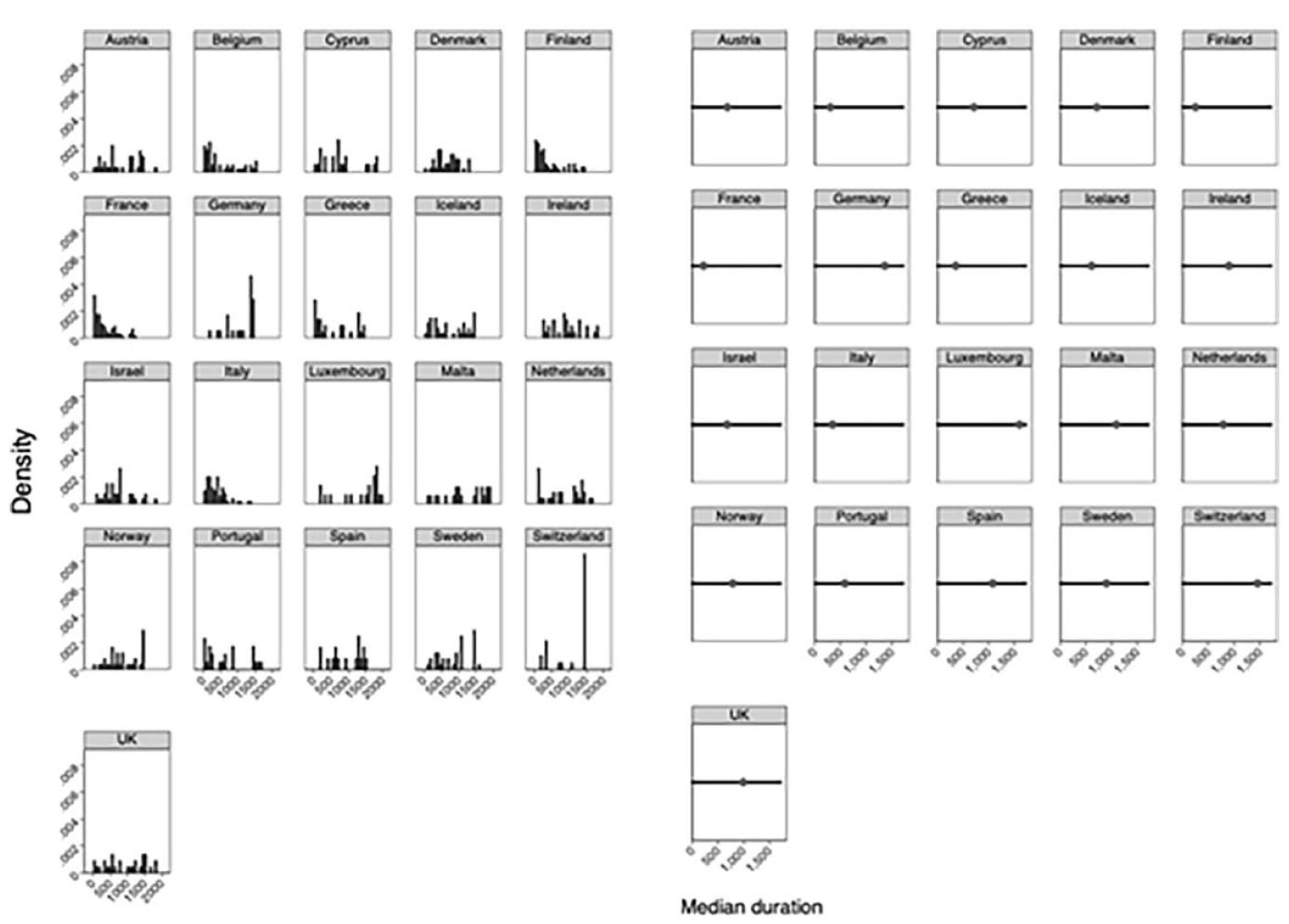
Government duration density and median by country.
Considering the 1945–2022 period, it is observed that premature term cessation in office is not a problem in every political system considered in the sample. Belgium, Finland, France, Greece and Italy are the countries suffering the most from short-termism in office. Belgian parties are often challenged by societal conflicts, a notable example of a divided society (Lijphart, 1999). Even in the formation stage, conflicts are evident, as potential coalition partners spend several months bargaining to form a coalition, which often turns out to be unstable (De Winter and Dumont, 2021).
Moreover, short-termism is a well-known feature of Italy’s political system. Italian cabinets are typically surplus coalitions 9 that often terminate due to frequent government crises. During the 2018–2022 legislative term, three government crises erupted. Considering the period from 1948 (the year of democratic installation) to 2022, the average duration of Italian cabinets was slightly more than 1 year. That poses serious problems for several democratic quality dimensions, future-oriented policymaking, effective governance, accountability and citizen satisfaction with how the democratic system works.
The short-termism observed in France mostly relates to the period of the Fourth Republic. While French governments have improved in duration in office since the regime change in the early 1960s, the Fourth Republic’s cabinets were among the shortest-lived from a comparative perspective; their average duration was only 6 months, with 24 cabinets formed under 16 different cabinet heads (Huber and Martinez-Gallardo, 2004).
Finland shares some similarities with France. The short duration of governments in Finland was due to each coalition party being responsible for its own domain, and the president having significant intervention powers. After a constitutional reform, 10 the president lost some decisive powers, which made it easier for ruling parties to manage the coalition effectively (Raunio, 2021). Finally, in Greece, the formation of unstable governments became particularly frequent with the outbreak of the 2008 Great Recession. Before that crisis, Greek cabinets were quite stable and were formed by single-party governments with established alternation dynamics between Pasok and New Democracy at the systemic level. Unlike the short-termism observed in such countries, higher stability is detected in countries such as Luxembourg, Switzerland, Germany and Malta. Maltese and Luxembourg governments can attribute their stability to smaller population sizes and the relative homogeneity of their societies, while Swiss coalition politics were based on a shared consensus regarding the need for finding common ground for ruling parties to cooperate. As Switzerland is a very divided society, conflicts have been likely to emerge. However, power sharing in the executive branch was interpreted as an opportunity to create an environment in which most political formations were allowed to hold cabinet posts. Finally, Germany’s stability can be explained by two main elements. The first is the presence of the constructive vote of no-confidence, an institutional provision that helps to rationalise parliamentary systems (Hazan, 2014). The second element, similar to the Swiss case, is the existence of a cooperative culture between the main political parties, which also led to stable prime ministers – Angela Merkel is a prime example.
Figure 6 presents data on the trajectories of government duration by country and over decades. The goal is to understand which countries are moving towards increased short-termism and which are experiencing an increase in duration. From Figure 6, the pervasiveness of short-termism is evident. For instance, Finland, Israel, Italy, Spain, Switzerland, Sweden, and the United Kingdom are witnessing trajectories leading to increased short-termism. Greece, Luxembourg, and Norway show opposite trends. Other countries record intricate fluctuations (e.g. Belgium), while some exhibit enduring stability (e.g. Germany). Interestingly, traditionally short-lived cabinets, such as those of Finland and Italy, are now joined by newcomers like the United Kingdom and Switzerland – countries commonly regarded as stable due to their models of democracy and durability-oriented institutional setups.
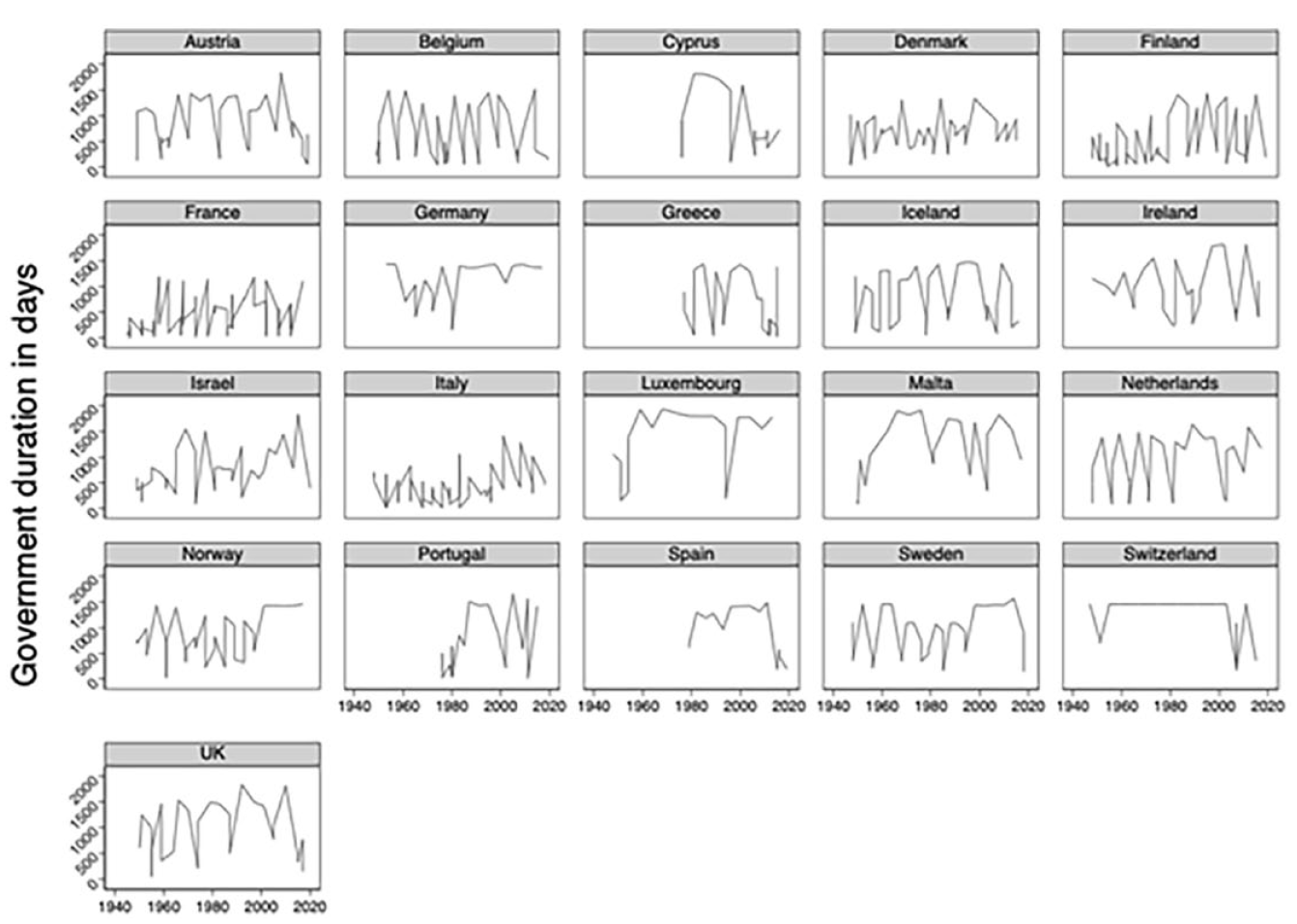
Duration trajectories in 21 countries.
Finally, Figure 7 documents the trajectories of premature ends and fragmentation in the 21 countries investigated. While in some countries premature ends are negligible, in others, they become the rule rather than the exception (see, for instance, Italy’s and France’s scores, even if the trend for these countries is towards reduced frequency of early termination). Regarding fragmentation, there are clear trajectories towards more fragmentation in Belgium, whereas this problem does not affect political systems where the electoral rules facilitate the formation of single-party governments (e.g. Malta and the United Kingdom).
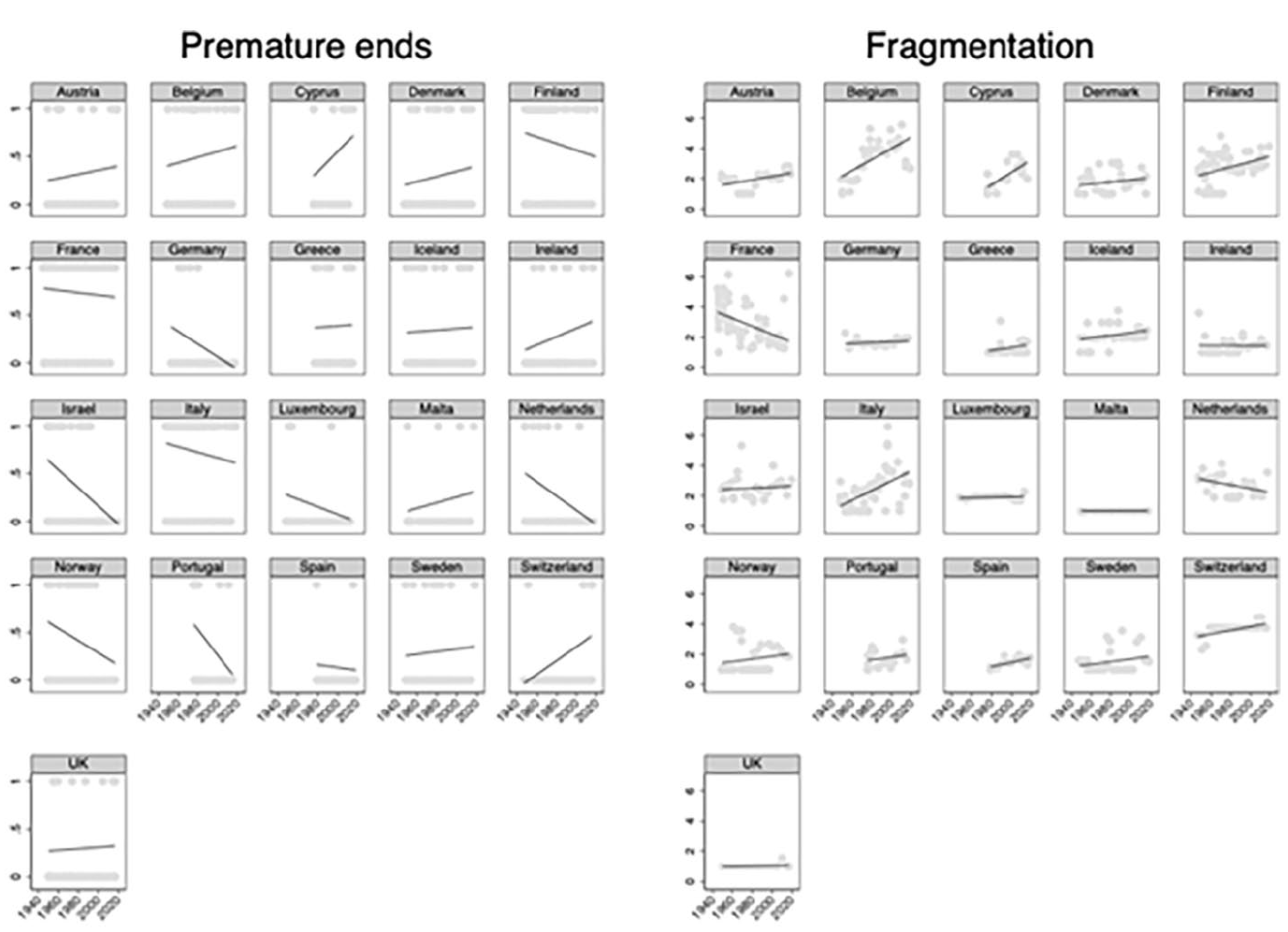
Premature ends and fragmentation in 21 countries.
Conclusion and discussion
Albeit remaining at a descriptive level, the presented data depict a worrisome picture regarding the effective management of global challenges. When reflecting on the severity of the crises affecting political systems worldwide, it is important to highlight that, despite the increased role of supranational institutions, the main actors called to deal politically with challenges are ruling parties.
This study argues that governments with a short horizon are intrinsically incapable of managing global challenges, especially the most pressing ones, such as the climate crisis. This is because short endurance in office hinders ruling parties’ ability to effectively envisage and implement future-oriented policies. Based on the data presented, the frequent early collapses and short durations recorded by contemporary governments allow them to manage only short-term problems.
Government short-termism poses serious issues when reflecting on the state of health of democracies. The unsuccessful management of global challenges by democratic political representation may lead to the appointment of unaccountable personnel, such as technocrats (Chiru and Enyedi, 2022), who are less interested in re-election goals. However, as technocrats in government are not accountable to citizens, the latter cannot punish nor reward governmental decisions at the ballot box. This is a critical problem, as evidence demonstrates that ruling parties may opt to appoint technocrats to get away with electorally turbulent times (Emanuele et al., 2023).
Levels of short-termism.
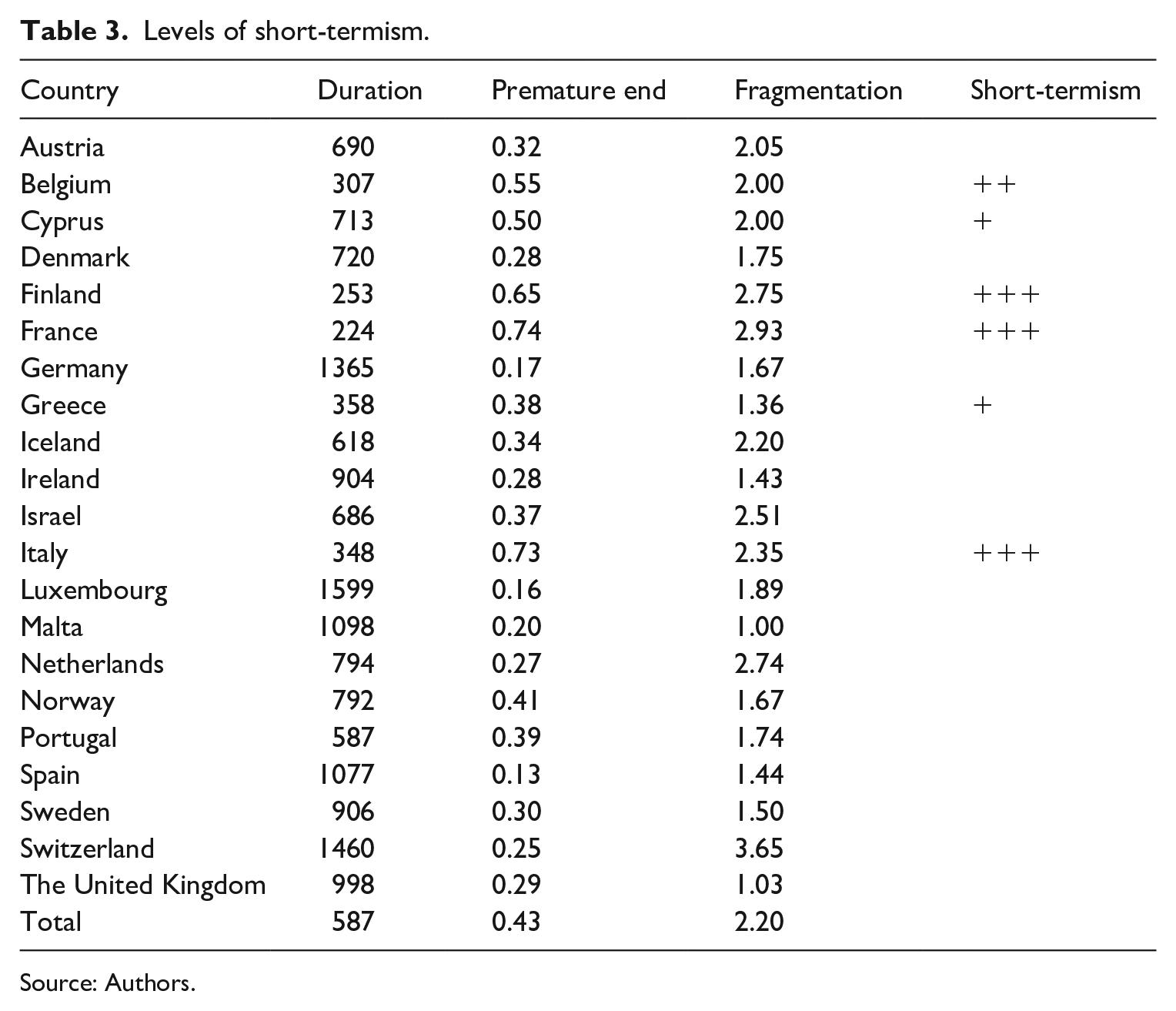
Source: Authors.
Moreover, governments that fail to reach the full term of their mandate risk severe damage to their perceived legitimacy in the eyes of voters. Especially regarding the management of global challenges, the domestic dimension of politics is often considered less relevant compared to the actions required by international organisations and supranational institutions, as global crises require global solutions (Lomborg, 2004). From this perspective, what is the role of national governments? If government short-termism remains as pervasive as it is currently, the legitimacy of political decisions – considering the global framework of the challenges – will become a critical issue. Government short-termism, however, should not be deemed inevitable. Successful cases, from a comparative perspective, indicate that institutional change and design can help alleviate the problem. In this regard, policymakers in some countries have started to explicitly identify the issue. 11
This study sought to advance the scientific examination of government short-termism in relation to the management of global challenges by presenting novel comparative data. The study showed that government short-termism is a growing phenomenon in Western Europe, as contemporary democracies in the region are witnessing the most unstable period regarding survival in office since the 1940s. The argument is made that government short-termism may bring several perils for the effective management of global challenges and crises, as well as for the functioning of the democratic system.
This symptom of democratic malaise should be deemed a pressing issue by policymakers and scholars interested in the topic. Hence, more research on the relationship between democratic institutions and the management of global challenges should be carried out in comparative politics. In particular, two promising avenues for future studies are suggested. First, while this study presented trends in government short-termism, scholars could devote attention to the causes underpinning such different trajectories. Second, scholars could investigate the consequences of government short-termism on all the dimensions described in this study. For instance, what is the impact of government short-termism on citizens’ perceptions of policy decisions? Do citizens value future-oriented policymaking? Both quantitative and qualitative research strategies can contribute fruitfully to the advancement of scholarly work on these topics.
Footnotes
Authors’ note
This work is intended as part of the British Journal of Politics and International Relation’s Special Issue on ‘The Politics of Global Challenges’ (Editorial: British political studies and the politics of global challenges (sagepub.com)).
Funding
The author(s) disclosed receipt of the following financial support for the research, authorship, and/or publication of this article: This work has been developed under the framework of the PRIN 2020 Project DEMOPE – DEMOcracy under PressurE (Prot. 2020NK2YHL), funded by the Italian Ministry of University and Research.
