Abstract
Parental aggression, that is, offspring protection aggression, can be viewed as a type of parental investment. Most mammalian males do not exhibit parental investment and therefore exhibit little, if any, parental aggression. Men demonstrate parental investment, and are typically more physically aggressive than women, but parental physical aggression in humans has been largely unexplored. The current study examined potential sex differences in estimates of parental physical aggression involving hypothetical situations, while controlling for general physical aggression. A self-report measure was administered to 217 students from a western U.S. university (55 male nonparents, 50 female nonparents, 54 fathers, and 58 mothers). Male nonparents reported higher parental physical aggression than female nonparents, but there was no difference between mothers and fathers. The results are interpreted in light of ancestral effects of sexual selection and proximal effects of sex differences in testosterone, risk taking, and fear aversion.
The literature on human parental aggression often refers to aggression by a parent that harms offspring (e.g., Voisin, Hotton, & Schneider, 2014). Conversely, the literature on nonhuman parental aggression often refers to aggression by a parent that protects offspring, (e.g., Trainor, Finy, & Nelson, 2008). The present study examined the latter form of aggression, that is, offspring protection aggression, but with respect to humans. The present study also used a common definition of aggression: the intention to cause harm to another individual (Archer, 2009). Parental aggression can be directed toward another human, that is, a spouse, stranger, adolescent, and so on, or a nonhuman animal such as a dog that is threatening the parent’s child. Thus, theoretically humans can display parental aggression toward conspecifics and nonconspecifics, as is observed with nonhuman animals (Svare, 1981).
Parental aggression in humans is relatively unexplored. As such, a brief background on parental aggression among nonhuman animals is provided and then several human sex differences are discussed as they may pertain to human parental aggression. Parental aggression is perhaps best understood as a form of parental investment. The latter is defined as “ … any investment in an individual offspring that increases the offspring’s chance of surviving (and hence reproductive success) at the cost of the parent’s ability to invest in other offspring” (Trivers, 1972, p. 139). In other words, parental investment is any biological or behavioral expenditure by a parent that promotes the welfare of a child and ultimately that child’s own reproductive success. Examples of parental investment include everything from gestation to ensuring that one’s child wears a seatbelt in a car to parental aggression. Parental aggression can be carried out by males (paternal aggression) or females (maternal aggression).
A few examples that portray the range of species that engage in maternal aggression include the red swamp crayfish (Procambarus clarkii; Figler, Twum, Finkelstein, & Peeke, 1995), lizards such as the White’s skink (Egernia whitii; Sinn, While, & Wapstra, 2008), the northern elephant seal (Mirounga angustirostris; Ribic, 1988), birds such as the dark-eyed junco (Junco hyemalis; Cain, Rich, Ainsworth, & Ketterson, 2011), the house mouse (Mus musculus; Maestripieri & Alleva, 1990), and the rhesus macaque (Macaca mulatta; Maestripieri, Lindell, Ayala, Gold, & Higley, 2005). This range demonstrates that maternal aggression is a well-preserved phenomenon across numerous taxa. Furthermore, the preservation of maternal aggression as an adaption in various species serves to hinder infanticide and predation, which are two principle threats to offspring (Archer, 1988). In some species, such as the chimpanzee (Pan troglodytes), infanticide has been led by males (e.g., Watts & Mitani, 2000) as well as females (e.g., Townsend, Slocombe, Thompson, & Zuberbühler, 2007). For detailed discussions on the biology and behavior of maternal aggression, the reader is guided to more comprehensive sources (e.g., Archer, 1988; Gammie & Lonstein, 2006; Svare, 1981). Here it is added that humans are among the species that engage in maternal aggression, and this topic is receiving increased attention in the literature (e.g., Hahn-Holbrook, Holt-Lunstad, Holbrook, Coyne, & Lawson, 2011).
If parental aggression is viewed as a form of parental investment, and given that males in over 95% of mammalian species provide little or no parental investment (Clutton-Brock, 1989, Clutton-Brock & Scott, 1991), then it may not be surprising that paternal aggression is less common than maternal aggression. But though the former is less common, it is still a widely observed phenomenon in the animal kingdom. Specific examples include a species of fish such as the smallmouth bass (Micropterus dolomieu; Hanson, O’Connor, Van Der Kraak, & Cooke, 2009), the dwarf hamster (Phodopus campbelli; Reburn & Wynne-Edwards, 1999), the Canada goose (Branta canadensis; Sedinger & Raveling, 1990), and the wild baboon (Papio cynocephalus; Nguyen, Van Horn, Alberts, & Altmann, 2009). Interestingly, our closest ancestors, chimpanzees and bonobos (Pan paniscus), do not demonstrate paternal investment (Geary, 2000), and therefore presumably no paternal aggression. Humans are among the exceptions in mammals with a significant and geographically widespread history of paternal investment (Geary, 2000; Gray & Anderson, 2010).
Sex differences within a species, such as parental investment, are often explained by sexual selection: the process by which sex-specific heritable traits get passed on to future generations, mostly by intrasexual competition and intersexual choice (Darwin, 1871). Sex differences are explained in a related manner by the idea that the reproductive success of males is often limited by access to mates whereas reproductive success of females is often limited by access to resources such as food (Bateman, 1948), and these sex-different challenges lead to sex-different adaptations. One explanation for what drives sexual selection is the difference in minimum parental investment between males and females (Trivers, 1972). That is, the sex (usually the female) that is obligated to higher minimum parental investment increased reproductive success by being selective in choosing a mate, that is, demonstrating intersexual choice, and this in turn drove intrasexual competition in the other sex (usually the male; Trivers, 1972). In terms of parental aggression, the higher minimum parental investment by women, for example, in gestation and lactation, motivates behavior to protect that investment, and an example of such a behavior is maternal aggression. Considerable data have supported the theory of sexual selection (Andersson, 1994; Geary, 2010) and that sex differences are often linked with one another, for example, the sex difference in testosterone is linked with the sex difference in aggression (Archer, 2006). Therefore, understanding potential sex differences in parental aggression may be aided by examining sex differences in other forms of aggression.
Among nonhuman animals, parental aggression tends to be physical and direct, and therefore likely has relevance to humans. Physical aggression and direct aggression are not mutually exclusive constructs, but they are also not the same. For instance, punching someone is direct, physical aggression. Covertly pouring hot sauce on food believed to be eaten by someone who is allergic to hot sauce is an example of indirect, physical aggression. A meta-analysis of gender differences in aggression in real-world settings revealed that men are on average more physically aggressive than women (Archer, 2004). Also, meta-analyses showed that men are more physically aggressive than women in various lab settings (Bettencourt & Kernahan, 1997; Bettencourt & Miller, 1996). Furthermore, men engage in more direct aggression than women (Campbell, 2006), and a meta-analysis of childhood and adolescent aggression reveals that this gender difference exists long before adulthood (Card, Stucky, Sawalani, & Little, 2008).
At a proximate level, many sex differences can be linked to testosterone. Men’s higher testosterone has been linked with physical aggression (e.g., Archer, 2006), risk taking (e.g., Mehta, Welker, Zilioli, & Carré, 2015), and reduced fear response (e.g., Hermans, Putman, Baas, Koppeschaar, & van Honk, 2006). Men are more physically aggressive as noted earlier and also engage in more risky behavior (Byrnes, Miller, & Schafer, 1999), and there is evidence that men’s lower fear aversion largely accounts for the sex difference in direct aggression (Campbell, 2006). Moreover, a parent’s intent to cause harm to someone who is threatening the parent’s child involves some measure of risk taking and, possibly, temporarily lowered fear aversion.
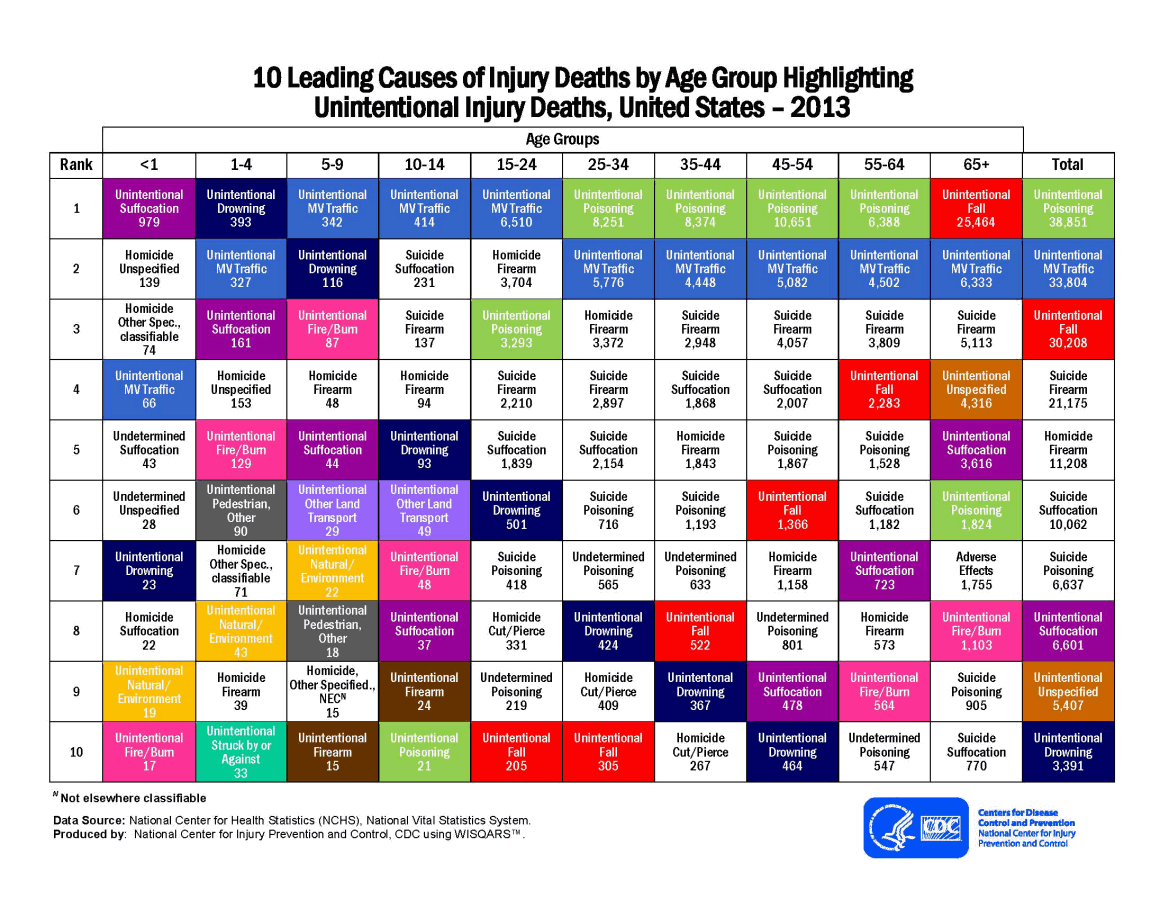
To be sure, parental protection often comes in nonphysical and nonaggressive forms. As examples, a parent can supervise his or her child swimming, monitor the child’s access to busy streets, restrict the child’s use of dangerous objects or toys that could be swallowed, and so on. Indeed, the National Center for Health Statistics (2015) reported that the top three causes of death among children 1–4 years of age in the United States in 2013 were drowning (393 deaths), motor vehicle accidents (327 deaths), and suffocation (161 deaths). However, some threats to children may very well elicit a physically aggressive protective response by a parent. One example is if a parent witnesses the kidnapping of his or her child by the other parent. The U.S. Department of Justice (2010) reported that in 2010 there were over 200,000 cases of parental kidnapping worldwide.
To reiterate, maternal/paternal aggression is a type of maternal/paternal investment. Humans demonstrate both maternal and paternal investment. Women demonstrate higher parental investment both at the minimum biological level (e.g., gestation and lactation) and in terms of performing child care (Coltrane, 2000; Hook, 2010). Men exhibit lower levels of fear (Brebner, 2003; Campbell, 2013) and higher levels of testosterone, risky behavior, and general physical aggression. In addition, men’s higher physical aggression can be used for a variety of survival or reproductive ends (Buss, 2009), such as offspring protection. That said, little is known about potential sex differences in parental physical aggression and whether precursors to such sex differences exist among nonparents. The current study tested two hypotheses: (1) Male nonparents who are asked to imagine having a child, and that child being threatened, will report higher parental physical aggression than female nonparents. (2) Fathers who are asked to imagine that their child is being threatened will report higher parental physical aggression than mothers.
Method
Participants
There were 109 females and 108 males for a total of 217 individuals who participated in the study. Ages ranged from 18 to 63 (M = 30.42, SD = 8.22). Ethnic breakdown was as follows: 96 participants (44%) were White/Caucasian, 50 (23%) were Hispanic/Hispanic American, 26 (12%) were Black/African American, 20 (9%) were Asian/Asian American, 14 (6%) were mixed ethnicity, 7 (3%) were undisclosed, 2 (1%) were Native American, and 2 (1%) were Pacific Islander. Highest level of education completed was as follows: 84 high school, 59 some college, 61 associate’s or undergraduate degree, 10 graduate degree, and 3 undisclosed.
Measures
The study included a survey with five demographic items for age, gender, ethnicity, highest level of education completed, and parental status. The latter item provided participants with the option to select one or more of the following: childless, biological parent, stepparent, and other.
The remaining items measured aggression using a Likert-type scale. The first 9 items were obtained from a validated measure of (general) physical aggression (Buss & Perry, 1992). The authors reported a Cronbach’s α (internal consistency) of .85 for these 9 items. Item 7 was reversed scored. The remaining 3 items were developed to measure estimates of parental physical aggression involving hypothetical situations of an increasing level of threat to a parent’s child from verbal to physical to potentially lethal. The 12 aggression items are located in the Appendix.
Procedure
All procedures were approved by the institutional review board where this study was conducted, and informed consent was obtained before data collection commenced. Participants were recruited from various undergraduate psychology classes from a university located in the western United States.
The few participants who were neither childless nor biological parents (i.e., parents of stepchildren, adopted children, foster children, etc.) were excluded from analyses to be able make a clear a distinction between “nonparent” and “parent.” For instance, if a childless man who recently entered a new relationship and considered himself to be a stepparent to his partner’s child, this individual may have reduced group differences in the current study had he been included.
Statistical Analysis
An independent-samples t-test was conducted to determine if parents reported higher parental physical aggression scores than did nonparents. Higher scores among parents were expected, given that they responded to hypothetical scenarios involving their actual children whereas nonparents responded to the same scenarios involving hypothetical children.
Subsequent analyses for nonparents and parents were kept separate because instructions for the parental physical aggression items were slightly different for these two groups. That is, nonparents were asked to imagine having a child, and that child being threatened, whereas parents were asked to imagine their actual child being threatened. This point is worth elaboration. For a fair comparison between a nonparent and a parent, both would have to be asked the same questions, that is, both asked to imagine a hypothetical child of theirs being threatened. And in such a scenario, parents would have to be additionally asked to not picture their actual child being threatened. Hence, two 1-way analyses of covariance (ANCOVAs) were used to examine differences in parental physical aggression while controlling for general physical aggression between male nonparents (n = 55) and female nonparents (n = 50), and between fathers (n = 54) and mothers (n = 58).
Results
Analysis of internal consistency for Items 1–9 (general physical aggression) revealed a Cronbach’s α of .82. For Items 10–12 (parental physical aggression), Cronbach’s α was .69, and was maximized by not removing any of the 3 items. Values over .70 are generally considered satisfactory (Nunnally, 1978). However, values over .60 may be acceptable for new scales (Nunnally, 1978).
The data for general physical aggression and parental physical aggression were not normally distributed as shown by Kolmogorov-Smirnov statistics, ps < .05. ANCOVAs were still used because they are robust to violation of this assumption and because of the relatively large sample in the study. Furthermore, skewness and kurtosis values for both types of aggression were between −1 and +1.
There was a significant difference in general physical aggression between men and women, F(1, 215) = 27.90, p < .001, Cohen’s d = .71. Men’s scores (M = 23.54, SD = 7.18) were higher than women’s scores (M = 18.67, SD = 6.39). These results are similar to those reported at the time the scale was developed (Buss & Perry, 1992), and therefore suggest a comparable sample of participants in the current study. General physical aggression was positively correlated with parental physical aggression, r(215) = .38, p < .001, and therefore was included as a covariate in the ANCOVAs. Age was not correlated with either general or parental physical aggression, ps > .05. Descriptive statistics for general and parental physical aggression are presented in Table 1.
Descriptive Statistics for General and Parental Physical Aggression.

Note. The potential range of scores for general physical aggression is 9–45, and for parental physical aggression, it is 3–21.
The independent-samples t-test revealed that parents reported significantly higher parental physical aggression scores (M = 14.42, SD = 3.65) than did nonparents (M = 12.99, SD = 3.25); t(215) = 3.04, p = .003.
Regarding nonparents, Levene’s test of equality of error variances revealed that the variance for parental physical aggression was homogenous, F(1, 103) = .841, p = .361. General physical aggression was a significant covariate for parental physical aggression, F(1, 102) = 28.28, p < .001. Male nonparents reported higher parental physical aggression than female nonparents, and this difference was statistically significant even while controlling for general physical aggression, F(1, 102) = 5.08, p = .026, Cohen’s d = .46. Estimated marginal means of parental physical aggression for nonparents are presented in Figure 1. As expected, an ANOVA (i.e., not controlling for general physical aggression) results in an even greater statistically significant difference in parental physical aggression between male and female nonparents, F(1, 103) = 13.38, p < .001.

Parental physical aggression of male and female nonparents. Scores are estimated marginal means evaluated with a covariate (general physical aggression) value of 21.29.
Regarding parents, Levene’s test of equality of error variances revealed that the variance for parental physical aggression was homogenous, F(1, 110) = 1.347, p = .248. General physical aggression was a significant covariate for parental physical aggression, F(1, 109) = 6.84, p = .010. There was no significant difference in parental physical aggression between mothers and fathers while controlling for general physical aggression, p = .716. Estimated marginal means of parental physical aggression for parents are presented in Figure 2. An ANOVA (i.e., not controlling for general physical aggression) results in no statistically significant difference in parental physical aggression between mothers and fathers, F(1, 110) = .41, p = .525.

Parental physical aggression of fathers and mothers. Scores are estimated marginal means evaluated with a covariate (general physical aggression) value of 21.29.
Discussion
Parents reported higher parental physical aggression scores than did nonparents, as expected, and therefore lended support for basic validity of the items.
The first hypothesis, that male nonparents would report higher estimates of parental physical aggression than female nonparents, was supported by the results. This result is consistent with the broader finding that men’s higher aggression is an adaptation best explained by sexual selection (Archer, 2009). Furthermore, it is an adaptation that can be utilized in different ways to overcome different survival/reproductive challenges (Buss, 2009), for example, protecting offspring by way of parental physical aggression. One can speculate whether the latter was adaptive in its own right, that is, whether paternal physical aggression provided an increase in the survival of offspring to the extent that a heritable trait for paternal physical aggression was “selected” by sexual selection pressures. Although humans have a long history of paternal investment (Gray & Anderson, 2010), it is unclear how much of a role paternal physical aggression played in that investment.
Obviously, women also have an ancestral past of parental investment, so why were female nonparents’ scores not equally high as male nonparents’ scores? Several reasons could account for this and the reader is reminded that parental investment comes in many forms. Offspring protection is simply one form. Females have many ways to engage in parental investment and many ways to engage in offspring protection that do not include parental physical aggression. From a proximate perspective, men’s higher testosterone, lower fear aversion, and greater risk taking are offered as reasons for the sex difference observed in this study.
A meta-analysis of risk-taking behavior reveals that men are more likely to engage in a variety of risky behaviors including gambling, dangerous driving, unprotected sex, and so on (Byrnes et al., 1999). Another line of evidence to support the idea that men demonstrate a greater willingness to engage in risky behavior can be obtained from data from the Carnegie Hero Fund, which “awards the Carnegie Medal to individuals in the United States and Canada who risk their lives to an extraordinary degree saving or attempting to save the lives of others.” An analysis reveals that over 90% of the 7,000+ recipients over the last several decades have been men (Kenrick, Neuberg, & Cialdini, 2010). But perhaps the most salient example of men’s greater willingness to engage in risky behavior with the most direct link to physical aggression is that men are far more likely to commit homicide. Statistics from the Department of Justice, Federal Bureau of Investigation Crime Reports reveal that over 85% of homicides in the United States in the last 50 years were committed by men (Kenrick et al., 2010).
The second hypothesis, that fathers would report higher estimates of parental physical aggression than mothers, was not supported by the results. The results revealed no significant difference between the two groups. In addition, the scores were relatively high for both mothers and fathers (as they were for male nonparents). This outcome is interpreted in light of women’s higher minimum parental investment, which drives sexual selection (Trivers, 1972) and the motivation to protect that investment. Also, adaptations related to higher minimum parental investment may not get activated until the actual onset of parenthood. Mothers’ high parental physical aggression scores are consistent with the majority of female mammals that demonstrate maternal aggression. Moreover, when faced with a situation in which the well-being of a mother’s child is threatened, fear aversion may be reduced or overridden by the desire to protect one’s child. To reiterate from earlier, most of the sex difference in direct aggression can be explained by women’s higher fear aversion (Campbell, 2006). One final thought regarding the lack of a difference between mothers’ and fathers’ scores concerns a study that reported fathers’ help with child care had little effect on child survival rates in a variety of human populations (Sear & Mace, 2008). If paternal investment in its various forms from child care to parental aggression is less critical for offspring survival, then one might indeed expect a high level of maternal physical aggression.
Regarding parents and nonparents, it may be of interest to speculate on the difference between these two groups. Parental physical aggression scores were relatively equally high between fathers and male nonparents. However, mothers reported higher scores than female nonparents. Similarly, when asked “How much would you physically harm an adult who is kidnapping your child?” the maximum score of 7 was reported by 76% of mothers versus 58% of female nonparents, and 70% of fathers versus 67% of male nonparents. Taken together, the sex difference in estimates of parental physical aggression may disappear with the experience of parenthood. An example of such an experience is lactation; one study reported that breast-feeding mothers demonstrated higher aggression than formula-feeding mothers and childless women (Hahn-Holbrook et al., 2011).
The results raise questions. One question is how the sex of a child could influence the results of this study. Both mothers and fathers interact differently with sons versus daughters before 2 or even 1 year of age (e.g., Jacklin, DiPietro, & Maccoby, 1984; Snow, Jacklin, & Maccoby, 1983). However, differences in how sons are treated versus daughters with nurturing behaviors such as play may not have a correlation with protective behaviors such as parental physical aggression. Another question is how the age of a child could influence the results of this study. If maternal aggression among nonhuman animals eventually decreases as offspring grow and gain independence, it may be the case that younger children may elicit higher parental physical aggression than older children.
The study had limitations. First, the self-report measures may not accurately reflect what participants would do in a real-world setting. For example, as stated earlier, many participants selected the maximum score for the last item in the survey, that is, reporting that they would use enough physical harm to kill an adult who was kidnapping their child. This may reflect a ceiling effect or it may represent the maximum amount of aggression that could be expressed. That is, arguably, there is little aggression that could be expressed beyond killing someone. Alternatively, it is possible that these scores may exaggerate actual parental physical aggression. Second, this study’s assessment of parental physical aggression was limited to 3 items. More items would produce more information about a wider range of threats to a parent’s child, and more information about participants’ potential nonphysical aggression responses. Identifying the sex of the target (the one who is threatening a child) could also provide useful information, given that both sexes are more aggressive toward men (Davidovic, Bell, Ferguson, Gorski, & Campbell, 2011).
Future studies could address these limitations and examine the role of testosterone in parental physical aggression. Testosterone has positive correlations with aggression (Archer, 2006) and negative correlations with parenting contexts (Gray & Anderson, 2010). Also, fathers tend to have lower baseline testosterone than male nonfathers (e.g., Gray, Yang, & Pope, 2006). Little research has been done to compare baseline testosterone levels between mothers and female nonparents, but a couple of studies suggest the pattern is the same as for males, that is, mothers have lower testosterone than female nonparents (e.g., Barrett et al., 2013; Kuzawa, Gettler, Huang, & McDade, 2010).
In closing, parental investment comes in various forms from changing a diaper to helping a child with homework to offspring protection. The latter also comes in various forms from monitoring a child’s meals for allergens to insisting a child wear a helmet for bicycling to parental physical aggression. The latter yet again comes in various forms. Understanding this hierarchical relationship among parental physical aggression, offspring protection, and parental investment, as well as understanding the associated sex differences can help refine our understanding of the broader literature on aggression. Numerous studies have demonstrated men’s higher physical aggression. Few contexts may be able to demonstrate higher or even equal levels of physical aggression in women compared to men, and maternal aggression may be one such context.
Footnotes
Appendix
Items 1–9: Physical Aggression (Buss & Perry, 1992)
Please rate the following items on a scale of 1 (extremely uncharacteristic of me) to 5 (extremely characteristic of me).
For the following items, imagine your child at five years of age. If you don’t have a child, imagine that you have one who is five years old. Please rate the following on a scale of 1 (no physical harm) to 7 (enough physical harm to kill).
Acknowledgments
I give many thanks to Matt Sanders, Sharon Young, and especially Peter Gray for helpful suggestions on this manuscript.
Declaration of Conflicting Interests
The author(s) declared no potential conflicts of interest with respect to the research, authorship, and/or publication of this article.
Funding
The author(s) received no financial support for the research, authorship, and/or publication of this article.