




Abstract
Online virtual worlds have increasingly become meeting places for students and teachers to discuss and collaborate on diverse academic subjects and practices. Furthermore, in response to the recent global COVID-19 pandemic, there has also been a heightened drive to provide online educational facilities that harness immersive virtual environments (IVEs) via social software. Contemporary extended reality (XR) platforms present higher education establishments with innovative and alternative modalities for engaging with students and teaching in general. For example, virtual reality (VR) facilitates telepresence and immersion, allowing users to remotely see, hear, and potentially feel the virtual classroom experience. However, the shift from traditional teaching materials to immersive digital environments is not simply a technological transition but a mediated transformation requiring pedagogical adaptation. XR does not inherently lead to educational outcomes but facilitates embodied, co-constructive learning experiences that depend on instructional design and technological accessibility. Additionally, the accessibility and infrastructural limitations of XR remain challenges, particularly regarding affordability, environmental sustainability, and inclusivity for diverse learners. Here, we illustrate these factors’ precise roles in providing educational content for film, theatre, and performance practice, particularly Samuel Beckett Studies. In the context of higher education, research, and artistic practice, we gain direction from the reports of subject matter experts on the impact of the “virtual classroom” and the accessibility of live performance, the embodiment and presence of the student within the mise-en-scène, and the influences of immersion and presence on the overall experiences of the student. We anticipate our findings will offer researchers and educators insight into student experiences with immersive technology in socio-constructive exercises both in the classroom and remote learning contexts.
Introduction
Inhabiting persistent, digital, and imaginary worlds through communal online universes (currently referred to as the “metaverse”) has become a prevalent choice for many individuals, thanks partly to the insights derived from the philosophies and concepts of technology-mediated mixed realities. These interconnected immersive virtual environments (IVEs) have highlighted the multifaceted role of multimedia in fostering immersion and presence (Saler, 2012). Contemporary extended reality (XR) platforms represent the pinnacle of merging physical and virtual worlds, enabling real-time interactions between physical and digital entities (Milgram et al., 1995). This continuum of mixed reality encompasses augmented reality (AR), augmented virtuality (AV), mixed reality (MR), and virtual reality (VR), all mediated by various immersive technologies (Milgram et al., 1995).
AR overlays virtual objects into the physical world, facilitating real-time interaction and precise spatial alignment of both realms in three dimensions (Wu et al., 2013). Conversely, AV merges real-world objects into the virtual domain (Schnabel et al., 2007). VR immerses users in entirely computer-generated environments, simulating the presence of people, things, and sensory experiences (Freeman et al., 2017). These principles of mixed reality have found creative applications through emerging XR technologies and new media software in educational contexts (Pellas et al., 2019b). Today, mixed reality (MR) refers to technology that provides a view of the physical world with an overlay of digital elements, like AR, but where physical and digital components can interact.
VR is a compelling platform for establishing immersion and presence in remote settings (Young et al., 2020). Like other XR technologies, VR functions as a mediating platform rather than a deterministic force in learning. It facilitates presence and telepresence by substituting or augmenting sensory experiences with Information and Communications Technology (ICT), such as video screens, cameras, and microphones (Bower, 2019). However, its effectiveness depends on pedagogical design rather than the technology itself. The extent to which users engage meaningfully with IVEs is contingent on instructional scaffolding and cognitive framing rather than the immersive qualities of XR alone.
VR creates a profound sense of virtual presence – dissecting immersion into mental and physical measures (Sherman and Craig, 2018). This virtual presence, described as the subjective experience of being in one place while physically situated elsewhere (Witmer and Singer, 1998), has extended applications in studying human interactions with media and simulation technologies (Lee, 2004). Within this context, immersion can be approached from various angles, including flow, engagement, presence, and cognitive absorption (Curran, 2018). The concept of immersion, whether viewed from the system’s perspective (system immersion) or the individual’s response (immersive response) (Slater, 1999), underscores the nuanced interplay between technology and human perception.
While VR technology has made significant inroads into education, empowering learners and educators to engage with materials and theories in novel ways (Du et al., 2019; Pellas et al., 2019a), its adoption has not been uniform, particularly in light of recent global events like the pandemic (Dede, 2020; O’Dwyer et al., 2022). Although XR technology has demonstrated measurable impacts on students’ experiences, perceptions of learning, presence, and immersion, exploring how these factors intersect in the context of perceived learning – the retrospective evaluation of the learning experience is vital (Caspi and Blau, 2008). Technology-mediated learning is distinct from technology-led learning. XR does not determine educational outcomes but serves as a medium through which learning is enacted, dependent on pedagogy, interaction design, and accessibility (Bower, 2019). Effective use of XR requires deliberate instructional scaffolding to prevent overreliance on immersion alone as an engagement mechanism. Perceived learning differs from “learning” by focusing on the learner’s experiences – the “beliefs and feelings one has regarding the learning that has occurred” (even if the knowledge and understanding are incorrect) (Caspi and Blau, 2008: p. 327). Suppose learning is connected to the learning context (Garrison et al., 2003). In that case, the multiple dimensions of presence in IVEs should also be explored from a perceived learning perspective. However, inconclusive evidence has been presented (Picciano, 2002; Wise et al., 2012).
XR offers emergent pedagogical opportunities in the nascent metaverse; however, its adoption raises significant concerns regarding accessibility, affordability, and inclusivity in creative domains (Young, 2024). Not all students will have equal access to XR-capable hardware, and there are notable gaps in accessibility for students with physical and intellectual disabilities. Research in AR/VR accessibility highlights the need for alternative input modalities, adaptive interfaces, and cognitive load considerations in immersive learning environments (Mokmin et al., 2024). Additionally, the environmental impact of XR hardware, including its reliance on resource-intensive production processes, raises sustainability concerns that merit further exploration.
Still, VR has, to date, recorded many successful classroom applications. 1 VR technology has also recently been observed to impact higher education’s film, theatre, and performance practice landscape (Marks and Thomas, 2022). As such, VR allows film students to explore immersive storytelling and cinematography. It provides a unique platform for creating 360-degree films, interactive narratives, and virtual experiences. In higher education, VR enables theatre students to experiment with virtual sets, props, and live performances (O’Dwyer et al., 2020). It provides a valuable tool for designing and visualizing stage productions and offers a platform for students to explore avant-garde and immersive theatre experiences. VR also enhances performance education by allowing students to rehearse and practice in a virtual environment – this can be especially valuable for acting and dance students, allowing them to refine their skills and explore new forms of expression (Reis and Ashmore, 2022; Thomas and Glowacki, 2018).
Therefore, this paper engages with “practice” as both a methodological and epistemological construct, aligning with the perspectives of Nicolini (2017), who describes practice as a constellation of activities, tools, and situated performances. In the context of XR in film, theatre, and performance studies, “practice” is the enactment of performance and the broader process of engaging with technology as a performative and pedagogical tool. Furthermore, we build upon a growing body of research exploring the evolving role of digital technologies in the humanities. Liu (2012) situates digital humanities pedagogy as a negotiation between computational methods and critical inquiry, while Hughes (2023) examines how pedagogical imaginaries shape student engagement with digital tools. Additionally, recent studies by Nyboer et al. (2024) and Georgopoulou et al. (2024) have explored the expectations of students engaging with immersive learning environments, highlighting the need for methodologies that balance innovation with accessibility and inclusivity.
Cooperative learning in XR can take multiple forms, from students engaging as passive consumers of content to actively participating in the design of immersive experiences. In this study, collaboration is primarily situated in the co-construction of meaning through embodied performance and interaction with digital environments rather than direct involvement in hardware or software development. However, future XR pedagogy could extend this by integrating participatory design frameworks, where students contribute to shaping the technological landscape of their learning environments. Here, we delve into immersion and presence, focusing specifically on higher education and VR practices within the film, theatre, and performance classroom. We aim to investigate real-life scenarios in which students engage with these subjects. The presented study examines students’ attitudes toward Samuel Beckett’s groundbreaking theatrical text, Play (Beckett, 1963), across various educational contexts, from traditional online lectures to immersive virtual classroom platforms. Three main hypotheses guide the research: • • •
Background
XR technologies have been subjects of academic and commercial interest since the mid-1980s. However, it was not until the advent of low-cost, small form-factor hardware and faster processing speeds that these technologies re-entered the mainstream consciousness. The commercial success of VR devices like the Oculus Rift, Meta Quest (1, 2, and 3), Valve Index, and HTC Vive head-mounted displays (HMDs) from 2016 onwards marked a turning point, making this technology more accessible to a broader audience (Evans, 2018; Lanier, 2017). Similarly, AR found its way into mobile applications, notably with the release of Pokémon Go in 2016 and the introduction of Microsoft’s HoloLens the same year. This resurgence of interest in XR technologies owes much to ICT hardware, software, and internet connectivity advancements, particularly within online video gaming (Kao et al., 2020). As a result, VR and AR have become increasingly affordable and commonplace for a growing population of users.
However, it has been noted that XR does not inherently lead or determine learning outcomes; instead, it acts as a mediator of educational experiences, where its effectiveness is contingent on pedagogical design and cognitive framing rather than immersion alone (Bower, 2019). The presence and engagement facilitated by XR technologies must be integrated within structured learning environments to ensure meaningful learning interactions rather than passive technological engagement. Furthermore, the assumption that higher fidelity inherently improves learning is contested. While XR can provide highly realistic representations of learning content, research in multimedia learning and cognitive load theory suggests that excessive realism can contribute to cognitive overload, potentially diminishing learning efficiency rather than enhancing it (Buchner et al., 2022; Krüger and Bodemer, 2022; Mayer, 2005). High-fidelity environments may increase emotional engagement, but they do not always translate into deeper cognitive processing or improved retention of information. This finding has implications for educators designing XR-based curricula, suggesting that balancing immersion with cognitive load is critical for optimizing learning outcomes.
The move towards the democratization of XR platforms has gone hand in hand with the democratization of tools and skills required for creating high-resolution 3D content (Young et al., 2023a, 2023b). Notably, capturing and digitizing 3D content from the real world has become achievable through ubiquitous technologies like mobile smartphones and open-source software (Dawkins and Young, 2020). This technological development, coupled with a growing societal acceptance of mixed reality concepts, holds profound implications for XR research and activities in higher education (Cook and Lischer-Katz, 2019). Moreover, it underscores the distinction between the technical and pedagogical aspects of virtual learning environments (VLEs) (Gardner and Elliott, 2014). Despite these advancements, significant barriers to accessibility remain, particularly for students in under-resourced regions and those with disabilities. XR platforms often lack adaptive interfaces for individuals with physical, sensory, or cognitive impairments, limiting their use in inclusive educational settings (Mokmin et al., 2024; Tam, 2023).
In pedagogical research, VR has received considerable attention and praise (Young et al., 2023b). XR platforms provide different affordances concerning the instructional methods that can be applied, where studies have identified significant differences between AR and VR in terms of the outcome measures that can be used (Makransky et al., 2019b). Previous studies have suggested that this technology enhances the sense of presence and enjoyment in classrooms and improves learning test scores (Makransky et al., 2019a; Thisgaard and Makransky, 2017). However, while VR has shown promise in motivating students and increasing their sense of presence compared to traditional media (Makransky and Lilleholt, 2018; Parong and Mayer, 2018), whether it significantly surpasses less immersive media as a platform for knowledge acquisition remains uncertain (Makransky et al., 2019b).
Some studies have reported mixed outcomes, with VR performing inconsistently compared to other media interventions (Gregor et al., 2015; Moreno and Mayer, 2002). The role of scaffolding in enhancing learning in VR, particularly in higher education, has shown an interaction between media and teaching methods (Meyer et al., 2019). Thus, effective VR implementation in education depends on pedagogical strategies rather than immersion alone. Recent studies have also explored how VR can support social competence education and social engagement for children from underrepresented backgrounds (Wang et al., 2023a), emphasizing that technology must be purposefully integrated into curricula to enhance learning rather than replace existing pedagogical frameworks.
Traditional higher education often favors instructivist approaches that prioritize fact-based, teacher-centric, and reductionist methods, which can lead to student disengagement (Sharp et al., 2020). Other factors include geographical barriers, such as limited access to educational institutions in rural areas (Wang et al., 2023b). Alternative strategies, such as constructivism and socio-constructivism, offer students problem-solving skills and inquiry-based learning (Onyesolo et al., 2013; Porcaro, 2011). Both theories emphasize active learning, wherein new knowledge is constructed through personal experiences and the testing of hypotheses (Jonassen, 1994; Wu et al., 2019). Socio-constructivism, building upon Vygotsky’s ideas, posits that learning is a socially situated phenomenon, with knowledge constructed through interactions with others (Wu et al., 2019). This perspective is exemplified in the zone of proximal development, where learners collaborate with more knowledgeable peers or teachers, fostering problem-solving abilities (McLeod, 2018).
VLEs have gained attention for their ability to facilitate “virtual field trips” (Bailenson, 2018; Dede, 2009; Young et al., 2020, 2024) and enable learning experiences that transcend the constraints of reality (Metcalf et al., 2009; Won et al., 2019). These environments often promote exploratory learning and align with socio-constructivist educational philosophies (Nola and Irzik, 2006; Onyesolo et al., 2013). However, for VLEs to be effective, they must combine instructivist, constructivist, and socio-constructivist approaches (Onyesolo et al., 2013).
Moreover, XR facilitates cooperative and co-creative learning models beyond passive content consumption, where students construct their learning environments actively. Social VR spaces like VRChat and Horizon Worlds allow learners to interact, problem-solve, and engage in performative knowledge-building (Nyboer et al., 2024). However, while some XR applications foster active collaboration, others remain highly instructor-driven, with students positioned as spectators rather than contributors. The degree of co-construction in XR learning varies significantly across platforms, necessitating further research into how learner agency shapes pedagogical outcomes.
Although challenges persist in achieving seamless socio-constructivist teaching environments in XR, advances in social VR software and IVEs continue to drive interest among pedagogical and XR researchers alike. Experts are increasingly engaged in designing tools that harness the potential of XR technology in the classroom (Freeman et al., 2017; Keppell, 2001). As technology evolves, the effective integration of XR technologies in education remains a dynamic area of exploration.
A case-study in film, theatre, and performance practice
The motivations for the presented study stem from two use cases: (1) a public-facing showcase of the work where expert participants reported a deeper comprehension of the text (O’Dwyer et al., 2018a; 2018b) and (2) a series of interviews with subject matter experts (SMEs), where explicit references to the potential use of XR technology in the classroom were reported (O’Dwyer et al., 2020). This previous study conducted in-depth interviews on using XR in creative practice. The analysis comprised 13 interviews with experienced practitioners and scholars of film, theatre, performance, and literature concerned with Beckett’s Play and creating an XR production of this material; see Figure 1. The raw transcripts of these interviews were made available to the authors for further analysis. The SMEs notably reported on the influences of immersion and presence on the motivational experiences of the student, the potential impact of the “virtual classroom” on the accessibility to live performance in teaching contexts, and the role of embodiment or presence for the student within the mise-en-scène. An SME interacting with VR Play at the user experience evaluations.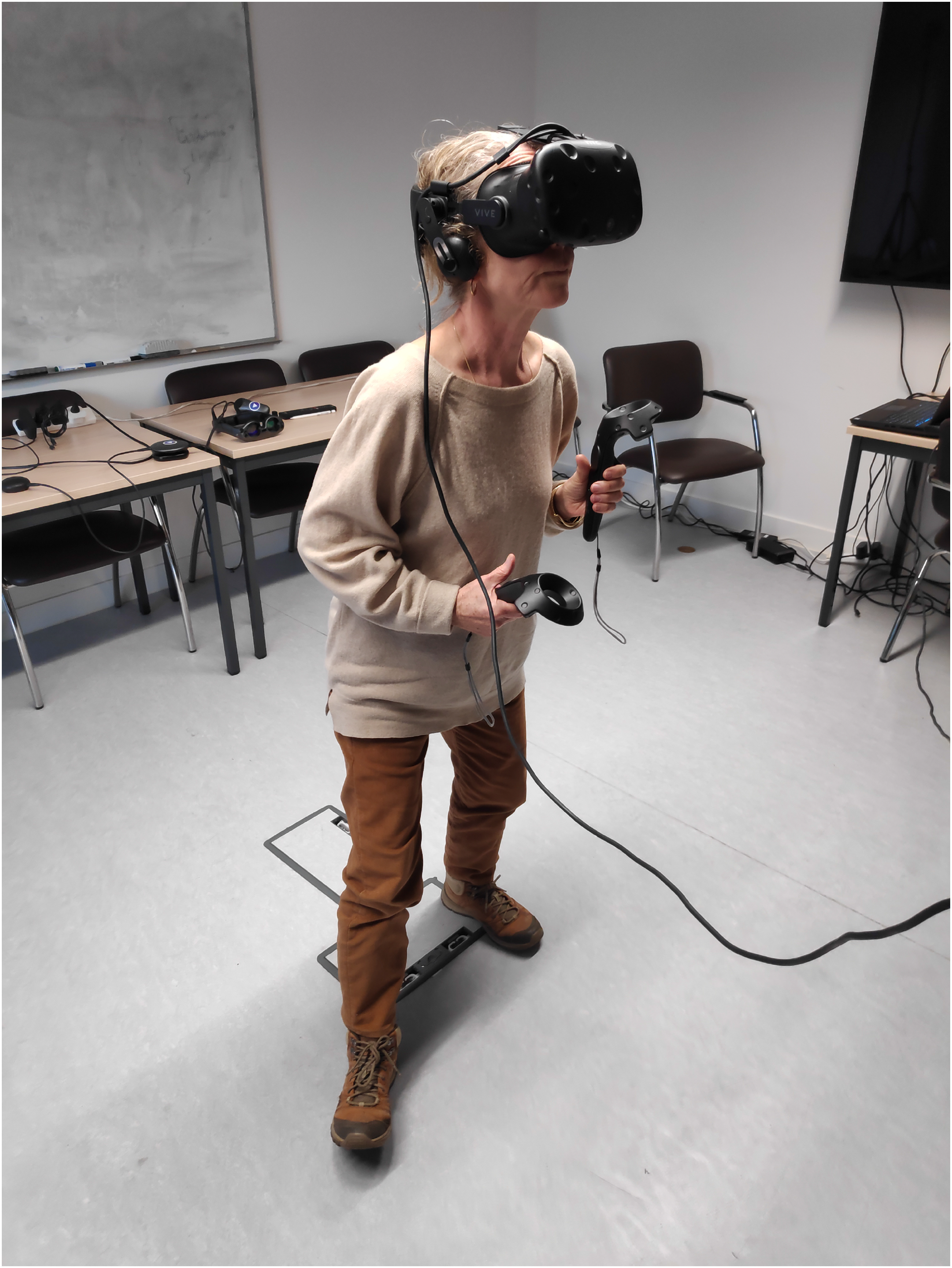
Samuel Beckett’s Play is particularly well-suited to XR experimentation due to its nonlinear narrative structure, cyclical dialogueue, and stark mise-en-scène. Unlike traditional theatre, which relies on fluid continuity and naturalistic performance, Play is highly fragmented, disorienting, and abstract, making it congruent with XR’s spatial and perceptual possibilities. Its themes of confinement, repetition, and shifting subjectivities align with XR’s ability to manipulate perspective, embodiment, and presence. The play’s structure inherently challenges traditional theatrical spectatorship, providing an opportunity to explore how immersive environments can alter audience interpretation and engagement.
Pedagogically, the SMEs believed that XR could influence students to think differently about how fiction is structured. Equally, it was also perceived as niche and experimental, and it could struggle to be integrated into conventional performance spaces, adding further novelty, intrigue, and motivation to augment current practices. Therefore, using XR in the classroom can be grounded in students’ motivations to use new technologies (Parong and Mayer, 2018). After viewing Play in both AR and VR, the SMEs considered these digital versions to be more intelligible and, therefore, accessible for most students than live theatre performances, as they believed that the XR technology adopted a supporting role for appraising or clarifying the content and eliciting situational interest (O’Dwyer et al., 2020). Therefore, students will perceive the account as more enjoyable than lessons using standard media practices, as reported in other research (Makransky and Lilleholt, 2018; Parong and Mayer, 2018).
XR directly engages with principles of agency and presence for embodied education (Johnson-Glenberg, 2019), which can facilitate a more casual exploration of Play’s more profound meaning. Particularly for Beckett, translating content across media offered clear advantages regarding the embodiment of live performances of this particular work. However, this also raised an interesting debate about creating more immersive creative cultural heritage content versus reinterpreting domain-specific art forms and the technical limitations that undermine the fidelity of the original piece Johnson (2022).
XR is an effective tool for improving learning (Fiorella and Mayer, 2016). The SMEs pointed out several ways technology creates new opportunities for knowledge, understanding, and thinking about theatre, perhaps unique to digital culture. One drama lecturer described how Beckett is incredibly interesting for students because he shatters their preconceptions of theatre. Here, the SME referred to the new opportunities afforded by the interactive and immersive digital media specificities; however, technological developments also necessitate challenges. Re-staging the play via XR was considered relevant to the audience’s reinterpretation of the narrative. It also raises challenges regarding the mise-en-scène of the play and fidelity to Beckett’s original vision.
The extent of student participation in this XR experience was primarily interpretive rather than generative – students engaged with immersive versions of Play rather than designing them. However, this case study highlights opportunities for co-creation, particularly in allowing students to modulate visual framing, interact with alternative viewpoints, or engage in digital dramaturgy. Future iterations of XR-based theatre pedagogy could expand upon this by incorporating participatory design approaches, enabling students to co-develop spatial narratives or reconfigure performative elements within the virtual environment.
Interactivity and immersion are two distinguishing characteristics of VR associated with presence (Makransky and Lilleholt, 2018; Terkildsen and Makransky, 2019). The different XR reinterpretations of Play intentionally move the viewer from a passive to an active role, more fully immersed and engaged in the creative media experience. Hermeneutically, the Play text is notoriously difficult to follow due to its delivery’s fragmented and rapid-fire nature. Therefore, being fully immersed in the play for a few minutes can allow a student to understand it better.
The XR medium utilizes cooperative or activity-based content that can be more efficiently harnessed for learning (Bailenson, 2018). However, the SMEs also acknowledged that although AR technology was cutting edge and a new experience for many, it had lower fidelity and appeared rougher or rawer. Therefore, when considering student experiences, there was a need to balance the best format of a given experience versus what is more likely to be used in the classroom. It was agreed that each platform could be used to overcome particular challenges, and it became a question of timing and the sustained and increased awareness of XR technologies among students and the public.
Generally, XR technology was not something the SMEs would be opposed to using in the classroom. Although some would describe themselves as quite traditional in terms of Beckett, they thought the technology added value to the original theatre production and engaged audiences in a novel way by getting them to think differently about the work. Prior research has shown that student motivation is essential for engagement with learning materials, persistence in understanding learning materials, and resilience to learning impediments (Parong and Mayer, 2018). From a pedagogical and research point of view, it was generally thought that XR would provide an exciting platform for engaging with new and old materials and would not necessarily misapply technology in this context.
The findings of this case study align with constructivist and socio-constructivist pedagogical theories, which emphasize experiential, situated learning (Jonassen, 1994; Wu et al., 2019). By immersing students within Play’s spatial and thematic constructs, XR can facilitate a form of embodied cognition, wherein meaning is constructed through textual analysis, sensory experience, and spatial negotiation. This supports research suggesting that learning in IVEs is most effective when tied to active engagement and role-based interactions rather than passive media consumption (Dede, 2009; Parong and Mayer, 2018).
These interviews illuminated the potential of XR technology as a transformative tool in education and the interpretation of complex theatrical texts. Through the insights of SMEs, it becomes evident that XR can reshape the way students engage with and understand the nuances of dramatic works, such as Play. XR’s immersive and interactive nature fosters increased motivation, accessibility, and engagement among students, opening doors to a deeper understanding of intricate narratives. While challenges exist, XR offers a promising avenue for educators to invigorate their teaching methods and inspire fresh perspectives on literature and performance. Ultimately, incorporating XR technology in the classroom represents a valuable opportunity to enhance the learning experience without misapplying the technology in this context. This teaching experiment aimed to validate these hypotheses in the context of a drama class.
Methodology
We sought to determine how different technological methodologies and teaching approaches affect student experiences and learning perceptions. To test our hypotheses, this research employs a case study methodology, which is well-suited for exploring complex, situated educational phenomena (Yin, 2017). Unlike broad quantitative studies aimed at statistical generalization, case studies allow for in-depth, context-rich analysis of a specific learning environment (Bassey, 1999; Tight, 2017). This approach is particularly relevant for education research, where variables such as student interaction, technological mediation, and pedagogical framing cannot be easily isolated. While the findings are not intended for broad generalization, they provide valuable insights into how XR technologies mediate learning in humanities education.
Recruitment strategy
Students from the School of Creative Arts at a medium-large university in the Republic of Ireland were invited via email to participate in a lecture series focusing on Samuel Beckett’s Play. The lesson was supplementary to their studies and not compulsory; thus, participation was voluntary and not incentivized with course credit. Experiment procedures and research motivations were communicated via email, and informed consent was asked before participation.
Participants
Before the experiment, the pre-task questionnaire captured student demographic characteristics and surveyed prior knowledge of the technology. The demographics included age, gender, education, and profession. The study’s demographics provide a snapshot of the diverse participant group. The age distribution varied, with participants aged 18 to 67 (M = 21.75; SD = 9.52), ensuring a broad representation of different life stages. Gender was self-identified, with six identifying as male, 16 as female, and two as non-binary. Regarding education, the sample all held a level 5 leaving certificate qualification. Employment status showed that all participants were full-time students in higher education.
This relatively small sample size presents limitations in statistical analysis, requiring careful selection of appropriate distribution tests. While Kolmogorov-Smirnov (K-S) tests are commonly used for testing normality, they are less reliable for small samples (McNeish, 2017). A Shapiro-Wilk test was also considered; given the moderate sample size and scale distributions, the K-S test was deemed sufficient for checking normality assumptions. Recognizing the sample size constraints, we interpret statistical results cautiously, emphasizing effect sizes and qualitative triangulation alongside p-values.
The previous knowledge survey contained three questions on a 7-point Likert scale, asking students to identify their ability to use digital technology and their prior knowledge and experience of XR technology on fully labeled five-point Likert scales. Concerning digital skills, participants reported “Good” proficiency in digital technologies (M = 5.13; SD = 1.05). Data relating to knowledge of digital technology for use in film, theatre, or performance practices or studies (M = 4.46; SD = 0.82) and expertise of the avant-garde, modern literature, or Samuel Beckett studies (M = 4.00; SD = 1.19) was captured to create a user-cube representation of the participant pool, see Figure 2. The user cube identified our cohort as being advanced users (n = 7), end-users (n = 14), and novice users (n = 3). This demographic data allows for a holistic understanding of the research cohort and ensures a well-rounded analysis of the study’s findings. A user cube plotting the participants’ expertise of the avant-garde, modern literature, or Samuel Beckett studies and knowledge of digital technology for use in film, theatre, or performance practices or studies (the dotted line represents the linear average).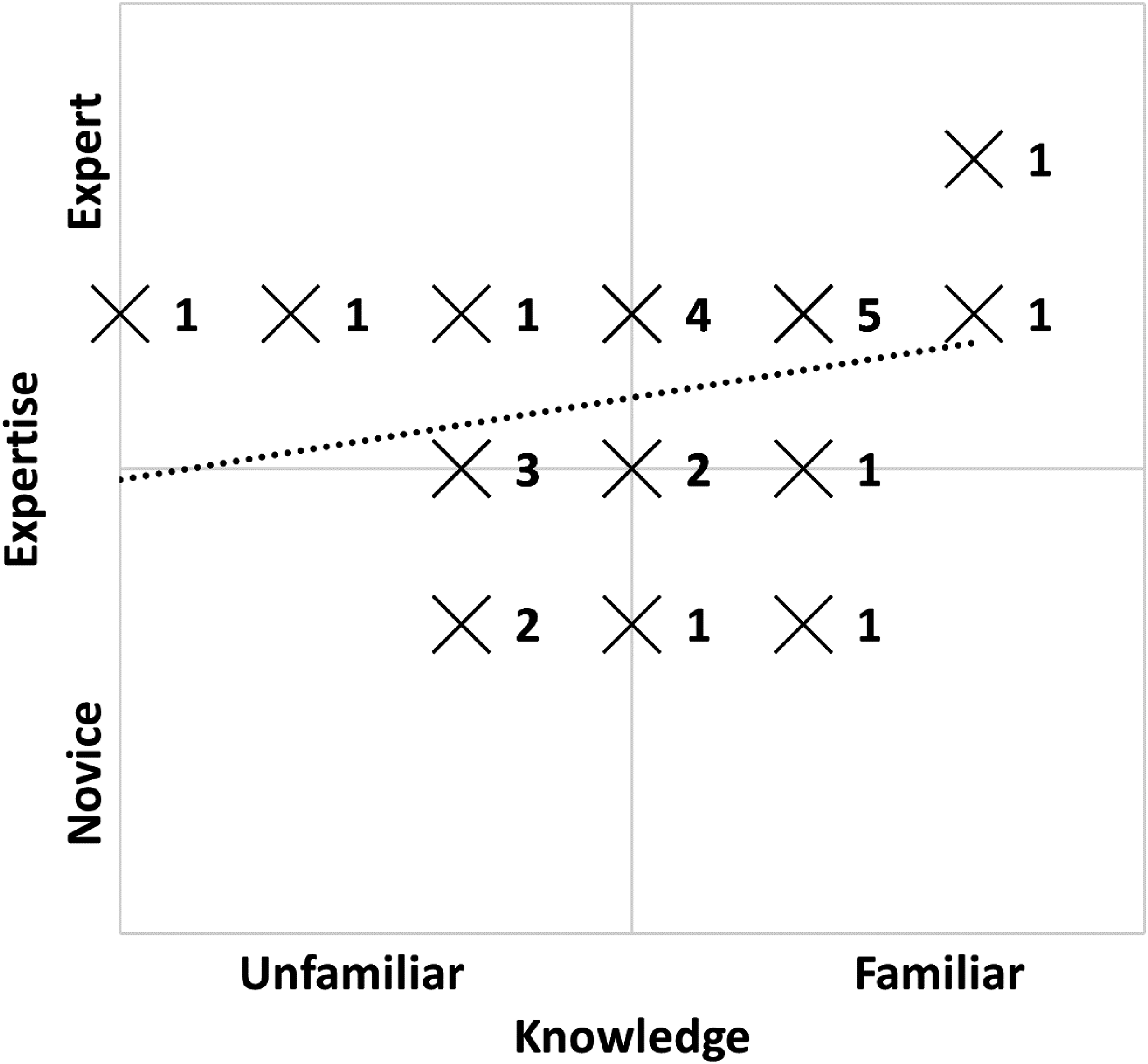
Experiment procedure
The experiment was set up so all students were assigned to each testing scenario outlined below, each scheduled for 1 hour. The three different scenarios were as follows: • Scenario 1: A conventional lecture, where students and teacher were physically present in a conventional classroom setting. • Scenario 2: A pre-recorded online lecture, delivered via the ’Blackboard+’ VLE. • Scenario 3: An XR Workshop, where students and teachers were physically present in a practice-based space, and VR technologies were provided to support the teaching/learning.
The content of Scenario 1 concerned an overview and analysis of Samuel Beckett’s performances in the context of analog (TV and radio) technologies and culture. This lecture format was taken to be a baseline scenario. The content of Scenarios 2 and 3 was identical; they both related to digital media culture and the reinterpretation of Beckett’s plays for live webcasting and XR technologies. However, the way that the content was delivered for Scenarios 2 and 3 was different. In Scenario 2, the students watched the (recorded) online lecture in a place they chose (e.g., at home or in the library). In Scenario 3, they had to be physically present in the classroom, but they engaged in the content using VR technologies (via Meta Quest (2) (see Figure 3). The XR workshop lesson plan employed socio-constructive learning methods with interactive technologies, covering the same topics delivered in the online lecture with the supplemental XR technology. The students used the VR drama, Virtual Play (V-SENSE, 2020), to undertake explorative learning tasks on embodiment and narrative. In this somewhat unfamiliar scenario, the students were instructed on using the technology in the classroom, ensuring the correct scaffolding was in place for knowledge building with technology. A photo of a cohort of students engaging with Virtual Play at the physically present XR workshop via Meta Quest 2 HMDs.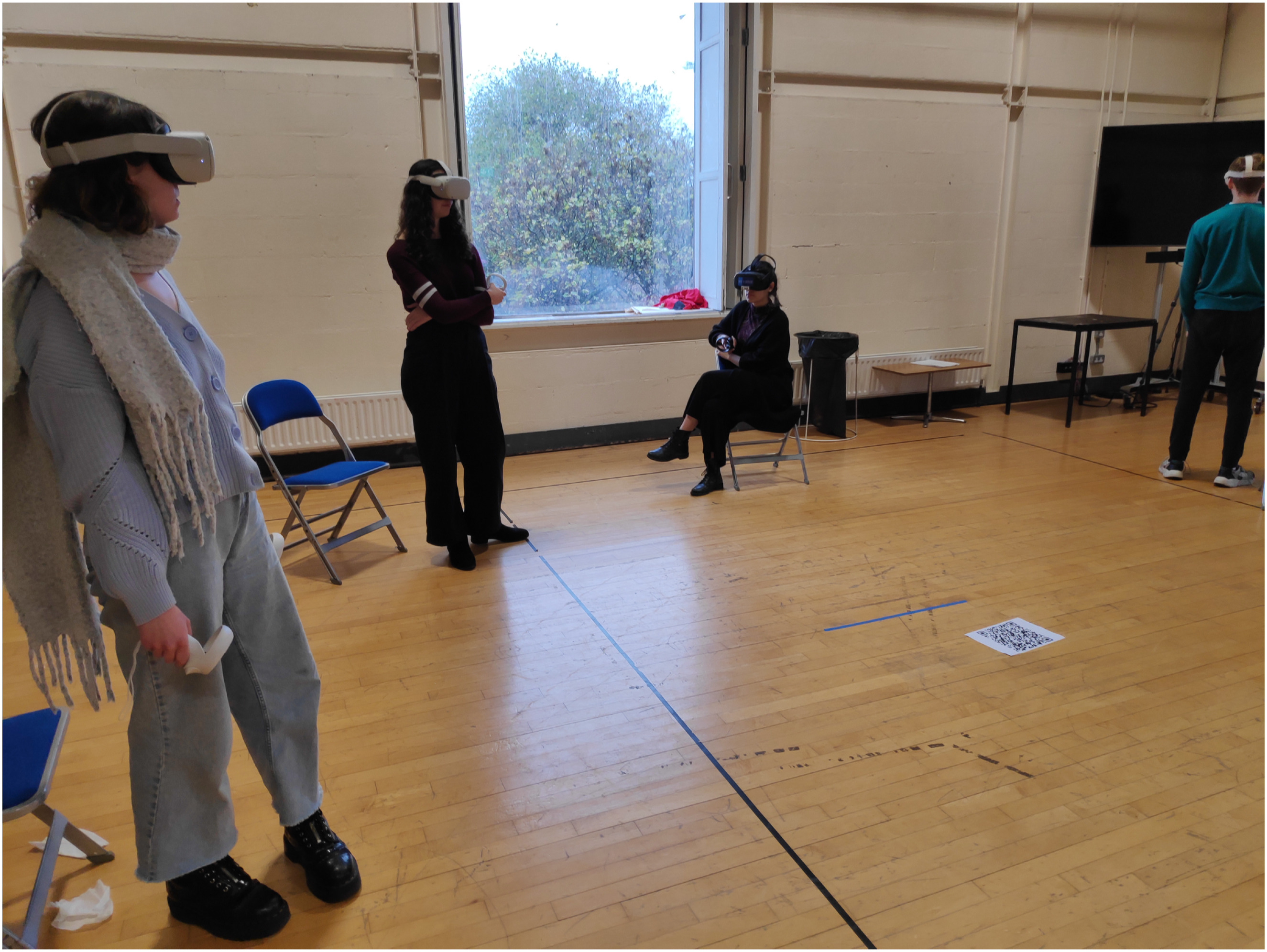
All students first attended a traditional lecture assisted by conventional audio-visual (AV) technologies, that is, a projector and stereo speakers, delivered in person in a conventional classroom setting. Following the lecture, they were asked to fill out a post-task questionnaire for the first time, recording their experience of using technology in the classroom to support teaching and learning. Then, the students were divided into groups (A and B). Group A was asked to engage with Scenario 2 (the online lecture) first and Scenario 3 (the XR workshop) second. In contrast, Group B was asked to engage with Scenario 3 first and Scenario 2 second.
Following the lecture, Group A watched a recorded lecture on Blackboard+ (a virtual learning environment). Then, they were asked to fill out the same ’technology and learning experience questionnaire’ a second time after watching the online lecture. Finally, they attended the XR workshop (in-person), where they donned HMDs, engaged with the 6DoF interactive experience, and then discussed their experiences in a round-table seminar format in the second half of the class. Then, they filled out the post-task questionnaire for the third and final time at the end of the XR workshop.
Following the conventional lecture, Group B attended the XR workshop in person. Then, they filled out the post-task questionnaire a second time at the end of the XR workshop. Finally, they watched the recorded lecture on Blackboard+ and filled out the same post-task questionnaire a third and final time immediately after watching the online lecture.
Immediately following each scenario, a post-task questionnaire was distributed. The first section of the questionnaire measured student experiences, focusing on classical usability and user experience via 26 separate question items, each with a seven-stage semantic differential scale (Schrepp et al., 2017). Following this, the level of presence experienced was measured using the Multidimensional Presence Scale (MPS) for Virtual Reality Environments, consisting of 15 items measured across five-point Likert scales (Makransky et al., 2017). Perceived learning was measured using items on a six-point Likert scale adapted from the work of Caspi and Blau (2008) and Barzilai and Blau (2014). Finally, students were asked to give their opinions on the use of technology in each scenario via open-ended questions. The students were then debriefed, and further opportunities to ask questions about the research were also given.
While this procedure focused on students’ interpretive engagement with XR rather than direct co-creation, future iterations of XR-based humanities education could explore participatory design frameworks. In such models, students could actively modify spatial elements, narrative pacing, or visual framing, thereby taking on a more constructive role in digital dramaturgy. This aligns with research on learner-centered XR design, where interactivity and customization foster deeper engagement and creative autonomy (Nyboer et al., 2024).
Results
This section presents our study’s key findings, highlighting the most notable trends and relationships from the data analysis. These results offer valuable insights into the impact of XR on higher education within the context of our study population. To ensure trustworthiness, we employed triangulation by integrating quantitative usability data with qualitative thematic analysis (Yin, 2017). Inter-rater reliability checks were conducted for qualitative coding, with an agreement score of 85% across thematic categories. Additionally, participants completed anonymous surveys to reduce researcher bias, and multiple independent coders analysed qualitative responses. The mixed-methods approach enhanced the credibility and depth of the findings, ensuring that statistical and thematic results reinforce one another.
UEQ
UEQ Results for scenario 1 (Lecture), scenario 2 (Online Lecture), and scenario 3 (XR workshop).
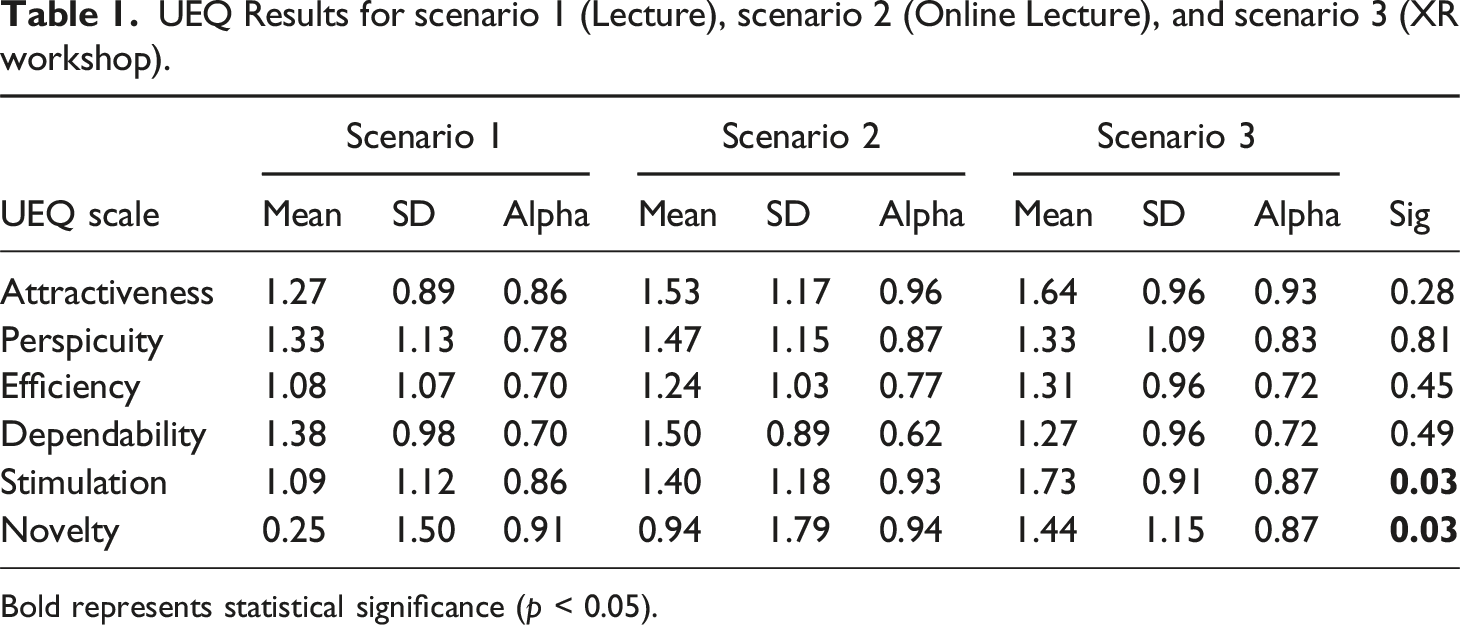
Bold represents statistical significance (p < 0.05).
There was a significant effect for Scenario Stimulation, Wilks’ Lambda = 0.73, F (2, 22) = 4.03, p = .03, multivariate partial eta squared = 0.27, and Novelty, Wilks’ Lambda = 0.73, F (2, 22) = 4.03, p = .03, multivariate partial eta squared = 0.27. The pairwise comparisons (Bonferroni) for Stimulation showed significant differences between scenarios 1 and 3 (p = .05). The same test for Novelty also showed significant differences between scenarios 1 and 3 (p < .00).
Given the modest sample size (N = 24), we recognize that parametric assumptions may not hold in all cases. While the K-S test supported normality, additional caution was exercised in interpreting the results (McNeish, 2017). Where normality was questioned, Friedman’s test (a non-parametric alternative to ANOVA) was used to confirm trends in the data. Despite limitations, effect sizes were prioritized over p-values, acknowledging that statistical significance alone is insufficient for drawing conclusions in small-sample studies (Buchner et al., 2022).
It is also noted that while Scenario 3 (XR workshop) showed significantly higher scores for Stimulation (p = .03) and Novelty (p = .03), these factors do not inherently translate into better learning outcomes. Research in cognitive load theory suggests that high engagement can sometimes distract from core learning goals if not designed carefully (Krüger and Bodemer, 2022; Mayer, 2005). The qualitative results indicate that students were more engaged and found the experience memorable, but this does not confirm long-term retention or deeper understanding.
MPS
MPS results for scenario 1 (lecture), scenario 2 (online lecture), and scenario 3 (XR workshop).
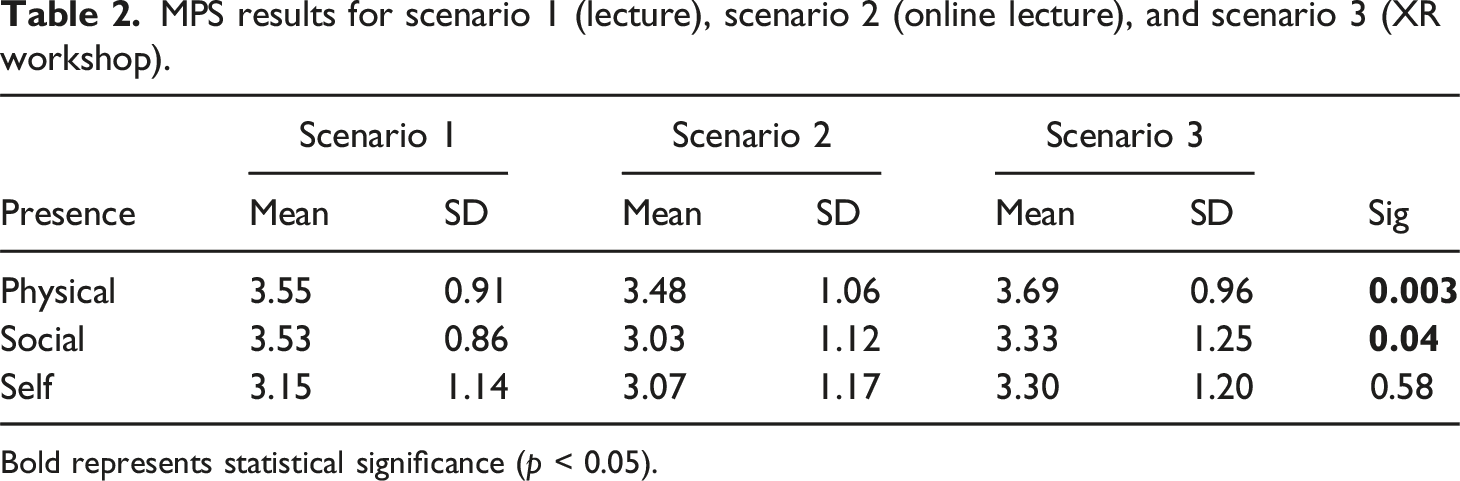
Bold represents statistical significance (p < 0.05).
A Kolmogorov-Smirnov (K-S) test indicated that the measures for social presence during scenario 1 (D (24) = 0.19, p = .03) and physical presence in scenario 2 (D (24) = 0.21, p = .01) did not follow a normal distribution. Therefore, Friedman’s test assessed the significance of differences between these scenarios. The same test indicated that the measures for self-presence followed a normal distribution with p > = 0.05 across all experiment settings. A one-way repeated measures ANOVA was applied to explore this data further.
The Friedman Test results for physical presence indicated a statistically significant difference in scores across the three methods x2 (2, n = 30) = 11.63, p = .003). A Wilcoxon Signed Rank Test revealed a statistically significant increase in physical presence following participation in scenarios 1 and 2 and scenario 3. For scenarios 1 and 3, z = −3.51, p < .00, with a large effect size (r = 0.72). For scenarios 2 and 3, z = −2.04, p = .42, with a medium effect size (r = 0.42). No significant differences were observed between scenarios 1 and 2. Inspection of the median values showed increased physical presence across scenarios 1 and 2 (Md = 3) to scenario 3 (Md = 3.7). (Figure 4). Bar graph showing MPS results for Scenario 1 (lecture), Scenario 2 (online lecture), and Scenario 3 (XR workshop) (numbers represent outliers).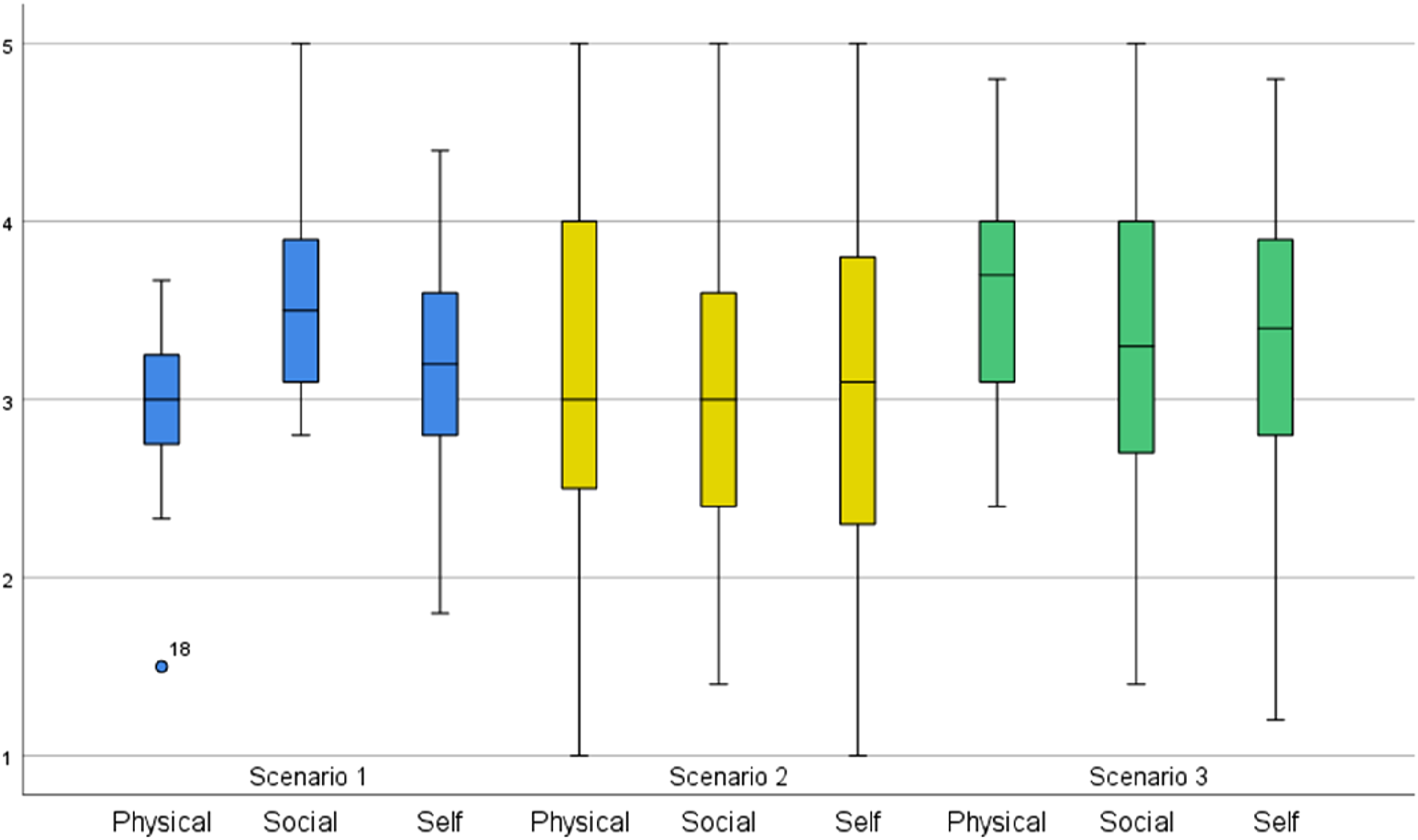
The Friedman Test results for social presence indicated a statistically significant difference in scores across the three methods x2 (2, n = 30) = 6.35, p = .04). A Wilcoxon Signed Rank Test revealed a statistically significant increase in social presence following participation in scenarios 1 and 2, z = −2.87, p = .04, with a large effect size (r = 0.59). No significant differences were observed between scenarios 1 and 3 or 2 and 3. Inspection of the median values showed increased social presence between scenarios 2 (Md = 3) and 1 (Md = 3.5).
A one-way repeated measures ANOVA was conducted to compare scores on the self presence scale during scenarios 1, 2, and 3. The means and standard deviations are presented in Table 2. There was no significant effect for self presence, Wilks’ Lambda = 0.95, F (2, 22) = 0.56, p = .58, multivariate partial eta squared = 0.05.
Overall, Scenario 3 showed the highest physical presence, while social presence was highest in Scenario 1. Self presence remained unchanged across all scenarios. This suggests that Scenario 3 was most effective in creating a sense of physical presence, while Scenario 1 was better for social presence. These findings align with qualitative reports from student reflections. Many participants noted that XR heightened their sense of “being there” in the play’s world but highlighted potential drawbacks, such as feeling overwhelmed or disoriented. This suggests that high presence can be both an advantage and a challenge, reinforcing the importance of designing structured XR learning experiences that balance immersion with cognitive ease.
Perceived learning
Perceived Learning Results for Scenario 1 (Lecture), Scenario 2 (Online Lecture), and Scenario 3 (XR Workshop).
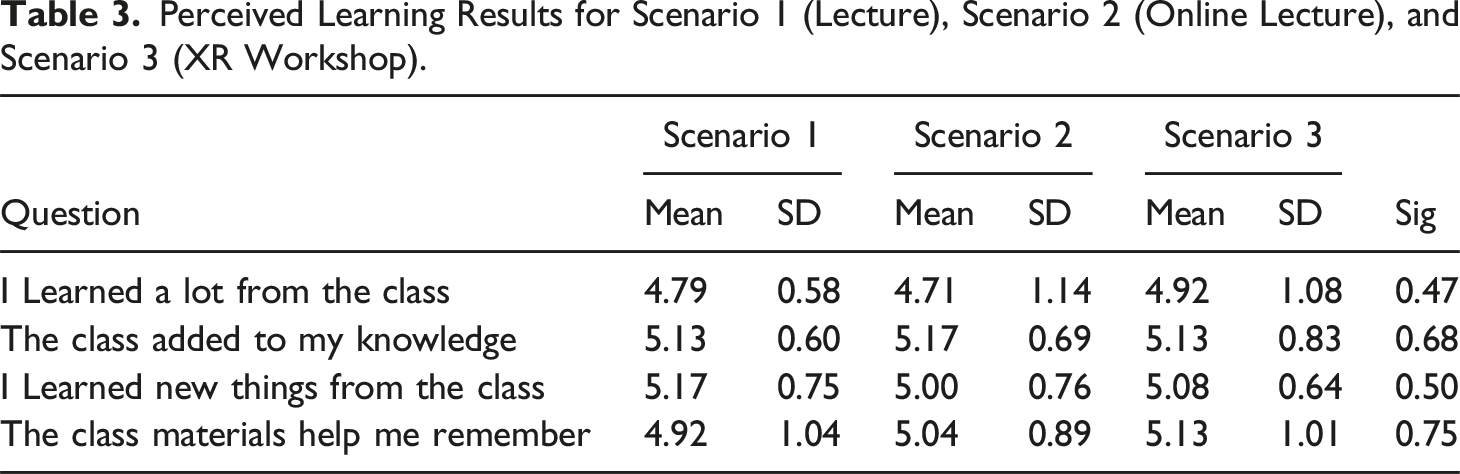
Friedman Test results indicated no statistically significant differences in perceived learning scores across the three scenario points (x2 (2, n = 24) = 0.57, p = .75). Inspection of the median values showed no change from scenario 1 to scenario 3 (Md = 5), suggesting that the different scenarios were equally effective in contributing to the participants’ perceived learning. While perceived learning remained similar across all scenarios (p = .47 ≥ 0.75), this does not confirm actual knowledge acquisition. Prior research suggests that students may conflate engagement with learning, especially in high-immersion environments (Caspi and Blau, 2008; Barzilai and Blau, 2014). This emphasizes the need for future studies incorporating post-experience assessments or knowledge retention tests to evaluate long-term learning effects.
Qualitative feedback
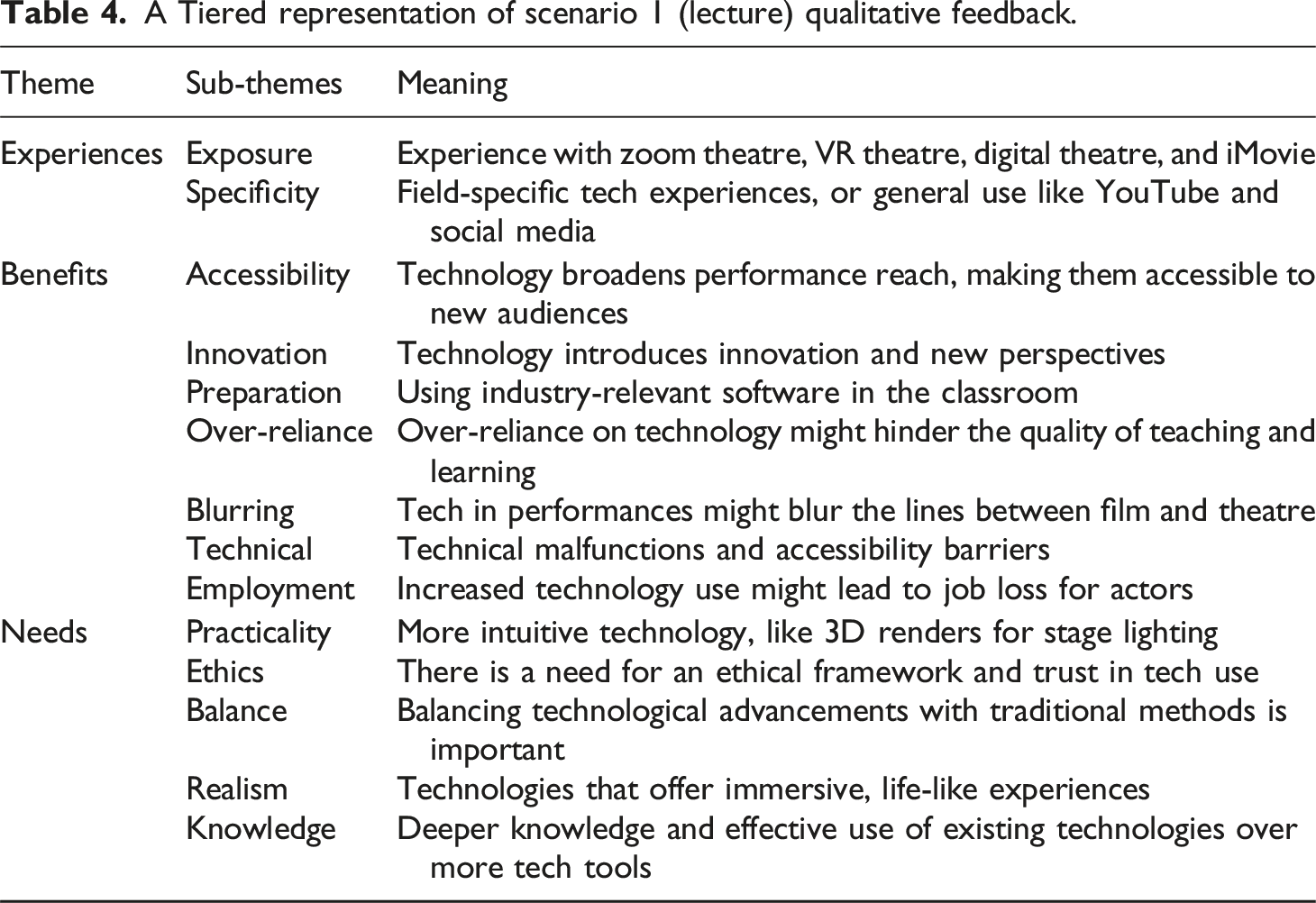
A Tiered representation of scenario 1 (lecture) qualitative feedback.
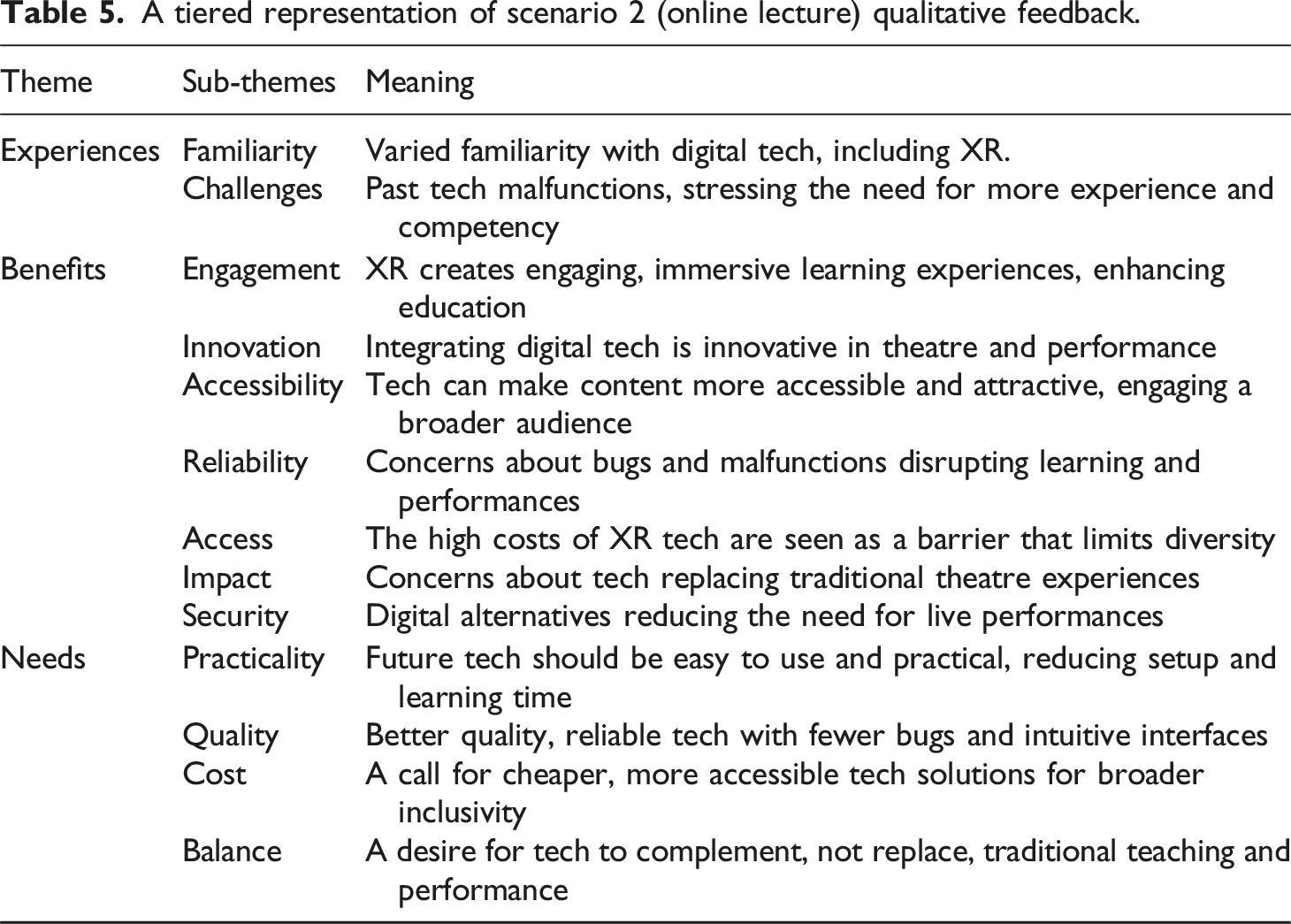
A tiered representation of scenario 2 (online lecture) qualitative feedback.
A tiered representation of scenario 3 (XR Workshop) qualitative feedback.
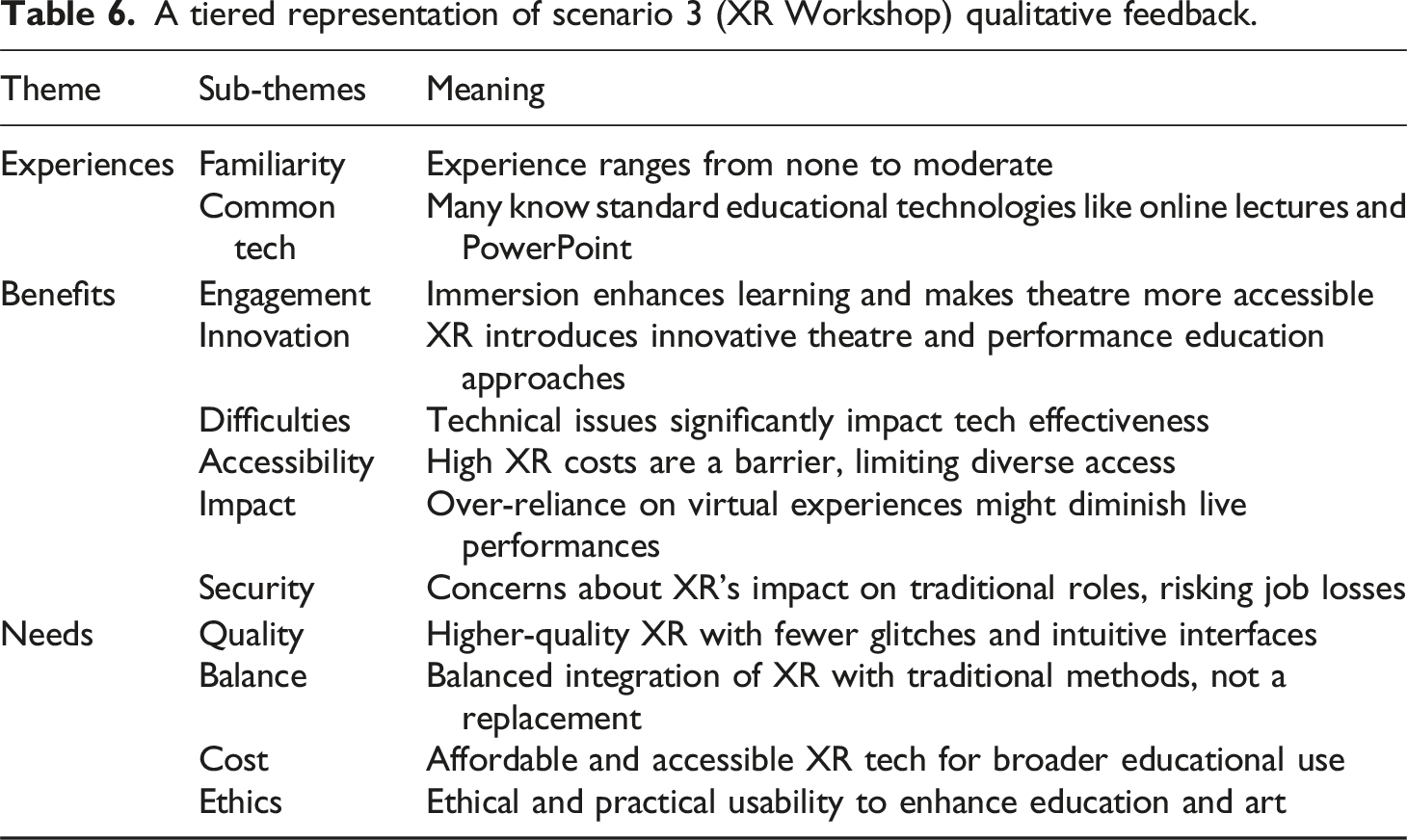
Comparing the responses of the three scenarios reveals similarities and differences in perceptions of technology’s role in film, theatre, and performance practice education. Overall, while shared concerns and desires exist across all scenarios, such as the need for reliable technology and a balanced approach to integrating digital tools, each scenario reflects unique perspectives and needs related to the specific technologies discussed. These findings suggest that while technology is seen as a valuable tool in enhancing film, theatre, and performance education, there is a clear call for careful consideration of its implementation to ensure it supports rather than undermines traditional educational and artistic practices.
Discussion
Our study aimed to explore the impact of XR on students’ experiences and perceptions of learning technologies, presence in learning environments, and perceived learning outcomes. The findings suggest that while XR enhances stimulation and novelty, its effect on actual learning outcomes remains inconclusive. These insights contribute to ongoing debates about the effectiveness of immersive technologies in arts and humanities education.
Overall, our findings generally align with constructivist and socio-constructivist theories, emphasizing active, experience-driven learning (Jonassen, 1994; Wu et al., 2019). However, we also highlight that XR alone does not ensure meaningful engagement; its effectiveness depends on how it is pedagogically integrated. The increased stimulation and presence observed in XR scenarios support claims that immersive environments can enhance motivation and exploration (Merchant et al., 2014). However, the lack of significant differences in perceived learning suggests that novelty alone does not translate into a more profound understanding. This reinforces the importance of instructional scaffolding, ensuring that XR learning experiences align with cognitive and pedagogical goals rather than relying solely on immersion (Barzilai and Blau, 2014).
Our quantitative results align with the first hypothesis (
The study’s findings partially corroborate the second hypothesis (
Contrary to our third hypothesis (
In our qualitative feedback, the combined results from the three scenarios provide insights into how they align with or challenge the original hypotheses of the study. The enthusiasm for immersive technologies (VR/AR) in Scenarios 2 and 3 supports our first hypothesis (
Responses to Scenarios 2 and 3, where immersive technologies were more prominent, indicate that these tools can enhance the sense of presence and immersion, supporting learning through embodiment (
Concerning hypothesis 3 (
The qualitative results reflect a cautious optimism about integrating technology in film, theatre, and performance practice education. While there is recognition of the potential benefits that technologies, particularly XR, can bring to learning experiences, there are also significant concerns about their impact on traditional teaching methods, reliability, accessibility, and the overall quality of learning – this suggests that while technology can enhance and mediate learning experiences in creative disciplines, its implementation needs to be carefully considered to ensure it supports and enriches rather than undermines traditional educational practices and embodied learning experiences.
Analyzing the qualitative and quantitative results together provides a more nuanced understanding of how these findings contribute to discussing XR in context. Higher scores in stimulation and novelty in the XR workshop scenario suggest a positive impact of XR technologies on user engagement. Participants across scenarios mentioned XR’s immersive and engaging nature, aligning with the quantitative findings of enhanced stimulation and novelty (
The results highlight how the UEQ and MPS did not directly measure technical reliability. Moreover, participants frequently mentioned technical issues and the need for reliable and user-friendly technology, suggesting a gap in the quantitative measures. Furthermore, the quantitative measures did not address the impact on traditional teaching and employment. Concerns raised by the participants about technology replacing conventional teaching methods and affecting jobs in the arts were highlighted in the qualitative responses, indicating a significant area of concern not captured in the quantitative data. Likewise, the study’s quantitative methods did not assess the cost and accessibility implications of XR technologies. Participants raised concerns about the high costs associated with advanced technologies like VR/AR, suggesting that economic and social accessibility is an important consideration.
Overall, the qualitative data provided context and depth to the quantitative findings, highlighting areas such as technical reliability, economic accessibility, and the impact on traditional practices that are crucial for a comprehensive understanding of the role of technology in education. The similarities in findings across data strengthen the evidence for the positive impact of XR on engagement and presence (supporting
One of the key findings of our study is that Scenario 3 (XR workshop) yielded significantly higher scores for Stimulation and Novelty but did not significantly enhance perceived learning. This challenges the assumption that higher-fidelity immersive environments inherently lead to better learning outcomes. Although XR environments create rich, multisensory learning experiences, higher fidelity does not necessarily mean better learning. Studies in cognitive load theory suggest that overly detailed or complex environments can increase cognitive load, distracting students rather than enhancing comprehension (Krüger and Bodemer, 2022; Mayer, 2005). In our study, some students reported feeling overwhelmed or disoriented in XR environments, which could negatively affect information retention. Similar findings have been observed in studies of AR and VR in education, where excessive immersion can lead to sensory overload rather than improved learning (Buchner et al., 2022; Mokmin et al., 2024). This suggests that the key to effective XR learning is not necessarily higher fidelity but alignment with learning objectives. Future XR educational tools should balance immersion with usability, ensuring students can focus on the content rather than the medium.
While XR presents new opportunities for engagement, its accessibility remains a major challenge, particularly in under-resourced institutions and for students with disabilities. A critical limitation of XR in education is its lack of accessibility for students with disabilities. While XR offers alternative learning modalities (e.g., immersive storytelling for visual learners), most current XR platforms do not adequately accommodate physical, sensory, or cognitive disabilities (Mokmin et al., 2024; Tam, 2023). For instance, students with limited mobility may struggle with gesture-based interactions, and students with visual impairments may find XR’s reliance on spatial awareness challenging. This highlights the urgent need for inclusive design in XR learning platforms, ensuring educational technologies do not reinforce existing inequities.
Furthermore, XR technologies are not equally accessible worldwide, with economic barriers preventing adoption in lower-income educational settings (Wang et al., 2023a). Many institutions in under-resourced regions lack the infrastructure to support XR-based learning, limiting its reach as a truly equitable educational tool. To address this, future XR educational initiatives should prioritize affordability and adaptability, ensuring that immersive learning does not become an exclusive privilege for well-funded institutions.
A key area for future research is the role of co-creation in XR learning. Our study primarily focused on students engaging with pre-designed XR content, but there is growing interest in allowing students to shape their immersive learning environments. While students in our study engaged with XR passively (i.e., as users rather than creators), future applications of XR in humanities education could incorporate participatory design approaches. By allowing students to manipulate virtual spaces, reconfigure narrative structures, take on more dramaturgical agency or design interactive elements, XR learning could shift from consumption to co-construction (Nyboer et al., 2024). This aligns with research on learner-centered education, where students take active roles in shaping their learning environments. Integrating co-creative methodologies into XR could bridge the gap between experiential learning and critical inquiry, fostering a more engaged, co-constructive learning experience.
While the results generally align to support the positive impact of XR on engagement and presence, the qualitative data provided essential insights into challenges and concerns that the quantitative data do not fully capture. These findings suggest the need for a nuanced approach to integrating XR technology in educational settings, considering its benefits and potential drawbacks. One solution may be to incorporate the teaching of XR content creation into modern film, theatre, and performance Studies; see Figure 5 The practice of XR content creation for contemporary Film, theatre, and Performance Studies.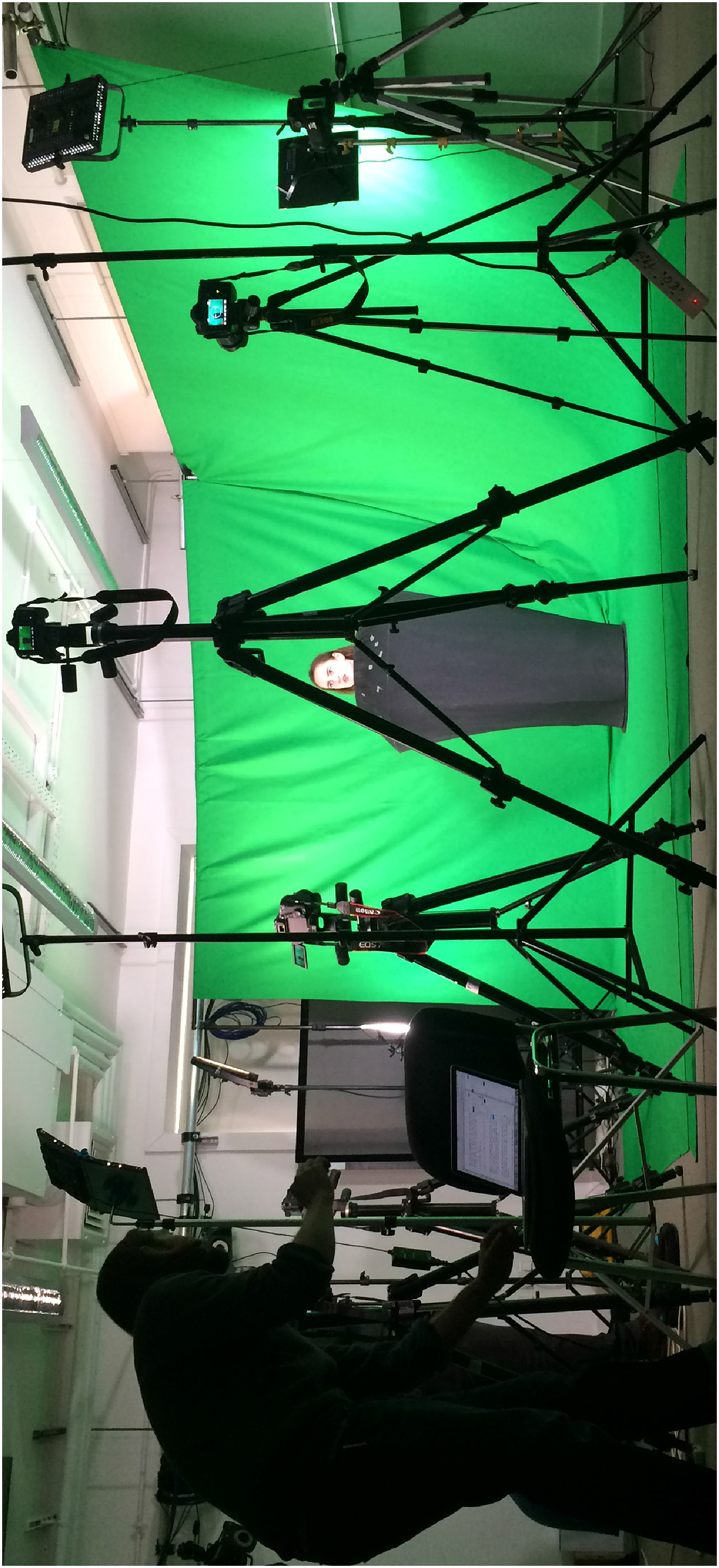
XR in film, theatre, and performance studies
The results of our study, focusing on the impact of XR technologies in the context of learning experiences, have specific implications for film, theatre, and performance courses in higher education.
The significant differences in stimulation and novelty between traditional methods and the XR workshop suggest that XR can provide more engaging and innovative learning experiences – this is particularly relevant for film, theatre, and performance studies, where experiential learning and engagement are crucial. XR technologies can offer immersive experiences that traditional methods may not, potentially leading to heightened interest and motivation among students (Merchant et al., 2014). Educators should aim to use XR to create compelling and immersive educational experiences that captivate students’ interests and foster deep engagement.
The ability of XR to simulate physical, spatial, and narrative dynamics provides students with a unique experiential learning tool. For example, in theatre and performance studies, XR enables: • Students to practice staging, blocking, and movement in virtual rehearsal spaces without requiring a physical theatre. • Learners to shift perspectives dynamically, experiencing alternative points-of-view of a performance, for example those of an actor, director, or audience. • Students to immerse themselves in historical performances or experimental theatre, engaging with dramatic contexts that are otherwise difficult to access or imagine. • Opportunities for cross-disciplinary collaboration between performance, digital arts, and computer science, fostering innovative creativity.
These applications align with constructivist learning theories, emphasizing active participation in meaning-making rather than passive content consumption (Jonassen, 1994; Wu et al., 2019). However, XR must complement, rather than replace, traditional forms of embodied practice to be fully effective in theatre pedagogy.
In creative fields like film and theatre, XR can be leveraged to provide students with experiences closer to real-world scenarios, such as virtual set design, interactive performances, and immersive storytelling techniques. These applications can bridge the gap between theoretical knowledge and practical application, enabling students to gain hands-on experience in a safe, controlled environment.
The increased sense of physical presence in the XR environment can be particularly beneficial for performance-based courses. It allows students to experience a more realistic understanding of space and environment, which is crucial for developing spatial awareness and embodiment skills necessary in theatre and performing arts (Slater and Wilbur, 1997) – this can include using XR to simulate various scenographies, costumes, audience contexts, and even explore different styles of performance.
While XR enhances the experience, it doesn’t necessarily translate to a perceived increase in learning. This suggests that in film, theatre, and performance education, the integration of XR should be carefully planned to complement, rather than replace, traditional teaching methods. XR should be seen as a tool to enrich the curriculum, not a standalone solution or a substitute for established methods.
The findings underscore the importance of aligning technological innovations with effective pedagogical strategies. In practical courses like film and theatre, XR should supplement hands-on learning, critical analysis, and creative exploration (Clark, 1983). Educators must carefully design XR experiences that align with learning objectives and enhance the pedagogical approach.
Educators should strive to balance innovative XR technologies and traditional teaching methods, ensuring that the technology enhances, rather than overshadows, the course’s core learning objectives. This involves integrating XR to support and extend traditional teaching methods rather than detract from them; the inevitable increase in focus on techniques that come with learning through XR shouldn’t detract from the epistemological progress expected of students in a university context.
As the film, theatre, and performance fields increasingly incorporate digital technologies, integrating XR into the curriculum can prepare students for the industry’s evolving demands. This includes teaching students how to use XR technologies and fostering an understanding of how these technologies can be creatively and effectively integrated into professional practices.
While XR presents new opportunities for immersive performance training, it also introduces practical and pedagogical challenges. A significant concern in performance-based XR education is accessibility. Theater and performance studies rely on embodied movement, spatial awareness, and multimodal expression, yet many current XR platforms lack accessibility features for students with disabilities. For instance: • XR often relies on full-body motion tracking, which excludes students with physical disabilities. • High-intensity XR experiences may be overwhelming for neurodivergent students, particularly those sensitive to light, motion, or audio stimuli. • The shift from real-world kinesthetic performance to digital environments can create disorientation for students used to physical stage work.
To address these barriers, XR performance education must adopt inclusive design principles. This includes developing adaptive interfaces, gesture-free navigation options, and customizable interaction modes (Mokmin et al., 2024). Furthermore, instructors must be trained to recognize accessibility needs and integrate alternative learning methods, ensuring that XR enhances rather than restricts participation in performance studies.
Another critical issue is the economic disparity in XR adoption across educational institutions. High-end XR technologies, including motion-capture rigs, volumetric video recording, and high-fidelity headsets, remain prohibitively expensive for many universities, particularly in low-resource settings. This raises concerns about who has access to XR-enhanced learning and whether it risks deepening educational divides between wealthy and under-resourced institutions (Wang et al., 2023a).
To make XR more accessible, open-source and web-based XR tools should be prioritized in performance pedagogy. Initiatives such as WebXR and Mozilla Hubs allow students to engage with immersive environments without expensive hardware. Moreover, cross-institutional partnerships could facilitate shared XR resources, enabling universities with fewer technical resources to integrate immersive learning into performance education.
While XR technologies present exciting opportunities for enriching learning experiences in film, theatre, and performance Studies, their integration must be strategic, pedagogically sound, and aligned with the overall educational objectives to be truly effective.
Future research and limitations
While this study provides valuable insights into XR’s role in performance education, further research is needed to understand its long-term impact on learning outcomes and accessibility challenges. Future studies should examine knowledge retention over time in VLEs and investigate how cognitive load influences student engagement and comprehension in IVEs. Additionally, XR’s accessibility remains critical, requiring research into adaptive technologies for students with disabilities, including gesture-free navigation and multimodal interaction strategies.
Further, the economic feasibility of XR in low-resource institutions demands attention, exploring how affordable, mobile-friendly, or WebXR solutions can bridge digital divides in arts and humanities education. Future work should also assess the potential of co-creative XR methodologies, where students actively shape VLEs, fostering deeper engagement and participatory storytelling. Finally, ethical considerations surrounding embodiment, digital identity, and data privacy in immersive learning environments warrant further investigation to ensure XR’s responsible integration into education.
Conclusion
This study examined how XR technologies impact student engagement, presence, and learning in film, theatre, and performance education. Our findings suggest that while XR enhances engagement through immersion and novelty, it does not inherently improve perceived learning outcomes, challenging assumptions about higher fidelity leading to better comprehension. This underscores the need for intentional pedagogical scaffolding, cognitive load management, and inclusive design to ensure XR technologies effectively support educational goals rather than serve as passive digital enhancements. Furthermore, economic and accessibility barriers must be addressed to prevent XR from reinforcing existing educational inequalities.
Moving forward, XR’s role in creative arts education must prioritize inclusivity, pedagogical alignment, and sustainability to harness its potential fully. Educators must integrate student agency, interdisciplinary collaboration, and affordable technological solutions to ensure that immersive learning environments are engaging but also equitable and impactful. With thoughtful implementation, XR can become a transformative tool for performance studies, redefining how students experience, create, and interpret artistic expression in digital and physical spaces.
Footnotes
Declaration of conflicting interests
The author(s) declared no potential conflicts of interest with respect to the research, authorship, and/or publication of this article.
Funding
The author(s) disclosed receipt of the following financial support for the research, authorship, and/or publication of this article: This publication reflects research conducted in part with the financial support of The Irish Research Council and Science Foundation Ireland’s “Pathways Programme”, grant number IRC-21/PATH-A/9446, and the Horizon Europe Framework Program (HORIZON) under grant agreement 101070109. The researchers would especially like to extend their thanks to Céiline Thobois at the Dept. of Drama (TCD).
