




Abstract
Engaging youth in research is essential for enhancing the validity and positive impacts of mental health research aimed at benefitting young populations. Yet, youth are infrequently engaged as partners in health research. The current paper describes different ways youth were engaged in research as part of the Digital Divide study, a qualitative study on youth decision-making in accessing digital mental health technologies. The team’s approach was informed by the McCain youth-adult partnership model incorporating principles of flexibility, mentorship, authentic decision-making, and reciprocal learning, which were built in throughout the study. The study involved youth in three ways: as youth study participants, as youth subject matter experts (SMEs), and as employees on the study team in the role of youth research assistant (YRA). Youth study participants provided critical perspectives on youth engagement in research, and their own personal experiences of engaging in research. Both the youth SMEs and YRAs sat on the study steering committee, making critical contributions to study design, implementation, and interpretation of study findings. The YRA’s were also responsible for conducting data collection and contributed to analysis of the study findings. They helped advance equity, inclusion, and accessibility across the different study phases. The research team included social work graduate research assistant coaches that provided YRAs with research coaching and mentorship throughout the study. The involvement of coaches emerged as a powerful youth engagement tool. Youth study participants reported positive experiences in this study being interviewed by YRAs but a lifetime experience of limited engagement in research.
Keywords
Youth, defined here as aged 12–24 years, report higher rates of mental health problems than those in any other stage of the lifespan (Pearson et al., 2013). Yet only 20% of youth living in Canada receive appropriate treatment for mental health challenges (Leitch, 2007; MHCC 2023). Health research focused specifically on youth populations is critically needed to address this gap. Youth involvement in research is imperative to accurately represent the unique developmental needs of youth with mental health and substance use experiences (Abraham et al., 2023; Henderson et al., 2018; Turuba et al., 2022). Engaging youth in research has multiple benefits including opportunities for strengthening youth self-efficacy and self-esteem (Fleming, 2011; Mawn et al., 2015; Nguyen et al., 2022), increased relevance and validity of the research, and a contribution to research that makes a different in the lives of youth (Bell, 2015; Clark et al., 2022; Faithful et al., 2019; Mawn et al., 2015). However, youth remain infrequently included as research partners to inform research development, implementation, and knowledge translation (Abraham et al., 2023; Mawn et al., 2015; Jacquez et al., 2013).
To support Canadian researchers to engage youth in research, the INNOVATE research team developed a training that covers topics including preparing for youth engagement on a research team, how to recruit youth to join a team, and how to work with youth as research partners (Hawke et al., 2020). The training is guided by the McCain youth-adult partnership (Y-AP) model, a leading framework for ways youth with lived experience can contribute meaningfully and intentionally in health research (Darnay et al., 2019; Hawke et al., 2018; Heffernan et al., 2017). This model challenges the power imbalances often seen in research teams, shifting the role of youth from consumers to stakeholders (Heffernan et al., 2017). The model emphasizes providing choice in the types of youth engagement opportunities offered in the research process. Other key attributes of this model include flexibility, mentorship, authentic decision-making, and reciprocal learning. This training offers a strong foundation for engaging youth in health research. However, there is limited literature or resources providing practical, step by step guidance on engaging youth as partners in virtual qualitative mental health research. The current Digital Divide qualitative study applied the McCain Y-AP model to support engaging youth in a virtual qualitative mental health research study.
The Digital Divide qualitative study is part of larger Digital Divide project that sought to understand and dismantle barriers to accessing digital information, research, and communication technologies for youth with diverse experiences and identities (e.g., across race, ethnicity, gender, and dis/ability) accessing mental health services in the province of British Columbia (BC). The Digital Divide qualitative study interviewed youth from BC between the ages of 12–24 that had accessed digital mental health technology (DMHT) within the past 12 months. DMHT was defined as any form of digital technology that provided information, supports, and/or services for mental health (e.g., apps, virtual counselling services, websites). The qualitative study research aims were to: (1) understand how youth aged 12–24 makes decisions about accessing mental health services; (2) understand how intersecting identities (e.g., race, gender, ability) may impact the decision-making process; and (3) advance youth engagement methodology.
The Digital Divide project was co-developed with youth and with a health services partner, Foundry (foundrybc.ca). Foundry is the provincial integrated youth services initiative in BC, Canada. Youth aged 12–24 can access Foundry services for physical and sexual health, mental health, substance use health, social services, and peer support at any of their operating community centres (currently 17 open, with 18 more in development) or through their provincial virtual service. The Digital Divide qualitative study team consisted of the study principal investigators, study coordinator, four social work graduate student research assistants (GRAs), and youth. The Digital Divide qualitative study engaged youth in research in three different ways, each with a different level of commitment and skills required. The first, and shortest-term commitment, was as study participants. Next, youth subject matter experts (SMEs) with expertise as service providers/peer support workers sat on the Digital Divide project steering committee that met monthly. Their role was to inform higher-level decisions during each phase of the research process for the qualitative study. Lastly, and with the greatest commitment level, were the youth research assistants (YRAs). In addition to joining the project steering committee, the YRAs were involved in every aspect of the research process (e.g., recruitment, conducting qualitative interviews, analysis, and knowledge translation activities). The study coordinator provided practical support to all the youth engaged in the research study across all three levels. In addition to performing other research activities, two of the four GRAs also provided research mentorship to the YRA’s in the qualitative study and were called GRA coaches. See Figure 1 for the Digital Divide qualitative study team breakdown of the different roles on the team and the three levels at which youth were engaged in research. Digital Divide qualitative study team.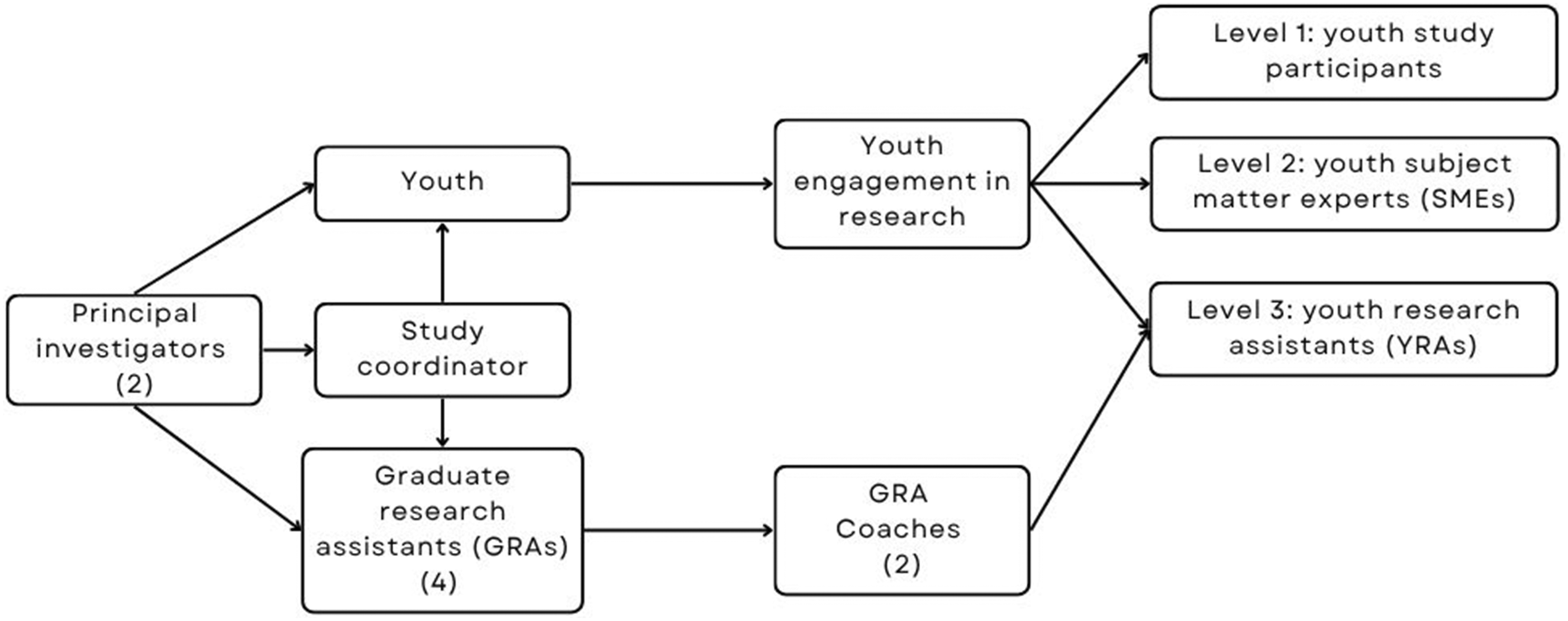
The purpose of this paper will be to describe our methodological approach to engaging youth in research across all three levels in the Digital Divide qualitative study. In our methods section we report on how we engaged all the youth involved in the study (e.g., study participants, youth SMEs, and YRAs) at each phase of the research process (e.g., recruitment, data collection, etc.). In our results and discussion sections, we report and reflect on how we applied the McCain Y-AP model when engaging youth in research. We also report and reflect on themes that emerged from the Digital Divide qualitative study related to the impact of youth engagement in research.
Methods
Our methods section describes how we engaged youth (e.g., participants, youth SMEs, YRAs) at each phase of the research process (e.g., recruitment, data collection, analysis, knowledge translation).
Phase 1: Promotion and recruitment of youth into engagement opportunities
Youth study participants
Data collection for the Digital Divide qualitative study was conducted in 2020 and purposive sampling (Tongco, 2007) was used to recruit youth from BC between the ages of 12-24 that had accessed digital mental health technology (DMHT) within the last 12 months. Recruitment strategies included digital recruitment through social media (Twitter, Instagram, TikTok) and online discussion platforms (Discord), and through youth-serving organizations in BC. Informed verbal consent was obtained by the study coordinator from all study participants prior to interviews. The YRAs and youth SMEs informed/participated in the recruitment strategy which is discussed in more detail in the results section. Parental consent and youth assent was sought for participants under 16 years of age. This study was approved by a university institutional review board.
Youth subject matter experts (SMEs)
Two youth SMEs joined the Digital Divide project from its initiation in 2019. A third with expertise in providing virtual services (peer support) joined at the commencement of the qualitative study. The youth SMEs were recruited from within the Foundry network based on their knowledge and expertise in youth engagement in research and providing and/or designing/implementing digital mental health technologies for youth. They were approached individually and invited by the study leads to be involved on the project steering.
Youth research assistants (YRAs)
Four YRAs were hired through the support of Foundry. Foundry distributed YRA postings through social media channels and directly at Foundry centres through the local centre leadership teams. Eligible youth who expressed interest in the opportunity were interviewed by the study coordinator and study Principal Investigator (PI). Interviewees were provided the list of questions in advance and were given the opportunity to ask any questions prior to and during the interview. This allowed both the study team, and the youth, to assess for fit and feasibility of the role. After being hired, the four YRAs received two operational training sessions by the study coordinator (a dedicated project staff/admin with experience in youth engagement in research), covering the following topics: study supplies and equipment, study enrollment procedures, research ethics, privacy and confidentiality, and risk response protocol. They also received two 3-hour qualitative research training sessions co-facilitated by the PI and two social work graduate research assistants (GRAs) that were assigned as coaches for the YRAs. As the study was conducted virtually, YRAs were hired from across the province and they were provided essential, dedicated equipment (e.g., tablet and study binder) for use during the term of their involvement.
Phase 2: Data collection
Youth study participants
Digital Divide qualitative interviews were conducted with youth study participants over a university-licensed Zoom account following privacy and confidentiality guidelines for a Canadian context. The interview protocol included an anonymous online survey administered via the REDCap platform and completed in a supported setting at the outset of the interview. The survey was linked via participant ID to the corresponding interview data. The semi-structured interview included questions aligned with the nine constructs of the Unified Theory of Behavior (Jaccard and Levitz, 2015), a decision-making framework used to understand how the participants made decisions about accessing DMHT. We also asked participants questions related to how their intersecting identities (e.g., gender, race, ability) influenced their help-seeking, and how their use of DMHT has changed since the start of the pandemic. Finally, interview questions were asked to prompt reflections on their own engagement in research and on their experiences of being interviewed by youth members of the study team: How did you find this interview experience? Did you feel that being interviewed by a young person changed your experience of being interviewed? How often have you seen/had opportunities or heard of an opportunity to be part of research that you identify with? This paper will report on the themes that emerged related to youth engagement in research.
Youth subject matter experts (SMEs)
As members of the project steering committee, youth SMEs provided feedback on the interview format and questions in the qualitative interview guide.
Youth research assistants (YRAs)
YRAs informed the interview protocol (including safety protocols and operationalization of scheduling and hosting of the virtual interviews) and helped shape the interview guide. They conducted the virtual qualitative interviews, either individually or as a team of two interviewees (with the support of the GRA coaches).
Phase 3: Data analysis and interpretation
Youth study participants
Participants were not involved in data analysis.
Youth subject matter experts (SMEs)
During steering committee meetings, youth SMEs were presented with preliminary findings on what was emerging in the analysis and provided feedback on larger themes that were emerging in the data. They also helped interpret and contextualize the study findings.
Youth research assistants (YRA)
Social work GRAs and YRAs were involved in transcribing and coding the study interviews. The team participated in two days of qualitative analysis training, led by the lead author and study PI (a social worker researcher experienced in conducting qualitative interviews with youth with mental health challenges). Data were analyzed using reflexive thematic analysis (Braun and Clarke, 2019, 2022) and NVivo software. The PI and social work GRAs were clinical practice professionals, and the YRAs had lived/living experience of being a youth with mental health service use experience. The research team was reflective of positionality and its influence on data interpretation, practicing self-reflexivity through journaling and peer debriefing (Braun and Clarke, 2019; Probst, 2015). Three analysts (two GRAs and PI) followed an inductive approach independently reading through the first five interviews and developed open codes, sticking closely to participants’ language. The team met in consensus meetings to compare codes, engage in constant comparison within and across participants and coders to identify themes. This led to the development of a preliminary codebook. The social work GRAs then went back into the data and coded the rest of the interviews.
YRAs were involved in coding discrete parts of the data. For example, YRAs were given participant raw data in a table for the question related to whether participants felt that their intersecting identities influenced their help-seeking. They were tasked to come up with codes across the 45 participants. Consensus was met during team meetings. These codes were then shared with the social work GRAs and incorporated into the final codes used in the codebook.
A final codebook was developed including the top themes that emerged across the interviews. One of the themes that emerged was “youth interviewers as a facilitator”. A second round of coding was conducted where one of the social work GRAs and the PI went back into the “youth interviewers as facilitator” theme to develop subthemes. They also went back into the interview questions related to engaging youth in research to code for any relevant data.
Phase 4: Knowledge translation activities
Youth study participants
Participants were not involved in knowledge translation activities.
Youth subject matter experts (SMEs)
Youth SMEs were considered for authorship on study manuscripts, including being invited to be co-authors on this manuscript.
Youth research assistants (YRAs)
The YRAs co-developed accessible presentations that were used when meeting with key stakeholders in dialogues to present and discuss preliminary findings from the qualitative study, and how they could inform practice and action. They also participated in dialogues as transcribers and analysts. YRAs also participated as lead authors on a blog in the Digital Divide project’s blog series (Gray, 2020), and were considered for authorship on study manuscripts, including being invited as co-authors on this manuscript.
Results
The research team was influenced by the McCain youth-adult partnership (Y-AP) model incorporating core principles of flexibility, mentorship, authentic decision-making, and reciprocal learning, which were built in throughout the study (Heffernan et al., 2017). Youth had the opportunity to be engaged in different levels of research from shorter commitments (youth study participants), to larger commitments (YRAs) and with different role and skill requirements. Below we describe how each of the model’s core principles were practiced over the course of the research study, reflecting on what this looked like at the different levels of youth engagement. While mostly focused on the YRAs experience (given their level of involvement), we provide some reflections on application with study participants and youth SMEs where possible. We also report on themes that emerged from the qualitative study related to the impact of youth engagement in research.
Flexibility
Due to funding and resource constrains, the YRAs term was to end following completion of interview data collection. However, their role expanded when they expressed interest in being involved in data analysis and knowledge translation activities (e.g., dialogues, leading a blog, manuscript writing). Other ways this study ensured flexibility was through arranging meetings and coaching times around the YRAs schedules, offering shared calendars, and allowing YRAs to complete self-directed elements of the training on their own time. Other examples of flexibility: scheduling (for all three levels of youth involvement) and work hours, optional assignments (e.g., designing recruitment materials, authoring blog, analysis, authorship on manuscripts).
Mentorship (and relationship building)
The two GRA coaches that were assigned to the YRAs provided training, mentorship and risk mitigation and response during the study. As mentioned in the methods section, the team initially facilitated two 3-hour qualitative research trainings. The qualitative research training topics included: qualitative research foundations, safety protocol and risk assessment (e.g., when to initiate safety communication, paraphrasing), and qualitative interviewing techniques (e.g., effective questioning skills, eliciting inquiry). Training included experiential practice where coaches and YRAs role-played applying the interview guide protocol. Prior to the start of data collection, coaches designated time for 1-hour individual sessions where YRAs practiced qualitative interviewing skills and techniques. Both group and individual training sessions included team building activities (e.g., check-in questions, finding commonalities, articulating shared values) as a way to build a working alliance across the team.
During the data collection phase, a scaffolding approach was used to support the YRAs in conducting interviews. When data collection initially began, interviews were conducted by the coaches, with YRAs observing on the call. The objective was to model effective questioning techniques (e.g., eliciting inquiry, micro-skills). At the end of these interviews the YRA and coach stayed on the call for a debriefing session to discuss the safety response protocol, highlight the YRAs’ interview strengths, debrief emotional content, and discuss areas for skill building. Youth then led the interviews, once the team (PI, coach, and YRA) felt the YRA was confident and ready to conduct an interview independently. A coach stayed on the call to provide any practical support if needed. Coaches continued to shadow until the YRA was ready to conduct the interview independently. The research team facilitated weekly team meetings where recruitment, interview protocol development, and data collection progress were discussed, and self-reflexive activities were introduced to reflect on thoughts, feelings, biases, and positionality. Relationship and targeted rapport building continued during these meetings. Coaches remained available for support outside of interviews and conducted audits of interview recordings to inform their coaching and mentoring efforts and assess for data quality and protocol integrity. Another example of mentorship (and relationship building) was the YRAs modelling and explaining of the use of pronouns and land acknowledgements with study participants during the interviews.
Authentic decision-making
YRAs and youth SMEs from the steering committee were involved in decision-making throughout the research process, including informing research design and implementation. They were also offered choice in their involvement in various knowledge translation opportunities.
During study planning and implementation, discussions in team meetings often focused on ensuring study participants felt safe during data collection, as well as advancing equity and inclusion efforts for research participants. Prior to submitting our interview protocol and recruitment materials to the institutional review board, the YRAs were instrumental in making these materials more accessible to the youth participating in the study. For example, the YRAs suggested that we include a section in the beginning of the interview protocol where interviewers share their pronouns and conduct a land acknowledgement and offer an explanation for why these things were done as part of the introduction. The YRAs also suggested we begin each interview by developing a shared agreement with the participant (e.g., a safety and privacy protocol in addition to the consent process). This included asking the participants what is needed to work together to ensure a safe environment. Some examples that were provided to the participants included listening to their interviews without judgement. There was also a discussion around the use of the chat function in zoom to communicate any changes in their environment/privacy (e.g., if someone walked in during their interview). Finally, there was a discussion around participants accessibility needs to make sure they felt comfortable using the technology. This shared agreement was approved by the university institutional review board.
Furthermore, the YRAs designed the study flyers to ensure they were youth friendly and connected with youth with diverse experiences and identities (e.g., across race, ethnicity, gender, and dis/ability), including ensuring materials met accessibility design standards (e.g., image text descriptions, accessible font and color choices). They also informed recruitment strategies (e.g., developing TikTok videos). Finally, the YRAs suggested that we provide study participants with diverse identities (e.g., race) the option to be interviewed by a study team member that closely matched their identity. Team meetings with the steering committee occurred monthly, ensuring youth SMEs feedback could inform research efforts (e.g., study design) in a timely manner.
Reciprocal learning
In the current study, YRAs gained qualitative research skills and a deeper understanding of the research process from the research team (study leads, study coordinator, and social work GRAs). For example, the training provided by the study coordinator included fundamental concepts in research, including on ethical principles and concepts like informed consent. Also, as mentioned in the mentorship and relationship section above, YRAs were trained on how to conduct qualitative interviews (e.g., trainings prior to data collection, and ongoing support during data collection by the social work GRA coaches). Training also included how to analyze qualitative findings and prepare data for peer reviewed publications and presentations. Finally, the YRAs were able to observe the research process from the development of an interview protocol to end of study knowledge translation activities. At the same time, the research team learned from the YRAs, on ways to advance health equity and inclusion and increase accessibility. For example, YRAs co-developed recruitment materials and strategies and ensured the interview protocol was accessible, comfortable, and safe for youth across a range of ages and intersecting identities. For example, ensuring digital recruitment materials were accessible for those with visual impairments or low vision. This led us to successfully recruit a diverse group of youth aged 12–24 with specific identities (e.g., 2SLGBTQIA+). Learnings from youth SMEs included improved recruitment strategies, such as where and how to recruit a diverse group of youth with specific identifies (e.g., gender, race, ability) using DMHT; interpreting findings relative to current global context (e.g., pandemic experiences/impacts, evolution of social media and its use by young people). Finally, the teams learned from study participants, through sharing of their experiences and perspectives.
Digital Divide qualitative study findings on youth engagement in research
Forty-five youth participated in the qualitative interview. Sample characteristics included mean age 19.4 (SD = 3.28), median was 20, and age range was 12–24 years. In terms of gender, 33% identified as boy/men, 31% as girls/women, 36% as non-binary, and Two-Spirit. Twenty-seven percent of the participants identified as transgender. In terms of race/ethnicity, 42% were White, 18% Chinese, 14% mixed ethnicity, 11% South Asian, 11% First Nations, 2% Filipino, and 2% West Asian. Here we describe the themes and sub-themes that emerged from the qualitative interviews with youth study participants that were specific to youth engagement in research.
Thirty-nine participants responded to the question related to their impressions of being interviewed by YRAs. Sixteen youth spoke about how they felt more comfortable and relaxed and could relate more to being interviewed by YRAs. One participant said, “There are certain ways that young people talk and certain nuances in how just even the language that we speak [the] slang [has] different connotations. I feel it certainly takes someone of a similar age or in tune with that culture in order to fully understand it in a way that can be translated in academia without any gross assumptions, if that makes sense?” (Participant 111). Nine youth spoke about feeling a disconnect with the older generation and how this made it easier and more comfortable to relate with youth interviewers. One youth said, “I probably feel that I’m a lot more open to saying things because I’ve noticed that sometimes older people are a little more judgemental. Sometimes I feel ‘iffy’ about opening up to people because I don’t know what they’re going to say, especially if they are older” (Participant 211). Three additional youth spoke about feeling disconnected from the older generation. One youth stated, “When you’re talking to an old person you can’t really relate about video games and stuff” (Participant 203).
All participants responded to the question related to whether they had themselves seen or engaged in research opportunities. Thirteen youth spoke about not seeing opportunities to be on research teams, and several spoke about the desire to be more engaged in research (n = 5). Specific barriers included several youth not pursuing study opportunities if they were unsure if they met study qualifications and youth struggling to find 2SLGBTQIA + studies to participate in. Six youth spoke about this study being their first time participating in research, and 18 youth spoke about participating in research studies previously including in psychology, medical, and 2SLGBTQIA + studies. Ten youth shared they had been members of a previous research team. These participants described these experiences as being part of sociocultural projects where youth contributed to policy, media advertisement panels, and advisory councils for homelessness. Four participants discussed experiences as study team members and/or research assistants on mental health projects or sitting on mental health advisory councils. Youth learned about study opportunities online (e.g., social media) (n = 12), or from social services staff and/or family friends sharing research opportunities (n = 8).
Discussion
This paper summarizes our process of engaging youth in virtual qualitative mental health research with youth study participants, youth subject matter experts (SMEs), and youth research assistants (YRAs) as informed by the McCain youth-adult partnership (Y-AP) model. There is a current gap in the literature and a need for practical guidelines and specialized training to learn how to involve youth in health research with key areas prioritized including preparation and planning for youth involvement, and training of both researchers and youth (Warraitch, et al., 2024). This is critical, given the need for youth mental health research and evidence that supports increased validity of research questions when youth are actively involved in the research process on age relevant topics (Jardine and James, 2012). The YRAs and youth SMEs helped shape the current study with a focus on advancing equity, inclusion, and accessibility in the development of the interview protocol, study recruitment, data collection, analysis, and knowledge translation activities.
A key attribute in the McCain Y-AP model is reciprocal learning wherein both parties are considered experts in a particular area and can share their knowledge with each other (Heffernan et al., 2017). Authentic decision-making moves away from tokensim, instead providing youth genuine opportunities to help shape the research process and recognizes them as equal members on the research team (Heffernan et al., 2017). Our research team learned from the YRAs, and youth SMEs experts by experience (Fleming, 2011), on ways to advance health equity and inclusion and increase accessibility. This led us to successfully recruit a diverse group of youth aged 12–24 with specific identities (e.g., 2SLGBTQIA+). This is critical, as research indicates that certain groups of youth (e.g., racial/ethnic and gender minorities) experience systemic, practitioner, personal, family, and community-related barriers to accessing mental health services (Fante-Coleman and Jackson-Best, 2020; Lu et al., 2021). There is a need for developmentally and culturally appropriate knowledge sharing approaches to support the decision-making process of youth accessing mental health services (Barbic et al., 2019). The hopes are that the findings from this study will support a greater understanding of how youth make decisions about accessing DMHT, which can lead to developmentally and culturally appropriate tools to support access to these services. Although structural limitations, such as lack of resources and funding, impact researcher capacity to partner with youth researchers (Faithfull et al., 2019; Mawn et al., 2015), being flexible, malleable, and creative with youth roles in research remain critical to the success of youth engagement (Henderson et al., 2018). For example, the YRAs roles were extended to include involvement in data analysis and knowledge translation activities due to expressed interest on both ends to ensure the information was understood and interpreted accurately (Fleming, 2011).
Relationship building and mentorship emerged as essential in the engagement of YRAs across all phases of the study. Youth that participate in health research value team activities (e.g., day trips, sharing a meal) that help build rapport between youth researchers and academic researchers (Nguyen et al., 2022). Taking the time to build rapport in youth-adult partnerships in research is an important investment and facilitates increased confidence in skill building among youth (Nguyen et al., 2022). The inclusion of coaches in this study is another relational engagement tool to enhance the capacity for youth inclusion in research. Having additional support and dedicated staff or a project ally to support youth through the duration of the research and bridging the gap between academic and youth researchers is valued (Darnay et al., 2019; Faithfull et al., 2019; McLaughlin, 2005; Nguyen et al., 2022). A recent qualitative study involved youth co-researchers in facilitating focus groups and interviews. They received both individual and group qualitative research training sessions, along with interview support from the research coordinator (Turuba et al., 2022). Similarly, our study coordinator and two youth coaches supported the YRAs’ needs, including administrative, and practical support for conducting qualitative research.
The following recommendations can be considered when utilizing coach/mentors to support youth researchers. When hiring coaches, it is important that applicants have experience working with youth in a supportive capacity (e.g., child and youth worker) (Darnay et al., 2019). Having pre-existing knowledge of the developmental needs and milestones of youth will assist in providing practical and emotional support for this age group. Second, selecting coaches who have a foundational understanding of qualitative research may reduce onboarding time and support researchers in co-designing training materials for YRAs. Our coaches were in a Master of Social Work program and being trained to engage clients therapeutically through their coursework and field placements, as well as having received suicide and risk assessment training. Students that are part of the helping profession (e.g., social work) are in a unique position to conduct qualitative research that engages youth, as they are trained in assessing high-risk situations, collaborating with various stakeholders, and navigating ethical decision-making (Schelbe et al., 2015). This is useful when developing qualitative trainings and protocols to support a participant with mental health challenges who experiences distress during data collection. Third, we recommend ensuring ample time for relationship building that includes both individual meetings with coaches and study coordinator, as well as weekly group meetings with the whole team. Finally, a scaffolding approach (role playing, shadowing interviews, conducting interviews independently) to support YRAs interviewing study participants was an effective approach to ensure readiness, and to ensure the quality of the data.
Youth participants in the qualitative study reported positive experiences being interviewed by YRAs, including it feeling more relatable and comfortable, and some participants described a disconnect with older generations. Youth study participants may not experience the same power imbalances when interviewed by peers, which can lead to rich discussions (Fleming, 2011). The most common form of research involvement reported by youth study participants was as participants in research studies, not as partners in the research process.
Research in youth mental health is often project specific, with limited infrastructure to support youth engagement throughout the process from grant ideation to execution. The Digital Divide study emphasized the value of having youth involved throughout all phases, notably the interview process. Clear and transparent roles for youth throughout projects is needed to support inclusive participation of youth in research, not just for the purpose of course credit. This creates an opportunity for not only higher data quality and research, but also tremendous growth and a sense of empowerment for youth who participate and reciprocal learning for all parties involved. This paper contributes to the literature gaps, in supporting researchers to get comfortable with the “how” of youth engagement in mental health research, including preparation and planning for youth involvement, and the type of training needs for researchers and youth that are part of the research team.
Strengths and limitations
The current study was originally intended to be conducted in person; however, data collection began during the COVID-19 pandemic. The team was able to adapt the study protocol to occur virtually and to support remote work for the study team, including hiring, onboarding, training, and ongoing coaching/mentoring of the YRAs. While qualitative research is not designed to be generalizable, caution must be considered as this study sampled youth from one province in Canada. On the other hand, a strength of the study is that the demographic sample including ethnic-minority and gender-diverse youth groups. The study applied strategies to reduce bias by using multiple coders and ensuring that the analysts had a clinical social work background or had lived/living experience of being a young person with mental health service use experience. Finally, strategies to engage youth in research were supported by Foundry, which has a successful history of involving youth in the service design and execution of integrated youth services (Barbic et al., 2019). The study leads had also completed and/or facilitated youth engagement in research trainings.
Conclusions
The Digital Divide study partnered with youth to understand young people’s experiences accessing DMHT. Youth were involved at different levels of engagement. The YRAs and youth SMEs helped advance equity, inclusion, and accessibility across the different study phases. Relationship building and the addition of coaches with a background in social work emerged as a powerful youth engagement tool. Youth study participants interviewed by YRAS described positive experiences participating in this research, setting a precedent for more inclusive and higher-quality youth-engaged research in the future.
Footnotes
Acknowledgement
We would like to acknowledge our community partners at Foundry, Dr. Kelli Wuerth for support on the manuscript, all the students and staff involved in the Digital Divide study, our youth researcher assistants and youth subject matter experts that were part of the steering committee, and the youth that participated in this study.
Declaration of conflicting interests
The author(s) declared no potential conflicts of interest with respect to the research, authorship, and/or publication of this article.
Funding
The author(s) disclosed receipt of the following financial support for the research, authorship, and/or publication of this article: This study was funded by BC SUPPORT Unit Patient Engagement Method Cluster Project (PE-201), and the Michael Smith Health Research BC Scholar award (18249).
