




Abstract
This scoping review aims to describe the range of research studies using arts-based data collection methods with immigrant and racialized older adults. A secondary aim is to identify challenges and strengths of using these approaches with this population. This review uses Arksey and O'Malley’s five-stage scoping review framework with a final number of 16 references included for the study. Enhanced social connectedness, increased transparency and quality of findings, and self-empowerment were key strengths of using arts-based approaches for data collection. Challenges identified included resource limitations, cultural and language barriers, and barriers to meaningful engagement. Only a small number of studies have utilized arts-based methods with immigrant and racialized older adults. Arts-based approaches require unique methodological adaptations with this population but have the potential to increase engagement in research activities, authenticity of research findings and empowerment of older adults.
Introduction
The number of older adults (aged 60 years or over) is projected to reach 22% by 2050 (World Health Organization, 2018). Immigrant and racialized older adults have diverse experiences of aging that can be marked by social exclusion and discrimination across the life course with varying impacts on their wellbeing (Hawkins et al., 2022; Guruge et al., 2015; LaFave et al., 2022; Markides and Rote, 2019). Language and cultural differences, discrimination, and financial precarity increase the risk of social isolation and loneliness (De Jong Gierveld et al., 2015; Koehn et al., 2013). Challenges experienced by immigrant older adults differ based on whether migration occurs early or late in life and on the socioeconomic capital of immigrants and their communities (Hawkins et al., 2022; Salma and Salami, 2020). Effective and ethical research practices with these populations must be sensitive to their intersecting social locations across race, gender, class, and migration categories which often results in disadvantage but, also, enhanced agency.
Arts-based methods are participatory approaches that utilize varied art forms to collect, analyze, interpret, and disseminate research data (Leavy, 2015). Artistic methods may incorporate music, poetry, visual arts, theater, and dance to understand human experiences (Wang et al., 2017). These methods encompass particular views on the ways art and human experiences are intertwined. Art conveys truth, enhances self-knowledge, and conveys human experiences in rich and unique ways, especially with sharing of emotions that cannot be captured via spoken words (Leavy, 2015; Mysyuk and Huisman, 2020; Nunn, 2022; Wang et al., 2017; Vacchelli, 2018). These approaches can advance justice-oriented and equity-focused goals by amplifying the voices of marginalized communities and providing effective means of dissemination to broader audiences (Chambers, 2022; O’Neill, 2018; McGarry and Bowden, 2017; Nunn, 2022). Artistic knowledge products can be more accessible and relatable, increasing the potential for knowledge dissemination and translation in meaningful ways (Davis, 2021; Weber, 2008). This is especially relevant for bringing forward diverse perspectives to inform social and health policies and practices.
Arts-based approaches can empower communities that experience systemic barriers to meaningful engagement and inclusion (Leavy, 2015). By using arts-based methods to capture immigrant and racialized older adults’ lived experiences, knowledge gaps in our understandings of aging and related support needs can be improved. While reviews of arts-based methods with older adults (Mysyuk and Huisman, 2020) and other populations (Seitz and Orsini, 2022; Fraser and Al-Sayah, 2011) have been completed, there has been no reviews focused on the use of these approaches with immigrant and racialized older adults. To be effective as a means of knowledge production, arts-based methods must be sensitive to and incorporate contextual nuances of the target population (Leavy, 2015). Arts-based methods have been used with immigrant and racialized communities (Gerber et al., 2022; Vacchelli, 2018) and with older adults (Bryanton et al., 2019; Davis, 2021; Nunn, 2022; McGarry and Bowden, 2017). Overall, arts-based methods are often utilized with younger and healthier populations (Novek et al., 2012). The strengths and challenges of these approaches when used with immigrant and racialized individuals who are, also, older adults might be unique and warrant specific focus.
Opportunities for inclusive research practices with more marginalized groups of older adults require further exploration. The purpose of this scoping review is to (1) identify the scope of arts-based methods used to collect data with immigrant and racialized older adults; (2) highlight challenges with arts-based data collection; and (3) identify strengths of using such methods.
Methods
A scoping review is a systematic mapping of the evidence on a topic to explore the scope of knowledge, summarize evidence, clarify concepts, inform future research, and locate knowledge gaps (Peters et al., 2020). This scoping review follows the selection process and reporting based on the Preferred Reporting Items for Systematic Reviews and Meta-Analyses for Scoping Reviews Statement (Tricco et al., 2018), and the PRISMA for Searching (PRISMA-S) Extension (Rethlefsen et al., 2021). The study methodology is used as outlined by Arksey and O'Malley (2005) and Levac et al. (2010) and described in the five stages below:
Stage 1: Identification of the research question
The first stage involved identifying the scoping review question (Arksey and O'Malley, 2005; Levac et al., 2010) which was focused on data collection using arts-based methods with older adults from racialized and immigrant communities: “How have arts-based methodologies been utilized with immigrant and racialized older adults to collect data?” A secondary research question was, “What strengths and challenges are identified in using arts-based methodologies with these populations and what are the related knowledge gaps?” Older adults were defined as individuals who are 60 years of age or older. Age is defined differently across studies in different disciplines; hence, articles that deliberately use terms such as ‘elderly’, ‘older adults’, or ‘seniors’ were included in the review to ensure a wide-range of eligible studies. Immigrants were defined as individuals born in a country other than their current country of residence (McAuliffe and Triandafyllidou, 2021). Immigrants in this study include all migrant categories such as economic immigrants, family-sponsored immigrants, asylum seekers, and refugees. Visible minorities or racialized persons are individuals, other than Aboriginal or indigenous peoples, who are non-Caucasian in race or non-white in color. Arts-based research includes the artistic or esthetic elements of creative arts to inform any aspect of social science research (Leavy, 2015). For the purpose of this review, the focus was on studies that used arts-based methods for data collection which could include varied art modalities such as photography, theater, film and video, mural art, collage art, poetry, storytelling, music, or dance.
Stage 2: Identification of relevant studies
Identifying relevant studies involves balancing the breadth and depth of the scoping review with feasibility (Arksey and O'Malley, 2005; Levac et al., 2010). A systematic search of literature was conducted by an experienced health sciences librarian (MK). Searches were performed from inception to October 2021 in eight databases: Medline, EMBASE, and PsycINFO via OVID; Cumulative Index for Nursing and Allied Health Literature (CINAHL) and ERIC via EBSCOhost; Scopus via Elsevier; Cochrane Library via Wiley; and Arts & Humanities Database via ProQuest. These databases were searched using a combination of free-text terms (keywords) and controlled vocabulary (subject headings). Search terms were derived from three main concepts:(1) arts-based methods including, music, song, dance, writing, painting, drawing, performance art, photography, and other creative expressions; (2) immigrants, refugees, migrants, and racialized populations including Black, Latinx, and other non-Western racial groups; and (3) older adults. In order to increase search sensitivity, no limits or filters were applied, with the exception of CINAHL, Scopus, and Arts & Humanities Database where search results were limited to scholarly peer-reviewed journal articles and reviews (supplemental file). Additional search methods were employed, including citation chaining to review the reference lists and “cited by” documents in the included articles. The gray literature on this topic was conducted using a targeted Web site approach and a general search of google search engine. The identified records were imported directly from the databases into the bibliographic manager, Covidence, which automatically removed duplicated records.
Stage 3: study selection
Data selection consisted of two steps: (1) screening title/abstract and including relevant articles based on the inclusion and exclusion criteria and (2) screening full-text records. Three independent reviewers completed the data selection process. To enhance consistency, the lead author (JS) solved conflicts during team meetings. Inclusion criteria were as follows: (1) studies written in English, (2) using arts-based methods for data collection, (3) participants were older adults (60+ years of age)/might include mixed populations with distinct discussion related to older adults, and (4) participants were immigrants or visible minorities/racialized. Exclusion criteria were as follows: (1) study participants were indigenous older adults and (2) study participants were not older adults. Studies that focused on the arts-based methods as a form of intervention or for knowledge translation were included if they involved some use of arts-based data to inform the findings.
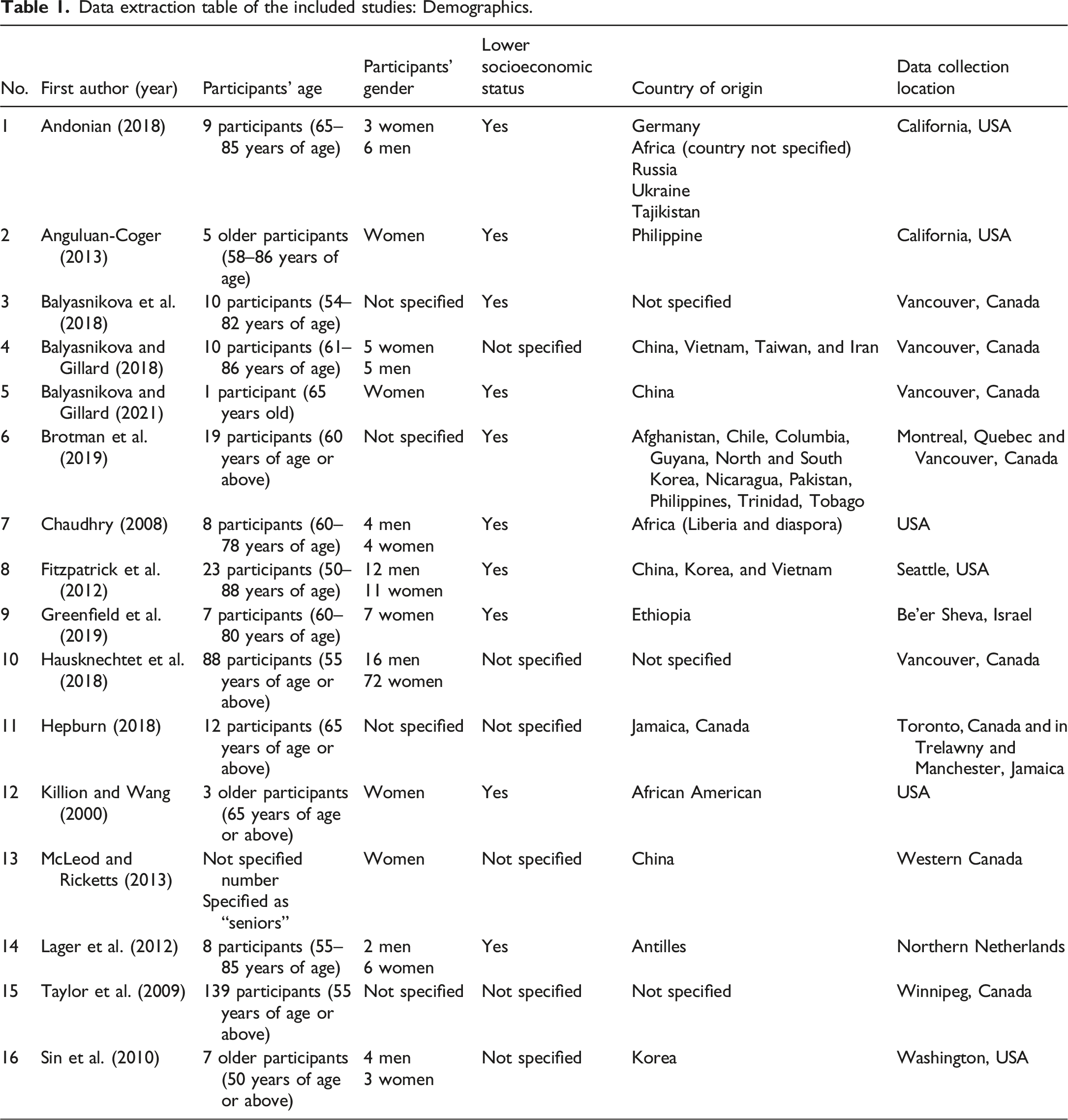
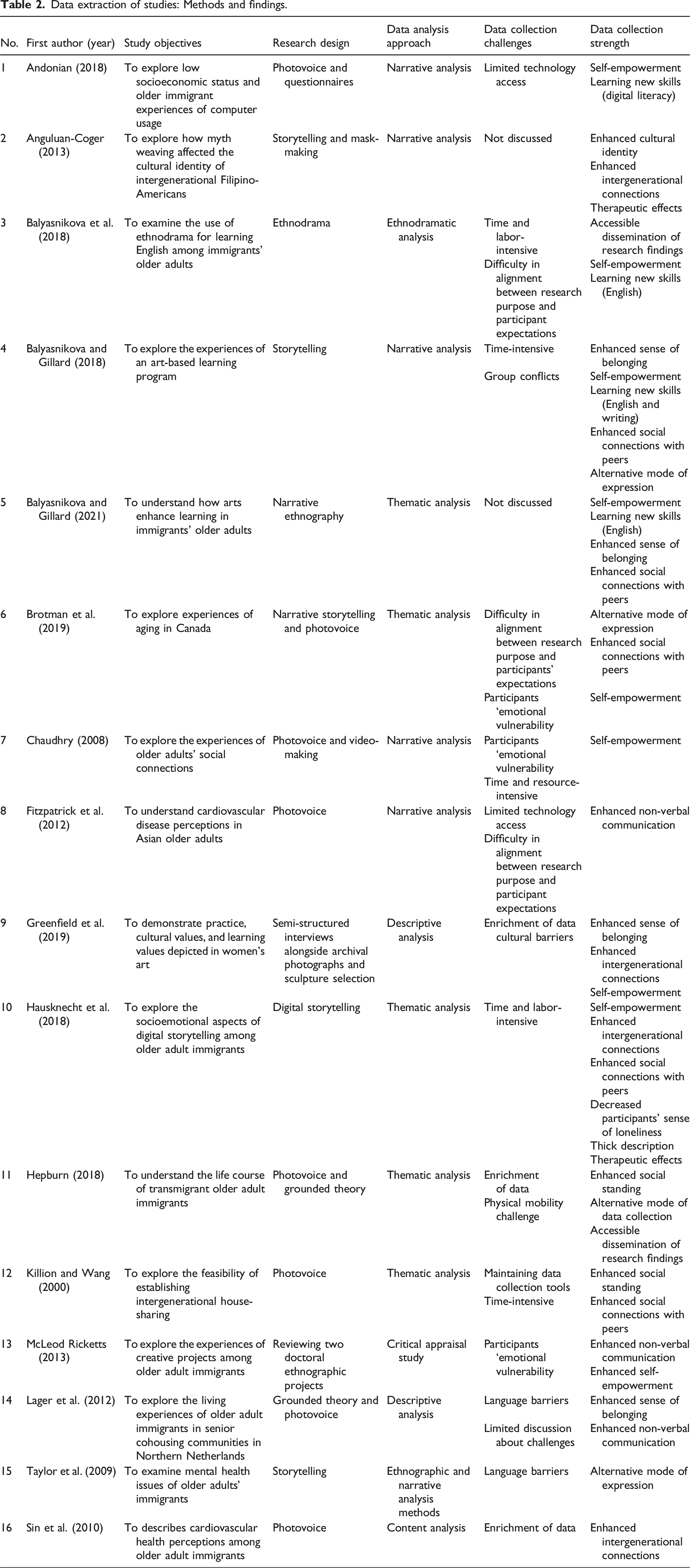
Stage 4: charting the data
Data extraction table of the included studies: Demographics.
Data extraction of studies: Methods and findings.
Stage 5: summarizing and reporting the data
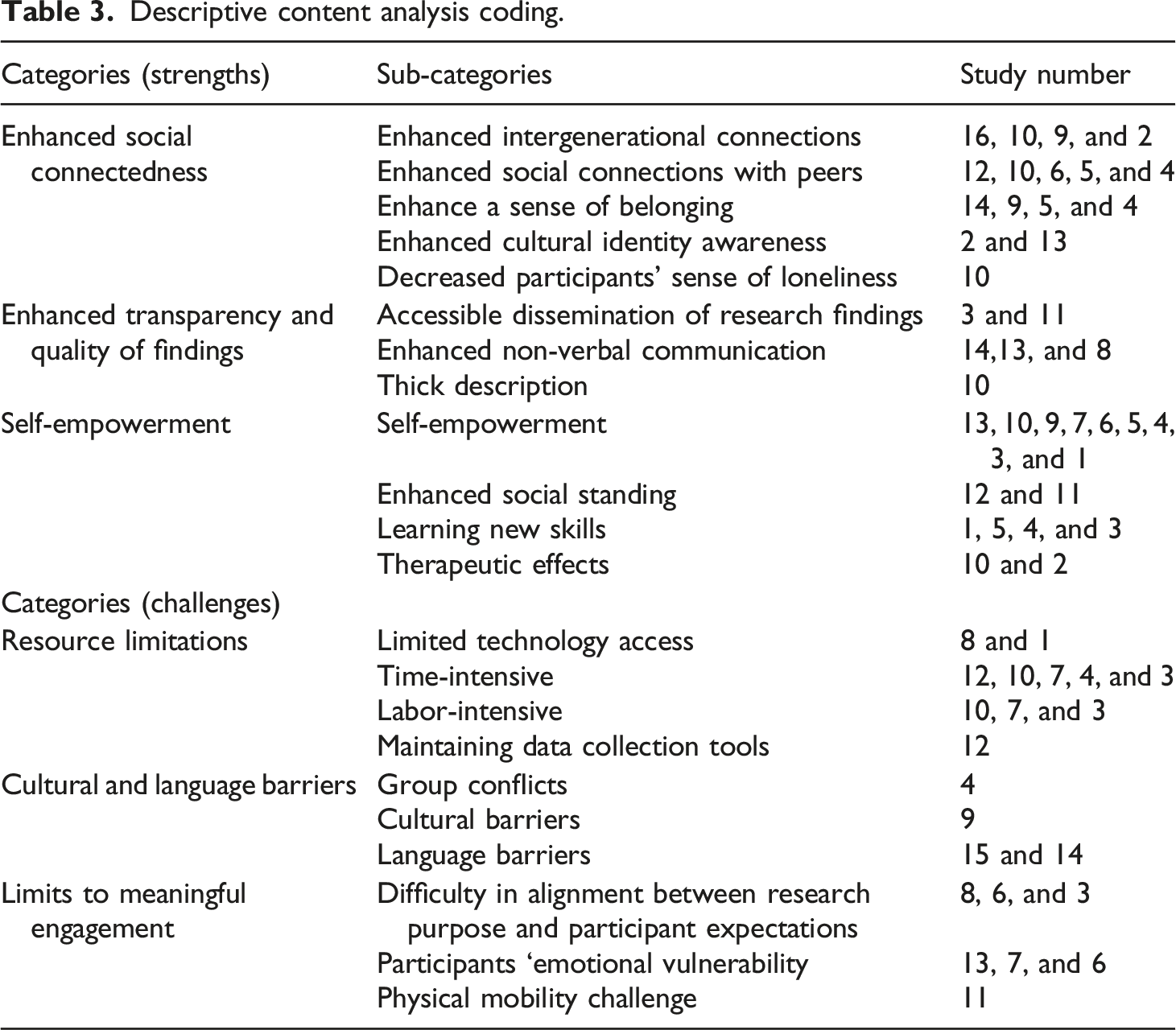
The final stage involved reporting of results and determining the implications of findings (Arksey and O'Malley, 2005; Levac et al., 2010) which was a collaborative process among all authors. A descriptive content analysis was undertaken to synthesize the evidence to address the research questions. Results were organized into key areas of focus: Description of study design and purpose, setting and population characteristics, strengths of arts-based methods, and challenges of arts-based methods. Quality analyses of each study were not included as this is not a central focus of scoping reviews (Arksey and O'Malley, 2005). As researchers involved in research activities with immigrant older adults for eight years to date, team members acknowledge the reflexive nature of data extraction and thematic analysis. Our focus was on exploring the merits and pitfalls of arts-based methods that could guide our ongoing research and this process was enriched by our ongoing involvement with this population.
Findings
There were 1554 studies identified from the selected databases. After removing duplicates, 1211 studies were screened by reviewing titles and abstracts, and 49 studies were retrieved for full-text reviewing. A total number of 15 studies met all the inclusion and exclusion criteria. Two articles included in the review relate to the same research study. One additional study was included by scanning the reference list of the included articles (Figure 1). PRISMA flow diagram.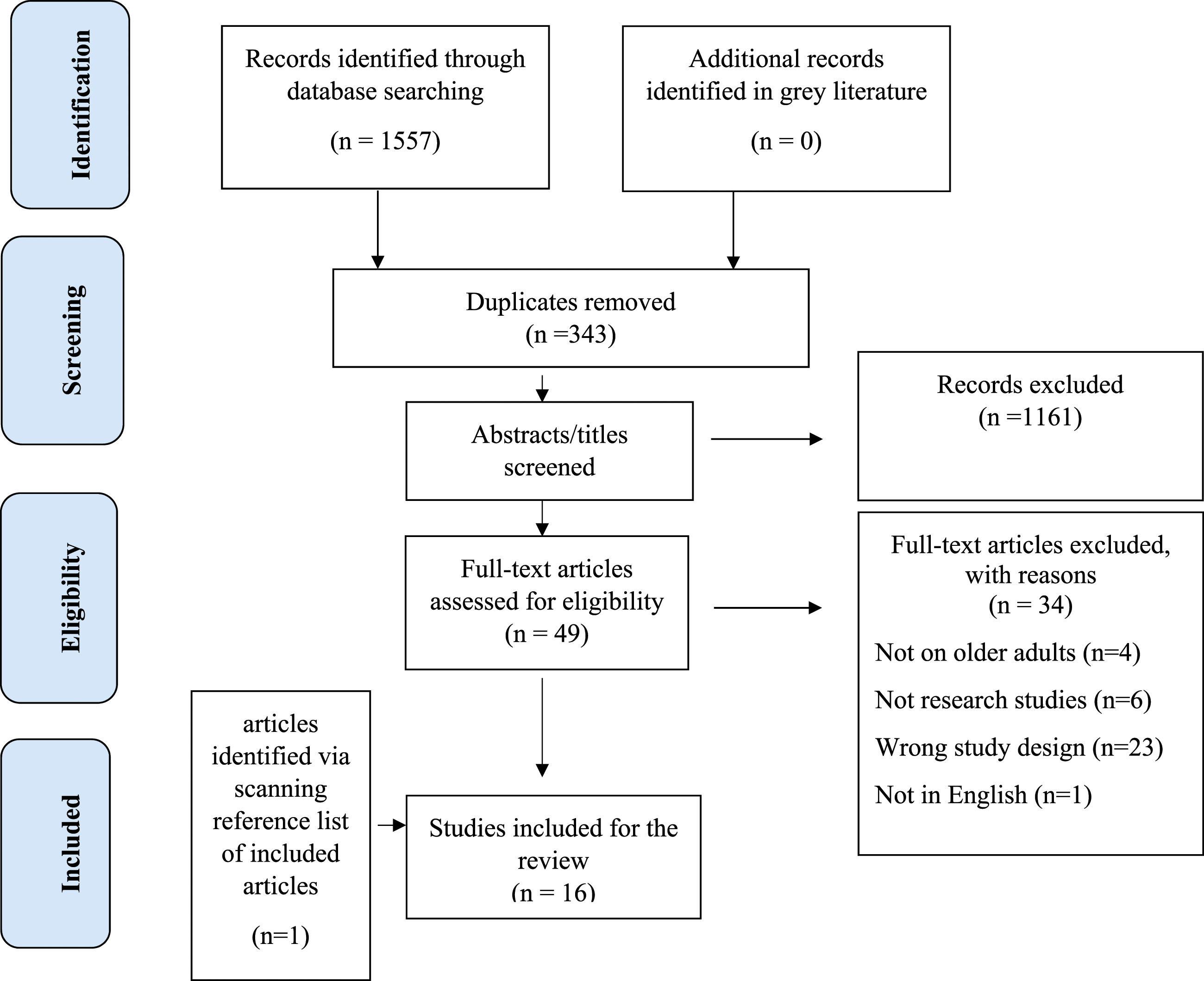
Descriptive content analysis coding.
Strengths of arts-based methods
The strengths of arts-based methods were conceptualized into three categories: (1) enhanced social connectedness; (2) enhanced transparency and quality of findings; and (3) self-empowerment.
Enhanced social connectedness
Enhanced social connectedness is discussed in 10 studies and refers to enhanced sense of belonging and cultural identity, decreased loneliness, and improvement in quality of peer and intergenerational connections. Enhanced intergenerational connections and connections with peers were important outcomes of engaging in arts-based learning. One study reported that “the storytelling groups became a space for making new friends across nationalities and age groups and building new social connections beyond the program” (Balyasnikova and Gillard, 2018: 87, researcher perspective). Likewise, group storytelling was described in another study by an elder participant: “I would love to continue telling stories and sharing indigenous rituals with the youth…to do all that I am doing as a Filipino-American elder” (Anguluan-Coger, 2013: 141, participant perspective). For many older adults who experienced various forms of social exclusion, arts-based activities were an important means to engage with and be included in their communities (Brotman et al., 2019).
Studies revealed that group discussions with shared goals enhanced a sense of belonging which in turn decreased feelings of loneliness (Balyasnikova and Gillard, 2021; Hausknecht et al., 2018; Lager et al., 2012). Exploring and re-connecting with heritage and cultural identity were especially prominent where cultural visual artifacts were created such as indigenous Filipino mask-making (Anguluan-Coger, 2013) and Ethiopian pottery made by immigrant grandmothers (Greenfield et al., 2019). Creating visual artifacts in the form of photos and sculptures evoked deeper reflection in participants and became material representations of their experiences (Anguluan-Coger, 2013; Greenfield et al., 2019). Storytelling and narrative interviewing were used in conjunction with visual art forms to foster connectivity and understanding between participants and others.
Enhanced transparency and quality of findings
Arts-based methods allowed for enhanced transparency of data collection processes and increased quality of findings through the use of non-verbal forms of expression to capture different aspects of participants’ lives. Fitzpatrick et al. (2012) emphasized the importance of non-verbal communication in photovoice projects as a way of collecting data from participants with limited English fluency who were comfortable describing their experiences through photos. Similarly, Mcleod and Ricketts (2013) and Lager et al. (2012) confirmed that arts-based methods helped participants convey emotions and experiences that were difficult to express in words such sense of belonging, loss and displacement. “Showing” while “telling” via theater, photos, everyday objects, or sculptures allowed for more complex and rich meaning-making processes leading to a multisensorial evocation of participants’ life worlds: “Over the course of three interviews, Mrs Guo became more enthusiastic about the project. Finally, she communicated to McLeod that because she had no living family members she wanted to bequeath her life story to the researcher. She seemed proud that others could learn from it. She indicated that this was a significant act, and she had never before shared her tale” (Mcleod and Ricketts, 2013: 30, participant perspective).
The combinations of visual, verbal, and auditory data sources created rich descriptions that reflected depth and contextual nuances of participants’ experiences. Digital storytelling, for example, in Hausknecht et al.'s (2018) study, showed how collecting data from interviews and incorporating photos, music, and other media helped to create detailed videos of participants’ lives. Hepburn (2018) created an art gallery with photos connected to audio-recordings, while Balyasnikova et al. (2018) used ethnodrama to connect with audiences when sharing research findings. These rich descriptions facilitated knowledge translation to the public in accessible multisensory formats which allowed for both intellectual and emotional engagement of the audience.
Self-empowerment
Self-empowerment was a common experience described by participants in 10 studies via opportunity for self-expression, reflection, enhanced social standing, learning new skills, and emotional healing (Balyasnikova et al., 2018; Hausknecht et al., 2018; Mcleod and Ricketts, 2013). Studies enhanced participants’ social standing by providing them with a platform to be seen and heard by other community members, social service providers, and policymakers (Hepburn, 2018; Killion and Wang, 2000). The flexibility of arts-based data collection approaches allowed participants to engage on their own terms and define the foci of interest in their narratives and photos (Hepburn, 2018; Taylor et al., 2009). Balyasnikova and Gillard (2021) include a quote from a participant who was engaged in a digital storytelling program: “Gosh, I think the digital storytelling makes you really reflect on, on what you (muffled), makes you reflect on even your choices, and the story itself and it brings back memories and I, I think it’s very good for you as a person (laughs), you know, because you’re reflecting on all that (Female, late sixties)” (Hausknecht et al., 2018: 12, participant perspective).
Participants across different studies reported learning new skills especially when arts-based data collection was embedded in social, arts, or educational programs that expanded beyond the confines of the research project. Examples of skills include advancing English language and writing abilities (Balyasnikova et al., 2018; Balyasnikova and Gillard, 2021) and artistic activities were described as having helped participants reflect on past and present life experiences with positive therapeutic outcomes: “In the past, I took all my talents for granted. But doing what we did with the youth, where I did storytelling and where I demonstrated to then how to do the “dallut” an Ilocano chant and ritual celebration, this has made me feel so much more happiness, pride and fulfillment” (Anguluan-Coger, 2013: 147, participant perspective).
Challenges of art-based methods
The review identified three main challenges described by researchers using arts-based methods: (1) resource limitations and demands of arts-based methods; (2) cultural and language barriers; and (3) limits to meaningful engagement.
Resource limitations and demands of arts-based methods
Three studies discussed the challenges of utilizing different technologies to collect arts-based data (Andonian, 2018; Fitzpatrick et al., 2012; Killion and Wang, 2000). In one study, participants used their computers but barriers for lower income participants included access to computers and the internet (Andonian, 2018). Cameras were expensive and using low-technology disposable cameras reduced the quality of photos in another study (Fitzpatrick et al., 2012), while losing or damaging devices was reported as a risk that could impact data collection (Killion and Wang, 2000). Studies showed that arts-based methods require considerable time, energy, and commitment to educate participants on the data collection methods, which might decrease participants’ willingness to continue with the project and result in data loss (Balyasnikova et al., 2018; Chaudhry, 2008; Hausknecht et al., 2018; Killion and Wang, 2000).
Cultural and language barriers
Cultural differences among participants can result in conflicts during data collection due to competing interests (Balyasnikova et al., 2018). While cultural norms that hinder participation in arts-based methods were not identified across any of the reviewed studies, one study mentioned a participant’s husband hindering their wife’s participation due to norms around women’s role in public spaces (Greenfield et al., 2019). Language barriers were discussed in two studies (Lager et al., 2012; Taylor et al., 2009). Taylor et al. (2009) stated that lower English knowledge among older adult immigrants prevented them from participating in group activities where English was dominant. Although arts-based methods allow for non-verbal expression of experiences and emotions, interpreters and researchers who are familiar with the target group language and culture are still required to communicate study objectives, guide participants through research activities, and translate back findings to research consumers (Brotman et al., 2019; Fitzpatrick et al., 2012; Lager et al., 2012; Taylor et al., 2009).
Limits to meaningful engagement
Meaningful engagement can be hindered by participants’ differing expectations, emotional vulnerability, or disabilities. Meaningful engagement in the context of this review refers to engaging in research activities in ways that align with participants’ preferences, goals, and capabilities. Arts-based methods are time consuming for participants and require prolonged engagement. Participants can lose motivation to continue with research activities if the topic is not interesting to them or does not accommodate their preferences (Balyasnikova et al., 2018.; Brotman et al., 2019; Fitzpatrick et al., 2012). Three of the studies highlighted the risk of reliving unpleasant memories which can cause emotional distress for participants (Brotman et al., 2019; Chaudhry, 2008; Mcleod and Ricketts, 2013). Physical health challenges and disabilities, such as difficulty walking, loss of eyesight, and reduced hearing, prevent participants from partaking in data collection, including commuting to data collection sites or using cameras to take photos (Hepburn, 2018). Other factors that might limit meaningful engagement are researchers’ constraints for data collection and dissemination which, in turn, could limit participants’ satisfaction with the research process and outcomes. Researchers set boundaries for the scope of the research project, as well as the topic under study. Greenfield et al. (2019) asked participants to choose two sculptures, which did not adequately capture every participant’s perspective. Similarly, Sin et al. (2010) allowed each participant to select two photos which limited the range of experiences participants could share. Considering word count limitations for journals, researchers might not disseminate all findings with the depth and complexity required to do justice to participants’ experiences (Hepburn, 2018; Sin et al., 2010).
Discussion
This review of arts-based studies with immigrant and racialized older adults was completed to identify data collection approaches, challenges, and strengths. A limited number of arts-based studies with these populations were identified which raises the question as to why such methods are not utilized more frequently. Similar to Hammond et al.'s (2018) review of arts-based approaches with indigenous peoples, this review did not find studies utilizing painting, dance, or music to collect data, despite their common presence as modes of emotional and experiential expression in many cultural traditions. Further studies are needed to examine different types of data collection and their feasibility from users’ perspectives. While the reviewed studies described using arts-based methods with immigrant and racialized older adults, the discussion of methodological and ethical considerations was sparse, which mirrors the findings of another comprehensive review of photovoice (Seitz and Orsini, 2022).
Some groups of immigrant and racialized older adults experience high levels of social isolation, unmanaged chronic health conditions, poverty, and loneliness (Chaudhry, 2008; Fitzpatrick et al., 2012; Greenfield et al., 2019). The potential for enhanced social connectivity was a strong finding of this review which aligns with other studies that show the social, emotional, and cognitive benefits of participation in arts-based activities for older adults (Noice et al., 2014; Young et al., 2016). Considering the epidemic of loneliness in older adults, using arts-based methods as both a knowledge producing tool and an intervention to address loneliness and social isolation requires further exploration. This review identified self-empowerment as an outcome of engaging in arts-based activities where sharing personal narratives and listening to others led to new ways of understanding self and community. In some studies, the arts-based activities expanded beyond the confines of a research study to include multiple immersive artistic experiences via, for example, seniors’ arts programming or English language classes. The potential for personal growth and learning in older age as a result of participating in arts-based inquiry, specifically photovoice, is well documented in the broader literature with other groups of older adults (Baker and Wang, 2006; Bryanton et al., 2019) and arts-based programming continues to show positive impacts on health in older age (Fong et al., 2021; Noice et al., 2014; Ronzi et al., 2018). The self-empowerment described in this review was derived from both the arts-based data collection activities and from community-driven arts-based programming that went beyond the confines of the research study.
This review points to challenges with using digital technologies, mobility limitations, and resource constraints during arts-based data collection. Some ethical challenges of arts-based methods discussed in other studies were not identified or were minimally discussed in this review such as the safety risks of going public with personal stories (Sinding et al., 2008), the emotional toll of sharing difficult experiences (Sinding et al., 2008), and the barriers to equitable participation for those with disabilities (Novek et al., 2012; Mysyuk and Huisman, 2020). Other potential ethical considerations that might be relevant to older immigrants but were not identified in this review include challenges with confidentiality when sharing artistic research products, such as photographs (Allen, 2015), and the potential to misrepresent communities in ways that re-stereotype or are misaligned with participants’ self-perceptions (Hodgetts et al., 2007).
The need for meaningful engagement and the potential for self-empowerment were both identified in this review. Language barriers are a major cause for the exclusion of immigrant older adults from research. Arts-based methods can be effective in addressing some of the language barriers through utilizing non-verbal communication techniques, via sharing photos or sculptures, to convey experiences and emotions as described in this review. There is little discussion, however, on the way arts-based methods can overcome cultural barriers to research participation for older adults and how these cultural barriers differ for different groups of immigrants. Other researchers have successfully used arts-based approaches in ways that align with the cultural norms of particular communities resulting in higher quality data and positive experiences for participants. Arts-based approaches that align with cultural norms can become tools for decolonizing research such as the use of poetry and storytelling in African and African American communities to shape non-Eurocentric knowledge systems (Chambers, 2022; Davis, 2021). Arts-based approaches that align with research participants’ cultural norms are more likely to be accepted by creating an environment of comfort and connectivity to self and others, while also effectively eliciting the lived experiences sought out by the researcher (Brubacher et al., 2021). Further exploration of ways to operationalize arts-based research with older adults is required in order to incur similar benefits seen with younger populations.
Being both an immigrant/racialized and an older adult can mean that arts-based methods require unique adaptations to meet the needs of its target group. Arts-based methods are increasingly used in social work with a focus on co-production of knowledge and empowerment of participants, but methodological, ethical, and political implications need to be further scrutinized (Clark and Morriss, 2017). The ways that concepts such as “empowerment” are operationalized in doing the research and reporting the findings will determine whether these methods live up to their potential for democratic and authentic knowledge production (Coemans et al., 2019). Social work researchers who do research with immigrant and racialized older adults will benefit from using arts-based methods to explore lived experiences but will need to simultaneously expand methodological critiques and reflexivity.
Study limitations
English language restrictions for the literature search meant that some relevant non-English studies might have been missed for this review. The most significant limitation of this review is the lack of information in some studies on methodological considerations in using arts-based methods and lack of inclusion of participants’ feedback on the process of engaging in arts-based activities. At times, it was difficult to discern the particular approach used for data collection and it is likely that researchers’ methodological and ethical insights into their work were richer that what we had access to via the published sources. This is often due to the word limits of journals and highlights the need for methodological discussion alongside results to ensure ongoing development of best practices in arts-based approaches with older populations.
Conclusion
Arts-based methods offer unique ways of data collection with multiple benefits for racialized and immigrant older adults. The prolonged nature of engagement in arts-based designs and the specific needs of racialized and immigrant older adults require methodological creativity that must be developed further. Researchers are encouraged to share more detailed methodological accounts of engaging in arts-based research with these populations to explain facilitators the challenges and solutions from practice.
Supplemental Material
Supplemental Material - Arts-based research with immigrant and racialized older adults: A scoping review
Supplemental Material for Arts-based research with immigrant and racialized older adults: A scoping review by Jordana Salma, Bita Mirhashemi and Megan Kennedy in Qualitative Social Work.
Footnotes
Acknowledgments
Sincerely thank the research assistants who helped with study selection and charting data: Sadaf Murad and Lan He.
Declaration of conflicting interests
The author(s) declared no potential conflicts of interest with respect to the research, authorship, and/or publication of this article.
Funding
The author(s) disclosed receipt of the following financial support for the research, authorship, and/or publication of this article: This work was supported by the Social Sciences and Humanities Research Council of Canada-Insight Grant: RES0047802.

Supplemental Material
Supplemental material for this article is available online.
References
Supplementary Material
Please find the following supplemental material available below.
For Open Access articles published under a Creative Commons License, all supplemental material carries the same license as the article it is associated with.
For non-Open Access articles published, all supplemental material carries a non-exclusive license, and permission requests for re-use of supplemental material or any part of supplemental material shall be sent directly to the copyright owner as specified in the copyright notice associated with the article.
