




Abstract
This article examines a recent research project that explored the lived experiences of 5 final year social work students in Scotland who graduated during the coronavirus pandemic. The project used Photovoice as the primary data collection method, followed by a 3 hour long online focus group where the participants and the researcher worked collaboratively to identify themes for further analysis. The findings demonstrated that while the data collected by participants through the photographs and captions were highly personal to each participant, there were recurring themes that connected all of them which were identified broadly as; (dis)connection, closure and identity – all of which were discussed in great detail in a virtual focus group after the data was collected. This article focusses predominantly on the Photovoice method adopted for the study and how this was an effective method for participatory research. This article also focusses on how the pandemic affected the transitionary period between the participants’ identity shift from students to professionals. This study followed the principles of Participatory Action Research which meant that participants and the researcher worked together to cultivate and analyse the data collected and the findings that are discussed here reflect this collaborative process. As this report is being written, numerous new studies, reports and predictions as to the pandemics impact on our collective mental health emerge daily and so it is hoped that this project will serve as a small time stamp as to how the pandemic impacted this small group of students in Scotland and will honour their stories, creating a lasting space for them to be heard among the ever-increasing bombardment of news.
Introduction
The Coronavirus pandemic has and continues to change and disrupt societies across the globe, reshaping how we construct our personal and professional communities. Part of this reshaping we have reckoned with has been our relationships with rituals and rites of passage, with the pandemic abruptly putting an end to funerals, weddings, birthdays and graduations as we know them. In March 2020, Scottish universities closed their doors, cancelling all end of term celebrations, graduation ceremonies and all learning was moved onto virtual platforms. For many final year students, this was a disappointing end to years of hard work and dedication and an underwhelming transition – usually marked by a physical graduation and send off with fellow students and lecturers – from student to professional life took place without the usual opportunities to say goodbye to colleagues or reflect on their time at university.
This article intends to draw upon data cultivated alongside participants for my Masters of Research dissertation over the summer of 2020. This study was designed alongside my supervisory team and participants to give a small sample of final year social work students some space to reflect on their time at a Scottish university and on their transition into working life, having had their graduation and final few classes cancelled abruptly due to the coronavirus pandemic and its implications for physical gatherings. The study was designed with a view to working collaboratively with participants, following the principles set out in Participatory Action Methodology (Liamputtong, 2008) and Photovoice (Wang and Burris 1997) was selected as the primary data collection tool. Photovoice has been found to be an effective research method and teaching method for social work research and pedagogy (Bailey-McHale et al., 2019; Chonody, 2018) because of its need for collaboration between participants and facilitator and its focus on reflexivity and anti-oppressive practice, all of which are essential skills for social workers to develop (Jarldon, 2019). Once participants had captured their images, they wrote captions to accompany them and then presented them at a later focus group. I worked alongside the participants to identify significant themes in the data during the virtual focus group and upon agreeing three main themes and potential subthemes, conducted a more detailed thematic analysis in the weeks that followed, ensuring that I continually relayed my findings back to participants for clarification and editing where necessary.
Clark and Morriss (2017) note that while visual methods are not new in qualitative research, very little social work research utilises visual methods as its main source of data collection. This is despite these researchers’ extensive experiences of introducing visual methods to social work students in research classes, which were met with enthusiasm and high levels of engagement. This is perhaps due to the profession’s typical adherence to more traditional methods of qualitative research which include the extraction of verbal data by the researcher from participants via interviews, focus groups or surveys. Visual data is less clear cut; Banks (2001) argues that meaning or analyses derived from photographs are entirely dependent on the viewer of the photograph, far more so than the photographer themselves. In an attempt to mitigate some of this ambiguity, Photovoice encourages participants to compile a caption to contextualise their images which are then discussed in a recorded focus group setting, allowing participants’ to fully unpack the meaning or significance to them of each photograph (Wang & Burris, 1997).
The primary research aim of the research was to utilise Photovoice to explore the lived experiences of final year social work students transitioning into the profession during the coronavirus pandemic. Alongside this primary aim, the research had the following 4 objectives: 1. To identify common themes in the data alongside participants to develop a participatory thematic analysis 2. To critique the effectiveness of Photovoice as a method for engaging participants in Action Research 3. To inform relevant stakeholders of participants’ experiences in order to develop targeted support for future students 4. To provide participants with a space to reflect both individually and collectively on their final year at university.
Existing literature
To contextualise the study within existing research, I conducted a search of relevant literature in May 2020, using Boolean operators across various data bases in order to inform the work and situate the study correctly. Due to the emerging nature of the pandemic, at the time it was not possible to find any published primary studies at the time of searching that considered the effect of the pandemic on university students. I decided to include broader literature published in English within the last 10 years that used Photovoice or similar photo-elicitation techniques to explore social work students’ experiences in higher education. Since the initial literature search, Lorimer et al. (2021) have published a first-hand account of being a social work student at the stage of graduating in Turner (2021) publication, Social Work and COVID-19. Their account emphasises the sense of uncertainty, resilience and (dis)connectedness experienced by students, which was echoed in the findings within this Photovoice project.
Bowers (2017) used Photovoice as a method of engaging social work students in critical reflection and found that using Photovoice allowed students to reflexively analyse and develop their professional identities and consider what that meant for their practice. In addition to Bowers (2017) study, I identified 7 other studies that utilised Photovoice with social work students with various research aims (Bailey-McHale et al., 2019; Bowers, 2017; Bromfield and Capous-Desyllas, 2017; Byrne et al., 2009; Chonody, 2018; Morley et al., 2017; Phillips and Bellinger, 2010; Walsh et al., 2015). Other studies identified in initial scoping reviews of the topic utilised similar photo-elicitation methods but with a sample of university or college students from other subjects; all indicated in their findings that photography based research methods were more effective than traditional methods, such as observation or interviews at engaging student participation (Anderson, 2016; Patka et al., 2017). While these studies did demonstrate effectively the success of visual methods, their claims that this method was more successful than traditional research methods (Anderson, 2016; Bailey-McHale et al., 2019; Morley et al., 2017) appear to be largely unproven as none of the researchers cite any comparable studies in order to properly critique and contrast the methods and their effectiveness in engaging students. This claim, while possible given the anecdotal evidence from respective researchers, participants and my own research experiences would benefit from further study with appropriate comparative assessment methods.
Both Walsh et al. (2015) and Bromfield and Capous-Desyllas, 2017 found when gathering feedback from students and in the quality of discussion during focus groups that the exercise appeared to encourage and develop critical thinking skills as well as promoting more in-depth reflexivity in students. Students felt as though they had a clearer understanding of how to in turn apply these concepts on placement or in later practice. This finding is particularly significant because of the importance placed on critical thinking, self-awareness and reflexivity in the social work curriculum. The evidence presented in these findings appear to suggest that engaging in visual methods and the subsequent group thematic analysis promotes reflexivity and critical thinking, allowing students to consider their positionality in the social work profession and the society around them (Bromfield and Capous-Desyllas, 2017; Patka et al., 2017; Walsh et al., 2015).
Professional identity has been a subject of interest within social work education prior to the pandemic, with both undergraduate and postgraduate programmes focusing on how students develop and reflect on both their individual and collective professional identities within a profession that can be ambiguous and contextual (Webb, 2017). McCulloch et al. (2021) have been conducting a longitudinal study on Scottish newly qualified social workers from 2016 and have been able to observe the change in views around professional identity over the course of the pandemic with the participants reporting feeling less confident in their professional identities in 2020 than in previous years. This ambiguity reported in McCulloch’s study and in Webb’s (2017) book on professional identity was a theme also recorded in this study.
In any PAR study, the confidence levels of participants to engage in thematic analysis is majorly influenced by the researcher (Liamputtong, 2008) and so reflexivity and relationship building abilities are important skills for researchers to practice to create a safe environment for students to engage and develop (Clark and Morriss, 2017). Byrne et al. (2009) extensively examine their own positionality as a research team, ensuring that they facilitate group discussions rather than lead or encourage the students to consider ideas predetermined by the primary researcher(s). This study heavily influenced my own approach in designing this study, ensuring that I remained reflexive and analytical as to my own positionality and conduct throughout the project.
Positionality
This reflexivity would prove important as I worked alongside participants in similar situations to myself, having also recently graduated from the MSc Social Work programme at the same university, albeit a few years earlier than this cohort. Furthermore, as a continuing doctoral student, I was known to some of the participants as a teaching assistant. This dynamic required some consideration as to its implications to my ability to facilitate the conversation without assuming or overly identifying with participants’ lived experiences whilst still maintaining and acknowledging some shared experiences with the group. This ‘insider-outsider’ dynamic, coined by Michelle Fine (1994) critiques the positionality of researchers and the need for them to consider the tension present in their role as researcher (outsider) and as a member of, or identifying with, the researched community (insider). This dynamic of familiarity proved helpful for this study because of its focus on collaboration and creating space to hear life stories: Having some shared knowledge with the participants created an environment of solidarity and mutual understanding that allowed for nuanced conversations around the content of the course, the pandemic and participant experiences. However, it was important that I actively engaged in self-monitoring during the focus group and thematic analysis to ensure that what was being recorded was the very specific experiences of the participants and that I did not attempt to ‘fill in the gaps’ with my own experiences of completing the course a few years’ prior (Fine, 1994). As a white, cisgender women who is able bodied and educated, it was important to not only critique my position and influence within confines of the research design itself but to also consider my interpersonal position with participants and how my identity shaped my interpretation of the photographs presented and the conversations that surrounded them. Two of the participants identified as women of colour and with race being a significant theme uncovered within the data, it was essential that I reflected on this continuously and ensured that those participants’ experiences and interpretations were central to any analysis that took place. I did this predominantly by continuous checking in with participants both during and after the presentations, to ensure I was capturing their words accurately and before completing the study, I sent copies to each participant for reviewing and editing. This practice of continuous ‘checking in’ with participants is considered best practice in Photovoice and other participatory methods (Jarldon, 2019).
Methodology
The research was conducted over 4 weeks, as an inductive small-scale study in line with values and principles inherent in PAR, whereby the researcher attempts to facilitate participant-led data collection methods (Jarldon, 2019). Photovoice was adopted as the primary data collection method and the subsequent thematic analysis was discussed by the participants in a virtual focus group. Ethical approval was sought and granted by the university and students were invited to self-refer if they were interested in taking part in the study. A £50 gift card was provided to each participant upon completion of the focus group as incentive to take part and to thank them for their contribution. Five students completed the study, 4 from the MSc Social work programme and 1 from the BSc Social work programme. All participants were female, 3 identified as white and 2 as women of colour.
For this study, I offered two separate introductory sessions at different times to account for participants’ jobs and childcare commitments. During this session, we discussed the research aim, the values inherent in action research projects and participants were signposted to examples of previous Photovoice projects, if they wished to view them. It was established that all participants had access to a camera and did not need one supplied for them and a time for the focus group was decided on. All participants had 1 week from the introductory group to gather 2–3 photographs and compose appropriate captions to accompany each of them. These photo and caption entries are referred to in this article as ‘participant entries’. The focus group lasted around 3 hours and was a loosely structured to allow for the participants to take the lead on discussions but was facilitated by myself to ensure all participants had equal time to present their work and contribute to discussions (Jarldon, 2019; Liamputtong, 2008). This facilitation role was especially necessary due to the virtual nature of the meeting, meaning that regular social cues for conversation were not as easily interpreted over cameras. This focus group was transcribed by the researcher and excerpts from this focus group are referred to as ‘transcript excerpts’ in this article. Photovoice (Wang and Burris, 1997) was considered by participants to be an effective way of collecting and presenting their data as they were able to consider their experiences three-dimensionally (through photograph, caption and discussion) allowing for more detailed and poignant reflections that provided rich and nuanced findings for the research.
The analysis for this study took place over two distinct stages; the first being an initial thematic identification and preliminary analysis alongside participants and the second being a more detailed critique of these themes and their relevance to existing theory and literature, conducted solely by the researcher. Luthuli and Wood (2020) argue that data analysis within PAR should engage and then centre the voices of the participants in order to generate new knowledge that can then be distributed in order to influence change and/or relevant stake holders and decision makers. This stage of analysis was conducted alongside participants during the focus group where common themes in the data were identified and then grouped into three main themes; (dis)connection, closure and identity.
Participatory Action Research typically adopts transformative or emancipatory frameworks of analysis that focus on social change or action (Jarldon, 2019; Luthuli and Wood, 2020) and so the analysis of this study predominantly utilised theories that are epistemologically aligned with this premise. I (and to a lesser extent, the participants) engaged predominantly with critical social work theory, strengths-based theories and intersectionality to analyse the data through a transformative framework that would allow the findings to be accessible, informative and accurate (Luthuli and Wood, 2020). Qualitative social work research and participatory action research studies can be critiqued for their perceived lack of academic rigour and so careful consideration of how to mitigate this as a social work researcher working with participatory methods required careful consideration. Frauenberger et al. (2015) argues that rigour and trustworthiness in participatory research design requires nuance and reflexivity as the epistemology that underpins participatory research rejects typical science-centric, positivist understandings of knowledge and objectivity. Critical reflexivity is a central tenant of any participatory action research, arguably because of this somewhat convoluted understanding of what rigour means within this method. Similarly, critical reflexivity plays a central role in good social work practice (Gold, 2012; Warren and Chappell Deckert 2020). In considering my positionality throughout this research and how this has intersected with data interpretation and analysis, I’ve attempted to weave reflexivity throughout this research. Froggatt. (2012) advocates for the use of The Äldreväst Sjuhärad (ÄVS) model (Nolan et al., 2003) when assessing PAR trustworthiness and authenticity. The AVS model requires studies to be assessed against the following five principles; equal access to all participants, enhanced awareness of self and situation, enhanced awareness of others’ situation, encouraging action by identifying areas for change and enabling action by facilitating change. Continued reflexivity and researcher accountability to supervisors ensured that the first three principles were considered and continually revisited. Despite being unable at the time of writing, to publically present the study’s findings, participants reported increased feelings of closure and acceptance around their experiences of the pandemic as a direct result of taking part in the study. Furthermore, the findings of the study have directly impacted some of the decisions taken by the university’s social work department as they pertain to graduation and course development.
Typical Photovoice studies would include an exhibition of participants’ work to an audience of the participants’ choosing in order to inform stakeholders of research findings (Wang and Burris, 1997). This is a central part of any Photovoice study and is underpinned by the axiological belief that research findings should be accessible and visible to all, rather than solely those in academia or those able to access journals (Jarldon, 2019). Due to time constraints and the pandemic, a physical exhibition of participants’ work was not possible at the time of publication and whilst different options for a virtual exhibition or other dissemination methods were discussed during the focus group, no form of accessible exhibition has been formalised at this time and discussions remain ongoing within the research team around suitable alternatives. This has unfortunately meant that students were unable to display their work to relevant stakeholders, which limits the implications of the research within the development of future social work courses at the university (something the participants were very keen to influence). The absence of a display also means that much of the findings drawn from this study will be less accessible to those outside of academia, which is contrary to the values underpinned in participatory action research (Liamputtong, 2008). In order to mitigate this, the researcher is in contact with various other outlets to negotiate potential virtual displays of the work.
Findings
The main research aim of this study was to identify and examine the lived experience of final year social work students as they transitioned from students to professionals amidst the backdrop of the pandemic. While the data collected was highly individualised and personal to each of the participants, three main themes were jointly identified from the images and captions during the focus group by the participants. The themes looked at the different ways participants experienced connection to the social work profession and their communities; how they understood their own identity and how that intersected with their experiences of the pandemic and lastly, how they understood and navigated the abrupt ending to their studies. These three themes were titled (dis)connection, identity and closure.
Theme 1: (Dis)connection
This theme was the most recurring of the four and featured in all five participants’ images and/or captions to some extent. Participants’ described feelings of both connection and disconnection to the environment around them, to others and to themselves as a result of lockdown and the pressures of finishing their degrees in isolation. Participants’ reported feeling disconnected from the outside world as they attempted to finish their studies, often not leaving the house and spending very little time outdoors. Four of the 5 participants recorded pictures of houseplants and the connection they felt to them, suggesting that looking after these plants was a form of self-care for them and that this was beneficial to their mental health during a period that was challenging for all of them. These findings are cohesive with research around trauma and resilience, suggesting that connecting with and caring for something other than oneself appeared to enhance resilience in times of stress and/or trauma (Sanderson, 2013).
All participants included images that related to their boundaries and how mental and physical boundaries blurred into one during lockdown, making it difficult for participants to separate different aspects of their lives. All participants included photos of laptops as the centre of their home office and spoke about the difficulties they faced working from home and being unable to separate their personal lives from their work. Some of this was physical (i.e. having no actual space to work from home and constantly seeing your work in your living or sleeping area) and for others, this inability to separate was more mental but both were exacerbated by having no place outside of the home to complete work. Participants reported this dissolving of boundaries as particularly challenging, resulting in increased stress and decreased productivity. These findings are important for lecturers to consider as the coronavirus will likely continue the need for students to do the majority of their university work in their homes, limiting physical contact with peers and lecturers.
Theme 2: Identity
The second theme recurrent in the data and one which constituted a large part of the focus group discussion was identity. Participant identity was considered both professionally and personally, with nuanced discussions and data entries around how the two intersected in different ways for participants, particularly around issues of race and ethnicity. During the focus group and reflecting upon their data entries, Black and Minority Ethnic (BAME) participants recognised significant differences in the way they experienced the pandemic and its implications when in discussion with their white counterparts both in this study and within their wider cohort of students at the university.
Public Health England (2020) has recognised that the coronavirus has appeared to impact Black and Minority Ethnic or non-white individuals more adversely than their white counterparts. Those from non-white racial backgrounds are between 10 and 50 times (depending on their specific ethnicity) more likely to die of coronavirus than white individuals in Wales and England, according to the data collected by Public Health England (2020). Notably, the Scottish government have yet to gather and subsequently publish any data regarding racial disparities in coronavirus contraction and recovery, stating somewhat controversially that the Scottish BAME community is too small to gather any data, according to the The Coalition for Racial Equality and Rights. Even within this small-scale study, differences in what was considered significant to the lived experiences of participants navigating the pandemic were notably different, with the three white participants appearing to focus more on the effects of lockdown in their images and captions and the two participants (who identified as Indian and Malaysian, respectively) shared data entries that focused specifically on concerns around the virus itself and the various precautions they were taking to prevent transmission. One participant detailed how before the World Health Organisation declared a pandemic, she took precautions to cover her face whilst out on visits and in the office during her social work placement due to concerns around the virus’ impact on Asian individuals, only to be met with ridicule and indignation from her white colleagues who told her she was being overly cautious.
During the focus group discussion another participant, who identified as Malaysian, discussed feeling worried for her relatives who lived in London as the rate of infection was so high there and that she often could not sleep due to feeling anxious. This participant also disclosed that she felt hesitant to cycle to her place of work during lockdown without wearing a face covering for fear of being racially abused:
‘I’d stupidly read more news, and get worried by the policies that are in place, and the rise of anti-Asian sentiments. My partner tried to understand why I was not out running when I could. He’d encouraged me to do so and not be afraid. […] Uni seems so far away, so detached from my reality. My experiences as an international, mature, student with two young children with English as a mother tongue who had come to settle in Scotland did not really tick their boxes. The feeling of being an outsider that I experienced in dribs and drabs finally came to a head.’ – focus group transcript excerpt.
The findings from this small study echo what has been found overwhelmingly to be the case across all sectors and institutions; that universities must do more to protect and understand its BAME community of students (Hillen, 2013). Far more could be said about the necessity for U.K social work to become more representative and for social work academics to start ensuring that Black and Minority Ethnic academics are given the same opportunities as their white counterparts but this would go beyond the research aims of this study. For more around this essential discussion around the development of the social work in becoming more anti-racist and the resulting under-representation of BAME students in Britain’s social work curriculum, see Dominelli (2018), Hillen (2013) and Singh (2005).
Theme 3: Closure
The third theme identified by the research group was centred around the concept of closure and the subsequent difficulty in forming professional identity. This discussion focusses on the different ways that closure was sought by participants following the end of their respective courses followed by a discussion around how they understood their own professional identity as indicated by the different subthemes below. Reflection and ritual appeared to be significant for participants’ in facilitating the mental transition from student to professional in the absence of communal rites of passage.
Subtheme 3.1: ‘DIY’ closure
‘[It was] kinda like DIY Closure… for me I was like how am I gonna move on from this. I don’t wanna 6 months down the line be like oh I feel weird about how my masters course ended.’ – focus group transcript excerpt.
Gaining closure around endings is an important part of any life transition as we move from one life stage to another. This transition is usually marked by a ritual or rite of passage that signifies (and celebrates) the end of a significant part of one’s life before beginning a new stage. These rituals are normally undertaken in community and contribute to the fostering and strengthening of community bonds between members (Sudberry 2010). Graduating, for many students, whether they attend the festivities and the physical event or not, is a significant and important part of marking the transition from one life stage to another. For these participants, the transition from social work student to social work practitioner was somewhat ambiguous due to the abrupt endings to long placements and working relationships, the sudden halting of physical classes and the ultimate cancellation of graduation ceremonies.
Participant entry (caption and photo) – ‘my virtual graduation’
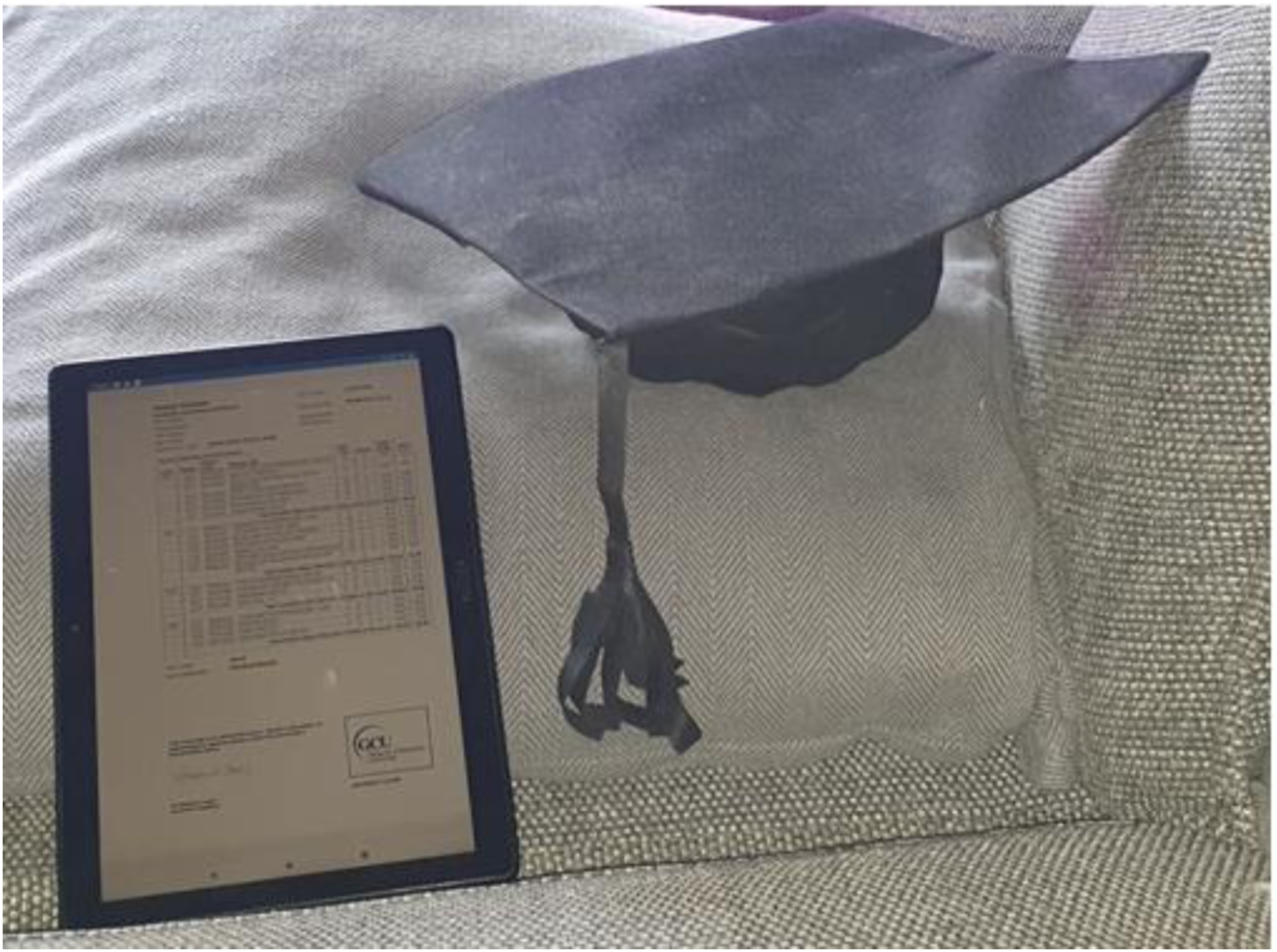
As indicated in the above transcript and photo entry, when faced with the loss of these rites of passage, participants began to design their own rituals in order to create a sense of closure for themselves. These rituals would mark the end of their studies so that they felt able to fully move into their new identities as social workers albeit without the community celebrations. During the focus group, participants remarked that the university’s plans (at the time of writing) to invite students back to a celebratory event later on the year as compensation for a missed graduation was unlikely to gain much enthusiasm from graduates because by then, graduates would be comfortable in their new roles and passed the transition phase therefore unlikely to attend a pseudo-graduation type event.
Subtheme 3.2: Utilising reflection for closure
‘I think this is the first time I’ve properly reflected on anything since I left so it’s been helpful for me… I dunno if it’s because it’s more of a visual thing [Photovoice method] and it’s maybe that’s just maybe a better method for me’ – focus group transcript excerpt.
A large portion of the data created by participants and the resulting focus group discussion centred around reflection and how everyone utilised this skill to cope with the repercussions of the pandemic on their education, jobs and personal lives. Each participant found that reflection was essential in achieving a sense of closure in marking their time at university as finished. There were mixed opinions on the role of reflexivity and the assessment of reflective skills as part of social work education. However, a group consensus appeared to be held that the actual practice of reflection was essential in gaining closure and moving forward from the course, the pandemic, the missed opportunities, events and sudden loss of community they had developed with their fellow students and staff.
Participant entry (caption and photo) – ‘This is my placement folder which has my portfolio work, training and supervision documents. This folder represents all the work I put into my final year. The card on the top is from my placement colleagues, they had to send it through the post as my placement ended so abruptly that all our celebration plans were cancelled.’

Participants attributed the Photovoice method adopted during this study with assisting them with reflection as they considered their experiences and how to capture them. The physical process of the study meant that participants were required to physically identify, compose and capture images and write about/discuss their significance to them. This activity acted simultaneously as a reflexive process that moved participants through identifying, critiquing and working through their experiences in a virtual community setting that, according to participants’, afforded a sense of closure and marked the ‘ending’ of their lives as students.
‘Yeah I do think there’s a real issue with making us reflect to pass. I understand that we have to do that and reflect on our practice to improve it but this culture of like on the go 24/7… get this masters done… get a job… work 9–5… I definitely think that hinders reflection […] There’s gotta be more meaningful space for reflection made I think’ – focus group transcript excerpt.
According to the data generated from this study, this aforementioned time and space some of the participants (namely, those without children and/or awaiting jobs) were afforded due to the lockdown in Scotland allowed them to intentionally engage in reflexive practice in a way that they had previously felt unable to with the competing pressures of placement, course work and caring/personal responsibilities. This turmoil, illustrated in the excerpt above, is perhaps something to be reckoned with for social work educators as curriculums are redesigned in the wake of covid-19 and its implications for the future.
Discussion
For social work practitioners and students alike, the ability to apply critical reflection and to be reflexive in our work is an integral part of good practice as well as continuous self-development (Fook, 2018; Warren and Chappell Deckert, 2020). As such, students are assessed at different points in their social work course as to their abilities to demonstrate their reflexive practice through a reflective analytical study (RAS). The RAS is an exercise intended to assess students’ abilities to apply reflexivity, social work theory and critical thinking to a real-life scenario experienced by the student on placement. Students are expected to consider their role as a student social worker in the scenario and reflect on the various aspects of the case, examining how they practised well, how they could improve and what external issues influenced the scenario. To engage in a more detailed discussion around the place of the RAS in social work assessment would exceed the aims of this article; however, discussions in the focus group posed some interesting questions for future research as to how reflexive practice is assessed. Participants found that they often felt restricted with the prescriptive nature of the RAS and related reflective models such as Gibbs (1988) or Kolb (1984), arguing that these directive approaches to assessment often made them feel like they were completing a tick box exercise to show they could follow instructions rather than intentionally reflecting on an incident that had significantly shaped their professional identity and/or had challenged their values.
Participant entry (caption and photo) – ‘Even though I am still studying, a lot of the time I don’t really feel like a Social Work student any more. I’ve started working in a care home and I really enjoy working but to be honest I don’t really feel like a Social Care Assistant either. Finishing placement was meant to be the beginning of the home stretch to getting a job as a qualified Social Worker but now I don’t know when that will happen or what it will look like when it does.’
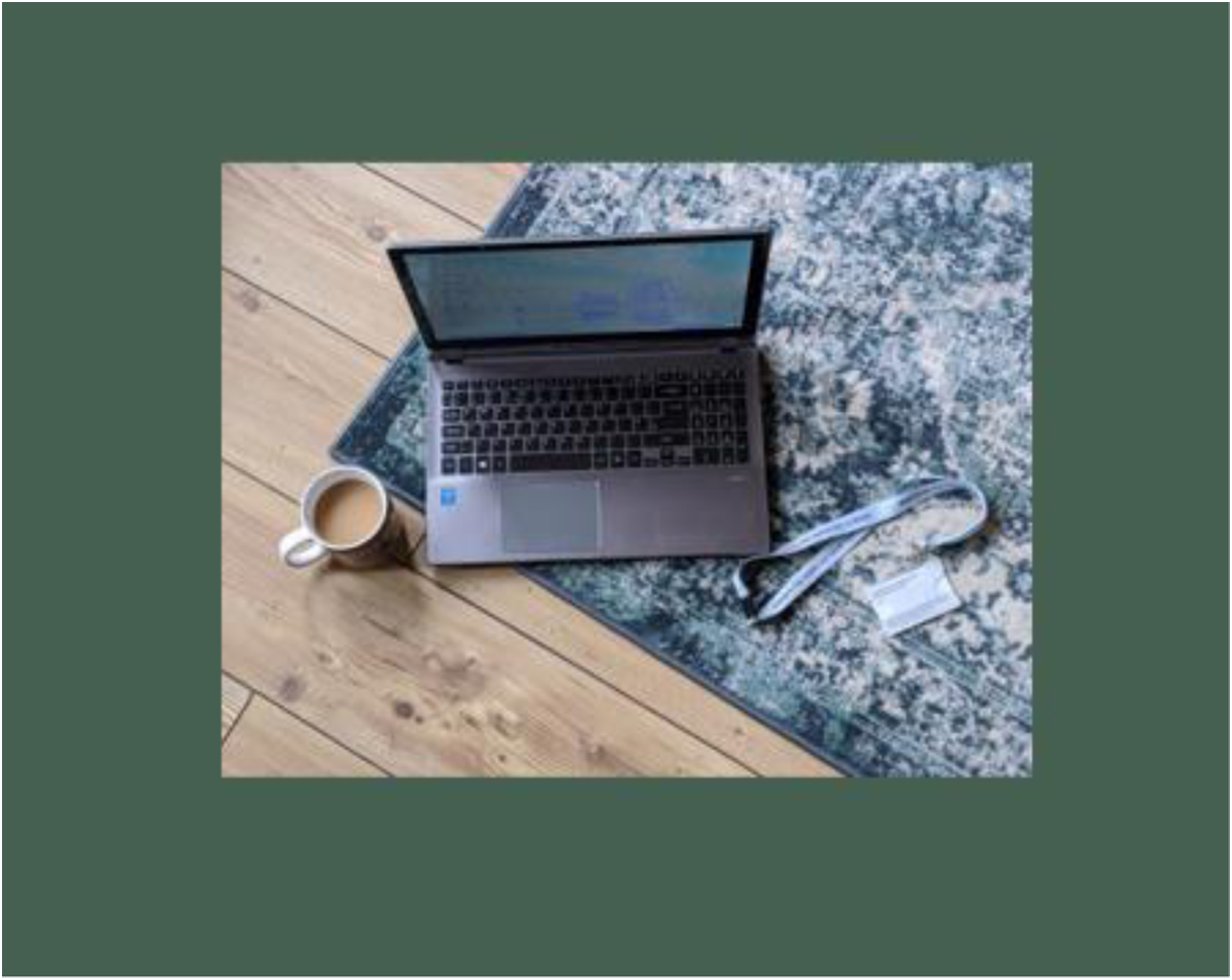
One of the shared experiences voiced between most of the participants was a feeling of ambiguity around their professional identity resulting in part from the lack of closure in their final year. This feeling is not necessarily uncommon in social work, which is commonly regarded as an ambiguous profession within the Western context (Ferguson, 2018; Fook, 2018). However, the lack of closure afforded to these participants over their time on placement and the abrupt ending to their studies has added an extra layer of uncertainty in entering an already uncertain profession (Bruce, 2020). This has potentially resulted in what is arguably an identity crisis as participants have found themselves in a state of prolonged limbo between two different identities, despite attempts to move themselves through the transition. At the time of writing, two of the participants had taken jobs as care assistants in nursing homes in order to help with the pandemic but reported being met with feelings of resentment from coworkers due to participants’ rates of pay being the equivalent to a social worker therefore higher than other members of staff but with lesser responsibility as they were still regarded as students. This had resulted in feelings of isolation and ostracisation in participants which were exacerbated by their internal uncertainties over their own identities, feeling as though they were no longer students, not quite care workers and not yet social workers despite having finished their respective courses.
The second layer of discussions had around professional identity was around the more macro level concept of how social workers in the UK were responding to the pandemic and the systemic inequalities it had exposed in its wake. Participants reported feeling dissatisfied that social workers had been seemingly overlooked in the national conversation around essential workers in the response to covid-19. Furthermore, participants discussed that the role of social workers was unclear to them, arguing that the profession should be seen to be taking a more public stance in advocating for and working more closely with marginalised, disadvantaged communities who were being more adversely affected by the coronavirus. At the time of writing, more literature around the response to COVID-19 from the social work profession in the UK is emerging and the desires for a more advocacy centred approach to practice voiced by participants has been echoed by other student social workers in England (Pitt, 2020). These findings, while small, could suggest that the new generation of social workers may steer the profession back to its original left-leaning, social justice focused roots (Gregory and Holloway, 2005).
Implications
Due to the methodology of this study, it was important that tangible change and learning came from the stories shared by the participants. The study implications were agreed upon by the researcher and the participants collectively and an agreement for ongoing collaboration was decided to best disseminate the research findings. The following recommendations were formed as a result of this study: 1. That higher education institutions provide more robust support for final year social work students in navigating entering the workforce. 2. That visual and co-productive methods were adopted into the social work education curriculum to improve student engagement and better develop reflexivity. 3. That anti-racist social work was given more prominence in the curriculum. 4. That better support for BAME students was provided by universities along with giving said students a platform to help develop this support and make their needs known.
Limitations
Due to the sample size of this study, findings cannot be generalised or applied to a wider population of social work students. The time constraints surrounding this project meant that following the collective identification of themes, that I had to complete the thematic analysis individually which is not strictly adherent to PAR principles wherein the participants would partake equally in all parts of the analysis process. I have attempted to mitigate this by sending findings back to participants intermittently, seeking their clarification and ensuring accurate representation. However, not all of the participants were able to engage in conversation beyond the focus group discussions due to increasing workload and lessening connection with the university as they move forward in their careers and personal lives.
Conclusion
The findings from this study indicate that final year social work students graduating in 2020 have had to grapple with transitioning into professional life while navigating a sudden loss of community and social identity as a student. This appears to have affected the participants’ ability to gain closure around a major life event and has in turn, made the formation of professional identity more challenging than perhaps has been the feat of their predecessors who were able to experience more common rites of passage to mark the end to their time at university.
This research sought to give participants a virtual space wherein they could tell of their experiences and collectively gain a small sense of closure around their time spent in higher education. As the method chosen for this study, Photovoice appeared to support this aim and according to participants, successfully provided a creative avenue to reflect both individually and collectively on their experiences. The ‘three dimensional’ aspect of data collection (image, caption and focus group) allowed for a nuanced analysis that according to participants, accurately reflected the meaning behind the photograph entries as well as providing rich discussion points in the focus group. Participants reported the method allowed them to reflect in ways they had previously been unable to during the course, suggesting that written reflective accounts felt too restrictive and lacked expression. The effectiveness of Photovoice as teaching method in social work education has been explored in various studies and found to be effective (Mulder and Dull, 2014; Patka et al., 2017; Peabody, 2013; Romasanta, 2016). This study appears to further support these findings.
Participant entry (caption and photo) – ‘I took this picture on the day I submitted my dissertation and finished the masters. Rather than see the course as something that was finished and to be put away, I see it as the start of a longer journey in social work. I don’t want the pandemic to tarnish the journey – it’s just one of many hurdles we will face and adapt to along the way and hopefully some positive change in social work will come of it’
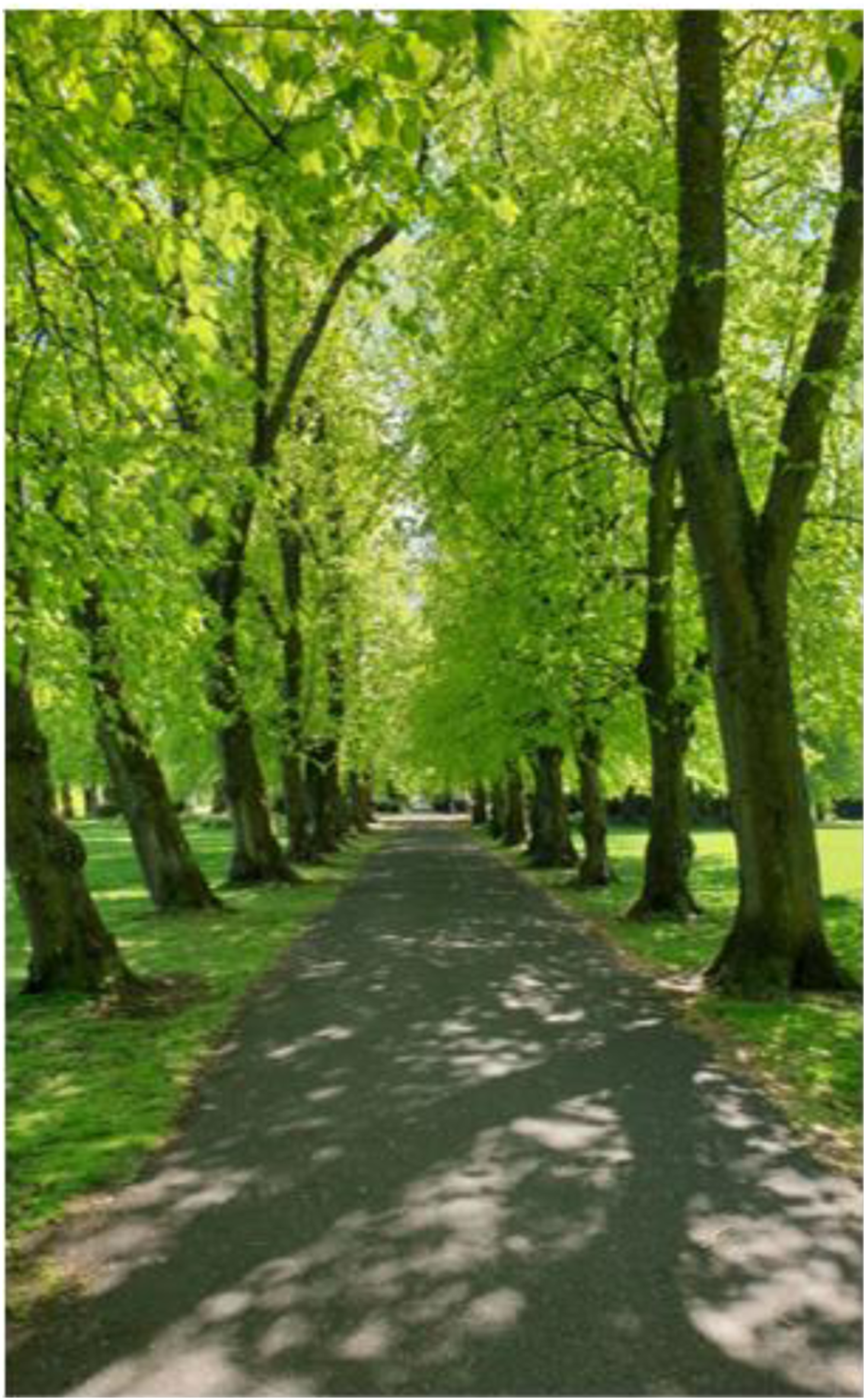
Despite the small sample size, the large amount of data provided generated three significant recurring themes which were identified by the participants and the researcher. The theme focussed upon in this article was that of closure and its implications for the participants personally and in their understanding of their professional identities. Whilst participants reported feeling a level of ambiguity as to their futures in the profession they remained optimistic, indicating a stubborn resilience as they sought to make a valid contribution to practice going forward.
Footnotes
Declaration of conflicting interests
The author(s) declared no potential conflicts of interest with respect to the research, authorship, and/or publication of this article.
Funding
The author(s) received no financial support for the research, authorship, and/or publication of this article.
