




Abstract
This is the first study to use ethno-mimesis to explore the lived experiences of mothers navigating child-to-parent violence initiated by pre-adolescent children. The current child-to-parent violence research landscape is predominantly focused upon the experiences of parents of adolescent children, identifying that violent behaviours can be used as a life-long strategy. This research uses innovative methods to explore the lived experiences of mothers, and how they understand and navigate the violence of their pre-adolescent child. Using ethno-mimesis to allow for the intersection of socio-cultural theory (social roles and expectations); experience (reflection on motherhood); and practice (creating visual representations), five mother experiencing child-to-parent violence were identified and recruited from three parent support groups in the North of England. These mothers individually reflected on their experiences of violence, as mothers with young children, with responses thematically analyzed underpinned by phenomenological inquiry. Mothers in this research identified the violence as a symptom of wider structural, neurological, or mental health difficulties their child was experiencing rather than the problem itself. Participants did not believe the violence was intentional but was due to uncontrollable and overwhelming emotions. Nevertheless, there was considerable overlap between the experiences of these mothers and previous research into maternal experiences of adolescent violence; maternal experiences of adult child-to-parent violence, and intimate partner violence. By understanding the behaviours of younger children, there is opportunity to provide whole-family interventions which will prevent lifecourse trajectories, and focus upon the challenges and support needs of mothers living with this form of violence and abuse.
Introduction
Child to parent violence (CPV) is defined by Cottrell and Finlayson (2001: 16) as ‘any act of a child that is intended to cause physical, psychological or financial damage in order to gain control of a parent’. In response to this, Simmons et al. (2018) stated that pre-adolescent children do not have the developmental capacity to intend harm, therefore they should not be included in CPV research. However, when CPV is defined as intentional, many families disengage from the CPV discourse. As this definition contradicts how they understand their lived experiences of CPV, and the reasons for it (Coogan, 2011).
The UK Home Office defines CPV in the adolescent-to-parent violence (APV) guidance as: an act of domestic abuse initiated by anyone between the ages of 13–16 towards a caregiver. Their definition of domestic abuse is: Any incident or pattern of incidents of controlling, coercive or threatening behaviour, violence or abuse between those aged 16 or over who are or have been intimate partners or family members regardless of gender or sexuality. (Home Office, 2015: 3)
Importantly, here the definition does not require intent, but a “pattern of incidents” which is more representative of the experiences of families (Coogan, 2017).
Researchers and practitioners have identified that most parents experiencing CPV do not report incidents to the police until they are in crisis. Therefore, most research into police responses to CPV is not representative of the experience of most families living with violent and controlling behaviours from much younger children. This is because these families are not reporting incidents until the child is too large or physically threatening to manage (Condry and Miles, 2014; Coogan, 2017).
Incidence of CPV
In the UK, CPV is one of the most under-researched forms of family-based violence, despite its high rate of incidence (Selwyn and Meakings, 2016; Walsh and Krienert, 2007). Some researchers have posited that one-in-ten families experience violence from their child(ren) (Edenborough et al., 2008; Selwyn and Meakings, 2016; Walsh and Krienert, 2007). The Home Office (2015) guidance into APV has improved reporting of these offences; with Met Police reporting an increase in incidents of 95% between 2012 (920 reports) to 2016 (1801 reports) (Family Lives, 2018).
A UK parent helpline received 22,537 calls over a two-year period from parents struggling with antagonistic behaviour from their children. 7000 of which involved incidents of physical violence (Condry and Miles, 2014). Using violent strategies within the home has also been correlated with using violent strategies through the lifespan such as: youth offences; peer-on-peer violence; and adult domestic violence (Firmin, 2013; Kennedy et al., 2010; Wilcox et al., 2015). As such, it is vitally important that the early-stage dynamics of CPV are understood in greater depth.
Framing CPV theoretically
Many theoretical frameworks have been used to try to understand violent and aggressive strategies used by children. There are increased risk factors associated with children who have experienced domestic abuse, trauma, or are care experienced, supporting social learning theory (Bandura and Walters, 1977). There is also an increased risk of CPV in children with special education needs (Coogan, 2017).
Many children who present to services with CPV are referred into Child and Adolescent Mental Health Services (CAMHS). Thus, pathologizing the child under medicalised models of care (Aarseth et al., 2017). Nevertheless, research into the impact of caring for a child with mental health needs has been predominantly focused upon social constructs of parental roles, and the needs of children (Woodhead, 2015). This excludes some of the behavioural expressions of poor mental health, such as violence or unpredictable behaviour in children.
Whether or not childhood CPV is a form of domestic abuse is a contentious issue. Wilcox (2012) argues that within the ‘Think Family’ approach (which emphasises the importance of multi-agency working to support the whole family (Scott, 2009)), the safety of children is subsumed under the safety of mothers. Through this, there is a desire to avoid deterministic models such as the cycle of violence, so there has been a failure to act on CPV. Meaning professionals frequently ignore the escalating abusive behaviours of children because they do not want to label a child ‘abusive’.
Unpredictable or aggressive behaviours, and the apparent increase in reporting of CPV, cannot be reduced to changes in socially acceptable parenting practices, as the phenomena has been recorded globally (Coogan, 2017; Holt, 2016). Nor can it be explained solely through the existing frameworks of domestic abuse or child safeguarding (Coogan, 2017).
Biopsychosocial models can also be helpful for parents supporting children with CPV if they recognise “fight, flight, disengage, submit and help-seeking” (Gilbert, 2001: p122). Within this model behaviour is contextual (Popp-Baier, 2002); Positioning CPV as a physiological response to external stimuli, and rarely an intentional or pre-meditated behaviour in young children (Roesch-Marsh, 2014; Rose, 2014).
The most integrative theory to explain CPV is Bronfenbrenner’s (1979) ecological systems theory. Positing that complex relationships between systems can impact behaviour. CPV is considered the result of multiple interactions and the intersections of these, which can either increase risk (domestic abuse, gender-based influences, special educational needs), or decrease risk (pro-social relationships, high arousal threshold).
Research exploration
There is no consensus in the field of CPV as to what age a ‘child’ should be. For instance, Simmons et al. (2018) argue that children under the age of 13 should not be included in the CPV literature whilst recognising that some research includes children aged 8–21 years old. In this research I will explore parental experiences of CPV, specifically when the child is under the age of 13 (pre-adolescent). I am seeking to understand how parents interpret and make meaning out of the violence. This group are not supported by legislation or policy. Nevertheless, pre-adolescents initiating early-stage violence are highlighted as a key age group requiring support before CPV reaches crisis.
The study
This is a phenomenological study positing that creating artistic representations of the lived experiences of CPV can be an effective, novel tool to ethically explore how parents understand their lives as parents of pre-adolescent children. Whilst also experiencing violence from their child.
This phenomenological approach aims to unpack the embodied experience of the participants both through spoken word and arts-based exploration; whereby they can explore their subjective experiences and positionality. Building a deeper understanding of the ‘essence’ of the parental experience and using it as a process of meaning-making (Khan, 2014).
Through this process, I seek to explore:
How do parents experiencing CPV from pre-adolescents understand their child’s violence? How do parents experiencing CPV from pre-adolescent children understand their dichotomous roles as parent, and person experiencing violence?
Research design
This is a qualitative study using an approach named ‘ethno-mimesis’ (O’Neill et al., 2002), whereby arts-based methods (mimesis) is applied alongside conversational dialogue and observation (ethnography). This method has previously been used to effectively explore difficult or traumatic experiences in a collaborative way, in which the participants can autonomously direct the research. Using ethno-mimesis also allows for the intersection of socio-cultural theory (social roles and expectations); experience (reflection on motherhood); and practice (creating visual representations).
Arts-based methods are an effective way to share phenomenological experiences through more than words; an interpretation of existing beyond narrative (Groenewald, 2004). Arts-based methods are particularly well-suited to research into violence and abuse; especially if the research is sensitive or exploring experiences that are difficult to express verbally (Kong, 2016; Westmarland and Bows, 2019).
Arts-based methods are also particularly useful in promoting flow, thus mediating potential challenges to addressing traumatic events, or emotionally charged incidents in an embodied, engaged, and ethical way. With these methods, participants and researcher can maintain conversation (Bird, 2018; Stavropoulou, 2019; Westmarland and Bows, 2019) or convey aspects of the lived experience that verbal expression cannot (Bird, 2018; Pain, 2012; Reavey and Johnson, 2008).
The conversations were one-to-one between the researcher and participant. They began with an introduction to the research, repeating the information sheet, before enabling the participant to engage with the topic by asking the participant to ‘tell me about your experience’. Active listening skills were used to guide the participants, but an embodied exploration of their experiences was led by the production of the visual representation.
Conversations were recorded on a pin-protected mobile phone, and art products were photographed with the same phone. During the conversation memos were used as a data collection tool, and the process of memo-ing was engaged throughout the research process. A five-hundred-word reflective piece was written after each interview to allow for the process of emersion in the research design.
Recruitment
Snowball sampling was the recruitment strategy for this research, recruiting parents living with CPV from a pre-existing peer-support group within the North of England. The peer support group was initially formed to support carers of children accessing mental health services. It has, however, expanded to include caregivers of children experiencing any kind of emotional disturbance.
I had a pre-existing relationship with the group, as an insider researcher, and had accessed them for support during my own periods of family crisis. As such, I was aware that there were a considerable number of parents accessing the group who were experiencing CPV within the home. I did not always disclose to participants that I was a pre-existing member of the group, as it could have facilitated more dialogue during the research which I wanted to remain participant-focused, rather than a shared exploration. Still, three participants were aware that I was a member of the group prior to participating in the research. I do not believe this knowledge impeded their exploration of their individual subjective experiences. Nevertheless, to explain my insider status to the participants who had not already been aware of my experiences, may have had questions which would have digressed from their own stories.
The support group I recruited from runs two monthly face-to-face peer-support groups and has 823 online members who are all parents of children accessing CAMHS. The group founder gave consent for recruitment to occur within the group. I advertised through their online page and attended one face-to-face group to encourage participation.
Initially thirty-two participants were identified, however as I was specifically interested in parental experiences of pre-adolescent children, parents were removed from the pool if their children were over 13. This reduced the potential pool to nineteen; of which fourteen withdrew from the research when sent the information sheet. A follow-up demonstrated that the fourteen did not wish to engage with arts-based methods at the time of the research.
Five participants were recruited to explore the complex individual experiences of parents living with CPV. Whilst this is a small sample, it is not intended to be representative of all individuals living with CPV; but due to the depth of inquiry, it offers a highly valid representation of the narratives of the individuals involved in the research (Anderson and Mack, 2019; Kong, 2016).
Whilst I was interested in parental experiences of CPV, all participants were mothers. Women are more able to identify abusive behaviours than men (Roberts and Price, 2019) and women are more likely to volunteer for research (Clarke et al., 2017). A breakdown of the participants is available in Table 1.
Participant profiles.
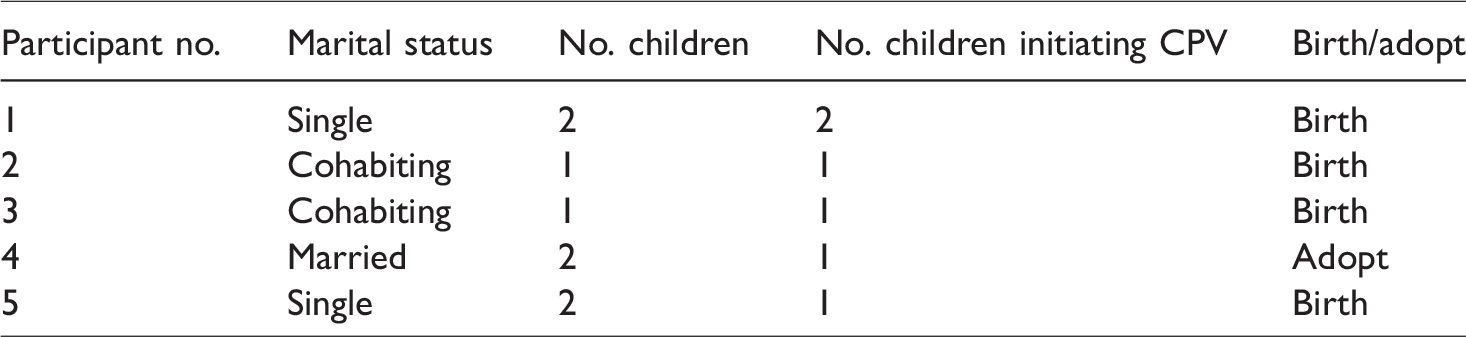
The marital status of the mothers in this research was relevant, as whilst all parents living with CPV experience shame and stigma (Coogan, 2011). Single parents of children presenting with such behaviours will have a compounded experience (Eaton et al., 2020). Whether a child was a birth (natal) child, or legally adopted was relevant as Participant 4 volunteered to take part in the research as she specifically wanted to ensure that the voices and experiences of adoptive parents were included in CPV research.
Data collection process
Participants were all interviewed within their own homes. This provided a different socio-spatial narrative, as well as altering the power dynamics existing within the research, as the position and environment in which the research takes place can have influence over the participant-researcher dynamics (Hockey and Forsey, 2012).
Conversations lasted between ninety and one-hundred and thirty-five minutes and were recorded on a pin protected mobile phone, and later transcribed and analysed individually. The artistic representations developed by the participants were photographed, with hard copies left with their respective creator. The memos and reflections collected during and immediately prior to each meeting was read prior to transcribing each meeting.
Ethical considerations
The ethno-mimetic design of this research was produced to provide an ethically viable way for participants to explore complex and difficult experiences. Once ethical approval was granted by Durham University Sociology department; all participants were provided an outline of the research through an information sheet outlining the purpose of the research, and potential artistic tools that would be provided. Participants were also informed they were welcome to provide their own photographs as a form of photo elicitation.
Participants were informed that their art products would remain their property, but they would be photographed for research purposes. All participants were informed that their data would be anonymised, and their information would only be shared for safeguarding purposes. This was already a rule existing within the support group they were recruited from. Despite these protocols, two participants opted to share their artwork on social media, explaining why it had been created and outlining the research they had participated in. This is the right of the participants themselves, as autonomous individuals capable of identifying spaces to share their experiences, and I think it demonstrates the importance of sharing CPV narratives.
Participants were given a six-week period in term time to consider participation in the research, with consent forms emailed and digital signatures accepted. Participants were all informed of their right to withdraw from the research at any time prior to 23rd April 2019. When consent forms were returned via email they were stored on a private, password protected Durham University account. Participants were informed that they could lead the process as much as they were comfortable with, including comfort breaks and pauses if the process was upsetting or challenging.
All recordings were deleted after completing analysis of the data rather than straight after transcription. I continued to listen to the interviews, review my memos, and read my reflections throughout analysis as a method of critically reflecting on the interviews. Transcriptions were stored on a password protected laptop, and consent has been given for them to be stored for research purposes until July 2021 for further analysis, if required.
Analysis
In this research I used thematic analysis underpinned by phenomenological inquiry to unpack the emergent themes (Morse, 2015). As an insider research, I used memos and reflective reports extensively to challenge my own perspectives and interpretations. I have not experienced CPV, but had many shared experiences with the mothers in this research.
The process of collating and analysing the data consisted of multiple steps:
Interviews were transcribed and anonymised, using participant numbers I listened to the recordings while examining photographs of the art. Notes and memos were created as a method of meaning-making I listened to the recordings whilst reading the transcripts again, highlighting words or phrases which were emphasized through tone of voice or memory I read the transcripts again, highlighting words or phrases that I interpreted as important in relation to my research question and aims. I grouped the notes and memos under themes I read the transcripts again, grouping the highlighted words and phrases under themes. Emergent themes labelled as minor/major and then clustered as a way of structuring the data I repeated this process for each transcript. Themes were reviewed and grouped until a final set of themes were clustered From these clusters, quotes which emphasized and represented their meaning were highlighted and grouped together. Non-relevant quotes were abandoned. This resulted in summaries of shared experiences of maternal experiences of CPV, which I felt was representative of the voices of my participants.
I identified a total of four overarching themes which present the lived experience of CPV as expressed by the five mothers who took part in this study: 1) fear-anxiety, 2) domestic abuse; 3) presenting motherhood; 4) balancing multiple needs
Findings
A basic profile of the five mothers participating in this research is available at Table 1. An ethno-mimetic method was used as an embodied way of exploring maternal experiences of CPV with a pre-adolescent child. The emergent themes are fear-anxiety; domestic abuse; presenting motherhood; balancing multiple needs. These themes will be explored alongside artistic representations and quotes.
Fear and anxiety
All the mothers in this research spoke of the challenge of living in a home where they were unsure of when an incidence of violence would occur. The mothers spoke about how they were constantly anxious due to the fear of something small triggering an incident of CPV. “I’m always walking on eggshells, I never get to fully relax.” (P4)
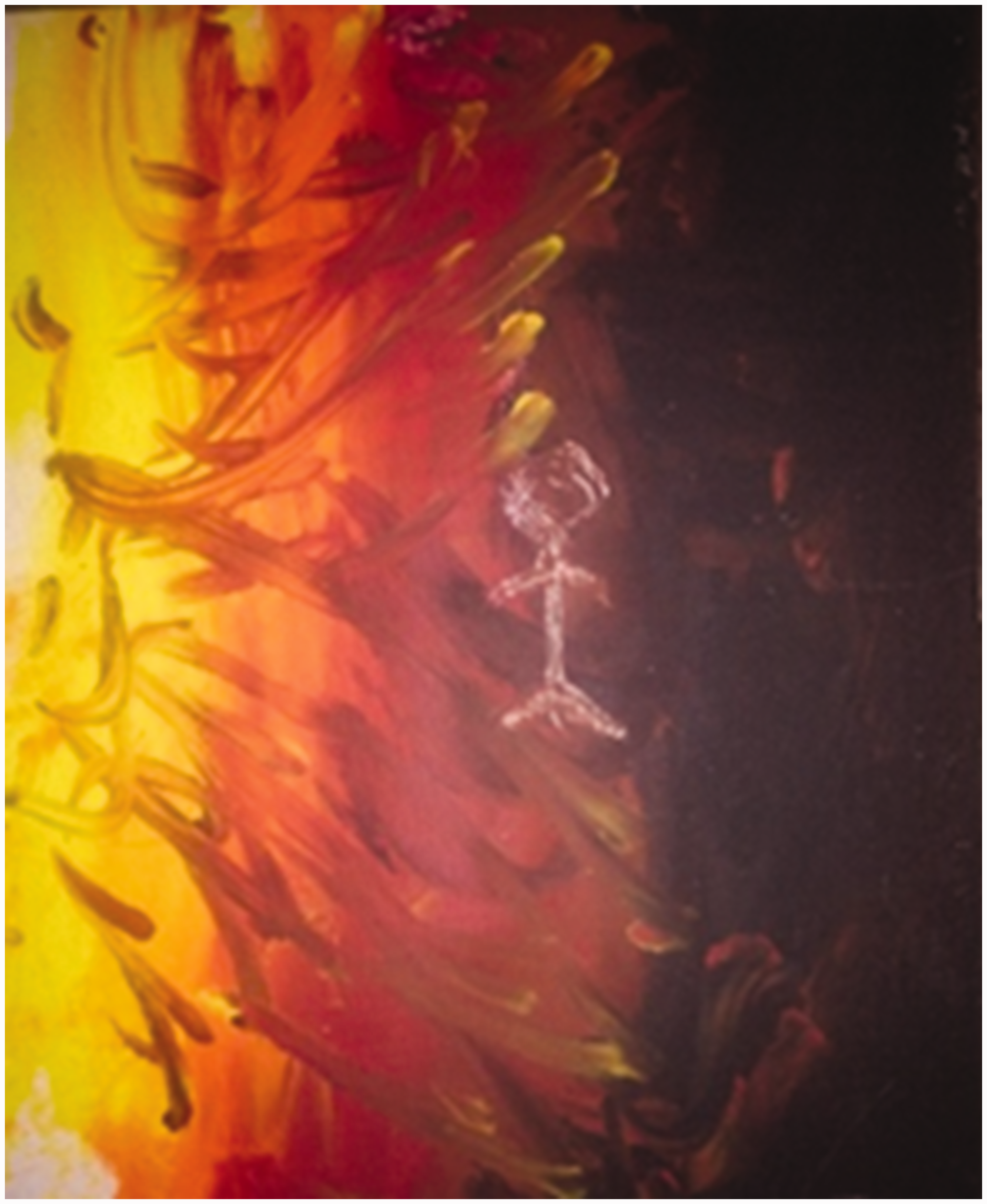
All participants experienced physical symptoms which they believed were related to their mental health; explaining that these symptoms were exacerbated when there was an increase in CPV. These symptoms impeded how the mothers were able to engage with their children, both through the symptoms themselves; which caused fatigue, physical pain, or sensory challenges; and the fear of an incident of CPV worsening symptoms. This resulted in the mothers avoiding certain activities with their child. Participant 3 exemplified this by positioning themselves as a stick-figure engulfed in darkness (Figure 1), explaining that the darkness was her way of demonstrating the difficulty she has in being fully present with her child:
Participant 3.
“It touches everything, that dark shadow. I find it really hard to enjoy anything fully because the worry that he’ll just flip just taints everything.” (P3)
The social and emotional impact of CPV on the mothers, and the importance of having a supportive network was reflected in the narratives. School, for instance, seemed to have a wide impact on the family. Participant 4 and her family had an excellent experience of school, however the other four participants highlighted school as a source of stress. School staff not being supportive has a direct impact on the wellbeing of families. Parental employment, for instance, seemed to be directly linked to the ability of school to support the needs of the child. When schools are unable to support the needs of the child, they were reliant on the parent to be available to the child in case there was an incident at or before school.
“Work wouldn’t put up with it… like, I had to keep leaving to pick him up because school said they couldn’t manage, and he needed taking home.” (P2)
Furthermore, two participants shared anecdotes of incidents of violence which were triggered by the morning routine when their child did not want to attend school. Both mothers explained this refusal to attend school was anxiety-based whereby the children were too anxious to attend school, and both participants explained that school expectations caused violent behaviours from the child.
“School refusers, they are this hidden group of children and they’ve told me to just pick him up and force him, but he’s so anxious… he explodes and it takes him weeks to recover.” (P3)
When there is a poor relationship between parents and schools, it compounded the anxiety of the mothers. These mothers were already living with high-anxiety which will have a long-term impact on their mental and physical health and wellbeing (Gleeson et al., 2017).
“I’ve nearly had a panic attack in the car before. My phone rang and I just panicked thinking it must be the school… they are always calling me and I’m exhausted.” (P3)
Domestic abuse
None of the participants articulated that they considered CPV a form of domestic abuse, however two of the participants compared their experiences with their personal histories of intimate partner violence, and recognised similarities to both the behaviours and the impact. However, in this research mothers did not believe the harm caused through CPV was intentional, but a presentation of an overwhelmed child. The violence was a small aspect of their parental experience. Instead all mothers spoke of the complexity of managing the wider field of ‘challenging behaviour’.
All participants had spoken to staff at the school of their children when initiating help-seeking behaviours. Three had contacted Early Help services. None had been referred to specialist services, and three of the mothers believed the lack of intervention or support was predominantly due to victim-blaming practices. “If he was my partner, they’d judge me for wanting to stay. Because it’s my son they would judge me for wanting out… If a man was punching me in the chest and screaming in my face they’d tell me to go, that he’ll kill me, that I’ve got to put myself first… But, no, ‘cos it’s him I’ve got to work something out, that’s it’s my parenting, I need to be doing more to help him” (P1)
Despite participants not believing that their children were intentionally abusive they did recognise that the impact of CPV mirrored the impact of abuse. Mothers often hid incidents of violence from wider family members. Mothers adapted their behaviours to prevent incidents. Primarily though, all mothers felt isolated as a direct result of the behaviour of the child.
Presenting motherhood
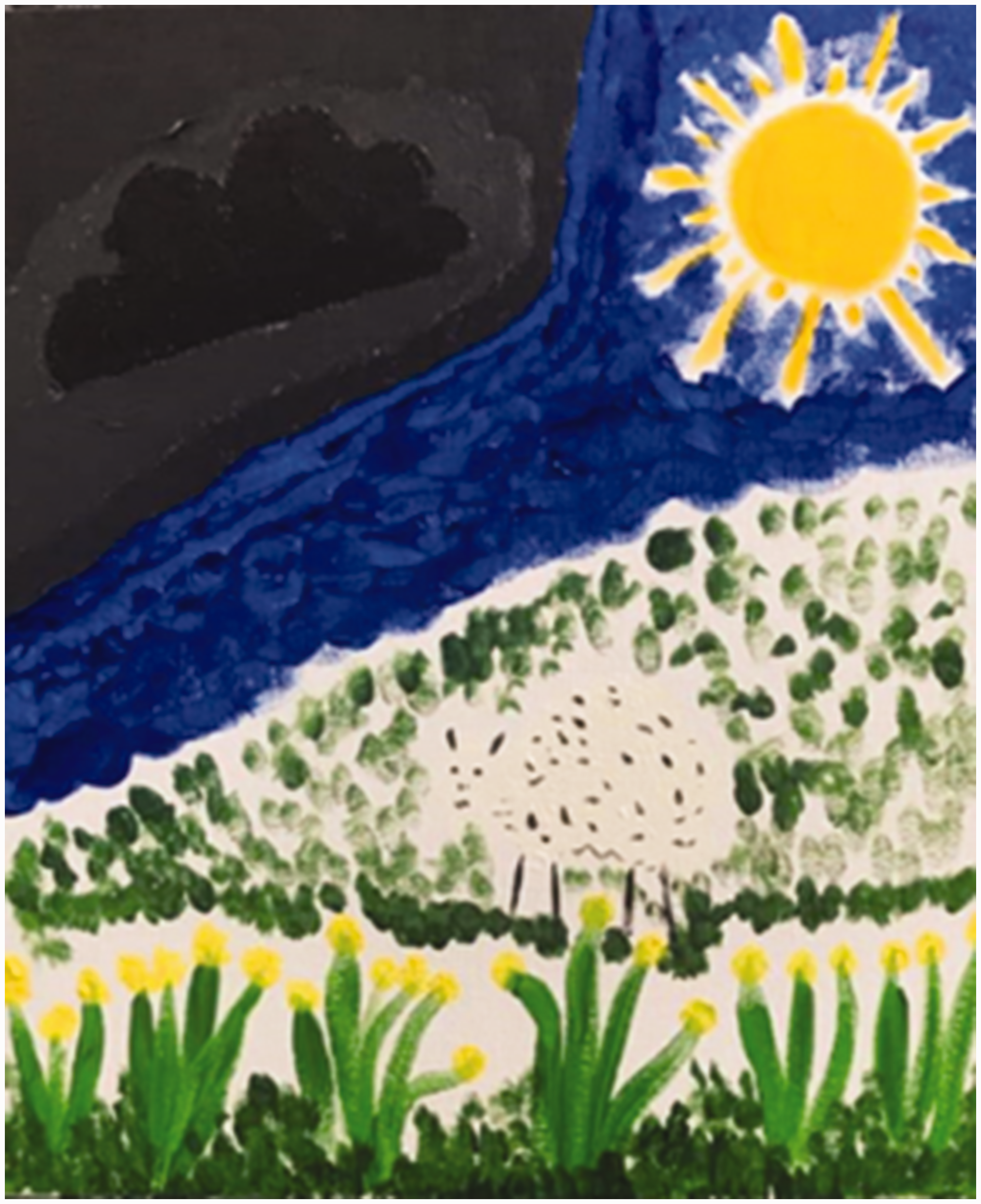
Explaining there was a fear of rejection, four of the participants hid their experiences of CPV from family and friends. Participants 2 and 4 both created landscapes which included elements of how they wanted to be perceived by others. Participant 4 layered the blue in the sky to demonstrate that there are various layers of what she allows people to see from the outside (Figure 2).
Participant 4.
The peer support group from which participants were recruited was identified as “a lifeline” to three participants. Here they found acceptance through peer support, and a safe space to share their experiences. Participant 4 spoke extensively about isolation and this was a common thread amongst all the mothers in this research.
“The hardest bit is how lonely it all is” (P4).
Three participants placed themselves within their art. Both participant 4 and participant 2 created natural landscapes and inserted themselves into their art as white creatures. Both spoke positively about their experiences of parenting, using colours which presented their experiences as predominantly natural, and peaceful. However, their reasons for being white creatures were different. The former was presented as a reactive parent, responding to the distress of her child after an incident of violence.
“I’m the soft, warm comfort that lets him know he is safe” (P4)
Participant 2 was a more proactive parent, stating she was always looking out for triggers to avoid violent incidents. Participant 2 included herself as a swan in her art (Figure 3) to demonstrate some of the emotional and practical challenges.

Participant 2.
“The swan is perfect, because I’m always battling that undercurrent, everything looks ok on the surface but inside I’m battling just to stay above water.” (P2)
Three participants spoke about their difficulty in being both victim and protector to their child, and this created a sense of cognitive dissonance. These mothers were not sure how to support, comfort, or care for their child when they were frightened of triggering an incidence of CPV. “I’m meant to be his comfort blanket, not a punching bag.” (P2)
Balancing multiple needs
Participants with multiple children explored challenges in trying to support one child who is experiencing a lot of overwhelming emotions, whilst also showing other children in the household that violent behaviours are unacceptable.
“I couldn’t explain to her why he destroyed her desk. She thought he must hate her, she doesn’t understand.” (P5)
All participants identified that CPV was related to emotional dysregulation, although only three children had a diagnosed neurodiverse profile. Four participants had children with special educational needs, and one had adopted her children. All five mothers identified anxiety as the primary cause of the CPV, considering it the unintended outcome to a neurobiological fight or flight response.
Whilst no CPV-specific interventions had been offered to any of the participants, one mother explained that learning about therapeutic parenting empowered her to support her child. In this case her child had experienced traumatic events, prior to their adoption.
“Learning about how trauma affects the brain… that it’s his animal brain taking over… I just wonder what could be different if we were told all this six years ago, when we first asked for help.” (P4)
The needs of children to learn socially acceptable behaviour was considered a challenge to all mothers in this research, and they were all concerned that problems would escalate as their child grew older and stronger. This was particularly a concern of mothers who were using restrictive techniques to manage CPV which would not be transferable to adolescence or adulthood. Furthermore, the participants recognised that some behaviours were socially tolerable in small children, but may be criminal in older children.
“It’s cute when he’s seven. It will be criminal when he’s seventeen” (P3).
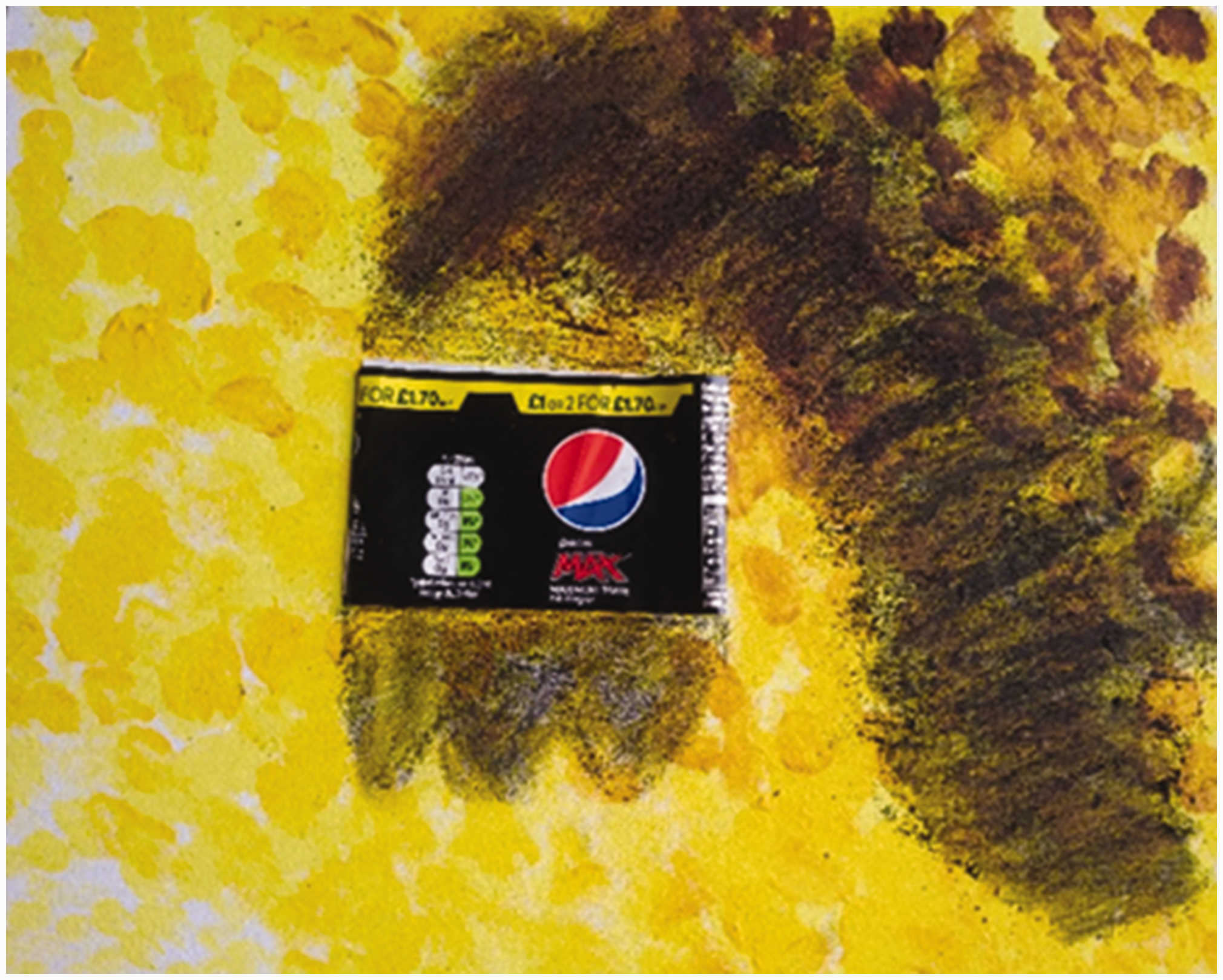
Some children initiating CPV do not present the same behaviours everywhere. These children have variable profiles which may result in acceptable behaviour within school, but not at home, or vice versa. Participant 1 used a “Pepsi” wrapper to represent her experiences (Figure 4). Using a shaken up bottle to describe how her daughter managed her behaviour at school, but could not maintain this within the home.
Participant 1.
“As soon as she’s in her safe space [at home], that’s it, everything she’s been holding in just bubbles out, it bubbles over, and school don’t believe it because she’s fine there.” (P1)
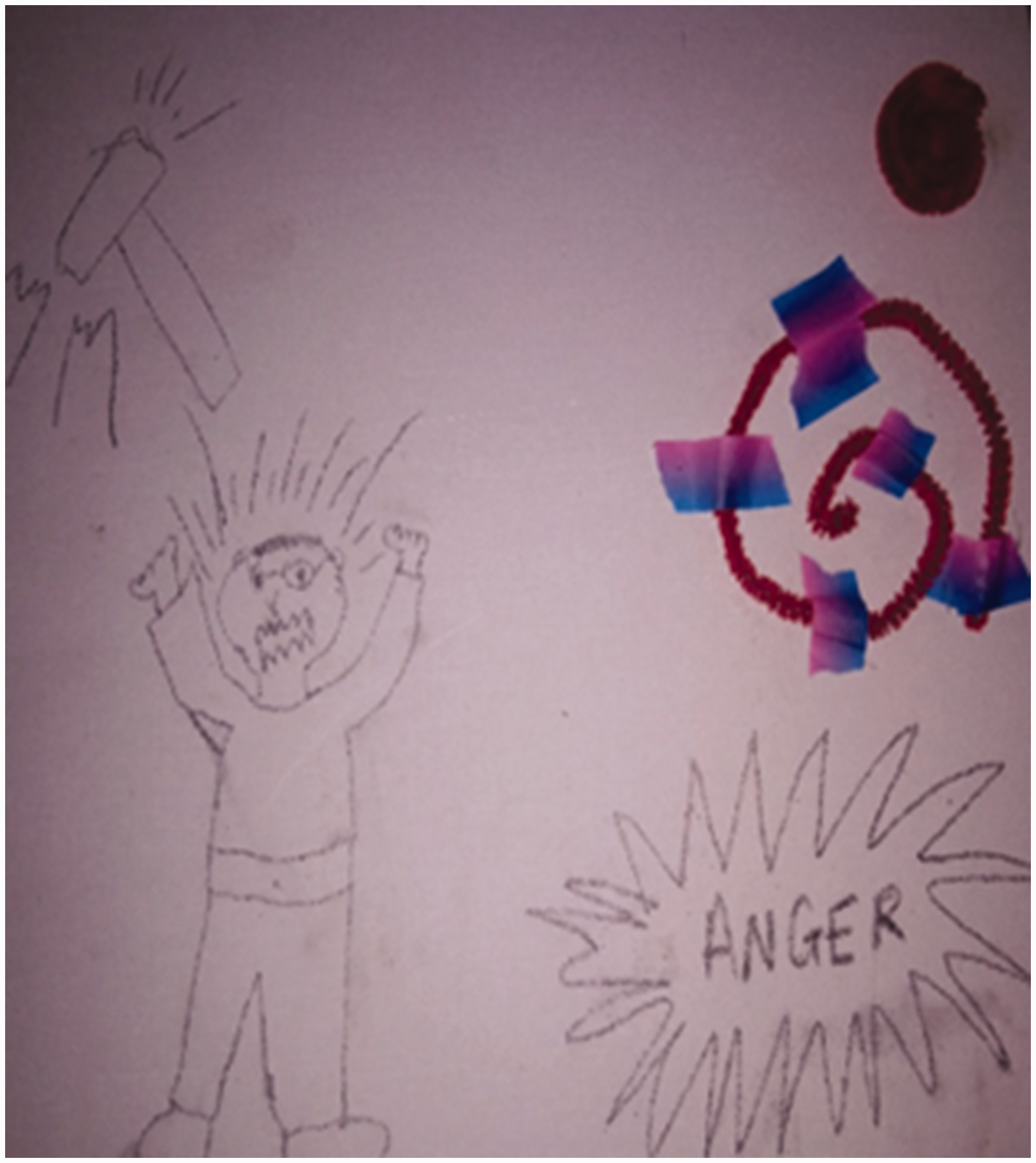
When there is inconsistency in the behavioural profile of a child, it can result in conflict between parents and services. Participant 5 shared frustration at the lack of support she had been given, and that she had not been offered tools to support her son. Instead she felt she was expected to manage CPV alone; using a pipe cleaner like a spring in her visual representation (Figure 5) of him being ready to initiate CPV.
Participant 5.
Discussion
This was an exploratory study and the first study to focus upon the experiences of mothers living with CPV initiated by pre-adolescent children. Using an ethno-mimetic approach to elicit in-depth phenomenological narratives, the findings show that there are parallels between experiencing pre-adolescent CPV, adolescent CPV, and intimate partner violence. Mothers highlight that organisational responses, particularly their relationship with school, can have a significant impact on their own wellbeing and ability to support their child. Furthermore, as mothers struggle to manage the behaviours and identify the triggers for CPV, they currently recognise the behaviours as representative of mental health needs. These mothers highlighted concerns that behaviours will be criminalised if interventions are not implemented prior to adolescence.
Fear and anxiety
This study found that mothers living with pre-adolescent CPV were frequently feeling as though they were ‘walking on eggshells.’ This is a term that is often used to describe the embodied experience of living with violent, abusive, and controlling behaviours; particularly where there are social barriers to help-seeking (Donovan and Barnes, 2020). It is also a term identified by practitioners as evoking the biological processes known as ‘toxic stress’ (Condon and Sadler, 2019).
Toxic stress is the term given when the body maintains elevated levels of cortisol due to prolonged periods of adversity and correlates with poor outcomes throughout the lifespan (Shern et al., 2016). Whilst there has been much debate around the appropriateness of scoring adverse childhood experiences (ACES) in children (CDC, 2014), there is clear evidence that toxic stress also impacts the health and wellbeing of adults. Toxic stress increases vulnerability to anxiety, depression, poor physical health, premature death, and reduced immunocompetency (Gleeson et al., 2017). Meaning that the wellbeing of parents is not an individual problem, but a potential public health issue (Shern et al., 2016).
Toxic stress can also occur when mothers feel unsupported by wider systems, such as the school their child attends, or their peers. This research highlighted that for mothers experiencing CPV, their physical health conditions became worse as CPV incidents increased. It is likely that is related to their stress response. The longer mothers live with CPV, the longer they will experience toxic stress, which could have a profound impact on their health. This also means that when mothers in this research found peer support groups, these groups were essential to maintaining a sense of wellbeing and improved their own physical health.
Domestic abuse
This research highlights that mothers often will not use the language ‘child-on-parent violence’ because they do not recognise the behaviours as violent in the way violence is often understood within the domestic abuse framework. Instead, mothers articulate their experiences as being those of living with an overwhelmed young child who is living in a state of high anxiety. Perhaps these behaviours are easier to understand as a vulnerability in the child, because of the age of their child. Perhaps because it is much easier to understand the vulnerabilities of younger children than the vulnerabilities of adolescents initiating violent behaviours.
Despite descriptions of violence, all mothers in this research articulated they were trying to manage the emotions of their children, rather than the behaviours. Whilst the mothers in this research identify some similarities with other forms of domestic abuse; using biopsychosocial models to understand the behaviour of their children was an empowering way for mothers to interpret CPV. This interpretation allowed for mothers to manage the challenges emotionally by interpreting CPV in pre-adolescents as a physiological response to triggers, not an intentional or pre-meditated behaviour (Roesch-Marsh, 2014; Rose, 2014).
The mothers in this research may not have considered the behaviour of their child as intentional due to the age of their children; as how the parent understands childhood is contradicted by the behaviour of their own child (Smith, 2009). Nevertheless, the experience of walking on eggshells appears to correlate with experiences of adolescent-initiated CPV and intimate-partner violence (Clarke et al., 2017; Desir and Karatekin, 2018). This may be because adolescent-to-parent violence does not occur overnight, but is often the result of incremental behavioural changes, with many adolescents and adults reporting they began using violent strategies aged 2–11 (Desir and Karatekin, 2018; Nock and Kazdin, 2002; Ulman and Straus, 2003). Nevertheless, most research into CPV exists to target adolescent violent and aggressive behaviours during periods of family crisis (Condry and Miles, 2014; Coogan, 2011) and this is also true of policy (Home Office, 2015).
Presenting motherhood
Arguably, the role of a parent is to provide a secure base for their child in preparation for adulthood. Whilst mothers in this research were able to talk about their perceptions of how they provide a secure base for their child, they were less confident in how well they were able to prepare their child for adulthood. Furthermore, the mothers in this research also articulated challenges in providing an honest account of their experiences with friends and families. Mothers admitted hiding their experiences of violence and attempts to control what others were able to see, which is likely to restrict social opportunities for the whole family.
This research identifies challenges the mothers have in being both victim and protector to their child. Socially, parents are expected to be helpers; supporting their children learn, grow, and develop which is made more difficult when their child is experiencing poor mental health (Green et al., 2018; Kenny et al., 2017). As mothers do not fit either the ‘victim’ or ‘survivor’ paradigms when experiencing child-to-parent violence; this created challenge for mothers, particularly regarding competing roles and identities.
Balancing multiple needs
This research demonstrates challenges mothers have when help seeking for pre-adolescent CPV. All mothers in this research struggled to get assistance for their children, either for their behaviour or mental health needs. Whilst early intervention is posited as the ideal, particularly with vulnerable children (Little and Mount, 2018), this makes it more difficult for parents who have been told they do not meet the threshold for support or guidance from services.
In this research violence was a small aspect of the parental experience. Instead, mothers spoke of the complex experience of managing the wider field of ‘challenging behaviour. Mothers otherwise considered parenting to mostly be a positive experience. All participants in this research were mothers, and they were all interested in exploring what being a mother was like for them.
None of the mothers felt that violence within the home defined their parenting, instead it was their relationships with their child; their role as protector, supporter, and comforter that defined them as parents. Nevertheless, parents in this research are affected by toxic stress due to the unpredictability of the behaviour of their child. This toxic stress can be compounded when mothers do not feel they are supported by wider systems, such as schools or peers.
Conclusion
This research used creative methods to explore the maternal experiences of pre-adolescent initiated CPV. Whilst prior research has emphasized the importance of understanding and providing interventions for adolescent-to-parent violence, this research highlights that often mothers do not recognise CPV as violence, but as a manifestation of overwhelming emotions. Nevertheless, CPV impacts on the emotional and physical health of mothers. A lack of available strategies or support services means that mothers are waiting until crisis in adolescence to access services.
Mothers find biopsychosocial education about their child, and anxiety-focused responses empowering. However, this type of training needs to be accessible and initiated early to prevent escalation or habituation of the aggressive and violent behaviours. School is an ideal gatekeeper for support, but there are challenges to how school staff can interpret the language used by mothers, who often speak of challenging behaviour rather than violence.
Limitations
This was an exploratory piece of research created due to the lack of evidence regarding parental experiences of pre-adolescent CPV using ethno-mimetic methods. It adds to the knowledge base of CPV in children under 12 rather than providing guidance to practitioners or parents. Nor does it offer anything regarding coping strategies employed by parents with young children presenting with CPV.
My recruitment strategy limited the breadth of participants. All participants were supporting children under CAMHS, and the group is predominantly women. Consequently, all the participants were women, and considered themselves parents of children with mental health needs rather than children who use violent strategies.
Footnotes
Acknowledgements
Thank you to Associate Professor Helen Charnley, who was instrumental in the development of this research; casting her social justice lens over the early conceptualisations of this project. Also, to Professor Roger Smith, who assisted in some of the early-stage construction.
Thank you to Helen Bonnick, a social worker who has provided an incredible resource through ‘Holes in the Wall’ which made the literature review for this research much easier.
To my reviewers, and also editor Lisa Morriss, who so carefully critiqued and fed back on this article. Your patience, time and constructive comments have improved this article beyond measure. You have shown me that kindness is academia is not only possible, but essential.
Finally – and most importantly – thank you to the mothers who participated in this research. You are not alone.
Declaration of conflicting interests
The author(s) declared no potential conflicts of interest with respect to the research, authorship, and/or publication of this article.
Funding
The author(s) disclosed receipt of the following financial support for the research, authorship, and/or publication of this article:ESRC [Grant number 2204811] in support of the writing and publication of this article
