




Abstract
This paper presents findings from a photovoice project that was aimed at engaging with a diverse range of black men in a London Borough. The key objectives were to find a different way to get men to talk about their concerns and to raise awareness about mental health. Photovoice is a participatory research action technique that was developed to enable communities to document their concerns and experiences of community life that is meaningful to them. Nineteen men participated in the project. It has been suggested that men, in particular, black men do not find it easy to talk about mental health issues. This study found that through the use of photovoice methods, black men were able to talk about a range of emotions when they were offered the right medium and safe spaces to share their experiences. It found that they can and want to take control of their lives, but at times may require life skills training. Another finding was that black men have to balance expectations about being strong whilst ‘containing’ vulnerabilities in racialised contexts – being hard on the outside and human on the inside, and that their experiences are characterised by journeys of significant struggle and resilience in the face of adversity. The paper concludes that mental health services should find ways of engaging with black men differently, i.e. reaching out rather than the traditional mantra of ‘outreach’.
Introduction
Mental health and the disparities that black 1 communities face has been a subject of debate for a few decades. It has been the focus of numerous research reports that consistently confirmed racial inequalities in mental health, but sadly none of the reports offer conclusive explanations for this intractable situation (Cabinet Office, 2017; Davies, 2014). Despite the research and policy initiatives, there is a lack of research that puts the experience of black men at the centre.
This paper presents findings from a project termed ARISE that was commissioned by a small voluntary sector organisation in a London Borough to provide and document a different gaze into the perspectives of black men on mental health. Black men were chosen as the focus of the project given that they have the worst outcomes in relation to mental health and well-being (Cabinet Office, 2017). Moreover, there are essentialised and racialised views that black men are hard to reach and do not talk about emotions (Stein, 2018). These behaviours are not different to those of other men in general, but has to be understood in the broader context of ethnicity, masculinity and racialisation (Keating, 2016). The project aimed to challenge these stereotypes by having as many conversations with black men throughout the borough. It was anticipated that these conversations would help build a picture of what the real needs are for a group at highest risk of being diagnosed with a serious mental health problem, but often with limited pathways to support.
The definition of arise (“Arise”, 2019) is: ‘to come into being, action, or notice; originate; appear; spring up’. This definition embodied this project: in essence, the study aimed to hear from black men about the ways they notice the world and how that world reflects (or not) their mood, well-being and emotions. In each interview with participants, we also aimed to learn how to improve access to support and what participants aspired to achieve in their lives. We also wanted to learn their full story and what they felt affected their mental wellbeing, including their interactions with mental health support services and their history of mental health.
Why is this still necessary today?
There is well-documented evidence that black men face serious disparities in relation to mental health that lead to poorer outcomes (Bhui and O’Hara, 2014; Cabinet Office, 2017; Synergi, 2019). We know that they have more adverse pathways into care such as coming into contact with mental health services via the police and the criminal justice system and that they are more likely to be admitted compulsorily (Jeraj et al., 2015; Synergi, 2018). They are also five times more likely to be given a diagnosis of schizophrenia and experience longer compulsory hospital care (Rees et al., 2016). This is overlaid by the fact that they experience the harsher and coercive end of mental health services (CQC, 2016). This leads to a range of complexities such as reluctance on the part of the men to engage with mental health services; inappropriate service interventions and responses and black men coming into contact with services at crisis points. An earlier study to explore black men’s constructions about emotional well-being concluded that men who have had contact with mental health services were in what was termed ‘a stalled cycle of recovery’ (Robinson et al., 2011). These men’s experiences were characterised by adverse pathways to care; coercive interventions; stereotypical views; reluctance to engage with services; worsening distress and ultimately fear and mistrust of engaging with mental health services (Mantovani et al., 2016; Memon et al., 2016; Public Health England, 2018). Various explanations have been offered for this seemingly intractable situation. Suffice it to say that the disparities highlighted here should be analysed in the context of racialisation. It has also been suggested that support that addresses social need can lead to improved outcomes for black men (Morgan et al., 2017).
Methodology
In order to gain greater insights into black men’s perspectives and experiences, Photovoice was used as a medium to engage men with the aims of the project. Photovoice is a technique developed by Wang and Burris (1994) as a tool for social change. It is a Participatory Action Research (PAR) approach in which local people are asked to record or document events and conditions in their community in ways that are meaningful to them. These photos are then used as a means to start a conversation about the meaning and the significance of the photographs to gain new and different insights about their lives. Photovoice has been used in mental health research to explore issues such as the experience of living with illness, feelings of being marginalised and experiences of recovery (Han and Oliffe, 2016). Photovoice has been used specifically with black men in other contexts such as men who have sex with men (Sun et al., 2018), men who are homeless (Yu et al., 2018) and men with prostate cancer (Gillbert, 2017). However, a search on the use of photovoice with black men in relation to mental health yielded no results. Thus, photovoice has been chosen as an appropriate methodology to achieve the aims of the study. Particularly, as it has been argued that photovoice can enable people who have been silenced or marginalised to produce testimonies that capture their views and lived experience (Sutton-Brown, 2014).
Sampling and recruitment to the project
First, the project worker produced promotional material (leaflets, posters and flyers) and distributed them by leafleting on the street, promoting in local barbershops, churches, mosques, gyms, colleges and community centres. He attended service-user workshops and group activities, facilitated by local charities and community groups, with the promotional leaflet and approached black men to join the project. Individuals in supported housing were approached via a local housing team, with a sign-up letter detailing the aims and methods of the project. The project was granted favourable ethical approval by the university ethics committee.
Pop-up stalls were set up across the borough in different public locations, with heavy foot traffic, to register interest and explain the project to passers-by. The project worker also attended local events tailored for members of the black community, to recruit more participants and to obtain a more well-rounded view of the diversity, issues and cultures of the communities.
Timeslots were booked on local radio stations (including pirate stations) to discuss mental health awareness and support within the black male community (as well as the project). The project worker created and managed a project-specific twitter/Instagram account. It was used as a promotional tool to raise awareness of mental health statistics, support in the black community, current events and the project.
All prospective participants were invited to a local venue for an initial meeting. The inclusion criteria for participants were: Men who self-identify as black, men who live in the Borough and men of working age. They were provided with a consent and a contact form, were provided an opportunity to ask further questions and it was explained that if they agree to participate that we were also seeking consent to use their photos in an exhibition and future publications about the project. The latter was not a requirement to participate in the project, and it was made clear to participants that if they do not consent to their photos being used in published material, they could still participate and that they could withdraw from the study with no detriment to them.
All participants who agreed and consented to participate in the photovoice project were provided with a digital camera, if they did not have access to their own camera. They were given brief training on use of the camera and the guidelines of their task. They all had a week to take up to 10 pictures of anything that is important to them or that affects their mood, both positively and negatively. A purposive sample (Battaglia, 2011), i.e. based on shared characteristics were achieved to include 19 men. In addition to consenting to participate, all the men gave permission for their photographs to be used in the exhibition and subsequent publications.
A follow-up meeting was then arranged to see and discuss five of their favourite photos. All discussions were recorded with a Dictaphone or notepad (if they were uncomfortable being recorded). A technique called ‘SHOWeD’ developed by Wang and Burris (1997) was used to inform the narrative interviews. The focus of the discussions was the meaning of each photo, the mood it represents, what else triggers that mood, whether they can control their mood, what they do to control their mood, if they have support or discussions about their moods and their thoughts on what support they would like for dealing with low moods and emotional health, in general. The discussions ended on their aspirations for the future and a short feedback questionnaire on the use of photovoice.
The most evocative photos, which had consent from the owner, were presented at a gallery exhibition in the local Civic Centre for two months. The exhibition launch was attended by participants, local community services representatives, health and social care representatives, service users and the general public. The aim was to raise public awareness about mental health in black communities.
Data analysis
The visual data (photographs) were analysed in narrative interviews with the men by capturing the subject or content, the symbolic features of the photo and the symbolic meanings of the photos. The narrative interviews were informed by the structure that Wang and Burris (1997) proposed and focused on: what the men saw, how they related the photographs to their lives, why this concerned them and what could be done about it.
Subsequently, transcripts of the interviews were analysed using an interpretive phenomenological approach (Smith and Osborn, 2003). The analysis involved detailed exploration of how participants made sense of their personal and social world. Each transcript was analysed individually looking for the themes in each case. The themes from all the cases were clustered to look for convergence or divergence to arrive at an overarching set of themes also referred to as super‐ordinate themes (Smith and Osborn, 2003).
Results
Overview of the men
The men who volunteered to participate in the project were from African Caribbean or Black British background, on average, were in the age range 30–40, were mostly single and 60% identified themselves as Christian. Half of the men who participated had previous contact with mental health services. The main reasons why the men volunteered to participate in the project ranged from valuing the work of the local voluntary sector agency to wanting to develop skills in a creative art such as photography.
Overview of the photos images: Key themes
The subject matter of the photos captured the environments in which the men lived and socialised. The photographs included images of nature, the environment, buildings, a religious icon, food and drink (including alcohol), posters, a cemetery, a pet and personal living spaces.
In terms of symbolic features, the photographs captured both the positive and negative impact of the environment on emotional well-being. At the symbolic interpretive level, the photographs captured the men’s sense of identity, their thought processes, a sense of loss, a sense history and a feeling of hope and optimism. These meanings are discussed in greater detail below.
Cultural identity
Participants spoke eloquently about the ways in which the selected photo reminded them of their cultural roots and identity. Cultural identity featured as a central theme in how men talked about their lived experiences. One participant selected a screen shot of Bob Marley and said this about it (Figure 1): Every time I hear this song, it reminds me of my roots. There is a relatability there. It is seeing Jesus through a black man’s eyes.
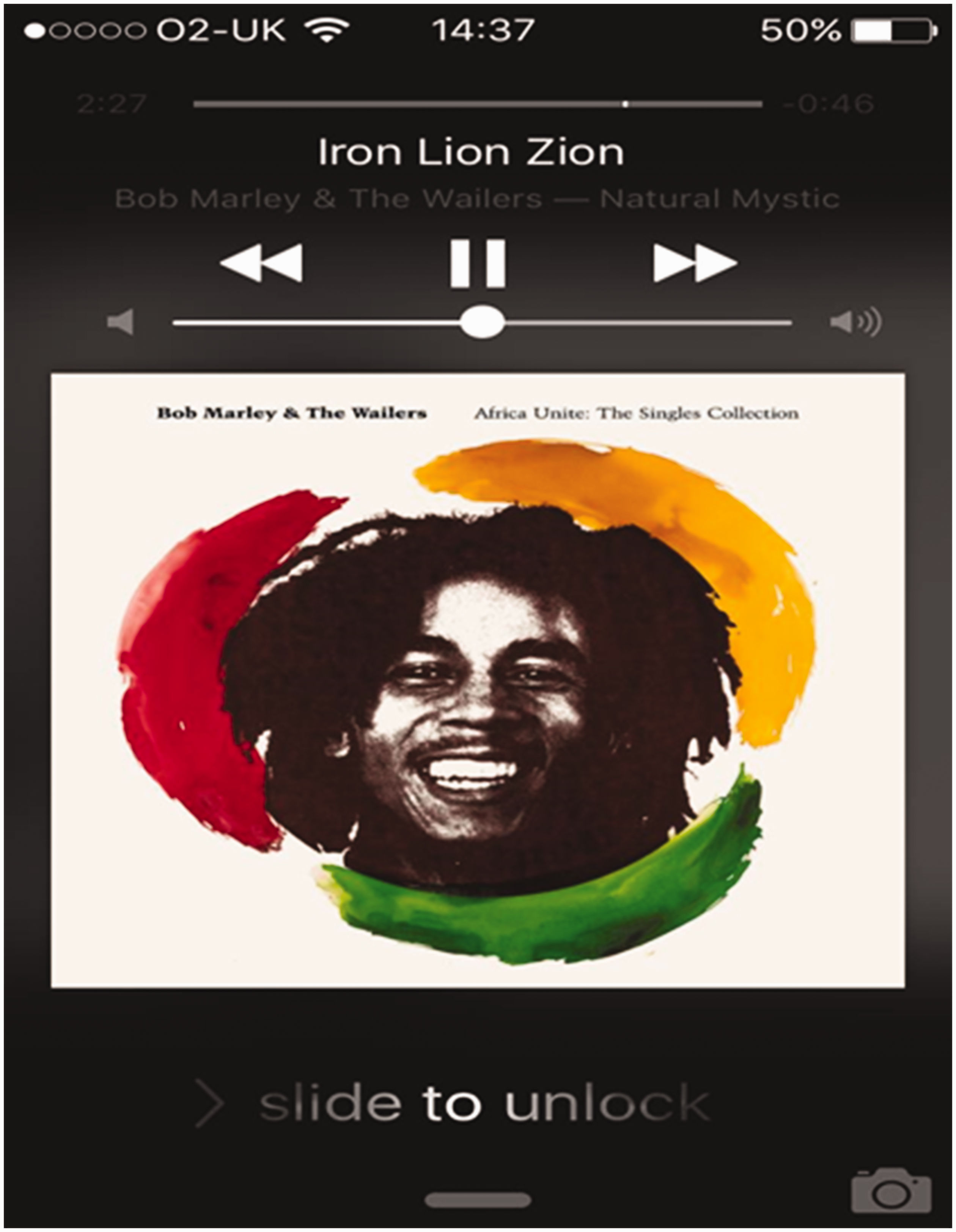
Screenshot of Bob Marley.
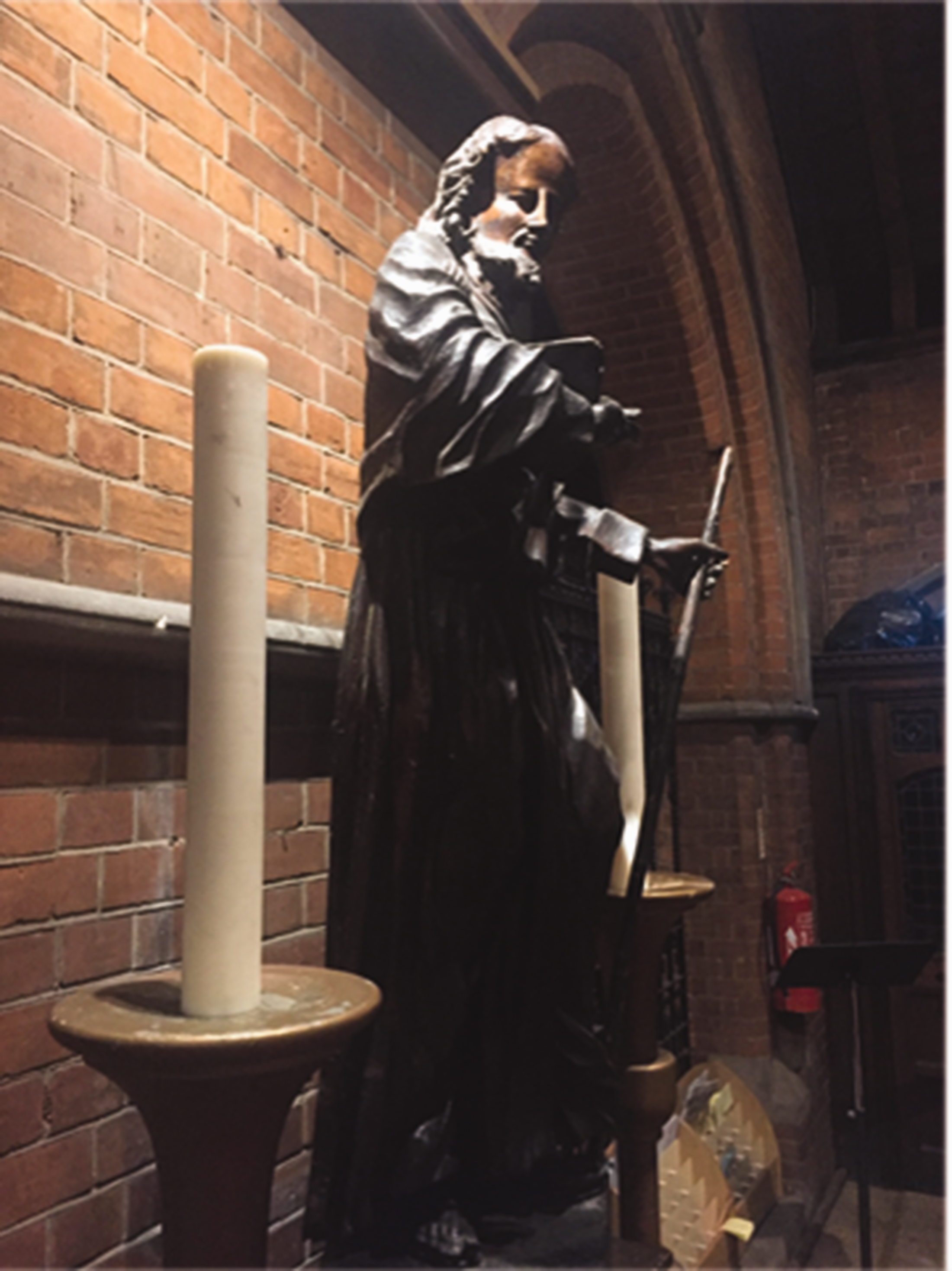
Statue.
Loss
A number of photos signified loss at both personal and material level. At a personal and emotional level, it was related to death and losing a family member. For example, one participant chose to do a painting in which red was the dominant colour. When asked about the significance of the colour, he stated that it reminded him of the time his grandmother died while he was holding her. On a material level, participants spoke of their reduced circumstances since becoming unwell. One participant chose a photo of an empty cupboard and said this (Figure 3): I used to have full cupboards, but this is no longer the case … not having any food in my cupboard makes me feel low.
Freedom and limits to freedom
The men spoke of how the photographs reminded them of a sense of ‘being free’ by choosing a photo of a bird bath and birds in flight. Others selected photographs that reminded them of times when their freedoms were limited, such as being admitted to hospital. One participant, for example, selected a photograph of a railing (Figure 4) and said how it reminded him of being ‘cut off’ and ‘locked in’.
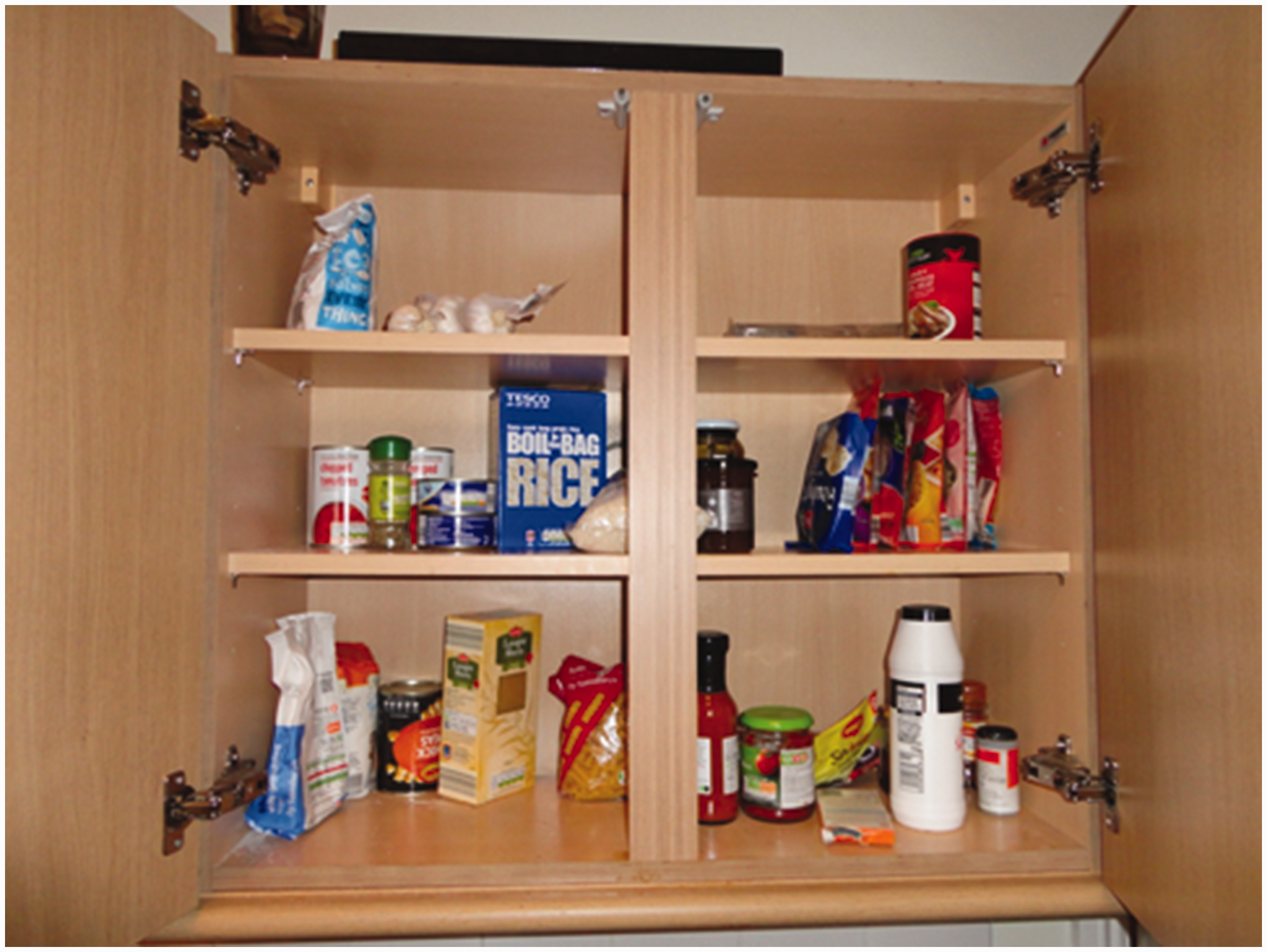
Empty Cupboard.
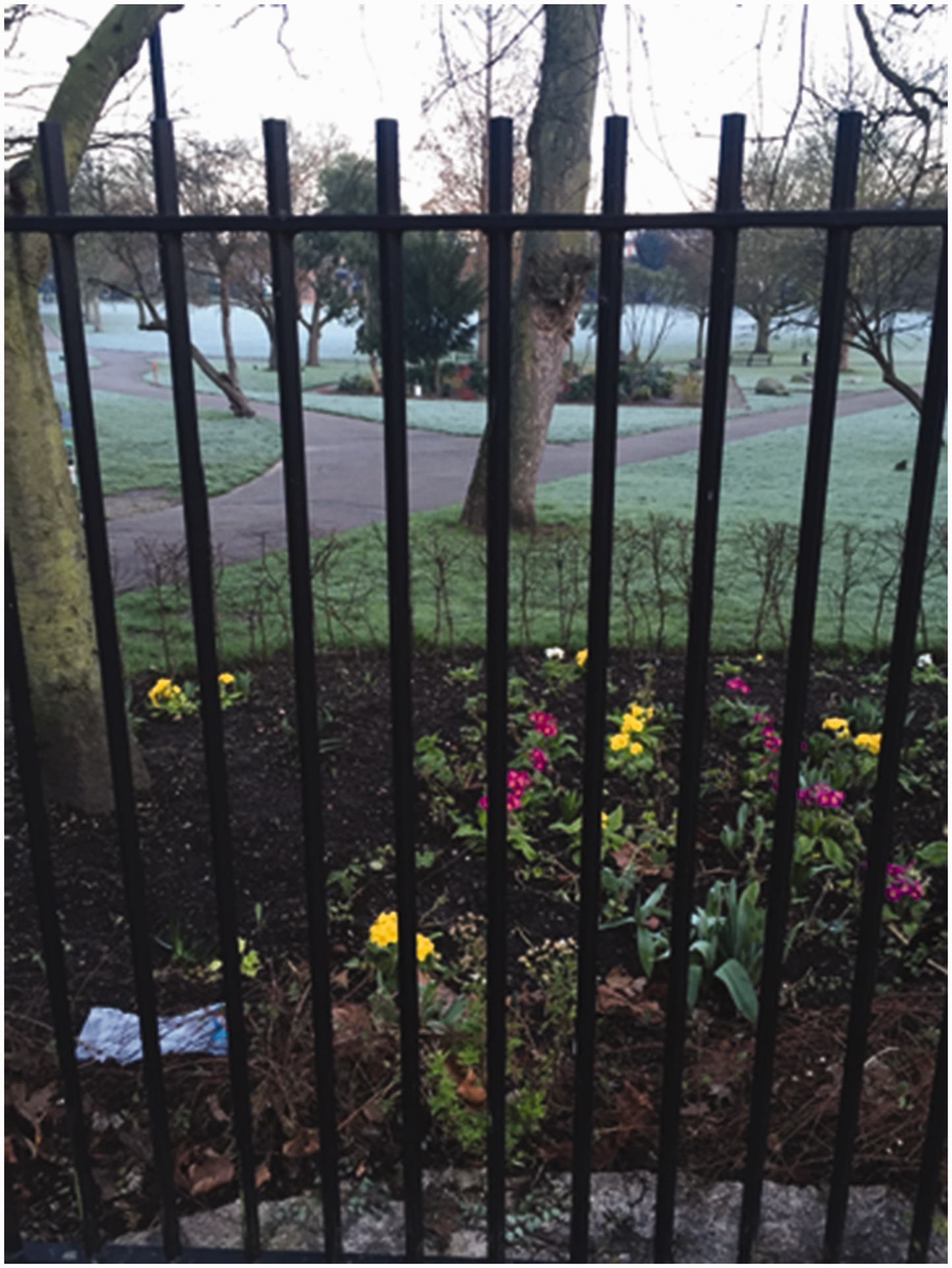
Railing.
Negative impact of the environment
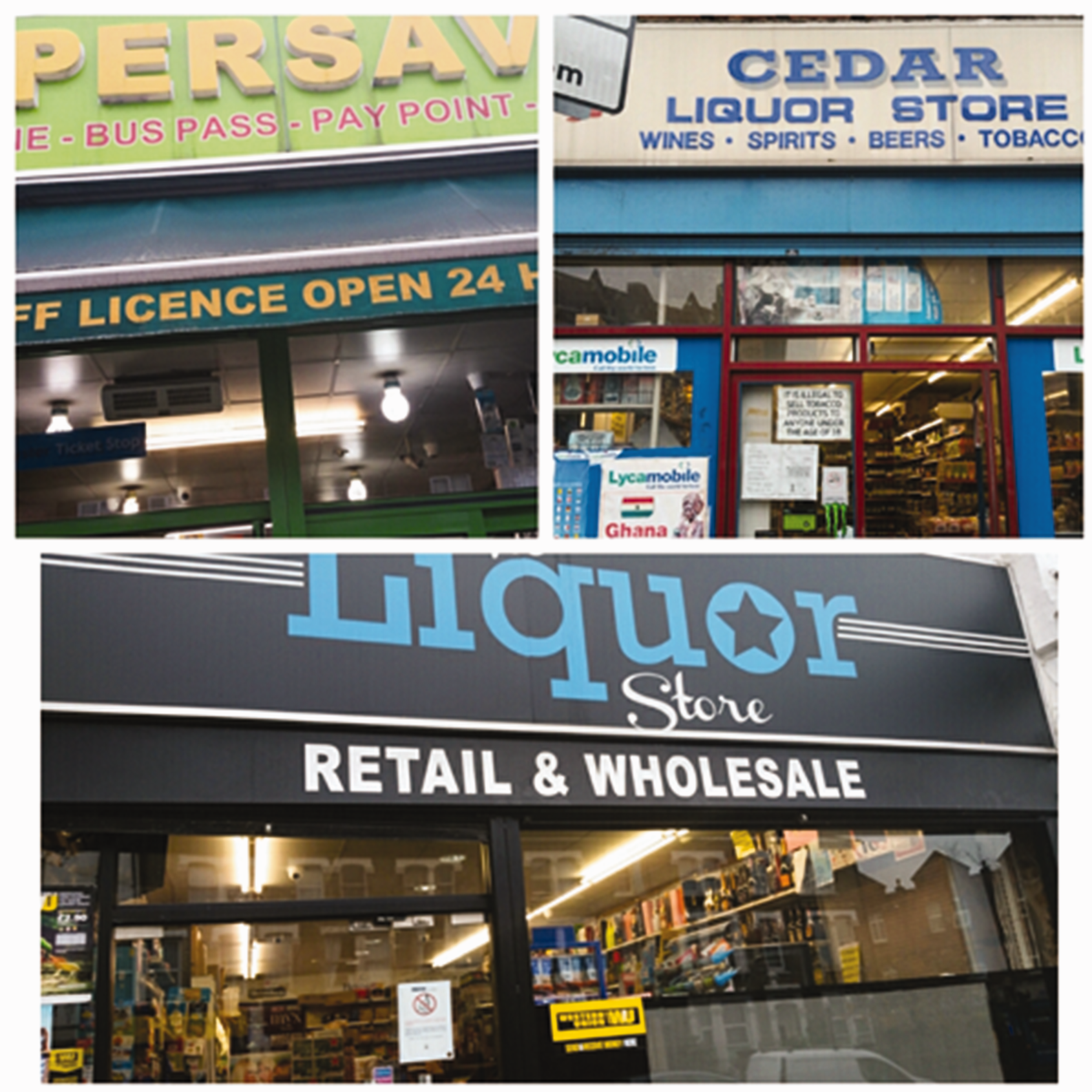
Participants spoke of the environment and how it impacts on them negatively. For example, they commented on how access to cheap alcohol, greasy food and betting shops can be detrimental to well-being. As one person talking about fast food stated: From my experience, when I eat these things on a continual basis, I get a bit …groggy, sleepy, it’s not well-being.
Hope and aspirations
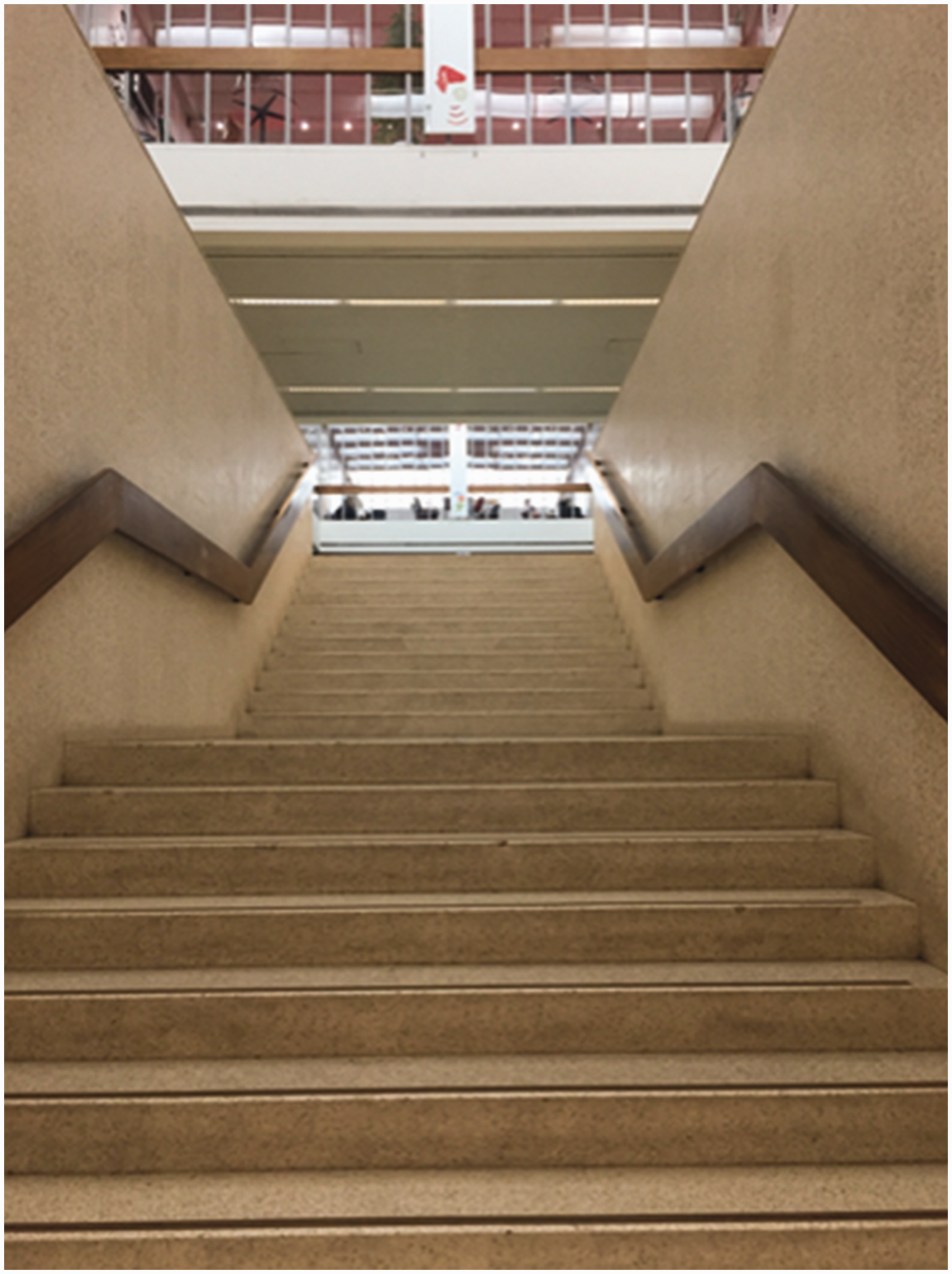
Hope and having aspirations emerged as a common them for the men. They aspired to obtain jobs, re-entering education, learning a new skill or going on holiday. Photos of a seascape, a toy car and a library staircase depicted these ideals.
One participant selected an image of a staircase in a library and said this (Figure 6): In the sense that you have to walk up these stairs to get the knowledge. You’re taking these big steps to come to the library. When I was younger I never visited a library once.
Liquor Stores.
Staircase.
Business Suits.
Key themes from the narrative interviews
Complexities of black masculinity
A theme that emerged from the conversations with the men was the challenges in relation to masculinity. First, there was the challenge of being strong as a man in family and community contexts; the challenge of being strong as black men; living/facing with micro aggressions and the perceptions of dangerousness, violence and aggression preventing men from showing vulnerability in a racialised context. Some of the quotes below illustrate this: Black men have a strong cultural identity being hard and masculine … This created a large amount of men unwilling to talk about their emotions. A lot of hurt is being held onto by men without the ability to express it. It is hard to discuss how you are feeling as a man. I think it is harder for black men because it is seen negatively. It goes against the culture. There is a fear of black men and the perception of black men being angry are destructive to black men’s minds.
Identity
The men talked powerfully about the importance of a strong identity and how it gives them a sense of self-worth. However, some expressed the view that living in the UK has eroded their sense of identity. As one person stated: There used to be a stronger sense of identity when the first wave of black immigrants came around, but that has definitely been lost.
The importance and nature of relationships
A common theme in the conversations with men was the importance or relationships in their lives. There was a paradox in the sense that one the one hand relationships were viewed as a source of support, but on the other hand, it was also perceived as a source of stress. Relationships that were perceived as supportive were seen as sources of inspiration and sustainability. Some men were able to talk about the positive impact of some of their relationships with family members: If I didn’t have my family and friends around me, … I probably would not be here now. My mother visited me in hospital, which kept my mental stability.
Community silence: ‘We don’t talk mental health’
When men were asked to share their views on how issues of mental health are viewed in black communities, there was consensus that it is a taboo subject.
The factors that underpinned this were:
pride shame ‘‘Cos it make you look bad’ dislike reluctance denial ‘not want to admit there is a problem’; shows weakness, i.e. you cannot handle things anger
Service issues
Men who had past or current contact with mental health services were asked about their perspectives on this as well as to talk about their experiences. Much of what is reported here resonates with what we already know about the experiences of black men in their contact with mental health services. The following emerged (not in order of priority):
There was a perception that their concerns were not being taken seriously by mental health practitioners. For example, one man talked about how he on numerous occasions voiced his concerns about his excessive weight gain to a mental health practitioner, but this was never addressed or responded to. Men also reported that the nature of their relationships with family or friends was seldom the focus of interest for mental health practitioners. Instead, when their mood was low, they reported that the only professional response was to prescribe medication.
Approaches to aftercare were another area of concern. The men felt that on discharge they were left to their own devices and were not provided with information on where to obtain help, what their rights were or how to access resources such as personal budgets. This is surprising given that some of the participants were admitted to hospital under the Mental Health Act, 2007 (DH, 2007) and accordingly should have been discharged under Section 117 of the Act that outlines the statutory duties in relation to after care.
Overall, men seemed to have depersonalised experiences of mental health services and explained that mainstream mental health services were often not located in the communities, and thus services were not always aware of what is happening in the community.
Environmental impacts
Participants talked about the environments in which they live and socialised and commented that these were experienced as detrimental to mental health. Some of the features were:
Unhealthy food options – fast food outlets, Easy access to cheap alcohol – easy access to Off Licenses, Limited leisure/recreation opportunities, betting shops ‘these places are advertised furiously’ Unsafe spaces – ‘these places are often used to purchase drugs’
These commercial outlets have been termed ‘health-destabilizing industries’ (Kwate and Meyer, 2011: 196) and seem to be disproportionately located in black neighbourhoods.
Men taking control
All the men who participated in the project wanted to achieve a measure of control in their lives. Some men talked about being ‘in charge of their journeys’ and were trying to achieve this in a number of ways, e.g.:
Self expression – music, poetry Physical fitness – looking after the body Health and well-being – control alcohol intake Self-improvement – education, job training
Discussion
The photovoice project enabled black men to own and direct their narratives. The conversation started with a seemingly impersonal focus, i.e. the photograph and then shifted to a discussion that became more personal and nuanced. Participants were able to talk more freely about their emotions and their strategies for dealing with it. The photographs enabled men to engage at a personal and intrapersonal level. They were able to talk about their own concerns and broaden this out to the wider community. This challenges the stereotype that black men do not talk about emotions (Stein, 2018).
Participants who had previous contact with mental health services talked about the support they received and how this often was not entirely appropriate to their needs. This points to a need to involve men more closely in defining their needs and how these can be met. The personalisation philosophy enshrined in current Social Care Legislation in, for example, England (HM Government, 2014) offers opportunities to achieve this. It is suggested that men will be likely to engage positively with a more engaging process of defining need and engaging with support, which could ultimately lead to more positive outcomes. There have been suggestions that when people are in control of their treatment and care, this is more likely to lead to positive outcomes and personal empowerment (Morgan et al., 2017).
What emerged from the men’s narratives were the complexities around identity. Externally, they had to be strong and not express emotion, and, internally, they had to control those emotions. Yet, the men talked about their fragilities – the issue here is, where do men ‘take these fragilities or are they even allowed to show these fragilities? These findings illustrate Giddens’ (1991) conceptualisation of identity that suggests that social life is characterised by multiple subjectivities that cannot be analysed in isolation of each other. The men in this study had a keen awareness of who they were as men and some of the challenges they experienced in racialised contexts. Moreover, they were able to articulate the impact of poverty and a lack of amenities on their identity and their marginalisation in society. Of particular relevance here is Jenkins’ (2008) view on ethnicity as a social construct that has significant consequences for people’s experiences. The men talked unambiguously about the importance of an ethnic identity and how this intersected with their masculinity, racialisation, culture, spirituality and their lived experience. What is important here is that the men were able to speak clearly about these multiple identities through the use of photovoice. Seeing black men as ‘holding’ multiple identities should not imply that we are pathologising them. It only means that they too experience the full range of human emotions which include resilience, vulnerability and fragility. The challenge is: How do we make it possible and safe for black men to express their fragility and build resilience?
At the heart of these men’s stories were journeys of struggle, survival and resilience. These were: struggle in family contexts and personal relationships; struggles to be recognised in society; a struggle for achievement and struggles to have their voices heard in mental health services. Men also talked about how they survive or keep going by taking control of their situations, draw support from family members and the strategies they employ to build their own resilience. The poverty and lack of amenities described by the men must be understood in the context of the negative impact of austerity (a reduction of governmental involvement in social spending) on Black communities (Fisher and Nandi, 2015). Lavalette (2017) demonstrated how austerity measures led to significant rises in inequality, including racial inequalities. Lavalette (2017) suggested that it is crucial that mental health services develop an understanding of how austerity impacts the lives of service users and respond to multiplicity of need. It has to be acknowledged that these findings may resonate with other groups of men; but for black men, this has to be located in the context of the intersections across ethnicity, masculinity and racialisation.
Limitations of the study
The first limitation relates to the methods of recruitment, which means that there may have been bias in the sample. For example, the study did not recruit younger men who may have shared different views on the issues addressed in this paper. Younger men may have, for example, chosen social media to share their views as this method of communication is now preferred among younger generations. The study did not follow a truly PAR approach given resource and time constraints. Therefore, it was also not possible to establish to what extent the project influenced local policy makers due to the fact that the commissioning voluntary sector organisation was merged with another branch at the time of writing this paper. However, the project yielded useful insights and pointers to ‘getting black men to talk’. The key messages of this project were captured in a video that included commentaries from a Senior Politician, activists and service users that was screened at local venues.
Conclusion
This paper challenges the notion that men, in particular black men, find it difficult to talk about emotions. It found that black men were able to talk about a range of emotions when they were offered the right medium and safe spaces to share their experiences. The project found that black men can and want to take control of their lives, but at times may require life skills training. Black men have to balance expectations about being strong whilst ‘containing’ vulnerabilities in racialised contexts – being hard on the outside and human on the inside, and black men’s experiences were characterised by journeys of significant struggle and resilience in the face of adversity.
This paper supports what we know about black men and mental health, but it points to a different way to engaging with men. First, we need to enable them to voice their narratives and own it, we need to develop support that men want and we should ensure that men ‘own’ the support that is on offer. This study has demonstrated that photovoice is an ideal tool to engage with black men, but also to allow them to share their narratives in a way that is meaningful to them. The stereotype that black men are ‘big and dangerous’ (i.e. strong) masks the fact that they can be vulnerable too – the challenge is how to make it safe for them to share those vulnerabilities and how to respond to it without further emasculating them. Mental health services should develop and support creative ways to talk to black men, support those who need support and support those who support black men. It is important that mental health services find ways of engaging with the multiple subjectivities of black men rather than just narrowly focusing on risk, symptom control and compliance. Finally, services should engage with black men differently: ‘Reaching Out’ not ‘Outreach’.
Footnotes
Acknowledgements
Thank you to all the men who volunteered to participate and the project worker, Lionel Biu.
Declaration of conflicting interests
The author(s) declared no potential conflicts of interest with respect to the research, authorship, and/or publication of this article.
Funding
The author(s) disclosed receipt of the following financial support for the research, authorship, and/or publication of this article: The research was funded with a small grant from the commissioning voluntary sector agency.
