




Abstract
In developmental and life-course criminology, there has long been interest in the criminal career parameters of onset and persistence. No work has explored the extent to which these parameters were impacted during the COVID-19 pandemic. We use data for 2004-born individuals in New South Wales from the Bureau of Crime Statistics and Research (BOCSAR) Reoffending Database (ROD) to examine how onset and persistence rates were affected. The cumulative rate of onset declined by 17 per cent compared with a cohort born 2 years earlier. We find few impacts on the persistence rate, but these offenders committed 10 per cent more property offences.
Introduction
Every once-in-a-while, an event occurs that fundamentally disrupts society. Like an earthquake or a tsunami, these events are often largely unpredictable, come with little warning and devastate people, communities and societies. These events, these exceptional events, may last for a while, or they may last years. In the case of the COVID-19 pandemic, the event is ongoing with the World Health Organisation continuing to classify the disease as a pandemic. The impacts of this event were sudden, sharp and all-consuming, and governments instituted wide-reaching measures to try and contain the virus, enacting plans and responses that saw us shelter in our homes, businesses and schools close, and people lose their employment. As a result of such wide-reaching measures, it came as no surprise that scholars of every persuasion sought to study the impacts. For our part, criminologists were quick to document the impacts these restrictions were to have on crime rates (see, for example, Andresen and Hodgkinson, 2020, 2022; Balmori de la Miyar et al., 2021; Belshaw et al., 2022; Boman and Gallupe, 2020; Buil-Gil and Zeng, 2021; Campedelli et al., 2020; Chernoff, 2021; Koppel et al., 2022; Mohler et al., 2020; Nivette et al., 2021). The meta-story of this work is that property and violent crime declined precipitously throughout much of the first year of the COVID-19 pandemic (Ashby, 2020; Ejrnæs and Scherg, 2022; Moise and Piquero, 2021; Nivette et al., 2021; Payne et al.,2020, 2021), especially during periods when the most stringent social distancing and stay-at-home mandates were in effect (see, for example, Nivette et al., 2021).
However, comparatively, there has been far less research that has focused on young people and the impact of the pandemic on their offending. In Australia, where the current study is located, only one other study (McCarthy et al., 2021) so far exists that has attempted to disentangle the impact of the pandemic on the offending behaviours of young people. At a time when unprecedented social interruption meant that young people were not able to exercise their free time in ways they had done so before, there are important questions to be asked about what impact this had on the number of first-time offending young people coming into contact with the criminal justice system. With prior research demonstrating that the prevalence and frequency of youth offending declined during the pandemic (Langfield, 2025), it is equally as important to understand whether the rate of new onset among a cohort of young people was also impacted. Understanding if the rate of new onset was impacted during the pandemic would provide criminal justice practitioners with important insights into how they might prepare for future events, or even how they might improve their outreach and early intervention programmes to those at risk of becoming involved with the justice system.
Similarly, among those who had already had high levels of contact with the criminal justice system, the pandemic likely impacted their routine activities and the ways in which they came into contact with the criminal justice system, albeit to a lesser extent. For instance, while research has demonstrated that some young people experienced greater parental oversight on their behaviour (see, for instance, Bülow et al., 2021), there exists a subgroup of the population that would likely not have been afforded the same. These young people are likely to have been less positively impacted by the shift to working from home for parents and the subsequent increase in parental supervision this afforded them and so time under lockdown – or ‘time at home’ – for all young people did not mean an increase in parental supervision or parental presence. It is likely that this lack of parental presence was greater in those households that had a pre-existing level of disadvantage and where parents or caregivers were likely to hold jobs that could not be continued virtually. Understanding if these changes had an impact on offending among those who already had high levels of contact with the justice system could inform how the system adapts and responds to their offending in the future.
Given our focus here on onset and persistence among young offenders, this study draws on and is guided by a developmental and life-course (DLC) criminological framework. DLC frameworks seek to understand the timing, sequencing and context of an individual’s offending across the life-course. DLC perspectives grew out of the concept of a criminal career (see, for example, Blumstein, 2016; Piquero et al., 2003) or the unfolding of crime across the life-course, that can be best understood as distinct (and measurable) events. These are known as onset (or the start of an individual’s offending), frequency (or the volume of crime committed by an individual), persistence (or the nature of continued offending by an individual) and desistance (or the ceasing of an individual’s offending). From a DLC perspective, (youth) offending is conceptualised not as a static event but rather as a dynamic process that is influenced by several factors, including exposure to both risk and protective factors, transitions between social roles, as well as the influence of both institutional and structural components (Farrington, 2003; Laub and Sampson, 1993). In this study, we are explicitly examining two of these processes – onset and persistence – to explore to what extent they may have been impacted during the COVID-19 pandemic. By situating differences between cohorts within this broader developmental framework, our analysis highlights how exogenous changes in policing or policy can interact with individual life-course histories and produce changes in criminal justice system contact.
Prior Literature
COVID-19 and impacts on young people
Young people who lived through COVID-19 restrictions have been dubbed the ‘COVID Generation’ or ‘Generation C’ (Baker and Carroll, 2024a, 2024b; Carroll and Baker, 2024) and research has already attempted to discern the short-, medium- and longer-term impacts the pandemic may have had on young people’s social, cognitive and emotional development (see, for example, Becker, 2021; Boden et al., 2021; Flanagan et al., 2021; Kauhanen et al., 2023; Nearchou et al., 2020; Panchal et al., 2023; Power et al., 2020; Smithson, 2024; Xiong et al., 2020). Perhaps the most fundamental change brought about by COVID-19 restrictions, particularly stay-at-home orders and school closures, was the restructuring of a young person’s life (Bülow et al., 2021; Evans et al., 2020; Gardner et al., 2022; Kalenkoski and Pabilonia, 2024; Kharel et al., 2022; Li et al., 2022; Munasinghe et al., 2020; Prattley et al., 2023; Sheen et al., 2021). Those growing up through this period missed important formative experiences and events – school formals and gap years were cancelled, attending university and apprenticeships were delayed, social and professional networks were not developed, and relationships with friends, family and intimate partners were weakened or broken entirely (Shergold et al., 2022).
As a result, more and more of a young person’s life was spent online, with fewer opportunities for face-to-face interaction. For instance, Munasinghe et al. (2020) showed that among young people living in Sydney, New South Wales (NSW), the use of their mobile phones and other electronic devices had increased. The authors suggest that that increase in ‘screen time’ led to a change in the way young people interacted with their environment. Similarly, Li et al. (2022) showed that 81 per cent of those aged 12–18 years in Australia avoided leaving the house, and half reported that they had not been to school in the past week (see also Gardner et al., 2022; Kalenkoski and Pabilonia, 2024; Kharel et al., 2022). Finally, Kalenkoski and Pabilonia (2024) found that American young people reported spending more time alone than with friends – which amounted to an increase of 128 minutes spent alone among young boys compared with 70 minutes among young girls. All told, young people were spending more time online and away from face-to-face interaction than before the pandemic.
It is important to note that while the above evidence appears to have indicated an increase in parental supervision during lockdown periods, there is a small subset of young people that have been impacted by the pandemic, but perhaps not in ways we might expect. In fact, there is almost no research that has specifically explored the impacts of the COVID-19 pandemic on the lives of young people at serious risk of becoming entrenched in the criminal justice system, or at risk of high-frequency contact with the criminal justice system. These individuals are likely to have been less positively impacted by the shift to working from home for parents, and the subsequent increase in parental supervision this afforded them. Kalil et al. (2020) showed that among parents who lost their jobs and suffered income losses during the pandemic, the number of negative interactions with their children increased. It is not true, then, that ‘time at home’ – or time under lockdown – for all young people meant an increase in parental supervision, or even parental presence. This is, therefore, likely to have been greater in those households that had a pre-existing level of disadvantage and where parents or caregivers were likely to hold jobs that could not be continued virtually. The result among this group of young people is to have been an increase in time spent alone away from parents, schooling and other extracurricular activities that had provided a semblance of structure to their lives prior to the pandemic leading to an increase in free time to do, largely unimpeded and unsupervised, as they pleased.
COVID-19 and youth crime
There is now a large literature that has documented the impacts of the pandemic on officially recorded crime rates (Andresen and Hodgkinson, 2022; Boman and Mowen, 2021; Campedelli et al., 2020; Cheung and Gunby, 2022; Gerell et al., 2020; Moise and Piquero, 2021; Payne et al.,2020, 2021). This work, mainly originating from the Americas and the Global North (Nivette et al., 2021), has focused on analysing trends in officially recorded data and largely examined changes in ‘traditional’ crime types such as property and violence (see, for instance, Ashby, 2020; Boman and Mowen, 2021; Campedelli et al., 2020; Payne et al., 2021; Piquero et al., 2020). However, despite this interest in the impact of the pandemic on crime rates, there have been far fewer studies that have focused on the specific impacts on young people and their offending. One of the first empirical studies to investigate the impact of the pandemic on young people and their offending was when Baglivio et al. (2022) explored whether rates of youth domestic violence changed before and after schools closed in Florida, U.S.A. The authors found that there was a significant decline in juvenile domestic violence referrals after schools in Florida had closed but that domestic violence referrals for youth increased significantly once schools reopened.
In another study looking at justice-involved youth, Reid et al. (2021) sought to understand changes in psychological well-being 1 and antisocial behaviour before and after the COVID-19 lockdown in Florida. The authors document increases in both psychological distress and antisocial behaviour after the introduction of the COVID-19 lockdown. Furthermore, they found that, with some slight differences, these results were comparable across gender and ethnicity and that increases in reported levels of frustration were associated with increases in aggressive behaviour, drug use and conduct problems in school. Also in the United States, Li et al. (2023) examined the immediate and long-term changes in youth delinquency across neighbourhoods in Harris Country, Texas. Their results indicated immediate declines in assault offences and property offences but not in drug-related offences. In terms of property offences specifically, the authors note that the post-pandemic slope indicated a steeper decline than the pre-pandemic slope. They argued that this was perhaps the first empirical evidence of the enduring effect of the pandemic on rates of property offending among young offenders. For assault offences, however, the opposite was observed, with the slopes parallel, indicating that the pandemic did not exert an enduring effect on assault offending among young people.
In Australia, a body of work has begun to emerge, exploring the impact of the pandemic on offending, and later youth offending. For instance, Wang et al. (2021) focused on state-wide trends in crime in NSW. In that study, the authors largely accord with the international scholarship showing declines in the level of violent sex crimes and other declines in theft offences. In the same state, Kim and Leung (2020) showed similar declines in non-domestic violence assault, sex offences, as well as residential and non-residential burglary. In Queensland to the north, Payne et al. (2021, 2022) showed declines in both violent and property related offending, arguing that these declines were likely due to reductions in interpersonal interactions, while other work focused on drug-related offending and found mixed results (Langfield et al., 2021). Finally, in one of the only studies to have explored youth crime specifically, McCarthy et al. (2021) showed significant declines in property, violent, and public order offending. They argued these results reflected similar patterns for youth and adult offending that emerged during the main lockdown period, and that the large reductions were likely influenced by an increase in the level of guardianship of young people, as well as increased surveillance and guardianship of residential property.
The meta-story of the COVID-19 pandemic’s impact on young people and their offending seems to suggest that declines in violent and property crime were observed, but with fewer impacts for drug-related offending. However, to the authors’ knowledge, there have been very few large-scale quantitative studies that have focused on the impact of the pandemic on the offending patterns and behaviours of young people using a quasi-birth cohort design. It is here that the current study makes its contribution. Taking a developmental and life-course perspective, we use data for a cohort of young people born in NSW Australia, who were entering mid-adolescence in the first 2 years of the COVID-19 pandemic. We explore specifically to what extent the rate of first-time onset was impacted among this cohort and the extent to which the rate of persistence among a smaller group of high-frequency offenders was impacted.
Data and Methods
Borrowing from developmental and life-course frameworks, the article is driven by a desire to understand how the pandemic impacted the rate of new onset among a cohort of young offenders as well as the rate of persistence among a group of high-frequency offenders. This article is principally descriptive in nature and draws from the NSW Bureau of Crime Statistics and Research (BOCSAR) Reoffending Database (ROD). ROD contains all finalised legal actions within the NSW criminal justice system, including criminal court appearances, youth justice conferences (YJC), and juvenile cautions and warnings. Access to the data used in this study was approved by BOCSAR after approval by the University of Wollongong’s Human Research Ethics Committee (Approval No. 2021/140). The data for this study represent offence-level records for all offences recorded by NSW police for individuals with a birth year of 2004, 2002 and 2000. In this article, our primary focus is on the 2004 cohort, who were turning 16 at the time when COVID-19 restrictions were first put in place. We use the 2002 and 2000 cohorts as comparative data to control for historical trends in criminal justice contact and have temporally equalised these data to be comparable to the 2004 cohort. In this study, we have limited our analysis to only include those offences which were recorded in ROD as having received a guilty outcome. 2 A guilty outcome could arise either through a plea entered in court, or through an admission when a police caution or warning was recorded. These data were coded in accordance with the Australian New Zealand Offence Classification standard (ANZSOC). Finally, for the purposes of this study, we have limited our data to only those offences that were recorded by police to have occurred on or before 31 December 2021 and on or before 1 January 2015.
Onset
Onset in DLC criminology has been defined in numerous ways (Doherty and Bacon, 2019). Most commonly in developmental and life-course criminology, onset has been defined as the age at which an individual comes into contact with the criminal justice system for the first time, referred to as ‘age of onset’ (Doherty and Bacon, 2019; Farrington et al., 2009; Tolan, 1987). For this reason, onset has been conceptualised as an individual’s first recorded offence for which there was a guilty outcome recorded. In Australia, this may have been for a caution, warning, youth justice conference or for a court appearance. In practice, this means that each individual offender is counted only once (for their ‘index appearance’) and, therefore, does not reflect the total number of times an individual has come to the attention of police. We measure here the rate of new onset – that is, the number of young people first coming into contact with the criminal justice system – for the 2004 cohort, by offence type. In this study, we are interested in whether the rate of onset changes among the 2004 cohort pre-and-post the COVID-19 pandemic, compared with the 2002 and 2000 cohorts.
Persistence
For the purposes of this article, the rate of persistence is calculated among a group of offenders who began their offending in the 2 years prior to the pandemic. This group, referred to as ‘pre-COVID onset high-frequency offenders’, are those who have committed 5 or more offences in the pre-COVID period. In reference to prior work that has found that (serious) offenders will commit a wider array of offences across multiple offence categories (Brame et al., 2014; Moffitt, 1993) rather than specialise into one offending category, these definitions have been further limited to include those individuals who committed 5 or more offences across 3 or more different offence types. In practice, this means that an individual who has committed 5 offences, but these 5 offences are all property offences, would not be included in this definition. Conversely, an individual who has committed 2 violent offences, 1 property offence and 2 drug offences would be included. Under this definition, 457 2004-born offenders were identified, and 459 and 415 individuals in the 2002 and 2000 cohorts, respectively.
Results
Onset
We first describe here the results as they relate to the rate of new onset among the 2004 cohort. In the 6-month period prior to the onset of the COVID-19 pandemic, an average of 194 offenders began their offending in the 2004 cohort. In the 2000 and 2002 cohorts respectively, there was an average of 189 and 190 new offenders. However, as seen in Figure 1, the rate (per 1000) of new onset declined at the point of the COVID-19 pandemic (first vertical black dashed line). At this point in time, the rate of new onset declined to 0.86 per 1000 (or 72 new offenders in the 30-day period post-COVID) among the 2004 cohort, compared with 2.2 and 2.4 among the 2000 and 2002 cohorts. This decline was precipitous and was out of the ‘norm’ for a birth cohort at this developmental stage. Similarly, the rate of new onset also declined at the point of the second state-wide lockdown in NSW (second vertical black line) to 1.2 (per 1000) compared with 2.1 and 1.7). These results are suggestive that the rate of new onset was impacted by the social restrictions put in place during the COVID-19 lockdowns in NSW.
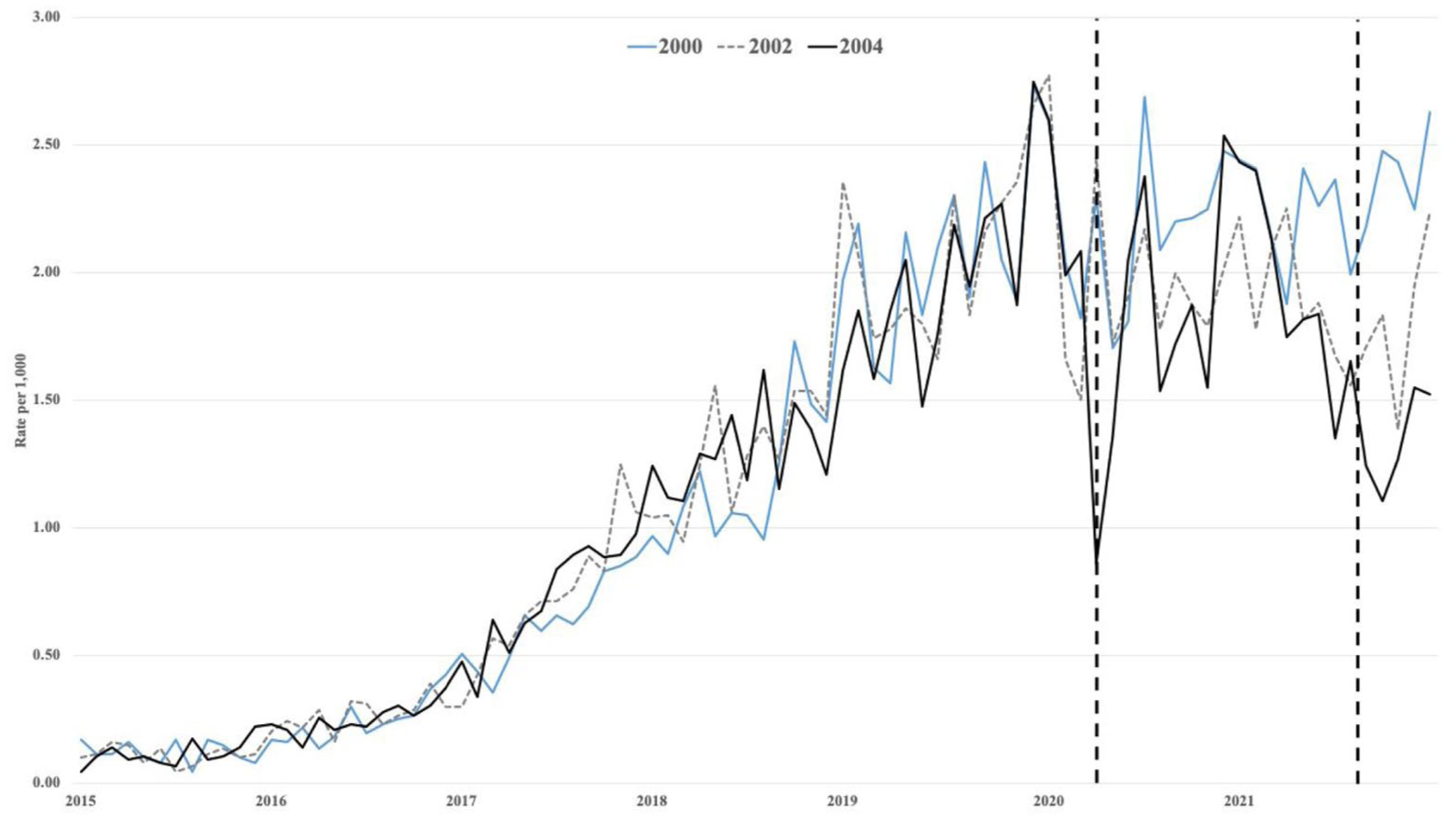
Rate of onset (per 1000 of the population) among the 2004 cohort (solid black line)
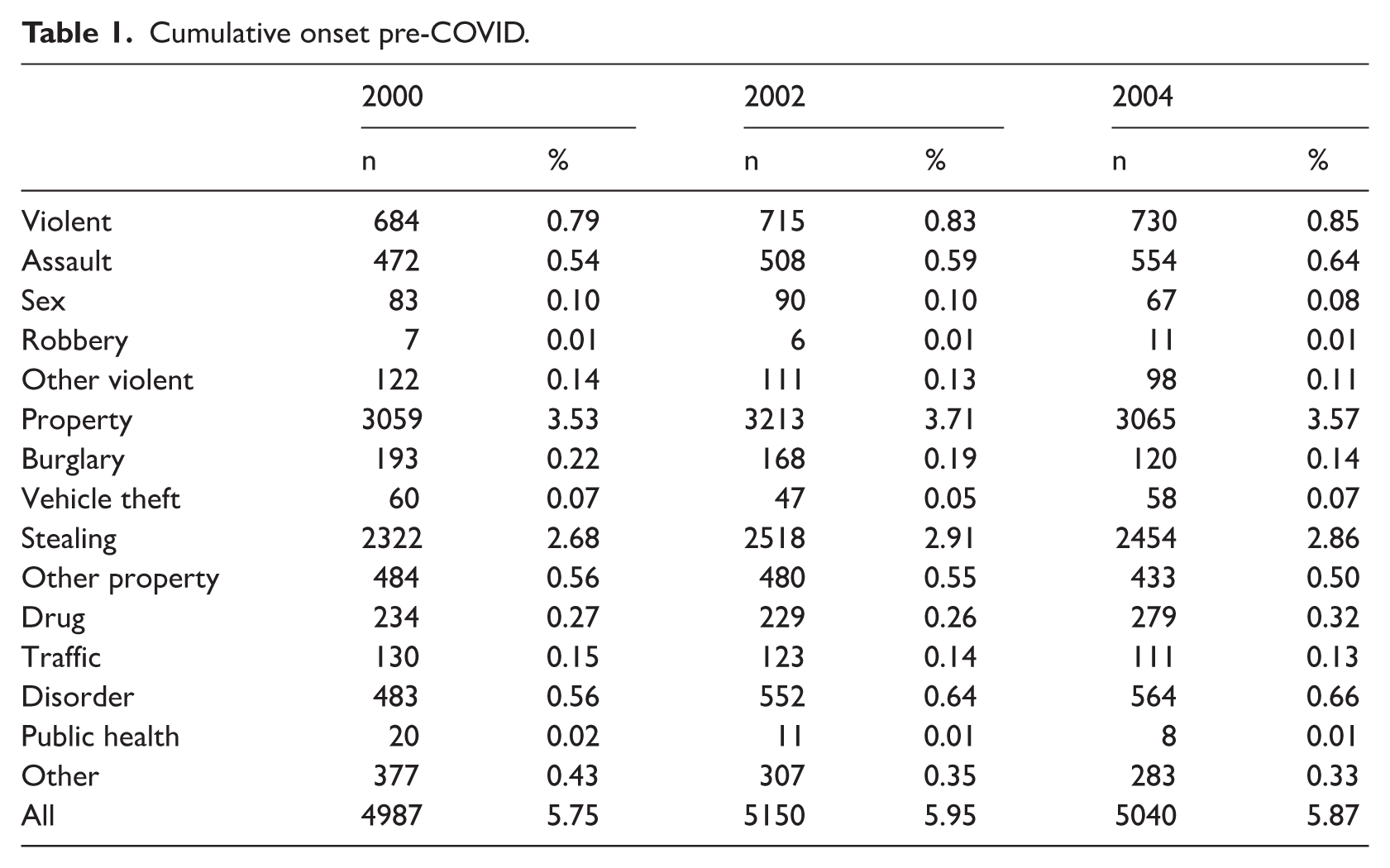
Examining the rates of new onset prior to the pandemic by offence type (Table 1), the single largest offence category for onset among the 2004 cohort was property offences (n = 3065 offenders, or 3.6% of the cohort), specifically stealing offences (n = 2454, or 2.9%). The decrease in cumulative rates of onset for property offences when compared with the 2002 cohort (3.7 vs 3.6, or 148 fewer offenders) is perhaps further evidence of a change in onset patterns that has been observed in Australia and overseas as part of the crime decline (Svensson and Oberwittler, 2021; Tseloni et al., 2010). Prior to the pandemic, more young people in the 2004 cohort first came into contact with the justice system for a violent offence than in either of the two earlier cohorts (n = 730, or 0.9% of the cohort compared with 0.8%, n = 715), principally for assault offences (n = 554, 0.6%). There seems to have been an increase in the concentration of offenders onsetting for assault offences among these cohorts, a fact borne out in Australian-wide data showing a 12 per cent increase in violent offending among youth offenders (Australian Bureau of Statistics, 2024).
Cumulative onset pre-COVID.
Post-COVID (Table 2), however, the number of young people in the 2004 cohort coming into contact with the justice system for the first time for property-related offences declined (n = 1633, 1.9%) compared with the 2002 cohort (n = 2034, 2.4%) and 2000 cohorts (n = 2471, 2.9%). Stealing offences, for example, saw a 21 per cent decline in cumulative onset among the 2004 cohort post-COVID. This finding is perhaps not surprising since most of the restrictions impacted an individual’s ability to affect a property/stealing offence (i.e. shops and businesses were closed, homes and places of residence were under increased surveillance). Onsetting for an assault offence, however, saw an increase among the 2004 cohort post pandemic, with 0.3 per cent of the cohort onsetting (n = 272).
Cumulative onset post-COVID.
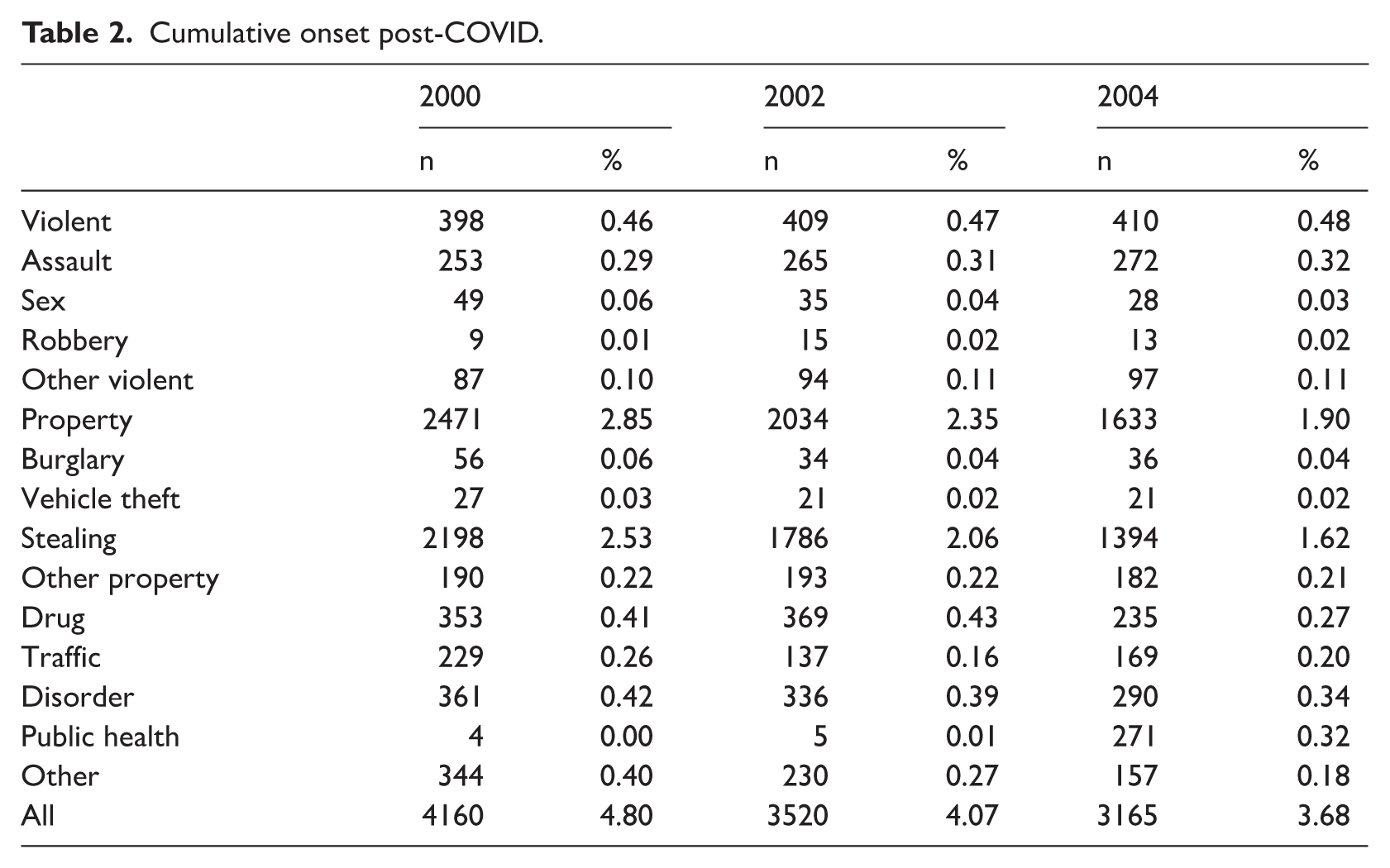
However, perhaps the most interesting finding arising from Table 2 is the large increase in cumulative onset for public health offences among the 2004 cohort (n = 271, 0.3%) compared with 0.01 per cent (or n = 5) of the 2002 cohort. This offence category was significantly expanded by the NSW government throughout the course of the pandemic, including fines for not wearing a mask in public, and for being outside while curfews were in place. The finding that 271 individuals in the 2004 cohort were brought to the attention of the criminal justice system for an offence that had, historically, been rarely enforced/used, raises several questions about the longitudinal criminal careers of these individuals. Overall, even with large declines in property-related offences, cumulatively to the end of the second year of the pandemic, 1-in-10 (or 9.5%) young people in the 2004 cohort had had contact with the criminal justice system.
Persistence
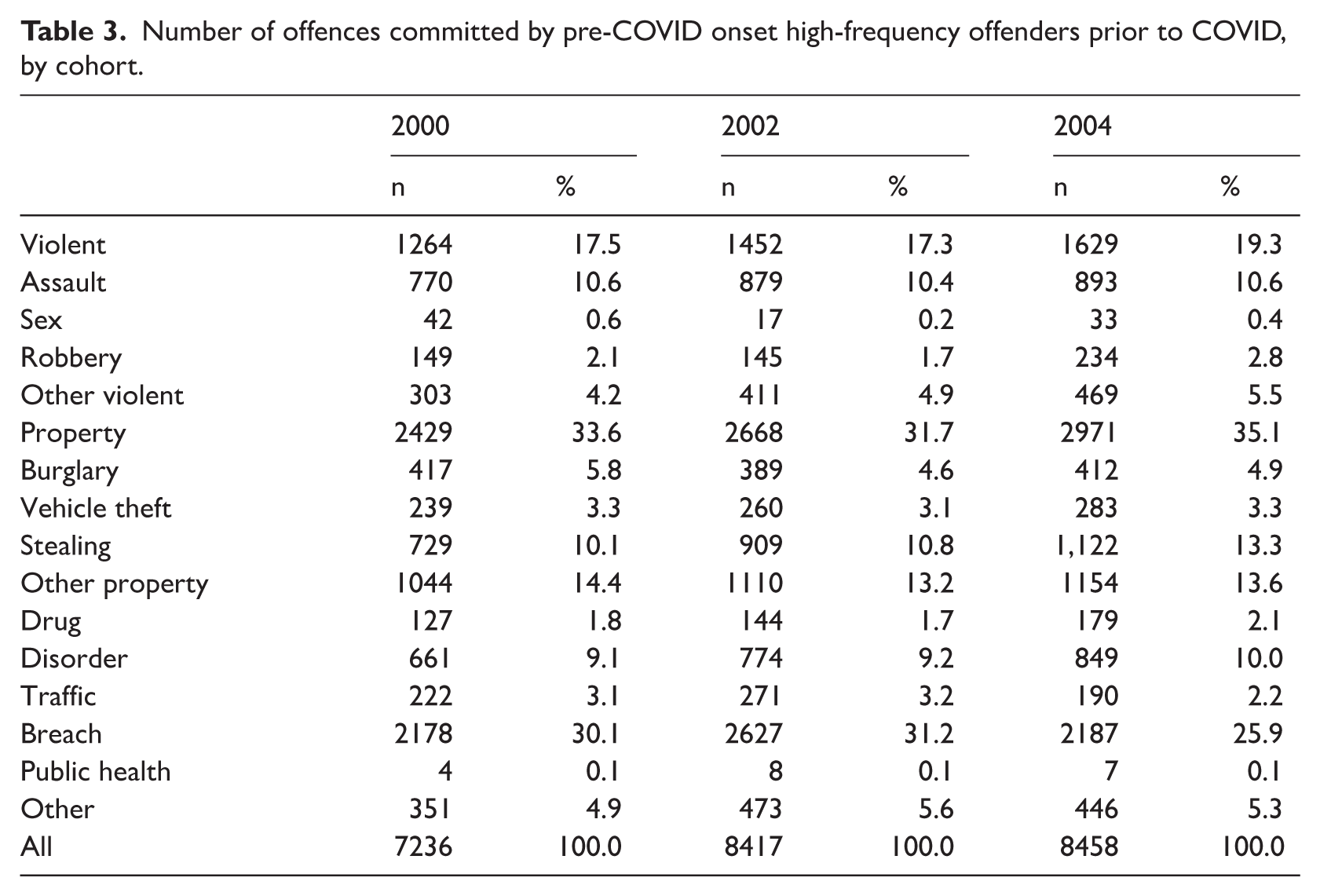
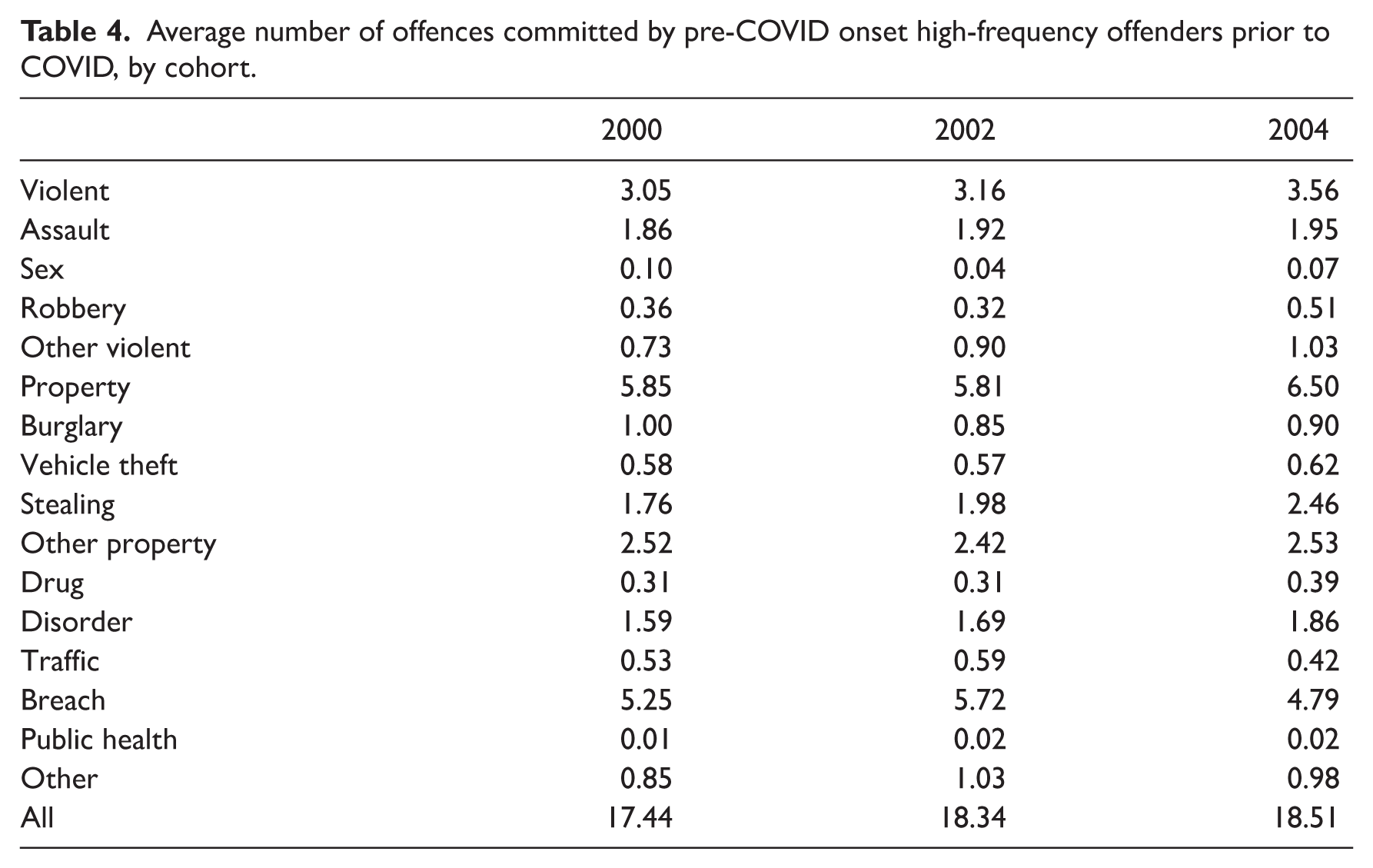
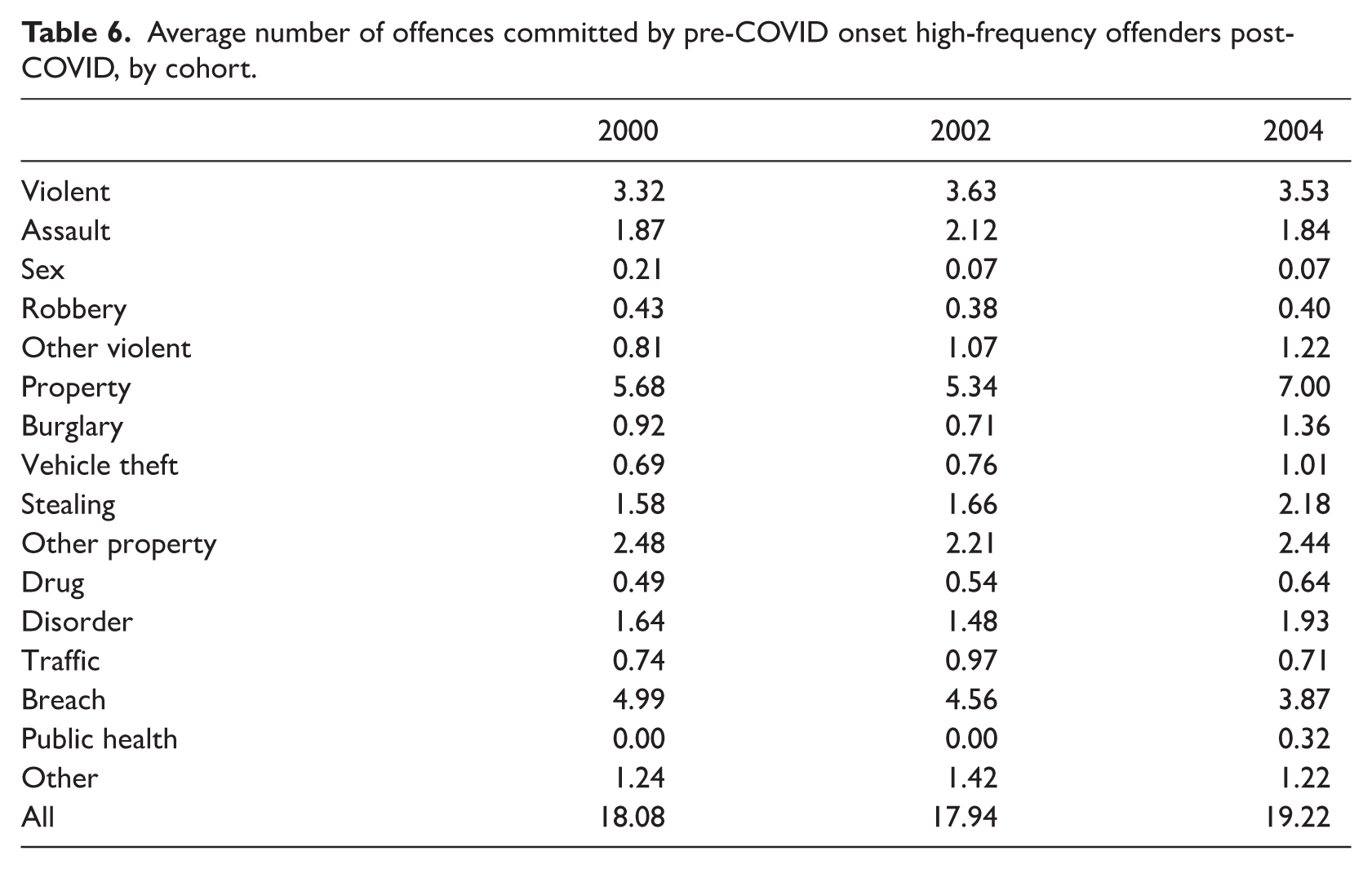
We now turn to the impacts of the pandemic on persistence. As mentioned above, this group consisted of 457 2004-born offenders who had committed at least 5 offences (across 3 different offences categories) in the 2 years prior to the pandemic in NSW. This group of offenders were responsible for 8458 offences (Table 3), compared with 8417 offences among the 459 2002-born offenders. Among 2004-born offenders, most of their offending was clustered in property offences (n = 2971, 35% of their total offence count), with a specific focus on stealing offences (n = 412, 13%). This was similar across the earlier cohorts, though 2004-born offenders showed a slight concentration towards property offences (35% vs 32%) compared with the 2002 cohort. Similarly, this group of 2004-born offenders committed more violent offences than their 2002 counterparts (n = 1629, or 19%, compared with n = 1452, or 17%). It seems that the concentration towards more violent patterns of offending is a common thread in these data. This can also be seen in Table 4, which shows the average number of offences per high-frequency offender (see Table 6 for average number of offences committed post-COVID). Overall, pre-COVID, each 2004-born high-frequency offender committed an average of 19 offences, compared with 18 and 17 offences for the two earlier cohort offender groups. For property offences, each high-frequency offender committed an average of 7 offences before the pandemic, with stealing being most common (3 offences each).
Number of offences committed by pre-COVID onset high-frequency offenders prior to COVID, by cohort.
Average number of offences committed by pre-COVID onset high-frequency offenders prior to COVID, by cohort.
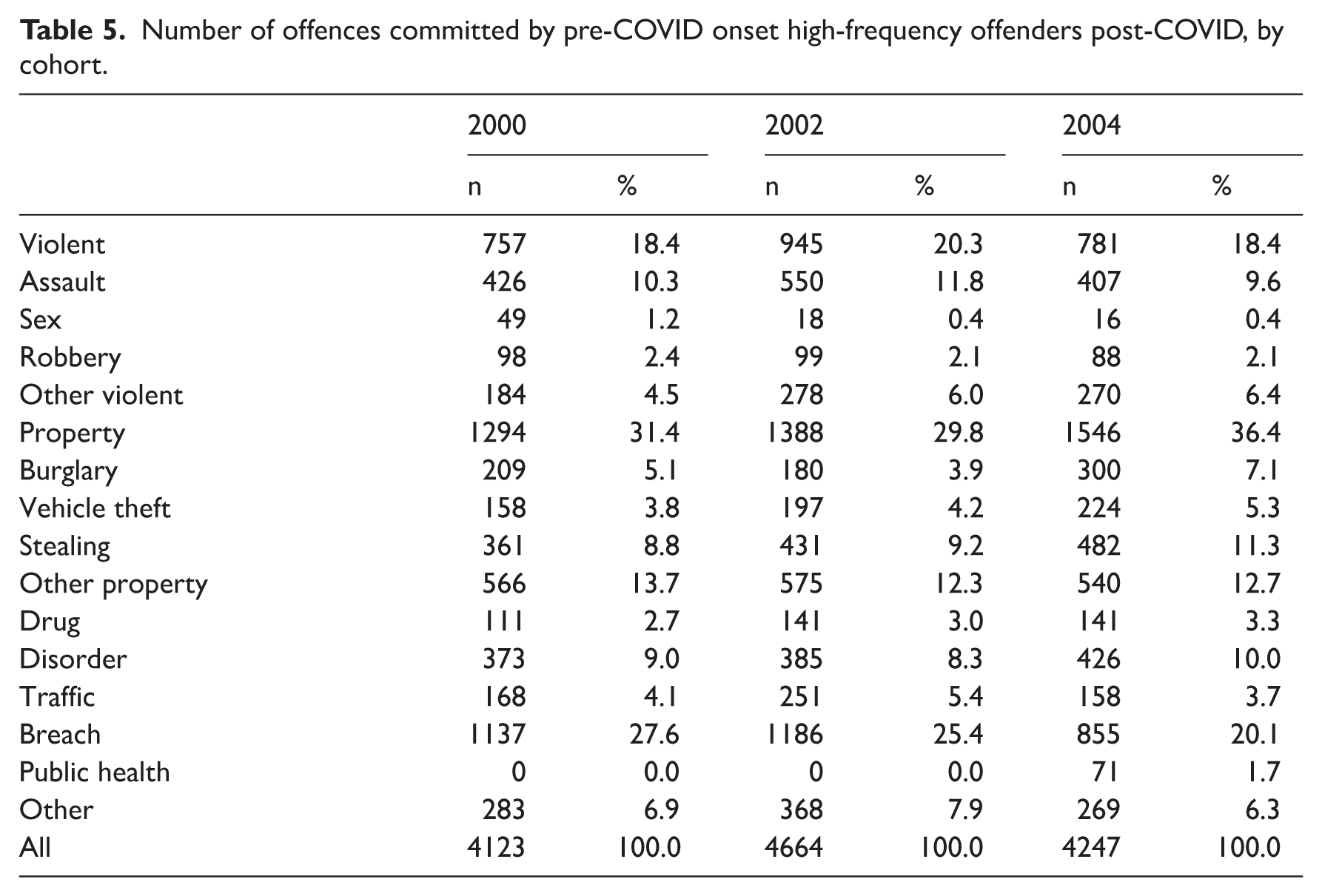
Post-COVID, a total of 228 high-frequency offenders in the 2004 cohort continued their offending. This amounted to 48 per cent of this group continuing their offending in the face of strict restrictions on movement and socialisation. Turning to Table 5, we can see that the total offence number is lower (n = 4247), indicating at least some impact on the rate of offending among this group. However, for those that remained active, their offending became more concentrated. For instance, this group of 2004-born persistent high-frequency offenders committed roughly 10 per cent more property offences than the earlier two cohorts (n = 1546 vs n = 1388) making up 36 per cent of their total offending. This group committed 40 per cent more burglaries (n = 300), 12 per cent more vehicle thefts (n = 224), and 11 per cent more stealing offences (n = 482) than their 2002 counterparts.
Number of offences committed by pre-COVID onset high-frequency offenders post-COVID, by cohort.
Average number of offences committed by pre-COVID onset high-frequency offenders post-COVID, by cohort.
Discussion
Developmental and life-course perspectives take as their starting point that criminal behaviour unfolds over an individual’s life-course. They are informed by an understanding of the criminal career framework which argues that criminal behaviour can be best understood as distinct but measurable events. Two of the most studied parameters under this framework are onset and persistence. The former refers to when an individual starts their offending and a swell of research has been dedicated to understanding why individuals start offending when they do (DeLisi, 2006; Doherty and Bacon, 2019; Jolliffe et al., 2017; Mazerolle et al., 2000). The latter, on the other hand, refers to the finding that some offenders will continue in their offending despite pressures to desist (Laub and Sampson, 2003). Until now, very little research has explored to what extent these parameters were impacted in a birth cohort during the exceptional event of the COVID-19 pandemic. Considering these parameters through a developmental and life-course criminological lens provides important insights into how the pandemic disrupted both the timing and continuity of youth offending. In what follows, we consider the implications of these shifts as well as the implications for understanding and responding to youth offending in situations of societal disruptions.
Our analysis confirmed that the rate of new onset among a cohort of young people declined by 9 per cent (or 17% when excluding public health offences 3 ), indicating that 355 fewer young people came into contact with the justice system than in previous cohorts. Conversely, for those who had already had high levels of contact with the justice system, the pandemic did impact their rate of offending; still, this group of individuals committed roughly 10 per cent more property offences compared with previous cohorts. This ‘stickiness’ of offending is perhaps no surprise to scholars of developmental and life-course criminology as it indicates the incredibly difficult task of intervening in the lives of offenders with high levels of criminal justice contact.
Dealing first with onset, the declines documented in this analysis are stark and suggest that a primary impact of the pandemic was to limit the number of individuals coming into contact with the criminal justice system for the first time. Of course, reducing the number of people having contact with the criminal justice system is a primary goal of many working in the system and while it is principally a long-term saving, it has important implications for the lives of this cohort of young people. For instance, by preventing first-time contact, the pandemic may have inadvertently prevented many of the harms associated with such contact. Many scholars have documented the relationship between early contact and poor life outcomes – young people who are involved in or exposed to the criminal justice system are at a greater risk of adverse life outcomes and further involvement in criminal activities (see, for instance, Craig et al., 2017; Slocum et al., 2016; Wiley and Esbensen, 2016; Wolff et al., 2017). Young people involved in the criminal justice system are also impacted by negative social outcomes including peer rejection (Higgins et al., 2011), adjustment issues later in life (Jennings et al., 2016; Piquero et al., 2010) and an increased risk of school failure (Jakobsen et al., 2012a, 2012b). The pandemic, then, with all its myriad of destructive impacts, may have served as a ‘great preventer’ by stopping a sizable proportion of young people from having contact with the criminal justice system. This reduction in onset has likely translated into better later life outcomes for this cohort of young people but this is an assumption that we cannot test with the current data.
However, we think it worthy to note that past research has also demonstrated that the behaviour of systems themselves can also shape and influence offending pathways, with McAra and McVie (2007) suggesting that deeper penetration into the formal processes of the criminal justice system are associated with a reduced likelihood of desistance. For the present study, this suggests that pandemic-era policing may have created novel and context-specific opportunities for system contact among young people, and that this was likely primarily through the enforcement of public health orders. These touch-points within the system risk ‘recycling’ young people into further contact with the criminal justice system regardless of their underlying behaviours. Overall, we cannot disentangle in this article true underlying behavioural shifts compared with system-wide changes in the enforcement of public health orders. We think it likely that some of the apparent shifts in onset during the pandemic may reflect changes in how systems operated during this period, rather than purely changes in young people and their offending behaviours.
Despite overall reductions in first-time onset, the observed increase in first-time onset for a violent offence among the 2004 cohort warrants closer consideration. Research on youth violence has focused on several factors including family stress, socio-economic disadvantage and peer dynamics as key influences on early violent behaviour (Hawkins et al., 1999; Herrenkohl et al., 2000; Lipsey and Derzon, 1999; Murray and Farrington, 2010). For the 2004 cohort, then, pandemic-related disruptions may have intensified these risk factors through greater levels of exposure to unstable home environments, potential escalation of peer or online conflict, as well as diminished access to school or community supports. In our view, the interaction between these dynamics might help to explain the rise in violent onset observed in these data. In addition, this trend has been observed in more recent data from the Australian Bureau of Statistics (2024), which showed that the annual change between 2021/2022 to 2022/2023 in the rate of assault offending among youth offenders has increased by 12 per cent. Other cohort-based studies have shown that younger cohorts are seemingly committing more violent offences than their older counterparts (for example, see McCarthy et al., 2025; Payne, 2025). Overall, we think it worthy of future research to attempt to disentangle the exact mechanisms behind an apparent increase in violent onset and offending among younger cohorts as a first step in developing appropriate responses.
Turning to persistence, we think the most important takeaway from these findings is that they demonstrate the stickiness of persistent offending among a group of high-frequency offenders. We documented in this study that the rate of offending among a group of high-frequency offenders did decline during the pandemic. However, we also documented that the rate of persistence was not impacted as greatly. In fact, among those who continued their offending in the post-COVID period, 48 per cent of the original group, their offending become more concentrated to property offences, and they committed 10 per cent more property offences than in the pre-COVID period. In our view, this result is not unexpected. The fundamental change brought about by the pandemic was a change in opportunity structures with a large and growing body of work having now teased out the various ways opportunity structures for property crimes, in particular, were affected (see, for example, Nivette et al., 2021). This reduction in opportunities to offend, brought about by restrictions on unsupervised free time and more parental/caregiver supervision (Kalenkoski and Pabilonia, 2024; Munasinghe et al., 2020; Seivwright et al., 2023), led to a reduction in the rate of new onset as documented in this article. For us, this finding is best explained by Moffitt (1993) and particularly the adolescent-limited (AL) offender trajectory. Due to these restrictions on movements, prospective AL offenders were not able to socialise with LCP peers or be in environments that are likely to encourage their offending, and so it is reasonable to expect that the rate of new onset would fall. It seems reasonable that the changes in opportunity structures benefitted first-time offenders almost exclusively.
For the LCP offender, however, the opportunity to offend is important but not as important as underlying propensity, which is driven by a range of factors including, but not limited to, unstable and inconsistent parenting, poor role models, brain and other intellectual disabilities, childhood adverse events and trauma. In disadvantaged homes, parental supervision likely did not increase (Bullinger et al., 2023; Kalil et al., 2020) and so some young people were still able to exercise their free time away from the supervision of their parents/caregivers and away from the activities (such as schooling, if they were attending) that had (semi-)structured their lives up to the point of the pandemic. Decades of policy and criminological research has attempted to prevent, or at least limit, the offending this group commits. Despite the largest international decline in total youth crime over the past two decades (Svensson and Oberwittler, 2021; Tseloni et al., 2010), there still exists a group of offenders that account for roughly 50 per cent of all crime committed. Persistent offenders and their offending will likely continue to draw theoretical, empirical and policy interest due to their disproportionate impact on the volume of crime at any given time. However, the finding that these offenders did not stop their offending during perhaps the most exceptional event of the past century, in our view, serves as proof of decades of developmental and life-course criminological literature that has argued that the offending of persistent offenders is driven by, and related to, different underlying causal factors.
It is important to pause here and consider some of the limitations of the current work. First and foremost, the data used in this study represent officially recorded police data drawn from a single state in Australia. By their very nature, officially recorded data only capture offences for which an individual is apprehended for and found guilty of either by plea or verdict. Therefore, these data potentially only represent a subset of the total number of offences individuals in these three cohorts may have committed throughout their life. These data, as such, may bear little resemblance to the actual level and nature of their offending if self-report data, for example, was utilised. Of course, the disparity between officially recorded data and the true level of crime has been a long-debated issue in criminology. During periods of exceptional change (such as lockdowns), changes in the probability of police detection may also differ by age, gender and geographical location and may also differ from one cohort to the next. In two studies focusing on the concordance between self-report data and officially recorded data, Payne and Piquero (2016, 2018) showed satisfactory concordance between these two data sources regarding both age of criminal onset and lifetime offending histories. In the absence of any viable alternative, these data represent the best available measure of the offending of these cohorts contact with the criminal justice system.
To end this article, we think it important to illustrate what this article does not do. Some readers of this article may argue that these findings illustrate that draconian lockdown measures and large-scale restrictions on movement can lead to declines in crime. By extension, therefore, they may suggest that this article argues for these policy responses to be used to control criminal behaviour in non-pandemic times – that is, locking young people up in detention centres or instituting curfews as a mandatory punishment for youth offenders. This is wrong. First, we unequivocally reject the use of indeterminate detention or other lockdown style approaches for managing criminal behaviour. Young people must always be afforded the right to stable housing and should only be held in detention as a last resort. Instead of arguing that lockdowns are useful tools for the management of those who have broken the law, this article does quite the opposite – we argue that by restructuring the routine activities of young people we can substantially reduce the number of young people coming into contact with the police for the first time.
We think the bigger takeaway from these data is not that lockdowns ‘work’ in changing behaviour but that we have prevented a sizable number of young people from entering the criminal justice system by changing their routine activities. As a result, our findings have several implications for youth justice policy and practice. These findings point to the need for diversionary strategies that strengthen young people’s access to prosocial, reliable, and stable routine activities. Programmes that support family functioning, community participation as well as school engagement are likely to be effective in mitigating the risks associated with social disruption during exceptional events. Similarly, programmes that adopt trauma-informed approaches are also likely to help address underlying stressors that contribute to offending onset. More broadly, a developmental and life-course perspective argues strongly that youth justice policy should prioritise opportunities for prosocial transitions following periods of significant instability, rather than purely punitive measures that serve to entrench justice involvement.
At the same time, our results also evidenced an increase in offending among persistent offenders during the pandemic. As decades of DLC criminological literature has attested, these offenders require differentiated responses to address their offending. These young people often face compounded disadvantage that contributes to their offending, and often lack stabilising routine activities, even outside of the impacts of exceptional events. For these offenders, wraparound, intensive interventions, combining case management, family support and/or pathways to employment or re-engaging with education are likely to be necessary into the future. The use of these programmes aligns with a developmental view that recognises sustained criminal justice contact is best addressed through long-term investment rather than short-term punitive measures. Overall, our analysis in this article has shed light on the impacts of an exceptional event on the rates of first-time onset and the rate of persistence among a group of high-frequency youth offenders. Into the future, we think that sustained investment in the lives of these individuals will offer the most promising avenue for reducing persistent offending, reducing the rate of adult-onset and promoting desistance in the wake of pandemic-related disruptions.
Footnotes

Funding
The authors disclosed receipt of the following financial support for the research, authorship and/or publication of this article: This research was supported by an Australian Government Research Training Program (RTP) Scholarship.
Declaration of conflicting interests
The authors declared no potential conflicts of interest with respect to the research, authorship and/or publication of this article.