




Abstract
The present Canadian study explored the experiences of 50 incarcerated adolescent girls and 50 incarcerated adolescent boys. Boys and girls appear to have pre-existing areas of vulnerability that may be gender specific. For both boys and girls, being incarcerated appears to have been impacted by various forms of loss, stress, and trauma, though this seemingly occurs in different ways and settings. Though both groups have high rates of psychosocial adjustment difficulties to being incarcerated (in the form of self-reported anxiety, depression, withdrawal), girls appear to have higher levels of adjustment problems, and their pre-existing vulnerabilities appear to be a stronger predictor. For boys, prison stresses appear to be a stronger predictor of adjustment to incarceration.
Introduction
Despite the foundational, classic studies of the impact of prisons on the incarcerated, and several significant studies from the 21st century, a paucity of ethnographic studies, quantitative studies, and social experiments exists regarding life in prison. Foucault’s (1975) Discipline and Punish, which described the history of punishment and the prison, Sykes’ Society of Captives and its description of the “pains of imprisonment” (Sykes, 1958), Goffman’s (2006) study of “total institutions,” and Zimbardo’s (1969) experiment regarding prison guards were paradigm-shifting contributions. More recent work (Cesaroni and Peterson-Badali, 2005, 2010, 2013, 2016; Chesney-Lind and Bilsky, 2011; McCuish et al., 2018; Sonderman et al., 2021; Welch et al., 2022) has provided an enormous array of hypotheses, models, and policy insights about the impact of prisons on the mental health of incarcerated youth 1 , their families, and their larger communities. Two key themes remained unresolved: the disproportionate focus on studies of incarcerated men, and whether, at the deep end of the system, there are gender differences in adjustments to youth custody.
Regarding adjustment to prison, historically, the focus of most research was and remains on adult men, largely because of the enormous disparities in the number and ratio of men to women (Brown and Gelsthorpe, 2022). Arguably, therefore, the experiences of the most marginalized groups, including women and youth, generally have been understudied. This is particularly true of Canadian research, where there is a noticeable gap regarding the experiences of incarcerated girls. Girls continue to remain the least understood and under-researched of all custodial populations (Brown and Gelsthorpe, 2022). The experiences of a small number of girls within youth custodial institutions have been characterized by the same harmful problem profiles as incarcerated adult men, incarcerated adult women, and incarcerated adolescent boys in correctional contexts (Chesney-Lind and Bilsky, 2011; Flores et al., 2020). Girls have historically accounted for a larger proportion of the juvenile population than women do in the incarcerated adult population (Sprott and Doob, 2009). Depending on the year and measure used, women have comprised 3 to 7 per cent of the adult population in the United States, while girls have constituted 15 to 21 per cent of the youth custody population (Sprott and Doob, 2009).
The boy/girl adolescent incarceration ratio remains contested because of measurement issues and previous increases in the proportion of adolescent girls to adolescent boys in the Canadian and US youth justice systems generally and youth corrections specifically. Regardless of the ratio of incarcerated boys to girls, there is an ongoing question of whether policy and practice should include more gender-specific interventions in terms of diagnosis, prognosis, prevention, or treatment in regard to justice-involved girls (Brown and Gelsthorpe, 2022; Cauffman, 2008). A related policy and theoretical concern is the overrepresentation of both male and female Indigenous youth in Canada, for whom there is a greater likelihood of involvement in the criminal justice system, including detention in a youth custody facility, than there is for a high school graduation (Canadian Council of Provincial Child and Youth Advocates, 2010).
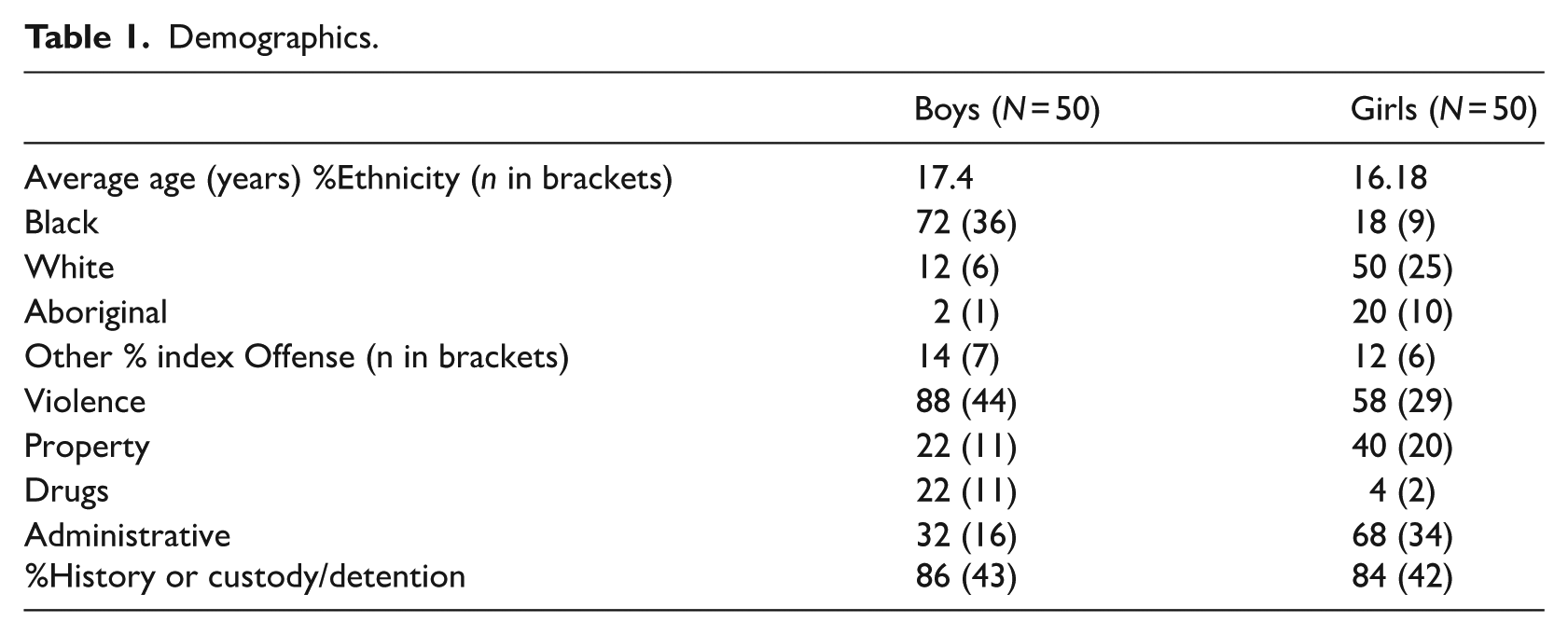
The present Canadian study explored the experiences of incarcerated adolescent girls and compared them to the experiences of incarcerated adolescent boys in order to address several of the above theoretical themes. Key among these is whether criminal justice systems can more effectively provide programs for youths at the “deep end” of the system (e.g. custody). The above Indigenous youth themes, unfortunately, cannot be fully examined because of the low number of Indigenous boys (n = 2) compared to Indigenous girls (n = 10) in the study’s sample of 100 (see Table 1).
Demographics.
Adjustment to Incarceration
Acclimatization to prison has been the key initial construct that has described the introduction and subsequent integration of individuals into custodial contexts. This construct was derived from two mid-20th-century sociologically focused theoretical models. The “deprivation” model emphasizes that the prison environment inherently provokes negative responses from prisoners: prisons are structured to deprive inmates of basic social (e.g. choice of close or intimate relationships, privacy) and psychological (e.g. sense of physical security, emotional vulnerabilities) needs. These systemic deprivations result in persistent tension and, depending on individual characteristics, particular forms of adaptation (Lawson et al., 1996; Sykes, 1958; Wheeler, 1961). In contrast, the “importation” model asserts that individual inmate characteristics are the primary influence in how individuals adjust within the prison. These “imported” characteristics typically include demographic profile, criminal history, and other common social and psychological risk factors for delinquency and offending (Gover et al., 2008; Irwin and Owen, 2005). However, subsequently, the predominant contemporary perspective has integrated these models (e.g. a combination of imported inmate characteristics and prison structural/environmental factors which contribute to individual adjustments to prison) (Crewe, 2007; Hochstetler et al., 2010; Lawson et al., 1996).
Importantly, an early historical consensus emerged about the negative impact of prisons based primarily on adult prison studies: research identified the pervasive negative consequences of the inability to cope with the prison-exacerbated stress, including self-injury, depression, illness, psychiatric commitments, suicide, and antisocial behavior (Hochstetler et al., 2010; Liebling et al., 2013).
The 19th and early 20th centuries’ policy responses to this initial emerging consensus about the extreme negative impact of the imprisonment of children and young adolescents with adults were the development of the first juvenile custodial institutions. These were based on the non-punitive welfare model of juvenile justice (Bala and Anand, 2012) (e.g. Illinois 1899; Juvenile Court Law, Canada’s 1908 Juvenile Delinquents Act). This model asserted that children and adolescents had distinctive and typical physical and emotional vulnerabilities generally or in all contexts, but most profoundly in custodial settings (Bala and Anand, 2012). Both sociological and psychological frameworks asserted these vulnerabilities, particularly developmental psychology.
The key assertion was that distinctive adjustment issues among young people were developmental stage-based vulnerabilities, which increased victimization and aggression risk factors (Garmezy and Rutter, 1983). Garmezy and Rutter (1983), for example, suggested that an acute stressor such as persistent abuse provoked greater emotional disturbance when it occurred in conjunction with cumulative chronic adversities such as familial poverty and dysfunction. Accordingly, no single vulnerability placed a young person at risk for poor life outcomes; rather, the likelihood of poor developmental outcomes increased with the number of vulnerabilities (Wasserman et al., 2003; Wasserman et al., 2010). Developmental theory and research, therefore, focused on the necessity of understanding an acute stressor, such as incarceration, 2 in the context of both chronic vulnerabilities and previous acute events.
Incarceration ranks high among traumatic lifetime stressors for young people, right behind the death or divorce of parents (Frydenberg, 1997). Incarceration exposes vulnerable young people to additional risk because of the coping mechanisms that are required to adjust to the prison environment (Cesaroni and Peterson-Badali, 2005, 2010, 2013). The aggression many youth display in custody may actually be a reflection of impaired coping ability (MacKenzie, 1987). Younger inmates are less able to cope with the stress of imprisonment and experience much higher levels of anxiety as a result of having been deprived of their families and social networks (Roberts, 2004). For some young people, incarceration may mark the first time away from home of some duration. The fact that young people have generally been found to be involved in more disciplinary infractions, inmate-staff assaults, and conflicts with others (MacKenzie, 1987; McShane and Williams, 1989) compared to adult prisoners may also reflect their response to stress and difficulty coping. This may also manifest itself not only in striking out at others but in self-harm; for example, unlike older prisoners—whose risk of self-harm or suicide risk is often related to psychiatric illnesses—young prisoners’ self-harm vulnerability or suicide vulnerability can also be connected to their ability to cope with the custody environment itself (Liebling, 1999). Immature coping means that young people cannot potentially adapt to incarceration and therefore may have difficulty regulating their thoughts and emotions (Johnson, 2001).
Incarcerated young offender populations overwhelmingly have been characterized by multiple forms of chronic disadvantage in familial, socio-emotional, and academic domains. Findings from the importation literature have been consistent with the persistent theme that prisoners with more lifetime vulnerabilities experienced greater difficulty in adjusting to prison life than those with fewer vulnerabilities. However, despite a growing developmental psychopathology literature on the impact of vulnerabilities in adolescence on both short-term and long-term psychosocial outcomes, with notable exceptions (Biggam and Power, 1997; Gover et al., 2008; Maitland and Sluder, 1996), there has been little research on the relationship of these factors to the adjustment of youth while in custody. Similarly, in the context of the “deprivation” literature on prison adjustment, although studies have examined the general adjustment of youthful prisoners in relation to institutional vulnerabilities (e.g. victimization, lack of prison support), with few exceptions (Biggam and Power, 1997; Maitland and Sluder, 1996) studies have not attempted to connect these experiences to inmates’ pre-existing vulnerabilities.
More recently, several studies have examined adolescent boys’ adjustment to custody within an interactionist approach, which integrated sociological/criminological and developmental psychology theories to examine the relationship of both pre-existing and institutional vulnerabilities to psychosocial functioning in incarcerated boys (Cesaroni and Peterson-Badali, 2005, 2010, 2013, 2016). Findings suggested that it was an accumulation of vulnerabilities that predicted difficulties with psychosocial adjustment, in the form of self-reported depression, anxiety, and withdrawal, problems sleeping, and suicide ideation. For example, boys who entered custodial facilities with a higher number of vulnerabilities, such as child welfare contact, poor school performance, and low self-esteem, were more likely to report greater psychosocial distress while serving their sentence or being held in secure detention (Cesaroni and Peterson-Badali, 2005, 2010, 2013, 2016). In addition, several institutional vulnerabilities were associated with higher levels of psychosocial distress, including fear of victimization and not having friends or support within the institution (Cesaroni and Peterson-Badali, 2005, 2010, 2013, 2016). Finally, there was an interaction effect: incarcerated boys with the highest number of pre-existing vulnerabilities and the highest institutional vulnerabilities had higher adjustment difficulties (depression, withdrawal, anxiety, somatic problems, and sleeping) than would be expected by a simple accumulated/additive effect (Cesaroni and Peterson-Badali, 2005, 2010, 2013, 2016). Despite the utility of this integrative approach model for understanding the adjustment of incarcerated adolescent boys, there remains a dearth of research on the adjustment of incarcerated adolescent girls.
It should be noted that time in secure custody is a highly stressful time for most detainees, but especially for youth, because of fear of the unknown (including the uncertainties of charge, conviction, and sentencing), the distrust of an authoritarian environment, a lack of control, and as noted previously, isolation from family and significant others (Hayes, 1994). Youth who are especially dependent on structure, activity, family support, and staff interaction may be especially prone to boredom, bullying, a high rate of infractions, and, at the extreme, suicide while incarcerated, but particularly in pre-trial detention (Liebling, 1999).
Understanding the Experiences of Incarcerated Girls
Comprised predominantly of qualitative studies of relatively small samples of girls, the literature on incarcerated female adolescents has focused on pathways to custody and the need for gender sensitive programs (Belknap and Cody, 2008; Belknap and Holsinger, 2006; Chesney-Lind, 1988; Dohrn, 2004; MacDonald and Chesney-Lind, 2001). Although there has not been a specific focus on adjustment to custody, several studies have identified that girls share many of the same pre-existing vulnerabilities as boys, such as poverty, dysfunctional families, problems with school, delinquent peers, and substance abuse problems (Galardi and Settersten, 2018). Research has also identified vulnerabilities that have a higher incidence among adolescent girls, including histories of sexual abuse, for example, dating violence, sexual exploitation, unplanned pregnancy, and motherhood (Chesney-Lind and Pasko, 2004; Corrado et al., 2000; Gavazzi et al., 2006; MacDonald and Chesney-Lind, 2001). Compared to incarcerated boys, incarcerated girls also had higher incidences of self-harm (both pre-custody and while incarcerated), post-traumatic stress disorder, and depression (Dohrn, 2004) Research suggests that girls have higher rates of both internalizing and externalizing behaviors than male offenders, and these differences were greater among detained youth than those serving community sentences (Cauffman, 2008; Day et al., 2015; Mayworm and Sharkey, 2013; Pérez-Ramírez et al., 2023). In certain custodial contexts (i.e. more open structured facilities allowing more social interactions among girls, boys, and staff), severe problem behaviors with girls were often related to poor working alliance with staff (Sonderman et al., 2021)
Although there is research on pre-existing vulnerabilities and research on psychosocial problems (i.e. internalizing and externalizing) in adolescent justice system-involved girls—including some studies on custodial samples of girls—there is limited research examining the connections between these pre-existing vulnerabilities (or institutional vulnerabilities) and girls’ psychosocial adjustment to custody. Though the rates of pre-existing vulnerabilities or institutional vulnerabilities for girls might have been different from those of boys, little is known about whether and how these factors were possibly related to girls’ adjustment in custody, and whether such associations were like adolescent boys.
In this study, we explore adjustment to custody of adolescent girl offenders from a cumulative perspective and compare it to vulnerabilities and the adjustment experiences of incarcerated adolescent boys. Key questions examined are: (1) Do girls experience the same level of psychosocial adjustment difficulties as boys (i.e. self-reported depression, anxiety, withdrawal, sleeping problems)? and (2) Do pre-existing vulnerabilities and/or institutional vulnerabilities predict adjustment for girls in the same manner as for boys? The answers to these questions may help to determine whether different program intervention approaches for incarcerated boys and girls are required to assist them with difficulties in adjustment to confinement.
Method
Sample
One hundred youth (50 males and 50 females) on remand in a large, campus-style secure youth detention facility near Toronto, Canada, participated in semi-structured interviews. Participants were 14 to 20 years old at the time of the interview, though girls in the sample tended to be younger than the boys (see Table 1; t = (98), 3.94, p = <.001). The majority of the boys self-identified as Black, while most of the girls self-identified as White (see Table 1).
The facility itself had formerly been an institution for adult women but had recently been refitted to house young people. It had large central interior grounds and gardens around which small cottage-like structures were scattered. Several separate buildings were set aside for a variety of activities and the facility’s school. The interior of each “cottage” comprised regular carceral wings of several cells with solid doors and a slot for staff checks, including a central “hub” that acted as a common room for youth (i.e. to watch TV, play games, etc.). For the most part, the interiors were not distinguishable from those of many adult facilities. The researchers were given private offices in the social work section of each of the cottages to conduct their interviews to ensure privacy.
The charges relating to the participants’ detention included a wide range of offenses, though the majority of the boys were more likely to have charges related to violent offenses such as murder, manslaughter, sexual assault, assault with a weapon and aggravated assault (X2(2, N = 100) = 11.41, p = < .01) or drugs (X2(2, N = 100) = 7.16, p = <.01) than girls (see Table 1). In contrast, girls were more likely to have charges related to administrative offenses 3 (X2(2, N = 100) = 12.96, p = < .001) (see Table 1). Almost half of both boys (42%, n = 21) and girls (46%, n = 23) were first charged with an offense at the age of 13 or younger (12 is the youngest age in Canada at which a person can be charged with a criminal offense).
Procedure
The lower rate of female admissions compared to male admissions to the secure facility required that boys and girls be sampled in a ratio that ensured a comparable sampling time across the 14-month interview period. Youth were invited to participate in the study by both posters placed throughout units, by frontline unit staff, and a brief talk by the researchers about the study to all potential participants. Youth who expressed interest were given the name of a staff member with whom they could speak should they wish to participate. These same staff also acted as the liaison between the interviewers and the facility, thereby minimizing the involvement and knowledge of other staff regarding which youth participated. Individual interviews were conducted by the first author and a student research assistant, who began by reading a consent protocol outlining the purpose of the study, potential risks and benefits, and limits of confidentiality. Respondents were told that they would receive 10 dollars to thank them for participating. In addition, their participation would result in neither special treatment nor recriminations by the facility staff. Participants were also advised that some questions might make them uncomfortable and that they simply could decline to respond to such questions without repercussions. Interview questions were administered orally and took place in a quiet private room. Interviews lasted approximately 1 hour. The researchers recorded participants’ answers on a laptop-based questionnaire; no tape-recording devices were utilized. The study was approved by the Research Ethics Boards of Ontario Tech University and the Ministry of Children, Community and Social Services (Ontario).
Measures
Pre-existing vulnerability
As noted by Goldson and Kilkelly (2013), adolescent prisoners are overwhelmingly members of the poorest, most disadvantaged, and structurally vulnerable communities in society. Therefore, measuring pre-existing vulnerability was central to the current study. The term vulnerability is employed in this study similarly to psychologists, social workers, and counselors: to denote individuals who suffer emotional and adjustment problems prior to entering a custody context (see, e.g. McWhirter et al., 2007). The interview included several questions based on the developmental literature to measure pre-existing vulnerabilities—now often thought of in terms of adverse childhood experiences (ACEs) (Burt et al., 1998; Farrington, 2000; Garmezy, 1983; Gore and Eckenrode, 1994; Loeber and Farrington, 1998; Rutter, 1983). Additional items were derived from the Juvenile Survey Instrument: National Evaluation of Juvenile Correctional Facilities (Evaluation Research Group, 1997) as well as the authors’ previous protocols (see Cesaroni and Peterson-Badali, 2005, 2010, 2016). Also included were the probing of instability in living (e.g. number of moves in the past year, contact with child welfare services), school related problems (e.g. school suspensions, academic performance), drug and alcohol use (e.g. frequency), criminal justice contact (e.g. police stops, court appearances), and delinquent friendships (e.g. number of friends with history of trouble with the law, having friends who have been in custody or detention).
To develop an overall measure of vulnerability, items from the aforementioned instruments were combined into seven vulnerability domains: School (α = .68), Drugs and Alcohol (α = .69), Delinquent Friends (α = .84), Criminal Justice Contact (α = .86), Family Adversity (α = .77), Child Welfare Contact (α = .71), and Chronic Stress (α = .81). A “pre-existing vulnerability” index was created by summing responses to the items, yielding a scale with strong internal consistency reliability (α = .80). Note that the Chronic Stresses scale was adapted from adult stress scales to be age and developmentally appropriate for young people and in keeping with events and circumstances that they may generally find stressful.
Institutional vulnerability
Young people were asked about several aspects of detention, which were part of the construct of “doing time,” which they also found to be difficult. These aspects of detention have generally been an integral part of being on remand. To explore vulnerability within the institution, items derived from Maitland and Sluder’s (1996) Fear of Victimization Scale and Prison Stresses Scale were administered. Items that probed peer-on-peer violence among prisoners and their peers included: “How safe do you feel in this prison?”, ranging from 1 (very safe) to 4 (very unsafe); “How much do you worry that you’ll be attacked during this sentence?”, ranging from 1 (very little) to 3 (a great deal); and “Do you feel the chance of being attacked in this prison is (low, medium, or high)?” To measure prison stress, young people were asked to rate a number of aspects of prison life ranging from 1 (not hard) to 5 (very hard), including missing freedom, missing family and friends, strip searches, and lack of privacy. Several items measuring institutional peer relationships also were administered: “How many friends do you have in this prison?” (many, a few, none); “Do you spend most of your free time in this prison alone or with friends?”; and “If you were going to be attacked, could you count on friends to help?” (Maitland and Sluder, 1996). Three summed scales were created to represent institutional vulnerability: domains of Prison Stresses (α = .75), Internal Support (α = .63), and Fear (α = .70).
Psychosocial functioning & adjustment to incarceration
Secure custody can be harmful to the emotional and psychological integrity of incarcerated youth (Goldson, 2006). The challenges of adolescence in terms of a young person’s physical, intellectual, emotional, and social capabilities are increased by the prospect of a custodial sentence. For example, establishing a stable, integrated identity is a central task of adolescent development that can be disrupted by an onerous, overly restrictive institutional environment (Greve et al., 2002). As noted previously, unlike older prisoners, whose suicide risk is often related to psychiatric illnesses, young prisoners’ suicide vulnerability is connected to their ability to cope with the prison environment itself (Liebling, 1999). The youth most vulnerable to suicide attempts are characterized by dependence on activity, structure, and contact with family and/or staff, and are especially prone to boredom and bullying (Liebling, 1999). Incarcerated youth who are struggling with coping and adjustment are unlikely to participate in any programming or clinical care.
Thus, a significant focus of the study was to understand participants’ current levels of coping and adjustment, and their possible relationship to pre-existing vulnerabilities. In order to do so, Achenbach’s (1991) Youth Self-Report (YSR) was used to obtain information on participants’ socio-emotional and behavioral functioning while incarcerated, with a focus on Internalizing problems (e.g. depression, anxiety, withdrawal, sleeping problems, suicide ideation). Note that the YSR had been successfully used by the authors previously to measure the adjustment of incarcerated adolescent boys.
The YSR is widely used as a normed measure of both social competence and behavior problems in youth. The YSR’s reliability and validity have been extensively documented in both clinical and non-referred samples (Achenbach, 1991). This study included the administration of the 112 items that comprise the behavior problem scales. Using these items, raw scores were computed for internalizing problems, externalizing problems, and total behavior problems. In this study, the authors were particularly interested in the internalizing scale, which probes withdrawn (e.g. I refuse to talk, I am shy), somatic complaints (e.g. aches and pains without known medical causes), and anxious/depressed behaviors (e.g. I am sad, I cry a lot).
Youths’ functioning was also assessed using items from the Quality-of-Life Survey, a questionnaire developed specifically to measure “well-being” of prisoners (though items center primarily on lack of well-being) (Liebling and Arnold, 2004; Liebling et al., 2013). Participants indicated their extent of agreement—ranging from 1 (Not True) to 6 (Very True)—with four statements: My experience has been stressful; I feel tense here; My experience has been painful; I feel lonely and isolated (α = .85).
Results
Pre-existing vulnerabilities
Participants reported multiple forms of familial, socio-emotional, and academic disadvantage, including instability of living, difficulties in school, substance abuse problems, delinquent friends, contact with child welfare authorities, and witnessing violence (see Table 2). Though there were similarities in the types of pre-existing vulnerabilities reported by boys and girls, there were also differences. Thirty-two per cent of boys were physically or sexually abused, compared to 58 per cent of girls, though these differences were not statistically significant. Both boys and girls report difficulties in school and having delinquent friends. Although both boys and girls reported a high use of drugs and alcohol, boys were more likely to only report the use of weed, whereas girls were more likely to report the use of multiple drugs (see Table 2).
Percentage of youth reporting pre-existing vulnerabilities (vulnerabilities with significant differences).
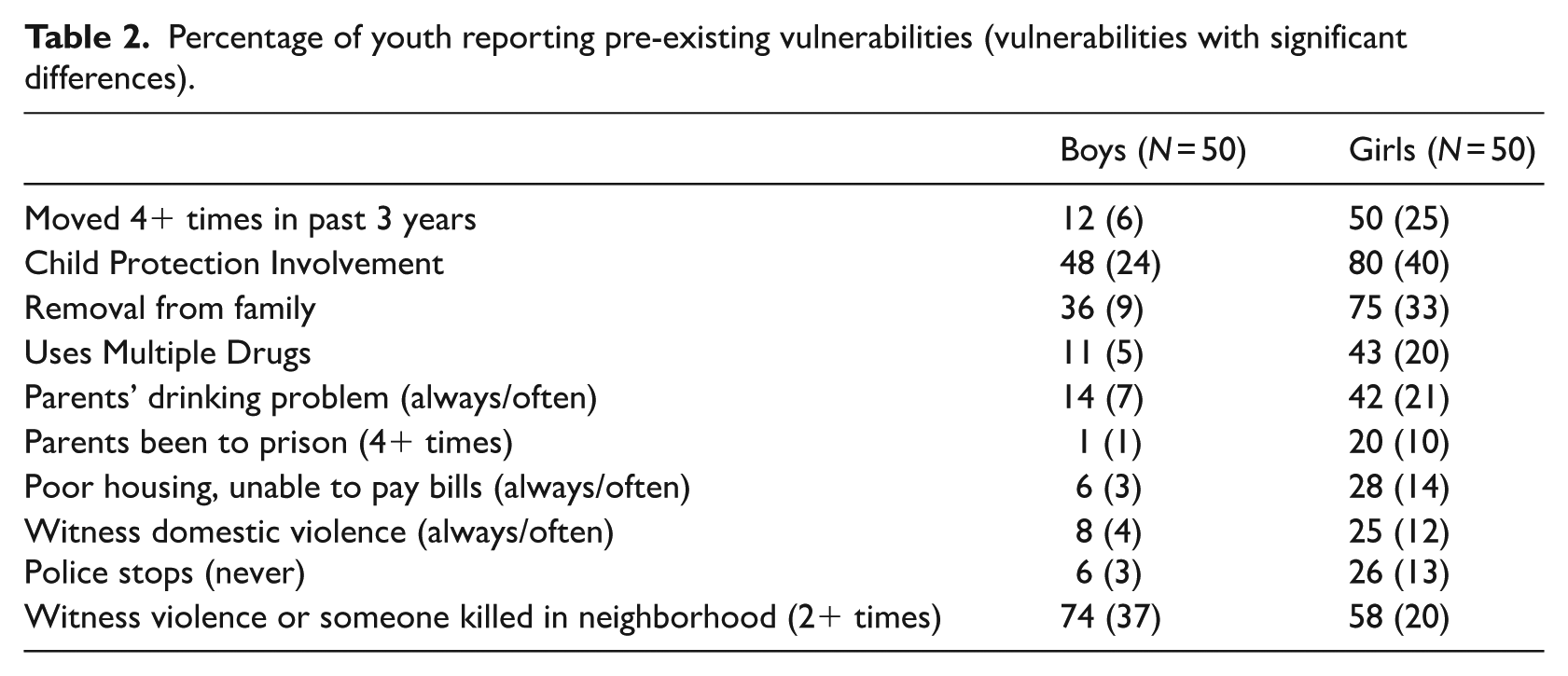
Girls more frequently appeared to have lives that were unstable. Half of the sample of girls had moved four or more times in the past 3 years compared with 12 per cent of boys (X2(2, N = 100) = 20.79, p < .001) (see Table 2). Girls were significantly more likely to have had child welfare involvement (X2(2, N = 100) = 11.11, p < .01), including having been removed from their family by child welfare services (X2(2, N = 100) = 10.18, p < .01) (see Table 2). However, both boys and girls have experienced multiple family dysfunctions. Nonetheless, girls were significantly more likely to respond with “often or always” regarding substance abuse issues, spent time in prison, inadequate housing, and witnessed violence in the home (see Table 2).
In contrast, boys were more likely to report over-surveillance by police, whereas girls were more likely to say they had never been stopped (see Table 2). In addition, boys appear more likely to report that they have witnessed multiple acts of violence in their neighborhood (this was often tied to gang activity) compared to girls. Both boys and girls in detention, therefore, have been impacted by various forms of loss, stress, and trauma, though this seemingly occurs in different ways and settings. According to the literature, childhood trauma is a defining feature of the lives of many incarcerated girls and women offenders (Brown and Gelsthorpe, 2022; Jones et al., 2014). Girls and women are more likely to experience traumatic events (sexual and physical violence) in private settings such as the home, often by someone who is known to them and on whom they may be dependent (Chesney-Lind and Paramore, 2001). Girls and women’s most common pathways to crime are based on survival of abuse, poverty, and substance abuse (Brown and Gelsthorpe, 2022; Jones et al., 2014). Men’s exposure to violence is more likely to occur in public or community settings (Galardi and Settersten, 2018). Trauma research suggests that boys and men are more likely than women to witness another person being killed or badly injured, being threatened with a weapon, or physically attacked (Ascienzo et al., 2024).
Pre-existing vulnerability and psychosocial adjustment to incarceration
Consistent with the author’s previous studies, which were based on incarcerated boys (Cesaroni and Peterson-Badali, 2005, 2010, 2013, 2016), participants in the current study were divided into low, medium, and high pre-existing vulnerability groups based on their total scores. As expected, a one-way analysis of variance (ANOVA) indicated that raw internalizing scores 4 increased as pre-existing vulnerabilities increased. Internalizing scores (e.g. reflecting depression, anxiety, and withdrawal) were significantly greater for those in the high vulnerability group compared to participants in the medium or low vulnerability groups (F(2, 99) = 18.64, p < .001). Thus, youth who entered a facility with high levels of vulnerability were more likely to have difficulties with adjustment. This finding is consistent with previous findings concerning the general relationship between a young person’s pre-existing vulnerability and adjustment to custody (Cesaroni and Peterson-Badali, 2005, 2010, 2013, 2016).
However, as evident in Figure 1, there appear to be differences between the boys and girls. While both groups have members who report a high level of pre-existing vulnerabilities and difficulties with adjustment, girls are more likely to have higher levels of difficulties with adjustment, and therefore, fewer members in the low degree of difficulties group. This relationship is consistent with and further supported by the finding that a young offender’s poor well-being (as measured by the well-being prisoner scale) also appeared to be associated with pre-existing vulnerability (F(2, 99) = 12.12, p < .001).
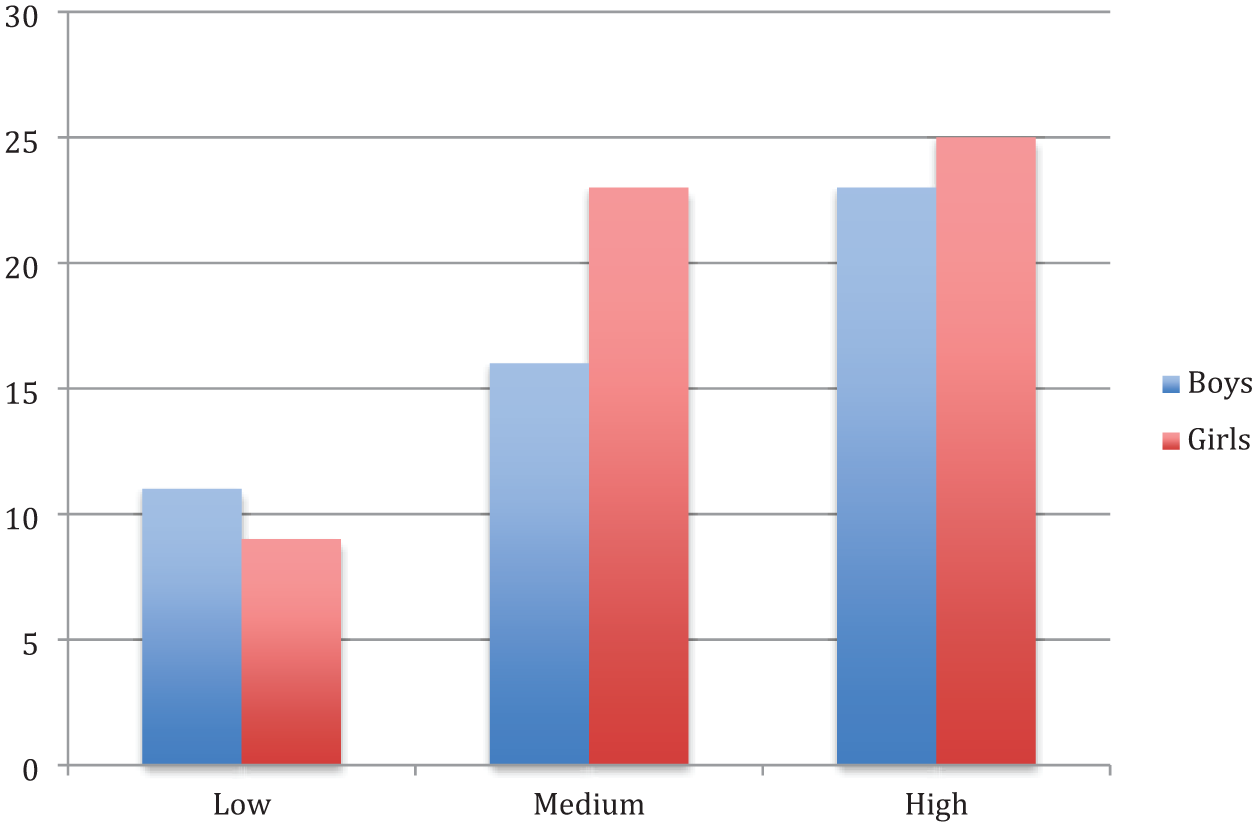
Level of pre-existing vulnerability and internalizing.
Institutional vulnerabilities
There were no statistically significant differences in the prison stresses score for boys and girls or in their perceptions of lack of internal support. However, boys were significantly more likely to have higher fear scale scores than girls (t(98) = 4.106, p = < .001). This is reflected in the fact that boys indicated that they were significantly more likely to report that they worry “a little” or a “great deal” that they will be attacked, and that the chance of attack at their particular facility is “high” (compared to girls who think it is low).
Institutional adjustment
According to Achenbach’s (1991) norms, approximately 16 per cent of the general population of young people indicated major internalizing (depressed/anxious/withdrawn) behaviors (operationalized as falling in the Borderline-Clinical or Clinical range). In the authors’ previous studies of boys in custody and detention in Ontario, Canada (Cesaroni and Peterson-Badali, 2005, 2010, 2013, 2016), internalizing behaviors were overrepresented; 23 to 30 per cent. In the current sample, internalizing behaviors in the Borderline-Clinical or Clinical range once again were overrepresented among the sample of boys (32 per cent), but for girls, the level of internalizing behaviors was even more substantial (42 per cent), and this difference from that of boys was statistically significant (boys M = 14.78, girls M = 21.10, p < .05). In addition, there was a statistically significant difference in the scores of boys and girls on the difficulties in well-being scale, with girls having higher average scores than boys (girls M = 12.62, boys M = 10.46, p < .01).
Institutional vulnerabilities and psychosocial adjustment to incarceration
Findings from this study suggest that, in addition to what a young person ‘walks in with’, there are also possible detention-based structural and cultural factors that influence patterns of adjustment. Correlations exist between the prison stress variables (e.g. difficulty with loss of freedom and privacy, missing friends, conflicts with others) (r(98) = .41, p < .001) and internalizing behaviors, as well as not perceiving enough support from peers and internalizing behaviors (r(98) = .20, p < .05). Fear, however, does not appear to be correlated with internalizing.
However, prison stress is the only institutional vulnerability that is significantly correlated with internalizing for both boys and girls (girls = r(48) = .43, p = <.01, boys = r(48) = .44, p = <.01). The relationship between fear and prison stress approaches significance with girls, r(48) = .24, p = <.082. In addition, prison stress is the only institutional vulnerability that is correlated with the other adjustment outcome, difficulties in well-being (girls = r(48) = .51, p = <.000; boys = r(48) = .50, p = <.000).
Comparing the contributions of pre-existing and institutional vulnerability to psychosocial adjustment while incarcerated
A simple linear regression was used to test if pre-existing and institutional vulnerabilities predicted psychosocial adjustment (i.e. internalizing and difficulties with well-being) in secure detention. The overall model that predicted internalizing was statistically significant for both boys (R2 = 40, F = 7.4, p > .001) and girls (R2 = 34, F = 3.8, p > .001) (see Table 3). Pre-existing vulnerabilities have the strongest predictive power for both boys (B = .42, p > .001) and girls (B = .45, p > .01) (see Table 3). Prison stress is the only other independent variable that is statistically significant, for both groups, though it is a slightly better predictor for boys (B = .39, p > .01) than girls (B = .32, p > .05) (see Table 3).
Predicting adjustment to pre-trial detention (internalizing).
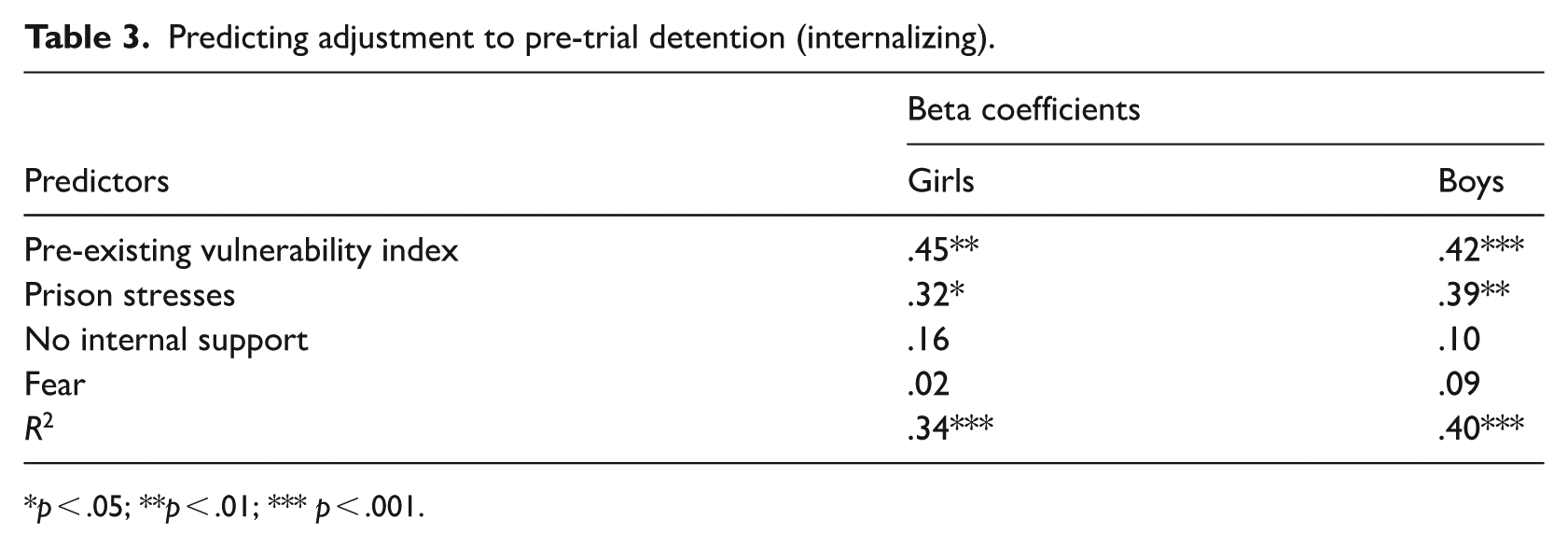
p < .05; **p < .01; *** p < .001.
The results of the model that predicted difficulties with well-being are very similar for predicted internalizing. The model was statistically significant for boys (R2 = 34, F = 5.8, p > .01) and girls (R2 = 35, F = 6.2, p > .001) in predicting difficulties with well-being. Similar to the model for internalizing, pre-existing vulnerabilities and prison stresses were the only two independent variables which predicted difficulties in well-being, however, prison stress was the strongest predictor for both boys (B = .47, p > .01) and girls (B = .39, p > .01). Pre-existing vulnerabilities was a statistically significant predictor though less robust for both boys (B = .30, p > .05) and girls (B = .34 p > .05).
Discussion
The results of this study suggest that an integrated model of adjustment, which includes both what a young person walks into an institution with (an importation model) and the environment of an institution itself (a deprivation model) are key to understanding adjustment to custody for both boys and girls. In this study’s sample of incarcerated young people, both boys and girls entered the institution with a high level of pre-existing vulnerabilities. Though girls had higher levels, boys’ levels of vulnerability were non-trivial. Boys and girls did, however, appear to have pre-existing areas of vulnerability that appear gender specific. This seems to support research that suggests gender specific pathways into custody (Day et al., 2015; Flores et al., 2020; Jones et al., 2014). Both boys and girls in detention have been impacted by various forms of loss, stress, and trauma, though this seemingly occurs in different ways and settings. Belknap and Holsinger (2006) have suggested that we need to expand our conceptualization of childhood trauma in theories of girls’ and women’s pathways to offending to include not only experiences of interpersonal violence, but also additional adverse events such as parental desertion, parental incarceration, and parental mental illness to best understand the range and extent of events affecting young women’s entry into the criminal legal system.
There are differences in internalizing scores (and lack of well-being) between incarcerated boys and girls. Perhaps this is not surprising, given that a substantial body of research suggests that, regardless of race or age, female offenders have higher rates of mental health problems—both internalizing and externalizing—than males, particularly those at the “deep end” of the system (Brown and Gelsthorpe, 2022; Cauffman, 2008; Day et al., 2015).
Both groups have high rates of adjustment difficulties—but girls appear to have higher level of adjustment problems, and their pre-existing vulnerabilities appear to be a stronger predictor. There are differences in the strength of the relationships, but generally they are not substantial, with a few key exceptions. Boys do walk in with a high level of pre-existing vulnerabilities, and they are different from that of girls. For boys, prison stresses appear to be a stronger predictor of adjustment. This is interesting given the substantial amount of literature describing the high incidence of victimization by their peers (see for example Beck, 1995; Kelly et al., 2019; Mutchnick and Fawcett, 1991; Power et al., 1997) and findings that suggest the importance of accounting for the concept or perception of fear in young offender institutions rather than focusing solely on actual experiences of peer-on-peer violence (Kar Chan and Ireland, 2009; Kelly et al., 2019).
Limitations, significance of study, and future directions
A number of limitations to the present study should be noted. First, as is often the case in this type of research, the sample of young offenders and custodial facility was nonrandom and was drawn from a particular geographic region (southern Ontario). Thus, there are limitations to our ability to generalize the study findings to the larger population of youth in remand from which the sample was drawn and other populations of young people in the community. Second, the study design was cross-sectional and correlational in nature, which precludes specifying causality with a high level of confidence. Many of the participants in our study who reported elevated internalizing scores may have experienced such difficulties prior to incarceration. As a result, social withdrawal, problematic peer relationships, and worries about victimization characterized their custodial experience and contributed further to internalizing problems in custody. Clearly, it is necessary to obtain pre-custodial measures of psychological functioning, including diagnostic status and behavioral adjustment, to understand the nature of these relationships. Finally, the self-report measures that constitute the data for our study were not corroborated by other sources and thus are subject to possible biases of memory, impression management, and social desirability. The authors deliberately chose to focus on the self-reported, subjective experiences of youths, as these may differ from the perceptions of others, particularly when considering internalizing behaviors, which tend to be covert. It will be important for future studies to employ a multi-measure, multi-informant approach to gathering data on risk and adjustment to increase the validity of the results.
Although men are clearly encapsulated within the gender sensitive definition, historically they have not been included within the gender responsive literature base; gender responsive has really meant female-responsive (Brown et al., 2020). Given that boys experience many of the same risk factors and traverse some of the same pathways to offending and incarceration as girls, gender responsive advocates have not fully considered how programs rooted in feminist principles on female offending may also work for boys who display similar risk factors and traverse similar pathways (Day et al., 2015). This study suggests that this is an area for further investigation.
Up until recently, scholars and policymakers have afforded at-risk girls, justice-involved girls/women, and sexual and gender minorities little attention (Brown et al., 2020). Gender-based scholarship, policy, and practices, however, are steadily emerging around the globe (Brown et al., 2020). This study contributes further support for gender sensitive programming for justice-involved girls that is sensitive to their particular pathways into the criminal justice system and into custody. As a consequence of their family and custody history, for some of the girls in this study, detention may be the first time that they have experienced consistency and certainty of care. Indeed, some girls comment specifically about the relief they experience from having daily food and their own beds. However, it’s important not only for the youth but for the institution and the judges who are sentencing these girls to realize that custody for welfare purposes merely skirts the issues that are bringing these girls into the system and leaves them with few options for long-term success.
Research suggests that there is something unique about the manner in which youth experience custody. When a young person is placed in confinement, their life is irrevocably changed; they are not only separated from their families and friends, but they are also often exposed to the harsh and demanding conditions of confinement (Cox, 2021). Research has made it clear that adolescents in prison import multiple vulnerabilities into custodial facilities and clearly have many unmet welfare needs (Goldson and Kilkelly, 2013). The findings from this study highlight the importance of developing policies and procedures for understanding, assessing, and responding to cultural, gender differences, differences in histories of trauma, abuse, and violence for both justice-involved boys and girls, but in particular for those who are held and sentenced to secure custody.
Footnotes

Funding
The authors disclosed receipt of the following financial support for the research, authorship, and/or publication of this article: The first author received funding for this project through the Social Science and Humanities Research Council (SSHRC).
Declaration of conflicting interests
The authors declared no potential conflicts of interest with respect to the research, authorship, and/or publication of this article.