




Abstract
When COVID-19 first hit the United States, juvenile correctional facilities across the country discontinued all in-person activities including family visits. Correctional facilities across the country were among the last institutions to reopen their doors for in-person activities given the heightened risk of rapid spread. Drawing on data gathered in February and March 2022, this study examined the state of family visitation policies and COVID-19 safety responses adopted by juvenile correctional facilities, as reported on websites, including information on the different types of contact allowed; COVID-19 safety protocols and practices; availability of information on COVID-19 infection and vaccination rates; and the overall timeliness, consistency, and comprehensiveness of the information available to families with incarcerated minor children. Our findings highlight just how untimely, inconsistent, and incomprehensive information and policies were across jurisdictions, sometimes with little to no stated explanation for their decision-making. We argue that juvenile correctional facilities should take a family-focused approach when developing and disseminating policies that impact the lives of incarcerated youth and their families, especially in times of global uncertainty.
Introduction
It is estimated that on any given day in the United States, there are approximately 47,000 youth under some form of court-ordered confinement (Sawyer and Wagner, 2022). The majority, approximately 36,000, are held in juvenile correctional facilities under the authority of the juvenile justice system (JJS). Due to the unprecedented challenges of COVID-19, states and counties throughout the United States adopted decarceration strategies to minimize the risk and spread of COVID-19 within correctional facilities (Muñiz et al., 2023; Dallaire et al., 2021). The United States was one of several countries that adopted policies and practices to mitigate the spread of COVID-19. In doing so, many countries, including the United States, adopted policies to help reduce the number of youth in custody. It is estimated that nearly 45,000 court-involved youth were released across 54 countries within the first few months of the pandemic (United Nations Children’s Fund (UNICEF), 2021). In the United States, the Centers for Disease Control and Prevention (CDC) identified correctional facilities as especially vulnerable to the rapid spread of COVID-19 due the number of people confined in close quarters and the poor access to reliable medical care and personal protection equipment (PPE). As a result, prisons, jails, and youth correctional facilities were shut down, strict COVID-19 measures were implemented, and all in-person activities, including family visits, were discontinued. Although many restrictions were later modified and eventually lifted once the COVID-19 vaccine was created and made available to the general public, correctional facilities were among the last institutions in the United States to fully lift their restrictions given the disparate risk of COVID-19 transmission.
For months following the initial shutdown, youth correctional facilities nationwide remained closed to the public meaning families with minor children who were incarcerated were unable to see, much less touch, their children. Likewise, youth who were already struggling with the reality of their socio-legal disposition were forced to navigate both confinement and a deadly pandemic away from their families and loved ones. When possible, families relied on other mediums of communication, including phone calls, video calls, letters, emails, and photographs, some of which were made available to incarcerated youth and their families. Recent research (Muñiz et al., 2023; Dallaire et al., 2021) has documented some of these COVID-19-related shifts in visitation policies and protocols, but both studies solely examined adult correctional facilities. At the start of the pandemic, the United Nations issued a technical note to detaining authorities discussing ways in which the safety and protection of youth deprived of their liberties could be ensured (Alliance for Child Protection and Humanitarian Action (ACPHA) and United Nations Children’s Fund (UNICEF), 2020). Researchers in Australia, Costa Rica, England, Ireland, Mexico, and Wales also explored the impact of pandemic-related visitation restrictions on youths’ mental health and participation in justice processes (Gordon et al., 2021; Hampson et al., 2023; Kasinathan et al., 2021; Lynch and Kilkelly, 2021; Ochoa et al., 2022). These are just a few of several studies focused on the effects of COVID-19 on adjudicated youth. While the findings of these various studies are insightful, we know far less about how COVID-19 policies and practices impacted visitation policies and by extension youth detained in juvenile correctional facilities in the United States.
This study addresses this gap by examining the juvenile justice websites for each of the fifty states and, in some cases, the largest jurisdictions’ county-level websites to investigate their response to COVID-19 and their approach to family visits during the ongoing pandemic. The United States, like other countries around the world, battled multiple COVID-19 variants including Delta and Omicron. Data collection occurred weeks into the Omicron surge which delayed the anticipated reopening of numerous correctional facilities. Drawing on data gathered between February and March 2022, this study examines the state of family visits in juvenile correctional facilities as reported on websites, including information on the different types of contact allowed by each jurisdiction; COVID-19 safety protocols and practices; availability of information on COVID-19 infection and vaccination rates; and the overall timeliness, consistency, and comprehensiveness of the information available to families with incarcerated minor children detained in either a state-operated long-term secure residential juvenile facility (e.g. youth prison) or county operated short-term secure juvenile facility (e.g. juvenile detention centers) located in the largest state jurisdiction. Throughout the article, we refer to these different types of facilities at the county and state levels as jurisdictions. For this study, we were specifically interested in family visitation policies and whether families, including siblings, were allowed to visit in person and under what conditions. We also document whether juvenile correctional facilities permitted other mediums of communication to understand how COVID-19 may have affected families’ ability to stay connected during the pandemic. While COVID-19 is no longer the threat it once was, it is imperative that we study its effects and what could have been done differently in the event of another infectious disease outbreak or national disaster. Given the unique living conditions of correctional facilities, knowing how to appropriately respond in the case of another life-threatening outbreak is essential for the health and well-being of everyone involved including those detained, their loved ones, and staff. It is important to emphasize that when a young person is incarcerated, families and loved ones rely on correctional staff for information regarding their child’s health and well-being such that it is imperative that juvenile practitioners maintain open and consistent lines of communications.
Benefits of Family Visits for Adolescents
The literature on juvenile correctional family visits is limited despite recent attempts to correct this knowledge gap (Monahan et al., 2011; Young et al., 2019; Young and Hay, 2020). Existing research has almost exclusively focused on adults and mostly men, given their overrepresentation in the criminal legal system. Still, research demonstrates that maintaining social relationships and family ties through periods of incarceration are key protective factors that can help offset the harm, social isolation, and mental health challenges experienced while confined (de Motte et al., 2012; Young et al., 2019). These protective factors are especially important during adolescence, which is a sensitive period for risk and resilience (Fuhrmann et al., 2015; Gee et al., 2022; Sisk and Gee, 2022). Families play a vital role in adolescents’ development, whether it be positive or negative, and their influence is likely even more important for youth involved in the juvenile legal system. As such, family visits are critical to a young person’s well-being and adjustment both during and after their detainment. Studies with incarcerated adults have shown that visits are an opportunity for families to reconnect and amend strained or nonexistent relationships (La Vigne et al., 2005; Tasca et al., 2016). For youth, it may be that their relationships with their parents and/or caregivers were strained as a result of family histories with drug/alcohol use, incarceration, gang involvement, or abandonment, whereby visits can be an opportunity for them to repair the relationship. Furthermore, studies have also shown that sustained visits during confinement can help reduce family violence post-release (Mowen and Fisher, 2021).
Family visits can also help youth maintain a sense of identity, while they are incarcerated (de Motte et al., 2012; McLeod and Bonsu, 2018). When many forms of freedom are stripped from incarcerated individuals, it is important that they not lose sight of their individuality and humanity. Family visits can help remind youth of their other identities – sibling, son, daughter, friend, athlete, artist, student – and of the life they have to look forward to. Other studies have found that maintaining familial connections can help incarcerated individuals maintain hope for the future (Tasca et al., 2016). Internationally, scholars, policymakers, and youth advocates alike recognize that youth who are confined, or deprived of liberty, have ‘rights to life, survival, and development, and to be heard’ (UNICEF, 2020: 2). Although the United States has yet to ratify the Convention on the Rights of the Child (CRC), which extends to all children across all contexts, 196 countries, including all the other members of the United Nations, have ratified the CRC which delineates, among other rights, that youth who are ‘deprived of liberty’ have the right to regular contact with their families. With the onset of the COVID-19 pandemic, numerous international organizations, including the United Nations, UNICEF, and the World Health Organization, issued special guidance aimed at juvenile justice leaders and practitioners outlining measures that should be taken to ensure that youth who were in custody were safe and that their socio-psychological needs were being met despite the unprecedented challenges of COVID-19 (UNICEF, 2020). One of the many recommendations made by UNICEF (2020) was that detaining authorities ‘implement measures so that every child can maintain regular contact with her or his family through correspondence and visits’ (p. 5). Similarly in March 2020, the Office of the High Commissioner for Human Rights and the World Health Organization issued an Interim Guidance report titled, COVID-19: Focus on Persons Deprived of Their Liberty, recommending that ‘particular efforts should be made to ensure family visits and alternatives are provided to all detained children and other vulnerable person in detention’ (p. 5). This again speaks to the international recognition that young people have rights that should be upheld and respected despite the implementation challenges posed by COVID-19.
Benefits of familial ties while in custody
Incarceration can be a challenging experience for anyone, but this is especially true for pre-adolescents and adolescents in juvenile correctional facilities. Research suggests that in-person family visits can help create a semblance of normalcy, positively impacting adolescents’ behaviors while incarcerated (Agudelo, 2013; Clark, 2001; Tasca et al., 2016). For example, based on a sample of 290 incarcerated youth, Agudelo (2013) found that youth who received family visits, whether frequent or infrequent, had fewer recorded behavioral incident reports compared with their peers who never received in-person family visits. Frequent visits were associated with fewer behavioral incident reports, even after controlling for age, race, school attendance, number of schools attended while under the Ohio Department of Youth Services, and whether they were in special education. These findings are consistent with other studies conducted with adults that have found that receiving regular visits while incarcerated was associated with less prison misconduct (Cochran, 2012; De Claire and Dixon, 2017; McLeod and Bonsu, 2018). Visits can also assuage feelings of social isolation and abandonment often associated with incarceration (Blevins et al., 2010; Cochran, 2012; Duwe and Clark, 2011), which can, in turn, dissuade individuals from partaking in risky behaviors.
From a developmental perspective, adolescence is marked by increased mental health challenges, which are further exacerbated by confinement (Fuhrmann et al., 2015). Researchers have found that sustained family contact can mitigate some of the mental health challenges brought on by incarceration (de Motte et al., 2012; Monahan et al., 2011). For example, youth who maintained some level of family contact were less likely to exhibit mental health symptoms while incarcerated (Monahan et al., 2011). Family visits can alleviate some of the potential social stress and isolation felt while incarcerated (De Claire and Dixon, 2017; Fuhrmann et al., 2015; Monahan et al., 2011) and can serve as a reminder of the life and social ties they have outside of corrections (Wooldredge, 1997). While less researched, recent studies demonstrate that video visits can also help build and maintain familial ties during incarceration (Skora Horgan and Poehlmann-Tynan, 2020) and reduce recidivism rates (Duwe and McNeeley, 2021). This is important considering ‘adolescence may be a sensitive period for recovery from the experience of social stress’, (Fuhrmann et al., 2015: 562).
For incarcerated youth, studies have also shown that those who received frequent and infrequent visits did better academically, as measured by grade point average (GPA), when compared with their peers who did not receive visits (Agudelo, 2013). Agudelo (2013) found that even after controlling for age, race, school attendance, and number of schools attended prior to their arrest, frequent family visits continued to be associated with a higher GPA. Relatedly, Ruch and Yoder (2018) found that youth with sustained family contact were one and a half times more likely to have a post-release educational and employment plan in place.
Although visits are typically associated with positive outcomes, not all visits are equally beneficial. More recent prison visitation studies focused on adults have shown that visits were also used to hash out familial grievances (Tasca et al., 2016; Young et al., 2019) causing feelings of guilt, shame, and stress, especially for the incarcerated individual (Turanovic and Tasca, 2019). Because juvenile correctional facilities typically restrict visits to approved family members and guardians (Young et al., 2019), youth are less likely to receive visits from people who are not family members, reducing some of the potential risk and harm. However, there is always the possibility that visits can cause more harm than good. Young et al. (2019), for example, found that 2 percent of surveyed youth rated the quality of their in-person family visits as poor and another 12 percent rated the quality of their visits as fair. The Young et al. (2019) study also offered that conflictual family dynamics could result in contentious and hostile visits and that a ‘poor’ visit quality rating may have come as a result of the distant or complicated nature of the relationships between the youth and those who came to visit them. Among youth who were not visited, there was a portion of youth who were not in support of their families visiting because of feelings of shame and embarrassment and feeling that it inconvenienced their families (Young et al., 2019). Still, most of the youth surveyed rated the overall quality of their visits as good with an average rating of 4.5 out of 5. Other studies have also found that system-impacted youth often have strained relationships with their family members due to histories of maltreatment, abuse and neglect (Smith et al., 2009) in which case receiving visits from their family members could come with a range of emotions. Even so, the Young et al. (2019) study suggests that most youth felt the added benefit of spending time with their families while in custody. Therefore, although it was a public health necessity for juvenile correctional facilities to discontinue in-person visits during COVID-19, it is important to consider how reduced in-person contact may have impacted adjudicated youth and their families.
Post release benefits
One of the most widely cited arguments in support of visitation is that sustained and frequent visits, particularly from family, significant others, friends, and other loved ones, help reduce recidivism rates (Bales and Mears, 2008; De Claire and Dixon, 2017; Duwe and Clark, 2011). Studies have shown that individuals who receive visits while incarcerated are less likely to re-offend (De Claire and Dixon, 2017), violate the terms of their probation/parole (Barrick et al., 2014; Duwe and Clark, 2011), and relapse into drug and alcohol use (Brunton-Smith and McCarthy, 2017). These individuals are also more likely to feel connected to their families (Brunton-Smith and McCarthy, 2017), report higher rates of emotional and instrumental support (Barrick et al., 2014; Beichner and Rabe-Hemp, 2014), and higher employment rates post-release (Baker et al., 2022). While we can assume that these findings might be similar for adjudicated youth, there is far less empirical evidence to support these claims. Thus, there is a growing need to better understand how system-impacted youth and their families experience family visits, especially during an ongoing pandemic, and how visits impact families in the long term.
In a recent study, Young and Turanovic (2022b) found that for youth who were at low or moderate risk of reoffending, receiving visits and frequent visits had little to no effect on whether they were re-arrested or readjudicated. Young and Turanovic (2022b) argue that there are likely many explanations as to why that is, including that in most cases youth are not detained for long periods of time and juvenile correctional facilities often promote prosocial behaviors which may already positively impact recidivism rates making the effects of family visitation less apparent. Still, they found that for youth who were labeled ‘high risk’ for re-offending, receiving regular visits did reduce the likelihood of them being re-adjudicated. ‘High risk’ in this context was measured using youths’ socio-demographic background, offense history, and family risk factors (Young and Turanovic, 2022b). In alignment with theories of multi-system resilience for populations facing adversity (Masten, 2019), family visits were particularly beneficial for ‘high risk’ youth who might need additional resources and support from loved ones during challenging times.
Barriers to In-Person Family Visits
While there are clear benefits to in-person family visits, numerous factors can impede a family’s ability to stay connected. Although not all of these variables are relevant in the juvenile correctional context, research has shown that legal fees related to criminal defense and appeals, costs of traveling to and from facilities, paying for phone calls, and supporting the needs of those in confinement (i.e. money, extra food, toiletries) can exacerbate an already taxing financial situation (Comfort et al., 2016; Hairston, 2003; Mowen and Visher, 2016). Studies have repeatedly shown that families with financial resources and extensive social support are more likely to visit their incarcerated minor child (Comfort et al., 2016; Young and Turanovic, 2022a). This, however, is an issue considering that most incarcerated youth are from economically disenfranchised communities (Mowen and Visher, 2016; Pettit, 2012). In addition, the distance between a resident’s home and the juvenile correctional facility can also be an issue for families. Almost 50 percent of youth who did not receive visits reported distance as a barrier to receiving in-person family visits (Young et al., 2019). Furthermore, 19 percent of non-visited youth indicated that their family members were unable to visit due to transportation issues (Young et al., 2019). Another 2 percent of youth, specifically juveniles whose families had to commute more than 150 miles, cited transportation, food, and lodging expenses as reasons why their families could not visit (Young et al., 2019).
In discussing the financial costs and issues associated with visiting an incarcerated minor child, it is also important to acknowledge that incarceration disproportionately affects youth of color, particularly Black, Latinx, and Indigenous youth, and their families. Present day patterns of incarceration can be traced back to century-old origins. Scholars often attribute the hyperincarceration of minoritized populations to systemic and political efforts developed to quell the social unrest in 1960’s America (Alexander, 2020 [2010]). Crime and policies were redefined to support the large-scale imprisonment of Black Americans (Alexander, 2020 [2010]; Thompson, 2010). Policy changes, such as the War on Drugs, have resulted in Black, Latinx, and Indigenous individuals being incarcerated at disproportionate rates and have also led to disparities in the treatment of minoritized individuals throughout the criminal legal process (Nellis, 2021; Sawyer, 2020). A 2021 report released by The Sentencing Project states that Black Americans are incarcerated at 4.8 times and Latinx individuals at 1.3 times the rate of white Americans (Nellis, 2021). These trends are mirrored in the juvenile legal system (Muñiz, 2021; Nolan, 2011; Sawyer and Wagner, 2022). Racial and ethnic injustices in the criminal legal system most often intersect with economic disadvantage and distance related barriers, further complicating the in-person visitation process for incarcerated individuals and their families.
Adolescence and Mental Health During COVID-19
COVID-19 and the yearlong interruption to in-person schooling and social activities greatly disrupted opportunities for peer connections and social engagement, which is critical to adolescent development (Magson et al., 2021). The effects of the pandemic also resulted in increased mental health issues among adolescents that negatively impacted their ability to learn and motivation to engage in school work, and increased interpersonal conflict with family members and social disconnection on a broader level (de Figueiredo et al., 2021; Guessoum et al., 2020; Magson et al., 2021). While COVID-19 was less of a risk for adolescents, incarcerated youth were at greater risk of contracting the virus compared with their peers in the free world due their weakened immune systems brought on by emotional and physical stress of incarceration; living in close quarters; and limited access to PPE (Barnert, 2020; Buchanan et al., 2020; Dallaire et al., 2021). To make matters worse, juvenile correctional facilities had to suspend all in-person family visits, greatly decreasing the ability for family engagement and social connection (Buchanan et al., 2020). Although forms of residential segregation and prolonged isolation were used as strategies to circumvent the spread of COVID-19, research has shown that extended use of either practice can have negative consequences on adolescent mental health and neurological development (Dierkhising et al., 2013; León et al., 2020).
The Present Study
This study examines the state of family visitation policies in state and county-operated juvenile correctional facilities during the COVID-19 pandemic. Using data gathered from all fifty states and DC (N = 51), when possible, we examined state-level juvenile correctional facilities’ (n = 46) family visitation policies as well as their safety responses to COVID-19. When a state did not have a centralized state juvenile legal system, we identified the largest county jurisdiction with a juvenile detention center (n = 5) and then examined their corresponding family visitation policies and their safety responses. We examined each website with interest in better understanding the clarity of the COVID-19-related information (e.g. vaccination rates, number of positive cases, types of contact visits) found on each state’s or county’s website and whether the information was timely, consistent, and comprehensive. Second, we explored how juvenile correctional facilities adapted their family visiting policies (e.g. types of visits, frequency, and family members allowed) to meet the changing demands brought on by COVID-19.
Method
Procedure
A total of 19 coders, including undergraduate, graduate, and postdoctoral researchers, participated in the data collection process under the supervision and guidance of the first and fourth authors. Coders collected data from late February to early March of 2022 following a surge in COVID-19 Omicron cases. Although many states had lifted statewide COVID-19 restrictions for the general public, in most cases, correctional facilities were among the last to lift the restrictions and ‘return to normal’ due to the heightened risk of exposure and spread. Coders first determined and recorded whether each state used a statewide JJS and, if so, coders used information gathered from the statewide JJS website. In the event that the state did not have a unified statewide JJS, as was the case for five states, coders identified the largest jurisdiction, by population size, and whether it had a county-level juvenile detention center. Once the jurisdiction was identified, the coders obtained the appropriate screenshots from the corresponding county juvenile detention center website. Two coders reviewed each website and independently coded all items. In pairs, coders then reviewed each code, and if they disagreed on a particular code, they revisited their respective screenshots and discussed until a consensus was reached. If a consensus could not be reached between the pair, the first author was consulted, and a consensus was reached. For the three ratings on timeliness, comprehensiveness, and consistency of information on websites, the authors of this article met again to discuss codes and reach a final consensus to ensure consistency in coding across all 51 jurisdictions. Once consensus was reached across all variables and jurisdictions, consensus codes were then used for data analysis. The study did not involve human research participants, so the study was exempted from formal review from the fifth author’s university (PHSC-2020-09-25-14543-dhdall) as defined by the US Department of Health and Human Services (DHHS) federal regulation Protection of Human Subjects.
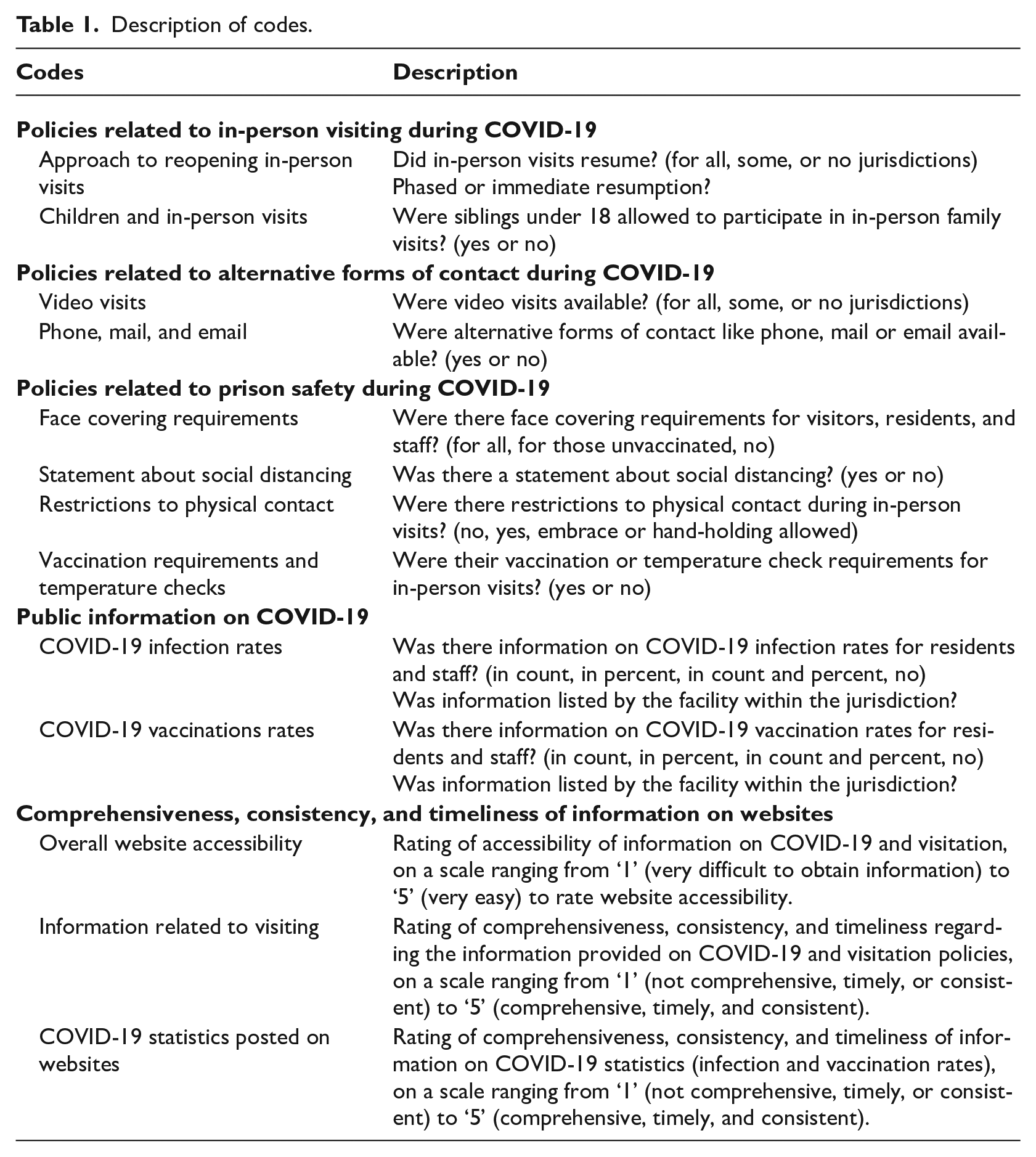
Codes included policies listed on websites related to in-person visiting (e.g. overall approach, child specific visitation policies), alternative forms of contact (e.g. video visits, phone, mail, email), and prison safety during COVID-19 (e.g. face covering, social distancing, physical contact and vaccination requirement policies). Codes also included the type and amount of information on COVID-19 infection and vaccination rates posted on websites. Based on these codes, coders also rated the comprehensiveness, consistency, and timeliness of information on websites based on overall website accessibility, information related to visiting, and COVID-19 statistics posted on websites.
Approach to reopening in-person visits
Coders noted if in-person visits had resumed since the initial shutdown in March 2020. For jurisdictions that resumed in-person visits, coders documented if a phased or immediate reopening of visitation had been initiated for facilities in that jurisdiction, and whether all, some, or no facilities within each jurisdiction were open to in-person visits at the time of coding. For each jurisdiction, coders also reported the number of JJS facilities, the number of visitors allowed, the frequency of visits per month, and the length of each visit. Coders also noted when jurisdictions had no information on their websites regarding visitation or COVID-19; these jurisdictions were not included in our analyses on in-person visitation and COVID-19 safety requirements. In practice, some of these jurisdictions may have offered in-person visits without stating it on their websites, and may have been implementing policies related to visitation and COVID-19 that were not captured in this study.
Comprehensiveness, consistency, and timeliness of information on DOC websites
Overall website accessibility
Coders rated the accessibility of information on COVID-19 and visitation for each website. The guiding question of ‘how feasible would it be for a loved one to find the visitation and COVID-19 information needed to make an informed decision’. Coders used a scale ranging from ‘1’ (very difficult to obtain information) to ‘5’ (very easy) to rate website accessibility. Websites that received a ‘1’ had no information on COVID-19 and visitation, and based on their websites alone, it was nearly impossible to determine whether families could visit their incarcerated minor child at the time of coding. Coders rated a website a ‘2’ or ‘3’ when websites included some information on COVID-19 and visitation, but this information was inconsistent and required time and effort to find and interpret. Websites that were rated a ‘4’ or ‘5’ provided frequent updates on their websites and made information regarding COVID-19 safety protocols and visitation easily accessible, such as putting information on the landing page, reducing the amount of time and effort needed to find the necessary information. Those individuals interested in knowing more about how they can visit their loved ones would be able to do so in those states whose websites were rated a ‘5’.
Information related to visiting
Coders rated each website’s comprehensiveness, consistency, and timeliness regarding the information provided on COVID-19 and visitation policies. Coders rated this information on a scale of ‘1’ (not comprehensive, timely, or consistent) to ‘5’ (comprehensive, timely, and consistent). Coders gave a rating of ‘1’ to websites that provided no information on visiting or COVID-19, as well as no information on prevention and safety measures implemented to prevent the spread of COVID-19. Websites with a rating of ‘2’ or ‘3’ provided slightly more information on visitation protocols, but the information was not frequently updated, and did not align with the CDC guidelines and public health recommendations (i.e. provision of alternative forms of contact, enforcement of PPE mandates). Websites rated a ‘4’ or ‘5’ offered more information on visitation, provided more frequent updates, and followed CDC guidelines. Those states that remained closed to in-person visitation may have still received a rating of ‘4’ or ‘5’ if the information provided for their reasons for closing was well-founded and in accordance with CDC guidelines, and/or if free alternatives to in-person visitation were offered. Websites rated a ‘5’ provided the most information needed for families to make informed decisions.
COVID-19 Statistics Posted on Websites
Coders also rated the comprehensiveness, consistency, and timeliness of information on COVID-19 statistics (resident and staff infection and vaccination rates) posted on each jurisdiction’s website. Coders rated this information on a scale of ‘1’ (not comprehensive, timely, or consistent) to ‘5’ (comprehensive, timely, and consistent). Websites that provided no information on COVID-19 resident and staff infection and vaccination rates were rated a ‘1’. Websites that were rated a ‘2’ or ‘3’ provided some information on resident and/or staff infection and/or vaccination rates, but rates were posted in count only and were not listed by facility; information was updated infrequently. Websites rated a ‘4’ listed both resident and staff infection rates and were listed by facility and/or updated frequently. However, only websites with all of the necessary information posted in count and percent, information by facility, and updated frequently were rated a ‘5’.
See Table 1 for a full list of codes and the Appendix 1 for more information about specific codes.
Description of codes.
Analyses
Descriptive statistics were first conducted to examine the percentage of jurisdictions whose facilities were open to in-person visits at the time of coding, as well as the percentages of jurisdictions that offered video visits, and other alternatives to in-person visits. Additional descriptive statistics were conducted to determine in-person visiting requirements implemented since COVID-19, including safety protocols intended to prevent the spread of the virus, jurisdictions with all facilities closed to in-person visiting were not included in analyses related to in-person visits. Finally, using data from all 51 jurisdictions, descriptive statistics were conducted to examine information on COVID-19 statistics posted on DOC websites and to summarize DOC website ratings based on the comprehensiveness, consistency, and timeliness of information on websites.
Results
Family visitation policies during COVID-19
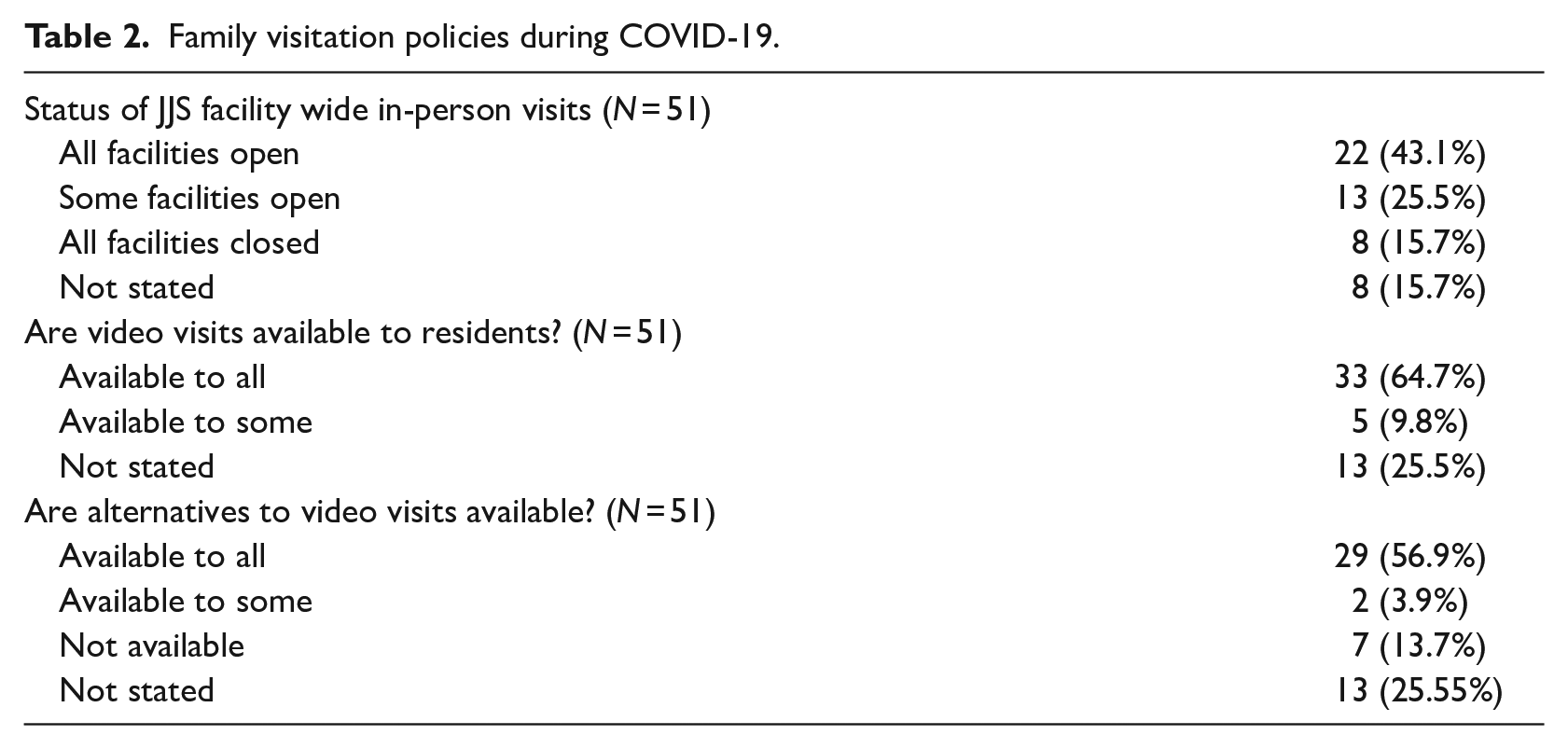
As noted in Table 2, at the time of data collection 22 jurisdictions (43.1%) had resumed in-person family visits within their respective juvenile correctional facilities. Another thirteen jurisdictions (25.5%) had resumed in-person family visits in some of their juvenile correctional facilities, but not all. It was unclear whether the variability had anything to do with active COVID-19 cases or whether each juvenile correctional facility had different parameters as to when they would resume in-person family visits. Rarely was an explanation given as to why some juvenile correctional facilities remained closed and others open. In addition, eight jurisdictions (15.7%), including DC, remained closed to in-person family visits and another eight states (15.7%) did not have any relevant information on their website related to in-person family visits. In most cases (n = 33; 64.7%), however, jurisdictions, including DC, did offer video visitation as an alternative to in-person visits. Few states (n = 5; 9.8%), did not offer video visiting as an option. Still, a quarter (25.5%) of all jurisdictions did not explicitly state on their websites whether or not they offered video visitation as an option. In most cases (n = 29; 56.9%), jurisdictions also offered other forms of communication such as phone calls, written correspondence, email, and instant messaging. The cost of these alternatives varied by medium, jurisdiction and facility, with some jurisdictions and facilities providing free alternatives to video visits (e.g. free stamps) and others charging visitors and incarcerated individuals for the cost of contacting their loved ones. However, nearly 40 percent of jurisdictions, including DC, did not offer other modes of communication or did not have a stated policy on their website.
Family visitation policies during COVID-19.
Visitation requirements related to the prevention of COVID-19
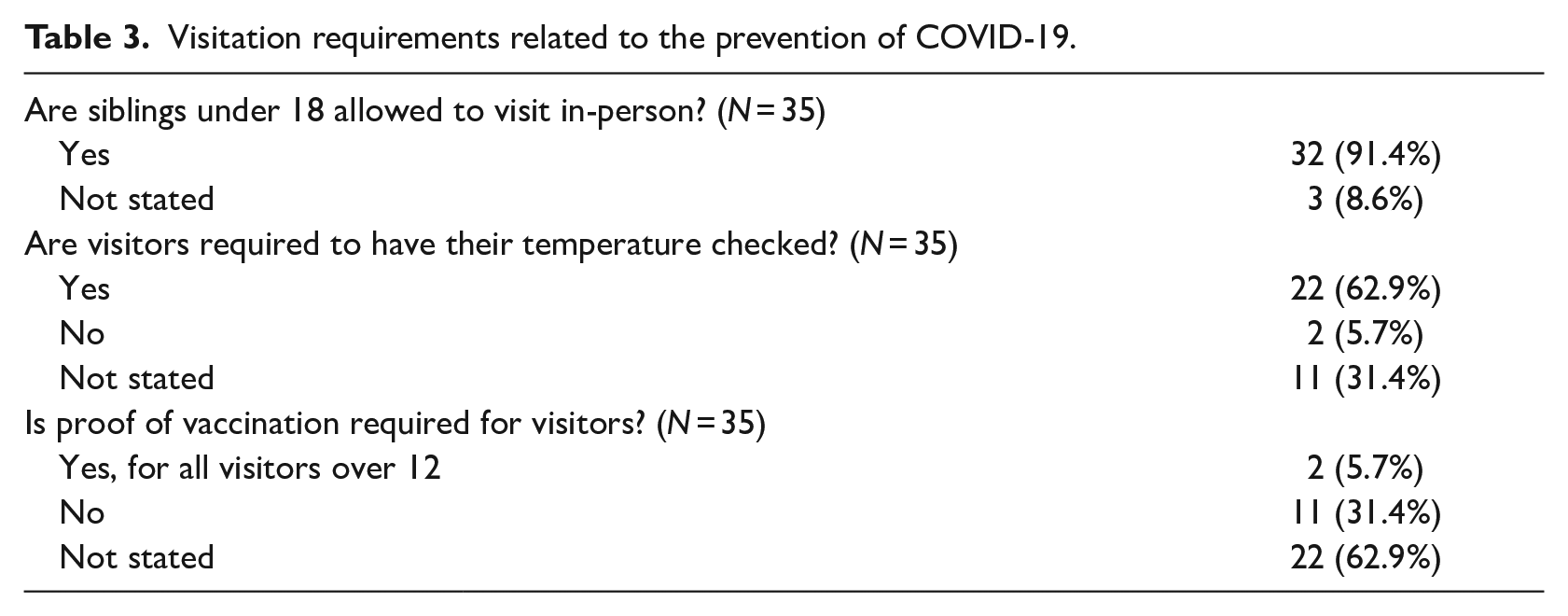
Upon further analysis of the 35 jurisdictions that offered in-person family visits in at least some of their facilities, there were considerable differences in visitation requirements adopted to help safeguard the health and well-being of the residents, staff, and visitors. Nearly a quarter of the 35 jurisdictions (n = 8; 22.9%) explicitly stated that no testing was required in order for families to visit and the majority (n = 22; 62%) made no mention as to whether or not a negative COVID-19 test was required. Still a select few (n = 5; 14.3%) required a negative COVID-19 test the day of the visit. Fewer jurisdictions (n = 2; 5.7%) required proof of vaccination. In most cases, jurisdictions relied on temperature checks (n = 22; 62.9%) as the primary COVID-19 screening tool. Perhaps unsurprisingly, most jurisdictions made no mention as to whether a temperature check and/or proof of vaccination were required prior to an in-person visit with their child (see Table 3 for more detailed findings).
Visitation requirements related to the prevention of COVID-19.
Information about in-person family visits during COVID-19
Based on data from the 35 states open to in-person visits in at least some of their facilities, we examined what information was made available regarding COVID-19 safety protocols during the in-person visit and again found considerable variations across jurisdictions. Most of the 35 jurisdictions (n = 20; 57.1%) did not explicitly state whether face coverings were required for residents whereas 13 states (37.1%) required residents to wear face coverings and two jurisdictions (5.7%) only required face coverings for unvaccinated residents. In most cases (n = 21; 60%), jurisdictions did not explicitly state whether staff were required to wear face coverings in the visitation room. Less than half (n = 14; 40%) explicitly stated that staff members were required to wear face coverings during the family visits.
However, most of the 35 jurisdictions (n = 21; 60%) required all adult visitors to wear face coverings and one additional jurisdiction required face coverings for unvaccinated adult visitors. Still, 13 jurisdictions did not have a stated face covering policy for adult visitors. The requirements for face coverings for minor visitors were often similar to that of adults as many of the 35 jurisdictions (n = 21; 60%) required that underage visitors wear face covering with some specifying particular ages (see Table 4 for more details). Again, 13 jurisdictions either did not refer to a policy or did not require minor visitors to wear face coverings during visits.
Information about in-person family visits during COVID-19.
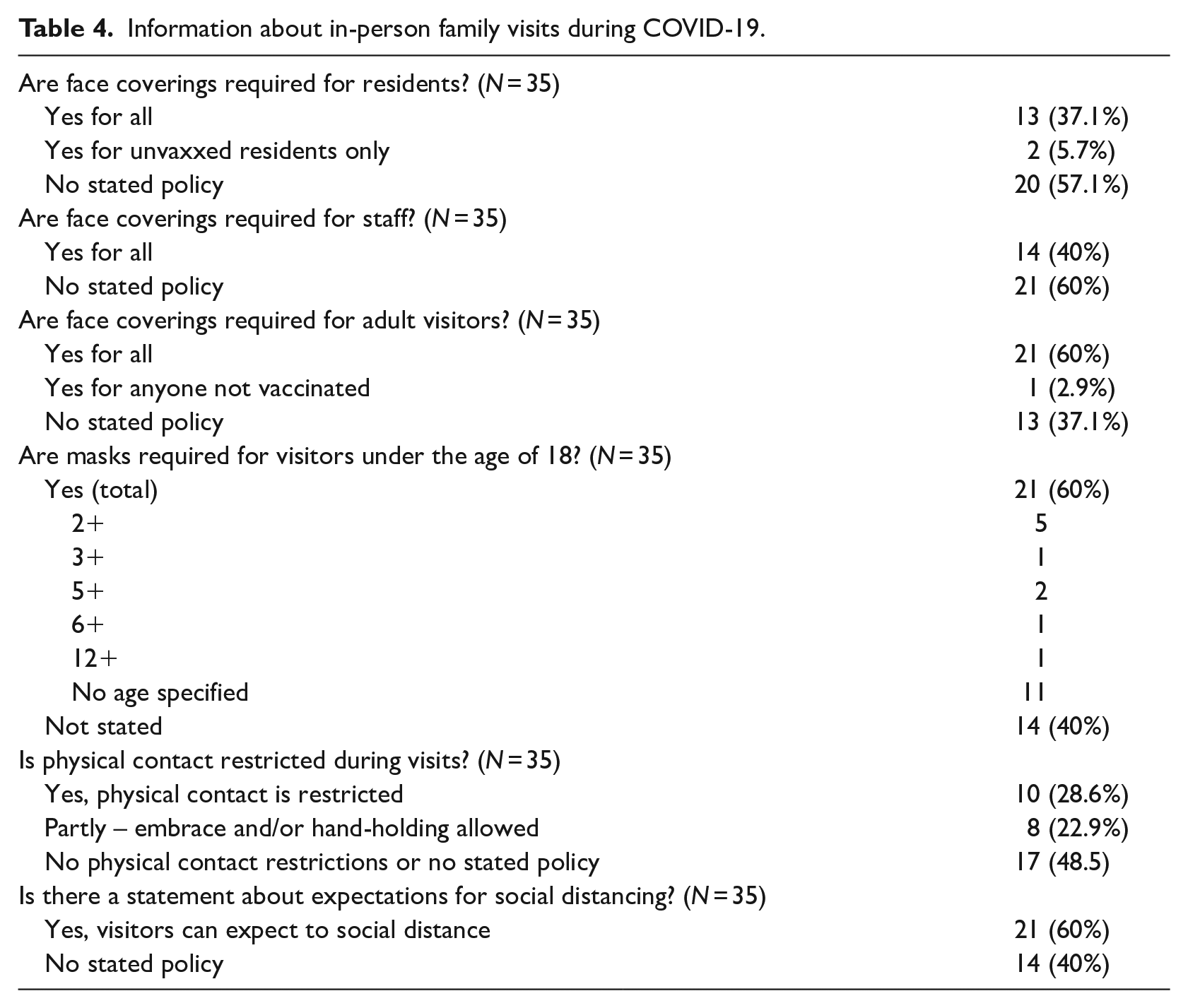
In terms of physical contact and social distancing requirements, there were also considerable differences across jurisdictions. For instance, 10 of the 35 jurisdictions (28.6%) strictly prohibited physical contact during the visit whereas eight jurisdictions (22.9%) allowed for a quick embrace and/or hand-holding during the visit. Most jurisdictions (n = 17; 45.7%), however, either had no physical contact restrictions meaning families were allowed to hug and touch one another during the in-person family visit or there was no stated policy on their website. Relatedly, 21 jurisdictions (60%) included a statement on social distancing on their website whereas the other 14(40%) did not.
Information about COVID-19 infection and vaccination rates on JLS websites
Using data from all state and DC jurisdictions (N = 51), we also examined what information was made available about residents’ COVID-19 infection and vaccination rates on each jurisdictions’ website. As noted in Table 5, slightly more than half (n = 30; 58.85%) of all jurisdictions provided a count of how many residents were infected by COVID-19 at the time of data collection. Only one jurisdiction (2%) reported resident infection rates in count and percentage. Of the 31 jurisdictions that did report infection rates by count or count and percent, 28 of them (90.3%) provided this information by facility. The other three jurisdictions (9.7%) reported infection rates at the system level with no listed information for each facility. The remaining 20 jurisdictions (39.2%) did not report any information pertaining to resident infection rates. As it relates to resident vaccination rates, we found even less information. Only 14 jurisdictions listed some information about resident vaccination rates and nine (64.3%) provided information by facility (see Table 5 for more detailed information).
Information about COVID-19 infection and vaccination rates on JLS websites.
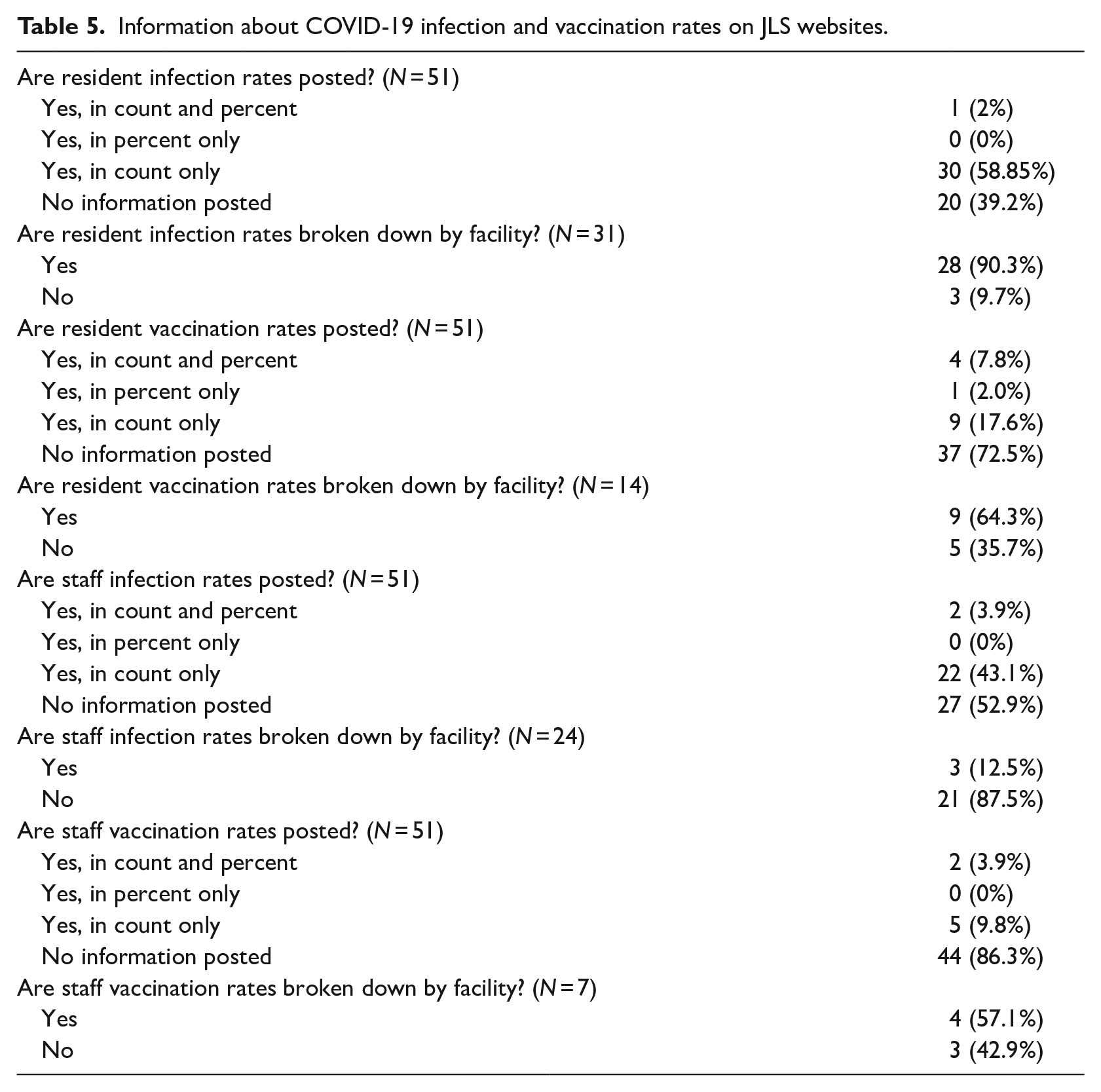
Table 5 also includes information about staff infection and vaccination rates. In most cases (n = 27; 52.9%), jurisdictions did not post information on their websites about staff infection rates. Less than half of all jurisdictions (n = 22; 43.1%) provided a count of how many staff members were infected by COVID-19 at the time of data collection. Another two jurisdictions (3.9%) reported both the count and percentage of staff members infected with COVID-19. Among the 24 jurisdictions that did post staff infection rates, only three jurisdictions included information by facility whereas the majority (n = 21; 87.5%) did not. In terms of staff vaccination rates, even less information was available. The overwhelming majority (n = 44; 86.3%) did not post information pertaining to staff vaccination rates. Only five jurisdictions (9.8%) reported vaccination rates by count and two additional jurisdictions reported both by count and percentage of vaccinated staff. Of the seven jurisdictions that did report some information about staff vaccination rates, only four jurisdictions listed vaccination rates by facility.
Rating information provided on DOC website
For ratings for overall accessibility of information related to COVID-19 on websites, there were nine jurisdictions (17.6%) rated ‘1’ (see Figure 1 for a recreated example of a jurisdiction rated a ‘1’), 23 jurisdictions (45.1%) rated ‘2’, 15 jurisdictions (29.4%) rated ‘3’ (average), three jurisdictions (5.9%) rated ‘4’, and one jurisdiction (2.0%) rated ‘5’ (see Figure 2 for a recreated example of a jurisdiction rated as such). Across all 51 jurisdictions, the average rating was 2.29 (SD = 0.90).
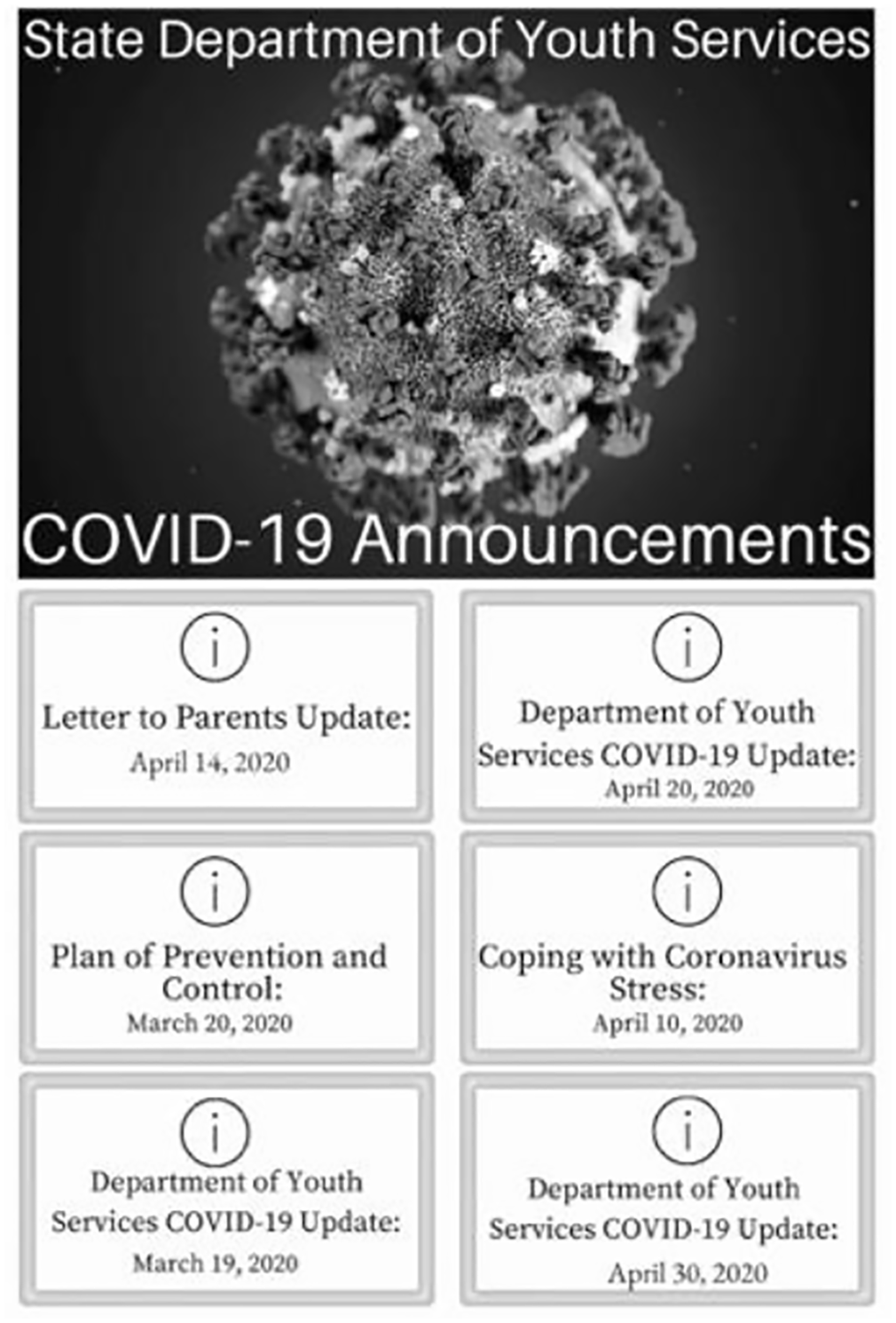
A facsimile of a state rated ‘1’.
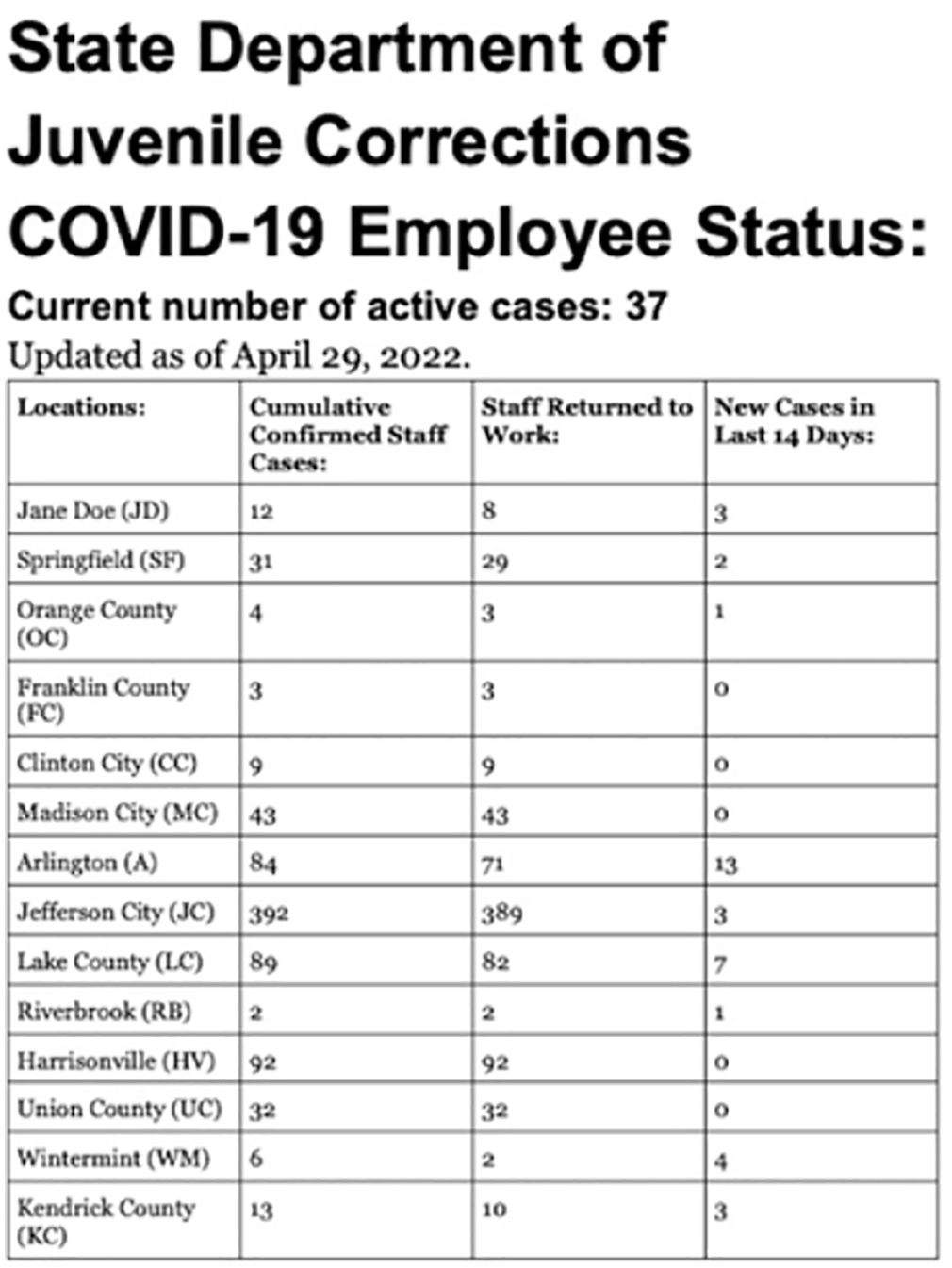
A facsimile of a state rated ‘5’.
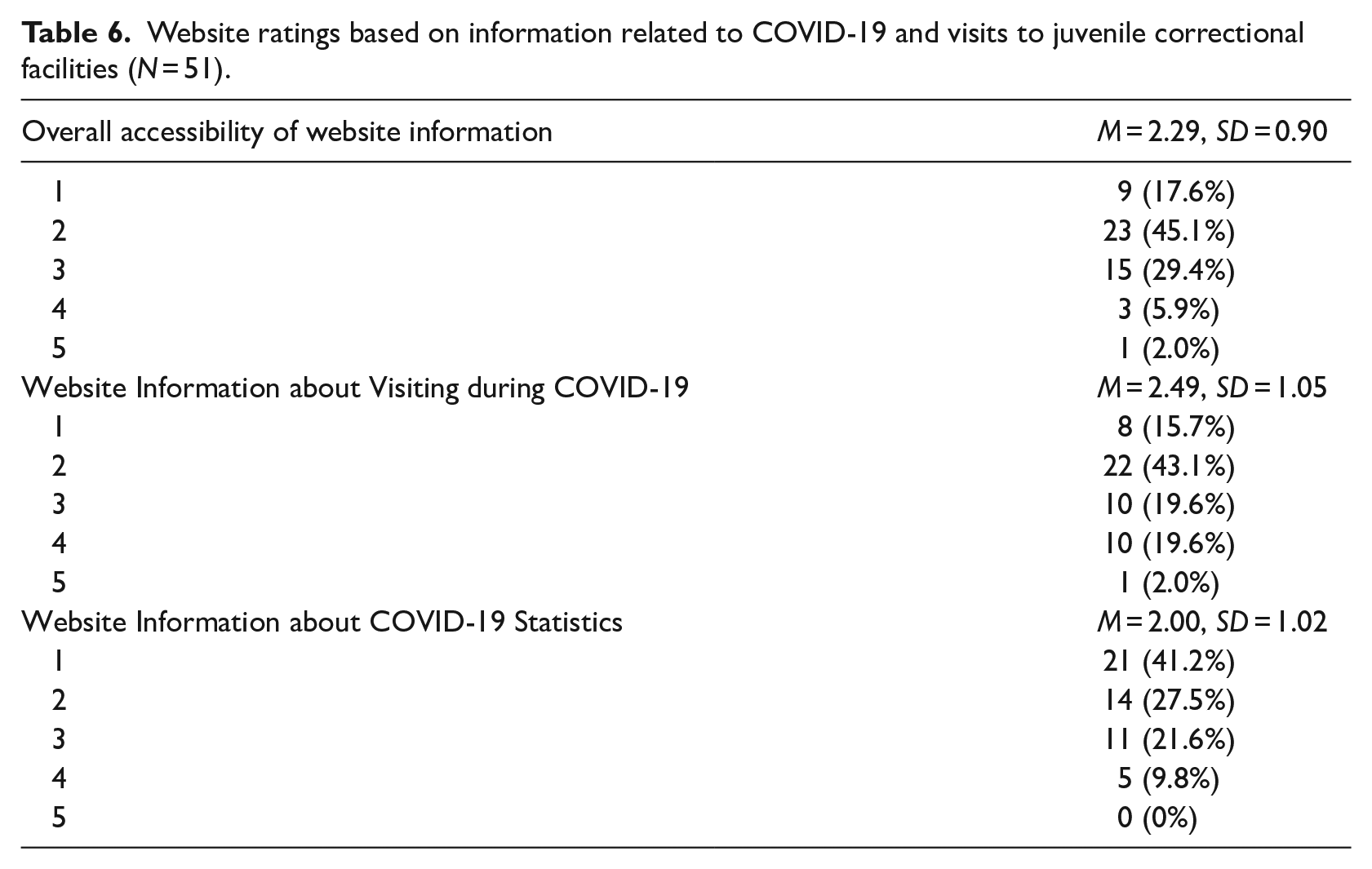
For ratings of the comprehensiveness, consistency, and timeliness of information regarding visitation during COVID-19 on each jurisdiction’s websites there were eight jurisdictions (15.7%) rated ‘1’; 22 jurisdictions (43.1%) rated ‘2’; 10 jurisdictions (19.6%) rated ‘3’ (somewhat); 10 jurisdictions (19.6%) rated ‘4’; one jurisdiction (2.0%) rated ‘5’. The average rating was 2.49 (SD = 1.05).
For ratings of the comprehensiveness, consistency, and timeliness of COVID-19 infection and vaccination rates posted on each jurisdiction’s websites, there were 21 (41.2%) jurisdictions rated ‘1’; 14 jurisdictions (27.5%) rated ‘2’; 11 jurisdictions (21.6%) rated ‘3’ (somewhat); four jurisdictions (9.8%) rated ‘4’. No jurisdictions (0%) were rated ‘5’. The average rating was 2.00 (SD = 1.02) (see Table 6 for detailed information).
Website ratings based on information related to COVID-19 and visits to juvenile correctional facilities (N = 51).
Discussion and Conclusion
Our study sought to document how juvenile correctional facilities across the country dealt with the ongoing pandemic and the policies and practices they adopted in response. Using data gathered in February and March of 2022 from both state and county operated juvenile correctional facilities, we examined whether or not juvenile correctional facilities had reopened their doors to in-person family visits, whether they offered alternatives to in-person visits (e.g. video visits, phone calls, letters), and what safety protocols were used to safeguard the health and wellness of incarcerated youth, staff, and their visitors. In addition, we documented what information was posted online regarding COVID-19 infection and vaccination rates, both for youth residents and staff, and how timely, consistent, and comprehensive the information was. Unlike the adult criminal legal system where each state has a statewide prison system, the same is not true of the juvenile legal system. Not all US states have a centralized juvenile legal system that regulates long-term secure juvenile residential facilities (e.g. youth prisons). Some states, including Vermont and Kansas, only have county-owned and operated temporary juvenile residential facilities (e.g. juvenile detention centers), that oftentimes operate quite differently from one another. Importantly, these differences affect how youth and their families experience family separation due to incarceration. Our findings highlight just how poor, untimely, inconsistent the information was across the various jurisdiction websites. In the paragraphs that follow we review each of our findings and offer system-wide recommendations aimed at improving the conditions and accessibility of family visitation in juvenile correctional facilities.
At the time of data collection (February and March of 2022) nearly 70% of juvenile correctional facilities within our sample (n = 51) had at least partially reopened their doors to in-person visits whereas 30% remained closed or did not state on their website whether they had reopened. For those states and counties that remained closed, in most cases, no explanation was provided on the website for why they remained closed to in-person visits nor any indication of when they might reopen. For families, this meant continued separation from their incarcerated minor child. Fortunately, most jurisdictions did offer video visits as an alternative to in-person visits that in most cases were free and available to all residents (64.7%) and in five states (9.8%) was available to some residents. Again, no explanation was given as to which residents had access and why. Still, we found that 13 states did not post any information about video visits so it was unclear whether youth and their families had access and, if so, at what cost to families. Another nearly 61 percent of jurisdictions offered other forms of communication such as phone calls, written correspondence, email communication, and instant messaging, whereas nearly 39 percent either did not, or did not have a stated policy, on their website. While the looming threat of COVID-19 in those regions likely influenced jurisdictions’ decisions on whether or not to reopen for in-person visits, we recommend that juvenile correctional facilities explore other non-contact visitation options such as outdoor visits and socially distant visits in areas with good ventilation. We also encourage juvenile correctional facilities to keep outdoor visitation as an option, or that administrators have a plan in place that would allow for outdoor visits, in the event of another contagious airborne outbreak. In addition, we recommend that juvenile correctional facilities provide more visitation options on different days and times of the week to minimize the number of people present during visits and to accommodate parents and caregivers availability.
Notably, not all juvenile correctional facilities offered video visits as an alternative to in-person visits despite the ongoing threat of COVID-19. We recommend that all juvenile correctional facilities invest in the proper equipment and technologies needed to offer video visits for residents and families. For facilities that have already invested in the equipment (e.g. computers, tablets) and internet capabilities, we recommend that facilities continue offering video visits free of cost to families. Video visits have made it possible for families to stay connected despite the distance, cost, and threat of disease (Duwe and McNeeley, 2021; McLeod and Bonsu, 2018; Young et al., 2019). For some families, video visits may continue to be the most reliable, consistent, and affordable way for them to communicate with their child which can positively impact young peoples well-being both during and after incarceration. We do, however, want to emphasize that video visits should be free and offered concurrently with in-person visits and should not replace the availability of in-person family visits. While video visits can provide a convenient and cost-effective ways for families to stay connected, especially when distance or health concerns are an issue, the physical connection is lost. Families cannot embrace one another through a screen. We encourage administrators and juvenile practitioners to consider the short and long term benefits of creating family focused policies, protocols, and practices that foster and prioritize building stronger family connections that can benefit youth and families well beyond that period of confinement.
Based on our findings, we also want to highlight the importance of families having access to timely, consistent, and comprehensive information while their children are in custody. Families and youth alike depend on juvenile correctional facilities and their respective websites for information regarding health safety and family visits. When the information is not readily available on websites, as was the case for five states with zero posted information, families are forced to navigate another barrier to visits. For the five jurisdictions that did not have a functional website with accessible, up-to-date, and comprehensive information pertaining to family visits and relevant safety protocols, we highly recommend that they invest in creating a website as a tool and access point for families. The same is true for the jurisdictions that rarely updated the information on their website or that shared minimal information. When compared with adult correctional facilities (Muñiz et al., 2023; Dallaire et al., 2021), we found that youth correctional facilities had even less publicly available information about COVID-19 vaccination and infection rates for staff and residents. As such, families are unable to make informed decisions regarding when and under what conditions to visit their child while they are in correctional custody. It is also worth noting that in some cases, reported infection rates might not adequately capture the true infection rates. Unless juvenile correctional facilities are regularly administering COVID tests to all its staff and youth, infection rates might only reflect those who have willingly tested within the reported time period. Even though the threat and morbidity of COVID-19 has decreased significantly, as a society we must remain vigilant of future outbreaks. Correctional facilities should have a plan in place for how to disseminate information in a timely fashion were a similar crisis to occur. This is especially true for county-owned and operated juvenile correctional facilities that on average had little to no updated information available on their websites. Because county juvenile correctional facilities are not part of a centralized system, we argue that it is even more important that there be some level of accountability and oversight that is responsive to family needs and the humane treatment of its residents.
There were also considerable differences across the 35 jurisdictions that were open to in-person visits, in at least some of their facilities, related to COVID-19 safety protocols and screening tools used both before and during in-person visits. Prior to a visit, most jurisdictions used temperature checks as the primary screening tool whereas proof of vaccination was almost never required. The information for what to expect during the visit was even more unpredictable and oftentimes not stated on the website. For example, most jurisdictions did not have a stated policy on their website about whether residents and staff were required to wear face coverings during the family visit. We did, however, find more information related to visitor requirements; in most cases both adult and minor visitors (60% respectively) had to wear face coverings during the visit. There were statements on social distancing on 60 percent of jurisdictions’ websites, but still 40 percent did not mention social distancing at all. Physical contact policies during in-person visits also varied across the 35 jurisdictions with some fully restricting physical contact, some allowing a quick embrace or hand-holding, and nearly 50 percent of jurisdictions having no restrictions or stated policy. While inconsistencies are to be expected given the nature of COVID-19 and its contextual risks, the lack of information and reasoning can be difficult for families and youth to navigate, further exacerbating an already precarious situation. Ultimately, it is important to remember that these are incarcerated youth, so prioritizing family communication and visits should be of the utmost importance. Creating family centered policies and practices focused on restoring familial connections, not just in the form of family visits, can have tremendous impact in the lives of youth and families dealing with incarceration. If we are to truly break the cycle of incarceration early, juvenile correctional facilities should prioritize family-and-youth centered policies and practices that privilege family preservation, positive youth development, and reduce the risk of future recidivism.
Footnotes
Appendix 1
Authors’ note
The authors do not have any relationships, personal or financial, with other entities that could present a conflict of interest or may inappropriately influence their work.
Declaration of conflicting interests
The author(s) declared no potential conflicts of interest with respect to the research, authorship, and/or publication of this article.
Funding
The author(s) received no financial support for the research, authorship, and/or publication of this article.
