




Abstract
This systematic literature review synthesizes available empirical studies exploring the challenges experienced by transgender youth within juvenile justice contexts and systems responses to them. The review followed PRISMA guidelines and searches were conducted in five academic databases from January 2000 to December 2020. Four qualitative articles met the inclusion criteria for review. Further research must be pursued to elucidate the lived experiences of transgender youth in juvenile justice systems. The juvenile justice system responses in providing for the unique health, social, and psychological needs of this vulnerable, carceral population are necessary to influence and guide best practice policies and procedures.
Introduction
The World Health Organization (2021) defines transgender as an umbrella term describing a unique population of individuals whose sense of gender differs from their sex assumed at birth. Some transgender people undertake gender-affirming hormones or surgeries to align their physical appearance with their gender identity (Jonnson et al., 2019; Majid and Vanstone, 2018; Mallon and Perez, 2020; Swan et al., 2023).
The ‘youth justice system’ is a set of processes and procedures for managing youth who have, or are alleged to have, committed a criminal offense (Australian Institute of Health and Welfare (AIHW), 2020). Globally, the age the youth justice system applies to varies between countries, and nationally even between states/territories. For example, great variation is evident in the age a youth is deemed criminally responsible between the states of the United States. In the state of New York, a youth is deemed criminally responsible between the ages of 7 and 16 years, while 32 states, including Florida and California, have no minimum age (Juvenile Justice Geography, Policy, Practice and Statistics, 2021). In England and Australia, a youth may be arrested and charged with a criminal offense between the ages of 10 and 17 years inclusive (see AIHW, 2020; Gov.UK, 2021; Parliament of Australia, 2022).
As follows, young people enter the youth justice system when they are investigated by police for allegedly committing an offense. Within Western systems of Juvenile Justice, this investigation can lead to the young person being cautioned, charged, and ordered to appear before a juvenile criminal court, or diverted through non-court actions such as infringement notices or community conferencing (AIHW, 2020). The court may detain a young person on remand while waiting for their matter to be finalized, or in some jurisdictions, the court may release the young person on bail, although not all Western and European jurisdictions have a system of bail. Upon hearing the matter, the court may dismiss the charge, impose similar diversionary interventions, or order a period of legal supervision, either within the community on a community-based order (e.g. probation order) or in a juvenile detention center (AIHW, 2020; Makker et al., 2022; Myers et al., 2020; Taylor, 2016). In keeping with the United Nations Convention on the Rights of a Child, a key principle of the youth justice system broadly speaking is that the detention of young people is used as a ‘last resort’ (Office of the United Nations High Commissioner for Human Rights (OHCHR), 1985, 1989).
Determining precise numbers of transgender youth involved within juvenile justice systems is challenging. In the United States, approximately 13%–15% of young people incarcerated identify as Lesbian, Gay, Bisexual, or Transgender (LGBT), an over-representation of this population considering LGBT youth represents 5% to 7% of the nation’s overall population (Feinstein et al., 2001; Hunt and Moodie-Mills, 2012; Majd et al., 2009; Mitchum and Moodie-Mills, 2014; Movement Advancement Project et al., 2017; Rankin, 2017; Zamantakis, 2016). However, since ‘transgender’ is measured within the broader demographic of LGBT, it is difficult to determine an accurate picture of involvement (Valentino, 2011).
While some data are available pertaining to the prevalence of adult incarcerated transgender persons (Brömdal et al., 2019a), data on the involvement of transgender youth are not available (Asquith et al., 2017). Within the Australian context (where the authors are located), the AIHW report Youth justice in Australia 2018–19 (2020) summarizes demographic details of youth involved nationally within the youth justice system, however, does not gather or report information on gender identity.
Parallel to this, LGBT youth have more adverse contact with the juvenile justice system than cisgender and heterosexual peers in the United States (Hunt and Moodie-Mills, 2012; Kahle and Rosenbaum, 2021). The common pathways into the juvenile justice system for LGBT youth stem often from family conflict and rejection after the youth ‘comes out’, resulting in homelessness and committing crimes to survive (e.g. selling drugs, sex work, theft, or rough sleeping/sleeping in public spaces) (Fedders, 2013; Hunt and Moodie-Mills, 2012; Irvine and Canfield, 2016; Mountz, 2016, 2020). This increases their vulnerability to committing offenses, and the likelihood of arrest and detention (Hunt and Moodie-Mills, 2012; Mountz, 2016, 2020). Transgender youth entering the juvenile justice system are twice as likely as cisgender and heterosexual youth to have experienced family conflict and/or abandonment, child abuse and homelessness (Himmelstein and Brückner, 2011; Hunt and Moodie-Mills, 2012; Irvine and Canfield, 2016; Markshamer and Tobin, 2014; Mountz, 2016, 2020; Valentino, 2011). Hunt and Moodie-Mills (2012) state higher rates of criminally sanctioned punishment do not equate to higher rates of anti-social/criminal behavior among LGBT youth populations. Instead, they attribute this to harsher punishments being delivered to LGBT youth because of ignorance, discrimination (Hunt and Moodie-Mills, 2012), and an increased likelihood of these youth coming to the attention of police (Richards and Dwyer, 2014). The lack of accurate data on transgender youth’s involvement with the juvenile justice, coupled with the increased risk of engagement with the juvenile justice system, makes transgender youth a vulnerable, yet a structurally invisible population with unique needs that need to be met (Irvine, 2010; Irvine-Baker et al., 2019; Mountz, 2020). In an attempt to clarify the unique challenges and responses experienced specifically by transgender youth within the juvenile justice system, this systematic literature review will synthesize existing literature to provide insights for future research and its implications in ensuring the needs of transgender youth are met, and human rights upheld.
The conceptual framework guiding this review is the adapted socio-ecological framework developed and used by White Hughto et al. (2018) and Clark et al. (2017). The aforementioned authors investigated the multiple levels at which transgender stigma and barriers operate, and how it is experienced by incarcerated adult transgender people within US prisons in accessing gender-affirming healthcare (Clark et al., 2017; White Hughto et al., 2018). This review utilizes the same levels at which transgender barriers are said to operate – the structural, interpersonal, and individual levels – but applies these beyond healthcare to all identified challenges and responses of transgender youth in the juvenile justice system, including police/arrest, probation, courts/sentencing, and prisons. Each level of barriers can bi-directionally impact other levels (Clark et al., 2017; White Hughto et al., 2018).
For this review, the individual level concerns the personal characteristics of juvenile justice staff and the young person, and the consequential experiences of the young person. The interpersonal level examines the interactions between juvenile justice personnel/agencies and the subsequent barriers impacting the youth. The structural level concerns the policies, procedures, norms, and practices in force within the police, courts, and correctional arms of the juvenile justice system, and how these are experienced by transgender youth. Through the synthesis and analysis of the data for this review, an understanding of the barriers experienced by transgender youth at each level will be gained. Similarly, a picture of the challenges experienced by transgender youth within the juvenile justice system will begin to be built, with insight into how the system responds to these challenges. In addition, the studies uncovered through the review will establish the existing body of research which has been conducted to date, to explore the experiences of transgender youth in the juvenile justice system. It is an aim of this study to identify current international research so as to use this finding to inform areas for future research to be conducted.
Review question
The following research question was developed in consultation with transgender health and rights scholars and advocates: What is known about the challenges and responses in the juvenile justice system of transgender youth?
Method
The systematic literature review was developed through application of the Preferred Reporting Items for Systematic Reviews and Meta-analysis (PRISMA) statement (Moher et al., 2009). The PRISMA statement was used to develop the search strategy and identify peer-reviewed articles from academic databases. Each stage of the methodology was completed by two independent reviewers, JW and TP; and where discrepancies arose reviewers AB and IB were consulted. The results of the search and progression of screening for the research question are displayed in Figure 1.
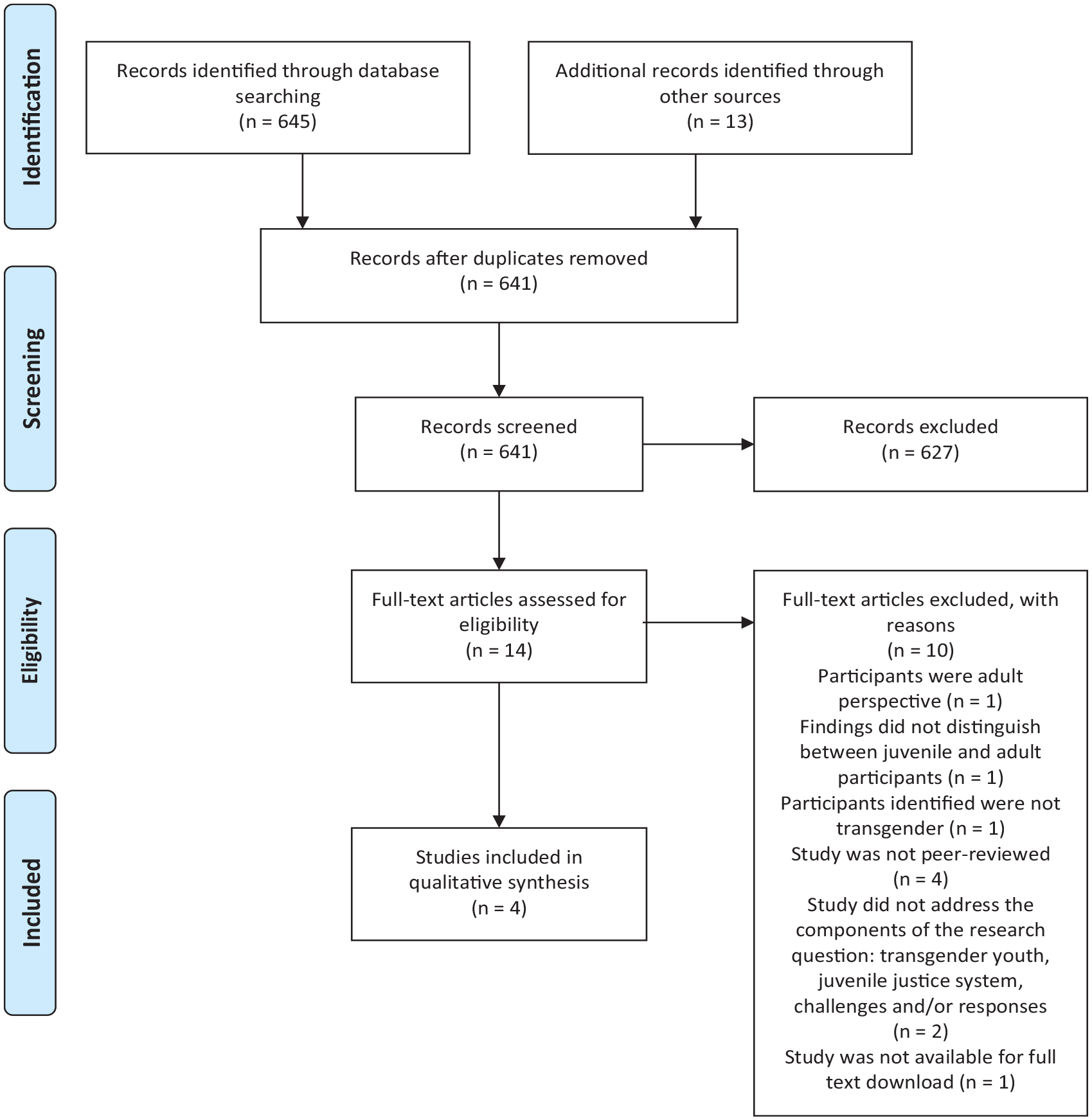
PRISMA flow diagram of review search for research question.
Search strategy
The search occurred in December 2020. Using the PICO protocol for qualitative research, the research question and the inclusion and exclusion criteria were developed, which denotes the population (youth, aged 10–17 years who identify as transgender), interest (challenges faced by transgender youth within the juvenile justice system; juvenile justice system responses to these challenges), and context (juvenile justice system).
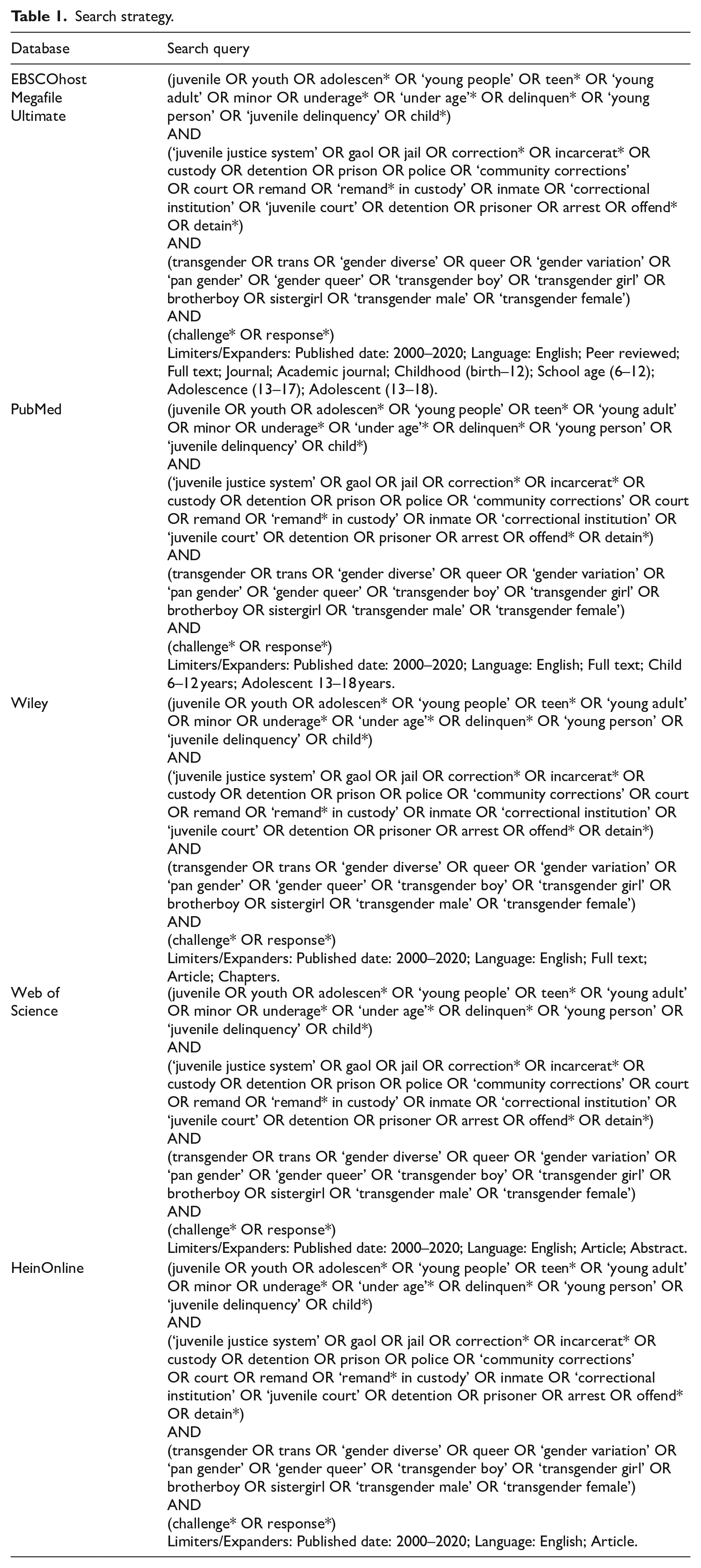
Specifically, five databases were searched (EBSCOhost Megafile, Pubmed, Wiley, Web of Science Core Collection, HeinOnline). The search strategy included the terms ‘juvenile’ and ‘juvenile justice system’, ‘jail’ or ‘detention’ and ‘transgender’, ‘gender diverse’ and ‘challenge’, ‘response’, and related synonyms (the full search strategy can be seen in Table 1). These search terms were developed through consultation with transgender health and rights scholars and advocates and in consideration of terms used in prior, relevant research, particularly that of Brömdal et al. (2019b) concerning adult incarcerated transgender persons. The search terms were entered in exactly this format in each database. Database-specific filters/limiters were applied if available. One study (with two journal articles) was added following manual location by the researchers. After the database searches were complete, duplicates were removed, and the remaining studies screened for relevance to the research question, the reference lists of the relevant records were inspected for additional studies. The results of the manual reference list searches were then screened for relevance and duplicates removed.
Search strategy.
Eligibility criteria
Articles were eligible if they were peer-reviewed journal articles, books, or book chapters, published globally between January 2000 and December 2020, written in English and available for full-text download online. The large publication period was chosen to maximize access to articles and to note any trends in research. Although a broad geographical location was considered and applied in the selection criteria, the inclusion criteria needed to accommodate studies written in English only due to resource constraints, which the authors acknowledge may result in a de facto limitation as it excludes languages other than English. Gray material and non-peer-reviewed material were not permitted as one of the aims of the research was to gain an understanding of the amount of empirical data available on this research topic. In addition, articles were included if they met the following criteria:
Participants reported on were transgender, and considered to be a ‘juvenile’ in the youth justice system in which the research took place (e.g. children aged between 10 and 17 years which aligns with the age of criminal responsibility within and across nations), and were or had been involved with the juvenile justice system;
Study reported on this population’s experience of challenges while involved with the juvenile justice system that is unique to transgender-identifying youth;
Study reported on how the juvenile justice system responded, or recommendations for responses, to these challenges.
Studies were also included if the participants were over the age of 17 years at the time of the research but were providing data based on their experience with the juvenile justice system at a younger age.
Screening
For this systematic literature review, articles were screened using the PRISMA three-stage screening process: first, screen to identify and remove duplicate articles; second, screen the title and abstract; and last, pursue a full-text screening (Moher et al., 2009). Duplicate articles were identified and removed in the first initial screen of the database records, providing 641 articles. Cohen’s (1990) method of preview, question, read, and summarize was used to determine the eligibility of articles by previewing the abstract and title to assess each study against the inclusion and exclusion criteria (as cited in Cronin et al. (2008)). Then titles and abstracts were screened by JW and confirmed by TP to determine eligibility against the inclusion and exclusion criteria for full-text screening. Where eligibility was unclear from the title and abstract, the full text was reviewed, and if there were any concerns pertaining to the eligibility criteria, AB and IB confirmed eligibility. Data extraction was conducted by JW and confirmed by TP. Articles that did not specifically meet the inclusion criteria were excluded (see Figure 1). This process yielded 14 articles for full-text review, whereby the authors reviewed the entire article to determine eligibility against the inclusion criteria. In total, four of these articles (Hammond et al., 2020; Mallon and Perez, 2020; Mountz, 2016, 2020) met the criteria for inclusion in the qualitative synthesis.
Study quality
The studies included in the qualitative synthesis were assessed against the Critical Appraisal Skills Programme (CASP, 2019) checklist for qualitative studies. The academic rigor of an article was deemed to be of value by deliberating the ethical considerations, data analysis, research design including methodology, and clear statement of research aims and foci. Of the four articles assessed, three were rated as moderate to high quality (Mallon and Perez, 2020; Mountz, 2016, 2020), and one was assessed as moderate quality (Hammond et al., 2020). The rigorousness of Hammond et al.’s (2020) data analysis was unclear as the results section lacked an adequate description of findings, nor did it outline the relationship between researcher/participant (see Online Appendix A).
Strategy for data synthesis
The findings of the included articles were entered into a synthesis matrix tool in Table 2 to categorize the identified themes, relationships, key findings and to explore the overall quality of the research (Wright et al., 2007) and provide a summary of the synthesized data. The data sample was then re-reviewed, and initial codes were extracted to identify second-order themes (Braun and Clarke, 2006, 2019). These themes were then reviewed, defined, and named to identify third-order themes (Braun and Clarke, 2006, 2019). The structural-, interpersonal-, and individual-level barriers contained within the adapted socio-ecological framework developed and used by White Hughto et al. (2018: 72) and Clark et al. (2017: 20) guided the analysis of the findings within this review (see Figure 2). The narrative synthesis of the results compares findings between and within the four articles and is structured in response to the research question pertaining to the challenges of transgender youth in the juvenile justice system, and the responses to these challenges by the juvenile justice system.
Characteristics of reviewed articles (n = 4).
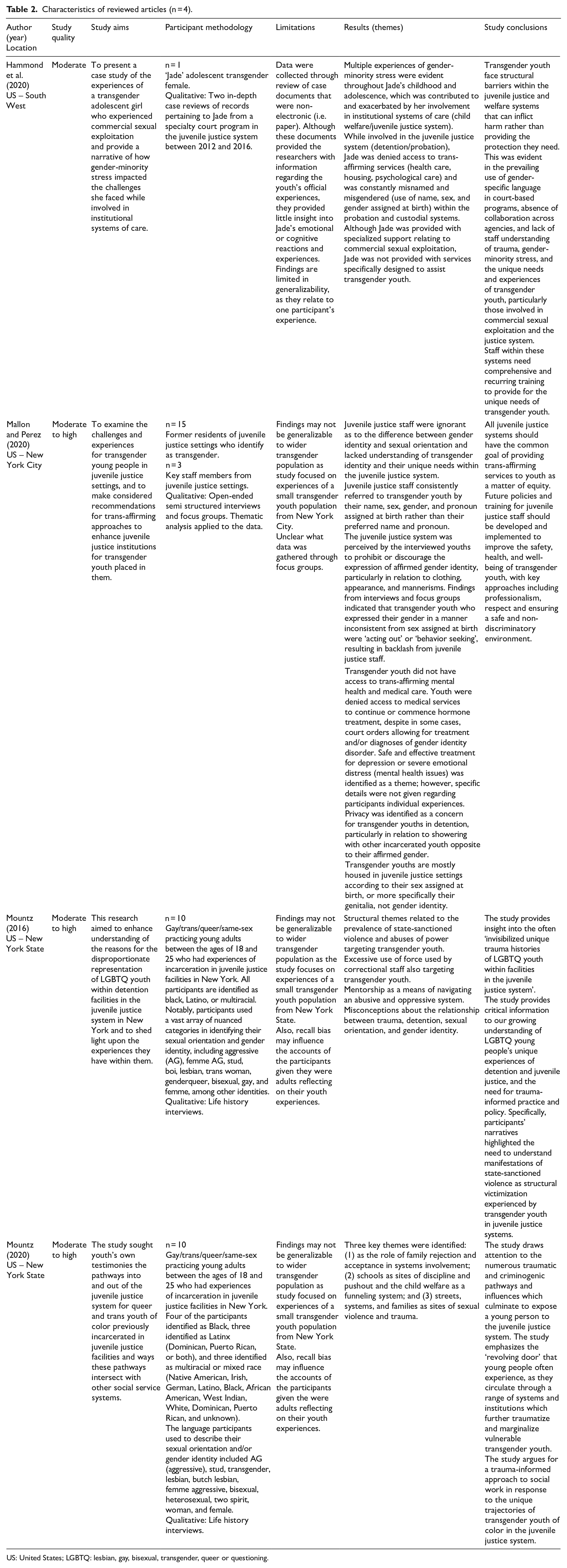
US: United States; LGBTQ: lesbian, gay, bisexual, transgender, queer or questioning.
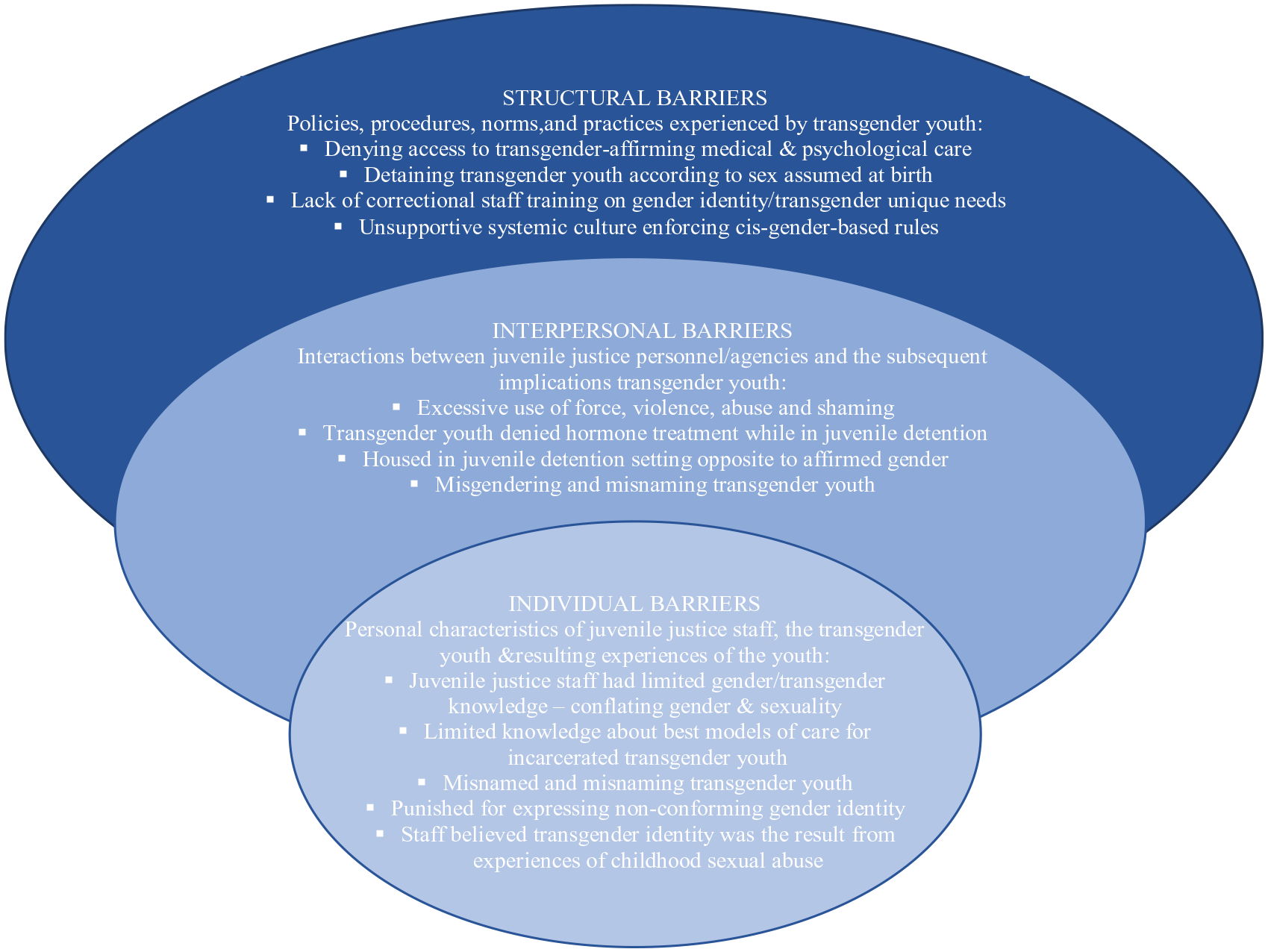
Conceptual framework of structural, interpersonal, and individual barriers implicating transgender youth incarcerated in juvenile justice facilities.
Results
Table 2 summarizes the findings of the qualitative synthesis. Two of the studies (Hammond et al., 2020; Mallon and Perez, 2020) investigated the challenges experienced by 16 youth identifying as transgender across the two studies. Mallon and Perez (2020) substantiated these personal accounts by comparing the youth’s statements to those provided by three juvenile justice staff who were experienced in supervising transgender youth on probation or in youth detention. The two remaining journal articles drawing on data from the same study by Mountz (2016, 2020) investigate the experiences of two transgender young persons of color (one transgender girl and a two-spirit person) incarcerated in juvenile justice facilities in the state of New York (USA). Collectively, this systematic literature review draws on four articles, based on three studies in total. All studies sampled small geographical populations from the United States and reported on the challenges experienced by transgender youth within the juvenile justice system and the institutions’ associated responses.
Structural-level barriers
Structural-level barriers explore the policies, procedures, norms, and practices in force within the police, courts, and correctional arms of the juvenile justice system, and how these are experienced by transgender youth (Clark et al., 2017; White Hughto et al., 2018). Structural barriers, including denying access to gender-affirming medical and psychological care, detaining transgender youth according to sex assumed at birth irrespective of identified gender, lack of correctional staff training on gender identity and transgender unique needs, and an unsupportive systemic culture which enforces cisgender-based rules presented as challenges for participants. Access to adequate medical care was another identified challenge. Transgender youth have unique medical and psychological needs, particularly when undergoing gender-affirming hormone therapy (Hammond et al., 2020; Mallon and Perez, 2020). Mallon and Perez (2020) suggest a lack of understanding, stemming from inadequate training among juvenile justice staff as contributing to this injustice. The authors also identify mental health issues and accessing related services as a challenge for transgender youth within the juvenile justice system, particularly when they are ‘transitioning’ and recognizing their chosen gender identity (Hammond et al., 2020; Mallon and Perez, 2020).
Transgender youth are frequently housed in detention facilities according to their sex assumed at birth, without consideration of their gender identity (Hammond et al., 2020; Mallon and Perez, 2020; Mountz, 2020). In the study by Hammond et al. (2020), official documentation showed that Jade served several periods of detention in facilities for boys despite disclosing her trans female gender identity to staff, and later obtaining a court order requiring her placement within girl’s housing facilities. Rules for behavior within juvenile detention were traditionally written for cisgender persons and do not account for the needs of transgender youth. This was shown to impact on the safety and well-being of transgender youth. For example, Mallon and Perez (2020) reported the experience of a transgender girl being expected to shower with 12 other boys within a boy’s detention facility, despite her fearing sexual assault. Correspondingly, Jade was forced to provide urine samples for drug testing while being observed by a male probation officer, in following the rule that male incarcerated persons are supervised by male staff (Hammond et al., 2020). This was reported to cause her discomfort and triggered trauma from past sexual assaults (Hammond et al., 2020). Comparably, in one of the articles by Mountz (2016), Nashan, a two-spirit young person, articulated the way in which the structure and daily operation of the juvenile detention facility, such as communal showers and bathrooms, triggered memories related to sexual abuse experienced in childhood.
Mountz (2016) also highlighted the structural barriers posed by policies and processes implemented in the juvenile justice system, such as stop and frisk procedures, in which ‘symbolic’ or ‘soft’ violence was used ‘to power over’ others and enforce social hierarchy. Symbolic violence, which differs from physical violence in its subtlety and often embedded and unconscious origins, includes bodily surveillance and the removal of bodily freedom which were recurrent themes in interviews in Mountz’s (2016) research. As such, Mountz (2016) calls attention to ‘state-sanctioned violence’ as a mechanism for gender regulation in the juvenile justice system. These structural barriers reinforcing transgender stigma filter down to influence interpersonal barriers.
Interpersonal-level barriers
Interpersonal-level barriers examine the interactions between juvenile justice personnel/agencies and the subsequent barriers impacting the transgender youth (Clark et al., 2017; White Hughto et al., 2018). Interpersonal-level barriers were evident throughout the findings of these two studies, particularly in the biased interactions between the different staff and agencies of the juvenile justice system. In both articles conducted by Mountz (2016, 2020), participants describe relationships between staff and residents in the detention facilities who identified as transgender or gender nonconforming as characterized by the excessive use of force, violence, abuse, and shaming. Several participants recalled targeting and retaliation by correctional staff due to their gender presentation and identity (Mountz, 2016).
Both Hammond et al. (2020) and Mallon and Perez (2020) recount experiences of transgender youth that were denied access to gender-affirming hormones while in juvenile detention, despite the youths possessing court orders granting permission to receive them. According to Mallon and Perez (2020), one transgender young person reported they told detention staff ‘I’m going to get sick if I do not get my hormones, but no one listened, and it seemed like no one cared. The justice system doesn’t care’ (p. 222). Mallon and Perez (2020) described a ‘campus-wide decision’ within a boy’s detention facility not to call a then-housed transgender girl by female pronouns or to refer to her as a girl, otherwise known as misgendering. The interplay between levels of staff and departments within the facility in making this decision evidences interpersonal-level barriers reinforcing transgender stigma. Conversely, Mountz (2016) emphasized the importance of mentorship and connectedness in navigating the juvenile justice system, calling attention to the profound impact caseworkers, therapists, correctional staff, and legal advocates may have on a young transgender person’s experience of detention.
Individual-level barriers
Individual-level barriers explore the personal characteristics of juvenile justice staff and the young person, and the consequential experiences of the young person (Clark et al., 2017; White Hughto et al., 2018). Individual interactions between juvenile justice staff and transgender youth were seen to enact bias against this youth population, preventing them from expressing their gender identity through their chosen and preferred names/pronouns, gender expression, mannerisms, hairstyles, and clothing (Hammond et al., 2020; Mallon and Perez, 2020). Mallon and Perez (2020) found that juvenile justice staff had limited or no knowledge of ‘gender identity’ (e.g. trans, female, non-binary, male) and confused or conflated this concept with ‘sexual orientation’, which describes a person’s sexual and/or romantic attraction to a particular individual. While staff had received some training about sexual orientation pertaining to youths identifying as lesbian, gay, and bisexual within the juvenile justice system, they were less knowledgeable and accepting of youths identifying as transgender (Mallon and Perez, 2020; Mountz, 2016, 2020) and had very limited knowledge about best models of care for this group of young persons. Transgender youth also reported that staff regularly identified them as ‘gay’ when they did not consider themselves as such, and openly admitted to not knowing what it meant to identify as transgender, causing frustration among the transgender youth (Mallon and Perez, 2020; Mountz, 2016, 2020).
Despite personal disclosures of preferred gender identity and associated preferred name/pronoun (and in some cases, medical and court documents confirming this), transgender youth reported repeated experiences of being misnamed and misgendered counter to their affirmed name, gender, and pronoun (Hammond et al., 2020; Mallon and Perez, 2020; Mountz, 2016). Punishment or ‘backlash’ from staff for expressing a nonconforming gender identity was common, with transgender youth labeled as ‘attention seeking’, ‘acting out’, or being sexually predatory (sexually abusive to other youths) (Mallon and Perez, 2020). Mallon and Perez (2020) found that punishing or preventing transgender youth from expressing their gender identity increased their distress and reduced the effectiveness of recidivous rehabilitation. One transgender boy reported his belief that his physical appearance in court affected the length of the hearing and how he was treated, with staff ‘treating him better’ and expediating his hearing when he came dressed as a girl rather than his chosen male identity (Mallon and Perez, 2020). Additionally, Mountz (2016) identified a common misconception perpetuated in the detention centers that queer, transgender, and gender nonconforming young person’s gender identity result from experiences of childhood sexual abuse.
Mountz (2016) further identified themes of survival in their study, specifically the managing and performing of gender, in which participants had learned to make strategic use of gender presentation in order to negotiate the terms of their juvenile justice involvement and their safety in the world generally. These individual-level barriers reinforced the stigma experienced by incarcerated transgender youth perpetrated at the structural and interpersonal levels, maintaining a culture of ignorance facilitated through institutional policies and inadequate staff training, and cultural sensitivity.
Responses to the management of transgender youth part of the juvenile justice system
In all studies, it was evident the reviewed juvenile justice systems, all of which were located in the United States, lacked gender-affirming, transgender-specific services, care, and responses, to meet the unique needs and basic human rights of this ‘priority’ youth population. An obvious lack of policies, procedures, and staff training resulted in discriminatory practices, ignorant staff, and failure in continuity of access to gender-affirming medical care. Mallon and Perez (2020) provide one example of a response to the challenge of housing transgender youth. The authors state ‘a few facilities’ that house transgender girls in boys’ detention units allow these youths to attend the facilities daytime girls’ programs. However, no further information was provided on the effectiveness or implementation of this program. Mallon and Perez (2020) recognize the inadequacies of the juvenile justice system responses toward transgender youth and provide a comprehensive list of recommendations aimed at addressing stigma at all three levels (structural, interpersonal, and individual). These recommendations include the writing and enactment of non-discriminatory and anti-harassment policies, allowing the expression of gender identity, and the provision of staff training specific to addressing the needs of transgender youth (Mallon and Perez, 2020). Mountz (2016, 2020) also advocates for a trauma-informed approach which acknowledges the traumatic trajectories of disadvantage and marginalization which have led to the involvement with the juvenile justice system. Mountz (2016: 301) specifically calls for a greater awareness of often ‘invisibilized unique trauma histories of [transgender] youth’ within juvenile justice facilities, and systems.
Discussion
This systematic literature review explores the challenges experienced by transgender youth within the juvenile justice system and the responses, or lack thereof, made by the justice system to address these. Through the application of the revised socio-ecological model (Clark et al., 2017; White Hughto et al., 2018), the challenges and responses are evaluated at structural, interpersonal, and individual levels. Results of this review will inform future research, leading to policy development, staff training, and access to gender-affirming support and health services.
As revealed in the findings of this review, challenges and harms experienced by transgender youth were most prevalent at the structural level. Reforms implemented at this level may be seen to have a positive effect on the bi-directional relationship of challenges also experienced at the interpersonal and individual levels, resulting in a juvenile justice setting that is more ‘. . . inclusive, gender-affirming, supportive, humane, and safe for this population’ (Brömdal et al., 2019a: 344). The bi-directional relationship between the different levels of challenges experienced by transgender youth is evident, highlighting the need for a whole-incarceration-setting approach with interventions at multiple levels (Brömdal et al., 2019a; Clark et al., 2017).
At the structural level, policy changes are needed to ensure that more than a person’s sex assumed at birth, or genitalia to be more specific, is considered when making placement decisions for transgender youth (Brömdal et al., 2019a; Ledesma and Ford, 2020; Movement Advancement Project et al., 2017; Scarpaci, 2019; Van Hout et al., 2020). Incorrect and inappropriate placements can limit or prohibit transgender youth from accessing appropriate health care, including gender-affirming health care, and place them at an increased risk of harassment, violence, and sexual assault by other incarcerated youth and correctional staff (Movement Advancement Project et al., 2017; Scarpaci, 2019). Systems that house transgender youth according to sex assumed at birth and genitalia may over-rely on the use of solitary isolation and segregation as an ineffective method to protect the young person, increasing risk of mental health issues, suicide, and self-harm (Gelin, 2014; Markshamer and Tobin, 2014), also evident in studies exploring adult incarcerated transgender persons (Brömdal et al., 2023; du Plessis et al., 2023; Halliwell et al., 2022; Hughto et al., 2022; Phillips et al., 2020; Sanders et al., 2022). As found by several authors exploring this space, but in relation to incarcerated transgender adults (Brömdal et al., 2019a, 2019b; Clark et al., 2017, 2023; Hughto et al., 2022; Phillips et al., 2020; Sanders et al., 2022; Van Hout et al., 2020; White Hughto et al., 2018), the review of policies should also ensure access to gender-affirming health and medical services, including mental health services. Having this access mandated through local policies and procedures would influence the interpersonal level and challenge the identified lack of continuity of medical care resulting from the failure of different juvenile justice agencies to work in collaboration to ensure the best interests of transgender youth. The finding that a lack of understanding of the medical needs of transgender youth exacerbated the challenge of youth accessing medical treatment has been found in previous research (Majd et al., 2009).
Policy changes at the structural level may also influence challenges at the individual level. Staff training in the unique needs of transgender youth to support the implementation of procedures ensuring access to gender-affirming health care may ensure cultural competency and reduce staff ignorance (Clark et al., 2017; Franks et al., 2022; Kahle and Rosenbaum, 2021). Enacting policy that is specific to the needs of transgender youth would remove the need for staff to strictly implement policies and rules that were written for cisgender incarcerated youth that disadvantage this population (Kahle and Rosenbaum, 2021). This would also allow youth to express their gender identity through their appearance without fear of reprisal from staff for rule violations or misinterpretation of their behavior (Mallon and Perez, 2020).
Limitations and Future Directions
Regarding the inclusion criteria of this study, the scope was purposefully constrained to examine only existing peer-reviewed literature so as to reduce issues of, and questions about, reliability in relation to the data resulting in non-peer-reviewed studies, including organization/government reports and gray literature not being included. From this starting point, it is evident that there are limitations due to the small number of studies included; however, in light of the aim of this study to identify the existing evidence to inform future research, these limitations are considered a finding in their own right. This is important for two reasons. First, it highlights the limitations of the synthesis of the existing literature by virtue of the fact that there is a modest amount of data to analyze. Second, it makes evident the many areas in need of research regarding the challenges and responses faced by transgender youth engaged with the juvenile justice system. The publication year of three included studies being 2020 further speaks to the emergent nature of this area as a topic of research within empirical studies. In fact, for completeness, prior to publication, the authors ran a new search to identify any additional papers published between 2020 and 2022. The results indicate only one paper (Hereth and Bouris, 2020), which further illustrates the gap in the field, as well as adding weight to our assertion that this is an emerging area of critical social importance. The remainder of this section addresses these crucial areas in need of research and remarks on further methods to broaden the range of knowledge.
While the included studies have produced results of interest, their small number of participants makes the generalizability of their findings problematic. While all studies provided information considered to be of value, the integrity of the data analysis of one study was unclear. As all studies hailed from the United States, and two of the journal articles focused solely on two transgender persons of color, their applicability particularly to the experiences of transgender youth populations from other countries and cultures within juvenile justice systems is unknown. Equally, although a broad geographical location was applied to the inclusion criteria during the searches, the use of English-only language filters on searching peer-reviewed studies unintentionally limited the study’s findings by excluding research which was printed in other languages than English.
Restricting the inclusion of only peer-reviewed articles may have also contributed to the lack of eligible studies. Opening the inclusion criteria to citation searches, gray material and non-peer-reviewed articles would have allowed, for example, reviews and publications by trans-affirming non-government organizations (e.g. Majd et al., 2009; Movement Advancement Project et al., 2017) and publications in student-reviewed, university-based law journals (e.g. Gelin, 2014; Squatriglia, 2007). This may have provided a larger data set to analyze and give a more thorough picture of the scope of challenges transgender youth experience within juvenile justice systems. For example, the Movement Advancement Project et al. (2017) published a report synthesizing data on the experiences of LGBT and specifically transgender youth incarcerated within the US juvenile justice system. The report highlighted the experiences of incarcerated transgender youth, including inappropriate housing placements, inadequate and restricted access to health care, a lack of understanding among detention staff as to the unique medical needs of transgender youth, and requiring transgender incarcerated persons to attend gender-based supervision upon release from detention that is not inclusive of non-gender binary or transgender people (Movement Advancement Project et al., 2017). This additional gray literature provides an elaboration and insight into transgender youth experiences of the juvenile justice system.
Gelin (2014) and Squatriglia (2007) synthesize relevant studies and case law, presenting data from a legal perspective in their respective studies. Squatriglia (2007) highlighted that some success has been had by LGBT youth in obtaining their personal rights (and addressing individual barriers) within youth detention through litigation; it has not secured systemic change at structural or interpersonal levels, echoing the findings of Hammond et al. (2020) and Mallon and Perez (2020). Gelin (2014) discussed the harmful effects of using the solitary confinement of transgender youth as a form of protection from potential anticipated harm (experienced and perpetrated by the young person), as a strategy to solve the housing issue or as a punishment for gender expression. Through examination of case law, Gelin’s (2014) study outlined the experiences of transgender youth with respect to the overuse of solitary confinement, and like Squatriglia (2007), highlighted the individual successes and the need for whole-incarceration-setting reforms to uphold the incarcerated person’s constitutional and human rights. Including studies in a broader scoped review in future research may provide more evidence corroborating the findings of this study, as to the experiences of transgender youth, the justice system’s responses, and the need for systemic reform.
In light of these recommendations, it is acknowledged that research in this area is further obstructed by multiple barriers and controversies experienced by researchers in this field that need to be contemplated in future projects. Brömdal et al. (2019a) have experienced challenges in obtaining approval to conduct research into the experiences of adult transgender incarcerated persons by ethical committees and correctional institutions. Correctional institutions may restrict access to transgender persons as participants and their willingness to openly disclose operational procedures and policies out of a fear of being exposed for inadequate practices or negative publicity (Brömdal et al., 2019b). Reliable data on the experiences and challenges of transgender youth within juvenile justice systems are further impacted by data collection methods. Data gathering is often reliant on youth self-disclosure. Young people may be reluctant to self-report their transgender status out of fear from negative consequences from justice system staff and processes, family, or friends (Irvine, 2010; Majd et al., 2009; Mallon and Perez, 2020; Scarpaci, 2019). Although adolescent development research suggests that young people establish their gender identity at an early age, they may still be questioning and becoming comfortable with their identity, further hindering their self-disclosure (Majd et al., 2009). This resistance is further impacted by institutions commonly not gathering data on gender identity to obtain transgender status (Mallon and Perez, 2020; Richards and Dwyer, 2014; Scarpaci, 2019).
Incarcerated transgender adults remain a ‘vulnerable group’ who experience higher rates of significant multiple harms than the general incarcerated population, increasing their risk of discrimination, self-harm, and suicide and human rights violations (Brömdal et al., 2019a; Hughto et al., 2022; Markshamer and Tobin, 2014; Sanders et al., 2022; Van Hout et al., 2020; White Hughto et al., 2018). If the trajectory of young transgender offenders is toward remaining a structurally invisible, marginalized, and discriminated population within the justice system as adults, it is imperative that barriers to research in this area are overcome and further research and reviews are conducted to determine their experiences and unique needs to develop and implement effective rehabilitative programs.
Conclusion
This review considered the findings of four empirical articles into the challenges and responses of transgender youth in three juvenile justice systems in the United States. The dearth of literature identified in this review highlights an important finding which should inform the prioritization of research into the experiences of transgender youth in the juvenile justice system. This study also represents the first application of Clark et al.’s (2017) and White Hughto et al.’s (2018) revised socio-ecological model to evaluate the challenges and responses at structural, interpersonal, and individual levels. Transgender youth whose experiences were shared in these studies described that overall, they did not receive access to adequate, continued health care, gender-considered housing, and were subjected to detention rules written for cisgender incarcerated youth. This was compounded by interactions with staff who were ignorant and lacked both transgender affirming knowledge and training to uphold their rights and health while incarcerated, including the basic understanding pertaining to what it means to identify as transgender. To provide for this unique and vulnerable population, transgender-specific policies must be enacted across juvenile justice systems, including whole-incarceration-setting approaches within detention centers, staff training, and accountability for the services and support provided (Brömdal et al., 2019a). These reforms must be holistic, gender-affirming, and best practice, informed by research and the lived experiences of this vulnerable population (Brömdal et al., 2019a, 2023; Clark et al., 2023; Hughto et al., 2022; Phillips et al., 2020; Sanders et al., 2022; Van Hout et al., 2020).
Supplemental Material
sj-docx-1-yjj-10.1177_14732254231167344 – Supplemental material for Transgender Youth, Challenges, Responses, and the Juvenile Justice System: A Systematic Literature Review of an Emerging Literature
Supplemental material, sj-docx-1-yjj-10.1177_14732254231167344 for Transgender Youth, Challenges, Responses, and the Juvenile Justice System: A Systematic Literature Review of an Emerging Literature by Jennifer Watson, India Bryce, Tania M. Phillips, Tait Sanders and Annette Brömdal in Youth Justice
Footnotes
Funding
The author(s) received no financial support for the research, authorship, and/or publication of this article.

Supplemental material
Supplemental material for this article is available online.
Author biographies
References
Supplementary Material
Please find the following supplemental material available below.
For Open Access articles published under a Creative Commons License, all supplemental material carries the same license as the article it is associated with.
For non-Open Access articles published, all supplemental material carries a non-exclusive license, and permission requests for re-use of supplemental material or any part of supplemental material shall be sent directly to the copyright owner as specified in the copyright notice associated with the article.
