




Abstract
Transitioning to climate-neutral cities is difficult in practice, depending on complex urban activities and involving a vast range of stakeholders. Cities need ongoing support for assessing and implementing climate-neutral solutions. Following multi-country, collaborative academic workshops on this topic, we debate the use of new technologies and integrated planning approaches. We contour a preliminary framework underpinned by five key dimensions (urban nature; urban mobility; built form; energy; and circularity), triangulated with three research pillars: 1) citizen engagement, 2) city governance decision-making, supported by 3) digital technology. This essay proposes digital technologies as a bridge between bottom-up and top-down directions, challenges silo-thinking, and informs a cross-disciplinary, integrated climate-neutral planning process (in Europe).
Keywords
Introduction
Cities will host nearly 70% of the world’s population by 2050 (United Nations, 2019). They are great emitters of greenhouse gases (GHG), and urban populations bear the brunt of climate impacts. Hence, cities must be at the forefront of climate-neutral action (European Commission, 2019), but the task at hand is of enormous complexity.
Concepts such as “climate-neutral cities”, “low-carbon cities” and the like are subsets of the “sustainable city” concept encompassing environmental, economic, and social aspects, but with a stronger emphasis placed on technical and energy issues (Fu and Zhang, 2017). However, framing climate change as a technical issue has contributed to prioritising predictive natural sciences and algorithm-based research, while integration with social sciences/humanities and epistemological diversity in research groups is scarce, leading to limited perspectives and solutions (Schipper et al., 2021). Within this predominantly technical framework, the wider environmental, economic, or social implications can become de facto, sidelined, or straightforwardly overlooked (Castán Broto and Westman, 2020). The overreliance on technology in climate issues has led to neglecting the role of stakeholders, institutions, and policy frameworks. Illustrative in this sense are tech market failures with underperforming flagship projects, where carbon capture and storage have mostly been used to enhance oil production and increased GHG emissions (Robertson and Mousavian, 2022). As political ecology scholars also warn against the dangers of letting climate change interventions entirely to the technocratic realm, it is important to advance towards a hybrid, relational approach that helps unpack the underlying, interconnected processes of climate issues (Heynen, 2016; Shahani, 2022).
In turn, in the field of urban planning, which should operationalise innovations with transformative potential (Sahani et al., 2022), there is a notable research gap on digital technology and the use of AI. Urban planning is data-hungry (in order to be either effective or responsive), and although slow to adopt technologies, it could capitalise on these to gain new insights into the efficiency of proposed or implemented solutions. Yet, many of the problems cities face are context-sensitive, interpretable, or without an immediate solution (Sanchez et al., 2022), requiring human understanding and input over rule-based algorithms. Better integration of proven technological solutions with complex human decision-making could inform urban planning digitalisation and increase efficiency (Daniel and Pettit, 2021).
Municipal governments remain in need of comprehensive support and guidance to navigate multiple complexities, including the lack of systemic vision and knowledge (Huovila et al., 2022), financial and organisational risks emerging from conflicting financial interests of stakeholders (Juhola et al., 2020; Parks, 2020), or governance issues such as reduced and ineffective regional and national support (Laine et al., 2020). The comprehensive support that cities need in pursuing climate neutrality is not likely to emerge from a research environment still dominated by single disciplinary or individualist frameworks (Ellis et al., 2014). The latter, coupled with the lack of intersectoral understanding, has contributed to city outcomes currently falling behind expectations (de Bruin and Morgan, 2019). Furthermore, if innovative social, ecological, or technological projects do exist, they fail to properly inform policy and planning practice (Shahani et al., 2022), while poor policy evaluations occur via mismanagement of decision support systems (Waldron, 2019). Hence, research in climate-neutral cities is at an impasse in knowledge transfer to practitioners, stakeholders, policymakers, and particularly citizens, as a too broad/top-down approach to climate-neutral cities tends to disregard the local conditions and local residents’ preferences (Heiskanen et al., 2015). More ambitious targets based on both a wider involvement of local communities and the training of adequate professional players able to lead local transitions in city governance are needed.
This essay combines a literature review with collaborative interdisciplinary workshops to offer a thoughtful reflection on why so far urban climate action has only had marginal effects on the ground. It then aims to understand the role of technologies in increasing the efficiency or impact of urban climate neutrality programs by enhancing the interactions between ‘people and cities’ or ‘citizens and governance’ towards a climate-neutral future. We then discuss an integrated planning approach in this direction, considering underpinning dimensions of climate-neutral cities, and put forth cross-disciplinary research topics that could cover the gaps resulting from siloed research. The main context of analysis is Europe, while other populous economies were considered for comparative purposes.
Methods
The methods employed for advancing this preliminary research were twofold: (1) A targeted search of academic literature and key policy documents was performed, with keywords of (‘climate neutral’ AND ‘city’ OR ‘framework’) and (‘carbon neutral’ AND ‘city’ OR ‘framework’)
1
, using Google Scholar and the Web of Science to frame the interest in and approaches for climate-neutral cities from publications after 2015 (when the Agenda 2030 was released). Five key dimensions of climate-neutral cities were identified from this scoping review, as well as limitations and failings of current urban climate-neutral strategies. (2) An interdisciplinary team of scholars (from urban and spatial planning, political science, geography and geosciences, environmental sciences, and architecture technology) from six universities in different European countries (University College Dublin, University of Bologna, University of Girona, University of Heidelberg, University of Helsinki, and Queen’s University Belfast) collaborated in a series of structured discussions to formulate a novel research approach for climate-neutral cities. The sessions were held via weekly online meetings from September to November 2022 and were moderated by this paper’s first author. The discussions were centred on the main challenges and research gaps on the five key dimensions of climate-neutral cities, and the academics were first invited to formulate a 1-page overview from their own fields of expertise. Incorporating over fourteen such overviews, the moderator has then contoured a preliminary framework for integrated planning of climate-neutral cities, refined in an iterative process with the scholars involved. Overlaps were identified and discussed, and any disagreements were resolved within the process, or have been noted as challenges. A smaller group (i.e. the authors of this paper) followed up closer thereafter in the process of mapping more in-depth the limitations and putting together cutting-edge examples of research topics to cover some of the identified gaps.
Urban policies for climate-neutral action in different contexts
As a number of countries have taken net-zero pledges (e.g., the EU and the USA by 2050, China by 2060, or India by 2070), this section describes urban climate-neutral policies (or lack of) in different global regions. The EU, aiming to make Europe the first climate-neutral continent, is the starting point of this analysis. For comparison, we considered other (populous) economies, well-known for either their top-down (China, Iran) or bottom-up approaches (India), or situated in-between (US, besides the EU), to open a discussion on how similar or different their approaches to climate-neutral cities might be.
The ‘European Green Deal’ is a ‘new growth’ strategy of the European Commission (2019) for a climate-neutral economy, recently criticised for the possibility of becoming a form of ‘greenwashing’ in urban planning, prioritising urban expansion and economic growth at the expense of justice-oriented goals and more comprehensive sustainability objectives, by being framed, for instance, around nature-based solutions (NbS) (Anguelovski and Corbera, 2023). Another strategy of the EU, the ‘Climate-Neutral and Smart Cities’ mission promotes innovation in over 100 cities designated to be climate-neutral by 2030, meant to act as experimentation hubs and inspire a systemic transformation (European Commission, 2020b). However, although these designated cities have taken pledges and signed climate-neutral contracts, many of them do not have an explicit implementation plan and still face challenges derived from the too fragmented, non-inclusive, and non-integrated actions, ineffective investments due to poor data, lack of significant effort in knowledge exchange, or the lack of governance models at scale to reach the climate objectives (preliminary data to the Horizon Europe project REALLOCATE, co-led by this paper’s first author).
As with most governance in the US, there is a patchwork of policies at different scales (city, State, and national), which can be regarded as a major barrier to tackling climate issues. While Federal (national) funding for infrastructure continues to prioritise private vehicles and the oil and gas industry, there have been attempts to fund local green infrastructure. Yet, several politically right-leaning State governments are blocking these funds along with restricting local initiatives from instituting climate regulations that have higher requirements than those at the State-level (State preemption). For instance, a State could block a city from passing stricter regulations on vehicle air emissions.
Although multiple countries have announced their climate-neutral objectives, the politics and planning discourses vary significantly across national contexts, depending on power dynamics in administrative and governance systems, development ideologies, planning laws and regulations, as well as different roles played by the civil society in decision-making processes, which, along with their specific historical and cultural traditions, are extremely determinative in shaping (and differentiating) the approach towards urban climate neutrality. While the EU, for instance, bets on integrated planning as one of the key drivers to climate-neutral cities, in some contexts, there might be no integrated planning systems in place (e.g., in Iran, where planning and development is steered via scattered decision-making agencies).
Three pillars of action for climate-neutral cities
The inability of so-far strategies employed in the EU (and across the globe) to reach urban climate neutrality exposes the need for rethinking the path forward. Climate action requires complex, multidisciplinary and multiscale research and decision-making (Mimura et al., 2015; IPCC, 2022). Moreover, adaptation policies are fundamentally local processes involving local authorities, communities, and multiple other stakeholders (Preston et al., 2015). Hence, enhancing public participation in climate policy-making could synergise an environmentally conscious base with socially-engaged citizens to transform innovation into action within a more responsive and innovative governance model (European Commission et al., 2020c).
Based on the literature review and group discussions, it emerged that systematic research on engagement and governance processes (citizen & State), along with considering technological potential and challenges (digital tools), is a potential and under researched path towards achieving better-integrated advancements in climate-neutral cities (in Europe). This can be manifested under a 3-pillar approach (presented below), where technology should be used in synergy with the two other pillars of governance and participation to make a difference on the ground.
The bottom-up/participatory pillar
A bottom-up pillar of research and practice centred on participation and engagement is needed to improve social outcomes and decisions through collaborating with citizens (Shahani, 2022), as so far climate-neutral research has only had marginal impacts on actual civil society experiences, public acceptance, and uptake, while issues such as social resistance, equity, and climate justice have often been neglected (Heiskanen et al., 2015). Climate-neutral solutions require close consideration of citizen values and norms by informing, consulting, involving, and empowering citizens in local participatory planning that is adaptive and considerate; this needs to happen on an ongoing and meaningful basis, rather than only consulting the community after planning or policy development has begun, as it usually happens in practice (Auerbach et al., 2020; Schönwälder, 2021). For such grand societal challenges, citizen engagement must be deliberative, influential, and inclusive in order to elicit wellbeing (Schönwälder, 2021). However, significant challenges to a bottom-up approach to climate action exist. For example, some current political systems, institutions, and societies are not able to implement high-level participation, lacking defined procedures, guidelines, legislative and statutory foundations, or expert human resources (see the case of Iran above, or other countries in the Middle East). Even in contexts with significant participatory efforts encouraged through public sector support (e.g., in the EU), public interest in participatory processes often dwindles (with participation potentially perceived as lengthy and boring) and is unequal across communities (e.g., engagement with young or historically marginalised groups is consistently low).
The top-down/governance pillar
This second pillar concerns providing improved support for innovative and more effective city governance decision-making through more suitable planning and governance tools. Strategic planning, for instance, can manage long-term development sustainably by integrating different practices (Hillier, 2016; Shahani, 2021); despite similar economic and transformational objectives, having regulations that vary internationally and intranationally results in limited replicability, while contradictions between approaches and policies exist within the same countries (Jackson, 2022). Furthermore, governance transparency and political agendas that are constantly changing or not matching individual or community needs are challenges still encountered in the EU context. Moreover, favouring major eye-catching or infrastructural projects that are not necessarily sustainable still occurs in the general development of some countries (see the continuous expansion of highways in the US or Eastern Europe). Some projects attract through technology, but their climate-friendliness is still debatable (see Masdar City, a NetZero city planned in Abu Dhabi by partnering with human resources from the EU/US). Considering the above, comprehensive climate-neutral research efforts must challenge neoliberal discourses’ sustainability frame, which negatively affects socio-ecological processes in the first place (Swyngedouw, 2011). Innovative reforms of local government systems to drive environmental justice transnationally are required, as no concrete outcomes would be in sight until objectives of climate neutrality are translated and integrated into local policy documents, despite formalised national and international discourses (Gustafsson et al., 2019).
The link/digital tech pillar
The third pillar is that of digital technology. While climate-neutral programs have achieved much technologically (e.g. through prototypical open-city toolkits containing software and apps to tackle pollution or other arising climate matters), communicating the solutions to stakeholders and the general public proved difficult, requiring closer co-design and co-planning for scalable perspectives. This essay argues for positioning digital technology as a fuse link between the other two pillars. In e-governance, for example, technologies can provide a more comprehensive overview of current conditions and facilitate periodical updates. Training staff to use specific tools (only a few are able to access or work with the available datasets), maintaining or upgrading software, and managing large amounts of data can pose economic constraints. The use of technologies at the city level is therefore restricted to those who can afford the software, training, or outsourcing costs. Nevertheless, in advanced economies, these technological and digital climate solutions are overwhelmingly perceived as positive, but little systematic research on the unwanted consequences or socio-political and ethical concerns they may generate has been conducted (Popartan et al., 2022). Bias and assumptions can be in-built into urban governance simulations and applications, and not the least, the use of such tools can pose dangers of increased surveillance. Concerning participatory processes, the positives include educating citizens to use digital tools that allow them a more direct insight into the data (e.g. the use of home sensors detecting air pollution prompted public support for stronger governance response to tackling pollution in cities, see Pilla et al., 2021). However, the use of technologies and their impacts can be uneven across communities. Procedural and intergenerational justice issues are posed by the digital and language gap or other application features that may create difficulties in engaging more diverse user groups (e.g., of different ages, gender, or migrant communities). Overall, technology requires a more sensible approach than currently practised and addressing climate-neutral city aspects through smart technologies necessitates holistic strategy and leadership, policies, and plans that integrate bottom-up and top-down initiatives under a coherent urban vision (Komninos, 2016).
Proposed preliminary framework for an integrated approach
Previous studies have only analysed the concept of climate neutrality partially or sectorally, with scarce efforts for transdisciplinary integration (Huovila et al., 2022). Urban planning has a major role in integrating different urban systems and multiple sectors into consolidated spatial strategies and lifting systemic barriers to set long-term agendas for low-carbon and climate-neutral interventions for transformation (Paulsson, 2020; Shahani et al., 2022). However, links between territorial plans and climate policies are weak, as climate policies often focus on specific economic sectors, disregarding spatial relations (UNECE, 2011; da Costa et al., 2021; Santopietro and Scorza, 2021). Holistic systems thinking and new research frameworks are required for climate-neutral city transition (Huovila et al., 2022).
Considering multiple examples of public policy reports, grey, and academic literature, we contoured five dimensions of climate-neutral cities relevant to consider under an integrated planning perspective. We termed them as 1) Urban Nature, 2) Urban Mobility, 3) Buildings, 4) Energy, and 5) Circularity (see Figure 1). The first dimension of Urban Nature includes aspects of fresh air, clean water, healthy soil, biodiversity, food (see the European Green Deal, EC 2019; Huovila et al., 2022), and reflects calls for expansions of green spaces, forests, and urban habitat protection (see India’s NAPCC, 2008; UNECE, 2011). The dimensions of Urban Mobility, Buildings, and Energy concern prioritising more efficient public and alternative transport modes, energy-efficient buildings, cleaner energy and resilient industry, respectively (European Green Deal, 2019), reflecting calls for socio-technical transformation for long-term decarbonisation of these sectors (see CNCA, 2018; Huovila et al., 2022; Ravetz et al., 2021; Iran’s NCCO from 2017). The fifth dimension reflects water management and conservation of natural water areas, waste management, and circularity, towards closed loops of reducing, reusing, and recycling actions (see CNCA, 2018; Huovila et al., 2022; UNECE, 2011; India’s NAPCC ; Iran’s NCCO 2017). Integrated approach for climate-neutral cities based on five dimensions and three methodological pillars.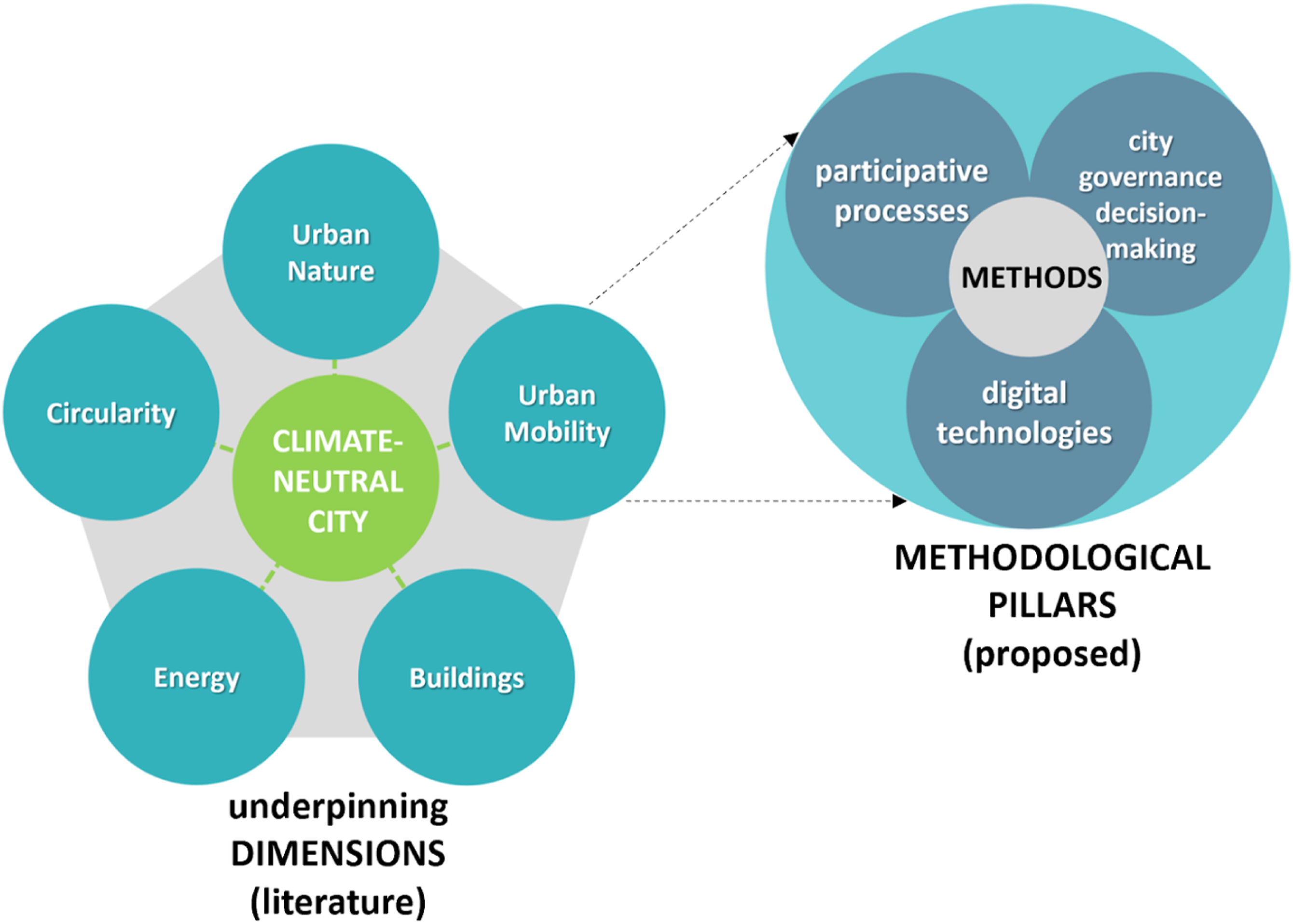
Employing integrated planning approaches could have more inclusive outcomes, whereas focusing on a single dimension may fail to achieve climate-neutral goals (Yigitcanlar and Kamruzzaman, 2018). While integrated approaches may urge action on all fronts, governments are usually limited in their resources to address multi-dimensional problems and have to be strategic by prioritising the issues to start with in their decision-making. For example, scholars observed that de-integration occurs when housing developments (Buildings dimension) are not matched with expansions of metro lines (Urban Mobility dimension), leading them to suggest de-integration by agreement 2 , integration by stakeholder collaboration, and re-integration by the intervention (see Paulsson, 2020).
Policymakers may overlook truly rigorous, analytical multidisciplinary studies, preferring a linear approach to problem-solving, as opposed to the efforts needed for more complex socio-technical systemic transformation (see Ravetz et al., 2021). Not only do there exist divergences in the approach of policymakers vs researchers, but also institutional tensions between innovation and vested interests, and between long-term transition planning and short-term crisis management. Nonetheless, public sectors in advanced economies show an inclination to favour technological solutions (see Horizon Europe projects where close research-policy collaborations are formed around digitalisation, digital twins, or AI-enhanced decision support systems), suggesting that the proper use of technologies with input from citizens and multiple stakeholders could create a momentum for longer-term problem-solving.
While we put forth an integrated planning approach for climate-neutral cities where the three methodological pillars intersect each of the five dimensions (Figure 1), our preliminary framework allows smaller actions (e.g., on each dimension, methodological pillar, or inter-dimensional) that would fit into a grander piece of the climate-neutral puzzle. To illustrate this, we provide several operational examples in the next section.
Cross-disciplinary topics to operationalise the framework
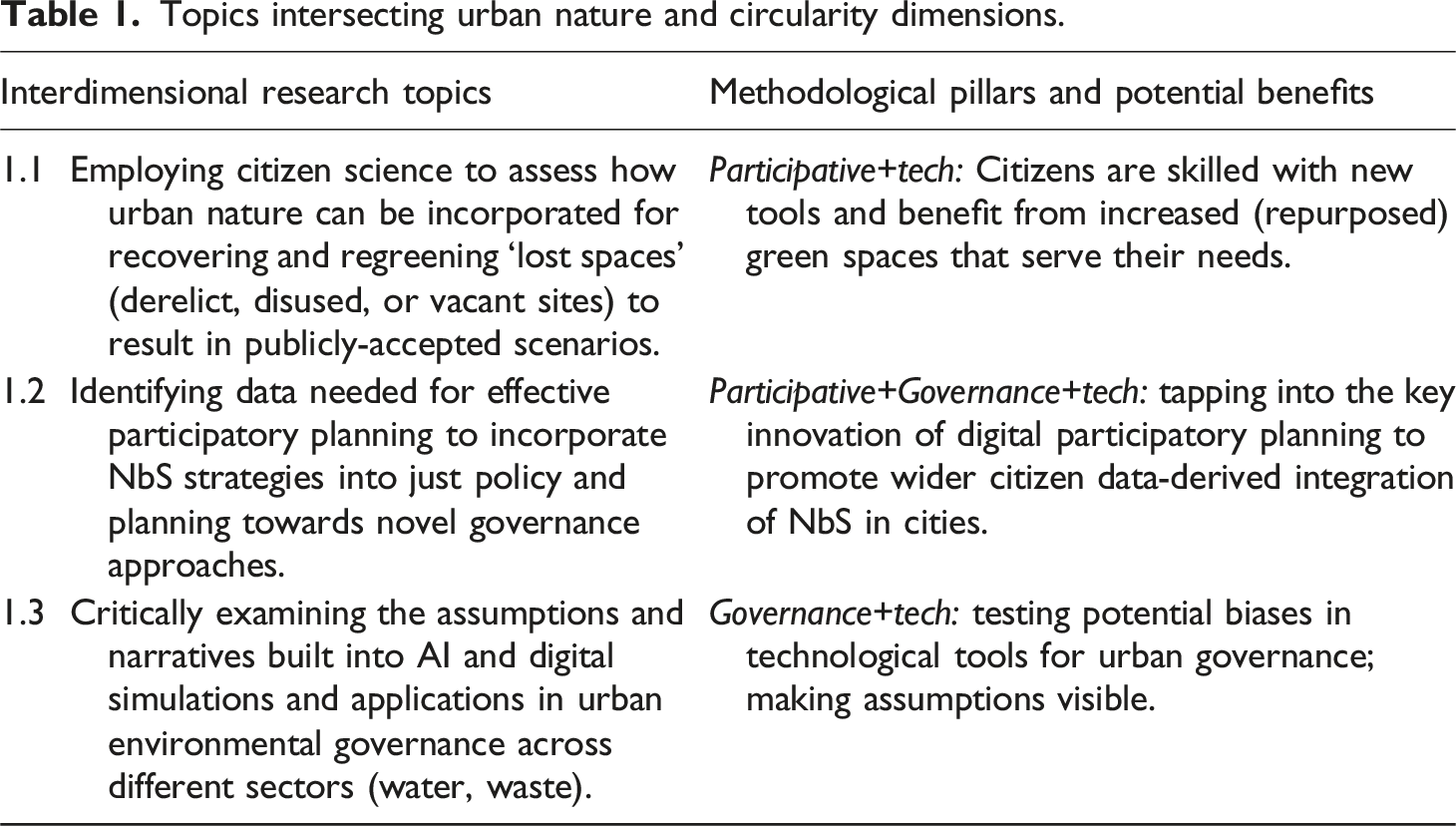
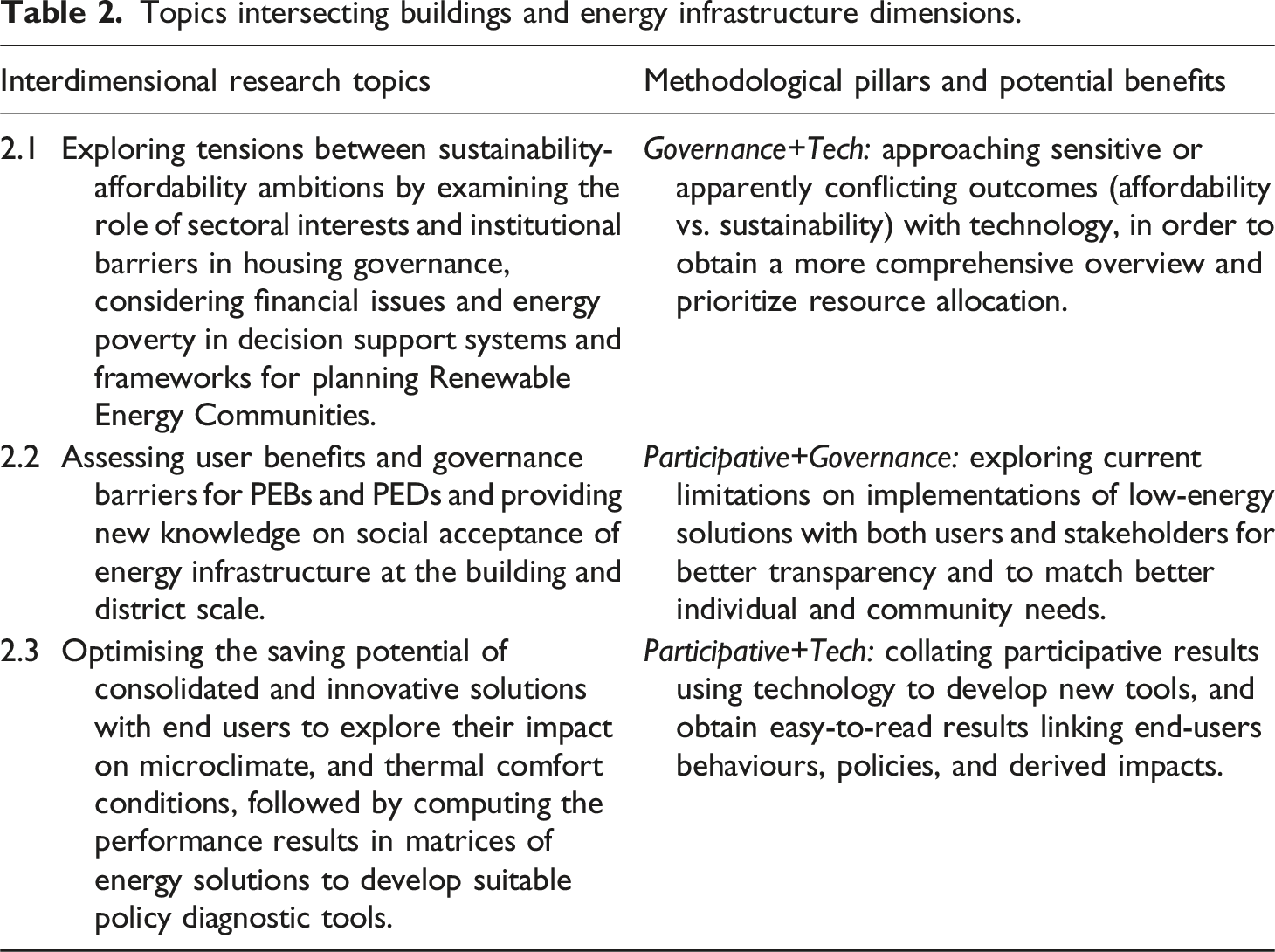
We developed examples of research topics at the intersection of two dimensions, combining at least two methodological pillars to showcase cross-disciplinarity. The topics are primarily applicable to the European context, where foundational climate-neutral city work has already been advanced through interdisciplinary projects (H2020, Horizon Europe, and others), but still requires further innovation to make a difference on the ground.
Topics intersecting urban nature and circularity dimensions.
Topics intersecting buildings and energy infrastructure dimensions.
Topics intersecting urban mobility and urban nature dimensions.
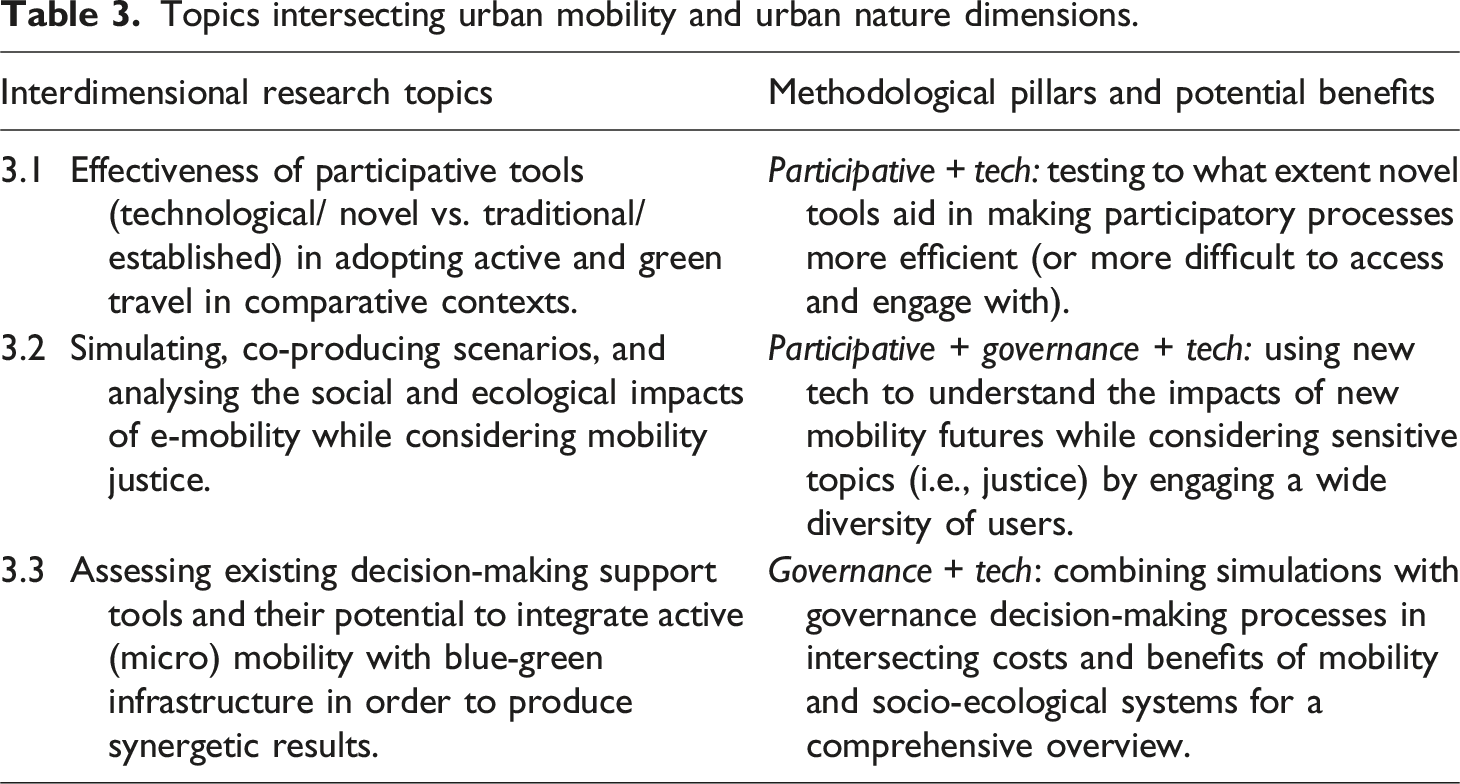
As suggested in topics 1.1 to 3.3 (Tables 1, 2, and 3), multilayered benefits can be obtained by uniting participative and governance-led approaches with innovative technologies. Within the EU, widening the use of already acquired knowledge and making it understandable and useful for a larger group of users is the major barrier to climate-neutral cities and not the lack of climate-smart technologies per se (European Commission, 2020c). Increasing capacity for implementation and empowering larger groups of citizens with participatory techniques and tools for data collection, co-creation, and review could be targeted in developing nexus solutions (as we exemplified for affordable-sustainable housing or for ensuring an equitable transition to electric mobility to include vulnerable-to-exclusion groups). This would help in delivering more concrete guidelines for implementation (as for example, all energy-saving measures mention the end-users, but the citizens’ concerns are often the costs, which are not addressed by the guidelines). New technologies could also provide quick answers to different implementation scenarios through modelling or simulation; they may facilitate more direct cooperation between citizens, researchers, and local authorities, supporting public administrations to evolve from a traditional, narrow working culture to a cross-cutting, strategic, citizen-driven model. As we exemplified, GIS and other digital technologies can be used to tap into open data availability and processing for green mobility or energy-inclusive decision-making. Developing a critical lens to assess the systemic impact of AI tools and Digital Twins in digital climate scenarios and city building is needed, to understand the trade-offs between efficiency and personal autonomy in digital solutions (Popartan et al., 2022) and avoid the negative effects (increased surveillance, lack of accountability, workforce exclusion, discrimination, injustice, or impaired democratic quality). The importance of local social-technological-ecological systems has become more widely recognised (Kaae et al., 2019), but besides bringing the ‘human in the (technological) loop’, proactively testing technologies in practical implementations and assessing the social acceptance of derived solutions and policies are necessary. This will set the base for informing new but replicable city governance and systemic transformation towards climate neutrality. A cyclic process from governance to participation and back to governance is therefore needed, and technological tools could potentially enable it.
Conclusion
While rethinking the path to climate neutrality, we put forth a preliminary framework for integrated planning, combining threefold methodological pillars with fivefold sectoral dimensions for climate-neutral cities. We first analysed how the integration of top-down (governance) and bottom-up (participatory) approaches could be realised and fused through the use of technology, hence our three methodological pillars encompass: 1. citizen engagement & participation to focus on community perspectives, acceptance, and uptake of climate-neutral solutions; 2. city governance decision-making support to bring about new governance models and policymaking processes linked to institutions that can create opportunities (vs barriers) for viable climate-neutral projects; 3. Digital Tech to ‘glue’ the first two pillars and increase efficiency (but not overpower them). We particularly debated the role of technological solutions in climate-neutral city research, which are now a prerequisite to manage large data volumes (though underdeveloped in city planning), but which on their own are insufficient to lead to meaningful impact and new policy uptake. A proper three-pillar integration would contribute, for instance, to the new Digital Europe program for ‘twin green and digital transformation’ (European Commission, 2020a) or other similar programs in other parts of the world (e.g. China’s Digital urbanisation). After considering the five key dimensions of climate-neutral cities (urban nature; urban mobility; buildings; energy; circularity), we debated the role of integrated planning in capturing cross-dimensional integration.
Examples of mixed approaches and cross-dimensional topics to operationalise the framework have been provided (in Tables 1, 2, and 3), although they are more applicable to the EU and the Global North (as access to technology can, for instance, be problematic in the Global South). While we focused our analyses on the European context, preliminary comparisons with other populous economies suggest that while the climate problem is universal and global, solutions might need to be particular and local, in a sequencing of actions that can differ contextually. Our preliminary framework can be used to determine, in the first instance, neglected aspects of climate neutrality in different contexts. For example, in China, while governance and tech levels are well advanced, more emphasis and attention should be placed on the participative pillar. In the EU or US, where technological solutions have been highly emphasised, rebalancing these by levelling up the other two pillars of participation and governance is necessary.
We conducted this multi-disciplinary, multi-country study to generate cutting-edge research agendas. Framed under a common research project, which benefited all academics involved, this helped with obtaining consensus. While challenges and disagreements occasionally occurred (ranging from a desired emphasis on social justice discourses to a refrain from using technologies), having a moderator to compile and combine the different viewpoints helped converge these into a commonly accepted direction of work. Our exploratory work was overall conducted in a relatively short time span of 12 weekly meetings with the academics, combined with a non-systematic but focused literature search. Although it identifies key gaps in the literature for which it proposes further research, the essay remains on a rather general level, which represents a limitation. Furthermore, we only gave three illustrative examples at the intersection of two climate-neutral city dimensions, while there are many more topics to consider, and other means to explore integrated research (for example, by mixing spatial scales, or testing altogether the elicited nature values, social values, and financial implications). These can be considered in the future expansion and development of this preliminary framework. Similar future rounds of collaborative research can also concern wider cross-continental net-zero approaches or focus more in-depth on developing measurement indicators and weightings for the integration of specific climate-neutral city dimensions and methodologies.
Footnotes
Acknowledgements
We would like to acknowledge the participation of all 16 academics involved in C-NEWTRAL (Horizon MSCA-DN project proposal), some of whom would have participated in more than one group conversation in our weekly series, sparking the inspiration for some of the topics presented in this paper. Special thanks go to Prof. Francesco Pilla (UCD) and Prof. Geraint Ellis (QUB) for advising in the initiation of such discussions in the first place. We would also like to thank Prof. Bishwapriya Sanyal, this journal’s essay editor, for his valuable insights.
Declaration of conflicting interests
The author(s) declared no potential conflicts of interest with respect to the research, authorship, and/or publication of this article.
Funding
The author(s) disclosed receipt of the following financial support for the research, authorship, and/or publication of this article: Coordination support for developing the C-NEWTRAL proposal was received from Enterprise Ireland (EI), funder reference CS20221439.