




Abstract
Keywords
Introduction
The World Health Organization recognizes dementia as a global public health crisis (WHO, 2015) affecting 47.5 million people worldwide. Currently, more than 500,000 Canadians are living with Alzheimer’s disease or other forms of dementia, and this number is expected to reach 912,000 by 2030 (Alzheimer’s Society of Canada, 2020). Approximately 25,000 people are diagnosed with dementia each year, with most new diagnoses occurring in people over the age of 65 (Alzheimer’s Society of Canada, 2020). Globally, the rising incidence of dementia can be attributed to an increase in the average lifespan of human beings (Alzheimer’s Society of Canada, 2020).
Dementia is a syndrome of cognitive impairment that affects memory, cognitive abilities, and behaviour and significantly interferes with a person’s ability to perform daily activities such as bathing, cooking, shopping, and decision-making skills (Scales et al., 2018). Given the impact of dementia on cognition, people living with dementia can experience responsive behaviours, such as wandering, aggression, confusion, and vocalizations. As a result, people living with mild to moderate dementia require high levels of supportive care, including emotional, physical, and psychosocial care (Prince et al., 2015).
As the incidence of dementia continues to rise, there is a corresponding need to develop supportive strategies for people living with memory loss and their caregivers. Engaging with the arts can increase social cohesion by encouraging health-promoting behaviours, enhance cognitive skills, reducing frailty, and improving well-being and mental health (Mahendran et al., 2018). For individuals with dementia, artistic creativity can provide a communication link that is not otherwise available, lessening the sense of alienation and isolation that accompanies disease progression (Stallings, 2010). This is critical since communication is imperative to improving the quality of life for people with dementia, and many individuals with dementia experience severe problems with language and the ability to express their emotions. Artistic activities can give individuals with dementia an alternative means to reflect upon and share their inner experiences (Basting, 2006). As such, the arts can offer needed pathways for emotional expression (Kinney & Rentz, 2005).
In their scoping review of the arts in older adulthood, Archibald and Kitson (2020) highlight the potential for arts-based approaches to enhance communication and engagement with older adults and their carers. Similarly, Zeltzer et al. (2003) argue that art allows older adults to open up and express themselves in ways they would not be able to in everyday situations. In addition to encouraging alternative means of communication, arts-based approaches can enhance the lives of older adults living with dementia by improving sustained attention, self-esteem, personal satisfaction, morale, calmness, and sociability (Balkin, 2015; Gross et al., 2015; Gottlieb-Tanaka et al., 2003; Kinney & Rentz, 2005; McFadden & Lunsman, 2009; Marco & Redolat, 2023; Mondro et al., 2020).
While the potential impacts of art in older adulthood are becoming clear, currently, the standard of care for people living with dementia emphasizes physical care and pharmacological therapy (Deshmukh et al., 2018). Therapeutic activities, such as music, arts, crafts, dance, reminiscing, and sensory activities, are being employed and can support dignity, personhood, and emotional needs while helping manage responsive behaviours such as wandering, aggression, and vocalizations (Ballard et al., 2008). As pharmacological treatments for symptom management are associated with adverse and potentially severe side effects (Ballard et al., 2008), they are not recommended as first-line therapy (Fick et al., 2019). As such, interest in expanding the range of non-pharmacological treatments for people living with dementia is growing. Non-pharmacological treatments, such as artistic engagement and reminiscence therapy, aim to enhance the quality of life and emotional and psychological well-being of individuals with dementia, leading to a reduction in responsive behaviors in affected individuals (Cowl & Gaugler, 2014; Fick et al., 2019; James et al., 2008).
Reminiscence, Art Therapy and Art Intervention
The concept of reminiscence was taken from geropsychiatry and was first pioneered by Butler’s research on life reviews (Butler, 1963). Reminiscence is a vital part of the aging process to help one proceed through the life stages to achieve ego integrity (Jo & Song, 2015). Older adults with mild dementia usually retain vivid memories of the past; retrieval of these memories can be encouraged through reminiscence activities orientated towards therapeutic benefit (Hsiao et al., 2020). Reminiscence therapy for individuals living with dementia can positively impact cognitive functioning and lessen symptoms of depression. When used in collaboration with art reminiscence, it can help evoke positive memories that induce joy and relaxation, and reduce anxiety and the frequency of agitated behavior (Dempsey et al., 2014; Hsiao et al., 2020).
Art therapy is a form of psychotherapy involving the use of artistic media such as painting, drawing, or sculpture as its primary communication mode. Art therapy is delivered by a registered art therapist who facilitates participants self-expression using the artistic form. The goal of art therapy is to enable an individual to change and grow personally using art materials in a safe and facilitating environment (Deshmukh et al., 2018). Art therapy may or may not be oriented towards reminiscence, depending upon the goal of the therapeutic session.
Similarly, art interventions often emphasize the use of arts for therapeutic or clinical purposes but are frequently delivered by academic researchers and healthcare workers, rather than therapists within a dedicated psychotherapeutic framework. Art interventions can also be non-therapeutic and be used to increase awareness and knowledge of art mediums, styles, and social connections (Fong et al., 2021), or to communicate research evidence using artistic means (e.g., arts-based knowledge translation; Archibald et al., 2014) for example. Art interventions can include art therapy but also include a broader range of non-therapeutic outcomes, such as those related to knowledge translation (e.g., awareness, behaviour change; Archibald et al., 2014) or physiological outcomes (e.g., improved breathing through choir intervention), for example.
Art programming refers to arts programs that can be implemented by anyone with a passion for creative expression and who are comfortable working with people with dementia; one does not need to be of a professional health care discipline. The advantage of this kind of program is that it can be run by direct-care workers, volunteers, or family members, thus leading to more opportunities for individuals to participate (Basting, 2006). Differences between art therapy, art interventions, and art programming are reflected in who provides the service or intervention, the underlying theoretical and/or practical basis, and the goal of the respective sessions. However, reminiscence can be a component of each of these modalities and as such, all three delivery modalities were included in this review.
Methods
Study Design
Scoping reviews are common in health research contexts (Davis et al., 2009) due to their utility in identifying, describing, and mapping fundamental properties of research conducted on a given topic (Colquhoun et al., 2014; Levac et al., 2010). Like systematic reviews, scoping reviews follow a systematic approach to addressing a specific question but do not seek to determine the effectiveness of an intervention (Archibald & Kitson, 2020). Scoping reviews commonly include qualitative and quantitative studies, as well as multi and mixed methods studies, and may include a range of non-research materials since the quality of the studies under review is infrequently evaluated (Rumrill et al., 2010). Arksey and O’Malley’s (2005) five-stage framework for scoping reviews guided this study.
Stage 1: Identifying the Research Question
We sought to assess the state of the evidence on the role of reminiscence in visual art interventions for individuals with dementia, thereby mapping the range, nature, and focus of articles and identifying gaps for future work in this context. As such, the research question guiding this scoping review was: “What is the role of reminiscence in arts-based interventions for dementia care?” We conceptualized art activities as inclusive of visual art interventions such as painting, collage, sculpture, drawing, or photography for therapeutic purposes. Articles focused on participatory arts, such as dance, music, and drama, or existing literature reviews on these or comparable topics were excluded.
Stage 2: Identifying Relevant Studies
A comprehensive search was conducted in collaboration with a healthcare librarian. Multiple search terms were used in the search strategy within the three main search concepts: the intervention (creative arts/art therapy/art-based interventions), population (dementia/ Alzheimer’s disease) and (older adults, seniors, 55+), and reminiscence (memory, reminiscence) to provide a broad overview and an in-depth synthesis of the literature. Five electronic databases were searched (CINAHL, PubMed, Web of Science, Scopus, and Google Scholar) using the following keywords (Art OR art therapy or art psychotherapy OR creative arts therapies OR expressive arts therapy; Seniors OR elderly OR elders OR older adults OR senior citizens OR geriatric OR aged OR baby boomers OR boomers; Reminiscence therapy OR reminiscence OR reminisce OR life review OR reminic* OR Memor*). These databases were selected based on their breadth and diversity in the discipline and a broad range of health-related articles.
To be included in the review, studies must have met the following criteria: (1) included participants aged 55 or older as the total component or partial component of the sample (e.g., all participants aged 55 or older, or part of a mixed participant group with variable ages, including but not limited to aged 55 and older); (2) included participants with a diagnosis of dementia or mild cognitive impairment; (3) be written in the English language; (4) be available as a full text; and (5) included a visual arts-based intervention, that addresses the role of reminiscence. If articles were not available in full text but were identified as relevant from the title or abstract screening, the listed contact author of each article was contacted on two occasions, two weeks apart. If the authors did not respond after two attempts, the record was excluded with justification.
Stage 3: Study Selection Process
A systematic method of study selection guided by pre-established inclusion and exclusion criteria was uniformly applied across studies and agreed upon by all authors. Following these searches, all identified citations were collated and uploaded into Covidence. This web-based software platform streamlines the production of research reviews by enabling the removal of duplicates and other functions (e.g., tracking of discrepancies) (https://www.covidence.org). All included articles were reviewed by the first author, and articles moved to full-text screening that met the inclusion and exclusion criteria.
Stage 4: Charting the Data
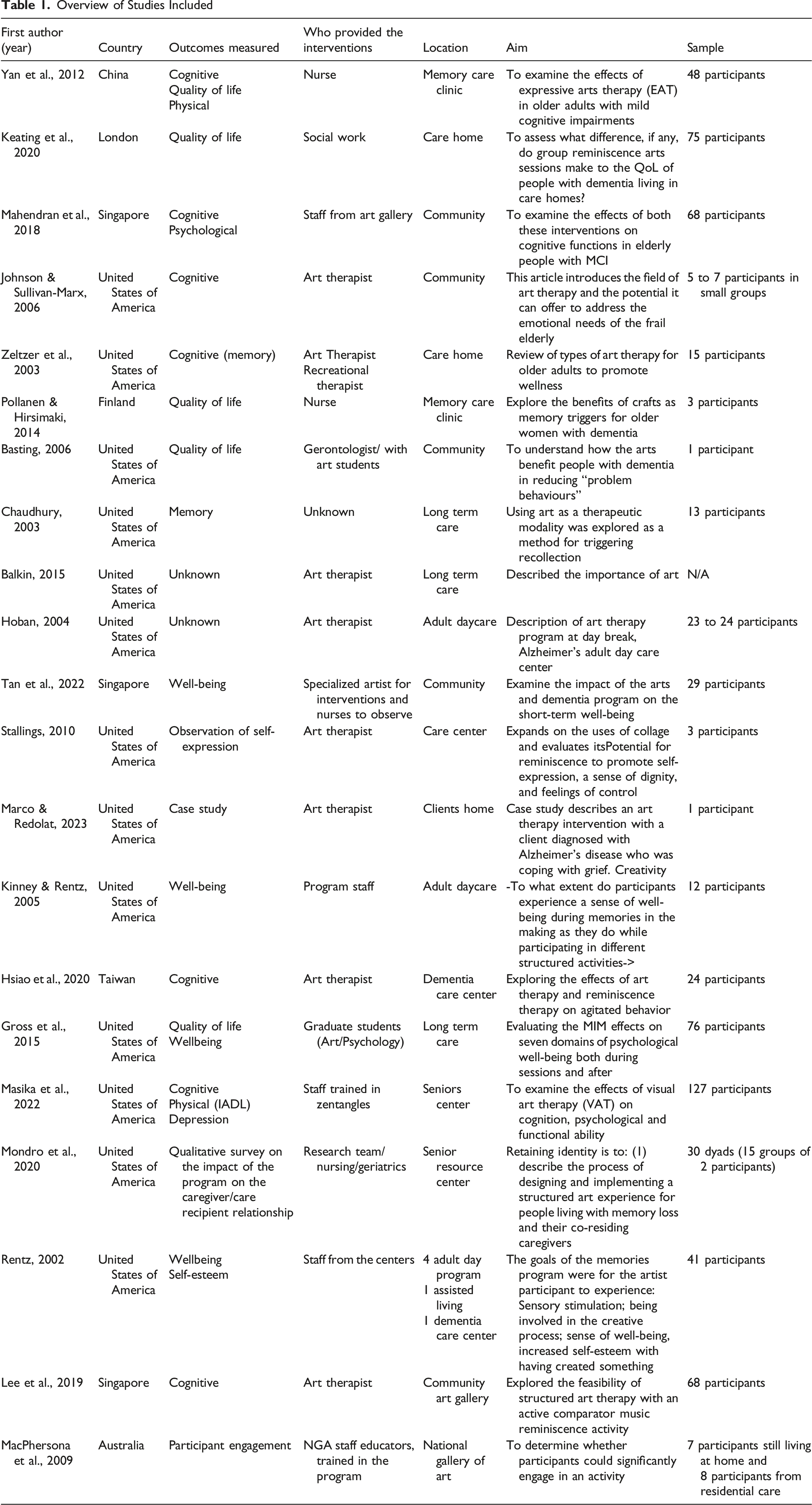
The first author conducted data extraction using a structured Microsoft Excel workbook developed for this review. Key information extracted from each included article included: (a) full bibliographic details (first author’s name, publication year, journal, and country of affiliation), (b) the disciplinary background of the intervention facilitator, where available, (c) location of the intervention, (d) study aims, (e) research design, (f) sample size, (g) type of art intervention and programming, (h) outcomes evaluated, and (i) the presence and role of reminiscence within the intervention. Regular meetings and email correspondence were used to confer with co-authors and ensure consistency and rigour throughout the extraction process.
Stage 5: Collating, Summarizing, and Reporting the Results
Following team discussions, the extracted data were synthesized and summarized into descriptive tables and charts to illustrate key study characteristics and findings. Data were grouped into broader thematic categories, including: (a) location of interventions (community-based vs. facility-based); (b) type of art interventions (e.g., Memories in the Making, art gallery viewing, traditional art classes); and (c) the role of reminiscence in each art intervention. This grouping allowed for clearer visualization of patterns across the included studies. Sample sizes, outcome measures, and facilitator discipline were also tabulated to support narrative synthesis.
Overview of Studies Included
Results
A total of 1,508 articles were identified, and 276 duplicates were removed, leaving 1,232 records for title and abstract screening. Of these, 110 articles progressed to full-text review. Reasons for excluding full-text sources were recorded (see Figure 1 - PRISMA flow diagram). PRISMA Flowchart for the Process of Article Selection Following Inclusion/Exclusion Criteria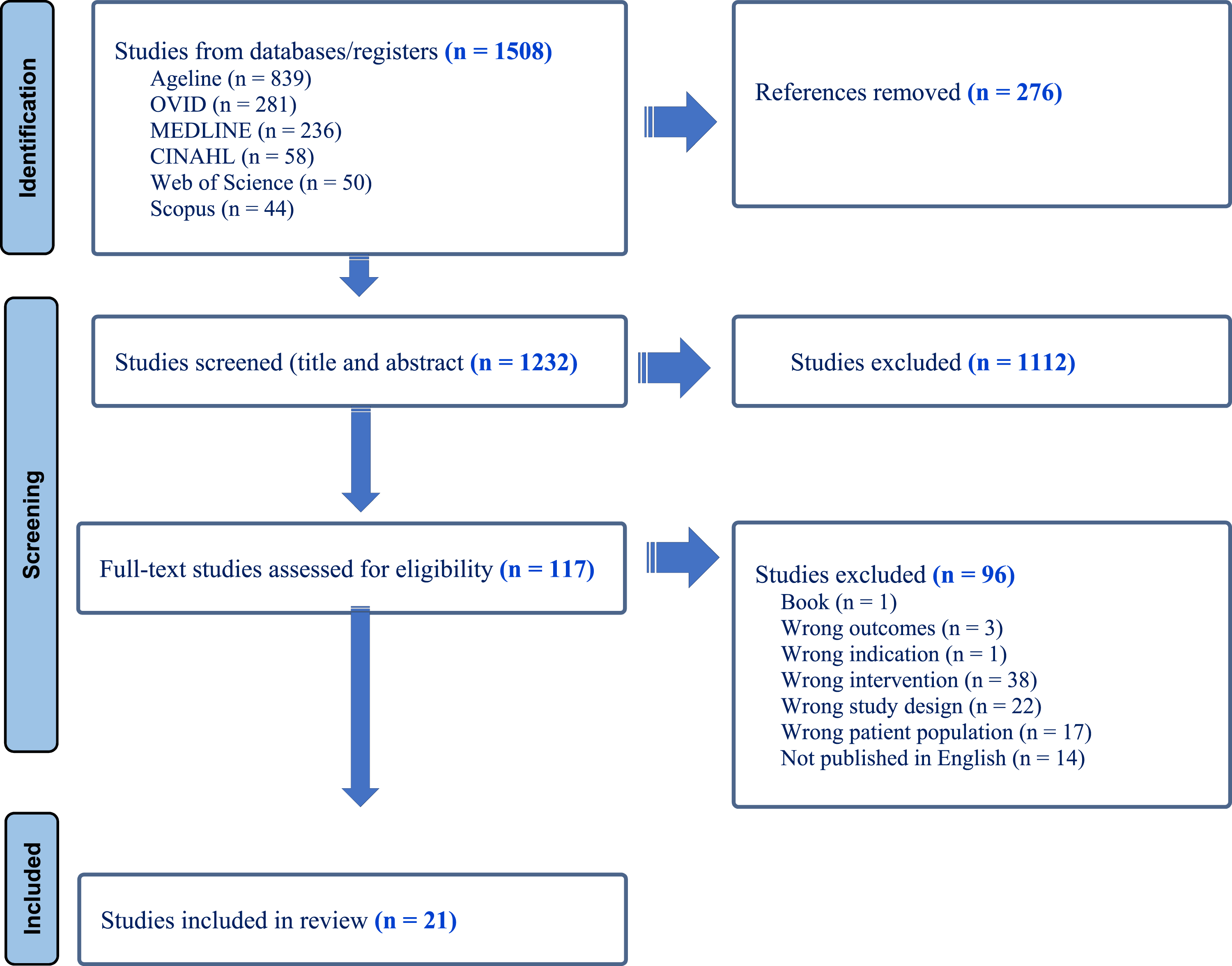
Although we used no date limiters, all relevant articles were published between 1999 and 2022, with the peak number of articles reflected in 2020 (n = 4). The number of studies conducted per year increased since the publication of the first article retrieved, with most articles published between 2010–2023 respectively (61.9%; n = 13), with from 2000–2010 (42.8%; n = 9) and 2010–2023 with three of these studies in 2022 (Figure 2). Dates of Article Publications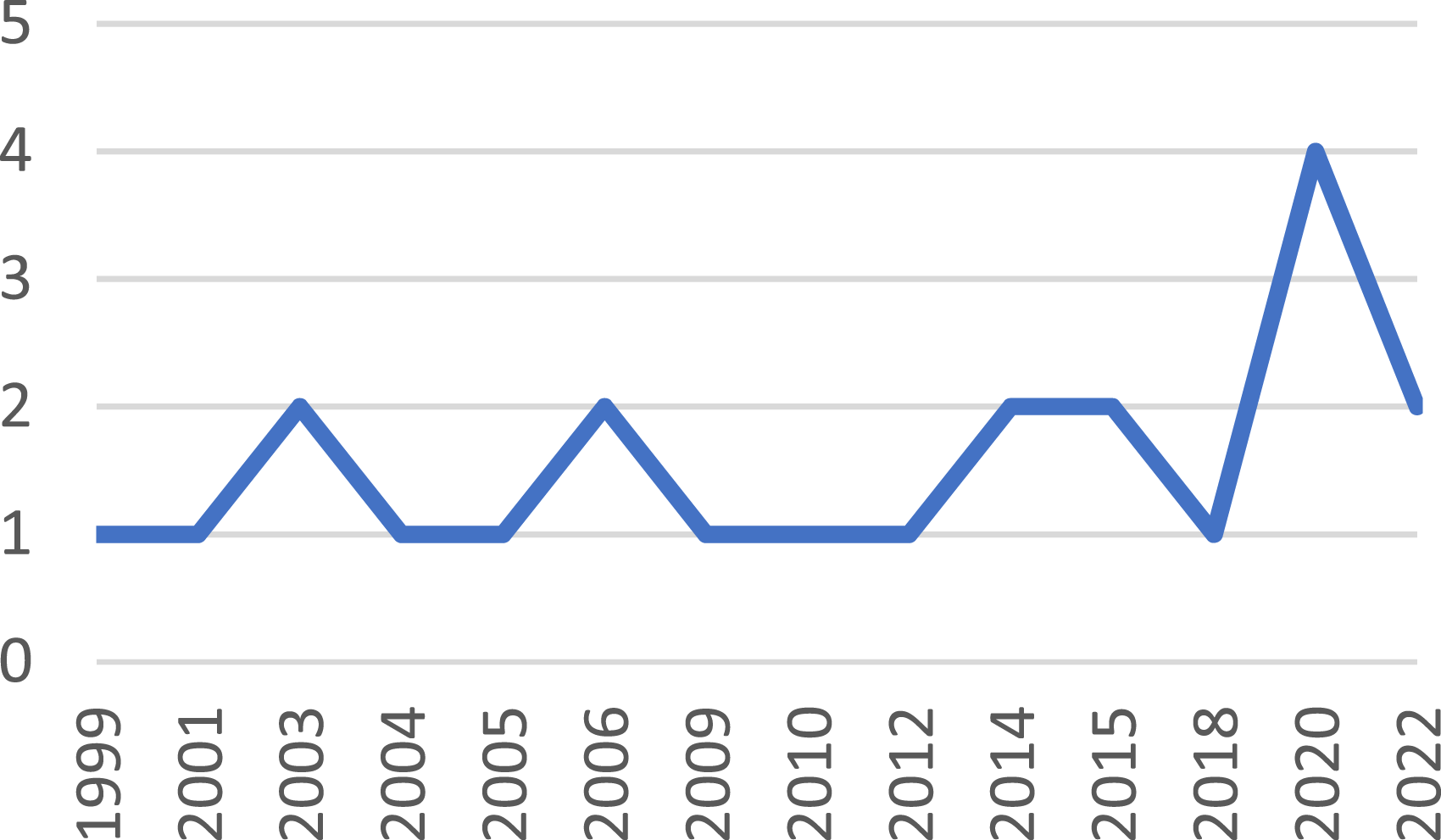
The countries of residence of the first authors varied extensively. Seven countries were represented across the 21 articles. Of the 21 articles, the first-listed authors were from the United States of America (61.9%; n = 13), Singapore (14.29; n = 3) Australia (4.7% n = 1), China (4.7%; n = 1), the United Kingdom (4.7%; n = 1), Finland (4.7%; n = 1), Taiwan (4.7%; n = 1).
Journals publishing the articles varied, and 16 journals published articles that were included in the review. Journals were specific to geriatric care (n = 9), dementia-related illness (n = 6) and arts (n = 3), with the last two journals reflecting divergent focus (i.e., Current Controlled Trials in Cardiovascular Medicine and Provider). Of these journals, the impact factors varied and ranged from 0.342 to 16.655, with a mean impact factor of 2.8. These impact factors were obtained through Web of Science on November 10, 2023. Of the 16 journal publishing articles included in this review, 81% (n = 17) reported an impact factor; 14% (n = 3) included no impact factors. Journals publishing the articles varied, and 16 journals published articles that were included in the review.
The disciplinary backgrounds of individual arts facilitators varied, with seven disciplines represented across the 21 articles. The most represented discipline was art therapy, reflecting 38% (n = 8) of included articles. This was followed by nursing (14.2%; n = 3), gerontology (9.5%; n = 2) and social work (4.7%; n = 1). However, the research teams also included staff from the facilities of study (23.8%; n = 5) and graduate students in health science disciplines (4.7%; n = 1). In one article (4.7%), no discipline was identified. Although studies not led by an art therapist still included an art therapist on the research team, there was often insufficient reporting on the attributes of the facilitators and research team members. This lack of detail in the articles limited the depth of the analysis.
All studies were conducted in older adult settings. Locations were coded into community (66.6%; n = 14) and facilities (38%; n = 8), with Rentz (2002) including both community and facility. Facilities included long-term care homes (13%; n = 3), assisted living centers (13%; n = 3), and dementia care units (9%; n = 2). The community included senior/community centers (31%; n = 7), adult day centers (18%; n = 4), art galleries (9%; n = 2), and personal homes (4%; n = 1).
48% of authors reported that they received research funding. Of these studies, 38% (n = 8) reported receiving funding from one source, and 10% (n = 2) received funding from at least two sources. Funding sources included philanthropic funds (n = 6), conventional national or state-level granting agencies (n = 2), universities (n = 2), and professional organizations (n = 1), Fifty-two percent (n = 11) of articles contained no information about funding.
Three primary approaches to art intervention delivery were used most often. These included (a) Memories in the Making, (b) guided viewing at art galleries, and (c) traditional art classes. Memories in the making (MIM; n = 3) was developed by the Alzheimer’s Association to guide art interventions for individuals with dementia (Basting, 2006; Gross et al., 2015; Kinney & Rentz, 2005; Rentz, 2002). This program was designed specifically for individuals in the mild and moderate stages of dementia, focusing on providing a creative, expressive outlet using visual arts.
Guided viewing at art galleries (n = 5) followed the structure that the Metropolitan Museum of Modern Art created, called Meet Me at MoMA. This program provided a guided discussion of the museum’s art collection for people with mild to moderate dementia and their care partners, followed by a discussion of the art piece and reflections. These questions encourage reminiscence, and then the group moves to a studio-style room, where the participants create their art (Lee et al., 2019; MacPherson et al., 2009; Mahendran et al., 2018; Mondro et al., 2020; Pollanen & Hirsimaki, 2014).
Traditional art classes (n = 13) involved the use of a traditional classroom approach in a recreational setting, where the facilitator would have groups (e.g., 2–10) of older adults sitting at a table, with various art supplies (pencils, markers, paints, clay, or photos/magazines for collage) accessible. These classes had different facilitators from different disciplines and followed the structure of creating art pieces while discussing and sharing; the majority of articles included weekly themes for each session (Chaudhury, 2003; Hoban, 2004; Hsiao et al., 2020; Johnson & Sullivan-Marx, 2006; Keating et al., 2020; Marco & Redolat, 2023; Masika et al., 2022; Shoesmith et al., 2022; Stallings, 2010; Tan et al., 2022; Yan et al., 2021; Zeltzer et al., 2003).
Many studies considered cognitive outcomes, such as memory recall and the ability to complete tasks. However, most articles also assessed a quality-of-life component and overall well-being, with many articles addressing several outcomes. Cognitive (n = 8), other outcomes measured included depression and self-expression (n = 6); quality of life (n = 5), well-being (n = 4), and physical function, such as instrumental activities of daily living (n = 2).
Role of Reminiscence
After collating and synthesizing data, we identified three common themes around the role of reminiscence, including social connection, bridging the past with the present, and enjoyment and increase in confidence. Social connection was evident in 47% (n = 10) studies, bridging the past with the present was evident in 43% (n = 9) and enjoyment and an increase in confidence in 28% (n = 6). Based on the articles in our review, social connection was understood as the feeling of being connected to those around you, being cared for and having a sense of belonging (Balkin, 2015; Dyer et al., 2021; Keating et al., 2020; Kinney & Rentz, 2005; Lee et al., 2019; MacPhersona et al., 2009; Mondro et al., 2020; Pollanen & Hirsimaki, 2014; Rentz, 2002; Stallings, 2010; Tan et al., 2022). For example, Dyer et al. (2021) emphasized that social interaction not only leads to a general improvement in quality of life but, more specifically, reduces the amount of aggression, agitation, and even pain in patient experiences. Stallings (2010) used collages to elicit verbalizations of reminiscence; Rory, a participant in the study, chose a picture of a clean, well-dressed individual, reminiscing how this image reminded her of her younger years when she would see men dressed up for dances. Another individual, Mabel, talked throughout the session. She used her participation in the collage session as an opportunity to reminisce and socially connect with the Family members about her feelings (Stallings, 2010).
In contrast, nine articles demonstrated the role of reminiscence as bridging the past with the present to be the core element of reminiscence (Butler, 1963). Bridging the past with the present was regarded as a natural process where the individual looks back on his/her life and reflects on past experiences, including unresolved difficulties and conflicts (Balkin, 2015; Chaudhury, 2003; Hoban, 2004; Kinney & Rentz, 2005; Lee et al., 2019; Mahendran et al., 2018; Marco & Redolat, 2023; Rentz, 2002; Yan et al., 2021; Zeltzer et al., 2003). For example, Lee et al. (2019) stressed that when art is used for communication, an individual can gain insight both intellectually and emotionally by connecting the meaning of the picture to his or her life situation. They can express their thoughts and feelings by linking their art pieces to their life events, reviewing, and creating or rediscovering the meaning of their art (Lee et al., 2019). This can allow the individual to reminisce and remember aspects of their lives. As Hoban (2004) noted: “While she painted, you could hear her talk about her anger towards her family and her sadness at the way she lived; in her work, you could see the light and beauty, but there were also dark places where you could sense her fear and anger.ˮ
The final domain of enjoyment and confidence was present in six of the articles. These concepts were often measured relative to quality of life within the included literature. Five studies looked directly at quality of life, and four addressed well-being. Within these studies, the role of reminiscence was a factor in the enjoyment of the art interventions. This was reflected in personal testimonial observations and reflected in the study findings (Basting, 2006; Gross et al., 2015; Hoban, 2004; Hsiao et al., 2020; Johnson & Sullivan-Marx, 2006; Masika et al., 2022).
Discussion
This review assessed the current evidence on the role of reminiscence in art-based interventions for people living with dementia. Included studies demonstrated that older adults with dementia usually retain vivid memories of the past, access of which can be encouraged with reminiscence activities for therapeutic benefits and by using arts to encourage communication. Several articles focused on outcomes that addressed cognitive domains, noting that art can promote cognitive functioning and lessen symptoms of depression (Hsiao et al., 2020). In collaboration with reminiscence, this can also assist in grieving and give the individual with dementia an outlet to communicate and help evoke positive memories (Hsiao et al., 2020; Johnson & Sullivan-Marx, 2006; Keating et al., 2020).
A prior review conducted by Ward et al. (2021) noted that the process and the facilitation approaches involved in running arts activities plays an essential role in the effectiveness of the activities themselves. This aligned with our review of the process and facilitation approaches using in arts reminiscence. However, our review focused more on the role of reminiscence rather than associated outcomes. At times, this presented challenges, as many authors discussed sharing stories, life reviews, and culture but infrequently labeled or identified their concepts as reminiscence. Articles that included a description of the programs that used the concept of reminiscence were included, even if reminiscence was not explicitly indicated. As such, the creation of a concept definition was helpful to assist in identifying how reminiscence was used and why (Butler, 1963). Reminiscence is crucial in art therapy, intervention and programming sessions as this process allows individuals to share historical components of themselves. Reminiscence can foster the achievement of Erickson’s eighth stage of development, ego integrity versus despair, and can also help expand psychological development in this stage (Mondro et al., 2020).
The five studies that included guided art viewing incorporated a program description (Lee et al., 2019; MacPherson et al., 2009; Mahendran et al., 2018; Mondro et al., 2020; Pollanen & Hirsimaki, 2014). However, they did not go into depth on how it was facilitated, how art was selected, or the questions asked. They did however provide participant testimonies. For people with dementia, the program increased engagement and alertness, and caregivers reported a sense of joy in participating in a shared experience with their family members. This relates to existing literature on arts-based approaches in health, wherein the components of facilitation of the arts approach are not well described (Archibald et al., 2014).
After a review of available programs in the community, the MIM program was frequently employed. This may be related to its reputability as a program of the Alzheimer’s Society, and because of its global reach. Within this program, it is not unusual for individuals with dementia to paint images based on memories from long ago. Thus, the painting not only manifests the artist’s essence at the present moment but also communicates a remembered experience that can no longer be articulated in words, thus allowing for reminiscence (Rentz, 2002).
Our review highlighted common themes around the role of reminiscence, social connection, bridging the past with the present, and enjoyment and confidence. Social connection was reflected in our review by noting that art is a way for individuals with dementia to connect with the world, giving them opportunities to feel a sense of belonging. Perhaps most importantly, art therapy makes it possible for the staff and the family to see the individual through the lens of their own life story and gain a glimpse into the core person, to see beyond their limitations to their strengths and personal narrative. Our review also reflected that art allows individuals with dementia to connect with the world, giving them opportunities to feel a sense of belonging (Balkin, 2015). It creates space and opportunity for individuals to tell their personal stories and reminisce, to connect socially with caregivers. The capacity for the arts to open space for dialogue is well documented across arts and health literature more broadly. Archibald and Kitson’s (2020) statement that “arts-based methods of engaging and communicating about health research through a process that is now more typically termed knowledge translation are well aligned with the developmental status of older adulthood” (p. 109) is further supported by our review. A wealth of evidence has accumulated to suggest that social networks and relationships, across the lifespan, play a crucial role in maintaining overall health and well-being. However, it may also protect against developing cognitive decline and dementia in later life (Dyer et al., 2021).
Our review illustrated how the arts can encourage expression, allowing individuals to share wisdom, leave a legacy, and find meaning. Through the arts orientated towards reminiscence, individuals can reflect on past events and process the emotions associated with memories. For instance, Rentz (2002) noted that 49% of participants responded to verbal reminiscent prompts by painting memorable past experiences, illustrating the importance of reminiscence and how the experience of being engaged in a meaningful and pleasurable activity shows respect to the individual personhood and their past. This reflects how art can assist in building those bridges and remembering one’s past, as many articles reflected that individuals would paint objects, people, or places from their past, reflect on memories or reminisce about the past during these sessions (Camic et al., 2014; Marco & Redolat, 2023). Indeed, the process of creating and viewing art provides opportunities for individuals to connect to their past by linking their art process and pieces to their life events, and to review, create or rediscover the meaning of their art pieces (Archibald et al., 2017). Such a process provides opportunity for individuals to reminisce and recall aspects of their life narrative (Lee et al., 2019). This was well documented in our review.
While existing literature discusses positive impacts of arts engagement, our review further emphasized the role of reminiscence on enjoyment and confidence, as well as quality of life (Yan et al., 2021; Keating et al., 2020; Pollanen & Hirsimaki, 2014). Within the literature in this review, Rentz (2002) and Hoban (2004), also noted that through this process, participants can recreate a memory, tell a story, and enjoy creating something of value for themselves and others, thereby improving self-esteem. The findings were constant with our review as they noted that through this process, participants could recreate a memory, tell a story, and enjoy being involved in creating something of value for themselves and others, improving self-esteem; this was measured by observations and testimonials (Hoban, 2004; Pollanen & Hirsimaki, 2014; Rentz, 2002).
Limitations
This review was restricted to published full-text English articles, which may have resulted in the exclusion of some non-English articles. While not a limitation, we were challenged to decipher and categorize the key roles that reminiscence played, as most articles focused primarily on study results, such as quality of life, well-being, cognitive changes, and reduction in responsive behaviors. As such, there was limited information on the process of creating artwork and the facilitators’ role in encouraging reminiscence although this is predominantly a limitation of the literature rather than the review methodology. Generally, program descriptions were not comprehensive and should be more fulsomely reported in future work. Further, while we did not focus explicitly on outcomes, there is an opportunity for further research to investigate the effectiveness of conducting arts-based interventions in mixed groups –including people with varying types and stages of dementia– utilizing a larger sample size, a clear description of the modalities, and a clear description of the interventions. Additionally, most research funding for dementia is directed towards pharmaceutical development, or a cure which can limit the exploration of alternative treatments and support systems that might also benefit those affected by the condition (Beard, 2011).
Implications for Practice
Dementia causes an irreversible decline in global intellectual, social, and physical functioning. These factors contribute to relocation from home environments into long-term care or assisted living facilities (Emblad & Mukaetova-Ladinska, 2021). Incorporating non-pharmacological approaches to dementia care may be meaningful and instrumental to the lives of individuals with dementia in care facilities, who are often able to recall events from their childhood but not from more recent times, even earlier the same day. By incorporating arts-based reminiscence activities, individuals are provided with opportunities to engage with themselves and life histories while allowing for a human connection to be established (Marco & Redolat, 2023). Regardless of the profession of the facilitator, many interventions are done using a group format; volunteer-led programs appear viable. Art interventions that include a health professional (e.g., occupational therapist, nurse, art therapist) to design and oversee group interventions with the possible support of volunteers might lead to cost savings since it will maximize the ability of the staff to support more clients.
The opportunity to integrate arts-based reminiscence activities for the well-being of individuals living with dementia compliments continued efforts towards curative discoveries. Efforts towards establishing a cure should undoubtedly continue; however, investments into the research, design, and implementation of activities, such as arts-based reminiscence activities, that improves the lives of individuals with dementia are also needed. Such investment would provide opportunity for individuals to tell their personal stories and reminisce, to connect socially with caregivers, and can be conducted through a variety of delivery models.
Conclusion
This review mapped the literature on reminiscence in arts-based interventions for dementia care. We focused on visual art activities of various forms. Data suggests that the process and the facilitation approaches involved in running arts activities play an important role in the effectiveness of visual arts, for individuals with dementia; however, further research examining the outcomes and effectiveness is needed (e.g., systematic review, meta-analysis).
Each of the selected studies noted art’s positive impact on individuals with dementia. It was clear that reminiscence played a role in enjoying the activities and sharing about their past and who they are. Reminiscence was vital in connecting the past and present; most used memories for the art that was created, allowing them to share parts of themselves and bridge the past and present. There has been increased research within this realm; however, future research should examine the role of reminiscence within art-based therapies, focusing on the different art modalities with a clear description of the process with attention to outcomes. Such a focus could augment investments in curative-oriented research while renewing a focus on improving the lives of individuals with dementia from a strengths-based perspective.
Footnotes

Funding
The authors received no financial support for the research, authorship, and/or publication of this article.
Declaration of Conflicting Interests
The authors declared no potential conflicts of interest with respect to the research, authorship, and/or publication of this article.