




Abstract
There is a growing interest in using technology to provide meaningful activities for people living with dementia. The aim of this systematic review was to identify and explore the different types of digital technologies used in creating individualized, meaningful activities for people living with dementia. From 1414 articles identified from searches in four databases, 29 articles were included in the review. The inclusion criteria were the study used digital technology to deliver an individually tailored activity to participants with dementia, the process of individualization was described, and findings relating to the mental, physical, social, and/or emotional well-being of the participant were reported. Data extracted from the included studies included participant demographics, aims, methods, and outcomes. The following information on the technology was also extracted: purpose, type, training, facilitation, and the individualization process. A narrative synthesis of the results grouped the various technologies into four main purposes: reminiscence/memory support, behavior management, stimulating engagement, and conversation/communication support. A broad range of technologies were studied, with varying methods of evaluation implemented to assess their effect. Overall, the use of technology in creating individualized, meaningful activities seems to be promising in terms of improving behavior and promoting relationships with others. Furthermore, most studies in this review involved the person with dementia in the individualization process of the technology, indicating that research in this area is adopting a more co-creative and inclusive approach. However, sample sizes of the included studies were small, and there was a lack of standardized outcome measures. Future studies should aim to build a more concrete evidence base by improving the methodological quality of research in this area. Findings from the review indicate that there is also a need for more evidence concerning the feasibility of implementing these technologies into care environments.
Introduction
Dementia is an umbrella term for various neurodegenerative syndromes that impact primarily memory, cognition, language, and behavior. There are currently around 50 million people living with dementia worldwide, and it is estimated that there are almost 10 million new cases of dementia each year (Prince et al., 2015). Given the increasing prevalence and incidence of dementia, the World Health Organization (WHO) has stressed the need to invest in research and cost-effective approaches to meet the needs of people living with dementia and their caregivers (WHO, 2015).
Psychosocial approaches to supporting those living with dementia include the use of meaningful activities to promote well-being. Previous literature that aims to define the term “meaningful activity” in the context of dementia care has often done so from the perspective of people with dementia, their family, and health-care professionals (Harmer & Orrell, 2008; Phinney et al., 2007). Focus is placed on values and beliefs that resonate with past roles, interests, and routines of the individual with dementia. Harmer and Orrell (2008) categorized activities considered to be “meaningful” into reminiscence, family and social, musical, and individual activities. This literature review focuses on the last of these activities, although the four types tend to overlap. Harmer and Orrell (2008) describe individual activities as being adapted to the preferences and capabilities of the person with dementia, and discuss the importance of relating these activities to the past lifestyle of the individual. This review uses the term “individualized” to emphasize that the fact that a process has taken place to adjust the activity to the specific preferences and abilities of the individual.
While work in this field has long focused on person-centered care (Brooker, 2003; Kitwood, 1997), findings from previous literature reviews concerning the individualization of activities for people with dementia appear to be mixed. Travers et al. (2016) recommend that individualized activities may be effective for behavioral and psychological symptoms of dementia, especially with regard to improving passivity and agitation, and increasing pleasure and interest. Subramaniam and Woods (2012) conducted a systematic literature review on the impact of individual reminiscence therapy for people with dementia. The authors suggest that conducting a life review with a person with dementia, in which a life storybook is produced, has a positive impact on cognition and well-being. They also suggest that personhood and well-being can be promoted using individualized reminiscence approaches that meet specific needs of the individual with dementia. Despite these suggestions, however, a recent Cochrane review found very little evidence for personally tailored activities being able to improve psychosocial outcomes for people living with dementia (Möhler et al., 2018). While offering personally tailored activities (such as listening to individualized music playlists or making puzzles from familiar photographs) to people with dementia in long-term care may slightly improve challenging behavior, effects on mood were uncertain, and the authors were unable to make recommendations about specific activities.
Constant advances in technology provide potential for designing new and innovative ways of meeting specific needs of individuals with dementia. In a very recent overview of technology and dementia, Astell et al. (2019) identified leisure and activity as one of the main domains of technology development within dementia care. The authors remark that technology—such as smartphones, tablets, wearables, robots, virtual reality, and artificial intelligence—is prompting thought on how care services can be better delivered to address the well-being of people with dementia. The authors also argue that the rapid pace of technology development requires a holistic view of dementia. In expanding the view of dementia beyond a narrow medical approach, technology may be used to empower people with dementia, supporting them to live a more meaningful life. For instance, a recent study suggested that the use of a social robot for hospital patients with dementia promoted a sense of self and facilitated social connection with others (Hung et al., 2019).
Arthur (2009) defines technologies as assemblies of practices and components put to use in order to fulfill a specific purpose. In recent years, there has been much work done on the use of various technologies for providing meaningful activities in dementia care. Digital technologies, such as mobile and tablet apps, have been suggested to enable collaborative explorations of life events by people with dementia and caregivers, encouraging the caregiver to reflect and learn more about the individual (Maiden et al., 2013). Purves et al. (2011) also comment on the role that multimedia technologies (e.g., digital life stories) have on conveying the narrative of people living with dementia, and the authors stress that further work needs to be done in understanding how these technologies can be used in everyday practice. In a review on touchscreen technology for people with dementia, Joddrell and Astell (2016) commented that the primary use of touchscreen technology has been to deliver assessments and screening tests, and they called for more focus on how this technology can be used to deliver independent activities for meaningful occupation.
To date, there are no literature reviews that provide an overview of the evidence on using technology to create individualized, meaningful activities for people with dementia. Furthermore, there is arguably a need to take qualitative and mixed-method studies into account in this area of research, especially given that meaningful activity within dementia care is often measured in subjective terms of enjoyment (Harmer & Orrell, 2008). While the importance of thorough quantitative meta-analyses remains, much can be learnt from qualitative and mixed-method research in addition to quantitative studies. The Cochrane Qualitative and Implementation Methods Group Guidance Series highlights the important role of qualitative and mixed-method reviews in understanding how interventions work and how they are implemented (Noyes et al., 2018). Therefore, this literature review will consider qualitative, quantitative, and mixed-methods research to acquire a comprehensive overview of the work that has been done on this topic.
The main purpose of this review is to answer the following research question: What are the different digital technologies used to create individualized activities for people with dementia, and how are these facilitated? For the purpose of this review, we define digital technologies as devices, systems, or applications that can be used to create, store, view and/or share information electronically. In order to further explore the findings from this question, the review will also answer the following secondary research questions: (a) How are these technologies individualized? and (b) What is known about the effects of these technologies on the well-being of people living with dementia?
Methods
This systematic review was conducted and reported in accordance with the Preferred Reporting Items for Systematic Reviews and Meta-Analyses (PRISMA) guidelines (Moher et al., 2009a).
Eligibility criteria
The SPIDER strategy (Sample, Phenomenon of Interest, Design, Evaluation, Research type) was used as a tool for shaping the search. SPIDER has been adapted from the PICO formulation (Population, Intervention, Comparison, Outcome) to be more suitable for qualitative and mixed methods research (Cooke et al., 2012). The SPIDER strategy for this review was as follows: Sample: people living with dementia. Phenomenon of interest: technology-based, meaningful activities tailored specifically for the person with dementia. Design: case study, observational study, randomized controlled trial, quasi-experimental study, questionnaire, interviews, and focus groups. Evaluation: outcomes related to the mental, physical, social and/or emotional well-being of the person with dementia. Research type: quantitative, qualitative, or mixed-method.
Only studies published in a peer reviewed journal and in English language were considered for review. In order to focus on more recent technologies, studies published before 2005 were not considered for review. Additionally, as another systematic review focusing on meaningful interventions for people living with dementia noted, person-centered care practices were not widely adopted until 2005 (Travers et al., 2016). Given that the scope of this review is to focus on individualized activities, it was deemed appropriate to limit the results to being published in 2005 or later.
Inclusion criteria
Studies were included if they met all of the following criteria: (a) uses digital technology to deliver an individually tailored activity to participants with dementia, (b) describes the process of individualization, and (c) reports on findings directly relating to the mental, physical, social, and/or emotional well-being of the person with dementia.
Exclusion criteria
Studies were excluded if they met any of the following criteria: (a) reports solely on the well-being of caregivers or (b) reports findings solely relating to the technology rather than the person with dementia. Literature reviews, study protocols, theoretical papers, conceptual papers, and position papers were also excluded from the review.
Information sources
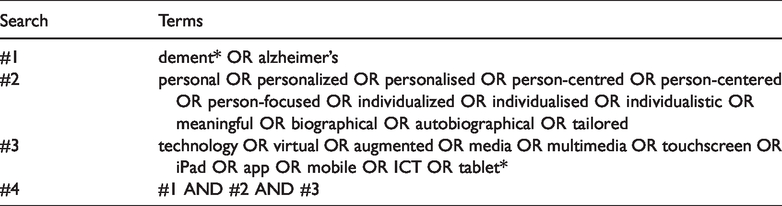
Given the interdisciplinary nature of this topic, four databases were used for the search, with the aim of capturing as many potential articles as possible. The following databases were used: CINAHL, Embase, PubMed, and Scopus. A combination of Boolean operators and truncations were used. MeSH Terms were also used where applicable. Table 1 gives a summary of the search terms.
Summary of search terms.
Search
Study selection
The selection of articles for review was conducted by the first author. All articles underwent a first screening after duplicates were removed. This consisted of titles and abstracts being screened against the inclusion and exclusion criteria. Included articles then underwent an assessment for eligibility, which involved a reading of the article in full. Additionally, backward citation searching and forward citation tracking was conducted on these articles. Articles from this additional search that met the inclusion criteria were included for review. Coauthors Kristin Taraldsen and J Artur Serrano independently checked the final selection of articles against the inclusion and exclusion criteria.There were no discrepancies, and therefore this final selection of articles was approved by all authors.
Data extraction and synthesis
Data relating to the study aims, design, demographics, data collection, methods, and findings were extracted from each article. Additionally, information on the purpose of technology studied, type of technology, media contents and services, the individualization process, environment of technology use, training on technology use, and facilitation of the intervention/activity was also extracted.
Due to the heterogeneity of the results and the novelty of this field of research, no meta-analysis was conducted. The application of technology for meaningful activities is still an emerging area of work, with many different approaches and devices being used. Therefore, results are presented through a narrative synthesis. Findings from the studies are summarized to answer each of the research questions in turn.
Results
Study selection
The initial search returned 1414 articles: 217 from PubMed, 507 from Scopus, 139 from CINAHL, and 551 from Embase. An overview of the study selection is shown in Figure 1. In short, 906 records were screened and 837 were excluded. Reference list checking and forward citation tracking was conducted on the remaining 69 articles to identify additional records. From these searches, 8 articles were identified, meaning that a total of 77 articles were assessed for eligibility. This assessment resulted in a total of 29 articles for review.
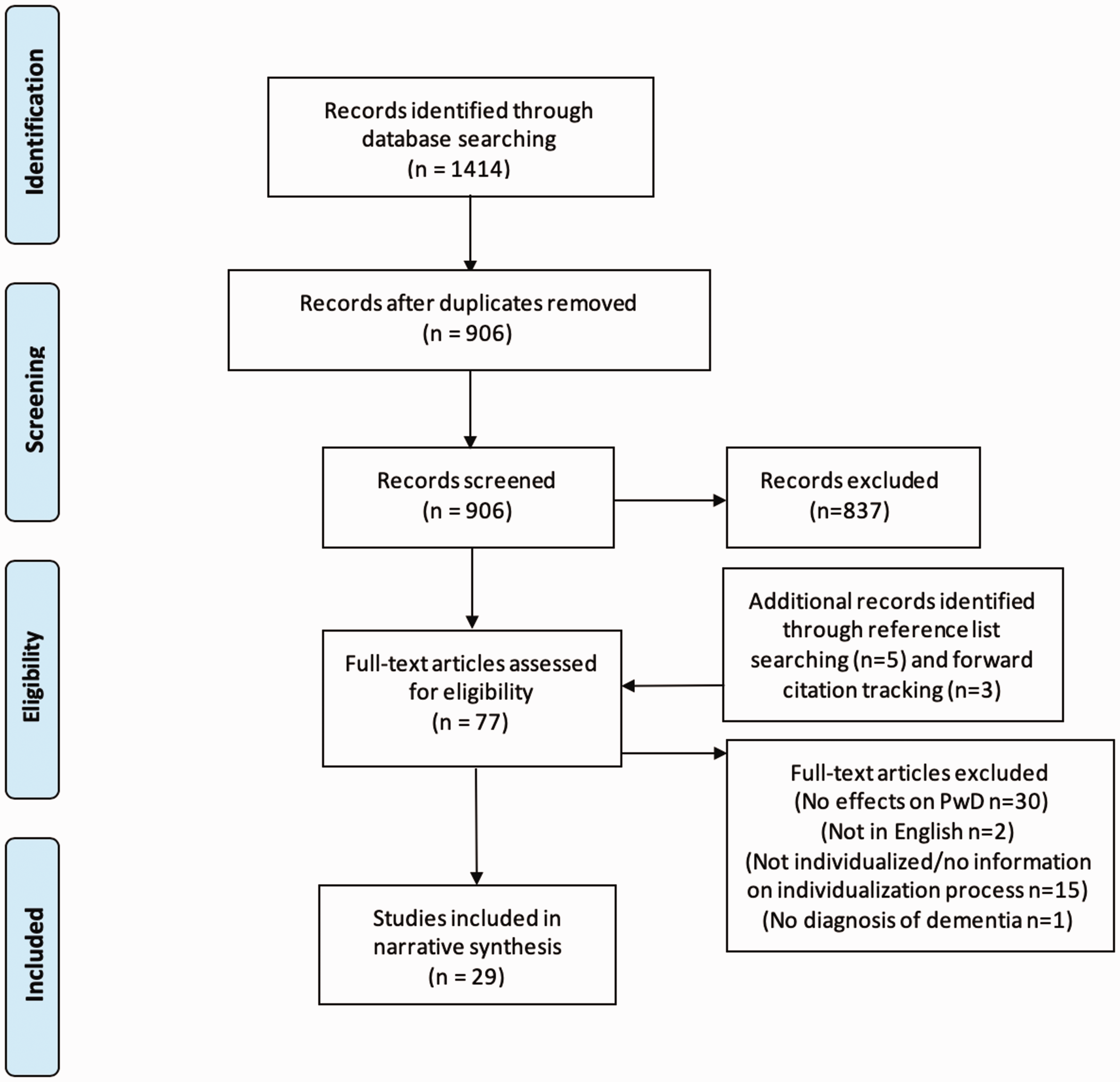
PRISMA flow diagram of study selection process. Adapted with permission from Moher et al.(2009b).
Study characteristics
Twenty-nine studies (reported in 29 separate articles) were included for review. From these studies, 12 were qualitative, 13 used mixed-methods, and 4 were quantitative. An overview of study characteristics is given in Table 2, which summarizes study design, participant information, aims of the study, interaction with technology, measures, and findings for each study.
Study characteristics.
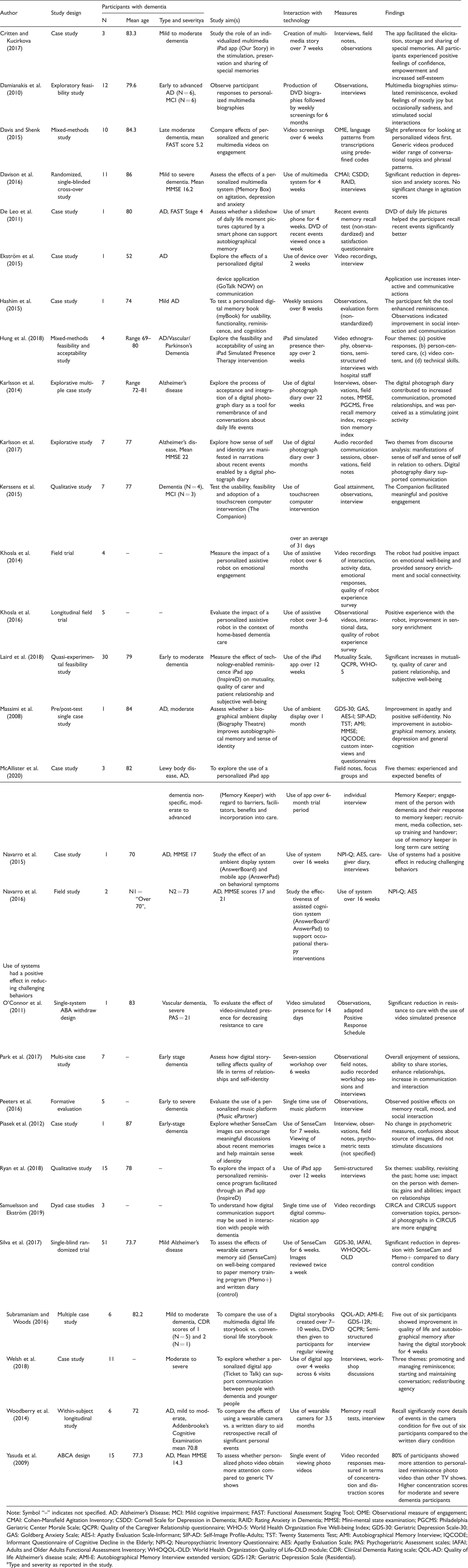
Note: Symbol “–” indicates not specified. AD: Alzheimer’s Disease; MCI: Mild cognitive impairment; FAST: Functional Assessment Staging Tool; OME: Observational measure of engagement; CMAI: Cohen-Mansfield Agitation Inventory; CSDD: Cornell Scale for Depression in Dementia; RAID: Rating Anxiety in Dementia; MMSE: Mini-mental state examination; PGCMS: Philadelphia Geriatric Center Morale Scale; QCPR: Quality of the Caregiver Relationship questionnaire; WHO-5: World Health Organization Five Well-being Index; GDS-30: Geriatric Depression Scale-30; GAS: Goldberg Anxiety Scale; AES-I: Apathy Evaluation Scale-Informant; SIP-AD: Self-Image Profile-Adults; TST: Twenty Statements Test; AMI: Autobiographical Memory Interview; IQCODE; Informant Questionnaire of Cognitive Decline in the Elderly; NPI-Q; Neuropsychiatric Inventory Questionnaire; AES: Apathy Evaluation Scale; PAS: Psychogeriatric Assessment scales; IAFAI; Adults and Older Adults Functional Assessment Inventory; WHOQOL-OLD: World Health Organization Quality of Life-OLD module; CDR: Clinical Dementia Rating scale; QOL-AD: Quality of life Alzheimer’s disease scale; AMI-E: Autobiographical Memory Interview extended version; GDS-12R: Geriatric Depression Scale (Residential).
aType and severity as reported in the study.
The most commonly used study design was the case study (N = 12). Only two randomized trials were included. Other designs included field trials and explorative studies. A total of 231 participants were included across the 29 studies (ranging from 1 to 51, with a median of five participants per study). The mean age of participants ranged from 52 to 87. However, two studies only reported the age range of participants, and seven studies did not specify age. The severity of dementia varied across the studies, with all stages being covered from mild to severe. Two studies included participants with mild cognitive impairment in addition to participants with more advanced dementia. The most common type of dementia was Alzheimer’s disease (N = 14). There were inconsistencies in reporting participant demographics, with four studies failing to report either type or severity of dementia.
Most studies aimed to assess the impact of the technology-based activity on memory, communication or engagement. Some studies adopted a more exploratory approach and aimed to report any effects that the technology may have had on the person with dementia. Interviews and observations were the most popular tools for data collection, with thematic analysis and discourse analysis being used to draw findings. In quantitative and mixed-methods studies, there was a large variety of standardized measures used that focused on numerous domains (for details see Supplementary Material, Table S1). The studies were also greatly varied in terms of length of technology use, ranging from single-time use to use of the technology for six months. Across the 29 studies, the average time spent using the technology was seven weeks.
Synthesis of results
What are the different technologies used to create individualized, meaningful activities for people with dementia, and how are these facilitated?
A wide array of technology, with varying media contents and services, has been explored for creating individualized, meaningful activities for people with dementia. This review categorized the technologies into four main purposes that all tackle common challenges people living with dementia face, namely: reminiscence/memory support, behavior management, stimulating engagement, and conversation/communication support. Table 3 gives an overview of the technologies studied with regard to their purpose, type, media contents and services, individualization process, environment of use, any training provided and the way in which the technology was facilitated in the study.
Overview of technology, individualization, and facilitation.
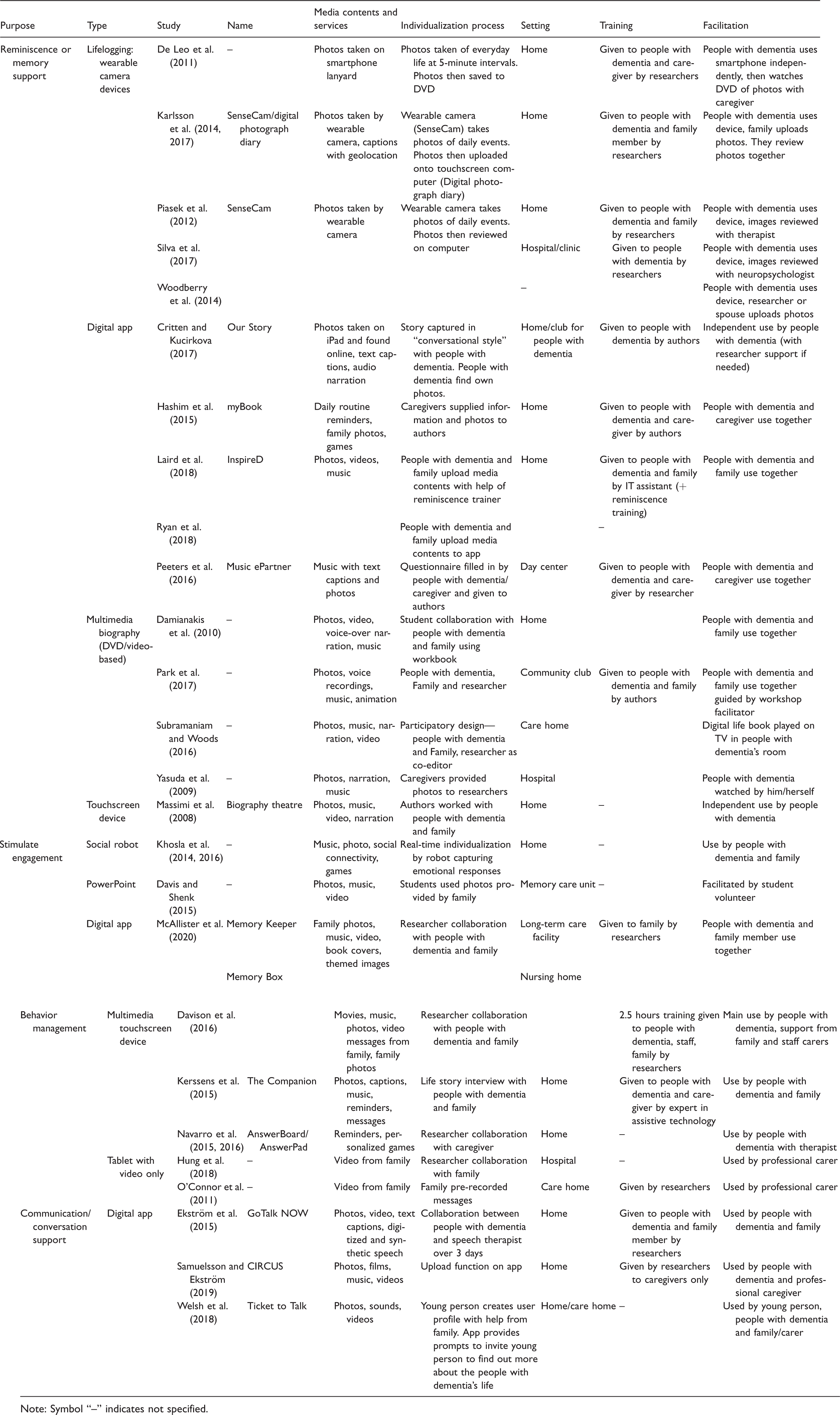
Note: Symbol “–” indicates not specified.
Environment, training, and facilitation
The majority of studies (N = 18) were conducted within the homes of participants, who were living in the community (Critten & Kucirkova, 2017; Damianakis et al., 2010; De Leo et al., 2011; Ekström et al., 2015; Hashim et al., 2015; Karlsson et al., 2014, 2017; Kerssens et al., 2015; Khosla et al., 2014, 2016; Laird et al., 2018; Massimi et al., 2008; Navarro et al., 2015, 2016; Piasek et al., 2012; Ryan et al., 2018; Samuelsson & Ekström, 2019; Welsh et al., 2018). Family members were often the facilitator of the technology use. In most studies, the presence of another person was required for the full facilitation of the intervention/activity. Whether it be family member, professional caregiver or therapist, it was deemed important that the technology was used as a joint activity. Even in the case where the person with dementia was encouraged to use the device or app independently, support from caregivers was available. Therefore, training of the technology was often given to both the person with dementia and their caregiver. Most studies were quite vague about the instructions given. However, a few studies described extensive training procedures (Davison et al., 2016; Kerssens et al., 2015; Laird et al., 2018). For example, in the study of the InspireD app (Laird et al., 2018), an IT assistant provided training to participants with dementia and their family members, who were living at home. In addition to this, participants also received reminiscence training.
There were a couple of cases where the person with dementia was trained individually. Davison et al. (2016) reported that each of the 11 participants (with mild to severe dementia) received 2 hours of individual training to use a personalized multimedia touchscreen device. This training utilized spaced retrieval learning principles and involved research staff demonstrating procedures and asking the participant to imitate them. Despite this training, however, some participants were unable to use the device due to cognitive or sensory impairment. Similarly, participants (with mild to moderate dementia) in the study of the OurStory iPad app were trained to use the app independently, however they experienced practical difficulties such as not being able to hold the device or being unable to use the keyboard (Critten & Kucirkova, 2017).
Facilitation ranged from professional caregivers having complete control of the technology (e.g., simulated presence on iPad apps in Hung et al., 2018; O’Connor et al., 2011), to joint use between people with dementia and family members (e.g., multimedia apps in Laird et al., 2018; Ryan et al., 2018, digital life storybooks in Critten & Kucirkova, 2017; Park et al., 2017, social robots in Khosla et al., 2014, 2016), and to more independent use by the person with dementia (e.g., Biography Theatre in Massimi et al., 2008). The most independently used devices were the lifelogging technologies. The SenseCam (Karlsson et al., 2014, 2017; Piasek et al., 2012; Silva et al., 2017; Woodberry et al., 2014) and the smartphone lanyard used by De Leo et al. (2011) were worn by the person with dementia during the day. However, in all studies of lifelogging technologies, support was needed from another individual to upload the photographs onto a DVD or computer. Reviewing the photographs then became a joint activity.
How are these technologies individualized?
Most of the studies described the individualization process as a collaboration between the person with dementia, the family member, and often a researcher. While most studies were unclear on the length of time taken to individualize the technology, there were some that used several weeks for the process. For example, digital stories were created over a 6-week period in Park et al. (2017) and an average of 8.3 weeks in Subramaniam and Woods (2016).
Despite common collaboration between participants with dementia, family and researchers, approaches to individualizing the app/device still differed. Examples include structured workbooks (Damianakis et al., 2010), a chronological approach by listing major life chapters (Massimi et al., 2008), stories captured in a “conversational style” (Critten & Kucirkova, 2017), life story interview (Kerssens et al., 2015), questionnaire (Peeters et al., 2016), participatory design (Subramaniam & Woods, 2016), in-app prompts (Welsh et al., 2018), and participants uploading their own media content to apps (Laird et al., 2018; Ryan et al., 2018; Samuelsson & Ekström, 2019). The resonating theme among all these approaches is that of capturing the life story of the individual using photographs, music, and narratives (both textual and audio-recorded).
Several studies used theory to inform the individualization process. For instance, Positioning Theory (Harr & Van Langenhove, 1998) informed Karlsson et al.’s (2017) work on the SenseCam. The approach to the study was to understand narrations about recent events as being co-constructed between the person with dementia and their partner. Park et al. (2017) was influenced by Bruner’s paradigm of narrative knowing and constructivism (Bruner, 2003). Damianakis et al. (2010) was informed by a framework that supports coherence of ego integrity and personhood during phases of impairment. Finally, Ryan et al.'s (2018) work on the InspireD app was underpinned by Kitwood’s notion of person-centered care (Kitwood, 1997). These four studies that used theoretical foundations for narrative creation all reported positive effects on self-identity and/or engagement from qualitative methods including discourse analysis, interviews, observations and field notes.
What is known about the effects of these technologies on the well-being of people living with dementia?
Overall, the evidence from the included studies suggest that individualized, digital technologies can have positive effects on the well-being of people living with dementia. Particularly promising areas of improvement include behavior and mood, sense of identity, and relationships and engagement with others. Specific domains of well-being are reported on in further detail below.
Memory
The impact of these technologies on memory was mixed, and methods to assess memory were varied. Based on observational and interview data, several studies found that personalized multimedia can stimulate reminiscence (Critten & Kucirkova, 2017; Damianakis et al., 2010; Hashim et al., 2015; Welsh et al., 2018). The use of formal tests on memory was scarce. Two studies used the Autobiographical Memory Interview (AMI) (Kopelman et al., 1989), including Subramaniam and Woods (2016) who found that the use of a digital life storybook improved autobiographical memory after using the storybook for four weeks. Contrastingly, the study of a personalized biographical ambient display did not improve AMI scores after one month of use (Massimi et al., 2008). Mixed results were also present in the study of lifelogging technologies. De Leo et al. (2011) and Woodberry et al. (2014) found that pictures taken by a wearable camera enabled the participants to recall significantly more details of recent events, as measured by non-standardized memory recall tests. However, a single case study of SenseCam conducted by Piasek et al. (2012) reported that the participant was confused about the source of images. Karlsson et al. (2017) also reported that there were certain situations where participants with Alzheimer’s disease were unable to recall any information related to the event shown from SenseCam photographs.
Behavior and mood
Overall, the technologies included for review showed beneficial effects on behavior and mood. Furthermore, studies that focused on this domain were more consistent in using standardized outcome measures. The AnswerBoard (public ambient display) and AnswerPad (mobile phone app) devices were shown to have a positive effect in reducing challenging behaviors after 16 weeks of use, as indicated by decreased NPI-Q scores (Navarro et al., 2015, 2016). Another study on an ambient display system used the Apathy Evaluation Scale and found that the use of the system reduced the participant’s apathy after one month of use (Massimi et al., 2008). A personalized multimedia system was shown to significantly reduce depression and anxiety after four weeks of use, as measured by the CSDD and RAID (Davison et al., 2016). Silva et al. (2017) found that the use of the SenseCam significantly reduced depression scores, using the Geriatric Depression Scale.
Studies focusing on simulated presence to reduce problematic behaviors had positive results. O’Connor et al. (2011) found that presenting residents with an iPad containing a video-recorded message from a family member for 14 days was able to significantly reduce resistance to care. Similarly, Hung et al. (2018) also tested iPad-facilitated video simulated presence for 14 days and found that hospital patients with dementia responded positively. As well as improving behavior, the iPad intervention also resulted in positive changes in the mood of all participants. However, the authors noted that video content with too many family members with multiple messages provoked anxiety, emphasizing the importance of acknowledging the individual needs of the person with dementia and being aware of possible over stimulation.
Self-identity
Results from the identified studies suggest that a sense of self can be preserved, even in later stages of dementia. Critten and Kucirkova (2017) found that the Our Story app gave participants confidence, empowerment and increased self-esteem. Karlsson et al. (2017) studied the SenseCam in relation to self and identity. From discourse analysis, the authors identified two key themes: manifestations of sense of self and self in relation to others. With regard to sense of self, the authors found that even if the participant could not relate to the event shown in the photograph, the material still stimulated conversation about personal experience. When the participants’ partners had been involved in events captured by the SenseCam, narrating and remembering the event became a joint activity. However, it is important to note that some participants became stressed when the conversation became interrogative. The only study to use outcome measures for self-identity was Massimi et al. (2008) who used the Twenty Statements Test and the Self Image Profile (Adult). The authors found that use of the Biography Theatre for one month led to an improvement in positive self-identity. It is also important to note that studies which included the person with dementia in the individualization process of the technology empowered the individual to become more connected with their sense of self. For example, participants in a digital storytelling workshop enjoyed the process of creating and sharing their stories over a six-week period (Park et al., 2017).
Social relationships and engagement
Given the highly interactive nature of the technologies, many studies found improvements in relationships, communication and engagement. Social robots were identified as a way of facilitating engagement and interaction for people with dementia (Khosla et al., 2014, 2016). Personalized digital media was considered as a tool for starting conversations (Davis & Shenk, 2015; Karlsson et al., 2014; Samuelsson & Ekström, 2019; Yasuda et al., 2009), supporting interaction (Hashim et al., 2015; Park et al., 2017), and improving relationships between people with dementia and their caregivers (Karlsson et al., 2014; Laird et al., 2018; Park et al., 2017; Ryan et al., 2018). It was also reported that such media provided caregivers, and sometimes even family members, with new insights and heightened perspectives into the life of the person with dementia (Damianakis, 2010; Ryan et al., 2018; Samuelsson & Ekström, 2019). The majority of these findings were based on interview or observation data. However, Laird et al. (2018) used the Quality of Carer and Patient Relationship scale (Spruytte et al., 2002) and the Mutuality Scale (Archbold et al., 1990) to assess the effect of the InspireD app on the relationship between the person with dementia and their caregiver. Scores on both scales were significantly improved after 12 weeks of using the iPad app.
There were some cases where tensions in the relationship were reported. For example, Ekström et al. (2015) found that problems associated with dementia were foregrounded during joint interaction with a tablet computer. The person with dementia became dependent on their conversational partner to be able to use the technology. Similar issues were experienced with the SenseCam. The participant in Piasek et al.’s (2012) study of SenseCam relied on his wife while reviewing photographs together with a therapist. Participants in another SenseCam study were reportedly frustrated when they felt the conversation about the photographs had become a test of their memory (Karlsson et al., 2017).
Emotional well-being
Observations of interaction with technology were used to assess emotional reactions from the participants. Technologies that featured reminiscence activities or other autobiographical material provided participants with an enjoyable experience (Critten & Kucirkova; Damianakis et al., 2010; Hashim et al., 2015; Kerssens et al., 2015; Khosla et al., 2014, 2016; McAllister et al., 2020; Park et al., 2017; Peeters et al., 2016; Ryan et al., 2018; Samuelsson & Ekström, 2019; Subramaniam & Woods, 2016). However, due to the highly personal nature of these activities, there is a potential for sensitive topics to cause negative reactions. There were numerous reports of sadness being experienced, especially when personal photographs of those who had passed away were used (Damianakis, 2010; Ryan et al., 2018). In these cases, it is important to remember that emotions are highly complex. Damianakis et al. (2010) commented on the possibility of observing both happiness and sadness simultaneously in reaction to pictures of a deceased loved one. Furthermore, family members involved in the study felt that it was important to include photographs and stories of loved ones, even if they had passed away.
Discussion
Summary of evidence
This review has identified the varying types of digital technologies that are being used to create individualized, meaningful activities for people with dementia. Overall, the findings suggest the use of individualized technology to be promising in contributing to and advancing dementia care. Technology can be used to complement psychosocial approaches to care such as reminiscence therapy, simulated presence therapy, occupational therapy and life story work. Additionally, this review has demonstrated how theory-based knowledge may be used to complement technology-based activities in dementia care. Studies that used theoretical foundations for the individualization process of the technology all found positive impacts on a sense of self and/or engagement, suggesting that theory-based knowledge can be beneficial for technology development.
Findings from the review also indicate the amount of progress that has taken place in this field. Only 7 of the 29 included studies did not actively involve the person with dementia in the individualization process of the technology. This contrasts to a 2008 literature review on technology studies to meet the needs of people with dementia and their caregivers. Topo (2008) found that very few studies actively involved the person with dementia in using the technology. Studies identified in this review not only involved the person with dementia as users of the technology, but in most cases, they were involved in the individualization process, acting as co-creators of their own narratives. There was also a case where the individuals with dementia were involved in the development of the technology itself. The InspireD app was co-created by a User Development Group that consisted of six people with dementia working together with researchers (Laird et al., 2018; Ryan et al., 2018). Future work in this area should adopt a similar approach, involving people with dementia as co-creators from the onset of the technology development.
Opportunities afforded by technology
Findings from this review are in accordance with other literature reviews in this area, in terms of the benefits that technology can provide to people living with dementia. A systematic review of technology for reminiscence therapy found that using information and communication technologies for reminiscence therapy interventions has benefits such as providing access to rich multimedia materials, providing opportunities for social interaction, provision of memory support and ownership of conversations (Lazar et al., 2014). Similar results are resonated in this review, especially with regard to social interaction. Furthermore, the use of technology to preserve, share and explore the narrative of the person with dementia is consistent with earlier findings in this area (Maiden et al., 2013; Purves et al., 2011).
One particularly meaningful benefit of technology is that it provides a means of being able to access a wealth of images and other types of media. This can be very important, especially for those who may not have many photographs from their past. Participants using the OurStory iPad app found access to external images important (Critten & Kucirkova, 2017). This continuous and endless access to media also provides an opportunity to engage with not just the past, but also the present. Participants using the InspireD app were able to take pictures on the iPad and include them as part of their reminiscence program (Laird et al., 2018; Ryan et al., 2018). SenseCam captures everyday moments of daily life, enabling people to recollect upon recent events. The upload feature in CIRCUS (Samuelsson & Ekström, 2019) also allows participants to engage with media from recent events, if they wish to do so.
Technology also presents life histories in a new way, which can be beneficial for all individuals involved its use. Participants in the study of a digital life book were excited about seeing their life history: “I feel like I’m famous. I feel very excited,” “I can’t believe this, my mother will be proud of me . . I feel like I’m being appreciated” (Subramaniam & Woods, 2016). Additionally, caregivers felt that technology provided a way of learning more about the life of the person with dementia (Damianakis et al., 2010; Ryan et al., 2018; Samuelsson & Ekström, 2019; Subramaniam & Woods, 2016). As Purves et al. (2011) suggest, technology can be a way of shaping an interactional environment in which narrative can be explored together: “With these technologies at our disposal, we not only have better ways to elicit and convey narratives … but we also have better ways to share these narratives with others, over time and across place” (p. 240). The technologies identified in this review provide examples of how this may be achieved.
Challenges going forward
The results from this review have raised some potential issues that could be faced when implementing individualized technologies into practice. Associated costs are an important issue. The Memory Box device (Davison et al., 2016) cost 12,000 U.S. dollars for four units. Installation of the Biography Theatre took an experienced technologist 30–40 hours over the course of one month (Massimi et al., 2008). In Laird et al.’s (2018) study of the InspireD app, which itself is free, the training sessions cost 2750 GBP per dyad.
Most studies were conducted in the homes of people with dementia, and this may be due to the fact that support from another individual was often needed in order to be able to use the technology. Care institutions such as nursing homes are often busy environments, in which one-to-one interaction may not always be possible due to time constraints. Additionally, home-dwelling individuals with dementia tend to be in more mild–moderate stages of dementia and therefore may be able to use the technology on a more independent level. This then raises the question of how practical it is to introduce such technology into care homes for individuals in more severe stages of dementia. Also, the issue of capacity was raised in Subramaniam and Wood’s (2016) study of the digital life book. It was questioned whether members of staff could be expected to take on the role of coproducing the life stories together with the person with dementia.
Additionally, and maybe most importantly, there is a question of how well these technologies can be introduced to this vulnerable group, especially in later stages of dementia. Numerous participants across the studies experienced difficulties in being able to interact with the technology. Examples include physical issues with being able to hold the device or press buttons, issues with being able to see the screen, or difficulties with general operation of the technology. Piasek et al. (2012) witnessed a particular struggle with SenseCam in getting the participant, John, to remember that he was the one wearing the camera: “The SenseCam technology seemed confusing for someone with such severe memory impairments. It also seemed pointless to continuously explain what SenseCam is and that is was John who wore it.” Even in studies where participants were aware of the SenseCam, they did not always respond positively to it. For example, one gentleman felt embarrassed by wearing the camera and felt it drew attention to him (Woodberry et al., 2014). These issues highlight the need to continue to develop awareness in potentially problematic areas such as physical limitations or sensory issues as well as self-consciousness or stigma. It is important that devices and technologies are developed with these issues in mind, so that they may be feasible for use by the target population.
Limitations
This is a relatively new field of research and new technologies are constantly being presented, meaning that the evidence on its impact and effectiveness is still somewhat limited. The findings from this review are limited by the small sample sizes of the included studies. Given the amount of time and effort required for individualizing technologies, especially when the identification and collection of personalized multimedia is involved, it is understandable that most studies had small sample sizes. Seven studies included only one participant. While these small case studies are valuable for providing rich, in-depth accounts, the findings are hard to generalize to a wider population. There is a clear need for studies with larger sample sizes with standardized outcome measures. Additionally, the time of use of the devices was highly varied among the studies. The use of the technology ranged from single-time use to six months.
Another limitation of this review is the lack of a quality appraisal of the included studies. Given the fact that the use of individualized technologies in dementia care is still an emerging field, we wanted to include a variety of studies in order to gain a broad overview of the topic. Most of the research in this area consists of small case studies, and excluding these studies based on their quality would have resulted in a limited understanding of how these technologies can be potentially used in dementia care. There is some level of quality of assurance, given the fact that only articles from peer-reviewed journals were included for review. However, there may be potential bias from studies where researchers acted as collaborators or co-editors in the individualization process. For example, participants in Critten and Kucirkova’s (2017) study of the Our Story app enjoyed the process of reminiscing together with the first author and commented that the activity had brought back some ‘happy times’ that the participants were keen to share with the researcher at later interviews. Massimi et al. (2008) stated that a relationship had developed between the participant and the researcher in their role as “biographer.” The authors state that this relationship shifted focus from the participant being “an old man with a bad memory” to being a human being. However, this is to be expected, given that participatory design and co-creative approaches are increasingly being adopted in dementia research. Once more knowledge exists in this area, there will be a need to critically evaluate the quality of the evidence.
Finally, a considerable number of articles had to be excluded for review due to lacking reports on the effects on the well-being of the person with dementia. This meant that other emerging technologies in this area were not commented on. It is important to be aware of other technologies beyond those included in this review, and how they can also create opportunities for the conveying of narrative. For example, virtual reality can be a means of recreating environments from the past (Hodge et al., 2018). Another example is a project called SENSE-GARDEN, which is developing multisensory spaces that combine music, film, pictures, and scent with innovative technology to create an immersive environment tailored specifically for the individual with dementia (Goodall et al., 2019).
Conclusion
Various technologies can add value to the individualization of meaningful activities in dementia care. This review highlights the need to focus on how these types of technologies could potentially be implemented into care practice, particularly in nursing home environments. Previous reviews of technology studies have raised issues that are still present today, with this review showing that studies are still highly varied in terms of design, sample sizes, methods of assessment, and the type of technology being used.
This review has also highlighted several important aspects to bear in mind when developing technologies for people with dementia. Findings suggest that people with dementia are able to learn how to use new technologies in more severe stages of dementia; however, support from caregivers is likely to still be needed. In order to further inform practice, future studies should assess time consumption, training requirements, costs, and long-term benefits. It is also important that technology is used as means to support people with dementia in fulfilling meaningful occupation, rather than as a means of interrogation. By developing technology in a user-friendly and user-conscious way, ideally with direct involvement of people with dementia, the right balance between support and empowerment can be identified.
To conclude, this review suggests that the use of individualized, digital technologies can have a positive impact on the well-being of people living with dementia. The included studies provide valuable information on how to individualize and facilitate the use of such technologies, which may serve as useful recommendations for implementing these technologies into practice and conducting future research. However, given the methodological limitations of research conducted in this area, more work is needed to strengthen the evidence base for using individualized, digital technologies in dementia care.
Supplemental Material
sj-pdf-1-dem-10.1177_1471301220928168 - Supplemental material for The use of technology in creating individualized, meaningful activities for people living with dementia: A systematic review
Supplemental material, sj-pdf-1-dem-10.1177_1471301220928168 for The use of technology in creating individualized, meaningful activities for people living with dementia: A systematic review by Gemma Goodall, Kristin Taraldsen and J Artur Serrano in Dementia
Footnotes
Acknowledgement
The authors would like to thank Ingrid I Riphagen for her assistance in conducting the literature search.
Declaration of conflicting interests
The author(s) declared no potential conflicts of interest with respect to the research, authorship, and/or publication of this article.
Funding
The author(s) disclosed receipt of the following financial support for the research, authorship, and/or publication of this article: This review was performed in the frame of the European Union project SENSE-GARDEN (AAL/Call2016/054-b/2017), with implementation period June 2017–May 2020, funded by AAL Programme, co-funded by the European Commission and National Funding Agencies of Norway, Belgium, Romania, and Portugal.
Supplemental material
Supplemental material for this article is available online.
 , which is developing individualized, multisensory spaces for people living with dementia.
Kristin Taraldsen, PhD, is part of the research group in geriatrics, movement, and stroke at the Faculty of Medicine and Health Sciences, Norwegian University of Science and Technology. Her main research interests are on prevention of functional decline, activity monitoring and physical activity interventions, and implementation of dementia research. She is part of the consortium conducting the European Union-funded project Mobilise-D, , where the goal is to validate health-care technology.
References
Supplementary Material
Please find the following supplemental material available below.
For Open Access articles published under a Creative Commons License, all supplemental material carries the same license as the article it is associated with.
For non-Open Access articles published, all supplemental material carries a non-exclusive license, and permission requests for re-use of supplemental material or any part of supplemental material shall be sent directly to the copyright owner as specified in the copyright notice associated with the article.
