




Abstract
Despite the growing international innovations for visual arts interventions in dementia care, limited attention has been paid to their theoretical basis. In response, this paper explores how and why visual art interventions in dementia care influence changes in outcomes. The theory building process consists of a realist review of primary research on visual art programmes. This aims to uncover what works, for whom, how, why and in what circumstances. We undertook a qualitative exploration of stakeholder perspectives of art programmes, and then synthesised these two pieces of work alongside broader theory to produce a conceptual framework for intervention development, further research and practice. This suggests effective programmes are realised through essential attributes of two key conditions (provocative and stimulating aesthetic experience; dynamic and responsive artistic practice). These conditions are important for cognitive, social and individual responses, leading to benefits for people with early to more advanced dementia. This work represents a starting point at identifying theories of change for arts interventions, and for further research to critically examine, refine and strengthen the evidence base for the arts in dementia care. Understanding the theoretical basis of interventions is important for service development, evaluation and implementation.
Introduction
Visual arts interventions in dementia care are by their nature ‘complex’ in that they contain several independent and interacting components. As with other psychosocial interventions, these include variations in the skills of those who deliver them, the settings where they take place, the characteristics of the recipient populations, and the content of the activity delivered (Pawson, Greenhalgh, Harvey & Walsh, 2004). This complexity can influence the outcome of the intervention, and raise challenges in understanding the ‘active ingredients’ that bring about changes in outcomes (Medical Research Council; MRC, 2006). Creating effective interventions first requires a strong theoretical understanding of how they may influence changes in outcomes (MRC, 2006). However there has been little exploration of the underlying conditions and theoretical mechanisms through which any benefits of arts activities may occur (Burnside, Knecht, Hopley & Logsdon, 2017; de Medeiros & Basting, 2013; Zeilig et al., 2014). De Medeiros and Basting (2013) conclude that in order to improve research and practice, a better understanding of cultural arts interventions is required, especially in terms of how and why they may lead to positive outcomes.
This is an important area for attention. Critical reviews of arts and health research suggests that participatory art interventions for people living with dementia have the potential to improve a broad range of outcomes. These include well-being, quality of life, cognitive function and communication (de Medeiros & Basting, 2013; Mental Health Foundation, 2011; Salisbury, Windle, & Algar, 2011; Young, Camic & Tischler, 2016; Zellig, Killick & Fox, 2014). However the reviews identify that in many instances the benefits are often insufficient and tentative, especially for the visual arts. This is attributed to design limitations in some studies, but also because ‘the field is still in its infancy’ (Zeilig et al., 2014) and requires further research development.
Of relevance are two recent studies that each developed from qualitative data a grounded theory of how a gallery-based art programme may impact on people with dementia (Burnside et al., 2017; Camic, Baker & Tischler, 2015). These studies provide valuable insights, however there are some limitations. Camic et al. (2015) derive their theory from people with mild to moderate dementia living in the community and able to attend galleries. As they acknowledge, this requires further exploration in different care settings. Burnside et al. (2017) recognise their theory is limited to people able to attend galleries with early stage dementia and “a high degree of previous art experience as well as a higher level of education” (p.40). Consequently both theories have demographic constraints.
Given the growing interest in the arts in dementia care, this paper is a timely contribution towards advancing theoretical understanding. This is important for broader implementation. If policy and practice are to adopt arts approaches into mainstream care, understanding the essential conditions for effective delivery is important. What ‘works’ in one setting may not have the same benefits in other settings.
Aims of this research
Reflecting guidance for developing and evaluating complex interventions (MRC, 2006) we address this gap in knowledge through a theoretical investigation. Given the current uncertainty around definitive outcomes of visual arts programmes (and what caused them), the aim was to explore how visual art interventions might ‘work’ and lead to positive outcomes in people living with dementia at all stages of the condition. We undertook the following phases of work within the timelines of a wider research project to innovate the development of a visual arts intervention for empirical investigation.
Drawing on aspects of realist methodology, papers and reports presenting primary data were examined for theoretical clues about how and why visual arts programmes might have good outcomes. The synthesis developed and tested a preliminary programme theory, producing an exploratory account of how visual arts interventions might ‘work’. A qualitative exploration of stakeholders’ perspectives (service providers, arts practitioners, people living with dementia and their carers using arts programmes), regarding aspects they felt contributed to the success (or otherwise) of their visual arts programme. An overarching synthesis of the previous two pieces of work, integrated with broader theory, producing a conceptual model of the key features for understanding visual art programmes, suggesting the foundations for excellent practice.
Methods
Part 1 - realist synthesis
A peer-reviewed protocol for this work is publicly available, providing a detailed account of the methodology for conducting the synthesis (Windle et al., 2014). This method involves scrutinising the theoretical foundations of an intervention, exploring how contexts (the circumstances/conditions that enable or constrain) affect outcomes through the activation of mechanisms (e.g. Pawson et al., 2004). Our realist inquiry was informed by the approaches of Pawson et al. (2004) and Rycroft-Malone et al. (2012) and involved scoping the review, searching and appraising the evidence, extracting and synthesising findings. To avoid repetition in this paper, Supplementary File 1 summarises some key aspects for clarification, recognising that this approach, whilst growing in popularity may be new to readers of this article. We also report any changes and additional details not reported in the original protocol, including updates to the searches.
As realist review methodology is an emerging field, there is a lack of consensus about how initial programme theories should be expressed (Pearson et al., 2015). After a number of discussions within the research team, we initially operationalised our programme theory to identify key features of two contextual factors/conditions hypothesised as important ingredients for intervention development. 1) Dynamic and responsive artistic practice (by whom and how) and 2) a provocative and stimulating aesthetic experience (where, what and how) for people living with dementia (for whom) triggers the mechanisms (why) that lead to (outcomes) well-being, quality of life and social connectedness (Windle et al., 2014). We then sought to test and augment this preliminary programme theory with published research.
Results
Characteristics of included studies
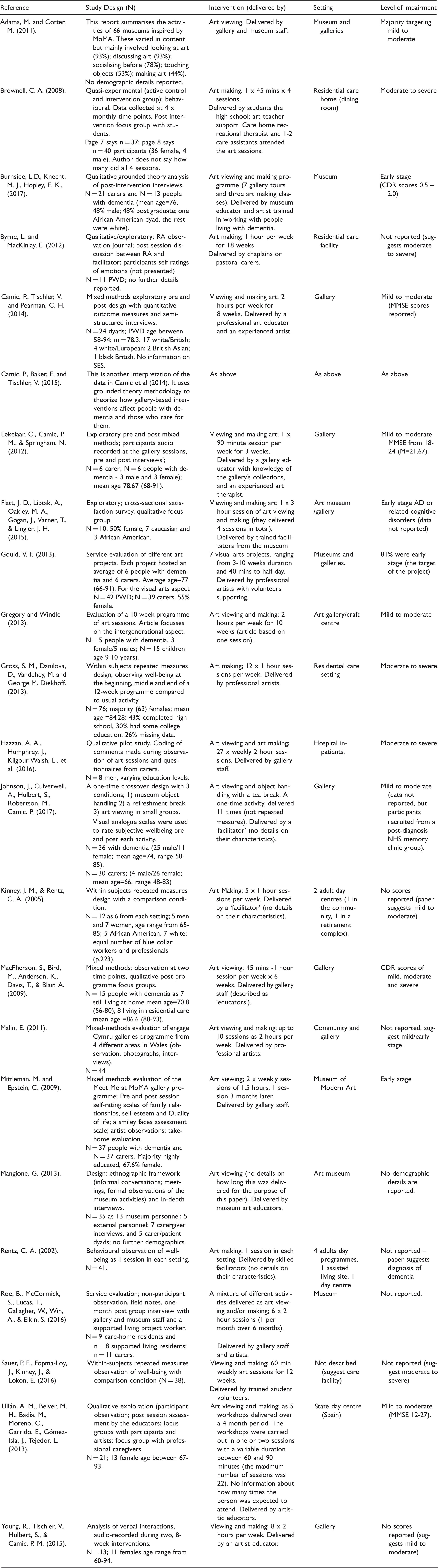
Figure 1 presents the review process. Table 1 describes eighteen journal articles and five grey reports included in the final synthesis. All tended to be small and exploratory, using social science data collection methods (e.g. qualitative, quantitative and observational approaches), including mixed-methods. In some studies data were collected from more than one source (e.g. professional/family carers, artists/facilitators, people living with dementia).
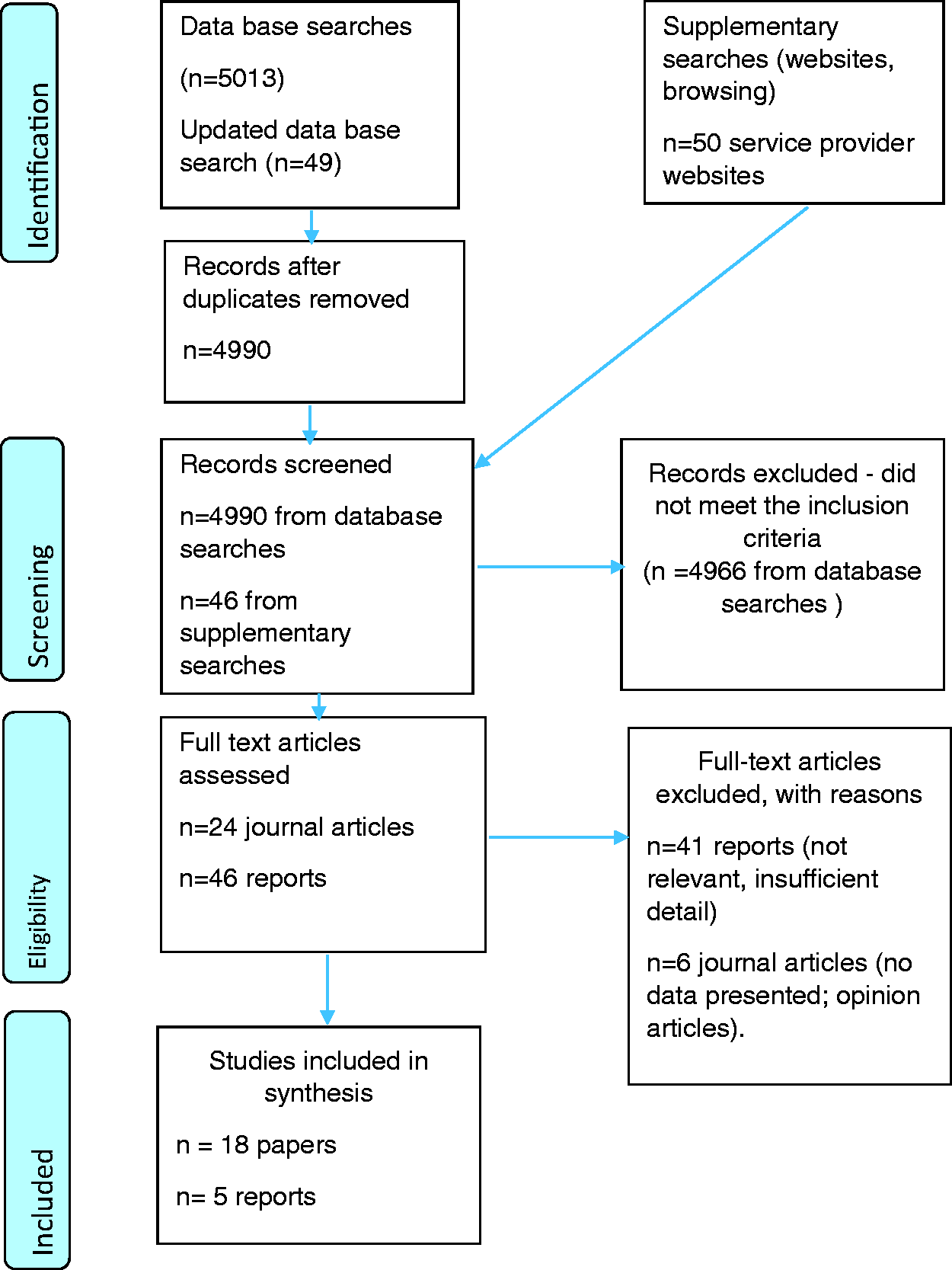
Flow chart of sources through the review.
Characteristics of studies and reports included in the synthesis.
A challenge for this synthesis was the design and reporting of some of the included studies. Methodological limitations and different approaches can lead to variations in outcomes. Whilst a realist synthesis does not consider the quality of the research as in a systematic review (the focus is on theory building, not definitive statements of effectiveness) rigour is an important consideration when drawing conclusions for the programme theory. Our appraisal considered a) the study design and sampling, b) whether the data collection and analysis were appropriate enough to ensure confidence in the findings, c) if authors recognised the limitations of the study designs; d) was the evidence is clear/insightful, e.g. did the authors’ interpretations reflect the reported data; were alternative explanations/interpretations suggested. For information, Supplementary File 2 summarises the comments on the rigour of the included studies. Some have design and reporting limitations that future research could attempt to rectify. Others were small but well-conducted exploratory studies delivered in galleries, museums and care settings, but are limited by the demographic profile of the participants. All generated theoretical inferences for refining the preliminary programme theory.
For whom?
Table 1 presents the demographic details (where it was available). The studies all tended to focus on older adults, with Camic et al. (2014) reporting a younger participant aged fifty-eight. Reports of dementia severity varied from mild, early stage through to moderate and severe. However reports were not always supported by data, e.g. an assessment on a measure of cognitive function. Ten studies did not report any cognitive functioning scores, and of these Roe et al. (2016) did not collect demographic data. Only three studies reported on ethnicity and three on either occupational status or education level. The grey literature tended to omit some demographic details.
Outcomes
Across the included studies, four main outcome areas were reported; 1) social connectedness; 2) well-being, including pleasure, enjoyment, quality of life; 3) changes in public perceptions and attitudes; 4) cognitive processes (subjective memory, verbal fluency). The latter two added to our initial conceptualisation of the programme theory. Only one study used validated quantitative outcome measures, but did not find significant outcomes, possibly because the study was under-powered by the small sample size (Camic, Tischler & Pearman, 2014). Others reported using validated measures of cognitive function (Eekelaar, Camic & Springham, 2012; Young, Tischler, Hubert & Camic, 2015), depression (Byrne & Mackinlay, 2012) and affect and engagement (Hazzan et al., 2016), but did not present data. Some used post-session questionnaires to ascertain satisfaction (e.g. Flatt, Liptak, Oakley, Gogan, Varner & Lingler, 2015) and experiences of taking part (Johnson, Culverwell, Hulbert, Robertson, & Camic, 2017) and reported positive outcomes. Quantitative content analysis of audio recordings was applied in two studies (Eekelaar et al., 2012; Young et al., 2015) tentatively suggesting improvements in cognitive aspects.
Behavioural observation captured changes in well-being (Kinney & Rentz, 2005; Gross et al., 2013; Rentz, 2002; Sauer, Fopma-Loy, Kinney, & Lokon, 2016) and in engagement (MacPherson, Bird, Anderson, Davis & Blair, 2009). Roe et al. (2016) took a more subjective, ethnographic approach with their observation, qualitatively analysing the researcher’s fieldwork notes from the arts sessions, as did Huzzan et al. (2016). Ullan et al. (2013) analysed written notes and photographic records of the arts sessions. In this synthesis, some of the deeper insights into the outcomes (and mechanisms) come from qualitative findings (e.g. Burnside et al., 2017; Camic et al., 2014; 2015; Flatt et al., 2015; MacPherson et al., 2009; Mangione et al., 2013; Ullan et al., 2013; Huzzan et al., 2016).
Interventions
The visual arts interventions consisted of either 1) art making/visual art production only; 2) viewing and discussing art, also described as art appreciation; 3) a combination of both 1 and 2. The art interventions reflected two distinct settings for delivery; shared public environments (museums and galleries), or specialist dementia care facilities (day centres, residential care homes). Generally, the public environments hosted people at the early to moderate stage, whilst the specialist care environments reflected people described as moderate to severe. The exceptions were Macpherson et al., (2009; people with mild to severe in a gallery) and Hazzan et al., (2016; people with moderate to severe in a combination of gallery and in-patient ward).
Contextual factor 1: the role of the artists and facilitators
A key contextual feature underpinning good outcomes was the programme deliverers (variously described as art educators, gallery staff, or artists) were not only knowledgeable about art and artistic practice but they also had knowledge and expertise about living with dementia, the latter often provided through specific training from a professional organisation or clinical members of the research team. MacPherson et al. (2009) reported that throughout the duration of the research, a member of the research team provided clinical advice to gallery staff. Huzzan et al. (2016) also describe a further exchange of skills, with gallery staff providing training in art appreciation and art-making to clinical staff in the care facility.
This combination of arts and dementia skills were important for skilled facilitation. Skilled facilitators adopted a perspective of seeing the potential of what could be achieved as opposed to what had been lost, understanding and allowing for individual needs and abilities yet guiding and supporting when necessary. These included “patience, less intellectual and more sensual approaches, less talking and leading and more listening, slowing down the educating process, and not being frightened of the silence” (Macpherson et al., 2009, p.751). They embedded a multi-sensory experience within the art activity. In a gallery setting, educators used ‘visual thinking strategies’ to facilitate discussion and communication, not relying on short-term memory or factual recall of information (e.g. Burnside et al., 2017). This triggered learning new skills (Camic et al, 2014; Flatt et al., 2015; Ullan et al., 2013) knowledge seeking (Eeklaar et al., 2012), engagement (Burnside et al., 2017), reminiscence (Flatt et al., 2015; Gross et al., 2014); thinking and learning (MacPherson et al., 2009). This context-mechanism combination appeared important for well-being outcomes at all stages of dementia, including advanced stages, irrespective of the type of intervention delivered. Skilled facilitation also appeared important for the outcomes of cognitive process and social connectedness, however the current data only support this for people in early stages of dementia.
Two studies provided further support for outcomes being contingent on appropriate contextual attributes. Sessions delivered by high school art students (Brownell, 2008) and chaplains or pastoral carers (Byrne & McKinlay, 2012) suggested a lack of facilitation expertise and understanding of dementia. In the latter the facilitator regularly engaged in engaged conversation with the staff, but less with the participants. Consequently the data suggest that the attributes of dynamic and responsive artistic practice is a contextual factor that underpins the success of a visual arts programme.
Contextual factor 2: Provocative and stimulating aesthetic experience
A key feature of programmes delivered through galleries and museums may be the visual appeal of the environment, and in all the studies delivered in these settings, original artworks were utilised for the art viewing and discussion. The experience is multi-sensory. Camic et al. (2015) suggested that a gallery, open to the public at the same time, enabled an intellectually stimulating learning experience, social interaction, increases in confidence and support for carers, which led to enjoyment, changes in the perceptions of dementia from carers and facilitators, and continued connections with the gallery. Such community settings can enable participants to interact socially not just with each other, but also with the general public. Roe et al. (2016) suggested that an intervention in a gallery setting is an opportunity for participants to be in the ‘real world’, or a protected space which is “less about the illness” (Flatt et al., 2015, p.9). One study showed how the gallery experience could be taken into a specialist dementia care setting, with a museum collection being viewed digitally via a lap-top and projector, followed by an art-making process (Ullan et al., 2013).
When visual art programmes were designed to be ‘failure-free’, using good quality, age appropriate materials that maximised the residual capacities of the participants, they were able to trigger positive psychological processes in people living with dementia. These included autonomy, mastery and pride (Flatt et al., 2015) confidence (Camic et al., 2015; Malin, 2011) and improved confidence in own skills and abilities; “I didn’t think I could learn things like this at this point” (Ullan et al., 2011, p.436). All the art viewing and discussion programmes sought to facilitate imaginative and emotional responses without the participants needing any previous knowledge of art. These programmes tended not to emphasise reliance on hard to recall memories, and focussed more on just ‘being in the moment’ (Burnside et al., 2017). Malin (2011, p.23) described the intellectual challenge and achievement, and the “quality of silence”, reflecting the way people were immersed in the task.
In contrast, one of the art-making programmes (Memories in the Making) delivered in three studies (Kinney & Rentz, 2005; Rent, 2002; Gross et al., 2013) explicitly encouraged to talk about memories the paintings stirred, with some well-being outcomes captured. Others, although not focussing on reminiscence for memory, suggested that participants recalled some memories. This may be understood through the mechanisms of companionship and interaction (Camic et al., 2014); social contact and communication (Eeklaar et al., 2012), bonding with others (Flatt et al., 2015), and engagement, social interaction and discussion of ideas (MacPherson et al., 2009).
In some studies, carers also took part in the arts programme alongside the people with dementia. This alternative to the task-focussed aspect of caring appeared to be an important contextual factor, triggering quality time together and carer-patient social interactions, subsequently improving social connectedness and enjoyment (e.g. Camic et al., 2014; Eeeklar et al., 2012; Flatt et al., 2015). Hazzan et al. (2016) suggested that the carers’ involvement in the group was important for the participants (who had severe dementia) as it facilitated communication and meaningful relationships, enabling them to see the creative side of the person with dementia and reduce their levels of stress. In contrast MacPherson et al. (2009, p.750) - perhaps because they were explicitly seeking to challenge notions of excess disability - reported how ‘the presence of carers impacted on participants, noticing that outside of the group context some participants became less confident in their opinions and actions’. This was improved by asking the carers to sit out of sight of the participants, which enabled interactions between the artworks, the educator and each other, leading to high levels of engagement and enjoyment.
Four studies reported outcomes for those facilitating the arts interventions. Student volunteers interacting with care home residents developed a deeper understanding of dementia and improved confidence, which led to positive attitude changes about older adults (Brownell, 2008). Facilitators and artists developed a deep insight into dementia and increases in confidence, leading to different perspective of the condition, despite initial apprehensions (McPherson et al., 2009), and gained new insights into the abilities and challenges of people living with dementia (Gould, 2012). Schoolchildren age 9-10 years old all changed their perceptions after an art-making session with people living with dementia. “Just because the people that you’ll be working with have dementia it doesn’t mean they’re gonna be totally different ‘cause they’re really nice and kind….as you meet them you just forget they have dementia, ‘cause they’re so…normal” (Gregory & Windle, 2013, p.25).
Summary of synthesis
Testing the preliminary programme theory found some support for the key contextual attributes. We revealed that these conditions generated cognitive, social and psychological responses. In turn, these led to the outcomes of social connectedness; well-being (including pleasure, enjoyment, quality of life); changes in public perceptions and attitudes and cognitive processes. In relation to ‘dynamic and responsive artistic practice’ the review suggested some of the necessary characteristics of the practitioner (by whom) and details of skilled facilitation and delivery (how). In relation to ‘provocative and stimulating aesthetic experience’ our analysis suggested ‘what’ was delivered, and ‘how’ it was delivered, were important. It was less clear from this exploration whether one type of venue (where) may be more stimulating than another. Whilst one aspect of dementia are changes in cognition, the other is how this influences, and is influenced by the social environment. The gallery and museum as a ‘valued place’ (Camic et al., 2015) or ‘special place’ (Burnside et al., 2017) is an intriguing proposal, and further research could explore the extent to which care settings can be transformed to reflect such inspirational environments. As an example, Basting, Towie and Rose (2016) described how they enacted a depiction of The Odyssey in the day-to-day running of care facility. This engaged residents, staff and family members in a uniquely creative way to improve quality of life, showing how the arts can transform environments.
The next step in this theory building exercise explores stakeholder experiences of visual art programmes, and then develops the final overarching synthesis, including substantive theory into the model. Following that, the strengths and weaknesses are considered in the discussion.
Methods
Part 2 –Stakeholder perspectives
Over a three-month period, self-reported qualitative data were obtained. This explored experiences of taking part and delivering visual art programmes, what people felt were the elements of a good programme, what they thought worked well and was beneficial, and what they felt should not be done. A call for responses was initially distributed using a snowball sampling approach through the research team’s networks and email distribution lists. The target group were stakeholders with experience of either delivering or taking part in visual art programmes. Participants were invited to submit their responses into either a bespoke online or paper copy document. This contained a short explanation of the purpose of the work, with requests to recipients to circulate. The university’s research ethics committee approved the work. Taking approximately 15 minutes to complete, it explained why we sought their input, their rights as research participants, including assurances regarding data protection, and their consent to participate. It was designed to be simple and understood by all, including those with early stage dementia.
Analysis
Responses were analysed independently by two researchers (TH and SG) using thematic analysis (Braun & Clarke, 2006). This consisted of a detailed reading and annotation of the responses, followed by inductive coding and theming from the text to capture patterns in the stakeholder’s experiences of visual art programmes for people with dementia. This was an iterative process with refinements on coding and themes reached through ongoing discussion. To avoid unnecessary bias, both researchers did not work on the data extraction and synthesis in phase 1.
Results
Thirty-seven people responded to the survey (6 male, 26 female, 5 not reported). These described themselves as health professionals (n=2); artist/facilitators (n=13); service providers (n=6); academic/clinical (n=1); carers (n=5); people living with dementia (n=5), and one person with mental health difficulties. Four respondents described themselves as both a service provider and an assistant facilitator. The majority of responses came from England (18) and Wales (16) with two from America and one from Australia. In view of the resources and timescale for this phase of work, we aimed for a broad range of responses from a diverse range of expertise in different geographical localities. Whilst we had some success, the unequal balance of respondent characteristics indicate that further themes could emerge with more data from different stakeholder groups, however a qualitative comparison study was beyond the remit of this phase of the work. However the findings are relevant for theoretical development and informing the conceptual model.
Stakeholder perspectives
Results of the thematic analysis of the stakeholder perspectives are presented in Table 2, along with example quotes. In summary, stakeholders emphasised treating the person living with dementia as a capable individual and allowing them freedom of expression. They suggested programmes should be flexible and include different arts activities and skills, both challenging and stimulating to the participant, with good quality, adult-appropriate materials that are inspiring and engaging. Professional artists may have unique expertise to benefit participants. A careful balance is required for people with dementia in terms of support, but also independence to develop and work at their own pace. People with dementia and carers valued the opportunity to work ‘alongside people in a similar situation’.
Qualitative analysis of stakeholder perspectives of the features important for an effective visual arts programme.
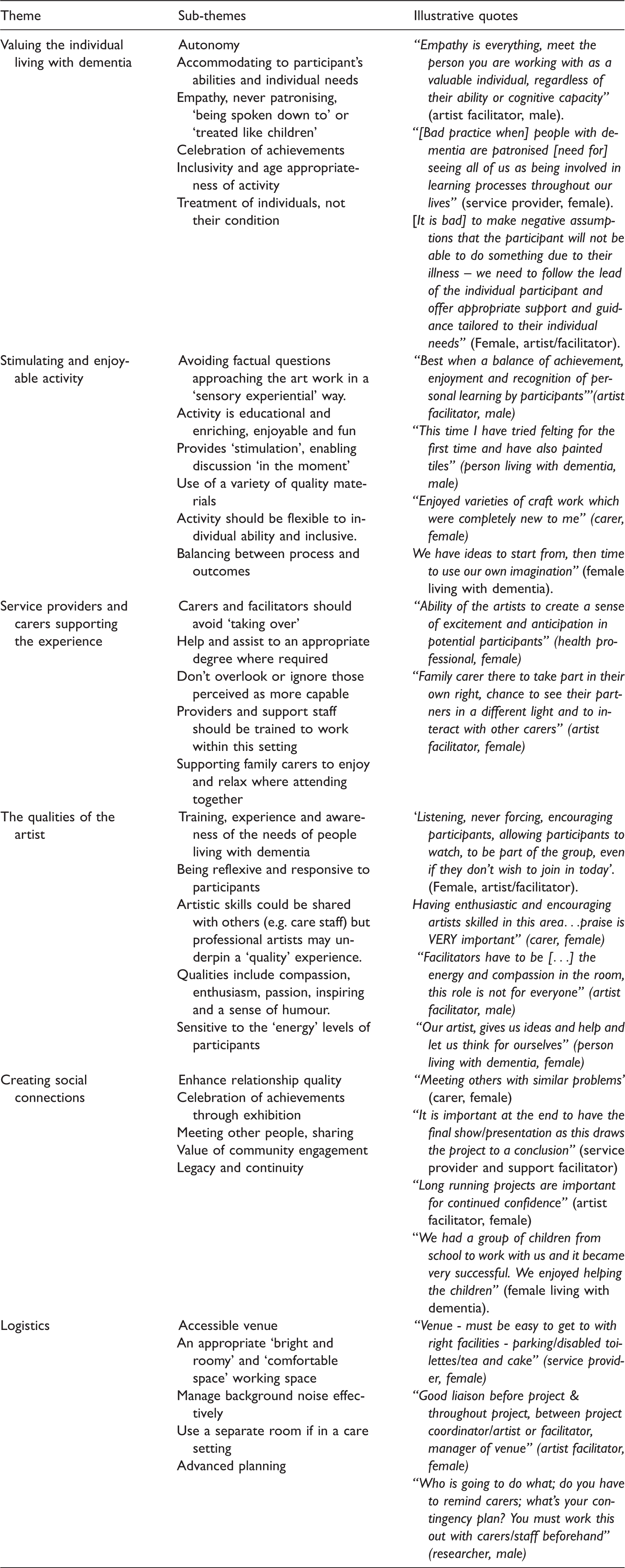
Logistics were a theme from this analysis. Similarly, some of the papers and reports contained suggestions regarding organising art programmes for people with dementia. It was unclear as to whether these aspects had any influence on the mechanisms and outcomes, but as they provide useful suggestions for planning and implementing services, these are further summarised in Supplementary File 1.
Part 3 - Overarching synthesis and conceptual framework
The first phase of this work uncovered a number of contextual attributes which if in place generated cognitive, social and individual responses leading to beneficial outcomes. The second phase sought first-hand accounts from stakeholders, and this final synthesis examines whether the themes from their qualitative accounts corroborate, enhance or refute the realist programme theory.
There was considerable corroboration between the qualitative data and the realist programme theory, in particular the qualitative data emphasised and augmented the importance of the programme content and the qualities of those delivering the programme, providing further accounts of the key attributes of the quality of the experience and artistic practice. Differences were apparent in terms of outcomes. The research tended to focus on improvements or change, whereas the qualitative accounts from the survey placed little or no importance on whether well-being or memory improvement should be, or was achieved, but there were clear expressions of enjoyment. The qualitative data enhanced evidence for the outcome of social connectedness, with the public celebration of achievements being an important way for bringing people together.
In terms of the severity of dementia, the qualitative data does not elaborate on this characteristic. Most (but not all) of the research literature describe the severity in their samples. However whether early or late stage, there is a general sense of the benefits, and it is not possible from this evidence base to say that a certain programme might be less effective according to the level of dementia.
A further important aspect of a realist approach to theory building is to test the coherence of the programme theory by drawing on broader, formal theories to elucidate further understanding of the context-mechanism-outcome relationships (Wong, Westhorp, Pawson & Greenhalgh, 2013). As the synthesis progressed, three broader theories (cognitive stimulation, resilience and person-centred care) provided additional explanation for the cognitive, social and psychological mechanisms (‘why’) which may arise from the interplay between the contexts ‘(by whom’ and ‘how’) and their impact on outcomes. These are particularly relevant as they also underpin practice delivery initiatives.
Cognitive stimulation
Cognitive stimulation is a form of ‘mental exercise’ and a psychosocial treatment for people with dementia where a number of enjoyable activities provide general stimulation for thinking, concentration and memory, usually in a social setting, such as a small group. Cognitive stimulation may be a key aspect of visual art programmes, as there is congruence between the ‘guiding principles’ of cognitive stimulation, as described by Aguirre et al., (2011) and the attributes of the two contextual aspects of art programmes uncovered in this work.
Resilience
Resilience describes how people manage to have good outcomes despite significant difficulty. Achieving resilience is contingent upon protective factors that operate at the level of the individual (e.g. psychological resources) social (family and friends, participation) and wider society, such as services and environments (Windle, 2011). The synthesis demonstrates a number of resilience aspects. First, people living with a significant challenge to their lives – dementia - reported positive outcomes. Second, this can be understood by considering the interplay between the contextual factors and the reactions they triggered. These included autonomy, mastery and pride, (Flatt et al., 2015) confidence (Camic et al., 2015) and improved confidence in own skills and abilities (Ullan et al., 2013). The interplay between the contexts and psychological resources provided resilience for adaptation and a positive outcome.
Person-centred care
One of the major influences of dementia care is Kitwood’s theory of person-centred care (1997), where well-being is a direct result of the quality of relationships between people with dementia and those around them. There is an interdependency between the quality of the care environment and the quality of life experienced by people with dementia. Of relevance are suggestions of twelve positive interactions that are theorised to underpin good dementia care (Kitwood, 1997). These are particularly appropriate for creative arts programmes as they corroborate and augment the necessary conditions (provocative and stimulating aesthetic experience; dynamic and responsive artistic practice) triggering the mechanisms that lead to outcomes (see Figure 2).
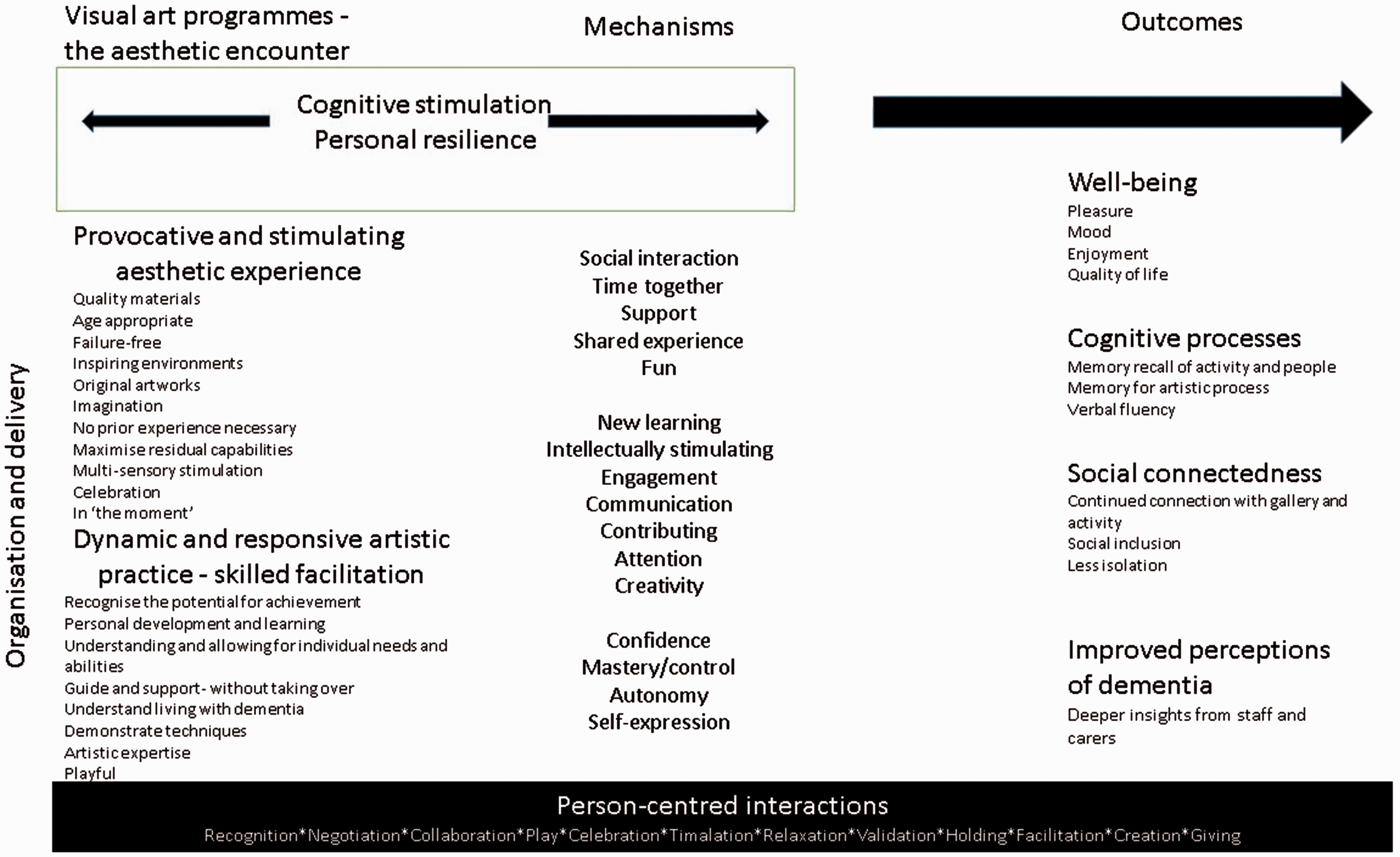
Conceptual model of how visual art programmes may ‘work’.
Given the growing interest in the arts for dementia care, recognising that many people will be developing their skills and practice, our findings can be summarised into a conceptual framework for intervention and further research. This suggests the essential attributes of the conditions and processes for improving outcomes of visual arts programmes for people living with dementia, which reflect a cognitively stimulating, person-centred activity (Figure 2).
Discussion
This paper explored the theoretical foundations of visual art programmes for people living with dementia, drawing on published research and reports, stakeholders’ experiences, and reflecting these within broader theoretical perspectives. Bringing these sources together makes a distinctive contribution to a current gap in knowledge about how and why arts interventions may lead to positive outcomes. The emerging theory and conceptual model reveal evidence of the attributes of two key conditions (provocative and stimulating aesthetic experience; dynamic and responsive artistic practice) that could underpin effective programmes in any given setting. These conditions were important for a number of cognitive, social and individual responses, which led to improvements in well-being, cognitive processes and social connectedness for people with early to more advanced dementia. More broadly, improved perceptions of dementia were found within the wider social networks of people living with dementia. The theories of cognitive stimulation, resilience and person-centred care further explain how and why visual art programmes may ‘work’.
Strengths and limitations
Identifying and understanding the theoretical basis of interventions is important for service development, definitive tests of effectiveness and implementation (MRC, 2006). If the underpinning theory is incorrect, then the desired changes will not occur (Astbury & Leeuw, 2010). We have used this exploratory work to inform the development of a visual arts programme to benefit well-being, quality of life and social connections of people living with all stages of dementia. This has been subjected to testing within a mixed-methods longitudinal framework, and adapted into a guide for practitioners and service providers who may wish to deliver similar projects (Parkinson, Windle & Taylor, 2017). Further work will seek to implement this into practice, along with ongoing iterations and refinements. To our knowledge, this work represents the first use of realist methodology in arts and science research to inform intervention development, and contributes to an emerging field in evidence review.
The initial theorising was undertaken by a multi-disciplinary team (arts, humanities, social sciences). We acknowledge that another review team may have made different judgements about the conceptual model. Whilst we have followed realist inquiry, we are aware this is a subjective, qualitative approach and we may have overlooked other relevant theories. However this work is exploratory and we do not propose it as a definitive theory. Other theoretical approaches to understanding how visual arts programmes impact on well-being could be suggested in the future, particularly as the arts and health literature develops. Nevertheless, this model could serve as a first point of reference upon which other work could build.
A further limitation and important caveat is the synthesis can only reflect the evidence from which it is derived. For some of the included studies and reports, there were methodological limitations. Most papers tended to report little information about the practitioners, limiting the inferences drawn about this contextual factor. There was variable reporting of the intervention content. This was previously identified as a wider problem common to non-pharmacological interventions, which led to the development of a template for intervention description and replication to assist clarity in reporting interventions (Hoffman et al., 2014). We suggest future studies could utilise this template to guide their reporting. This will be of benefit to service providers who may wish to adopt a similar programme, and researchers who wish to critically examine primary research.
We sought a range of stakeholder experiences, including people living with dementia as well as carers, artists and service providers, both as users and providers of art services, using a snowballing method to seek responses. A strength of the methods used to obtain stakeholder perspectives was there were no interactions with participants to influence their answers. However the sampling does not permit a calculation of the response rate, consequently there may be other contradictory opinions we have not captured. Despite best efforts with requests, including sending reminders, the responses favour artists and organisers reflections on practice, with less from service recipients (N = 5 people with dementia and N=5 carers). Nevertheless synthesising secondary sources with primary data adds to the current theorising around of how visual art programmes might be effective.
Implications for practice
Camic et al. (2015) discuss whether a gallery setting, considered a ‘valued place’ in their qualitative exploration of a gallery-based project, is a different experience and so has a different impact compared to other settings. Our synthesis could not draw any definitive distinctions between settings (shared public spaces or specialist dementia care facilities), or in terms of outcomes, largely due to the lack of literature. However the better conducted studies were either delivered within a gallery (e.g. Burnside et al., 2017; Camic et al.; 2014; MacPherson et al., 2009) or reflected a gallery programme in care settings (e.g. Ullan et al., 2013). Art museums and cultural venues have considerable potential for public health promotion, however with the exception of MacPherson et al. (2009) and Hazzan et al. (2016) there is little evidence of galleries being used in a public health context for people who may be more severely impaired. These studies indicate the possibilities, and an area for further development.
There are also opportunities for museums and arts organisations, with their collections and skilled staff, to deliver the ‘gallery experience’ in other settings such as hospitals and residential care. This review only identified three studies undertaking outreach activities (e.g. Hazzan et al., 2016; Malin, 2011; Ullan et al., 2013). Consequently there is great potential for transformative care practice.
Implications for further research
Few included studies reported any detail about ethnicity and socio-economic status. Consequently there is a question over the extent to which the conceptual model reflects the experiences of different ethnic and social groups. Despite the potential of galleries and museums, they can appear exclusive, attracting those with prior arts engagement (e.g. Burnside et al., 2017) and disproportionately drawing people from a higher socio-economic position (Mathews et al., 2016). Recognising the growing global interest in the social inclusion of people living with dementia (Lin & Lewis, 2015) further research should make efforts to recruit participants from diverse backgrounds. It is also worth considering that different types of dementias may lead to different preferences and outcomes, which may be worthy of further investigation.
There was limited evidence for the impact of taking part on cognitive outcomes, particularly at more severe levels of dementia. Three studies explored this aspect (Young et al., 2015, Eeklaar et al., 2012; Ullan et al., 2012) but can only provide some tentative suggestions. The theoretical model suggests the art activity is cognitively stimulating, consequently further research could assess of cognitive function. A further limitation relates to the extent to which the outcomes may be uniquely attributed to the art activity, and further research could usefully examine this through a control-comparison condition.
Conclusion
By synthesising research on visual arts in dementia care, academic theory and the lived experience of stakeholders, our exploration substantively contributes to understanding how and why visual arts programmes are suggested to achieve outcomes. This framework also has the potential for application with other arts activities. As further research critically explores, challenges and tests this conceptual model, theoretical refinements will improve research and practice. This could strengthen the evidence base for the arts in dementia care, and subsequently provide a stronger platform to inform policy.
Footnotes
Declaration of Conflicting Interests
The author(s) declared no potential conflicts of interest withrespect to the research, authorship, and/or publication of this article.
Description of authors' roles
GW led the main study and was responsible for the analysis, drafting this manuscript and secured funding (with DO’B AN as co-applicants). GW and SG designed the stakeholder experiences project, SG designed and collected the data from this project and co-authored the qualitative analysis, undertook the search strategy, retrieved the papers and contributed comments to this manuscript. TH co-authored the qualitative analysis, searched for grey literature and contributed comments to the manuscript. AN, DO’B and AG contributed to the preliminary programme theory, reviewing papers, data extraction and contributed comments to the manuscript.
Funding
The author(s) disclosed receipt of the following financial support for the research, authorship, and/or publication of this article: Dementia and Imagination was funded as ‘Dementia and imagination: connecting communities and developing well-being through socially engaged visual arts practice’, Grant Ref: AH/K00333X/1, by the AHRC and ESRC as a part of the Cross-Council Connected Communities Programme. (Principal Investigator G. Windle; Co-Investigators A. Newman, C. Parkinson, V. Burholt, M. Baber, V. Tischler, B. Hounsome, D. O’Brien, B. Woods, R. T. Edwards). Many thanks to B. Hounsome for his role as co-investigator in the first year.
Regional and national collaborating partners in Dementia and Imagination: Age Watch, Alzheimer’s Society, the Arts Council of Wales, Denbighshire County Council, Engage Cymru, Derbyshire Community Health Service NHS, Equal Arts, the BALTIC Centre for Contemporary Art, Tyne & Wear Archives and Museums and Nottingham Contemporary Ltd.
References
Supplementary Material
Please find the following supplemental material available below.
For Open Access articles published under a Creative Commons License, all supplemental material carries the same license as the article it is associated with.
For non-Open Access articles published, all supplemental material carries a non-exclusive license, and permission requests for re-use of supplemental material or any part of supplemental material shall be sent directly to the copyright owner as specified in the copyright notice associated with the article.
