



Abstract
Understanding the influence of verbalised negative word of mouth (NWOM) on the sender received little research attention despite its consequences for both theory and marketing scholarship. Two studies employing cross-sectional scenario-based experimental research expands the word of mouth, brand hate and coping literature by investigating the reflexive effects of NWOM on senders’ brand hate and future NWOM intentions. Additionally, the mediating role of brand hate and coping mechanisms (active coping and venting) is examined in explaining the relationship between NWOM behaviour and future NWOM intentions. The moderating role of tie strength was also examined. Hospitality and mobile phone services are the research contexts of this study, and the sample (N = 614) is recruited in the United Kingdom via a commercial consumer panel. Results suggest that novel to extant literature, articulation of NWOM about a brand strengthens NWOM sender’s brand hate and augments their future NWOM intentions. Furthermore, brand hate mediates the relationship between NWOM behaviour and future NWOM intentions. Therefore, this study progresses the theoretical understanding of the NWOM–brand hate relationship. The findings further reveal the serial mediating effect of NWOM behaviour on senders’ future NWOM intentions through brand hate, venting, and active coping. However, this research found no differential impact of tie strength on the NWOM sender’s brand hate and intended NWOM behaviour. This research will allow marketing managers to comprehend the impact of given customer NWOM on their brand from the sender’s perspective and to understand the psychological mechanisms supporting the diffusion of brand related NWOM.
Introduction
Reflexive Effects of WOM Behaviour on WOM Sender
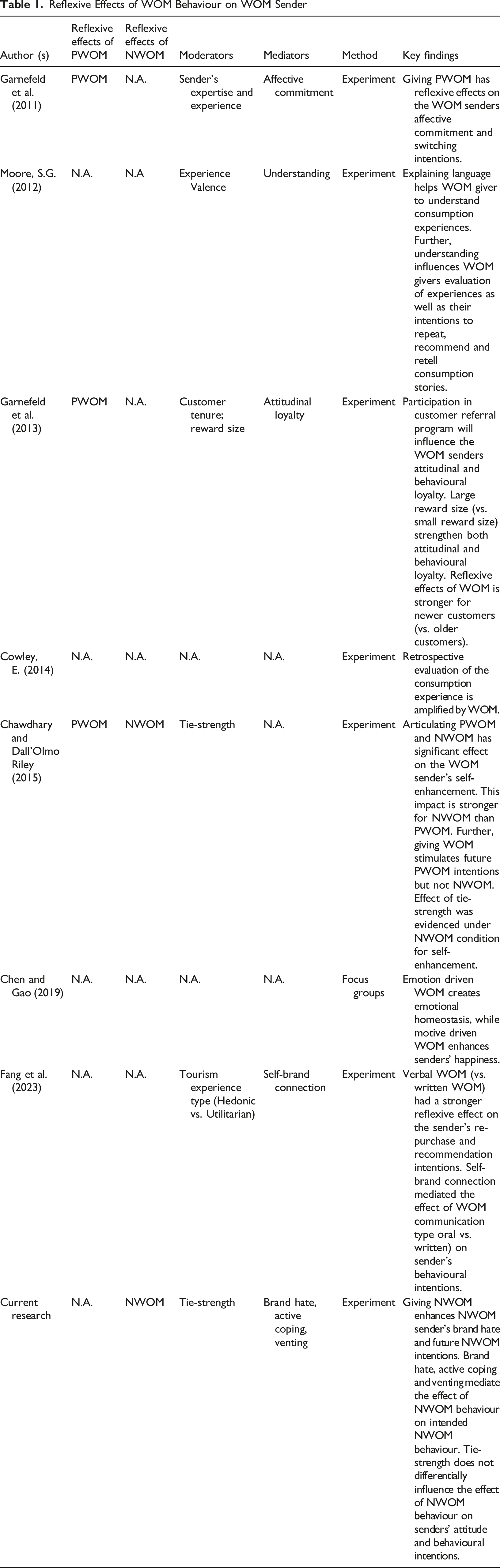
To address this disparity in the WOM literature, this research focuses on comprehending the reflexive effects of giving NWOM on the sender’s attitude (i.e. brand hate) and behavioural intentions (i.e. intended NWOM behaviour). Understanding the reflexive effect of sender’s NWOM on their brand hate and future NWOM intentions is important because little is known if NWOM sender’s relationship with the targeted brand changes because of their NWOM. Further, this research investigates the mediating role of brand hate in the NWOM behaviour-future NWOM intentions link. In addition, two distinct coping mechanisms; venting (emotion-based coping) and active coping (problem-based coping) are examined as underlying psychological mechanisms to explain how individuals cope with negative brand experiences and the resultant consequences for the NWOM sender’s future NWOM intentions about the focal brand. Understanding the outcome of employing coping strategies on the individual is important from the theoretical standpoint due to paucity of literature in this domain (Aziz & Rahman, 2022). Further, insights into dissatisfied customer diverse coping mechanisms post negative consumption experience can help managers devise relevant pro-active strategies (e.g., offering apologies, financial and non-financial compensation) to reduce a dissatisfied customer’s inclination to engage in further NWOM about the focal brand.
Specifically, the current work argues that NWOM behaviour sequentially affects future NWOM intentions via brand hate, venting, and active coping. Thus, novel to the existing literature, this research highlights the role of emotion- and problem-based coping in explaining the relationship amongst NWOM behaviour, brand hate, and future NWOM intentions. Lastly, as WOM behaviour does not occur in social isolation, the WOM dyad typically share a social relationship varying in strength from weak to strong (Chawdhary & Dall’Olmo Riley, 2015). Thus, this study investigates the role of tie strength between NWOM participants in placing a boundary on the effect of NWOM behaviour on brand hate and intended NWOM behaviour.
This study makes theoretical contributions to the WOM, brand hate and coping literature. First, at a macro level this study enriches the limited WOM literature which seeks to understand the impact of giving NWOM on the sender itself. Second, this research present evidence of a reverse effect, wherein brand hate is an outcome of an individual’s NWOM behaviour (NWOM  Brand Hate) enriching the extant brand hate literature which has primarily understood NWOM behaviour as a significant consequence of brand hate (Brand Hate NWOM). Third, this study informs the NWOM literature by demonstrating how negative news may potentially spread within an individual social groups. The findings posit that the act of providing NWOM sparked the intention to provide further NWOM about the brand, triggering possibly a vicious cycle of bad news for the brand. Fourth, this research identifies mechanisms underlying the NWOM behaviour - future NWOM intentions link whereby in the first stage brand hate is revealed as the mediator expanding the theoretical understanding of the relationship between NWOM and brand hate. In the second stage, this study found that the effects of NWOM behaviour are transferred to the sender’s future NWOM intentions sequentially via brand hate and two distinct coping styles–venting and active coping unravelling complex inter-relationships between the variables and thus providing a more comprehensive understanding of the factors that may support diffusion of NWOM.
The results of this study have real-world consequences for brand managers. For instance, firms must understand the conditions under which NWOM about their brand spreads within social networks and the underlying mechanisms that support this diffusion of negative news. This understanding assumes urgency, as NWOM about a brand is typically given by an existing or past customer (East et al., 2011).
This can negatively impact (a) the focal brand’s revenue from existing customers; (b) make the task of recovering lost customers difficult, resulting in negative customer referral value of the existing customer base; and (c) enhance the diffusion of negative recommendations within the NWOM sender’s social groups, impairing brand reputation and adversely impacting customer acquisition (Helms, 2003; Liao et al., 2023; Wangenheim, 2005).
Theoretical Background and Hypotheses Development
Prior research examined the impact of a given PWOM on the sender’s brand-related outcomes, such as affective commitment, switching intentions, and future PWOM intentions (Garnefeld et al., 2011; 2013; Chawdhary and Dall’ Olmo Riley, 2015), and retrospective evaluation of self-related consumption outcomes, (Cowley, 2014). This research centres on understanding the consequences of articulated NWOM on a sender’s brand-related outcomes, such as brand hate and future NWOM intentions, addressing a vital knowledge gap in the current literature.
Self-Perception Theory
Self-perception theory, states that an individual’s overt behaviour can inform their attitudes and future behavioural intentions (Bem, 1972). Thus, individuals recognise their attitudes by deducing them from examination of their explicit behaviour and the context in which that behaviour happens. Hence, people may reflect ‘what must my attitude be if I am willing to behave in this fashion and in this situation?’ (Bem, 1972, p. 7). Theory of self-perception is suitable for this research because it explains the passive attribution of one’s own overt behaviour to the self and has been adopted by prior literature (Garnefeld et al., 2011; Chawdhary & Dall’Olmo Riley, 2015) as a theoretical framework to understand the reflexive effects of WOM behaviour on the WOM giver. Self-perception theory not only clarifies the reflexive effects of an individual’s overt behaviour on subsequent attitude formation but also on their behavioural intentions (Garnefeld et al., 2011). In this research explicit behaviour is the delivery of NWOM about a brand by an individual after a negative consumption experience which may impact the NWOM sender’s (a) subsequent attitude (brand hate) and (b) behavioural intentions (future NWOM intentions). Thus, theory of self-perception is the theoretical framework for deriving the first set of research hypotheses (H1a-b–H2).
Brand Hate
Individuals can hate brands with negative consequences for the focal brand (Kanouse, 1984; Wetzer et al., 2007). Thus, it is important to understand the drivers and outcomes of brand hate. In the existing literature, brand hate is a relatively under-researched concept compared with brand love (Roy et al., 2022). This is surprising because individuals are more likely to talk about their negative experiences than their positive ones, suggesting a stronger emphasis on negative events than on positive ones (Baumeister et al., 2001). The existing brand hate literature has identified NWOM as one of the most familiar consequences of brand hate (see Aziz & Rahman, 2022; Taqi et al., 2024 for a comprehensive review of brand hate literature). However, little is known about whether the reverse effect exists, whereby engaging in NWOM behaviour impacts the sender’s brand hate. To alleviate this paucity of knowledge in the literature, this study investigates NWOM behaviour as a driver of brand hate. Thus, underpinned by self-perception theory, this research hypothesises the following:
Future NWOM Intentions
Chawdhary and Dall’Olmo Riley (2015) hypothesised that giving NWOM about a brand would stimulate the sender’s future NWOM intentions about the focal brand more strongly (vs. no NWOM behaviour). However, they did not find any significant difference between the two conditions, which can partly be explained by the small sample size of their study, rendering the findings unreliable (Mackenzie et al., 2014). Anchored in self-perception theory, current work posits that engagement in NWOM behaviour will impact the sender’s future NWOM behaviour in relation to the brand more strongly (vs. no NWOM behaviour). Thus, this study postulates the following hypothesis:
Tie-Strength as Moderator
The theory of the strength of weak ties highlights the role of tie strength in the dissemination and influence of information within social networks (Granovetter, 1973). WOM is a social communication shared with strong and/or weak ties wherein family members and friends are typically considered strong ties, whereas acquaintances are regarded as weak ties (Berger, 2014). Accordingly, prior research has examined the moderating influence of tie strength on the WOM participants attitudes and behaviour especially recipients (Brown & Reingen, 1987). Findings indicate that recommendations received from strong ties (vs. weak ties), are considered more convincing on the receiver’s attitude and behaviour (Brown & Reingen, 1987; Pauli et al., 2023). However, findings pertaining to tie strength moderating the impact of reflexive effects of WOM behaviour on the sender’s firm- and self-related outcomes are rare. This is surprising, as the WOM giver is a key member of a WOM dyad.
In a rare study, Chawdhary and Dall’Olmo Riley (2015) find that the tie strength between NWOM participants moderates the reflexive effect of given NWOM on the sender’s self-enhancement with advice given to strong ties producing a stronger reflexive effect on the NWOM sender. However, tie strength did not yield a differential impact on the sender’s firm-related outcome (i.e., future NWOM intentions). To address this scarcity of knowledge pertaining to firm-related outcomes, this study investigates the role of tie strength in moderating the reflexive effect of NWOM behaviour on senders’ firm-related outcomes such as brand hate and future NWOM intentions. This research adopts self-perception theory to argue the presence of tie strength as a moderator of the reflexive effect of NWOM behaviour on outcome variables, as self-perception theory acknowledges the context in which explicit behaviour transpires (Bem, 1972; Bem & McConnell, 1970).
In this study the context is the interpersonal context or the tie strength between NWOM participants (Sweeney et al., 2008). Thus, individuals when observing their explicit NWOM behaviour about a brand may also infer the interpersonal context (i.e., giving NWOM to either strong or weak ties) in which that explicit behaviour happens (Bem, 1972). Therefore, in this study, it is anticipated that the reflexive effect of the sender’s NWOM behaviour on their brand hate and future NWOM intentions will diverge depending on the NWOM beneficiary, that is, strong or weak ties. Specifically, this effect will be stronger for strong than weak ties.
This contention is guided by prior research which suggests that when the key function of WOM is persuasion then the effect will be stronger for strong ties (Berger, 2014). In this study, the principal function of giving NWOM by the sender is to persuade the recipient not to subscribe to the underperforming services provider. Therefore, underpinned by the self-perception theory, the theory of the strength of weak ties and extant literature, this study postulates the following:
Brand Hate as Mediator
Past research has examined brand hate as a mediator between corporate wrong doings and NWOM (Brandao et al., 2023), and that between brand cynicism and NWOM (Kurtoglu et al., 2025). This research expands the existing literature by investigating brand hate as a mediator of NWOM behaviour - future NWOM intentions link. Self-perception theory may explain the role of brand hate, as a mediator as prior research presented empirical evidence of attitudes mediating the relationship between actual behaviour and behavioural intentions (Garnefeld et al., 2011). This study expects the articulation of NWOM about a brand to increase the sender’s brand hate, which will positively influence future NWOM intentions. Accordingly, the current research offers the following hypothesis:
The Mediating Role of Active Coping and Venting
Coping is a psychological process initiated in the context of a stressful situation or condition perceived by an individual as personally significant and negatively influencing or threatening their objectives (Folkman & Moskowitz, 2004). The psychological process of coping comprises of two-dimensions; problem-solving and emotional coping (Folkman & Lazarus, 1980) and are important for processing stressful events (Srivastava et al., 2023). The difference between problem-solving and emotional coping styles lies in the direction of action.
For instance, problem-based coping, is functional; that is, something can be done to reduce stress and is expressed through a rational cognitive assessment of the incident (Tsarenko & Strizhakova, 2010). On the other hand, emotional coping is associated with endurance (Folkman & Lazarus, 1980). Despite the distinction, extant literature confirms that problem-and-emotion based coping strategies are viewed as complementary by individuals and can be used simultaneously to deal with the same stressful event (Delcourt et al., 2025; El-Manstrly et al., 2021). The theory of psychological stress and coping identifies coping mechanisms as a critical mediator between stressful events and outcomes (Folkman et al., 1986). In this study, active coping (problem-based coping) and venting (emotion-based coping) are the underlying psychological mechanisms between stressful events that is NWOM behaviour and enhanced brand hate and the outcome which is future NWOM intentions. Active coping and venting were selected from a portfolio of coping strategies as past consumer research has investigated them in the context of NWOM (El-Manstrly et al., 2021; Wetzer et al., 2007). This study postulates that active coping and venting as two alternative coping styles will serially mediate the effect of NWOM behaviour on the sender’s future NWOM intentions via brand hate. Brand hate (M1) precedes coping mechanisms; active coping and venting (M2) in sequential mediation framework as past research suggests that brand hate is more immediate after a negative consumption experience followed by coping strategies (Aziz & Rahman, 2022). Thus, based on extant literature and the theory of psychological stress and coping, this research posit:
Methodology
Overview of Studies
To test the conceptual framework (Figure 1), this research conducted two between-subjects scenario-based experimental studies. Study 1 established that the articulation of NWOM about a brand strengthens the NWOM sender’s brand hate (H1a). Study 2 replicates the reflexive effect of NWOM behaviour on senders’ brand hate (H1b). Furthermore, this study examines the main effect of NWOM behaviour on the sender’s future NWOM intentions (H2), the moderating role of tie strength (H3a-b), the mediating role of brand hate (H4), the serial mediation effects of brand hate (M1), and two coping mechanisms: venting and active coping (M2) in transferring the effect of NWOM behaviour on future NWOM intentions (H5 and H6). Conceptual framework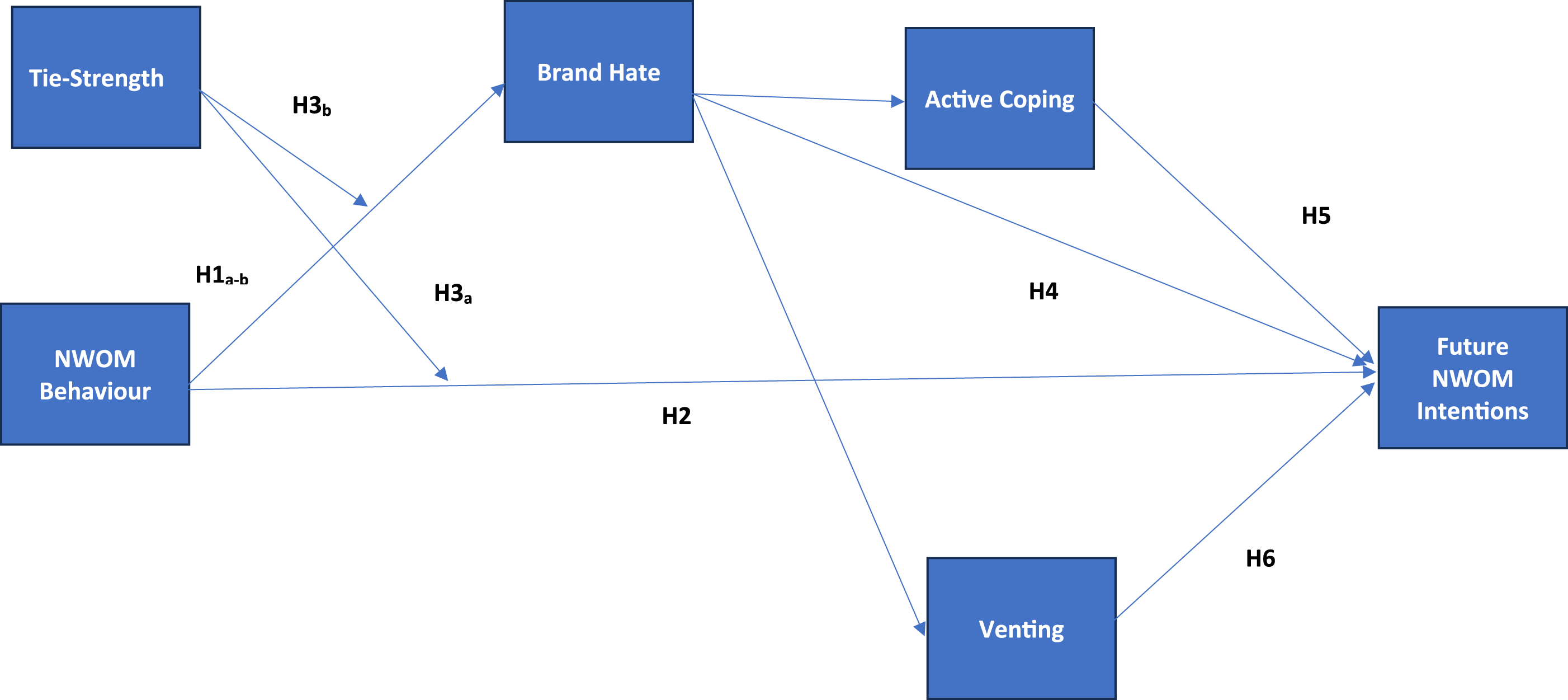
Research Design and Context
A post-test control group experimental research design (Campbell & Stanley, 1963) is employed to test the research model as in previous studies investigating reflexive effects of WOM on the sender (Chawdhary & Dall’Olmo Riley, 2015; Garnefeld et al., 2011). Further, scenario-based experiments were conducted to infer causality to understand whether engagement in NWOM behaviour causes brand hate (Aronson et al., 1990) as establishing a correlation between NWOM and brand hate would not suffice to test the hypotheses (H1a-b), given that the existing literature acknowledges that brand hate and NWOM correlate (Bryson et al., 2021; Curina et al., 2020). Moreover, scenario-based experimental designs are widely used in WOM research (Dao et al., 2024) and thus suitable for this study.
Hospitality (Study 1) and mobile phone services (Study 2) are selected as research contexts because they are well acquainted service categories. For example, almost 96% of adult’s own mobile devices in the United Kingdom; the geographic context of this study (Cybercrew, 2022). Familiarity of the research context enhances the realism of scenario-based experiments (Wien & Olsen, 2014) as participants would find it natural to mention these service categories in a conversation to either their close or distant others. In addition, both the research contexts are frequently employed in WOM research (Chawdhary & Dall’Olmo Riley, 2015; Fang et al., 2023).
Experimental Scenarios
Employed scenarios (see Appendices A and B) discussed fictitious brands to overcome any bias stemming from respondents past experiences with real brands (Carnevale and Kachersky, 2022; Kapoor et al., 2023). Further, fictitious scenarios reduce concerns related to social desirability bias (Wirtz & Chew, 2002). In addition, scenarios are gender neutral as advocated in prior literature (Kapoor et al., 2023; Lafleur et al., 2025). Moreover, during data analysis stage, this study controlled for gender as males and females differ in their likelihood to share NWOM (Zhang et al., 2014) and that gender can potentially influence brand hate (Bryson et al., 2021). To reduce bias, how NWOM is acquired (i.e., NWOM volunteered or NWOM sought) is held constant to a single level via scenarios wherein NWOM about the brand is volunteered by the sender to the recipient. Past research suggests that how WOM is acquired can influence the outcome (East et al., 2005). Further, in Study 2, experience with the fictional mobile phone services provider is held constant (i.e., 12 months) as the duration of experience can influence the outcomes of WOM behaviour (Garnefeld et al., 2011).
Experimental Procedure: Study 1 & 2
Respondents first read introductory scenarios intended to stimulate dissatisfaction with the brand, wherein they were introduced to a fictitious hospitality service provider called Hotel Blue in Study 1 and a fictitious mobile phone services provider called Mobi-Tel in Study 2. Study1, manipulated NWOM (NWOM Treatment Group vs. NWOM Control Group) and the respondents were randomly allocated to either the treatment or the control group. The between-subjects experimental design reduced apprehensions pertaining to demand effects (Eckerd et al., 2021). Respondents in the NWOM Treatment Group articulated negative advice in writing to their friend, Chris, a gender-neutral name (Gino et al., 2010). Study 1 also included a control scenario adapted from prior literature (Chawdhary & Dall’Olmo Riley, 2015; Garnefeld et al., 2011). The respondents in the NWOM Control Group were told that they intended to give NWOM but did not do so at this point to avoid the creation of an experimental artefact (Aronson et al., 1990).
In Study 2, respondents were randomly allocated to either one of the treatment groups wherein they gave negative advice to either their best friend (strong ties) or former neighbour (weak ties) or were allocated to the control group. To avoid experimental bias, the length of the scenarios in the treatment groups is same (Hamilton et al., 2014). Like Study 1, in the control group the participants had intentions to give NWOM but could not think of anyone to give negative recommendations about the mobile phone services provider. After reading the scenarios, respondents were requested to complete questions related to the constructs and demographics.
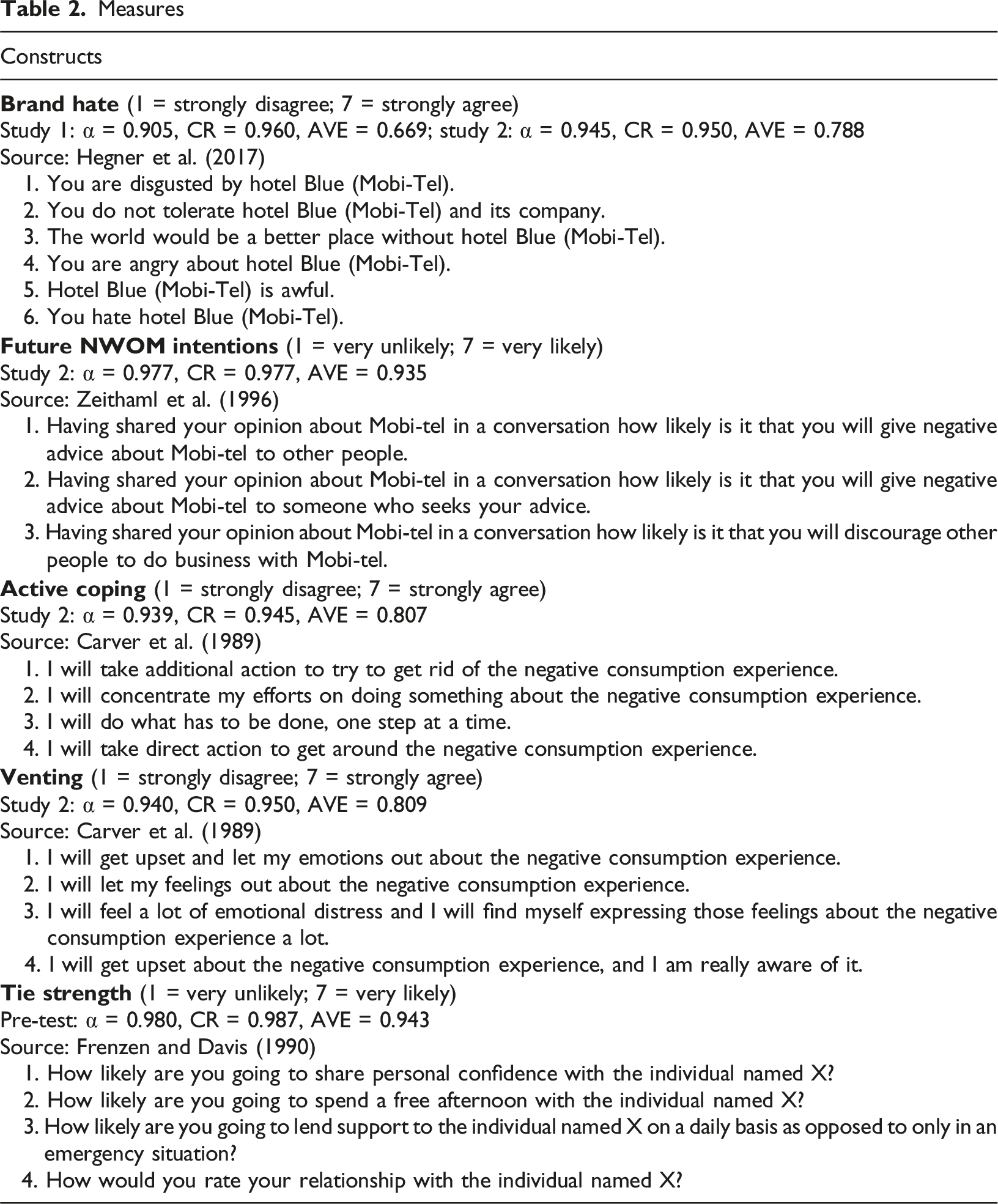
Measures
Measures
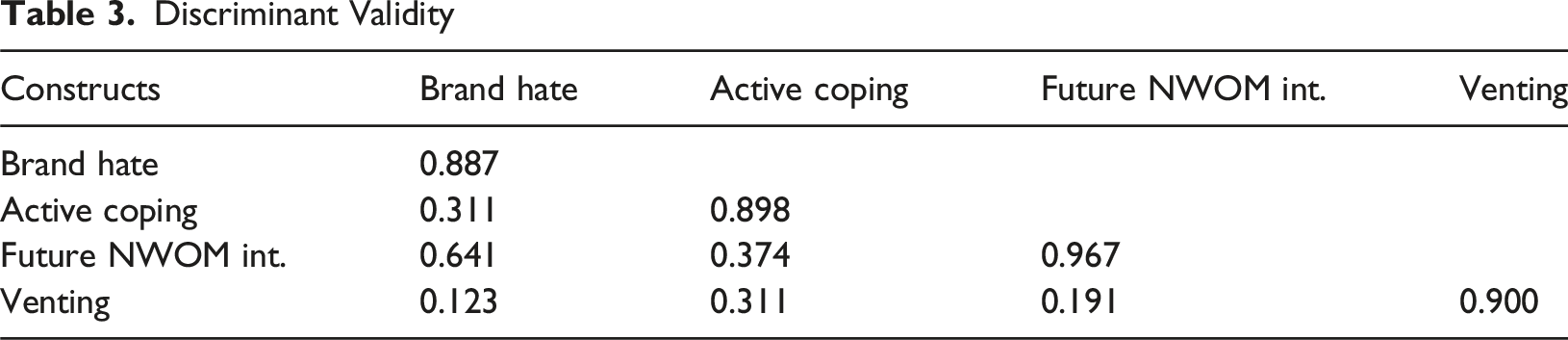
Discriminant Validity
Results
Study 1
Data Collection and Sample Profile
This study recruited a general consumer sample (n = 156) from the United Kingdom via PROLIFIC to test H1a. Respondents were screened on two parameters which pertained to their domicile and their experience of staying in a hotel to enhance realism of the scenarios. The study screened out all respondents who were not resident of the United Kingdom and had no experience of saying in the hotel.
In addition, we employed an instructional manipulation check (IMC) as advocated by Oppenheimer et al. (2009) to assess respondents’ attention and the consumer panel provider removed all disengaged respondents from the final sample. Sixty percent of respondents were females. To rule out confounding effects of gender on brand hate, we conducted an independent t-test and found no significant difference between males and females in their levels of brand hate with M Male = 5.15 and M Female = 4.97, t(153) = 0.915, p > .05. The participants are categorised into three major age groups: 48% (25-39 years), 42% (40 years and older), and 9% (18-24 years). Data screening highlighted four cases of missing data for experimental and mundane realism questions. As the data was missing at the construct-level, this research did not engage in listwise deletion to avoid converting construct-level missingness of data into person-level missingness which is more problematic and difficult to address (Newman, 2014). Thus, this research replaced the missing data with mean substitution (M = 5.69 for experimental realism and M = 6.07 for mundane realism) as less than 10% of the data is missing and thus considered a suitable approach (Popovich, 2025; Tsikriktsis, 2005).
Manipulation and Realism Checks
NWOM is a discrete variable and, thus, was not manipulated (Garnefeld et al., 2011, 2013). Realism of the scenarios (n = 156) is assessed using a one-sample t-test (test value = 4). Realism checks alleviate concerns related to low external validity of the scenario-based experimental designs (Gelbrich, 2011). Respondents found the scenarios realistic (Liao, 2007; Roschk & Kaiser, 2013) with experimental realism (t (155) = 21.949, p < .001) and mundane realism (t (155) = 30.392, p < .001).
Hypothesis Testing
H1a is directional in nature, and the results are based on a one-tailed t-test. Hypothesis H1a was analysed using a one-way ANOVA with planned contrasts. Articulation of NWOM about a brand affects the sender’s brand hate. Thus, H1a is supported as hypothesised and novel to the literature, this study found reflexive effects of engaging in NWOM behaviour on the sender’s brand hate with NWOM Treatment Group (M = 5.21, SD = 1.06) much stronger than NWOM Control Group (M = 4.89, SD = 1.18, t (154) = 1.739, p < .05.
Study 2
Data Collection and Sample Profile
Study 2 recruited a general consumer sample (n = 458) from the United Kingdom via Qualtrics consumer panel to test the research hypotheses (H1b to H6). Like study 1, respondents who are not resident of the United Kingdom were excluded from the study. In addition, ownership of mobile phone and subscription to a mobile phone services provider was required to be included in the study. An attention check question similar to study 1 was employed and the Qualtrics consumer panel removed all the respondents that failed the IMC question. 74% of respondents were females. Gender is included as a covariate in the research model and did not differentially influence the results. Participants were categorised into three major age groups: 40% (25-39 years), 34% (40 years and above), and 26% (18-24 years).
Manipulation and Realism Checks
In Study 2, tie strength (strong vs. weak ties) is manipulated via scenarios. Guided by prior literature (Chawdhary & Dall’Olmo Riley, 2015) scenarios used best friend and former neighbour to reflect strong and weak ties respectively. A pre-test confirmed that the manipulation check (n = 14) was successful and validated the choice of these relationships. The results from an independent t-test suggest that the mean difference between strong (M = 6.35, SD = 0.73) and weak ties (M = 3.50, SD = 1.63) is statistically significant (t (12) = 4.209; p < .001) and in the intended direction, with higher mean scores for strong ties. Reliability and validity of the tie strength scale is established (see Table 3). As in Study 1, NWOM was not manipulated, and realism of the scenarios is assessed (n = 14) using a one-sample t-test (test value = 4). Respondents found the scenarios realistic, with experimental realism (t (13) = 4.067, p < .001) and mundane realism (t (13) = 3.617, p < .002).
Common Method Bias
Common method bias (CMB) is addressed at both the research design and data analysis stages (Podsakoff et al., 2003). In the design stage, the respondents were assured of anonymity to control for the potential impact of CMB. On the other hand, during data analysis, this study employed Harman’s single factor test to assess CMB in Study 2 (Kurtoglu et al., 2025). A single factor explained 39.19 % of the variance, thereby reducing concerns about CMB.
Hypotheses Testing
Following best practices advocated by Feldman and Lynch (1988), this study excluded respondents included in the pre-tests from the main study to avoid bias. All the hypotheses were directional in nature, and the results were based on a one-tailed t-test. Hypotheses H1b, H2, and H3 were analysed via a one-way ANOVA with planned contrasts, whereas H4-H6 were tested using the PROCESS (4.2) SPSS macro (Conde & Casais, 2023; Hayes, 2022). H1b is supported as hypothesised and therefore successfully replicates the findings of Study 1 (H1a). This study found reflexive effects of engaging in NWOM behaviour on brand hate with the NWOM Treatment Group (M = 5.60, SD = 1.23) much stronger than with the NWOM Control Group (M = 4.96, SD = 1.79, t (455) = 4.508, p < .001). Furthermore, articulation of NWOM about a brand impacts the sender’s intention to engage in future NWOM about the focal brand with the NWOM Treatment Group (M = 5.98, SD = 1.24) much stronger than the NWOM Control Group (M = 5.17, SD = 1.82, t (455) = 5.69, p < .001. Thus, H2 is accepted.
Moderation Effect
H3a and H3b did not find any empirical support; thus, the tie strength between the NWOM participants does not differentially influence the NWOM sender’s future NWOM intentions (t (455) = 0.198; p = 0.843) and brand hate (t (455) = 1.246; p = 0.213), as hypothesised.
Simple Mediation
The simple mediation effect (H4) was tested using Model 4 via the PROCESS (4.2) SPSS macro (Conde & Casais, 2023; Hayes, 2022). The number of bootstrapped samples was 10,000 with a 95% CI (Hayes, 2022). The results showed a significant and positive indirect effect of NWOM behaviour on future NWOM intentions via brand hate (b = 0.388, SE = 0.1106, 95% CI, LLCI = 0.1862, ULCI = 0.6177), after controlling for gender). Hence, in support of H4, brand hate mediates the relationship between NWOM behaviour and future NWOM intentions.
Serial Mediation
Serial Mediation
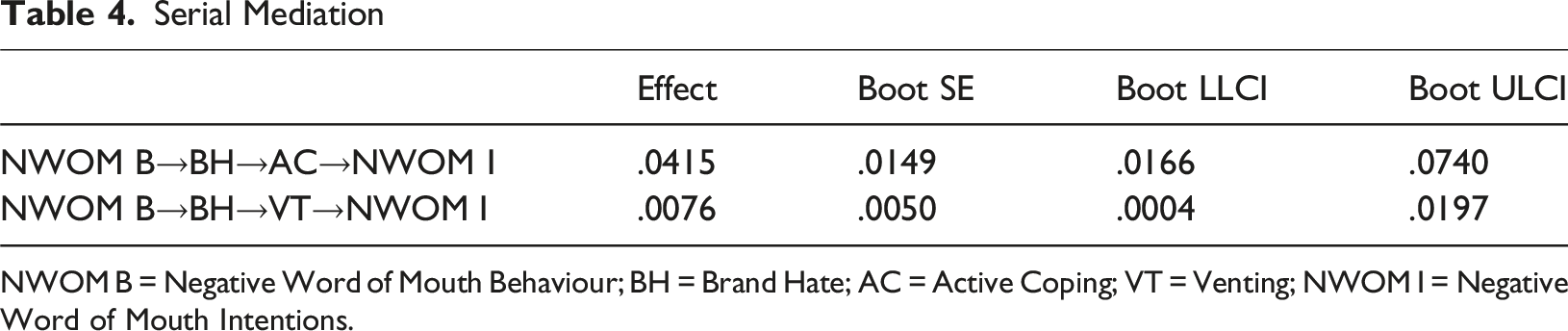
NWOM B = Negative Word of Mouth Behaviour; BH = Brand Hate; AC = Active Coping; VT = Venting; NWOM I = Negative Word of Mouth Intentions.
Reverse Serial Mediation Model
Following, Su et al. (2025) guidance we reversed the order of the two mediators (M1 and M2) and tested the reverse sequential pathways as.
NWOM BehaviourActive CopingBrand HateNWOM Intentions and
NWOM BehaviourVentingBrand HateNWOM Intentions
Findings reveal that the indirect effect of NWOM behaviour on future NWOM intentions is non-significant for both active coping (M1) and brand hate (M2) dyad (b = −0.0068, SE = 0.0149, 95% CI; LLCI = −0.0377, ULCI = 0.0211) and venting (M1)-brand hate (M2) grouping (b = 0.0110, SE = 0.0082, 95% CI; LLCI = −.0.0011 ULCI = 0.0304). Thus, the hypothesised serial mediation model best explains the relationship between NWOM behaviour and future NWOM intentions.
Discussion
This scenario-based experimental study found that engaging in NWOM behaviour about a brand influences the communicators brand hate and fuels their intentions to engage in further NWOM about the brand. Further, this research shows a complex set of inter-relationships between brand hate, active coping and venting as mechanisms underlying the relationship between NWOM behaviour and future NWOM intentions. However, tie strength between the NWOM dyad did not differentially influence the effect of NWOM behaviour on its principal outcomes; brand hate and NWOM intentions. Two recent reviews on brand hate identified NWOM as the most common outcome of brand hate [Brand Hate NWOM] (Aziz & Rahman, 2022; Taqi et al., 2024). However, the literature is silent whether a reverse effect [NWOMBrand Hate] exists wherein engaging in NWOM behaviour fosters brand hate. Results from two experimental studies supported the thesis that articulating NWOM about a brand can develop NWOM sender’s brand hate providing initial evidence of a reverse effect thereby addressing this knowledge gap. These findings were obtained in two diverse service contexts thus strengthening the generalisability of the conclusions and expand the theoretical understanding of NWOM-brand hate relationship beyond mere association between the two constructs (Bryson et al., 2021; Curina et al., 2020).
Results confirm that the act of giving NWOM augments the sender’s intentions to share further negative advice with others providing insights on diffusion of NWOM. These results alleviate the limitations of the prior literature (Chawdhary & Dall’Olmo Riley, 2015) which found no significant results for a similar proposition. Further, this study examined underlying mechanisms that support this transmission of negative advice. Novel to the brand hate literature the supposition that brand hate mediates the relationship between NWOM behaviour and intended NWOM behaviour is supported. These findings enhance the literature on NWOM-brand hate relationship wherein brand hate is both the antecedent and consequence of NWOM.
In addition, this study examined a dual-serial mediation model, wherein brand hate is the first mediator locked in a causal sequence with venting and active coping acting as second set of mediators sequentially transferring the effect of NWOM behaviour on future NWOM intentions. Findings indicate that individuals alleviate stress accumulated due to NWOM behaviour and heightened brand hate by demonstrating intentions to engage in further NWOM about the brand by adopting problem-and- emotion based coping strategies concurrently.
Prior research on coping found that individuals can employ distinct coping strategies simultaneously to deal with a stressful event (Delcourt et al., 2025; El-Manstrly et al., 2021). However, contrary to expectations, this research found no moderating influence of tie strength between NWOM participants on the sender’s brand hate or future NWOM intentions. The lack of a differential influence of tie strength on a sender’s future NWOM intentions is coherent with the findings of prior studies (Chawdhary & Dall’Olmo Riley, 2015). Possible explanation for this non-significant result might be the nature of NWOM, which is considered very emotional (Sweeney et al., 2008; Wetzer et al., 2007) and thus likely to be swiftly dispersed by the sender to others, irrespective of their relationship strength. In addition, people may share NWOM to warn others about the underperforming brand regardless of their relationship and help them in making better consumption decisions confirming the altruistic motive of sharing NWOM (Casidy et al., 2021). These results enrich the extant literature in the sense that what we thought was a generalised phenomenon wherein the effectiveness of given NWOM is dependent on strength of ties between the NWOM participants is in fact a localised phenomenon, where the influence of tie strength on the effectiveness of NWOM is restricted only to one member of the NWOM dyad; the recipient (Zhang et al., 2014) and is not extended to the sender.
Theoretical Implications
Findings of this research make contributions to the WOM, brand hate and coping literature. First, the current work enriches the relatively limited literature on the impact of giving WOM on the sender itself. Whilst prior research has investigated the reflexive effects of PWOM on the sender (Garnefeld et al., 2011), scholarly work from the NWOM perspective is remarkably absent. Thus, findings of this study in the NWOM context bridges this research gap. This finding also expands the research envelope of self-perception theory (Bem, 1972) wherein WOM sender’s explicit overt behaviour informing their attitude and behavioural intentions can be in both positive (Chawdhary & Dall’Olmo Riley, 2015) and negative contexts.
Second, this research shows that articulating NWOM can result in development of brand hate. This finding progresses the extant brand hate literature from holding a unidimensional understanding of NWOM-brand hate relationship wherein brand hate drives an individual’s NWOM (Fetscherin et al., 2023; Kurtoglu et al., 2025) overlooking the iterative nature of NWOM - brand hate relationship.
Third, this study adds to the stream of WOM literature that seeks to understand the diffusion of NWOM. Previous research has examined individual differences (e.g., Jin et al., 2025; Zhang et al., 2014) and firm-related factors (Brandão et al., 2023; El-Manstrly et al., 2021) as drivers of NWOM. Underpinned by self-perception theory, current work found that an individual’s NWOM behaviour is a driver of their intended NWOM behaviour. In addition, this result in the NWOM context balances the wider WOM literature which found reflexive effects of given PWOM on the sender’s future PWOM intentions (Chawdhary & Dall’Olmo Riley, 2015).
Fourth, this study revealed the mediating role of brand hate in explaining NWOM behaviour - future NWOM intentions relationship in both the single mediation model and in dual – serial mediation models contributing to the current literature. Findings from the dual-serial mediation model confirm that the effects of NWOM behaviour are transferred to intended NWOM behaviour sequentially via brand hate, venting and active coping. Thus, unique to existing literature, this research uncovers an intricate relationship between brand hate, venting and active coping by revealing them as mechanisms underlying the relationship between NWOM behaviour and future NWOM intentions. These results offer a more holistic understanding of diffusion of NWOM and provide initial insights on brand hate - coping link and its outcome answering call from scholars for a greater theoretical understanding of this relationship (Aziz & Rahman, 2022).
Managerial Implications
Past research that examined reflexive effects of WOM focused primarily on PWOM (see Table 1) and reported positive outcomes for the firm in terms of enhanced loyalty (Garnefeld et al., 2011) and greater likelihood to spread further PWOM about the brand (Chawdhary & Dall’Olmo Riley, 2015). However, in the context of NWOM, marketing managers have primarily focused on why customers give NWOM about their brands and its impact on the recipient with implications for customer acquisition. Thus, impact on NWOM communicators’ own attitudes and behavioural intentions due to their engagement in NWOM behaviour is poorly understood. This paucity of managerial insight is problematic because NWOM senders are likely to be existing customers and thus consequences for customer retention.
Current research attends to this managerial knowledge gap wherein the findings demonstrate the impact of articulating NWOM on the sender’s own brand hate and future NWOM intentions. This has implications for the firm in terms of both customer retention (e.g., losing an existing customer) and acquisition, (e.g., the inability to acquire new customers due to NWOM in circulation about the brand). Further, development of brand hate in the sender as this research indicate due to their NWOM exchange with others is worrisome, as this may impair a firm’s objective to grow existing customer revenue streams and make cross-selling of other products or services associated with the brand more challenging.
In addition, results of this study, provide managers an initial understanding of how brand related NWOM may potentially spread within an individual’s social circles by revealing the underlying mechanisms (e.g., venting) that may support transmission of NWOM. From a managerial perspective, appreciation of NWOM transmission is important. This is because, 96% of displeased customers do not complain to the company about a bad experience; instead, they share their bad experiences with approximately 9-15 people (vs. 3 people for PWOM) implying a greater transmission of NWOM [vs. PWOM] (O’ Neill, 2022). Firms can mitigate the adverse effects of given NWOM on the sender and reduce the possibility of NWOM spreading within the dissatisfied customer social groups by developing extensive customer support structures, such as customer helplines and AI supported chat rooms in the real world, and in Metaverse. These customer support systems will allow unhappy customers to vent their dissatisfaction with the firm and not with their close and distant others as is the norm, thereby presenting the firm with an opportunity for service recovery. Successful service recovery can restore trust and augment loyalty of customers (Lu et al., 2021). Further, sharing negative emotions associated with the unsatisfactory consumption experience with the firm can trigger the “catharsis effect” in displeased customers reducing their inclination to engage in NWOM activity with others (Nyer & Gopinath, 2005). In addition, firms can work collaboratively with market research agencies to set up longitudinal consumer panels to track the reflexive effects of giving NWOM and PWOM on their customers attitude and behaviour. Customer insights from these dedicated longitudinal customer panels tracking reflexive effects are important as large number of customers are posting and giving WOM on online platforms. Thus, these longitudinal customer panels can provide comprehensive customer insights post WOM behaviour in both offline and online contexts.
Further, market research agencies can employ real-time tracking methods such as electronic diaries using mobile devices to capture customer emotions in real time when engaging with NWOM or PWOM about a brand to better understand the reflexive effects of giving WOM on the sender. These customer insights will be important for managers as identification of relevant emotions (e.g., anger, sadness) being experienced by a customer in real time when giving NWOM about a brand or their strength of expression of NWOM can help firms make timely interventions (e.g., apology or financial compensation) to reduce the undesirable effects of given NWOM on the sender.
Limitations and Future Research
Although this research offers important insights into the less-understood reflexive effects of engaging in NWOM behaviour on the NWOM sender and has strengths, such as a large sample size, there are still some important unanswered questions that limit the findings of this research, warranting future research. First, this study examined only two coping styles as mediators, and future research could investigate other coping mechanisms from a wider coping portfolio (e.g., humour). Second, this research found no differential impact of tie strength and therefore future research can examine other inter-personal variables such as inter-personal closeness and psychological closeness between the NWOM participants as potential moderators. In addition, future studies can examine if strength of expressing NWOM places a boundary on the reflexive effects of given NWOM on the sender. Past research has found that strength of WOM expression can influence the recipient’s behaviour (East et al., 2008). Thus, it will be interesting to understand if this effect can be replicated on the WOM sender. Further, we will recommend that future work on reflexive effects of NWOM consider coping mechanisms as possible moderators rather than mediators as in this study. Third, this study controlled for gender when there can be other relevant covariates such as product category involvement and customer entitlement which can be examined in future research. Fourth, the present research did not examine the severity of negative experiences. Future research should understand whether the severity of negative experiences can result in the employment of different coping mechanisms and their impact on brand hate.
Fifth, as feelings of brand hate may develop over time (Zarantonello et al., 2018) therefore future research may benefit from a longitudinal research design that investigates the enduring effects of engaging in NWOM on the sender. Sixth, experimental research designs have low external validity which may limit generalisability of these findings (East & Uncles, 2008). These concerns are mitigated in this study by employment of familiar research contexts and by assessing realism of the experimental scenarios which are found to be adequate. Future studies can employ alternative research methods such as the one proposed by Christiansen and Tax (2000) which discusses WOM communication about a real consumption experience in a WOM dyad. Capturing of actual WOM experience instead of one in a contrived situation as reflected in a scenario will enhance external and ecological validity of the study. Seventh, this study measured NWOM intentions and future studies can evaluate actual NWOM behaviour using dedicated longitudinal consumer research panels. Finally, this research was conducted in the United Kingdom in two service contexts and thus scholars are encouraged to engage in replication research to test the conceptual framework and associated experimental design in different geographic contexts (e.g., China and India) and service categories (e.g., higher education and banking) to confirm the generalisability of these results.
Supplemental Material
Supplemental Material - Reflexive Effects of Articulated Negative Word of Mouth on the Sender’s Brand Hate and Future NWOM Intentions: Mediating Role of Brand Hate and Coping Mechanisms
Supplemental Material by Reflexive Effects of Articulated Negative Word of Mouth on the Sender’s Brand Hate and Future NWOM Intentions: Mediating Role of Brand Hate and Coping Mechanisms for Rahul Chawdhary, Anna Ivanova, Arslan Chaudhary in International Journal of Market Research.
Footnotes

Funding
The authors received no financial support for the research, authorship, and/or publication of this article.
Declaration of Conflicting Interests
The authors declared no potential conflicts of interest with respect to the research, authorship, and/or publication of this article.
Supplemental Material
Supplemental material for this article is available online.