



Abstract
This paper investigates the role of sentiment and specific emotion analysis in forecasting donation behaviour within the context of social networking services (SNSs). The study empirically examines the influence of sentiment and specific emotion analysis on donation behaviour for two non-profit organizations (NPOs): The Fred Hollows Foundation (The Foundation) in both Australia and New Zealand, and The University of Auckland (UOA) in New Zealand. We collected and analysed 298,569 tweets from 106,349 users mentioning these NPOs, along with 5,175,359 tweets mentioning the top 20 US brands from 1,623,113 users. We found that NPOs are often associated with brands that induce joy. Furthermore, sadness expressed by marketers and joy expressed by users positively affected donations to The Foundation, while user-expressed anger positively influenced donations to UOA within the same month. A two-month rolling average analysis highlighted the significant effect of lingering negative emotions on monthly donations over time. Specific emotion analysis outperforms sentiment analysis by demonstrating a higher effect size (R 2 ). We advocate for the application of the transformer-transfer learning method for specific emotion analysis when scrutinizing large-scale social media data and devising fundraising strategies.
Introduction
Understanding the attitudes and behaviours of customers in social networking services (SNSs) is critical for marketing efforts. Marketers can leverage two types of SNS content to drive engagement and conversions: user-generated content (UGC) and marketer-generated content (MGC) (Haruvy & Leszczyc, 2018; Long, 2016). Sentiment and specific emotion analysis are used by marketers to gain insights into their customers’ opinions and motivations in SNS (Mukhopadhyay et al., 2022).
Collective emotions and opinions expressed on SNSs, such as Twitter (referred to by its name at the time of analysis, although it has since been renamed to X), can have wide-reaching impacts, influencing not only the sentiments of their audience (Bae & Lee, 2012) but also affecting stock market trends (Yang et al., 2015) and contributing to donations consumers make to NPOs (Long, 2016). Previously reported findings suggest consumer emotional attachment is relatively strong towards non-profit organizations (NPO), and the use of SNS can be effective for charitable purposes (Haruvy & Leszczyc, 2018). In this paper, we explore the role of aggregate sentiments and emotions in UGC and MGC on SNS content for aggregate donation behaviour.
Sentiment analysis is widely used for extracting subjective information from text (Wankhade, 2022). This information can include positive, negative, or neutral sentiment. Marketers apply sentiment analysis to gain insights into customer opinions and to track brand sentiment over time (Pressrove & Pardun, 2016). However, human emotions are not simply defined by a positive versus negative distinction, and previous research on the influence of emotional valence on donation behaviour has produced inconsistent results. Some previous research found that positive valence positively influences donation behaviour (Anik et al., 2009; Habětínová & Noussair, 2015; Isen & Levin, 1972), while others found that negative valence (Fisher et al., 2008) or both valences (Choi et al., 2020) may enhance donations.
Specific emotion analysis is a more nuanced approach (Aleti et al., 2019) that uses natural language processing to identify emotions such as fear, anger, sadness, joy, surprise, and disgust (Ekman, 1972). By applying specific emotion analysis in SNS content (i.e., UGC and MGC), marketers can develop an emotion-based marketing strategy to encouraging donation behaviour. Specific emotions, such as anger, joy and disgust, have not been investigated previously in the domain of charities and donations.
We assess the relationship between donations to NPOs and specific emotions expressed on Twitter. We do not identify individual donors but research how emotional Tweets about specific NPOs, The Foundation and the UOA relate to aggregate monthly donations. Individuals posting tweets may not donate; instead, their messages are a part of public sentiments about specific NPOs. In addition, we compare the accuracy of specific emotion analysis on Twitter with the more conventional sentiment analysis approach in terms of predicting aggregate donations. Our research questions are thus:
Are aggregate donations to an NPO related to collective sentiments and specific emotions expressed on Twitter about this specific NPO?
How does specific emotion analysis compare with traditional sentiment analysis in predicting aggregate donations to specific NPOs? In this paper, we first review emotions that are relevant to consumers’ brand perceptions, as well as emotions in the donation literature. Next, we detail the methodology, which includes data collection, the application of sentiment analysis using the VADER method (Hutto & Gilbert, 2014) and specific emotion analysis employing the transformer-transfer learning (TTL) method (Lee et al., 2023). We then report results, encompassing correspondence analysis and emotion-based donation amount predictions. We conclude by summarizing the implications of our findings and limitations.
Literature review
The relationship between emotional engagement in consumer-brand dynamics and its influence on donation behaviour within SNS represents a developing research area. Extant literature has shown that emotional factors affect consumer engagement and brand loyalty (Fernandes & Moreira, 2019; Kim & Sullivan, 2019; Mostafa & Kasamani, 2021; Pourazad et al., 2019), as discussed next. Consecutively, we explore the theoretical foundations linking emotional connections with brands to the motivations driving donations. We focus on the role of specific emotions, expressed at an aggregate level on Twitter, for aggregate donation behaviour. We contrast specific emotions with sentiment analysis, i.e., distinguishing between negative, neutral and positive emotions.
Emotional factors in consumer-brand relationships
Brand loyalty is an essential component of successful marketing, and forging emotional connections with consumers is instrumental in building and maintaining that loyalty. Mingione et al. (2020) found that brands that engage with consumers on an emotional level can create experiential pathways that enhance brand loyalty. To investigate emotions and their influence on brand loyalty, researchers frequently use specific emotion models. Ekman (1972) proposed a model encompassing six specific emotions, fear, anger, sadness, joy, surprise, and disgust which are regarded as universal across cultures and languages. Other notable emotion models include Plutchik’s Wheel of Emotions (Plutchik & Kellerman, 1980), which identifies eight primary emotions and their varying intensities, and Russell’s circumplex model (Russell, 1980), which arranges emotions along the dimensions of arousal and valence.
Previous studies have shown that positive emotional relationships tend to result in stronger consumer engagement and a greater impact on brand loyalty (Fernandes & Moreira, 2019). Experiential brands, such as luxury brands (Pourazad et al., 2019) and fashion brands (Kim & Sullivan, 2019), aim to build lasting brand loyalty by creating a strong positive emotional connection between the consumer and the brand (Mostafa & Kasamani, 2021). Additionally, SNS interactivity and rewards have been found to contribute to a stronger brand image and emotional attachment (Barreda et al., 2020).
Unexpectedly, negative emotional attachment to a brand can have both positive and negative effects on brand perceptions (Khatoon & Rehman, 2021). For example, fear may have the potential to undermine a brand’s reputation (Gutiérrez et al., 2004; Smith & Kim, 2007), but can instead be a catalyst for consumer engagement with a brand (Das et al., 2014; Mende et al., 2019; Whelan & Dawar, 2016). “Killer ads” featuring mortality reminders effectively stimulate unconscious fears in consumers, subsequently increasing purchase intentions as a coping mechanism (Das et al., 2014). In another example, customers with fearful attachment styles are more drawn to products that emphasize emotional closeness (Mende et al., 2019). Furthermore, anger towards a brand may enhance brand loyalty, as demonstrated by a bank that effectively countered adverse emotions through long-sustained consumer relationships (Rodrigues & Pinto Borges, 2021).
Given the diverse impacts of positive and negative emotions on brand loyalty and engagement, it is crucial to understand the specifics of the emotional relationships that a brand has with consumers. General valence, and negative versus positive emotions, may provide incomplete insights when explaining consumer interactions with brands. Furthermore, emotions influencing brand loyalty can shape engagement with NPOs. For example, positive emotions like joy can increase both brand loyalty and donations by fostering a sense of affiliation and personal benefit (Fernandes & Moreira, 2019), whereas negative emotions such as fear, when managed effectively, reinforcing donor engagement towards NPOs (Das et al., 2014; Mende et al., 2019; Whelan & Dawar, 2016). The subsequent chapter delves into the intricate interplay of motivations and emotions in the specific context of donation behaviour.
Motivations, emotions, and negativity bias in donation behaviour
An overview of donation studies examining the impact of emotions.
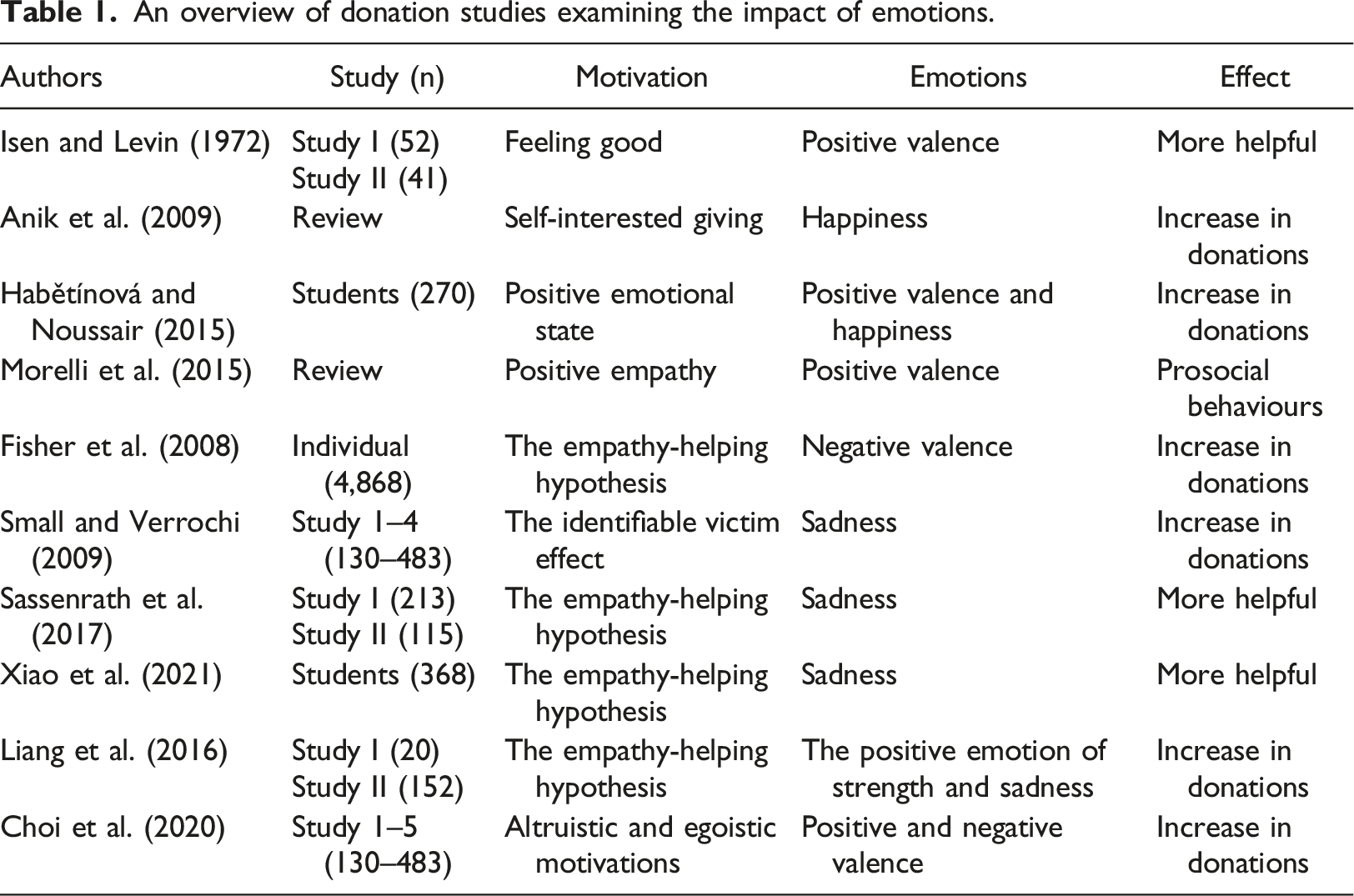
Table 1 also provides an overview of research that examines the impact of emotions on donation behaviour. Isen and Levin (1972) were among the first researchers to demonstrate a positive relationship between positive emotions and donations. Some consecutive studies also found that people who are in more positive emotional states are more likely to donate (Anik et al., 2009; Habětínová & Noussair, 2015), while others found that negative emotions, such as sadness, can elicit empathy and result in increased donations (Fisher et al., 2008; Sassenrath et al., 2017; Xiao et al., 2021). For example, the identifiable victim effect suggests that people are more likely to donate when they feel a personal connection with the victim, such as when they see a sad-faced individual in a charity advertisement (Small & Verrochi, 2009).
Some studies have suggested that a combination of positive and negative emotions can be more effective in triggering donations compared to using only negative or positive emotions. Liang et al. (2016) found that triggering the positive emotion of strength and the negative emotion of sadness was more effective in eliciting donations. Anik et al. (2009) and Sassenrath et al. (2017) collectively enhanced our comprehension of donation behaviour by highlighting the unique impact of specific positive emotions such as happiness and specific negative emotions such as sadness on augmenting donations and fostering helpfulness. Choi et al. (2020) also found that emotional charitable appeal messages, incorporating opposing background colours that evoke contrasting emotions, can increase donations. In summary, specific emotions play a crucial role in donation behaviour.
Besides short-term effects, emotions may also have long-term consequences. Negativity bias is a psychological phenomenon where negative emotions, experiences, or information tend to have a greater impact on individuals’ perceptions, decisions, and behaviour than neutral or positive ones (Rozin & Royzman, 2001). Thus, people are more likely to remember and be influenced by negative events than positive ones, and it is thought to have evolved as a survival mechanism, as negative information often represents potential threats or dangers that need to be avoided (Baumeister et al., 2001).
In the short term, negative emotions may lead to increased donations as individuals feel empathy for the victims and want to alleviate their suffering (Small & Verrochi, 2009). However, continuous exposure to negative emotions or information may lead to emotional fatigue or compassion fatigue, where individuals become less responsive to emotional appeals due to the overwhelming amount of negative information (Bekkers & Wiepking, 2011). This could result in reduced donation behaviour over time. On the other hand, long-term exposure to negative emotions may also lead to increased donations as individuals feel a stronger sense of urgency or responsibility to address the ongoing issues associated with those emotions (Cameron & Payne, 2011).
In the analyses reported in the current paper, we do not identify individual donors, and individuals who post tweets may not be donors. Their tweets can, however, embody public sentiments. Collective emotions and opinions expressed on SNSs such as Twitter can have a wide-reaching impact, influencing not only the sentiments of their audience (Bae & Lee, 2012) but also affecting stock market trends (Yang et al., 2015) and contributing to aggregate donations to NPOs (Long, 2016). Wakefield et al. (2010) demonstrated that mass media campaigns via TV, radio, and newspapers can reduce harmful behaviours in areas such as tobacco use, alcohol consumption, drug use, heart disease prevention, and road safety. We propose that overarching emotional climates on SNS can influence the engagement with NPOs and consequently the propensity to donate, as discussed next.
In summary, examination of the impact of specific emotions, as compared to sentiment analysis, suggests that specific emotions may predict donation behaviour more accurately than sentiments (positive, neutral, or negative). For instance, the complexity of emotions expressed, particularly joy and sadness in the context of NPOs, may enhance the likelihood of donations. Individuals may be influenced by the emotional states generated by SNS platforms (Bae & Lee, 2012). Consequently, individuals affected by SNS content may become more inclined to donate or, conversely, less inclined, as specific emotions have distinct impacts on their decision to contribute (Long, 2016). Negative emotions, at times arising from negative evaluations shared on SNS, may have more effect on donation behaviours than positive emotions in the long term.
Methodology
Data collection
We aim to map the emotional and sentiment associations related to the UOA and The Foundation and how these associations affect aggregate donation behaviour (RQ1). For the second objective (RQ2) we compare sentiment analysis using the VADER method (Hutto & Gilbert, 2014) with specific emotion analysis, using the TTL model that was developed and previously reported by Lee et al. (2023).
We analysed UOA and The Foundation as these organizations may encompass different emotions. The Foundation represents a charity focusing on a humanitarian cause, ending avoidable blindness and vision impairment, which may relate to empathy and compassion, in addition to a sense of urgency related to immediate needs (Albouy, 2017). In contrast, universities may evoke a desire to contribute to educational advancement and research (Pekrun & Stephens, 2010). These differences will provide insight into a broader spectrum of emotions driving donations. Universities also constitute a significant sector within charities (Faria et al., 2019; Khan et al., 2021).
Building on prior research about donation behaviour (e.g., Korolov et al., 2016; Long, 2016), we selected the SNS channel Twitter as our data source. Korolov et al. (2016) revealed that SNSs significantly influenced donation behaviours during emergency responses to natural disasters. Long (2016) found that inadequate crisis response and a lack of actional legitimacy on SNSs severely reduced the amount of donations to charity. However, these extant studies did not investigate the sentiments and specific emotions expressed in tweets. We collected a second tweet dataset, referred to as the donation dataset, to explore the impact of sentiments and specific emotions on donation behaviour. To gather tweets for both datasets, we used the Twitter API, approved for academic purposes (Shohil et al., 2021).
As a preliminary analysis we mapped the emotions with which The Foundation and UoA are associated in a plot that also contained the top 20 brands in the US. We included the top 20 brands in the US in our initial analysis, recognizing these brands’ familiarity to readers and the prominence of these brands in Australia and New Zealand. Furthermore, Australia, New Zealand and the United States share the common cultural practice of using English. Berns (1995) argues that English-speaking countries embody a collective international identity.
We collected 5,175,359 tweets mentioning the top 20 US brands identified by Statista (2023), posted between January 2013 and December 2022, from 1,623,113 users, using their respective hashtags, such as ‘#Apple’, and ‘#Amazon’. Analyzing specific hashtags, as opposed to entire tweets, leverages their function in tagging, categorizing, and signaling sentiments, sharpening analysis focus (Ferragina et al., 2015). For instance, Lee et al. (2021) used hashtags like ‘#COVID-19’ to gather tweets for analyzing public emotion about the COVID-19 pandemic. They used hashtags such as #Fear, ‘#COVIDVaccine’ and ‘#AntiVaxxers’ to study public emotions on vaccinations and anti-vax movements, revealing dominant emotions in the COVID-19 conversation. In our study, the top 20 brands included were: Apple (n = 347,652), Amazon (n = 340,189), Google (n = 331,812), Microsoft (n = 342,805), Walmart (n = 348,060), Facebook (n = 317,943), Verizon (n = 267,127), Disney (n = 348,480), HomeDepot (n = 177,776), AT&T (n = 249,256), Tesla (n = 343,545), Starbucks (n = 348,996), McDonald’s (n = 345,085), UPS (n = 249,047), Costco (n = 222,513), Bank of America (n = 79,066), Marlboro (n = 43,090), Accenture (n = 111,951), CocaCola (n = 295,140), and Citi (n = 65,826). The first dataset is referred to as the “brands dataset”. The TTL model is used to detect specific emotions in the Tweets referring to each of these brands, while VADER assesses the general valence of these Tweets.
The second dataset is analysed to examine the impact of general sentiments and specific emotions expressed in UGC and MGC on SNS. We collected a dataset including tweets that mentioned one of the two NPOs – The Foundation or the UOA – over a period of 10 years. We received the monthly donation amounts from the Fred Hollows Foundation in New Zealand from June 2012 to December 2021 and from the UOA from January 2010 to September 2020. The monthly donation amount was converted to a natural logarithm value for analysis purposes and at the request of the NPOs. The data available were the monthly donation totals provided by the two NPOs over a nearly 10-year period. Although this limited our ability to examine daily or event-specific fluctuations in donations, the long duration of the dataset provided insights into long-term trends in specific emotions and their effects on donation behaviour (e.g., Davis et al., 2016; Nuamah et al., 2015).
Descriptive statistics of key variables of the foundation and the UOA.
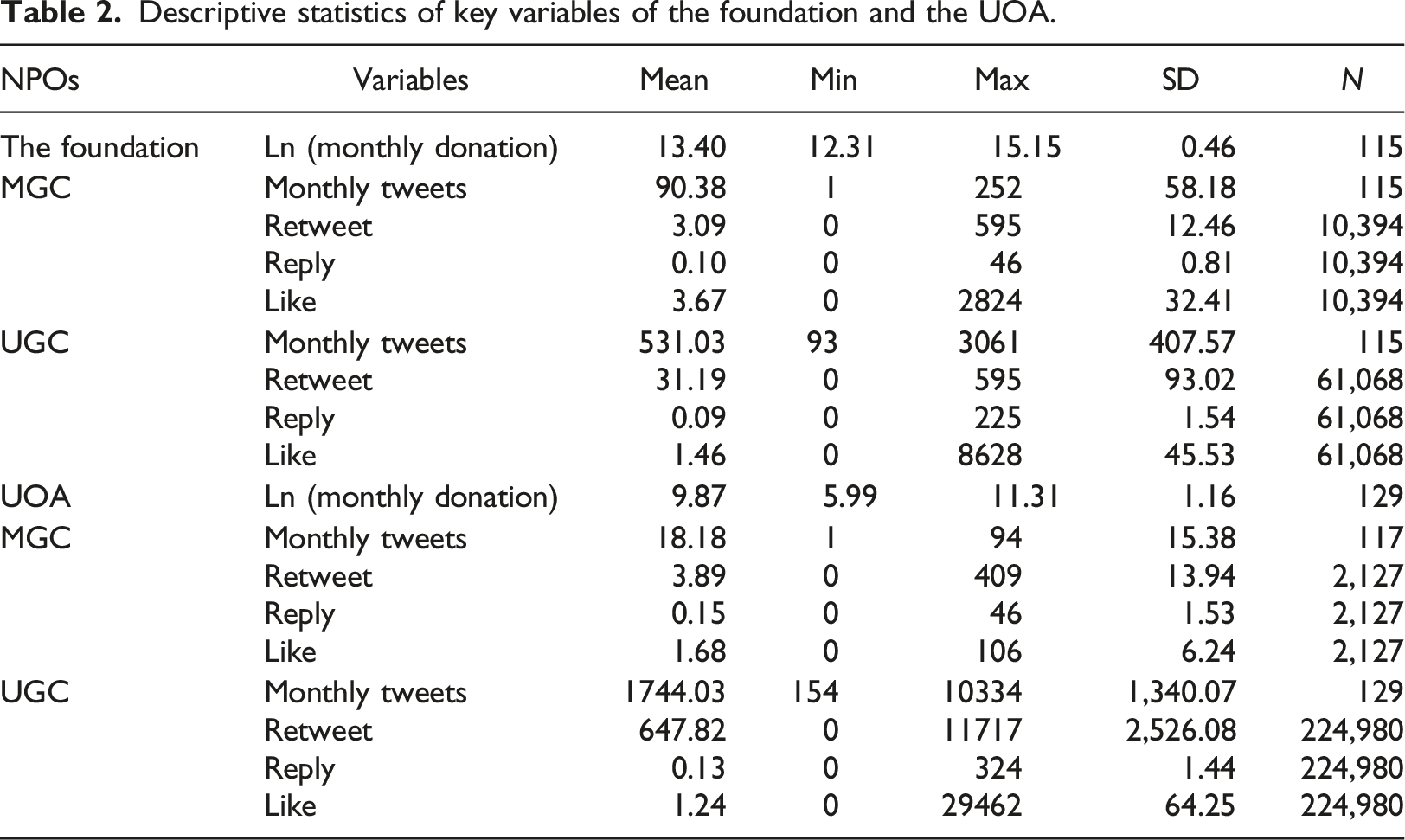
In summary, the first analysed dataset consisted of 5,175,359 tweets about the top 20 US brands and aimed to provide insights into the brand positioning of The Foundation and the UOA, in terms of emotions and compared to 20 globally known brands, which are also large in Australia and New Zealand. The second dataset comprised 298,569 tweets related to The Foundation and the UOA. Additionally, we obtained data on aggregate monthly donation amounts from these two NPOs.
Analysing sentiment in text
Sentiment analysis primarily focuses on detecting general valence; i.e., positive, negative, and neutral sentiments, in text data. We applied the Valence Aware Dictionary and Sentiment Reasoner (VADER) due to its widespread use and ability to effectively capture the sentiment of text data (e.g., Bonta & Janardhan, 2019; Koolen et al., 2022). VADER was developed by Hutto and Gilbert (2014) at the Georgia Institute of Technology through an extensive process of incorporating human-generated sentiment ratings into a lexicon. VADER supports accurate evaluation of the emotions conveyed in texts, considering the nuances of language and context. It attained a 96% accuracy rate, surpassing the 84% accuracy achieved by human raters, when assessed on a test set of 4,200 tweets (Hutto & Gilbert, 2014). VADER uses a sentiment lexicon (n = 7,516) that contains a set of words with scores indicating the intensity of positive or negative sentiments. For example, the word “happy” might have a positive score of .9, while the word “sad” might have a negative score of −0.7.
VADER provides sentiment scores for each text on independent variables as a consecutive decimal value from 0 (0%) to 1 (100%) and their sum should be equal to 1. For example, in the tweet, ‘Good and bad news. Bad news it is a Cataract and needs surgery. Good news is surgery can correct!’, neutral was .52, followed by negative at .27 and positive at .21. The representative sentiment detected in the text was negative, as indicated by the compound sentiment intensity score of −.36, with −1 indicating extremely negative sentiment, 0 indicating neutral sentiment, and 1 indicating extremely positive sentiment. However, VADER may not be as accurate when analysing text data that contains complex sentence structures and more formal language. Also, as a rule-based approach, it may not be as accurate as more sophisticated ML approaches in certain contexts (Kotelnikova, 2020).
Analysing specific emotions in text
Research in engineering has focused on developing specific emotion detecting models using SNS texts. Kusal et al. (2021) emphasized the need for advanced ML techniques for emotion analysis on platforms like Twitter and Facebook, highlighting the challenge of interpreting genuine emotions due to potential exaggeration or sarcasm. Yu and Wang (2015) demonstrated that real emotions of fans in tweets could be effectively captured during sports events, despite the inherent complexities such as sarcasm and slang. This research underscores the potential of SNSs as a valuable source for emotion analysis. Mandloi and Patel (2020) explored advanced ML techniques to enhance the accuracy of emotion detection, addressing these challenges posed by the language used on SNSs.
With the advent of deep learning, more advanced transformer models have emerged; e.g., BERT (Devlin et al., 2018) and RoBERTa (Liu et al., 2019). Transformer models are neural network architectures that process large-scale language data using self-attention mechanisms. Self-attention mechanisms are a key component of transformer models that enable them to weigh the importance of different words in a sentence relative to each other, resulting in a better understanding of context and relationships within large online texts. The RoBERTa model is an improvement over BERT because the former is based on a larger training data set, approximately 160 GB of text data (Liu et al., 2019), which is significantly more than BERT’s 13 GB (Devlin et al., 2018).
This study applied the transformer transfer learning (TTL) model, which automates the detection of specific emotions, such as fear, anger, sadness, joy, surprise, and disgust, in online texts (Lee et al., 2023). This approach takes advantage of recent advancements in natural language processing and machine learning, particularly the development of transformer models. The TTL approach is designed to mimic the social-emotional development of humans and is based on the notion that specific emotions can be detected in texts written by others. Our contribution does not lie in the development of TTL, but rather in introducing and applying the TTL model that was previously developed by Lee et al. (2023) to assess its efficacy in real-world marketing applications.
To develop the TTL model, Lee et al. (2023) used a combination of four self-reported emotion datasets containing over 3.6 million sentences (e.g., news headlines, tweets, and Reddit comments) and seven annotator-rated emotion datasets, consisting of more than 60k sentences, all accessible online for academic purposes. The development of the TTL model involved two stages. In the first stage, Lee et al. (2023) trained a RoBERTa transformer model (Liu et al., 2019) on a large self-reported emotion dataset, enabling the detection of specific emotions reported by text authors. In the second stage, the model was synchronized with social emotions identified in smaller annotator-rated emotion datasets, which facilitated the detection of subtle, socially constructed emotions that might be overlooked in large self-reported datasets. The TTL model attained an impressive classification accuracy of 84% across the 11 analysed datasets in Lee et al. (2023).
The TTL model evaluates the emotional nuances of each tweet by attributing probability scores to six distinct emotions. For example, in the tweet, “Good and bad news. Bad news it is a Cataract and needs surgery. Good news is surgery can correct!”, the emotion scores on the relevant seven independent variables are: Dominant Emotion = Joy, Anger = .002, Disgust = .000, Fear = .003, Joy = .623, Sadness = .118, and Surprise = .254. Because human emotions often encompass mixed feelings, the distribution of such scores is also examined (Lee et al., 2021), i.e., each emotion score is stored, representing its proportionate presence within the overall emotional context of the tweet. These scores are decimal values ranging from 0 (indicating the absence of the emotion) to 1 (indicating full presence of the emotion). The aggregate of all scores invariably sums up to 1.
Results
Emotional mapping of the UOA and the foundation
The objective of the first analysis, which we conducted, was to find consumer perceptions of UOA and The Foundation. We examined 5,473,928 tweets about 22 brands, combining the brands dataset consisting of 5,175,359 tweets about the 20 top US brands and the donation dataset containing 298,569 tweets about the foundation and UoA. VADER was used to extract sentiments from each tweet and we applied the TTL model to identify specific emotions.
Next we assessed the emotions associated with the 22 brands using Correspondence Analysis (CA), which examines associations between two categorical variables (Greenacre, 2017). We conducted two distinct CAs focusing on the UOA, The Foundation, and the top 20 US brands. The first CA visualized the association between the 22 brand names and positive, neutral, and negative sentiments. The second CA visualized relationships between these brand names and specific emotions: fear, anger, sadness, joy, surprise, and disgust. We found that specific emotions resulted in a greater total inertia size compared to sentiment analysis (10.4% vs. 6.8%). Thus, specific emotions captured more variance in the data.
Figure 1 displays the brand positioning map based on general sentiments. The results show two dimensions, which together account for the total inertia value of .068. The first dimension (D1) has an inertia value of .052 and is correlated with positive sentiment. The second dimension (D2) has an inertia value of .016 and is correlated with negative sentiment. In Figure 1, The Foundation is located near positive sentiment, while the UOA is located towards neutral sentiment, reflecting the prominence of such sentiments in the respective Tweets. Brands with a high positive sentiment, such as Apple, Starbucks, and Facebook, are located towards The Foundation, while brands with a high neutral sentiment, such as Microsoft and Google, are located towards the UOA. Brand positioning map according to the sentiments.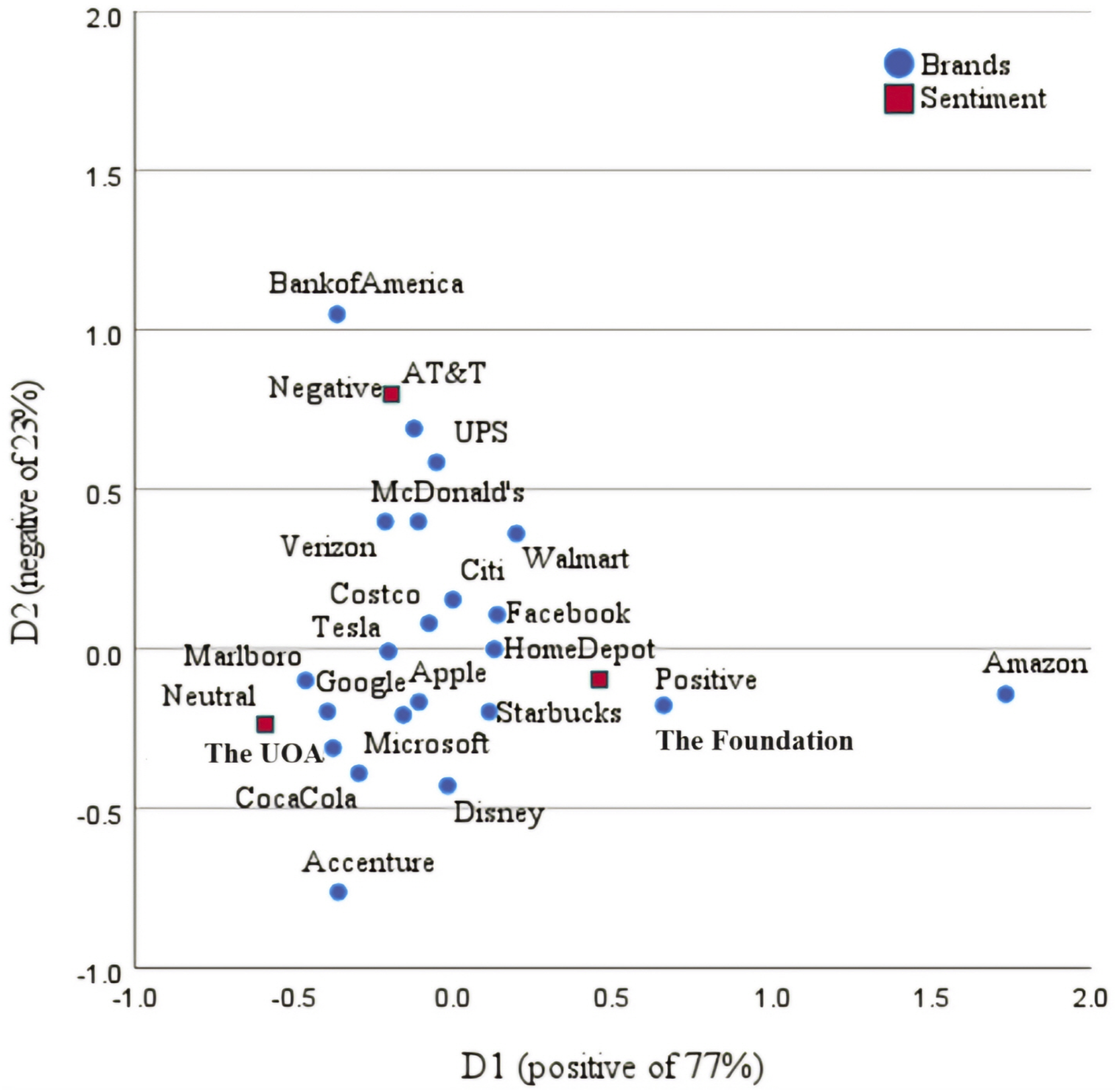
Figure 2 shows the brand positioning map for specific emotions (total inertia value of .104). The highest inertia value of .061 is attributed to the first dimension (D1), which is correlated with joy. The second dimension (D2) represents the second highest inertia value of .027, which is correlated with anger. The third to fifth dimensions represent fear (.010), surprise (.004), and disgust (.001) respectively; they are excluded from the analysis due to low inertia values. UOA exhibits a high score of joy (.699) and surprise (.098), and The Foundation demonstrates a high score of joy (.793) and fear (.069). Points’ position on the plot’s axis signifies the score in each dimension, reflecting its correlation with that dimension. Higher scores indicate stronger associations with the dimension’s trend (Greenacre & Hastie, 1987). For example, the UOA’s link to ‘surprise’ is inferred from its scores on both D1 and D2, rather than mere closeness to ‘surprise’ on the graph; proximity close to the centre of the map implies weaker correlation. Amazon, Apple, Coca-Cola, Disney, and Starbucks also display high scores for joy, with an average score ranging from .715 for Amazon to .793 for Disney. Bank of America exhibits a high score for fear (.375), and AT&T has a high score for anger (.22). Brand positioning map according to the specific emotions.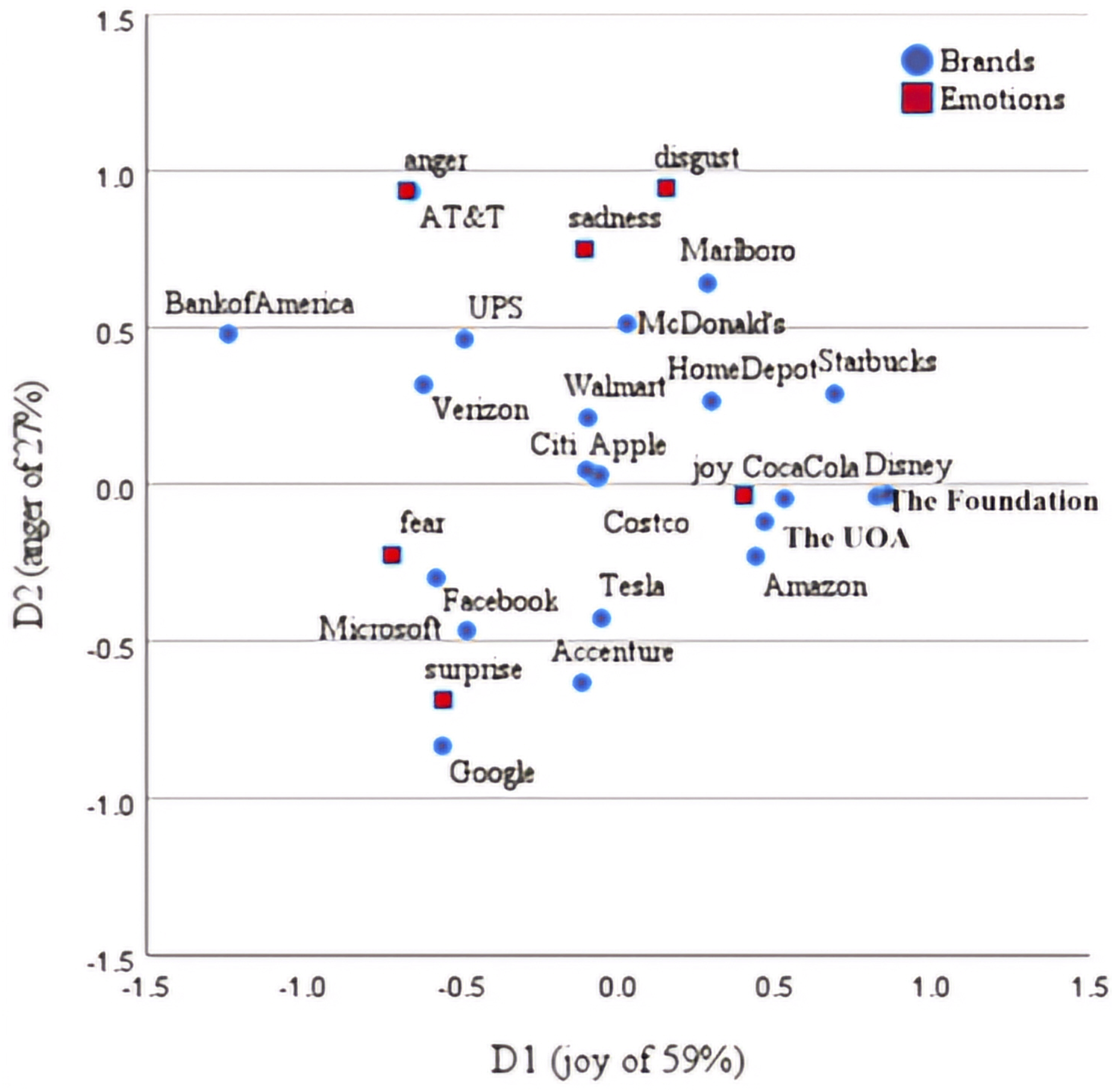
Same month sentiment and specific emotions analysis results
We compared the effect of the analysed same month sentiment and specific emotions on monthly donations to The Foundation and the UOA. We first analysed 71,462 tweets from The Foundation and 227,107 tweets from the UOA. The VADER method was used to extract three sentiments from each tweet: negative, neutral or positive. The TTL method was used to identify specific emotion scores: fear, anger, sadness, joy, surprise, and disgust. The sentiments and specific emotions derived from the tweets were used as independent variables in linear regression analyses.
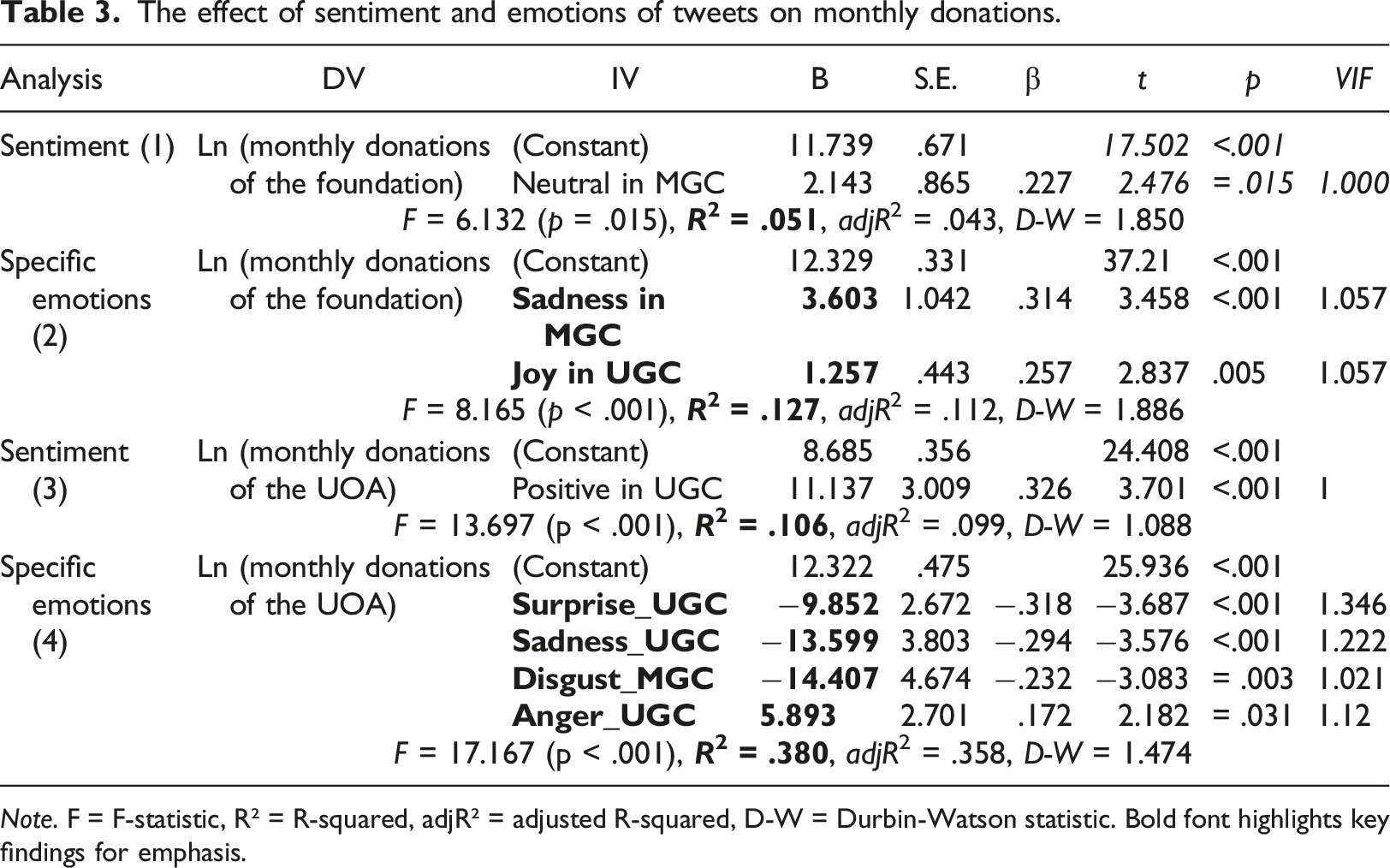
The effect of sentiment and emotions of tweets on monthly donations.
Note. F = F-statistic, R² = R-squared, adjR² = adjusted R-squared, D-W = Durbin-Watson statistic. Bold font highlights key findings for emphasis.
For UOA, the third model in Table 3 evaluates the impact of sentiment analysis for UoA and has an adjusted R 2 of .099 (F = 13.697, p < .001). However, the D-W statistic is 1.088, suggesting potential positive autocorrelation in the dataset. This could compromise the model’s robustness and predictive precision by challenging the regression analysis assumption of error term independence. Despite the potential imperfections in this model, it revealed a significant positive relationship between positive sentiment in UGC and monthly donations to UOA (B = 11.137, p < .001). Independent variables that did not demonstrate a statistically significant relationship, such as positive and negative sentiments, were excluded in the stepwise regression results (Mcintyre et al., 1983). The fourth model, focusing on the role of specific emotions for UoA donations, displays an adjusted R 2 of .358 (F = 17.167, p < .001); the D-W statistic is 1.474, showing no significant autocorrelation. This R 2 of specific emotion analysis is more than triple that of sentiment analysis. The emotions of surprise in UGC (B = −9.852, p < .001), sadness in UGC (B = −13.599, p < .001), and disgust in MGC (B = −14.407, p = .003) significantly decreased monthly donations to UOA, while anger in UGC (B = 5.893, p = .031) was found to be a significant positive predictor.
The reported findings underscored the importance of specific emotion analysis over sentiment analysis in predicting donation behaviour. Interestingly, the UOA, which deals with a variety of topics, experienced more diverse specific emotions affecting donations compared to The Foundation, which focuses on a single donation activity. Each emotion can have a distinct impact on donation behaviour. For instance, encountering surprising content might lead to feelings of confusion or uncertainty, and sadness can evoke feelings of helplessness, potentially discouraging individuals from actions such as donating. Similarly, disgust often results in a strong aversion or rejection, which may cause potential donors to disengage from the cause or issue. Conversely, anger can serve as a motivating emotion, driving people to take action to address perceived injustices or problems, thus leading to increased donations.
Two-month rolling average sentiment and specific emotions analysis results
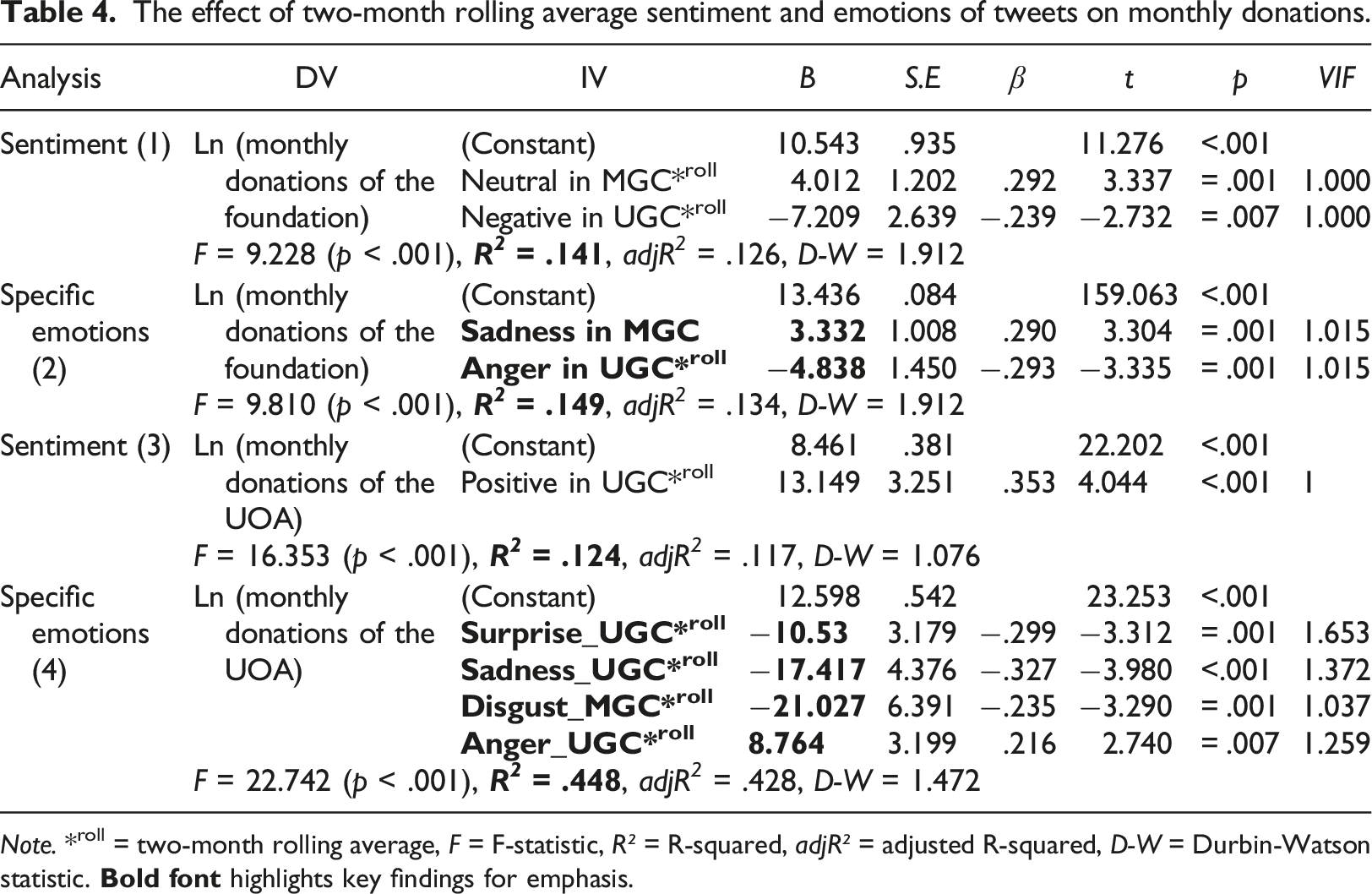
The effect of two-month rolling average sentiment and emotions of tweets on monthly donations.
Note. *roll = two-month rolling average, F = F-statistic, R² = R-squared, adjR² = adjusted R-squared, D-W = Durbin-Watson statistic.
For The Foundation, the sentiment model had an adjusted R 2 of .126 (F = 9.228, p < .001), see first model in Table 4. The D-W statistic of 1.912 suggested no autocorrelation in the residuals. The coefficients for the neutral rolling sentiment in MGC (B = 4.012, p = .001) and the negative rolling sentiment in UGC (B = −7.209, p = .007) were statistically significant. In the specific emotions model for The Foundation, second model in Table 4, the adjusted R 2 was .134 (F = 9.810, p < .001), slightly higher than that of sentiment analysis. The D-W statistic of 1.912 suggested no autocorrelation. The coefficients for sadness emotion in MGC (B = 3.332, p = .001) and anger rolling emotion in UGC (B = −4.838, p = .001) were statistically significant.
For the UOA, the third model in Table 4, the sentiment model displayed an adjusted R 2 of .117 (F = 16.353, p < .001). The D-W statistic of 1.076 indicated no autocorrelation in the residuals. The coefficient for positive rolling sentiment in UGC (B = 13.149, p < .001) was statistically significant. The specific emotions model (the fourth model), yielded an adjusted R 2 of .428 (F = 22.742, p < .001), which is more than triple that of sentiment analysis. The D-W statistic of 1.472 indicated no autocorrelation. Statistically significant coefficients were found for the surprise rolling emotion in UGC (B = −10.53, p = .001), the sadness rolling emotion in UGC (B = −17.417, p < .001), the disgust rolling emotion in MGC (B = −21.027, p = .001), and the anger rolling emotion in UGC (B = 8.764, p = .007). The β values of negative rolling emotions (sadness = −.327, disgust = −.235, and anger = .216) were higher than the β values of negative emotions in previous analysis (sadness = −.294, disgust = −.232, and anger = .172).
The analyses revealed a shift in dynamics when moving from the same month analysis to the two-month rolling average. For The Foundation, anger in UGC transitioned into a significant negative predictor, a contrast to the same month analysis that highlighted only positive predictors. For the UOA, the prominence of negative emotions, namely sadness and disgust as negative predictors, and anger as a positive predictor, was underscored as their coefficient values increased. These findings reinforce the theory of negative bias, indicating that negative emotions tend to exert a greater impact, both favourable and unfavourable, on donation behaviour than either neutral or positive emotions.
Conclusion
Key findings from the four analyses.
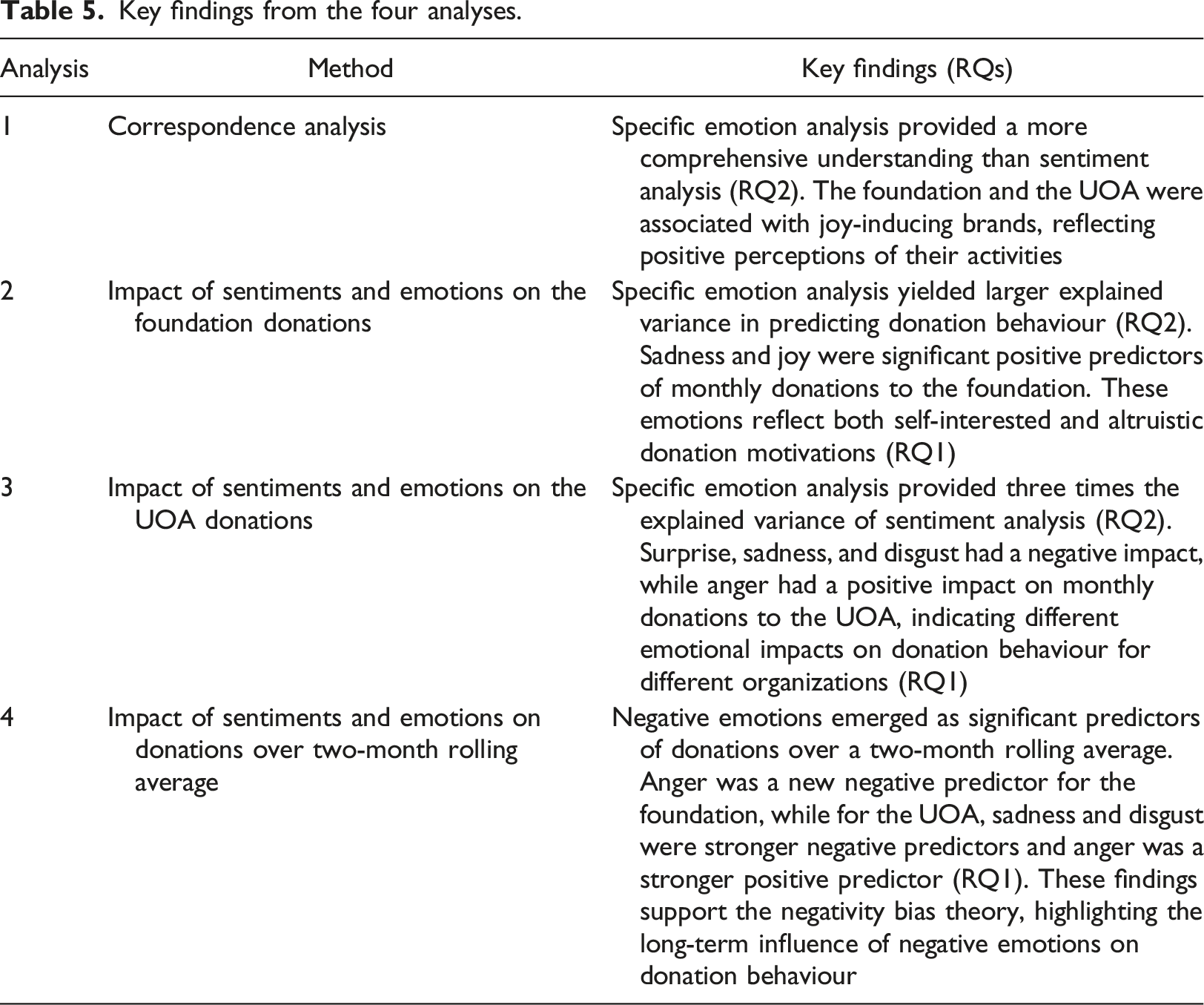
We applied CA to explore associations between sentiments and specific emotions expressed in tweets that mentioned The Foundation, the UOA or one of the top 20 brands in the US. Specific emotion analysis resulted in a stronger explanation than sentiment analysis (inertia was 10.5% vs. 6.8%). Brands with high positive sentiment, such as Apple, Starbucks, and Facebook, were located closer to The Foundation, while brands with a more prominent neutral sentiment, such as Microsoft and Google, were located towards the UOA (see Figures 1 and 2). CA also revealed that joy was the most expressed emotion for both NPOs, followed by surprise for UoA, and fear for The Foundation.
We then assessed the impact of general sentiments and specific emotions on monthly donations to The Foundation and UoA. Regarding RQ1, sadness in MGC and joy in UGC were significant positive predictors of monthly donations to The Foundation. The positive emotion of joy in UGC may reflect self-interested motivations driven by the individual’s desire to feel good by giving or donating, while the negative emotion of sadness in MGC may reflect altruistic motivations motivated by empathy for the beneficiaries. For RQ2, the results indicate that specific emotions resulted in larger explained variance (adj R 2 of 11.2%) in predicting donation behaviour compared to sentiment analysis (adj R 2 of 4.3%) for The Foundation.
For UoA we found that surprise, sadness, and disgust negatively impacted monthly donations, while anger had a positive impact (RQ1). Perhaps, anger can be a motivating emotion that drives people to act in response to negative situations, such as supporting ocean pollution research by universities. Regarding RQ2, the results again showed that specific emotion analysis had more than three times the explained variance (adj R 2 of 9.9% vs. 35.8%) of sentiment analysis.
We also analysed two-month rolling averages of emotions. Regarding RQ1, in the specific emotions model for The Foundation, the two-month rolling anger emotion in UGC was identified as a significant negative predictor, highlighting the long-term influence of negative emotions. For UOA significant coefficient values increased for sadness and disgust as negative predictors, and anger as a positive predictor. These results support the negativity bias theory, which posits that negative emotions, experiences, or information tend to have a greater impact on individuals’ perceptions, decisions, and behaviour than neutral or positive ones (Baumeister et al., 2001; Rozin & Royzman, 2001).
Academic implications
The finding that specific emotion analysis outperforms sentiment analysis enhances academic understanding of donation behaviour. A novel contribution to the literature is our findings that lingering traces of negative emotions can either escalate or reduce donations in a two-month period, depending on the emotion’s context and characteristics, e.g., long-term traces of anger corresponded with increased donations to UOA and decreased donations to The Foundation. As indicated by Rodrigues and Pinto Borges (2021), anger towards a brand, when effectively managed, can paradoxically enhance brand loyalty, especially in the context of long-term consumer relationships. Lingering anger can also be a manifestation of chronic discontent, having a detrimental impact on a brand’s reputation. Our findings echo the sentiment that negative emotional attachment, including fear and anger, can have dichotomous effects on brand perception (Khatoon & Rehman, 2021), and therefore require nuanced understanding and management by NPOs.
We also found the impacts of positive emotions, exemplified by joy, appeared to wane over time. In contrast, negative emotions, notably anger, sadness, and disgust, retained their influence on donation behaviour. This discovery is consistent with the negativity bias theory, suggesting that negative emotions or experiences often have a more potent and enduring effect on individuals’ decisions and behaviours than positive ones (Baumeister et al., 2001; Rozin & Royzman, 2001). The disparate impacts of lingering anger observed in our study add a contextual nuance to the negativity bias theory. We found that the long-term impact of negative emotions is not uniform, but can differ significantly based on factors such as the nature of the brand and the specifics of the consumer-brand relationship.
Managerial implications
This research and its empirical findings have methodological and tactical implications for the business practice of NPOs. Methodologically, the TTL model can be applied by other charities. By assessing the relationship with emotions expressed in SNS, on the one hand, and aggregate donation amounts, on the other hand, NPOs can determine which emotions result in higher aggregate donations for their cause. These emotions can be reacted to if expressed in UGC, or could be part of MGC on SNS.
The empirical findings reported in Tables 3 and 4 show that MGC from The Foundation should emphasize sadness to enhance donations, while for this NPO MGC with sadness also enhanced donations in the two-month rolling average. Anger expressed in UGC regarding The Foundation in the two-month rolling average would need to be addressed by The Foundation’s management, as it negatively affects donations. For UoA we found that anger expressed recently in UGC enhanced donations, while surprise and sadness had negative effects, also in the two-month rolling average. These findings provide clear suggestions for the content of communications by UoA relating to donations.
Our research underscores the crucial role of short-term negativity bias. NPOs need to be aware of the dual nature of negative emotions and recognize that they have a detrimental or beneficial impact on their outreach efforts, as can be seen in the negative effect of the two-month rolling average of sadness on donations to The Foundation and the similar negative effect of sadness on donations to UoA. Implementing a strategic emotional management approach could help to neutralize the negative effects of such emotions. This could involve providing regular positive updates about the organization’s work and success stories.
Our findings also suggest that some negative emotions, when used appropriately, can boost donations. Perhaps, evoking empathy-driven sadness could lead to increased donations, as donors often respond to emotional appeals that connect them with the individuals they are helping. Furthermore, educational institutions, recognized for stability and leadership, are not usually expected to propagate negative emotions within their communication approaches. They could actively identify the manifestation of such negative emotions, respond suitably, and put forward strategies to alleviate any potential adverse effects. In conclusion, by understanding the evolving dynamics of negative emotions over time, NPOs can craft more effective communication strategies for enhancing their fundraising efforts.
Suggestions for further research
This study has some limitations. First, it was confined to examining two NPOs and relied on Twitter data. Nevertheless, our research, built upon approximately 5.5 million tweets, accentuates the importance of specific emotion analysis in handling voluminous social media data for the formulation of marketing strategies.
Second, our tweet collection was limited to publicly available data, excluding demographics such as the Tweet’s author’s age, gender, or country. Consequently, we could not use these personal attributes as control variables in our analysis. If future researchers gain insights into the demographics of individual Tweet authors, they may be able to determine whether emotions expressed by individuals from specific countries or demographic segments have an influence on donation amounts to a charity.
Third, subsequent research could extend this focus to explore the influence of specific emotions on additional marketing outcomes, such as brand loyalty and purchase intentions. Moreover, we recommend further exploration into the differential short and long-term effects of emotions, with a particular emphasis on dissecting the various types of anger and their implications in both immediate and prolonged timeframes. A broader range of data sources could be employed for these studies, providing a more holistic understanding of the role emotions play across various marketing contexts. By doing so, we can further broaden the scope of our understanding and leverage these insights in diverse marketing scenarios.
Footnotes
Acknowledgements
This article was supported by Twitter with the academic research API that enables authors to collect tweets.
Declaration of conflicting interests
The author(s) declared no potential conflicts of interest with respect to the research, authorship, and/or publication of this article.
Funding
The author(s) received no financial support for the research, authorship, and/or publication of this article.
Ethical statement

Data availability statement
The original data pertinent to this study can be made available upon formal request.