



Abstract
This research note addresses a significant gap in the literature regarding the underlying mechanisms of purchase decision-making that lead to unplanned and impulse purchases. Although several papers have highlighted the differences between the two purchase types, recent academic publications continue to use those terms interchangeably. Through a systematic literature review, this study identified six high-level constructs, in line the Theoretical Domains Framework, that effectively differentiate unplanned from impulse purchase types. Overall, impulse (vs. unplanned) purchases have a primary association with automatic (vs. reflective) motivation. With these findings, academic researchers can better define the types of purchase they are investigating, including the main constructs and underlying psychological mechanisms that are associated with these purchases. As a result, this study substantially improves the reliability of knowledge in this domain. Additionally, this study may encourage marketers to expand their existing toolkits with a broader set of activities that can drive these different purchase types. For instance, marketers could appeal to different underlying purchase decision-making mechanisms: for unplanned purchases, they could offer reminders of related products; for impulse purchases, they could focus on immediate gratification.
Introduction
Numerous academic studies show that unplanned and impulse purchases represent a significant part of consumer spending: up to half of all sales fall in this domain (Xiao & Nicholson, 2011). However, the academic literature generally applies the terms “unplanned” and “impulse” purchases synonymously (e.g., Bell et al., 2011; Chan et al., 2016; Hostler et al., 2011; Huang, 2016; Hui et al., 2013a, 2013b; Sinha & Wang, 2013) even though several papers have highlighted the differences in these two types (e.g., Iyer, 1989; Kroeber-Riel & Weinberg, 2003; Piron, 1993; Rook, 1987; Wood, 2005).
Given this confusion, this study conducted a systematic literature review to determine whether unplanned and impulse purchases feature distinct natures and underlying mechanisms. By leveraging the COM-B model, the paper identifies several constructs that differentiate between unplanned and impulse purchases.
Theoretical framework
Definitions of unplanned and impulse purchases
Weinberg and Gottwald (1982) were among the first authors to approach the unclear differences between unplanned and impulse purchases. The authors underlined that “impulse buying is the difference between actually concluded and previously planned purchases” and therefore “measuring impulse buying as an unplanned purchase thus is no longer sufficient” (Weinberg & Gottwald, 1982, p. 43). Following this notion, Rook (1987) sought to identify the key characteristics of impulse purchasing that distinguish it from unplanned purchasing, namely their “spontaneous”, “extraordinary”, “exciting”, “hedonically complex”, “immediate” and “compelled” nature. By contrast, unplanned purchases “typically occur as the result of a bargain opportunity or the chance to fill a forgotten need” (Bucklin & Lattin, 1991, pp. 24–25). Later, Kacen and Lee (2002, p. 163) referred to impulse purchasing as “sudden, compelling, hedonically complex purchasing behavior in which the rapidity of the impulse purchase decision process precludes thoughtful, deliberate consideration of all information and choice alternatives”. Building on those points, Verhagen and van Dolen (2011) highlighted two prerequisites for impulse buying: the first is a lack of cognitive deliberation; the second is the dominance of emotions. Muruganantham and Bhakat (2013, p. 150) echoed this point: “impulse buying is distinguished from the unplanned buying in terms of quick decision making” and “involves experiencing a sudden, strong, and irresistible urge to buy”.
In contrast to unplanned and impulse purchases, planned purchases have a generally agreed-upon definition in the literature: decisions to buy (or not to buy) that are entirely determined before entering the store (as provided by Bucklin & Lattin, 1991). Expanding on this, Cardoso et al. (2010, p. 641) noted that “a planned purchase is characterized by conscious, attentive search and evaluation that generally results in rational, precise and better decisions”.
Reflective and impulsive components of unplanned and impulse purchases
Rook and Fisher (1995) were the first to underline that impulse purchasing is a feature of consumers rather than products themselves. Therefore, it is essential to understand consumers’ decision-making process, which scholars typically break into its reflective (i.e., buying based on triggered wants or needs) and impulsive (i.e., buying based on sudden desire) components (Gilbride et al., 2015). Coley and Burgess (2003) associated these components, respectively, with “cognitive” (referring to interpreting and understanding information) and “affective” (referring to feelings and moods) processes.
Interestingly, Coley and Burgess’ (2003) model follows the basic principles of the Dual System Model (DSM; Strack et al., 2006), which has been widely applied across cognitive, social, personality and clinical psychology research (e.g., Barrett et al., 2004; Evans, 2003; Evans, 2008; Evans & Stanovich, 2013; Gawronski & Bodenhausen, 2006; Kahneman, 2011; Levinson, 1995; Moss & Albery, 2009; Mukherjee, 2010; Reber, 1992; Slovic et al., 2002; Stanovich & West, 2000). Likewise, the DSM has appeared in studies (e.g., Muruganantham & Bhakat, 2013) related to purchase decision-making and its underlying mechanisms. The DSM follows the basic tenets that “the conscious mind is effortful and limited in capacity but provides systematic and deeper analysis, whereas the automatic mind processes many things simultaneously outside of conscious awareness but is more superficial and heuristic” (Vlaev & Dolan, 2015, p. 70).
Based on prior evidence, this study argues that the Reflective (cognitive) and Impulse (affective) systems play different roles in unplanned and impulse purchases (see Figure 1 for an overview). This model inspired the following research question: Do unplanned (vs. impulse) purchases have a stronger association with the Reflective (vs. Impulsive) system? Outline of the dual system model. Adapted from Strack et al. (2006).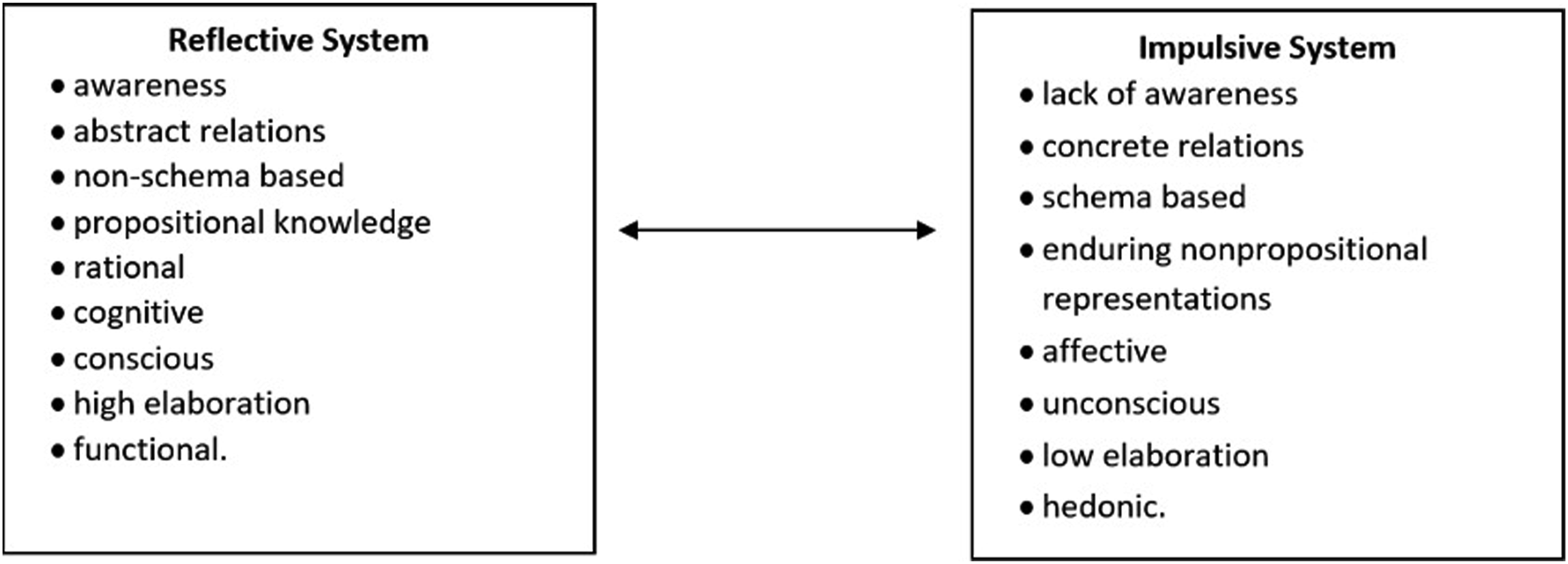
Methodology
This study pursued a systematic literature review in order to identify whether unplanned and impulse purchases differ in the way postulated above. In order to achieve a holistic view, this research considered a wide array of publications covering various purchasing contexts. In order to cast a wide net that would include seminal articles in this domain, the review encompassed papers that were published in recognized academic journals from 1985 onward (Iyer, 1989; Rook, 1987; Rook & Hoch, 1985). The following databases were included in the search: EBSCO (including EconLit and Business Source Complete), Science Direct, ProQuest (including ABI/INFO), JSTOR, SCOPUS, PSYCINFO and Web of Science. Using a large list of keywords (see Appendix 1), this study sought to find all papers related to consumer decision-making toward planned, unplanned, and impulse purchases. Figure 2 shows the results of the bibliographical search. Literature review flowchart according to the PRISMA guideline.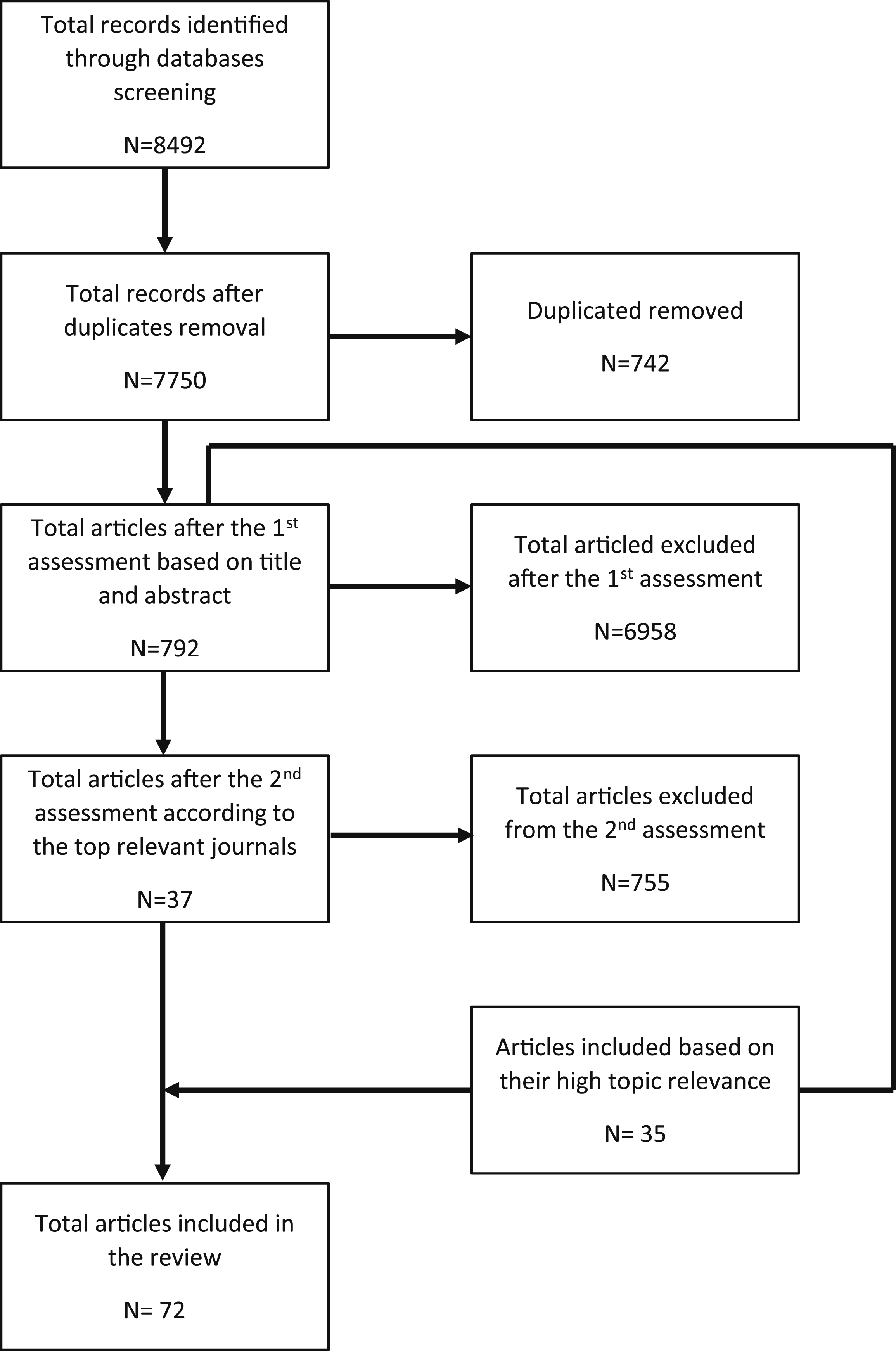
As highlighted in Figure 2, the review included 72 publications: 37 of which came from 4/4* journals in the Marketing field (defined by Academic Journal Guide, 2018 by the Chartered Association of Business Schools, 2018) and 35 that were highly relevant based on their topic and/or citation frequency. These papers represent a solid background on the definitions of unplanned and impulse purchases.
Next, the Gioia methodology (Gioia et al., 2013) and the Theoretical Domains Framework (TDF; Cane et al., 2012) were applied to identify constructs based on the aforementioned definitions. Developed by a group of psychologists to provide a holistic understanding of behavioral change, the TDF encompasses 128 constructs from 33 theories of behavioral change that cover individual, social and organizational contexts. These constructs fit into 11 domains.
Additionally, this study followed Cane et al.’s (2012) approach of incorporating COM-B components into the TDF in order to identify high-level psychological mechanisms. COM-B is an acronym: Capabilities, Opportunities and Motivations, which interact to generate Behavior (Cane et al., 2012). The COM-B model synthesizes scientific evidence from multiple fields (Michie et al., 2014) in order to produce a more holistic understanding of human behavior (Fishbein et al., 2001; Michie et al., 2011). The two authors of this study independently applied the above framework and reached full agreement about the resulting constructs.
Findings
The first and most obvious point is that scholars are substantially more interested in impulse purchases: those constituted 698 of 792 papers, while unplanned and planned purchases only featured in 83 and 37 papers, respectively. This disparity extends to the constructs: 192 third-level constructs for impulse purchases, 37 for unplanned purchases and 16 for planned purchases. Those respectively narrowed to 15, 10, and 6 second-level constructs (see Appendix 2).
Psychological mechanisms that differentiate planned, unplanned and impulse purchases.
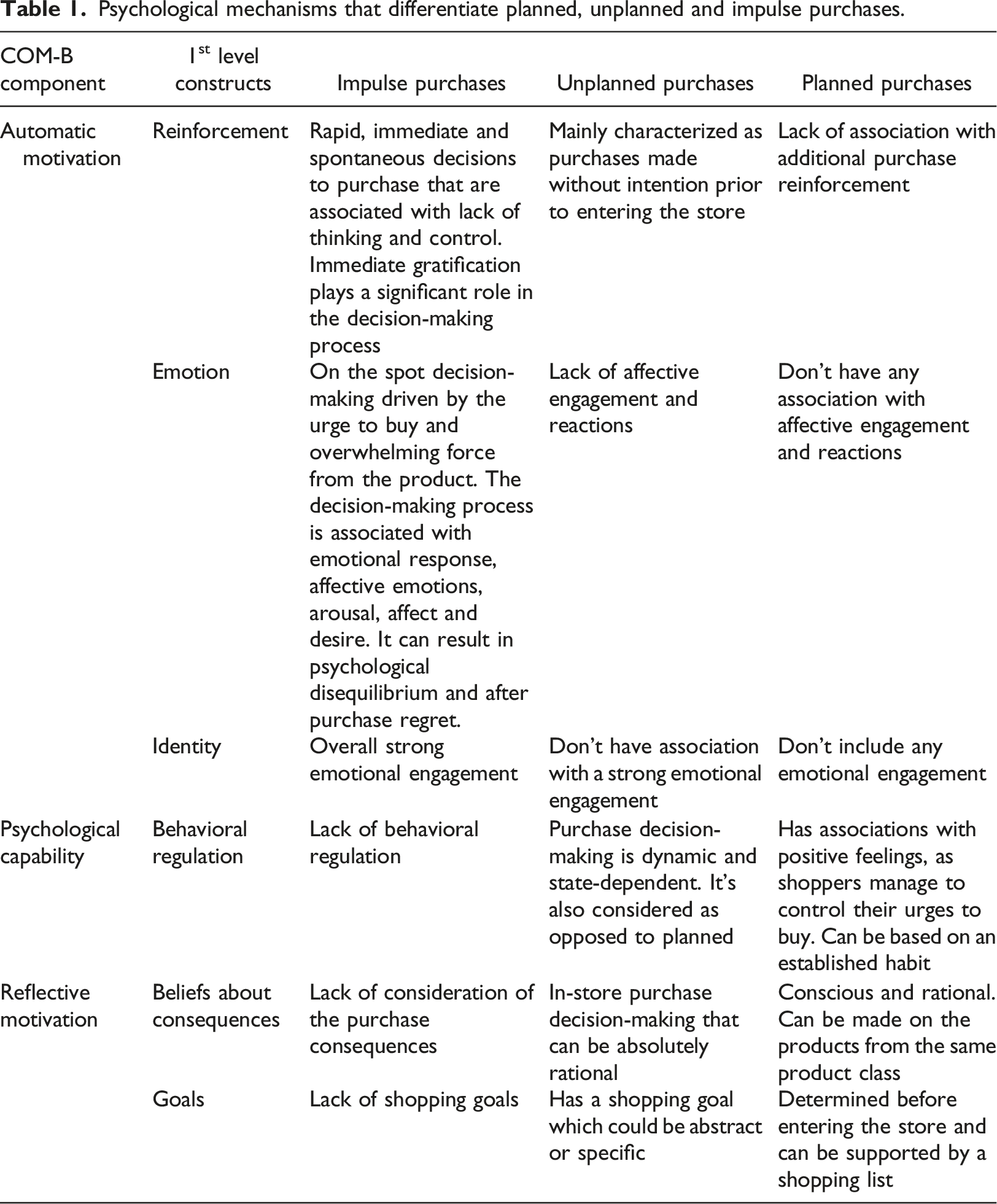
The analysis of the literature identified six domains (or first-level constructs) that distinguish unplanned and impulse purchases in terms of their underlying psychological mechanisms. Overall,
First-level constructs differentiating unplanned and impulse purchases
An in-depth analysis of the second- and third-level constructs further illuminated the following key differences between unplanned and impulse purchases: 1.
Rook (1987) and Rook and Hoch (1985) highlighted the lack of thinking and control associated with impulse purchases, which are related to reduced cognitive evaluation and regard for consequences. Meanwhile, the key characteristic of unplanned purchases is a stronger association with a lack of planning prior to entering the store (Stern, 1962; Willett & Kollat, 1968). 2.
Shoppers may feel that an impulse purchase is the “only way to relieve the tension” (Rook, 1987, p. 195) from their overwhelming desire. Relatedly, regret, guilt and disappointment seem to be common emotional responses to impulse purchases (e.g., Bayley & Nancarrow, 1998; Strack et al., 2006). Meanwhile, Piron (1993) showed that unplanned purchases are much less linked to a sudden desire to purchase or to feelings of guilt in the aftermath. 3.
Impulse purchases are intense (Rook, 1987) and represent a complex buying process (Bayley & Nancarrow, 1998) related to one’s inner dialogue (Rook & Hoch, 1985). However, the literature did not reveal any association between strong emotional engagement and unplanned purchases. 4.
Gilbride et al. (2015, p. 59) underlined that unplanned purchases are “dynamic over the course of the shopping”. This dynamic nature is reflected in two aspects: (1) an existing carry-over effect from the previously made purchases; (2) a change in the probability of unplanned and planned purchases during the shopping trip (Gilbride et al., 2015). The literature review did not reveal any connections between impulse purchases and behavioral regulation mechanisms. 5.
Weinberg and Gottwald (1982) showed that unplanned purchases can be made rationally: for instance, in the case of shopping for price discounts (Stern, 1962; Wood, 2005) or “buying a particular product after examining and comparing brands, contents and price” (Piron, 1991, p. 511). Meanwhile, the literature did not reveal any association between impulse purchases and beliefs about purchase consequences. 6.
Overall, unplanned purchases are associated with the “abstract [shopping] goal of the shopping trip” (Gilbride et al., 2015, p. 60). In contrast, studies on impulse purchases did not reveal any association between impulse purchases and goal-setting during the purchase decision-making process.
Discussion
This section will summarize the key research findings and how they can be mapped to the underlying theoretical model. The literature review showed that unplanned and impulse purchases have received considerable academic attention since the early 20th century, but studies continue to use the two terms synonymously. Thus, there is ambiguity about the differences between them.
Weinberg and Gottwald (1982, p. 43) undertook the first holistic attempt to address these gaps, arguing that “measuring impulse buying as an unplanned purchase … is no longer sufficient”. Following their example, this study investigated the underlying mechanisms of unplanned and impulse purchases to address the research question: “Do unplanned (vs. impulse) purchases have a stronger association with the Reflective (vs. Impulsive) system?”
The systematic literature review revealed useful insights into this question. Applying the Theoretical Domains Framework and the COM-B model (Cane et al., 2012), the study revealed that
By mapping these differences with the DSM (Strack et al., 2006), this research placed planned, unplanned and impulse purchases on a continuum: the left (vs. right) end representing the strength of association with the Impulsive (vs. Reflective) System (see Figure 3). Outline of the differences among planned, unplanned and impulse purchases per the dual system model.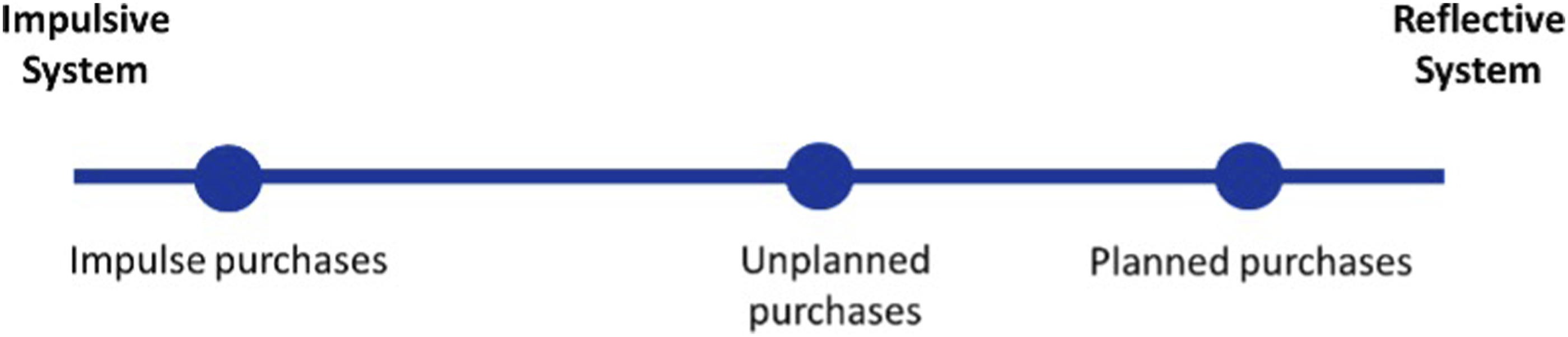
By assigning purchase types to a continuum, this paper addressed a key fault of dual process theories: namely, their ‘hard’ distinctions between two systems. For instance, “assumptions about the role of consciousness as a marker for reflective processes are difficult to sustain in the face of emerging work on unconscious goal pursuit in much the same way as do conscious motivational influences, yet without the person’s knowledge or conscious intention” (Vlaev & Dolan, 2015, p. 70). Our findings also follow the main principle of the DSM, which “assumes that in almost all situations, both reflective and impulsive components contribute to the act of purchasing a product” (Strack et al., 2006, p. 211).
Conclusion
Unplanned and impulse purchases have attracted substantial academic attention in the last 30 years. By examining 792 papers published on this issue since 1985, this study found a deeply considered topic—but oddly, an apparent gap in understanding the differences between unplanned and impulse purchases. Although several papers have explored these differences, the vast majority of recent academic publications have applied the terms “unplanned purchase” and “impulse purchase” synonymously. Following Xiao and Nicholson’s (2013) suggestion for a systematic literature review, this study identified the underlying mechanisms and high-level constructs of unplanned and impulse purchases. Following the tenets of the DSM (Strack et al., 2006), the analysis uncovered that impulse (vs. unplanned) purchase decision-making is primarily associated with automatic (vs. reflective) motivation, and thus regulated by the Impulsive (vs. Reflective) Systems.
This study’s main limitation stems from the scope of the analyzed papers: the applied criteria were rather strict, leading to the exclusion of many articles. Nonetheless, this paper can help researchers better differentiate “unplanned” from “impulse” purchases, which may ultimately increase the reliability of knowledge in this domain.
Implications for practice
This study will hopefully inspire marketers to broaden their existing toolkits, namely by introducing marketing activities that specifically drive unplanned and impulse purchases in both physical and digital environments.
For unplanned purchases, marketers can create point-of-purchase reminders for shoppers about particular products that address a general need state: For instance, consumers looking for shampoo may be open to an additional purchase of other hair care products (e.g., hair conditioner or hair mask). Alternatively, in the social media domain, marketers could target consumers who mainly log on to unwind by using ads to remind consumers about upcoming holidays (e.g., Halloween or Mother’s Day) and encourage them to purchase a relevant product.
For impulse purchases, marketers could leverage a different toolkit that emphasizes automatic motivation, perhaps via a multisensorial experience. e.g., bakeries could project the smell of freshly brewed coffee around the store to encourage consumers who don’t usually drink coffee to try some interesting seasonal flavors.
Alternatively, in the digital environment, advertisers might activate a spontaneous desire for a new fashion product by showcasing a creator who is unpacking or enjoying the product, and then giving consumers the opportunity to make an immediate purchase right from the creator’s online store.
By understanding that unplanned and impulse purchases are different in nature, marketers can adopt a greater range of marketing activations and thereby meet their sales targets. As a case in point, one company that produces and sells beauty products already implemented this study’s insights and managed to achieve 30% sales growth in a quarter.
Beyond increasing profits, marketers can leverage this study’s findings to implement ethical and sustainability agendas that educate consumers about avoiding overconsumption and excessive expenditure. Marketers can focus solely on encouraging unplanned purchases, which can help consumers address their specific needs while saving time and mental effort. At the same time, companies can openly discuss how and why consumers can avoid overspending on impulse purchases. e.g., in the case of hair products, marketers could encourage consumers to avoid less-sustainable pre-set bundles and instead only select products that form their regular routine (i.e., selling a product bundle with shampoo and a sustainably produced hair oil instead of a pre-set bundle with regular shampoo and conditioner).
Footnotes
Acknowledgements
The Authors received writing assistance with formatting of the original paper according to requirements of the International Journal of Market Research from Shawn White, Fallen Apple Lead Designer and Editor. The corresponding author paid for this assistance from personal funds.
Declaration of conflicting interests
The author(s) declared no potential conflicts of interest with respect to the research, authorship, and/or publication of this article.
Funding
The author(s) received no financial support for the research, authorship, and/or publication of this article.
