



Abstract
Over the last two decades, the study of the effect of Islamic values on management has been of interest to researchers. However, the study of the impact of these values on human resources management remains limited. The objective of this article is to shed light on the human resource management practices of Muslim immigrants settled in Quebec City. To achieve this objective, we conducted a qualitative study of the impact of the Muslim religion on human resources management in grocery stores located in the national capital. The results show that the values of the Muslim religion influence the behavior of grocery store owners, which in turn influences human resource management practices. This research contributes to the development of cross-cultural management research by showing how Islamic values influence human resource management practices in a different cultural context.
Introduction
Islam is considered unique in its ability to influence the culture of its followers (Harrison, 2011). It is not just a religion but a whole way of life (a lifestyle) including business or economics (Ramadan, 2009). Muslims represent the majority of the population of 57 countries in the world (Esposito, 2011) with an estimated population of 1.8 billion people in 2015, of which only 20% are Arabs. In 2019 and according to Pew Research Center’s Forum on Religion and Public Life, the Muslim population has reached 1.9 billion people (Diamant, 2019). The major Muslim countries are Indonesia, Pakistan, Bangladesh and India. According to Esposito (2011), Islam has gained visibility in Europe and America in the last two decades and Muslims have become a wide range of racial and ethnic groups. These Muslims represent two groups: natives (born in Western countries) and immigrants (expatriates from different Muslim countries).
In recent years there has been a growing interest in studying the impact of Islamic management on organizations. It is considered a promising field of research (Ramboarison-Lalao and Bah, 2016) and the study of the combination of theology, religion and management can enrich interdisciplinary approaches (Gümüsay, 2015). The study of the relationship between Islam and Islamic management- or Islamic management, which is defined as a specific approach developed according to Islamic principles and which guides leaders in the management of the organization (Sulaiman et al., 2014). Islamic management principles are unique as they shape the behavior of individuals on both the spiritual and moral side (Khan and Khan, 2018). Over the last two decades the study of the relationship between Islamic values and human resource management has been of interest to researchers. But this research remains limited, in fact, following a search in the Scopus database, 44 articles have been published on this theme (see the dispersion of this research in the following graph) and 66 articles in the Web of science database. Thus, there are few studies on the relationship between Islamic values and human resource management. This research can be divided into two contexts of study. The first context is that of Muslim countries while the second is that of non-Muslim countries. For the first context, Ababnch and Avramenko (2016) studied human resource management practices (represented by four functions: recruitment, performance appraisal, training and development, and compensation) in Jordanian universities in light of Islamic values and principles. They concluded that Islamic values have only a moderate impact on the functions of resource management despite the study being conducted in an Islamic country. These findings support those of Branine and Pollard (2010) that there is a difference between the theory and practice of Islamic management in Arab countries.
According to Abbazi and Zarqan (2019), the principles of Islamic religion in human resource management can be useful in solving the problems and challenges faced by institutions and organizations in HRM. They add that the principles can solve crises in training, leadership, professional skills, knowledge and attitudes required for productive careers and a useful role in society. Following the study of 34 Indonesian organizations, Nasution (2019) investigated the effect of the implementation of Islamic values and employees work discipline on the performance of Muslim employees. The author concluded that the implementation of these practices had a positive and significant influence on employee performance.
In another study, Saban et al. (2020) examined the influence of Islamic work ethics, skills, compensation and work culture on job satisfaction of hotel employees. Following the analysis of the responses of 345 employees from 20 Indonesian hotels, the authors have Islamic ethical values influences employee satisfaction.
Khalid et al. (2020) investigated the extent to which Muslim employees are familiar with the Islamic HRM system and its practices and also the extent to which Pakistani organizations use this system. Following the analysis of a sample of 150 responses, the researchers concluded that Islamic HRM techniques are important for any Pakistani organization but are rarely formal. In a study conducted in Indonesia, Chowdhury et al. (2019) identified eight main functions of Islamic HRM (HR planning, recruitment, selection, orientation, performance appraisal, training and development, compensation and benefits, and career development) from which, if implemented according to Islamic guidelines, the organization and employees will benefit greatly. They add that the main objective of these functions is to ensure the availability of a competent, willing, dedicated, sincere and ethical workforce that will work tirelessly to maximize the company’s stakeholder interests.
For Chowdhury et al. (2019), there are similarities in terms of process between Islamic and Western HRM functions and differences in terms of content, philosophy and spirit. Indeed, the Islamic perspective places great importance on the behavioral aspects of organizations (Razimi et al., 2014; Khan and Khan, 2018). Islamic management principles are unique in nature and shape the lives of individuals both morally and spiritually. Conventional HRM is based on the principles of ethics (Kamaluddin and Kasim, 2013).
This difference is explained by the influence of Western thought as designers and developers of HRM theory (Storey, 2007). In another context, Abdul Ghani Azmi (2015) studied the impact of Islamic HRM practices on the organizational performance of Islamic companies in Malaysia. Malaysia is a predominantly Muslim country (60% of the population is Muslim) but not Arab-speaking. Following the analysis of 114 responses, the author found a strong and positive relationship between Islamic practices in training and human resource development and organizational performance.
For the second study context (non-Muslim countries), we cite the study by Ramboarison-Lalao and Bah (2016). These authors studied the influence of the Muslim religion on human resources management (HRM) and marketing practices in “Halal” food outlets in France. The results of their exploratory study showed that recruitment is done according to religion in the form of networking and also following recommendations. The managers of these brands are trained on the job and their organization is characterized by flexibility and easy communication mechanisms.
According to Hashim (2009), many issues in human resource management have their origins in religion such as how to properly treat employees and the impact of religion on human resource practices. Hashim (2009) consider that these issues are rarely studied because of the predominance of the secular and materialistic viewpoint in Western science. Research on the impact of religion on the management practices of companies governed by Western law and led by Western Muslim leaders of foreign origin remains very limited (Ramboarison-Lalao and Bah, 2016). In this sense, the objective of this article is to answer the following central question: “To what extent are human resource management practices influenced in companies managed by Muslim Canadians and governed by Canadian law?
The objective of this article is to show how the values of the Muslim religion influence the human resource management practices of companies located in Western countries and managed by Muslims. Noting that to our knowledge, all grocery stores in the province of Quebec are run by Canadians of Arab origin. According to the 2011 census presented by Statistics Canada, Muslims represent 3.2% of the Canadian population with a median age of 28.9 years. Studies on the influence of Islamic values on HR practices in Western countries and a study in this direction will enrich studies in this area. This research makes a new contribution to the existing literature on cross-cultural management by examining how religion as a constitutive element of culture influences human resource management practices in a different cultural context. This study is not just about Muslims from Muslim countries or Muslim-majority countries, but about all Muslims living in Canada.
In this article and following the review of the literature, we limit ourselves to studying three functions of human resources management (recruitment, training, compensation) while quantitative studies have studied a fourth function, that of performance evaluation. For Islamic values, light will be shed on the following values: honesty, fairness, responsibility, justice, transparency, merit and equality. The values of honesty, fairness, and justice in the relationship between the employee and the employer have great importance in Muslim religion (Khan and Khan, 2018). To achieve the objectives of our research, we collected data through interviews with managers and owners of halal grocery stores in the province of Quebec.
Literature review
Islam and management
Islam means “submission,” meaning that man submits to the will and purpose of God (Allah). Islam is an Arabic word meaning submission and obedience (Abbasi et al., 2010). According to Ibn Mandhur (SD) “Islam is subservience, and Islam is part of the Shari’a, showing submission, manifesting the Shari’a, and adhering to what the Prophet brought.” Man must first and foremost have the belief in the existence of God and know that there is one God (Tauhid) who created the universe (Adawiyah and Pramuka, 2017). Also, to have the belief that HE does not share power and authority with any person (Pramuka, 1998). According to Ibn Uthaymin (2007), Tauhid is defined as “To single out God, Glory be to Him, with what is specific to Him of lordship, divinity, names and attributes.” There are verses in the Quran that show the meaning of the word Tauhid. In Al Imran Surah, God said: “So is it other than the religion of Allah they desire, while to Him have submitted [all] those within the heavens and earth, willingly or by compulsion, and to Him they will be returned?” (3:83), Tahari et al. (2016) explain this verse as fellow “And he has the submissiveness of whoever is in the heavens and the earth, so he submits to him in worship, and affirms for him the singularity of the Lordship, and he criticizes him with sincerity of monotheism and divinity”. Another verse “Worship Allah and associate nothing with Him, […]” (4:36), Tahari et al. (2016) explain this verse as fellow “And humiliate God with obedience, and submit to Him by it, and single Him out with his lordship, and make submission and humiliation sincerely to Him, by ending His command, and turning away from His prohibition, and do not make Him a partner in the lordship and worship that you glorify and glorify Him.” According to Hussain (2007), Muslims do not generally seek to deepen their understanding of religion, which prevents them from developing dogmatic views. However, Islam does not limit human imagination and development of processes and practices but rather gives general principles and guidelines to frame the development of systems according to time and circumstances (Rana and Malik, 2016). However, the focus of business organizations on profit causes them to forget that adherence to the basic principles of Islam is not a choice but a religious, ethical and social obligation. The application of Islamic guidelines in management should allow for the consideration of stakeholders' interests and generate synergies (Hussain, 2007)
Sulaiman et al. (2014) have defined management as “the process of planning, organizing, leading and controlling the efforts of organizational members and by using all other organizational resources depending upon the guidance of Allah (SWT) and His Prophet (Peace Be Upon Him) with accountable mentality, integrity and skills to achieve the predetermined objective”.
Islamic management principles are unique as they shape the behavior of individuals on both the spiritual and moral side (Khan and Khan, 2018). Islam has created a unique management paradigm that promotes civility, prosperity, and happiness among people of different faiths and ethnic backgrounds for 14 centuries (Abbasi et al., 2010). These authors consider the Islamic perspective on management as an important field of research. This perspective should be based on the Quran (sometimes written Qur’ān or Koran) and the Sunnah. Kazmi (2003) considers these two sources of knowledge as valid for research purposes. The Quran is the main source of Islamic law. It is the text of Allah and is the guide to human life. It is the last revelation of Allah to the Prophet Muhammad. The Sunnah includes all the explanations of the Prophet in terms of his speech, actions and silences that have been historically compiled and verified through chains of narratives called Hadith (Adawiyah and Pramuka, 2017). Silences mean the things that God and His Prophet did not give information or guidance for the following reasons: “O you who have believed, do not ask about things which, if they are shown to you, will distress you. But if you ask about them while the Qur’an is being revealed, they will be shown to you” (Quran, 5:101).
The role of the Sunnah is to give more explanations about the Quran. After the death of the Prophet, jurists and traditionalist scholars (Muhadithun) compiled Hadith through transmission from the Prophet’s companions in order to reach consensus. Hadith literally means report and refers, on the one hand, to the traditions concerning the Prophet or his companions (Sahaba), on the other hand, to the whole corpus or kinds of such traditions (Motzki, 2004). It consists of a text and information about its transmission path (Isnad). It relates historical events from the life of the Prophet, the early caliphs or other companions. Hadith also reports information about opinions or actions concerning matters of belief, rituals, law, ethics, interpretation of the Quran, etc.
According to Libson (1997), classical Islamic law recognizes four main sources: the Qur’an, the Sunna (tradition), Qiyas (analogy) and Ijma’ (consensus). The first two are literary sources and the second complements the first. Indeed, the Quran is made up of the revelations (in the form of surats) received by Mohamed (Peace Be Upon Him) while the Sunnah is made up of oral traditions that were then updated and written down in collections such as the works of Bukhari and Muslim. The last two sources are technical legal tools. Qiyas is a systematic form of reasoning in law based on thought and reflection (Hasan, 1976), while Ijma’ is to confirm or establish a legal decision based on a consensus of jurists or the Muslim world as a whole. Nowadays, if there are questions (Nawazil) that have not been previously addressed by Islamic law, the ‘Ulama’ (scholars) of the Muslim world provide a legal answer (Fatwa) to the questions asked.
Muslims have an obligation to put into practice the instructions of Allah and His Prophet as described in the Quran and the Hadith (Abbasi et al., 2010). The believer (mu’min) understands that Allah has everything in his hands such as wealth, power, reputation, etc. For a believer to achieve something, he must make an effort and struggle fairly and his success or failure depends on the grace and will of Allah (Mawdudi, 1960; Abbasi et al., 2010). From the above, we can make the transition to how a believing leader should behave. But before elaborating on this point, we need to define the concept of leadership in the Muslim context. In the Islamic context, leadership is defined as the ability to lead, guide, direct or influence the actions of others (Majali, 1990), and leading should be from front (Razimi et al., 2014). There are many verses in the Qur’an that speak of the qualities of leadership. Here we are limited to the verse in which Allah speaks of the leadership of the Prophet: “ So by mercy from Allah, [O Muhammad], you were lenient with them. And if you had been rude [in speech] and harsh in heart, they would have disbanded from about you. So pardon them and ask forgiveness for them and consult them in the matter. And when you have decided, then rely upon Allah. Indeed, Allah loves those who rely [upon Him]” (3:159).
The leader influences the culture of the organization and therefore all its members through his or her management style and values. They are supposed to give advice and consult (Shura principle in Islam) their subordinates before making decisions, to treat them as if they were their sisters and brothers (Razimi et al., 2014). The leader’s behaviors are reflected in the culture and procedures of the organization (Jabnoun, 1994). The believing leader must obey the directives of the Quran and the Sunnah and apply them in his or her leadership function. The leader has power within his or her organization and must take into consideration three elements of Islamic leadership: Humility, responsibility, and accountability. From the above, Abbasi et al. (2010) have linked Islamic religion and organizational management. See Figure 1. Islamic management model. Source: Abbasi et al. (2010, p :1875).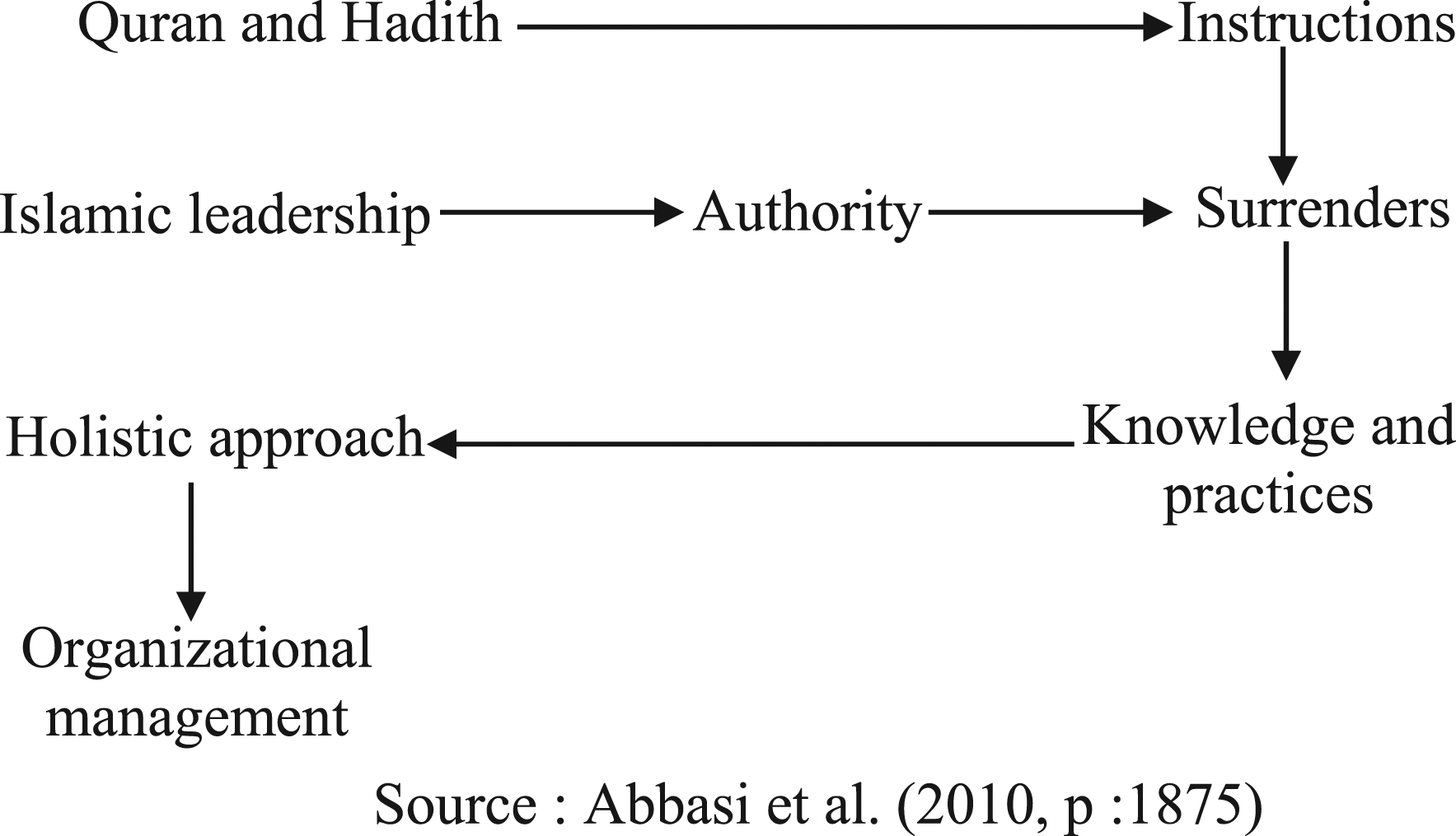
Figure (1) relates the Islamic religion to organizational management, in fact, the Quran and Hadith are the source of instructions. They are in the form of religious texts that describe how a Muslim should live in this world through guidelines. The instructions given by these religious texts must be obeyed by the faithful. In parallel, Islamic leadership or leadership in an organization is characterized by an authority that induces obedience (the case of a CEO with his employees). A Muslim leader in an organization is influenced by religious texts and in turn will influence the knowledge and practices of the organization.
Humility is admitting that man does not know and cannot be better at everything, that he must ask Allah for help and always seeks to learn. A responsible leader is one who knows his responsibilities, his goals, what he needs to do to get his rewards and the consequences he will suffer if he makes mistakes (Abbasi et al., 2010). The last element is accountability, the leader must be held accountable for the consequences of his or her decisions and actions because he or she has accepted the function of managing the organization and being its leader (Chaffee, 1997). In this sense, the Quran quotes the verse: “O my child, whether it be the weight of a mustard seed, in the depths of a rock, or in the heavens, or in the earth, Allah will bring it forth. Allah is infinitely Gentle and Perfectly Knowing” (31:16). This verse makes it clear that Allah will judge each person by his actions, whether they are small or large.
According to Abbassi et al. (2010), “the Islamic management model is flexible enough to adapt to circumstances in order to achieve the best possible result from the organization.
Islam and human resource management
The study of the impact of religion on human resource management and its role on behavior is largely ignored by researchers (Ababneh and Avramenko, 2016). But in recent years, the topic of religion in management science has begun to attract more attention, we have for example the study of Branine and Pollard (2010) who explored the nature and content of Islamic HR practices and their effects on HRM in Arab countries, and Adawiyah and Pramuka (2017) who introduced the underlying dimensions of workplace spirituality in Islam. Also, doctoral theses such as Alfalih (2016).
Islam regards human beings as supreme in relation to other creatures by virtue of the fact that they are honored by God to make the mission of succession (the religious term: vicar) on earth. Man’s mission of succession is clear in the verse of Sourat albakara (the cow): “When Your Lord entrusted to the Angels: “I will establish a vicar “Khalifa” on earth” (2: 30). According to (Ali, 2005), Islamic stewardship derives from the principle of appreciation of the values of human property. The Prophet said: “None of you will have faith till he wishes for his (Muslim) brother what he likes for himself” (Al-Bukhari, n.d.a 1:2:12). The Prophet is very clear on this subject, we must treat others as we want to be treated. In this sense, we always want to be treated in the best way that our rights are protected, etc. Prophet states: “‘Your slaves are your brethren upon whom Allah has given you authority. So, if one has one’s brethren under one’s control, one should feed them with the like of what one eats and clothe them with the like of what one wears. You should not overburden them with what they cannot bear, and if you do so, help them (in their hard job)” (Al-Bukhari, n.d.c 3:46:721). For this reason, the implementation of such a principle will have a great effect on the management of human resources.
The model presented in the previous paragraph has linked the leader as the leader of the organization with organizational management. It has shown how the two sources (Quran and Hadith) of Islamic law influence the organization through the interconnectedness between human behavior at work and one’s personal life. The organization represented in the leader’s person must treat its employees the way the leader likes to be treated. But this is far from happening given the constraints of the company and even the basic philosophy of the organization. Organizations are in a capitalist system that only takes into consideration personal interest. A company is created to maximize profit and not to treat employees in such a way. In Islamic thought, employees are considered the core of economic activities, the essence of wealth creation and the main driver of social prosperity (Ali, 2005). In this sense, and according to Branine and Pollard (2010), the principles of Islamic management stipulate that organizational goal must be achieved along with the appreciation and dignity of human resources. These principles are not only to achieve the best solutions for life, but also to meet the needs of companies for their maximum level (Ahmad, 1976). In this sense, studies have shown the relationship between Islamic values and business performance (Abdul Ghani Azmi, 2010). Other researchers have highlighted the importance of human resource management in Islamic management (Hashim, 2009; Branine and Pollard, 2010; Budhwar et al., 2010; Tayeb, 1997). However, Mellahi and Budhwar (2010) recommend more research to understand the role of Islamic values in human resource management (HRM). The Islamic approach to HRM focuses on the basic functions of HRM namely recruitment, selection, training, performance appraisal, and compensation in accordance with the guidelines prescribed in the Quran and Hadith (Khan and Khan, 2018). According to Alarimy (2015), Islamic approaches to HRM are based on three aspects; Taqwa, Itqan and Akhlak. Taqwa means piety, righteousness, and fear of God while Itqan means that a person should do things the right way (right order with the desired quality). Akhlak refers to the attitude, feelings and dispositions that employees possess.
Honesty and fairness in the workplace and in business are the main Islamic ethics (youssef, 2000). In this sense, it is forbidden to do unproductive work or waste time (Abeng, 1997). Careful work can only lead to success and failure is only the result of laziness. The involvement of employees in productive work will promote justice and consequently leads to creativity and personal satisfaction (Ali and Al Owaihan, 2008).
The national context of a country influences human resource management through the rules and laws governing the relationship between employer and employee such as the constitution and the labor code (Tayeb, 1997). In the case where the country follows a specific religion, its laws and regulations are influenced by that religion. See Figure 2.
Islamic management guides the manager in managing the business effectively and efficiently. Islam helps the top management in defining all aspects of the business such as setting business goals, decision-making processes and human resource management (Sulaiman et al., 2014).
Based on the Quran and hadith, Branine and Pollard (2010) listed 10 principles that govern Islamic human resource management presented as fellow: • Niya (intention): Islam places great importance on the intentions of individuals. In this sense, the Prophet said the following: “The reward of deeds depends on the intentions, […]” (Al-Bukhari, n.d d 5:58:238). Therefore, employees should be managed according to their intentions, rewards and punishments are determined by their intentions and unintentional mistakes should be overlooked. • Taqwa (faith): Faith is following the directions of God and His Prophet. In this sense God said the following: “So Fear Allah as much as you are able and listen and obey and spend [in the way of Allah]; it is better for yourselves” (64:16). This verse encourages individuals (including employees) to be beneficial to the organization. • Ihsan (i.e. perfection or benevolence or proficiency): Ihsan is the pursuit of the worship of God. The following Hadith of the Prophet defines Ihsan: “Ihsan is to worship Allah as if you see Him, and if you do not achieve this state of devotion, then (take it for granted that) Allah sees you” (Al-Bukhari, n.d e 6:60:300). • Adl (justice): Justice occupies an important place in Islam and the following verse makes this clear: “O you who have believed, be persistently standing firm for Allah, witnesses in justice, and do not let the hatred of a people prevent you from being just. Be just; that is nearer to righteousness. And fear Allah; indeed, Allah is Acquainted with what you do” (5:8). Justice is important because it leads to the fundamental pillars, fairness and equality, of the Islamic social system (AlKahtani, 2014). The Prophet ruled that there is no difference between human beings except that of Faith. The fellow Hadith show clearly this statement “There is no difference between an Arab and a non-Arab, between a white man and a black man except that of faith” (Said, 1979). In relation to HRM, employees should be treated fairly and justly regardless of their background or culture or other. • Amana (trust): Trust is necessary for the proper functioning of any society. Islam clearly calls for the respect of trust and forbids betrayal and the following verse makes this clear: “Indeed, Allah commands you to render trusts to whom they are due and when you judge between people to judge with justice” (4:58). Employees must use the resources provided to them responsibly and any abuse will be considered treason. • Sedq (sincerity): Sedq is manifested in the sincerity and truthfulness of employees' actions and words and Islam considers it important. The Hadith of the Prophet states that: ” […] And adhere to truth, for truth leads to good deeds, and good deeds lead to paradise. If a man continues to speak the truth and makes truth his object, he will be recorded in Allah’s presence as eminently truthful” (Abu Dawud, (n.d.42:4971). • Etqan (perfection): Islam encourages the pursuit of perfection in the work done by an individual and therefore employees must perform their duties as required. • Ekhlas (devotion): This principle is similar to that of Sedq. Islam clearly calls for Ekhlas and every Muslim worker must take into account that God is observing it. • Shura (consultation): Decision-making in Islam is governed by the principle of Shura. God states: “And those who have responded to their lord and established prayer and whose affair is [determined by] consultation among themselves, and from what We have provided them, they spend” (42:38). The application of this principle within organizations will enhance the role of employees. • Sabr (patience): In the Quran and Sunnah there are many statements that call for believers to be patient and show its importance. The application of this principle by the staff (including the leaders) of the organization will undoubtedly allow the organization to reap only positive results.
Recruitment
The philosophy of human resource management has its origins largely in the West (Welch, 1994). However, the organization is influenced by its external environment. Indeed, human resource management in a Canadian society will not necessarily be the same in a Maghrebian society, for example, because the sociocultural context of the organization, including the national culture, ideology, economic conditions and legal system, influences human resource management policy (Metcalfe, 2007). Among the important elements forming the national culture is religion. Religion influences the cultural characteristics of people and institutions (Metcalfe, 2007). Human resource management in the Islamic religion refers to the basic functions of HRM, namely recruitment, selection, performance appraisal, training and compensation, which are drawn from the guidelines of the Quran and the Hadith (Hashim, 2010a).
Recruitment in Islam is considered one way among others to get closer to God and also in the path of God (Hashim, 2010b). Islam requires that the recruiter must be godly and just. The recruiting process must be fair, and candidates must be treated equally without discrimination or otherwise. This requirement is stated in the Holy Quran (4:58): “Truly, Allah commands you to return deposits to their rightful owners, and when you judge between people, to judge fairly. What a good admonition that Allah gives you! Truly, Allah is the One who hears and sees all things” (quoted by Khan et al., 2010). The recruiter is required to inform potential candidates clearly and truthfully about the jobs offered. The recruiter must inform the candidates about the working conditions, possible promotions, salary, and any other information concerning the jobs in competition. This information will allow the candidates to have a clear idea of the potential work which will allow them to take a position in relation to the job offered according to their skills, abilities and interests. Candidates or job seekers should not act beyond their capabilities. They must be fair and not look for positions that are beyond their abilities and not give false information to recruiters. This requirement is clear in the Holy Quran (2:233): “No one should bear more than his means”. Recruiters and candidates must be transparent and never hide the truth. This requirement has its origins in the following verse: " And do not mix the truth with falsehood or conceal the truth while you know [it] (2:42) ».
In the process of selecting candidates, certain principles must be respected, and these are:
* Justice: The selection of candidates should not be made on the basis of nepotism or favoritism. According to Syed Agil et al. (2007), the Fourth Caliph successor of the Prophet, Imam Ali Ibn Abi Talib, states: Monitor the behavior of your assistants and use them only after probation. Do not appoint them because of favoritism or selfishness [nepotism]. These two attributes reflect injustice and betrayal. Choose from among them those with experience and decency” (1989: 321). • Competence: The candidate should be chosen on the basis of competence and not on the basis of kinship, friendship, wealth, age, race, political power, or peers (Hashim, 2010a). • Honesty is one of the most important values in Islam. • It is forbidden to assign a job that exceeds the employee’s capacity because if the skills required to perform a task exceed those of the employee this will harm him or herself and the organization.
Training
The organization must encourage its employees to acquire new skills and knowledge through training and internships, because skills and knowledge are the key to the organization’s prosperity. In Islam, God’s first directive to man is to read and makes knowledge mandatory for all (Hashim, 2010a). Islam obliges people to have the skills required to carry out the missions entrusted by the recruiter (Hashim, 2010b). In this sense, God said in the Holy Quran: “Say, ‘Are they equal, those who know and those who do not know? Only the intelligent remember” (39:9). Islam emphasizes two essential aspects of the employer: moral quality and professional quality (Sadeq, 1989). Moral quality resides in the person’s religion, values and behavior, while professional quality reflects the person’s ability to fulfill his or her employment contract.
In Islam, human development refers to the development of spiritual and human virtues (Alam and Muzahid, 2006). The Muslim religion positions the human being between two extremes: perfection and lowliness. The first tend to be closer to the creator while the second is the clay that is the origin of humanity. Thus, in the course of their lives, human beings are in a constant state of flux either towards the spirit of God which is marked by perfection and infinite exaltation, or towards lowliness (Shariati, 1979). The human being is in a state of internal tension between perfection and decay (Hashim, 2010a). Therefore, perfection can only be achieved through training and practice. Moreover, in Islam, striving for perfection is a virtue since individuals. In Islam, the training and development of human beings encompass intellectual, moral, spiritual, and physical aspects (Hashim, 2010b).
Since human beings do not have the same abilities and this is well mentioned in the Quran: " […] No person is charged with more than his capacity. (2:233) and also: “Allah does not charge a soul except [with that within] its capacity. […]” (2:286). According to Ibn-Katheer these two verses mean that no one is charged beyond his capacity. There is also a Hadith in the same vein quoted by Ali (2010) which is: “They shall be burdened only with what they can bear.” Thus, the development and training of human beings are limited only by their capacity to learn. The training and development of people’s skills are linked to Islamic concepts such as Ihsan and Etqan (see the 10 principles that govern Islamic HRM presented earlier).
Remuneration
The minimum remuneration is set by the public authorities (the minimum wage). In the context of Islam, remuneration must be declared to potential candidates. Khan et al. (2010) made an important point regarding the setting of remuneration, indeed, relying on the equilibrium price between supply and demand to determine remuneration can lead to exploitation of the workforce in the case where job seekers exceed the available offers. For Khan, remuneration must allow the employee to live with dignity whatever the state of supply and demand for employment. Remuneration may be influenced by other elements such as favoritism and nepotism, as pointed out by Danley et al. (1991).
According to Khan et al. (2010), the Islamic system is based on the principles of humanity and fraternity and therefore, the remuneration system for employees must enable them to meet their basic needs and with a level comparable to that of the employer (Al-Bukhari, n.d.b 3:480:36). Remuneration must be equitable for both the employee and the employer. In this context, God said in the Holy Quran (16:97): “He who practices righteousness, male or female, and has faith, in truth, We will give him a good and pure life, and We will give him his reward according to the best of his deeds” (quoted by Hashim, 2010a). It must be adequate to the work provided by the employee and take into consideration the overall economic situation of the society (Ahmad, 1995). For their part, employees must give their best to make the employer’s business flourish (Sadeq, 1989). Finally, it should be noted that compensation plays an important role in motivating employees and therefore promotes performance and increase productivity (Kramer and Briffault, 1991). The employee must be paid on time without delay once he finishes his work. The prophet said the following: “Give the worker his wages before his sweat dries” (Ibn Majah, n.d.3:16:2443). In another Hadith, the Prophet made known the consequences of not paying employees' wages, He states: “I am the opponent of three on the Day of Resurrection, and if I am someone’s opponents I will defeat him: A man who makes promises in My Name, then proves treacherous; a man who sells a free man and consumes his price; and a man who hires a worker, makes use to him, then does not give him his wages” (Ibn Majah, 3:16:2442).
Conflict management
People are by nature different from each other and generally have different interests, which is conducive to triggering conflicts. The Islam of conflict management is quite special, indeed, it requires the selection of the Shura (council) and the appointment of a Muslih (mediator) whose function is (1) al-tathabbut (verification) and (2) nasıhah (advice). HRM must take into account proactive organizational features based on Islamic principles: (1) ta’awun (cooperation), (2) saber (patience), (3) al-ta’akhi (brotherhood), and (4) husn al-dhann (good assumptions) (cited in Cader, 2017). Cader (2017) noted the existence of few researchers who have developed models of conflict management in HRM. Most of the existing research has focused on conflict resolution in the Muslim world has been in the political and economic fields (Hjarpe, 2013) while using Western management principles (Irani and Lebanon, 1999). Other studies have focused on peace-building within Muslim societies but also between Muslims and non-Muslims (Irani and Lebanon, 1999). Other researchers have used the leadership behavior of the Prophet in conflict resolution (Noor, 2002).
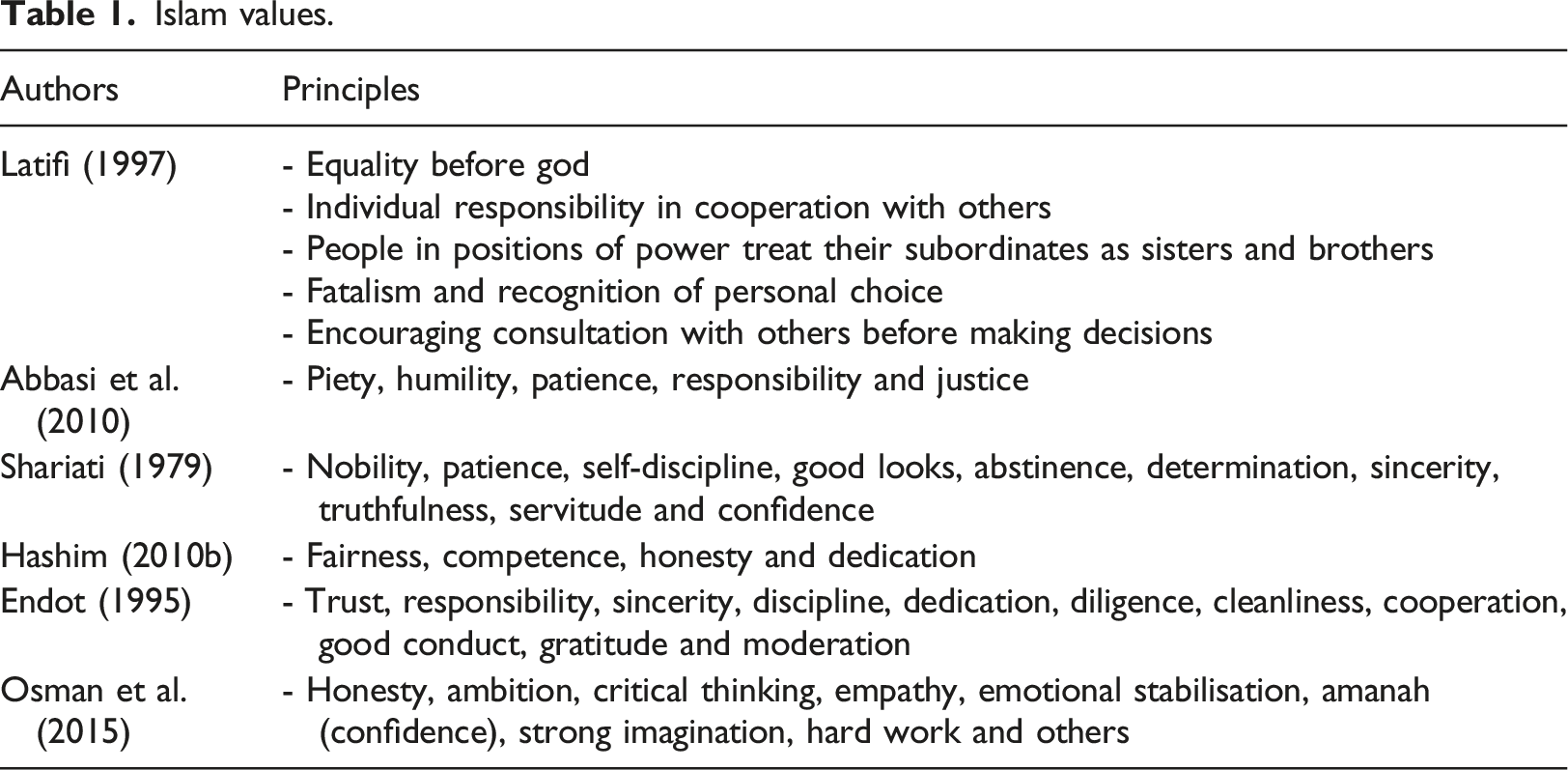
The values of Islam
Islam values.
Methodology
Research strategy
The objectives and the research question determine the process (linear/hypothetical deductive or iterative/inductive) to be followed (Gaudet and Robert, 2018). In our case, the objective of the research is to broaden our knowledge and understanding of how Islamic values influence human resource management in Western countries, qualitative research is the appropriate solution. Qualitative research is defined as an iterative process of knowledge production (Gaudet and Robert, 2018; Maxwell, 2013).
Research of a qualitative nature has the capacity to provide a finer understanding of the phenomena studied (Pascale, 2011) and it is for this reason that this approach is becoming more adopted by management science researchers. For the choice of research strategy, Blais and Martineau (2006) distinguished between four approaches to analysis, namely the general approach of inductive analysis, anchored theory, discourse analysis and phenomenology. The choice between these approaches depends on the objectives of the research and the expected results.
Considering our objective, and our understanding of the subject under study, it seems to us that the anchored theory approach is the most adequate and will allow us to reach the set objectives. Grounded theory analysis has its origins in the empirical and inductive theorizing approach developed by Glaser and Strauss (1967). This approach was subsequently developed by these researchers either collaboratively or individually (Glaser and Strauss, 1965/1970, 1968, 1971). Rooted or ingrained theorizing is one of the mixed methodologies such as ingrained theory, which is not limited to using just qualitative data (Gaudet and Robert, 2018) but also quantitative data (Walsh, 2015). It aims to generate new theories based on empirical analysis that can predict and explain behavior (Charmaz, 2006; 2014; Czarniawska, 2002) and/or be used in practice (Glaser and Strauss, 1967).
Grounded theory can be used either as a qualitative research method or as a method of data analysis (Paillé, 1994). In this work, the grounded theory approach is adopted as a method of data analysis. The aim of this approach is to “extract the meaning of an event, to link together in an explanatory diagram various elements of a situation, to renew the understanding of a phenomenon by bringing it to light in a different way” (Paillé, 1994 p: 149). What is essential in the analysis by anchored theorizing is that the results achieved by this analysis must be firmly anchored in the empirical data collected.
Methods choice
With regard to the choice of data collection method, Gaudet and Robert (2018) distinguished three tools (or a combination of these tools) to conduct their research field: observations, interviews and documents. According to these authors, what guides the choice of tool for producing research material is consistency and flexibility. In the case of our research, given the objective and nature of the target population for the study, we chose to conduct interviews to produce materials. In this sense, Merriam and Tisdell (2016) distinguished between different types of interviews, namely structure-based interviews (directed, semi-structured or non-directed), philosophical and disciplinary interviews such as ethnographic interviews, focus group and online interviews. In the framework of this research, semi-directed interviews were chosen as they allow for the production of quality data and for deeper analysis. Semi-structured interviews allow for “responding to the current situation, the respondent’s emerging worldview and new ideas on the subject. “ (Merriam and Tisdell, 2016). In our case, following a literature review, we were able to establish preliminary questions for conducting semi-structured interviews with an opening on the subject.
To face this limitation, we proceeded to troubleshoot to achieve the objectives of the study, we decided to enrich the existing materials with data from empirical studies done on the subject or close to the subject. The addition of this type of data does not contradict the premises of the approach adopted because according to Paillé (1994), the anchored theory can be used with any type of material.
Sample
Theoretical sampling is one of the premises of embedded theory (Glaser & Strauss, 1967; Paillé, 1994). According to this premise, the writing of the research report begins at the beginning of the data collection operation, and after each data collection operation (interview, observation, etc.), the researcher selects the next source of data, whether it is a participant, observation, or document (Merriam and Tisdell, 2016 p: 50).
The purpose of this research is to study the effect of Islamic values on human resource management in the context of non-Muslim countries. Given the cultural differences between Western countries and Arab and Muslim countries, immigrants who arrive in Western countries seek to preserve their habits but also for religious reasons such as halal products.
Muslim immigrants who settle in Western countries bring with them their cultures and ways of life. As a religion, Islam influences the practices of its followers. In the Islamic religion, it is forbidden, among other things, to eat harbor meat or any kind of meat that is not slaughtered according to a specific ritual. As a result, the Muslim faithful have created halal convenience stores, butcher shops and restaurants.
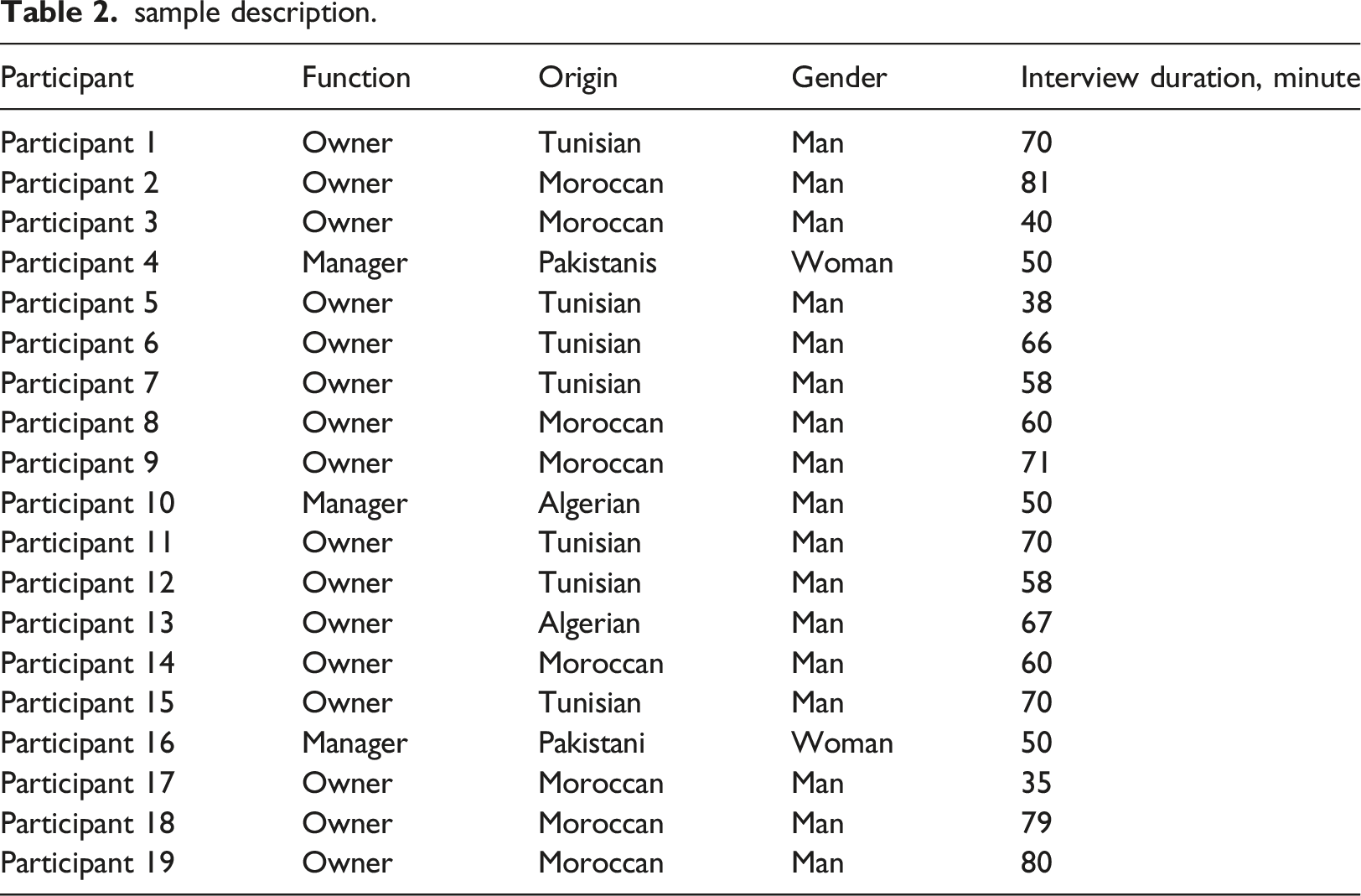
To achieve the objectives of this study, we conducted interviews with existing supermarkets and minimarkets in the province of Quebec. The collection was launched about 2 months before covid-19 and was once the restrictions were lifted. In total, we were able to interview 19 managers and owners of existing Halal supermarkets and minimarkets in the province of Quebec. The description of the sample is presented in Table 2.
Explanation of the materials collected classification
The research strategy followed in this research is anchored theorization. This strategy has undergone several developments and the most recent ranking method has been chosen. According to Charmaz (2006), coding in anchored theorizing involves at least two phases: initial coding and targeted coding. Before looking at these two phases in detail, coding is defined as “categorizing segments of data with an abbreviated name that summarizes and accounts for each data item simultaneously” (Charmaz, 2006). Coding acts as a pivot between the collection of data and the emerging development of a theory that explains the data.
Initial coding: The purpose of initial coding is to look closely at data word fragments, lines and segments. In this phase, basic essential concepts are not defined, but are left for later to allow new ideas to emerge.
The codes can be in the form of a qualification of the general terms of an interview. However, the data should not be forced to mean something that does not correspond to it. According to Charmaz (2006), the initial coding process should consider the following guidelines: stay close to the data; keep your codes simple and accurate; build short codes; preserve actions; compare data with data; move quickly through the data.
What is interesting in Charmaz’s (2006) method is the coding protocols, in fact, it can be done (depending on the data) in three steps: word by word coding, line by line coding and incident to incident coding. The first is more concerned with the meaning of the words, while the second consists of naming each line. Line-by-line coding allows all ideas from the interviews to be taken into consideration and is used when detailed data are available. The final protocol is Incident-by-Incident coding, which involves comparing incidents with each other and then comparing them with the conceptualization of incidents already coded.
All three coding protocols meet the criteria of appropriateness and relevance. That is, the codes correspond and reflect the experience of the participants and make visible the relationships between implicit processes and structures.
Targeted coding is based on the most significant codes from the initial coding in order to sift through the large amounts of data. The challenge remains in choosing the initial codes that make the most analytical sense and that will allow categorization in an incisive and comprehensive manner. In practice, targeted coding is done by comparing the data and then comparing the data to the codes to refine them.
In the case of our study, we began by first reading the transcripts and with each reading, we were able to determine initial codes that are in principle interview concepts but have contextual meaning. Also, these initial codes are linked to the questions of the semi-directive interviews, even the latter emerged from the interviews conducted. We used Nvivo to get an idea more of the textual composition of each transcript but also of the whole. In a second step, we made a choice between the different initial codes in order to make an incisive and complete one.
Quality criteria, including ethical considerations
The research question is the cornerstone between the objectives, the research problem, the theoretical framework and the methodological aspects of the research (Gaudet and Robert, 2018). According to these authors, the modeling of an empirical research project goes back and forth between the empirical and theoretical throughout the research. Throughout this process, the researcher must ensure that his or her research is of high quality. In qualitative research, four criteria must be taken into consideration: credibility, transferability, internal consistency and reliability (Lincoln and Guba, 1985; Lincoln, 1995; Gohier, 2004; Marshall and Rossman, 2011). Through credibility, the researcher must ensure that his or her research is valid on three levels: triangulation, observation and consensus agreement. For transferability can be considered the external validity of the research, i.e. the research can be transferred/applied in other contexts. For internal consistency or internal coherence is intended to ensure that the elements listed above (objectives, research question, etc.) are consistent with each other. The last criterion (reliability) refers to the transparency of the researcher’s positions in relation to the research and the actions undertaken. Within the framework of this research, we have done our best to ensure that our research is of quality despite the constraints and limitations that will be cited in the paragraph reserved for this subject.
In all qualitative research, ethical considerations remain important. In this sense, each respondent was informed of the purpose and context of the study and for this purpose they signed a consent document. We asked the respondents' permission to record the interview.
Findings
sample description.
Islamic values and recruitment
Recruitment is the primary function of human resources management. This function is of great importance to the organization since the people who will be recruited will influence the achievement of objectives. In relation to this function, Islamic practice emphasizes procedural fairness and equity in the recruitment process (Abdul Ghani Azmi, 2015). According to Islamic values, future employees should be practical, have moral values (SahehTirmidhi), teamwork (Saheh Abu Daud), competent (Surah al-Qasas:26; Al-Bukhari, n.d.f 8:73:56), dedicated and committed, hardworking, responsible, trustworthy (Sahih Muslim, 1:265), loyal and disciplined.
In the case of our study, the owner of the first grocery store has 7 employees. The recruitment process is based on word of mouth and recommendations from relatives: “word of mouth, internet and then everything. Most of the people we have now that it is someone who knows someone sent it to me”. However, for him they are strangers and from different countries.
All respondents without exception said that their current employees were recruited through acquaintances and word of mouth. They also said that they initially used advertisements but without results.
Islamic values and training
Halal-labeled mini-markets in Quebec do not have training plans in the exact sense of the word, but just a simple accompaniment at the beginning to familiarize the new employee with the work environment. In this sense, one of the respondents said: “Not necessarily. I have a training structure in the store and when people come in, I train them for a week or two and they start working. They become self-sufficient”.
Recruitment requires experience, especially in the restaurant and butcher shop, and his profiles are all of Muslim origin with sometimes non-Muslim helpers. Note that the tasks are easier and do not require specialized training and generally use part-time employees such as students to handle the cashier or to advise customers in the shelves.
Islamic values and remuneration
The remuneration of the employees is governed by the Quebec government, so the owners of these mini-markets pay at least $12.50 per hour. However, these remuneration depends, of course, on the functions of the employee. They observe the work provided by the employee and pay bonuses for those who do more work. In this sense, one of them said: “at the end of the week or at the end of the month when there is an employee who deserves a bonus or something I’m always there. There’s no effort that you make that goes unnoticed either for either that or for the people across the street”.
Islamic values and the employee-employer relationship
With regard to the work climate and the relationship between employer and employee, respondents are divided into two groups: those who prevail in the hierarchical relationship and those who develop friendly relationships with their employees. This difference is due to the owner’s professional experience, as one of the respondents spent 10 years of his career as a sales manager in a large retail chain. As a result, he is used to establishing a hierarchy between employee and employer. His statement is quoted as follows: "...there is a hierarchy that must be followed, there are things that must be done and then there is respect between employees as in any business. I am a little fairer than my former employer. In the sense that I don’t put a lot of pressure on myself, I don’t have a lot of stress, etc. We work hard but we have to respect people”. The owner sees himself as a person who establishes the hierarchical relationship but without putting pressure on the employees and he tries to be fairer than his former employer.
The second category is the owners who have not worked in structured organizations in their previous experiences and have not attended training courses concerning business management. These are owners who learn on the job and do not have the spirit of establishing a well-structured organization. Contextual influence on HRM. Source: Khan et al. (2010).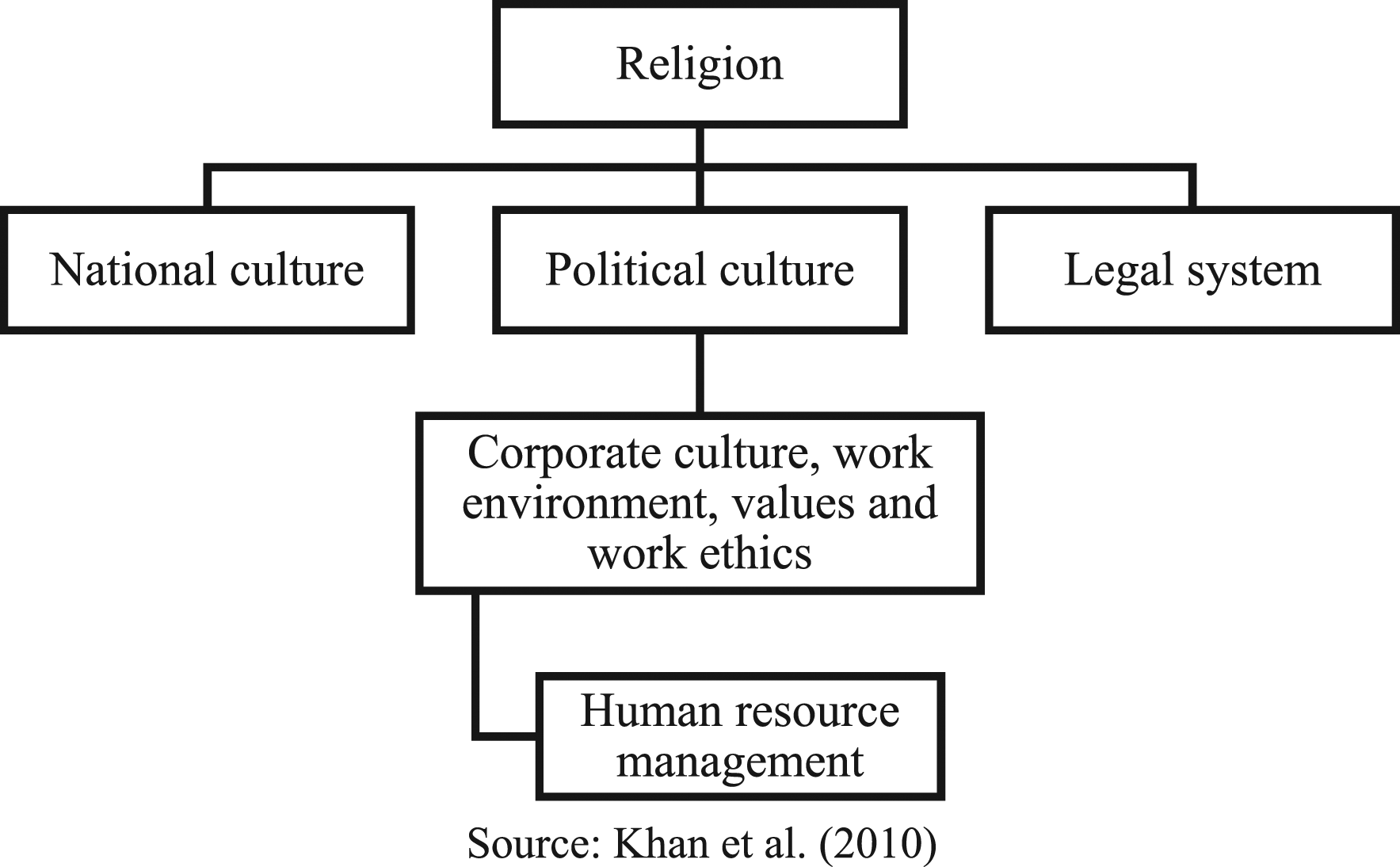
Islamic values and conflict management
Respondents differ in their approach to conflict management. Conflict management by the first respondent follows the model of arbitration (tahkim) proposed by Moussalli (1997), who considers it to be inspired by the Quran. In this model, an arbitrator (a third person) intervenes after the conflict is declared, his objective being to avoid escalation between the two parties. Most important in this model is the qualities of the arbitrator, in fact, the arbitrator must have the following qualities: justice, fairness, knowledge and wisdom. The respondents are convinced that if there is a conflict, the first thing to do is not to talk about it in the presence of the clients and then each party will explain their point of view and understanding of the conflict and then find an arrangement between the parties. In this sense, we quote the statement of one of the owners: “It rarely happens but when there are some things. For sure, we try to work it out. We don’t want to do it in front of the clients in front of everyone. If there is an employee who has done something, it’s between me and him. When we are alone, we try to work things out".
Islamic values and human resource managers
Honesty
Honesty is an important value in the professional life of informants: “It’s something I’ve been working on since I was a child. It’s something I’ve learned from my parents and it’s something my parents have instilled in me since I was a child and I think it’s a value that always wins - I don’t think you’re going to lose when you’re always honest. It’s very important to be honest when you’re in business”.
Transparency
Practicing respondents cited transparency as an important principle and that they cannot lie to achieve private goals. The first respondent (Grocery 1) “You hire someone and give them the minimum wage and you will work hard. You’re not going to tell him to work and then after 2 months I give you $18, that’s not true. In the beginning it must be clear whether it’s with the employees or with the suppliers. It’s one of the values of business”.
Education
Education had a great effect on personality and outlook. Note that some of the 4 informants were over 40 years old. They spent their first 20 years in their home country. In the 1980s, education and the family context is characterized by conservatism and therefore they tend to explain more behavior by the effects of education.
Islam and management
The analysis of the transcripts of the interviews shows that Islamic values influence the way they manage in general and human resource management in particular. Respondent number 1’ “Islam played a role in my education which played a role in my business. Islam pushes us to be honest, it pushes us to be transparent and it pushes us to just do the right things and exactly those things will make my business succeed. Here 1 day you drop one or two values, you hit a wall”.
Meta-analysis
After searching the Scopus database, we had to select three qualitative articles. These articles show the existence of a difference between religious texts and reality. The main conclusions of these articles are: - It proposes an increased role for the valence and value of goals in organizational motivation. - It also shows how ancient Islamic traditions had already practiced modern HRD principles. - It analyzes the economic interaction between Muslim activists in an objective situation of human development from the perspective of Islam. - It proposes indices of economic management of human development among other required indices, planning an acceptable economic plan quasi - system. - There is a gap between Islamic management theory and the practice of management in Arab countries - Management in Arab countries is informed and strongly influenced by traditional and national non-Islamic cultural values and norms.
From this analysis and during this research, we propose a model of human resources management for SMEs established in Western countries (see Figure 3). Muslim entrepreneurs and HRM Performance. Source: Author.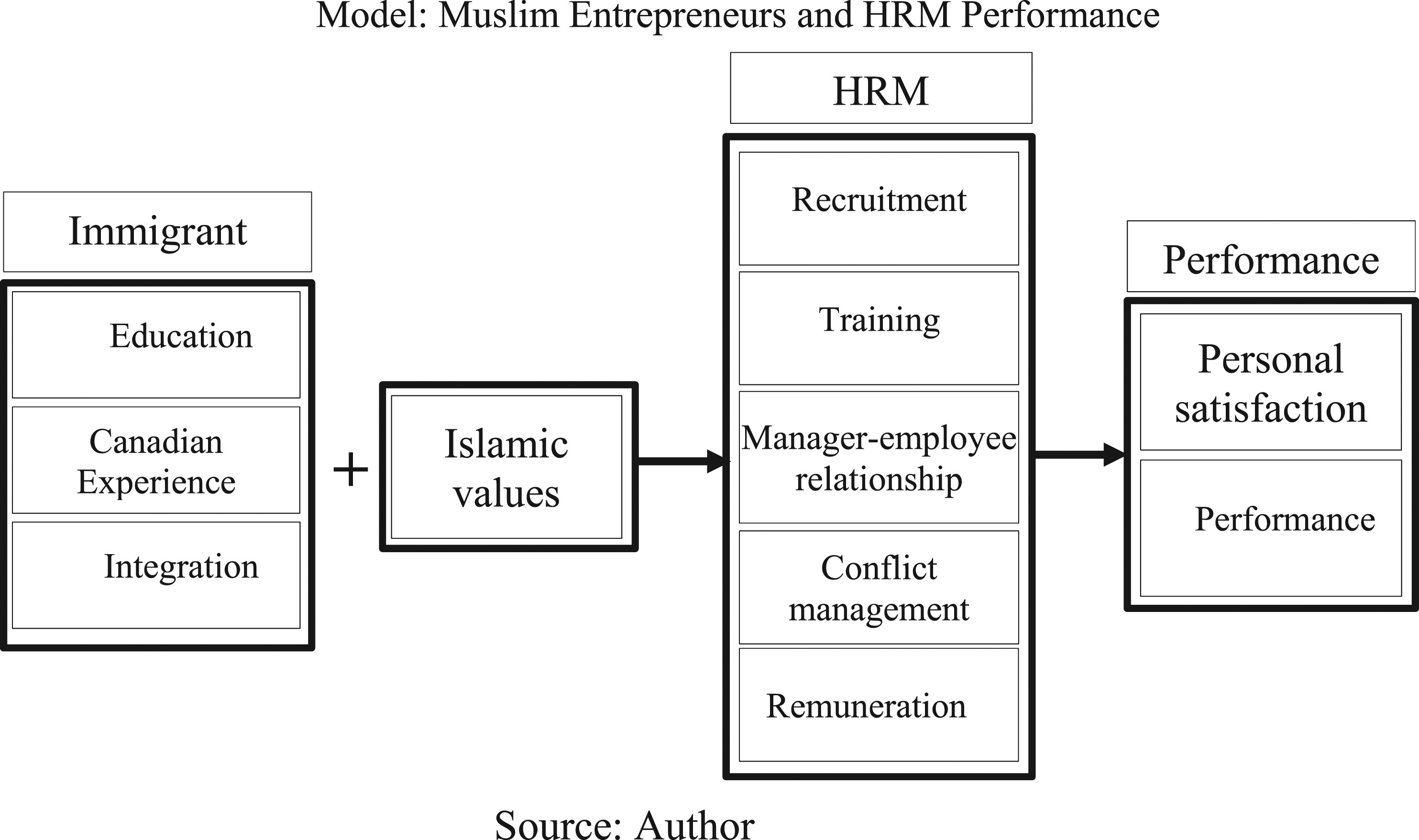
This model relates Muslim entrepreneurs to HRM performance. All respondents referred to the role of education in inculcating the values of the Islamic religion.
Discussion and conclusion
Core themes.
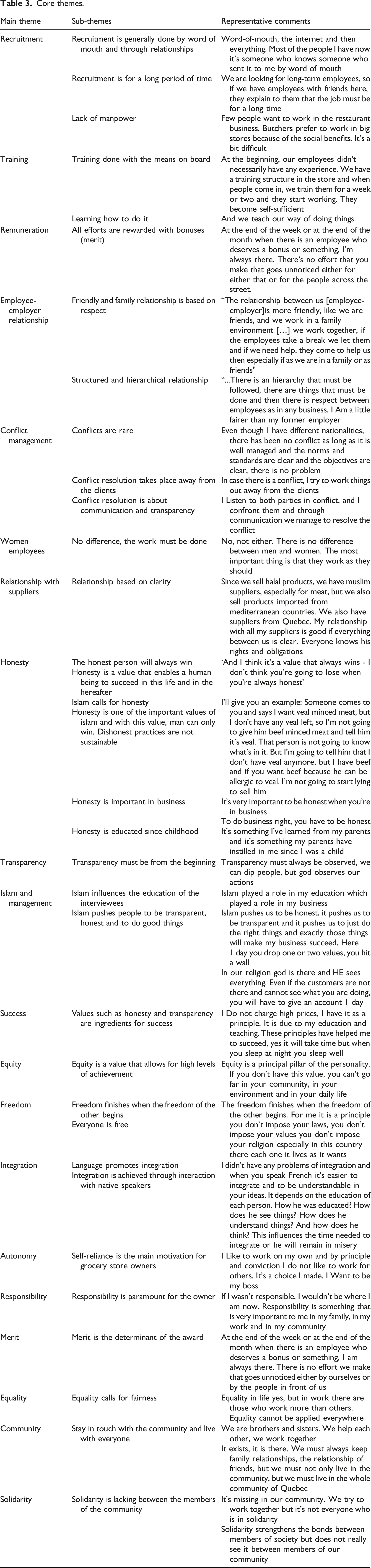
Through this study, we have participated in the advancement of research on the effect of culture (represented by Islamic values) on human resource management. The results showed that the first function of HRM is recruitment, which is done in an informal way through knowledge. This way of recruitment is due to the nature of the positions to be promoted (for example, it is necessary to have someone who knows how to make Maghrebi dishes) but also due to the scarcity of manpower, most of the people who have experience in relation to the functions requested by the mini markets prefer to work in the large surfaces in order to benefit from the advantages. Our study has both scientific and managerial contributions. Indeed, the first scientific contribution of this research is to highlight how the values of Islam influence the practices of human resource management in the context of convenience stores installed in Quebec and to our knowledge no study has been done in the context of Canada (absence of historical links such as colonization between the countries of America and Muslim countries unlike the relationship of the latter with European countries). The second contribution lies in the conceptual contribution of this research, in fact, this study contributed to discussing the different concepts in a way to open the debate on other elements that can influence the practices of human resources management. The third contribution is the proposal of a model that explains how entrepreneurs of Muslim faith can achieve performance through human resource management based on Islamic values. By performance we mean not only the performance of the company but also the satisfaction of the owner. Finally, our research contributes to the development of cross-cultural management research by showing how Islamic values influence human resource management practices in a different cultural context.
Our research has also managerial contributions, indeed, the number of immigrants of Muslim faith are increasing while the number of these superettes is stable and suffers from the scarcity of manpower. Future investors must take into consideration the scarcity of manpower before launching such a procedure. Future investors should focus on training employees and recruiting non-Muslims. These companies must give more importance to remuneration to encourage people to work for them. Another implication that is a little bit far from HRM is that of the clientele targeted by these convenience stores. During our interviews, we conducted an interview with an owner who chose his clientele poorly and was in a financial crisis because he targeted just the Muslim clientele.
The limitations of this work lie in the number of interviews conducted but also in the richness of the interviews. The interviews were with only four convenience stores and in addition to that, their small size, indeed, this kind of organization is simple and not very rich in terms of information. Each convenience store has about three employees, so human resource management is easy and simple compared to a large company. But this type of organization gives the possibility to see the whole organization, to understand all the functions and especially when these functions are grouped in the but of one person. In large companies, the general manager is not in direct contact with most of his employees and the task of human resources management is entrusted to a person, usually known for his skills in resource management.
Due to circumstances beyond our control, we were not able to conduct a second interview with each respondent to validate the transcript and to enrich the research with new ideas that emerged as a result of repeated readings and also comparisons between the different respondents.
Footnotes
Declaration of conflicting interests
The author(s) declared no potential conflicts of interest with respect to the research, authorship, and/or publication of this article.
Funding
The author(s) received no financial support for the research, authorship, and/or publication of this article.

Review of the main work on islamic values and HRM
Author(s)
Objective(s)
Research method
Conclusions
Ab. Wahab and Masron (2020)
Identify the core values of islamic work based on islamic legal texts (quran and hadith) present in the workplace
Recherche qualitative
14 islamic values are distinguished by the malysian muftis (experts in islamic knowledge and jurisprudence) which are considered essential in islam and enable to achieve performance in work
Ab.Wahab and Ismail (2019)
Explain conceptually the working values of responsibility and benevolence in islam based on the analysis of the main texts of islam
Conceptual (analysis of religious texts)
The key islamic values of work are responsibility and benevolence, and they lead to high performance. Responsibility remains a prerequisite and benevolence are a necessary condition to achieve excellence in performance
Sloane-White (2018)
To show how shariah has emerged in malaysian companies as a form of corporate culture by reconfiguring identities and social relations in the workplace
Conceptual
Employees have accepted and embraced the equitable power arrangement of leaders characterized by inequality and conservative gender roles. They perceive these differences as natural and authorized by sharia and daily work practices must conform and please god
Abdul Cader (2017)
Explores and analyzes the islamic principles that govern conflict management in the context of islamic HRM but also develops a model for HRM practitioners in a muslim workforce
Theoretical and conceptual
Conflict management in islamic HRM is about referring conflict to the quran and sunnah. Islam requires the selection of the shura (counsel) and the appointment of a muslih (mediator) whose function is to verify and advise
Berger et al. (2016)
Understanding how muslim employees engage in agency and identity work in the context of white organizations
Interviews
Muslim employees who work in white organizations engage in agency and identity work to balance maintaining their professional identity, performing white organizational practices, and engaging in their islamic practices. The latter may conflict with organizational practices
Ibrahim (2017)
Provide a presentation of employer branding from an islamic perspective
Conceptual and theoretical
The author concludes his article by presenting recommendations to companies. Organizations must give importance to the recruitment of talents and ensure their development
Khan and Rasheed (2015)
Present direct and moderating hypotheses on the relationship between HRM practices and project success
Survey
HRM practices (recruitment and selection; employee performance appraisal, employee compensation system) influence project success in pakistani organizations. Islamic work values has only a moderating effect on the relationship between recruitment practice and project success
Yeganeh (2015)
Study the effect of religiosity, religious denomination, communist heritage and socio-economic development on work values
Conceptual
Socio-economic development negatively influences intrinsic work values while religiosity and communist heritage positively influence them. Religion has a quadratic relationship with work values
Hage and Posner (2015)
Identify and measure the relationship between a leader’s religion and religiosity and leadership practices
Survey
The authors found that there are differences in the relationship between religious affiliation, religiosity and leadership practices. Their results also showed that religion and religiosity influence the leader’s organizational behavior and practices
Ahmad and Allen (2015)
To ascertain whether the high-performance HR practices of western countries are applicable in Pakistan which has different religious values and organizational traditions
Survey
Authors concluded that there is limited support for the applicability and effectiveness of high performance HRM practices in Pakistan. These practices are consistent with islamic principles. They also found that cultural traits play a role in how these practices are implemented
Abdul Ghani Azmi (2015)
Assess the relationship between islamic HR practices and organizational performance
Survey
There is only one practice namely training and development that positively influences organizational performance
AlMazrouei and Pech (2015)
To examine issues of cultural competence and awareness among expatriate managers working in the UAE.
Exploratory study
The interviews showed that the major challenge faced by expatriate managers and executives in managing staff in the UAE is language. In second place comes trust to establish and build relationships with UAE nationals requires an understanding of the local culture and awareness of cultural and religious beliefs
M.K. Alhyasat (2012)
Identify the effect of islamic work ethics on organizational citizenship behavior -
Descriptive
The author concluded that the level of commitment of jordanian workers have a very high islamic ethics. In other words, adherence to islamic work ethics (kindness and forgiveness in dealing with employees and customers, obedience to those in power, and adherence to professional ethics) has an effect on the organizational citizenship behavior of employees in jordanian press foundations. However, no relationship could be distinguished on the following ethics: Competence, advice to muslims, sense of responsibility, justice and fairness, integrity and teamwork
Burdbar khan and nisar Sheikh (2012)
Discuss the role of the religion of islam in developing a philosophical framework of spirituality in the workplace
Conceptual
Islamic HRD can be as a means to develop responsible human potential and also can play a broader holistic role of an individual in a society or community. Islamic spirituality can produce a higher level of quality, service and productivity than conventional HRD.
Hassi (2012)
To portray the ideals and practices of training and development from an islamic perspective
Conceptual
The literature on training and development is not consistent (or even contradictory), there are two broad categories: a Broad perspective that encompasses general islamic concepts and principles (1) and a narrow perspective that looks primarily at training and development. In training and development, islam emphasizes practical wisdom and the translation of theoretical ideas into behavior and practice
Asrar mirza and Riaz (2012)
Explain the function of training and development in HRM in the islamic banking sector and how to assess the needs of islamic banking
Survey
Islamic banks' needs are prioritized based on the urgency of the need, the magnitude of the need, and the resources available. Training needs analysis is crucial for performance and job analysis
Metcalfe (2011)
To study the social and cultural factors that influence gender and human resource development systems in three arab gulf states. Also to study the influence of national and institutional frameworks on HRD. -
Conceptual
Develop a national and gender HRD model that facilitates women’s empowerment
Zangoueinezhad and Moshabaki (2011)
Studying economic-managerial indices of human development based on HRM in islam
Hermeneutic
Presents an analysis of the interaction between muslim activists in an objective situation of human development from an islamic perspective. The author also proposes economic-managerial indices of human development
Khan et al. (2010)
To develop a conceptual framework of aspects of modern human resource management and islamic HRM.
Conceptual (2nd data)
The authors concluded that islam is more a way of life than a religion. They note that businessmen have as a reason to live the accumulation of material things, but this is temporary and only their good deeds will remain forever
Kumar and che Rose (2010)
Present an in-depth analysis of the islamic work ethic and its effect on innovation capacity
Survey
The islamic work ethic is highly relevant to the public sector and significantly influences innovation capacity
Mellahi and Budhwar (2010)
Present an introduction to a special issue on HRM and islam
Conceptual
The need to conduct further research to understand the role that islam plays in the workplace and how islamic ideals, culture, values and norms are used in practice and their implications on the work environment and overall organizational performance
Ali (2010)
Update on islamic values in HRM and HR practices in organizations
Survey
The author concludes that islamic prescriptions consider the interests of employees and employers as complementary. The latter are the main force for economic growth. The author suggests that consideration of ehsan (benevolence) in the workplace can preserve the concerns of the society
Branine and Pollard (2010)
Explores the nature and content of islamic HR practices and their effects on HRM in arab countries. It also examines the implications for multinational companies
Literature review
There is a difference between islamic management theory and management practice in arab countries. Management practices in arab countries are influenced by the practices of western countries than by islamic practices
Hashim (2010a)
To examine HRM from an islamic perspective and its effect on malaysian employees' organizational commitment
Survey
The author found that there is a strong correlation between the islamic approach to HRM and organizational commitment
Hashim (2009)
To study muslim employees' awareness of HRM practices but also the applicability of these practices
Survey
Muslim employees are aware of islamic HRM practices and practice them frequently
Metcalfe (2007)
Analyze how islamic values affect women’s work experiences but also how islam influences gender and HRM policies
Mixed method
The author finds that women are constrained in their careers and that gender or equality issues are absent in HRM policies
Al-Hamadi et al. (2007)
To present an overview of HRM and the factors that influence it in the sultanate of Oman
Survey
Omani companies are committed more to HRD than to HRM and employees do not have a job description or a career path. Even the importance of linking HRD to business objectives is not well recognized
Leat and Kot (2007)
To examine and discuss HRM practices in Egypt in relation to the socio-cultural context, islam, the education and vocational training system, elements of the economic and legal environment
Survey
The authors found that HRM practices and approaches related and unrelated to culture
El Garah et al. (2012)
Analysing the role of the islamic religion as a new philosophical framework for HRD in management practices
Conceptual and theoretical
It proposes an increased role for the valence and value of objectives in organisational motivation. It also shows how ancient islamic traditions had already practiced modern HRD principles
Zangoueinezhad and Moshabaki 2011
Study the economic and managerial indices of human development based on HRM from the perspective of islam and the quran
Hermeneutic method
It analyses the economic interaction between muslim activists in an objective situation of human development from an islamic perspective. It proposes indices for the economic management of human development among other required indices, planning an acceptable quasi-systemic economic plan
Budhwar et al. (2010)
To explore the nature and content of islamic management practices and their implications for HRM in arab countries
Conceptual (introduction)
There is a gap between islamic management theory and management practice in arab countries. Management in arab countries is informed and strongly influenced by traditional and national non-islamic cultural values and norms
Adawiyah and Pramuka (2017)
Introduce the underlying dimensions of workplace spirituality in islam by developing a scale to measure it, and also present workplace spirituality from both western and islamic perspectives
Survey
Authors identified 13 indicators that define islamic spirituality in the workplace in Indonesian companies