




Abstract
Institutional complexity arises when multiple institutional logics prescribe divergent and incompatible behaviors. Studies show that exposure to contradictory prescriptions of multiple logics may trigger identity tensions, strategic challenges, and legitimacy problems. We add to this research stream by exploring the implications of the incompatibility between religion and other logics on consumer wellbeing. Extant research reports a generally positive effect of religion on wellbeing but limits the analytical attention to the individual effects of religiosity. Viewing religion as part of an inter-institutional system, we seek to understand why religion and other institutional logics might come into a conflictual relationship with each other and destabilize wellbeing. We find that critical events, such as the COVID-19 pandemic, change the relative centrality of logics and prompt individuals to engage in incompatible behaviors. We also discuss how consumers manage the sudden and unexpected institutional complexity they face and seek to restore their wellbeing.
Keywords
Institutional logics and their interactions shape consumption practices and market dynamics (Choi and Burnes, 2022; Corciolani, 2023; Dolbec and Fischer, 2015; Ertimur and Coskuner-Balli, 2015; Fortezza et al., 2022; Kjeldgaard et al., 2017; Middleton and Turnbull, 2021; Scaraboto and Fischer, 2013; Zanette and Scaraboto, 2019). Institutional logics refer to “the socially constructed, historical patterns of material practices, assumptions, values, beliefs, and rules by which individuals produce and reproduce their material subsistence, organize time and space, and provide meaning to their social reality” (Thornton and Ocasio, 1999: 804). Scholars identify family, community, religion, state, market, profession, and corporation as key institutional orders of society and suggest that each of these orders is associated with a central logic that represents sets of expectations for social relations and behavior (Thornton et al., 2012; also see Friedland and Alford, 1991). For example, family logic may shape responsibilities and commitment toward family members; religious logic may be concerned with the alignment of values and rituals with religious beliefs. When multiple institutional logics prescribe divergent and incompatible behaviors, organizations or individuals experience institutional complexity (Greenwood et al., 2011).
In line with the increasing visibility of religion in the contemporary political economy, several studies explore the ways religious logic interacts with other logics (e.g., Appau, 2020; Ertimur and Coskuner-Balli, 2015; Ghafarri et al., 2019; Husain et al., 2019; Karababa and Ger, 2011; McAlexander et al., 2014; Rauf, 2022; Regany et al., 2021; Sandikci, 2021; Sandikci and Ger, 2010; Shekhar et al., 2020). For example, in their study of disaffected and former members of the Mormon Church, McAlexander et al. (2014) find that penetration of market logic to the religious realm challenges the legitimacy of religion as an identity resource and compels individuals to reconstruct their identities. Ertimur and Coskuner-Balli’s (2015) analysis of the US yoga market reveals that rivalry among the logics of spiritualism, fitness, and commerce creates challenges for brand identity creation and maintenance. Husain et al. (2019) and Ghaffari et al. (2019) investigate contexts where Islamic religious and state logics contradict the capitalist market logic and observe that the associated institutional complexity constraints behaviors of consumers and other market actors and delegitimizes certain objects and practices.
Apparent from this line of inquiry is that contradictory prescriptions of religion and other logics may trigger identity tensions, strategic challenges, and legitimacy problems. What remains less understood is the implications of logic incompatibility on consumer wellbeing. Wellbeing refers to consumers’ appraisal of satisfaction across different life domains including physical, psychological, social, and financial (Diener, et al., 1999; Lee et al., 2002). Extant research reports a generally positive effect of religion on wellbeing but acknowledges that religion may also be a source of anxiety for some people and relate to unhappiness and dissatisfaction with life (Cohen and Johnson, 2017; Jafari et al., 2015). However, as the analytical focus falls mostly on the individual effects of religiosity on wellbeing, the situational and contextual dynamics that might shape religion-wellbeing relationship remain largely unaccounted for. Viewing religion as part of an inter-institutional system allows exploring the possibility that religion and other institutional logics might advocate conflicting paths to a happy and satisfied life. By mapping out the interactions among multiple logics and their effects on consumer experiences and behaviors, we can develop a more nuanced understanding of how religion contributes to or impedes wellbeing.
Furthermore, existing studies focus on contexts where the relationship between religion and other logics is relatively stable or changes over a long period. For example, in Turkey, the conflict between religious and market logics resolves gradually, and the meaning of veiling practice shifts from stigmatized to fashionable over decades (Sandikci and Ger 2010). In Pakistan, a persistent asymmetrical institutional complexity created by the conflicts between the dominant religious and subordinate market logics organizes consumption dynamics and sensibilities (Husain et al., 2019). However, institutional complexity can also arise or intensify suddenly (Nigam and Ocasio, 2010). Critical events, such as natural catastrophes, accidents, political reforms, economic crises, and military conflicts, may disrupt the prevailing configuration of logics and prompt new interpretations, identifications, and priorities (Seo and Creed, 2002). By shifting the relative position and significance of logics, such abrupt changes can elevate consumers’ susceptibility to new demands and encourage behaviors that may inadvertently unsettle their wellbeing.
Motivated by these oversights, we ask: How do conflicts between religion and other institutional logics shape consumer wellbeing? How do consumers manage their wellbeing under heightened and unexpected institutional complexity? We explore these questions in the context of a major global critical event, the COVID-19 pandemic. The COVID-19 pandemic disrupted every realm of daily life and presented unprecedented challenges to governments, companies, nonprofits, and consumers across the world. Epidemics and pandemics are known to negatively affect individuals’ wellbeing and are correlated with rising levels of anxiety, depression, and panic disorder (Brown et al., 2020). Similar effects are reported for the COVID-19 pandemic (Jungmann and Witthöft, 2020). To understand the impact of the pandemic on consumer wellbeing, we conducted a qualitative study in Turkey, a country where religion exerts significant influence at both institutional and individual levels. While Turkey is constitutionally secular and integrated into the global neoliberal economy, the ruling political actors are firmly embedded in Islamist ideology and Islamic sensibilities shape many aspects of everyday life (Konda Research and Consultancy, 2019; Pew Research Center 2015).
We find that pandemic conditions temporarily change the position of logics and create an environment in which consumers face incompatible prescriptions from three salient logics: religion, market, and state. Wellbeing tensions emerge when state and market logics gain prominence and advocate actions that conflict with the religious logic. Compliance with the demands of the state and market logics requires either interrupting practices prescribed by the religious logic or engaging in practices condemned by the religious logic. Consumers seek to restore their wellbeing by realigning their actions in line with the new logic configuration. They either recontextualize the interrupted practice via socio-temporal and material re-arrangement or offset the incompatible behavior by performing a compensatory practice. Next, we briefly discuss the concept of institutional complexity and its implications for wellbeing.
Institutional complexity
Institutional theory postulates that multiple logics coexist in society and individuals and organizations are embedded in pluralistic institutional environments (Friedland and Alford 1991; Thornton et al., 2012). Logics manifest at different levels (i.e., societal, field, organizational, and individual) and often overlap across social domains (Friedland and Alford, 1991). Multiple institutional logics may provide compatible and consistent prescriptions that actors can easily reconcile and blend in their actions. However, in many cases, multiple logics impose divergent norms and prescribe incompatible behaviors that lead to institutional complexity (Greenwood et al., 2011; Thornton and Ocasio, 2008). Institutional complexity is particularly acute when multiple logics are not only incompatible but also central to an entity (Besharov and Smith, 2014). Logic centrality describes “the degree to which multiple logics are each treated as equally valid and relevant” (Besharov and Smith, 2014: 369). When centrality is high, multiple logics manifest in core values, beliefs, and practices; low centrality indicates that one dominating logic guides actions while other logics are enacted more peripherally. In situations where multiple incompatible logics are central to identity, tensions become accentuated as several logics compete for dominance.
Marketing studies indicate that, when faced with institutional complexity, consumers may experience identity tensions and emotional distress (Corciolani, 2023; Husain et al., 2019; Regany et al., 2021; Rauf, 2022; Sandikci and Ger, 2010; Scarabato and Fischer, 2013; Shekhar et al., 2020; Zanette and Scarabato, 2019). For example, Zanette and Scarabato’s (2019) work on shapewear shows that identity conflicts emerge when consumers engage with objects whose materiality carries contradictory institutional logics. The incompatible prescriptions of the logic of constricted femininity and the logic of flexible feminism create tensions for consumers by interfering with how they relate to their own bodies and to other people. In his study of adopters of a ketogenic diet, Corciolani (2023) finds that competing demands of the logics of healthism, weight loss, sociability, and flavor, create an institutional environment that is emotionally draining. To overcome the complexity they face, consumers carry out emotion work. That is, they reframe the negative feelings in more positive terms, support one another, and facilitate the diet’s approval within the community.
Asymmetrical institutional complexity, the conflicting presence of dominant and subordinate institutional logics, can be particularly taxing for consumers and may even lead to the abandonment of certain consumption practices. For example, Husain et al. (2019) observe that when young Muslim consumers in Pakistan face the incompatible demands of the dominant religious and subordinate market logics, their clothing choices become restricted. To manage complexity, they devise ways of keeping the logics separate and continue to engage in the practice. However, when this is not possible, they reject the prescriptions of the subordinate logic in favor of the dominant one and disengage from the practice. In his study of an Islamic revivalist group’s attempts to communicate through WhatsApp during the COVID-19, Rauf (2022) finds a similar failure in consumers’ ability to navigate conflicting logics. The incompatible prescriptions of the asymmetrical logics of traditional religion and the digital realm become so unmanageable that the adherents of the community cannot sustain the use of the digital space.
Overall, these studies draw attention to the adverse effects of institutional complexity on consumers but stop short of illuminating how their wellbeing may be affected. As “ways of ordering reality” (Friedland and Alford, 1991: 243), logics shape who people are, what they should do, and how they relate to the rest of the world. Individuals acquainted with a logic, feel emotionally and ideologically committed to it (Pache and Santos, 2013). When the logics they identify with prescribe conflicting behaviors, deciding which logics to obey, alter, ignore, or reject can become a strenuous task that can undermine wellbeing. Furthermore, critical events can disrupt the relationship between logics and alter the relative influence of a particular logic on guiding action. Critical events refer to contextually dramatic happenings that raise questions about the appropriateness of a logic and invite issue redefinition (Nigam and Ocasio, 2010). Such sudden institutional breakdowns prompt sensemaking processes “through which individuals work to understand novel, unexpected, or confusing events” (Maitlis and Christianson, 2014: 57) and adjust their behaviors.
We expect that critical events, such as the COVID-19 pandemic, may render logics that were previously peripheral more central and defy the historically dominant logic to define priorities and practices. For consumers whose behaviors are guided predominantly by religious logic, such changes in logic configuration can have adverse effects on wellbeing. If values and practices associated with the temporarily dominant logics are incompatible with the religious logic, consumers may struggle in deciding which practices and values to prioritize for a happy, virtuous, and satisfactory existence. Next, we explain the study we conducted to understand how consumers manage the conflicting demands of multiple salient logics and maintain their wellbeing amid sudden and heightened institutional complexity.
Methodology
Research context
The empirical context of our study is Turkey, where Islam plays a prominent role in everyday life. According to the Pew Research Center report (2015), 98% of the Turkish population defines themselves as Muslim and 83% state that religion is an important aspect of their identities. More than half of the Muslim adult population regularly carry out religious practices, such as daily prayers and fasting during Ramadan (Konda Research and Consultancy, 2019).
The first confirmed case of COVID-19 in Turkey was reported on March 11, 2020 (https://covid19.saglik.gov.tr/). To control the spread of the virus, the Turkish government took several measures in the early months of the pandemic, including lockdowns, travel restrictions, and curfews. The measures affected every domain of daily life, from religion to consumption, education, work, and leisure. Between March 2020 and June 2021, periods of easing and toughening of restrictions have followed one another.
Data collection
Informant Profile.
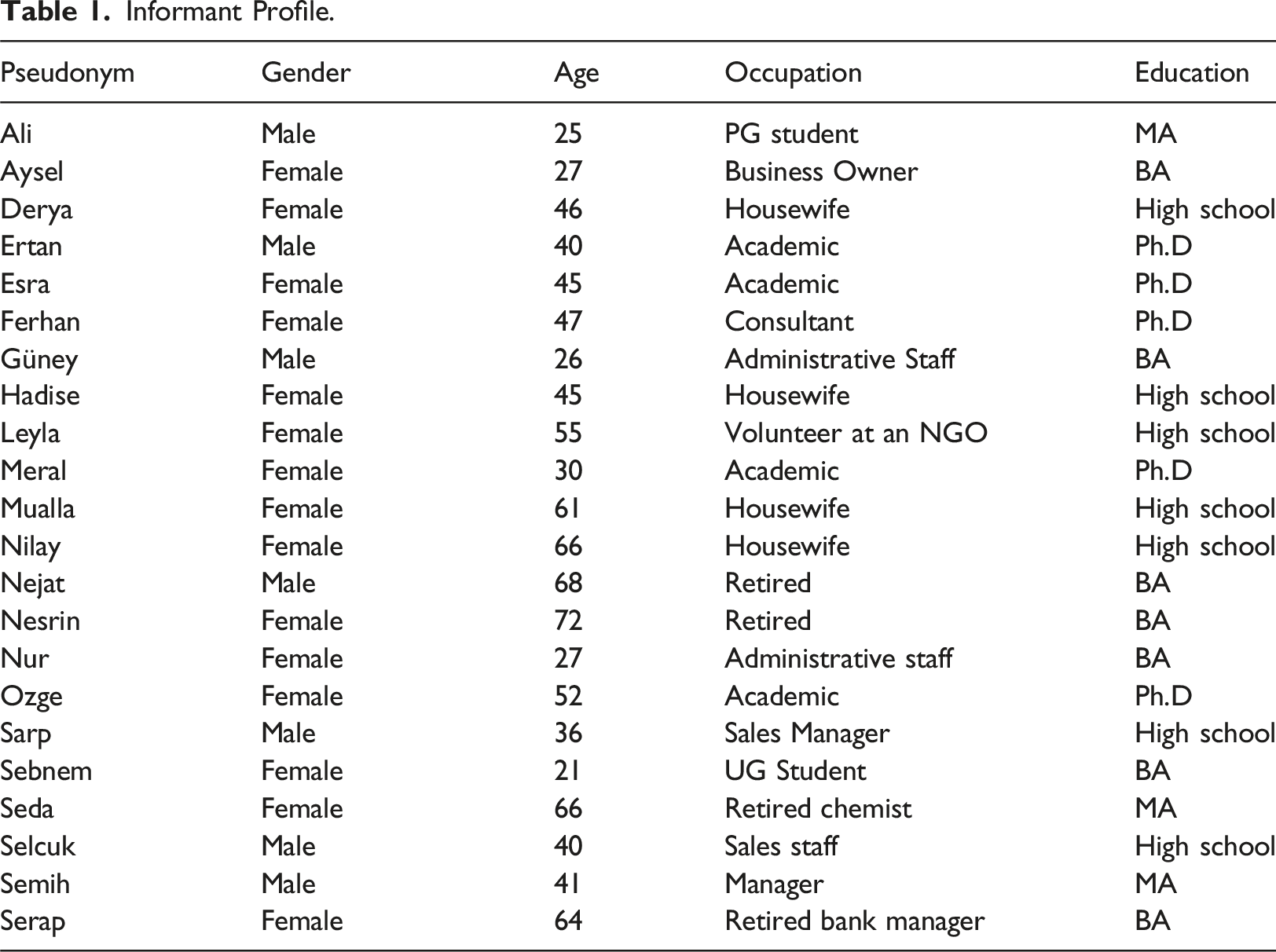
The interview guide for the initial round of interviews consists of four sections. The first section investigates informants’ profiles and engagement with religion. The second section examines consumers’ opinions and experiences of the pandemic and probes the impact of restrictions on everyday life. The third section explores the wellbeing challenges informants experience and the ways they deal with them. The final section investigates consumers’ expectations regarding their lives and behaviors in the post-pandemic era. In the follow-up interviews, we inquired about whether the challenges the informants reported in the first round have continued to affect them, and if so, how they tackled the challenges, and if not, how and when the challenges have been resolved.
Both sets of interviews were conducted in Turkish by the authors, recorded, and transcribed. The transcripts were then translated into English. To ensure the trustworthiness of the translated text, the authors jointly worked on translations until they reached a consensus. Due to the pandemic conditions, the interviews were conducted either online or face-to-face by keeping social distance. The initial set of interviews lasted 60–90 min; the follow-up interviews lasted 40 min on average. To maintain confidentiality, pseudonyms were used. We use T1 and T2 to indicate whether the interview was conducted in the first or second interview cycle.
Data analysis
Data analysis followed the principles of grounded theory (Strauss and Corbin 1998). First, using open coding, the researchers analyzed each interview independently and then collectively to identify various meanings and practices that explain the phenomenon under study. Then, using axial coding, the categories identified through systematic analysis and constant comparison of data were interrelated for the identification of common themes. Our analysis proceeded through three stages.
Key Elements of Salient logics.
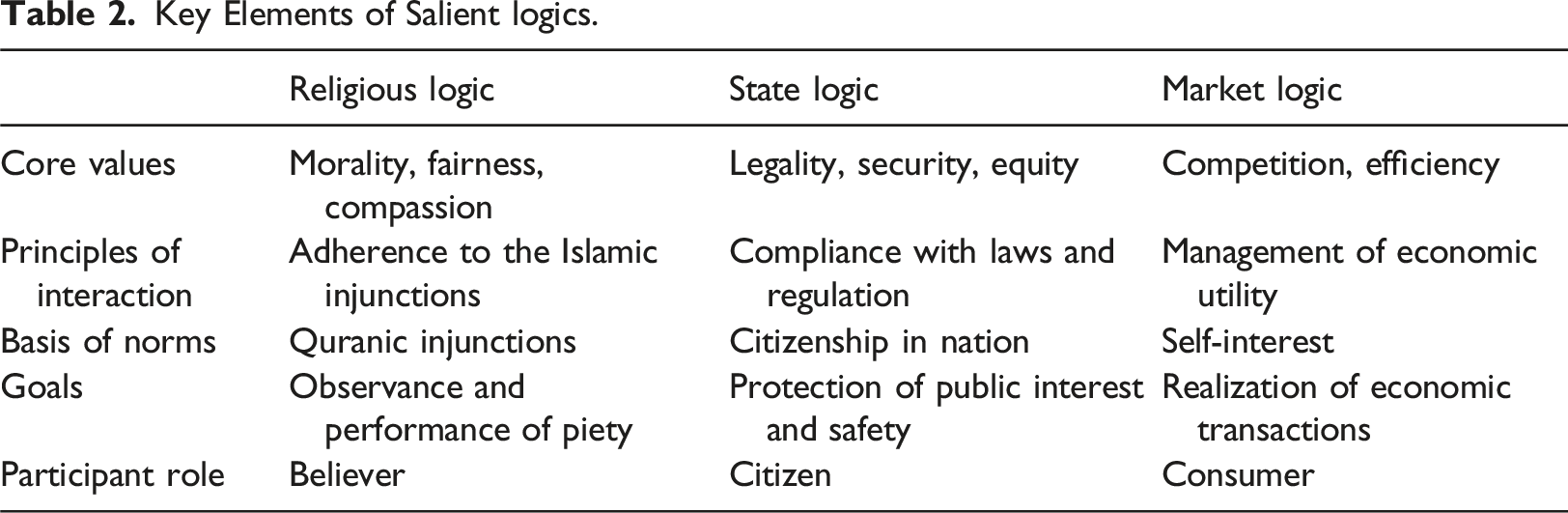
In the second stage, we reread the interviews to understand how religious, state, and market logics were enacted in practice (Lindberg, 2014) and mapped out the tensions that emerged as consumers were exposed to conflicting prescriptions of these logics. To capture the tensions, we focused on the semantic level; that is, we coded words that connoted negative feelings such as distress, concern, anxiety, and guilt, and related them to relevant situations, practices, and logics. The analysis of tensions continued iteratively, until we reached a consensus. In the third stage, we focused our attention on the strategies that consumers used to manage the tensions they experienced. Each author independently analyzed the transcripts to identify patterns across informants that are reflective of practices aimed at managing institutional complexity. Which logics are instantiated in these practices and how were also noted. Through iteration, a set of practices, related logics, and intended effects was finalized.
To ensure the rigor of our research, we followed Guba and Lincoln’s (1989) strategies of trustworthiness. Specifically, we sought to increase the credibility, transferability, and dependability of our findings by engaging persistently with the informants (i.e., initial and follow-up interviews) and triangulating across data, researchers, and theories.
Findings
Data Analysis With Representative Quotes.
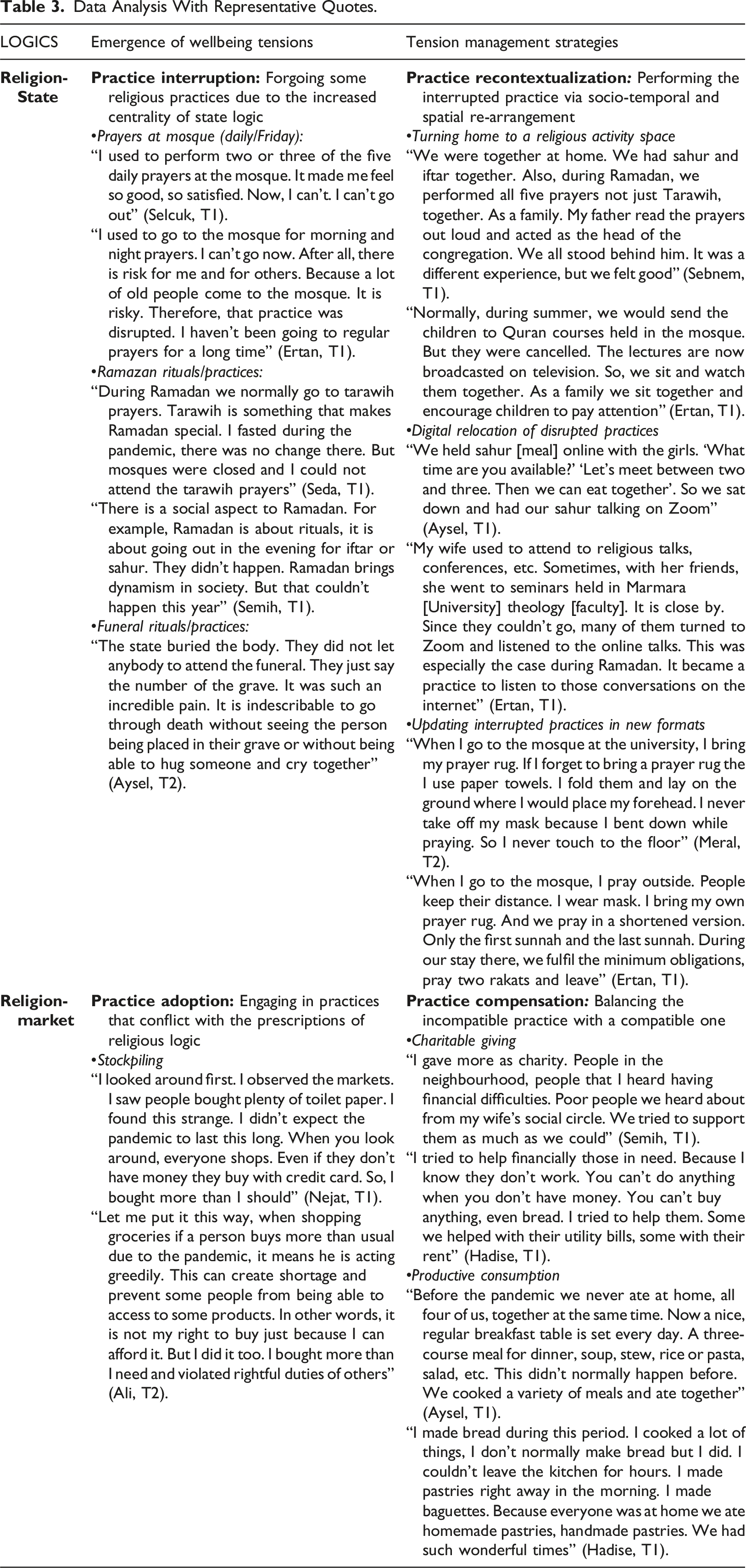
Emergence of wellbeing tensions
Wellbeing tensions emerge when logics that were previously peripheral gain more prominence and prescribe actions that conflict with the religious logic. Specifically, we find that pandemic conditions reconfigure the relative position of state and market logics and render them more central in guiding actions. Compliance with the prescriptions of state and market logics requires either interrupting practices associated with the religious logic or adopting practices that contradict it. As multiple incompatible logics claim centrality, consumers struggle to maintain their routines and may engage in behaviors that unsettle their wellbeing.
Practice interruption
Practice interruption refers to forgoing some prescriptions of the religious logic due to the increased centrality of the state logic. When the number of COVID-19 cases and deaths began to increase, the Turkish government followed the recommendations of the local (Coronavirus Scientific Advisory Board) and international (World Health Organization) scientific bodies and introduced restrictions. People were discouraged from gathering in small groups. Schools, sports and leisure centers, shopping malls, and cafes and restaurants were closed. Congregational prayers at mosques were banned and funeral service attendance was restricted. Eventually, all except those working in essential industries were ordered to stay at home.
Our informants agree that state-imposed restrictions are necessary for protecting people from catching the virus. As pious Muslims, they believe that all good and bad come from God; yet they also emphasize that God instructs people to take precautions: “God always says be careful, take no chance. Only then you resign to God’s will” (Aysel, T1). They criticize those who disregard the measures and increase risks for all. However, complying with the state mandates creates disruptions in religious practices. They cannot attend the daily and/or Friday prayers at the mosque or join religious seminars and events organized at the religious centers. They cannot gather with their friends to discuss religious topics, recite the Quran, or listen to sermons. Not being able to perform practices that are central to their pious identities, they feel spiritually compromised and challenged. Many informants regard the closure of mosques as an unprecedented sign of God’s disapproval of human conduct: “I felt terrible. I thought if a place of worship is closed, there should be a reason. Have we become so bad, as humanity, that we cannot even go to a mosque? We couldn’t go to a place where we reflect over God, where we pray. … God didn’t accept us. This is unprecedented in the history” (Guney, T1). They hope that the interruption, although necessary, is temporary, and they can return to their religious routines shortly: Of course, we had to follow the rules set by the state. For example, we did not go to Friday prayers, we did not gather in mosques, we did not pray. There was no state official to control us there, but we still obeyed the rule. So we waited for these to end… we were patient at that time. We always thought and dreamed that it would be over soon, that the congregation would gather again. We waited and dreamed that soon the hodja [religious leader] would deliver a sermon, we would gather, talk, pray. (Nejat, T1)
Religion plays an important role in satisfying individuals’ needs for affiliation and belongingness (Ysseldyk et al., 2010). Participating in communal religious rituals, such as attending Sunday mass or Friday prayer, emotionally connects members of a faith and contributes to their religious identities (Saroglou, 2011). State-imposed restrictions aimed at protecting physical health do not only impede the fulfillment of religious obligations but also the social support informants get from taking part in communal practices of worship. Informants particularly complain about not being able to engage in Ramadan rituals and attend funerals of their loved ones. Ramadan rituals include pre-dawn (sahur) and post-sunset meals (iftar), followed by special night prayers (tarawih) performed in mosques. As communal consumption of food plays an important role in Ramadan, believers often come together at iftar or sahur dinners given at homes or restaurants and celebrate the joys and bounties of the holy month (Sandikci and Omeraki, 2007). In 2020, the month of Ramadan, which began on April 24, coincided with the stricter lockdown measures. Thus, no tarawih prayers were offered at mosques and people were discouraged from house gatherings. The informants acknowledge that following the government orders might have helped them stay virus-free but diminished the joy of Ramadan: Of course, there was no tarawih. Did it cause any trouble? It did because that togetherness is such a beautiful thing. I love it so much. Sitting down and having a conversation after tarawih. I used to go to a different tarawih prayer every evening because I love it so much. After tarawih we used to chat with friends for hours and then eat our sahur meal. It's a sad thing not to have that. Maybe because I'm used to it. Ramadan means togetherness. You know, I enjoy the togetherness more than the iftar. While it is very easy to perform a long prayer like tarawih in a uniting place such as a mosque, praying alone at home is very difficult. (Aysel, T1) We could not invite anybody [for iftar meals at home]. We could not attend any. It didn’t feel like the usual, generous Ramadan time. Usually, we would go out for iftar, for sahur, invite many people at home. I felt very sad. (Hadise, T1)
Similarly, not being able to attend funerals and carry out burial rituals prescribed by Islam upset informants greatly: When my mother passed away, we barely performed her funeral. Picking her up from the hospital, washing her, burying her. It was very difficult. It didn't happen as we wanted. It was as if we couldn't fulfill our duty towards my mother properly, that was sad. The government banned everything, going to the graveyard was forbidden, attending the burial was forbidden. Felt very sad. (Mualla T2)
Overall, as state logic gains a more central position in guiding action, informants unwillingly abstain from engaging in certain religious rituals. Religious practices may help integrate the body, mind, and spirit and provide psychological and physical benefits especially in times of crisis (Koenig, 1997). However, such wellbeing benefits are jeopardized when the religious and state logics prescribe incompatible behaviors. Prioritizing the demands of the state logic at the expense of the religious logic, however justifiable it might be, generates distress and compromises wellbeing.
Practice adoption
Wellbeing tensions also emerge when informants adopt practices that conflict with the dominant religious logic. We observe that as the pandemic conditions worsen, informants engage in consumption behaviors that are denounced from an Islamic perspective but align with the market logic. As pious Muslims, the informants are aware that they should live a modest life and refrain from greedy, selfish, and wasteful consumption behaviors. However, anxieties triggered by the pandemic compel them to adopt practices that they normally would not engage in, such as panic buying and stockpiling. Scholars discuss hoarding as one of the COVID-19-related changes in consumer behavior (Kirk and Rifkin, 2020; Sheth, 2020). Against the uncertainties and threats of the pandemic, stockpiling functions as a coping mechanism that provides consumers with some sense of control and stability (Minton and Cabano, 2020).
We observe that two factors prompt excessive consumption and shopping behaviors among our informants. First, exposure to news stories depicting people in countries such as the United Kingdom or Italy fighting over toilet paper or pasta intensifies their fears about what might happen if conditions get worse in Turkey too: “They [people in Europe] couldn’t find facemask, disinfectant. They fought over toilet paper, we watched them on TV. These images affected us and we shopped a lot initially” (Meral, T1). Second, they observe people in their close environment and realize that, despite the assurances of the government officials, everybody stockpiles. Going along with the flow, they shop more than they need: We did [stockpile] too. Fearing about what’s going to happen I bought five kilos of flour. Something I would never do normally. I bought everything twice the amount than usual. Because we don’t know what is going to happen. What if something happens and we need to stay at home? If we don’t shop, we starve. … I stockpiled flour, detergent, kitchen towel, toilet paper, disinfectant. I, we anxiously purchased. Everybody shopped egoistically, everybody acted greedily. (Derya, T1)
However, while stockpiling represents a common coping behavior when faced with existential threats, such as a global pandemic, its potential positive effects can be mitigated when consumers experience incompatibility between their selves as a pious Muslim and a rational market actor. All informants admit that hoarding goes against God’s will and breaches the Islamic injunction of modesty: “We fail to behave modestly. I mean getting by whatever we have at home. Everybody has some grain, rice at home. If needed, we could have used them. We could have boiled pasta and just eat it. But if we knew what modesty is we wouldn’t have been in this situation” (Hadise, T2). As Hadise’s remarks indicate, a common belief is that because people act in vain, they face Godly challenges, such as the pandemic. Yet, failing to learn from their mistakes, people still organize their behaviors in line with the priorities of the market logic and fail to act modestly.
Furthermore, the informants are cognizant that by shopping more than necessary they might have violated the rightful due of others. In Islamic theology, rightful due refers to God given rights individuals enjoy by virtue of being human (Berween, 2002). These include individuals’ rights over their lives, bodies, possessions, honor, family, and religious beliefs. Infringement of these rights constitutes a major sin. The informants realize that by acting selfishly and stockpiling, they might have deprived others of accessing to goods and inadvertently committed a sin: I did violate. Because I bought five kilos of flour. My family doesn’t consume much pastry but I bought it nevertheless. I might have violated rightful duties of other people because there were those who couldn’t acquire it. (Esra, T2) Stockpiling is a major violation of rightful due. Some people can't afford to buy even one; we buy five or six. If you have one at home buy one or two. We were all scared and wanted to buy all. We ignored other people’s rights. Everyone acted selfishly. We all pretended others do not concern us much. (Nur, T1)
Overall, our analysis indicates that the uncertainties associated with the COVID-19 pandemic urge consumers to act as selfish market actors and meet their own needs at the expense of others. The informants align their behavior in line with the market logic and seek comfort and security through shopping. However, while behaviors such as stockpiling help ease the distress they face, prioritizing the market logic over the religious logic creates new tensions. Torn between acting selfishly or modestly, they feel they have compromised their pious identity and failed to prioritize God’s expectations.
Managing wellbeing tensions
As the COVID-19 pandemic disrupts everyday life, consumers encounter a complex institutional environment characterized by multiple incompatible logics that claim dominance for guiding action. We observe that to manage the tensions they face and restore their wellbeing informants devise two key strategies: practice recontextualization and practice compensation. The former refers to performing the interrupted practice via socio-temporal and material re-arrangement; the latter entails balancing the incompatible practice with a compatible one.
Practice recontextualization
As the pandemic and the related restrictions continue without any sign of easing, the informants begin exploring ways to carry on the interrupted practices and minimize the distress they feel for not being able to fulfill their religious obligations. A common strategy is recontextualizing the interrupted practices at home or in cyberspace. That is, a conventionally publicly and communally performed religious practice gets recreated in the private space of a household and/or through the affordances of digital technologies. For example, many respondents report that they have created a mosque-like environment within the confines of their home and carried out prayers as a family. In line with the values and norms of Islam, the senior male member of the household acts as an imam [person who leads prayer] and leads prayer while the rest of the family follows him. Similarly, children follow the scriptural courses broadcasted on television and YouTube rather than attending lectures at religious centers. To increase children’s motivation, some parents turn the activity into a new family ritual and watch the lessons together.
Compliance with the prescriptions of the state logic also deprives informants of the social benefits they gain when they participate in communal religious activities, such as study groups at mosques or neighborhood prayer sessions. Frustrated with the severing of social ties, the informants utilize technology to perform these practices and connect with their religious circles in the online environment: My wife is very active, she has a WhatsApp group. She attended to online mukabeles [listening to Quran recitations held daily during Ramadan]. They used Zoom for that, she organized the neighbors, established the links between hodjas. She used to meet with her friends every Friday and read and listen to Quran for 1-1.5 hours. Since March they do it through Zoom. (Sarp, T1) We did online religious courses. We had audio calls on WhatsApp and talked about hadiths [records of the words and actions of the prophet], Quranic verses. We did this on Fridays. Even though it wasn’t face-to-face, it comforted us a lot. (Leyla, T2)
Consumers have embraced digital technologies during the COVID-19 pandemic and used video conferencing technologies and social media apps to attend classes remotely, participate in business meetings, and communicate with friends and relatives (Kirk and Rifkin 2020; Sheth 2020). Our findings indicate that such technologies are also embraced by consumers to connect with their religious communities and perform religious practices. As the quotes above show, religious service providers, such as hodjas and imams, quickly adjust to the pandemic conditions and offer their services online. Studies indicate mixed results regarding the impact of digital technologies on religious practices. For example, Rauf (2022) reports that members of the Tablighi Jamaat, an Islamic revivalist movement in Pakistan, experience disorientation and distrust when the pandemic forces them to converse digitally. In contrast, other studies show that digital technologies provide believers with alternative possibilities to preserve continuity with their pre-Covid religious lives (Huygens 2021; Sabaté Gauxachs et al., 2021). Similarly, we observe that digital technologies enable the performance of the pious self by reinstating the interrupted practices. The changes in the delivery of religious content motivate informants to develop their technological skills and even acquire additional gadgets to be able to participate in online conversations: My mom did not use technology before. Only to talk with me via Facetime when I traveled abroad. Now she uses it a lot. She says to me “connect me to my Zoom meeting on the laptop, so I can use my mobile to search for something else if needed”. They Google verses and hadiths on their mobiles while listening to hodja on Zoom. She didn’t use a computer at all. Now, she is using two electronic devices. (Aysel, T2)
Such blending of market and religious logics is also apparent in recontextualization of interrupted practices through the integration of new products and services. An illustrative case is the new ways Ramadan rituals are performed. Ramadan calls believers to reflect upon their lives and sympathize with the less fortunate; thus, it is common for individuals to invite less well-off acquaintances and offer iftar meals. In compliance with the state-imposed restrictions, informants cannot host dinners at home. Instead, they resort to the services provided by restaurants and supermarkets and get meal boxes delivered to the target families. While not sitting around the same table and breaking fast together, they nevertheless experience the joy of celebrating Ramadan.
Similar adjustments are visible in the way Friday prayers are performed. In early June 2020, the Turkish government allowed the performance of congregational prayers at mosques. However, many of our informants state that they were hesitant to go to the mosque and continued to perform their prayers at home. Those who eventually decided to pray at a mosque, developed a new regimen to protect themselves from the virus: Now [August 2020] I attend regularly to the Friday prayers. I go to a mosque near my office, it has a big yard. I bring my prayer mat with me and pray on it in the yard. When I am done, I put it in a plastic bag and bring it back home. My wife washes it immediately. (Sarp, T1)
The precautions that Sarp takes are echoed in other interviews. When the weather permits, informants opt to pray at the mosque yard. While it is customary to stay very close to each other while praying, they maintain social distance. To minimize contact with infected surfaces, they use their prayer mat. If they do not have their mat, they assemble a makeshift one: “When I realized I forgot [to bring prayer mat] I folded kitchen towels to make a small mat. I used it for prostration.” (Meral, T1). The follow-up interviews indicate that many of the protective measures have become embedded in informants’ mosque attendance practices and provided them with a sense of safety.
Overall, the tensions arising from not being able to perform religious obligations prompt the informants to devise new ways to reinstate the interrupted practices. While the conflicting prescriptions of the religious and state logics contribute to the complexity consumers face, by exploiting the collaborative interactions between the religious and market logics they manage to navigate the complexity. Integrating market resources into the religious practices enables the informants to resume the interrupted practices albeit in a new format and alleviate some of the tensions they experience.
Practice compensation
As discussed, wellbeing tensions also emerge when consumers adopt practices that align with the market logic but contradict the prescriptions of the religious logic. We observe that rather than abandoning the problematic practice (i.e., stockpiling), the informants seek to balance its negative implications by engaging in compensatory practices. Compensatory practices differ from what is discussed as reframing, strategies that aim to change or combine the meanings of conflicting logics in more positive terms (Corciolani, 2023). Compensation suggests that informants seek to offset the tensions caused by prioritizing the prescriptions of the market logic by performing more of the practices advocated by the religious logic.
A compensatory practice frequently utilized by the informants is charitable giving. All major religions regard charity as a common rule of social conduct and stress the importance of generosity (de Abreu et al., 2015). In Islam, almsgiving is imperative and believers are encouraged to help the vulnerable. As the pandemic continues and the state-imposed restrictions prevail, businesses face increasing financial challenges and layoffs begin. Following the Islamic injunction to help people in need, the informants rush to support those who have encountered hardships during the pandemic. All informants report that they have increased the amount of money or goods they donate. A key motive underlying the surge in charitable endeavors appears to be the realization that they might have acted selfishly and violated the rightful due of others: There are many people with limited means, we might have violated their rightful dues. They don’t have much money and cannot shop. So I tried to help financially. I know that they are in need. They lost their job and don’t have any income. What can they do? You can’t survive if you don’t have money. During the pandemic I helped a lot. We found a few people who are in need and took over their expenses. For some we paid their rent, for others, we paid their [utility] bills. (Nilay, T1)
The follow-up interviews indicate that almsgiving practices have become more organized over time, bringing together individuals and organizations in a more systematic manner. Neighborhood organizations, for example, play an important role in reaching out to the needy. As Semih explains, helping contributes to a sense of community and brings some joy in these challenging times: Many of our neighbors bring clothes, food, some bring bags of rice others cooking oil. Then, a truck comes and picks up everything at a set time [to take them to a neighborhood association]. There are many wonderful organizations that provide help. Also, when somebody says, for example, there is this woman at my company who needs help, then everybody offers help as much as they can. It gives me such joy to see these. We buy whatever we want but many cannot. Helping has increased a lot during the pandemic. People help however they can. (Semih, T2)
Another way to compensate for a problematic practice is to engage in productive consumption. Productive consumption refers to “forms of consumption that enlist consumer labor that creates rather than depletes value” (Moisio et al. 2013: p.300). Examples include baking, cooking, and DIY. We observe that to ease the distress induced by stockpiling food items, informants begin sharing food among their relatives and place more emphasis on cooking and eating together as a family: I bought more than I needed. I was concerned, asking myself should I buy more? Am I committing a sin? But I stockpiled some. Then I said I can share the excess with my sisters. Even now I buy essential items in bulk and give the excess to my mom or sisters. (Ferhan, T1) We spent a lot of money on food. We bought a lot. Every week we bought a month’s worth of food. We didn’t want to waste. So, we cooked a lot. We tried new recipes. I and my sister. We cooked and baked all the time. Meals, cakes, pastries. Because we were home, we ate a lot. (Guney, T2)
Family logic plays an important role in organizing Islamic life and socioeconomic security. Islamic injunctions cover not only moral and cultural aspects of the family life but also the economic and social rights of the family members (Ahmad, 1974). Islam encourages spending one’s prosperity with his/her family and values actions that bring family together. The informants’ accounts indicate that beyond strengthening family ties (Moisio et al., 2004), sharing products and cooking together help resolve some of the tensions triggered by incompatible logics. Compensating stockpiling with productive consumption helps bring the conflicting demands of religious and market logics to a temporary truce and contributes to the management of institutional complexity.
Discussion
Inspired by institutional theoretical perspectives, this study examines how institutional complexity impacts consumer wellbeing and how consumers navigate the conflicting prescriptions of multiple logics to maintain their wellbeing. Conceptualizing religion as an institutional order rather than an individual trait, we explore why religion and other institutional logics might come into a conflictual relation with each other. We find that critical events, such as the COVID-19 pandemic, change the relative centrality of logics and prompt individuals to engage in behaviors that destabilize their wellbeing. We explain how consumers manage the sudden and unexpected institutional complexity they face and seek to restore their wellbeing.
Prior research on institutional complexity has shown that exposure to contradictory logics generates identity tensions, emotional distress, and legitimacy challenges (Corciolani, 2023; Husain et al., 2019; Regany et al., 2021; Rauf, 2022; Sandikci and Ger, 2010; Scarabato and Fischer, 2013; Shekhar et al., 2020; Zanette and Scarabato, 2019) but it has not explored how institutional complexity and wellbeing are linked. This study addresses this gap by drawing attention to the role of critical events in shaping consumers’ logic compliant or defiant practices and their effects on wellbeing. Scholars have only recently begun to pay attention to sudden disruptions in the institutional environment and their impact on consumption and market dynamics (Rauf, 2022; Shekhar et al., 2020). We add to this emerging research stream by showing that critical events can temporarily change the relative position of logics, allowing multiple incompatible logics to claim dominance to guide action. Such provisional updates in logics’ configuration refocus consumers’ priorities and prompt practice adjustments in line with the salient concerns. However, as logics are enacted in practice (Lindberg, 2014), changes in routines also indicate changes in individuals’ commitment to particular logics. In their study of the effects of drought, Phipps and Ozanne (2017) show that when routines are disrupted, consumers feel insecure and devise ways to realign the disrupted practice. We extend this perspective by showing how institutional logics are implicated in critical events, such as draughts or pandemics, and shape practices by updating consumers’ understandings and priorities. Wellbeing tensions emerge not merely because practices are interrupted or adopted, but because individuals’ alliance to logics have shifted.
Furthermore, different from contexts characterized by persistent asymmetrical institutional complexity between religion and other logics (Husain et al., 2019; Rauf 2022), we find that the dominant position of religious logic can be temporarily challenged. We argue that the sudden and unexpected nature of the complexity associated with the COVID-19 pandemic affects consumers’ decisions on which logics to obey, alter, ignore, or reject. Under conditions of heightened complexity, logics that offer clearer prescriptions on what is allowed and what is not, such as the state logic, might provide a stronger sense of stability and thus gain a more prominent position in guiding actions. However, our results also indicate that the shifts in the relative centrality of the logics can be challenging for consumers and urge them to find ways that approximate the original configuration. Practice recontextualization and practice compensation help restore the prominence of the religious logic while allowing state and market logics to remain relatively dominant and influential.
By exploring individual responses to institutional complexity, this study also provides further insights into bridging macro and micro-level analyses (Fortezza et al., 2022; Shekhar et al., 2020). Drawing from Besharov and Smith’s (2014) framework, we conceptualize complexity along two dimensions, centrality and compatibility. We expand this approach by exploring the temporary changes in the centrality of incompatible logics and their implications for practice. Critical events, such as the COVID-19 pandemic, compel macro actors, such as the government, to draw from the state logic and introduce new measures to mitigate the negative effects of the disruption. Consumers’ acceptance of these measures contributes to the creation of new practices, such as using a disposable prayer mat or reallocating a physical Quran recitation group to the online environment, that align micro-level sensitivities with macro-level changes in the logics’ configuration. Changes at the micro level reflect the productive collaborations between religious, state, and market logics and their role in managing institutional complexity.
Our study also brings new insights into the religion-wellbeing relationship. Past research generally considers religion to positively contribute to consumer wellbeing (e.g., Minton et al., 2022; Rinallo et al., 2013; Sarofim et al., 2020). Behaviors, such as praying and reading the scripture, and positive beliefs about the divine can indeed buffer against anxiety and alleviate the negative emotional consequences of stressful circumstances. However, we offer a more relational and contextual understanding of the religion-wellbeing interaction. We argue that, as part of an inter-institutional system, religion’s impact on consumer wellbeing is shaped by its position relative to other institutional logics. Religion can take on a more conflictual or cooperative role depending on whether religion and other logics compete or collaborate. That is, consumers can face tensions when they prioritize the demands of state or market logics over religion, but they can also resolve the tensions by bridging the demands of religion and other logics in creative ways.
Overall, our study highlights the potential of the concept of institutional complexity for advancing our understanding of the role of religion in the contemporary world and draws attention to the dynamic relationship between institutional logics and consumer wellbeing. Our findings also point to several future research avenues. First, this study explored wellbeing tensions of pious middle-class consumers. However, the pandemic has created severe financial difficulties for the lower social classes. Future studies can explore how social class dynamics interact with institutional logics and shape wellbeing tensions and their resolutions. Relatedly, we focus on the conflicts between religion and state and market logics. Institutional complexity may also arise from the conflicts between religion and other logics, such as family, community, or profession. Understanding how religion interacts with other institutional logics and shapes consumer wellbeing requires further research. Third, in managing wellbeing tensions, consumers adopt certain changes in their consumption practices. For example, some religious practices become tech-mediated, and others are relocated to domestic spaces. Whether these changes are permanent and generate modifications in the institutional logics themselves or disappear when the conditions related to critical events subside should be further explored. Finally, another promising research avenue is to explore contexts where consumers disregard the prescriptions of a temporarily prominent logic and continue to engage in their habitual practices. Understanding why noncompliance may occur and with what implications can provide further insights to research both on religion and consumer wellbeing and individual responses to institutional complexity.
Footnotes
Declaration of conflicting interests
The author(s) declared no potential conflicts of interest with respect to the research, authorship, and/or publication of this article.
Funding
The author(s) received no financial support for the research, authorship, and/or publication of this article.
