




Abstract
Issues of fairness relate to distributive justice (DJ), which is concerned with how a society distributes benefits and burdens. Whilst marketing theory has considered fairness in the distribution of basic goods, we lack insight into stakeholder perspectives on fairness for goods such as alcohol, which can be problematic, due to their global health and social burden. This study examines stakeholder perspectives on fairness from the Kenyan alcohol marketplace. Using longitudinal ethnographic data, we draw on two DJ theories, (egalitarianism and prioritarianism), to examine fairness perspectives of different stakeholders, their problem diagnosis, and proposed solutions to fairness challenges in the alcohol marketplace. By so doing, we give voice to previously unheard stakeholders, and expose some of the potential theoretical foundations for competing notions of fairness. The study also exemplifies the linkages between different forms of fairness and proposes a fairness chain as a framework for evaluating fairness in the marketplace.
Introduction
Ensuring fair and equitable distribution of goods and services is an important consideration for marketing (Hill, 2018). The question of fairness in the provision of consumption opportunities is complex in terms of determining not only what is fair but also who is granted access to the marketplace and how (Hill, 2018; Rawls, 1971). Whilst many consumers contend with consumption constraints, low-income consumers face the greatest limitations, leading to unfairness in market access (Abendroth and Pels, 2017; Hill, 2018; Piacentini and Hamilton, 2013). Extant research has examined fairness in provision of housing (Pradhan and Ravallion, 2000) and food (Migotto et al., 2006), to meet basic needs for survival. Increasing marketplace access can, however, widen access to products which are harmful to consumers and their communities. We refer to such products as problematic products in the rest of the paper (Sallaz and Wang, 2016).
Although the terms ‘social justice’ and ‘distributive justice’ are often used interchangeably (Scott et al., 2011), in our study, we use the term DJ to emphasise the material/economic dimensions of justice, and the distribution of benefits and burdens to achieve fairness amidst competing needs and claims (Clayton and Williams, 2002). In marketing, Peterson (2012) highlights how the distribution of burdens from problematic products (tobacco and alcohol), are reflected in higher health insurance premiums across populations. There are some studies on stakeholder views on problematic products such as Wardle and colleagues (2016) who engaged stakeholders to identify those most vulnerable to gambling harm, and to measure the social costs of gambling-related harms. Anderson and Baumberg, (2006) reported on stakeholder views on barriers and facilitators to development and implementation of evidence-based alcohol policy. Fitzgerald and colleagues (2018) explored stakeholder perceptions of distribution of power within alcohol licensing systems. While these studies focussed on stakeholder views, we lack an empirically based understanding of stakeholder perspectives on fairness in the marketplace, and proposed solutions to fairness challenges for problematic products. This study therefore aims to examine stakeholder perspectives on fairness, to explore their proposed solutions to fairness challenges in the marketplace for problematic products, and to establish important fairness considerations for problematic products.
Empirical research involving stakeholders can potentially increase the societal impact of scholarship (Davis et al., 2016; Ozanne et al., 2017). Local actors are key stakeholders for policies seeking to enhance fairness, yet we lack insight into their framing of fairness issues. Extant marketing research also calls for new approaches to addressing unfairness in the marketplace that incorporate diverse circumstances (Scott et al., 2011). Second, understanding how market actors view fairness in the provision of problematic products is important to marketing scholars (Davidson, 2003) because problematic goods can be harmful to consumers, other market actors, or the environment (Goulding et al., 2009; Laslett et al., 2013). Despite their potential harm, consumers are drawn to problematic products for their perceived benefits, which include recreational enjoyment, cultural and social significance, and medicinal/wellbeing benefits (Goulding et al., 2009; Kjellberg and Olson, 2017). Third, establishing stakeholder views on fairness minimises traditionally paternalistic approaches to policy, and encourages dialogue between groups in line with transformative consumer research (Davis et al., 2016; Ozanne et al., 2017).
Evolution of alcohol policy in Kenya.
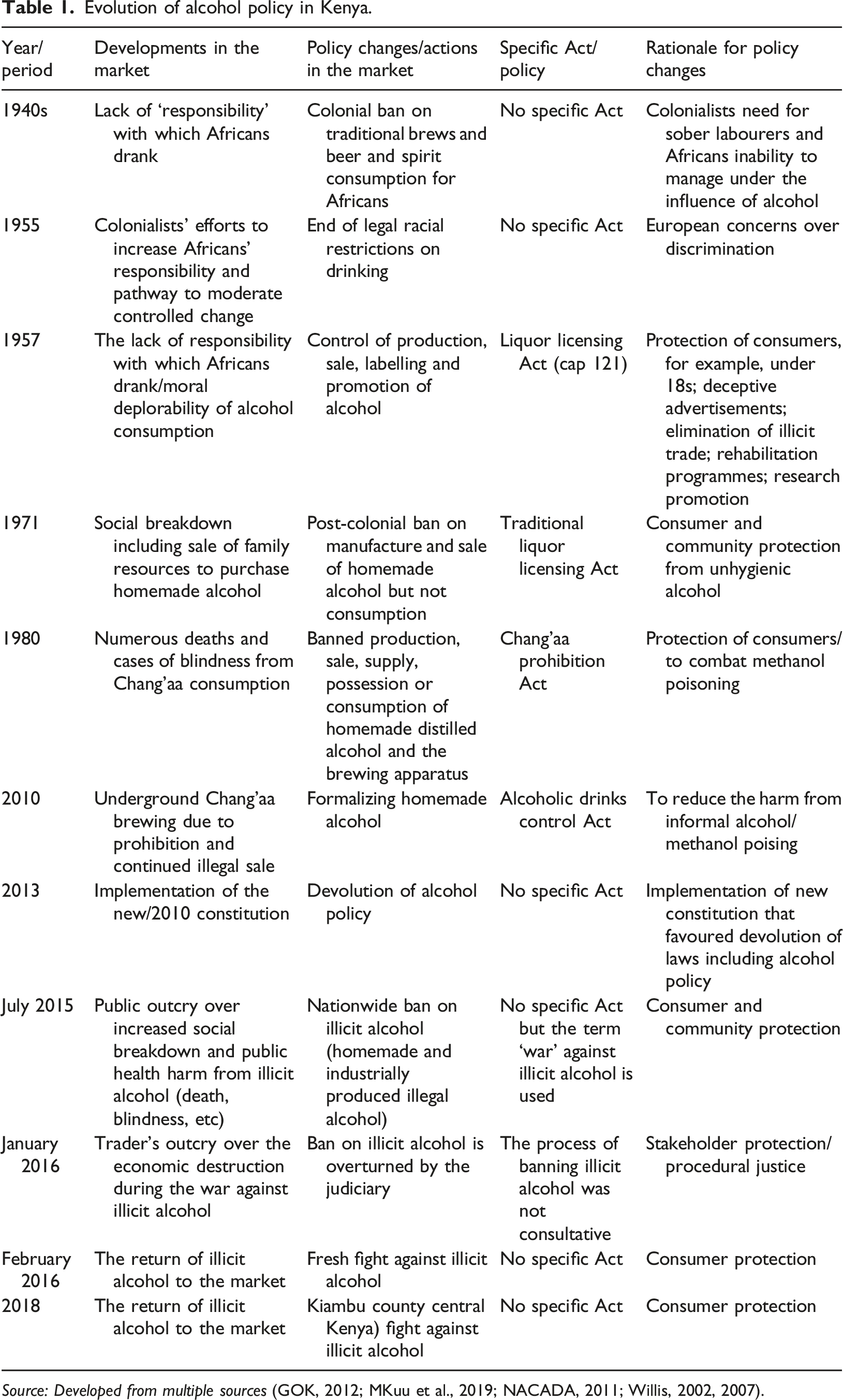
Source: Developed from multiple sources (GOK, 2012; MKuu et al., 2019; NACADA, 2011; Willis, 2002, 2007).
The findings contribute to marketing literature on fairness and give voice to unheard stakeholders. Second, by drawing on two DJ theories, we propose a new approach for the comprehensive analysis of fairness in the marketplace and address some of the shortcomings of individual DJ paradigms. Third, we expose differences in the ranking of moral concerns as well as some potential theoretical foundations for competing notions of fairness, and hence competing policy proposals. We also draw implications for policy formulation and evaluation. The rest of this paper is organised as follows. First, we provide an overview of the Kenyan alcohol policy context, followed by the literature review and methodology. We then present key findings, followed by reflections and conclusions for marketing theory and public policy.
Kenyan alcohol policy context
Distributive justice questions are often intertwined with policy questions because inequities can be addressed through regulation (Scott et al., 2011). Since the 1940s, Kenya has implemented several alcohol policies to address inequitable access to alcohol for low-income consumers, and to curb illicit alcohol consumption (Table 1). Traditional homemade alcohol in Kenya is referred to as illicit alcohol, and is used for pleasure, socialising, celebration of major life-course events including childbirth, marriage, and initiation (Willis, 2002). In a bid to reduce illicit alcohol consumption and address inequitable access to alcohol, the Kenyan Alcoholic Drinks Control Act 2010 legalised production of homemade alcohol if bottled and sold within licensed premises (GOK4, 2012). Since then, several other alcohol policy changes aimed at addressing inequitable access to alcohol for low-income consumers and curbing illicit alcohol consumption have been implemented (Table 1).
The legalisation of homemade alcohol in 2010 led to the creation of several low-priced, high-alcohol content, industrially produced alcohol brands, referred to as second-generation alcohol. Traditional homemade alcohol and second-generation alcohol are referred to as illicit alcohol in Kenya, (and in this study). 1 Illicit alcohol is the most available, affordable, and accessible alcohol in Kenya (NACADA, 2011). Formal bottled legal alcohol brands are also available at much higher prices compared to illicit alcohol which has adverse health and social effects. For example, over 30,000 deaths from alcohol between 2011 and 2016 are attributed to illicit alcohol (Cherono, 2016), and many others are unreported.
Fairness issues in relation to alcohol
Alcohol affordability and accessibility for low-income consumers is a concern in several countries (Ferreira-Borges et al., 2017; Willis, 2007). Many Africans have to work between 2 and 6 h to pay for half a litre of beer (The Economist, 2014). When legal alcohol is inaccessible due to high prices, low-income consumers opt for illegal alcohol, with adverse effects, such as mass deaths from toxic alcohol (Nemtsov and Razvodovsky, 2016). In recent years, industrial production of alcohol in several African countries has increased due to policies aimed at reducing illicit alcohol harm (Ferreira-Borges et al., 2017; GOK, 2012). For example, Mozambique and Uganda introduced tax breaks for industrial alcohol production to address inequitable access to alcohol for low-income consumers (Ferreira-Borges et al., 2017; Willis, 2007).
Policies such as minimum unit pricing (MUP) for alcohol aim to address alcohol burdens by restricting access. The approach is criticised for negatively impacting low-income consumers by limiting their access to alcohol (Ludbrook et al., 2012). There are important questions around fairness of access to alcohol and how low-income consumers are disproportionately affected by alcohol policy (Horton, 2018). This resonates with literature on the dark side of social marketing, where an intervention aimed at societal benefit can have unintended consequences (Kennedy and Santos, 2019). Increasing access to alcohol also increases the harmful effects of alcohol use, which are often referred to as the burdens of alcohol use (Laslett et al., 2013; WHO, 2022). Research evidence suggests that alcohol-related social burdens exceed economic benefits from the alcohol industry. Studies from contexts where legal alcohol is dominant estimate that only one-tenth of alcohol burdens are covered by alcohol taxes (Blanchette et al., 2019).
Alcohol burdens associated with alcohol-related harm affect individual consumers, their families, communities, and the broader society, as reflected in the alcohol’s harm to others (AHTO) literature (Laslett et al., 2013). Alcohol harm can include alcohol-related disease, alcohol-use disorders, physical injury to users, and others due to alcohol-related violence and/or self-harm or drunk-driving or crime (Mkuu et al., 2019; Laslett et al., 2013; Rehm et al., 2009). Other harms include foetal injury due to alcohol exposure (Laslett et al., 2013), disability and premature death (Ferreira-Borges et al., 2017; Nemtsov and Razvodvosky, 2016); poor relational skills, stigma, reduced productivity, and inability to fulfil social roles (Laslett et al., 2013; Mwangi, 2020), and increased insurance premiums due to increased costs of alcohol-related harm (Peterson, 2012).
Alcohol benefits include hedonic wellbeing, such as mood enhancement, counteracting negative feelings, stress reduction, sociability, and social integration (Laslett et al., 2013). The economic benefits of the alcohol industry in creating employment, corporate social responsibility, and tax revenue have also been documented (Martino et al., 2017). Potential health benefits of low to moderate alcohol consumption have been contested, and recanted, with recent studies suggesting that there are no safe, or beneficial levels of alcohol consumption (Burton and Sheron, 2018). Figure 1 illustrates the unequal distribution of benefits and burdens of alcohol, with more burdens than benefits associated with alcohol. A comparison of private/personal and public/external burdens shows the impact of burdens is greater at public level, reflective of the AHTO literature (Laslett et al., 2013). An overview of the potential benefits and burdens of alcohol. Source: developed by the authors from a synthesis of the literature on the burden of alcohol (Burton and Sheron, 2018; Ferreira-Borges et al., 2017; Laslett et al., 2013; Ludbrook et al., 2012; Mwangi, 2020; Nemtsov and Razvodovsky, 2016; Rehm et al., 2009; WHO, 2022).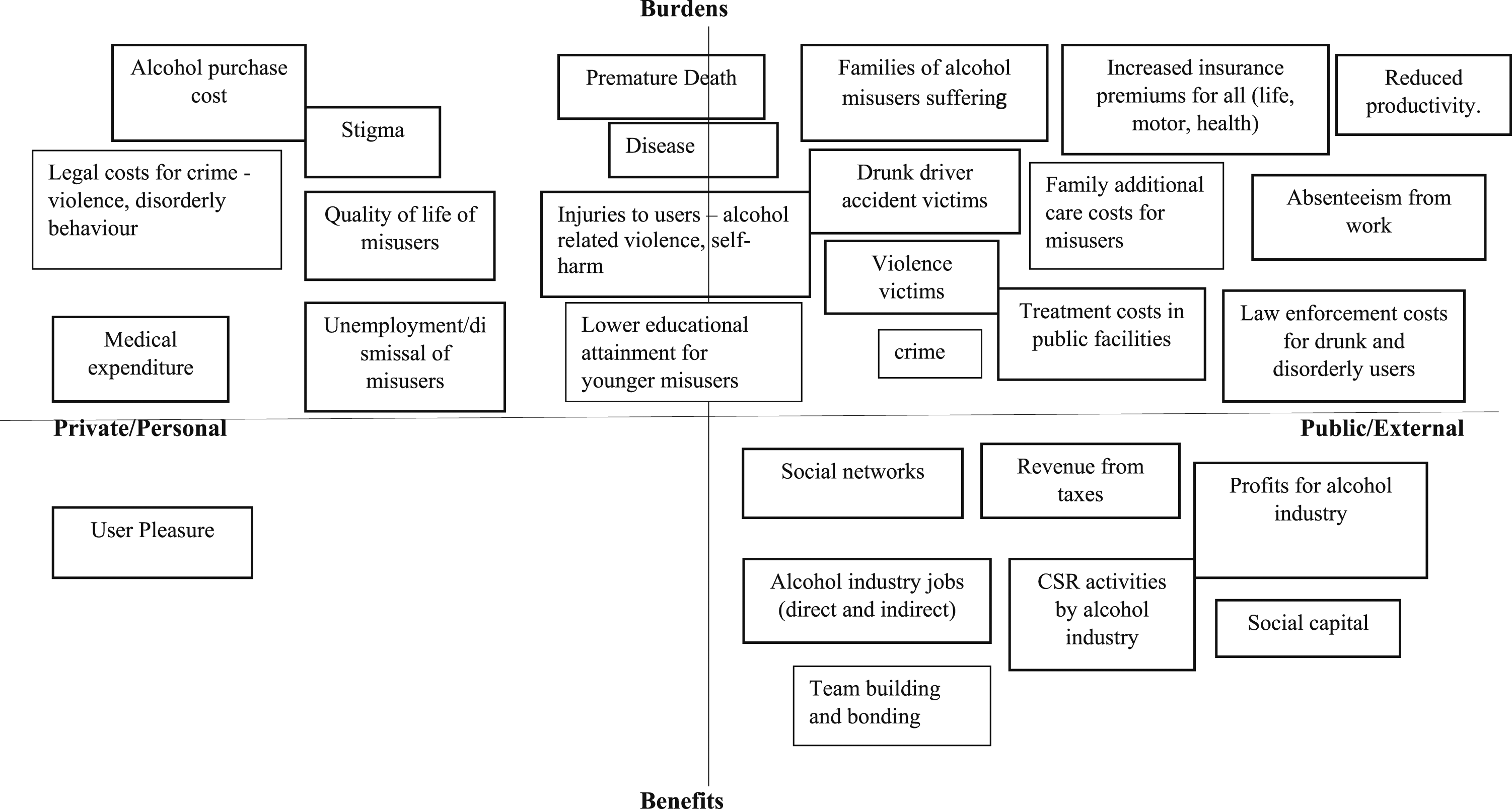
Distributive justice theories
Justice theories explore how a society distributes benefits and burdens to achieve fairness amidst competing needs and claims (Clayton and Williams, 2002; Rawls, 1971). There are multiple conceptions/principles of DJ such as utilitarianism, libertarianism, egalitarianism, and prioritarianism among others. Utilitarianism focusses on consequences and advocates maximising benefits for the majority (Weber, 2014). Utilitarianism is deficient when considering distribution of burdens from problematic goods, because it is insensitive to the distribution of wellbeing across the population, focussing instead on adding up wellbeing numbers (Adler and Norheim, 2022). Utilitarianism also allows the majority to dominate societal minorities (Hill, 2018; Rawls, 1971). Libertarianism emphasises individual freedoms and choice even if they override human welfare (Sandel, 2011). Libertarianism is opposed to policies that restrict access to problematic products because such policies impede individual freedoms.
Egalitarianism is concerned with minimising relative differences across individuals in the distribution of benefits or burdens (Clayton and Williams, 2002; Norheim, 2009). Egalitarianism can lead to everyone being brought to a common low level of wellbeing, rather than improving conditions for the neediest, due to an overemphasis on minimising relative differences between individuals. Parfit (1995) refers to this lowering of wellbeing to achieve equality as the levelling down objection (LDO). Prioritarianism developed in response to LDO against egalitarianism. Prioritarianism esteems improvements in wellbeing that leave individuals better off, or improvements in absolute levels of individual wellbeing (Parfit, 1995). Prioritarianism has been criticised for being too focused on the worst off and failing to give enough weight to equality (Adler and Holtug, 2019; Weber, 2014; See, Olsaretti, 2018 for a full review on DJ theories).
Owing to the critiques of different DJ principles, policies drawing on DJ theories can be deficient in addressing complex social problems (Pittz et al., 2020), or delivering just/fair outcomes (Klein, 2008). To address some of the shortcomings of individual DJ paradigms, in this study, we draw on two DJ theories (egalitarianism and prioritarianism). Combining two theories allows us to consider different dimensions of fairness (procedural, substantive, and comparative fairness) for a comprehensive analysis of fairness for problematic goods. Procedural fairness is concerned with processes, rules/policies, and laws (Ferguson et al., 2014). Procedural fairness in the context of alcohol includes regulations such as MUP, minimum drinking age, and restrictions on industrial alcohol. Substantive fairness is outcome-related and can lead to concerns over ex-ante and ex-post equality (Fleurbaey et al., 2017). Ex-ante equality focuses on people’s prospects, and the potential effect of circumstances on outcome possibilities, and reflects egalitarianism. For example, policies seeking to improve prospects for low-income consumers by widening access to legal alcohol. Ex-post equality is concerned with actual outcomes (Fleurbaey et al., 2017), and reflects prioritarianism. For example, policies seeking to improve actual outcomes by limiting access to alcohol.
Comparative fairness is concerned with relative fairness and includes intrapersonal and interpersonal fairness concerns. Interpersonal fairness is concerned with relative differences in wellbeing between individuals. Egalitarianism exemplifies interpersonal fairness because unequal distributions of benefits or burdens across individuals are considered unjust (Clayton and Williams, 2002; Norheim, 2009). Policies seeking to widen access to alcohol and reduce relative differences in access alcohol reflect egalitarianism and are concerned with ex-ante equality/prospective outcomes. Prioritarianism illustrates intrapersonal fairness concerns – which we define as fairness comparisons for the same individual in different states. The focus is on an individual’s current level of wellbeing, compared to their best-case scenario for wellbeing (Parfit, 1995). Policies such as MUP aim to reduce alcohol consumption through higher alcohol prices and reflect prioritarianism and are concerned with ex-post equality/actual outcomes.
The extant research on DJ focuses on the distribution of goods that are considered fundamental human rights. This study focusses on the distribution of alcohol, and the alcohol burden in a low-income country. Applying justice theories to alcohol introduces a double tension not covered by prior studies focussing on essential goods. Our study illustrates the complexity of balancing harm reduction, economic self-interest, respecting individual rights and freedoms and attainment of fairness in the distribution of benefits and burdens from alcohol. This leads us to question what the important fairness considerations for problematic products should be.
Methodology
The first author collected primary and secondary data for emic and etic views on fairness in the Kenyan alcohol market. Longitudinal secondary data were collected from three Kenyan newspapers (The Daily Nation, The Standard, and The Star) from January 2014 to December 2018. This 5-year period featured increased media coverage on illicit alcohol and corresponds to important regulatory changes to address alcohol burdens. A keyword search was conducted on each newspaper website, using the terms ‘illicit brews’, ‘illicit alcohol’, and ‘chang’aa’, generating 1413 articles.
Participant characteristics.
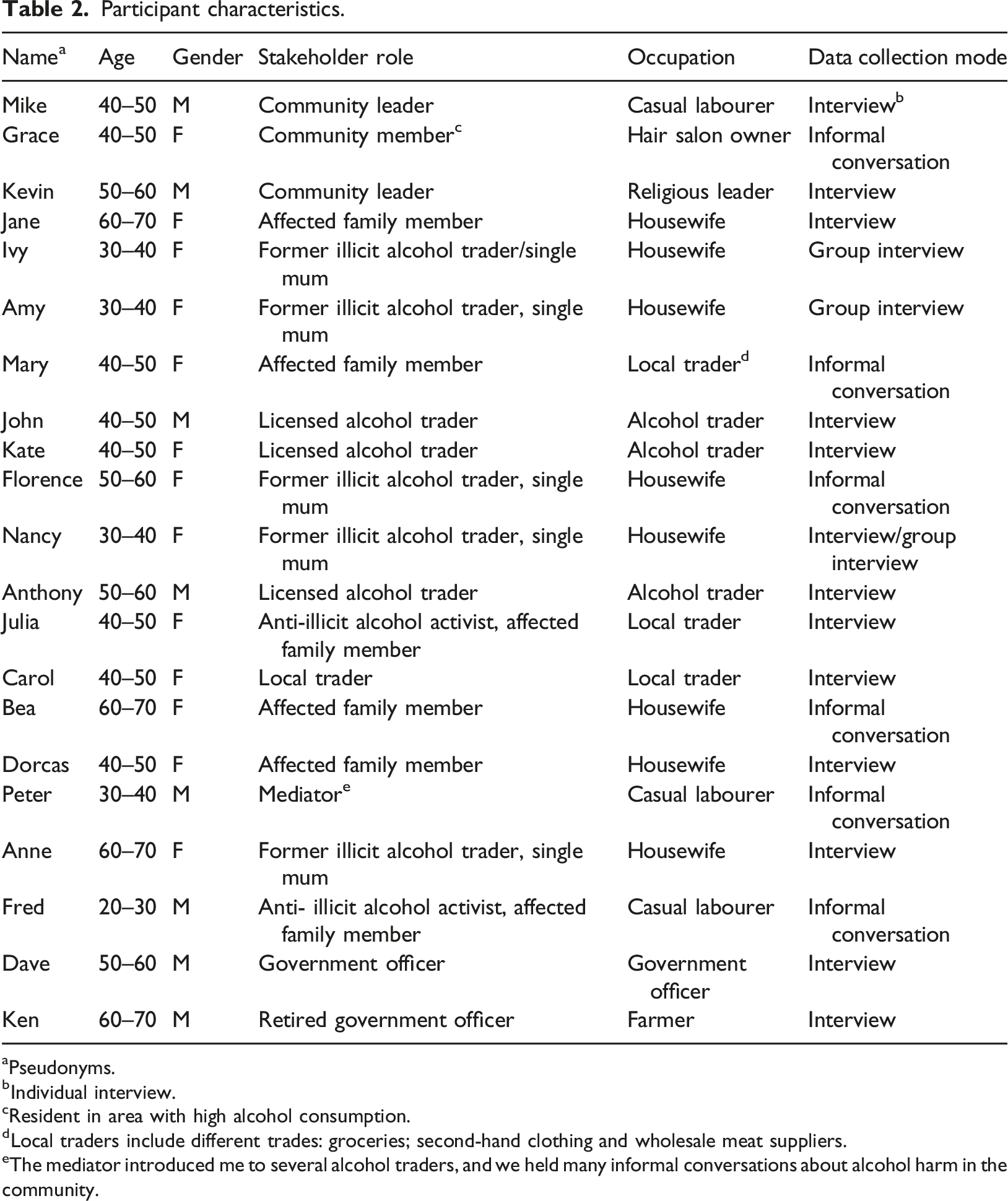
aPseudonyms.
bIndividual interview.
cResident in area with high alcohol consumption.
dLocal traders include different trades: groceries; second-hand clothing and wholesale meat suppliers.
eThe mediator introduced me to several alcohol traders, and we held many informal conversations about alcohol harm in the community.
We use frame analysis to examine stakeholder perspectives on fairness for problematic products. Frame analysis is useful for understanding local actors’ perspectives on problem definition, causal interpretation, moral evaluation, and recommendations (Entman, 1993). The way a social problem is defined determines the appropriate policy response (Gilliam and Bales, 2001; Wallack et al., 1993). The selection, omission, and framing of issues and events are crucial in shaping public opinion, political debate, and policy (Beckett, 1994). The first step in data analysis was data systemisation for the secondary and primary data. Systemising the secondary data involved analysing news headlines and captions. A thematic approach, searching for emergence of themes in the headlines that might be relevant to the research questions was utilised, and data coded as per the emergent themes. The primary data w then analysed by adapting the coding frame to themes identified in the secondary data systemisation. After initial coding, we progressed to second-order theoretical abstraction by comparing and contrasting different categories from the initial coding (Gioia et al., 2012).
We analysed the primary and secondary data for stakeholder perspectives on the nature of the harms/burdens/unfairness they face; important fairness considerations for different stakeholders; sources of unfairness in the alcohol marketplace and potential solutions. Drawing on enabled theorising approach (Dolbec et al., 2021), we applied prioritarianism and egalitarianism DJ theories in our data analysis. There were three main emergent themes related to DJ and fairness in the data: (1) procedures and policies; (2) effects/outcomes (of alcohol policy and alcohol consumption); and (3) comparisons of alcohol outcomes across different groups. There were some overlaps between some second-order themes because several concepts in the first-order coding are interrelated. Our data structure thus deviates from Gioia et al.’s (2012) data structure, where second-order themes inform only one aggregate dimension. We have instances where second-order themes inform more than one aggregate dimension to reflect overlapping themes. (Figure 2 provides a graphic representation of data analysis progression). Graphic representation of data analysis: From raw data to themes and aggregate dimensions.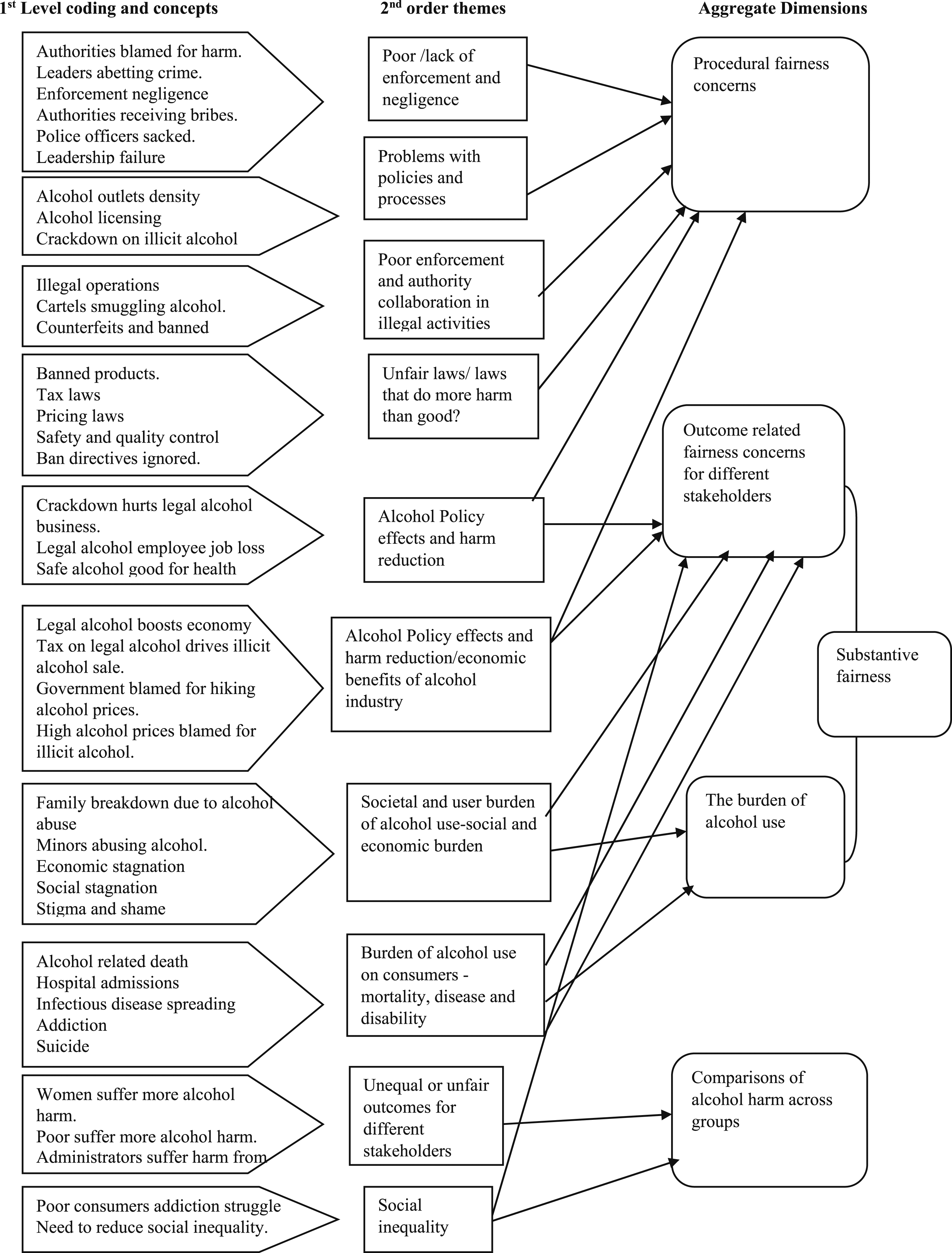
Findings
Our findings reveal stakeholder perspectives on important fairness considerations for different stakeholders; sources of unfairness in the alcohol marketplace and potential solutions to manage the alcohol burden.
The burden of alcohol and proposed solutions by different stakeholders
In July 2015, the Kenyan president banned second-generation alcohol (Table 1), following public outcry due to increased alcohol harm. Public protests were covered in print and broadcast media. The following media and interview excerpts reflect the burden of second-generation alcohol from different stakeholders: “My husband ... used to abuse me and was always rude, but now there is happiness in our house because he no longer drinks and is taking care of the family.” … They said President Uhuru Kenyatta’s intervention was timely, and if no action was taken, the country would have lost an entire generation. (Women upbeat as husbands reform, 28/09/2015, Daily Nation). We heard of several cases where people went in to drink and were later taken out as corpses. Others lie outside the club after drinking and after some time they are confirmed dead. Things were terrible before. The traders were only after profit. And I can tell you that alcohol trade is very profitable especially when you know what you are doing… Even PSV drivers were drinking recklessly... Spending more than 20% of their daily wage on alcohol. Physically, these people are very weak. They look unwell. (John, licensed alcohol trader, age: 40-50) Woman Representative2 Sabina Wanjiru Chege said “The raids on bars will go on as we support the directive to reclaim the youth of Mt. Kenya. We will not allow the youths to drown themselves in these brews anymore”. (Man shot dead as war on killer drinks sweeps across country. 03/07/2015, Daily Nation) Ravaged by the poisonous drinks, the young and old alike have either abandoned their families or are unable to marry…On the back of the worsening crisis, top national and county government officials Thursday declared an all-out war on killer brews that have claimed the lives of hundreds and shattered families. (Kenya declares total war on killer alcohol as crisis worsens 03/07/2015, The standard)
These excerpts illustrate alcohol burdens such as death and disease, poor relational skills/gender violence, reduced productivity, and inability to fulfil social roles (Laslett et al., 2013). The ban on second-generation alcohol (procedural fairness) is considered a solution to these problems and is credited with healing broken homes and improving lives.
One interview participant whose two siblings died after consuming illicit alcohol blames poor governance for increasing alcohol burdens. She proposes that non-governmental organisations (NGOs) should oversee alcohol regulation: The government is negligent; they have let us down. I think an NGO should oversee alcohol regulation; the government cannot manage. The NGO would support the public to fight illicit alcohol and the negative effects such as death from alcohol. (Mary - affected family member and local trader, age: 40–50)
Mary has the burden of caring for her orphaned nieces and nephews following the death of her siblings. Her comments allude to procedural fairness and resonate with views on government inability to effectively monitor, regulate, and enforce elements related to DJ. This inefficiency has led to the emergence of local and international NGOs that are perceived to be more effective in delivering DJ benefits to intended recipients (Ozanne et al., 2017; Scott et al., 2011). The control on distribution of toxic substances in many countries aims to prevent fatal poisonings from methanol (Lachenmeier et al., 2011). In the next excerpt, a media blogger faults the implementation of controls on toxic substances. Chemically, the killer in “second-generation” brews have been proven to be either methanol a form of alcohol that is unsafe to drink, formaldehyde, a colourless gas that when turned into a solution, is best known for preservation of dead bodies, or arsenic, a brittle metal commonly used in rat poison. All these are highly controlled substances in Kenya. How they get into just any hands is a mystery that the law cannot seem to explain or deal with. (After the crackdown, illicit brews have bubbled back 28/01/2016, Daily Nation)
This excerpt illustrates procedural fairness, which focuses on processes that can enhance equality (Temkin, 2009). Enhancing procedural fairness can address the social conditions that cause injustice. Measures such as MUP, product bans, and age limits for alcohol purchase illustrate procedural fairness. In Kenya, procedural fairness interventions also include bans on methanol sale and colouring methanol to prevent use in beverage alcohol.
The problem of inequitable access
Many consumers in low-income contexts are worse off because they cannot afford good quality formal alcohol (Pradesh and Bengal, 2019). The following interview excerpt expresses concern over the inequitable access to alcohol, which is believed to increase alcohol burdens: The government needs to lower the price of good alcohol. This would stop consumers drinking dangerous unhealthy alcohol, which has a negative health impact. (Julia, Anti-illicit alcohol activist, age: 40–50)
Julia took part in mass protests and worked with other members of her community to destroy illicit alcohol in local breweries. Her comments exemplify concerns over ex-ante equality (substantive fairness), which focuses on equality in people’s prospects/possibilities (Fleurbaey et al., 2017). The excerpt suggests that illicit alcohol consumers’ health prospects would improve with legal alcohol, and inequitable access to formal alcohol, leads to more inequity (Hill, 2018). Other community members shared this concern, as expressed by Carol: Lowering the price of “good” legitimate alcohol to make it affordable can solve the illicit alcohol problem. Many alcohol consumers cannot afford legitimate alcohol. But cheap is expensive because those who consume cheap “dangerous” alcohol fall sick and pay with their health. (Carol, local trader resident in a high illicit alcohol consumption locality, age: 40 – 50)
In developing countries, poverty is widespread and the majority do not achieve minimum consumption levels (Chakravarti, 2006). Community members argue that affordable good quality alcohol should be accessible for all. The excerpts also imply interpersonal fairness, a form of comparative fairness. By referring to good and dangerous alcohol, the excerpt also exemplifies ex-ante equality. For example, if alcohol prices are lowered, low-income consumer groups can access better quality alcohol (Wirtz, 2018). In contrast, ex-post equality emphasises equality in outcomes (Temkin, 2009). For example, if alcohol prices are lowered, all social groups will consume more alcohol, increasing the alcohol burden (GBD Alcohol Collaborators, 2018; Ludbrook et al., 2012). The following excerpt suggests that lowering taxes on some brands of alcohol will make safe alcohol affordable and reduce illicit alcohol consumption: Senator Keg is a safe, affordable beer that has helped the government fight the menace of illicit brews. “This year, Treasury has done its part by introducing an 80% remission for beers made from sorghum, millet, and cassava. Quality brews such as Senator Keg will remain affordable for wananchi (citizens), and the makers and sellers of illicit brews will find life ever harder. (Uhuru praises EABL for Senator Keg, announces Sh15 billion Kisumu brewery 28/06/2017, The Star)
This statement was made by the Kenyan President, who ordered a crackdown on illicit alcohol in 2015 and 2017, following mass deaths from illicit alcohol. The arguments espouse equal access to alcohol but ignore the outcomes from increasing access to alcohol for all consumers, leading to LDO. The main claim in these excerpts is that lowering legal alcohol prices increases legal alcohol consumption and reduces illicit alcohol consumption (Radaev, 2015). Illicit alcohol traders could lower their prices as a countermeasure, rendering the move ineffective in curbing illicit alcohol consumption (Lachenmeier et al., 2011). Lowering formal alcohol prices could also increase total alcohol consumption, as observed in Finland (Mäkelä and Österberg, 2009).
Limiting access to alcohol as a proposed solution
Community leaders argued that everyone is worse off with lower alcohol prices. Mike, a community leader, suggests limiting access to alcohol as the best way to manage alcohol burdens for all social groups: A consumer just needs about 35 pence to buy a glass/portion of alcohol… but I think if prices were higher, alcohol consumption would reduce. Even addictions and the negative effects from alcohol would reduce…The government should ensure that there is no cheap high strength alcohol, the minimum price should be between the equivalent of £3 to £4. (Mike, community leader, age: 40–50)
Mike blames heavy illicit alcohol consumption on low affordable prices that increase access (Rehm et al., 2016). In developed countries, research suggests that MUP has a significant impact on heavy drinkers who must pay more for higher volumes of alcohol, while the impact on moderate drinkers on low incomes is negligible. MUP is also credited with reducing health inequalities in such contexts. From a distribution of outcomes perspective, prioritarianism would lean towards MUP to reduce alcohol harm (Ludbrook et al., 2012). The excerpt reflects ex-post equality (substantive fairness) concerns by emphasising the need to assess potential outcomes and consequences of lower alcohol prices on wellbeing and incorporate these considerations in decision-making. One woman whose husband and sons consume alcohol expressed her desire for alcohol prohibition, for the sake of alcohol consumers and their families. Her husband passed away a few months after the interview. You suffer injuries because you are drunk, … Alcohol is bad. Parents are in distress. In this homestead, my husband and all my sons drink alcohol. It is very distressing, to see them all drunk...I want all alcohol outlets to be closed, so that parents and wives can have peace … consumers have suffered because of alcohol. Things are bad for alcohol consumers and their families… In my view, the president should get rid of all alcohol, even the legal beer… alcohol consumers are always fighting, their homes are full of violence, because when they get home, they are very aggressive... If they could live without alcohol, they would be good people with good lives. (Jane, affected family member, age: 60 –70)
The excerpt highlights the actual negative outcomes from alcohol (ex-post) equality and proposes that limiting access to alcohol would lead to improvements in individual (intrapersonal fairness) and collective wellbeing. The two excerpts reflect intrapersonal fairness by emphasising improvements in absolute levels of individual wellbeing.
Discussion and conclusion
This research was motivated by a need to understand stakeholder perspectives on fairness for potentially harmful products in the marketplace and to establish important fairness considerations for problematic products. The findings show that all stakeholders are concerned with procedural fairness, but only family members of illicit alcohol consumers and community leaders expressed ex-post equality and intrapersonal fairness concerns. Alcohol traders, government officials, and media bloggers expressed ex-ante and interpersonal fairness concerns. All stakeholders hold fairness concerns across most fairness dimensions. The exceptions are ex-ante and ex-post equality and, by extension, interpersonal, and intrapersonal fairness concerns, which are mutually exclusive. Those concerned about ex-ante equality, do not express ex-post equality concerns and vice versa.
Different dimensions of fairness in the findings, characteristics, focus, and stakeholder views.
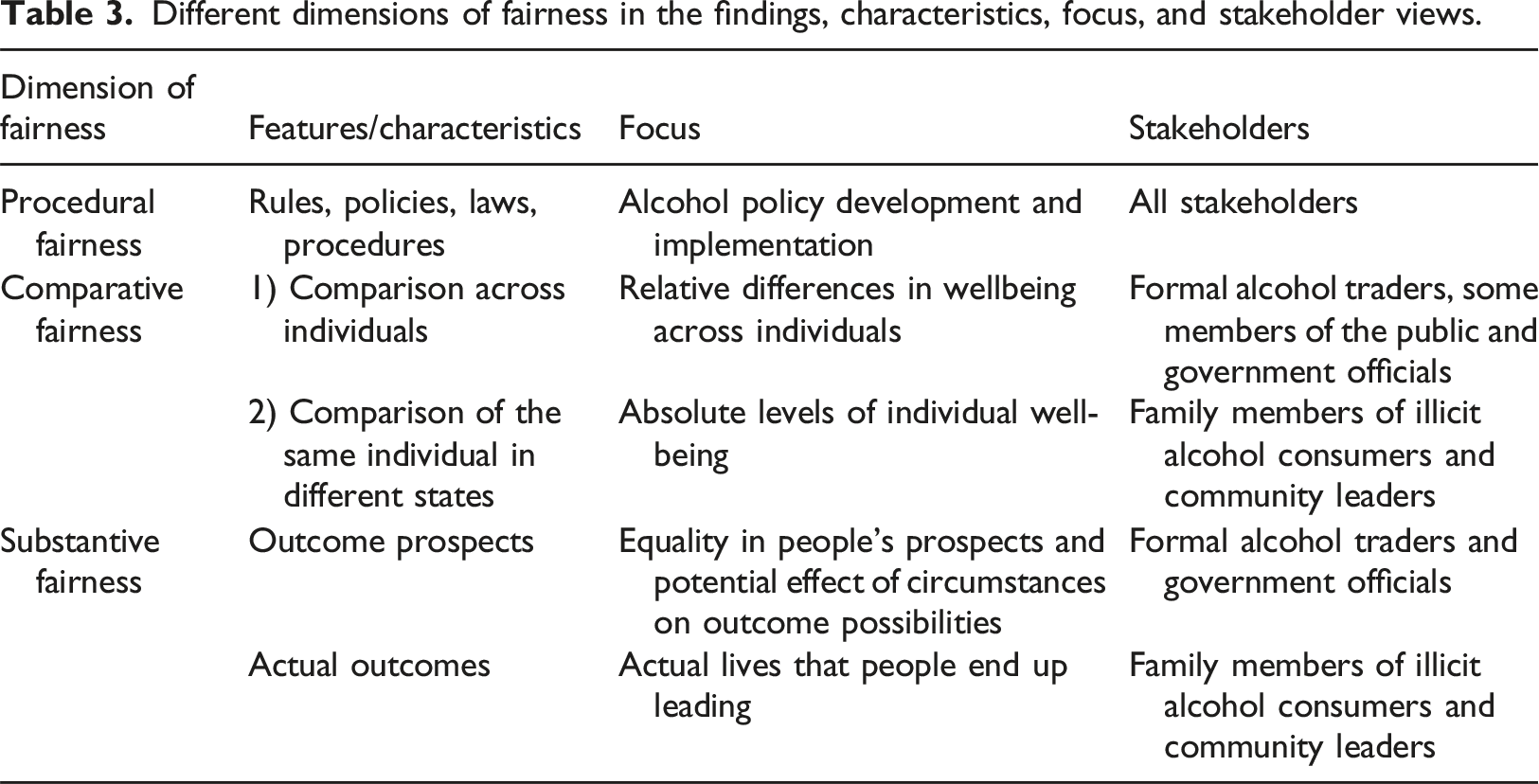
The findings suggest interlinkages between different forms of fairness, hence our proposal of a fairness chain for the evaluation of fairness for problematic products. The different forms of fairness can be viewed as macro, meso, and micro-level fairness factors. Procedural fairness can be considered a macro-level form of fairness. Our findings show that procedural fairness is the overarching form of fairness (Brockner, 2002), and poor governance and enforcement lead to increased burdens from alcohol, influencing substantive fairness, which then impacts comparative fairness. Policies such as the ban on illicit alcohol were credited with reducing alcohol burdens and improving outcomes for individual consumers and their families, hence procedural fairness influences substantive fairness, which is outcome related, comprising ex-ante, and ex-post equality.
We consider substantive fairness to be at the meso-level as it is concerned with interrelationships between microsystems in the consumers’ environment (Parkinson et al., 2017). For example, there are interrelationships between economic status and individual alcohol outcomes, where consumers with lower socio-economic status suffer disproportionately higher levels of harm to per-capita alcohol consumption (Mkuu et al., 2019; Rehm et al., 2009). This leads to comparisons between individuals and hence substantive fairness influences comparative fairness (interpersonal and intrapersonal fairness), which we consider to be at the micro-level as it focusses on individuals. Interpersonal fairness concerns reflect egalitarianism where unequal distributions of benefits/burdens across individuals are deemed unjust (Clayton and Williams, 2002). Intrapersonal comparisons are driven by actual outcomes (ex-post equality) and concern over absolute individual wellbeing, reflected in proposals for higher alcohol prices in the findings.
The fairness chain illustrates the importance of considering multiple dimensions of fairness. Some measures can worsen a situation’s overall inequality by increasing the burdens from alcohol, even if they address equality of opportunity, procedural fairness, and ex ante equality. Availing formal alcohol at low or affordable prices to all social groups may not reduce the overall burden from alcohol use, whilst restricting access through higher prices could (Ludbrook et al., 2012). Alcohol policies need to focus more on public health and well-being rather than just minimising controversy through orderly and lawful distribution (Levine and Reinarman, 1991). Current policies have achieved orderly distribution of alcohol, but the public health goals have suffered. Legal products such as alcohol and tobacco account for greater burdens from addictive substance use compared to their illegal counterparts (Peacock et al., 2018). All the stakeholders may need to acknowledge the burden associated with prevention and be willing to share this burden. For example, higher alcohol prices are said to punish moderate drinkers, yet they can reduce overall consumption (Ludbrook et al., 2012).
Research on marketplace morality has had limited influence on marketing theory (Hill, 2018). There have also been calls for more comprehensive analyses of unfairness in the marketplace (Klein, 2008), and for new approaches to addressing unfairness in the marketplace that incorporate diverse circumstances (Scott et al., 2011). Our research seeks to respond to these calls. We theorise a nascent area of DJ in the marketplace, increasing the diversity in this stream of literature and make the following contributions. First, our study seeks to address epistemic injustice (Hutton and Cappellini, 2022) by giving voice to unheard stakeholders (Chakravarti, 2006), including family members affected by the illicit alcohol consumption of loved ones in a developing country. Dominant groups, such as alcohol industry players and governments, frame alcohol as an individual problem (Laslett et al., 2013), but in this study, we project the voices of those affected by the alcohol consumption of others in the community. By so doing, our study also contributes to the AHTO literature. The research engaged multiple stakeholders for knowledge production on problem diagnosis and potential solutions (Ozanne et al., 2017).
Second, to address some of the shortcomings of individual DJ paradigms, in this study, we draw on two DJ theories to propose a new approach for the comprehensive analysis of fairness in the marketplace. Combining fairness dimensions from two DJ theories is useful for identifying multiple important fairness considerations for complex social issues such as problematic products. Our analysis also shows interlinkages between different forms of fairness, hence our proposal for a fairness chain for the evaluation of fairness in relation to access to alcohol and the distribution of alcohol burdens. Our framework, drawing on the fairness chain highlights the broad spectrum of challenges in enhancing fairness and emphasises the need to consider different facets of fairness beyond fairness in accessing goods and services. This fairness chain could also be applicable for other problematic goods and services such as tobacco and gambling. Considering the burden of alcohol use, including three million alcohol related deaths annually (WHO, 2022), we argue for a nuanced approach to alcohol policy that incorporates different dimensions of fairness and the interlinkages between them. Drawing on two DJ theories also responds to Belk and Sobh’s (2019) call to assemble new theories and recognises the need for multiple theories (Belk and Sobh, 2019; Dolbec et al., 2021) for complex social issues. The comprehensive evaluation of fairness in the marketplace for goods which can be problematic presents a challenge where multiple theories are needed.
Third, by drawing on two DJ theories, our study exposes differences in the ranking of moral concerns as well as potential theoretical foundations for competing notions of fairness, and hence competing policy proposals in the marketplace. The findings suggest that prioritarianism esteems harm/care above fairness/reciprocity due to the emphasis on intrapersonal fairness. In contrast, egalitarianism places fairness/reciprocity above harm/care as it is more concerned with interpersonal fairness (Zielińska et al., 2021). Prior research has proposed self- interest (Konow, 2005) as a basis for competing notions of fairness. This study’s findings suggest that emphasis on absolute individual wellbeing (prioritarianism) versus relative differences in wellbeing between individuals (egalitarianism) can lead to competing notions of fairness and potentially competing policy proposals. Policies such as MUP reflect a prioritarian view. The potential benefits of reducing alcohol burdens by restricting access to alcohol are greater than potential benefits of increasing access to formal alcohol for low-income consumers (GBD Alcohol Collaborators, 2018; Ludbrook et al., 2012).
Finally, the study findings have important implications for policy formulation and evaluation. We highlight the importance of focussing on the most urgent and achievable facet of fairness in a particular context. In the case of alcohol, while MUP could lead to unfair access to alcohol for low-income consumers compromising interpersonal fairness and ex-ante equality, ex-post equality may be more realisable than ex-ante equality. It is possible to reduce alcohol harm by restricting access to alcohol through higher prices, but increasing access to formal alcohol may not necessarily improve wellbeing for illicit alcohol consumers (Ludbrook et al., 2012). Increasing access to formal alcohol for low-income consumers can lead to increased overall alcohol consumption (Mäkelä and Österberg, 2009). Illicit alcohol traders could also lower their prices rendering the move ineffective in curbing illicit alcohol consumption (Lachenmeier et al., 2011). The findings further highlight the centrality of procedural fairness in public policies aimed at reducing burdens from problematic products, and the role of fair processes and enforcement in production, pricing, and placing/distribution. Alcohol continues to pose a significant burden of disease and mortality across the globe. The evidence suggests that there is need to pay more attention to procedural fairness and to considerations of other dimensions of fairness focussing on achievable forms of fairness for public health and well-being. We emphasise the need for policies that are sensitive to the distribution of wellbeing across the population (Adler and Norheim, 2022), and acknowledge that in some cases, it may be necessary to accept inequitable access (Temkin, 2009). We acknowledge that what constitutes a reasonable trade-off between different facets of fairness cannot be decided once and for all and will depend on the context and the goods or services in question.
This research focused on distribution of burdens in low-income contexts that already face general consumption limitations (Chakravarti, 2006). We propose further research into the impact of contextual factors on evaluations of fairness in contexts where economic inequality might be secondary for achieving fairness in consumption. This could include evaluating fairness in distribution of burdens in high-income countries even though there are low-income consumers in these contexts (Piacentini and Hamilton, 2013). This research illuminated relationships between different forms of fairness by evaluating fairness in distribution of burdens drawing on situational influences. Future research could combine this structural approach to understanding fairness with motivational approaches, to further understand fairness in providing consumption opportunities. Future studies can also investigate underlying determinants of perceptions of fairness in terms of psychological dynamics (Chakravarti, 2006).
Footnotes
Acknowledgements
The authors would like to thank the research participants for contributing to the study.
Declaration of conflicting interests
The author(s) declared no potential conflicts of interest with respect to the research, authorship, and/or publication of this article.
Funding
The author(s) disclosed receipt of the following financial support for the research, authorship, and/or publication of this article: This work was supported by the Lancaster University Management School.
