




Abstract
This practitioner piece outlines a novel method for practice-based research centred on the production of artists’ books. There is growing evidence for the benefits of artists publishing as an alternative route to disseminating academic research (see Bodman, ‘Towards a community of artists’ books’, 2019; Taylor, ‘The artist’s book as collaborative art practice’, 2017; Vieth, ‘The artist’s book challenges academic convention’, 2006). However, there is only limited research to help understand how the unique qualities of the artist’s book as a medium – and the processes and methods used in its creation – can be positioned to scaffold a process of mediating knowledge and hierarchies of practices. The insights from the study have significant benefits beyond art and design where they can be useful in STEAM (Science, Technology, Engineering, Arts and Mathematics) contexts, especially where this involves diverse multidisciplinary groups and specialist/non-specialist participants. The research focused on designing a practice-based method which positions the artist’s book edition as a visual verbatim facsimile.
The project’s initiating concept and conceptual anchor centred on the etymology of the prefix ‘re’. As a facsimile, each iterative edition revisits, reuses and reassembles, making visible the traces of individual interpretations and interventions as well as the technologies and materials deployed in the process of collaboration. As shown through the study, the method proposed offers an inclusive collaborative process where progressively more complex relationships are formed and synthesized through subsequent editions. A series of four iterative editions were developed through the study, each following a cyclical method involving three phases: (1) transcription and documentation; (2) constellation and translation; and (3) publication.
Keywords
Introduction
This practitioner piece explores the design of a novel research method centred on the practice of artists’ books, and specifically how the unique qualities of the artist’s book can benefit collaborative multidisciplinary contexts. The piece includes a short literature review to provide context and a definition of the practice before outlining a case study of how the novel method was designed and deployed in the context of the project. The resulting artist’s book, Re: Infinite Dialogue was conceived through the study, working in collaboration with Gary Clough, and with contributions from Anna Beel, Adam Knight, Susannah Haslam, Alkesh Parmar, Kyung Hwa Shon and Isabel Young.
For Nash, whose practice centres on artists’ books, and broader self- and small published works, the research study builds directly on a previous project as part of a Japan/UK Knowledge Exchange Network. This research concerned working with a multidisciplinary group to distil new insights from an AHRC-funded study (Nash et al., 2021). The rationale for undertaking this new line of enquiry was to further understand how the method could be adapted for new conditions, notably outside the COVID-19 remote working conditions that had a significant impact in shaping the methods during the Network study.
In 2012, Nash created Un coup de dés jamais n’abolira le hasard – Espace, a homage to Stéphane Mallarmé’s seminal work. In 2022, this was selected for inclusion in the exhibition and essay by Robert Bolick, Un coup de dés jamais n’abolira l’appropriation, and is now held in the Special Collections in the Bodleian Library, University of Oxford. This early work and research has permeated throughout Nash’s practice. Through various methods and approaches, the Mallarméan concept of the ‘constellation’ has been constantly revisited and reconceived as a metaphor for strategies for a graphic–poetic language, a dialogue and dialogic, based on mediating a multiplicity of meanings and readings through relational and intertextual connections.
Literature Review
For those unfamiliar with the term ‘artist’s book’, this literature review serves as a concise summary to provide context to the practice. Many existing texts offer varying perspectives in plotting a history of the artist’s book as a practice, and practices that approach the book as a primary medium. These are often accompanied by approaches to situate a multiplicity of definitions and forms. Notable texts include Lyon (1987), Castleman (1994), Bury (1995) and Drucker (2004), which discuss the complex woven histories, traditions and points of lineage. While the earliest points of lineage are of much debate, it is useful for this article to succinctly situate the practice in relation to the more commonly agreed precedents, notably the work of Ed Ruscha and Dieter Roth during the 1960s. Both, with differing concerns, are positioned as precursors to contemporary practice.
In order to position an equal and succinct definition of what an artist’s book is, I would jump to the end point of many a literature review and discussion, and state its definition is resistant to definitions (Milne, 2019). While, on the surface, this appears to be unhelpful, it does lead to understanding more precisely what makes artists’ books as a practice so unique, and how the qualities of the medium can be an advantage to navigating the challenges of multidisciplinary contexts. A reason for the ability of an artist’s book to evade definition is recognizing its qualities of being mutable and porous or, as Burkhart (2006) states, its ‘mongrel nature’.
Bodman (2017) discusses how artists’ books as a practice draw directly on a broad range of associated practices, with their own histories and traditions that are directly involved in the books’ conception, production, publishing and dissemination. However, artists’ books as a practice also have relational points across a span of fields and contexts depending on the practitioners or participants involved, and their relation and approach to the practice. Within this is the ability to transverse and transcend cultural forms of representation, experience and interaction. Here I would offer my definition of an artist’s book as having ‘a unique relational position in constantly bordering with otherness, while also always retaining the essence of bookishness’ (Nash et al., 2021).
Through its greatly varying forms and approaches, the artist’s book has unique qualities in its affordances to embody and perform, which demand a different form of engagement. Milne (2019) and Adema (2018) both articulate how the artist’s book as a primary medium requires a simultaneous multi-sensual process of understanding through reading, seeing and touching. This process of engagement is also an act of making public. In this respect, it can be argued that the artist’s book gains much from its conventional counterpart, namely mobility and the ability to travel and transcend contexts and situations. Milne (2019) references the practices and traditions of independent international artists’ book fairs and other curated and situated events as operating akin to ‘nodes of dialogue’.
To connect to the practices of academic research dissemination, with its own conventions and traditions, Adema and Hall (2014), mirroring a broad argument from communities in this intersection of academia and practice, state that the artist’s book offers a ‘reimagining of what counts as scholarship and research, and of how it can be responded to and accessed’. With varying levels of institutional understanding of the practice or support for artists publishing as research, far from a relationship based on being seen to challenge or obfuscate the traditions and metrics of research dissemination, artists publishing can offer alternative and additional routes to engaging with wider and more diverse audiences, and especially those that are beyond the immediacy of academia – also within art and design.
Etymology of the Prefix ‘Re’ as An Initiating Concept
The artist’s book, Re: Infinite Dialogue, was conceived and evolved through the research study in which the focus of the project primarily concerned the method not the outcome. The title, Re: Infinite Dialogue, evolved from a starting point, an initiating concept of ‘re-’, which was based on the etymological meaning and roots of the prefix;
Re-
[a] word-forming element meaning ‘back, back from, back to the original place;’ also ‘again, anew, once more,’ also conveying the notion of ‘undoing’ or ‘backward’. The many meanings in the notion of ‘back’ give RE- its broad sense range: ‘a turning back; opposition; restoration to a former state; ‘transition to an opposite state.’ From the extended senses in ‘again,’ re- becomes ‘repetition of an action. (Etymology.com)
The etymology of ‘re-’ as notions of ‘turning back, undoing and restoration’, as well as ‘again, anew and transition’ offered a broad conceptual anchor to the project and for working in collaboration with the multidisciplinary group. In the context of this project, ‘re-’ was positioned as promoting revisiting, reusing and reassembling ideas and materials to enable new connections and dialogues to emerge. The processes deployed, as outlined further in the article, were positioned to record and make visible the material traces of individual interpretations and interventions manifest in the collaborative process. Notions of ‘re-’ as ‘again’ and ‘repetition’ aligned to a method conceived on a process of proto-iterative editions. Through the process, each edition was not predetermined but rather an open-ended transformation in which progressively more complex relationships are formed through each engagement.
Method
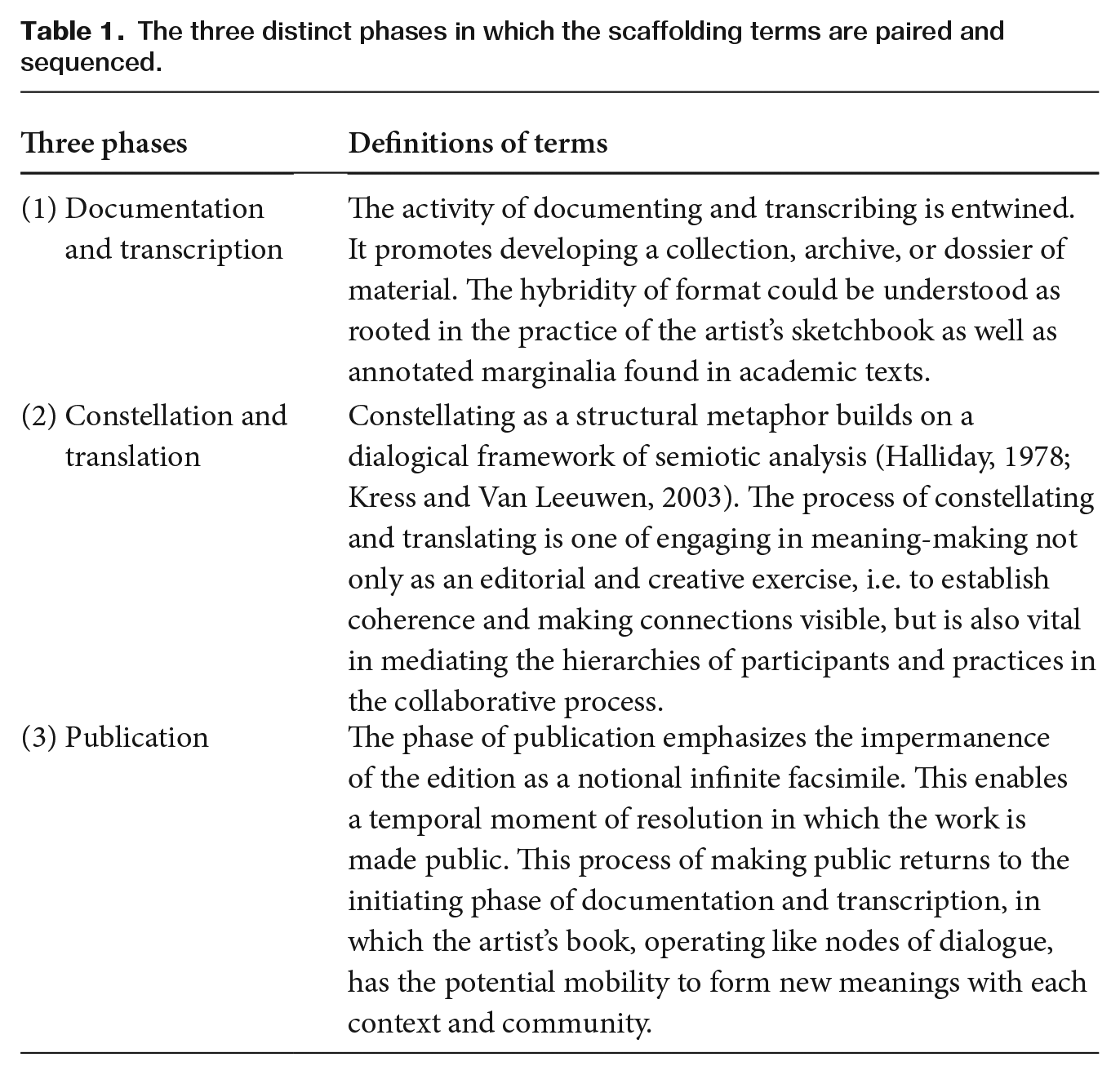
Based on the insights as outlined above, the intention focused on designing a practice-based method, a framework and scaffolding, centred on artists’ book practice to distil new knowledge through a process of iterative editions. Building on previous projects and findings, it is important to state that this could be understood as a heterogeneous framework adaptable to different contexts and conditions, and that each different context would necessitate variation in emphasis and application. As shown in Figure 1 and Table 1, the method is based on three distinct phases in which the scaffolding terms are paired and sequenced.
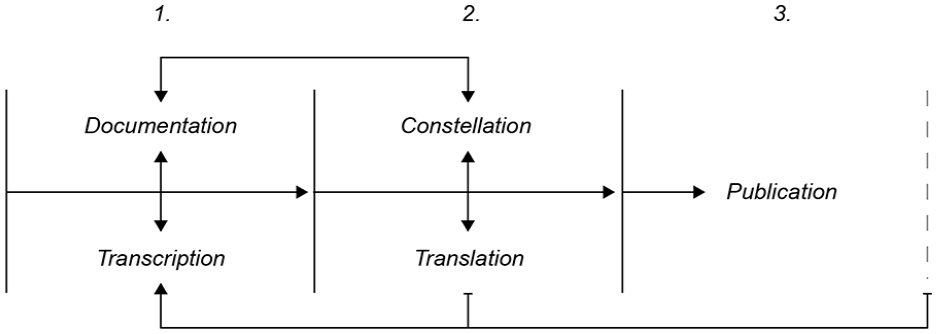
A methodological framework.
The three distinct phases in which the scaffolding terms are paired and sequenced.
Edition 1: Original photocopies
The process started in October 2021 with Nash collaborating with Clough, in a process of photocopying 15 years of Clough’s sketchbook-based drawing practice. For Clough, working in a sketchbook is a process of continually transcribing objects. In an interview, Clough described their drawing practice as ‘an inexhaustible visual language’. With a vast amount of material to work with, the selection was based on creating a rule, in this instance capturing every fifth double-page spread (see Figure 2). This enabled an immediate recording of a cross-section of material spanning 15 years. The process of selection was intended as an immediate departure to decontextualize the material while removing bias from the selection process, and in so doing also increased the opportunity for chance connections to be formed. The original sketchbook pages were photocopied in black and white, and duplex printed onto recycled stock.
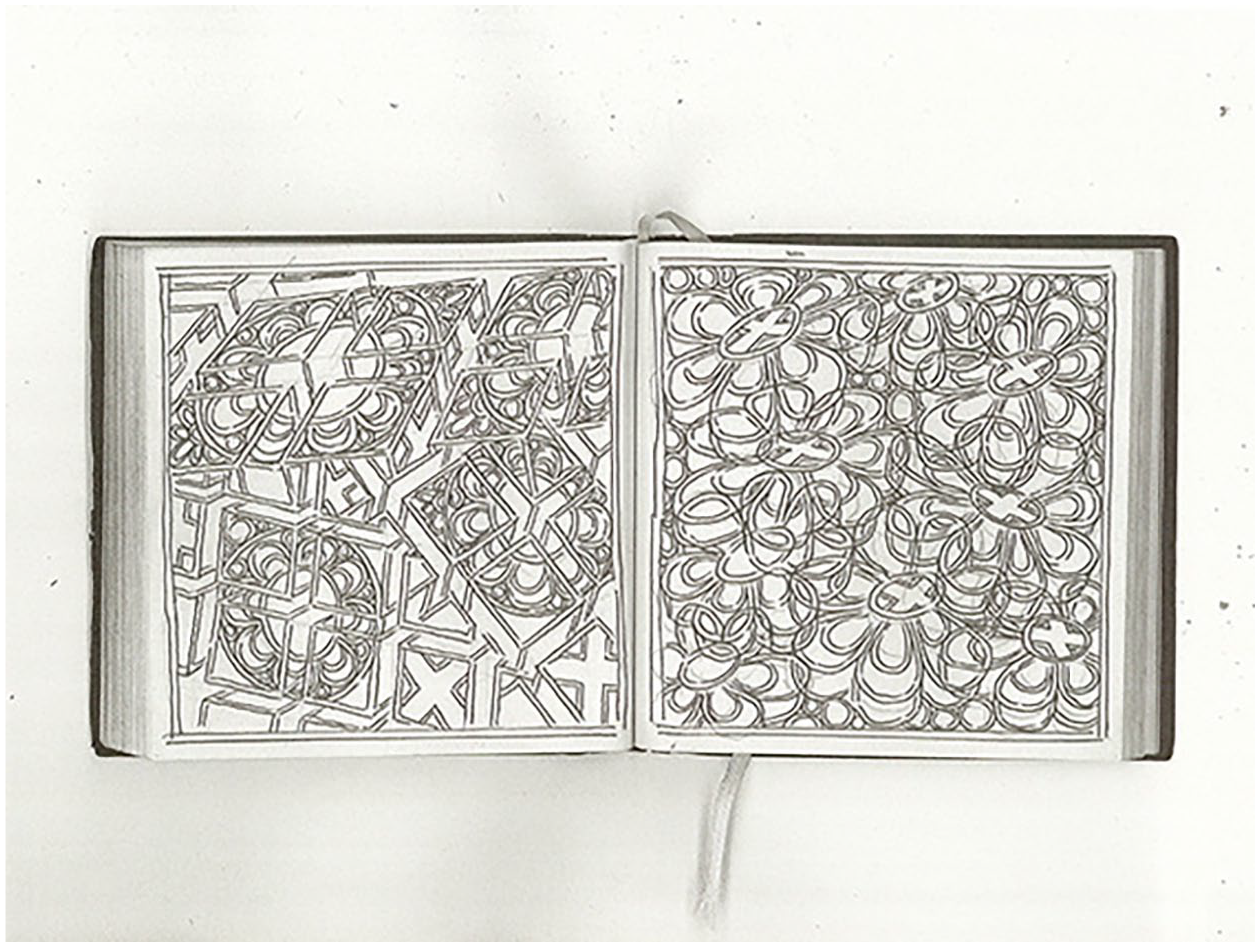
Example of original sketchbook scan unfolded and unbound.
Without a process of imposition, the pages were bound with a simple pamphlet stitch, revealing chance combinations. The resulting bound book of photocopied material was given to Clough who then worked directly into the book over 14 intensive days. Responding to these captured moments in his practice, for Clough this became a reflective process through visual, textual and material interventions, including annotation, drawing, paper-cutting and adding stickers to pages. Clough also added and extended pages, returning 40 more than had initially been provided.
Edition 2: Digitally reproduced facsimile
The responses and interventions made into the first edition by Clough were digitized by Nash through a process of scanning and editing individual pages. As a notional verbatim facsimile, the imperfections and traces of the process were retained in the artwork. Each scan only included subtle editing of levels and colour correction (see Figure 3).
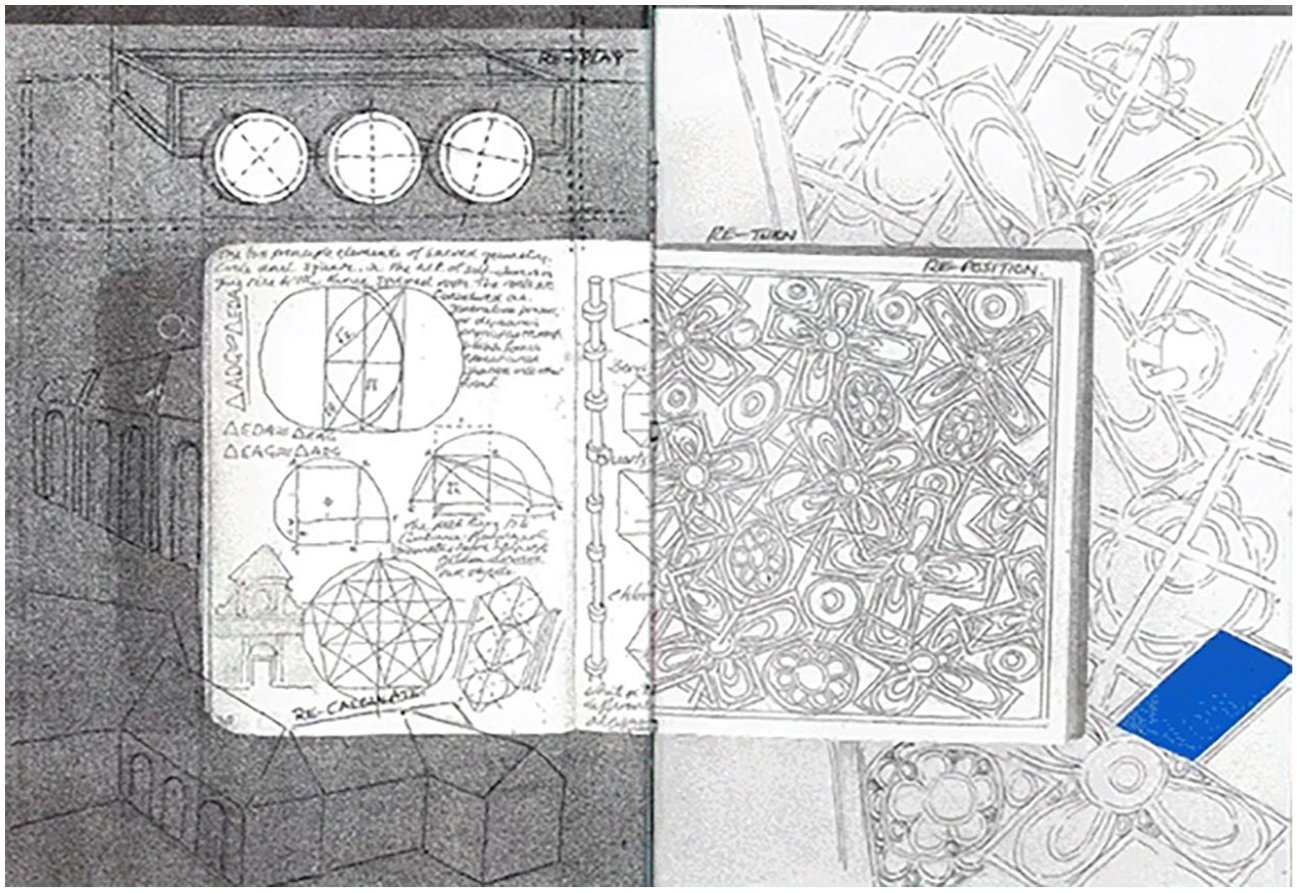
Digitized pages from edition 1.
Edition 2 was reproduced as a limited production of eight copies, one for each member of the research group (see Figure 4). Each member of the participant group had a further 14 days to respond to the presented material through their own individual practice and research concerns. The range of responses is outlined in Table 2. On receiving the eight intervened editions/responses after the 14 days, they underwent a second process of re-digitization through high-resolution scanning and photography before further engagement (see Figures 5 and 6).
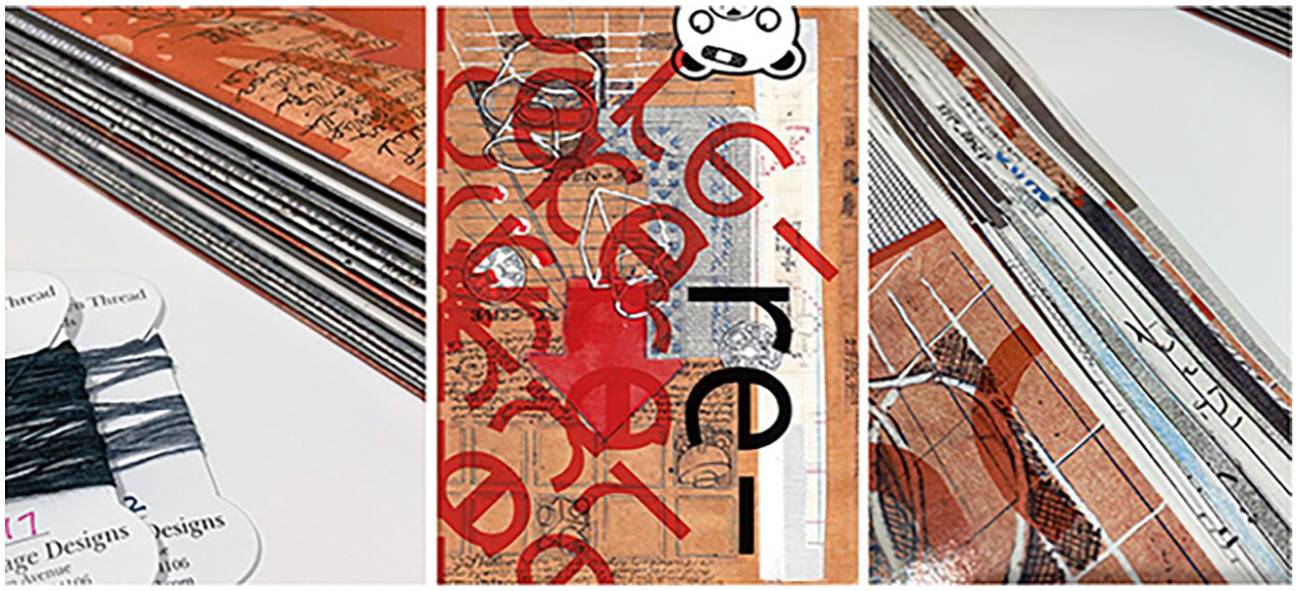
Preparing the print and binding for edition 2, approx. A4, with a Coptic binding using hand-dyed thread; 140 pages laser-printed on an MFD printer/photocopier on off-white recycled stock.
Range of responses to the presented material.
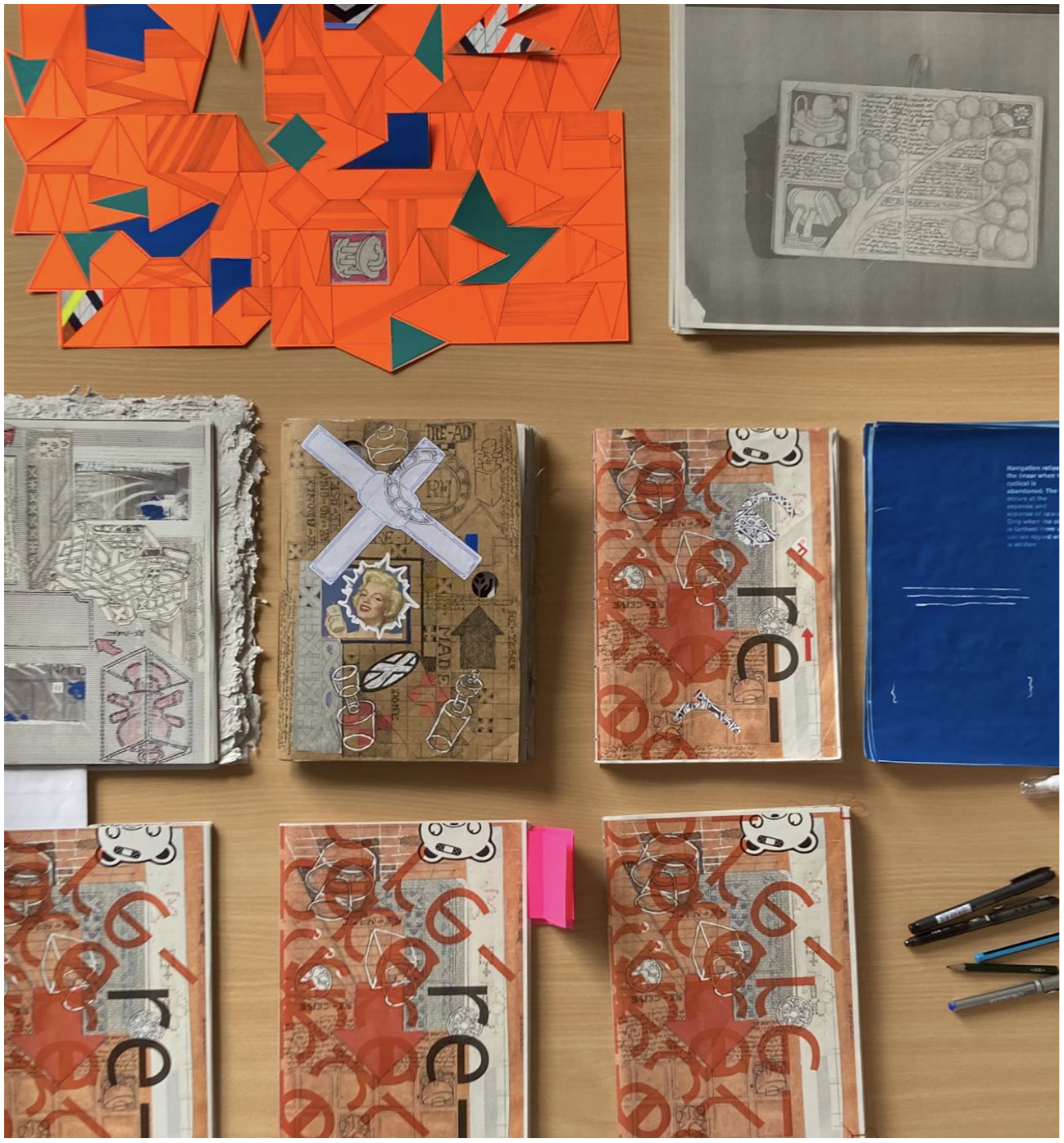
Documentation of all responses.
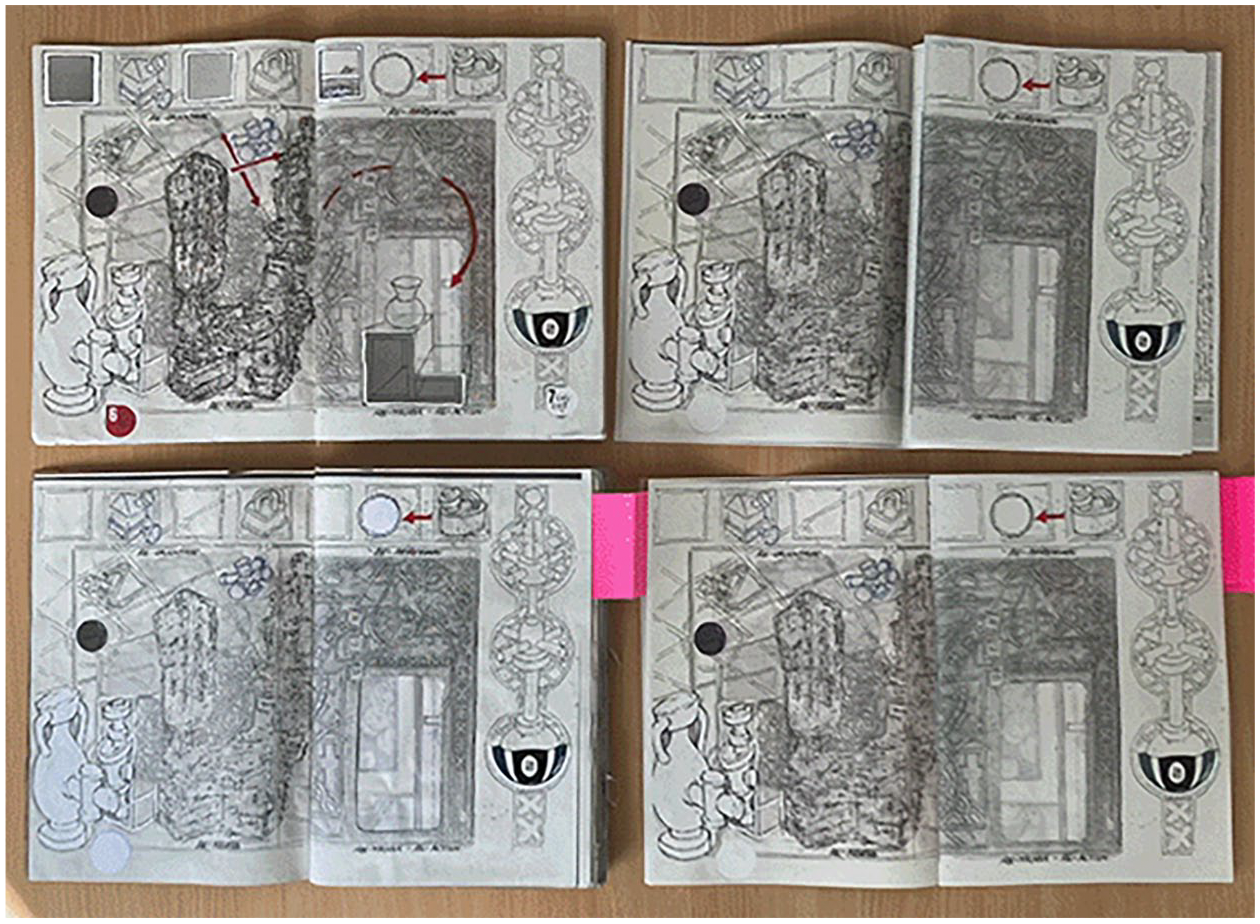
Recording of four interventions.
Edition 3: Synthesis of responses
In responding to the new body of work, Nash undertook a process of analysis to locate relational concepts and concerns within the eight editions. The constellation process (see Figure 7) directly informed points of anchorage for new narratives and dialogues to emerge through the editing and curation strategy. Edition 3 was the first complete precursor to the final artist’s proof, produced as a one-off exhibition edition for exhibiting in Fictions 2 at the Blyth Gallery at Imperial College, London in June 2022. Edition 3 was produced as an oversized approximate A3 scale (see Figure 8). Due to the scale and volume this required innovative approaches to print production, fabrication, hand stitching and binding methods.
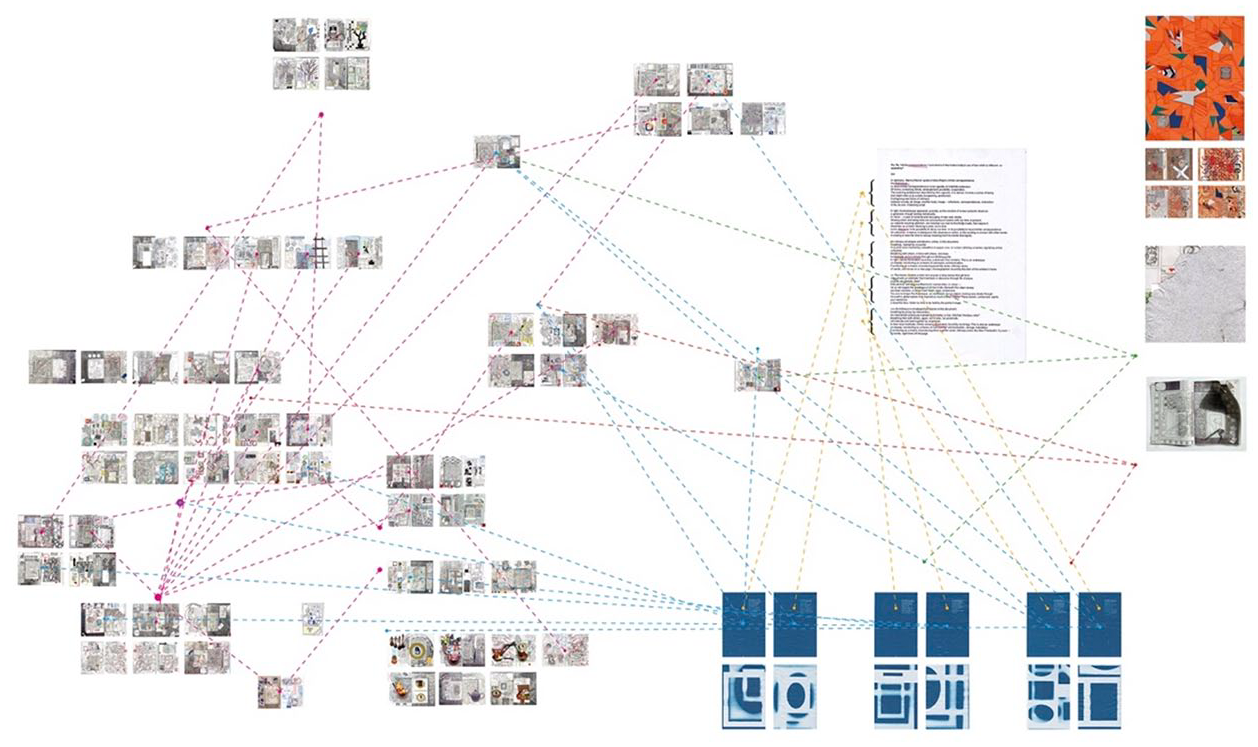
Constellation of responses.
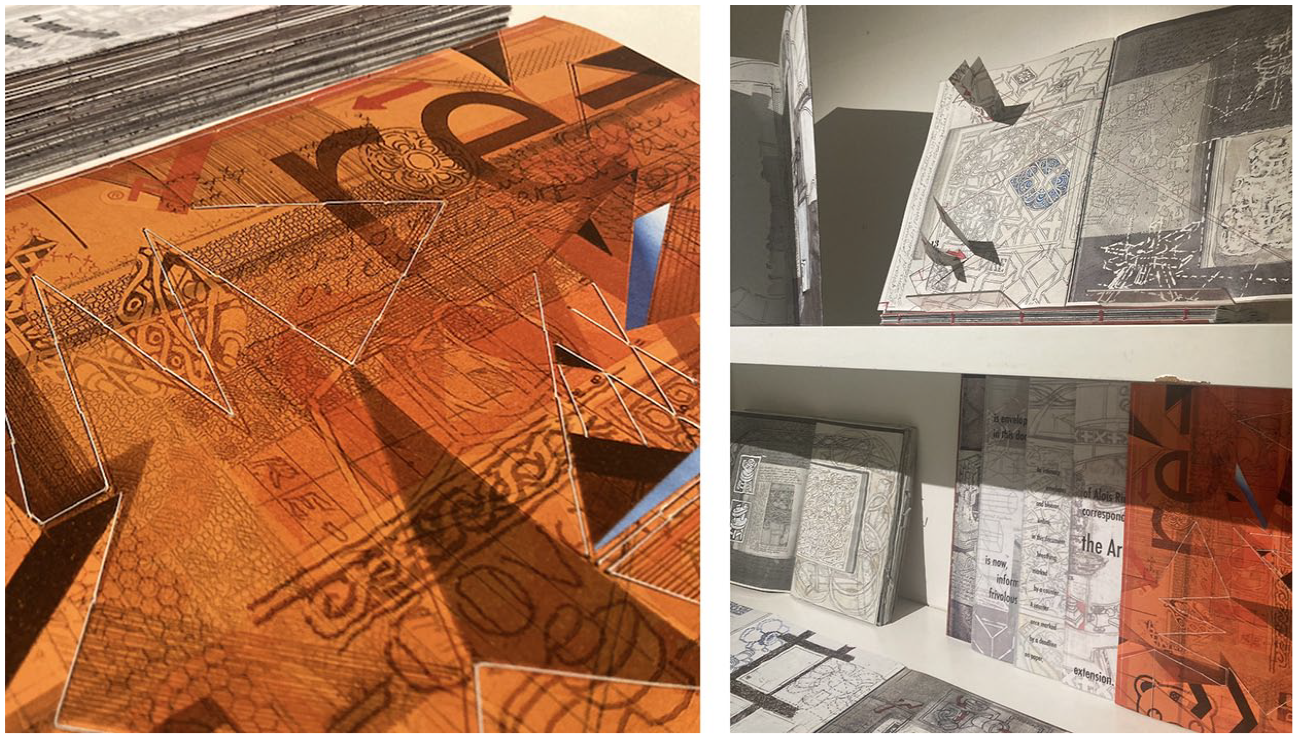
Preparation and exhibition of Edition 3: an edition of one, approx. A3, handmade and finished. Custom Coptic binding with reverse stitched French fold pages; 20 French fold/gate fold pages with material interventions made to laser print on laid recycled and tracing paper stocks. Cover printed on Colorplan mandarin orange stock.
Edition 4: A limited production
Taking Edition 3 as a precursor, Edition 4 is a determined, as opposed to exhausted, final production. It exists as an edition of 100, and a boxed one-off archive containing all elements of the research project. This has been made possible with the kind receipt of funding from the Royal College of Art. Published through Nash’s Metapoiesis Editions, Re: Infinite Dialogue will be distributed through artists’ book and publishing fairs, specialist bookstores, exhibitions and acquisition to collections.
Insight and Discussion
Engaging with the body of work so far, preliminary insights can be discussed as follows: (1) mediating knowledge through making; (2) constellating as a method and mediating hierarchies; and (3) edition and facsimile as an iterative process.
Mediating knowledge through making
Milne (2019) discusses the notion of scientific inscriptions as a metaphor for the artist’s book. She quotes Latour (1999) in stating ‘inscription is the “transformation” and “materialisation” into a sign, an archive, a document, a piece of paper, a trace designed to transmit information or ideas.’ As a research method, what is proposed in this practitioner piece aligns with Drucker’s (2004) classification of the hybridity of ‘catalogue as artist’s book’. In this instance, as a medium, it has a unique position in blurring the lines between research and practice through its varied forms of representation. In practice, notions of inscription and transcription blur in mediating languages and materials as well as in the recording and archiving process. Mediating meaning through inscription and transcription is inherent in the creative process and with this also positions the opportunities and limitations, as stated by Kress (2010) as the gains and losses inherent in mediating the communicative qualities of languages and materials.
Constellating as a method and mediating hierarchies
The process of constellation is more complex than simply seeing the sum of the parts. As an analytical tool, the process of constellating is engaging in the application of critical lenses in the spatial mapping of concerns in a body of work and practices. Akin to nodes of dialogue, the astrological metaphor of the constellated image is not inappropriate. As a constellation, the method promotes identifying spatial relationships beyond linear connections and representations (Kress and Van Leeuwen, 2003). The process of translation is vital to mediating not only meaning as an editorial exercise and making the newly constellated connections visible but also to mediating voices and hierarchies in collaboration. This highlights the importance of an inclusive process and dialogue with and between collaborators and materials. Recognizing the value of each contribution is important, as is the understanding of the contributor before any further engagement. From this position, the method does encourage prioritizing the potential for what can be newly configured over what was created and shared. It is important to acknowledge this method can challenge individual authorship, albeit it can also promote collaborative distilling and synthesis of multiple perspectives and concerns situated across disciplines and practices.
Edition and facsimile as an iterative process
Moving to a point of publication places emphasis on the impermanence of an edition as a facsimile. In this sense, the meaning within each edition reaches a point of being resolved – that is, to distinguish between momentarily ‘resolved’ and as opposed to ever ‘concluded’. It is always the precursor for a subsequent edition or response that cannot be predetermined. In this manner, the edition operates akin to a prototype and prototyping as a form of knowledge production (Buchli, 2010). The method celebrates iterative editions as variants that mediate and encourage a diversity of relationships being formed through the artist’s book as concept–visual–object. Milne (2019) discusses this as an ‘unravelling’ and ‘cognitive stickiness’, to what Adema (2018) refers to as an unlocking through deciphering non-linear and intertextual relationships. Dedner (2006) likens this to classifications of variants in editions as source-text and genetic variants. Brinkman et al. (2006) further this point by considering the historical positioning of editions and variants that occur – and are shaped by – the political, cultural and social contexts of their conception.
Conclusion
This practitioner piece proposes a novel practice-based research method for collaborative multidisciplinary contexts centred on the creation of artists’ books. It is proposed that the qualities of the artist’s book as a primary medium afford it a unique position in blurring the lines between academic research and practice, and between process and dissemination. The method proposed offers an inclusive process that can positively mediate knowledge and hierarchies in collaboration. As shown within the case study, this offered opportunities for forming connections and constellations in dialogue across diverse materials and modalities as well as the hierarchies of the contributors in the collaborative process. As proposed here, not only can the method be purposeful to the broader research community but, as a medium, its mobility also affords it a unique position in relation to routes to dissemination beyond academia as well as art and design or artists’ publishing contexts.
Footnotes
Data Availability Statement
Data sharing is not applicable to this article as no datasets were generated or analyzed during the current study.
Declaration of Conflicting Interests
The author declared no potential conflicts of interest with respect to the research, authorship and publication of this article.
Funding
The author received no financial support for the research, authorship and publication of this article.

Biographical Note
Address: Royal College of Art, The MediaWorks, White City, London W12 7FN, UK. [ email: