



Abstract
This essay visually describes an Indigenous research project exploring digital inclusion with Aboriginal families on Mornington Island, a remote Aboriginal community in Queensland, Australia. Yarning, an Indigenous storytelling and conversational research method, was combined with photography (some participant photography, but primarily researcher photography) in a new method termed ‘show and yarn’. This method allowed community members space to show us their devices, have images taken of these devices and then use these images as a prompt for yarns about their experiences using the internet, mobile phones and technology.
The author is an Indigenous researcher, who had existing connections with Mornington Island residents and it was through these relationships that the community came to be a partner in this research.
Keywords
Introduction
This article has two aims: firstly, to share the voices of Mornington Island residents, regarding their experiences of digital inclusion and, secondly, to share the visual findings of an Indigenous research project that used a visual research methodology. This project was formed collaboratively with the Mornington Island community after conversations emerged between an Indigenous researcher and community members regarding the challenges Mornington Island faces with digital inclusion. This research was informed by the AIATSIS Indigenous Research Code of Ethics (2020), and all aspects of the project were underpinned by Indigenous research principles and practices. Fieldwork was conducted by Dr Rogers (Wiradjuri) and Dr Amber Marshall (non-Indigenous) from QUT in Brisbane, Queensland.
Context
Mornington Island sits among a group of islands in the Gulf of Carpentaria, Queensland, known as the Wellesley Islands, which are collectively the lands and waters of the Lardil, Yang-kaal, Kaiadilt and Gangalidda peoples. In 2021, Mornington Island had 1021 residents, with 80 percent of the community identifying as Aboriginal or Torres Strait Islander people (Australian Bureau of Statistics, 2021). Currently, Mornington Island residents experience significant barriers to digital, social and economic inclusion. These issues are in part due to physical isolation and challenges in health and social service provision, as well as a lack of local educational opportunities (including having no senior secondary school on the island).
This project focused on the experiences of five Aboriginal families on Mornington Island, who signed up to yarn about their experiences using mobile phones and the internet, after hearing about this project through Mornington Shire Council.
Methodological Approach
The show and yarn method used in this research was effective in centring the stories of Aboriginal families which was essential because ‘as we journey through Western academic and story institutions it is Indigenous storywork that will hold us in a relational embrace with Indigenous resurgences and worldviews’ (Archibald et al., 2019: 8). Yarning is described as conversation and storying that is important to Indigenous peoples (Bessarab and Ng’andu, 2010) and, in this research, yarning worked flexibly alongside photography, allowing Aboriginal families to describe their experiences of digital inclusion living on Mornington Island.
The researcher (Rogers, 2017) previously found that yarning works exceptionally well with photography in the development of an Indigenous research method - photoyarn. The development of the ‘show and yarn’ photography method in this research built on the success of the photoyarn method and created an open space for families to share stories on their barriers and solutions to low levels of digital access (to internet and devices), affordability (of plans and data), safety concerns (including lack of mobile phone reception and coverage presenting barriers to activities on Country) and ability to access digital opportunities (digital skills, work and education) while living on Mornington Island.
Findings
The findings, including the images that were taken, are shared alongside direct quotes in order to give voice to Mornington Island families, regarding issues that are affecting them.
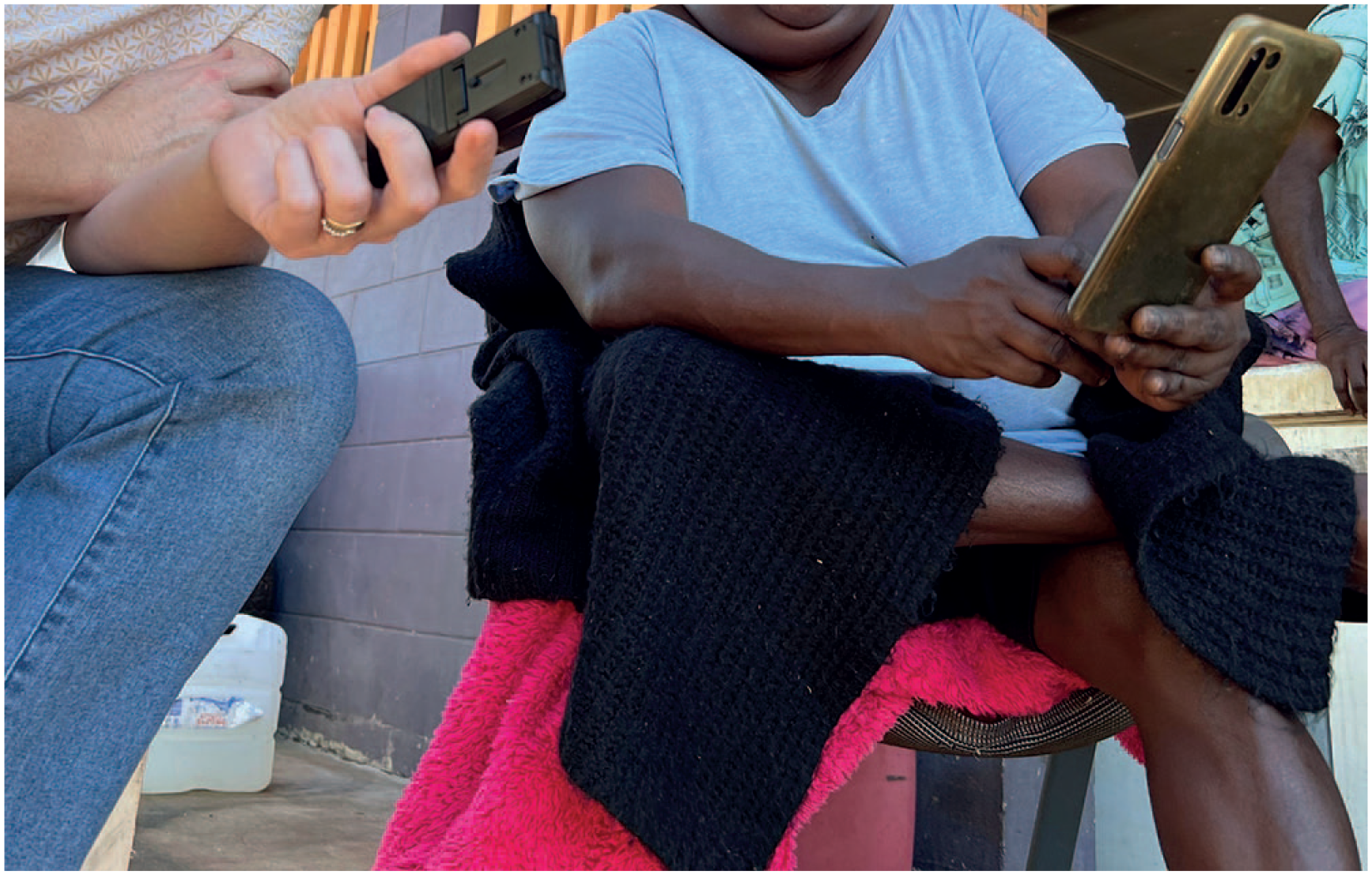
A glimpse of the show and yarn method. To avoid discomfort, further images were not taken during the yarns, which are underpinned by relatedness, connection and ‘in the moment’ discussion.
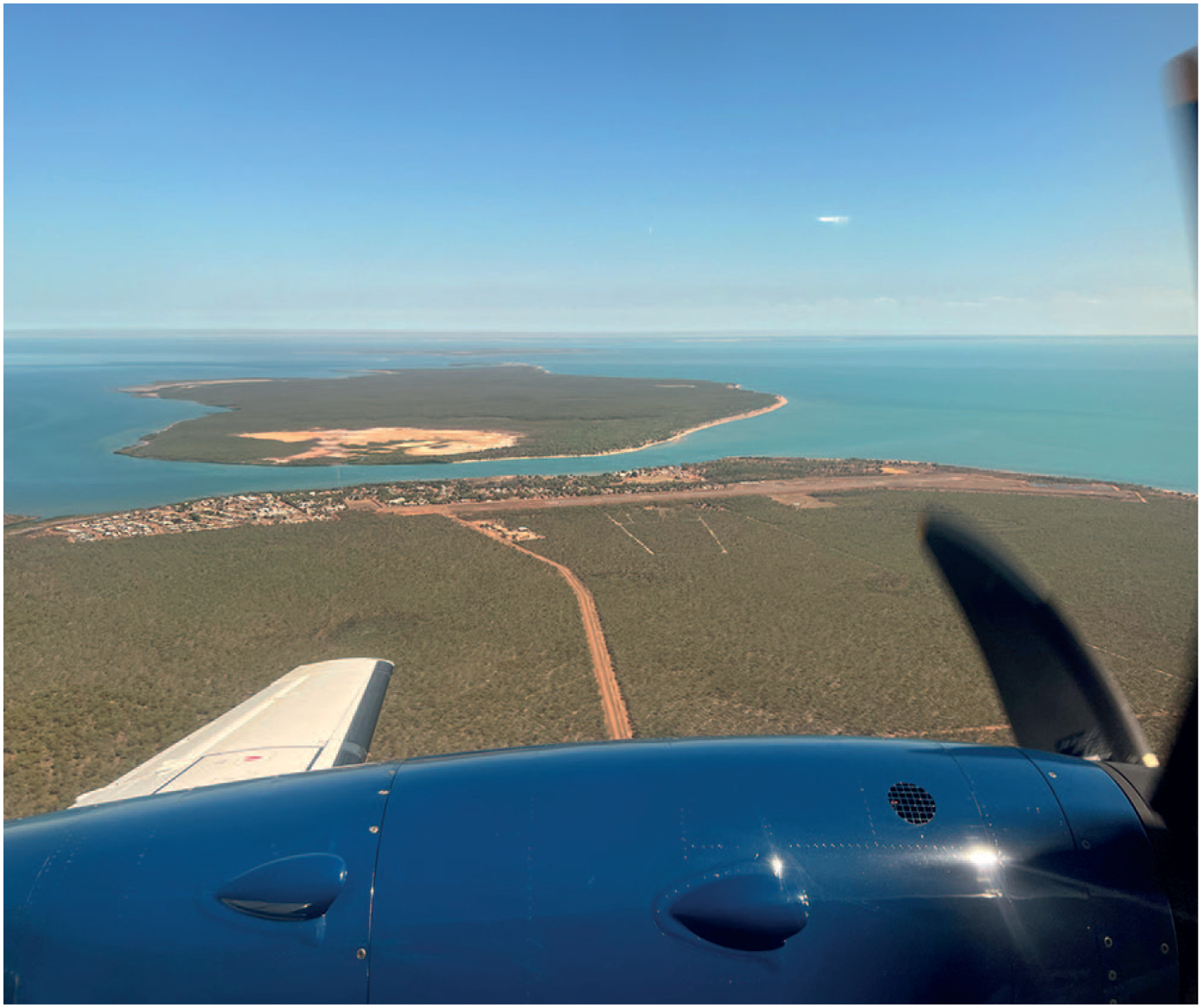
Mornington Island, and the township of Gununa, as seen from the air.
… Recharge… recharge and then you run out, then you buy it again and run out… Well, I guess it’s probably because they got no choice. Because if you only got the one, the Telstra. I mean obviously, Optus is not here on the island, and you only got that one choice, you got to go with the flow… little people… they’ll just sit… for the internet when they’re out of credit and that’s the only time. Out on the outstation, it’s got the same thing too. So, when we go out in the bush and if obviously, they’re just so mad over phones and social media, they’ll go up that houses where the WiFi’s is and sit around there and go back on Facebook and say ‘this is what I caught today.’ [Telstra is the only telecommunication provider that provides mobile phone coverage on Mornington Island. Optus is another Australian provider that does not provide coverage on Mornington Island.]
Well, my [nephew] said to me twice here today, ‘We want to go camp and make spear. I want to spear fish.’ I said, ‘cut them, show you how to make spear.’ That’s what I do… I wish kids can go… If they can fix some things… and put them TV thing out there, I reckon our kids will come out (to the outstations)… For our home to be built back on our Country again… Like renovate and… like when you’re talking about, phone, everything installed… And we have a good time with one another. That’s what always my people were doing, my grandfathers. They used to camp, just open air, with windbreak. I reckon on other communities more in front of us, like Northern territory. like that, those places. They’ve got their language. And they’re going on their Country, doing things for themselves, you know? We need to go back out there and do something on our Country for ourselves… this is what’s happening now. We’re having problems with phones, people fighting, drinking…
Well first, I had Telstra connected to my house and we had the internet. So that was all connected back in I guess 2015… No lie, council done some works over here at a house and they dug up the ground to do the driveways, but I think same time must have done something with the Telstra line. Since then my internet was just, it was crappy. just loading, loading, loading. But when I ring Telstra, Telstra would say, ‘no, everything on our side is all good.’ But, which in fact it wasn’t, because it was just loading, and I keep having that same problem over and over again. And with Telstra, I tell you what, I had to cancel that whole bundle thingy and tell them to stop because it was crappy. Yeah. It wasn’t even worth my money. And [I cancelled it] a month ago. I was paying for it all that time and I just said ‘no, stuff it.’
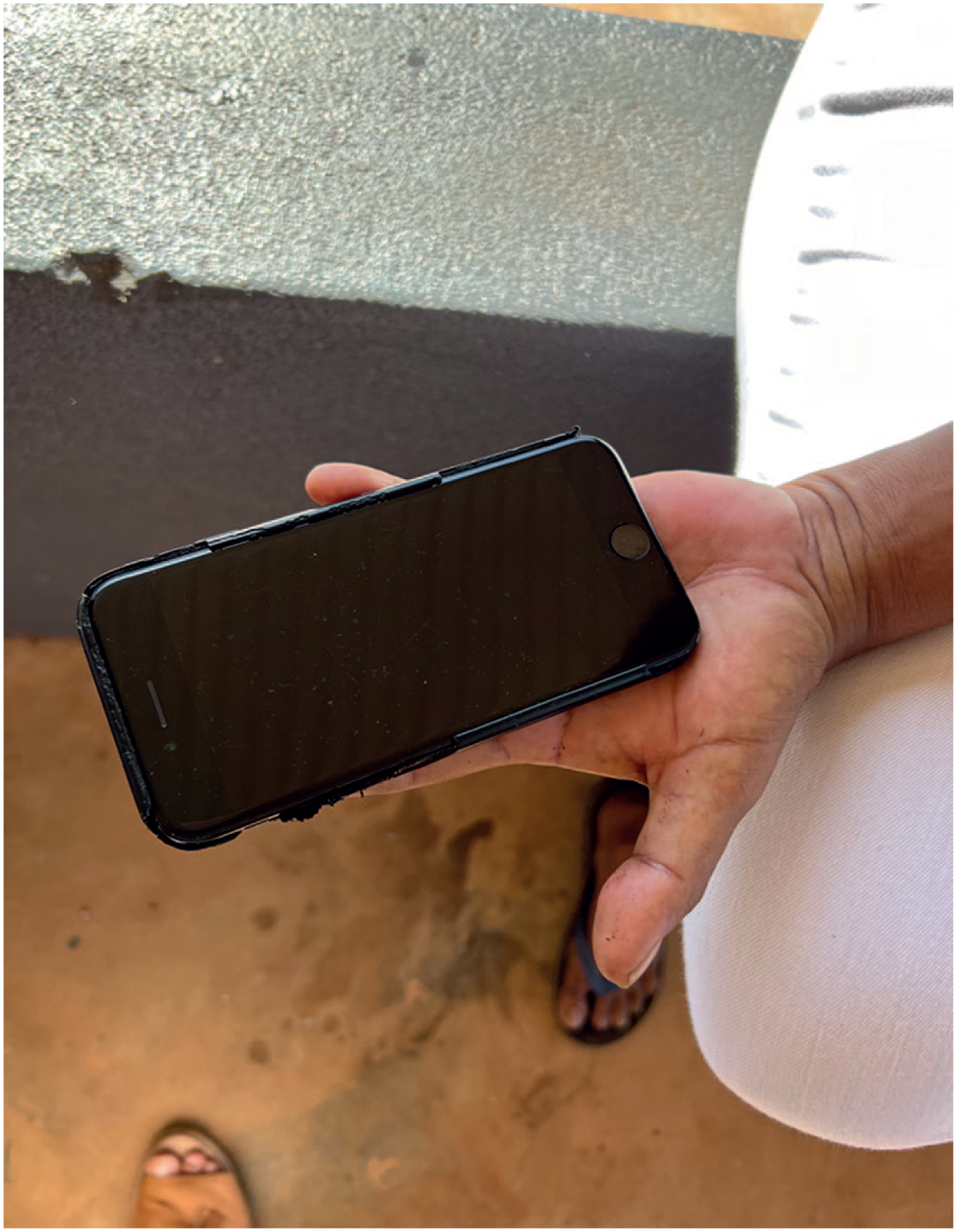
Prepaid mobile phones were the primary way Aboriginal families conduct business online.
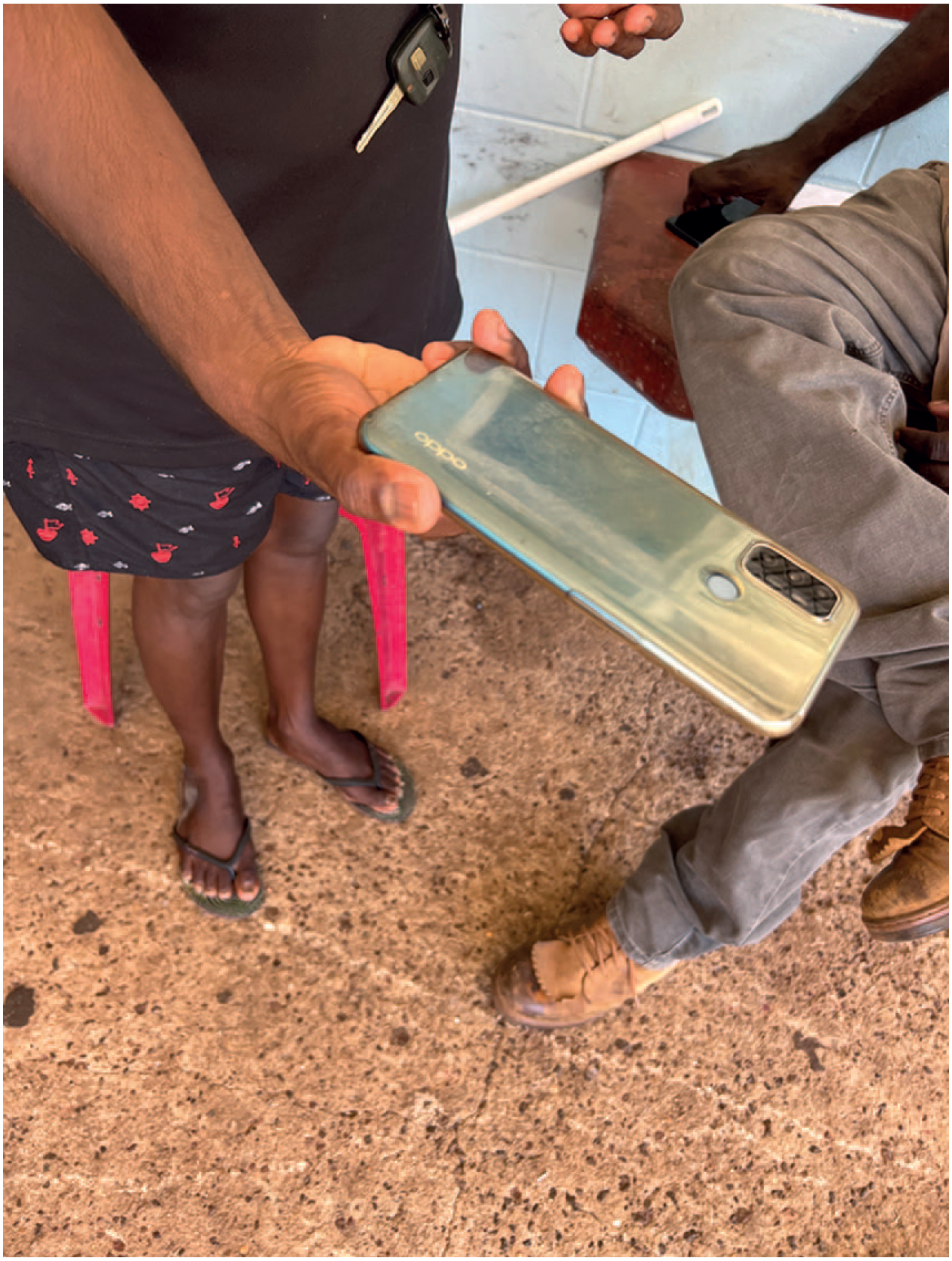
Residents spoke of hotspotting/sharing data and devices, and that this is common on Mornington Island.
Probably 10 (families in the community on permanent internet connections)… lots of people just running off the mobile phones, they don’t have any connection in the house. Because I think majority of the children here on the island, when I had my Telstra one. all my nephews and my nieces, they all said, ‘oh, can I have the password?’ and I said ‘okay’. I was nice enough to give my password and the next minute I had every children in this neighbourhood here standing on that side of the road. I’m like… ‘what they doing?’. my nephew, I seen him one day, he walked over there and apparently he gave it to one person and one person. I was, ‘hey, I’m changing my password.’ And that stuffed them all up. I changed the password. But nowadays, they go to the hospital if they want free WiFi and over at the (free community WiFi) area - but that’s like with the kids that I guess walk the streets and just want free WiFi and whatnot.
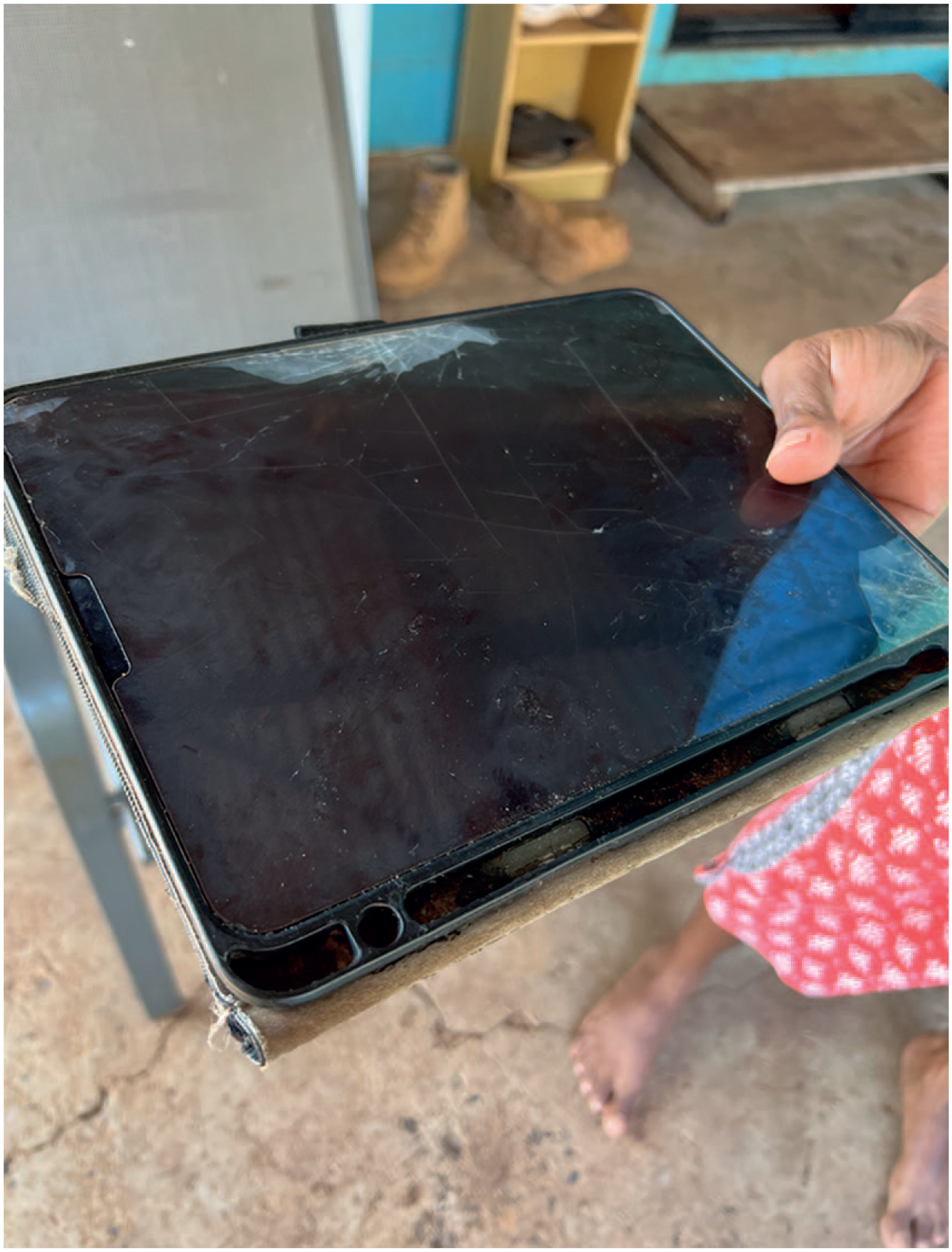
Limited coverage is preventing young people and Elders from spending time on Country. Young people prefer to stay in town, where they can access data to use handheld devices.
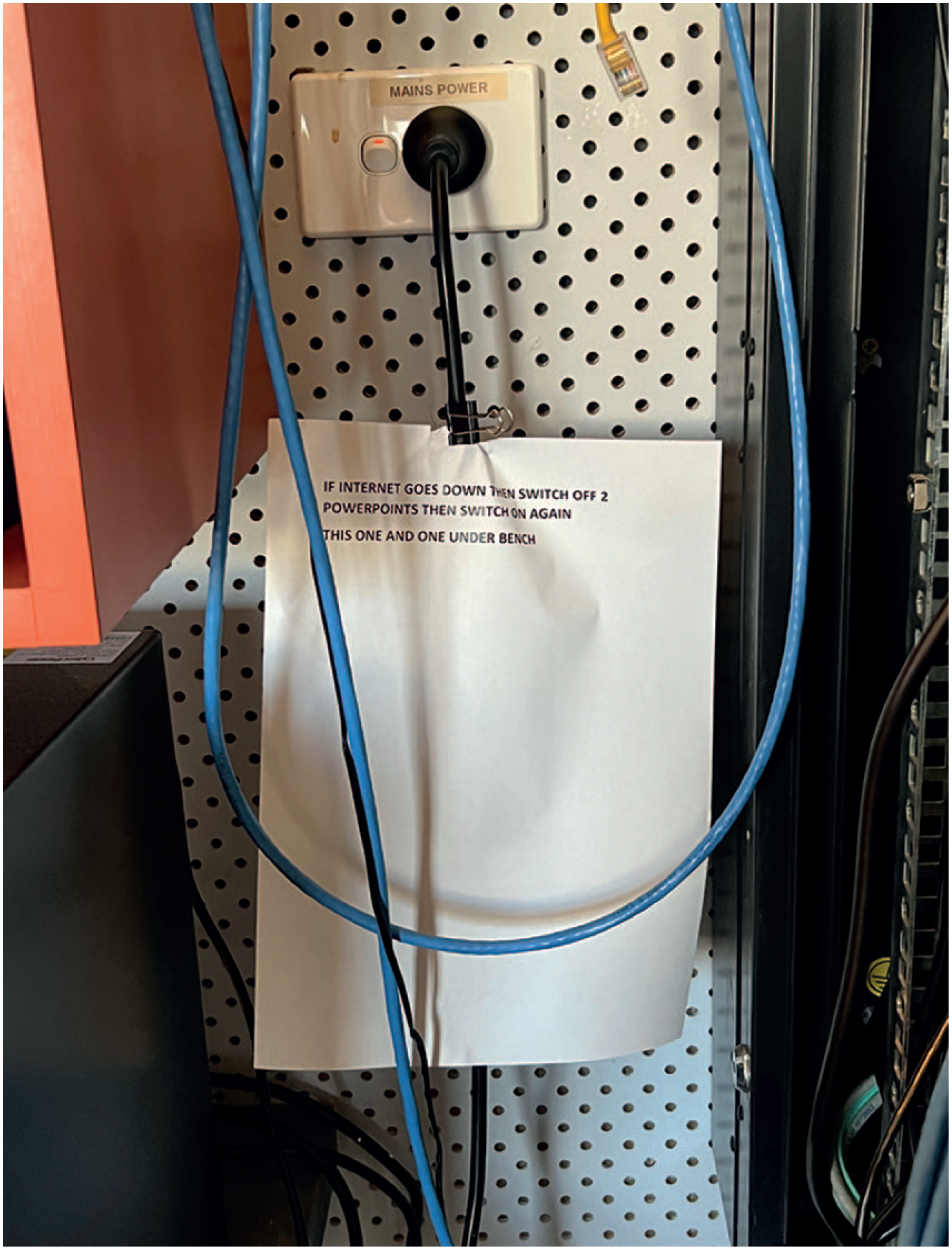
Internet outages and low speeds are an everyday occurrence on Mornington Island.
When we lose power coverage and all that. people had to walk, or run to the hospital if it was really bad. We want to know. The question is the people here are thinking, ‘well how come they took forever’. we’re so isolated as it is. Why did it take them that long? These are just questions that I’ve got, and the community… Landline and internet… Just gone.
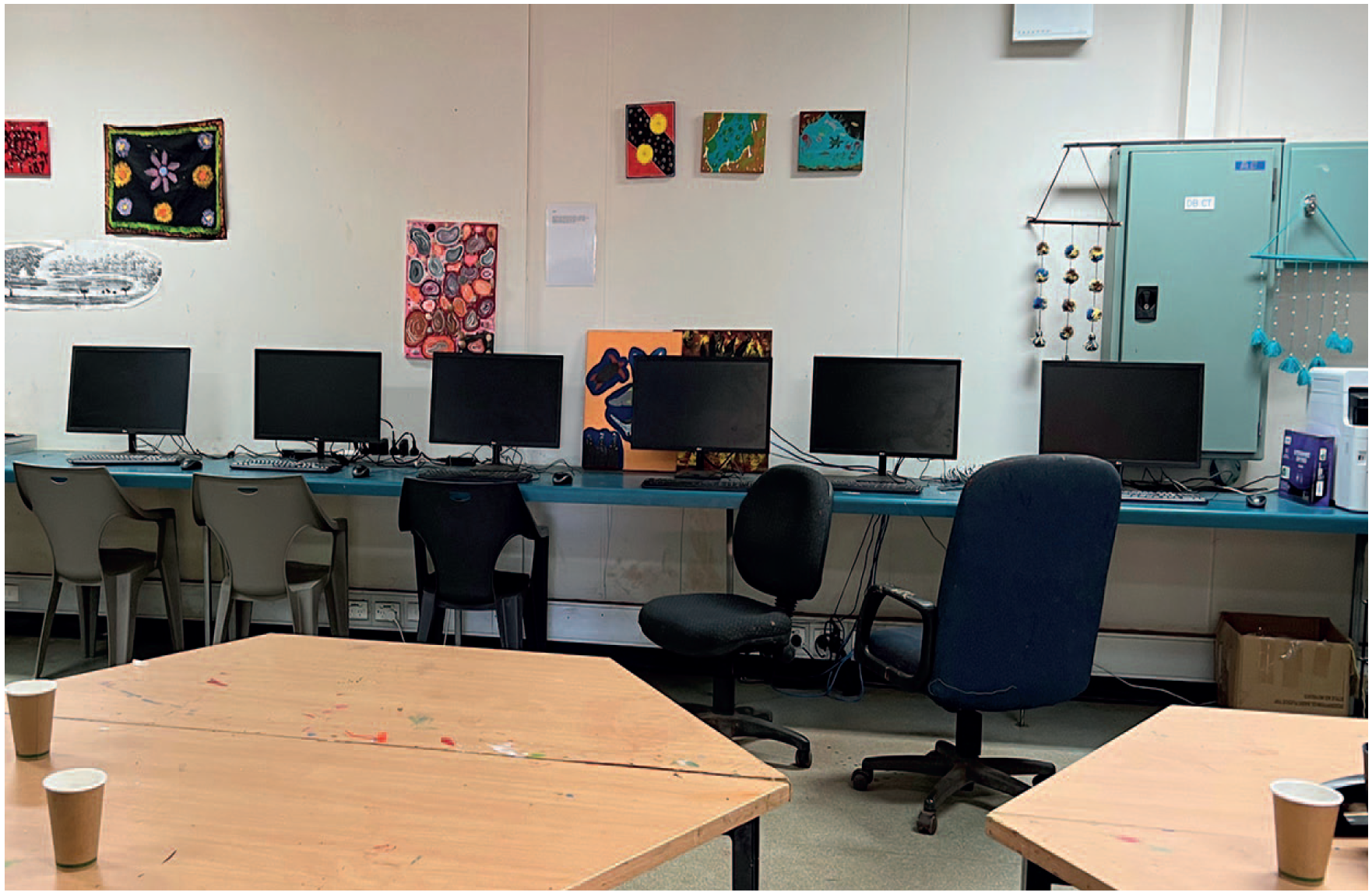
While some homes and organizations have desktop computers, internet speeds are often too slow to use them.
Well, we got no choice, darling. We just got to… go on foot and get on with it because we got no say… Yeah, the question is why did it take so long?…That was the crisis where the butcher shop was giving people $100 cash because people had money in their key card, but they couldn’t access it in the shop. So the butcher was good enough to give each person $100 each just to do a bit of shopping, so that’s how that worked. We had to go to the butcher. get $100 then go to the shop. We can’t do anything. We don’t know when these people… the question is why did it take so long? I mean, some people’s lives were depending on that communication. Because some of them live way away. Long way from the hospital. So they had to run. Yeah. They got to run. Just to get an ambulance. Couldn’t ring 000 or nothing.
Well it comes from handy with my Country. We got two. One down the beach and one up… two of those Activ8me phones. So when we all down the beach, then we’ve got a fair distance up inland because we got two place. Inland is where we sit down for water when we can’t get water down there. When we got no water up there with the main camp, we go down to the beach and stay. So we’ve got two towers or whatever you call them things. you could use that phone there. But mobile you got to go to that point and.It’s in a box but you just pick it up and… the box is just there. You’ll be in for a rough road with my Country but you can always come to my Country. And have a look at it.’
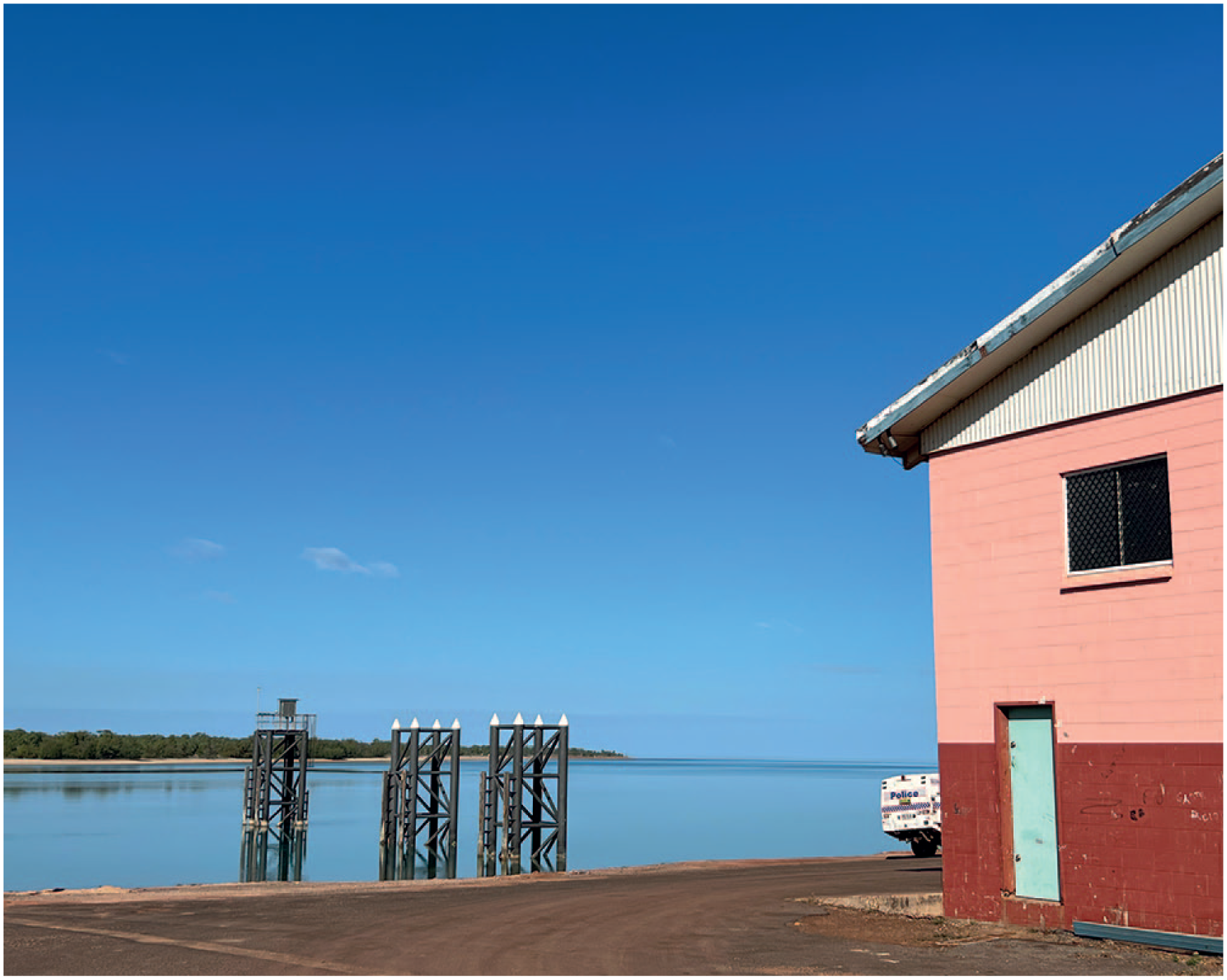
Contacting emergency services was just one concern of residents, regarding the recent outages the community had experienced.
All these internet… we’ve got outstation and there’s a lot of venomous snakes out there, if anybody get bite from snake or stone fish. You know… in the sea if they go walking on the reef, you know? Especially if we’re… out and about, and we’ve got kids out there. Anything could happen. out on the sea, anything could happen. we can teach people like you when you come up here, if you just go up and see it.
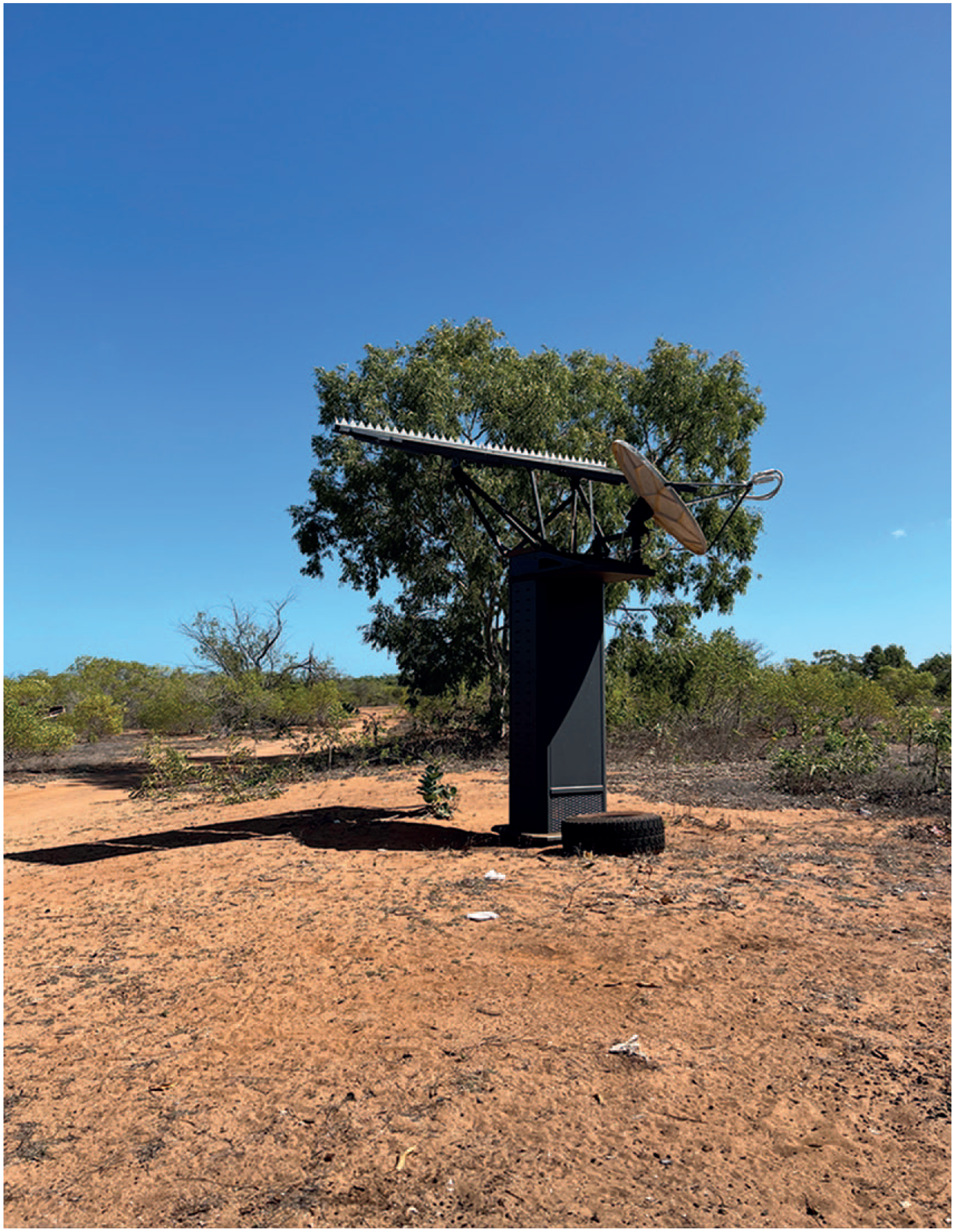
A cyclone-proof, satellite phone installed on one of the outstations, approximately 20 km from Gununa township.
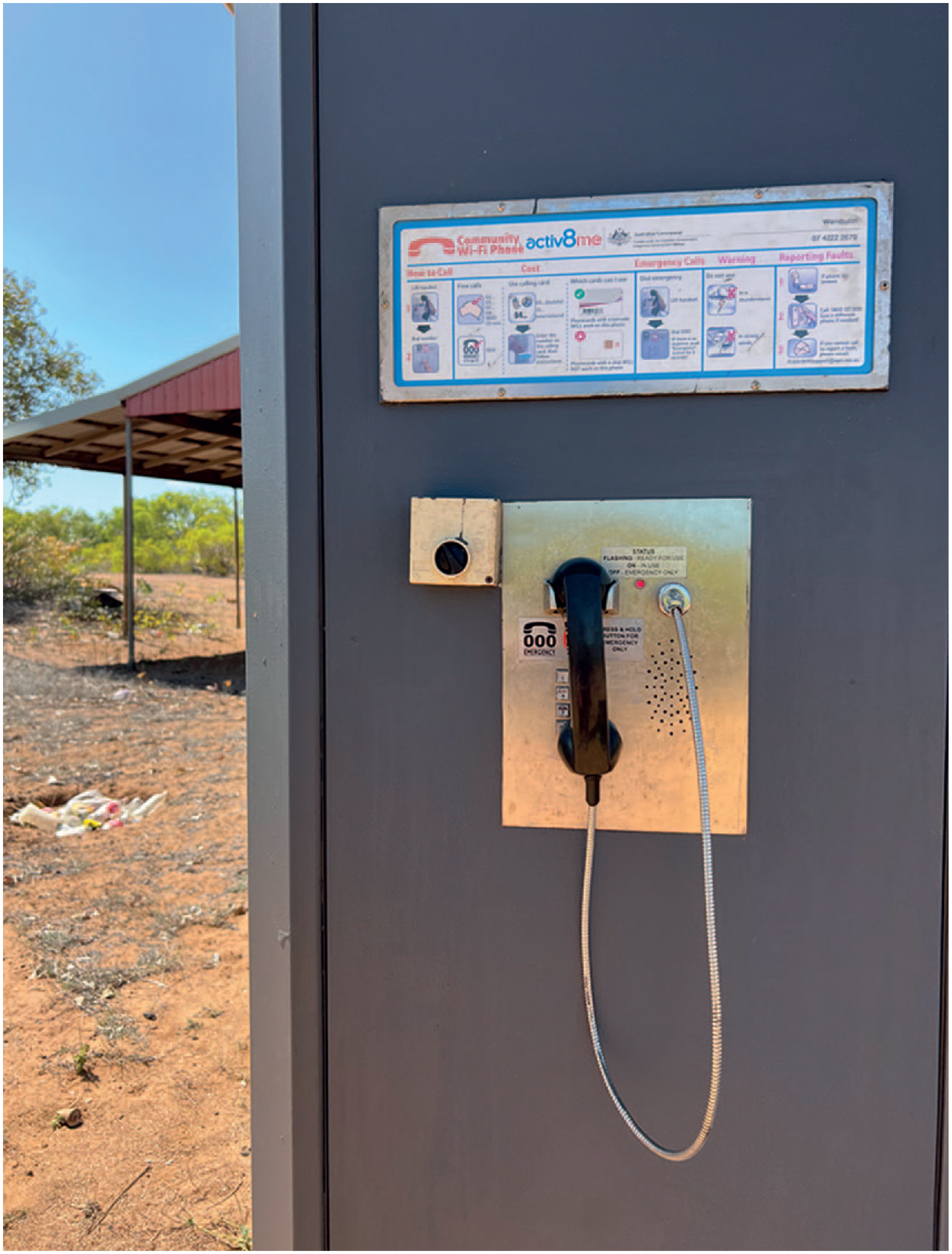
There are a handful of satellite phones across Mornington Island. The WiFi connection, however, was not working during this visit.
Yeah, I hear a lot of people… On Facebook, my mother is talking about hot spotting, they are sick of hot spotting… The kids, when they run out of data… That’s the problem I have. Like how we used to do it, buy it on the card… (my daughter) will normally come back and say, ‘oh Mum I’ve run out of credit.’ And I say, ‘we’ll have to wait till I get paid.’ So you hotspot from 1, 2, 3 o’clock every day. Yeah, I’ve got no data because we’ve got to hotspot for them. Yeah. If someone wants to use the internet to do a bank transfer, they’ll come up and ask (for a hotspot).
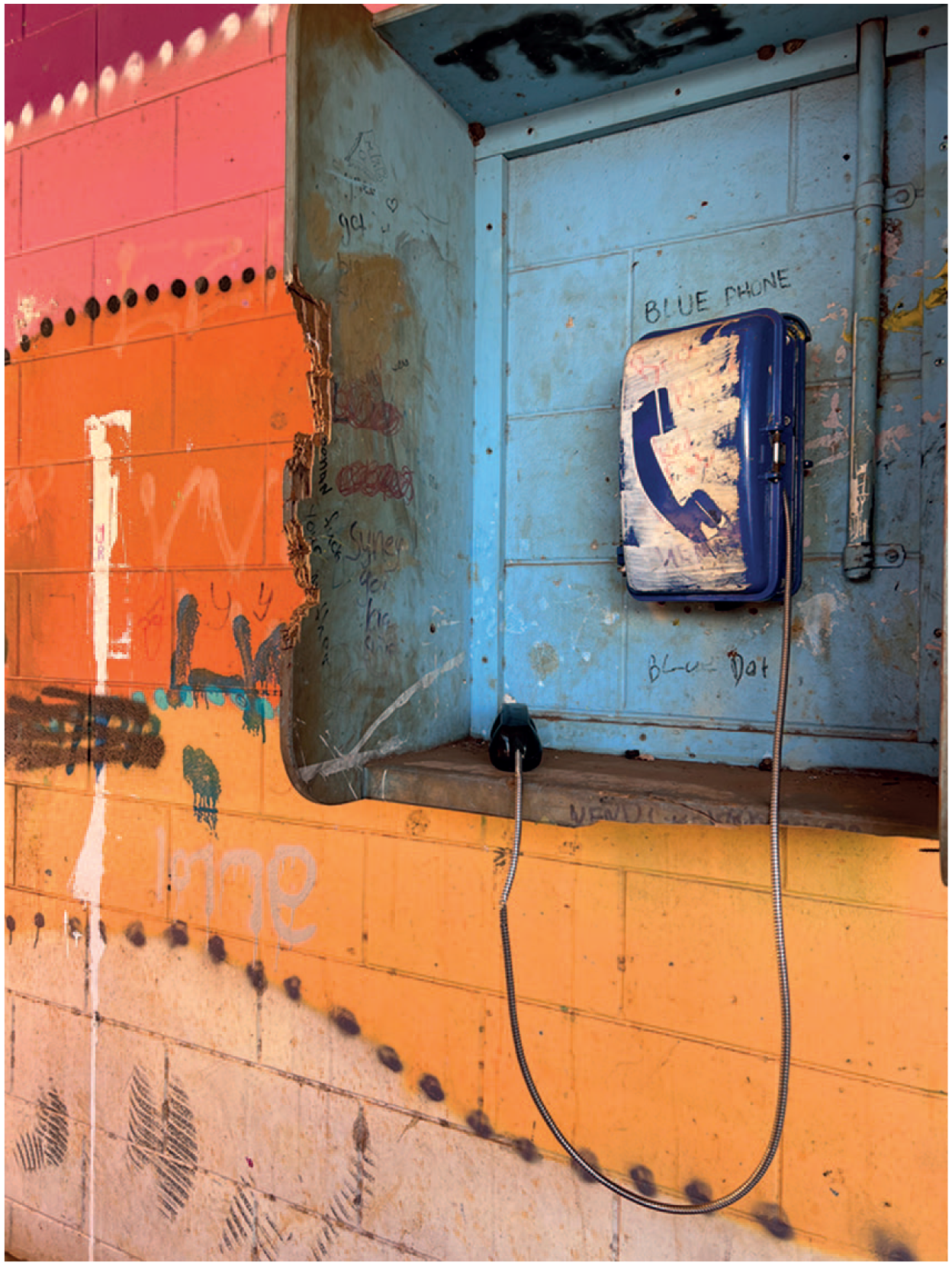
Amongst other concerns, a growing digital divide between Elders and young people is appearing. Young people are more savvy at using new technology and are often the source of digital education for older family members.
Conclusion
The show and yarn method of community showing their devices, having them photographed (or taking the photo themselves) worked as a stimulus to prompt yarns about the ways that Mornington Island families experience digital inclusion. The key findings that emerged from a thematic analysis of these yarns and images included that families on Mornington Island are relying almost entirely on mobile phones for connection to the internet. Some families had tablets and gaming consoles, but almost all families were relying on prepaid data that they were purchasing, in person, from the post office. This data, from one person, is often shared with multiple family members, especially older people sharing with younger people through hotspotting. When discussing options for ongoing contracts with more data at a cheaper cost, families were fearful of being locked into contracts because they had either experienced that themselves or knew someone who had. Families also explained that, due to regular internet and phone outages, and poor service over the phone when calling to report faults or problems, they preferred ‘pay as you go’ to avoid paying for limited or broken service.
The culture of sharing and ‘humbugging’ (referring to people pestering each other for money, data and other resources) was prevalent in the community especially for a hotspot, or to share data from someone’s prepaid mobile phone. Older community members spoke of having low digital literacy, and of sharing online passwords which sometimes leads to theft. Elders spoke of young people being their main source of education around how to get online. Families spoke of Facebook as being a way to connect with family and to reconnect with family through the sharing of old photographs, taken in the days of the dormitories, which used to be run on the island by Presbyterian missionaries in the days of the Stolen Generations. Families were concerned about the small amount of phone and data coverage available on Mornington Island. The phone reception only covers the township of Gununa and not the remaining land and sea, which families use for cultural purposes. This was spoken of as preventing the sick and the elderly from accessing their Country and the traditional practices, which was also impacting the transmission of Aboriginal languages and culture to young people. Elders said that, with greater coverage, young people would be more likely to come out of town, to spend time learning cultural practices and skills if they could connect to the internet out of town.
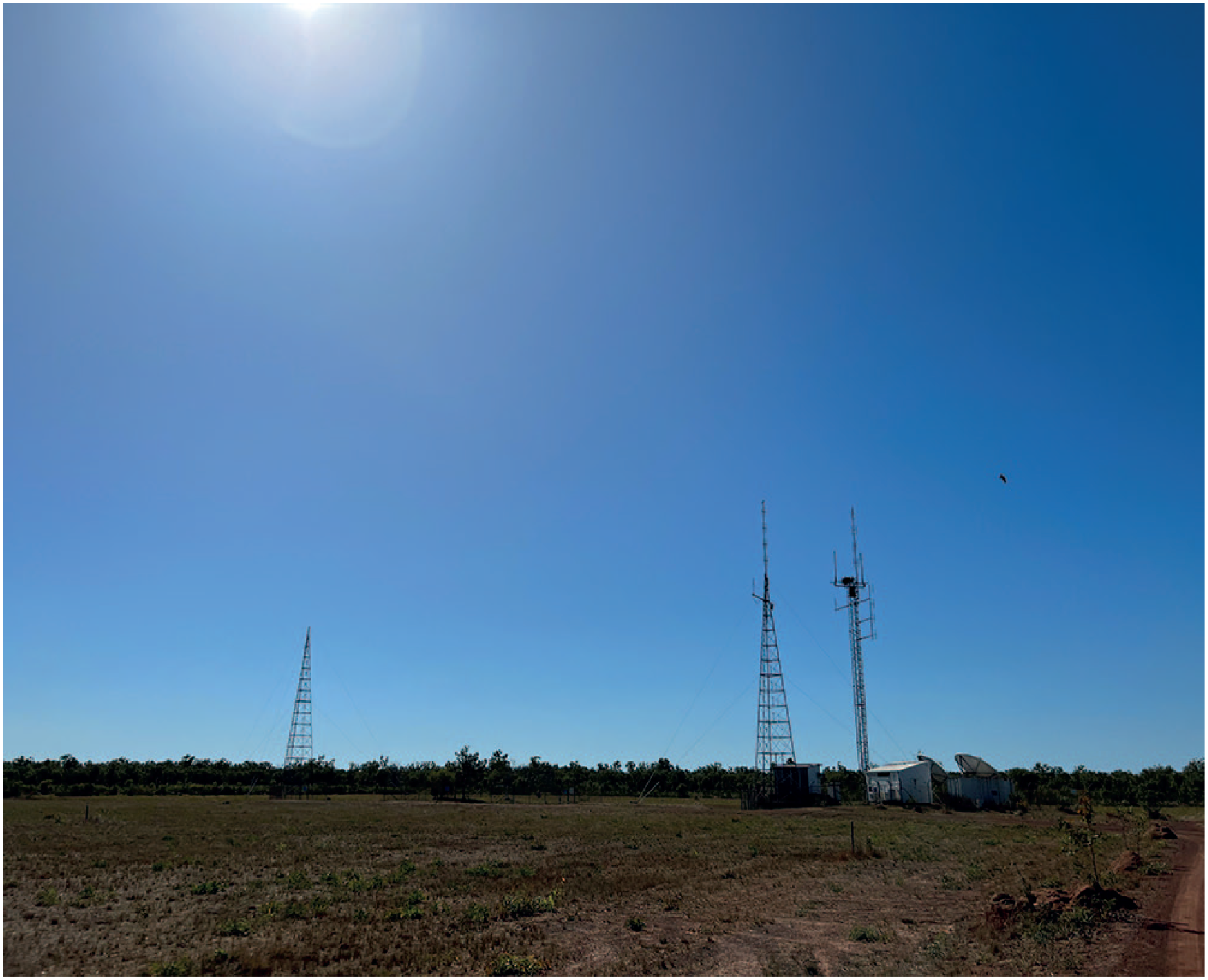
Mornington Island is due for a 4G upgrade soon, but no one in the community knew when this would be.
In the township, even the businesses and organizations that have satellite and pay-per-month connections have very slow internet speeds. Some organizations that had computers available for the community to use mentioned that these were useless because the internet was so slow and web pages could not load. Community members, particularly adults, spoke of a desire to gain more skills using the internet, especially desktop computers and laptops. Email, for example, was a task many could complete on a phone or app, but not on a desktop computer or laptop (if available). Finally, as Mornington Island does not have a high school, families spoke of the need to improve the internet to open up educational opportunities for young people. To complete high school, students must currently go to boarding school off-island for years 11 and 12. COVID presented great difficulties, with some students trying to complete their studies on a prepaid mobile phone with no other devices as boarding schools shut down and sent students home.
These findings are important and are being disseminated to the community (through conversations, plain English research summaries and a short video), to the wider public (through mainstream media pieces and webpage) and with policymakers and academic audiences (through a report, academic publications and conference presentations). It is hoped these first-hand stories from Mornington Island and the overall findings will inform future digital inclusion policy in Far North Queensland and remote Australia, more broadly.

Gununa residents are incredibly resilient in the face of digital difficulties.
Footnotes
Declaration of Conflicting Interests
The author declared no potential conflicts of interest with respect to the research, authorship and publication of this article
Funding
The author received financial support from AuDA Foundation and QUT’s IGNITE Grant Scheme for the research, authorship and publication of this article. Dr Rogers receives funding as an ARC DECRA Fellow from the Australian Research Council.
