



Abstract
In this visual essay, both photographs and talk are presented as four teenage artists from the northeastern United States study their engagement with texts in their everyday lives. What emerges is a representation of the young artists’ metaliteracies as they come to understand not only what their literacies are like but how they might matter.
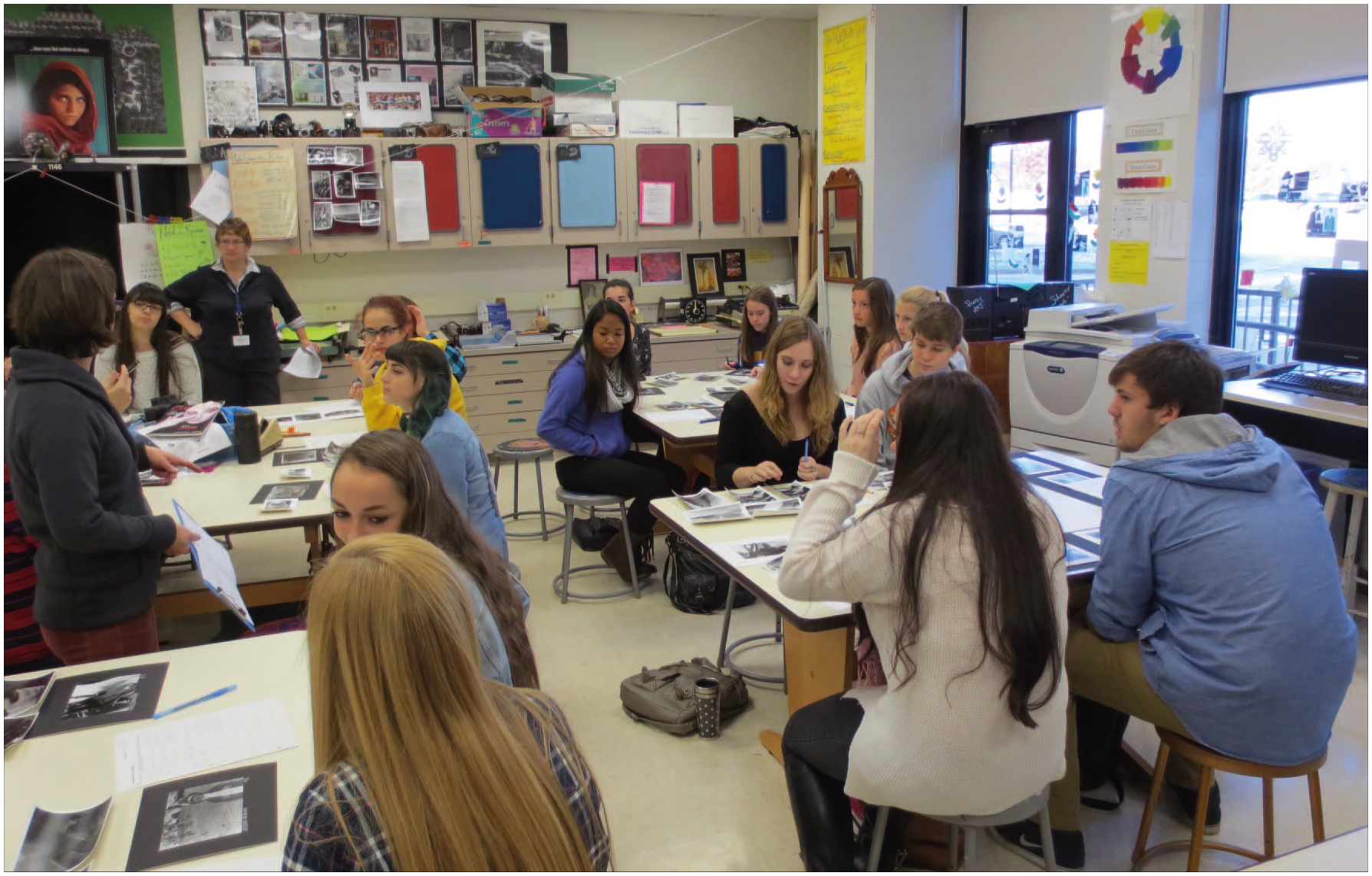
Ms McCurry’s Advanced Photography class.
Overview
In an Advanced Photography course at a suburban high school in the northeastern United States, I worked with a group of 15–17-year-old students and their teacher, Ms Lu McCurry. 1 In the course of this work, I was a researcher and, also, sometimes positioned as a teacher in the room, although that label was not exactly right. Perhaps I was something more like a mentor to the students or, as one student called me, ‘My Photography Lady’.
I was studying the young people’s relationships to texts in their everyday lives and how they might materialize and understand those relationships through photography. I wanted to understand how young people might think about their own literacies practices given the space and the tools to study themselves through their cameras. To do this, Ms McCurry and I designed a photoethnographic self-study project for the students, the prompt for which was to visually study and document their interactions with texts of all kinds in their everyday lives. Students were left to determine their own definition of what a text was although in our conversations in class (see Figure 1) the majority of answers suggested it was ‘something that communicates’. The findings from this corpus of photographs revealed that the students’ textual production and consumption were governed by sometimes fleeting connections between people, places, affective intensity, and what one student recognized as the zeitgeist.
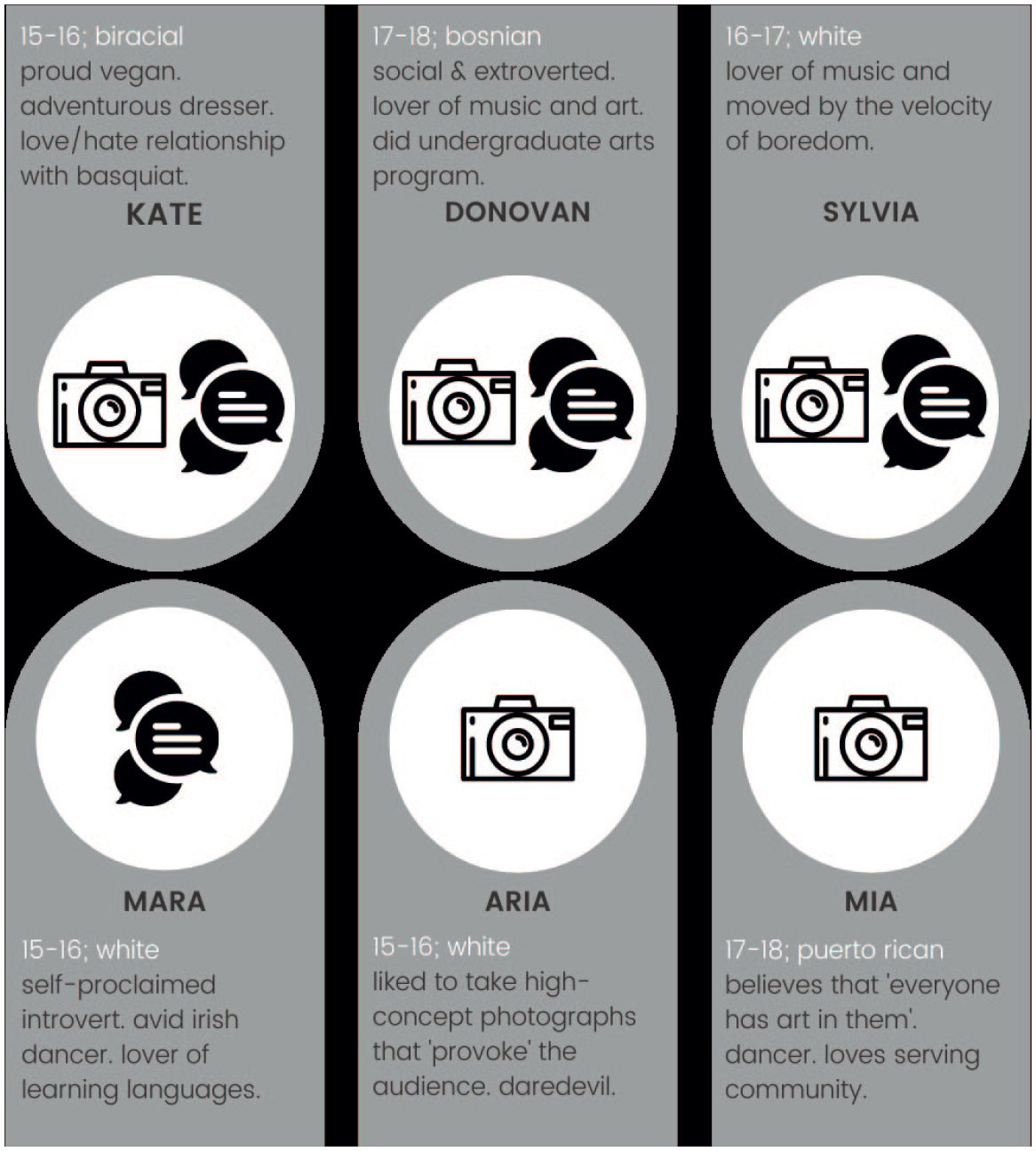
Student information table: ages and racial or ethnic identities of importance/relevance to students in white; idiosyncratic descriptions of students in black
Method
I wanted to use participant photography to invert the typical research relationship where the researcher’s gaze is the dominant tool of observation. I hoped that, in a small way, inviting the students to study themselves would ‘contribute to redefining the human subjects of research from objects of inquiry to more active agents of knowledge building and social change’ (Pauwels, 2015: 113) in the context of the project. Teenagers so often are made objects of inquiry in schooling and in research. I was not interested in recreating this dynamic.
Additionally, making visual data has tremendous advantages when working with young people on a topic as complex as literacies. Visual anthropologist Marcus Banks notes two benefits of using visual methods in qualitative research. First, the visual can ‘bypass language or add an additional channel of understanding to language’ (Banks, 2009), which was tremendously helpful to the students as they tried to come to an understanding of their literacies. Unbound by language, the students had greater freedom to name a wide variety of practices and events as literacies and had the opportunity to visually capture their complicated ways of being and making meaning in the world. Second, visual data provided ‘another route into accessing people’s interior worlds’. If, in some ways, a camera functions as an ‘instrumental extension of our senses’ (Collier and Collier, 1986: 7) then when we look at photographs taken by another person, we are given access, however limited, to understanding the ways they see the world. And though, as Sarah Pink (2009) suggests, ‘we can’t experience other people’s experiences’, a photograph still ‘invites you to imagine the embodied experience’ of the photographer and of the subjects in the image. Photography also served an analytical role, not just a documentary one. Students used the photographs to, as Michael (2020: 282) suggests, ‘show, not a practice, but a practice being analysed, and are themselves objects around which knowledge is constructed’. The students’ knowledge was built through these analytic photographs and conversations about what and how the analysis might mean.
Throughout the two-year project, I had countless conversations with the young artists about the photoethnographic collection. We continued to try to find our way towards understanding how we might make meaning with the images and, beyond the images, what we were coming to understand about the relationships between meaning, texts of all kinds, and the making of visual art.
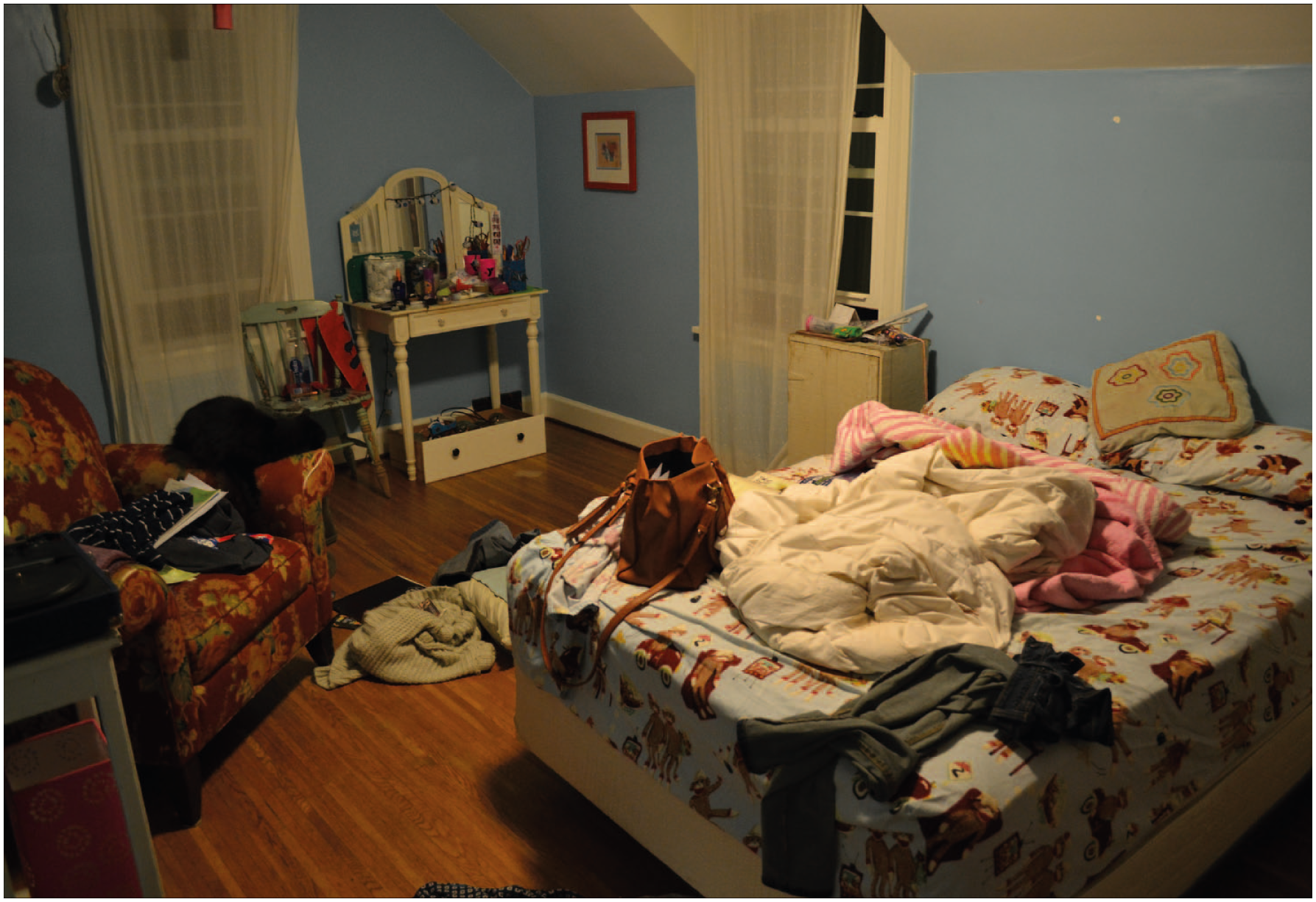
The shifting sets of relations between artist, artwork, and viewer created challenges in finding language and conceptual purchase around sense-making. Hearing the students’ words and how they talked about meaning and affect is much more compelling than any attempt I might make to describe the talk, so I include the transcript of one of our far-ranging conversations about making sense with visual art. This ongoing conversation sits closely with the images the students made and therefore they are both excerpted, here, together.
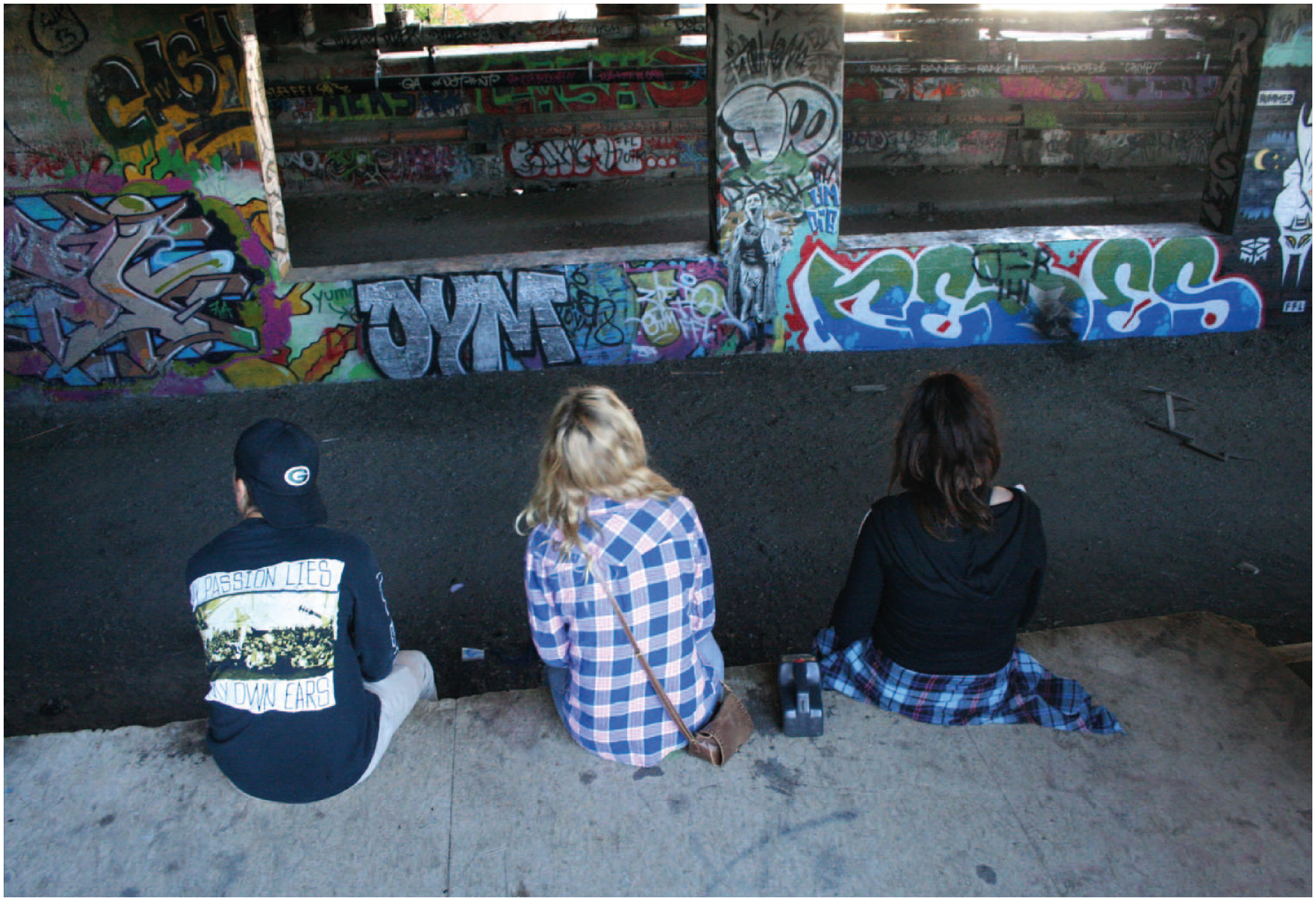
There was a small group of focal students that participated variously in talk and art-making that grew out of the whole class photoethnography projects. The following conversation is between me, Donovan, Kate, Mara, and Sylvia at one of our many after-school meetings. The photographs were taken by Kate, Donovan, Aria, Mia, and Sylvia as part of their photoethnography projects and were among those spread across the table during the conversation.
Creating and Talking
The following conversation shows how Donovan, Kate, Mara, and Sylvia materialized their engagement with texts in their everyday lives as well as talking their way through their metaliteracies, and how meaning-making might work.
But the thing is as an artist you shouldn’t listen to the viewer, I would think. It should be what is coming from you.
It’s hard, though, when you’re getting graded on it [laughter].
I think also – sometimes we’ll take pictures – especially in a project like this – I don’t know if you guys were just talking about this – not that the pictures would look boring but you would be like, ‘A backyard of somebody’, but to somebody else that’s their life and so I think –
How it has whole different meanings.
Yeah. [Ms. McCurry] kind of gives a perspective of someone who might not necessarily know the story behind it or whatever so if a picture looks kind of bland she can be like, ‘Alright well that’s not really coming across’, and then you can make your decision.
So, that’s interesting – the way you treat a subject matter – there are ways to capture it that maybe can communicate deeper meaning to a stranger and there are ways to capture it that maybe wouldn’t communicate that where you’re like, ‘This is just a backyard?’ I wonder if part of that is developing that artistic eye, you know?
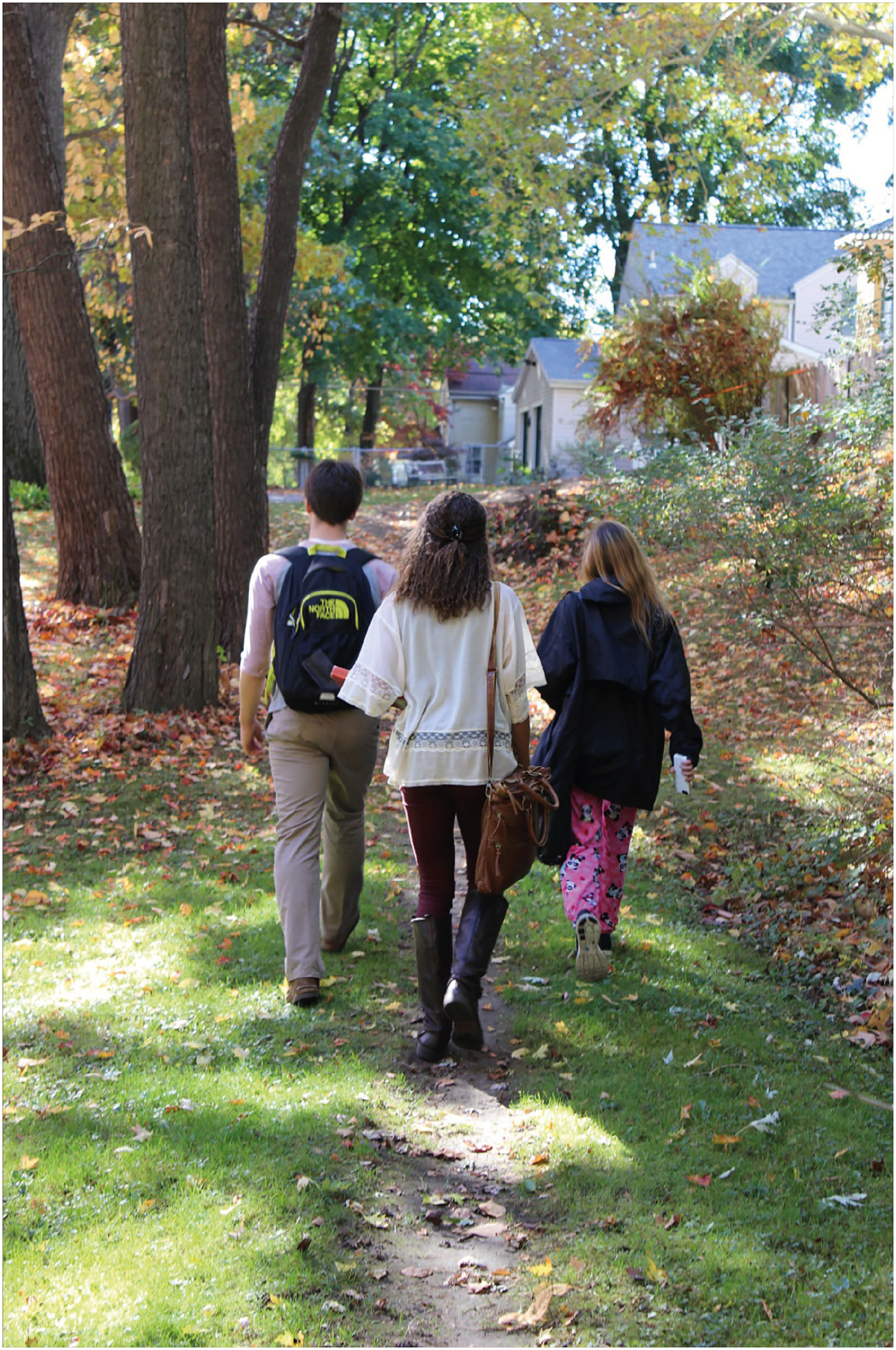
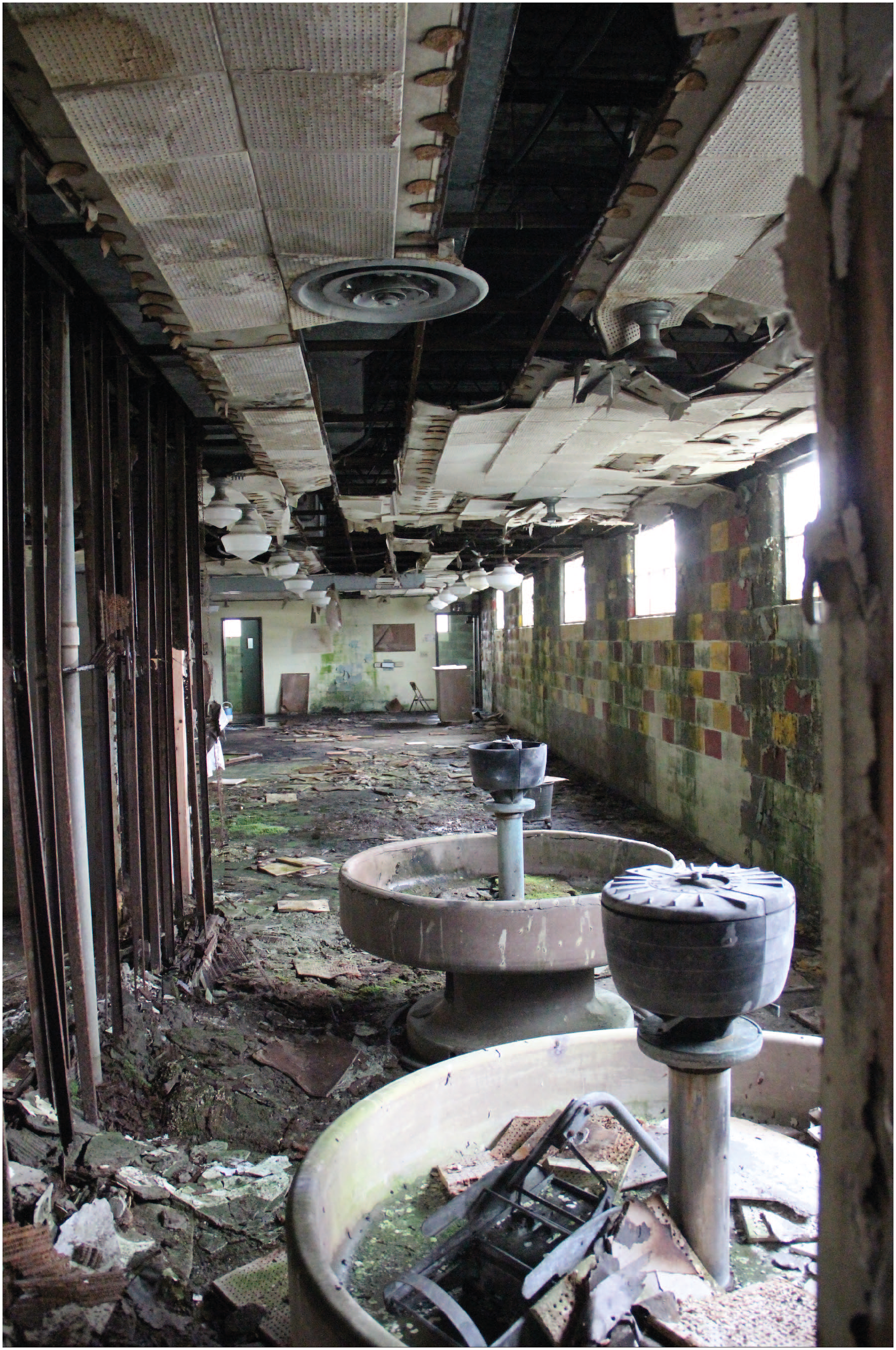
I’ve always thought of it in a different, less glamorous way. You know when an English teacher reads a sentence like, ‘The sky was blue’, and you’re like, ‘Why do you think they use the color blue?’ ‘Because the sky is blue.’ They look for meaning where it really isn’t sometimes which is in some ways – if you’re like, ‘Oh, you’re praising my picture and you found meaning in it, good for you, thank you for that’, but then in other times it’s like, ‘That really wasn’t supposed to mean anything.’
Some people overthink and –
It’s like that with poems in English. The only reason I bring it up is because I know you’re [to author] more of an English – when we studied certain poems, I think English has literally ruined some of my favorites – because they analyze every single thing and even with creative writing – I used to like ‘creative write’ when I was younger and honestly I would just kind of write something because it was part of the story, you know, just going along. They will literally be like, ‘Why did they use a comma here, but not here?’ and it’s really – I understand there’s like syntax stuff, but it’s – sometimes I feel it’s not there, you know – sometimes it’s just – I took this and it ended up being cool.
I agree but sometimes visual clues – or just clues – I’m thinking more movies right now – like visual clues – I know in like – my favorite director is David Lynch so in all his movies like Mulholland Drive or whatever – there are different visual clues you’re supposed to pick up on that reveal deeper meaning or something. So – I know it sounds stupid but sometimes when the lampshade is red or something – it’s like, ‘What does that matter?’, but sometimes that can mean something – like that can mean something – or tell the viewer something.
Have you ever seen the movie Heathers? I’ve read this article and it’s probably just somebody being stupid –
Wasn’t that Winona Ryder?
I love her. But I read this entire article and I don’t know if there was any truth in it or if somebody just over-analyzed this and found this, but there’s a lot of red vs blue in that movie and they wrote this entire thing about how it’s about communism vs the American being the blue and this kind of war that was going on and there are places where there’s red and blue in the shot and it’s like the conflict – it was kind of crazy – and of course I rewatched the movie and I was like, ‘Oh my god’.
So this is a weird question that I think is coming up – so if we think about texts – even if we go to thinking about friends as texts, or schools – whatever – all the different movies and things we are thinking about – where is the meaning? Because you’re talking about different people looking at the same thing and you’re saying like, ‘I just took that picture’ or whatever or you think about David Lynch and visual cues – could you watch that film and have no idea about the visual cues and still interpret it or read it in one way? Do you see what I’m saying? So is the meaning with the artist, is the meaning in the text, and is the meaning with the person who views it?
It’s hard because from what I’m thinking now, right away, is it’s in the person who created it.
There are going to be cues that no one else is going to pick up except those certain people.
Exactly. Exactly. So you’re going to be the one – someone will be like, ‘This was a happy picture’, but you could be like, ‘No, I was totally miserable.’ Or ‘I hate this’ you know?
See I kind of get that – what you were first saying like can you get the meaning across. I get that when I read a lot. Our English teacher is like, ‘Oh, look at this word and the syntax and all that’ and I’m like, ‘I just get this feel off of it that I didn’t need to look into the words to see that.’ It’s just kind of there.
That’s an interesting idea.
It makes me think of – and no one has ever done this to me – but in movies where the therapists show the blob and [laughter] but that –


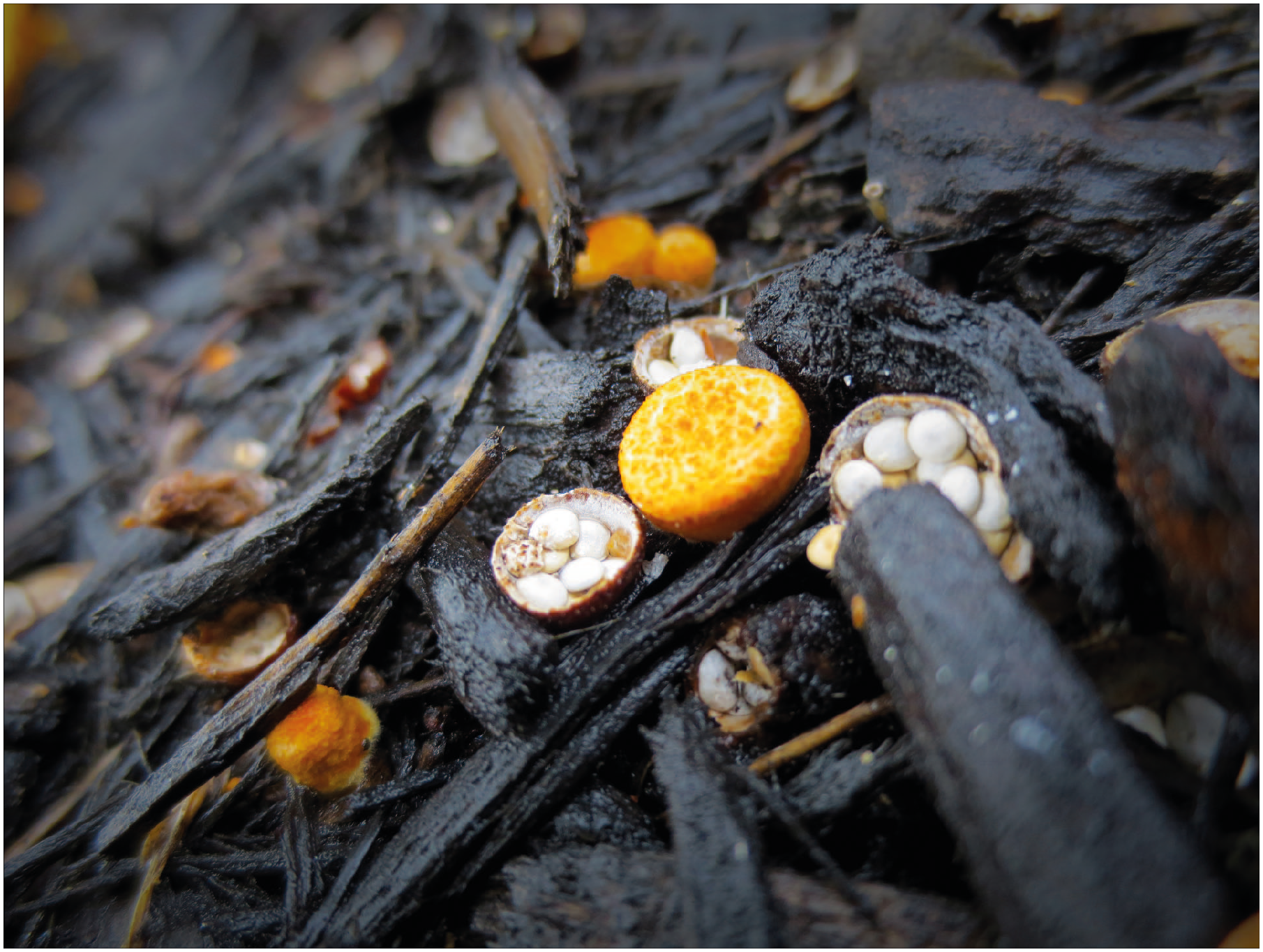
What do you see? A man stabbing a woman [laughter].
I see a hummingbird so let me talk to you about that.
So let me talk to you about that [laughter].
I think it’s one of those questions that you can’t really – it can be anywhere; meaning can be anywhere. I mean – it might be more prevalent in certain places in an image or in a whatever – but …
Certain people might relate to it differently and interpret it differently. Like that backyard analogy. If it’s your own backyard, you’re going to have a different meaning, but if it’s your friend’s back yard, it’s going to have a different meaning.
Yeah. It’s like when you [Kate] were describing to us on Thursday – somebody’s backyard – Charlie’s backyard – because it’s a picture of a table and we’re like, ‘It’s a table’, but you’re like, ‘Wait – and there’s this ravine and there’s a hot tub –’ right – there are different levels.
And it’s a nice gulley, or whatever you were saying.
Yeah. That’s a nice gulley. But that’s an interesting idea about feeling. I think you’re getting at this a little bit too, Kate, when you’re talking about poems – the over-analyzing – that sometimes maybe you can be like, ‘Oh this is about the Cold War’, but on a first read maybe it’s just more about some kind of – I don’t know –
Internal conflict or …
I don’t know. It’s just a feeling you get.
A connection.
Yeah. An initial vibe.
Sometimes it bugs me when you try to put things into words that don’t need to be into words or shouldn’t be put into words. Whereas you get that vibe and you don’t want to describe it, you just feel it.
You just feel it? So in those ways do you think that visual – creating visual texts in those moments makes it easier to communicate that vibe or that feeling than it would be if you had to write something down on paper?
Oh, God, yeah [laughter].
Ms Daniels liked that one [the Art Department chair who had just walked in the room and, upon hearing this exchange, started laughing].
It’s really hard to put your feelings into words if you don’t know what you’re feeling, really. You feel that you don’t want to explain it. It’s just kind of there.
And not to be corny but that’s really why I like photography –
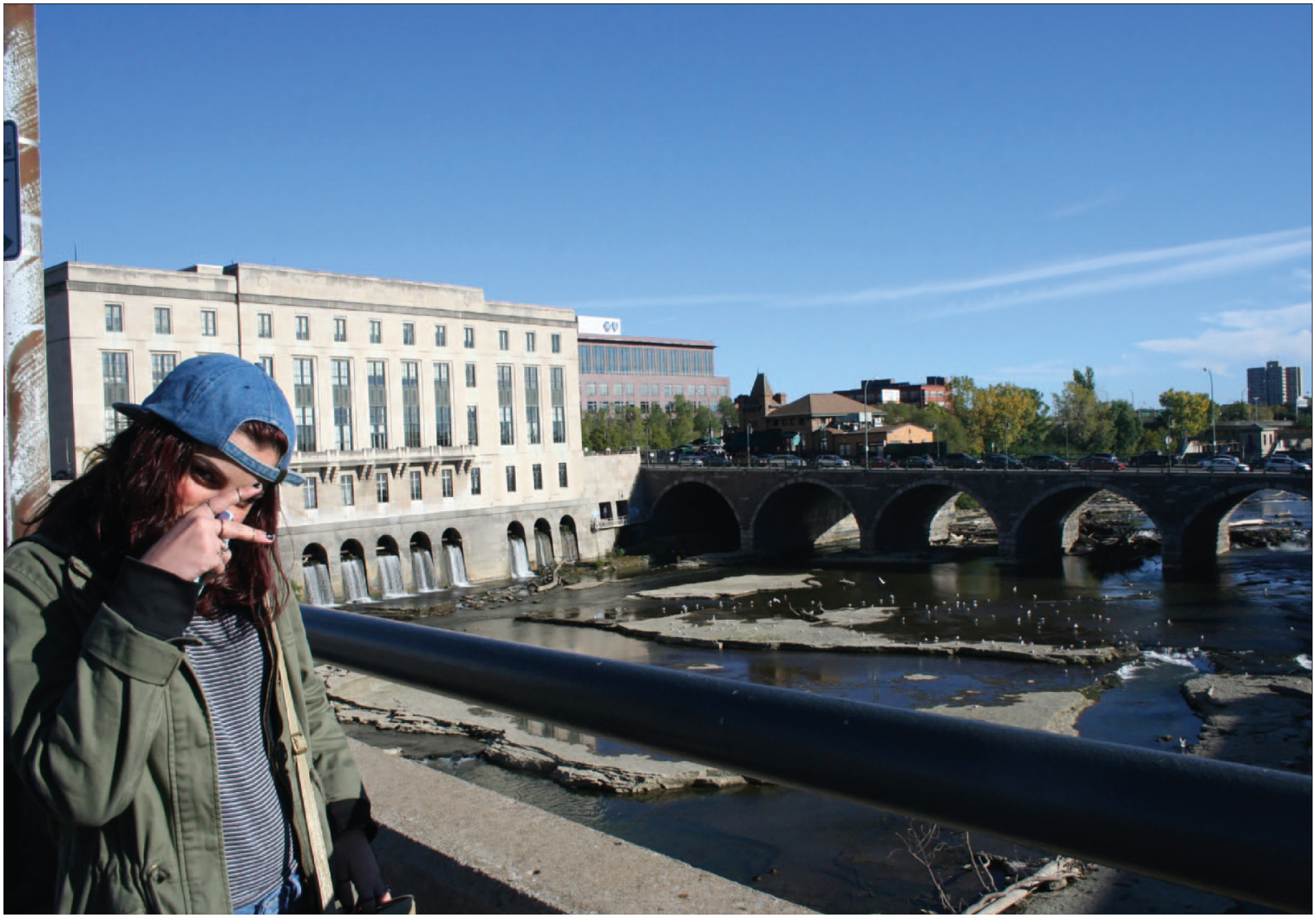
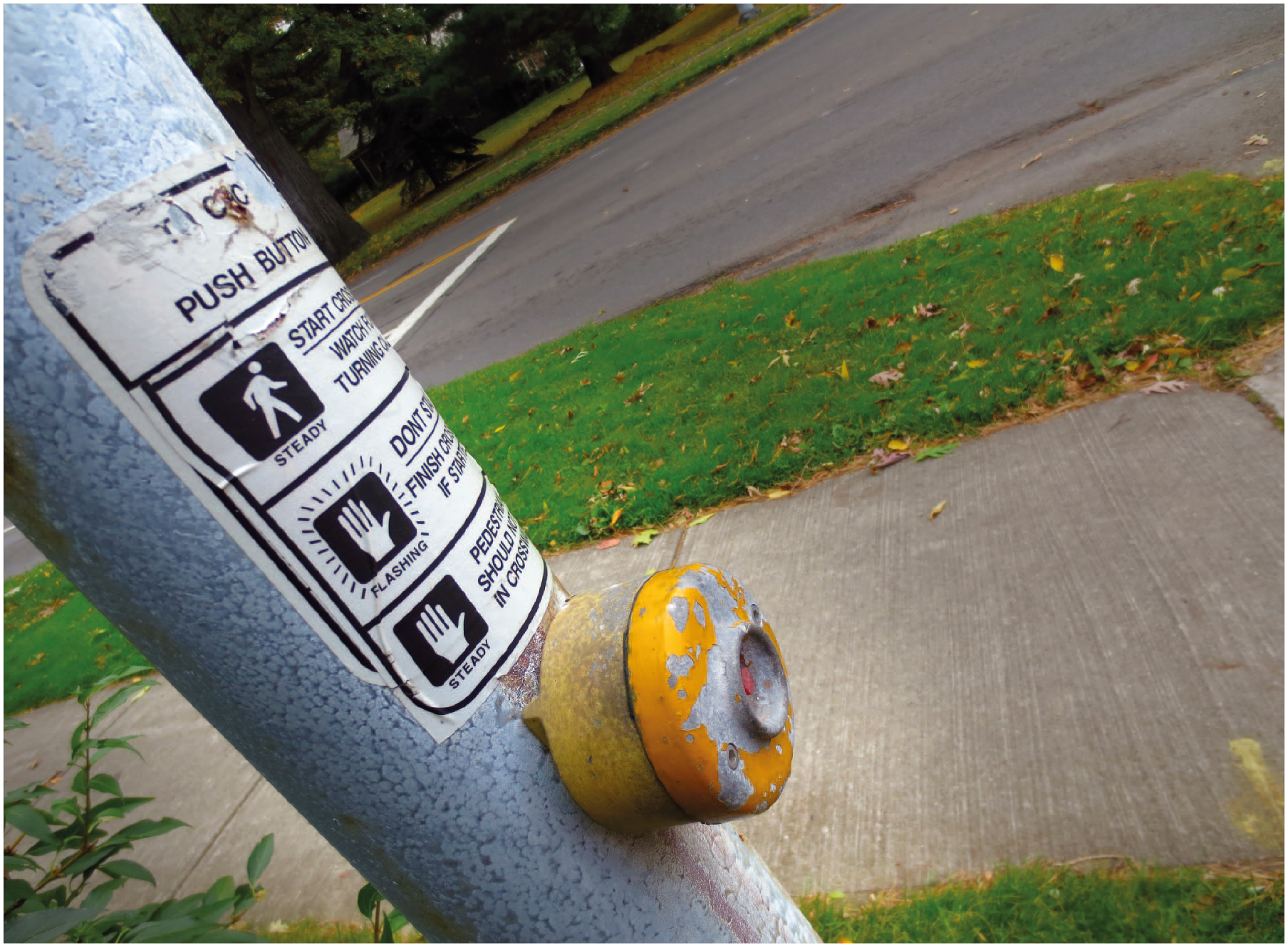
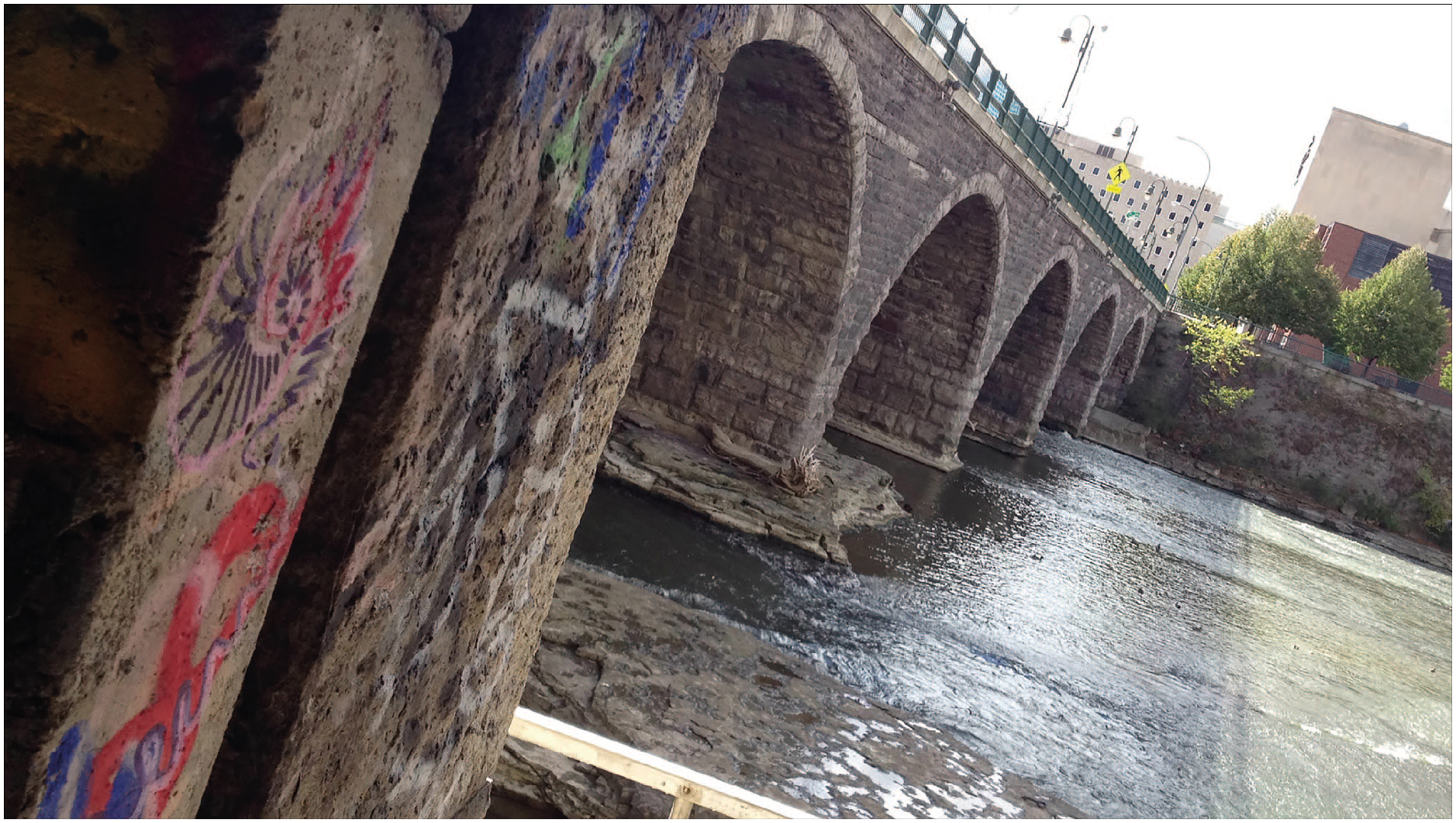
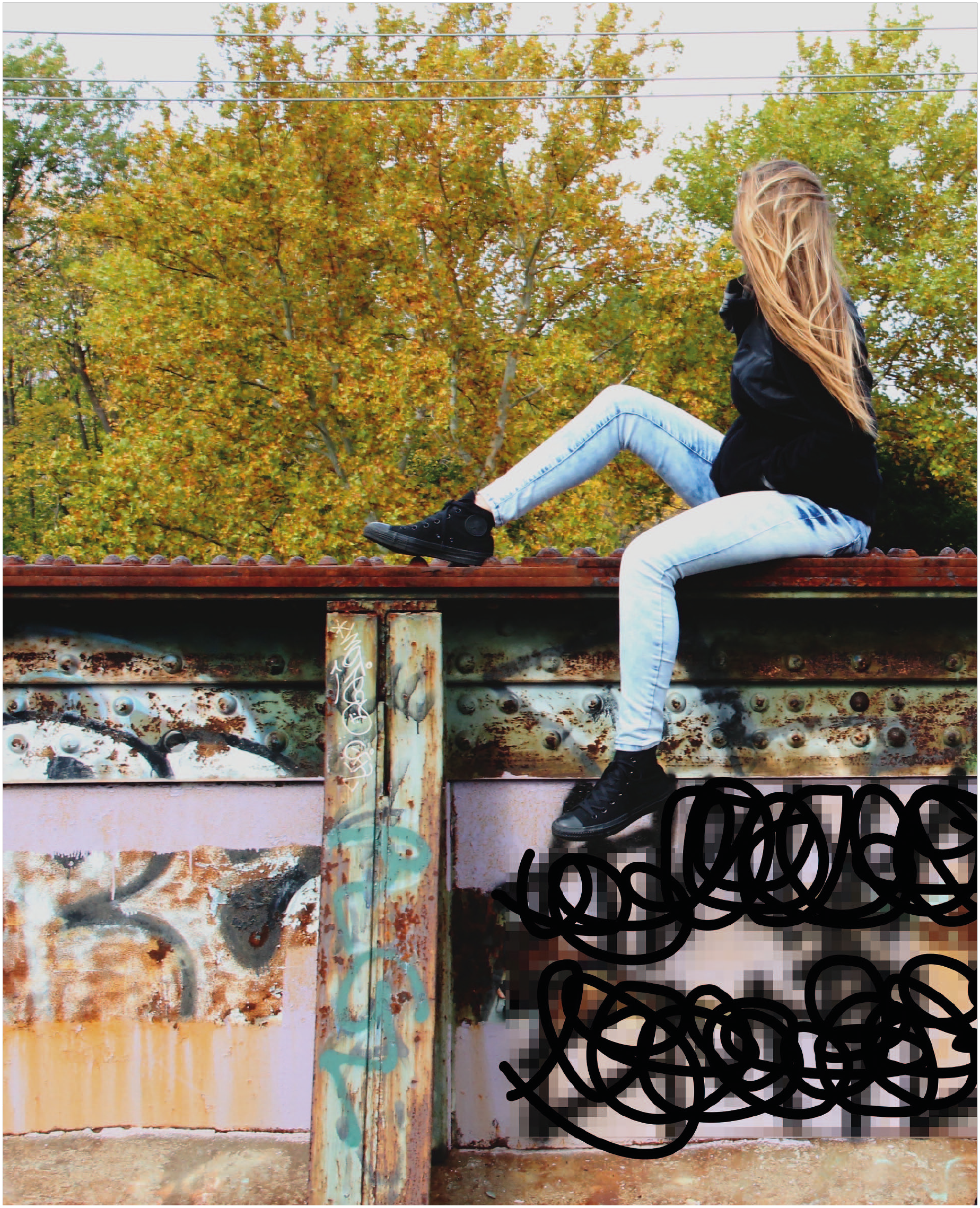
You don’t have to explain it really.
…
I totally agree with that. I can go on forever – but not be able to communicate in words. I don’t know if you [Author] remember but when we were talking about it or whatever [during our one-to-one interview after the photoethnography project] – sometimes when you’d ask me what the meaning of a picture was that I took I’d just go on forever and I’d be like, ‘I really don’t know’ and I’m like, ‘I don’t know. I just took this and somehow I just had a connection.’
It was in the moment and it looked good so you snapped it and thought maybe it would come out.
Wasn’t there a word for that?
Affect?
Yeah. It just happened in the moment and I was just like, ‘There’.
Yeah. This is a word that I’ve started to really like as I’ve been thinking about the work that you guys have done is this idea of affect, which is exactly what you’re talking about – vibe is another good way to think about it – it’s like the core ingredients of what an emotion is, but before your brain or – before you have time to process it – it’s just like that feeling. When Mara and I were talking you were doing this a lot [making a gesture with both hands simultaneously making circles in front of the body] – it’s that kind of thing – there’s this – it’s before you have time to process what’s happening but it’s that – I wonder if that’s the moment when you decide to take a picture and when you don’t? Like when you’re just taking candids and stuff. There’s just something that moves you – or when you read a poem and you just read it and you think, ‘Oh’, it’s when you have some kind of response to it and you might not be able to dissect down to the nitty gritty.
You don’t register right away, you’re like, ‘I took this picture because it felt’ – I don’t know.
You just get a feeling and then you’re just there.
You don’t even acknowledge it sometimes.
Yeah.
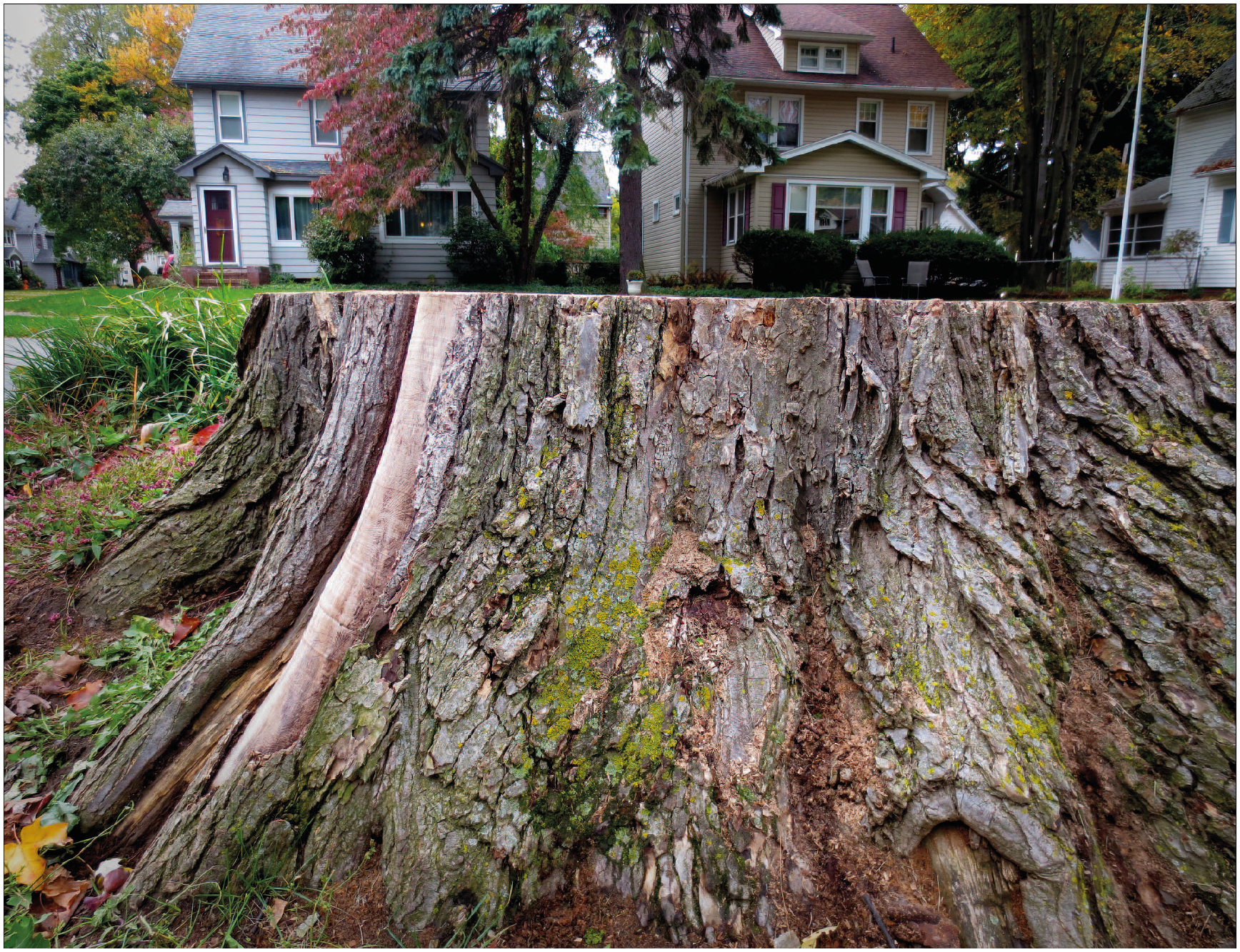
Yeah. You don’t think in your head, you’re not like, ‘I’m getting this feeling right now’, you just get that feeling and then do it and then after you’re like, ‘Oh.’
Conclusion
By photographing their relationships with texts in their everyday lives Sylvia, Mara, Kate, and Donovan were able to materialize their being and doing of literacies. While the photograph may bring into being a representation of a static moment in an otherwise dynamic literacies experience and therefore foreshorten the story of the experience, creating that material representation allows for the experience to be studied more closely after-the-fact. It was in that study – hours of looking and talking – that the literacies came to matter both literally and figuratively for the young artists. These metaliteracies conversations invited the artists to consider not only what their literacies were and what they might mean; but, also, how they might mean. For many of them, this was the first time they had thought through how meaning-making works and where meaning might be or be created. Materializing and mattering their literacies through making visual images allowed Kate, Sylvia, Donovan, and Mara to establish their own epistemologies of literacies.
Footnotes
Declaration of conflicting interests
The author declared no potential conflicts of interest with respect to the research, authorship, and publication of this article.
Funding
The author received no financial support for the research, authorship and publication of this article, and there is no conflict of interest.
