




Abstract
Research dissemination to target stakeholders including communities, policymakers and practitioners is a fundamental element of successful research projects. For many of these stakeholders, however, barriers to access and uptake exist, including time taken to publish, academic jargon, language barriers, paywalled articles and time taken to consume and understand academic outputs. Ultimately these barriers could prevent research from reaching target audiences or could severely delay the uptake of key research messages. Creative and visual dissemination approaches as a complement to traditional academic outputs offer numerous advantages and may improve real-world uptake in a timely manner. In this practitioner piece, the authors present detailed methods for the development of a graphic novel using research findings from an online survey that asked children what they liked about their neighbourhood during COVID-19 lockdowns in Aotearoa New Zealand. Here, they share critical reflections from the process of developing and disseminating this creative communication, with the aim of informing and supporting future creative and visual dissemination of research findings.
Keywords
Introduction
The importance of research dissemination
Dissemination of findings to policy and practice is a key part of the research process (Kerner and Hall, 2009), with increasing acknowledgement that research should generate impact and benefit its target audience (Schnitzler et al., 2016). Active dissemination involves going beyond traditional ‘passive’ methods (e.g. journal articles) and using additional/alternative methods to help share information (Edwards, 2015). Advantages of active dissemination approaches over passive approaches include overcoming barriers to information uptake, including lack of accessibility, use of jargon, using a one-size-fits-all approach and the substantial time taken for publishing (Ashcraft et al., 2020; Barczynski et al., 2009; Bodison et al., 2015; Chandler et al., 2015; Dobbins et al., 2002a; Schnitzler et al., 2016; Scullion, 2002).
Creative and visual dissemination techniques
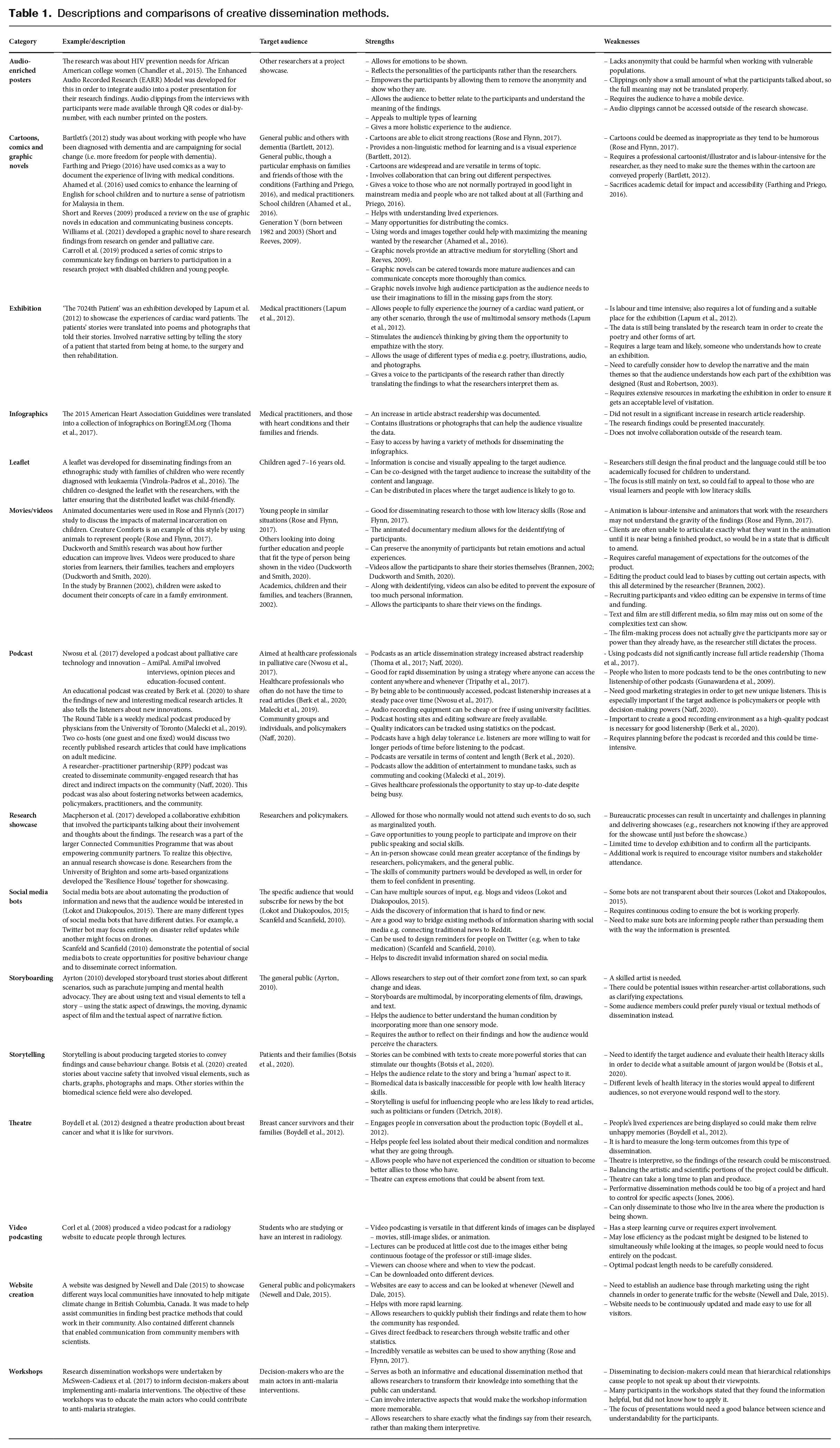
Creative dissemination methods are a form of active dissemination; they vary widely in terms of style and each has their advantages and disadvantages (Bazeley, 2006) (see Table 1). The main strengths of creative dissemination techniques include enabling participant voice (Chandler et al., 2015; Duckworth and Smith, 2020; Farthing and Priego, 2016; Lapum et al., 2012), the ability to appeal to the general public by having more straightforward messages that involve little jargon (Ahamed et al., 2016; Bartlett, 2012; Chandler et al., 2015; McSween-Cadieux et al., 2017), and versatility by being able to be accessed while the audience is engaged in other activities (Bartlett, 2012; Berk et al., 2020; Farthing and Priego, 2016; Thoma et al., 2017; Vindrola-Padros et al., 2016). However, there are also weaknesses of and barriers to using these techniques, such as being more labour intensive or costly for those who are unfamiliar with the dissemination technique and so may require external assistance (Corl et al., 2008). Another challenge is the lack of long-term outcome monitoring for techniques such as theatre and exhibitions (Boydell et al., 2012; Chandler et al., 2015; Lapum et al., 2012). Finally, anonymity could be a problem with creative dissemination techniques where participants’ actual voices, images, or words are used for dissemination, meaning privacy can have a higher likelihood of being breached (Chandler et al., 2015).
Descriptions and comparisons of creative dissemination methods.
The role of creative and visual communication in the time of COVID-19
The COVID-19 situation continues to change rapidly, and robust knowledge translation has become more important than ever. Evidence is needed to identify best practice that could inform policymakers about possible actions to undertake in response to different scenarios generated as a result of the pandemic. According to Dobbins et al. (2002a), research typically takes 8 to 15 years between the time of publication to the time of usage in real practice. This timeline needs to be shortened for this unprecedented situation and so it is important to choose the tools of dissemination wisely.
In Aotearoa New Zealand, we undertook an online survey asking children what they liked about their neighbourhoods during the COVID-19 lockdown. Anecdotally, it seemed that families were spending much more time together, at home and outside. Children were able to experience a completely new side of their neighbourhood, by having fewer cars on the road and more time to explore. This unique situation inspired us to explore what aspects of children’s neighbourhood environment supported their wellbeing through this time. An academic output of the survey findings has been reported elsewhere (Smith et al., 2022). However, this ‘passive’ approach did not allow for sharing more nuanced perspectives of children and for reaching non-academic audiences. Accordingly, visual communication was seen as an optimal supplementary dissemination approach to overcome barriers to take up (Bodison et al., 2015) and to ensure children’s voices were not diluted by the more restricted article publication approach. The aim of this practitioner piece is to describe the methods used to produce the creative dissemination output, to share the output and to reflect on the utility of this process.
Methods
Protocol for developing content
The methods for collection of data used in this study have been reported in full elsewhere (Smith et al., 2022). For this activity, the 186 text responses to the survey question – ‘what did you like about your neighbourhood during lockdown?’ – and children’s submitted photos and drawings were extracted and examined by Catherine Ma and Melody Smith to identify key areas of interest that reflected the gamut of experiences children spoke about. Recent studies on children and COVID-19 (Cuevas-Parra, 2020; Stavridou et al., 2020) were also used as guides for potential topics of interest that could arise. In total, seven candidate topics were identified that covered ideas that appeared frequently in the data: ‘Carless Society’, ‘Community’, ‘Loneliness’, ‘Mental Health’, ‘Same but Different’, ‘Time in Nature’ and ‘Time with Family’. Each topic had at least 20 entries from the 186 responses.
Identifying optimal form(s) of creative dissemination
Our team discussed advantages and disadvantages of different creative dissemination techniques, drawing from the literature in Table 1. Ultimately, we selected a graphic novel format for its advantages in terms of audience reach (Bartlett, 2012), graphic novels’ utility as a medium for storytelling (Ahamed et al., 2016), the need to collaborate with non-researchers (Bartlett, 2012) and because they allowed a tangible visual output to be produced that could also be shared virtually. Compared to other techniques such as comics, graphic novels can cater for more mature audiences by being longer and allowing ideas to be developed more fully (Short and Reeves, 2009), which extends our target audience from children through to policymakers. This medium also gives a voice to people whose voices tend to be ignored, like children’s (Farthing and Priego, 2016). Apart from this, specific to our dataset, this medium allows the inclusion of the children’s drawings, photos and poems in the product created.
Creating the graphic novel
Figure 1 briefly outlines the process used to create the graphic novel and more detail about each stage is provided as supplementary information. First, quotes that fit each of the seven topics were consolidated into categories within a Microsoft Word document (Stage 1). Catherine Ma then created a draft storyline for each of the seven topics with ideas on what images should be used for the panels alongside the dialogue and Melody Smith provided initial feedback on the data (Stage 2). Of note, both authors had substantive experience working with the dataset so had a considerable grasp of the data and key messages shared by children. Much of the dialogue for the stories consisted of direct quotes from the answers given by the children themselves. This was done in order to preserve their original meanings and preclude the imposition of the researchers’ interpretation. Direct quotes were formatted differently from the remaining data (in bold); they were prioritized when determining whether to retain or remove information and were used verbatim with no paraphrasing. Other dialogue, specifically those not from the children (e.g. the narrator or non-human characters) was created from interpretations of the children’s messages or were neutral statements. The image ideas were inspired by the drawings and photos uploaded by the participants. Catherine Ma and Melody Smith identified candidate content for chapter headers from participant-provided poetry and graphical data.
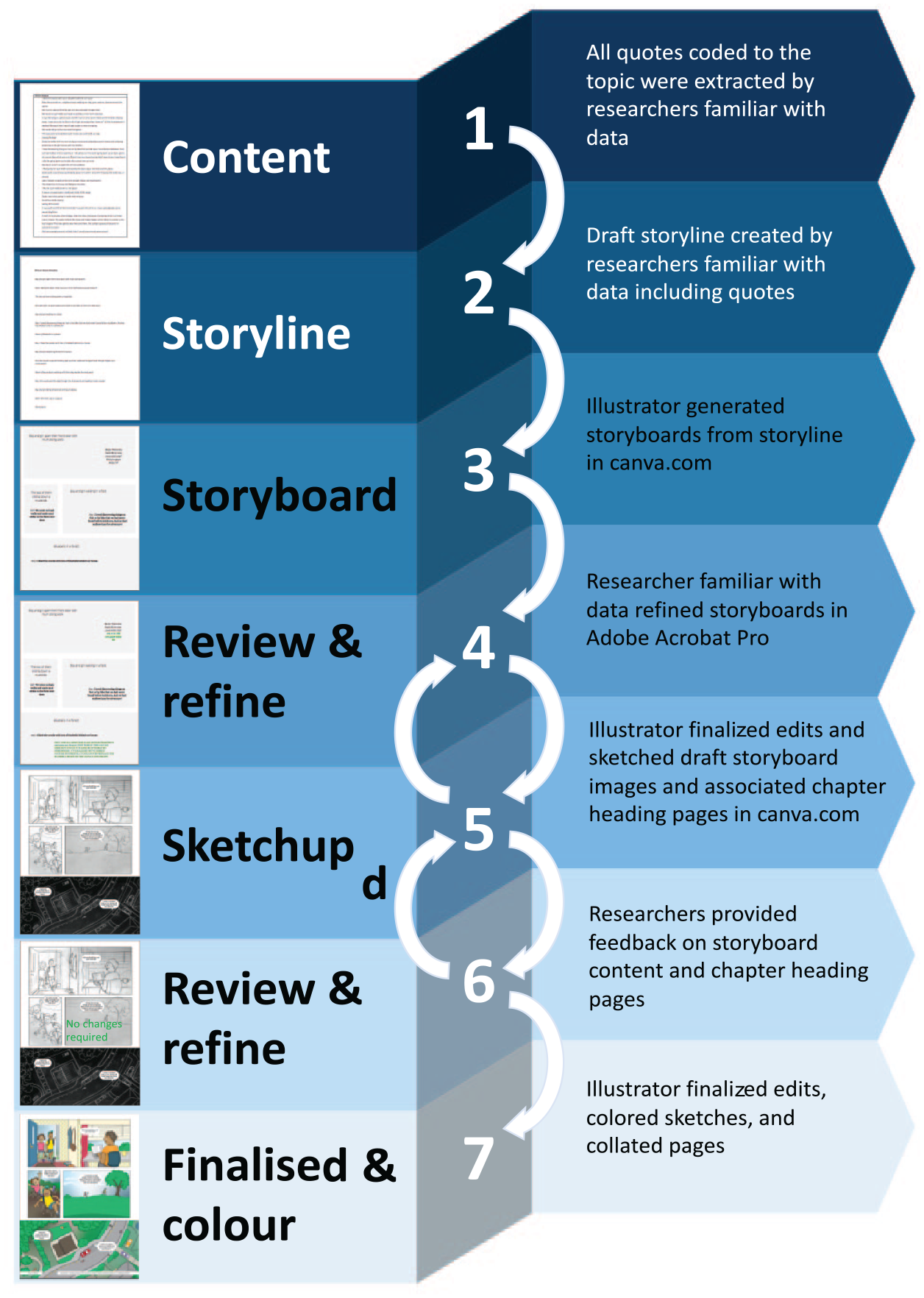
Outline of process used to develop the graphic novel from child-supplied content.
From these researcher-derived storylines, Carol Green created storyboards for each of the seven topics in canva.com, including panels with textual data drawn from the storylines (Stage 3, Figure 1). Considerations at this stage were ensuring a coherent and logical storyline for each chapter, and that the research team had specified an optimal chapter length of 1–3 pages. Accordingly, Carol Green made minor changes to the supplied content, in some cases removing or modifying dialogue. PDFs of each storyboard and an associated chapter heading page were created and Melody Smith reviewed these storyboards virtually, using annotated PDFs (Stage 4). Considerations when reviewing the storyboards were ensuring appropriate interpretation of children’s data, that information presented in each storyboard was consistent with the overall topic and that each storyboard presented a discrete and succinct message. During this process, target audiences and the importance of connecting with children, families, policy-makers and practitioners were kept front-of-mind. Although not a key driver, budgetary considerations (in terms of illustration and printing costs) were also kept in mind when aiming for succinct chapters that still described children’s experiences and perceptions adequately. This process illuminated for Melody Smith fundamental differences between written and visual forms of story-telling. In particular, the visual storyboards reduced the need for repetitions of comments, where one panel could be used to cover a number of quotes without diluting the primary message. Another difference was the importance of providing additional context for the graphic novel compared with the ability to be more siloed when taking an academic written approach. Key changes that were made through this process were the combining of quotes that covered the same topic, removal of repetitive information and shifting of some content to other chapters to add depth to the chapters. In addition, two topics were merged – Mental Health and Loneliness were combined into one storyboard, titled ‘Keeping Connected’. The process of storyboarding revealed the need to combine these two topics in order to provide sufficient depth to the storyline. At this point, Carol Green also made additional minor changes to support the flow of the storyline and illustrations. Figure 2 shows an example of one completed ‘chapter’.
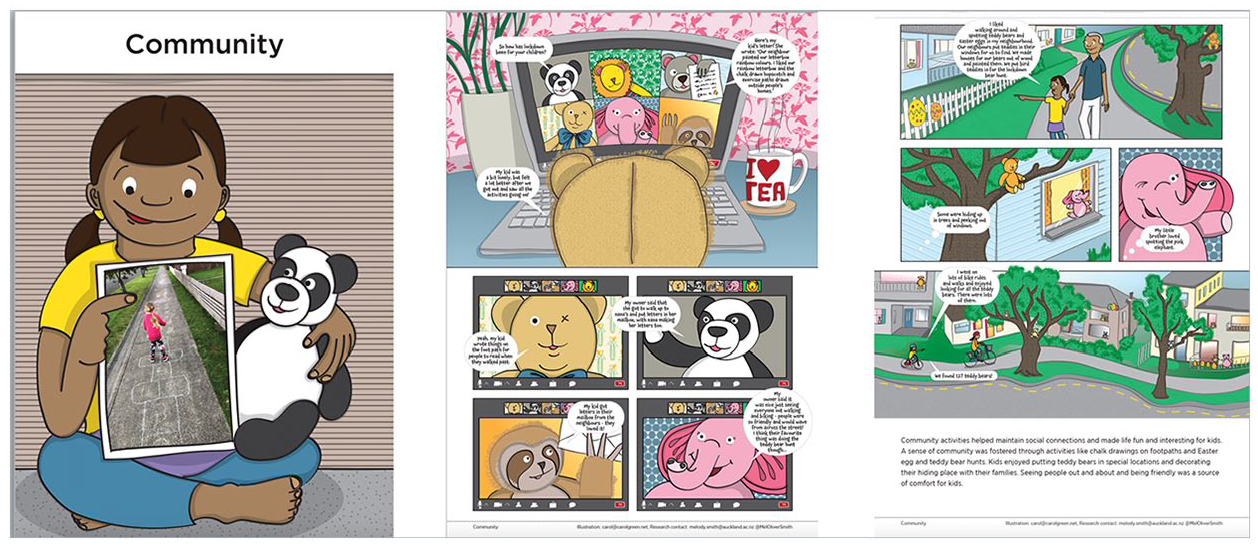
Example of one ‘chapter’ of the graphic novel, including title page, image submitted by a participant and quotes submitted by participants.
Audio-recording the graphic novel
We recognized that providing only a visual output would reduce accessibility and limit the utility of the novel. Drawing from the perspectives of Williams et al. (2021), we note the illustrations are recognized as telling a story of their own and thus we wanted the children to have a child-friendly description of the illustrations. Accordingly, we recorded an audio-book version of the graphic novel, with a child describing the illustrations and content for their peers. This version was produced solely as an audio file, separate from the visual output and was not linked with the visual output in any way. Importantly, we did not stipulate that text had to be read verbatim and we did not provide the child pre-determined text. Instead we allowed the child narrator to describe the novel illustrations as they saw them and to highlight elements that they thought would be of interest to children. For this process, we used protocols produced by Harrison and Loring (2021) and used the software Audacity for recording and editing recordings.
Dissemination of the graphic novel
A separate DOI was created for the graphic novel and audiobook version using the researcher institution figshare repository (auckland.figshare.com), providing permanent online links to the documents and making them freely accessible (Smith, 2021; Smith et al., 2021). Separate International Standard Book Numbers (ISBNs) for electronic, PDF and softcover versions of the graphic novel were sought from the ISBN Agency, Te Puna Mātauranga o Aotearoa/National Library of New Zealand. ISBN number approval required following stringent criteria on ISBN number placement on all documents and legal deposit of the digital version of the document to the library within 20 working days of publication.
Following completion, the graphic novel and the audio file were uploaded to figshare and a legal deposit was made with Te Puna Mātauranga o Aotearoa/National Library of New Zealand. The links to the figshare documents were disseminated on social media (Twitter, Instagram and Facebook) and were sent via email to the research team’s networks. Research team members also shared the PDF version of the novel directly with policymakers, practitioners and organizations with interests in children and healthy environments. Data on views, downloads and Altmetrics were collected to gauge uptake over time. Comparison data on article views, downloads and Altmetrics were also collected for the academic output to aid reflection on the utility of the creative dissemination outputs compared with traditional academic dissemination. On completion of the output, we undertook a critical reflection of the process using questions by Fook and Gardner (2007), specifically: what did I/others do, what were the different perspectives, how did I/others influence the situation and what was the influence of power?
Results and Discussion
This practitioner piece outlines in detail the process used to develop a creative dissemination output from an online survey that captured children’s perspectives using a range of data types. Findings are presented drawing on a critical reflection of the process, and highlighting opportunities for future research and improvement. The completed graphic novel (Smith et al., 2021) and the audiobook (Smith, 2021) were both made freely accessible online. Here, we also draw from our critical reflections, in particular considering our differing perspectives, our roles in re-producing children’s information and our influence in determining the final output content. This process was new to the research team and we anticipate that sharing our experiences will be useful to researchers interested in extending the reach of their research findings to non-academic audiences through creative and visual dissemination. A strength of the process was engaging with an experienced illustrator who was familiar with illustrating for a wide audience on the topic of environments and human wellbeing (for example, illustrating for children’s books and audio-visual content, developing COVID-19 communication resources and creating illustrations for health and environment research, Green, 2022). In addition, the corresponding author had worked with the illustrator previously on children’s health and environment research dissemination (e.g. Ikeda et al., 2018), resulting in a shared understanding of, and respect for, each other’s expertise, likely leading to efficiencies in the working relationship. In their development of a graphic novel to share research findings, Williams et al. (2021) reflected on the importance of the calibre of artistic expression and considered it an important component of creative dissemination. Specifically, it is essential to recognize that artwork contributes more than simply illustrating text and that illustrations provide a story in their own right. Accordingly, where possible, expertise in illustration is preferable in order to optimize the knowledge transfer process. Carol Green’s capability to understand the topic from the outset, and to contribute to decision-making and story-telling alongside the research team as well as the pre-existing relationship likely streamlined the process and reduced the time taken to produce the output. For example, while draft content was developed by the research team, the illustrator made independent and significant contributions to the visual storytelling, and so in this case had equal ‘power’ in the dissemination process. This relationship and shared understanding also enabled an efficient form of flexibility and adaptability that might not be easily replicated elsewhere. It is essential that sufficient funding be allocated for optimal creative dissemination, including time for multiple feedback processes and iterations. Future research would benefit from working with illustrators (or other creative collaborators) at the planning stages of projects to agree on clear expectations of deliverables (potentially with exemplars) and associated costs, and to develop an efficient working relationship.
Throughout the process, the research team were challenged on their assumptions about content, flow and storytelling. Content shifted by necessity from structured stories developed by the research team that fitted with the academic research output and included verbatim comments only, to a more nuanced approach that combined quotes, changed words and merged topics in order to engage the reader and imbue the sense of the topic rather than provide a precise reiteration of data. Our critical reflections highlighted the researchers’ new experiences in needing to ‘let go’ of their academic worldviews of data and dissemination in order to prioritize the key messages and the needs of non-academic consumers. This reflection aligned with earlier work on disseminating research with children that recommended allowing space for change and adaptation (Egli et al., 2019). Challenging elitist norms around what constitutes effective and impactful research dissemination is necessary to remove barriers in knowledge transfer between researchers and the communities they are aiming to serve. As well as the creative dissemination approach outlined here (and others described in Table 1), simply developing plain language summaries and engaging participants in producing outputs are recommended (Lomas, 2007).
Even so, the critical reflection process highlighted the fact that, while the range of children’s submitted content was included, perspectives of the final output are limited to those of the research team. Here, we draw from Hunleth et al. (2022), reflecting on the meaningfulness of children’s participation and attending to researcher power, assumptions and biases in the representation of children’s data. The research team comprise experts in child health, participatory research, childhood studies and health promotion. Together, this skill-set meant the team were familiar with data collection with children and engaging with and interpreting children’s data in meaningful ways (e.g. see Carroll et al., 2021; Egli et al., 2021). Examples of facilitating meaningful participation were tailoring methods to children’s needs (children could submit text, photographic data, or illustrations), avoidance of jargon and use of clear, simple language and messaging on the survey. At the same time, we were also conscious of, and cautious about, how our roles as adults, parents and researchers might influence our interpretation and storytelling, for example by diminishing perspectives that did not fit tidily with our adult ideas. We drew from our experience to mitigate these issues, including recognizing the rights of children to have their perspectives heard and given due weight (United Nations, 1989), considering children as competent social actors in their own right (Williams et al., 2022) and utilizing existing research alongside the data to help develop key groupings of information to form chapters. Even so, future approaches may also benefit from involving participants in co-creating creative dissemination outputs or, where appropriate, conducting participant checks to ensure the content reflects messages shared by participants (Candela, 2018). It is likely the assumptions and values of our team of adults who were familiar with, and passionate about, environment and health research impacted the storytelling in ways that we were not able to capture. As the survey for the current study was completely anonymous, these approaches were not possible here.
The COVID-19 pandemic has brought with it numerous lessons for the future and has increased the need for rapid innovation and clear and effective knowledge transfer. Much of the progress achieved is the result of biomedical science and research. Alongside this important work, a growing body of research has explored how the COVID-19 pandemic has affected daily life, including for children and their families (Aitken, 2021; Bessell, 2021; Freeman et al., 2021; Holt and Murray, 2021; Million, 2021). In this context, this graphic novel was unique due to its centring of children’s perspectives, a strengths-based focus on what children liked about their neighbourhoods during lockdown and the use of visual storytelling to convey research evidence to a wide audience. Children have the right to have their perspectives heard and taken seriously (United Nations, 1989), and this extends to understanding what helped them during COVID-19 lockdowns. A range of research has been conducted to explore children’s perceptions and experiences in the COVID-19 pandemic, specifically during lockdowns (Comisiynydd Plant Cymru – Children’s Commissioner for Wales, 2020; Cuevas-Parra, 2020; Götz et al., 2020; Manaakitia Ā Tātou Tamariki – Office of the Children’s Commissioner, 2020). However, outputs arising from research in this area have generally taken the form of journal articles or online research reports, and have not focused specifically on what worked well for children.
In terms of visual communication activities, the Phoenix Group generated resources to help families and schools support children’s mental wellbeing in general, but also specifically with regard to the impacts of COVID-19 on children (Phoenix Education Consultancy Limited, 2020). Alongside a range of downloadable toolkits and activities, active engagement has been supported through social media activities. Other examples of resources to support child wellbeing have been produced, although for the most part these have been based on extant knowledge rather than being direct outputs from COVID-19 specific research. Since the completion of this research, a study where children were invited to draw comics about their experiences has been published that highlighted the adult-centric nature of New Zealand’s public health response to COVID-19 and the importance of working with children to understand their perspectives and needs for future policy and practice (Spray, 2022).
Sharing research directly with policymakers and practitioners was seen as an essential component to maximize research uptake (Schnitzler et al., 2016), but dissemination also extended to the general community. At the time of writing, the figshare link for the novel has been shared widely on social media platforms (Twitter, Facebook, Instagram). The novel has been shared as a PDF with stakeholders in urban design, transport planning, and children’s health and wellbeing, as well as national ministries and international agencies, and groups interested in environments and child health and wellbeing. The graphic novel was picked up and shared in a range of ways across a wide audience base. For example, it was shared by Suzy Cato (a prominent presenter and producer of children’s media for over three decades in New Zealand) on her YouTube channel ‘Suzy’s Book Corner’ (Cato, 2021). Segments of the novel were also read, alongside playing snippets of the audiobook, on Suzy Cato’s ‘Suzy & Friends Radio Show’. The novel and its development was also profiled by the Editors of the journal Kai Tiaki (Kai Tiaki Editors, 2021) and was shared with nurses across the country through the College of Child and Youth Nurses Newsletter (New Zealand Nurses Organisation, 2022).
While the outputs were being completed by the team at approximately the same time, the graphic novel was made freely available on 13 May 2021 and it took a further eight months for the academic article to reach the public realm (predominantly due to time taken to review the manuscript, undertake revisions and re-review the manuscript). Free open access of the academic article to the public came at a cost of AUD3860. The graphic novel has received the most attention to date (Table 2) – interestingly in terms of Altmetric attention scores, members of the public comprised the highest proportion of those engaging with each of the outputs.
Measures of engagement with the graphic novel, audiobook and journal article.
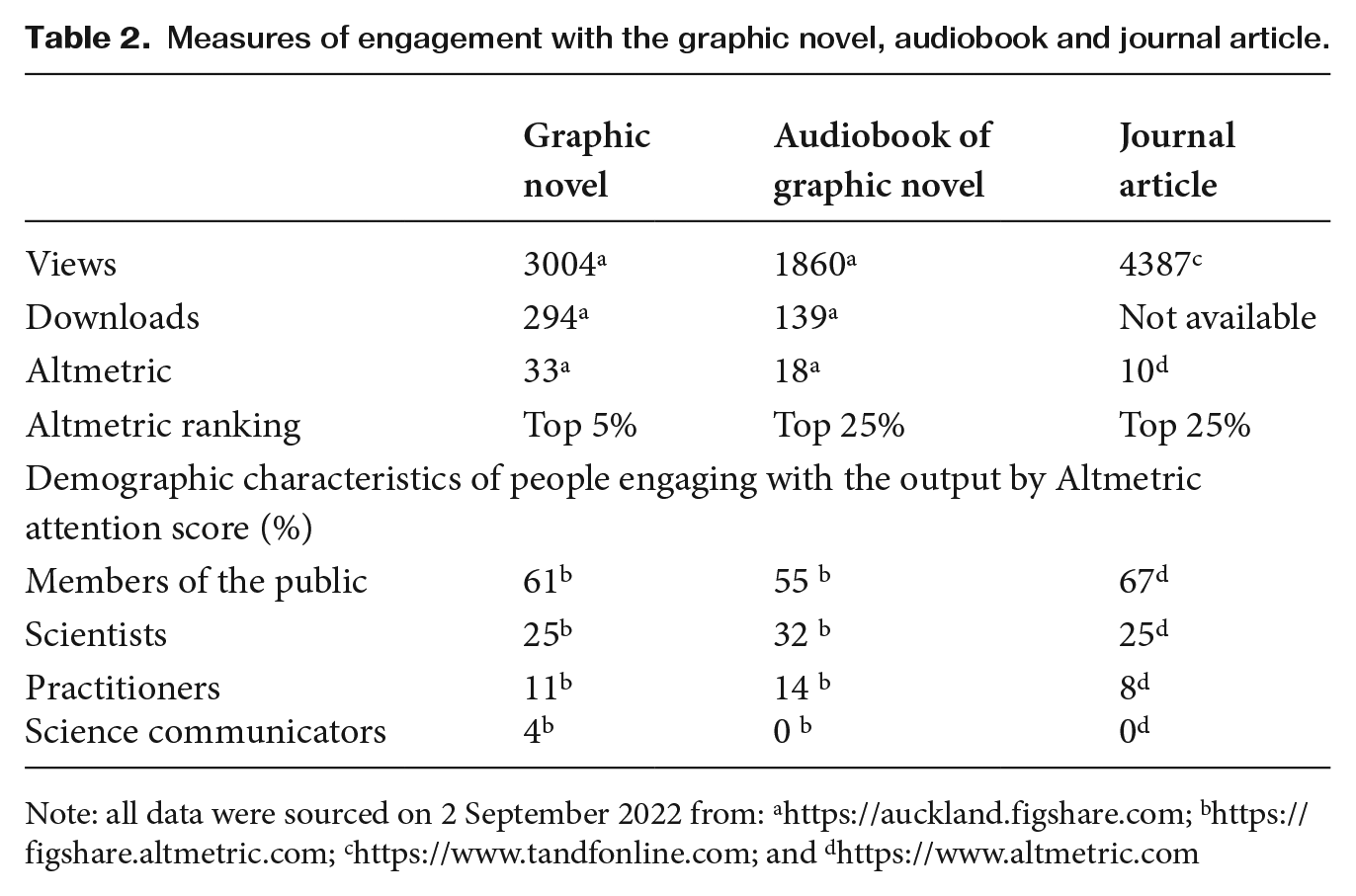
Note: all data were sourced on 2 September 2022 from: a https://auckland.figshare.com; b https://figshare.altmetric.com; c https://www.tandfonline.com; and d https://www.altmetric.com
Measuring long-term uptake and societal benefits is fraught with challenges, including issues with measurement tools, timing and criteria for determining impact (Bornmann, 2012; Smith, 2001). These challenges are compounded by a historical over-reliance on bibliometric approaches for reporting and evaluating scientific research impact (Bornmann, 2017). Ultimately, understanding the true impact and uptake of these outputs will take time and ongoing targeted efforts to identify and assess uptake across a range of target audiences.
Conclusion
Creative and visual communication approaches can provide a useful complement to traditional academic outputs. Our research has demonstrated numerous potential advantages of developing creative outputs, in particular timely dissemination of freely-accessible information and enabling participants to have their perspective shared and reflected through multiple mediums. The limited bibliometric data presented suggest similar engagement by the general community between the creative output and academic article, but a higher level of practitioner engagement for the creative output. Team expertise in the topic and in illustration were important to enable the efficient development of a clear visual and written storyline. Future research would benefit from involving participants in generating creative outputs and undertaking detailed and long-term evaluation of uptake and impact.
Supplemental Material
sj-pptx-1-vcj-10.1177_14703572231157042 – Supplemental material for Creative and visual communication of health research: development of a graphic novel to share children’s neighbourhood perspectives of COVID-19 lockdowns in Aotearoa New Zealand
Supplemental material, sj-pptx-1-vcj-10.1177_14703572231157042 for Creative and visual communication of health research: development of a graphic novel to share children’s neighbourhood perspectives of COVID-19 lockdowns in Aotearoa New Zealand by Catherine Ma, Carol Green, Jinfeng Zhao, Victoria Egli, Terryann Clark, Niamh Donnellan and Melody Smith in Visual Communication
Footnotes
Acknowledgements
The authors would like to thank the children who participated in this survey for taking the time to share their thoughts and perceptions. We would also like to acknowledge and thank all those who shared the survey invitation, including Dr Geoff Lealand, Suzy Cato, Women in Urbanism, and Bike Auckland. Thank you to Dr Lisa Williams for providing feedback on the draft manuscript.
Declaration of Conflicting Interests
The authors declared no potential conflicts of interest with respect to the research, authorship and publication of this article.
Funding
The authors disclosed receipt of the following financial support for the research, authorship and publication of this article: Melody Smith was supported by a Health Research Council Sir Charles Hercus Research Fellowship (17/013); Catherine Ma was supported by a Kate Edger Educational Charitable Trust summer scholarship; and Victoria Egli is supported by a Lotteries Health Research Postdoctoral Fellowship (# 128096).

Supplemental Material
Supplemental material for this article is available online.
Biographical Notes
CATHERINE MA is a Social Worker at Oranga Tamariki in Auckland, New Zealand. Catherine undertook this research as a summer student with the School of Nursing, University of Auckland, New Zealand.
Address: The University of Auckland School of Nursing, 85 Park Road, Auckland 1023,New Zealand. [email:
Address: as Catherine Ma. [email:
JINFENG ZHAO is a Senior Research Fellow at the University of Auckland, New Zealand. She is a specialist in data visualisation to understand spatial patterning in health behaviours, and in developing novel methods in data visualisation for effective knowledge translation.
Address: as Catherine Ma. [email:
VICTORIA EGLI is a Research Fellow at the School of Nursing, University of Auckland, New Zealand. She specialises in using child-centred methods in health and neighbourhoods research and dissemination.
Address: as Catherine Ma. [email:
TERRYANN CLARK is Cure Kids Professor in Child and Adolescent Mental Health, and Professor at the School of Nursing, University of Auckland, New Zealand. She has over two decades of working with Māori communities, schools, and youth, particularly through her leadership of the Youth2000 surveys and her role as the Child and Youth Friendly Cities Co-ordinator at Mahitahi Hauora Primary Health Entity.
Address: as Catherine Ma. [email:
NIAMH DONNELLAN is a Research Fellow at the School of Nursing, University of Auckland, New Zealand. She specialises in using novel geospatial techniques to understand children’s health promoting environments.
Address: as Catherine Ma. [email:
MELODY SMITH is a Professor and Co-Associate Head (Research) of Te Kura Naahi/School of Nursing at Waipapa Taumata Rau/The University of Auckland. Her research focuses on understanding how environments can support child wellbeing through facilitating active travel modes, independent mobility, physical activity, connections with nature and social connectivity, alongside activating children’s rights through participatory methods and creative dissemination approaches.
Address: as Catherine Ma. [email:
References
Supplementary Material
Please find the following supplemental material available below.
For Open Access articles published under a Creative Commons License, all supplemental material carries the same license as the article it is associated with.
For non-Open Access articles published, all supplemental material carries a non-exclusive license, and permission requests for re-use of supplemental material or any part of supplemental material shall be sent directly to the copyright owner as specified in the copyright notice associated with the article.
