




Abstract
This article discusses how popular culture products – digital greeting cards – interact with hegemonic historical narratives in the context of war remembrance. It employs the Foucauldian concept of counter-memory to analyse how user-generated mnemonic content interacts with historical power relations. Using content analysis to examine a sample of amateur greeting cards, the authors investigate how these cultural products engage with official and counter-official memory practices in Russia related to the Soviet victory in the Second World War. Specifically, the article explores how different visual elements are employed to (de)construct specific narratives about the Soviet victory and it discusses how the use of computer graphics, in particular animation, influences the potential role of greeting cards as a means of resurrecting the subjugated past.
An elderly man sits in the garden on a sunny day. His brown coat is decorated with several rows of military awards glittering in the sunlight. A light breeze shakes the lilac flowers behind the man’s back. A boy, probably the man’s grandchild, stretches his arm to touch the awards and then draws it back in awe. Occasionally, a line of sparkling letters appears in the sky above. They read: ‘Happy Victory Day, Grandpa’.
This scenic image – except for the letters – looks like a typical episode of some military-themed holiday. However, the man, the child and the letters are all made of pixels put together to produce a digital greeting card – or an E-card – that delivers an experience located ‘at the intersection of language, consumption, exchange and social relations’ (Jaffe, 1999: 115). This experience is similar to the one provided by printed cards, but is also enhanced by digital technologies which turn it into a separate communicative form used to sustain societal practices through online media (West, 2002: 323).
In this article, we discuss how the ability to generate users’ own digital cards and enhance them with animation 1 influences the use of E-cards for cultural and political self-expression. Specifically, we conceptualize the place of E-cards in the context of war remembrance, which comprises an integral framework for representing power relations within a given society (Foucault, 2003: 15). This framework is sustained through discursive practices of knowledge production (Medina, 2011: 10), which employ greeting cards for constructing and articulating mnemonic narratives.
Unlike printed greeting cards, which are often subjugated by existing power relations, user-generated E-cards can be used to communicate alternative interpretations of the past. By exposing subjugated memories – i.e. past experiences that are silenced and marginalized (Foucault, 2003: 7) – amateur greeting cards can serve as a form of counter-memory. This potential for insurrection is enhanced by digital technologies which encourage participation in counter-memory projects by engaging their audience in novel ways (Brown and Tucker, 2017). By exploring how animated E-cards interact with the subjugated past, we strive to explicate the impact of digital technologies on war (counter-)remembrance.
For this purpose, we examine amateur E-cards dedicated to Victory Day, the public holiday commemorating the Soviet victory over Nazi Germany. Victory Day is particularly popular in post-Soviet countries, where it is one of the most admired holidays (Levada-Center, 2014). It is a cornerstone of official Second World War memory practices in Russia, which are increasingly adopted by the Kremlin as an element of power relations in the region (Fedor, 2017). By examining how the Soviet victory is represented through E-cards, we investigate the interactions between digital culture products and Second World War hegemonic narratives, and discuss how these interactions are influenced by animation.
Literature Review
Printed cards and war remembrance
Similar to other expedients of print capitalism, greeting cards play an important role in the performance of cultural and political identities (Semmerling, 2004: 1). They facilitate a perpetuation of socially constructed ideologies by articulating conventional narratives and reinforcing specific patterns of behaviour (Auster and Auster-Gussman, 2016). Greeting cards both reflect and shape societal expectations towards social concepts such as parenthood (Auster and Auster-Gussman, 2016) or patriotism (Jackson, 2005).
In the case of military conflicts, greeting cards shape societal views on the state-authorized use of violence and reinforce dominant practices of war remembrance. As part of this process, they often interact with other forms of power relations: an illustrative example is the articulation of stereotypical gender roles by associating males with battle prowess and females with victimhood (Zeiger, 1996). This functionality makes greeting cards an important element in the process of the monopolization of historical knowledge used to ‘create and maintain the unity and continuity of a political body’ (Medina, 2011: 14).
Despite the importance of greeting cards, they are usually discussed only as part of the broader debate on the representation of military conflicts through printed commodities, in particular postcards. Furthermore, existing studies tend to focus on the use of cards for visualizing the conflicts from the beginning of the 20th century such as the First World War (Doyle, 2010). Only a few works discuss greeting cards in the context of more recent conflicts, such as the Arab–Israeli conflict (Roei, 2012; Semmerling, 2004) and the War on Terror (Jackson, 2005).
In addition to the limited number of case studies, current scholarship (Jackson, 2005; Roei, 2012) tends to look on greeting cards as a means of reinforcing hegemonic narratives. This emphasis can be explained by the significant role of print capitalism in sustaining hegemonic power relations (Anderson, 1983). We argue, however, that the current focus on greeting cards as part of hegemonic historical knowledge does not take into account changes related to digital distribution, in particular the rise of E-cards, which can facilitate the use of these cultural products as a means of resisting official interpretations of the past.
Digital greeting cards and (counter-)memory
The development of a digital economy has a significant impact on the printed commodities industry. By decreasing production costs and expanding customization options, digital technologies transform the contemporary greeting cards market and lead to the growing use of E-cards (Gaille, 2016). Even while digital cards are often viewed as less tangible, they also have the potential for accommodating ‘a great deal of creative, emotional labour’ (West, 2002: 323) by enhancing their message with technical options, such as animation or sound streaming.
The multimediality of digital greetings cards opens additional possibilities for perpetuating social practices. By invoking strong emotional responses, E-cards can mobilize popular support for official historical interpretations and articulate psychological and moral elements which, as Foucault (2003: 54) noted, are integral components of historical discourse. Simultaneously, E-cards can facilitate marginalization of subjugated narratives by stimulating scorn and anger against the alternative interpretations of the past to push them further to the margins of society.
At the same time, the ease of production and low distribution costs also facilitate the use of E-cards as a means of resistance against hegemonic narratives. With the help of a simple graphic editor, a user can produce an animated image which can then be distributed online to challenge the silence imposed by official memory practices. In this way, amateur E-cards can serve as a form of counter-memory which undermines the unifying function of the official history and articulates discontinuous gaps in the collective past (Medina, 2011: 14–15). To understand how this (counter-)mnemonic potential is realized, we look at interactions between E-cards and the hegemonic narrative of the Soviet victory in the Second World War.
Victory Day as a Hegemonic Memory Discourse
Since the first post-war years, Victory Day has remained a locus of remembrance, where multiple power relations and struggles converge. Introduced in 1945 with a grand military parade in Moscow, Victory Day was massively celebrated in 1946 with numerous manifestations praising the heroism of the Soviet people and emphasizing the leading role of the Communist party. A year later, Stalin demoted it from a state holiday to a regular working day to focus public attention on the brewing Cold War (Tumarkin, 1994: 103) and divert public attention from Soviet military leaders, whose popularity was viewed as a possible threat to his power (Overy, 1998: 281).
Despite the abolition of official Victory Day celebrations, it was in the first postwar decade when some of the formative features of the hegemonic narrative of the Soviet Victory were established. Influenced by power relationships in Soviet society and personal views of the Communist leadership, the newly-formed narrative of the Soviet triumph emphasized the leading role of the Russian people in defeating Nazi Germany, while articulating the notion of Soviet brotherhood (Bordyugov, 1995). The image of virtuous and fearless Soviet soldiers was promoted through mass culture, whereas experiences that did not fit in this narrative were silenced. 2 The role of women was among these silenced topics: despite the high (8–10%) number of females serving in regular and partisan units, they were rarely mentioned in the official narrative and their portrayal was usually confined to stereotypical images of victims (Nikonova, 2005).
Until the death of Stalin, commemoration of the Soviet victory remained an informal practice. However, from the second half of the 1950s, Victory Day started to regain its official status, as memories of the Soviet victory were appropriated during the de-Stalinization campaign. In a 1956 speech, Khrushchev condemned Stalin’s attempts to monopolize the Soviet victory and emphasized the leading role of the Communist Party supported by ‘tens of millions of Soviet people’ (Tumarkin, 1994: 109). This criticism was reinforced by the wave of cultural products produced by immediate participants of the war (e.g. Bykov and Okudzhava), who brought to the fore their traumatic experiences that had been silenced in the time of Stalin.
Victory Day only became a public holiday again in 1965, when Brezhnev came to power. This change was followed by the formalization of the Great Patriotic War narrative, which became an important consolidation mechanism for Soviet society. It was accompanied by the establishment of new public symbols (e.g. the Eternal Flame) and practices (e.g. the jubilee military parades in Moscow). Since then, Victory Day has become a cornerstone of the hegemonic war narrative, which sustained the unity of the regime’s political body through ‘the continuity of glory’ (Foucault, 2003: 70). Other interpretations, in particular the one articulating the traumatic effects of the war, were isolated from the public sphere. At the same time, some previously silenced narratives, such as those of females in the Red Army, started to become more visible (Nikonova, 2005). 3
With the beginning of Perestroika, the growing criticism of the Communist party was accompanied by the revision of the Soviet narrative of the Second World War. Initiated by Gorbachev, this process led to the intensification of counter-memory processes which emphasized the traumatic aspects of the war, in particular the physical and psychological suffering of Soviet soldiers, and invoked a discussion of Soviet war crimes (Hösler, 2005). Following the dissolution of the Soviet Union, Yeltsin initially abstained from massive celebrations of Victory Day, but then resumed them in an attempt to consolidate Russian society (Bernstein, 2016: 426).
Putin’s rise to power led to significant changes in Second World War commemoration. Similar to Brezhnev, Putin employed the Soviet victory to invoke a sense of national unity and mobilize the Russian nation following the deterioration of its relationship with the West. This process involved the invention of new commemorative rituals such as the use of the Saint George ribbon (Kolstø, 2016) and the introduction of a uniform perspective on teaching about the war (Bernstein, 2016), backed by new memory legislation (Koposov, 2017). This new–old narrative was mostly based on commemorative traditions of the pre-Perestroika period and emphasized the masculinity and heroism of Soviet soldiers, but at the same time ignored the Communist component in the commemoration of the war (Reese, 2018). 4
Amplifying the growing militarization of the Russian society, the narrative articulated the glory of the Soviet-then-Russian military and the importance of serving the Motherland, whereas the suffering and horrors of the war were downplayed. It also silenced experiences that differed from the heroic narrative of the Soviet victory with new memory laws deliberately punishing ‘the distribution of lies about the activities of the Soviet Union in World War II’ (Edele, 2017: 95). These subjugating measures were supplemented with the appropriation of the popular counter-memory practices, such as the Immortal Regiment Movement (see Fedor, 2017) which started as a grassroots campaign to emphasize the human cost of the Soviet victory, but was later adopted by the Russian authorities.
The consolidation of the authorities’ monopoly on public remembrance led to the growing use of digital media as a means of mnemonic resistance in Russia (Rutten et al., 2013). However, the complex interplay of online power relations did not only result in the resurrection of the subjugated narratives, but also led to the reinforcement of official histories, in particular since 2014, when memory of the Second World War became used as a conceptual framework for explaining the events in Ukraine (Siddi, 2017). By examining E-cards dedicated to Victory Day, we expect to advance the understanding of the multilayered interactions between digital media and war remembrance in Russia in the post-2014 period.
Methodology
To implement our research, we used data from the large Russian aggregator of digital greeting cards called World of Animations and Sparkles. The aggregator allows users to download E-cards free of charge and automatically share them through web services/platforms such as WhatsApp and Facebook. The aggregator divides E-cards into thematic sections based on specific holidays (e.g. Christmas or St Valentine’s Day). On 6 May 2018, we manually collected all greeting cards included in the Victory Day section; the resulting data sample consisted of 335 E-cards.
We started our analysis by coding the emotional sentiment of E-cards to examine how they relate to the predominantly positive sentiment of the official Victory Day celebrations. We used a simple coding scheme, according to which each E-card can express (1) positive, (2) negative, or (3) mixed sentiment. Then we coded all thematic elements to examine if the customization possibilities offered by amateur E-cards result in the inclusion of memory symbols beyond the ones related to hegemonic memory practices (e.g. flowers or military awards). We used an inductive coding approach by examining greeting cards and adding new elements to the list. The binary classification was used to determine if a specific element was present or absent; unlike the sentiment classification, the thematic elements classification was non-exclusive.
The final version of the schema included the following categories: (1) combat action: episodes of combat action; (2) fauna: different kinds of fauna; (3) fireworks: different forms of pyrotechnics; (4) flame: different forms of burning fires; (5) flora: different kinds of flowering plants; (6) food: food and beverages; (7) human: human beings of various age/gender; (8) Kremlin: images showing the Moscow Kremlin; (9) military awards: different military awards; (10) military equipment: individual equipment and fighting vehicles; (11) monument: different public memorials; (12) other conflict: references to other conflicts, such as the Soviet–Afghan war; (13) paper memorabilia: different kinds of paper-made memorabilia such as letters; (14) rain: images showing rainfall; (15) religious symbol: symbolic elements related to religious practices; (16) Russian symbol: symbolic elements referring to the Russian Federation; (17) Reichstag: images showing the Reichstag building in Berlin; (18) Saint George’s Ribbon: an orange-and-black ribbon used as a symbol of victory in Russia and the Soviet Union; (19) sky: images with a specific focus on blue sky; (20) Soviet symbol: symbolic elements referring to the Soviet Union; (21) Stalin: images showing Joseph Stalin; and (22) text: pieces of text.
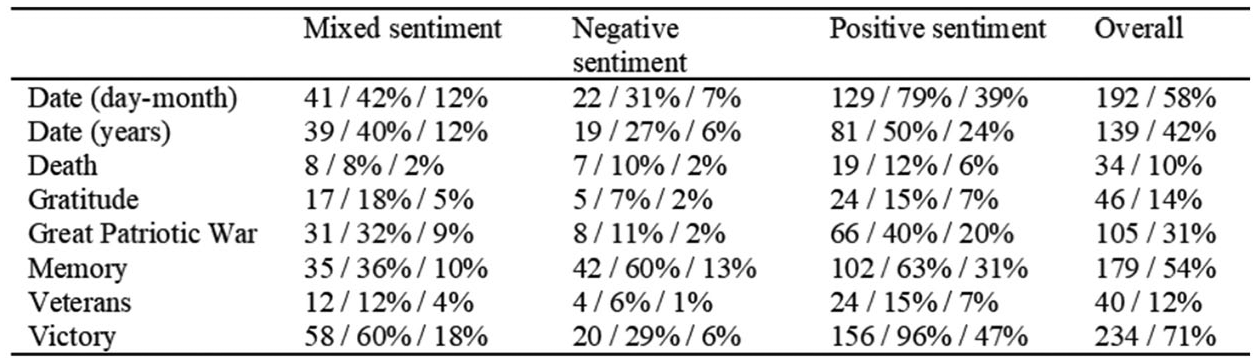
Then we coded subcategories of three thematic categories: human actors, flora and texts. The choice of these categories is related to their importance for Victory Day practices, so we assumed that their representation would be particularly indicative of the hegemonic/counter-memory narratives. For human actors, we coded age and gender using the following schemas: (1) child; (2) adult; (3) elderly; (4) mixed, and (1) male; (2) female; (3) mixed. For flora, we identified the following subcategories: (1) apple; (2) chamomile; (3) carnation; (4) laurel; (5) lilac; (6) narcissus; (7) poppy; (8) rose; and (9) tulip. In the case of texts, the following subcategories were used: (1) date (day–month): text elements specifying the date and month of the Soviet victory; (2) date (years): text elements specifying the years of the war; (3) death: text elements referring to death; (4) gratitude: text elements expressing gratitude to the Soviet soldiers; (5) Great Patriotic War: text elements referencing the Great Patriotic War discourse; (6) memory: text elements referring to remembrance; (7) veterans: text elements referring to Soviet veterans; and (8) victory: text elements referring to Soviet victory.
Finally, we examined the use of animation. We started by identifying animated thematic elements (e.g. floating letters) using the same approach as for the coding of thematic elements. The majority of categories of animated elements were the same, so we describe here only the categories that were unique to the animated elements. These categories included: (1) background: animated background; (2) border: animated E-card borders; (3) cinema effect: a fast-changing sequence of slides (e.g. reproduction of military chronicle); (4) lighthouse effect: a circling beam of light; also some thematic element categories were not animated and thus do not appear in the list. Finally, we coded the E-cards by the function of animation using the following schema: (1) entertainment: E-cards where animation was used for purely entertainment purposes; (2) reenactment: E-cards where animation was used to reproduce real-world phenomena; and (3) metaphor: E-cards where animation was used in a metaphoric sense.
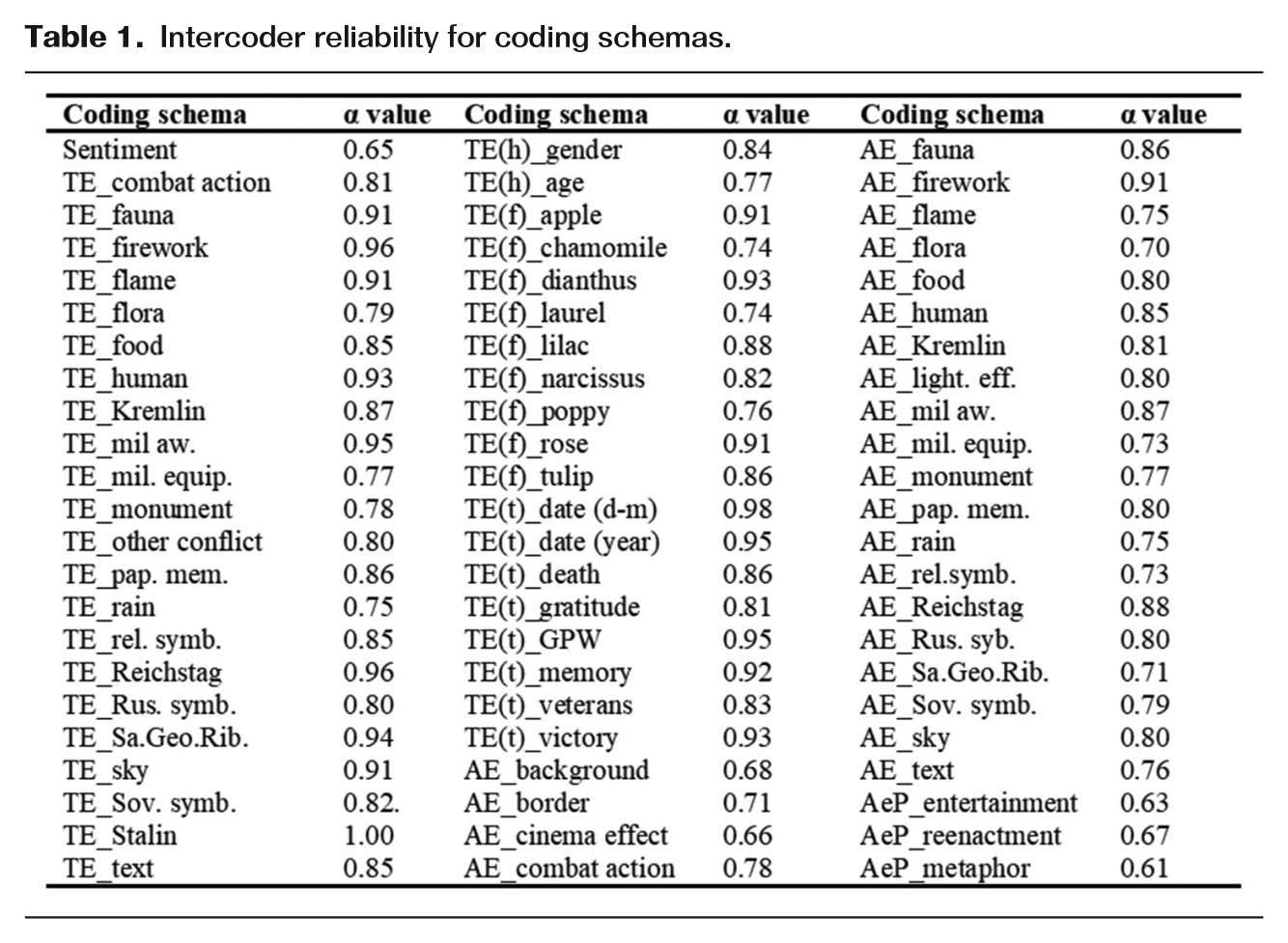
All E-cards in the sample were coded by two coders. Krippendorff's Alpha was calculated to ensure intercoder reliability (see Table 1). The presence of skewed distribution (when an element appears just on a few E-cards) explains several low α values despite the high agreement ratios between the coders. The degree of skewedness increased in the case of animated elements, thus their α values are usually lower. The coding of animated elements was also complicated by the often inconspicuous use of animation, which resulted in a higher rate of disagreement. For the final version of the classifications all disagreements were discussed and consensus-coded by two original coders.
Intercoder reliability for coding schemas.
Findings
Representation of the Soviet victory
Emotional sentiment
As shown in Table 2, half of the E-cards expressed positive sentiment which usually signified an exclusive focus on the festive aspects of the Victory Day such as public celebrations of military prowess and articulations of joy. Such a focus aligned these E-cards with official memory practices in Russia during the Putin era and the post-2014 emphasis on the imperial glory and militarization of society (Gaufman, 2017). The traumatic aspects of the Second World War, such as human losses, were usually ignored or selectively appropriated, similar to the appropriation of the Immortal Regiment movement by the Russian authorities (Fedor, 2017).
Emotional sentiment of E-cards.


Note: The second number refers to the percentage of the respective sentiment within the whole sample.
Two examples of E-cards with positive sentiment are shown on Figure 1. Figure 1(a) exhibits the glittering words ‘9 May’ against a backdrop of blue sky occasionally lightened by animated fireworks. The card is decorated with St George’s ribbons and tulips with carnations, all usual elements of Victory Day festivities. Figure 1(b) has the same signature and shows sparkling fireworks above the Kremlin, the Soviet/Russian seat of power. Besides this symbol of state, the card also shows a St George’s ribbon and the Order of Victory, the highest military decoration awarded in the Soviet Union for service during the Second World War.
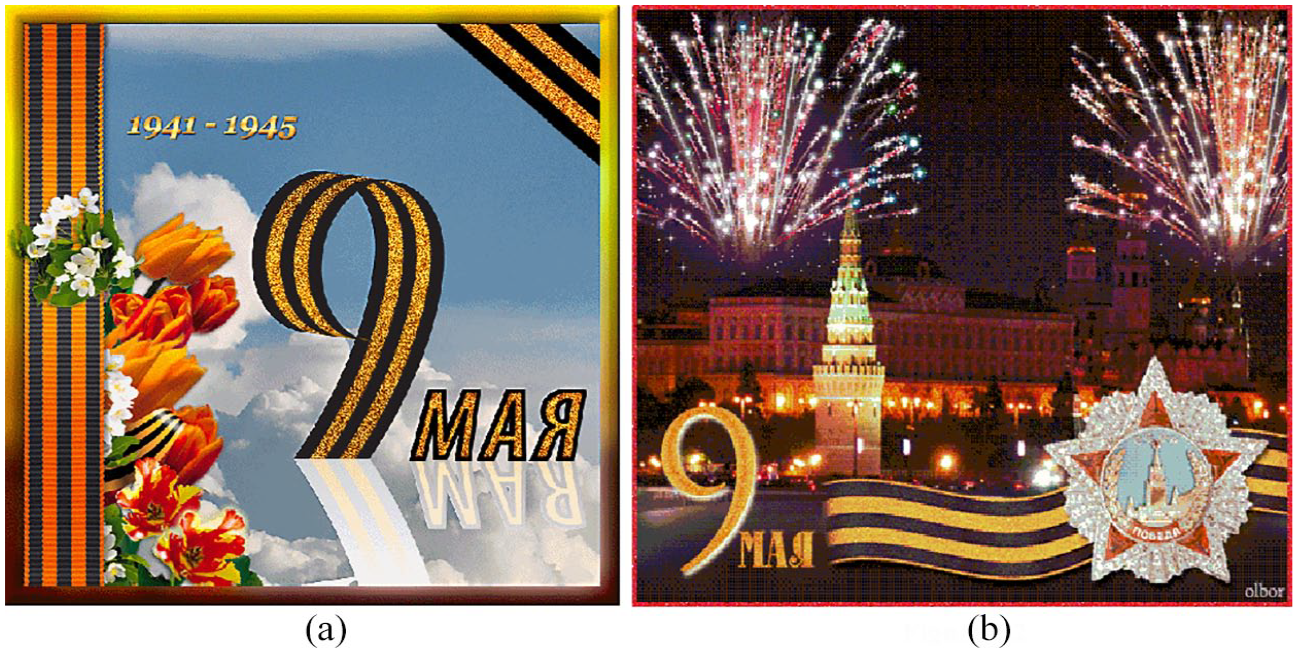
Examples of E-cards (positive sentiment).
Despite the focus on festivities and military glory, a number of E-cards also offered a more nuanced view on the past. By articulating the human price of the Victory (usually by showing monuments and symbolic expressions of sadness), these cards related to a narrative that differed from the sanitized official story of heroism and renown. E-cards with mixed or negative sentiment expressed more humanized views on the war originating from criticism of the official Soviet narrative during Perestroika and grassroots memory practices from the first post-war years. While not necessarily agonistic to the Great Patriotic War narrative, these E-cards challenged the authorities’ appropriation of war remembrance and offered an alternative interpretation of Victory Day.
Figure 2 shows two examples of cards with negative and mixed sentiment. Figure 2(a) (negative sentiment) shows a gloomy landscape ravaged by an animated storm. The card exhibits several symbols of sorrow such as a glass of vodka topped by a piece of bread (an attribute of Russian funeral feasts) and a flock of cranes, a reference to the poem by Gamzatov about soldiers’ souls turning into cranes. This ensemble of symbols reinforces the slogan – ‘Nobody is forgotten, nothing is forgotten’ – and articulates the importance of remembering losses and sacrifices made to achieve Victory.
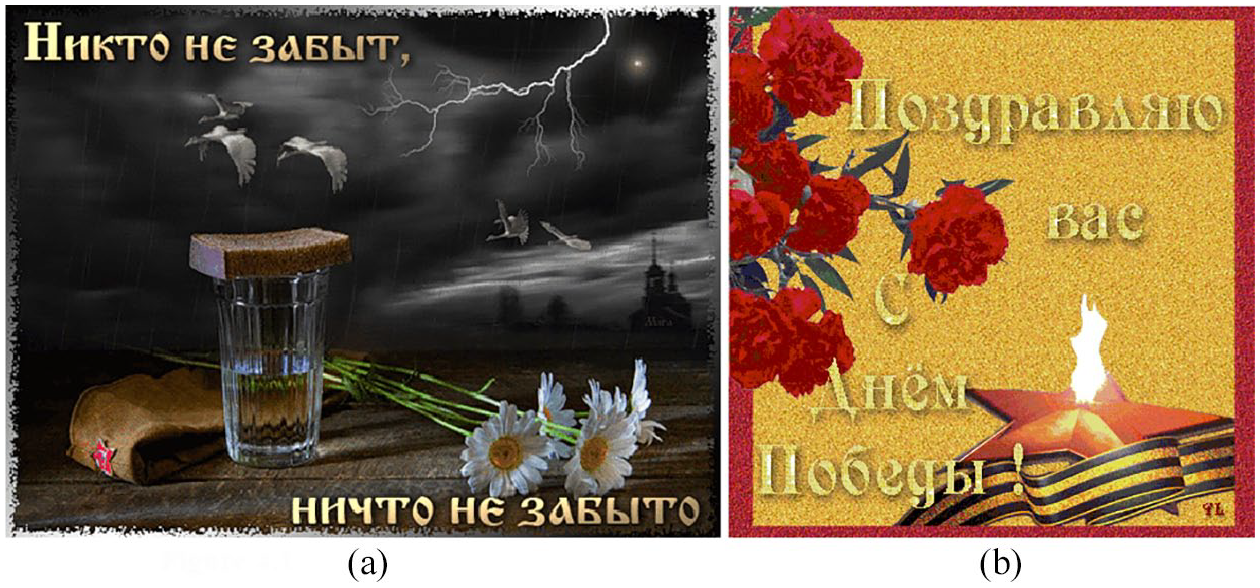
Examples of E-cards (negative and mixed sentiment).
Figure 2(b) (mixed sentiment) also emphasizes the heavy toll of the Victory. The signature – ‘Greetings on Victory Day’ – does not differ much from the signatures on the E-cards in Figure 1; yet, the combination of visual elements makes its message more nuanced. Besides mainstream elements such as the St George’s ribbon and carnations, the card exhibits the image of the Eternal Flame which emphasizes the losses suffered by the Soviet Union. This tendency to combine festive signatures with reminders about sacrifices made for the Victory is common for E-cards with mixed sentiment and differentiates them from the cards focused exclusively on the military glory.
Thematic elements
Table 3 shows that the most common thematic elements were related to the mainstream memory practices; examples include different sorts of flowers, St George’s ribbons and Soviet symbols, in particular red stars and red banners (71%) (see Figure 1). In combination with the large number of cards showing military awards (52%) and human actors (44%) – two common elements of public celebrations of Victory Day – these observations suggest that the selection of thematic elements mostly reflected established practices of war remembrance.
Thematic elements (by sentiment).
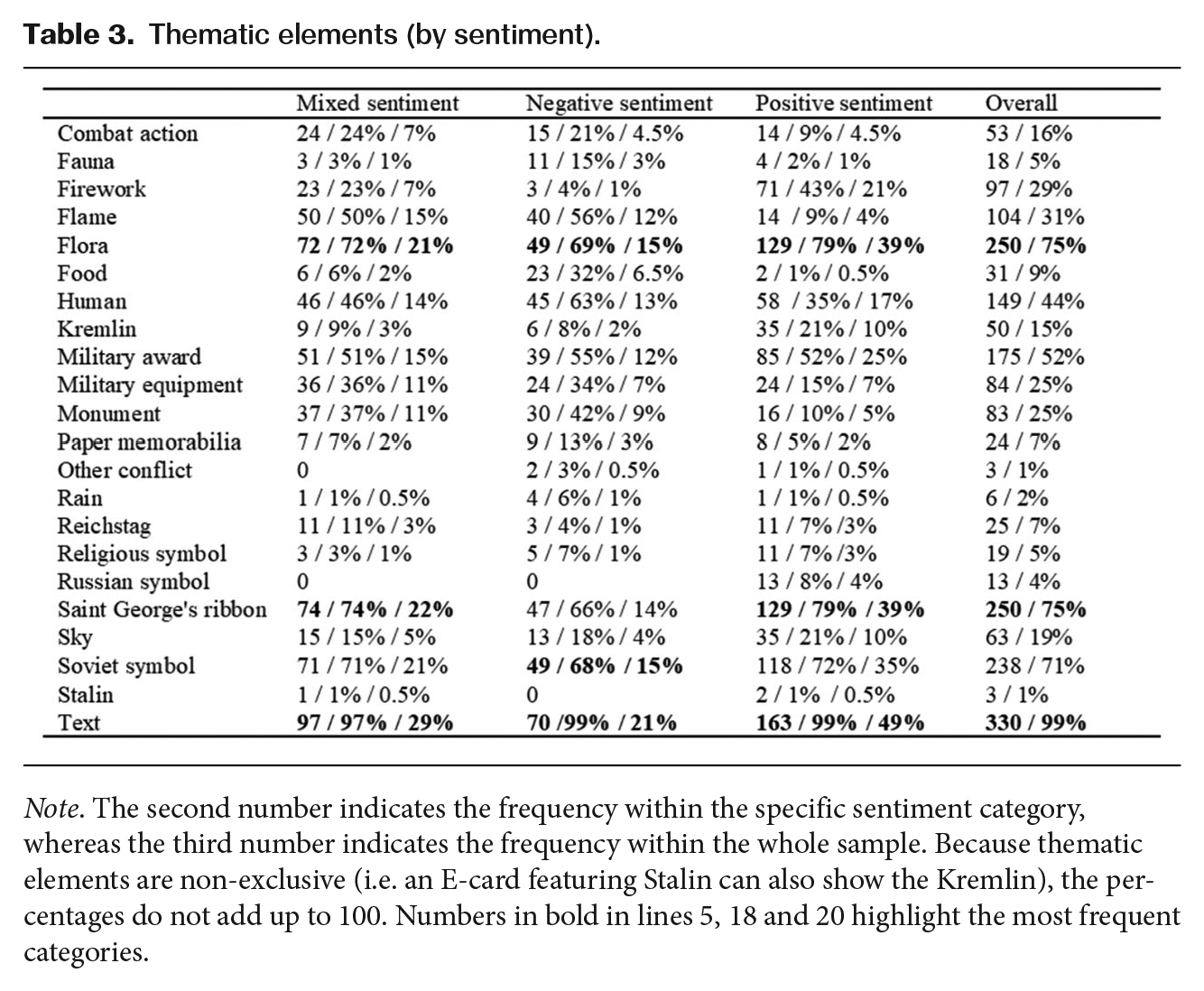
Note. The second number indicates the frequency within the specific sentiment category, whereas the third number indicates the frequency within the whole sample. Because thematic elements are non-exclusive (i.e. an E-card featuring Stalin can also show the Kremlin), the percentages do not add up to 100. Numbers in bold in lines 5, 18 and 20 highlight the most frequent categories.
The distribution of thematic elements also pointed out the persistence of Soviet memory symbols that can be attributed to the post-Soviet nostalgia among Russian web users (Bernstein, 2016). The comparison indicated a dramatic gap between the Soviet (71%) and Russian (4%) symbols with the latter being mostly represented by the Russian flags (see Figure 3). Similar to Figure 3(b), where the Order of the Patriotic War is located between the Soviet and the Russian flags, images with Russian symbols often combined them with Soviet symbols to emphasize the continuity between the Soviet Union and Russia.
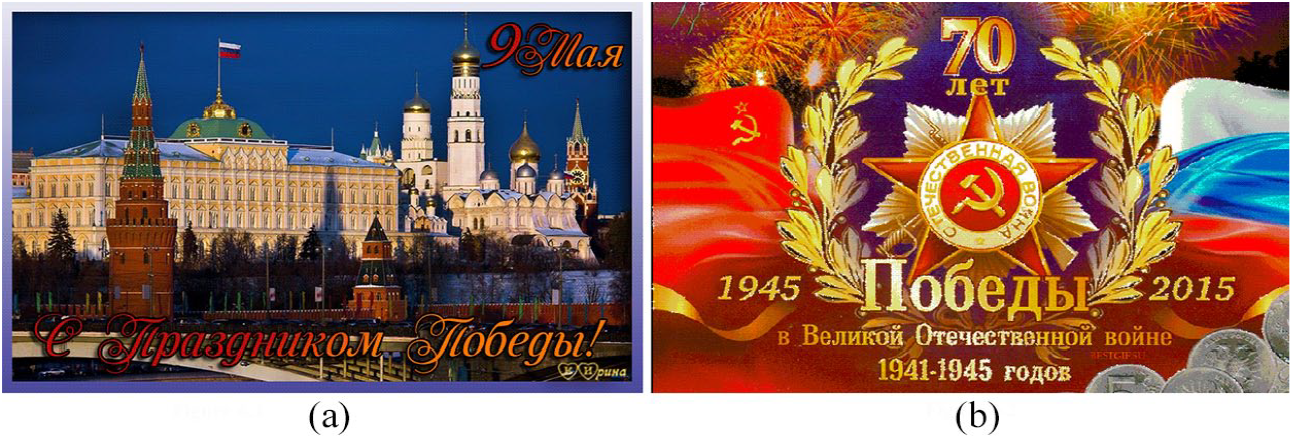
Examples of E-cards (Russian symbols).
Figure 3(a) showing only a Russian flag above the Kremlin is a rare exception from this rule: like other images with Russian-only symbols, this E-card puts an emphasis on symbols that can be associated with pre-Soviet times (e.g. the Russian Empire’s coat of arms) and shows the Kremlin. Such a combination can be related to Putin’s politics of use of the Second World War memory and decoupling it from the Soviet symbols (Reese 2018). The number of such E-cards, however, is rather low, which can be explained by a limited acceptance of such a manipulative approach by E-card makers.
Despite the increasing appropriation of Second World War memory by the Orthodox Church (Wood, 2011), the use of religious symbols (5%) was limited to the occasional images of churches. Unlike exclusively positive E-cards with Russian symbols that aligned them with the manufactured use of the Victory for consolidation and mobilization of the Russian society, cards with Orthodox Church symbols (Figure 2a) were also used to communicate more nuanced interpretations of the war, including ones focused on sorrow and loss.
The lack of recognition of recent memory developments was also reflected in the low number of references to other conflicts (1%). Among them, two E-cards referred to the Soviet–Afghan war (by reproducing the scene from The 9th Company movie with the soldier crying on a poppy field, see Figure 4a) and one card referenced the worsening geopolitical relations with the United States (by showing a group of Russian soldiers raising the flag above a burning White House, see Figure 4b). However, we did not find any references to the conflict in Eastern Ukraine or the war in Syria, two conflicts in which Russia is currently involved.
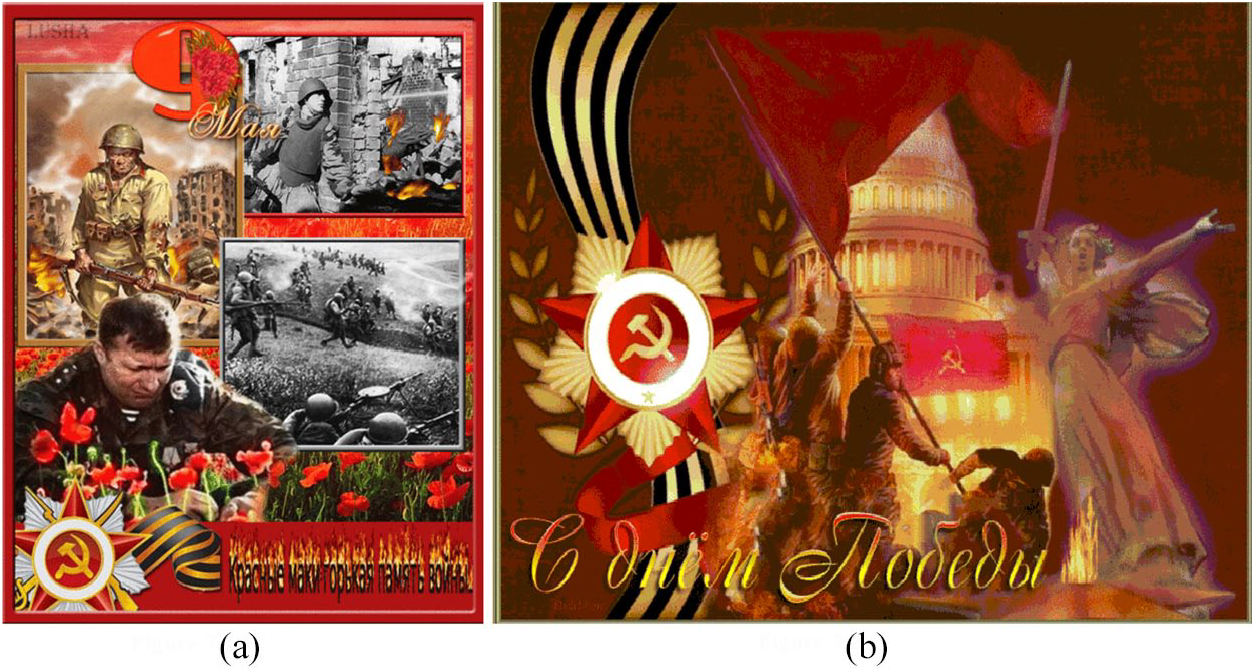
Examples of E-cards (references to other conflicts).
While the use of mainstream commemorative symbols was common for all categories of E-cards, the visibility of other thematic elements varied. E-cards with positive sentiment showed elements related to the official celebrations, such as fireworks (43%) and the Kremlin (21%) more often and were the only category showing Russian symbols (8%). Two out of three images of Stalin were also found on E-cards with positive sentiment; in line with the recent resurgence of Stalin’s popularity in Russia (Lipman, 2013), these cards presented him as a fatherly figure, greeting veterans of the Great Victory (Figure 5).
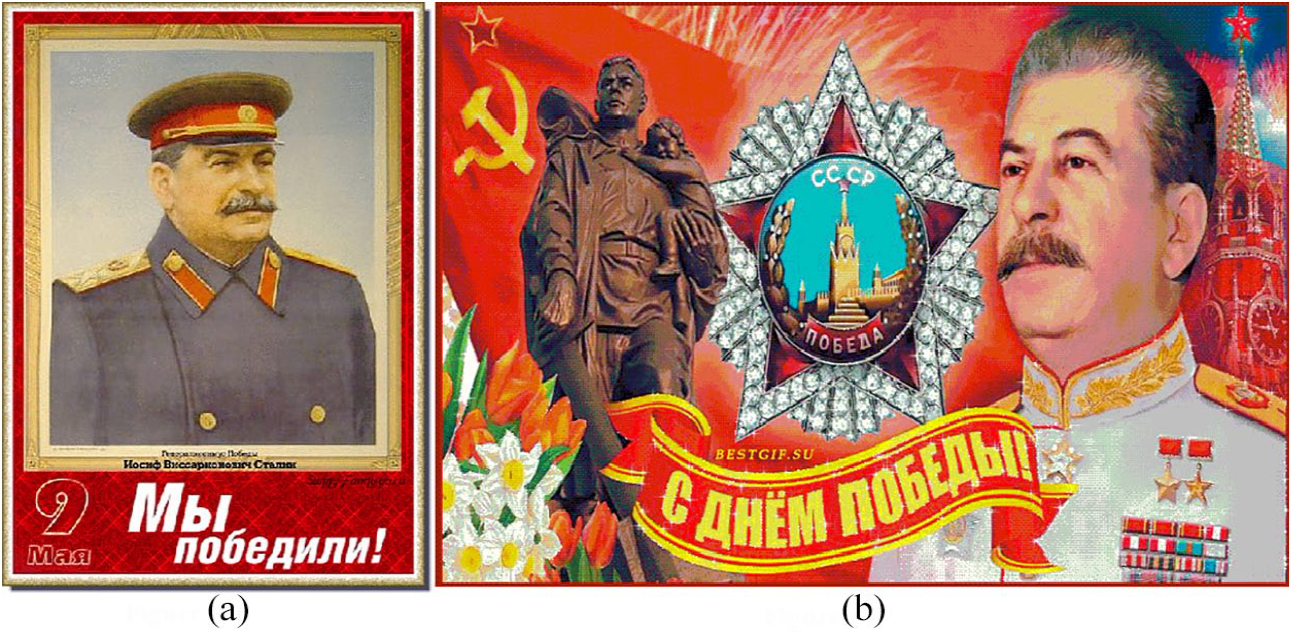
Examples of E-cards (Stalin images).
E-cards with negative and mixed sentiment focused on human actors (63% and 46%), military equipment (34% and 36%) and combat action (21% and 24%). The frequent presence of violence-related elements (e.g. soldiers and weapons) was supplemented with higher visibility of its tragic consequences such as monuments (42% and 37%) and flames (56% and 50%) (see Figure 2b). The presence of fauna such as cranes symbolizing dead soldiers and food used for funeral feasts was also more common among the cards with negative sentiment.
Our analysis indicated the presence of two major narratives of Victory Day. The first focused on official memory practices and promoted a glorified narrative of the Victory, which usually omitted traumatic experiences of the war. Instead, festive aspects of Victory Day were emphasized using a set of symbols that mostly originated from Soviet times. The second narrative focused on the war itself, showing episodes of fighting and the human cost of the violence. By doing so, it exposed the selective nature of official memory practices and highlighted the aspects of the Victory that were omitted to further authorities’ agendas.
Human actors
Table 4 indicates that the majority of E-cards showed males in their 20s and 30s. These males were almost exclusively attractive white individuals wearing military uniform. This focus on these idealized images of Soviet soldiers was accompanied by rare appearances of females, who were usually shown in a passive role, for example wives anticipating the return of their husbands. These females again were mostly white and young individuals, even while a few E-cards also invoked the mother archetype by showing older women.
Human actors by gender and age.
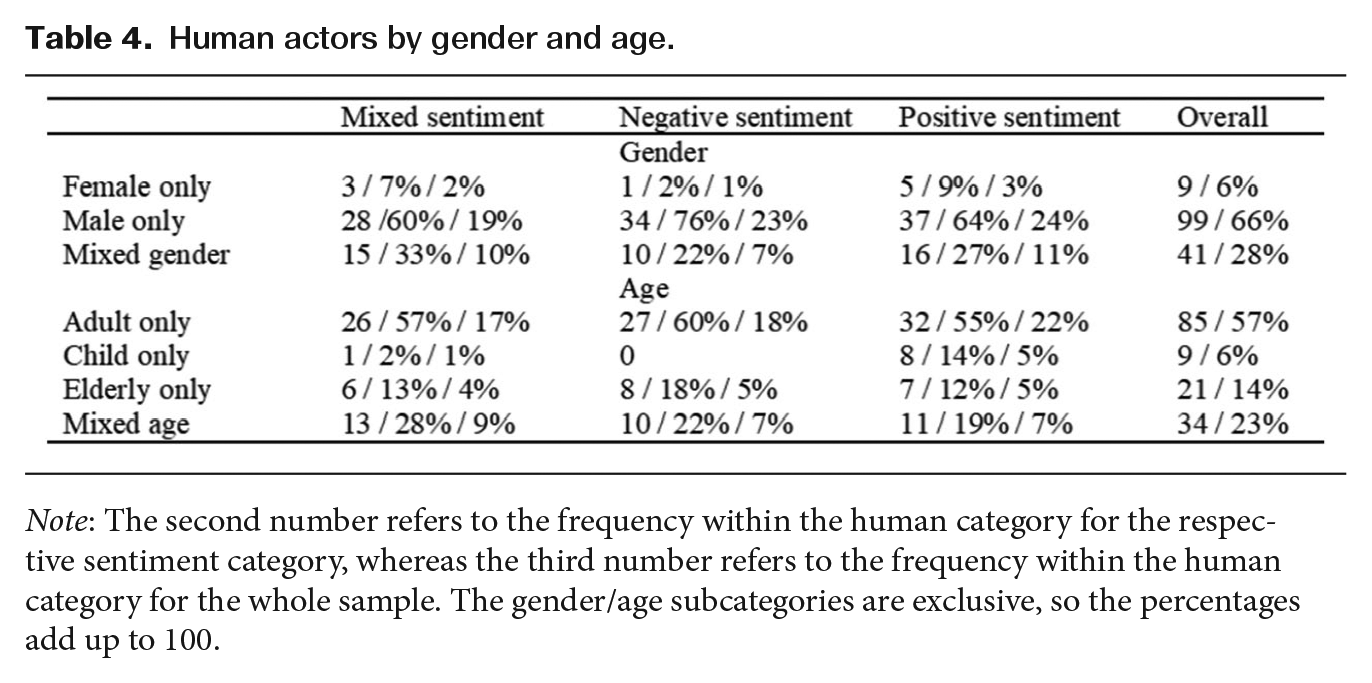
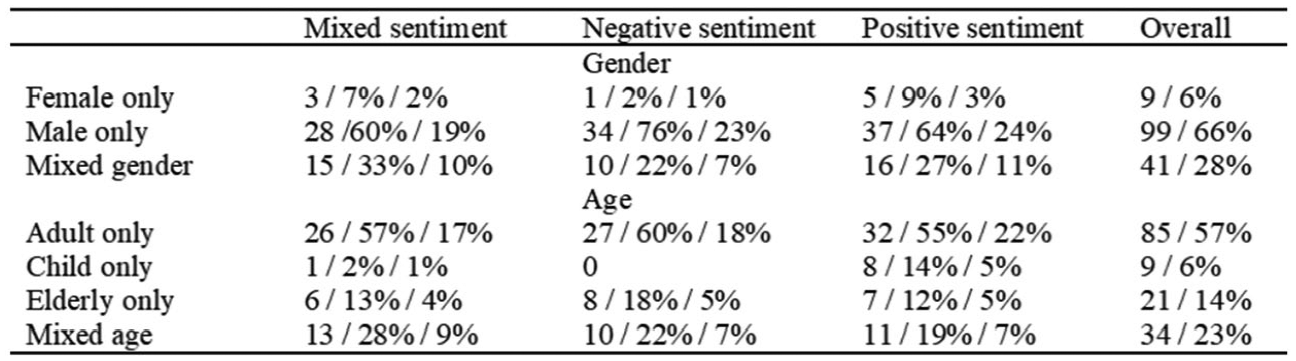
Note: The second number refers to the frequency within the human category for the respective sentiment category, whereas the third number refers to the frequency within the human category for the whole sample. The gender/age subcategories are exclusive, so the percentages add up to 100.
This rather stereotypical portrayal of human actors re-appropriated and amplified the hegemonic narrative of the Second World War as a story of white Slavic males’ heroism. It ignored the complex ethnic composition of the Red Army (Daugherty, 1993) and the significant contribution of women to the war effort (Nikonova, 2005). Two cards exemplifying this narrative of glorious masculinity which became particularly pronounced after Putin’s rise to power are shown in Figure 6.
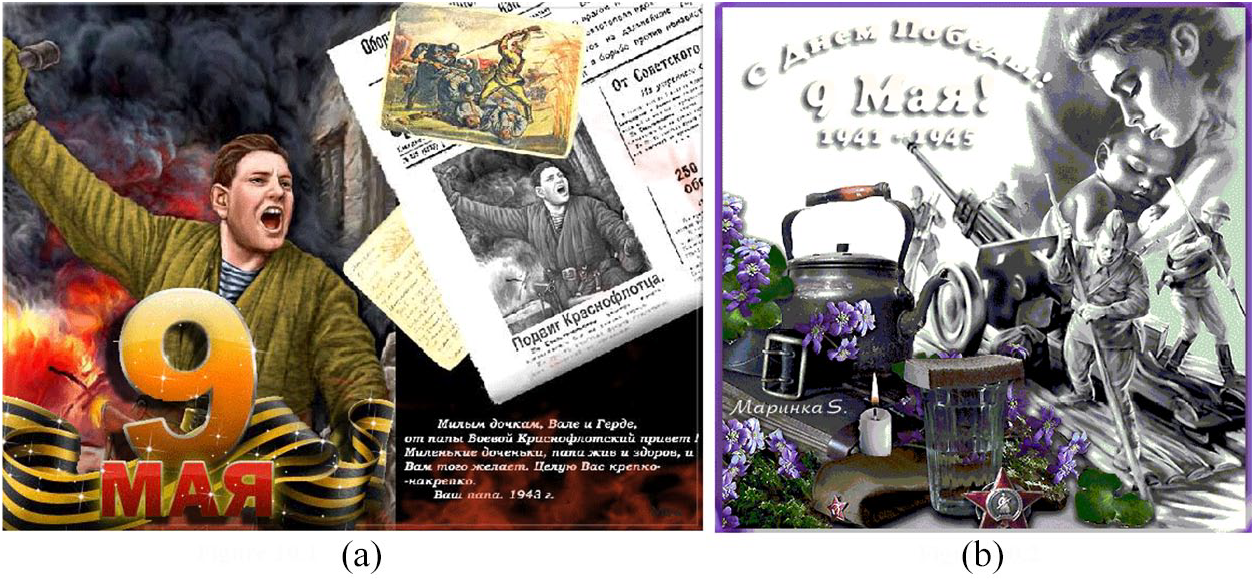
Examples of E-cards (gender of human actors).
Figure 6(a) shows a young white man in the midst of battle. The animation is used to make the man’s arm move, imitating a grenade throw; additionally, the fires engulfing the man are animated. The card’s signature emphasizes that the man is not only a courageous fighter (the newspaper’s title reads ‘The heroism of the Soviet Navy fighter’), but also a good father (the block of text in the bottom right corner exhibits a brief in which he wishes his daughters all the best).
Figure 6(b) adopts a similar stance, showing male soldiers in the midst of a combat operation. Above them is an image of a young woman with a child, a reference to wives and mothers waiting for males at home. The mood of this E-card is far from being a festive one as a number of its elements articulate the sorrow (e.g. a glass of vodka with a piece of bread on it and a candle). The positioning of the woman above the soldiers can be read as a reference to the Virgin Mary looking down at the soldiers from heaven. Yet, despite this more nuanced interpretation of the cost of Victory, the E-card still articulates a stereotypical distinction between males fighting for the Motherland and women waiting for their return.
Despite a few cards showing women in military uniform (none of them, however, showed women in combat), the majority of E-cards articulated stereotypical gender roles independently of their sentiment. At the same time, we also noted some minor differences between sentiment categories. E-cards with negative sentiment showed images of adult male human actors (i.e. Soviet soldiers) and elderly actors (i.e. Soviet veterans participating in the commemorative ceremonies; Figure 7b) more often. In contrast, E-cards with positive sentiment often showed joyful children (Figure 7a) to emphasize festive aspects of the Victory Day and paint a brighter image of the war’s aftermath.
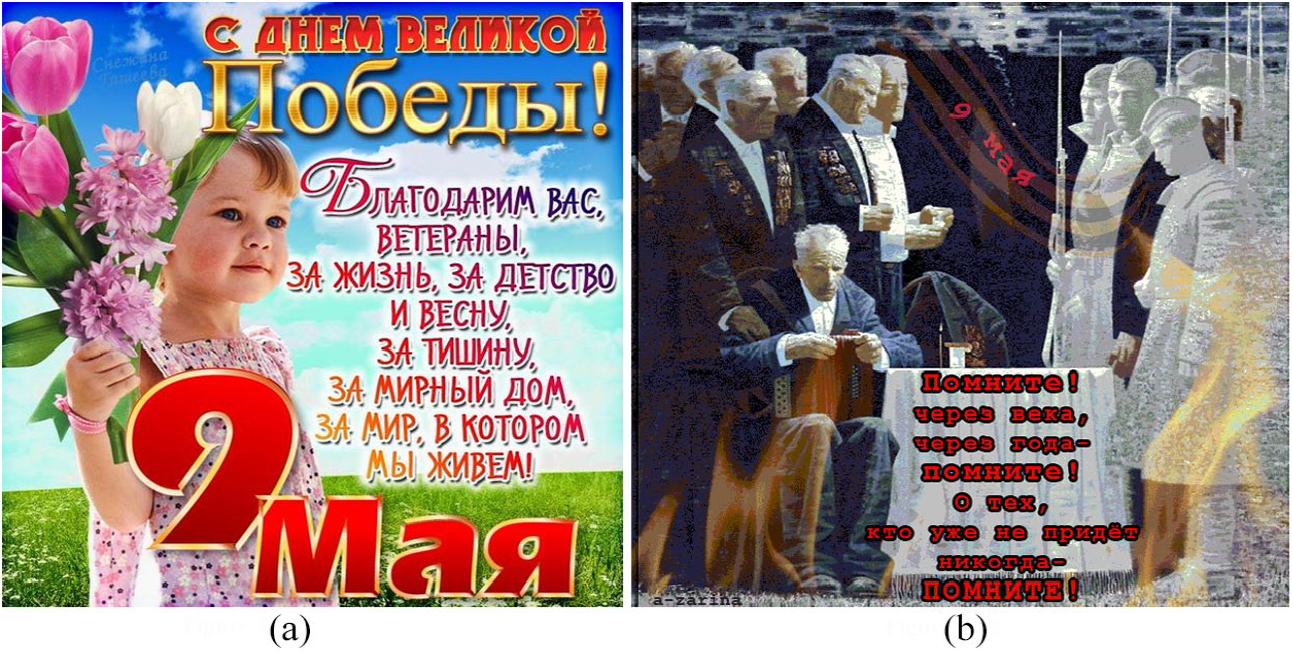
Examples of E-cards (age of human actors).
Flora
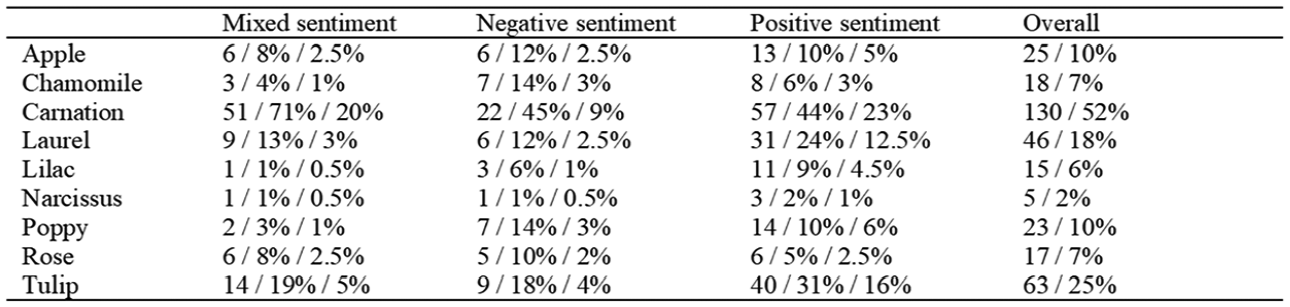
Similar to human actors, our examination of flora indicated the predominant use of stereotypical elements associated with mainstream memory practices. Table 5 shows that more than half of all cards with floral elements included carnations, the main floral symbol of Victory Day in Russia (Figures 1a and 2b). Originally symbolizing soldiers’ blood, over the years carnations became associated with official memory practices emphasizing Soviet glory. The frequent use of laurels (Figure 3b) can also be attributed to them being a symbol of military triumph, whereas tulips are increasingly appropriated for official memory practices as symbols of ‘happiness and joy’ (‘Vechnyi ogon’ i tsvetok tiulpana’, 2016). The frequent use of tulips can also be explained by their visual similarity to the Eternal Flame, another mainstream symbol of the Second World War in Russia.
Flora (by type).
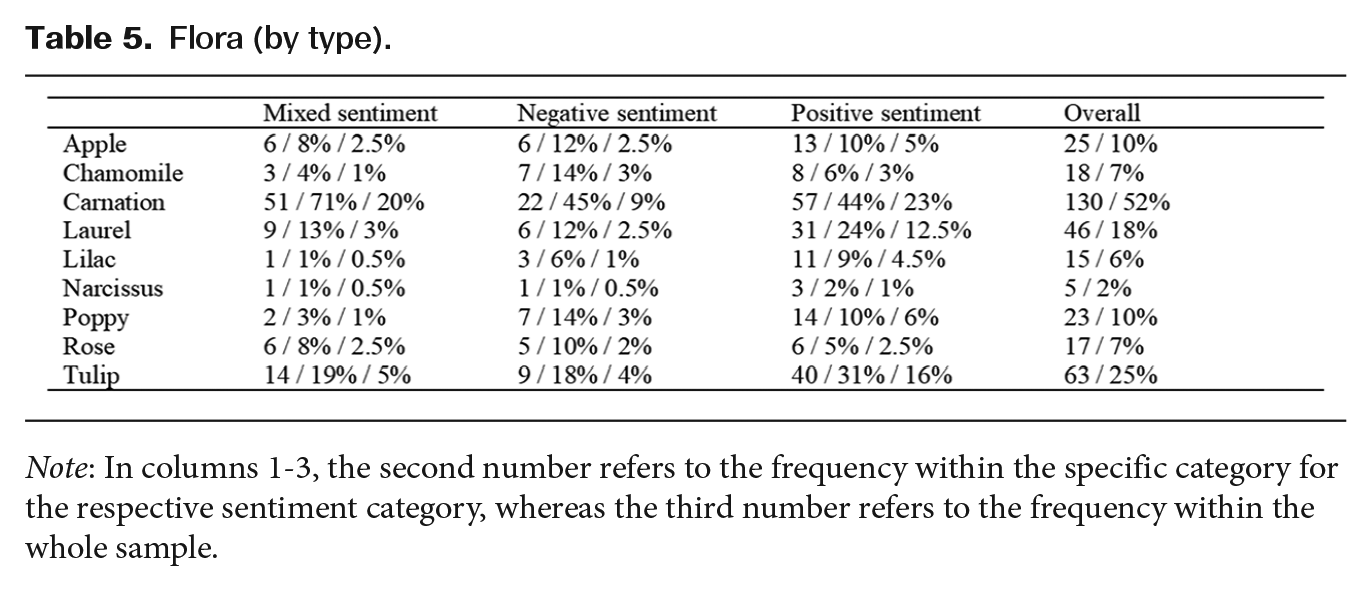
Note: In columns 1-3, the second number refers to the frequency within the specific category for the respective sentiment category, whereas the third number refers to the frequency within the whole sample.
The other floral elements were mostly related to different spring blossoms such as apple or lilac (Figure 6b) traditionally associated with hope and revival. The major exception was represented by poppies, which symbolize death and remembrance of war victims. While poppies appeared most frequently on E-cards with negative sentiment (Figure 4a), they were also present on many cards with positive sentiment. In the latter case, poppies seemed to be used as a replacement for carnations, being frequently combined with the Russian symbols. Overall, the use of floral elements beside the mainstream ones seemed to show little variation between sentiment categories.
Text elements
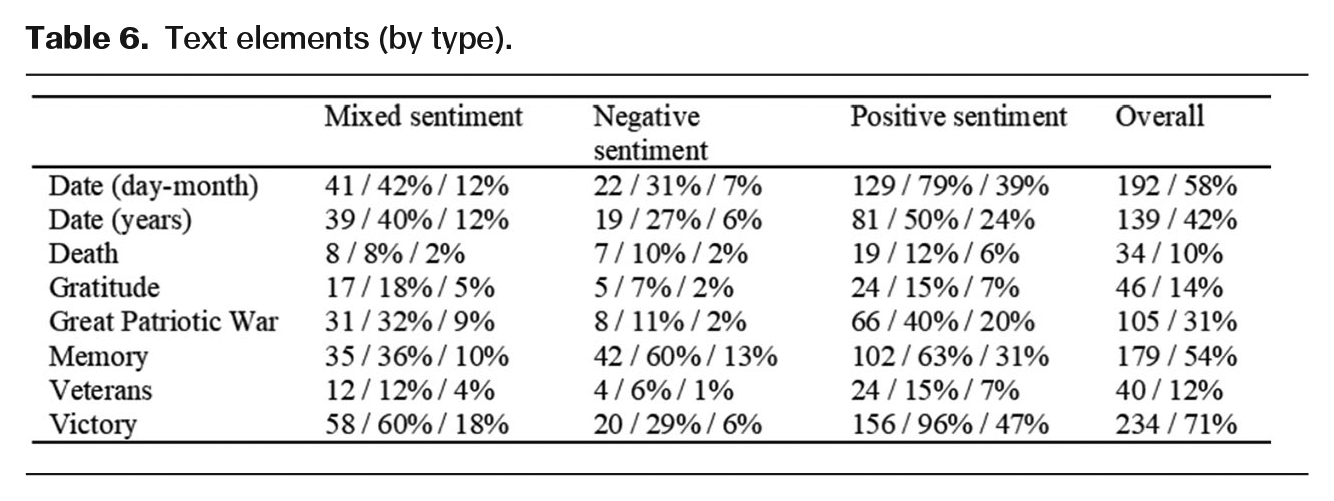
The use of text elements varied from one-line statements (e.g. ‘Congratulations on the Victory’; Figure 2b) to extensive messages reproducing popular cultural products (e.g. songs by Okudzhava, Figure 8a). Table 6 indicates that elements mentioning the Soviet victory were the most common ones; usually, they were represented by a single word ‘victory’ or slightly lengthier statements (e.g. ‘Glory to the Great Victory’). Temporal indicators such as the ones specifying the date of the Victory (‘May 9’, Figure 1a) or the year of the German–Soviet war (‘1941–1945’, Figure 8b) were also common. The large number of E-cards referred to memory; such references varied from slogans of state-sponsored commemorative campaigns (e.g. ‘Nobody is forgotten, nothing is forgotten’, Figure 2a), to more personalized statements (e.g. ‘I live and remember’, Figure 8b).
Text elements (by type).
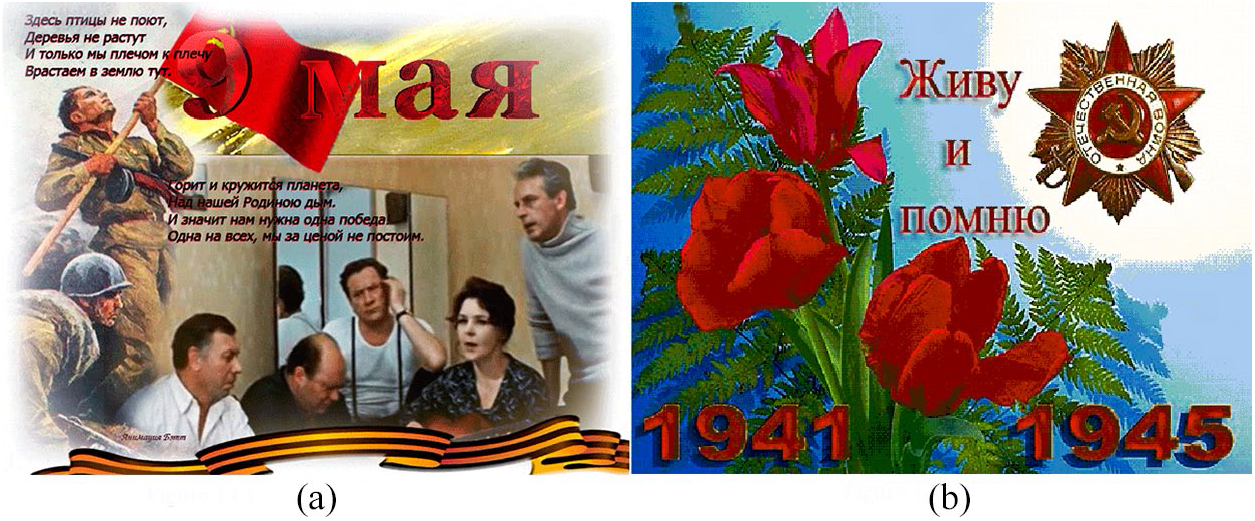
Examples of E-cards (text elements).
Similar to the general distribution of thematic elements, we observed differences in the use of text elements by E-cards of different sentiment. The E-cards with negative sentiment referred to victory significantly less often than the cards with mixed and positive sentiment; the same was true for references to the Great Patriotic War. Instead, the majority of cards in this category mentioned memory, which relates to our earlier suggestion about the emphasis on war remembrance common for this category in contrast to a focus on war celebration. At the same time, the E-cards with negative sentiment included less mentions of veterans (e.g. ‘For you, veterans!’) and expression of gratitude (e.g. ‘Thank you for the Victory, grandpa!’) compared with the other two categories.
Animation of the Soviet victory
Animated elements
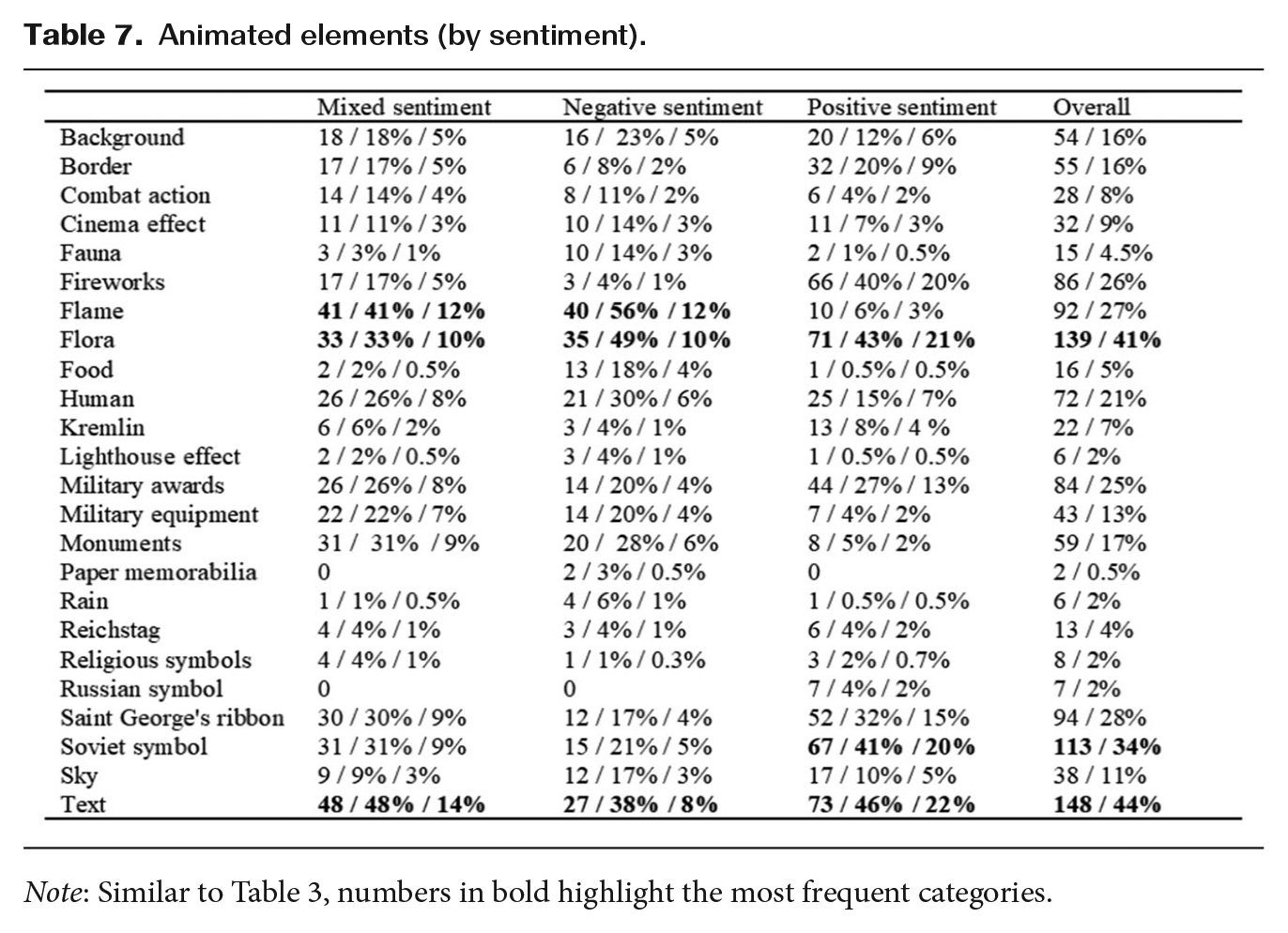
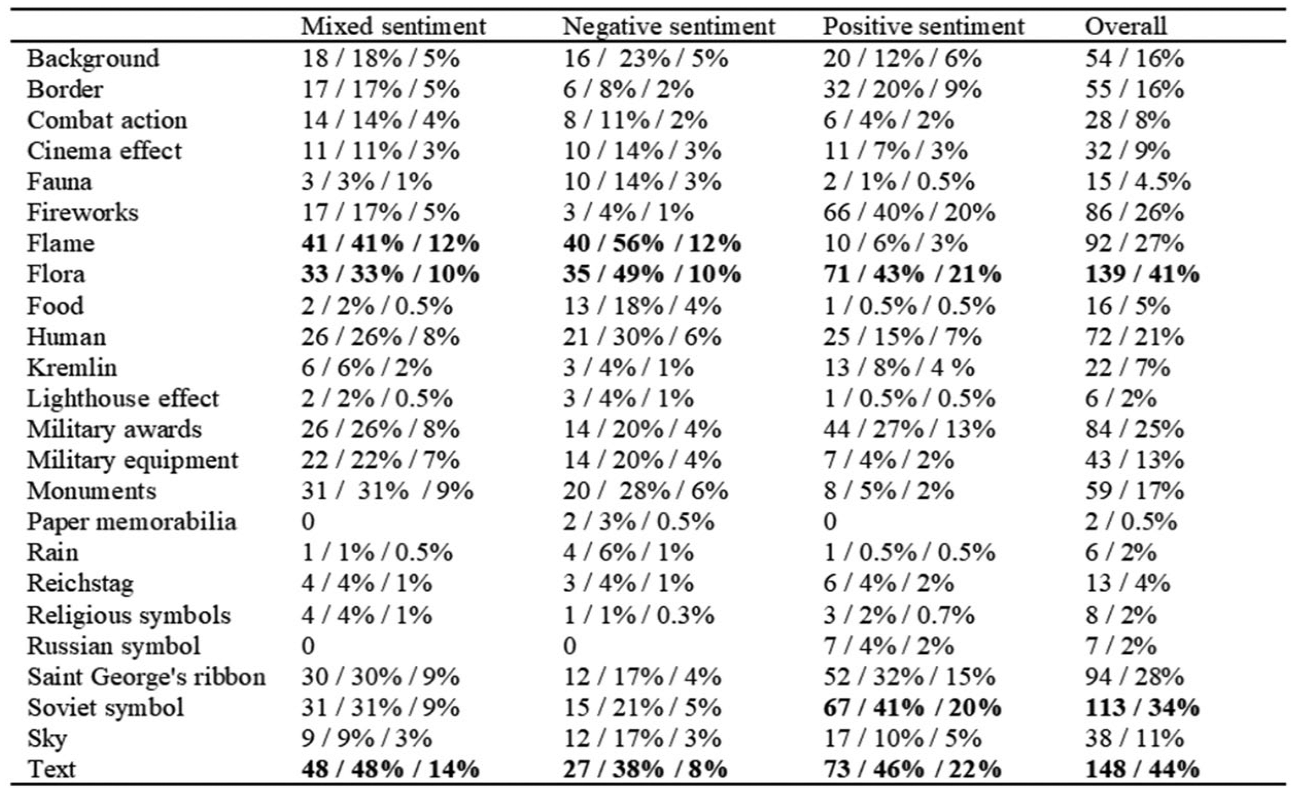
Table 7 shows that the most common thematic elements were also the ones animated most frequently: these elements included texts, flora and Soviet symbols. The prevalence of these elements suggests that animation often served as a means of strengthening hegemonic narratives by highlighting and emphasizing elements of mainstream memory practices (e.g. red stars and carnations). The frequent use of such elements for designing E-cards already made them highly visible and through the use of animation effects such as glimmering of awards (Figures 1, 3 and 5) or movement of human figures (Figure 7b) their visibility was further increased.
Animated elements (by sentiment).
Note: Similar to Table 3, numbers in bold highlight the most frequent categories.
At the same time, the distribution of animated elements indicated the lesser divide between more and less frequent categories compared with the gap between most/least common thematic elements. In contrast to thematic elements, where some elements appeared on more than 70 percent of all E-cards (e.g. flora), none of the animated elements appeared on more than 44 percent of all cards. Such a change can be attributed to technical limitations such as availability of animation filters determining what can be animated; however, it also can be explained by more diverse perspectives on the role of animation, resulting in its less monotonous use.
While the frequency of animated elements was on average two times lower than the frequency of the respective thematic elements, our observations indicate that some elements (e.g. fireworks, flame, food) were almost always animated. The majority of such elements (e.g. flame, food, fauna) were particularly common on the E-cards with negative/mixed sentiment; this observation can indicate that these elements were initially included because of their potential as visual metaphors, which is another frequent function of animation (Landesman and Bendor, 2011).
Animation functions
After examining the distribution of animated elements, we focused on the functions performed by them. Table 8 indicates that the entertainment function – i.e. making the image more attractive through the use of animation – was the most common one; examples of entertainment animations varied from glitter and sparkle added to the thematic elements such as flora or text to moving pieces of the image (usually floating letters). Our observations suggest that this function was often used to highlight mainstream commemorative symbols (e.g. Soviet stars or military awards); by doing so, it reinforced hegemonic memory narratives by making these symbols more visible.
E-cards by the animation function.
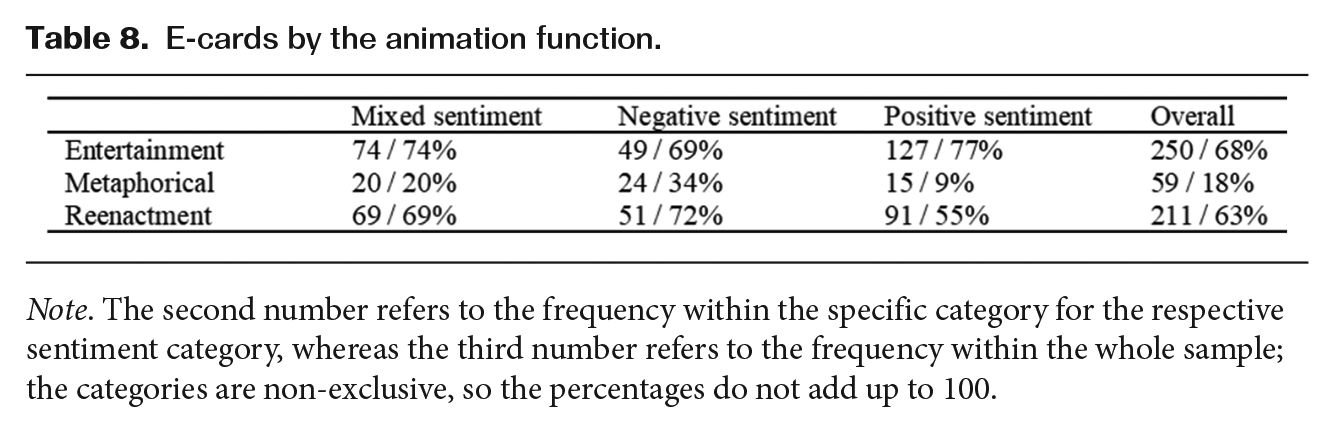

Note. The second number refers to the frequency within the specific category for the respective sentiment category, whereas the third number refers to the frequency within the whole sample; the categories are non-exclusive, so the percentages do not add up to 100.
The reenactment function – i.e. the reproduction of real-world phenomena such as moving humans or exploding fireworks – was the second most common function. Closely aligned with the creation of the ‘illusion of life’ (Silvio, 2010), this function contributed to the immersive effect of E-cards. Through the reproduction of qualities associated with human activities (e.g. celebrating or mourning), the E-cards provided more engaging user experience and offered a reconstruction of reality, including underlying relations of historical power and resistance. The representation of these relations varied between the reenactment of festive rituals (e.g. fireworks exploding over the Kremlin, Figure 1a), which reinforced the official war discourse, to the projection of somber aspects of collective violence (e.g. soldiers crying near the graves of their comrades, Figure 7b), which undermined the exclusive association of the victory with triumph and joy.
The last function concerned the use of animation for producing visual metaphors. Instead of reproducing real life phenomena, the metaphoric function allows E-cards to create the reality of their own and illustrate phenomena that are hard to visualize otherwise, such as imagination and affect (Landesman and Bendor, 2011: 354). As Table 8 indicates, this function was rarely present among E-cards with positive sentiment; a few examples involved the addition of sunshine effects to the Soviet symbols floating in the sky to emphasize their glorious meaning (see Figure 9b). In contrast, E-cards with negative sentiment employed this function more often: one common example included adding the flame filter to make thematic elements look as if they are burning (Figure 6a). In this way, these E-cards emphasized suffering and destruction related to the Soviet victory and problematized the sanitized portrayal of the Second World War.
Animated elements by function
As Table 9 indicates, in the case of the entertainment function, the most frequent thematic elements (e.g. Soviet symbols) were animated most often. The majority of these elements were also associated with official commemorative practices, which supports our earlier suggestion about the frequent use of animations of this category for reinforcing official war narratives by highlighting symbolic elements, which constitute an integral part of these narratives, and making these elements look more attractive. In this way, animation produced – often literally – the ‘dazzling effect’ (Foucault, 2003: 70) of historical power, which concentrates public attention on glorious aspects of the past, while shadowing undesired memories.
Animated elements (by function).
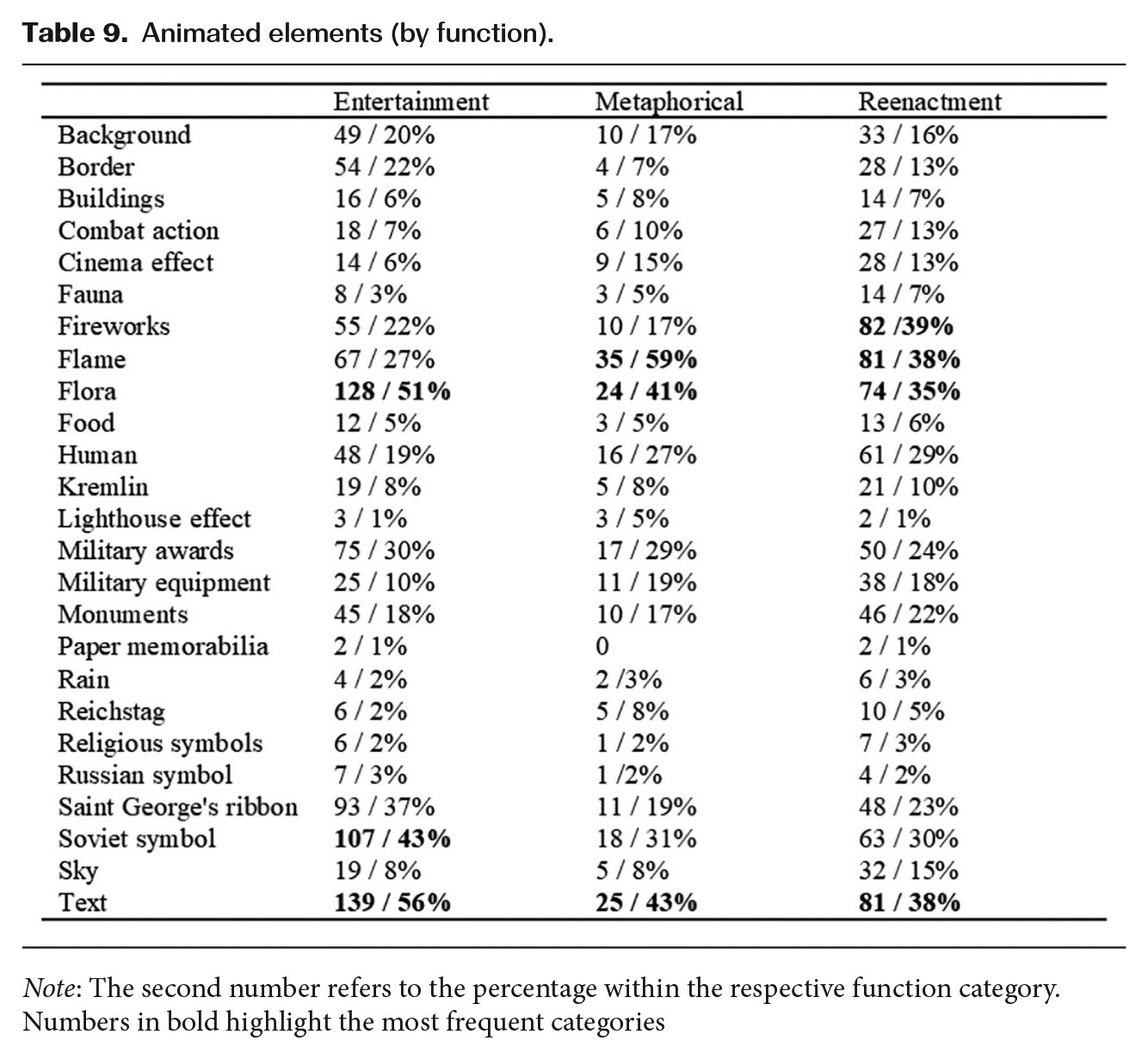
Note: The second number refers to the percentage within the respective function category. Numbers in bold highlight the most frequent categories
In the case of the reenactment function, animation was frequently used to create the illusion of movement (Silvio, 2010) for fireworks, flames and human actors (Figures 1a, 2b and 6a). The E-cards with this function also used animation in relation to sky and fauna more often compared with other functional categories. The distribution of real-life phenomena animated through these E-cards indicated a complex role of reenactment function: on the one hand, it facilitated the reconstruction of the festive reality of Victory Day focused on celebrating glory and military prowess (e.g. by reenacting firework explosions and pristine clouds moving across the blue sky). On the other hand, it broke the idyllic image of the Soviet victory by animating Eternal Flames and tears of mourning comrades and relatives.
The E-cards with the metaphorical function used animation for the thematic elements associated with official celebration of the Victory Day (e.g. fireworks, Saint George’s ribbons) less frequently. Instead, the most common animated element was flame. The metaphor of burning as a definitive aspect of the war and the Victory was the major one: its typical uses involved the addition of a burning filter to other thematic elements (e.g. text or Soviet symbols) or the image’s background to emphasize the destruction of war (see Figures 6a and 7b). Another example of animated elements used for creating visual metaphors is the lighthouse effect – i.e. the addition of a circling beam of light similar to a beacon (Figure 9a). Often used together with poppies and monuments, the lighthouse effect can be viewed as a reference towards the spiritual light guiding the souls of the fallen soldiers similar to the lighthouse at the Douaumont ossuary in France.
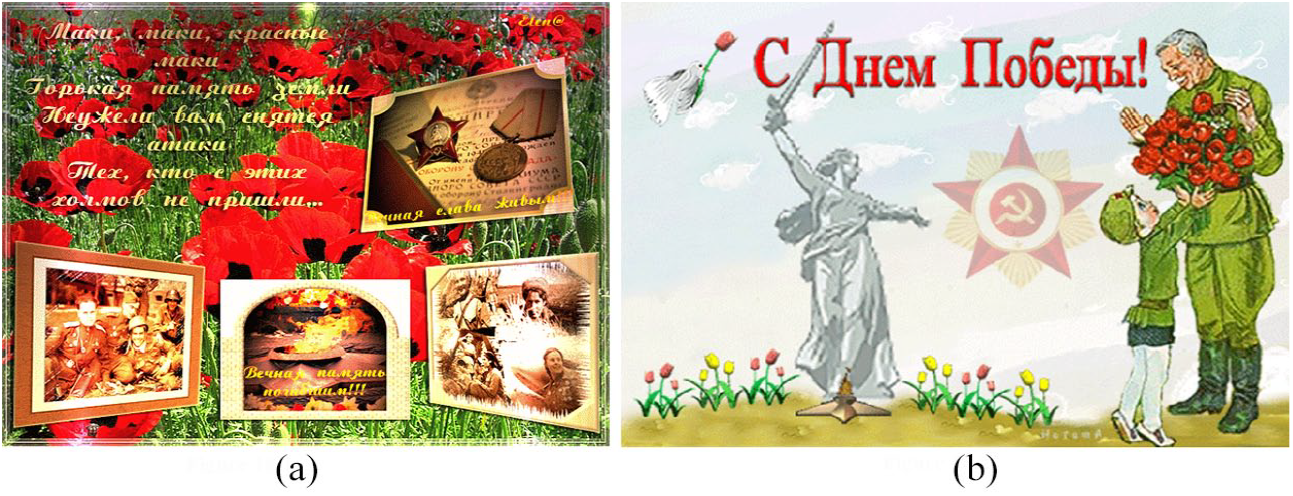
Examples of E-cards (metaphoric function).
Conclusions
Our analysis indicated that user-generated mnemonic content can serve as a potent means of resistance to hegemonic war narratives. By visualizing the human cost of the violence (e.g. by showing funeral ceremonies and grieving servicemen) and the gruesome sides of conflict (e.g. wounded soldiers in the midst of battle), these digital memory products filled lacunae in the sanitized war histories. In this way, amateur E-cards fulfill the main function of counter-memory and break ‘the continuity of glory’ (Foucault, 2003: 70), which is often instrumentalized for the mobilization and militarization of society
At the same time, a number of E-cards also reinforced hegemonic memories by reiterating their major premises (e.g. the focus on festive aspects of war commemoration) or disseminating symbolic elements associated with them (e.g. national symbols or military awards). Often, E-cards strengthened stereotypical images of the war which leads to the subjugation of alternative experiences and memories. An example of this is the representation of human actors, where E-cards tended to reproduce idealized images of white male soldiers, while omitting other ethnic or gender groups.
Our analysis also demonstrated the ambiguous role of web-based animation as a means of representing the past. Often, animation was used for adding lucid effects for purely entertainment purposes (e.g. to add sparkle to flowers), but it also expanded the possibilities for reproducing real-world phenomena (e.g. veterans kneeling in front of the Eternal Flame) or creating visual metaphors (e.g. by adding a flame filter to a celebratory signature to articulate the human price of Victory). All these functions have the potential to affect relations of historical power by highlighting, recycling and reformulating elements of (counter-)official memory discourses.
Together, our observations indicated that the use of amateur E-cards for commemorating past wars is a non-homogeneous process. Instead, it is driven by competition between official and counter-official power frameworks and influenced by increasingly sophisticated uses of computer graphics. Further studies are required to investigate the difference – or similarity – of interactions between digital cultural products and different hegemonic war narratives. Similarly, more research is required to trace how different power relations (e.g. between political, but also gender/ethnic groups) influence the representation of the past through E-cards.
While our findings suggest that E-cards can serve as a form of counter-memory, more research is needed to assess whether users actually employ them for this purpose. The representation of the past is just one aspect of the hybrid commemorative function of E-cards, which are used both as a public commentary on existing historical narratives and a form of interpersonal interactions on a public occasion. It is important to identify the individuals sending and receiving E-cards devoted to Victory and to what degree they perceive these cards as a form of resistance against hegemonic memory narratives. Such research is essential for clarifying the increasingly important role of user-generated digital products for cultural remembrance and scrutinizing the evolving ways of subjugation and resistance of historical knowledge worldwide.
Footnotes
Funding
The authors received no financial support for the research, authorship and publication of this article, and there is no conflict of interest.

Notes
Biographical Notes
MYKOLA MAKHORTYKH defended his PhD in 2017 at the University of Amsterdam. His dissertation examined the use of digital media for framing political and historical issues in Eastern Europe. Currently, he is a post-doctoral researcher at the Amsterdam School for Communication Research, where his research is focused on the personalization of news media and the impact of algorithmic biases on news consumption. In his recent work, he has also explored interactions between social media and propaganda during the Ukraine crisis and the use of digital media for securitization of the conflict in Eastern Ukraine.
Address: Amsterdam School for Communication Research, University of Amsterdam, Nieuwe Achtergracht 166, Amsterdam 1018 WV, The Netherlands. [emails:
MARYNA SYDOROVA is an Amsterdam-based data analyst, who is currently working as an independent social media expert, and information and communication technology specialist. In recent years, she was involved in a number of research projects dealing with digital trauma in Eastern and Central Europe. Her major area of expertise is audience/interest metrics and her current research is focused on the digital representation of war and conflict in post-socialist states.
Address: Independent scholar, Amsterdam, The Netherlands. [email: