



Abstract
Despite the consensus in the literature that design thinking practices spark innovation, research has yet to examine the creative confidence outcomes of design thinking practices. Integrating the Resource-Based Theory and the Componential Theory of Creativity, we hypothesised a parallel mediation model in which design thinking practices are associated with creative confidence via collaboration and diversity, and creativity. Based on a sample of 419 tertiary students in a Ghanaian University, it was found that design thinking facilitates students’ creative confidence. Also, collaboration and diversity partially mediate the relationship between design thinking and creative confidence. The study also found support for the mediating effect of creativity. The findings underscore the importance of integrating design thinking principles into educational curricula to cultivate a culture of innovation and prepare students for the challenges of the 21st-century workforce.
Introduction
In today’s rapidly evolving world, innovation stands as a critical driver of economic, technological, and societal progress (Schröder & Krüger, 2019). As industries undergo continuous transformations, the ability to generate novel ideas, solutions, and products has become indispensable for individuals and organisations alike (Anshari & Hamdan, 2022). For example, design thinking practices (DTP) have revolutionised product development in the tech industry, with companies like Apple leveraging these principles to create user-friendly products such as the iPhone and iPad, setting new benchmarks in consumer expectations and market standards.
Education plays a pivotal role in shaping the creative confidence of future professionals (Al-Husseini et al., 2021). DTP, characterised by its human-centred problem-solving approach, has gained prominence as an effective methodology for fostering creativity and innovation (Romero & Donaldson, 2024). Universities and design schools have integrated DTP into their curricula to empower students with the skills necessary to tackle complex challenges (Clark et al., 2020). Stanford University, renowned for its DTP programmes, exemplifies this approach, where students engage in hands-on projects to address real-world problems using DTP principles. Recent studies have highlighted the transformative impact of DTP across product, service, process, and strategy development contexts (Vendraminelli et al., 2023).
Despite the growing consensus on the efficacy of DTP in improving student innovativeness (Baričević & Luić, 2023; Velu, 2022), a significant gap remains in understanding the mechanisms that facilitate the transformation of DTP into tangible outcomes. While existing research highlights DTP’s positive influence on enhancing students’ problem-solving abilities and empathy (Kaygan, 2023; Kim et al., 2023), empirical examination of creativity, and collaboration and diversity as possible mechanisms remain scarce in the literature. This omission is critical, as creativity and collaboration are known to significantly contribute to students’ creative confidence (Alt et al., 2023; Iddris, 2025; Iddris et al., 2024).
This study aims to fill this knowledge gap by investigating how DTP influences students’ collaboration and diversity, and creativity thereby shaping their propensity to exhibit creative confidence. The research is underpinned by the Resource-Based View (Barney, 1991; Penrose, 1959) and Amabile’s (1993) Componential Theory of Creativity as the theoretical frameworks. The Resource-Based View explains how DTP provides students with essential resources—such as knowledge and skills—that foster creative confidence. Moreover, it offers insights into how these resources influence students’ creative abilities and their capacity to collaborate with diverse peers, thereby explaining the DTP and creative confidence relationship. Amabile’s Componential Theory of Creativity, on the other hand, explains how DTP cultivates students’ creativity by refining domain-specific skills and facilitating structured processes for idea generation and evaluation. It also guides the exploration of how these practices influence students’ intrinsic motivation to engage in creative confidence.
This study contributes significantly to existing literature and theory in two main ways. First, it extends current research on the outcomes of the DTP approach by examining students’ creative confidence and identifying crucial explanatory mechanisms. Second, it integrates two theoretical perspectives: Resource-Based Theory and Componential Theory of Creativity to unravel the relationships between DTP, collaboration and diversity, creativity, and resultant creative confidence among students. By addressing this empirical gap, the study aims to provide evidence-based insights that can inform educational strategies, curriculum development, and instructional approaches aimed at equipping students with the requisite skills to thrive in a rapidly evolving, innovation-driven world.
Theoretical Background
Resource-Based Theory (Barney, 1991; Penrose, 1959) emphasises the importance of resources within organisations and how they are deployed and developed over time. In the context of this research, this theory can be applied to understand how DTP provide students with access to various resources, such as knowledge, skills, and tools. These resources enable students to engage in DTP by leveraging their capabilities to generate new ideas and solutions. Additionally, Resource-Based Theory can help in examining how students’ access to resources influences creativity, collaboration and diversity, thus providing insights into the relationship between DTP and students’ creative confidence.
Componential Theory of Creativity by Amabile (1993) suggests that creativity is influenced by various factors, including domain-relevant skills, creativity-relevant processes, and intrinsic motivation. In the context of this research, this theory can be applied in understanding how DTP enhance students’ creativity by fostering the development of domain-specific skills (e.g. problem-solving, critical thinking) and by providing structured processes for idea generation and evaluation. Moreover, the theory suggests that intrinsic motivation plays a crucial role in fostering creativity, so examining how DTP affect students’ motivation to engage in creative confidence can provide valuable insights. Overall, Amabile’s theory provides a comprehensive framework for understanding the cognitive and motivational aspects of creativity, which are essential for examining the relationship between DTP and students’ creative confidence. The Componential Theory of Creativity (Amabile & Pratt, 2016) and recent theoretical advancements (Guaman-Quintanilla et al., 2023) in creativity provide a solid foundation for this study, which is grounded in the evolving understanding of creativity within educational contexts, offering a comprehensive framework for exploring how design thinking practices foster student creative confidence. The integration of these two theories, Resource-Based Theory and Componential Theory of Creativity serve as the analytical framework for this research, offering a comprehensive foundation to explore the relationship between DTP, creativity and diversity, and students’ creative confidence.
Literature Review and Hypotheses Development
Design Thinking Practices (DTP)
DTP is an iterative problem-solving methodology distinguished by its commitment to several core principles, including empathy, user-centricity, integrative thinking, collaborative teamwork, and the active application of ideation and visualisation tools (Bako et al, 2022; Kimbell, 2009; Liedtka, 2015). This approach has arisen as a structured set of techniques tailored to tackle complex and ambiguous challenges, often referred to as “wicked” problems (Buchanan, 1992). When applied in the context of problem identification, DTP empowers practitioners to unearth latent customer needs and deepen their comprehension of various contexts, a departure from conventional market research approaches, that failed to uncover the hidden and future customer demand (Helal, 2023). In the quest for solutions, design thinkers strive to cultivate and evaluate creative ideas with the potential to catalyse revolutionary innovations (Kimbell, 2009). Central to this approach is an unwavering focus on the human element, encompassing their behaviours, worldviews, desires, and emotions—an emphasis rooted in the concept of empathy (Sreenivasan & Suresh, 2024). Simultaneously, DTP places a premium on practicality, striving to devise solutions that not only meet high-quality standards but are also technologically viable and economically sustainable (Kimbell, 2009).
Creative Confidence
Creative confidence is the belief in one’s ability to produce creative outcomes. Grant (2025) defined creative confidence as the belief individuals have in their capacity to think creatively and implement innovative solutions. Self-efficacy is central to understanding how individuals’ beliefs in their abilities are influenced by factors such as education and training, work environment, experience, and practice (Amabile, 1996; Ericsson, 1993). For instance, Amabile (1996) identified that an organisational climate that supports creativity through autonomy, resources, and a non-threatening atmosphere enhances creative confidence. Similarly, Beghetto and Kaufman (2010) intimated that educators can design curricula that emphasise creativity and problem-solving to boost students’ creative confidence. According to Kreitler and Casakin (2009), motivation for creativity hinges on the dual poles of the self and the environment, therefore exposure to mentors and role models who demonstrate creative thinking can increase individuals’ confidence in their creative abilities (Rubenstein et al., 2013). Ericsson (1993) found that deliberate practice is crucial for developing expertise and confidence in any domain, including creativity, therefore engaging in activities that challenge one’s creativity can build confidence and resilience (Csikszentmihalyi, 1999).
Design Thinking Practices (DTP) and Creative Confidence
DTP is an iterative and human-centred approach to problem-solving that emphasises empathy, ideation, and experimentation. Studies suggest that incorporating DTP such as empathy and prototyping can inspire innovative actions amongst students (Romero & Donaldson, 2024). Empirical studies provide evidence that DTP enhances creative confidence. One notable study by Wang (2024) investigates the impact of design thinking education on students. The results showed a significant increase in students’ creative confidence, measured by their willingness to take on creative tasks and their self-assessed creativity after participating in design thinking workshops. Students reported feeling more capable of generating creative ideas and solving complex problems, which they attributed to the iterative and user-centred nature of design thinking.
Similarly, Gerber and Carroll (2012) examined how engaging in prototyping, a key component of design thinking, affects individuals’ creative confidence. Through a series of experiments, the study found that iterative prototyping boosts self-efficacy and creative problem-solving skills. Participants who engaged in prototyping reported higher levels of creative confidence compared to those who did not, suggesting that the hands-on, experimental nature of design thinking practices fosters a sense of capability and innovation. Lastly, Goldman and Kabayadondo (2016) present case studies and empirical evidence from schools integrating design thinking into their curricula. Hews et al. (2023) found that design thinking pedagogy can create an environment that boosts creative confidence by encouraging playfulness, making students feel safe to challenge norms, and fostering experimentation. The evidence demonstrates that students who engage in design thinking projects show increased and are more willing to tackle complex challenges. It is evident that the relationship between DTP and creative confidence has received scholarly attention in recent times, but knowledge of the underlying mechanism in this relationship is inconclusive. Şahin (2022) found that creative thinking skills can be learned and therefore can lead to creative confidence. Thus, we argue that;
The Mediating Role of Collaboration and Diversity
Within higher education, DTP has found a place in various disciplines, including business, engineering, and the arts. Universities are increasingly incorporating DTP into their curricula to enhance students’ creative and innovative abilities (Dunne & Martin, 2006; Jaskyte, 2024; Liedtka, 2015). This pedagogical shift aims to equip students with the skills and mindset needed to tackle complex, real-world problems. Several studies have explored the impact of DTP practices on university students. For instance, Kimbell (2011) investigated how DTP influences students’ problem-solving capabilities and their propensity for innovative thinking. Additionally, Liu et al. (2023) discussed how DTP principles, when integrated into university courses, can positively affect students’ ability to generate innovative ideas. However, prior studies have not adequately examined how collaboration and diversity could serve as a mechanism that facilitates the influence DTP in achieving students’ level outcomes such as creativity and creative confidence (Bresciani, 2019; Skov et al., 2022).
In a university setting, DTP encourages students to work in interdisciplinary teams, where they learn to appreciate diverse perspectives and leverage collective intelligence to generate creative ideas. This collaborative approach tends to enhance idea exchange among teams working together. Therefore, DTP create a structured environment where diverse team members can contribute equally and feel valued. This not only enhances collaboration but also leverages the full spectrum of diverse perspectives, leading to a higher level of creative confidence and creativity. Audretsch et al. (2023) specifically identified that collaboration with suppliers, customers, competitors, and universities is essential for fostering innovation. Therefore, we argue that;
The Mediating Role of Creativity
Amabile’s (1993) Componential Theory of Creativity highlights that creativity is influenced by factors, including domain-relevant skills and intrinsic motivation. Royalty et al. (2018) study also suggests that DTP encourages students to think outside the box, engage in brainstorming sessions, and explore unconventional solutions, ultimately stimulating creative thinking. Likewise, Taşpinar (2022) highlights that DTP involves curiosity, imagination, and innovation to boost creativity for entrepreneurship. Additionally, Studies have shown that design thinking activities in group settings can enhance students’ creativity by promoting collaborative problem-solving (Razzouk & Shute, 2012).
Evidence also suggests that creativity plays a crucial role in fostering creative confidence within organisations and ultimately enhancing firm’s competitiveness. For instance, Peña et al. (2023) found that social support and grit can affect an individual’s level of creativity, and creativity can drive creative confidence in the workplace. Their study highlights the mediating role of creativity on the relationship between social support and grit, and innovative work behaviour. Similarly, Susanto et al. (2023) found that creativity serves as a mechanism through which psychological empowerment influences creative confidence of workers.
Despite the considerable amount of literature demonstrating that creativity is a crucial ingredient in driving positive individual and organisational outcomes, there is a limited knowledge gap in understanding the mechanistic role of creativity, DTP, collaboration and diversity, and students’ creative confidence relationship. Design thinking practices foster creativity and offer a structured yet adaptable framework that empowers individuals to cultivate and trust in their creative capabilities. This iterative, user-centred approach enhances creative confidence by illustrating that every individual has the potential to contribute to innovative solutions. There we dwell on the tenets of the Componential Theory of Creativity and the above literature to argue that (Figure 1);
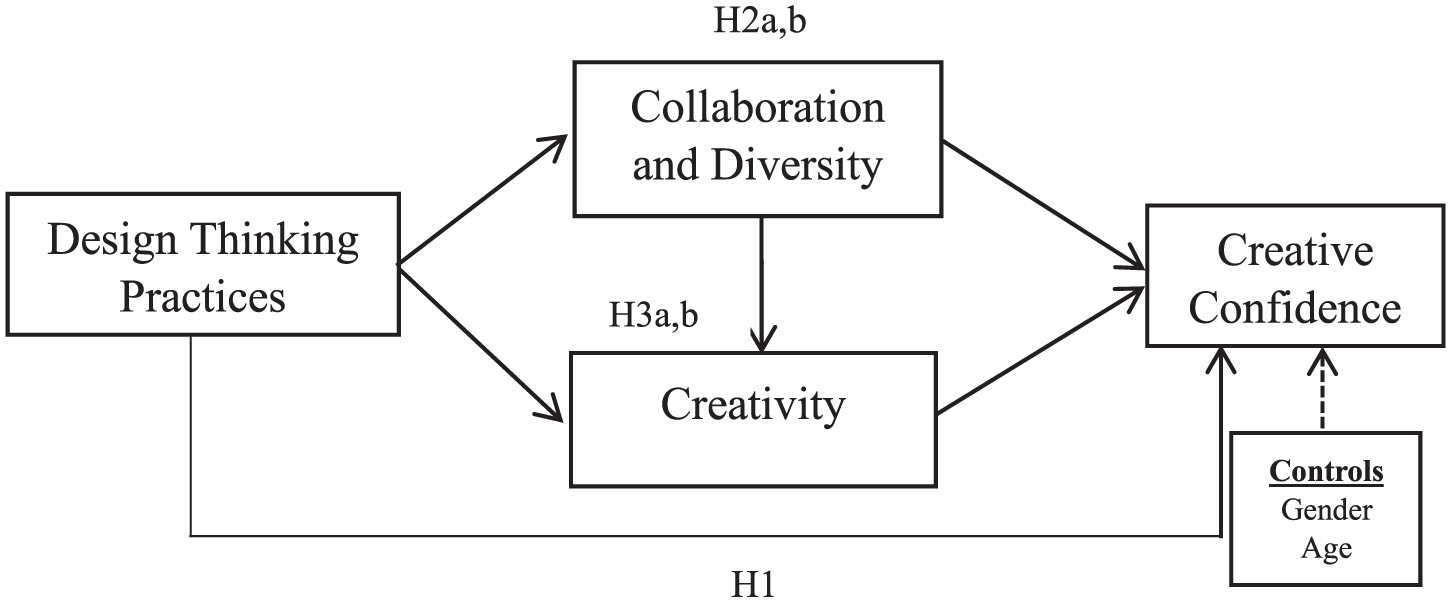
Conceptual framework.
Research Methodology
Research Design
The study employed a cross-sectional survey design (Saunders et al., 2021). Data was gathered using structured questionnaire and analysed quantitatively by conducting a cause-and-effect analysis using Covariant-Based Structural Equation Modelling (CB-SEM) technique.
Data Collection
The study focussed on students in Ghana, specifically third-year students who had taken an Innovation and Design Thinking course during the first semester of their third year, as well as a Small Business and New Venture Creation course during the second semester of their second year. Data collection was limited to these students. A key requirement of the Innovation and Design Thinking course was for students to work in groups on a semester-long capstone project. This project involved collaborating with organisations to address a specific community or business need. Convenience sampling technique was used to sample 419 students from the faculty. The questionnaires were administered by four researchers, Questionnaires were printed out and distributed to the students after lecture hours, after permission was sought from the students. A period of five (5) continuous days was used for data collection.
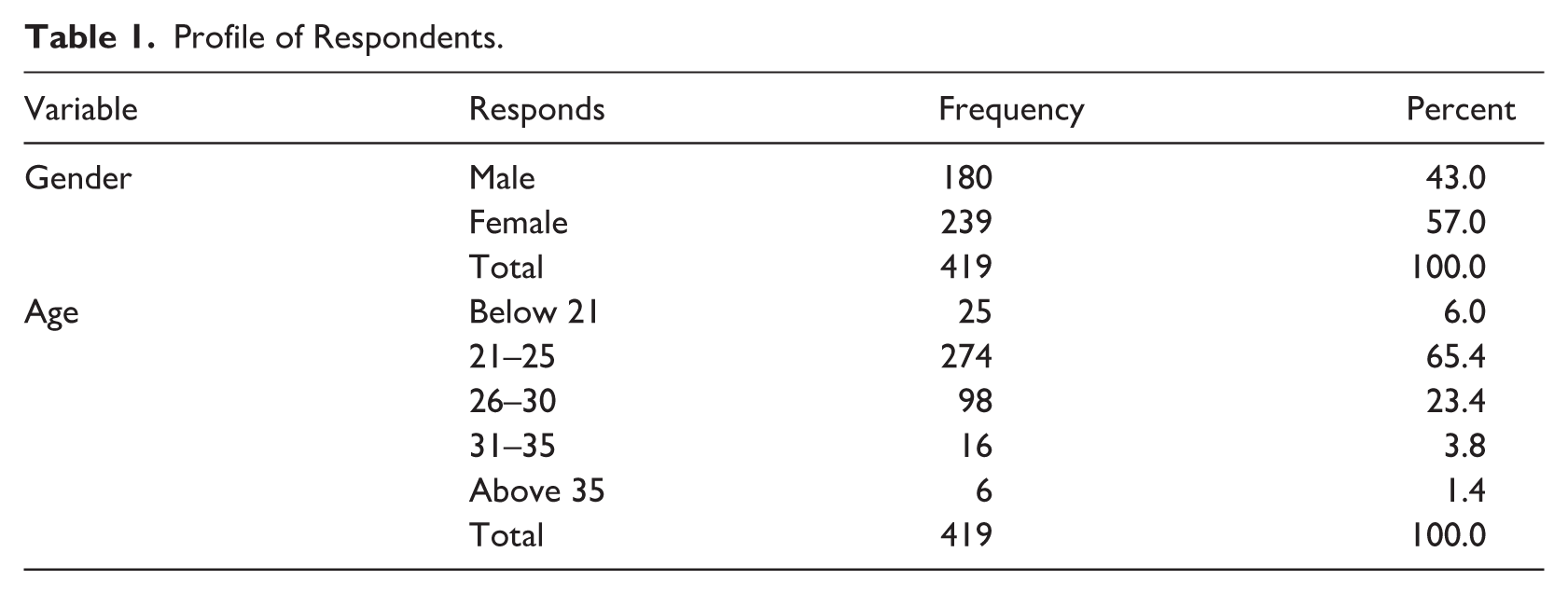
The questionnaire had two sections. Section A presented the demographic characteristics such as age and gender. Section B presented the measurement items. In Section B items for DTP, collaboration and diversity, and creative confidence were adapted from Vignoli et al. (2023). Additional items for creativity were adapted from Hu et al. (2018). We modified the original measures by simplifying the language and adjusting the phrasing to better suit the context of this study and ensure clarity for university students, while preserving the original meaning. Responses to Section B were collected using a 5-point Likert scale, ranging from 1 (strongly disagree) to 5 (strongly agree). Table 1 presents the profile of respondents of this study. The results show that male respondents were 180, representing 43.0% against 239 females, representing 57.0%. Also, the age of the respondents shows that 25 respondents representing 6.0% were below the age of 21, 274 respondents 65.4% were within the ages of 21 to 25, 98 respondents representing 23.4% were within the ages of 26 to 30, 16 respondents representing 3.8% were within the ages of 31 to 35 and lastly, 6 respondents representing 1.4% were above 35 years.
Profile of Respondents.
Data Validity and Reliability
For the exploratory factor analysis (EFA), data screening for outliers was conducted using Z-scores, with any values exceeding a threshold of ±3.29 being considered outliers and subsequently removed from the analysis (Kosnik & Kaufman, 2008).
A correlation matrix was generated prior to the EFA to assess the relationships between variables, which helped in identifying patterns and potential multicollinearity among the items included in the analysis (Dziuban & Shirkey, 1974). First, to explore the underlying structure of the measurement items, an Exploratory Factor Analysis (EFA) was conducted using a random subset of 163 participants from the total sample using SPSS (v.25; Lorenzo-Seva, 2022). The reason was to assess if the measurement items were correctly loaded onto their respective latent variables (Hair, 2011). There were four (4) main variables in the study, which were DTP, collaboration and diversity (CD), creativity (CT), and creative confidence (CC). The EFA model revealed that all measurement items were properly loaded onto their respective latent variables, showing factor loadings of at least 0.6. The total variance extracted from the EFA was 61.46%, surpassing the minimum requirement of 50%. The Kaiser–Meyer–Olkin (KMO) measure of sampling adequacy, expected to be not less than 0.6, had a high value of 0.795, indicating acceptable sample adequacy. Moreover, Bartlett’s test of sphericity, expected to be statistically significant, to mean there was enough correlation among the measurement items to qualify for EFA (χ2 = 1,097.56; p < .01), demonstrating there was an adequate correlation to qualify for EFA assessment. The determinant of correlation must not be equal zero to ensure positive definiteness in the data set. The determinant for EFA was 0.070, showing this threshold was met.
To validate the factor structure identified in the EFA, a Confirmatory Factor Analysis (CFA) was conducted in Amos (v.23) using the remaining 256 participants (Lorenzo-Seva, 2022; Zhou, 2022). CFA was performed to assess the measurement model’s adequacy and establish construct validity and further check the reliability of the measurement items in loading unto their respective latent variables using the variables retained from the EFA. In line with the EFA, it was expected that the standardised factor loadings in the CFA would be at least 0.5, which met in this study (Table 2). Each main variable showed factor loadings exceeding 0.5, showing that all measurement items effectively explained their respective latent constructs. When conducting CFA, it was essential to assess the model fit indices to achieve the adequacy of the dataset for the estimated model. Among these indices, it was good for CMIN/DF to be below 3, PClose not to be statistically significant (>.05), and TLI and CFI to exceed 0.9. Additionally, RMSEA and RMR were expected to be 0.08 or less (Iddris et al., 2022, 2024). These were achieved for all the latent variables in the dataset for the study. Splitting the dataset for EFA and CFA ensures independent validation of the factor structure, preventing overfitting and enhancing the reliability and generalisability of the model (Lorenzo-Seva, 2022; Zhou, 2022).
Confirmatory Factor Analysis.
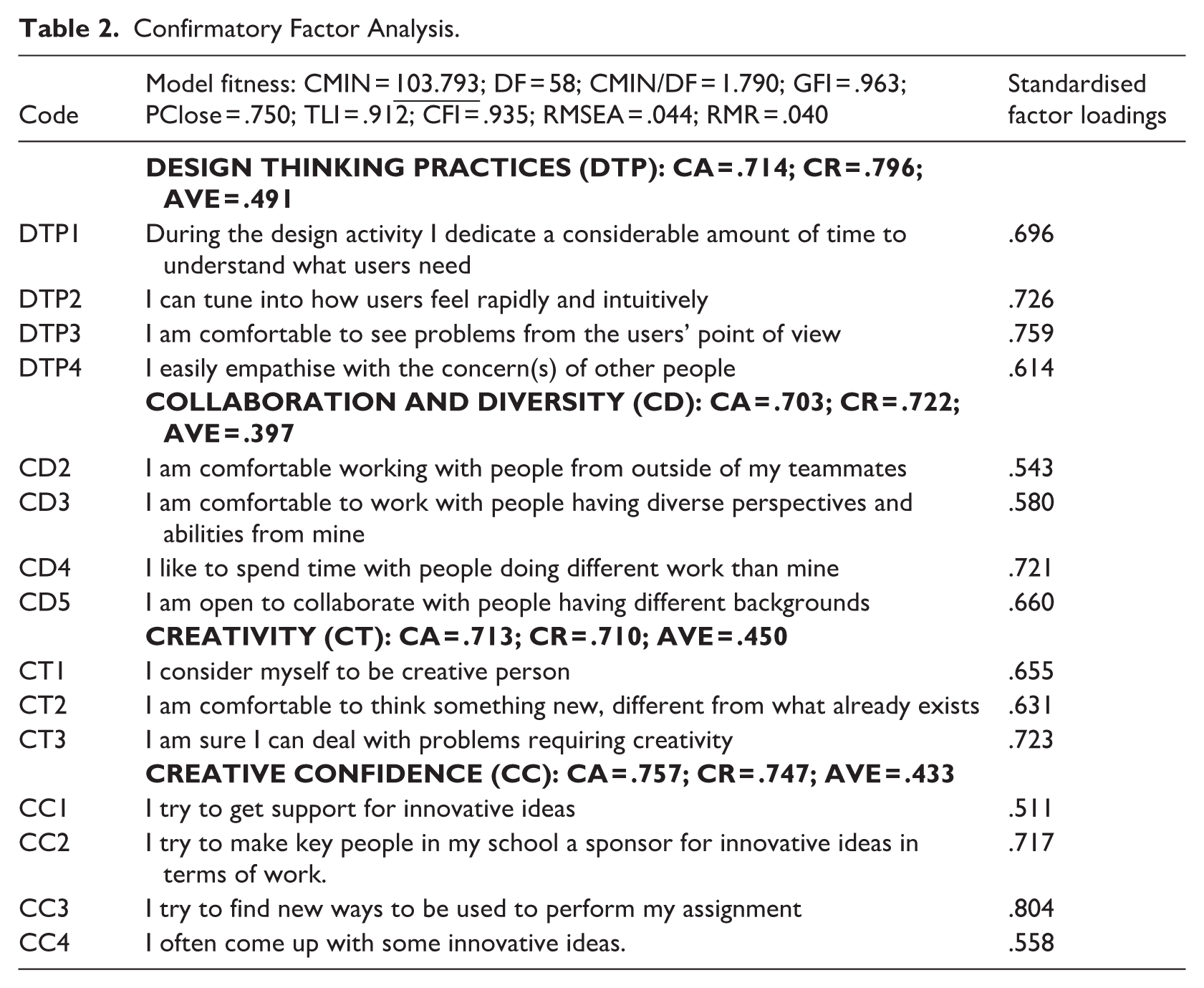
Using the retained variables, Cronbach’s Alpha (CA) was estimated using SPSS (v.25), aiming for a minimum alpha score of 0.7. This was met for all latent variables (Table 2), indicating strong internal consistency among the measurement items. Convergent validity was assessed using the Average Variance Extracted (AVE) approach, with a minimum threshold of 0.5 Fornell and Larcker (1981). Additionally, construct reliability (CR) was expected to exceed 0.7, which was all achieved for all the latent variables (Figure 2).
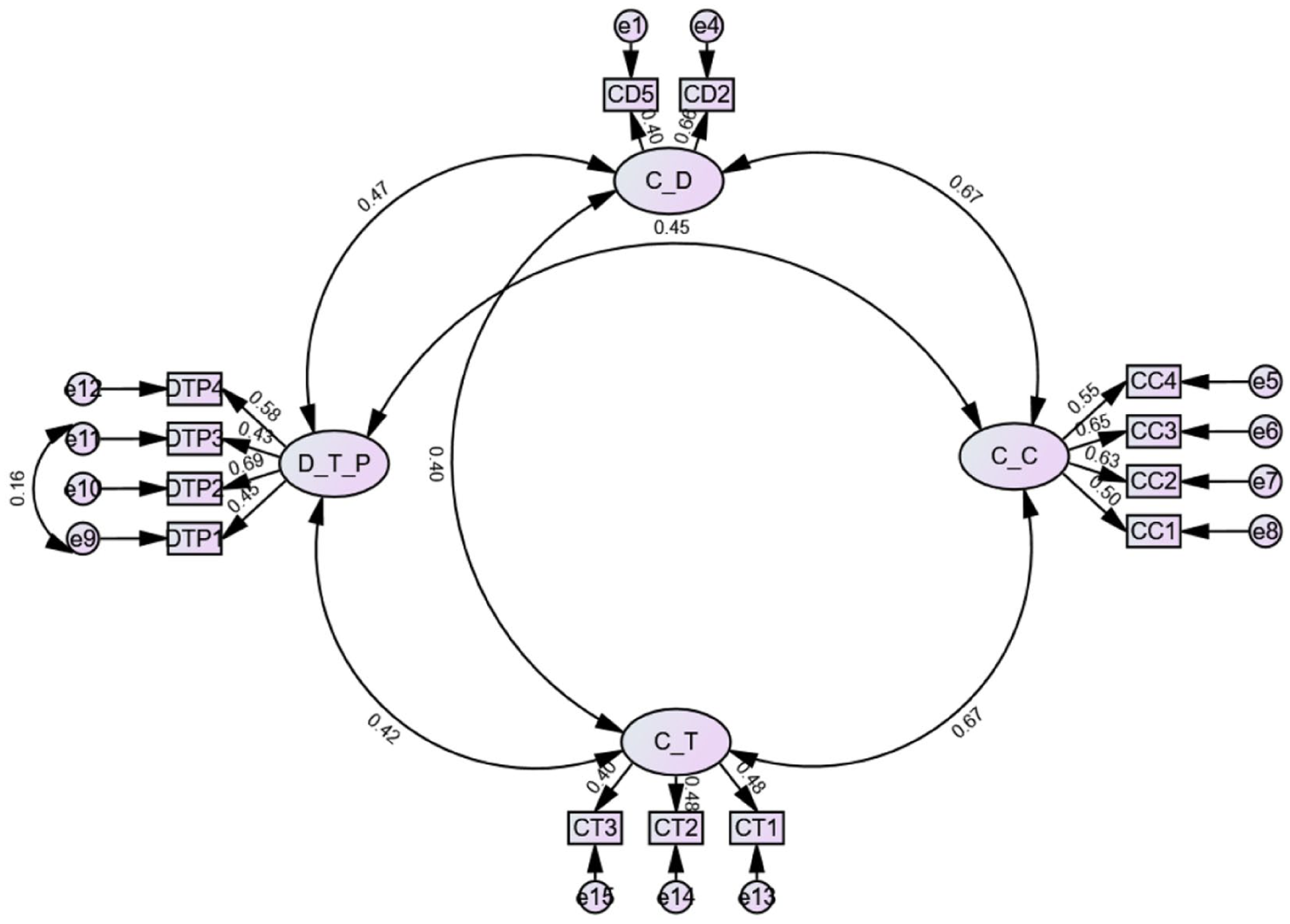
Graphical representation of CFA.
We assessed the discriminant validity of the measurement items, and it was confirmed by comparing the square root of the raw average variance extracted (√AVE) with the correlation coefficients (Fornell & Larcker, 1981; Hair, 2011). The analysis revealed that the lowest √AVE value was .658, which was higher than the highest correlation score of 0.366 (Table 3). This demonstrates that discriminant validity was achieved, as there was no multicollinearity in the dataset, given that the highest correlation coefficient of .366 was less than .7.
Discriminant Validity.
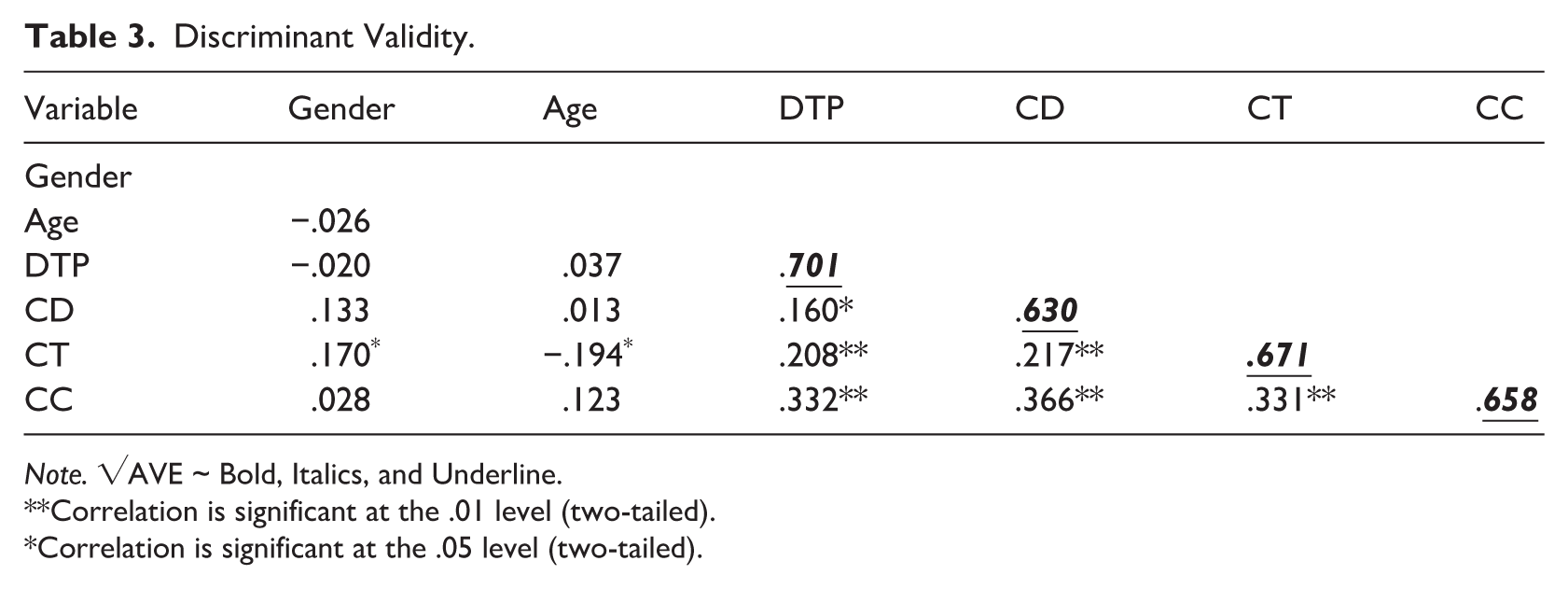
Note. √AVE ~ Bold, Italics, and Underline.
Correlation is significant at the .01 level (two-tailed).
Correlation is significant at the .05 level (two-tailed).
Path Estimates
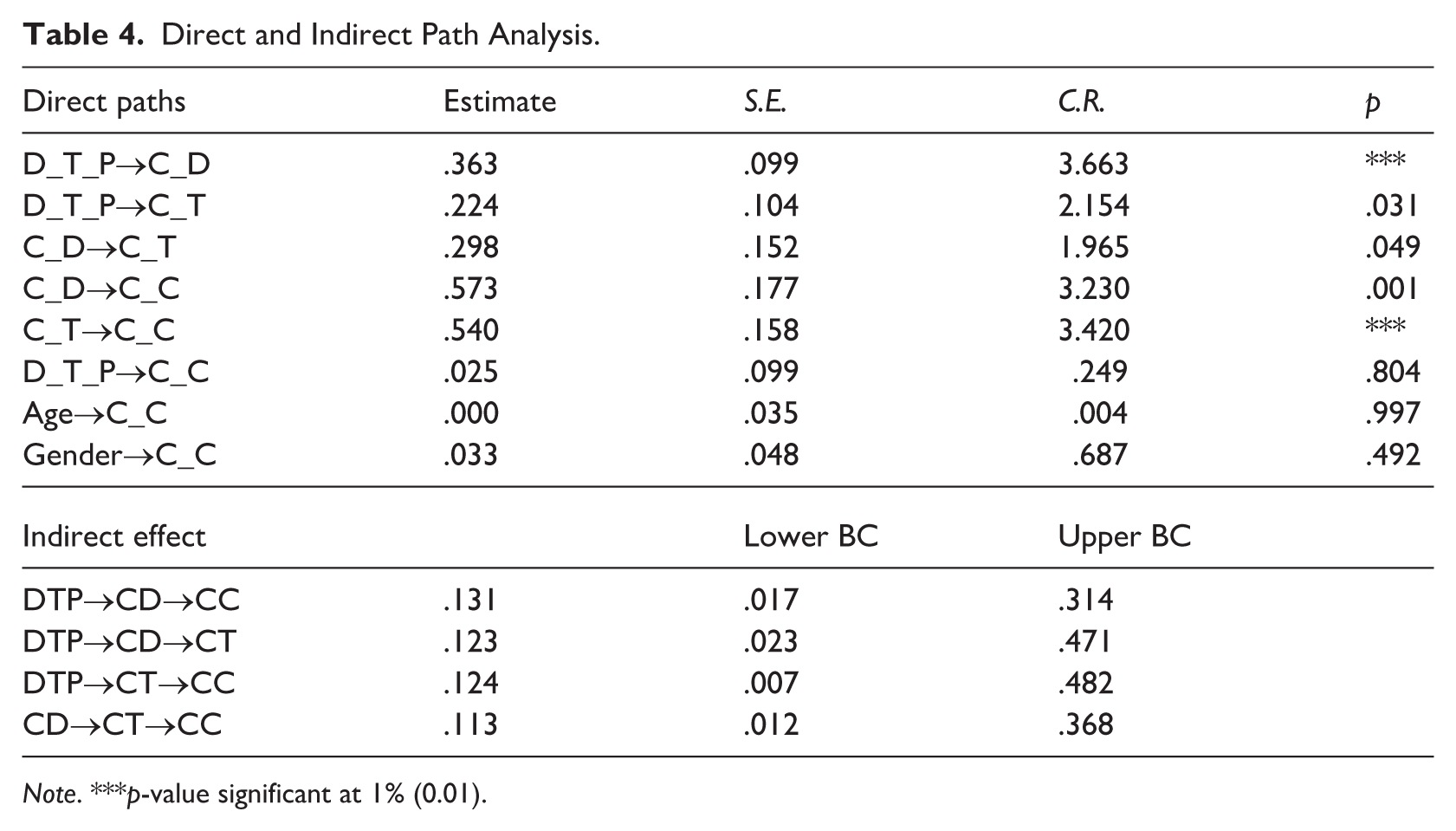
A Structural Equation Modelling (SEM) approach in Amos (v.23) was used to estimate the path analysis, with results presented in (Table 4). The estimation was based on 5,000 Bootstrap samples, with Bias-Corrected Confidence Interval of 95%.
Direct and Indirect Path Analysis.
Note. ***p-value significant at 1% (0.01).
First, the results of the study revealed that DTP had an insignificant positive effect on creative confidence among university students (β = .025; p > .05). University students who experienced design thinking practices were only 2.5% more likely to affect their creative confidence. Therefore, Hypothesis (
Second, while the direct effect of DTP on creative confidence was found to be insignificant, the effect of DTP on collaboration and diversity was significantly positive (β = .363; p < .01). This indicates that university students exposed to DTP were 36.3% more likely to engage in collaboration within diverse contexts compared to those without knowledge of DTP practices. Furthermore, collaboration and diversity had a significant positive effect on creative confidence among university students (β = .573; p < .01), and thereby enhancing their creative confidence by 57.3%.
Given these findings, the indirect effect of DTP on creative confidence was estimated. Results indicated that the indirect effect of DTP on creative confidence through collaboration and diversity was significantly positive (β = .131), as both the lower and upper BCs were positive. Thus, collaboration and diversity fully mediated the relationship between DTP practices and creative confidence, given that DTP had no direct effect on creative confidence. Therefore, Hypothesis (
Third, the direct effect of DTP on creativity among students was significantly positive (β = .224; p < .05). University students who engaged in DTP were 22.4% more likely to demonstrate creativity. This may be because creativity is seen as a key component of design thinking. Also, the direct effect of DTP on collaboration and diversity was established to be significantly positive. Similarly, collaboration and diversity had a significant positive effect on creativity among university students (β = .363; p < .01), thus enhancing their creativity by 36.3%.
Given these findings, the indirect effect of DTP on creativity was estimated. The results revealed that the indirect effect of DTP on creativity through collaboration and diversity was significantly positive (β = .123), as both the lower and upper BCs were positive. Thus, collaboration and diversity partially mediated the relationship between DTP and creativity. This signifies that the relationship between DTP and collaboration and diversity was significant, likewise, the relationship between collaboration and diversity and creativity was also significant. Therefore, Hypothesis (
Fourth, as established earlier, the direct effect of DTP on creative confidence was not significant (
Finally, as established earlier, collaboration and diversity had a significant positive effect on creative confidence. Additionally, collaboration and diversity significantly enhanced creativity among university students. Furthermore, creativity had a significant positive effect on creative confidence among university students, as previously established.
Given these findings, the indirect effect of collaboration and diversity on creative confidence through creativity was estimated. The results indicated that the indirect effect of collaboration and diversity on creative confidence through creativity was significantly positive (β = .113), with both the lower and upper BCs being positive. Thus, creativity is considered to partially mediate the relationship between collaboration and diversity, and creative confidence among students, as collaboration and diversity also have a direct effect on creative confidence. Therefore, Hypothesis (6027), which posited that creativity mediates the relationship between collaboration and diversity and creative confidence among university students, was supported (Figure 3).
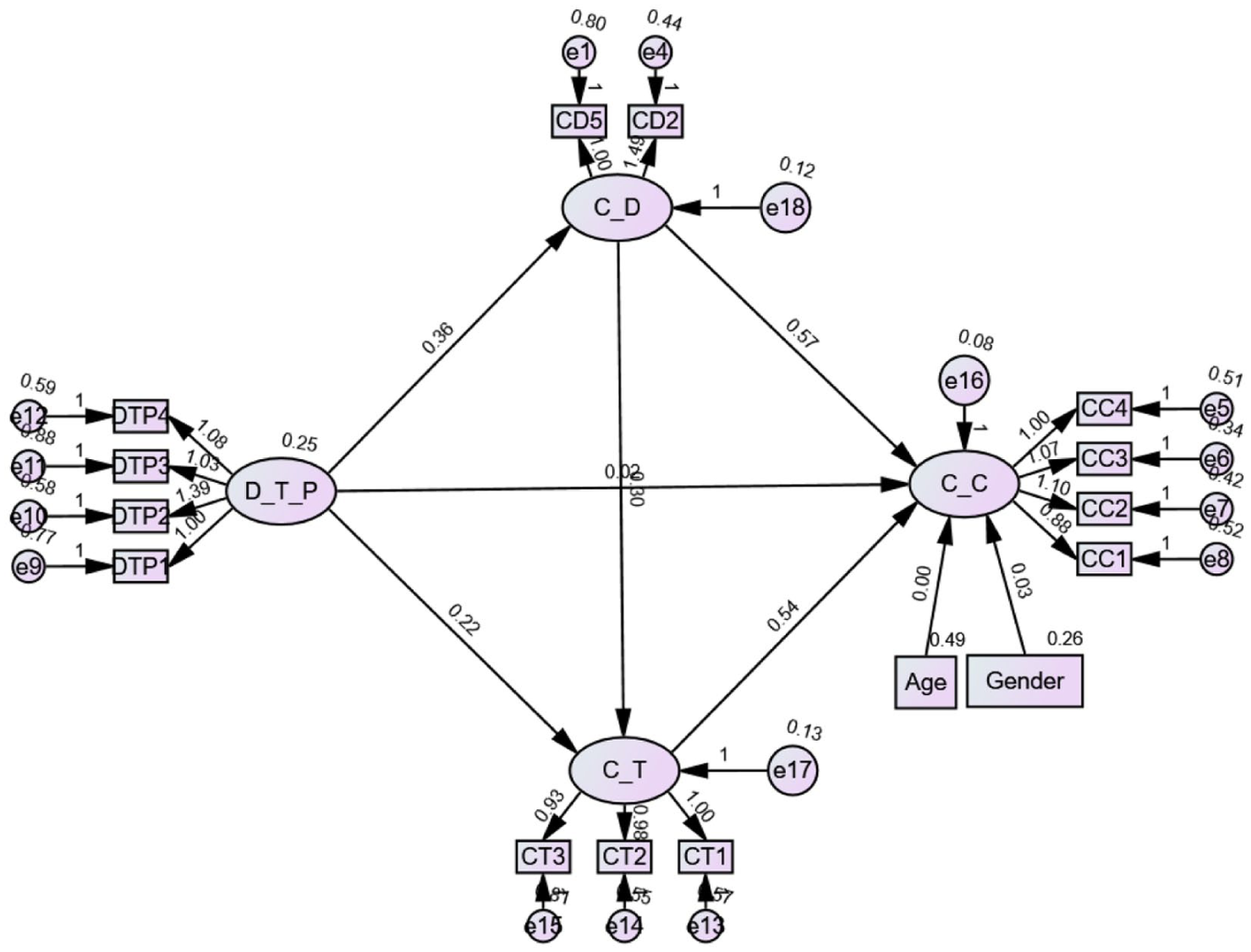
Graphical representation of SEM.
Discussions
The findings of this study provide important insights into the complex relationships among Design Thinking Practices (DTP), collaboration and diversity, creativity, and students’ creative confidence (CC). The results offer several points for discussion, particularly considering the proposed hypotheses and the existing literature.
First, contrary to our expectations, Hypothesis (
Second, hypothesis (
Third, Hypothesis (
Fourth, the study also confirmed Hypothesis (
Finally, Hypothesis (
Theoretical Contributions
This study investigated the effect of DTP on students’ creative confidence, with a focus on the mediating roles of collaboration and diversity, and creativity. The findings of this study present several theoretical contributions. The study contributes significantly to the relationships between DTP and students’ creative confidence, as well as the mediating effects of collaboration and diversity, and creativity. Specifically, DTP did not directly affect students’ creative confidence. However, the relationship was found to be indirectly influenced through the mediating effects of collaboration and diversity, and creativity, highlighting their critical role in fostering students’ creative confidence. Further, the theoretical lenses such as Resource-Based Theory (Penrose 1959), and the Componential Theory of Creativity (Amabile, 1993) provided valuable insights into the underlying mechanisms driving these relationships. Additionally, emphasising the importance of social identity, resource allocation, and cognitive processes in shaping students’ creative confidence, these theoretical perspectives enriched our understanding of the complex interplay between DTP, collaboration and diversity, and creativity.
Moreover, this research advances the understanding of the nexus between DTP and innovation by empirically examining the relationships among DTP, collaboration and diversity, creativity, and creative confidence in an educational setting within an under-resourced national context - Sub-Saharan Africa. This study is among the first to explore these dynamics in such a context, highlighting the significant influence of DTP on students’ creative confidence and demonstrating the importance of integrating DTP into educational curricula to foster innovation among students.
Furthermore, the study affirms the mediating roles of collaboration and diversity, and creativity in the relationship between DTP and students’ creative confidence. This supports and extends the resource-based theory (Barney, 1991; Penrose, 1959), which emphasises leveraging internal capabilities, such as collaboration skills, for innovation. In addition, it aligns with the componential theory of creativity Amabile’s (1993) by identifying creativity as a crucial mechanism through which DTP fosters innovation. These findings provide a deeper understanding of how collaboration and diversity, and creativity can be harnessed to enhance the effectiveness of DTP in promoting creative confidence in educational setting.
Again, this study contributes to the literature on design thinking, innovation, and education by highlighting the significance of collaborative and creative processes in fostering students’ creative confidence. The findings demonstrate the importance of integrating design thinking principles into educational curricula to cultivate a culture of innovation and prepare students for the challenges of the 21st-century workforce.
Limitations
This study offers valuable contributions to understanding the relationship between DTP and students’ creative confidence; however, some considerations warrant attention to inform future research. The cross-sectional survey design employed was appropriate for examining associations at a single point in time, but it does not allow for the inference of causality. Future studies could employ longitudinal or experimental designs to examine causal pathways and temporal dynamics.
Again, the reliance on self-reported measures yielded important insights into students’ perceptions and experiences. Nevertheless, incorporating alternative data sources such as observational assessments, peer evaluations, or performance-based indicators would enhance methodological robustness and mitigate potential concerns regarding common method variance and social desirability effects. Finally, the present study focussed on collaboration and diversity, and creativity as mediating mechanisms, thereby providing a coherent theoretical contribution. Future investigations could extend this work by exploring additional mediators, such as motivation, self-efficacy, or leadership, to offer a more comprehensive understanding of the underlying mechanisms linking DTP and creative confidence.
Practical Implications
The study holds important implications for educators, policymakers, and practitioners involved in fostering innovation and creativity among students. First, educational institutions can enhance students’ creative confidence by incorporating design thinking practices into their curriculum. Integrating collaborative and creative activities inspired by DTP methodologies can provide students with valuable skills and experiences conducive for innovation and engage in innovative problem-solving.
Second, developing training programmes for teachers and instructors can equip them with the knowledge and skills necessary to effectively implement DTP in the classroom. Teachers can act as facilitators of collaborative and creative processes, guiding students through design challenges and encouraging experimentation and ideation. Teachers can guide students through design challenges, brainstorming sessions, and hands-on experimentation to develop creative solutions to real-world problems.
Third, emphasising the importance of collaboration and diversity in DTP can foster a collaborative culture within educational settings. Schools and universities can create opportunities for interdisciplinary collaboration, team projects, and group discussions to promote knowledge sharing, collective problem-solving, and peer learning.
Fourth, providing resources and support for creative activities can nurture students’ creativity and innovation capabilities. Educational institutions can establish innovation labs, incubation centres, and creative hubs where students can explore their ideas, experiment with different tools and technologies, and engage in hands-on learning experiences.
Lastly, collaborating with industry partners can provide students with real-world challenges and opportunities to apply design thinking principles in practical contexts. Universities can partner with businesses, startups, and community organisations to offer internships and project-based learning experiences where students apply DTP, workshops and mentorship programmes, internships, and project-based learning experiences with industry professionals, live case studies, and project-based learning experiences to bridge the gap between theory and practice. These partnerships can enable students to develop problem-solving competencies while enhancing their creative confidence, ensuring that the benefits of DTP extend beyond the classroom into professional environments.
Supplemental Material
sj-docx-1-alh-10.1177_14697874261437051 – Supplemental material for Unlocking Students’ Creative Confidence Through Design Thinking Practices: A Parallel Mediation of Collaboration and Diversity, and Creativity
Supplemental material, sj-docx-1-alh-10.1177_14697874261437051 for Unlocking Students’ Creative Confidence Through Design Thinking Practices: A Parallel Mediation of Collaboration and Diversity, and Creativity by Faisal Iddris, Kingsley Agyapong, Emmanuel Mensah Kparl and Philip Opoku Mensah in Active Learning in Higher Education
Footnotes

Funding
The authors received no financial support for the research, authorship, and/or publication of this article.
Declaration of Conflicting Interests
The authors declared no potential conflicts of interest with respect to the research, authorship, and/or publication of this article.
Supplemental Material
Supplemental material for this article is available online.
Author Biographies
References
Supplementary Material
Please find the following supplemental material available below.
For Open Access articles published under a Creative Commons License, all supplemental material carries the same license as the article it is associated with.
For non-Open Access articles published, all supplemental material carries a non-exclusive license, and permission requests for re-use of supplemental material or any part of supplemental material shall be sent directly to the copyright owner as specified in the copyright notice associated with the article.
