



Abstract
Journal clubs are active learning approaches routinely used within academic research institutes and allied health professions to boost critical thinking, data analysis, and disseminate knowledge of novel research concepts. These group-based discussions regarding scientific literature aim to develop knowledge and facilitate the sharing of expertise. Many of these outcomes align with those highly desired for post-graduation employability. However, they are usually constrained to small defined student groups, with limited reported attempts to deliver journal clubs at scale within the undergraduate curriculum. Therefore, this study sought to compare the pedagogical efficacy of delivering journal clubs as both extracurricular and curriculum-embedded activities and determine if they are translatable into undergraduate curricula. Student feedback was assessed through anonymous surveys upon completion of both the extracurricular and curriculum-embedded journal club sessions. Pre- and post-session surveys were also provided to assess academic literacy knowledge acquisition. Both extracurricular and curriculum-embedded journal clubs had a positive impact on student experience, knowledge acquisition and transferable skill development. Most students stated they learnt a lot from the session (86.5%) with 78.8% stating that they preferred this learning experience to didactic lectures. Students also stated the session enhanced their confidence (76.9%) and teamwork skills (78.8%) and critical appraisal of scientific research (84.6%). Further pre and post-analysis revealed journal clubs significantly increased students’ knowledge of academic literacy. Students who participated in the extracurricular journal clubs scored their enjoyment and enhancement of their employability skills higher than in the curriculum-embedded session. No significant differences were observed when responses were stratified based on socioeconomic parameters. These data show that journal clubs are a valuable pedagogical tool for developing academic literacy and key transferable skills. We also for the first time showcase how journal clubs can be designed and delivered to be an appropriate and scalable pedagogical tool for large taught modules.
Keywords
Introduction
Journal clubs are an active teaching approach allowing students to evaluate peer-review papers in a group setting, and to critically discuss the findings and implications of selected original research articles (Lee et al., 2006). These journal clubs enable participants to discuss breakthroughs or novel conclusions and to implement them in their professional practice (Honey & Baker, 2011). The concept of the journal club has been utilised since the 1850s, with the earliest recorded journal club delivered by Sir John Forbes in 1854 (Aronson, 2017), and later recognised as having significant importance by Sir William Osler in 1875 (Linzer, 1987) and continue to be frequently conducted today across medical and research institutions globally.
The structure of journal clubs can vary dependent on the environment in which they are being delivered. They may comprise of a presentation by the lead author of a publication and subsequent group-based discussion of the work, or alternatively, journal clubs can be delivered as group-based discussions following the individual reading of a research publication of high relevance to the participants. Irrespective of the method of journal club delivery, this group-based discussion is paramount for the success of a journal club in practice.
Journal clubs have been shown highly effective at transferring knowledge, especially within the medical community (Sidorov, 1995). Due to this effectiveness, journal clubs have been incorporated into continuing medical education (CME) to increase competencies in practice-based learning for medical, nursing, and psychiatry residents (Billingsley et al., 2013; Faridhosseini et al., 2016; Ilic et al., 2020; Lee et al., 2006). They also enable students to develop critical thinking when examining academic literature, a key transferable skill not only for medical professionals, but the wider undergraduate community where developing an understanding of academic literature is an integral learning outcome across numerous disciplines.
Academic literacy is a fundamental skill required by all students studying within higher education and is particularly important in STEM-related subjects. One important component with students’ development of their academic literacy is the transition from further education to higher education. Studies have shown that students feel ill-prepared for higher education (HE), with increased emphasis on academic reading and writing (Borg & Deane, 2011), which is of substantially lower priority in further education (FE) colleges. A study by Itua et al. (2014) found that students had limited practice of extended writing in FE, with the lack of reading academic literature prior to university leading to a limited understanding of academic literature. Introducing journal clubs early into higher education may therefore increase students' confidence in academic literacy and enable students to bridge the gap from FE to HE.
The wider learning benefits of journal clubs are well established, with students taking a more active approach to recognising knowledge gaps, becoming more invested in deeper lifelong learning and increasing their development via collaborative approaches to learning (Alexander et al., 2008; Carragher & Brereton, 2022; Freeman et al., 2014). Journal clubs are also associated with the development of academic competencies including communication, critical thinking, teamwork, and problem-solving, which are all important skills for enhancing student progression and employability associated with the graduate capital model (Bliven & Jungbauer, 2021; Tomlinson, 2017). Research has highlighted that first-year university students have low confidence in these competencies with the delivery of more competency-based activities within the early stage of their academic career highlighted to improve student retention and enhance their transition to HE (Mah & Ifenthaler, 2018). Furthermore, the group-based nature of journal clubs facilitates interaction between students, which may promote positive student relationships and knowledge transfer through peer-to-peer learning, both of which have been shown to enhance student engagement and self-confidence (Ali et al., 2015; Dinsmore et al., 2008; Drumm et al., 2019; Kimbrough et al., 2022).
Over the last decade, numerous attainment gaps have emerged within higher education institutions (HEI’s) both within the United Kingdom (Crawford et al., 2016) and Worldwide (Cahalan et al., 2022; Lamb et al., 2020). Factors that have been identified as leading to these attainment gaps within student cohorts from UK HEI’s include minoritised ethnic status (Cotton et al., 2016; McDuff et al., 2018) and more recently students’ entry qualification status (Peake, 2018). These factors lead to decreased attainment and first-time pass rates compared to their peers from traditional university entry backgrounds. With these factors being closely evaluated by HEI’s and governing bodies (Cotton et al., 2016), identifying interventions that can minimise and ultimately eliminate these awarding gaps is essential to ensure equity within university populations. Through the design and implementation of more inclusive pedagogical practices and active learning and teaching strategies, it has been hypothesised that enhancing students sense of belonging within higher education and more authentic teaching and assessment styles, these attainment gaps can be closed (Meehan & Howells, 2019; Theobald et al., 2020). These authentic teaching styles focus on group-based learning, thus aligning strongly with the pedagogical principles of journal clubs. With journal clubs requiring open group discussions, previous studies have shown that students to become more friendly with peers, increasing their sense of belonging, which may foster improved engagement, a factor which is directly associated with attainment (Masika & Jones, 2016).
Whilst journal clubs or journal club-style activities are effective (Aweid et al., 2022; Billingsley et al., 2013; Drumm et al., 2019; Honey & Baker, 2011), they are typically associated with small group-based delivery (participant numbers ranging between 7 and 29 dependent on study; Billingsley et al., 2013; Carragher & Brereton, 2022; Drumm et al., 2019) or online discussions, with no previously reported mentions of scaling to large cohort undergraduate teaching within HE. Journal clubs are commonly delivered within HEI’s as extracurricular career development activities or within academic research groups for postgraduate research students, however limited evidence in the literature of the impact of these at an undergraduate level or their ability to support academic literacy development, forming the basis for this aspect of the study to ascertain their suitability as a teaching and learning approach for undergraduate students.
When delivered as extracurricular opportunities, these events typically engage highly interested and motivated students who wish to engage in continuing professional development and are therefore unlikely to target students from backgrounds liable to be associated with attainment gap generation, for which extracurricular activity engagement is typically decreased, with higher priority given to attendance at officially timetabled events due to an increasing number of factors to consider alongside their studies (caring responsibility, transport availability, financial commitments, and employment). Therefore, this poses questions regarding if journal clubs can be effectively integrated into the undergraduate curriculum beyond allied health professions and if the benefits of extracurricular delivery are maintained following curriculum integration, for which there is limited evidence of its suitability.
To address this, we sought to investigate the efficacy of journal clubs as pedagogical tools within undergraduate education. Subsequently, we aimed to determine their suitability for embedding into the taught curriculum of large undergraduate programmes to enhance perceived student experience, academic literacy, and broader graduate capital. The research questions for this study were the following:
Methodology
Extracurricular Journal Club Participants
Extracurricular journal clubs were held between February 2023 and December 2023, with a total of four sessions held during this period. Students from biological and chemical science aligned programmes (BSc Biomedical Science, BSc Human Biology and Infectious diseases, BSc Biochemistry, BSc Pharmaceutical Science, MSc Biomedical Science, MSc Biotechnology, and MSc Drug Design and Discovery) at both undergraduate and postgraduate level were invited to participate in the extracurricular journal clubs. Engagement with these extracurricular sessions was monitored via a ticket-based system, with 135 students signing up to attend the sessions. On average, attendance at these extracurricular sessions was 54.1% (total participants N = 73) with an average attendance of 21 attendees per session. Of these participants, 33 participants (45.2% of attendees) completed the overall feedback survey and 4 (12.1%) of respondents declining to participate in the study for a total response number of 29 (36.7% participant response rate and 21.5% total response rate). The demographics of these participants are summarised in Supplemental Figure S1.
Extracurricular Journal Club Session Design
The sessions were designed to occur within any flat teaching space allowing for flexibility depending on institutional infrastructure availability and adaptable for varying cohort sizes. Extracurricular sessions were co-created with students and student-led, ensuring that the topics covered in each session were relevant to what students wanted to learn or related to current issues within the media (Supplemental Table S1).
Attendees were split into groups of six to eight students and provided with a student facilitator or academic present within each group to promote discussion within the group. Student facilitators were trained by the lead academic staff (both manuscript authors), focussed how to work and develop conversations with students, academic staff from research backgrounds who have completed higher education training through postgraduate certificate and achieving fellowship of Advance HE status. The sessions were scheduled to be 2 hr in length and split into three main sections: (1) an initial reading period (approximately 15–20 min), (2) a group-based discussion of prepared questions designed to probe knowledge and encourage discussion about key concepts within scientific literature (approximately 10 min per question), and (3) feedback to the other groups (approximately 10 min per question). Feedback and selection of the next journal club topic were conducted at the conclusion of the session. A visual summary of the structure of the extracurricular journal clubs and the questions discussed are shown in Supplemental Figure S2 and Supplemental Table S2.
Extracurricular Journal Club Survey Design and Delivery
The overall evaluation survey (Supplemental Table S3) was delivered via Microsoft Forms (Microsoft, USA) immediately following the completion of the extracurricular session, with all responses returned anonymously. All questions were designed as either open-answer questions or based on a 5-point Likert scale with the responses categorised as scores of 1 or 2 indicating a negative response, a score of 3 indicating a neutral response, and scores of 4 or 5 indicating a positive response. The questions used in the survey were distributed into six main categories (Supplemental Table S4) to understand each participant’s demographics and background, their overall experience participating and evaluation of if the session enhanced participant’s graduate capital and academic literacy. This questionnaire was designed based on key elements of the graduate capital model (Tomlinson, 2017) and the previously published work by Amar et al. (2025), Hussain et al. (2023), M. A. Jones et al. (2025), and Morgan and Jones (2025). The content of the survey was validated based on face validity through subject matter experts creating the survey and question appropriateness tested by the target population in previously published work. Surveys were checked before delivery to ensure both content and construct validity was ensured. Due to many confounding factors relating to summative assessment support, criterion validity against summative assessment outcome could not be performed.
Based on the background and demographic information provided by participants, the likelihood of higher education participation (based on the participation of local areas (POLAR 4) scoring system (HEFCfE, 2017)), participant’s home area representation in higher education (based on the Tracking underrepresentation by area [TUNDRA] LSOA scoring system [OfficeforStudents, 2019]) and the proportion of adults from that area that held a higher education qualification within the participants home area (based on the Adult HE 2011 scoring system [OfficeforStudents, 2020]) were determined as previously described in Hussain et al. (2023).
Curriculum-Embedded Journal Club Participants
A total of 199 students (none of which participated in the extracurricular journal clubs) were eligible via enrolment into the first-year Biomedical Science laboratory skills module (189 BSc Biomedical Science and 10 BSc Biomedical Science [Degree Apprenticeship]). There was no overlap between participants of the extracurricular and curriculum-embedded journal clubs. A total of 150 participants (75.4% of the eligible cohort) attended the session, with 134 (89.3%) completing the pre and post-survey with 16 (11.9% of survey completers) declining to participate in the study. Following the session, an overall feedback survey was completed by 62 (41.3% of all participants) participants with 10 (16.1% of overall survey completers) declining to participate in the research study, resulting in a final total of 52 responses (34.7% participant response rate and 26.1% total response rate). The demographics of these participants are summarised in Supplemental Figure S3.
Curriculum-Embedded Journal Club Session Design
The Journal club activity used within extracurricular sessions was embedded within the curriculum and aligned to support academic literacy development ahead of an upcoming laboratory report writing assessment. Within the session, students were separated into groups of 6 to 10 students and provided with an initial briefing to explain the concept of journal clubs and how the session would be run. After the initial briefing, the session was delivered in an identical manner to that of the extracurricular session (see section 3.3 for details). However, the discussion questions were modified to promote the understanding of academic literacy and the content of scientific literature (Supplemental Table S5). This modification was to allow for constructive alignment to an upcoming written assessment where an understanding of academic literacy was an intended learning outcome for the assessment, as well as to accommodate for the students being within their first 4 weeks of higher education at the time of completion. After the group-based discussions, each group submitted a summary of their discussion to a shared Mentimeter (Mentimeter AB (publ), Sweeden) interactive presentation to collate all answers and disseminate them amongst every group. A summary of the session workflow is shown in Supplemental Figure S4.
Curriculum-Embedded Journal Club Survey Design and Delivery
To evaluate the impact of embedding journal clubs into the Biomedical Science curriculum participants were asked to complete two optional surveys: (1) a physical pre and post-survey to evaluate student knowledge acquisition (Supplemental Table S6) and (2) a digital modified overall experience survey delivered via Microsoft Forms following the completion of the session (Supplemental Table S7). The modified overall survey has identical questions to that used to evaluate extracurricular delivery, to allow for comparison between extracurricular and curriculum-embedded impact.
Statistical Analysis
The results of all student surveys are reported as mean ± standard deviation. Data normality was evaluated using the Shapiro-Wilk test or Kolmogorov-Smirnov test for normality dependent on the sample size evaluated. All two group comparisons were conducted using parametric unpaired t-tests, non-parametric Mann-Whitney tests, or Wilcoxon matched-pairs signed rank test as described in the associated figure legends. All multiple-group comparisons were conducted using the non-parametric Kruskal-Wallis test. All statistical analysis was performed using GraphPad Prism version 9.5.1 (GraphPad Software, USA). Statistical significance was set at p ⩽ .05.
Ethical Approval
The studies involving human participants were reviewed and approved by the institutional ethics committee (Ethics Application ID: 10716). All questionnaires and analysis procedures were also approved by this ethics committee. The participants provided their written informed consent to participate in each stage of the study and were allowed to withdraw at any time prior to publication.
Results
Surveys of Student Experience Following Participation in Extracurricular Journal Clubs
The majority of extracurricular journal club participants (N = 29) had a positive experience engaging with these sessions, as shown in Figure 1. This is highlighted by 100% of participants stating that they enjoyed the session, were likely to participate in future journal clubs and would like journal clubs embedded into the curriculum. Most participants also stated that they learnt a lot from participating in the session (89.7%) and that these sessions would help with upcoming university assignments (93.1%). These findings highlight the engaging and informative learning experience students gained by participating in the extracurricular journal clubs and highlight the potential benefits if the activity were to be embedded within the timetabled curriculum.
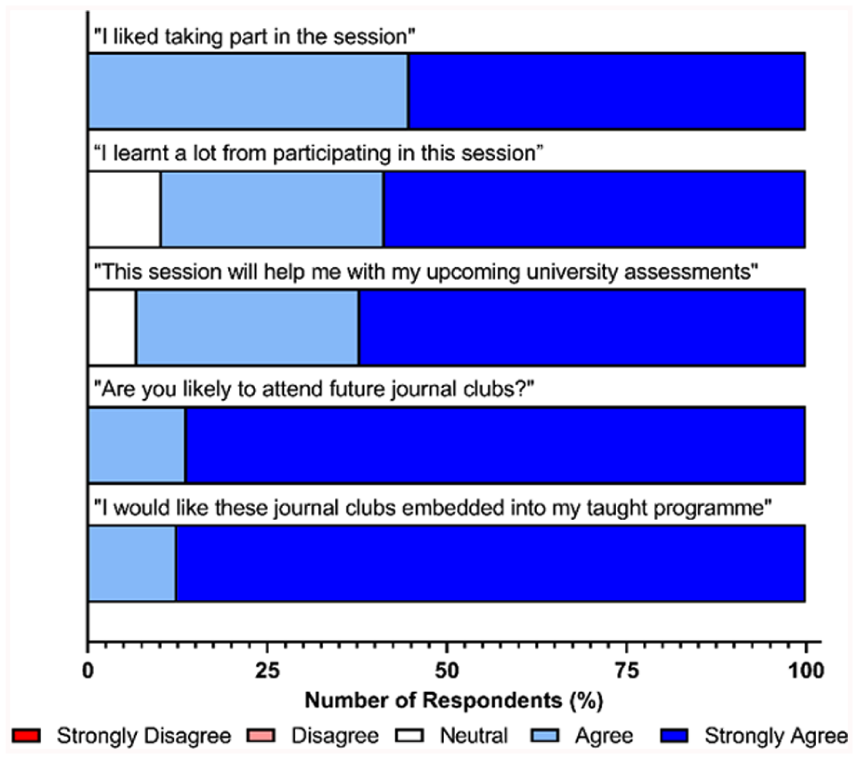
Participants experience of engaging with extracurricular journal clubs. Shades of red indicates negative responses, white indicates neutral responses and shades of blue indicate positive responses. N = 29.
Surveys of Graduate Capital and Research Interest Following Participation in Extracurricular Journal Clubs
Following the completion of the extracurricular journal clubs, participants (N = 29) were asked questions regarding the development of skills aligned to graduate capital (Figure 2(a)), academic research skills (Figure 2(b)), and research interest (Figure 2(c) and (d)).
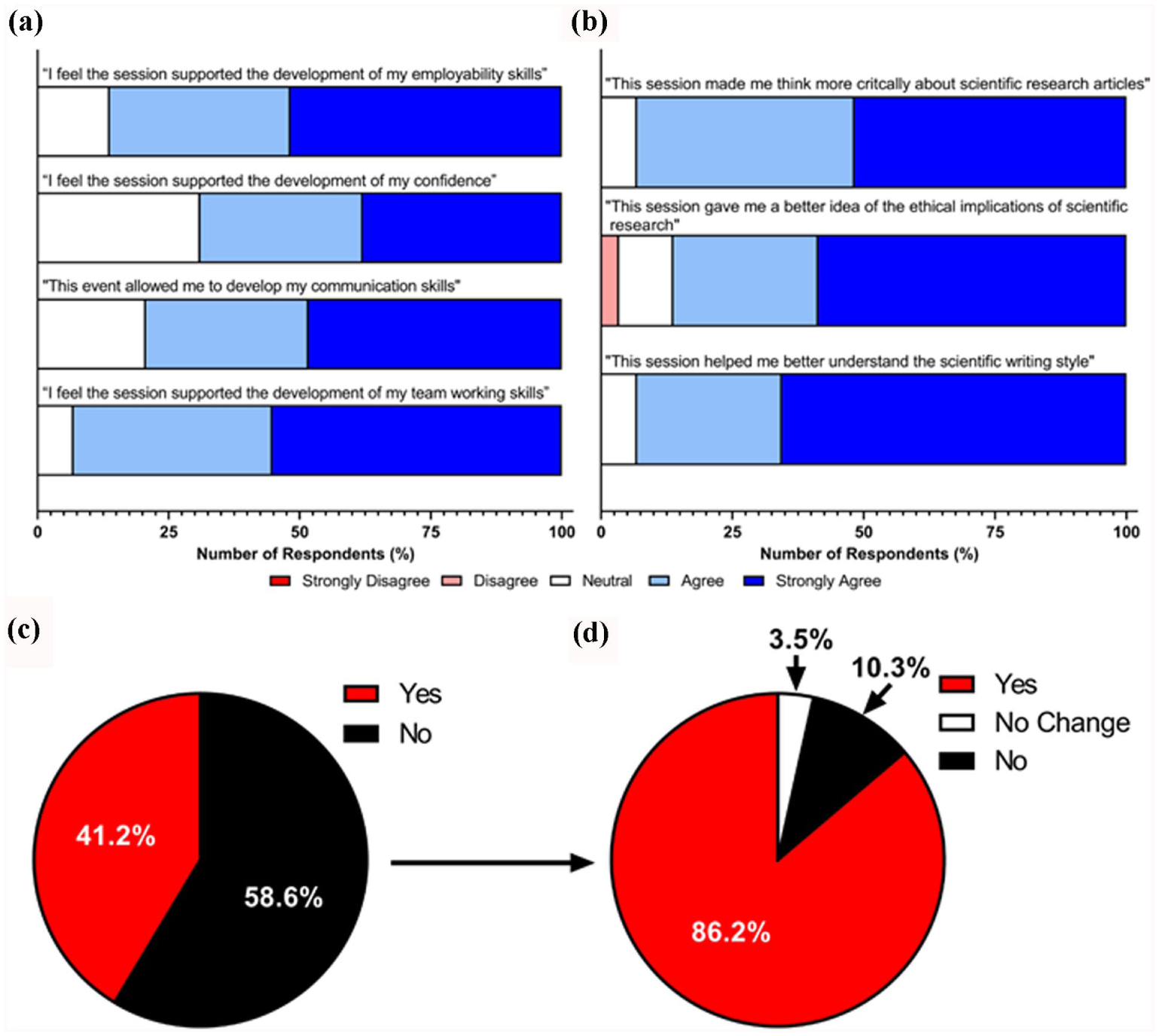
Extracurricular journal clubs induce positive effects on graduate capital development, academic research skills and research career interest: (a) Participant responses to questions relating to graduate capital development, (b) participant responses to survey questions relating to research skill development, (c) participant research career interest before participation in extracurricular journal clubs, and (d) participant change in research career interest following the completion of the extracurricular journal club. N = 29 for all figures.
Participants who provided feedback regarding extracurricular journal clubs stated that the session had a positive impact on skills aligned to graduate capital (Figure 2(a)). Most extracurricular journal club participants stated that the session supported the development of their employability skills (86.2%), communication (79.3%), and teamwork skills (93.1%). Participants also expressed that the extracurricular journal clubs enhanced their confidence (69.0%).
Participants also stated that the extracurricular journal clubs positively impacted on their academic research skills (Figure 2(b)), with 93.1% stating the session made them think more critically about scientific research and that 93.1% said the session helped them better understand the scientific writing style. The majority of participants also stated that the journal clubs gave them a better understanding of the ethical implications of scientific research (86.2%).
Evaluation of career aspirations revealed that 41.2% of participants were interested in research-based careers before the session (Figure 2(c)). However, following engaging with extracurricular journal clubs, participants’ interest in research-based careers significantly increased to 86.2% (Mann-Whitney U = 232, N = 29, p < .001, Figure 2(d)).
Surveys of Student Experience Following Participation in Curriculum-Embedded Journal Clubs
Following the completion of the curriculum-embedded journal club, students (N = 52) were surveyed regarding their experience participating in the session (Figure 3). Overall, the majority of students had a positive experience with minimal negative responses provided. Most students stated that they enjoyed participating in the session (78.9%), learnt a lot from the session (86.5%), the session would help with upcoming assignments (88.5%), they were likely to participate in future extracurricular journal clubs (86.5%) and preferred this style of learning to typical didactic lectures (78.9%).
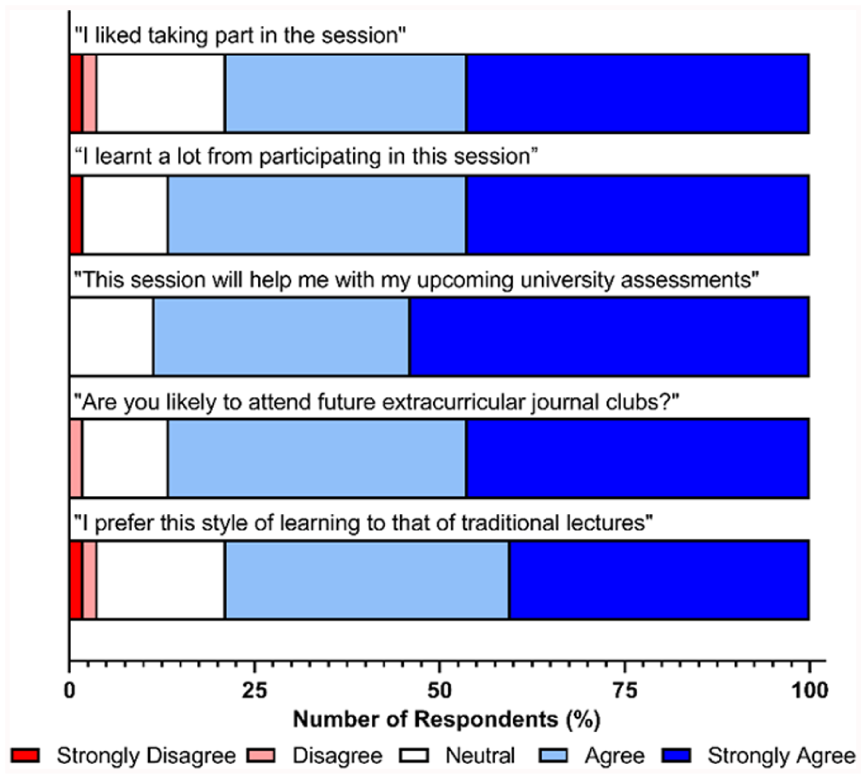
Participants experience of engaging with curriculum-embedded journal clubs. Shades of red indicates negative responses, white indicates neutral responses and shades of blue indicate positive responses. N = 52.
Surveys of Graduate Capital, Academic Literacy, and Research Interest Following Participation in Curriculum Embedded Journal Clubs
Students (N = 52) also highlighted that the embedding of journal clubs into the curriculum had positive impacts on their graduate capital, academic research skills, and research career interests (Figure 4). When questioned regarding the impact of key elements associated with their graduate capital (Figure 4(a)) the majority stated it positively influenced all elements evaluated relating to confidence (76.9%), communication (71.2%), and team/group working (78.8%). Most students (69.2%) also stated that participation in this session would benefit their future employability.
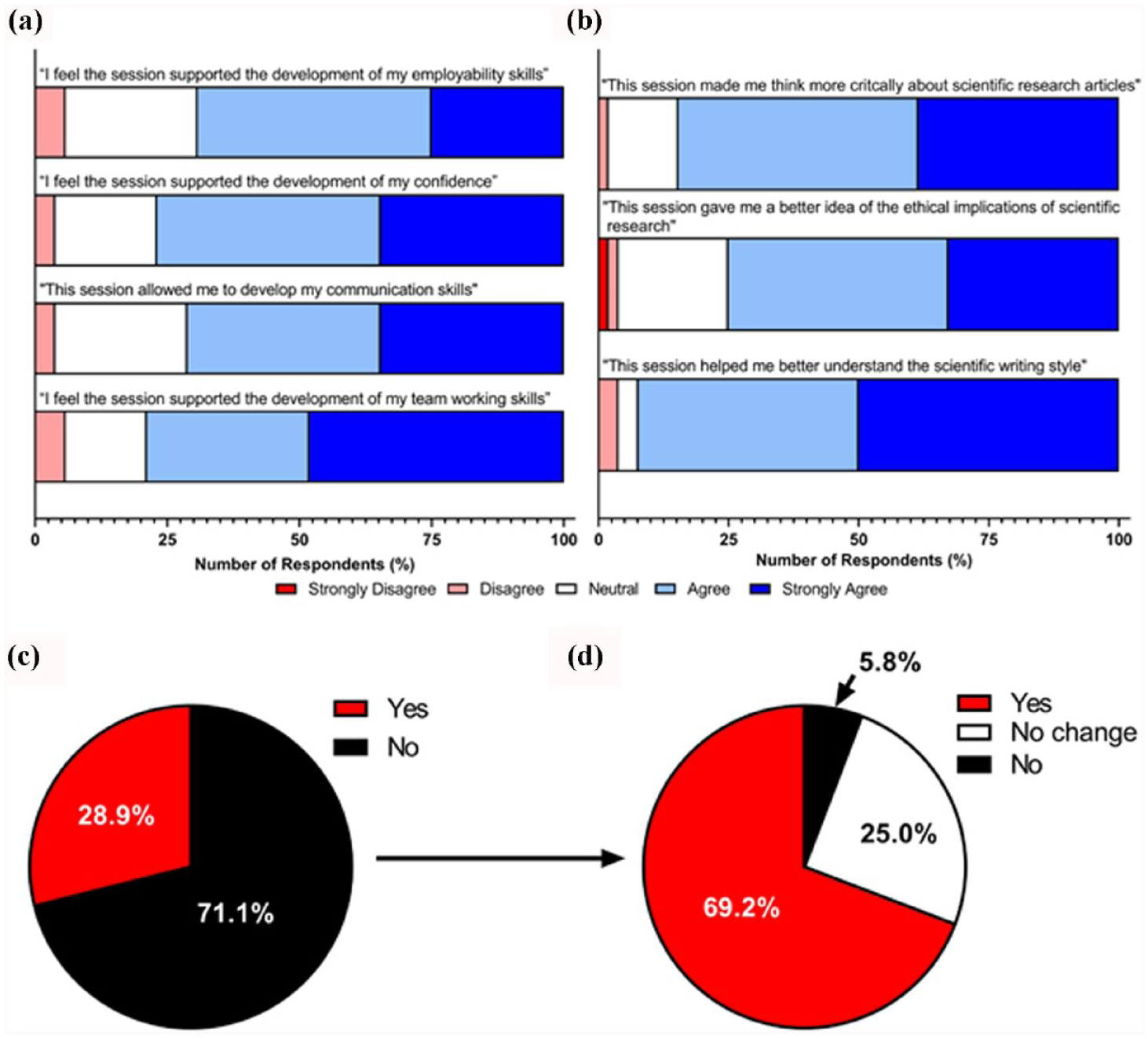
Curriculum-embedded journal clubs induce positive effects on graduate capital development, academic research skills and research career interest: (a) Participant responses to questions relating to graduate capital development, (b) participant responses to survey questions relating to research skill development, (c) participant research career interest before participation in curriculum embedded journal club session, and (d) participant change in research career interest following the completion of the curriculum embedded journal club. N = 52 for all figures.
Responding to questions associated with academic research skills (Figure 4(b)), students highlighted their positive experiences of participating in the journal club session. They stated that the session had a positive impact on their critical thinking (84.6%), ethical understanding (75.0%), and understanding of the scientific writing style (92.3%). It was also identified that engaging with the session significantly increased participants interest in academic research from 28.9% (Figure 4(c)) before the session to 69.2% after the session (Mann-Whitney U = 806, N = 52, p < .001, Figure 4(d)).
Curriculum-Embedded Journal Clubs Enhance Students Perceived Academic Literacy
Pre and post-evaluation of students’ academic literacy identified participation in curriculum-embedded journal clubs significantly enhanced numerous aspects of students (N = 130) self-reported academic literacy and scientific writing, as shown in Figure 5. These data show significant enhancement of the scientific writing style (Pre: M = 4.8, SD = 1.7; Post: M = 6.7, SD = 1.6, sum of signed ranks (W) = 5,773, N = 130, p < .001, Figure 5(a)), how to read scientific literature (Pre: M = 5.1, SD = 1.9; Post: M = 7.0, SD = 1.6, W = 5515, N = 130, p < .001, Figure 5(b)), and the wider implications of conducting scientific research (Pre: M = 4.7, SD = 1.7; Post: M = 6.8, SD = 1.7, W = 6102, N = 130, p < .001, Figure 5(g)). This analysis also revealed that participation significantly increased students understanding of data visualisation and presentation within scientific literature (Pre: M = 5.3, SD = 1.9; Post: M = 6.9, SD = 1.5, W = 4,020, N = 130, p < .001, Figure 5(e)). furthermore, students reported significantly increased knowledge of scientific research article structure (Pre: M = 4.8 ± 1.8; Post: M = 7.2, SD = 1.7, W = 6,621, N = 130, p < .001, Figure 5(c)), scientific abstract structure and function (Pre: M = 4.7 ± 2.0; Post: 7.1, SD = 1.7, W = 6,355, N = 130, p < .001, Figure 5(d)), and the content and function of a scientific article discussion section (Pre: M = 5.0, SD = 1.8; Post: M = 7.0, SD = 1.6, W = 5567, N = 130, p < .001, Figure 5(f)).
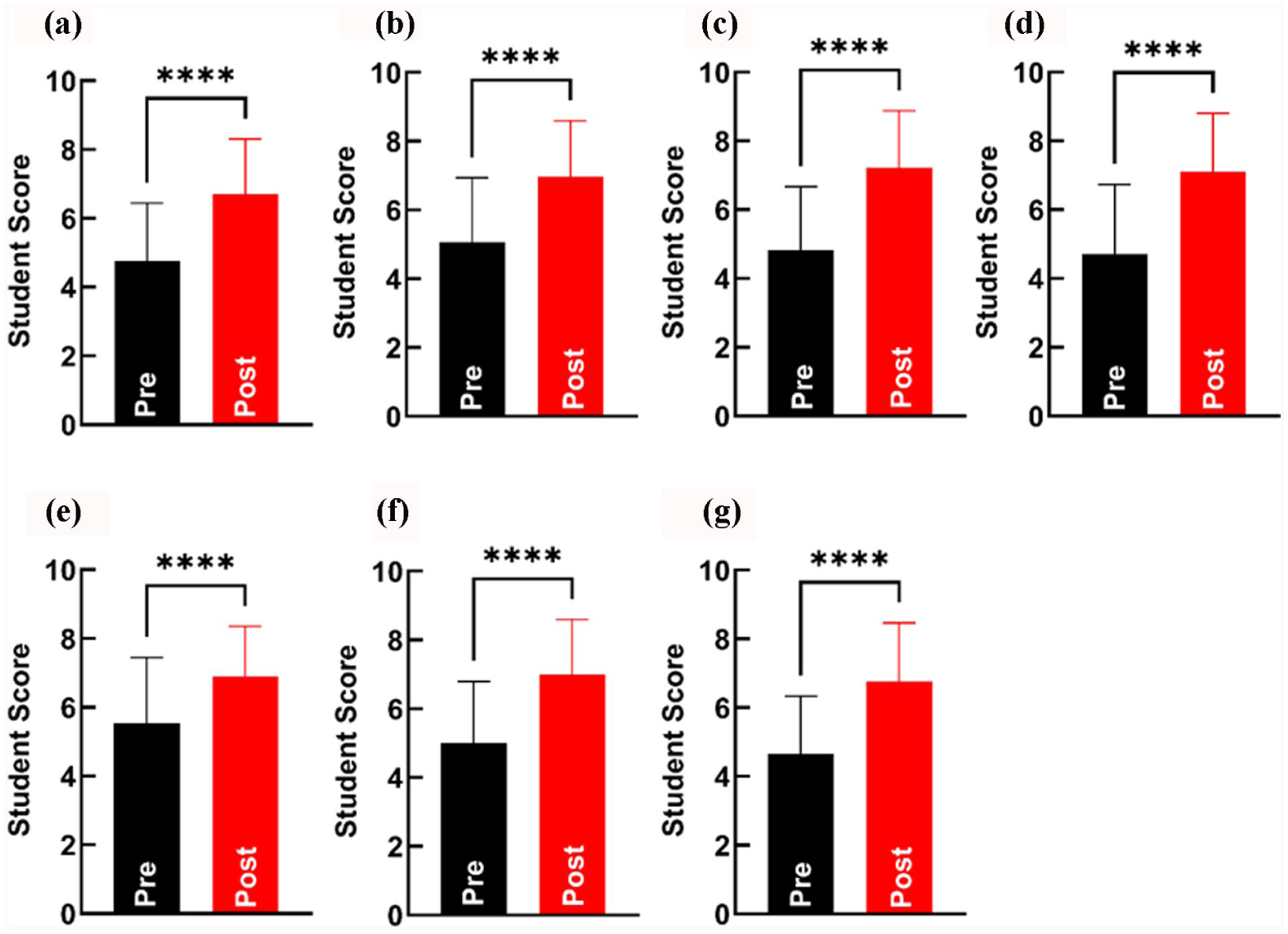
Curriculum-embedded journal clubs significantly enhanced students perceived academic literacy. Pre- (Black) and post-session (Red) impact of the curriculum embedded journal club (a) Student knowledge of the scientific writing style, (b) Student understanding of how to read a scientific research article, (c) Student knowledge of research article structure, (d) Student knowledge of scientific abstract structure and function, (e) Student understanding of data presentation and visualisation, (f) student understanding of the content and function of a research article discussion section, and (g) Student understanding of the wider implications of scientific research. Student knowledge and understanding self-scored on a scale of 0 (no knowledge) to 10 (maximal knowledge). N = 130 for all figures. Data expressed as M and SD. Statistical significance was determined by Wilcoxon matched-pairs signed rank tests for all figures.
Influencers of Attainment Gap Development Has Minimal Impact on Student Journal Club Experience and Graduate Capital Development
Stratification of students based on factors associated with higher education attainment gaps (entry qualification route, minoritised ethnic status, and likelihood to participate in HE [POLAR 4]) revealed minimal disparities in student experience and graduate capital development was observed as shown in Supplemental Figures S5, S6, and S7 respectively. No significant differences in student experience and graduate capital development were observed when students were grouped based on POLAR 4 score into low (Quintiles 1 and 2), intermediate (Quintile 3), and high (Quintiles 4 and 5) cohorts (Supplemental Figure S7). Similar findings were observed when students were grouped based on vocational and non-vocational entry qualifications (Supplemental Figure S5).
When students were stratified based on their minoritised ethnic status (Supplemental Figure S6), only students’ perceptions regarding whether the embedded journal clubs enhanced employability skills differed. Students from minoritised ethnic backgrounds scored the embedded journal clubs significantly lower at enhancing their employability skills than those from non-minoritised backgrounds (Non-minoritised [N = 39]: M = 4.38, SD = 0.65 vs. Minoritised [N = 13]: M = 3.72, SD = 0.86, t(50) = 2.56, p = .013, Supplemental Figure S6G).
Did Student Experience and Skill Development Differ Between Journal Club Delivery Modalities?
Comparisons between student experiences in completing extracurricular and curriculum-embedded journal clubs (demographic comparisons of these cohorts described in Supplemental Table S8) revealed significant differences in experience, graduate capital development, and academic research skills (Table 1). Comparisons revealed extracurricular provision was more strongly liked than when embedded into the curriculum (Embedded [N = 52]: M = 4.2, SD = 0.9; Extracurricular (N = 29): M = 4.6, SD = 0.5, t(79) = 2.04, p = .045) and extracurricular attendees believed the session significantly enhanced their employability skills compared to curriculum embedded learners (Embedded [N = 52]: M = 3.9, SD = 0.9; Extracurricular (N = 29): M = 4.4, SD = 0.7, t(79) = 2.63, p = .010). Extracurricular attendees also developed a significantly greater understanding of the ethical implications of scientific research than those who attended the curriculum-embedded session (Embedded [N = 52]: M = 4.0, SD = 0.9; Extracurricular [N = 29]: M = 4.4, SD = 0.8, t(79) = 2.20, p = .031). Students who engaged with extracurricular journal clubs were significantly more likely to attend and recommend extracurricular journal clubs to their colleagues than students who engaged with the curriculum-embedded sessions (Embedded [N = 52]: M = 4.3, SD = 0.8; Extracurricular [N = 29]: M = 4.7, SD = 0.5, t(79) = 2.71, p = .008). No significant differences were observed in all other questions relating to experience, graduate capital development, and academic research skills.
Comparisons of Student Experience, Graduate Capital, and Academic Research Skills Between Curriculum-embedded and Extracurricular Journal Club Experiences.
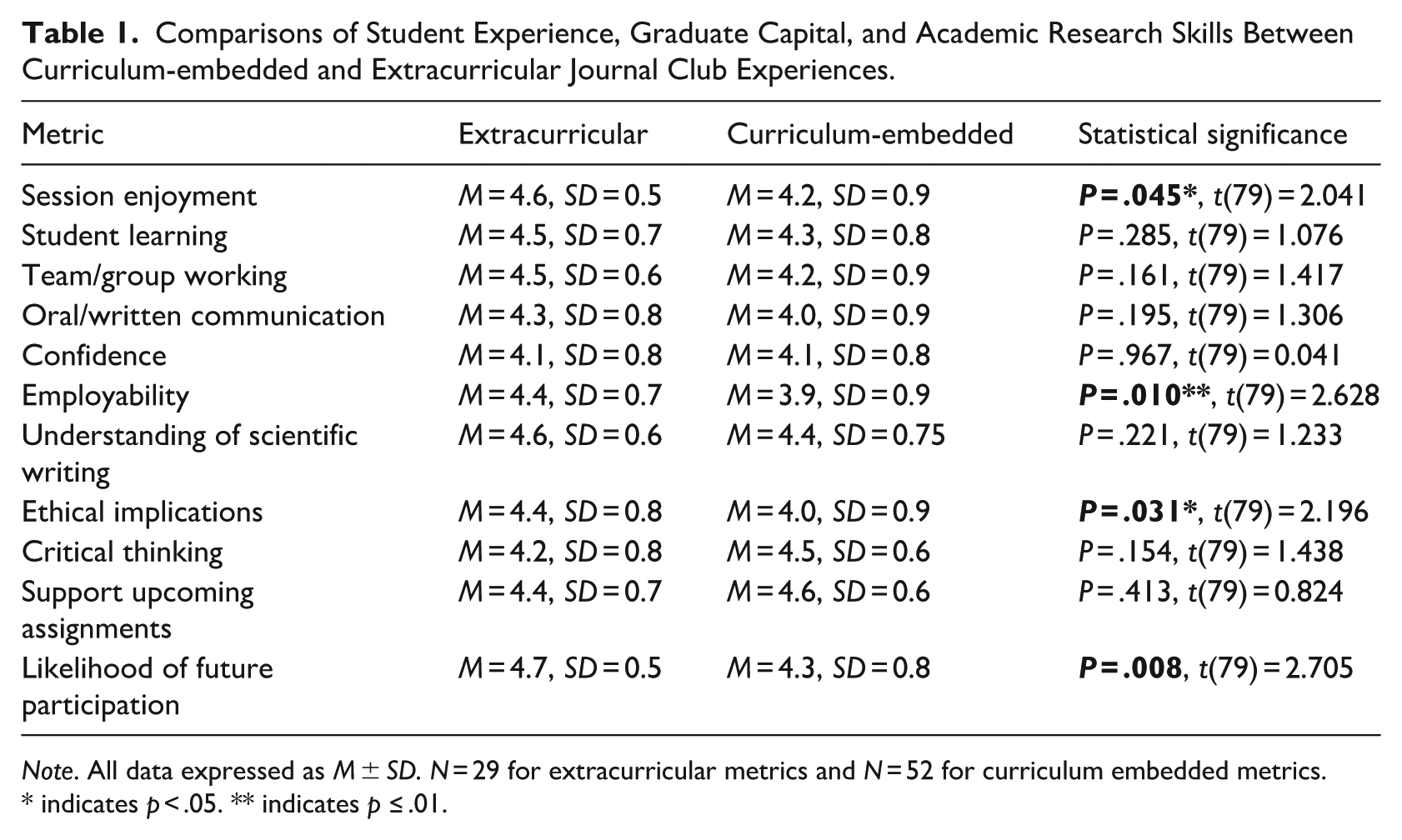
Note. All data expressed as M ± SD. N = 29 for extracurricular metrics and N = 52 for curriculum embedded metrics.
indicates p < .05. ** indicates p ≤ .01.
Discussion
Academic literacy is a fundamental threshold concept required across a range of disciplines. The ability to read, understand, and write academic material is important for student success and their future employability. Therefore, ensuring student understanding of the function and structure of academic literature is paramount for academics to embed into taught curriculums across these disciplines. Many institutions globally utilise traditional didactic lectures to communicate the structure and function of academic literature and to teach scientific writing. However, it is well known that modern students do not engage effectively with these more traditional higher education teaching modalities (Humphries & Clark, 2021). As a result, the design and implementation of more active and engaging approaches to disseminate this content should be considered within HE.
One approach that should be considered is that of the journal club. However, this approach to learning is mainly utilised within small cohorts and has previously been thought to not be scalable to very large undergraduate programmes, something that will be an increasing issue as more students continue to enrol at HE institutions. To better understand the suitability of journal clubs as a pedagogical tool, we sought to initially evaluate the effectiveness of extracurricular journal clubs before investigating if this approach is scalable and effective for embedding into the curricula of large undergraduate programmes.
The Benefits of Extracurricular Journal Club Delivery and Lessons Learned for Curriculum Embedding
Delivery of journal clubs as an extracurricular opportunity was well received by students with 100% of participants liking the session (Figure 1), with the majority of participants providing highly positive feedback on the development of their transferable skills associated with enhancing their graduate capital and their knowledge of scientific research (Figure 2(a) and (b)). All participants also reported that they would like journal clubs embedded into their taught curriculum (Figure 1) to develop these transferable skills as a part of their taught programmes.
The data reported here indicate that there is increased engagement with journal clubs when students actively learn and participate in the structure of the sessions, with most participants finding journal clubs a good way to enhance their communication and teamwork skills with peers from different subject areas and levels of study (Figure 2(a)). Collaborative efforts to engage students in learning and teaching styles have shown positive outcomes for both teachers and students, benefitting from increased constructive discussion between both peers (via peer-to-peer communication) and academic staff (Sartania et al., 2022). This approach also facilitates interaction between students on different programmes of study and at various stages of their university journey, potentially leading to the development of interdisciplinary relationships and enhance students’ sense of belonging. Whilst higher level students, such as postgraduates, participating in the journal club may result in a confounding data variable with students from lower levels of study due to their expected higher level of academic knowledge, we find that due to the relatively small number of participants from postgraduate level, that there would be a minimal impact on the overall impact of extracurricular journal clubs.
Journal clubs are exceptional learning activities that give students the time and safety to discuss teaching topics with peers but also encourage students to broaden their horizons and academic knowledge, allowing students to develop themselves academically and personally. They also provide students with the opportunity to learn from peers of various levels of study and differing backgrounds, which studies have found to be of great importance for development (Pennington et al., 2021). This study by Pennington et al. (2021) examined student learning during workshops containing participants from varying backgrounds and found students had an increased understanding of knowledge gaps, developed stronger knowledge of new competencies and provided skills that could not be obtained elsewhere. These findings plus those of our study (Figure 1) demonstrate the importance of group learning and skill development to positively impact student outcomes. This increased emphasis on peer-to-peer learning gives students a chance to reflect on the knowledge they have gained and develop a sense of belonging within a group, as well as increasing their confidence in open discussions, data presentation, and handling questioning (Drumm et al., 2019).
Extracurricular activities can be poorly attended when compared to timetabled sessions due to students increased commitments either academically or personally. Embedding journal clubs into curricula aims to alleviate these main issues of extracurricular delivery and give students with limited availability outside the structured timetable due to additional commitments (paid employment, caring responsibilities, and volunteer work), the opportunity to develop these key skills. To do this however, we identified one key limitation of initiating and expanding the delivery of the journal club to a larger cohort of students when embedding it into the module, namely identifying a physical space to enable large groups to discuss topics, enable student interactivity throughout and facilitating discussions for larger groups with the use of members of staff or paid demonstrators. These challenges were met by repurposing a large flat laboratory space and prompting students to provide group feedback using online tools on screens within the space.
The Pedagogical Impact of Embedding Journal Clubs Into the Curriculum
When journal clubs were embedded into the curriculum within a first-year laboratory skills module to enhance students’ understanding of scientific literature aligned to an upcoming laboratory report assignment, we observed participating students reported similar levels of positive responses following the curriculum-embedded session (Figure 5 and Table 1) to those observed during the extracurricular sessions (Figures 2 and 3), despite the substantially larger size of the participating cohort. Despite similarities in overall impact, we did observe significant differences in student response scores between the two delivery approaches (Table 1) based on similar student demographic information to minimise confounding variability between comparator groupings (Supplemental Table S8). We also found participation significantly enhanced students perceived understanding of all elements of academic literacy evaluated (Figure 5), showcasing the potential of journal clubs as a tool for teaching students from a wide range of disciplines key competencies associated with academic literacy and academic research (Table 1). Our data corroborates the findings of Carragher and Brereton (2022) who concluded that journal clubs gave postgraduate research students a greater awareness of research knowledge upon completion of the session.
Developing an understanding scientific literature has been shown to increase critical thinking and enable students to identify knowledge gaps (Hyytinen et al., 2019). Our data shows that students developed these academic literacy skills during the journal clubs (Figure 5) and were able to effectively communicate their critical thinking with colleagues and peers during these sessions (Table 1). These skills are ubiquitous across several disciplines and therefore benefit a wide range of undergraduate courses. Encouraging students to discuss data and topics within larger groups allows students to exchange ideas and helps to comprehend difficult topics, through peer-to-peer learning. Group-based peer-to-peer learning is an effective way in which students can problem solve, critically analyse, and bond with their peers, which has been shown to promote academic achievements (Kalaian et al., 2018). Such bonding can allow students to feel socially accepted and develop a sense of community within a small group of like-minded students. This can give students a sense of belonging which has been shown to help students with the transition into higher education and can encourage students to remain enrolled within higher education (Meehan & Howells, 2019).
During evaluation of the curriculum embedded journal clubs, we received minimal verbatim comments from students (N = 2, data not shown) as this was an optional addition to the feedback survey. These comments related to one student deeming the questions asked to be too simplistic and dd not challenge them enough, with the other relating to the speed of the session with another student stating that they thought the session was a bit rushed. These comments highlight some potential pedagogical design changes which could be implemented in journal clubs to ensure a more appropriate level of stretch and challenge for more advanced students as well as further increasing the time to allow for longer discussions before group answers had to be submitted. The later of these two may pose a challenge with teaching slots potentially limited to 1 or 2 hr (as was the case with the evaluated session) without decreasing the number of questions asked, to enable more discussion time.
Why Is Scientific Literature Important for Students to Learn Early in Their Degrees?
As previously described, academic literacy is a paramount intended learning outcome across a wide range of disciplines with lower student understanding of academic literacy associated with worse student outcomes. Previous work has reported that students can find academic reading to be ‘dry’, with Edwards and Miller (2008) showing that mixed modalities of reading can bridge the academic literacy gap. Through the increased interactivity and critically guided approach of journal clubs, our data shows that student’s development of academic literacy significantly improves following just a single journal club (Figure 5). This corroborates the findings of Drumm et al. (2019) who found that the addition of peer mentorship workshops and guidance within undergraduate journal clubs was able to enhance overall grades and student preparation for assessment. Journal clubs offer an alternative approach to the teaching of fundamental academic and scientific reading and writing in a fun and interactive way, thus promoting a positive student experience.
A study by Rajhans et al. (2021) found undergraduate students to be more passive than interns or postgraduate students and found selected topics to be more advanced for their ability, which can increase disengagement. In the curriculum-embedded version of the journal club utilised within our study, the content was constructively aligned by academic staff to be directly related to an upcoming assessment. This alignment acted as an anchor point to ensure the content was not too advanced for the student’s level of study and that students perceive increased value in their attendance and engagement due to its alignment to the assessment. Students reported that their participation in the journal club significantly enhanced their knowledge of scientific writing (Figure 5(b)) and would support their upcoming assessments (Figure 5), corroborating the rationale proposed when initially designing the curriculum-embedded journal clubs. Through increasing student engagement in academic literature early in their scientific career enables students to develop a foundation of learning that will enhance throughout the remainder of their academic life.
Do Journal Club Style Activities Benefit Learners From Traditionally Non-HE Backgrounds?
Within HE, addressing and ultimately eliminating awarding gaps of various types (Mowat, 2018) have been challenges for HE institutions globally. Over the last decade, minoritised ethnic status (McDuff et al., 2018), gender (Cotton et al., 2016), and more recently entry qualification awarding gaps (Mitton & Hensby, 2024; Peake, 2018) have been priorities within institutions to ensure equity in student outcomes. This study which found minimal differences in student populations when stratified based on HE awarding gaps (Supplemental Figures S3–S5). Our study found no significant differences in experience and transferable skill development when students were stratified based upon HE entry qualification and POLAR4 scores (Supplemental Figure S3 and S5) indicating equity of experience between these student populations. We found similar experiences when students were stratified based on minoritised ethnic status (Supplemental Figure S4). However, we did observe that students perceived enhancement of employability skills were lower in minoritised ethnicity students compared to non-minoritised individuals (Supplemental Figure S4G). Previous studies have reported that students from minoritised ethnic backgrounds may have lower social and educational capital on entry to HE (Higher Education Policy Institute, 2020) due to limited access to social or professional networks who are in graduate-level positions (Hensby et al., 2024). This may indicate that first-year minoritised ethnicity students may not identify how the skills learnt within taught sessions relate to their future employability.
Limitations of Embedding Journal Clubs Into the Taught Curriculum
This is an important factor to determine as in recent years the interest in biosciences has grown exponentially and is projected to increase further in the coming years, driven by students’ experiences and increased awareness following the COVID-19 pandemic. This has resulted in increased programme and module sizes meaning that effective small group teaching is more difficult to deliver due to infrastructure limitations or it being too intensive on finite staff workloads. Whilst we have shown that journal clubs can be embedded into the curriculum of large undergraduate modules and produce significant benefits on student experience and knowledge acquisition, the authors acknowledge the potential infrastructure and staff workload implications that may arise. To address potential infrastructure limitations without the need for a significant number of repeated sessions, the authors propose a transition to an online approach for the delivery of journal clubs at a large scale. The utilisation of ‘breakout’ rooms available within many online collaboration tools (Microsoft Teams and Zoom) will allow for the small peer-to-peer collaboration and discussive elements that were observed within the in-person sessions delivered in this study, with an academic facilitator able to quickly rotate between groups to facilitate engagement. Furthermore, previous studies on online (Li & St Jean, 2021) and social media (Stoneman & Hiremath, 2020) journal clubs delivered during the pandemic have shown this delivery method to be effective in increasing students’ engagement with research and wider academic knowledge.
Study Limitations
This study sought to determine the pedagogical benefits of journal club activities within higher education and their suitability for integration into large higher education cohorts. This study did not seek to optimise the delivery approach for journal clubs as the authors believe these are highly dependent on the environment they are being delivered in, and a one size fits all approach may not be optimal for this method of learning. Journal clubs should be designed based on a knowledge of the student cohort conducting them, and with a strong emphasis on constructive alignment to the curriculum and intended learning outcomes being assessed. Therefore, whilst the authors offer a suggestion for the design and integration of a journal club-based activity into the curriculum in Supplemental Figure S4, this approach should be refined to meet the individual requirements of the academic cohort in which it is utilised.
It should therefore be considered if seeking to deliver journal clubs within the curriculum to conduct the following factors: (1) the size of the cohort in which the journal club will be utilised, (2) alignment to intended learning outcomes, (3) identification of appropriate literature suitable for the module/session being embedded into, (4) is there an appropriate space in which a journal club can be delivered at scale, and (5) what questions are you going to use to get students to critically analyse the selected research article (M. Jones & Morgan, 2025). Through the consideration of these factors we believe that the journal club concept can be translatable to any subject area across higher education, and could also be expanded to subject areas where conventional research articles are not common practice through the replacement of journal articles with another piece of literature which academics may wish for them to critically evaluate, such as legal proceedings, case reports, and accounts.
The findings of this study highlight the benefits of journal clubs on self-reported student experience, academic literacy, and graduate capital skill development, the authors do acknowledge that students self-reporting of opinions does not directly measure an increase in expertise or experience in a similar fashion to a more traditional summative format such as a written assessment and subsequent grade evaluation. However, students’ self-belief in their academic knowledge has psychological benefits which may provide enhanced confidence in their ability, further supporting the benefits of journal club activities.
Conclusion
This study highlights the broad pedagogical benefits of journal clubs within higher education to enhance student’s knowledge, academic literacy, and wider graduate capital. We also for the first time showcase how journal clubs can be designed and delivered to be an appropriate and scalable pedagogical tool for higher education taught module delivery across a wide range of disciplines and cohort sizes. Further study is now required to ascertain the direct summative impact of the implementation of journal clubs within the curriculum.
Supplemental Material
sj-docx-1-alh-10.1177_14697874251388982 – Supplemental material for Student Perceptions on the Use of Journal Clubs for Enhancing Academic Literacy
Supplemental material, sj-docx-1-alh-10.1177_14697874251388982 for Student Perceptions on the Use of Journal Clubs for Enhancing Academic Literacy by Nicola Morgan and Matthew Allan Jones in Active Learning in Higher Education
Footnotes
Acknowledgements
The authors would like to acknowledge the student facilitators (Arooj Afzal, Aisha Ahmed, Mariam Azimeh, Adaobi Chukwudolue, and Izobelle Morrell-Neal) who were involved in the delivery and support of several extracurricular journal clubs. We would like to thank the Walter Bodmer teaching laboratory technical team at the University of Salford for their support preparing for the curriculum embedded journal club session. The authors would further like to thank Professor David Greensmith (University of Salford) for establishing the Human and Natural Sciences Research Careers Working Group and supporting the corresponding author to lead this group and facilitate the delivery of extracurricular journal clubs.

Ethical Considerations
The studies involving human participants were reviewed and approved by the ethics committee at the University of Salford under the Ethics Application ID: 10716. All questionnaires and analysis procedures were also approved by this ethics committee.
Consent to Participate
The participants provided their written informed consent to participate in each stage of the study and were allowed to withdraw at any time prior to publication.
Author Contributions
NM: Investigation, Methodology, Visualisation, Writing–original draft, and Writing – review and editing. MJ: Conceptualisation, Data curation, Funding acquisition, Project administration, Resources, Formal Analysis, Investigation, Methodology, Visualisation, Writing – original draft, and Writing – review and editing.
Funding
The authors disclosed receipt of the following financial support for the research, authorship, and/or publication of this article: Previous conference communication of this project at Physiology 2023 was partially funded by The Physiological Society, UK under the Grant code: 09255-FR-Matthew Jones.
Declaration of Conflicting Interests
The authors declare that the research was conducted in the absence of any commercial or financial relationships that could be construed as a potential conflict of interest.
Data Availability Statement
All anonymised data analysed as a part of this manuscript is available from the corresponding author upon reasonable request. Requests to access the datasets should be directed to the corresponding author: Dr Matthew Jones, E-mail:
Supplemental Material
Supplemental material for this article is available online.
Author Biographies
References
Supplementary Material
Please find the following supplemental material available below.
For Open Access articles published under a Creative Commons License, all supplemental material carries the same license as the article it is associated with.
For non-Open Access articles published, all supplemental material carries a non-exclusive license, and permission requests for re-use of supplemental material or any part of supplemental material shall be sent directly to the copyright owner as specified in the copyright notice associated with the article.
