



Abstract
Educational settings often operate in resource-constrained environments, limiting opportunities for leadership development. Most research focuses on long-term, resource-intensive programs (e.g., mentoring, coaching, leadership development courses), which restrict accessibility and scalability. This study evaluates a short-duration, student-centered leadership development initiative—the “Learning with Leaders” program—that engages higher education students in structured, 1-hr sessions with experienced leaders. Using qualitative data from 72 participant feedback surveys and testimonials, we examined the program’s impact on leadership knowledge, self-efficacy, and identity formation. Findings indicate that these microdose interventions enhance leadership knowledge, strengthen leader self-efficacy, and support identity formation through active social learning and reflective practices. These results suggest that short-term, active learning can complement traditional leadership development approaches by offering a scalable and resource-efficient alternative to long-term programs. This study contributes to leadership development theory by introducing the concept of microdose interventions and demonstrating their effectiveness in fostering leadership identity and self-efficacy.
Keywords
Leadership development enhances the effectiveness of individuals and groups in both leadership and followership roles (DeRue & Myers, 2014). It involves improving confidence to lead, strengthening leadership identity, and expanding knowledge and skills (Day & Dragoni, 2015). Leadership development activities range from formal programs like university courses and workshops to informal strategies such as coaching, mentoring, and self-directed learning (e.g., Deng et al., 2022; Mullen, 2023). Despite its recognized importance, leadership development is often designed as long-term initiatives, creating barriers to accessibility for individuals with limited time or financial resources. Existing research focuses largely on long-term interventions, leaving a gap in understanding how shorter, more concentrated engagements foster leadership skills. Specifically, little is known about how short-term, structured engagements facilitate leadership identity formation and self-efficacy or the mechanisms through which brief, active learning experiences translate into leadership development outcomes.
While leadership effectiveness is often measured using objective indicators such as leadership effectiveness ratings (Lacerenza et al., 2017), subjective experiences within leadership development programs are also valuable for understanding how leadership growth occurs. To address these gaps, this study examines “microdose” leadership development—short, structured sessions designed to build leadership knowledge, self-efficacy, and identity in a resource-efficient manner. Unlike informal or incidental encounters, microdose interventions provide targeted learning experiences within a defined structure and time frame. These perspectives suggest that short-term leadership development is facilitated through three interconnected mechanisms: (1) vicarious learning through observation (social learning), (2) knowledge construction through dialogue and reflection (social construction), and (3) identification with role models (social and personal identification).
Leadership development, though crucial, often comes with significant financial and time commitments. Organizations worldwide invest around $3.5 billion USD annually in leadership development initiatives (Training Industry, 2020), with expenses ranging from continuing education support to costly executive coaching sessions (Tyler, 2014; White, 2019). These investments also include internal programs such as in-house training and workshops (Grocutt et al., 2022). However, the substantial resources required for these initiatives can be particularly challenging for organizations with limited budgets (Megheirkouni & Mejheirkouni, 2020). The high costs and long durations of traditional leadership development programs may even result in disengagement and increased absenteeism among employees (Mercer Mettl, 2019). These financial constraints are not unique to corporate environments; higher education institutions also face limited budgets that restrict their ability to implement extensive leadership programs, despite growing recognition of leadership development as a critical component of student success (McCauley-Smith et al., 2015; Reyes et al., 2019).
Most leadership development research in higher education also tends to focus on long-term, resource-intensive strategies, leaving a gap in understanding how leadership skills can be effectively developed through shorter, more concentrated interventions. Existing studies frequently examine comprehensive leadership programs spanning semesters or years (Day & Thornton, 2018; Yukl, 2013), while research on alternative models—such as short-term, cost-effective leadership development methods—remains limited (Megheirkouni & Mejheirkouni, 2020). For example, research often examines longer-term approaches like mentoring (Deng & Turner, 2024; Grocutt et al., 2022; Samuels et al., 2023) and leadership development courses (e.g., Alho et al., 2023; Miscenko et al., 2017), while short-term programs remain understudied. This narrow focus overlooks the potential of brief, structured interventions to foster leadership development efficiently and inclusively. This oversight highlights the need for research into “microdose” leadership development—highly targeted, short-duration engagements designed to enhance leadership growth while minimizing logistical and financial burdens.
To address this research gap, this paper examines the “Learning with Leaders” program as a case study of an effective short-term leadership development initiative. The program uses active learning strategies, including reflective practice and social learning, to foster leadership knowledge, self-efficacy, and leadership identity formation in students. By leveraging the benefits of experiential learning, the program provides students with opportunities to interact directly with experienced leaders in structured, 1-hr sessions. Through this analysis, the study aims to enhance understanding of how leadership development can be fostered among students in higher education, particularly in resource-constrained environments. Building on existing frameworks, such as sense-making and leadership identity formation (Bonney et al., 2024; McCauley-Smith et al., 2015; Skalicky et al., 2020), this research extends theoretical discussions on leadership development by integrating microdose interventions into the broader leadership education landscape.
This study has two primary objectives: (1) to evaluate the effectiveness of a short-term leadership development program, and (2) to explore the mechanisms through which such a program facilitates leadership growth, particularly through social learning and reflective practice. The paper is organized into three main sections. First, we introduce the “Learning with Leaders” program, detailing its goals and expected learning outcomes related to leadership development. Next, we explore three theoretical lenses that explain how and why leadership development occurs in short-term programs, emphasizing the role of active learning in fostering leadership growth. Finally, we analyze open-ended feedback and testimonials from participants to describe their subjective experiences of leadership growth. We conclude by discussing the theoretical and practical implications of our findings and offering recommendations for organizations and educational institutions seeking to implement scalable, resource-efficient leadership development initiatives.
This paper makes three key contributions to the field of leadership development. First, it introduces microdose leadership development as an accessible and cost-effective alternative to traditional long-term programs. Second, it advances understanding of leadership development in higher education by using the “Learning with Leaders” program as a case study, demonstrating how leadership can be effectively nurtured in resource-constrained settings. This aligns with the sense-making and identity-building processes highlighted in prior research (Bonney et al., 2024; McCauley-Smith et al., 2015; Skalicky et al., 2020). Third, it offers practical guidance for organizational development professionals on implementing short-term leadership programs. By expanding discussions on leadership learning models, this study provides evidence-based recommendations for designing leadership interventions that are scalable, inclusive, and adaptable to various educational contexts. Ultimately, this study broadens the understanding of leadership development in short-term contexts and provides practical insights for improving organizational development strategies.
Research Context and Theoretical Background
Overview of the “Learning With Leaders” Program
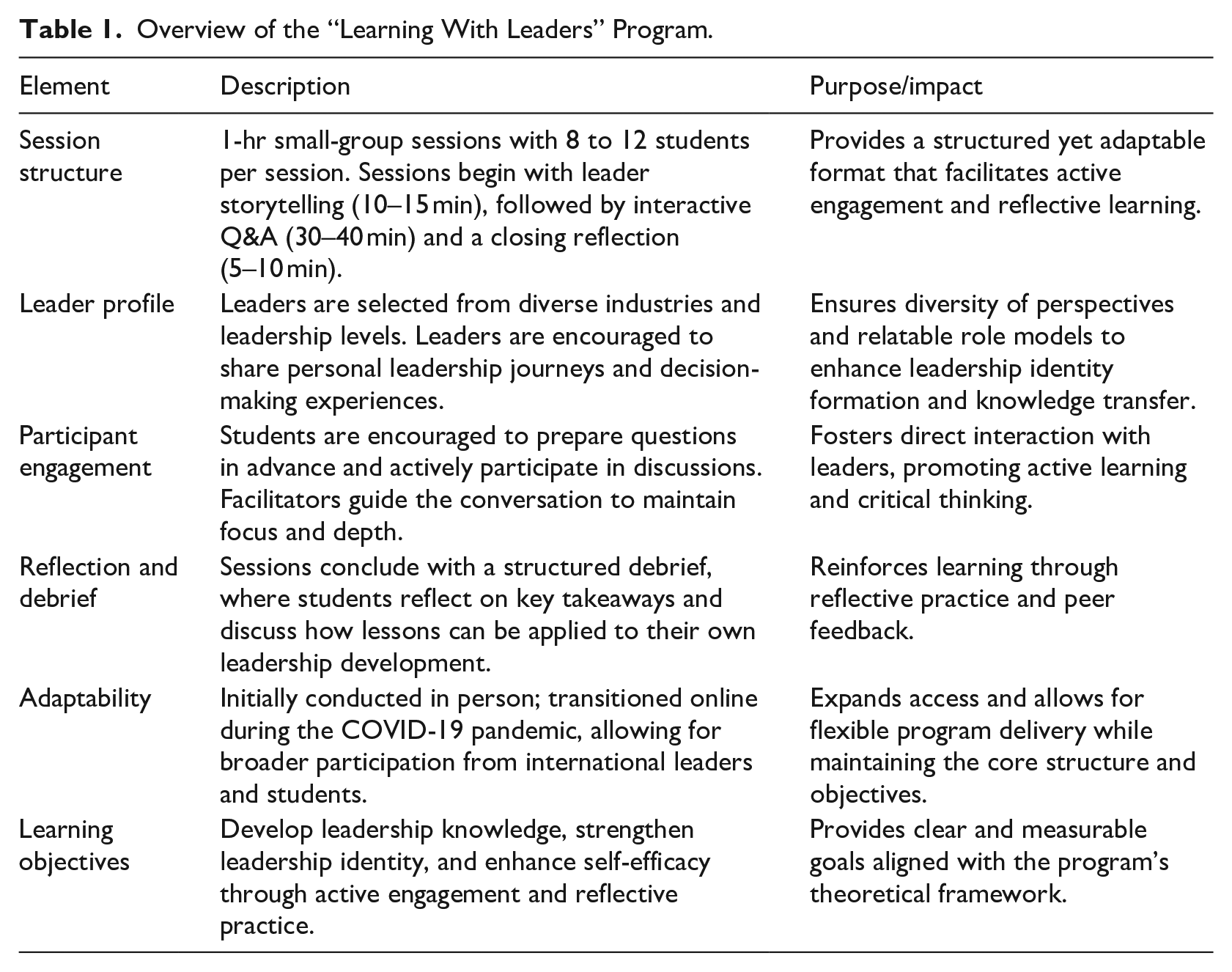
The “Learning with Leaders” 1 program provides a practical model of short-term, active learning-based leadership development designed to be scalable and resource-efficient. Hosted by the leadership center at a mid-sized Canadian university’s business school, the program facilitates structured, small-group discussions between students and experienced leaders in a semi-formal setting. Each session, lasting 1 hr, is designed to complement traditional leadership education by providing an interactive, experiential learning opportunity.
The “Learning with Leaders” program was open to undergraduate and professional graduate students across multiple business programs (e.g., Bachelor of Commerce, Master of Business Administration (MBA), Executive MBA, and Master of Management (MMgmt)). Leaders invited to participate were carefully selected from the center’s professional network, ensuring representation across industries (e.g., energy, finance, aerospace, and transportation) and leadership roles (e.g., CEO, vice president, executive director, and managing partner). To enrich the learning experience, the leadership center prioritized leaders with diverse career trajectories, leadership philosophies, and community engagement backgrounds, broadening students’ exposure to varied leadership perspectives.
The program operates throughout the academic year, allowing students to participate in one or multiple sessions, depending on their availability and interests. Some sessions were tailored to specific degree programs, while others welcomed participants from across programs, fostering interdisciplinary learning. Leaders were also involved in shaping the student mix, ensuring alignment between their expertise and students’ academic and professional aspirations. In response to the COVID-19 pandemic, the program transitioned online in September 2020, expanding participation opportunities by incorporating international leaders and providing students with exposure to a broader range of leadership experiences.
Each session followed a structured yet adaptable format, beginning with leaders sharing their personal leadership journeys, including pivotal experiences, challenges, and decision-making processes. Following this introduction, discussions were driven by student questions, encouraging active participation and enabling students to engage directly with leadership concepts in real-world contexts. Leaders were encouraged to promote dialogue rather than lecturing, often turning questions back to students to prompt reflection and deeper engagement. To enhance consistency and quality across sessions, program staff attended discussions and occasionally facilitated interactions, ensuring key learning points were emphasized.
To support a meaningful learning experience, leaders were provided with program guidelines to help them frame discussions around storytelling, applied leadership principles, and industry-specific insights. Topics covered included strategic decision-making, leadership ethics, resilience in leadership, and navigating career transitions. At the end of each session, students participated in structured debriefs, led by program staff, encouraging them to reflect on key takeaways and consider practical applications in their personal and professional lives.
Table 1 outlines the session structure, leader profile, participant engagement strategies, and learning objectives.
Overview of the “Learning With Leaders” Program.
Leadership Development, Key Learning Sources, and Outcomes
The “Learning with Leaders” program, based on Conger’s (1992) leadership development framework, emphasizes two key dimensions: personal growth and conceptual understanding. Personal growth is fostered through reflective exercises that prompt participants to evaluate their leadership identity, strengths, and areas for development (Allen & Hartman, 2008; Conger, 1992). Conceptual understanding is enhanced by engaging students in direct interactions with experienced leaders, allowing them to contextualize theoretical leadership principles in real-world settings (Allen & Hartman, 2008). By integrating these elements, the program aims to develop three key leadership attributes, as outlined by Day and Dragoni (2015): (1) leadership knowledge, skills, and abilities, (2) leader identity (i.e., an individual’s self-concept as a leader), and (3) leader self-efficacy (i.e., confidence in one’s leadership abilities).
The program incorporates a range of active learning methods to facilitate leadership development. For personal growth, the program integrates guided reflections, small-group discussions, and opportunities for students to engage with senior leaders in a low-pressure environment (Allen & Hartman, 2009). Short-term leadership interventions can be particularly effective when they include structured reflection and role modeling opportunities (Skalicky et al., 2020). To reinforce learning, students participate in structured debrief sessions at the conclusion of each meeting, discussing key takeaways and applying lessons learned to their own leadership development. Reflection plays a crucial role in strengthening leadership competencies and building self-awareness, particularly in short-duration interventions (Zulfqar et al., 2021).
For conceptual understanding, the program leverages storytelling, observational learning, and interactive discussions (Allen & Hartman, 2009). Leaders act as primary knowledge sources, sharing professional insights, leadership strategies, and industry perspectives. They serve as “knowledge transfer agents” (Fleming, 2001), helping students understand leadership dynamics through real-world narratives and interactive learning. Leadership stories shared during sessions provide students with context-rich examples that illustrate effective and ineffective leadership behaviors, bridging theory and practice (Allen & Hartman, 2009; Danzing, 1999). Through these discussions, students gain exposure to diverse leadership approaches, enabling them to develop a more nuanced understanding of leadership effectiveness.
Observing a leader’s approach in action further reinforces learning, as students are able to witness leadership behaviors in real-time and apply these observations to their own experiences (Allen & Hartman, 2009). Research suggests that such experiential approaches can be highly impactful in leadership education, particularly in short-term settings where direct exposure to role models enhances leadership self-efficacy and identity formation (Reyes et al., 2019).
Overall, the “Learning with Leaders” program integrates multiple active learning strategies that support the development of leadership identity, self-efficacy, and knowledge. Through a combination of structured interactions, guided reflections, and storytelling, the program provides a replicable model for effective, time-efficient leadership development in resource-constrained educational settings.
Understanding Leadership Development in “Learning With Leaders”: Three Theoretical Perspectives
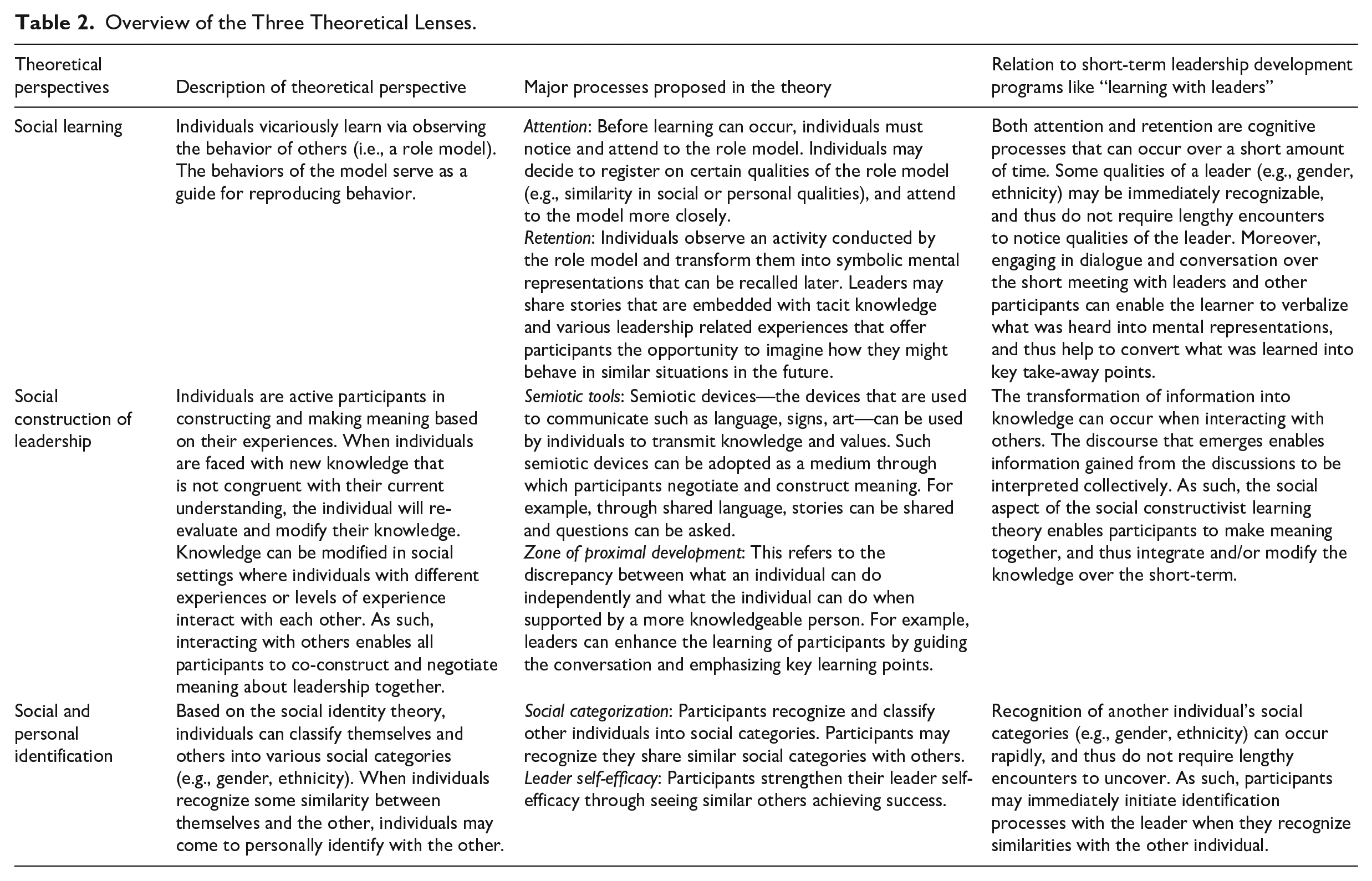
The potential effectiveness of the “Learning with Leaders” program in fostering leadership development is best understood through three theoretical lenses: social learning theory, social construction of leadership, and social and personal identification. These perspectives, rather than purely cognitive or behavioral approaches, align with the program’s emphasis on interactive, socially embedded learning. These perspectives, summarized in Table 2, provide insight into both intra- and interpersonal learning processes within short-term leadership development programs.
Overview of the Three Theoretical Lenses.
Social Learning Perspective
Social learning theory posits that individuals acquire knowledge and behaviors by observing and emulating role models (Bandura, 1971; Davis & Luthans, 1980). This process is particularly relevant in leadership development, as individuals often model their leadership behaviors on those they admire or perceive as successful (Brown & Treviño, 2014). Within the “Learning with Leaders” program, participants are exposed to experienced leaders whose behaviors and insights serve as learning opportunities.
Social learning theory involves four primary mechanisms: attention, retention, reproduction, and motivation. This study focuses on attention and retention, which are particularly salient for short-term leadership development interventions. Attention to role models is influenced by factors such as perceived credibility, interpersonal attraction, and the leader’s status (Bandura, 1969, 1971; Weiss, 1977). Retention occurs when individuals internalize observed behaviors and translate them into mental representations that can be recalled and applied later (Bandura, 1971).
One of the key ways retention occurs is through storytelling. Narratives shared by leaders provide concrete examples of leadership in action, allowing participants to envision how they might behave in similar situations (Danzing, 1999; Judson, 2023). Observing a leader’s problem-solving strategies, for instance, enhances a participant’s understanding of effective leadership behaviors, such as resolving interpersonal conflict or navigating professional challenges (Hedlund et al., 2003). Group discussions further reinforce these lessons by helping participants convert their observations into memorable takeaways. As Zulfqar et al. (2021) argue, structured social learning opportunities—such as those provided in microdose leadership interventions—enhance participants’ ability to internalize and apply leadership principles in real-world settings.
Social Construction Perspective
Constructivist learning theory asserts that individuals actively shape knowledge through experience, refining their understanding based on prior knowledge (Narayan et al., 2013). The social constructivist perspective extends this idea by emphasizing the role of dialogue and social interaction in meaning-making (Vygotsky, 1978 as cited in Narayan et al., 2013). This perspective is particularly relevant to the “Learning with Leaders” program, where participants engage in reflective discussions and co-construct leadership knowledge through interactions with experienced professionals. As participants engage with leaders and peers, they integrate new insights into their existing understanding of leadership, modifying and refining their knowledge through discussion and reflection.
Two key mechanisms of social constructivist learning—semiotic tools and the zone of proximal development—explain how learning occurs in short-term leadership interventions. Semiotic tools, such as language and storytelling, serve as vehicles for conveying leadership knowledge (Adams, 2006; Fairhurst & Grant, 2010; Jian et al., 2008). In the “Learning with Leaders” program, storytelling is particularly important, as leaders use narratives to share their leadership experiences, values, and decision-making processes. By listening to and discussing these stories, participants engage in an active knowledge construction process, using language as a medium to make sense of leadership concepts and practices. Through dialogue, they negotiate meaning, challenge assumptions, and develop a deeper understanding of effective leadership behaviors.
The zone of proximal development further explains how participants learn in leadership programs. The zone of proximal development refers to the gap between what an individual can achieve independently and what they can accomplish with expert guidance (Palincsar, 1998). Leaders in the “Learning with Leaders” program serve as expert guides, structuring conversations in ways that facilitate learning. By posing thought-provoking questions, summarizing key insights, and encouraging reflection, leaders help participants recognize important leadership principles and develop their own leadership perspectives. Research suggests that students with limited leadership experience benefit most from such structured, guided learning interactions, particularly in short-term leadership development programs (Erbil, 2020; Narayan et al., 2013).
This theory highlights the importance of social contexts in leadership development. Skalicky et al. (2020) argue that leadership learning is most effective when learners actively engage with peers and mentors in structured, social learning environments. Given that knowledge integration and modification can occur rapidly, the social constructivist perspective provides a strong theoretical foundation for understanding how microdose leadership interventions promote leadership identity formation, self-efficacy, and knowledge acquisition.
Social and Personal Identification Perspective
Identity is a core component of leadership development, as individuals construct their leader identities through both social and personal identification processes (DeRue et al., 2009; Hall, 2004; Stryker & Burke, 2000; Tajfel & Turner, 1979). Social identity theory helps explain how individuals categorize themselves and others into leadership-related social groups based on shared characteristics, such as professional background, values, or leadership style (Tajfel & Turner, 1979).
Personal identification, in contrast, involves a deeper cognitive and emotional connection between an individual and a leader. This occurs when participants see themselves reflected in a leader’s experiences, struggles, and successes (Humberd & Rouse, 2016). Research suggests that individuals rapidly process surface-level (e.g., gender, ethnicity) similarities (Harrison et al., 1998; Karnadewi & Lipp, 2011).
For underrepresented groups, personal identification with diverse and relatable leaders can be particularly influential, helping them envision themselves as future leaders (Bandura, 1969; Lanka et al., 2020). This process is especially relevant in higher education contexts, where students’ leadership identities are still forming (McCauley-Smith et al., 2015). Leaders’ personal stories of overcoming challenges, making difficult decisions, and achieving success can boost participants’ leader self-efficacy through vicarious learning (Bandura, 1994).
Taken together, these three theoretical perspectives—social learning, social construction, and social and personal identification—offer complementary insights into the mechanisms through which microdose leadership interventions foster leadership development.
Method
Data Sources
We conducted a qualitative analysis of two secondary data sources from the leadership center to examine the “Learning with Leaders” program in depth. The leadership center had already been collecting feedback from students to assess program effectiveness and gather suggestions for improvement. These feedback forms were developed in consultation with the research team (i.e., the authors) to enhance the quality of the questions and ensure their alignment with research objectives. Given time and resource constraints, it was not feasible to collect primary data such as in-depth interviews with students or distribute a new survey following each session in a subsequent academic year. However, the secondary data sources contained valuable insights that allowed us to explore the program’s impact on leadership development.
The first data source was a participant feedback survey administered after each “Learning with Leaders” session during the 2020 to 2021 academic year. This survey consisted of two open-ended questions prompting participants to describe the leadership behaviors they observed during the session and to reflect on their most significant takeaway. Additionally, a 7-point Likert-type scale measured participant satisfaction with the program, with scores ranging from 1 (very satisfied) to 7 (very dissatisfied). The data collected through these feedback surveys provided insights into overall satisfaction and the elements that students found most memorable.
The second data source consisted of student testimonials gathered by the leadership center’s program administrators during the 2019 to 2020 and 2020 to 2021 academic years. These testimonials provided more comprehensive accounts of participants’ experiences in the “Learning with Leaders” program, allowing for a deeper understanding of the ways in which students perceived and internalized their leadership development.
Ethical approval for this study was obtained from the Conjoint Faculties Research Ethics Board, and the study was conducted under certificate number REB21-2000. Informed consent was obtained from all study participants before their data was included in the research.
Participants and Sampling
During the 2020 to 2021 academic year, a total of 111 students attended “Learning with Leaders” sessions. Of these participants, 71.2% were undergraduate students, while 28.8% were enrolled in the regular MBA, Executive MBA, or MMgmt programs. Approximately 11.7% of participants identified as international students. Across the academic year, the program offered 48 “Learning with Leaders” sessions, with the majority of participants (94.6%) attending one session and a smaller percentage (5.4%) attending two sessions.
In total, 64 feedback survey responses were collected, in addition to eight student testimonials. 2 Of the testimonials, five were provided by undergraduate students, and three came from graduate students. Due to the anonymous nature of the surveys, no demographic data such as gender or age were collected.
Analytical Strategy
We applied thematic analysis to the qualitative data, following Braun and Clarke’s (2006) methodological framework for identifying and reporting patterns (i.e., themes) within textual data. Thematic analysis can be conducted using different approaches, including coding reliability, codebook, and reflexive methods (Braun et al., 2018). For this study, we adopted a coding reliability approach (Boyatzis, 1998), which is well suited for deductive analysis guided by existing theoretical perspectives. This approach involves establishing early theme development, applying a fixed coding guide, assessing inter-rater reliability, and finalizing codes through consensus (Braun & Clarke, 2021).
We followed a deductive coding approach to develop the coding guide, using the three theoretical perspectives described earlier—social learning, social construction of leadership, and social and personal identification—as our guiding framework. Our analysis was grounded in critical realism, a perspective that acknowledges the need to interpret data to uncover the underlying mechanisms driving observed phenomena (Willig, 2012). This approach aligns with our deductive strategy, as it enables us to use established theoretical frameworks to structure our thematic analysis. Given the complexity of leadership development processes, which often involve intertwined cognitive, social, and identity-based learning mechanisms, thematic analysis provided an effective strategy for capturing these relationships (Knapp, 2017).
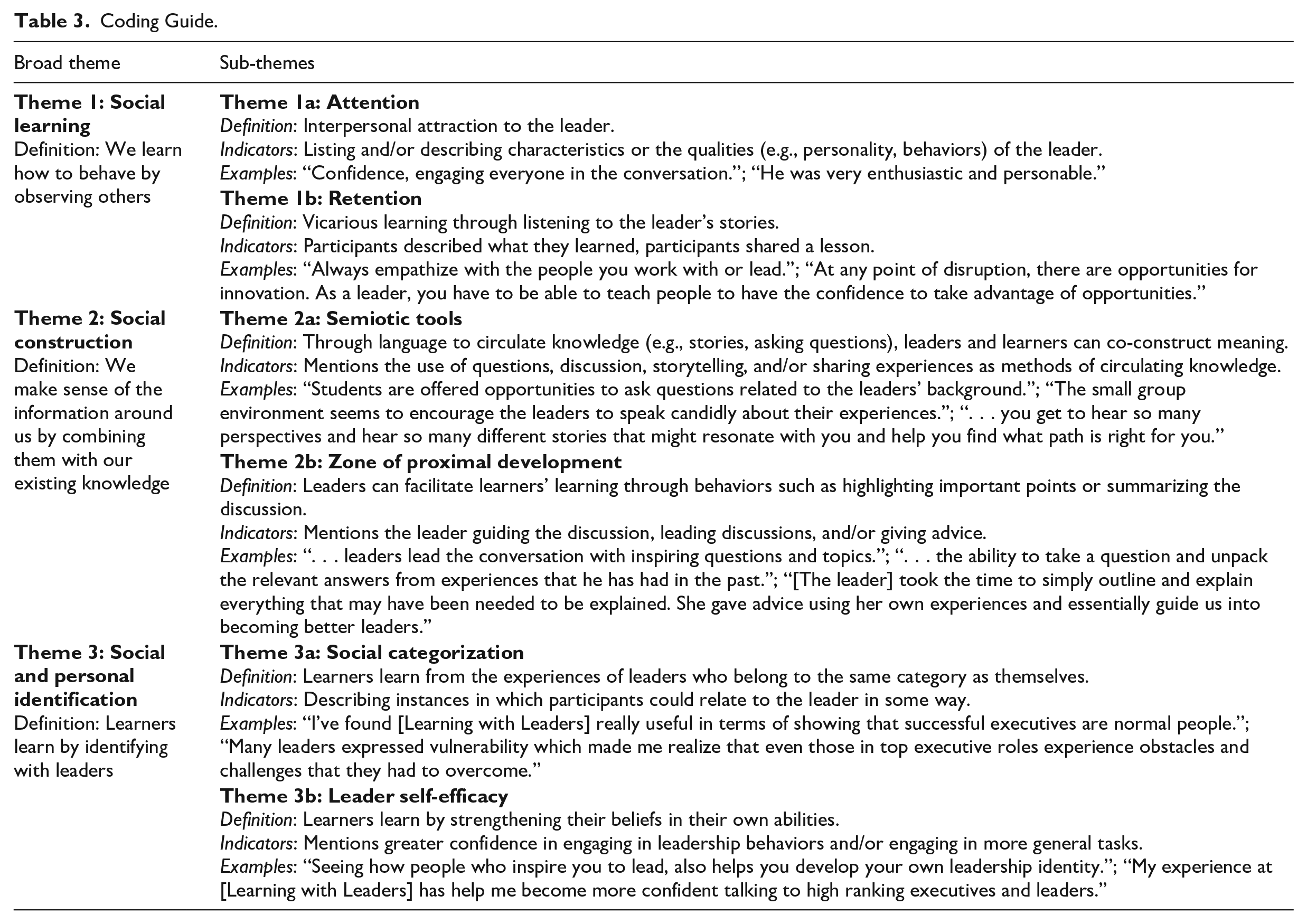
The coding guide, presented in Table 3, was structured around the three theoretical perspectives and their corresponding sub-themes. 3 These thematic categories provided a structured framework for systematically analyzing participant feedback and testimonials.
Coding Guide.
Coding Process
Feedback Survey
For feedback survey responses, we conducted an initial coding phase in which responses to the two open-ended questions were segmented into individual sentences. The three authors independently coded the first 10 responses, referencing the coding guide in Table 3. Following this, a consensus meeting was held to reconcile any discrepancies in coding. 4 The first and second authors then proceeded with coding the remaining survey responses. A final meeting was conducted to assess inter-rater reliability, defined as the assignment of at least one similar broad theme to a coding unit. Inter-rater agreement was achieved at 83%.
Testimonial Data
For testimonial data, all authors participated in the coding process. Each sentence within the testimonials was treated as an individual coding unit. However, some testimonial excerpts were excluded from coding if they did not specifically relate to learning or leadership development processes. For example, a general statement such as “Learning with Leaders was a great program with many benefits for undergraduate and MBA students” was excluded, as it did not contain specific insights into the leadership learning process.
Multi-Coding Approach
To account for the complexity of leadership learning, we used a multi-coding approach, allowing a single data unit to be coded under multiple sub-themes when applicable. Leadership development is a multifaceted process, often involving overlapping mechanisms such as identity formation, self-efficacy development, and knowledge acquisition. For instance, a participant’s reflection on their learning experience might simultaneously involve social learning (observing a leader’s behaviors) and identity formation (recognizing oneself as a potential leader). This multi-coding strategy enabled us to capture the multiple ways in which different leadership development mechanisms operated within the program.
Through this approach, we found that nearly all testimonials (except for one) contained multiple thematic elements, reinforcing the interconnected nature of leadership learning within short-term leadership development interventions.
Results
Of the 64 survey responses, 68.8% of participants reported being very satisfied with the “Learning with Leaders” session they attended, 28.1% were satisfied, and only 3.1% were somewhat satisfied. Overall, these results suggest that participants held a favorable view of the program.
Theme 1: Social Learning of Leadership
The results of the feedback survey and testimonial data provide strong support for the social learning perspective. Participants identified a range of leader qualities they observed during the sessions, including inclusivity, friendliness, active listening, engagement, confidence, and wisdom. Quotes from the feedback survey highlight these common leader qualities, such as: “made the effort to engage everyone in the conversation so we all felt included” (Feedback survey participant #42); “very honest and cares about the people around them and the people they work with” (Feedback survey participant #30); and “able to keep a conversation going and answer all of our questions with good insight and good tips to keep in mind” (Feedback survey participant #16). Observing these qualities in a leadership role model may have motivated participants to pay closer attention to the leaders’ behaviors and stories, enhancing the social learning process.
The data also indicate that leaders frequently shared lessons that facilitated knowledge retention and vicarious learning, helping participants internalize leadership principles. Participants described learning key lessons, such as the distinction between management and leadership skills (Feedback survey participant #2) and the importance of empathy and integrity in leadership (Feedback survey participant #10). These lessons contributed to participants’ understanding of leadership by shaping their attitudes and expanding their knowledge. One participant noted: “I feel I have been able to vicariously learn about leadership and business through the stories you have shared. It’s these little nuggets of knowledge you have acquired throughout your career and passing onto us students that has really made the difference” (Testimonial participant #6).
Leaders also conveyed tacit knowledge through storytelling, offering detailed insights into their leadership experiences, decision-making processes, and the outcomes of their actions. Participants frequently described a people-centric approach to leadership, as reflected in responses such as: “being an authentic leader who spends time to get to know his employees first-hand” (Feedback survey participant #7) and “to maintain touchpoints with colleagues so they feel valued and the team stays connected” (Feedback survey participant #34). These insights likely reinforced participants’ awareness of the importance of fostering positive relationships in leadership. Additionally, leaders provided concrete strategies for applying leadership principles, further aiding knowledge retention. One participant remarked: “The leader explained key steps to help you overcome obstacles in your career which I will be taking with me throughout my journey as a leader” (Testimonial participant #4). These findings suggest that leaders’ narratives helped participants form mental representations of leadership, which may guide their future behaviors as they develop their leadership identities.
Theme 2: Social Construction of Leadership
The results also indicate that social constructivist learning processes were active during the sessions. Participants frequently described how leaders provided them with practical leadership insights and advice, as demonstrated in feedback such as: “candid advice” (Feedback survey participant #1), “leadership advice” (Feedback survey participant #35), and “answered all our questions with great depth” (Feedback survey participant #44). Participants also highlighted the value of hearing a range of perspectives and personal narratives, stating that they “. . . get to hear from so many perspectives and hear so many different stories” (Testimonial participant #5) and learn about leaders’ life experiences (Feedback survey participant #57). These findings demonstrate how language, as a semiotic tool, was used by leaders to communicate their knowledge and values, while participants engaged in interactive discussions to co-construct their understanding of leadership.
The data further suggest that deep conversations played a crucial role in helping participants transform stories into key learning points, allowing them to modify their existing leadership knowledge. This process is reflected in testimonials such as: “Students are offered opportunities to ask questions related to the leaders’ background. Other than interacting with leaders, peer engagement also brings new ideas and perspectives” (Testimonial participant #8) and “Getting to sit down with leaders and ask them questions about their leadership experiences . . . helped me discover my own leadership identity” (Testimonial participant #4). These accounts illustrate how leaders used storytelling and language to convey knowledge while fostering interactive dialogue that encouraged meaning-making and co-construction of leadership concepts.
The findings also provide evidence of the zone of proximal development in action. One participant noted: “[the leader] took the time to . . . explain everything that may have been needed . . . and gave advice using her own experiences” (Feedback survey participant #23). This suggests that participants benefited from interacting with leaders who possessed greater leadership experience, as these leaders were able to guide learning by highlighting key insights and structuring discussions to enhance understanding. Additional feedback supports this conclusion, with one participant explaining that effective leaders demonstrate “compassion, listening, the ability to take a question and unpack the relevant answers from experiences that he has had in the past” (Feedback survey participant #15), while another emphasized that the leader “was able to keep a conversation going and answer all our questions with good insight and good tips” (Feedback survey participant #16). Collectively, these results indicate that social constructivist learning processes contributed to participants’ leadership development by facilitating engagement, interactive dialogue, and structured guidance from experienced professionals.
Theme 3: Social and Personal Identification
Participants in the “Learning with Leaders” program had the opportunity to interact with leaders from diverse backgrounds in terms of gender, career trajectories, and leadership styles. This exposure allowed them to identify with leaders who shared similar experiences, reinforcing their own leadership aspirations. One participant noted: “[I] loved how each leader had a diverse background, broad perspectives, and unique experiences to share” (Testimonial participant #3). Recognizing similarities with a leader appeared to help participants envision themselves as leaders. Another participant stated: “Seeing how people who inspire you [to] lead also helps you develop your own leadership identity” (Testimonial participant #5).
The data further suggest that identifying with leaders influenced participants’ views on leadership by making leadership success seem more attainable. One participant remarked that the program “was really useful in terms of showing that successful executives are normal people” (Testimonial participant #1). Another participant explained: “Many leaders expressed vulnerability, which made me realize that even those in top executive roles experience obstacles and challenges that they had to overcome . . . [The program] humanizes the leaders . . . and showed that I can relate to them” (Testimonial participant #3). These reflections suggest that leaders’ personal stories helped participants reframe their assumptions about leadership, reinforcing the notion that leadership is an evolving process rather than an innate trait.
Additionally, leaders’ encouragement and engagement appeared to enhance participants’ leader self-efficacy. One participant stated: “This really changed my mind set and inspired me to step out of my comfort zone so I can grow as a leader” (Testimonial participant #4). However, the results suggest that participants primarily described improvements in general self-efficacy, rather than leadership-specific self-efficacy. For example, one participant commented: “My experience at the lunches has helped me become more confident talking to high-ranking executives and leaders” (Testimonial participant #1), while another explained: “I started to feel confident in my abilities for the first time in my professional life” (Testimonial participant #7). The data indicate that leaders’ encouragement may have played a critical role in participants’ willingness to take future developmental steps, both personally and professionally. As one participant noted: “The fact that industry professionals care about young leaders is inspiring and brings confidence to career development” (Testimonial participant #8).
Interconnected Themes
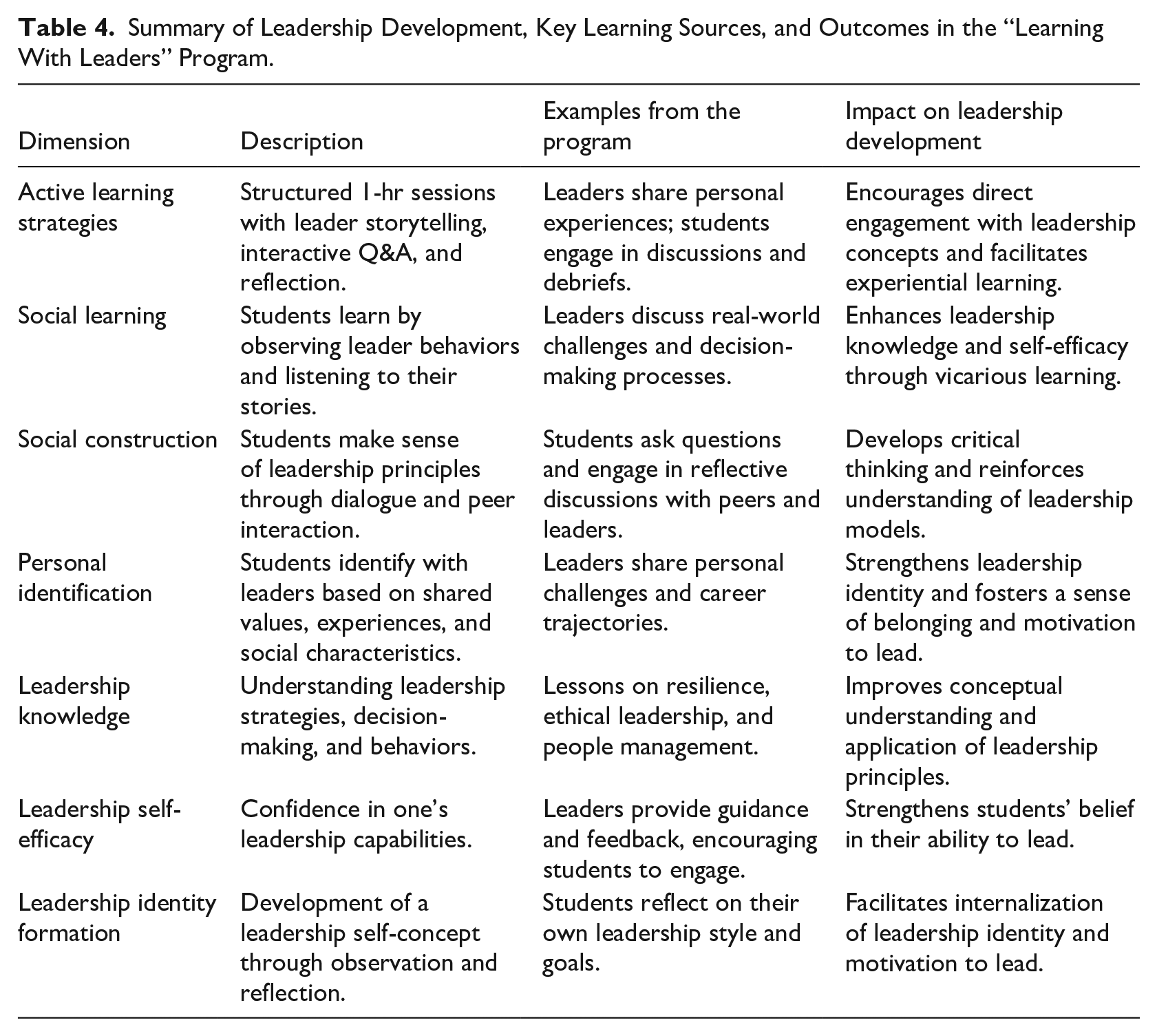
Table 4 highlights how active learning strategies, social learning, social construction, and personal identification contribute to leadership development. It illustrates how these processes enhance leadership knowledge, self-efficacy, and identity formation.
Summary of Leadership Development, Key Learning Sources, and Outcomes in the “Learning With Leaders” Program.
As expected, the three theoretical perspectives overlapped in participants’ experiences. Figure 1illustrates the interrelationships among the themes.
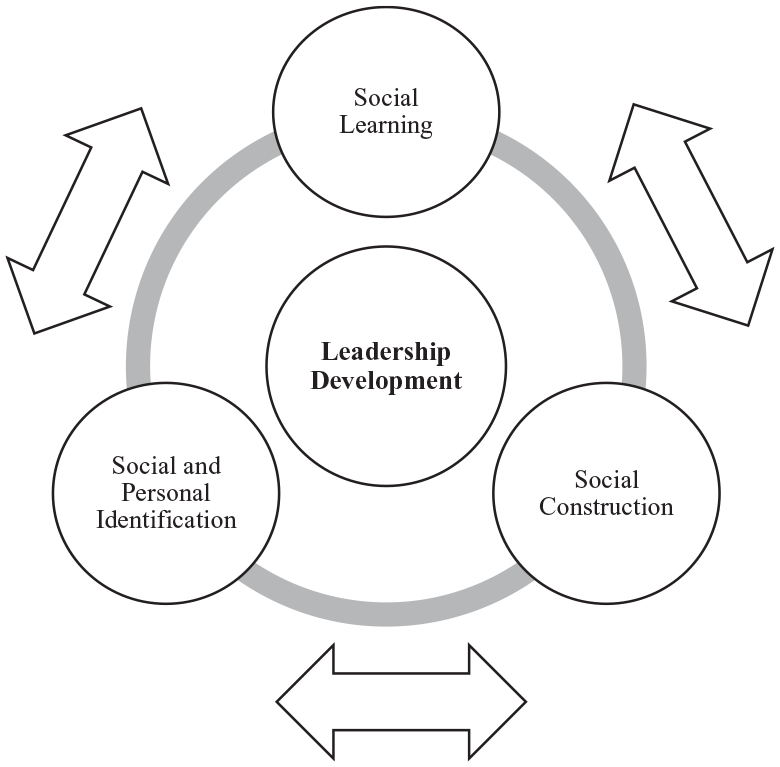
The interrelated learning theories.
Testimonial data suggest that social construction of leadership and social and personal identification processes frequently intersected. One participant described their experience as follows: [Learning with Leaders] events are highly interactive and engaging. Leaders drive the conversation with motivating questions and topics, offering students the chance to ask questions about their background. In addition to interacting with leaders, peer engagement also contributes new ideas and perspectives. The fact that industry professionals care about young leaders is both inspiring and empowering for their career development. (Testimonial participant #8)
Additionally, instances where all three themes were present emerged in the data. For example, one participant reflected: What I truly enjoyed about [Learning with Leaders] is realizing that no two leaders are alike, including their paths to success. Being in business can be overwhelming, trying to figure out what to get involved in and what opportunities to pursue. [Learning with Leaders] allows you to hear from multiple perspectives and different stories that may resonate with you and help you find the right path. Seeing how people who inspire you to lead, also helps you form your own leadership identity. (Testimonial participant #5)
These findings reinforce that leadership development in the “Learning with Leaders” program operates through a combination of social learning, co-constructed meaning-making, and identification with leadership role models.
Discussion
This paper aimed to demonstrate the effectiveness of “Learning with Leaders” as a model for short-term leadership development. Using this program as a case study, we analyzed qualitative data from two sources, revealing that such short-term programs can effectively enhance leadership knowledge, skills, and abilities, leader identity, and self-efficacy. Our findings support the concept of “microdose” leadership development, showing that even brief interactions can meaningfully contribute to leadership identity formation and self-efficacy. These results challenge the traditional reliance on long-term, resource-intensive leadership programs by illustrating the value and feasibility of short-term interventions in leadership education.
Although we found strong support for the effectiveness of the “Learning with Leaders” program through the lenses of social learning, social construction, and social and personal identity theories, we observed two notable unexpected findings. First, we did not find support for the mechanism of ‘mimicking leader’s desirable behaviors,’ a key component of the attention phase within social learning theory. The absence of evidence for behavioral mimicry is consistent with research showing that mimicking leader behavior typically requires prolonged exposure and repeated observation (Ete et al., 2022). Given the short-term nature of the intervention, it is unsurprising that participants’ learning was more reflective than behavioral. While unexpected, this may reflect methodological limitations rather than a theoretical flaw.
The second notable finding was the interconnectedness of the three theoretical perspectives. Although social learning, social construction, and social and personal identification theories each offer unique insights into leadership development, they are not mutually exclusive. Our findings suggest that these processes often co-occur, reinforcing one another. We argue that compared to highly structured surveys, which are typically constrained by predefined theoretical frameworks, our use of open-ended questions allowed participants to naturally articulate their experiences, leading to the identification of overlapping learning mechanisms in leadership development.
Theoretical Implications
This study contributes to leadership development theory in several ways. First, our findings provide empirical evidence that short-term leadership interventions can activate multiple learning processes, reinforcing the viability of microdose leadership development. This study extends leadership development theory by identifying microdose interventions as a distinct and effective leadership development model. Unlike traditional long-term programs, microdose interventions stimulate leadership identity formation and self-efficacy through a combination of observational learning, interactive dialogue, and reflective practice. Prior research has primarily focused on long-term interventions, leaving a gap in understanding how brief but structured engagements can foster leadership growth (Allen et al., 2022).
Second, our results illustrate the interconnectedness of social learning, social construction, and social and personal identification in leadership development. This extends previous research that has examined these perspectives in isolation (e.g., Lester et al., 2011; Miscenko et al., 2017; Reynolds et al., 2023), introducing microdose interventions as a distinct and complementary mechanism for fostering leadership growth. Rather than operating independently, these theoretical perspectives appear to interact, creating a more holistic learning experience in short-term leadership programs.
Third, our study highlights the importance of deep-level similarity in leadership identification. While individuals often categorize others based on readily observable characteristics such as ethnicity or gender (Harrison et al., 1998), our findings suggest that short-term leadership interactions emphasizing group discussion and reflection can facilitate connections based on shared values, personality traits, and professional aspirations. This is consistent with mentoring research, which shows that deep-level similarity between mentors and mentees is more predictive of mentoring success than surface-level similarity (Deng et al., 2022; Eby et al., 2013; Ghosh, 2014). From a social learning perspective, fostering connections based on substantive commonalities may further strengthen participants’ motivation to model leaders’ behaviors and approaches.
Finally, our study reinforces the role of social constructivist learning in leadership development. Participants engaged with leaders and peers of varying experience levels, learning through observation, interaction, and guided reflection. This constructivist approach (Allen et al., 2022) was critical in reshaping participants’ understanding of leadership, particularly in challenging traditional hierarchical models. Prior research suggests that students initially adopt a leader-centric view of leadership (Fischer et al., 2010; Haber, 2012; Shertzer & Schuh, 2004; Wielkiewicz, 2000, 2002), but can evolve toward a more relational and collaborative perspective when exposed to diverse leadership models (Komives et al., 2005). Our findings suggest that even short-term interventions can accelerate this shift, particularly when designed to incorporate multiple leadership perspectives and interactive discussions.
Practical Implications
This study offers several practical insights for leadership education. First, it demonstrates that short-term leadership programs, such as “Learning with Leaders,” are viable and cost-effective alternatives to long-term initiatives. The structured format of the “Learning with Leaders” program makes it highly adaptable to different educational and organizational contexts. Institutions and organizations seeking to enhance leadership development in resource-constrained environments can implement similar models by ensuring diversity among leaders, using storytelling to convey tacit knowledge, and facilitating reflective engagement. By implementing similar programs, institutions with limited resources can expand access to leadership development opportunities, reducing barriers to participation. These findings suggest that microdose interventions have the potential to democratize leadership development by making high-quality, interactive leadership experiences accessible to a wider range of students and professionals.
Second, the effectiveness of short-term leadership programs depends on selecting diverse leaders who can share experiences relevant to students’ professional and personal development. Careful leader selection—ensuring a mix of industry backgrounds, leadership styles, and career trajectories—enhances the learning experience by providing varied perspectives on leadership challenges and solutions. Table 5 outlines key recommendations for designing and delivering short-term leadership programs based on the findings from this study. Encouraging diversity among leaders, using storytelling to share tacit knowledge, and fostering structured reflection are among the most effective strategies for enhancing learning and reinforcing leadership identity formation. For instance, structured reflection helps participants distill key insights and apply them to their own leadership development. Similarly, providing students with opportunities to engage directly with leaders and ask questions reinforces the active learning process and strengthens leadership self-efficacy.
Recommendations for Implementing a “Learning With Leaders” Program.
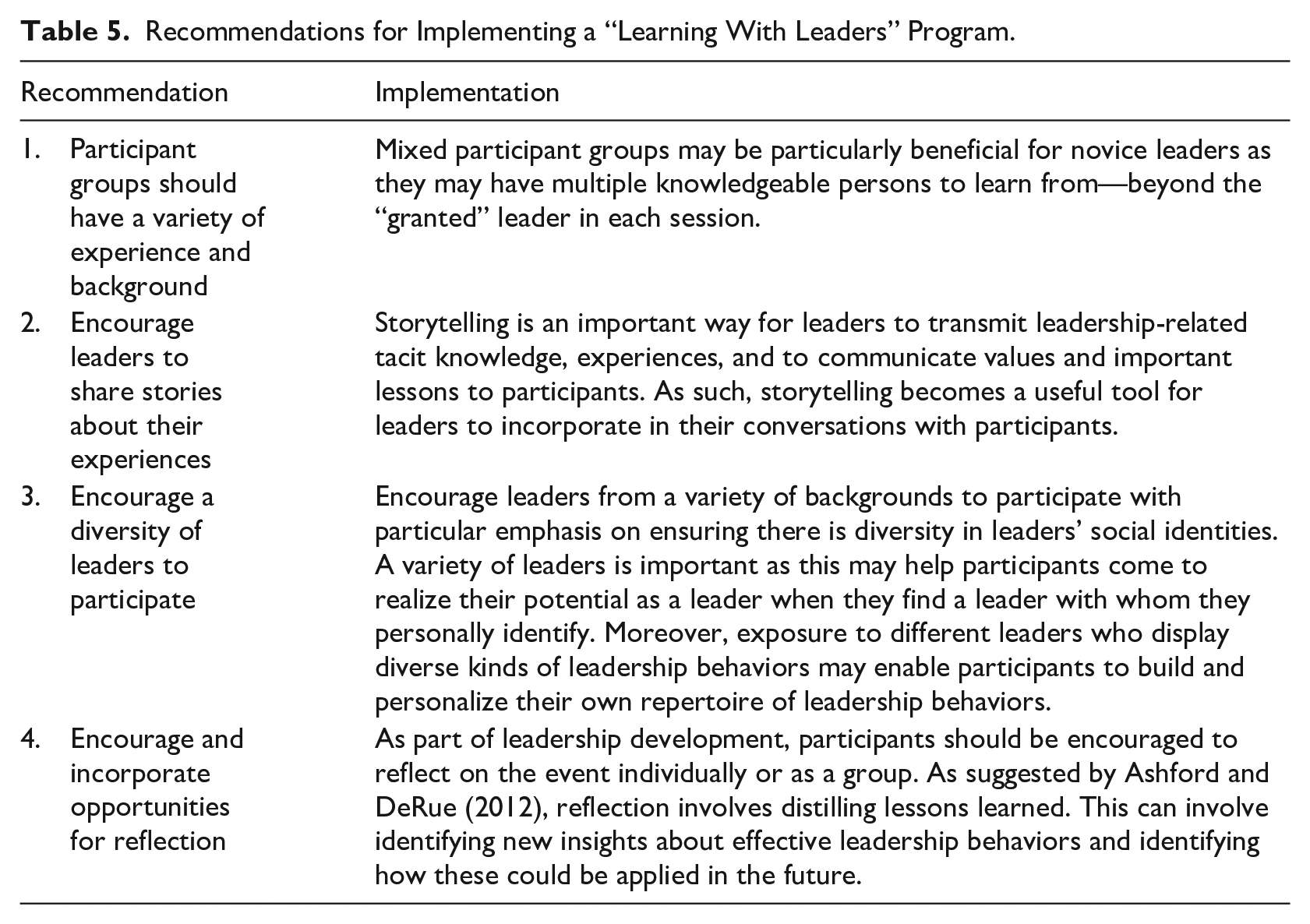
Third, our findings highlight the importance of structured reflection and interactive engagement in short-term leadership programs. Encouraging students to reflect on their leadership development, both during and after sessions, can enhance learning retention and application. Leaders can reinforce this process by turning questions back to students, prompting deeper engagement.
Limitations and Future Research
Despite its contributions, this study has several limitations. One limitation is the brevity of some survey responses, likely due to time constraints. While open-ended, self-reported data provide valuable insights, they may lack the depth needed to fully capture the full extent of participants’ leadership development (Dwyer, 2019). Future research could address this by incorporating in-depth interviews or longitudinal surveys to gain richer insights into how participants’ leadership perceptions evolve over time.
A second limitation stems from the use of secondary data, which limits control over the data collection process. The participant testimonials were solicited by program administrators, which may have led to an emphasis on positive experiences and an underrepresentation of constructive feedback or negative experiences. This potential positivity bias restricts our understanding of the challenges and barriers that may hinder leadership development in these sessions. Future research could address this by recording entire sessions to analyze group dynamics, participant engagement, and emergent norms in real time.
A third limitation relates to variability in leader quality. Although program administrators prioritized selecting diverse leaders, differences in facilitation skills and styles may have influenced participant learning outcomes. Some leaders may have adopted a collaborative approach, engaging students through active listening and open-ended questioning, while others may have taken a more directive, lecture-style approach, which can limit reflective engagement (Foong et al., 2018). To reduce variation in leader facilitation style, organizations could provide structured facilitation guidelines that balance storytelling with interactive discussion and offer practical strategies for encouraging participant engagement. Additionally, offering a pre-program training session for leaders to refine facilitation skills could enhance consistency across sessions. Future research could explore how different facilitation styles influence participant learning and leadership identity formation.
A further limitation concerns the self-selection of participants, which may have influenced the findings. Students with a preexisting interest in leadership development may have been more likely to engage meaningfully with the program, introducing potential bias. Future studies could address this by including a comparison group or using a longitudinal design to evaluate the sustainability of leadership development outcomes over time.
Finally, future research should explore the effectiveness of micro-interventions in capturing within-person variations in leadership development over shorter periods. Emerging research on adaptive interventions (Nahum-Shani et al., 2022; Qian et al., 2022) suggests that dynamic, data-driven approaches can enhance the effectiveness of short-term leadership education. Incorporating real-time assessments into leadership programs may provide more precise insights into how participants develop leadership identity and self-efficacy in response to microdose interventions.
Conclusion
This paper examined the effectiveness of “Learning with Leaders” as a model for short-term leadership development. Grounded in social learning, social construction, and social and personal identification theories, the program provided participants with leadership insight and opportunities to identify with relatable leaders. Our findings suggest that even brief exposures—or “microdoses”—of leadership engagement can contribute meaningfully to leadership development. By advancing research on short-term leadership programs, this study offers theoretical and practical insights into designing scalable, cost-effective interventions that enhance leadership education in resource-constrained environments.
Footnotes
Acknowledgements
The authors thank Abbi Alvarez Carreño, Kathleen Boskill, Jackie Bruce, Rifat Kamasak, Glenda Reynolds, Ryan Stevens, and Ibraiz Tarique for their helpful comments on earlier versions of this paper.

Funding
The author(s) disclosed receipt of the following financial support for the research, authorship, and/or publication of this article: Funding from the Canadian Centre for Advanced Leadership in Business supported this collaboration.
Declaration of Conflicting Interests
The author(s) declared no potential conflicts of interest with respect to the research, authorship, and/or publication of this article.