



Abstract
Many expect upward trends in online college course enrollment to continue. Despite perceived improvements in online pedagogical practice and advantages afforded by virtual platforms, most students and professors still perceive social interaction, engagement, and overall learning to be more challenging online than in person. More than 3 in 10 college students are less willing to participate in discussions online compared to in person. More than 7 in 10 professors report needing help with strategies for keeping students engaged online. As such, we must identify strategies that cater to students’ academic, and social-emotional needs in an online environment. Breakout rooms have often been implemented to promote discussion and collaboration, however, when not well-structured, they often increase social discomfort instead. In this mixed methods study, using surveys, interviews and class observations, we examine student-led talking circles in an undergraduate adolescent development course (N = 61), in which student discussion leaders prepared questions and facilitated small group conversations using structured turn-taking protocols. Nearly 95% of students felt talking circles increased peer connectedness, 92% felt they improved content learning, and 90% felt they increased engagement. Students largely attributed these benefits to specific elements of the talking circle format. Regression results revealed significant associations between peer connectedness and perceived academic benefit, after accounting for demographics, basic psychological needs, dispositional factors, and norms of communication.
Background: Online education trends and challenges
Online education has expanded steadily since its inception in the 1990s (Palvia et al., 2018), and many expect upward trends to continue (Iyer and Chapman, 2021). In the fall of 2019, before COVID-related shutdowns, 37% of U.S. college students took at least one course online, and 15% were enrolled exclusively in online classes (National Center for Education Statistics (NCES), 2022). In 2021–2022, following widespread returns to in-person learning, these shares increased to 40 and 16% respectively (NCES, 2023), with higher proportions of older and employed students anticipating continued online enrollment (Venable, 2021). One in 10 professors report preferring teaching online over in-person, with higher proportions among younger faculty (Saha et al., 2022). Virtual platforms afford many advantages, including increased locational flexibility, allowing students with transportation challenges and caregiving responsibilities to stay home, low-pressure parallel engagement through the chat, the ability to share resources by dropping in links, and hosting guest speakers from around the world (Villasenor, 2022).
Nevertheless, most students and professors still perceive social interaction, engagement, and overall learning to be more challenging online than in person (Chakraborty et al., 2021, Saha et al., 2022). As such, we must continue to improve online pedagogical practice, and identify strategies to better engage students and cater to their academic, social and emotional needs. Most instructors felt overwhelmed and ill-equipped for the shift to virtual teaching in Spring 2020: in one international study, 78% reported inadequate digital skills for online teaching, 63% reported needing help with adapting curriculum to an online format, and 73% reported needing better strategies for keeping students engaged (Reimers, 2022). In another study, 68% of college students thought that professors’ online teaching skills had improved since the beginning of the pandemic (Chakraborty et al., 2021). Engagement, social interaction and connection, however, continue to be major challenges (Shankar et al., 2023). Previous studies have found that 30% of students were willing to participate in class discussions online, 36% were less willing to ask questions (Cavinato et al., 2021), 65% reported decreased collaboration with peers, and 50% reported feeling less included as a member of the class (Means and Neisler, 2020).
Breakout room literature: Mixed results
Break-out rooms are a feature of video-conferencing platforms that allow instructors to split a class into smaller, separate groups. They are commonly implemented as a means of promoting engagement, discussion and collaboration; however, when not structured properly, they often increase social discomfort. In many cases this sudden, forced interaction with unfamiliar peers has felt “awkward” (Reinholz et al., 2020; Saltz and Heckman, 2020) and unnatural (Garcia et al., 2021), leading to dread, anxiety (McGrath and Wolstencroft, 2021) and sometimes little interaction, with cameras and microphones switched off (Garcia et al., 2021). Some students complain of peers’ lack of contribution to collaborative assignments, particularly in the absence of adequate monitoring and accountability measures (Tsihouridis et al., 2020). Professors dropping in on groups unannounced, due to their inability to simultaneously observe all breakout rooms, can be jarring and discomfiting as well (Takizawa et al., 2021).
Other professors’ across a variety of college subjects have reported social, academic, and engagement benefits (Gruber and Bauer, 2020; Reinholz et al., 2020; Takizawa et al., 2021; Venton and Pompano, 2021), including improved grades (Chen and Roldan, 2020), increased comfort, discussion participation (Romero-Ivanova et al., 2020), critical thinking, and willingness to seek assistance from peers and instructors (Cavinato et al., 2021; Toney et al., 2021). Many of these studies, however, are based on 2019–2020 classes who had already been together for several months in person, establishing connections, before moving online (Chen and Roldan, 2020; Reinholz et al., 2020; Toney et al., 2021): an advantage that most professors at the time of this study did not have. In some cases, breakout room participation was also optional, and some students worked individually instead, which may have further impacted findings (Cavinato et al., 2021; Toney et al., 2021).
Successes seem highly dependent on structural and contextual factors, with breakout room formats varying widely. These include: small groups (five students or fewer) (Edmondson and Daley, 2020), actively facilitating first interactions between group members to “break the ice” (Tsihouridis et al., 2020), assigning student roles in each group (Cavinato et al., 2021), and choosing content that relates to students’ lived experiences (Reinholz et al., 2020). Some instructors prefer randomly reassigning groups during each class session (Saltz and Heckman, 2020; Toney et al., 2021), to expose each student to more peers (Anstey et al., 2020), and avoid logistical complications (Takizawa et al., 2021). Others believe consistent groupings throughout the quarter to be more effective, promoting deeper bonding over time (Reinholz et al., 2020; Venton and Pompano, 2021). Increased use of web cameras is sometimes perceived to increase social comfort (Gruber and Bauer, 2020; Venton and Pompano, 2021) by improving communication through visible body language (Gruber and Bauer, 2020). Others consider it unethical to require cameras, citing home privacy concerns (Cavinato et al., 2021).
Breakout room talking circles: A new format
Our chosen “talking circle” breakout room format aimed to harness and maximize aforementioned benefits, while providing structural support to overcome communication challenges. Talking circles are essential components of restorative justice pedagogy (Umbreit, 2003) and are rooted in Indigenous knowledge systems based on gathering, sharing, and listening (Running Wolf and Rickard, 2011). In our virtual class, students maintained an equitable turn-taking protocol by listing speaker order in the chat. All participants were afforded an equal opportunity to speak, and an appointed “circle keeper” prepared guiding questions and facilitated, using a predetermined list of ground rules (Umbreit, 2003), which they were trained on through an instructional video presented the first week of the quarter. The class was divided into groups of four or five students who met in their break-out rooms each week. The discussion leader role rotated so that each student held a leadership position at least once. Each discussion leader prepared an opening quote, song, or poem to introduce their topic, and discussion questions which related to course concepts (for example, “what are pros and cons of school tracking?”), and their application to personal experiences (for example, “describe your relationships with peers in the same track vs. other placements?”). In contrast to many breakout rooms described in previous studies, no written product was required. To emphasize discursive learning, the discussion itself was the assignment. Although talking circles have been investigated at the university level in criminal justice, law school and social work curricula (Danyluk and Hanson, 2021; van Wormer, 2006), to our knowledge, their implementation in undergraduate online learning settings is limited (Danyluk and Hanson, 2021).
Study objective
Our study builds on existing understanding of both social and academic benefits of break-out rooms, through an examination of student-led “talking circles” used during the Spring 2021 quarter (March to June, 2021) in an online, synchronous, undergraduate adolescent development course within an education department. Our research questions were: (1) Do talking circle discussions in breakout rooms promote student engagement, social connectedness and academic growth, and (2) If so, what are the mechanisms behind those effects? To our knowledge, our study is unique methodologically, analytically, and pedagogically: no previous study of breakout rooms has triangulated student interview data with observations, survey results, and analysis of discussions.
Theoretical framework
Our analyses are guided by Ryan and Deci’s Self-Determination Theory framework. Ryan and Deci (2000: 2019) posit that students’ levels of engagement, and resultant learning outcomes are largely determined by the degree to which their core psychological needs have been met: feelings of autonomy, connectedness, and competence (Ryan and Deci, 2000, 2019). Supportive social conditions that facilitate student autonomy and peer connection increase perceived ownership of learning activities, intrinsic desire to learn and participate (Ryan and Deci, 2020), and higher-level thinking (Saeed and Zyngier, 2012). This sense of autonomy increases feelings of competence and satisfaction, and decreases stress (Ryan and Deci, 2020), but must be accompanied by adequate scaffolding and instructor support (Ryan and Deci, 2019). Through this mechanism, connectedness, autonomy and competence have been consistently associated with student engagement and learning outcomes among undergraduate students in various fields (Reeve et al., 2018, Ryan and Deci, 2020; Yu and Levesque-Bristol, 2020).
Methods
Research design
Our convergent mixed methods design included observation notes documenting students’ verbal engagement in class, collected throughout the quarter, as well as quantitative and qualitative survey results collected in week 8 of 10, and semi-structured interviews conducted after the quarter ended. Sources were integrated and data triangulated through their mutual focus on engagement, connectedness, and academic benefit. Observational methodology has often facilitated documentation of naturally occurring interactions (Anguera, 2003), unbiased by researcher prompting. Combining quantitative data with qualitative responses has been found to deepen understanding of student perspectives, thought-processes and explanations, allowing each strand to combine strengths and overcome weaknesses of the other (Creswell and Clark, 2018).
Sample
Participants were 61 undergraduate students (31% male, 69% female) at a large west coast university in a Spring 2021 synchronous virtual undergraduate adolescent development class, which they enrolled in voluntarily, prior to recruitment for this study. Pseudonyms for students and the course title are used throughout this paper.
Procedures
Recruitment
Participants were read a recruitment script by a teaching assistant and informed that participation was voluntary and that the course instructor would not know who consented or who completed the survey until after final grades were posted. To limit social pressure, students were provided with a link to complete the virtual consent form outside of class. All students (N = 61) in the class consented to be included in observations, while 47 students (77% of the class) completed the survey, 15 students signed up for interviews, and 8 of them (13%) had availability and were interviewed. Study procedures were approved by the university’s Institutional Review Board.
Introduction: the first 15 minutes of class, whole group discussion including an introduction to the day’s agenda, students posting personal responses to a related discussion prompt in the Zoom chat, with the professor modeling her own response; an opportunity for students to react to each other and ask questions.
Talking circles: the second 15 minutes: small-group, student-led discussions in breakout rooms, related to assigned readings.
Lecture: the last 15 minutes, all together in one whole group Zoom space: the professor lecturing on an adolescent development topic, with pauses for students’ questions and comments.
In order to compare student participation across discussion contexts, observation notes focused on the two 15-minute portions of class when most verbal participation took place: the introduction and talking circles.
Analysis
Qualitative survey data, including open ended questions and interview transcripts, were manually coded inductively (Creswell and Clark, 2018) in first round coding with key themes discussed by the research team. During additional rounds, deductive coding was used to interrogate the following themes based on the theoretical framework: social connectedness, autonomy, competence, engagement. Through deductive and inductive coding, we discussed biases, including our close proximity to the research. We continually looked for outlier responses and interrogated strands of data that could be perceived as contradictory.
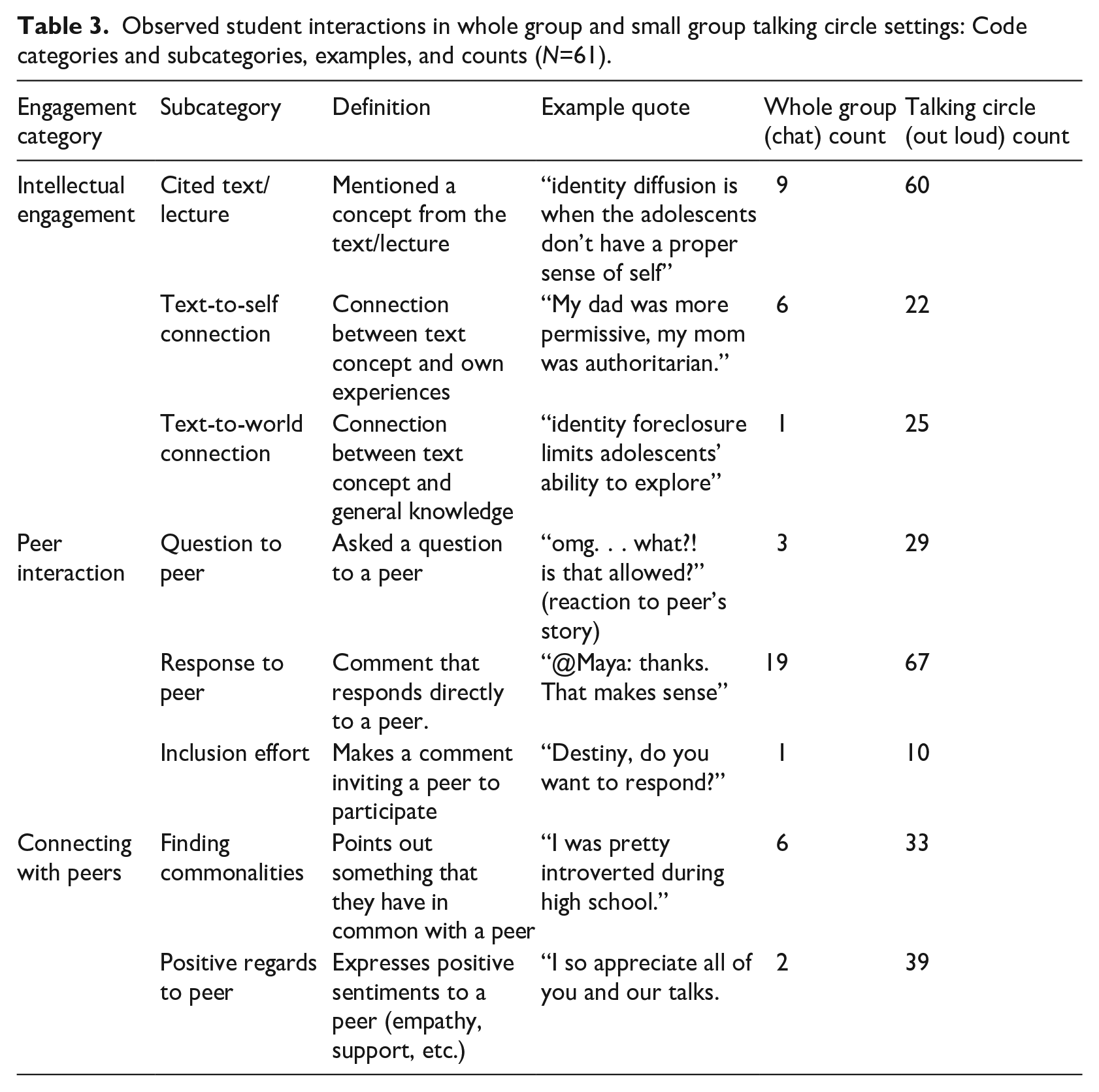
Observation field notes were deductively coded manually using the codebook found in Table 3. Codes focused on components of engagement which appear across validated measures and assessments (NSSE, SESQ, BOSS). These included aspects of students’ intellectual engagement with course concepts: asking questions, citing assigned texts, and making text-to-self and text-to-world connections. They also included several aspects of peer-to-peer interaction which have been associated with connectedness, intellectual engagement and academic achievement in previous studies. These include: responding to peers, sharing personal information, finding commonalities, and expressing positive sentiments towards peers (Sidelinger and Booth-Butterfield, 2010). These variables, making up the parent and child codes, were applied to field notes capturing students’ interactions during whole group and talking circle discussions, allowing for a comparison of settings and types of engagement (verbal, cognitive).
Quantitative data were collected through students’ survey responses. Spearman bivariate rank order correlations were conducted between all variables of interest, due to Shapiro-Wilk test results showing distributions differing significantly from normality(p<0.05), and one ordinal variable (academic benefit). Comparisons between our observed course and other courses, comparisons between whole group times and talking circles regarding engagement, peer connectedness and academic benefit were based on students’ self-evaluations, and calculated means and frequencies. Mean ratings were calculated for the total sample and across sex/gender and racial/ethnic groups, with independent samples Mann-Whitney U tests run to compare sex/gender groups and Kruskal-Wallis one-way ANOVAs run to compare racial/ethnic groups. Racial/ethnic identification was recoded as a dichotomous variable: Hispanic, Black, and American Indian as “underrepresented minority” (URM) and White and Asian as non-URM. This recoding was based on skew of results to facilitate inclusion in linear regression models, as only one student identified as Black, and no students were American Indian.
Comparisons of cognitive engagement and verbal engagement across talking circle and whole group settings were conducted using Wilcoxon signed rank tests, since Shapiro-Wilk test results also showed distributions differing significantly from normality (p<0.05). Ratings of these engagement subtypes were also averaged to capture overall engagement, which was entered in regression models.
Four blocked linear regression models predicting perceived academic benefit of talking circles were conducted, progressively including additional variable categories: demographics (Block 1), Ryan & Deci’s Basic Needs (autonomy, competence, connectedness) and engagement (Block 2), Psychological Factors (Block 3), and Establishment of Communication Norms (Block 4). We tested for multicollinearity across variables using Virtual Inflation Factors (VIFs). All VIFs were below 3.4, below the 4.0 threshold at which multicollinearity becomes a concern (Hair et al., 2010).
All statistical analyses were conducted using SPSS statistics version 27 software.
Results
Sample characteristics
Our analytic sample included the 39 students who attended class synchronously and completed our survey (29.8% male, 69.2% female) (see Table 1). The eight students who attended asynchronously due to time zone constraints, and did not experience breakout room talking circles, were excluded. In terms of race/ethnicity, 17.0% identified as White, 2.1% as Black, 25.5% as Hispanic, 48.9% as Asian, and 6.4% as Multiracial. Hispanic, Black, and Multiracial students identifying as partially Hispanic or Black, were recoded as “underrepresented minority” (URM), and made up 34% of the total sample. This roughly aligns with university-wide demographics: 19% White, 3% Black, 21% Hispanic, 37% Asian (University of California San Diego Student Profile, 2022).
Sample characteristics: Undergraduate students’ mean ratings of engagement (1–10 scale), peer connectedness (1–10 scale), and perceived academic benefit of talking circles (1–5 scale), across gender and race/ethnicity (n=39).
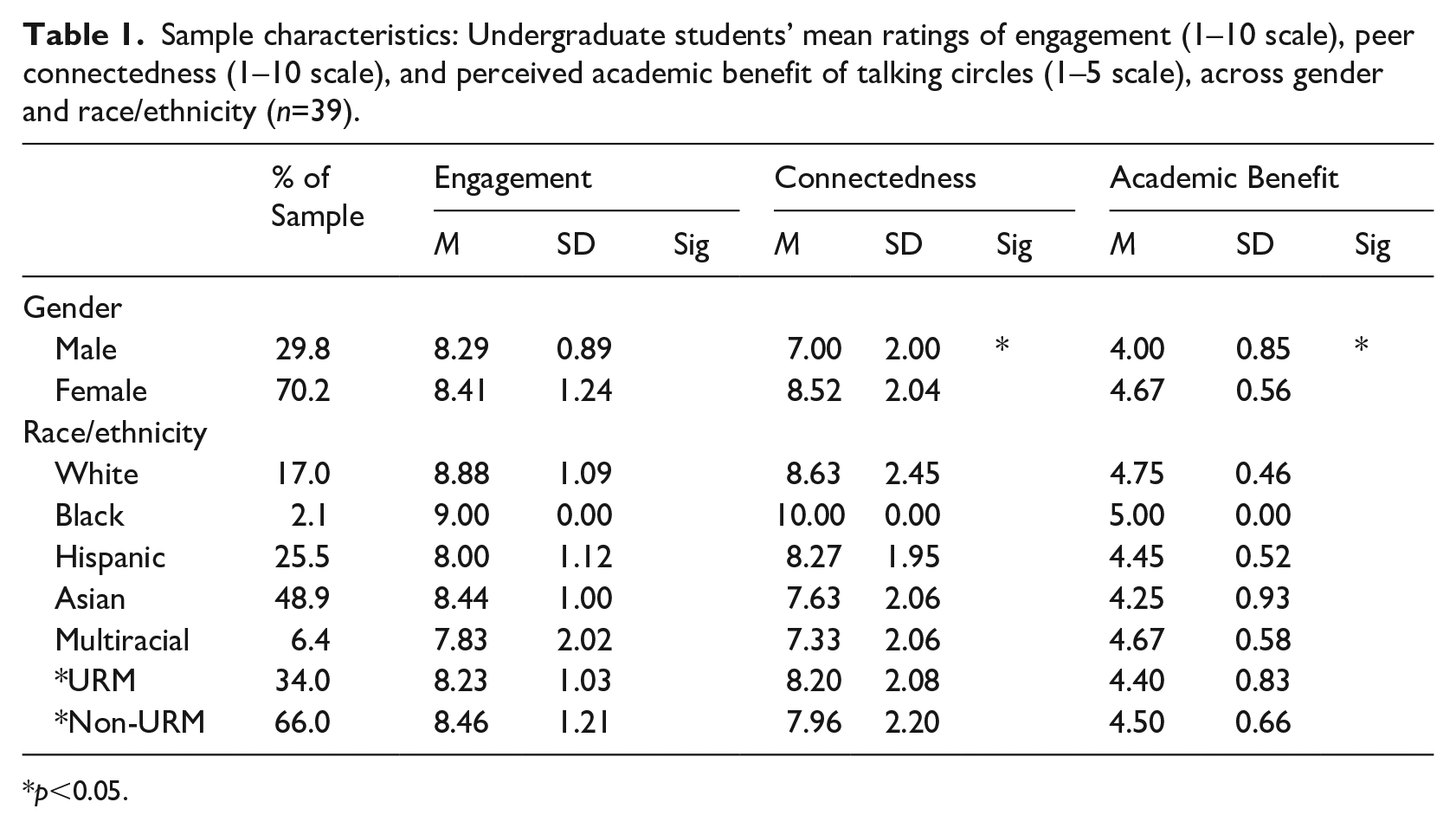
p<0.05.
Sex/Gender differences with regards to our variables of interest included: females’ higher ratings of peer connectedness (8.52 vs 7.00; U=237.0, p=0.022) and greater perceived academic benefit of talking circles (4.67 vs 4.00; U=239.5, p=0.017). Sex/Gender groups did not differ with regards to engagement in discussions. Racial/Ethnic groups did not differ with regards to engagement, peer connectedness or perceived academic benefit of talking circles, per Mann-Whitney U and Kruskal-Wallis test results.
Previous breakout rooms: Negative experiences
All interviewees described previous breakout room experiences quite negatively in terms of engagement, interpersonal connection, and academic enhancement. Anxiety induced by interacting online often led to social withdrawal: nervously “double check[ing] that my video isn’t on,” staying “silent the whole time,” or “just leav[ing] if I wasn’t comfortable.” Connecting through side conversations and exchanging social media accounts became more difficult, and some students “did not make a single friend during the whole pandemic.” This was largely attributed to faulty course structuring: an estimated 9 out of 10 professors “not sharing about themselves,” no “welcoming environment to [facilitate] comfort with one another,” and lack of equitable sharing, “a few social butterflies answering all the questions.” “Putting me in a breakout room isn’t necessarily going to make me speak up,” Regina explained. “To be honest, this [talking circle] is the first breakout room I have seen . . . go well.”
Talking circle outcomes
In Adolescent Development, breakout rooms were generally evaluated positively, in terms of students’ engagement, social connection, autonomy, academic benefit, and general satisfaction, as survey, interview, and observational data can attest.
Survey results: General satisfaction
Given the open-ended survey prompt, “tell me about your experience in small group discussion circles,” 88% of students attending synchronously began their responses with an expression of enjoyment, including, “I loved circle discussions,” and “small group discussion circles were the best part of the class.”
Engagement
Students generally reported higher engagement in this particular course compared to other virtual courses that they had taken: 64.1% of respondents attending synchronously reported being “much more engaged” or “a little more engaged,” 25.6% reported being “about equally engaged,” while only 10.3% were more engaged in other classes. Students also overwhelmingly rated their engagement in talking circles to be higher than during whole group times: 46.2% reported engaging “much more” during talking circle times, 43.6% reported engaging “a little more,” while only 10.2% reported engaging about equally during talking circle and whole group times.
Ratings of verbal and cognitive subcategories of engagement were significantly higher for talking circle discussions (see Table 2). Verbal engagement ratings (i.e. thoughts shared in the chat or out loud, verbal exchanges, asking questions, responding, explaining things to classmates) averaged 8.41 out of 10 during talking circle times, compared to 3.92 during whole group times (z=−5.39, p<0.001). Cognitive engagement ratings (i.e. “your thoughts, including those you share and those you don’t”) averaged 8.38 out of 10 during talking circle times, compared to 6.18 out of 10 during whole group times (z=−5.06, p<0.001).
Student engagement and peer connectedness ratings (on 1–10 scale) in talking circles and whole group portions of class (n=39).
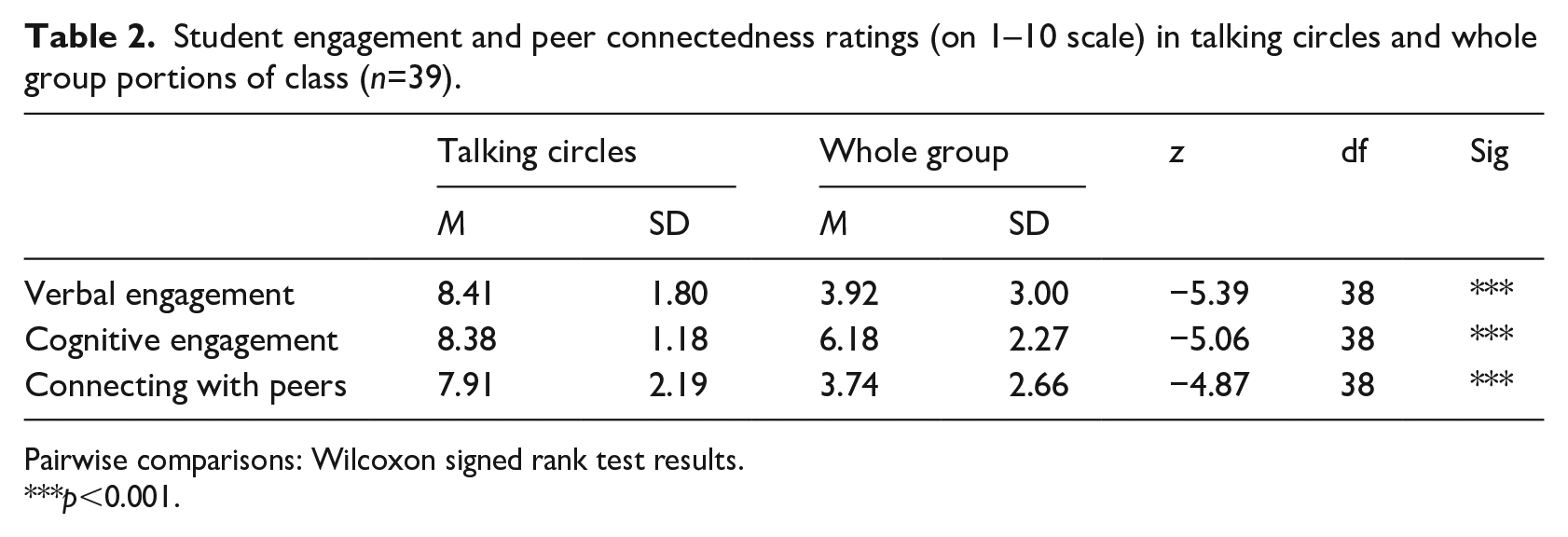
Pairwise comparisons: Wilcoxon signed rank test results.
p<0.001.
Social connectedness
Ratings of peer connectedness during talking circles were significantly higher (z=−4.87, p<0.001) than during whole group times, averaging 7.91 out of 10, compared to 3.74 out of 10 (see Table 2). Over 94% either strongly or somewhat agreed (69.2% strongly agreed, 25.6% somewhat agreed) that participating in talking circles helped them feel more connected to classmates.
Academic benefit
Over 92% of students either strongly or somewhat agreed that participating in talking circles helped them learn course content better (56.4% strongly agreed, 35.9% somewhat agreed).
Observations
Our observations, capturing students’ communication patterns across whole group and talking circle interactions, also generally aligned with survey results related to engagement, social connectedness, and academic benefit (see Table 3). Comments during talking circle discussions related more directly to target course concepts more often: citing examples from texts and lectures 60 times, compared to 9 times in whole groups, pointing out connections between target concepts, their own experiences (text-to-self: 22 times vs 6), and other knowledge bases (text-to-world: 25 times vs 1). This included explaining influences on their own identity formation, brain development, cognition, and risk-assessment played out during their adolescence. During talking circles, students also responded directly to peers more often (67 times vs 19), expressed positive regards to each other, such as appreciation, sympathy or affirmation (39 times vs 2), pointed out interests, experiences and beliefs that they had in common (33 times vs 6), and explicitly invited each other into the conversation (10 times vs 1).
Observed student interactions in whole group and small group talking circle settings: Code categories and subcategories, examples, and counts (N=61).
Keys to breakout room success
Establishment of communication norms
Students attributed these positive outcomes and communication patterns to key structural elements of the class, which were often lacking in other courses. The majority were built into the breakout rooms themselves; however, the establishment of norms around personal sharing during whole group times also played a role: the professor’s own sharing at the beginning of every class, revealing information about her family, adolescence and teaching experiences, was perceived to build trust and encourage participation. Other students attributed their willingness to share to her demonstrated interest in their responses, including reading posted comments out loud. By the time breakout rooms began, “the professor really made the class very approachable and welcoming, so [students] were already comfortable,” Erica explained. Overall, 85% rated the class as “extremely welcoming,” and 15% rated it as “quite welcoming,” 100% of respondents agreed that the professor appropriately modeled a high level of engagement, energy, and enthusiasm towards class content, and 92% reported that it influenced their engagement during breakout rooms. Feeling encouraged to share (r(37)=0.43, p=0.029), the professor modeling engagement (r(37)=0.50, p=0.001), and the welcoming environment (r(37)=0.35, p=0.030), were also positively correlated with perceived academic benefit.
Structural elements of talking circles
Predictable routines
Thoroughly preparing students for breakout rooms through consistency and clear guidelines increased students’ comfort as well. This included an instructional video demonstrating how to conduct discussion circles using the desired protocol, dates to lead discussions assigned well in advance (during week 2), and consistent scheduling: circles every Monday at 10:15. “Being online, the situation was really stressful and constantly changing,” Jimena explained. “So having that structure . . . [knowing] we are going to have a breakout room today . . . was really helpful.” Students could prepare to be on camera, “dress a little nicer and be in good lighting,” and thus reduce their anxiety.
Cameras
Encouraging students to turn their cameras on during breakout rooms was also important to many students: 42% of survey respondents mentioned it as a key, positive factor, despite never having been asked about it directly. “It’s just easier to share and engage when you have concrete faces to engage with,” one student explained. “When it’s possible to see their reactions, people give you that energy back.” Although these students enjoyed barriers being removed by that visibility, only 17% turned their cameras on during whole group times (compared to 75% in talking circles), despite being encouraged to do so, perhaps due to increased anxiety induced by having more people present.
Consistent groups
Grouping students with the same set of peers every week was another key structural element, building familiarity, trust, and fondness, creating “a safer space to share ideas,” as they got to know each other, and minimizing the number of awkward, ice-breaker conversations. “Not having to feel like strangers every time allowed us to talk about things that might not come up on a first meeting,” Arturo explained. “I got to build a relationship with them. You get used to . . . their talking style.” Julieta described bonding over commonalities, “relating to my peers’ experiences . . . looking forward to what they had to say.” These descriptions aligned with survey responses as well: students’ ratings of perceived connectedness to peers in breakout rooms were positively correlated with higher ratings of engagement in breakout room discussions (r(37)=0.50, p=0.001) (see Table 4).
Spearman correlations: student ratings of engagement, connectedness, autonomy, competence, and academic benefit of talking circles (n=39).
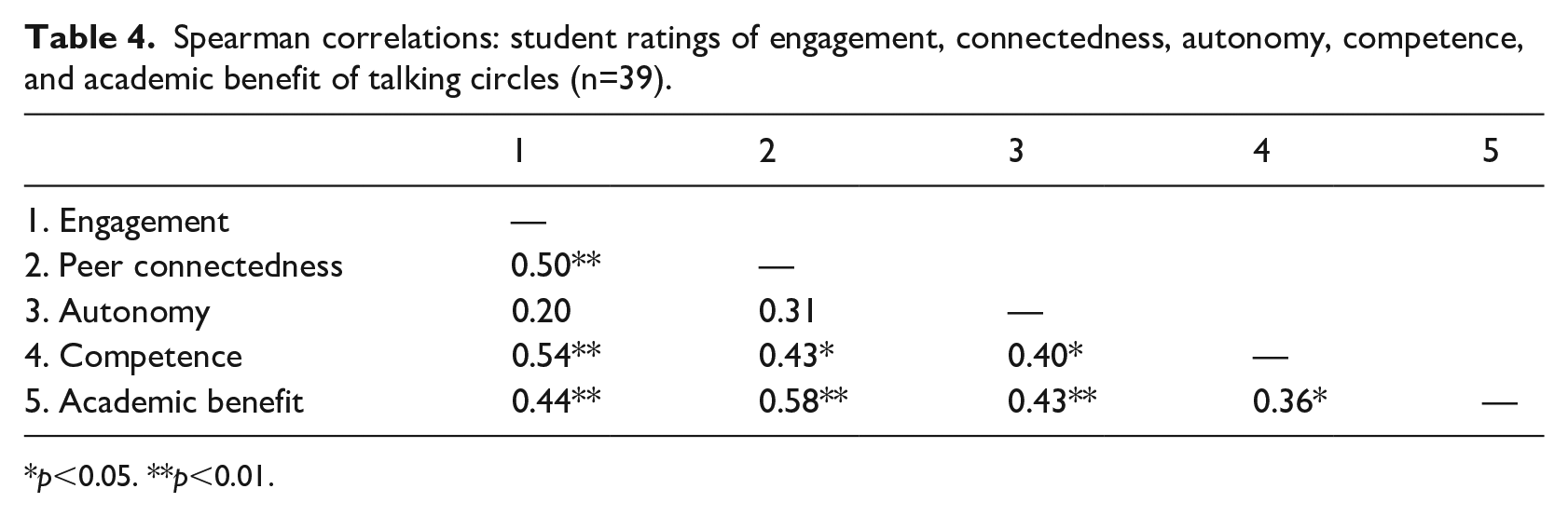
p<0.05. **p<0.01.
Set turns: Opportunity and positive pressure
In addition to this consistency and comfort, students also emphasized the importance of our structured turn-taking protocol, positive pressure and accountability, and the linking of course content to personal experience through prescribed question types.
Ordered turn-taking was perceived to encourage engagement by guaranteeing students a chance to talk who might otherwise have been left out. “The smaller groups was more equitable,” Arturo opined. “You feel like you have the opportunity to participate because they will have the time to listen. In a whole group there are more outspoken people.” While many students framed these reserved turns to speak as opportunities, others emphasized the responsibility and positive pressure, promoting engagement. “When you’re in a big group, you can easily ‘disappear’ since there are other people to look at,” Wei noted, whereas in talking circle groups, “we all have to talk and answer every question.”
Having peers take turns leading the discussion groups also increased accountability, as Julieta explained: “Our peers created the lesson. I thought it would be rude to not respond to what they prepared.” Reserved, expected turns for each student also added motivation to maintain positive study habits. “It forced students to be familiar with the course material . . . to have all [the] readings done,” Julieta added. “Otherwise I won't be able to participate in the circle, which I really want to do.”
Leading discussion: Autonomy and competence
Leading discussion, being given autonomy to choose topics empowered students to “actually ask people [what] I want to know,” shape the experiences of their group mates, practice new skills, and increase in confidence. “It was nice having practice being a leader, facilitating . . . a safe conversation,” Regina reflected. “I felt like, I'm actually qualified, and they’re not going to judge me if I say something wrong . . . I’m leading,’” Erica recalled. Some aspiring educators felt an additional sense of importance and applicability. “You feel like the teacher a little bit,” Bianca added. “It was really cool.” Survey results corroborated these links as well: 71.8% of students reported that talking circles promoted feelings of autonomy more than whole group times. Students’ feelings of competence were strongly, positively correlated with their ratings of autonomy (r(37)=0.40, p=0.013) (see Table 4).
Question types: Needed structure
These opportunities for autonomy were also balanced with guidance and structure in their question design. While turn-taking norms eliminated potential awkwardness around managing conversational flow, requiring two specific types of questions eliminated potential discomfort around what to ask, while also ensuring that responses would reinforce target concepts, deep thinking, and personal sharing. “Having one be more textbook-based and one where students apply the knowledge to their own lives, it helped me see the variance in adolescent development,” Violet explained. “It made me feel like I was actually learning, rather than just going through some readings and then waiting for the test to happen,” Malachi added. The personal and conceptual thinking were both reinforced, while their convergence helped concretize students’ understanding and clarify relevant practical applications.
Getting feedback from peers also helped sharpen understanding and clarify areas of confusion as well. “They were helpful for admitting you don’t understand the reading and asking questions to peers,” Arjun noted. “[It] gave me a space to bounce ideas and learn how everyone else viewed the topics,” Mustafa added.
Several correlations were observed between outcomes of interest. Ratings of engagement were significantly, positively correlated with peer connectedness, competence, and perceived academic benefit. Autonomy was significantly, positively correlated with competence and perceived academic benefit and marginally correlated with peer connectedness (r(37)=0.31, p=0.053). All other correlations between the five variables were significant.
Regression results
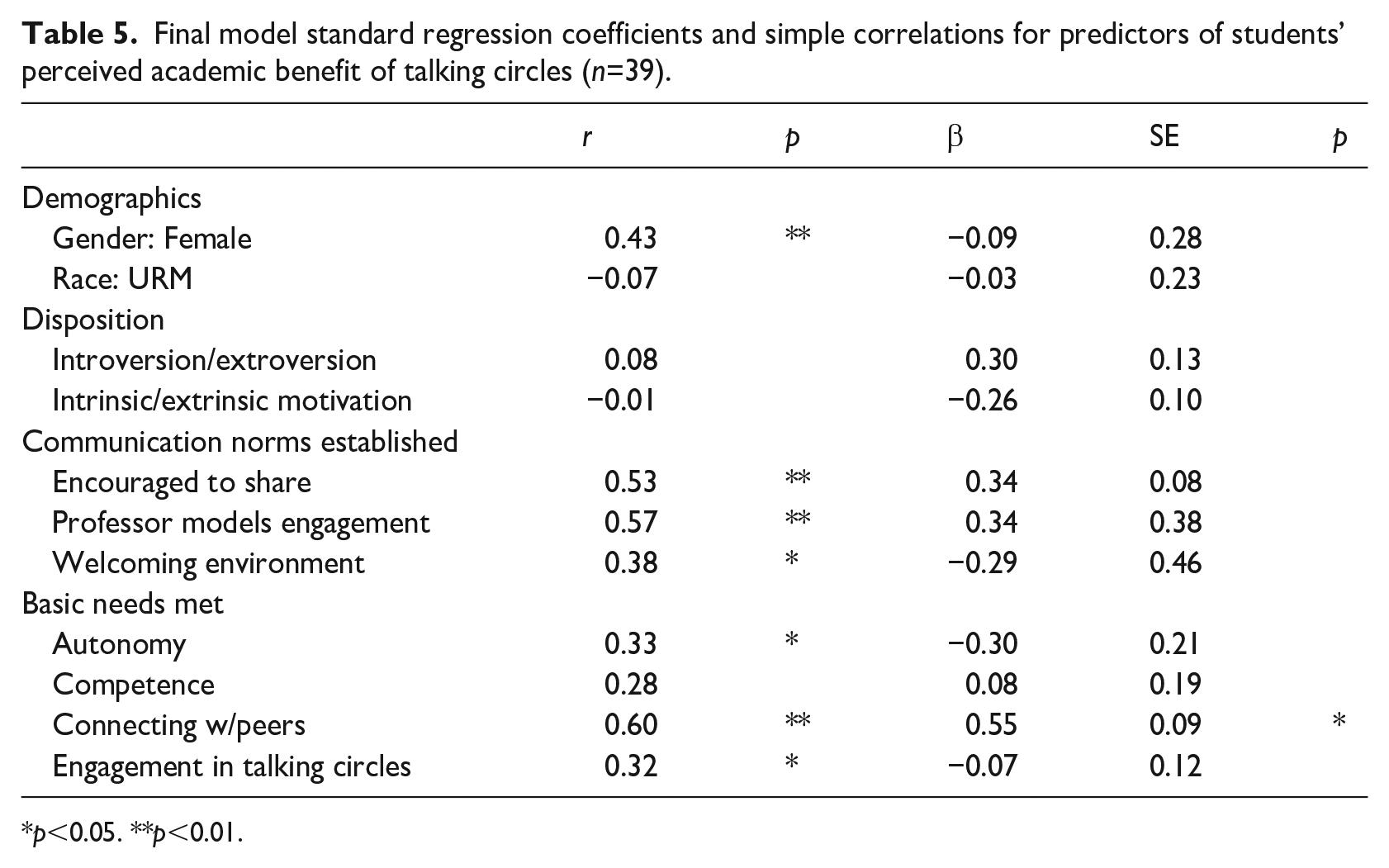
Simple correlation analysis showed that female gender, feelings of autonomy, connecting with peers in talking circles, engagement in talking circles, intrinsic motivation, feeling encouraged to share, that the professor modeled engagement, and that Adolescent Development was a welcoming environment were all significantly positively correlated with increased engagement (see Table 5). Feelings of competence were marginally positively correlated with perceived academic benefit as well (r=0.28, df=38, p=0.080). Correlations with race, introversion/extroversion and intrinsic/extrinsic motivation were non-significant.
Final model standard regression coefficients and simple correlations for predictors of students’ perceived academic benefit of talking circles (n=39).
p<0.05. **p<0.01.
Our final regression model explained 60% of variance in talking circles’ perceived academic benefit (Adjusted R2=0.60). After accounting for the establishment of communication norms, demographic and dispositional factors, and Ryan and Deci’s basic needs, peer connectedness promoted by talking circles was the only variable that remained a significant predictor of academic benefit ratings (B=0.55, SE=0.09, p<0.05). Feeling encouraged to share was marginally, positively associated as well (B=0.34, SE=0.08, p=0.054).
Needed improvements: Unresolved issues
Despite the many positive structural elements of these discussion circles, students also felt that some steps could be taken toward improvement, particularly regarding social loafing and discussion monitoring. Bianca noted how, “when someone didn’t really make an effort [as discussion leader], I didn't get much out of it.” Some felt that less participatory group mates’ could be better kept on task by “having more time with the professors and the TAs [in breakout rooms] seeing what we’re doing.” Conversely, some advocated for less monitoring, citing the added discomfort caused by their presence. “It’s hard to open up when a professor or TA is there . . . considering that it’s an authority figure,” Malachi explained. Others, like Julieta, just wanted observers “to share, so it doesn't seem like they're just sitting there and watching people.” Student discussion leaders often invited instructional team members to answer their questions, despite not being instructed to do so, demonstrating this desire.
Discussion
Students’ perceptions of online student-led talking circles provide valuable insight into how this format facilitates improved engagement, social connection and academic benefit in previously unexplored ways. Structural keys to success, leading to positive outcomes are modeled in Figure 1. The establishment of communication norms by the professor during whole group times started to reduce students’ discomfort and increase their willingness to share and initiate connections. In the talking circles, their comfort increased further due to key structural features: cameras being on, student discussion-leading using prescribed question types, and equitable turn-taking with consistent groups.
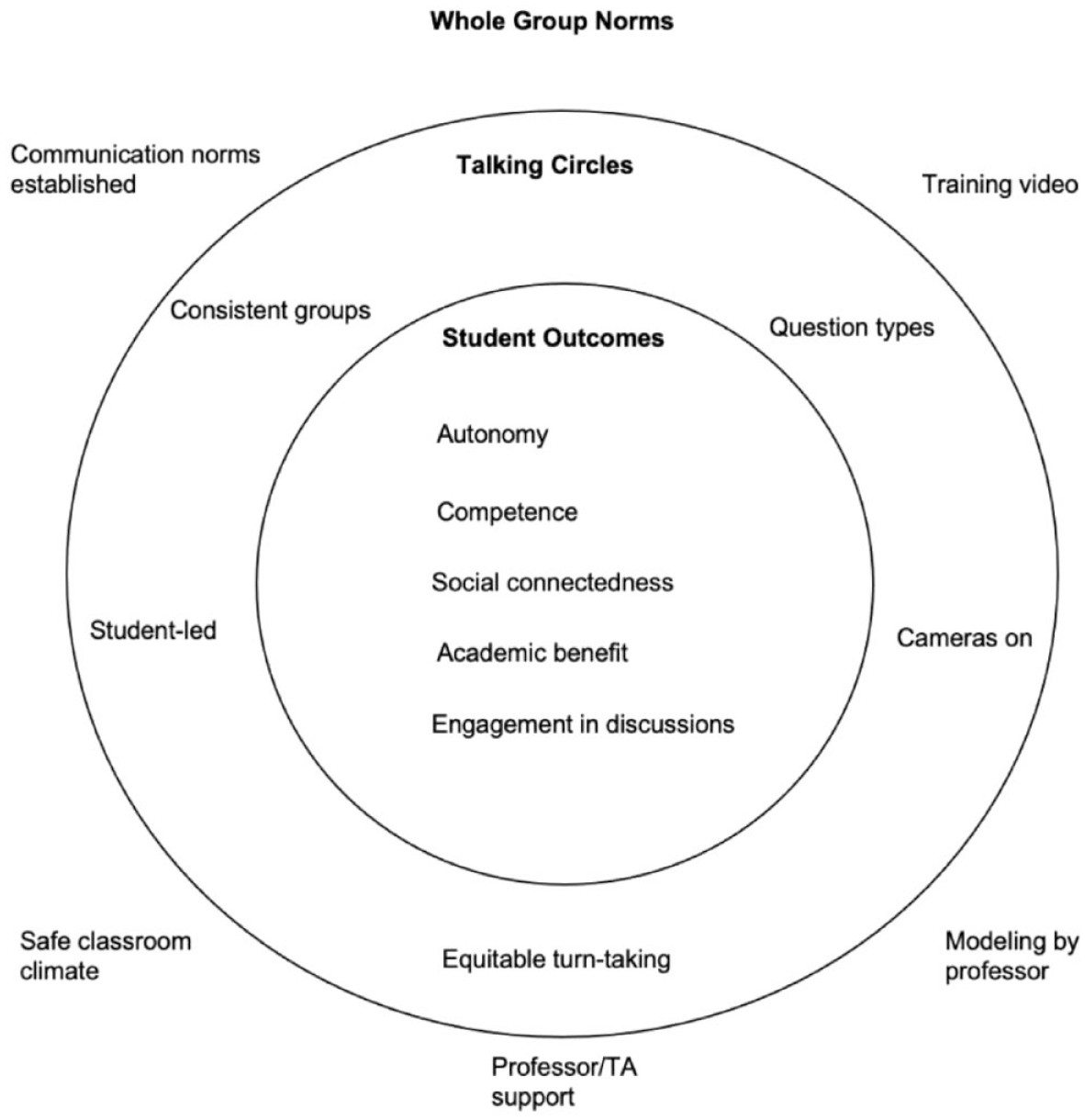
Key factors contributing to positive breakout room outcomes: whole group norms and structural elements of talking circles.
Giving students the responsibility of leading discussions and the freedom to choose topics and design discussion questions was perceived to increase feelings of autonomy and confidence, leading to increased engagement. Reserved turns for each participant promoted positive study habits, accountability, and equitable sharing. Required question types involving personalized application of course concepts promoted deep processing and social connection through interpersonal familiarity.
Our students’ uncomfortable breakout room experiences in other classes where connections to peers and professors were not sufficiently scaffolded beforehand matches some other college students’ reports from previous studies (McGrath and Wolstencroft, 2021; Muheidat and Tawalbeh, 2020). The professor’s personal sharing being linked to increased willingness to participate in our class mirrors previous findings that instructors “humanizing” themselves in this way builds trust and promotes a positive learning environment (Muheidat and Tawalbeh, 2020). Increased sharing in breakout rooms resulting from communication already having been normalized, through warm-up questions in the chat, aligns with previous researchers’ recommendations of beginning class with easy, low-pressure, participatory messaging tasks (Phirangee and Bakir, 2021).
Some student perceptions of our talking circles’ features match previous findings, while others diverge. While providing conversational structure was recognized to be important in previous studies (Saltz and Heckman, 2020), this was not in reference to the kinds of questions or turn-taking that we employed. Previous reported increases in confidence and social connection resulting from the “space to share” in breakout rooms settings were attributed merely to smaller group size (Edmondson and Daley, 2020; Tsihouridis et al., 2020), not the feelings of leadership development or other structural components that our students described.
Our students perceived web cameras requirements to help build rapport, as expressions and reactions were revealed, matching some previous research (Gruber and Bauer, 2020). They did not express the privacy-based concerns that others have noted, however (Cavinato et al., 2021). Their perception that keeping consistent discussion groups throughout the quarter not only limits initial, potentially awkward interactions with unfamiliar people to the first small group discussion, but also allows peer connections to gradually develop over time (Reinholz et al., 2020; Takizawa et al., 2021), leading to increased feelings of peer accountability, motivation to engage (Venton and Pompano, 2021), confidence and comfort (Edmondson and Daley, 2020), has been noted by others as well. This contradicts previous suggestions that randomizing and frequently changing groupings builds community (Anstey et al., 2020). In our students’ experiences in other courses, this mere exposure to more peers did not actually lead to additional relationships being built, as more extensive, structured interactions were felt to be necessary in order to establish trust and comfort.
Observations of interactions and ratings of verbal and cognitive engagement in breakout room discussions (above 8 out of 10, on average) not only match previous findings, in terms of the overall increase during small group times, but also indicate deep thinking, extensive verbalization, and rich interaction (Cavinato et al., 2021; Takizawa et al., 2021; Toney et al., 2021). In a class where engagement was already high: two thirds of students felt more engaged than in other classes, the fact that 90% also felt more engaged in talking circle discussions than in whole group discussions indicates a noteworthy talking circle-related boost.
Over 90% reporting learning course content better as a result of talking circle discussions indicates a significant academic benefit as well. Autonomy, competence, engagement in discussions, and peer connectedness being positively correlated with perceived academic benefit, aligns with Ryan and Deci’s Self-Determination framework (Ryan and Deci, 2019). Associations may be bidirectional, as they would predict, though causality cannot be determined in our current study. The higher portion of unique variance explained by peer connectedness in our final regression model, resulting in a loss of predictive power of autonomy and competence once all variables were taken into account had not been previously shown, to our knowledge.
Females’ higher average ratings of connectedness have been previously thought to relate to perceived societal pressure for women to define themselves more in terms of relationships (Clancy and Dollinger, 1993), and favor communication styles aimed at establishing trust (Furumo and Pearson, 2007). Further investigation would be needed to determine if these particular students perceive such pressures. Women have also been found to spend more time preparing for class on average, resulting in perceptions of greater academic benefit (Kinzie et al., 2007). In our study, though simple correlations were observed, once connectedness was accounted for, there were no gender differences regarding academic benefit ratings.
Limitations
This study has a number of limitations. Due to lack of randomization and a control group, no causal claims can be made about the effects of virtual talking circles. Student samples being drawn from one particular subject area at one university may limit generalizability to larger college student populations. Interview data must be considered in light of the fact that the interviewees were a small subset who opted in for that portion of the study; and therefore may have been a biased subgroup: less averse to online communication, more outgoing, higher-achieving or otherwise different from the rest of their classmates. Survey data is based on self-report, and therefore subject to threats to validity, such as social desirability bias. Observation notes capture only the portions of class during which the professor or a TA was present, and their presence may have altered students’ communication patterns. Whole group communication was mostly in the chat, allowing for a degree of simultaneity which was not possible out loud in small groups, making comparisons across settings not perfectly analogous. Despite these limitations, this study contributes meaningfully to the literature on virtual instruction by illuminating teaching practices and structural elements that students themselves have identified as most influential and beneficial.
Recommendations
While we recognize that our findings may not be generalizable to all settings, other courses may be similarly enhanced by implementing online talking circles with the key structural elements to which our students attributed reported successes:
Establishing communication norms by modeling open sharing and scaffolding peer interactions during whole group times.
Autonomy: student discussion leaders who choose topics and questions.
Preparation and structure: modeling and requiring equitable turn-taking discussion protocols and specific question types.
Consistent scheduling and student groupings.
Encouraging web camera usage.
To improve monitoring, prevent social loafing, and build trust and familiarity we recommend that TAs and professors participate regularly in full talking circle sessions as fellow members. This could also reduce discomfort around having authority figures present when sharing sensitive personal information, and minimize interruptions caused by brief drop-ins. It may also be helpful for students to turn in prepared discussion questions in advance so that instructors can provide feedback, check academic rigor and correct misconceptions.
Future research should examine the implementation of talking circles across different types of course content, departments, universities, domestic, and international, in order to better understand the generalizability of their benefit. Further investigation of the influence of gender and cultural norms is needed as well.
Conclusion
Based on our results, this talking circle discussion format has the potential to significantly improve student experiences and outcomes in virtual settings. While many instructors have used breakout rooms in a variety of ways, our participants reported frequent implementation problems and a need for modifications like the ones researched here. Though some disadvantages and challenges may be inherent to online communication, including increased social discomfort, “zoom fatigue,” and inefficient transitions and monitoring, these problems can be at least partially overcome by effective structuring of classes, including effective use of breakout rooms, to improve social connectedness, engagement, and academic outcomes. If we conceptualize and use online meeting software as one complimentary tool among many, rather than universal and obligatory, or as a full replacement for in-person instruction, the benefits could be substantial.
Research Data
sj-docx-1-alh-10.1177_14697874231179238 – Research Data for Student perceptions: How virtual student-led talking circles promote engagement, social connectedness, and academic benefit
Research Data, sj-docx-1-alh-10.1177_14697874231179238 for Student perceptions: How virtual student-led talking circles promote engagement, social connectedness, and academic benefit by Marco Chacon, Rebecca S. Levine and Amy Bintliff in Active Learning in Higher Education
Research Data
sj-docx-2-alh-10.1177_14697874231179238 – Research Data for Student perceptions: How virtual student-led talking circles promote engagement, social connectedness, and academic benefit
Research Data, sj-docx-2-alh-10.1177_14697874231179238 for Student perceptions: How virtual student-led talking circles promote engagement, social connectedness, and academic benefit by Marco Chacon, Rebecca S. Levine and Amy Bintliff in Active Learning in Higher Education
Research Data
sj-docx-3-alh-10.1177_14697874231179238 – Research Data for Student perceptions: How virtual student-led talking circles promote engagement, social connectedness, and academic benefit
Research Data, sj-docx-3-alh-10.1177_14697874231179238 for Student perceptions: How virtual student-led talking circles promote engagement, social connectedness, and academic benefit by Marco Chacon, Rebecca S. Levine and Amy Bintliff in Active Learning in Higher Education
Footnotes
Declaration of conflicting interests
The author(s) declared no potential conflicts of interest with respect to the research, authorship, and/or publication of this article.
Funding
The author(s) received no financial support for the research, authorship, and/or publication of this article.

Data availability statement
Supplemental material
Supplemental material for this article is available online.
Author biographies
References
Supplementary Material
Please find the following supplemental material available below.
For Open Access articles published under a Creative Commons License, all supplemental material carries the same license as the article it is associated with.
For non-Open Access articles published, all supplemental material carries a non-exclusive license, and permission requests for re-use of supplemental material or any part of supplemental material shall be sent directly to the copyright owner as specified in the copyright notice associated with the article.
