




Abstract
The importance of reflection during learning process is widely recognized. Drawing on the literature, this article presents a study where students were stimulated to reflect during experiential learning, in order to both re- and de- contextualize their knowledge. We describe how different levels of prompted reflection can be related to academic performance and perceptions of the learning process. We found positive relationships between prompting reflection and the academic performance. It is therefore argued that prompting reflection leads to higher levels of reflection and better performance in writing. The results also show that higher levels of reflection do not have to diminish students’ motivation, perception of usefulness, interest and enjoyment during learning. Finally, the results reveal needs for encouraging more collaborative reflection during learning.
Reflection for learning and academic growth
Reflection is essential for learning and knowledge growth. Reflection can be defined as ‘the active, persistent and careful consideration of any belief or supposed form of knowledge in the light of the grounds that support it and the further conclusion to which it tends’ (Dewey, 1933: 9). Its importance is generally accepted, both in formal education (Buschor and Kamm, 2015; Ryan, 2011) and in professional development programmes (Orland-Barak and Yinon, 2007; Schön, 1983). Reflection is considered as key component of educational programmes that need to bridge academic and practical experiences (Buschor and Kamm, 2015; Coulson and Harvey, 2013; Orland-Barak and Yinon, 2007). The theory of experiential learning, developed by Kolb (1984, 2015), suggests that reflection is part of the cyclic learning process of (1) applying theoretical knowledge in practical situations (re-contextualization, steps of Concrete Experience and Active Experimentation), and (2) creating new understanding from practical experiences by generalization (de-contextualization, steps of Reflective Observation and Abstract Conceptualization) (Boud et al., 1985; Kolb, 1984; Tynjälä et al., 2003).
When students reflect on relationships between formal academic knowledge and concrete learning experiences, a deeper understanding develops (Ghanizadeh, 2017). Studies have shown that experiential learning environments that provide opportunities for reflection enhance students’ academic success and performance (Dyment and O’Connell, 2011; Peltier et al., 2005) and increase examination scores (Hamilton and Mallett, 2018). For example, Mountford and Rogers (1996) showed their positive influence on students’ educational outcomes via several factors: academic self-concept, task awareness, views of knowledge, the influence of knowledge on behaviour, writing skills and generating knowledge by reflecting and discussing. However, reflection not only challenges learning experience and knowledge, but has influence beyond cognition (Cavilla, 2017). It also makes learners identify personal assumptions, questions their philosophies (Gibbs, 1998; Ursin and Paloniemi, 2019), and develops awareness of the reasons behind their perceptions, emotions and actions (Kember et al., 2008). Others argued there are benefits of reflection such as enhanced satisfaction and motivation to complete academic tasks (Cavilla, 2017; Dyment and O’Connell, 2011). The latter benefit specifically relates to ‘intrinsic’ motivation and commitment of students to learn and grow (Cavilla, 2017; Ryan, 2013).
Despite the generally acknowledged relevance of learning, many factors influence the enjoyable and efficient practice of reflection. The vast majority of articles on reflection has been theoretical and conceptual, rather than empirical (Liu, 2017; Peltier et al., 2005). In addition to the general lack of practice-oriented research into reflection, there is also an imbalance between the number of articles exploring processes of re-contextualization and de-contextualization. While both processes are important, it seems that researching de-contextualization is neglected when compared to studies exploring re-contextualization (Orland-Barak and Yinon, 2007). The literature often mentions negative feelings of students (Perry and Martin, 2016) who state that reflection is ‘a pointless ritual wrapped in meaningless words’ (Shor, 1992: 83). Others acknowledge that curricular activities and educational practice fail to systematically support reflective thinking, which over time tends to become superficial (Ryan and Ryan, 2013). Finally, students lack reflective thinking skills (Peltier et al., 2005), are unfamiliar with reflective practice, and are not guided how to reflect (Ryan, 2013).
Strategies to support reflection
Although reflection is a complex cognitive and emotional process (Liu, 2017; Ryan and Ryan, 2013), development of reflective skills can be effectively supported (Mirriahi et al., 2018). Three complementary strategies to facilitate knowledge development and learning benefits from reflection in experiential learning environments can be distilled: written reflection, prompting and guiding questions and coherent instructional elements.
Written reflection
Educators often refer to writing exercises as a strategy to support learning (Dyment and O’Connell, 2011; Ryan, 2013; Ryan and Ryan, 2013). Such practice can take many forms, ranging from offline notes to online blogs and journal entries (Mirriahi et al., 2018). Although the methods may be different, they all support students in structuring their thinking and making their understanding explicit through permanent recording of thoughts (Hamilton and Mallett, 2018). For instance, Dyment and O’Connell (2011: 82) suggested that writing reflective journals can help students to ‘move beyond the basic ability to recall facts and knowledge, and move towards connecting learning’. There are benefits of sharing reflective journal writings. Socially shared reflection writing is recognized as a mechanism to promote more critical thinking between peers (Rantatalo and Karp, 2016; Splichal et al., 2018). In such a way students are involved with new ideas and other perspectives they can employ in developing their own knowledge (Clara et al., 2019; Hamilton and Mallett, 2018).
Prompts and guiding questions for reflection
Reflection does not happen spontaneously. It requires learners being directed towards examining their beliefs and understanding for developing new knowledge (Boud et al., 1985). To benefit from reflection, there is the importance of focusing reflection towards a certain learning goal, rather than letting learners examine (sometimes irrelevant) events, ideas, or learning issues (Ryan, 2013; Trede and Jackson, 2019). The focus of reflection can be directly activated by using reflection prompts and guiding questions (Coulson and Harvey, 2013; Dyment and O’Connell, 2011). If these prompts fit the curriculum (Mirriahi et al., 2018) they can support students in confronting the potential pitfalls of experiences, learning dilemmas and new theories that they meet in every course. Students are thus encouraged to see the complexity of knowledge (Elvira et al., 2017).
Instructional elements for reflection
The availability of strategies such as written reflection and reflection prompts in a learning environment does not automatically lead to effective and efficient use (Mirriahi et al., 2018). A more integrated instructional approach for designing learning environments is needed for incorporating reflection during experiential learning (Ash and Clayton, 2009; Borton, 1970; Ryan, 2013). A set of instructional elements for mARC (more Authentic, Reflective and Collaborative learning) are used to foster processes of re-contextualization and de-contextualization in experiential learning (Radović et al., 2021). This mARC model suggests that a learning environment should (1) encompass reflection tasks as an essential step to support learners in the transition from a concrete to an abstract view; (2) consider reflection as an additional tool to help learners carry out complex tasks; (3) include reflection to address both processes of re- and de-contextualization (each when possible in accordance with the learning goals); 4) help learners move through the experiential learning cycle; (5) present reflection seamlessly integrated into the learning environment; and (6) support learners’ self-development by advancing their meta-cognitive skills and personal growth.
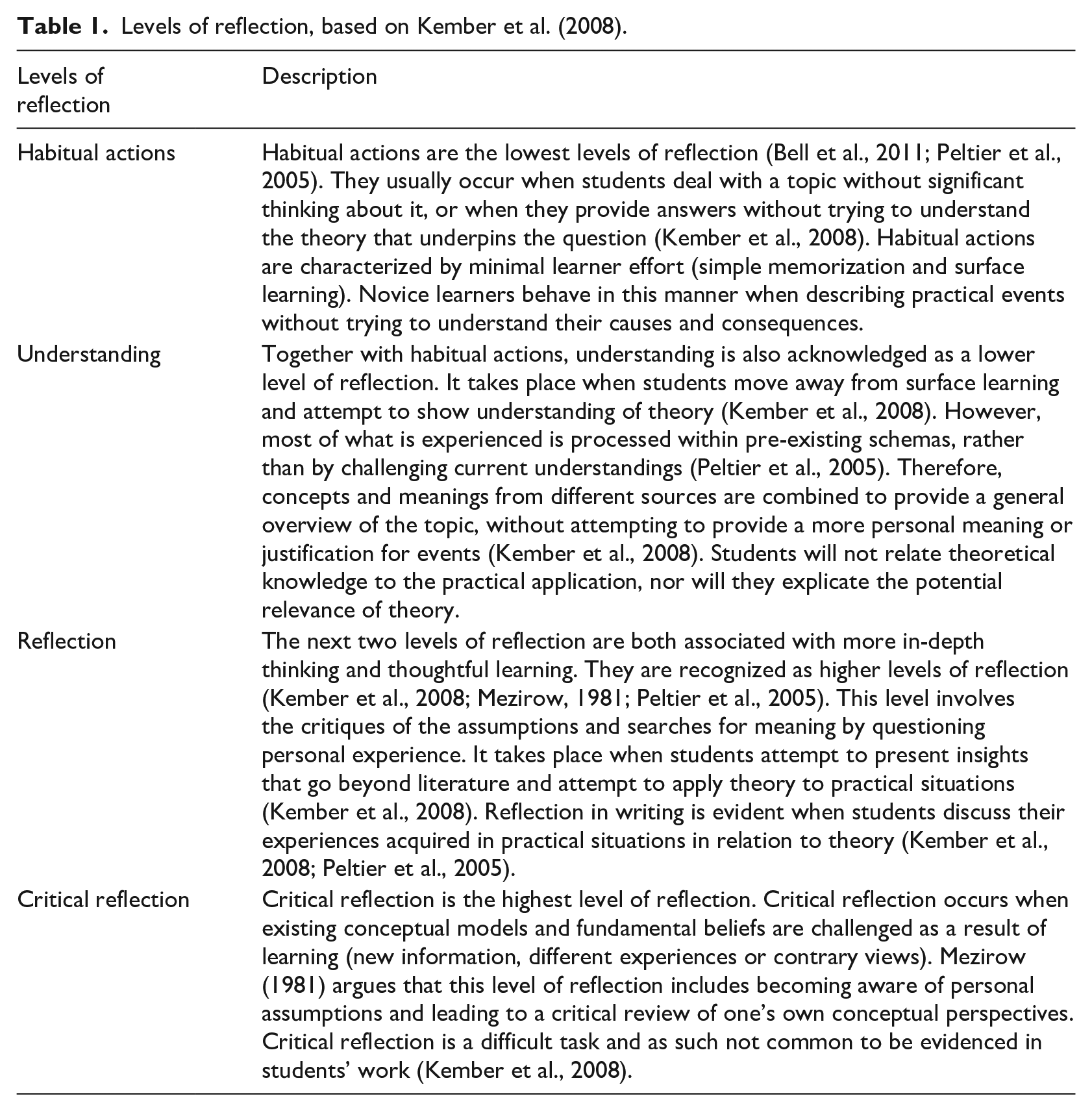
The quality and level of student reflection during experiential learning can vary (Ghanizadeh, 2017; Kember et al., 2008; Ryan, 2013). Kember et al. (2008), following the work of Boud et al. (1985) and Mezirow (1981), suggested there are four hierarchical levels of reflection. These levels are placed on a continuum going from descriptive levels, without significant thinking about the topic (habitual actions, first level), going through ‘understanding’ (second level) towards more critical reflection levels (intensive reasoning actions), when existing understanding and fundamental beliefs are challenged as a result of conceptual conflicts (see Table 1). It is believed that of the levels of ‘reflection’ (third level) and ‘critical reflection’ (fourth level) have the greatest impact on academic performance and student motivation (Ghanizadeh, 2017; Kember et al., 2008). These higher levels are characterized by a changing conceptual perspective, awareness of the reasons behind actions, and critical evaluation of assumptions. On the other end of the continuum, habitual action is not related to any conscious thought or deep cognitive processing (Ghanizadeh, 2017). Such a surface approach to learning is also characterized by little or no intent to get to the underlying meaning of what is learned, and is typically related to lower learning outcomes (Ellis and Bliuc, 2019).
Levels of reflection, based on Kember et al. (2008).
Ryan and Ryan (2013) propose ways to promote students’ reflection and that the focus of reflection should be determined by course content, personal dilemmas and learners’ beliefs. There are also ways to determine the level of students’ reflection (Ghanizadeh, 2017; Kember et al., 2008). However, there is scarce literature documenting relationships between levels of reflection and learners’ perceptions of their learning process and academic performance. Hence, having in mind that reflection is a complex cognitive and emotional process, it seems essential to explore the overall relationships between different levels of prompted reflection, academic performance, motivation during learning process and perceptions of experiential learning. Therefore, the following research questions were investigated:
How do different levels of prompts affect the level of reflection in students’ reflective writing?
How do different levels of prompted reflection affect their academic performance?
How do different levels of prompted reflection affect motivation during their learning process (enjoyment, perceived competences and usefulness) and perception of experiential learning?
How do various demographic characteristics relate to students’ academic performance and learning perceptions?
Method
Three variants of a learning environment were designed according to the reflection levels of Kember et al. (2008). The variants differ in the extent of prompted reflection: (1) Without reflection prompts, (2) prompting for understanding level (including levels ‘habitual actions’ and ‘understanding’) and (3) prompting reflection levels (including levels ‘reflection’ and ‘critical reflection’). This study was situated in the first course of a Master of Educational Sciences at the Open University of the Netherlands. This program is offered through distance learning and was designed for professionals in education, mainly teachers who seek an academic degree and combine work and study to attain this goal. To evaluate the effectiveness of different levels of reflection in relation to our research question we used mixed methods research design with multiple data sources: final academic report assessments (as measure of students’ academic performance defined by the course outcomes); students’ reflective contributions to the discussion forum (as a measure of the quality of reflection during learning); and a post-test questionnaire (with measures on different aspects of motivation and perception of experiential learning). The research was approved by the Ethics Review Committee of the Open University of the Netherlands.
Context
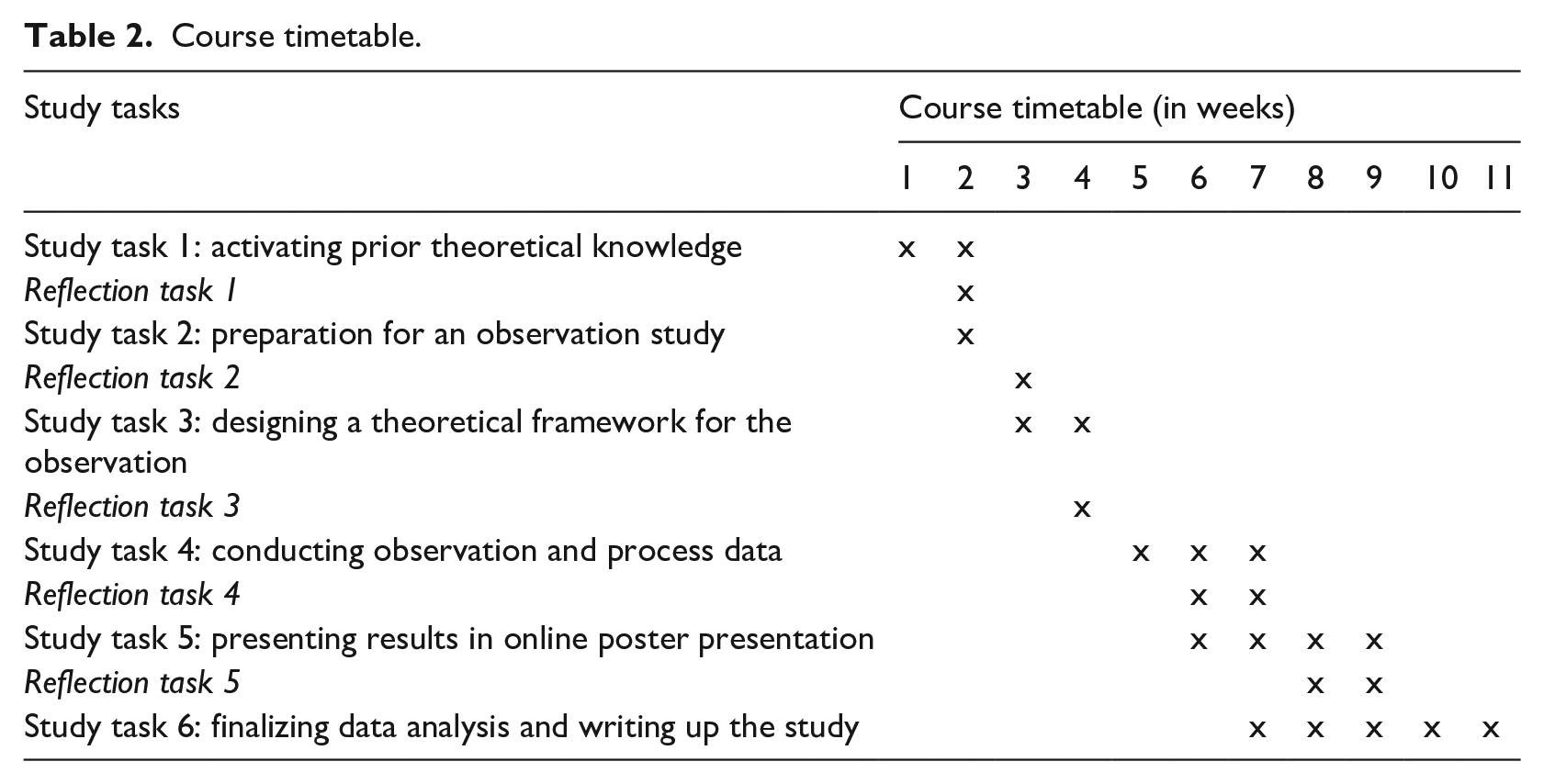
The course teaches students to apply theoretical knowledge. They analyze instruction during a classroom observation at school (case study) from the perspective of main learning theories (behaviourism, cognitivism, constructivism). They also study information by interviewing a school teacher and studying school policy documents. Based on the observation, interview and desk study they describe the actual implementation of these learning theories in instructional practice (as compared to the policy) by writing a report. During a period of 11 weeks, students are guided towards task completion through a series of learning tasks (see Table 2). The course starts with a face-to-face introduction and then continues online. Students and teachers interact through discussion boards and regular synchronous meetings in an online learning environment. Students work individually or in groups, by studying material on learning theories, course and curriculum design, case design methodology and on conducting research and reporting studies. Oral reporting of conducted case studies takes place in online poster presentations and group discussions, where written reporting is done individually. In the last week students complete the course by submitting written reports which are assessed. By doing case-study research students develop insights in the application of learning theories and further de-contextualize knowledge.
Course timetable.
Participants
Participants were students of two cohorts (February 2019 and September 2019) who completed the course and gave written consent to participate in the study (n = 84). Students enrolled in the February 2019 cohort were used as control group, further specified as the baseline group, that is, without receiving any reflection prompts (n = 37). Students enrolled in September 2019 cohort were randomly divided into the two experimental groups. One was the prompting ‘understanding’ group (n = 24) and the other was the prompting ‘critical reflection’ group (n = 23). Each group was allocated to the corresponding online learning environment. Table 3 provides a picture of their demographics (Kruskal–Wallis test showed no significant difference between three groups in respect to the demographic variables).
Students’ demographic information.
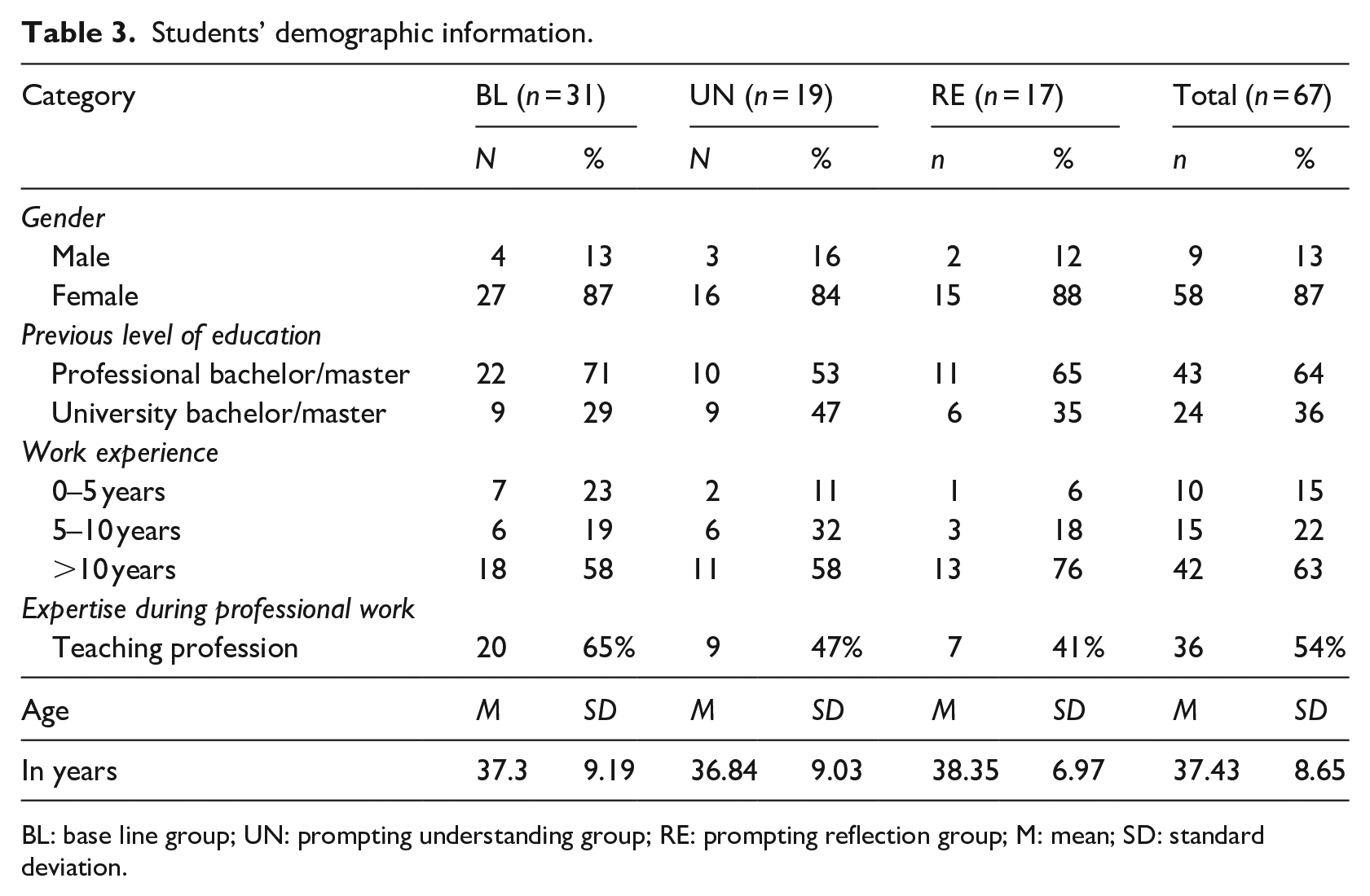
BL: base line group; UN: prompting understanding group; RE: prompting reflection group; M: mean; SD: standard deviation.
Treatment
Experimental conditions were three course variants. In the control condition (baseline group) students were not stimulated to reflect on the tasks in any way, and in the two experimental conditions (the prompting ‘understanding’ group and the prompting ‘critical reflection’ group) they were required to reflect with provided prompts (Table 2). According to Kember’s et al. (2008) framework introduced in Table 1, students in the prompting understanding group were prompted towards providing evidence on understanding concepts and theory, or describing issues arising from concrete experience (habitual actions and understanding); Students in the prompting critical reflection group were prompted to use practical context to think about theory (and vice versa) and to consider personal beliefs to have direct influence on learning activity (reflection and critical reflection). Table 4 introduces the objectives of all reflection prompts and further describes their alignment with the course curriculum.
Summary of reflection prompts.
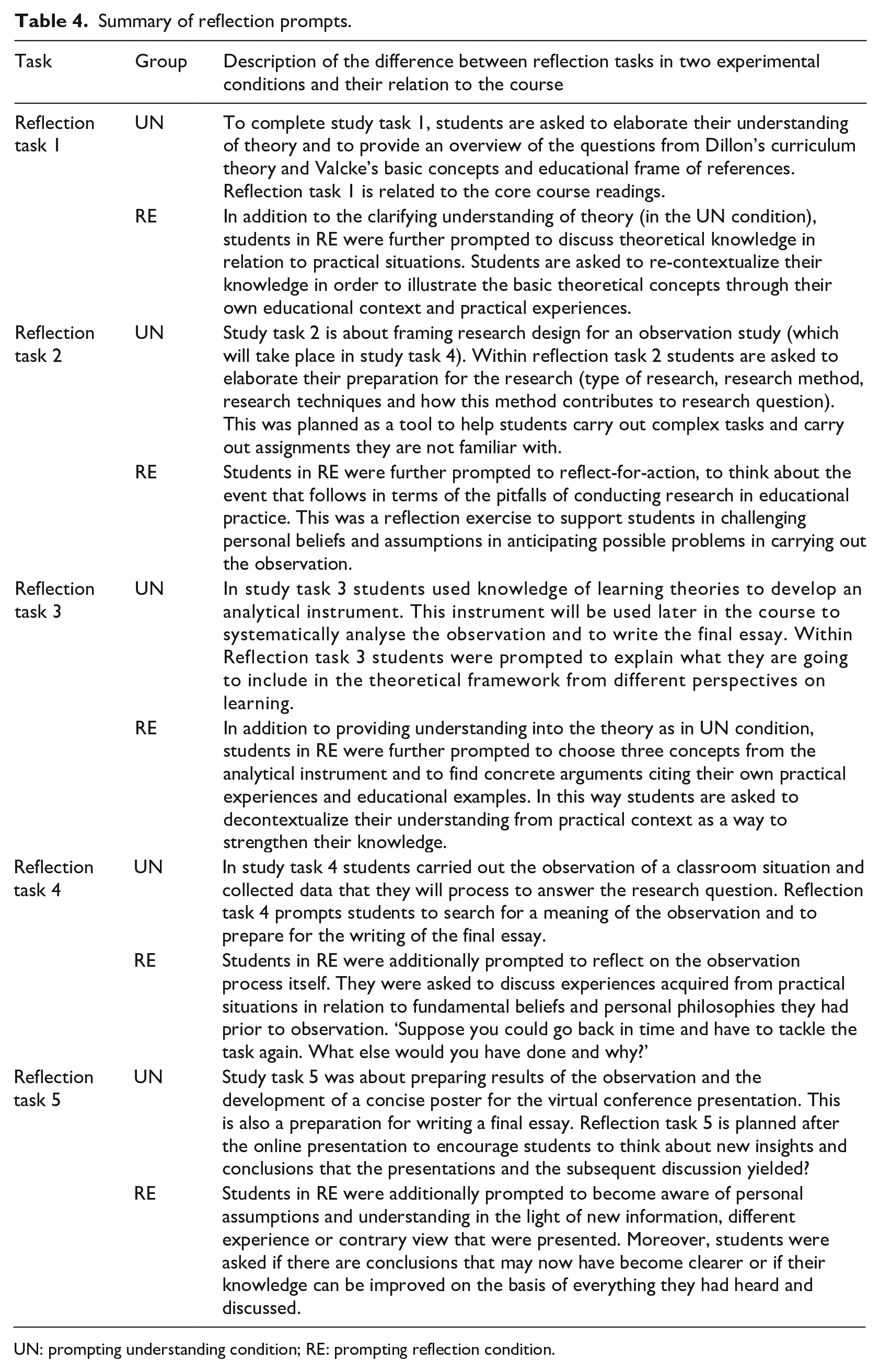
UN: prompting understanding condition; RE: prompting reflection condition.
Reflection prompts in our intervention helped students to (1) re-capitulate the relevant learning theme, (2) write an answer (of up to 300 words) to the respective reflection prompt and (3) share their writing with their peers using the discussion forum. These assignments were aligned to integrate reflection with experiential learning and address processes of re- and de-contextualization.
Measures
Levels of reflection
We used Kember et al.’s (2008) level categories, as introduced in Table 1, to measure the level of reflection in writing. The levels ‘habitual actions’ and ‘understanding’ both represent the level of ‘understanding’, while the levels ‘reflection’ and ‘critical reflection’ both represent the level of ‘reflection’ (Bell et al., 2011; Kember et al., 2008). All written answers were analysed on the evidence of reflection, and categorized according to the highest reflection level observed.
We collected 215 written answers on reflection tasks from the discussion forum (contributions with an average of 300 words to each learning task). Each contribution was first translated from Dutch to English, and rated by one member of the research team. To assure the validity of the coding process, 83 (38% of total amount) contributions were evaluated by another member of the research team, initially yielding a K = 0.593. Discussions between the raters have led to some improvements of the coding schemes and re-evaluation process. Finally, the Cohen Kappa test indicated ‘outstanding’ agreement (according to Landis and Koch, 1977) between the two raters’ judgements, with K = 0.900 and p < 0.0001. Students were responsive in completing their reflection tasks in both experimental groups (85% response in the prompting understanding group and 98% response in the prompting reflection group). To evaluate the relation between different experimental conditions and the levels of reflection in students’ contributions, Mann–Whitney U tests were conducted.
Academic performance
The effects on students’ academic performance were measured through the final grades for their report. The assessment framework used for this grading contains three groups of criteria. First, the reports have to meet the general criteria of scientific reporting, such as the quality of the introduction, theoretical framework, methods, results, conclusion and discussion sections (seven criteria). Second, the report is scored/marked on the quality of its content, on how well students describe an instance of practice, demonstrate their theoretical knowledge and apply it by analysing this practice through a theoretical lens (four criteria). Third, the requirements of academic writing, such as the quality of argumentation, structure, references and language use have to be met (four criteria). Taken together these criteria form the final grade.
The questionnaire
This contained 32 items to be scored on a seven-point Likert scale, with values ranging from one (‘totally disagree’) to seven (‘totally agree’). It combined subscales from Ryan and Deci’s (2000) Intrinsic Motivation Inventory and Young et al.’s (2008) instrument for experiential learning. The Intrinsic Motivation Inventory has been used many times and validated in different contexts (e.g. Jansen in de Wal et al., 2014; Klaeijsen et al., 2018).
From the seven Intrinsic Motivation Inventory dimensions, we used three subscales (a total of twenty items): ‘interest/enjoyment’—perception of interest and enjoyment; ‘perceived competence’—perception of performance and acquired competences; and ‘value/usefulness’—perception of benefits from the activity. The complete questionnaire from Young et al. (2008) was used (a total of twelve items) to measure the quality of experiential learning. This questionnaire had four dimensions (each containing three items) that estimate learners’ awareness of active experimentation and concrete experience, as two steps of re-contextualization; as well as reflective observation and abstract conceptualization, as two steps of de-contextualization. Additional items were used to collect learner’s demographic information (age, previous level of education, experience in professional work and expertise during professional work).
The internal consistency of each sub-scale of the questionnaire was calculated using the Cronbach’s α statistic. As has been explained (e.g. Taber, 2018), sub-scales that have a low number of items, as well as non-normally distributed data, tend to have a lower reliability. One dimension (with three items) was reliable with α = 0.62, two dimensions had good reliability above 0.7 and four dimensions had high reliability scores above 0.8 (see Table 5). Overall, Cronbach’s α statistic indicated that subscales achieved adequate internal consistency.
Cronbach’s α and Spearman’s rank-order correlations (n = 67).
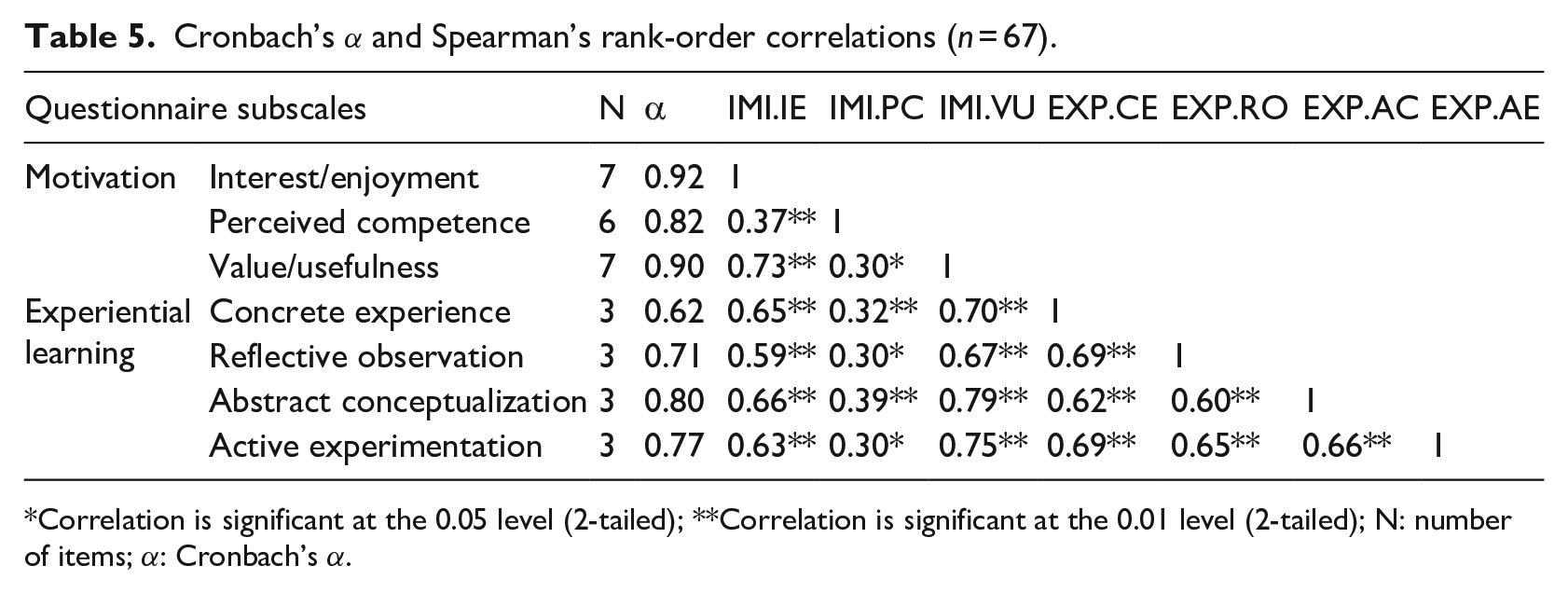
Correlation is significant at the 0.05 level (2-tailed); **Correlation is significant at the 0.01 level (2-tailed); N: number of items; α: Cronbach’s α.
Seventeen students did not fill in the questionnaire: six from the baseline group, who had no specific prompts, five from the prompting understanding group and six from the prompting reflection group, so questionnaire data could be collected from 67 participants.
Analyses
As much of the data was not normally distributed, non-parametric tests were run. To determine the correlation among subscales of motivation and experiential learning in the questionnaire, Spearman rank-order correlation was run (Green and Salkind, 2008). Analysis showed high and consistent correlations between all subscales (with 19 out of 21 subscales being significant at the 0.01 level). Moreover, a two-tailed test of significance indicated that there was a strong and positive correlation between overall perception of motivation and overall quality of experiential learning (rs = 0.79, p < 0.01). Next, Kruskal–Wallis H tests were used to investigate effects of reflection level on perceptions of motivation and experiential learning, where Mann–Whitney U tests were applied to control for effects of student characteristics. The Mann–Whitney U test was applied to analyse the relation between reflection level of prompts and the reflection levels in students’ contributions. Finally, Kruskal–Wallis H tests examined the effects of reflection levels on academic performance. The significant results, adjusted by the Bonferroni correction for multiple tests, were further examined through post hoc tests and pairwise comparisons between groups.
Results
Quality of reflection in students’ contributions
The number and percentage of students’ contributions at different levels of reflection are presented in Table 6. The results show that students from the prompting reflection group (Mean Ranks = 35.61) reached significant higher levels of reflection more often (U = 9, p < 0.001) than students from the prompting understanding group (Mean Ranks = 12.88). Note that only 42% of students’ contributions from the prompting understanding group reached the reflection level, compared to 74% in the prompting reflection group. The results show that when students are prompted at the reflection (and critical reflection) level during learning, they are enabled to reach a higher level of ability in their reflective writing.
Number and percentage of students’ reflection contributions from discussion forum achieving different levels of reflection.
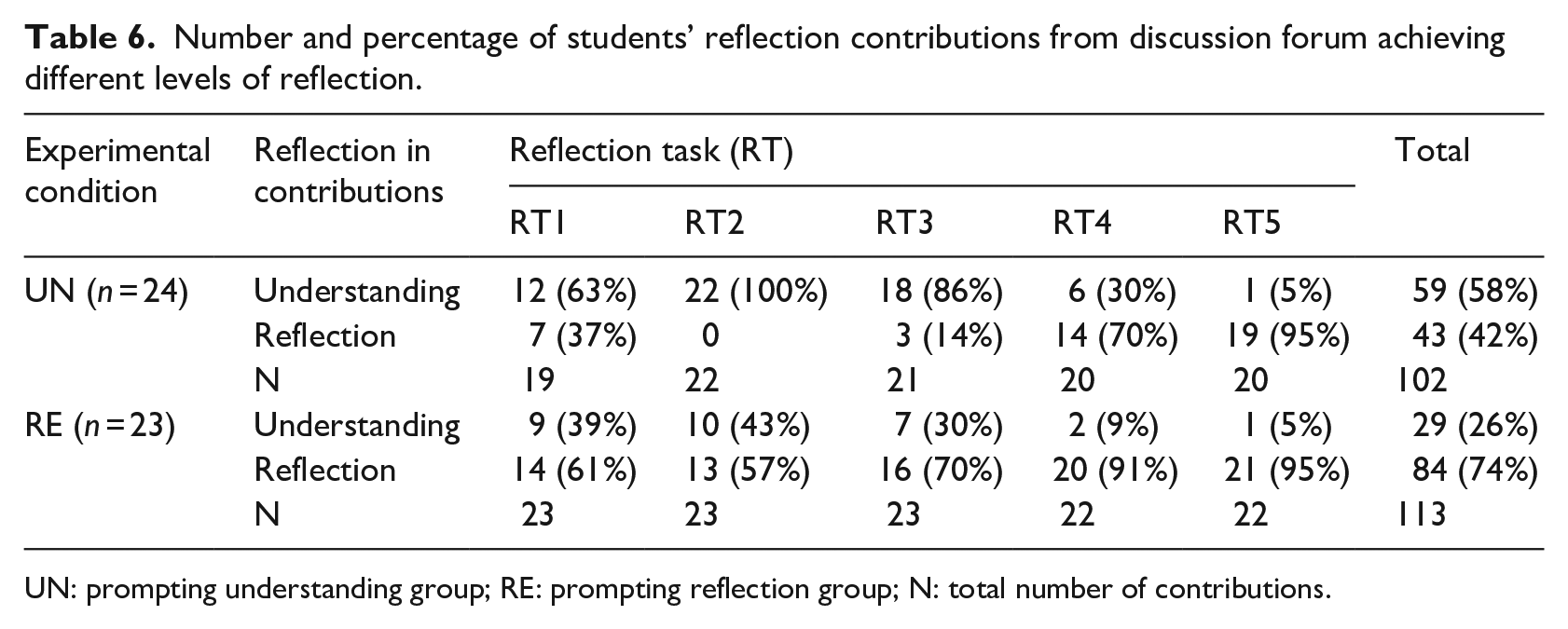
UN: prompting understanding group; RE: prompting reflection group; N: total number of contributions.
Academic performance
The effects of prompting level on academic performance are provided in Table 7. Significant differences among groups were evident in respect to final grade (H = 6.28, p = 0.043) as measure of academic performance. The three groups also differed significantly on the content of the article criteria (H = 6.903, p = 0.032) for the report. Marginally significant differences between groups were observed for scientific reporting (H = 4.804, p = 0.091). No significant differences between three groups were observed for academic writing criteria. Students in the prompting reflection group outperformed students in the baseline group (no prompts) on their final grade (p = 0.039). On the content of the article, we found a marginal statistical difference in favour of students from the prompting reflection group when compared to the prompting understanding group (p = 0.08). This indicates that, when prompted for reflection (and critical reflection), students not only demonstrate higher levels of reflection but also demonstrate a better understanding of their theoretical knowledge and ability to apply it. We may therefore conclude that guidance for (critical) reflection indeed enhances the quality of scientific reporting.
The learning effects of various levels of reflection on the academic performance.
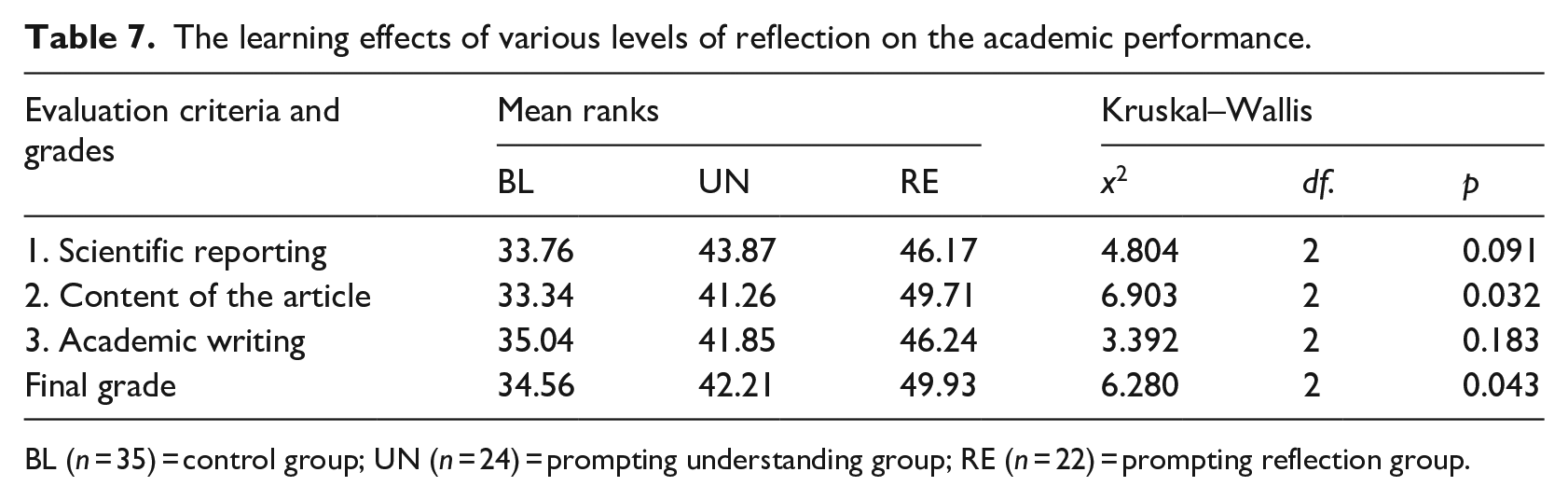
BL (n = 35) = control group; UN (n = 24) = prompting understanding group; RE (n = 22) = prompting reflection group.
Perceptions of motivation and experiential learning
Table 8 demonstrates that there were no statistical significant group effects on perceived motivation and perceived experiential learning. These results indicate that prompting reflective thinking does neither promote negative feelings of students nor lower students’ motivation to learn.
Means and standard deviations of each subscale of the questionnaire (n = 67).
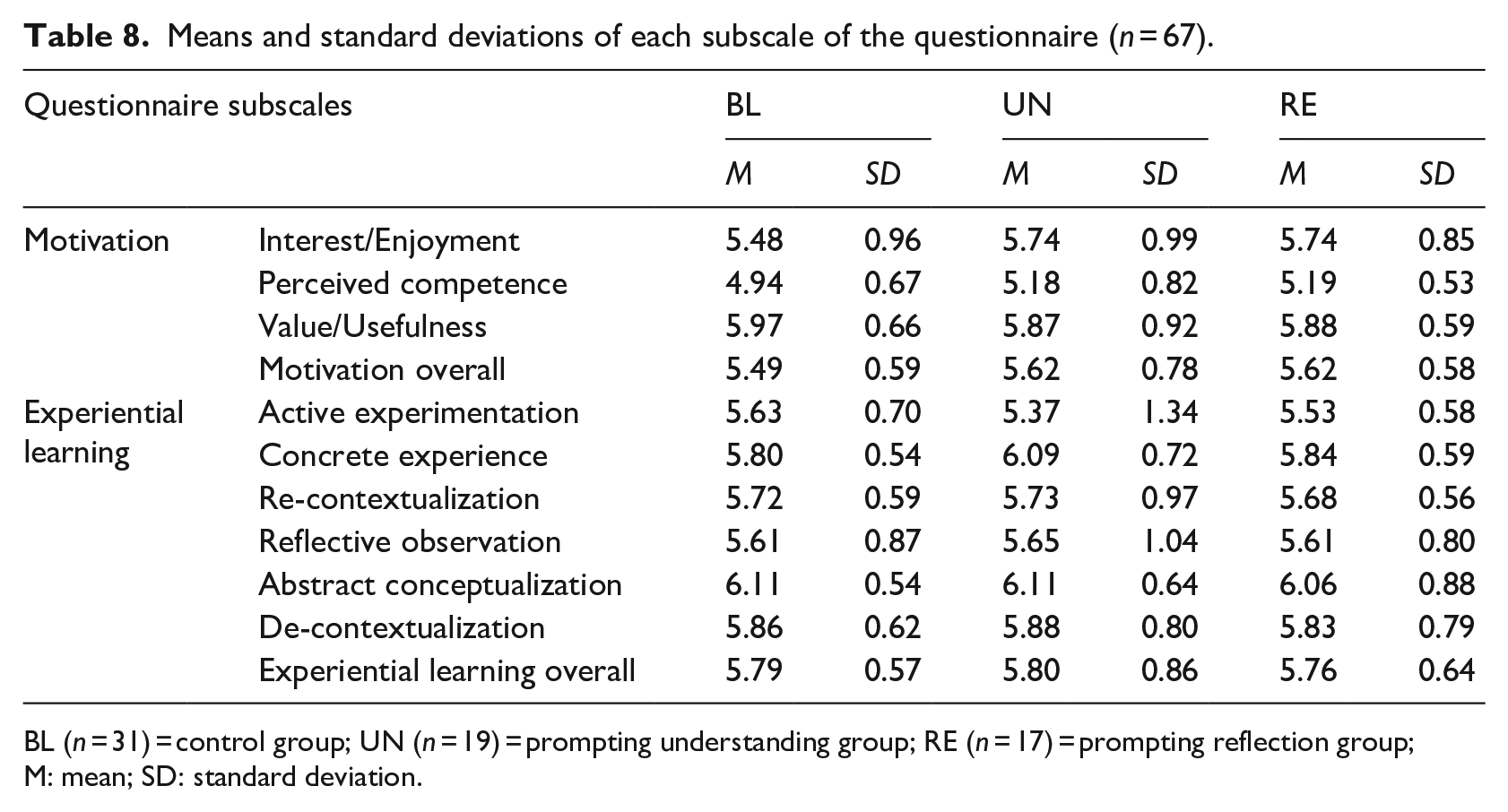
BL (n = 31) = control group; UN (n = 19) = prompting understanding group; RE (n = 17) = prompting reflection group; M: mean; SD: standard deviation.
Effect of various demographic characteristics
Age, academic performance, prior education, working experience and teaching expertise had no significant effect on the perceptions of motivation and experiential learning. However, the relationships between these and academic performance (final grade) were significant (Table 9). Students with more working experience significantly outperformed students with less working experience (U = 51, p < 0.001). Older students achieved significantly higher grades than younger students (U = 177, p = 0.004). Students coming from research-led universities appear to benefit more from reflection than students coming from universities of applied science, although only approaching a significant level (U = 355.5, p = 0.075).
Analysis of the relation between academic performance (measured with final grade) and student characteristics.
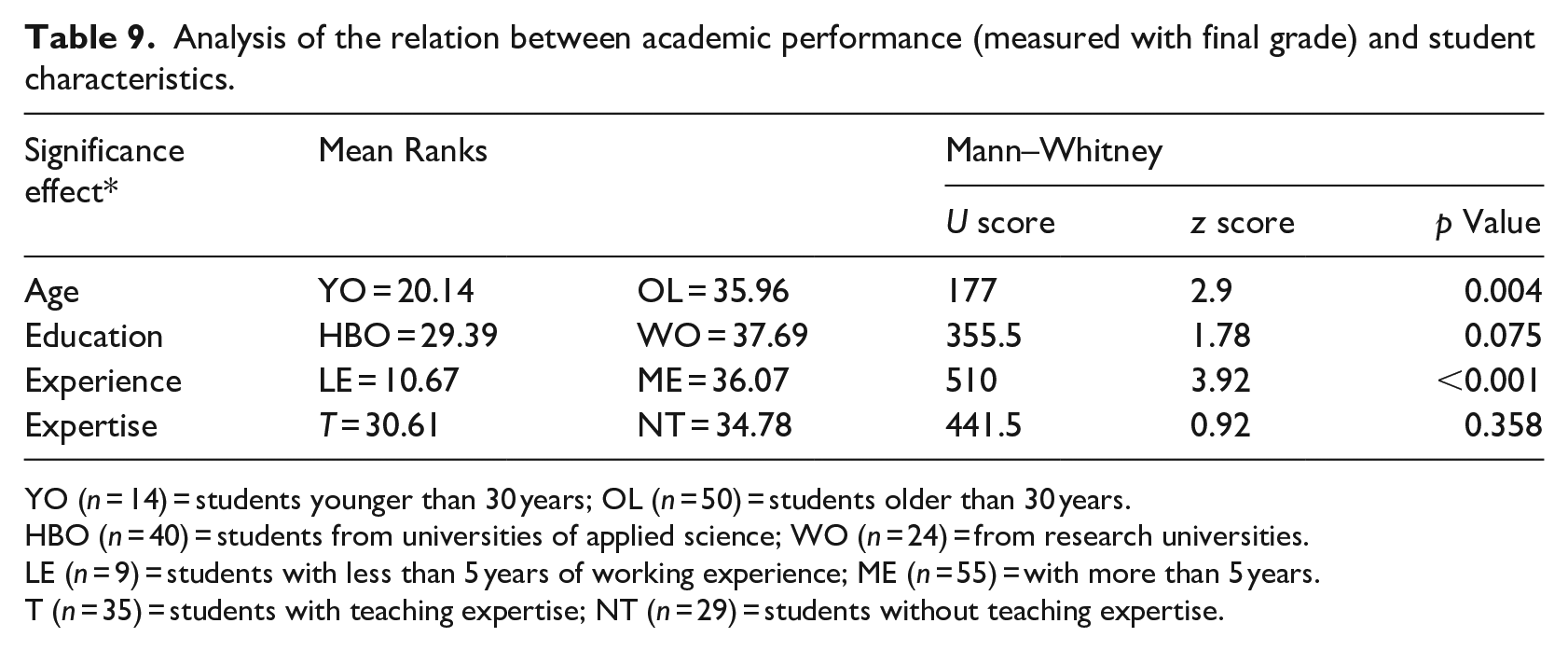
YO (n = 14) = students younger than 30 years; OL (n = 50) = students older than 30 years.
HBO (n = 40) = students from universities of applied science; WO (n = 24) = from research universities.
LE (n = 9) = students with less than 5 years of working experience; ME (n = 55) = with more than 5 years.
T (n = 35) = students with teaching expertise; NT (n = 29) = students without teaching expertise.
Discussion and conclusion
This study aimed to bridge the gap between theory and experience by addressing both the processes of re-contextualization (by supporting students to apply theory to practical situations) and de-contextualization (by discussing experiences acquired in practical situations in relation to theory) in experiential learning. The specific aim was to understand how different levels of prompted reflection facilitate students to reflect and learn in an experiential learning environment.
First, regarding the relationship between different levels of prompted reflection and levels of reflection in students’ writing, several conclusions can be drawn. While studies have shown that the majority of students need external support to engage in reflection (Coulson and Harvey, 2013; Dyment and O’Connell, 2011), the study described in this article reveals that prompts for reflection might provide such support, when carefully designed and provided. Prompting higher levels of reflection (reflection and critical reflection), rather than lower levels of reflection (habitual action and understanding), appeared promising. Since reflection and critical reflection are more challenging, the study shows that students remain on lower levels of reflection when not explicitly asked to go beyond understanding. As shown by Kember et al. (2008), reflection can be ineffective and expected learning outcomes may not emerge. Our research indicates that systematically prompting higher levels of reflection during experiential learning can have a positive influence on the reflection levels in students’ written reflections. Second, with respect to the relation between different levels of prompted reflection and students’ academic performance, the results provide evidence that prompting higher levels of reflection correlates positively with academic writing. Student that were prompted at the reflection level achieve higher grades. Consistent with other evidence (Ghanizadeh, 2017), we could observe that students receiving higher level prompts outperform others on their reporting skills. More specifically, criteria for the content of reporting were scored significantly higher, where criteria for scientific reporting (such as the quality of the introduction, theoretical framework, methods and results) were higher (and marginally significant). We did not find differences for criteria on academic writing (such structure, references and language use).
Third, with respect to reflection as a complex cognitive process (Liu, 2017; Ghanizadeh, 2017; Ryan and Ryan, 2013), the study demonstrated that systematically prompting reflection writing did not decrease students’ perceived motivation, or their perceptions of usefulness, interest and enjoyment. Likewise, we did not encounter any effect of prompting level on perceptions of experiential learning. Students in all groups perceived the steps of experiential learning equally (and highly). Finally, the results of this study indicate that older students, students with more work experience and students coming from research universities outperformed students that were younger, less experienced and coming from universities of applied science. It seems that these groups of students benefit most from reflection prompts. This supports Mirriahi et al.’s (2018) argument that students with experience have more elaborated schemata for reflection.
The limitations of this study should be taken into account. First, the study was situated in a distance education context rather than the more traditional on-campus one. Participants were educational science students, generally accustomed to reflect about educational practice. These were postgraduate students, and given their greater exposure to the writing and also their different levels of maturity, that of undergraduates may be different. Results may be different in disciplines other than this, where written reflections are not that common or not carried out at all. The students in this study came from a more research-oriented university. Second, we collected data across two cohorts of students (February 2019 and September 2019), and only the students from the September cohort could be randomly assigned to two experimental conditions. The sample size was small. There is an emotional and embodied domain of reflection that can be so influential to academic performance and preparing future graduates as professionals and citizens, but this was not explored in the study. Performance in this study was measured by the final mark/grade on a particular written task, but of course is much more than simply a mark/grade. Future work is therefore needed that also looks at reflection in different disciplines, considers different levels of students, different types of universities and different cultural contexts. Studies are needed that look into other measures than marks/grades, and take into account the complexities of reflection when it comes to the emotional and embodied aspect.
There are other recommendations to be derived from this study. Prompting the highest level of reflection (critical reflection) might produce even better results. The literature points out that critical reflection is more profound and more likely to involve deeper knowledge development (Kember et al., 2008). However, critical reflection in terms of writing cannot be taken for granted, as it is not an intuitive skill and it is highly challenging process, both emotionally and intellectually (Ryan and Ryan, 2013). We therefore encourage subsequent studies to use similar research designs to investigate differences between prompting for reflection and prompting for critical reflection. The results of this study indicate that demographic characteristics of students influence their benefit from reflection prompts. This insight helps when designing more effective learning environments. Although we had students share their reflective thinking (Clara et al., 2019), the question is whether prompted discussion and collaborative reflection can lead to better critical reflection and enhanced academic performance (Trede and Jackson, 2019). This leads to a final recommendation for future studies, that is, to investigate to what extent collaborative activities can be used to further support reflection in experiential learning environments.
Taken altogether, the findings of this study suggest that students should be prompted to reflect on higher levels when learning in experiential leaning environments. The following six guidelines are intended to assist practitioners in successfully facilitating reflection in their learning environments. First, to ensure that the learning environment mirrors the complexity of what needs to be learned, students should be guided towards reflection and critical reflection levels with explicit and clear prompts. Second, such prompts should address both knowledge re- and de-contextualization (in accordance with the learning goals). Third, ensure that critical reflection is an element of the authentic context and aligned with the curriculum, learning goals and potential learning pitfalls. Fourth, journal writing (by means of notes, reflection diaries, personal blogs, or forum posts) can be included for students to structure their reflective thinking. Fifth, consider integrating (formative and summative) feedback in the reflection process to support students in continuously improving both learning process and outcomes. Finally, we have argued that (collaborative) reflection could be situated within a group of learners. Such collaborative reflection can be achieved during group work, and enhanced by sharing reflection notes among peers, providing peer feedback and engagement in group discussion.
Footnotes
Declaration of conflicting interests
The author(s) declared no potential conflicts of interest with respect to the research, authorship, and/or publication of this article.
Funding
The author(s) received no financial support for the research, authorship, and/or publication of this article.
