




Abstract
Final Jōmon ceramic figurines known as shakōki dogū have been incorporated into popular culture for decades in Japan, but few studies have examined how these sources represent shakōki dogū or how they contribute to public meaning making about the past. Using perspectives from archaeological representation studies, this paper explores trends in when, where, and how shakōki dogū appear in Japanese media, such as anime, manga, and games. In didactic sources, shakōki dogū are predominantly characterized as female figurines connected to Jōmon ritual and Japanese cultural origins. While the dogū observed here were often depicted as ancient and magical, they were more likely to be masculine, antagonistic, and generic symbols of a distant past, rather than references to the Jōmon or Japanese heritage. This departure from a divine feminine interpretation is discussed in relation to the video game industry, science fiction and fantasy genres, and Arahabaki in the popular mind.
Introduction
Objects and aesthetics from the Jōmon Period (ca. 16,500-2,300 bp) have been incorporated into Japanese popular culture for decades. Academics and the public alike have observed this trend, especially with the rise of social media (Rousmaniere, 2009; Salvador, 2018). However, there has yet to be a focused analysis of these archaeological references and what they may contribute to how the public understands and engages with the past. To explore the popular representation of the Jōmon, I chose to examine one of the most frequently referenced Jōmon artifacts, the shakōki dogū. These ceramic figurines have distinct aesthetics that make it straightforward to spot their influence or direct inclusion in a product, while also having a long history of capturing public and academic interest. While it may be tempting to see popular media shakōki dogū as references to Japanese heritage and archaeology, what is a wider audience presented with when a dogū is out of its archaeological context?
Such questions are best addressed through archaeological representation and reception studies, which examine how producers are influenced by their understanding of the past, as well as how non-specialist portrayals are integrated into public perspectives through different modes of consumption (Holtorf, 2005, 2007; Moser, 2012, 2015). Here, I am interested in the latter focus, which views all representations of archaeological elements as part of a larger narrative-building and meaning-making process (Moser, 2015; Moser and Gamble, 1997). Since popular culture and heritage do not exist separate of each other, we must consider how creative portrayals influence how the public values and emotionally responds to distant periods (Moser, 2012; Robinson and Silverman, 2015).
Humbert’s (1994, 2014, 2020) work on Egyptomania, or the popular fantasy and fascination surrounding ancient Egypt, is a prime example of representation and reception research in archaeology. In this case, the present is constantly reinterpreting and borrowing ancient Egyptian aesthetics and objects, creating new meanings within changing contexts. Humbert (2014) discussed how through Egyptomania, ancient Egypt and its recognizable elements became symbols of abstract concepts, such as antiquity, wisdom, and eternal life, while also being an indicator of the exotic and esoteric. In this case, we see the complex ways in which heritage and the past are not simply appreciated for an intrinsic value of age or beauty, but are continuously made familiar and meaningful through reproduction and popular engagement (Robinson and Silverman, 2015). In many ways, the example of Egyptomania is informative when examining the Jōmon Boom in Japan, which has seen the creative, political, and social uptake of the Jōmon by diverse groups across Japan.
In this article, I seek to contribute to archaeological representation studies by presenting an example from Japan that has great potential for exploring the relationships between archaeology, heritage, and the public. I conducted a brief analysis of 405 creative shakōki dogū references documented from popular media, including anime, manga, video games, trading card games, table-top games, and live action television or film. For each example, I recorded a series of traits to explore whether there were trends in when, where, and how the shakōki dogū have appeared in popular media as an initial step in evaluating how these iconic artifacts have moved beyond the boundaries of their archaeological period.
Broader historical and archaeological reception studies have examined both didactic and creative representations of specific periods and cultures, as well as how accurately portrayals reflect institutional knowledge and practices. However, it is evident in the summaries provided by Moser (2012, 2015) that studies have been predominantly focused on the receptions of past state-level societies within Europe and the West, especially how different eras incorporated or appropriated ancient Egypt, Greece, and Rome. These ancient societies are also referenced in Japan, but the widespread availability of didactic and creative representations of national history means that the idea of a ‘shared past’ in Japan has its own considerations. Miller’s (2014) work on the changing representations of Himiko demonstrated how Japanese society has used its past through time, which also helps highlight a notable difference between the two phenomena of Egyptomania and the Jōmon Boom. Namely, the latter has been largely internal to the region of origin, rather than driven by a fascination or adoption by more removed populations.
While I am interested in the Jōmon Boom as a whole, it is difficult to address such a large topic in a single publication. Thus, my central question here is, do creative representations in popular media perpetuate the common characterizations of shakōki dogū presented by archaeologists and heritage professionals? The dominant narrative for shakōki dogū emphasizes a primordial, divine feminine that is connected to nature and ancestral wisdom in Japan, which is closely related to an essentialized view of the Jōmon Period prevalent with the public. Rather than directly contributing to or replicating this sense of ‘Jōmonness’, I conclude that the popular dogū in this study deviate from dominant narratives. I discuss how this may represent an expression of what Holtorf (2010, 2013, 2017) refers to as pastness, or the qualities that contribute to an audience accepting that something is of the past. The results also highlight the need to consider intertexuality in archaeology and heritage, as portrayals of the past are built on and encountered through a complex web of existing references.
The shakōki dogū
The archaeological record for the Jōmon Period is extensive and covers the length of the Japanese archipelago. Jōmon communities varied by region and subperiod, though generally they lived by hunting, fishing, gathering, and cultivating or managing a wide range of plants and animals. They also produced a large variety of artifacts, including the ceramic vessels and figurines for which the period is popularly known. For more detailed overviews of Jōmon dogū and their history of study, see Mizoguchi (2017) and Kaner (2009).
The shakōki dogū (遮光器土偶) are a subset of anthropomorphic figurines that first appeared in Tohoku during the Final Jōmon (ca. 3,300–2,400 bp), after what is considered the peak of dogū production in the Middle Jōmon period (Matsumoto, 2012; Mizoguchi, 2017). These figurines are also known as Kamegaoka-type dogū based on the Aomori site where the style was initially identified, and their inclusion of design elements typical of Kamegaoka ceramics. Around 3,000 shakōki dogū have been recorded from Tohoku and southern Hokkaido; although most are fragmented, it is possible to see unifying design elements across regional variations (Doi, 2009; Naumann, 2000). Most notable are the large ovoid eyes that have given them the name ‘goggle-eyed’ or ‘shading’ figurines, based on Shōgorō Tsuboi’s ethnographic comparison to the slitted snow goggles of Indigenous peoples in the Arctic (Kaner, 2009; Figure 1). While this inspired their name, it is not accepted that Jōmon peoples had such eyewear (Kidder, 1959; Maringer, 1974). Example of a shakōki dogū from Tsugaru City, Aomori, on display at the Tokyo National Museum.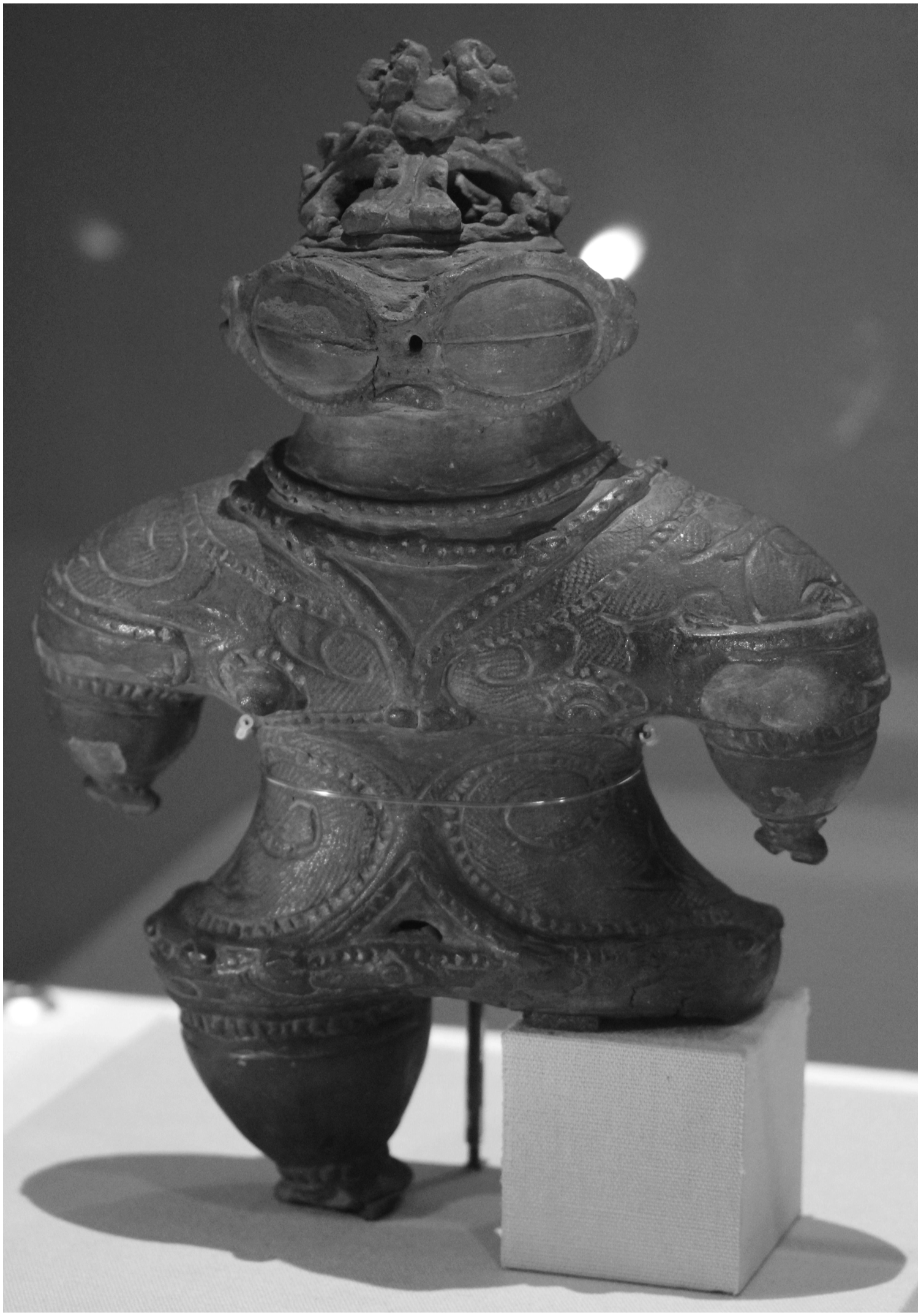
Shakōki dogū are typically hollow, with relatively complete examples ranging between 20 and 35 cm in height. Their feet are small for their overall form, so they were probably not freestanding, but they appear to be made for viewing at every angle. This may mean that holding a shakōki dogū was an important form of interaction (Cochrane and Jones, 2018; Kosugi, 2002; Maringer, 1974). These dogū are decorated with patches of cord-marking and symmetrical swirls that are separated by smooth or geometric-patterned bands. There are also traces of red lacquer and blackened areas from firing on some examples (Doi, 2009). The designs have been interpreted as clothing, personal ornamentation, and tattooing when on the body, or as hairstyles, piercings, and hats when on their heads. Naumann (2000) also suggested that the design elements were related to a larger complement of ritual symbolism connected to the sun and moon, darkness, death, and rebirth. Ultimately, it is unclear what meaning the shakōki dogū had in Jōmon society.
Dogū in academic narratives
The dominant academic perspective places dogū within Jōmon ritual practices, making them a way to explore Jōmon cosmology and spirituality (Maringer, 1974; Naumann, 1975, 2000; Yamagata, 1992). Early interpretations saw the figurines as objects for sympathetic magic, either to heal ailments or to promote healthy births (Mizuno, 1974; Yawata, 1959). They were also suggested to be related to death and burial (Mizuno, 1979). More often, they have been seen as female forms and discussed as symbols of fertility, renewal, transformation, or abundance (Harada, 2009; Isomae, 1994; Kosugi, 2002; Maringer, 1974; Matsumoto, 2012; Mizoguchi, 2017; Torii, 1922; Watanabe, 2001; Yamagata, 1992). In this framework, they are presented as manifestations of a goddess of the earth or motherhood. Several scholars have noted the possible connection between the act of breaking dogū and Pacific-region mythology about a dismembered goddess, though they conclude that it is difficult to prove that dogū were intended to be female and scholars do not agree that dogū were all intentionally broken (Kaneko, 2003; Yamagata, 1992; Yoshida, 1986).
Within the extended history of interpreting dogū, there has been a notable response to the depiction of dogū as female or as a manifestation of a divine feminine (Ikawa-Smith, 2002; Kobayashi, 1977, 1996; Kosugi, 2002; Matsumoto, 2012; Naumann 2000; Noguchi, 1974). Some have questioned whether the figurines are even meant to be human, or if they would represent a single concept across Jōmon society (Cochrane and Jones, 2018; Kobayashi, 2004; Nagamine, 1986). Such doubts align with the broader critical evaluation of the Mother Goddess perspective in relation to prehistoric figurines (Goodison and Morris, 2012; Nowell and Chang, 2014; Ucko, 1962, 1996). Many agree that the best path forward is to be wary of attempts to gender Jōmon figurines, particularly since such designations often incorporate essentialist views of women and reproduction, as well as the limitations of current concepts of human sex and gender (Hudson and Aoyama, 2007; Ikawa-Smith, 2002; Kobayashi, 2004).
Dogū and the Jōmon in popular narratives
Rousmaniere (2009) summarized the history of public engagement with dogū, noting that early widespread interest began in the 1950s. After World War II, the Jōmon Period was slowly integrated into the history of Japan, partly from the desire to diverge from the imperialist narratives that had dominated since the Meiji Period (Ogawa, 2009). By 1954, the official history sanctioned by the Ministry of Education had already reduced its attention to the Jōmon Period but promoted the idea that it represented the Japan-specific component of a unique and homogenous Japanese cultural identity, both aspects of Nihonjin-ron discourse (Fawcett and Habu, 1990; Nishino 2019). Meanwhile, dogū increasingly joined an expanding concept of Japanese art through the influence of contemporary artists, such as Tarō Okamoto, who saw the Jōmon aesthetic as an emotional expression of Japanese cultural essence.
Ancient history was further reduced within Japanese textbooks throughout the 1960s, but Jōmon presence in public spaces continued to rise (Fawcett and Habu, 1990). Audiences were introduced to Jōmon artifacts as art objects in gallery events, such as the Kanagawa Museum of Modern Art’s Japanese Primitive Art exhibit in 1959 and the Special Exhibition at the Suntory Museum of Art in Tokyo in 1969. The latter event displayed over 400 figurines, solidifying the view of dogū as art objects that could be appreciated separate from Jōmon archaeology (Kaner, 2009; Rousmaniere, 2009). Perhaps by coincidence, 1969 is the publication date of the earliest pop media reference I have identified. By the 1980s, economic growth and development had led to large amounts of archaeological data that contributed to an idyllic vision of the Jōmon as affluent foragers and ‘natural conservators’ who coexisted with nature (Furuya 2019; Ogawa, 2009).
The latest surge in Jōmon popularity, often referred to as the Jōmon Boom, can be traced to the 1990s grassroots movement to preserve the Sannai Maruyama site in Aomori (Habu and Fawcett, 1999, 2008). This event marked the transformation of the Jōmon from a distant, archaeological Other into the ancestral roots of Japanese culture through mass media coverage and public heritage efforts (Habu and Fawcett, 1999; Ogawa 2009). It also led to greater use of Jōmon themes in sociopolitical discourses in Japan, including the topics of cultural origins, nationalism, and human-environment relationships (Furuya 2019; Hopson, 2017; Yoshida and Ertl, 2016). The boom and its related effects have been viewed as a form of national revival and interest in indigeneity, born from a nostalgia and desire for a premodern existence that is assumed to be peaceful and harmonious (Hopson, 2017; Kataoka, 1997; Knight, 2000; Nishino 2019). In this context, Smale (2012) proposed that the popularity of dogū may represent this wider uptake of Jōmon culture within present-day society.
The ritual and feminine characterization of dogū sits neatly within the Romanticist view of the Jōmon, which emphasizes nature, mythology, and imagination (Hudson, 2021). Yoshida and Ertl (2016) outlined how Jōmon culture has become tied to concepts of sacred nature, harmony, social connection, and a distant ecological past without the ills of state-level society. Such characteristics could be considered ‘feminine’ in a dichotomous framework, and Mizoguchi (2002, 2006) has argued that the discursive space around the Jōmon has characterized the period as female, static, natural, domestic, and nostalgic through a contrast with subsequent agricultural and early state-level societies. Rather than cultivated fields and anthropogenic clearings, the Jōmon Period is associated with the forest and the many complex connotations a forest holds (Hudson, 2021; Knight, 2000).
There are regional differences in how Jōmon heritage is understood, applied, and negotiated by an array of stakeholders, but there are also individual reasons for embracing the Jōmon and dogū, such as the pursuit of personal interests or simply aesthetic value (Furuya 2019; Knight 2000). Since the 2000s, there has been a rise in the visibility of rekijo, or young women who consume history-related products and participate in contents tourism at spiritual and historical destinations (Sugawa-Shimada, 2015). While locations related to the Sengoku period have dominated these activities, it is evident in the bounty of toys, stationary, clothing, fanzines, home décor, and events that the Jōmon are also favoured by history enthusiasts (Figure 2). Based on diversifying interests in the Jōmon since the 2010s, Furuya (2019) has proposed the term Jōmon Renaissance to better encapsulate the enduring re-discovery and incorporation of the culture into present society, as well as acknowledge the long history of interaction with the Jōmon prior to the boom. Selection of shakōki dogū products owned by the author and promotional poster for the 2018 documentary Jōmon ni hamaru hitobito [Hooked on the Jōmon] by Nobutaka Yamaoka.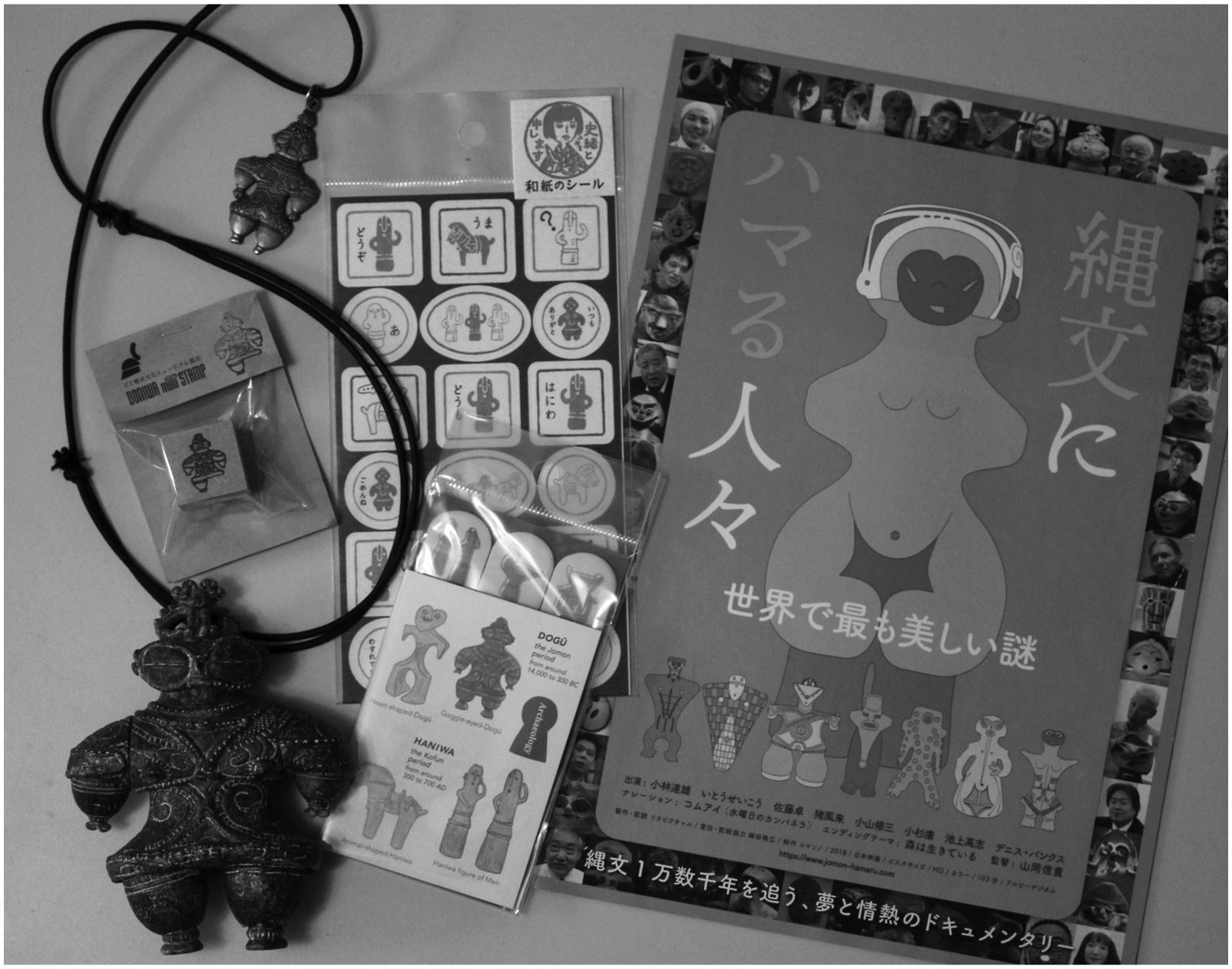
The Jōmon Boom has also meant an increase in international events, such as the Japan Foundation’s Paris exhibition in 1998 and the British Museum’s Power of Dogū exhibit in 2009. As in Japan, these galleries tend to give brief explanations of archaeological perspectives while presenting the dogū as art objects in their own right (Cochrane and Jones, 2018; James and Chippindale, 2010). In a global setting, dogū are often compared to Upper Palaeolithic ‘Venus figurines’ from Europe, which places them in the echo chamber of divine feminine associations (Nowell and Chang, 2014). Scholars and the public alike may be aware that ‘Venus’ is a nickname, but it is difficult to disassociate the objects from the connotations that come with referencing a specific deity or broader goddess concepts (Goodison and Morris, 2012). This is especially true in cases like the shakōki dogū and Jōmon, but is the primordial, romantic, and feminine characterization evident when dogū are presented out of context in popular media?
Materials and methods
A total of 405 shakōki dogū references were identified from December 2018 to October 2022 and recorded with their associated product title, name, initial release date, media type, and overall characterization. I did not include products that appeared to be primarily educational, such as textbooks, science communication media, or entertainment aimed at teaching Japanese history. In particular, I did not include the Japanese history study manga that have been published since the 1960s (Sakurai, 2019). I also did not explore museum and heritage settings, public events, contemporary artists, tourism, or special interest groups and the materials they produce. Furuya (2019) has offered a detailed examination of Jōmon representations and narratives in such contexts, as well as insights into how the Jōmon as a culture is portrayed in media, but further studies are needed to elaborate on the relationship between these observations and the shakōki dogū analyzed here.
I collected shakōki dogū appearances from online sources by searching in English and Japanese. The most common sources were fan-based websites, including franchise encyclopedias, video game walkthroughs, episode guides, trading card markets, topical archives, and personal reviews. I only included examples that I could confirm came from known products that were released to a wider audience, and that had a visual resemblance to shakōki dogū. The majority of examples were identified by the distinct goggle-eyed look, but many also incorporated the body proportions or decorative elements associated with shakōki dogū, such as swirling patterns and crown-like headpieces. I suspect that many instances of representation may have been missed, because the wealth of products makes it unlikely that my database contains all references prior to October 2022.
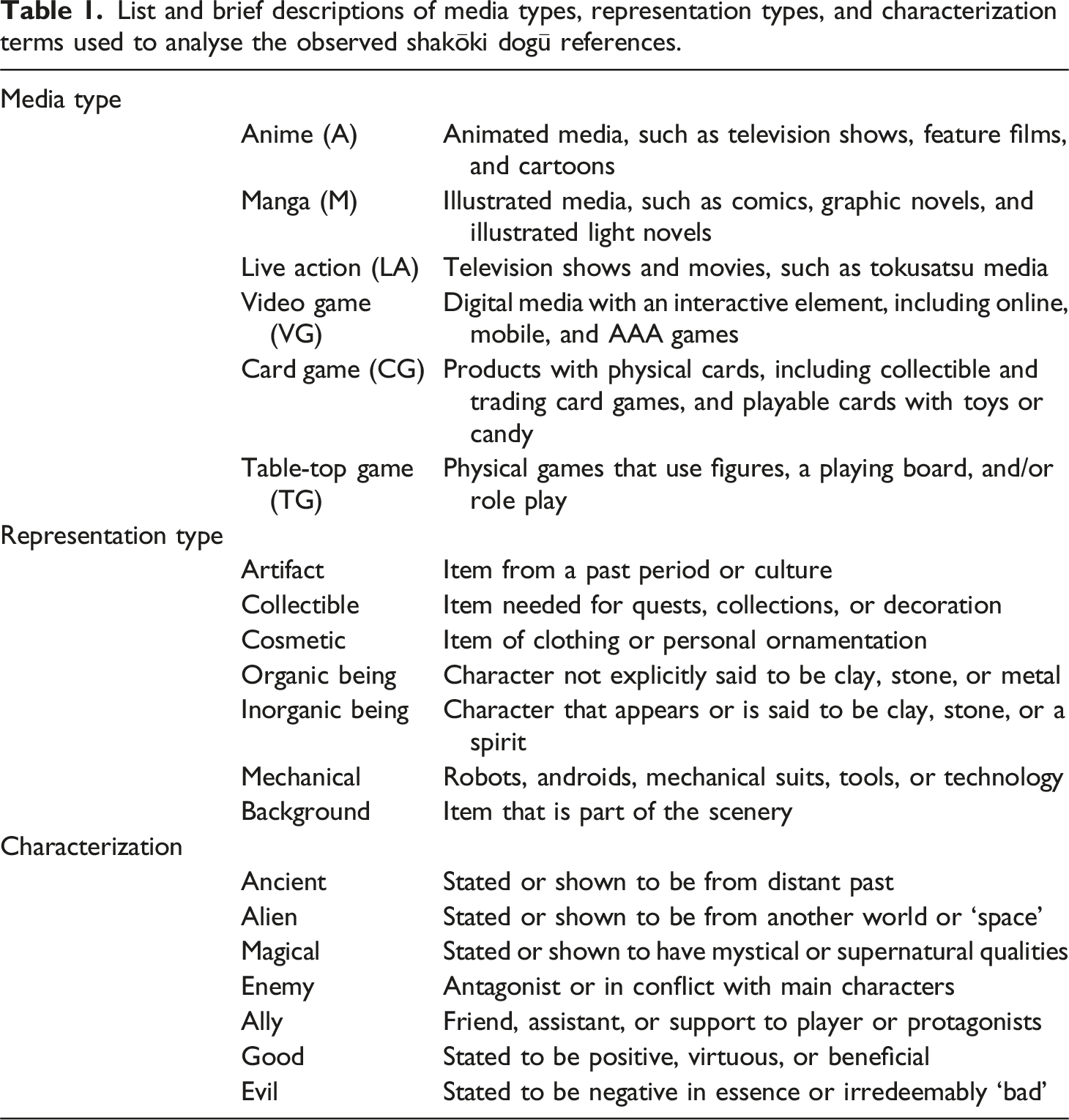
I categorized references into six media types: anime, manga, live action, video game, card game, and tabletop game. Since all but 22 of the products were created and produced in Japan, I chose to classify animated and illustrated media as anime and manga, though I recognize that these terms would not be used to describe every product included. Many of the representations came from multimedia franchises, which I recorded as separate entries despite recurring characters or elements. While including the same character more than once may inflate the values within certain categories, I worked with the understanding that a consumer may come into contact with a representation in a single product without consuming related media from a larger franchise. This also accounts for the greater potential visibility and influence of cross-media franchises, such as Shin Megami Tensei, which includes the Persona, Digital Devil Saga, Devil Summoner, and Soul Hackers games, manga, anime, and merchandise. On the other hand, for each serialized product I only included the initial appearance date of a representation within a bounded series, rather than documenting every occurrence across chapters, episodes, or reprinted card sets.
List and brief descriptions of media types, representation types, and characterization terms used to analyse the observed shakōki dogū references.
Results
When and where shakōki dogū appear
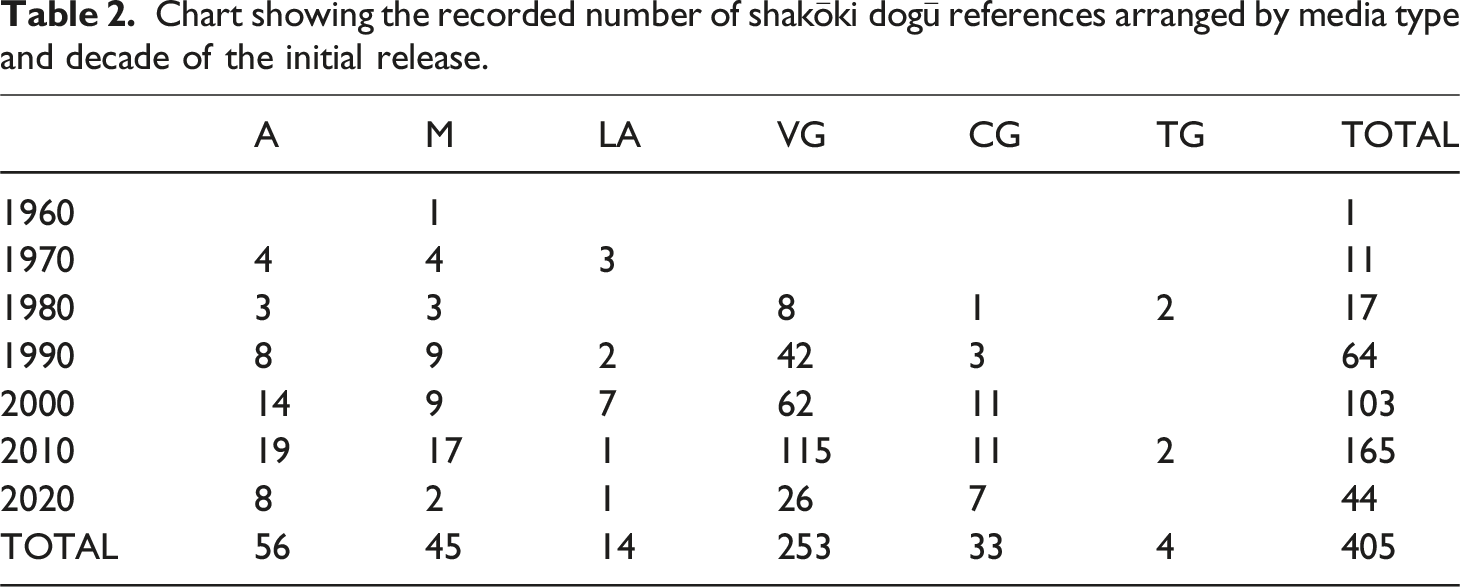
The earliest identified pop media representation came from 1969, in a chapter of Shōtarō Ishinomori’s Cyborg 009 manga. The number of references each decade then rose, starting with a modest increase to 11 examples from anime, manga, and live action during the 1970s. There is also a slight increase in the 1980s, with 17 dogū representing a wider variety of media types, including video games for the first time. In the 1990s, there is a relatively pronounced spike as the number of references more than triples to 64 examples. For the 2000s, there is a notable increase again with 103 instances, but the quantity climbs most dramatically in 2010 to 165 cases (Figure 3). For the 2020s, 44 shakōki dogū references have been identified so far; this decade will likely rival previous ones based on the continuing popularity of Jōmon aesthetics, but only time will tell. Graph showing the total number of identified shakōki dogū references by decade.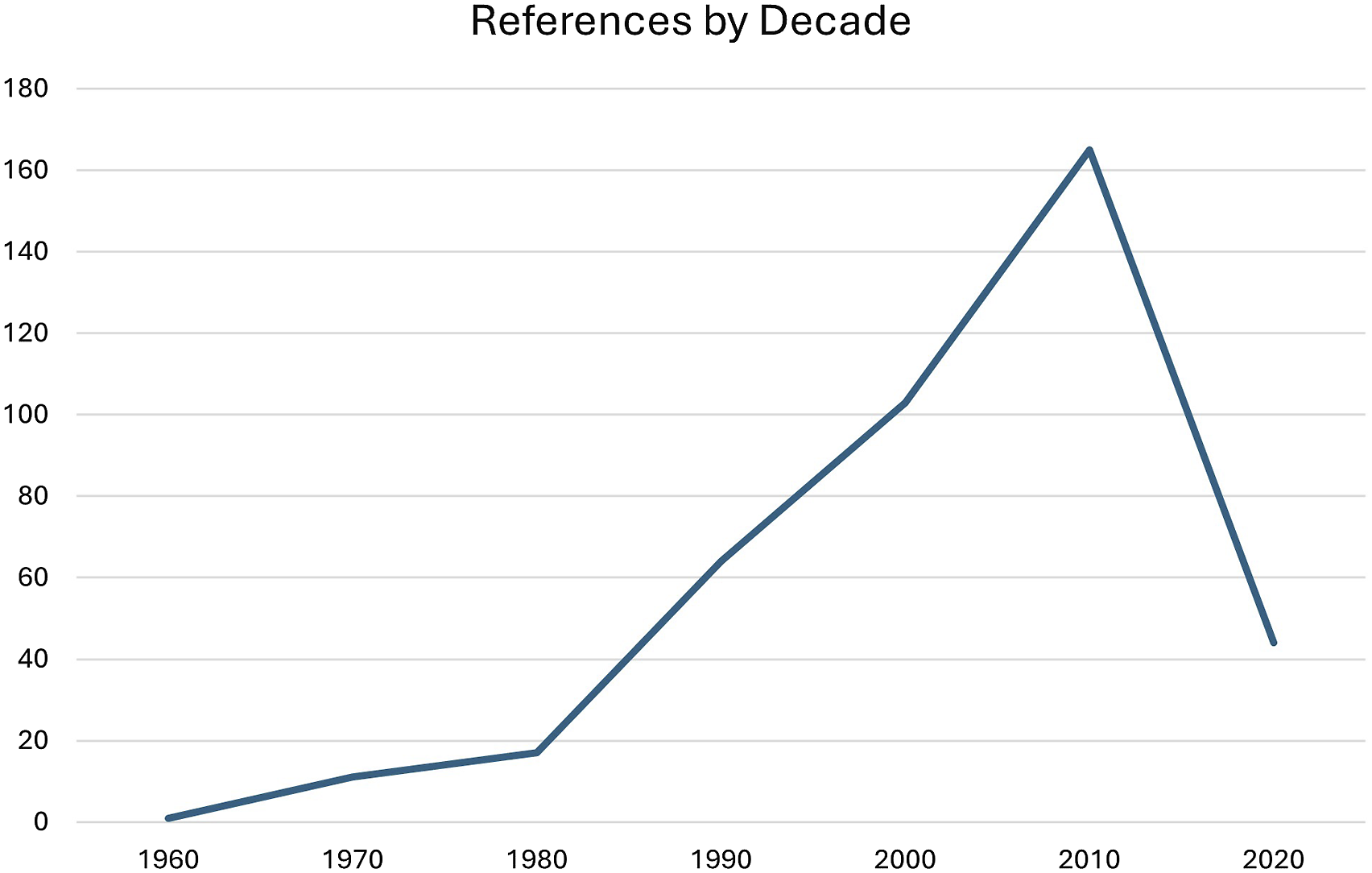
Chart showing the recorded number of shakōki dogū references arranged by media type and decade of the initial release.
How shakōki dogū are represented
Distribution of shakōki dogū representation types, including instances where a reference could be placed in more than one category.
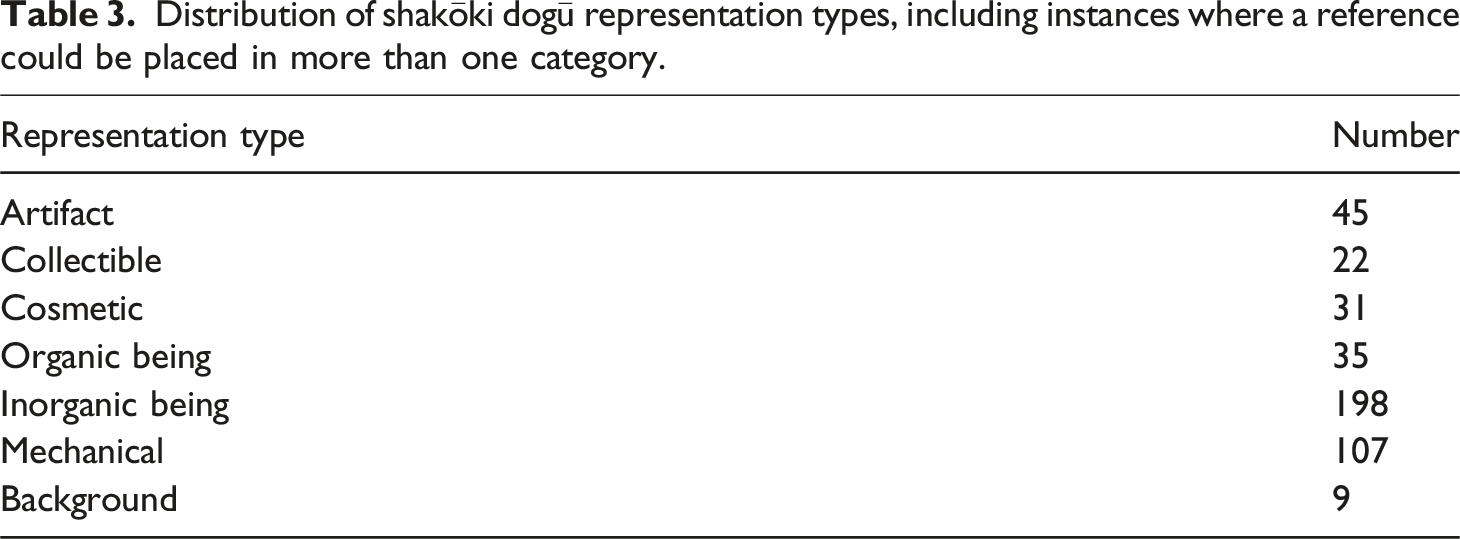
The less common representation types can be classified broadly into non-character roles, such as passive or decorative objects. Artifact was the third most common category overall at 45 instances, and included objects that were excavated, displayed in a museum, or connected to a culture’s past. Some artifacts could also be classified as collectibles or cosmetics, depending on how characters or players interacted with them. As a whole, collectibles and cosmetic examples were not common, with 22 and 31 references, respectively. The background type had the fewest cases, at nine examples, and often came in the form of large statues or small items on shelves. These objects were considered background because they were not acknowledged within the scene or presented as artifacts, and characters did not typically engage with them.
To evaluate whether there were recurring characteristics or roles for which the shakōki dogū have been used, I labelled the examples with a small pool of traits observed during collection (Figure 4). I initially considered additional descriptors, such as mysterious and sacred, though found these traits difficult to evaluate. Based on official descriptions, I recorded 52 cases that were explicitly connected to religious themes, such as gods, demons, or spirituality, but determined that a separate study would be needed to evaluate these examples further. Graph showing the number of shakōki dogū examples in each category of characterization outlined in Table 1.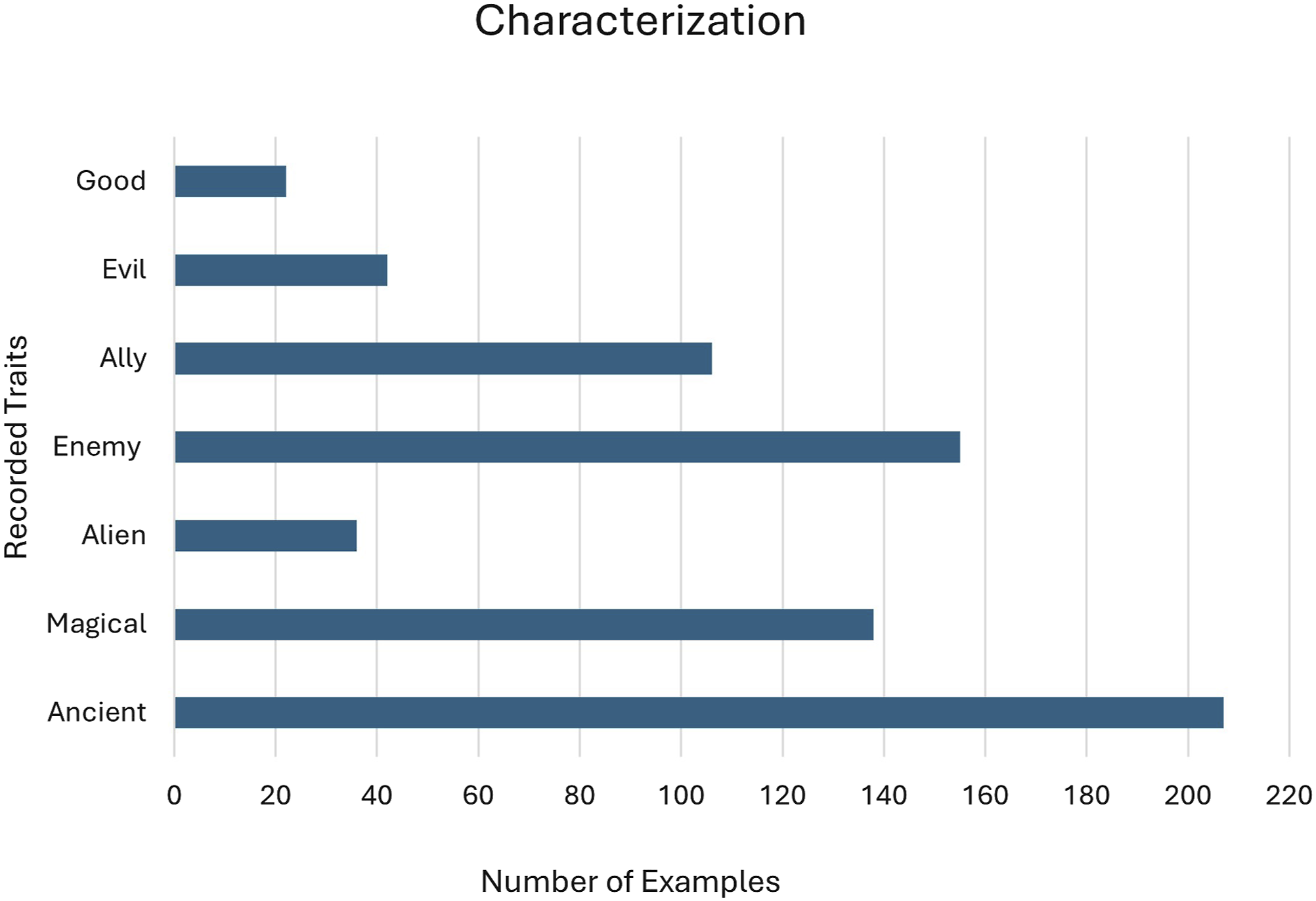
Within the representations, approximately 51.1% were explicitly stated or narratively suggested to be ancient, making this the most observed characterization. The next highest category was enemy at 38.2%, which outnumbered the 26.1% of cases that clearly acted as allies to the protagonist. While a few of the enemies could be considered primary antagonists, there were no instances where a shakōki dogū was a central protagonist. In some cases, an example was classified as both enemy and ally if their narrative or interactive role changed over time.
The magical trait was the third most common, at 34.1%. Both objects and characters could be included in this category, and magical or supernatural forces were often used to animate and empower inorganic beings. A relatively small number of cases were stated or shown to be good (5.4%) or evil (10.4%) within the world-setting, though I was reluctant to apply these traits to examples without explicit support. There were cases where good or evil could be implied by visual design or names, but relying solely on these cues ignored nuances within the narrative. Overall, a character was more likely to be an evil enemy than a good ally. Surprisingly, relatively few cases were portrayed as alien (8.9%), which referred to any object or character that originated from outside the main narrative world.
Given the number of examples characterized as ancient, I further examined trends within secondary traits for this category (Figure 5). Of the 207 ancient instances, only 18 were described without additional traits. The least common combination was the alien trait (5.8%), closely followed by the good classification (6.3%). Ancient representations were almost equally likely to be enemies or allies, with each at around 33%. The greatest overlap was with the magical trait (37.7%), as it was common for settings to use supernatural explanations for the longevity and abilities of an object or character. Despite the notable increase in examples in the 2000s and 2010s, the relative frequency of ancient representations does not drastically change over time, with the number ranging between 46 and 64% of the total observed instances per decade. Graph showing the distribution of secondary characterization traits within the shakōki dogū examples identified as ancient.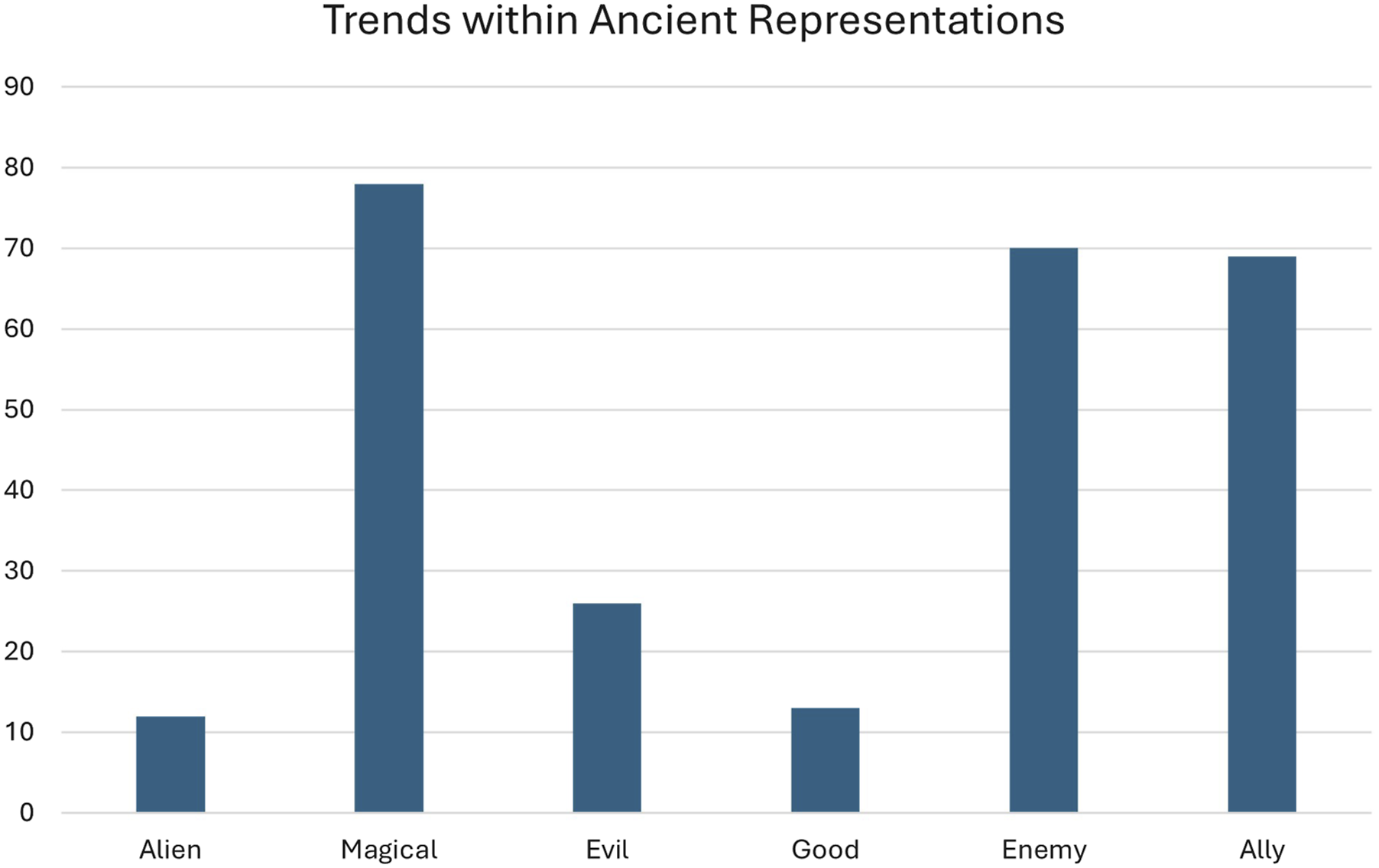
Following initial characterization, I reviewed the representations to determine if there were trends in the gendering of shakōki dogū, since the artifacts are commonly interpreted as divine and feminine. Attributing an intended gender was not straightforward, and I only categorized an example as female/femme or male/masc if there was ample support through official descriptions or use of gendered terms within the product. In the observed examples, 122 (30.1%) were male, 42 (10.4%) were female, and 241 (59.5%) were unclear, ungendered, or non-binary. In the unclear cases where the names, voice actor performances, designs, or use of gendered Japanese language conventions heavily suggested a gender, I recorded these examples as coded but not clear. Of these, 79 (32.8%) were coded more masculine and two (0.8%) were more feminine. Only three examples from the total 405 cases appeared to be explicitly ancient, female deities based on official descriptions and dialogue. These references came from the Yamataika manga by Yukinobu Hoshino and the mobile games Ayakashi Hyakki Yagyō Tamashī by Gianty and Sora to Umi no Aida by ForwardWorks.
Representing dogū: factors beyond academic and heritage narratives
From the data presented above, shakōki dogū in popular culture tend to be inorganic or mechanical, ancient, and masculine. They are also more likely to be evil than good, and tend to be enemies more often than allies to the protagonist. These patterns are distributed throughout the decades, even with the marked increase in total examples in the 2000s and 2010s. In particular, ancient objects or characters account for approximately half the observed examples, across the decades and media types. Despite the common characterization as ancient and magical, these representations of dogū do not appear to strongly reiterate the themes of a divine feminine or goddess-centred ritual practice that are prevalent in academic and public interpretations of Jōmon archaeology.
If dominant narratives are not at the centre of these representations, we must consider what other influences could be at play in terms of when, where, and how shakōki dogū appear in popular media. In the discussion below, I focus on factors that I suggest are significant for why shakōki dogū appear as a shorthand for an unspecified past, as well as why they are more often male and antagonistic. I do not propose that these are the only factors to consider, particularly because the Jōmon and dogū are heavily present in Japanese society today.
Dogū and pastness in popular media
Around half (51.1 %) of the recorded shakōki dogū references were characterized as ancient, but there does not appear to be a strong connection to specific archaeological or heritage narratives. Though 48 (11.8%) of the total examples could be classified as artifacts based on their context, it was rare to see shakōki dogū ‘playing themselves’ as Jōmon objects. Rather, dogū appear to act as a generic shorthand for a distant past. The ancient peoples or places were often defined in terms of the inworld narrative and were not typically related to real-world cultural periods. It is likely that some of the dogū-inspired examples were playful references to the Jōmon, but it would be difficult to label the final products as intentionally designed to educate or signal a deeper Jōmon connection. In most cases, a consumer would already need to be familiar with shakōki dogū and the Jōmon to recognize these as archaeological artifacts, especially since many instances blended elements of other times and places.
A few of the dogū examples were combined with references to other cultural periods, such as ancient Egypt or the European Upper Palaeolithic. There were also examples that incorporated cultures from the Americas, which may be related to the ‘Inca Boom’ in Postwar Japan and the influence of Tarō Okamoto’s interest in Mexican aesthetics (Kinsberg, 2014; Winther-Tamaki, 2011). While this blending was intriguing, it was far more common to see anachronistic mixing of Japanese culture periods. Rousmaniere (2009) also identified this trend, noting how dogū often appear with visuals or narratives related to Shintoism and ancient magic. Himiko and the kingdom of Yamatai were popular choices, placing dogū alongside elements from the Yayoi and Kofun Periods, including haniwa and mounded tombs. In these cases, the dogū representations were often relics of Queen Himiko as a powerful magic-user, sometimes acting as animated guardians that protected shrines or characters.
Using an artifact to indicate a mysterious or magical past is not unusual to shakōki dogū. For science fiction and fantasy, Wolfe (1988) discussed how artifacts act as complex icons of familiarity and strangeness. They are a combination of mythology and technology, making them indicators of a different time, place, or people that can drive a storyline. Artifacts also tend to imply mystery, especially when little is known about the item. While Wolfe (1988) was interested in fictional artifacts, representation studies have noted a similar sense of familiarity that simultaneously signals distance and mystery in the use of real-world artifacts in media (Moser, 2020). For dogū specifically, their distinct appearance and popular associations with ancestors, ancient ritual, and primordial forces in Japanese society make them relatively easy choices as icons of distant times and peoples.
Dogū can thus be said to possess pastness, or the perceived quality of being from the past. Holtorf (2010, 2013, 2017) elaborated on this concept in relation to authenticity and age value, arguing that people agree that something has pastness if it has the right material cues, corresponds with their expectations of the past, and has a plausible narrative to connect past to present. In this study, it is possible to extend these requirements of pastness to the observed media examples if we accept that dogū have distinct visual qualities that Japanese audiences would expect of an ancient place or peoples based on their prior engagement with history, heritage, and popular culture. This pastness can then be reinforced through a wide range of narratives, as long as they are consistent with the product’s world-setting and characters. Thus, the pastness of dogū in Japan means that they can be used as a visual shorthand for ancient themes, without the need to reference or recognize the actual Jōmon Period. This quality is particularly useful for media with limited space to elaborate on stories and worlds, such as video games.
Dogū in video games and intertextuality
While the trends in dogū representation observed here are not limited to video games, I believe they are related to the history of the video game industry, as well as aspects of pop culture production and consumption more broadly. As noted by Moser (2012), archaeological representation studies require a range of perspectives and practices from diverse disciplines, as well as an understanding of how different media have developed and worked in society. It is then worth considering major changes within the games industry when evaluating shakōki dogū in pop media, as well as the concept of intertextuality.
The history of video games begins in the 1940s, but the Golden Age of video games does not start until the spread of television consoles in the 1970s. Gaming then expanded in the 1980s with the introduction of arcades, home computers, and globally recognized companies, such as Atari and Nintendo. By the 1990s, the digital games industry had survived various challenges and was growing with new production companies and technologies, which were bolstered by the availability of home internet. Many of the longest-running franchises have their roots in the mid-1990s, and it was clear by this time that popular games were lucrative. This is also the decade when video game references to shakōki dogū make a considerable upward leap in numbers.
The proliferation of cellphones, smartphones, and new consoles changed the digital games landscape considerably in the 2000s. Casual gaming exploded with the spread of mobile games, as the iPhone App Store and Google Play were introduced in 2008, as well as the major hit Angry Birds in 2009. The freemium model developed for online computer games was transferred to mobile games starting in 2012, providing people with free apps that used in-app purchases and advertisements to earn profits (Mäyrä, 2015; Yamaguchi et al., 2017). A widespread freemium model is popularly known as ‘gacha’, referring to the Japanese machines that randomly award items for small amounts of money. Overall, the number of game studios producing new titles, especially with gacha and collection mechanics, has greatly increased since 2010. Their need for large quantities of visually appealing assets could partly account for why shakōki dogū references in this decade are the largest category recorded, accounting for 28.4% of the total representations.
Industry expansion may address the increase in video game references, but not the observed trends toward masculine or antagonistic shakōki dogū. For this, we must turn to perceptions of game players within society. Video games were initially advertised as a family activity into the early 1980s, but the emphasis in development and advertisement then shifted to young, male consumers almost exclusively. Games tended to prioritize heterosexual, hyper-masculine characters and elements stereotypically associated with masculinity, such as sports, violence, and power. This pattern continued at an industry level until the Nintendo Wii launched in 2006 and revealed a larger public desire for play (Van Dreunen, 2020). The people making and playing games had always been diverse, as gender and games studies have shown since the 1990s, but it was then undeniable that the market was not restricted to 18- to 34-year-old males (Cassell and Jenkins, 1998; Jenkins and Cassell, 2008).
Despite ongoing changes and the increased visibility of diverse consumers to this date, many producers continue to design and market with their perception of gendered audiences in mind, and the stereotype of a ‘gamer’ being a young male remains. The games industry and gaming communities around the world continue to struggle with sexism, gender-based hostility and exclusion, and calls for better representation of marginalized identities in products (Cote, 2020; Ferguson and Glasgow, 2021; Foust, 2023; Fox and Tang, 2017). In particular, the over-sexualization of femme characters and inclusion of misogynistic worldviews is an ongoing issue. It is possible that the popular media dogū trend toward being masculine enemies due to players’ expectations of a powerful opponent in past game design, but this is difficult to conclude, especially since game content consumption in Japan is not restricted to players.
Video games have value outside their player base, so within the industry, there is pressure to create unique, appealing, and memorable visual designs that can extend into other consumable products. As noted above, the need for large numbers of eye-catching assets may have increased the number of dogū-inspired characters, given their distinct aesthetic, increasingly recognized form, and sometimes, their pastness. This pressure is not limited to video games, as a character-driven approach is a known component of the ‘media mix’, a term that refers to the multidirectional relationships between different Japanese media and product types (Ito, 2008). Condry (2009) has also discussed the ‘logic of popular culture economics’ in Japan, where a strong character design is important for creating something highly visible and desirable beyond the bounds of a given product. A good example of this is Pokémon’s Pikachu, a character that is appreciated by a wide audience outside its original game context.
In a way, this independent value is similar to how shakōki dogū have been promoted as significant in their own right since at least the 1950s, separating them from their archaeological context. It appears that shakōki dogū have become part of a cultural production that is not beholden to authoritative sources, and rather, dogū references can bypass official narratives by drawing on their generic pastness or pointing to other popular representations. This makes drawing conclusions about the trends in my data incredibly intricate, though it highlights the importance of intertextuality to archaeological representation research.
Originally outlined by Barthes (1977) and Kristeva (1980), the core premise of intertextuality is that the emergence and reception of a new text is in relation to a vast tangle of all that came before it and exists alongside it (see Allen, 2022 for an extensive summary of the concept and its history). Therefore, the meaning of any given text resides in the relationships between texts, rather than isolated details within a bounded work or the intentions of associated creators. It is thought to be impossible to fully identify and trace all the influences that comprise a text, so consumers are left to rely on connections to their experiences with previous texts within their specific social and cultural surroundings.
The existence of intertextuality is difficult to deny, especially to those interested in reception studies. The concept has been used to explore the influences surrounding many works, from music to built environments, to delve into the positionality of producers and consumers (Allen, 2022). Overall, intertextuality should remind us that the divisions we make between media products, fields of study, or sources of archaeological information are not set or sturdy. This became quite noticeable in my study when examining the recurring references to Arahabaki.
Arahabaki is considered a deity connected to folk traditions in the Tohoku region of northeastern Japan, though very little is recorded about Arahabaki, and scholarly work is lacking on the subject. Popular belief associates it with the Jōmon and later Emishi peoples, but the idea that this mysterious deity may have its origins in the Jōmon Period must be considered in light of the history of marginalizing northern Japan. Prior to the Jōmon being claimed as Japanese ancestors, historical narratives highlighted state development in southwestern Japan and often framed the northeast as stagnant or irrelevant (Crawford, 2008; Hopson, 2017). Even today, there is a residue of the belief that the north is more wild, spiritual, and less developed than southwestern regions. The ease with which the Jōmon, Arahabaki, ancient mysteries, and northern Japan are combined should then be questioned for its connection to ‘Jōmonist’ narratives that place the romanticized roots of present-day identity in this milieu (Habu and Fawcett, 1999, 2008; Hopson, 2017).
To further complicate matters, the portrayal of Arahabaki as a male deity in the form of a shakōki dogū appears to have its origins in the Tsugaru Soto-Sangunshi. This document was claimed to be a local history of Tohoku but is now widely accepted as a forgery made in the 1970s by Kihachirō Wada. At the time, occultism was a popular fascination in Japan, and many were searching for ancient Japanese places and practices within northern regions (Ōmichi, 2013). The text was ultimately revealed as a forgery when it was found to contain erroneous details about events, as well as religious beliefs that could not be verified. Despite its rapid loss of legitimacy, aspects of the text survive in the popular imagination, and this may be partly due to the influence of large, cross-media franchises, such as Shin Megami Tensei (SMT).
Arahabaki as a game character appeared in the first SMT game in 1990, and has been portrayed as a shakōki dogū in all products since 1992. The SMT franchise has been prolific and much-loved since it began, and now includes AAA games, casual games, anime, manga, and various collectibles. SMT’s Arahabaki is likely a reference to the Tsugaru Soto-Sangunshi, since he is referred to as an ancient male deity represented by a shakōki dogū. He is presented solely as an enemy in the manga and anime, but can occasionally be recruited as an ally in the video games. In general, he is an awakened and angry god that must be defeated or subdued.
I believe the significant place of Arahabaki with a wide audience can be seen in two ways. First, the number of dogū designs that are named or associated with Arahabaki, but not in SMT products, has been increasing since 2010. I have identified at least 24 examples that were named Arahabaki or a variation of this, such as Baki in the case of Bandai Namco’s Scarlett Nexus (2021), though it is difficult to determine if these are intentional references to SMT. Second, it is evident in social media posts that many consumers are making these connections, and there is sometimes discussion as to whether or not it was a deliberate reference by the creators. Either way, it is common to see both the dogū references and real-world artifacts referred to as Arahabaki, sometimes placed in side-by-side comparison with a screenshot from SMT.
This shows that for consumers who are familiar with well-known dogū-based characters, new references come with additional meanings and attachments that carry across products. Producers have been known to take advantage of this phenomenon, as seen with early video game design. Storage capacity and room for context was low in many games, but identifiable references allowed developers to create deeper narratives and gameplay (Zalot, 2018). They also act as playful nods within a consumer community or help creators associate their new offerings with known works, whether it be a fraudulent historical document or other pop media. The web of references for shakōki dogū expanded rapidly in the 1990s with the rise in video games, making it worthwhile for archaeologists and heritage professionals to reflect on how these representations may have influenced subsequent shakōki dogū appearances in popular culture.
Therefore, when contemplating how audiences receive and create meaning around shakōki dogū, we need to consider how people see these references in relation to creative and decontextualized representations, especially prominent examples from well-known products. Arahabaki as a popular game character is now over 30 years old and continues to appear in new products, making it a reference that can be shared across generations outside the context of formal education or heritage experiences. Some products and franchises have also been around long enough that current producers likely grew up as consumers, adding layers of nostalgia and references aimed at similar consumer communities.
Conclusions and further questions
This study reinforced previous works on the public perception of dogū by showing how they are treated as objects in their own right, rather than acting solely as representatives of archaeology or the Jōmon. The shakōki dogū references observed here were not strongly reliant on dominant narratives from archaeology or recent trends in the popular consumption of the Jōmon as Japanese cultural origins. While academic publications and public portrayals tend to emphasize the dogū as connected to Jōmon ritual and feminine symbolism, the media examples I recorded were more likely to be antagonistic and masculine Others that were unrelated to real-world cultures. Where the popular representations and official narratives align most is in the characterization of dogū as ancient and magical. In general, shakōki dogū in pop culture tend to act as visual shorthand for distant times, places, and peoples, even if they are not pointing to the Jōmon Period as it is known in archaeology today.
This study also found that attributing a source of inspiration to every representation is complicated, since there is now a considerable history of shakōki dogū references in art and pop culture that spans over seven decades. There are influences that are internal to media production and consumption, but there are also no real boundaries between the various portrayals of the past. While archaeologists and educated enthusiasts may see these representations as a recurring reference to real-world artifacts, there are many intertextual relationships that cross the thin boundaries within media, and audiences are not limited to the perspectives or interpretations presented by archaeologists or heritage institutions.
Yet, many questions remain about how these popular examples of shakōki dogū affect public perceptions and understandings of Jōmon culture, or what emotions may carry over when people look at the actual artifacts. This study focused on identifying trends in how shakōki dogū appear in pop culture, and did not attempt to evaluate the actual influence of these representations. Education and heritage continue to be strong forces in presenting the past to the public, so further research is needed on how more playful uses of the Jōmon interact with institutional portrayals. The popularity of shakōki dogū in digital and physical games should also be explored through the perspectives of archaeogaming, as this field has developed significantly over the last decade.
Ultimately, understanding this phenomenon would require audience-based reception studies, as well as a broader definition of pop culture that encompasses the many uses of shakōki dogū outside specific media products. While it is possible to say that popular representations do not rely on or reinforce official narratives about the dogū and Jōmon culture, it is only through more intensive studies that we can fully explore consumer perceptions or related topics, such as tangential learning, the effectiveness of pop media-based outreach in Japan, and the potential impact on academia.
Footnotes
Acknowledgements
Many thanks to the anonymous reviewers, the folks at the University of Toronto Archaeology Centre, Hilary Duke, and Neha Gupta for all their constructive feedback.
Declaration of conflicting interests
The author(s) declared no potential conflicts of interest with respect to the research, authorship, and/or publication of this article.
Funding
The author(s) received no financial support for the research, authorship, and/or publication of this article.
