



Abstract
The material-centered cultural heritage management approach does not contemplate ordinary people’s closeness to heritage. Even after colonial relationships ended, colonial conceptions of what constitutes heritage drove national policy choices and state interventions regarding which elements of local history and culture should be valued and preserved and which could be destroyed and abandoned. Government rejection of non-elite populations and their connections to urban heritage resulted in the irrevocable destruction of important sites and traditions. But the rise of what I term heritage grassroots organizations (HGROs) has recently begun to reassert low-income and working-class citizens’ role in the recognition and preservation of heritage. Focusing on the emergence of HGROs in Lima, Peru, this article demonstrates how colonial heritage narratives formed, persisted, and have more recently been challenged by local populations whose daily lives are affected by materialist approaches to heritage. In doing so, these citizens simultaneously claim their rights to the past and to the city.
Keywords
Introduction: moving past colonial materialism
Heritage transcends monuments. Efforts to protect archaeological sites exclusively through material preservation misunderstand the ways in which human interactions infuse physical monuments with cultural meaning and social power. Recognizing that archaeological sites are embedded within complex social and political contexts changed how archaeological research was undertaken and opened the path to the development of heritage studies (Ayala, 2003; Funari, 2005; Harvey, 2001; Meskell, 2002). Since the 1990s, UNESCO state parties have adopted new approaches to protecting cultural heritage, challenging the dichotomy between intangible and tangible heritages, and emphasizing the involvement of contemporary communities in monument protection (Gfeller, 2015; Labadi, 2005, 2016; Matsuda, 1998). However, some postcolonial countries, like Peru, still predominantly prioritize material-centered preservation approaches. Assuming that one of the best ways to protect tangible cultural heritage is by preserving, often isolating or extracting the materiality that comprises archaeological sites, governments continue advancing this outdated view. But cultural monuments do not exist in a vacuum.
Rather, their value and meaning are mediated by broader social processes including nationalist movements, national and international conflicts, migration, urbanization, postcolonial politics, the economy/economic neoliberalization, extraction and depletion of natural resources, development, and tourism (Cleere, 1990; Lowenthal, 2005; Meskell, 1998). How people use and interact with these sites is in fact what constitutes them as archaeologically and culturally meaningful (Meskell, 2015; Shanks, 1992b; Silverman and Ruggles, 2007).
Whether the sites are small or immense, Peruvians refer to precolonial archaeological sites as huacas. Huaca (or guaca, uaca’, and ‘w'aka), which means “sacred” in Quechua, has been re-signified since colonial times to refer to precolonial Andean constructions (graves, temples, administrative buildings, etc.) and treasures. Yet, huaca is an umbrella term that designates structures, nature, special people, ancestors, rituals, or symbolic objects (Salazar-Soler, 1997; Van de Guchte, 1990; see also Itier, 2021). As the Taki Onqos movement (for instance, see de Albornoz, 1990) showed, the current use of these spaces for Andean ceremonies and witchcraft-related practices exemplifies the enduring understanding of huacas as powerful beings and significant areas. In urban settings like Lima, Peru, huacas coexist with millions of residents, hampering state efforts to preserve the material vestiges of heritage sites (Contraloría General de la República, 2015; Fuentes, 2007; Presidencia de Consejo de Ministros del Perú, 1997). Amidst the demands of city life and residents’ efforts to secure land and build homes and infrastructure, sustainable heritage preservation via material rescue might seem impossible. I explore how, by reimagining heritage conservation as more than simply material preservation, heritage grassroots organizations in Lima, Peru assert their rights to the city (Herzfeld, 2015; Lefebvre, 1996). These organizations, which I call HGROs, reject the separation between the materials of heritage sites and the social contexts that envelop them by insisting that they, as citizens, be incorporated within state monument management. The efforts of HGROs to reimagine cultural heritage management as decentralized, democratic, and inclusive manifest their efforts to claim rights to public space, to influence state policy, and to re-take control over a shared history. In so doing, they actualize a different vision for sustainably conserving not only heritage sites but also urban citizenship.
Severely under-resourced state authorities that are charged with protecting Peru’s tangible heritage struggle to preserve its abundance of cultural remains. The main agency responsible for cultural conservation in Peru is the Ministry of Culture. This entity oversees tangible cultural heritage from all eras—pre-colonial (termed pre-Hispanic in Peru), colonial, republican and contemporary—promotes arts, and addresses ethnic and racial discrimination, among other culture-related mandates. With regards to pre-colonial structures, the Ministry has identified 25,181 sites in the country, yet only 233 of them, less than 1%, are fully legally protected and eligible to receive government funding (Ministerio de Cultura del Perú, 2020: 76–77). (As an example for Lima region, see Figure 1.) Map of pre-colonial archaeological sites identified by the Ministry of Culture in the Lima region. Image by Dr. Gabriela Oré Menéndez.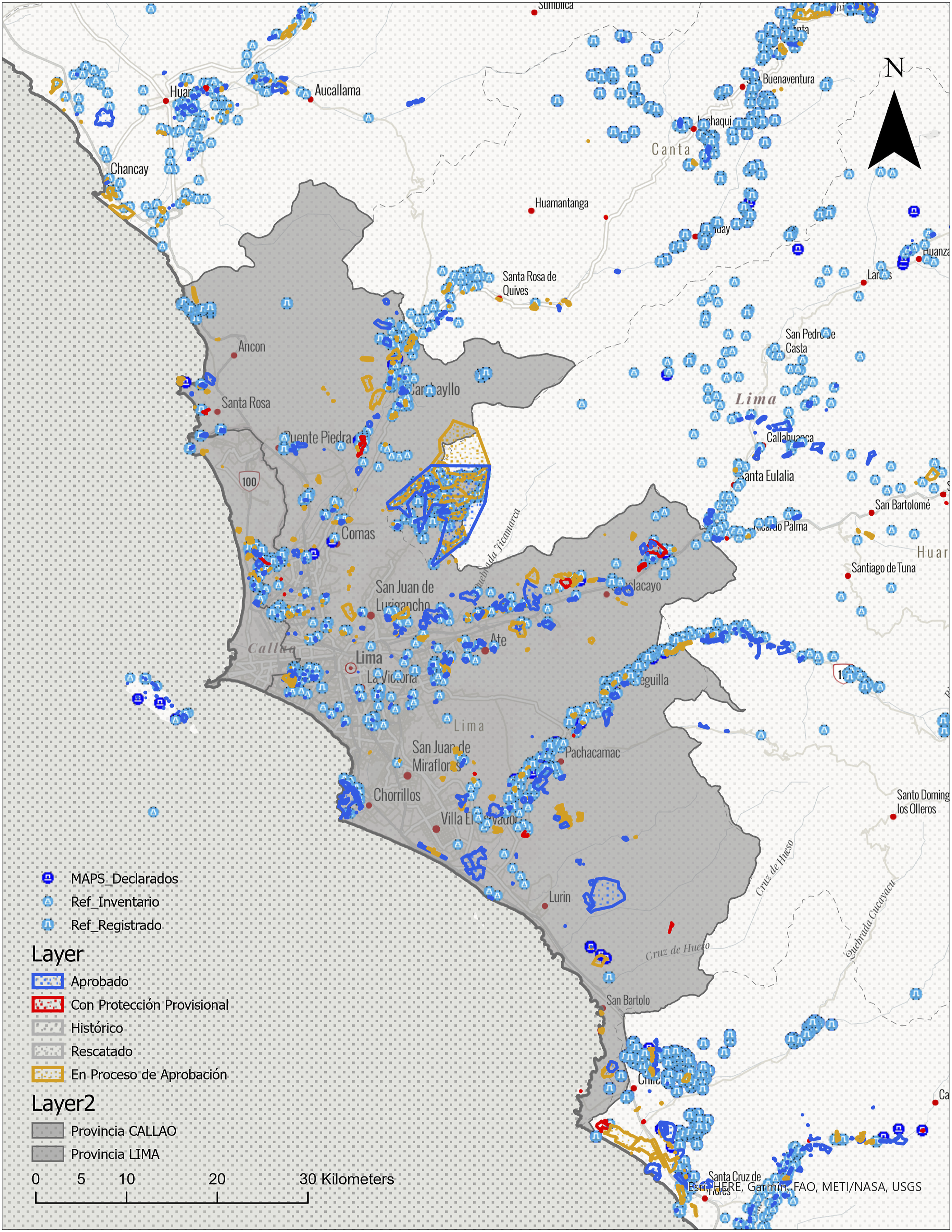
Overall, most huacas are not yet registered with the state nor have their boundaries been legally defined. What is more, 41 huacas have “lost the cultural condition” that gave them the denomination of National Cultural Heritage (Ministerio de Cultura del Perú; 2020: 76). Ministry functionaries, cultural experts and journalists argue that illegal land use is the main reason why archaeological sites are disappearing (Contraloría General de la República, 2015; Fuentes, 2007; Tapullima and Ortiz, 2018). Among the different types of illegal land use affecting huacas, informal urbanization has received the most public attention—which imposes on impoverished and racialized Peruvians the primary responsibility for cultural heritage destruction. However, on behalf of economic development and the modernization of towns and cities, authorities have allowed the destruction of pre-colonial structures from the Spanish invasion through the present. Thus, I argue that authorities’ public criminalization of these actions hides both underprivileged communities living in and around these sites as well as the historical and systematic state abandonment of huacas.
Peru’s cultural heritage management and huacas’ destruction
In 1639, the Spanish Jesuit priest Bernabé Cobo (1882: 41-42) wrote: Before the arrival of the Spaniards to this land, this valley and region were very populated by Indians [indios], as shown by the ruins of their towns … more than an infinity of walls and shrines that exist throughout the valley … [the Spanish, earthquakes, and the construction of water canals] are destroying and disappearing [these structures].
Peru’s independence in 1821 brought urgency to the construction of nationalism, the creation of new traditions, and new laws and regulations to protect pre-colonial structures. The new republican government swept away colonial elements and highlighted the Inka heritage in particular. Past symbols acquired a new significance, creating a possible future for the new nation (Sanders, 1997: 83–84). The overall destruction of huacas diminished during the Republican era (1821 to the present) and especially in the early 20th century (Tello and Mejia Xesspe, 1967). Yet, by the end of the 19th century, the exportation of pre-colonial objects to be showcased in foreign museums was a common practice for private collectors, and for foreign scholars who analyzed and compared them with antiquities from around the globe (Tello and Mejia Xesspe, 1967). Although authorities were aware of and even collected antiques themselves, laws enacted in later years regulated such activities, as well as related ones like looting, trafficking, and damage to precolonial structures and artifacts. These structures and artifacts were instrumental in shaping Peru’s national narrative and in fostering a sense of pride even prior to independence (see Díaz-Caballero, 1986; Rowe, 1976).
Entering the 20th century, Peru was characterized by asymmetrical social, political, and economic structures. In terms of cultural heritage, the government acknowledged that pre-colonial monuments were being excavated for personal gain, leading to their mutilation: “If the government does not adopt the appropriate measures, the materials essential for the reconstruction of the primitive history of the country will soon disappear” (Congreso de la República del Perú, 1893). By April 1893, the government decreed all pre-colonial structures located within the Peruvian territory to be national monuments, and their conservation and vigilance a matter of public interest (Congreso de la República del Perú, 1893). Moreover, the decree strictly forbade the destruction or mutilation of pre-colonial structures.
In 1929, Law 6634 established the creation of an Archaeological Map of Peru (Congreso de la República del Perú, 1929) but it was only in 1985 that the first official inventory of archaeological monuments of metropolitan Lima was published (INC/Municipalidad Metropolitana de Lima, 1985). Archaeologist Roger Ravines and his team documented 107 archaeological sites in this document. Although the inventory portrayed a smaller metropolitan Lima in 1985, consisting of only 43 districts, today it has expanded to 50 districts (INEI, 1995). As of 2023, the Ministry of Culture has registered 368 pre-colonial archaeological sites within the metropolitan Lima area (SIGDA, 2018).
During the Spanish and Portuguese imperial stranglehold on South America, colonized peoples’ settlements were dismantled. Areas selected to be colonial cities witnessed even faster depredation of such structures. Historically, governmental abandonment of monuments and development plans for modernizing Lima have devoured huacas without any public stigmatization by government authorities. In Peru, huaca destruction thus has a long history. Yet, authorities’ disregard for those extant huacas and for the populations living in direct contact with these structures has created a conundrum for the relationship between rural-urban migrants and the so-called pre-Hispanic national heritage.
Internal migration, Lima’s new urban space, and its effects on huacas
To address the conundrums continuing to thwart efforts at sustainable and humane heritage management, future studies and governance agendas must examine and account for the relationship between ordinary people and cultural heritage sites. In urban spaces, it is almost impossible to maintain a pristine area that is free from the effects of daily human activity. For the poor, working-class, and immigrant communities, life in the city is characterized largely by unrecognized “daily rights negotiations … on a small scale” for housing, public services, and personal freedoms (Fischer, 2008: 6) which authorities may consider opposed to the goal of monument preservation. In Lima, the political context around pre-colonial archaeological sites is also about the quest for rights. The HGROs I will discuss struggle to reform state policies around heritage and to assert their own claims to direct huaca protection, shaped by and forming part of “this tenacious quest for rights” in the city (Fischer, 2008: 6).
Toward the end of the 20th century, and continuing a historical trend, the economic resources of the country were concentrated in Lima. By 1986, when the Internal Conflict
2
engulfed the country, 69% of industrial value, 87% of national taxes, 83% of Peru’s bank loans, and 98% of private investment (excluding the mining sector) were generated by or in Lima (Riofrío, 1996). Outside of Lima, the context of internal migration during the 1980s included escalating violence, expanding economic crisis, and drug trafficking (INEI, 1995). The main emigration centers were the central and south highland territories. The coast was the main destination: cities grew from housing 28% of the national population in 1943 to 52% by 1993 (INEI, 1995). In 1972, 3,302,523 inhabitants were registered in the national census, and 45.8% (1,512,093) were rural-urban immigrants. By 1993 6,321,173 inhabitants were registered in Lima and 39.4% (2,492,367) were national immigrants. Currently, metropolitan Lima has more than 10 million inhabitants. Figure 2 illustrates metropolitan Lima’s growth from the 1940s until 2000. 20th-century Lima’s urban growth. Image by Dr. Gabriela Oré Menéndez.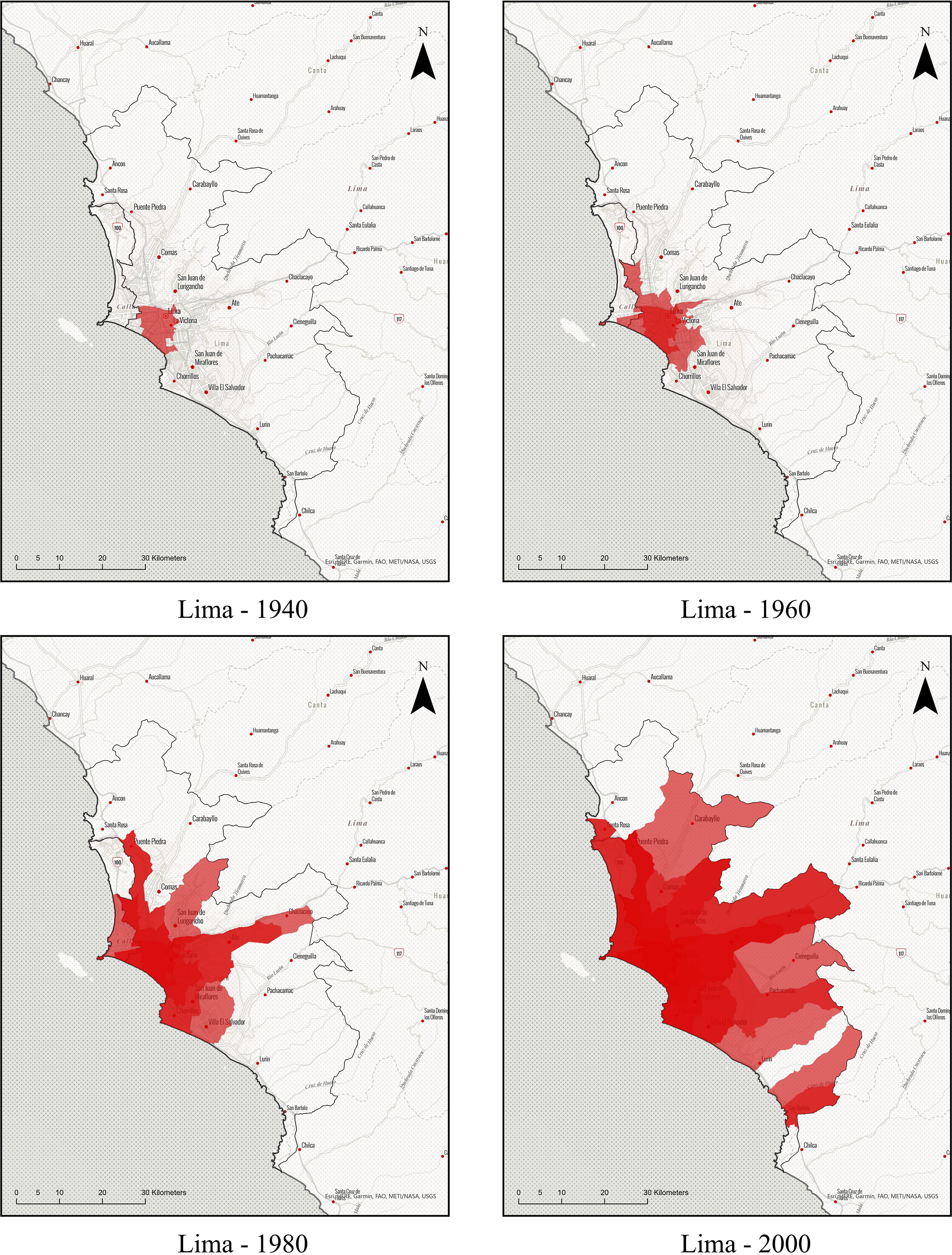
The devastating internal conflict in the 1980s and 1990s drove millions from their rural hometowns to find new opportunities in the city, with many of them settling in the peri-urban outskirts of Lima (Comisión de la Verdad y Reconciliación del Perú, 2003; Yamada, 2010). Lefebvre calls this demand for urban life the “right to the city” (Lefebvre, 1996). The right to the city, which may refer to access to services or recognition of one’s status as citizen, also establishes the right for residents to change the city (Herzfeld, 2015; Lefebvre, 1996). A sustainable city, per the United Nations’ New Urban Agenda (United Nations 2017), requires the conservation of cultural heritage because it fosters cultural diversity, engenders cultural rights and citizens’ rights to the city, and constitutes the irreplaceable heritage of future generations (Herzfeld, 2015; Lefebvre, 1996). Herzfeld (2015) and De Cesari and Herzfeld (2015) have argued that focusing on urbanized archaeological spaces reveals important insights into the link between precarious urban citizenship and cultural heritage. Alberto Fujimori’s presidency (1990–2000) brought massive changes, opening Peru to a neoliberal economy, privatizing national companies, and bringing foreign capital and globalization into the country (Drinot, 2014; Ruiz, 2005). As in every other Latin American country, the new neoliberal multicultural paradigm and its policy changes were productive for some, yet not beneficial for most non-white “non-domesticable” communities (Hale, 2004; Rodriguez, 2011). In addition to the Internal Conflict and the cancelation of previous urban planning and housing policies (Calderón, 2002, 2005), these reforms only further stimulated the growth of informal urban settlements. Thus, to live in Lima, groups of migrants created residential areas on what they believed was “available land” on the outskirts of the city. Although archaeological sites were not legally available land, these working-class and low-income Peruvians observed the space to be unpopulated and unattended by the state. As such, the land appeared to be free for use, so they undertook to self-construct homes and neighborhoods (see Figure 3). Armatambo-Morro Solar Monumental Archaeological Zone (September 1, 2019—author's photograph).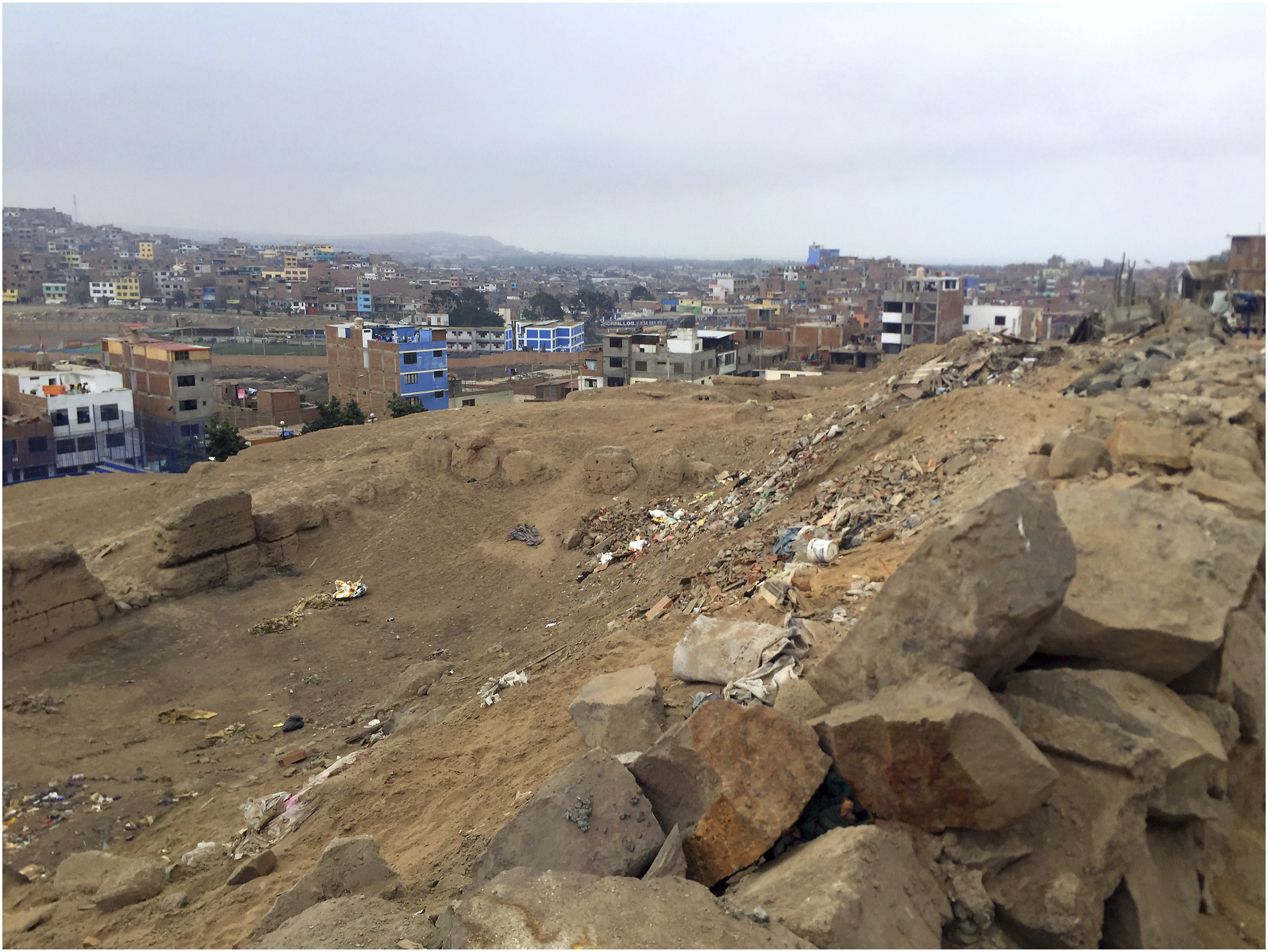
The racism of authorities and elites towards non-white and impoverished Peruvians contributed to the notion that rural migrant communities are not appropriate for Lima, further exacerbating negative perceptions of migrants and the actions by which they seek to integrate into the city (Golte and Adams, 1990). Consequently, authorities, media outlets, and cultural experts labeled these rural migrants as “invasores,” with their settlements being referred to as “invasiones.” Instead of conceptualizing and treating them as Peruvian citizens, authorities do not provide the so-called invasores with basic needs (housing opportunities, potable water, electricity, schools, health services, etc.). Even more, when previously ignored huacas are affected by invasiones, these landless peoples are treated as delinquents and in many cases attempts are made to evict them. Legal protection of precolonial monuments is often used to justify the denial of rights to the city to non-elite, non-white communities. Huacas neglected for decades are swiftly protected by authorities when people use them for informal housing, disregarding the rights of those involved. Despite some invasiones that date back to the mid-20th century and were never relocated, some of these citizens in Lima still lack crucial services such as potable water, sewage systems, land titles, and safety regulations, among other services.
Authorities, media, and scholars have asserted that low-income and working-class populations’ uses of huacas are one of the main factors responsible for their destruction. Since the mid-2000s, cultural heritage officers have been incorporating Limeñas and Limeños in top-down heritage workshops to curate how citizens relate to huacas. Inspired by the Colombian program “Vigias del Patrimonio” (Heritage Watchers), the National Institute of Culture (the Ministry of Culture’s predecessor) developed a top-down program called “Defensores del Patrimonio” to inform and raise citizens’ awareness (sensibilizar) of the importance of cultural heritage. The program’s booklet highlights that the Ministry of Culture (or any other public entity) is not exclusively responsible for this legacy; instead, it is every Peruvian citizen’s duty. Thus far, the ways that this has been implemented have mostly upheld the state's current materialistic and paternalistic conservation model, rather than transcending it. These efforts were insufficient and in 2015, official reports continued to state that Lima’s huacas were at risk of disappearing (Contraloría General de la República, 2015; Tapullima and Ortiz, 2018).
Rise and development of Lima’s HGROs
The central government believed a new citizenship-based approach to cultural heritage could be achieved through awareness and education campaigns, including workshops aiming to instill knowledge about and appreciation for cultural heritage. However, while the Defenders of Cultural Heritage programming continued over time, heritage enthusiasts unrelated to the government and focused on protecting their cultural heritage achieved better results. Even though the Defenders program had been active for seven years, by 2012 the Peruvian newspaper El Comercio identified social networks (blogs and Facebook pages) as the best platforms for collectively disseminating and protecting tangible cultural heritage, particularly in Lima (El Comercio, 2012). The article featured seven different blogs and social media pages of heritage initiatives: Lima Antigua (Ancient Lima), Lima Milenaria (Millennial Lima), Foro Patrimonio Vivo (Living Heritage Forum), Lima La Única (Unique Lima), Al Rescate del Patrimonio Vivo (To the Rescue of Living Heritage), La Biblioteca Marquense (The Marquense Library), and Arboralidad (Arborescence).
The end of the Internal Conflict, the recovery of democracy and public spaces, and the democratization of the internet made possible the development of digital initiatives focused on Lima’s monuments and historic areas. Generally, these digital heritage initiatives, which originated in the early 2000s, aimed to a) inform, b) generate citizen participation, and c) promote the preservation of the city's cultural heritage. Like the visions of governmental and non-governmental international organizations (e.g. UNESCO) for heritage protection, these digital heritage enthusiasts also envisioned a city organized around carefully managed heritage sites, both physically preserved and protected from threats. Moreover, they even agreed on the methodology to achieve this goal, namely by sharing information and raising awareness of the importance of cultural heritage. However, unlike Peruvian authorities, the digital heritage enthusiasts sought an approach to management that would not exclude the people who live alongside monuments.
HGROs emerged as a direct outgrowth of these heritage enthusiasts’ early digital initiatives. As grassroots organizations, they are directly linked to ground-up development, decision-making, implementation, and citizen participation (Uphoff, 1993). HGROs are non-elite, multi-age groups organized from the bottom up to preserve and protect national patrimony sites. These organizations draw on personal motivations and develop innovative strategies for advocacy. In formal interviews and informal conversations with the founders of three of the first initiatives—“Lima La Única,” “Salvemos las Huacas,” and “Arboralidad”—they narrated personal stories when I asked why they are organizing around Lima’s heritage: a sort of call, a childhood memory related to a family member, or because they want their children to continue to enjoy “nuestro patrimonio” were the answers.
The use of possessive adjectives like mi (my) or nuestro (ours) is usual among HGRO members when referring to cultural heritage monuments and intangible heritage. In informal conversations, during workshops, on their social media platforms (see Figure 4), and even in formal conferences, HGRO members refer to precolonial structures as “sus huacas” (their huacas) and as “su patrimonio” (their patrimony). These phrasings express the intimate claim HGROs are making: they see themselves as the owners of these monuments and determine that cultural heritage belongs to them directly. Thus, I argue that the use of possessive adjectives is part of their strategy to reclaim cultural heritage as their right. Huaycan Turístico HGRO posts using the possessive adjective “nuestro” to refer to cultural heritage.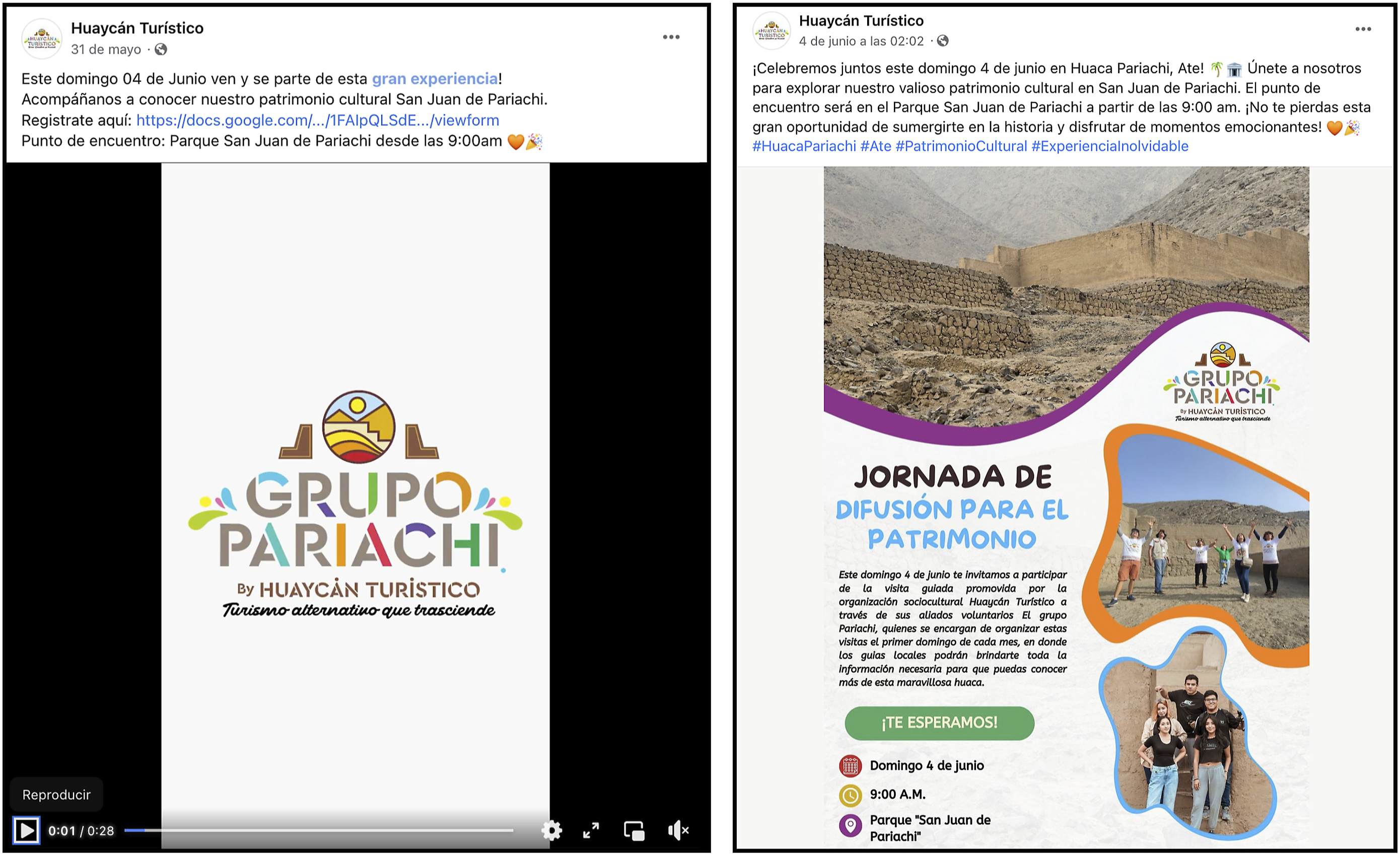
Their actions take place in the field as well as in digital spaces—especially by using social media platforms to organize and promote their agendas. As of July 2019, there were 59 Facebook pages run by organizations dedicated to protecting Lima’s architectural cultural heritage (Lizarzaburu, 2019). Eighteen of these pages focused specifically on pre-colonial era structures or issues. From the group identified by Lizarzaburu (2019), I consider 10 of them to be genuinely grassroots: Amigos de las Huacas de LV, Arqueología Jovelos, Círculo Ciclísta Protector de Huacas, Colectivo Colli, Colectivo Defensa del Patrimonio, Cuida tu Huaca PLO, Inti Raymi en Campoy, Lima Andina, Lima Milenaria, and Salvemos las Huacas. The other Facebook pages promote museums or archaeological projects funded entirely by local or national governments or in collaboration with the private sector: Huaca Garagay, Huaca el Paraíso, Huaca Pucllana, Museo Puruchuco-Jimenez Borja, Museo de Sitio de Pachacamac, and Zona Arqueológica Garagay. By my count, as of June 2021, that number had grown to 25 HGROs active in Lima: Activa la Huaca, Fortaleza de Campoy, Guardinas de la Huaca Bellavista, Huaca Huantille, Huaca Tari, Huaca y Destino, Huaycan Cultural, Huaycan Turístico, ICHMA, Ichmay Tampu, Palacio Inca de Oquendo, Programa de Arqueología Pública “Huacas de La Molina,” Rurincancho, Rutas Culturales Perú, and Yo amo mi Patrimonio Prehispánico.
HGRO members are fairly diverse in terms of gender, age, education, professional activity, and work. With the exception of one case (Lima Milenaria), these initiatives were created by low-profile citizens with middle- or working-class backgrounds. A sample of HGRO members including 30 people observed during a Ministry of Culture program organized for HGROs indicates that their ages range from approximately 25 to 60 years old; all are from middle- or low-income backgrounds. Considering that there are 368 huacas still standing and more than 10 million people in Lima, not all HGRO members live in close contact with pre-colonial or colonial heritage sites. Yet many of them live in neighborhoods and districts created through rural migration.
The relationship between HGRO members and communities living in or around huacas is varied. Huacas’ neighbors can be formal or informal residents; can be poor, low-income, working-, middle-, or elite class; and can be engaged with, uncaring about, or straight opposed to huacas. HGRO members have expressed negative perceptions about groups using huacas as informal residences, waste dumps, parking spaces, car repair shops, gardens, storage spaces, or soccer playgrounds. But these reactions also occur when huacas are endangered due to infrastructural development (e.g. Puruchuco Archaeological Complex (Yánez, 2011). In informal conversations I held with HGRO members, they have referred to huacas’ informal residents as “ignorant” for not caring about and endangering “su patrimonio” (their heritage) and as invasores or even “delinquents.” Yet, some HGRO members are aware of the shortfalls such communities face daily and advocate for authorities to take responsibility and address these issues. Their deep understanding of the unique socioeconomic problems embedded in each huaca has turned HGROs into local experts. HGROs capitalize on this knowledge when designing better strategies to attract neighbors by responding to their particular needs and expectations. Government officials that informally consult HGROs also use this knowledge when analyzing huacas' socioeconomic contexts.
The majority of HGRO members organize and participate in these activities in their free time. The territorial scope of these groups’ interests is also fairly diverse. Some focus on their neighborhood's monuments, what they call “su” huaca (their huaca) or their own district in particular; others claim a sector of Lima or the whole city, while still others claim to deal with the country as a whole (although these latter groups’ posts remain mostly related to Metropolitan Lima). Their numbers of Facebook followers range widely and are not directly proportional to the number of years that a given group has been active on social media.
The primary aim of the HGROs is the preservation of pre-colonial sites. Many organize huaca clean-up days, for instance. Using trash bags, gloves, and facemasks, volunteers collect debris and refuse of all kinds over the course of a full day. Some of these campaigns may take place with permission from the Ministry of Culture and at times with the support of the municipal government. Other activities include monitoring and publicizing huacas at risk. HGRO members document the endangering events with photographs or videos and create social media posts where they tag the Ministry of Culture and sometimes even central and local authorities by name.
In addition to preservation, most HGROs are also invested in raising awareness about heritage spaces, and their social media platforms are a major main tool for doing so. Members view such digital spaces as a means to provide information, an advocacy platform, and a participatory mechanism to engage more citizens with their goals. Their social media pages provide information, photographs, and videos as well as share news, conference ads, and materials related to the main huaca or space in the city on which they focus their efforts. Some mainly re-post information from cultural centers, archaeological projects, universities, and other expert organizations or individuals. However, several HGROs also create new content by taking advantage of livestreaming features and organizing digital talks and roundtables with experts and governmental officers.
The “social use” of huacas is a fundamental motivation and means to achieve HGROs’ vision for protecting archaeological sites. Social use determines that huacas could be made into spaces where citizens might organize many kinds of cultural activities: educational visits, summer camps, workshops for adults, coordination meetings of community groups, concerts, theater, film screenings, academic talks, and so forth (see Figure 5). Such activities are organized with or without sponsorships, yet always requesting permission from local authorities and the Ministry of Culture. When authorities partner with HGROs, they usually provide technical support, speakers, permits, or informative pamphlets, or publicize the events on their social media platforms. HGRO Facebook posts promoting different activities in huacas.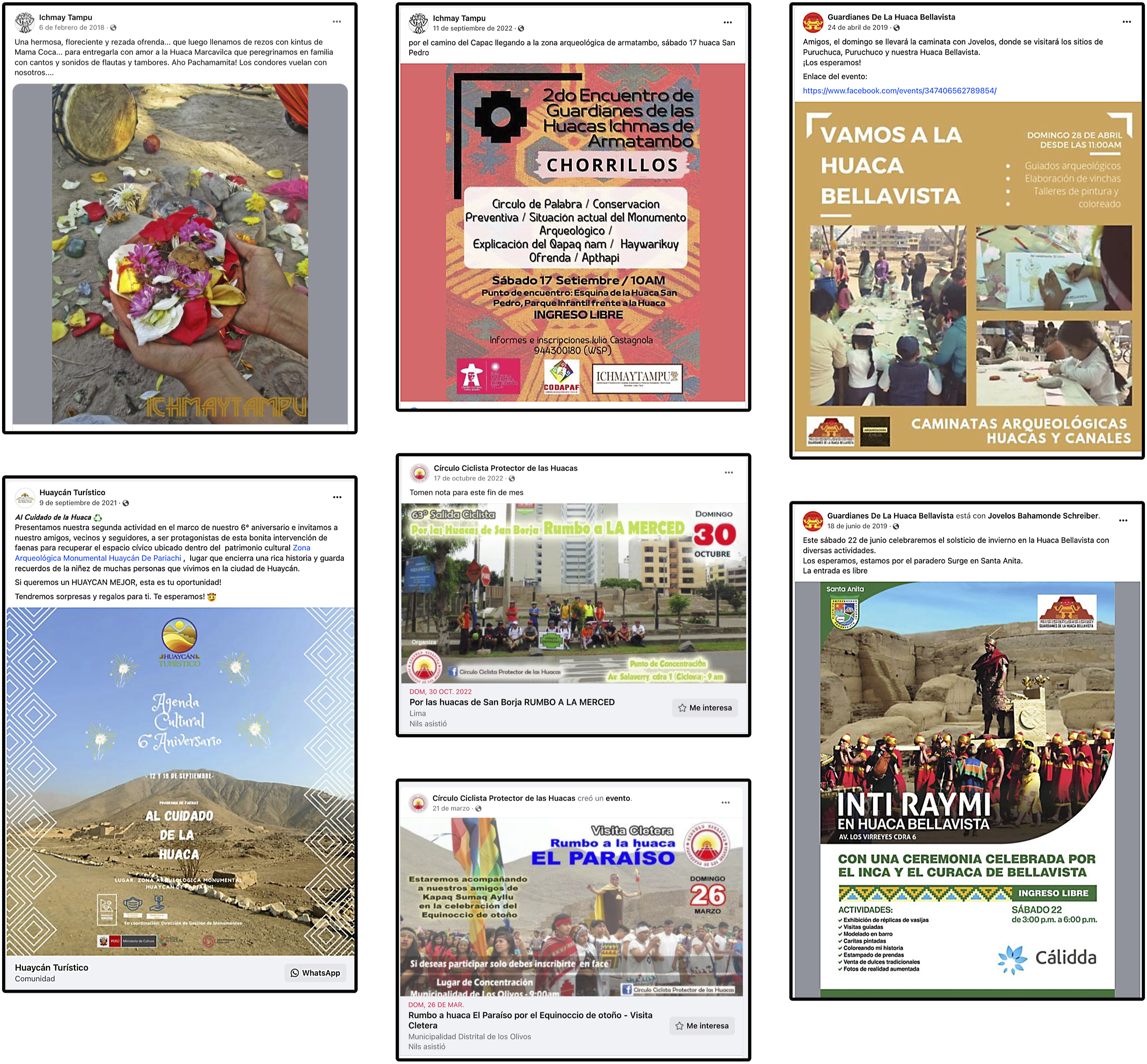
Still other groups promote honoring huacas as they relate to various forms of pre-colonial spirituality. I term this aim “Pan-Andean religious practices,” since these individuals incorporate elements from different regions of Peru and from diverse pre-colonial Andean communities (Inkas, Moche, and Nazca, among others) into their specific heritage protection narrative. The arguments they make in favor of heritage protection often mention Pachamama (Mother Earth) or the planet Earth (Apus)—the sacred Earth beings which form part of the pre-Hispanic pantheon. These organizations believe in the enduring divine energy of huacas and therefore seek to revitalize these spaces. In some cases, such groups perform traditional ceremonies in pursuit of blessings, requesting permission from sacred spirits or simply acknowledging the sacred character of these spaces.
Developing local tourism is also an aim in some cases. These HGROs, such as Huaycan Turistico, conduct Spanish-only walking tours and monthly visits to huacas, and organize cultural events to draw people to the huacas they seek to protect. These activities target neighbors or Lima’s residents and often bring increased foot traffic to nearby businesses selling snacks or crafts. In some instances, the municipal government has provided transportation to prospective huaca visitors, workshop materials, and free advertising for these events via official government social media accounts.
Another major goal for HGROs is reaching children and youth through education. As in the case of Salvemos las Huacas, these HGROs organize educational workshops to introduce children and youth to huaca-related topics. These events are usually located within a huaca or include a visit to one. HGROs believe that being in close contact with huacas and having positive experiences with them is essential to foster a bond between citizens and the huacas in their midst. Thus, HGROs go beyond raising awareness on the importance of huacas from a scientific perspective. Their workshops combine scientific information with stories on how huacas constitute part of the contemporary narrative of Lima’s residents, with the aim of enabling citizens to see huacas as part of their own personal stories. Likewise, HGROs believe people can bond with huacas and value them as accessible, free recreation spaces in their neighborhoods. This vision is especially significant considering the lack of public spaces such as parks, community centers, and playgrounds in impoverished areas of Lima.
Being mainly self-funded is an important material characteristic of HGROs. Although they may occasionally receive support from a local municipality, money is rarely allocated for HGROs in municipal budgets. In response, one way HGROs fund their activities is to engage in participatory budgeting, by which HGROs must petition to have their activities funded by the municipality alongside several other citizen-driven initiatives. Participatory budgeting in Lima “is a policy and management instrument, through which regional and local authorities, as well as duly represented population organizations, jointly define how and where the economic resources allocated for this will be directed” (Municipalidad de Lima, 2021). HGROs also raise funds by soliciting donations from or charging small fees for activity participants.
Although including archaeologists, historians, educators, and communication experts, HGRO members are not public figures, nor do they have formal connections to politicians, prominent cultural experts, or celebrities. Rather, they are often the product of sincere, personal efforts by middle- and working-class people to find solutions to prevent greater damage to heritage sites in their neighborhoods, districts, and cities. Like their blog-based forerunners, HGROs seek to protect historic monuments with limited tourist appeal by re-signifying them as part of the fabric of the city’s history and identity. Their decentralized, self-motivated efforts to protect cultural heritage represent a significant departure from the top-down model of preservation and control which has generally characterized heritage site management in Peru. Moreover, HGRO members frame their pursuit of greater protection for heritage sites in Lima as exercising their rights as Peruvian citizens.
Possibilities and limits of heritage-based citizenship claims
Scholarly attention to HGROs goes beyond multivocal approaches to cultural heritage management and the production of heritage: it sheds light on heritage bureaucracy, on reaching economically sustainable cultural heritage management, and on the link between human rights and heritagization processes. HGROs’ potential to achieve a more effective, sustainable, and multivocal approach to cultural management is substantial and increasingly on the state’s radar. Yet, the nature of their organizations, social and economic perspectives, and contradictory governmental management approaches have created barriers for HGROs.
HGROs are well-positioned to advocate not only for huacas’ preservation but for citizens’ needs. Their protecting strategies speak to neighbors’ concerns while responding to huacas’ conservation requirements. Working within their neighborhoods, districts, and city, HGROs have a major advantage over the Ministry of Culture and even over local governments: they know firsthand the main problems Lima’s citizens face—because they struggle with them daily—and how those are entangled with the preservation of huacas. HGROs highlight citizens’ struggles when explaining that huacas are used as waste dumps due to a lack of waste management services in a neighborhood; that huacas are used as sport fields because there are no public areas for residents; that huacas are unsafe because there are no public safety services (municipal guardians, electric lighting, etc.); or that neighbors park their cars on top of huacas because they do not have roads and sidewalks.
Based on my observations since 2016, the type of events HGROs organize, the content of their workshops, and the language and topics developed in their activities connect easily with other residents of Lima. Such an approach is beginning to be recognized as effective. HGROs have been invited to participate in the Archaeology National Congress of Peru since 2015, where they present their analyses, expectations, and actions to protect heritage. Between 2018 and 2019, the Citizen Participation Directorate of the Ministry of Culture consulted three HGROs about the socio-economic problems of a neighborhood (Chorrillos) to gain their input about the management plan this office proposed. Local governments have started to change their approach to huacas and are taking the work of HGROs seriously. For instance, Chorrillos municipality, a district in southeast Lima, hired an HGRO member to lead their cultural initiatives. Chorrillos district contains 11 precolonial monuments, including Armatambo-Morro Solar Monumental Archaeological Zone, which is one of the most at-risk huacas within Lima.
One of the primary self-imposed tasks HGROs shoulder is to hold the state responsible for the protection of cultural heritage. HGROs accomplish this goal through actions on the ground and via digital platforms. As described in the previous section, HGROs publicize huacas at risk in social media, and tag government offices and officers (using public and sometimes personal accounts) in those posts. For instance, on November 29, 2017, an HGRO posted on its Facebook fan page about informal excavations of a sewage system in an archaeological zone. The post described the situation as follows: Clandestine drainage works are reported inside the Archaeological Zone of Huaycan de Pariachi, as you well know, alteration and/or destruction is punishable by law, and can be punished with up to 8 years in prison and 1,000 UIT (3,700,000 soles) as a management sanction[.] [L]ocal and regional authorities that allow the destruction of cultural heritage in their jurisdiction will be sanctioned with a prison sentence of not less than three nor more than 6 years, in addition to disqualification of not less than 1 year. Hello! The Control and Supervision Directorate of the General Directorate for the Defense of Cultural Heritage of the Ministry of Culture of Peru, carried out actions related to the information indicated. We have officiated urging the stoppage of the work. According to the procedures, the corresponding actions will be taken. The offenders are already identified. We also remind that for this year each UIT is worth 4,050 soles, therefore, the 1,000 UIT possible fine would amount to 4,050,000 soles. Thank you for helping in our mission to defend heritage.
By publicly exposing the lack of government intervention in these problems, they trigger immediate response from the state, whether it is the release of an official statement condemning damage to huacas, an official visit to assess the problems at the site, or the immediate intervention of police officers to stop imminent damage. HGROs’ effective monitoring of monuments has pushed Ministry of Culture and local government officers to count on HGROs as a primary source to learn about sites at risk. For instance, in a 2018 interview, a current senior authority of the Ministry of Culture described HGROs as “the eyes and ears of the Ministry.” She and several HGRO members maintain a WhatsApp group to communicate quickly and exchange observations.
Like the Ministry of Culture and local governments, HGROs lack resources; yet they are resourceful as well as not limited by bureaucracy. As self-funded organizations, HGROs have very limited funding, few human resources, and scarce assets—such as members’ smartphones, cameras, workshop materials, and so on. These characteristics indeed limit the scope of their work but have not made them less efficient. For instance, HGRO members’ commitment to site protection is not limited to their volunteer hours: while commuting, working, or taking a walk, if a huaca is at risk, they will register the problem and post it on social media. Even more, their personal networks also further this goal. Friends of HGRO members alert them when huacas are in danger by sending pictures or videos about the matter. In September 2019, during an informal conversation with HGRO member Caty, 3 who was active in the ACERCA program, I asked about how they are able to monitor huacas during work hours. Caty, like many HGRO members, has a full-time job and a family of her own. She answered that once people know about her interest and the HGRO, her friends and people who follow the HGRO Facebook page send information (including pictures and videos) about huacas at risk in her neighborhood and other huacas in Lima. Conversely, government officers are loaded with administrative paperwork, restrained by the requirement that they request official permits to undertake field trips, and constrained by the need to schedule the use of resources including cars and cameras; they also must clear with the communication office the release of any official statement on social media platforms.
Even when HGROs partner with state offices and private organizations to receive support or other resources, they still call out these entities if their actions are fostering damage to huacas. Since 2012, I have been following Diego’s public social media page and the HGRO of which he is a member. This organization—focused on Lima’s monuments from precolonial to republican periods—has created a collaborative relationship with several local governments and officials, which has allowed this HGRO to obtain multiple types of support. For instance, due to this positive relationship, the HGRO members and its followers gained access to restricted areas when conducting walking tours. In July 2016, while participating in one of these tours, Diego commented that the HGRO convinced Lima’s municipality to assign guardians to accompany the visitors’ groups to less-safe parts of the city. He acknowledged the importance of being on good terms with the government officers in charge of cultural heritage, yet he also highlighted that HGROs need to continue making the state accountable for its management. His public social media account and the HGRO’s Facebook fan page acknowledge official support and publicize the municipality’s lack of services in certain areas of the city where monuments are abundant or construction projects adversely affecting huacas and colonial sites. The Ministry of Culture and local governments feel pressure to advance active strategies to protect sites at risk. Despite the fact that HGROs’ self-funding limits the scope of their work, it allows them to approach cultural heritage independently from political and corporate agendas.
The actions of Lima’s HGROs are serving as a model for effective citizen engagement in the preservation of urban huacas, thereby prompting a shift in state policies. For instance, the National Cultural Policy of July 2020 centers citizen participation and cultural rights. However, there are still barriers to achieving this participatory approach to cultural heritage management. Within the Ministry of Culture, there is no unified vision regarding how citizens can or cannot participate among the directorates that are directly responsible for the management of huacas. In some cases, there are passive disputes over which of the directorates is more entitled to authority over, and has more expertise regarding, the protection of huacas and the participation of citizens. Moreover, within specific directorates, functionaries do not always share the same cultural heritage management paradigms. Archaeologists working in the Ministry come from a variety of generational, educational, and socioeconomic backgrounds, which makes it difficult to develop a cohesive, participatory approach to heritage.
Other limitations HGROs encounter are the lack of communication and coordination between central and local governments, difficulties with current cultural heritage management laws, and regulations and procedures that are not up-to-date with the new citizen participation perspective and are time-consuming to change. Additionally, due to the political instability the Peruvian government has faced since 2016, there is a lack of continuity in the Ministry of Culture authorities. In seven years, there have been 19 Ministers of Culture. Yet neither HGROs nor the Ministry of Culture are ready and willing to co-manage huacas. On October 23, 2020, I participated as the moderator of a thematic symposium titled “Community Management of Cultural Heritage” in the Archaeology National Congress of Peru. Two HGRO members and three Ministry of Culture officials participated. The last question I asked was this: “If we understand co-management as a strategy by which citizens are the main parties responsible for huacas and the state simply supports their initiatives, are you (HGRO members) prepared to take over the holistic protection of huacas, and are you (Ministry of Culture officers) ready to hand over huacas to HGROs?” The answer from both groups was unclear and hesitant.
Conclusion
A material-centered cultural heritage management approach does not contemplate ordinary people’s closeness to heritage. Non-curated relationships between impoverished non-white communities and monuments have been consistently condemned in Peru since the colonial era began. Thus, these communities living in intimate contact with heritage—for instance using it for Andean ceremonies, as informal residential zones, or for agriculture and festivities—were not accepted. Yet the destruction of cultural heritage in the name of economic and social progress—construction of infrastructure, the extraction of natural resources, or urbanization—has rarely been condemned. This cultural heritage management perspective has created tension between the government treatment of monuments and marginalized groups. Protecting monuments shouldn't be seen as opposing addressing people’s needs. This older perspective implies that monuments are still viewed as more important than some people’s lives.
The rise of HGROs is the result of an increasing incongruity between state heritage management policies still directly based on the material-centered paradigm, amid the vast changes wrought to Lima’s urban fabric over 50 years of internal migration and socio-economic shifts. These grassroots organizations address the tensions resulting from this situation while they firmly establish their constituents’ rights to the city and to their past. Yet HGROs still need the state, too. Although some directorates of the Ministry of Culture have been open to partnering with HGROs, there is still internal resistance to this new perspective. Even with the recently published “National Cultural Policy to 2030,” which fosters citizen participation, the material-centered approach is still prioritized over a more balanced one that provides for both monuments and people’s needs. The fact that neither the Ministry of Culture officials partnering with HGROs nor HGROs themselves seem be ready to co-manage huacas is an even knottier issue.
Recognizing the complexity of terms such as “local” and “community,” this phenomenon is also noteworthy as it is not typically rooted in community members’ historical attachments to events or places. It is based on the contemporary forging of heritage connections through newfound intimacies of everyday use. By definition, people perceived as migrants are typically assumed to have little proximity, and therefore connection, to tangible heritage. The claims HGRO members make upon huacas are not centered in their identities as descendant communities but in their belonging as citizens and neighbors of these monuments. This contemporary attachment to monuments is what experts and scholars typically valorize as something that should happen in a context in which there is no apparently direct connection between past societies and current populations—or even when the connection exists but there seems to be no interest from the community. Nor is this connection based only in traditional notions of heritage value such as the commemoration of an idealized past, national identity construction, learning lessons of history, or similar. HGROs take pride in protecting huacas due to their Andean origin and as part of their identity as Peruvians and also in using them as public spaces for numerous cultural events, not necessarily related to Andean precolonial traditions at all.
HGRO members’ pursuit of their rights to the city is expressed in their aim of enjoying the city in close contact with precolonial monuments. By seeking their rights to participate in the management of huacas, these residents push the state to treat them as full citizens and include them in decision-making processes as primary stakeholders of their heritage but also of Lima itself. Huacas, then, also form a valid and visible mechanism to bring to the state’s attention the lack of potable water, electricity, waste management, safety, public spaces, health services, and schools disadvantaged citizens must navigate every day. Continuing to study HGROs will provide more insights into how communities that do not claim to have an ancestral connection (such as recent migrant communities) relate to monuments, as well as into how monuments are part of the strategy for impoverished communities to achieve their rights to the city, and into the sustainability of HGRO strategies for huaca preservation. Facebook comments from November 29, 2017, regarding sewage excavations at the site of Huaycan de Pariachi.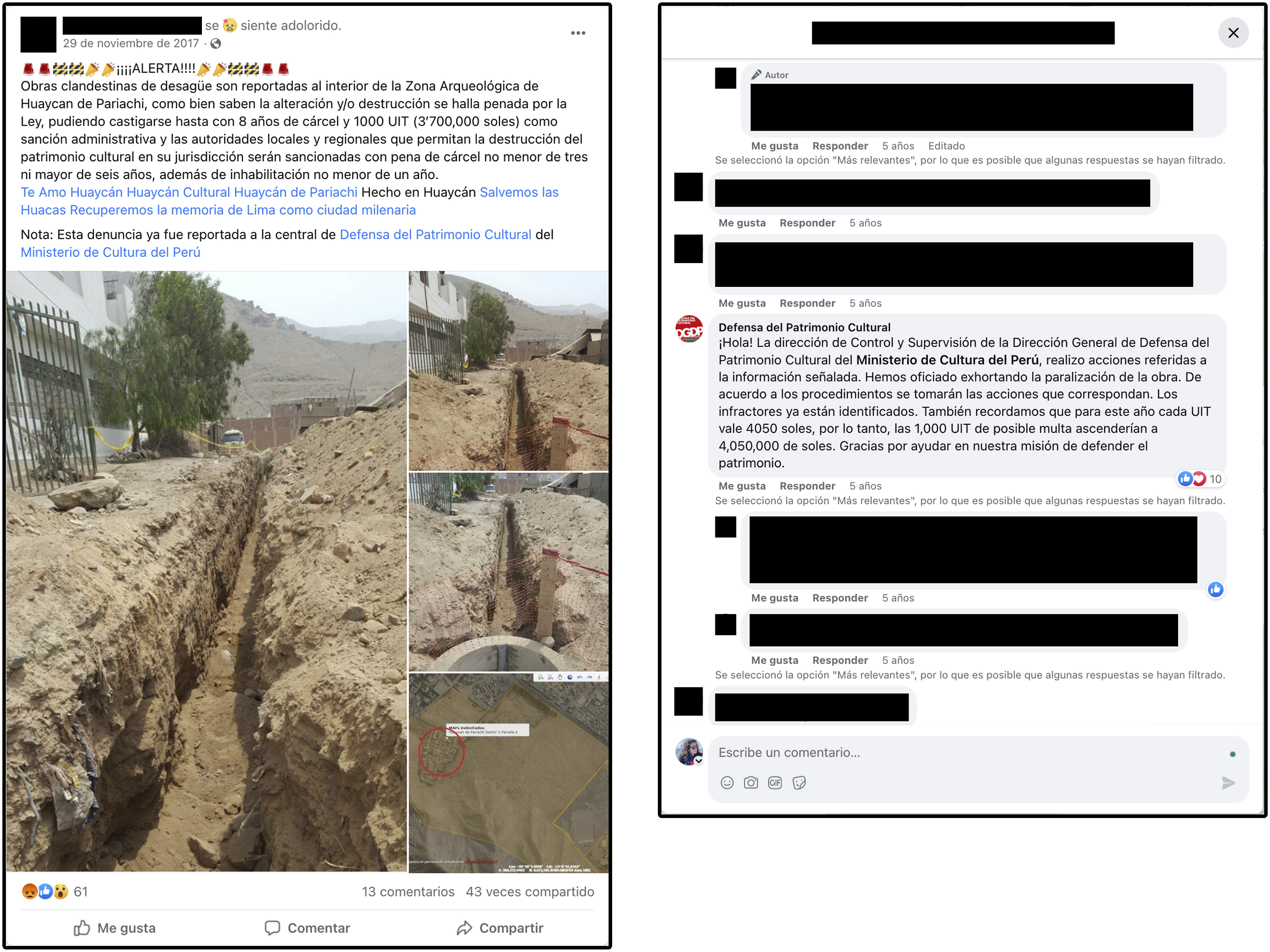
Footnotes
Declaration of conflicting interests
The author(s) declared no potential conflicts of interest with respect to the research, authorship, and/or publication of this article.
Funding
The author(s) disclosed receipt of the following financial support for the research, authorship, and/or publication of this article: Stanford University (Department of Anthropology, Archaeology Center, and Center for Latin American Studies) and University of California Libraries.
