Carboxylic acids containing an O-acetyl substituent were studied using tandem mass spectrometry (MS/MS). Decarboxylation was observed for deprotonated O-acetylmandelic acid, whereas deprotonated acetoxyacetic acid and acetylsalicylic acid fragmented by two competing pathways. In the lower energy process, the product ion was formed by intramolecular proton abstraction and subsequent neutral loss of ketene (CH2=C=O) from the O-acetyl group. At higher collision energies, nucleophilic displacement of the O-acetyl group by the carboxylate group of acetoxyacetate yielded acetate (CH3CO2–) as the more abundant product ion. The relative energetics computed for the reaction pathways of acetoxyacetate were consistent with the product ion spectra. Overall, the observation of both the loss of ketene and the formation of acetate ion are characteristic of an O-acetyl group in the precursor carboxylate ion undergoing collision-induced dissociation. The different fragmentation behavior exhibited by O-acetyl mandelate was attributed to the charge stabilizing properties of the phenyl substituent that facilitated decarboxylation. Thus, the fragmentation processes observed depended on the structures of the O-acetyl-substituted carboxylate ions and the associated intramolecular interactions.
Carboxylic acids are common organic substances that are also found in nature as free acids and as derivatives such as esters and amides. The acids are readily deprotonated by electrospray ionization (ESI) to form [M–H]– (carboxylate) ions. When subjected to collision-induced dissociation (CID) using tandem mass spectrometry (MS/MS), the carboxylate ions undergo fragmentation that is influenced by structural aspects such as the presence and proximity of another functional group.
On collisional activation, carboxylate ions may fragment by decarboxylation.1–6 However, other fragmentation processes have been characterized for carboxylate ions with particular structural features. Thus, carboxylate ions are known to react by decarboxylative elimination7 and intramolecular nucleophilic displacement,8,9 as well as by processes that require proton abstraction, for example McLafferty-type rearrangement10 and formation of the hydroxycarbonyl anion.11,12 Another process indicated by a mass transition of 42 u was used in the multiple reaction monitoring technique for the determination of deprotonated acetylsalicylic acid (aspirin),13–17 an aryl carboxylate ion. This uncommon neutral loss of C2H2O was determined by accurate mass measurements and attributed to the loss of ketene (CH2=C=O) from the O-acetyl group.18 Although the loss of ketene from deprotonated, N-acetyl amino acids has been mentioned,19 recent studies have documented ketene formation as a prominent fragmentation reaction of several protonated N-acetyl amino acids19 and protonated β-amino acids.20
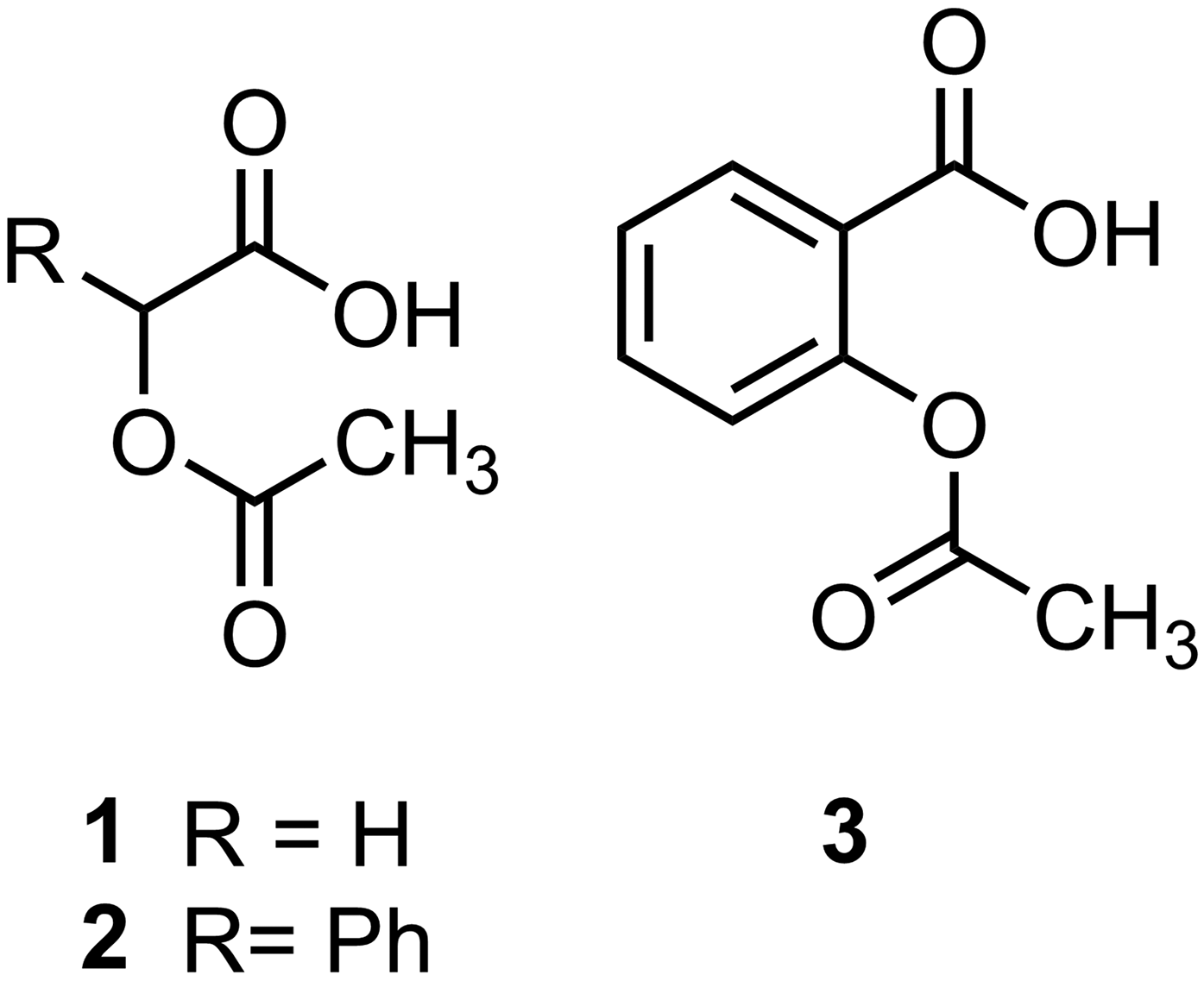
In the current investigation, the three carboxylic acids containing O-acetyl esters (Figure 1) were chosen to study the effects on fragmentation behavior of structural changes, such as the addition of a phenyl substituent and the geometrical constraints resulting from the inclusion of an aromatic ring. The results of tandem mass spectrometry and computations revealed that intramolecular interactions between the O-acetyl and the carboxylate groups led to competing fragmentation processes of the acetyl group in deprotonated acetoxyacetic acid (O-acetylglycolic acid, 1a) and acetylsalicylic acid (2-acetoxybenzoic acid, 3a), but primarily decarboxylation was observed in the case of deprotonated O-acetylmandelic acid (2-acetoxy-2-phenylacetic acid, 2a).
Structures of O-acetyl carboxylic acids. The corresponding ions formed by deprotonation are designated as 1a, 2a, and 3a, respectively.
Materials and methods
Acetoxyacetic acid, O-acetylmandelic acid and acetylsalicylic acid were obtained from Sigma-Aldrich (Oakville, ON, Canada); each was dissolved in aqueous methanol (1 mg mL–1, 1:1 v/v) and a portion (5–10 μL) was introduced into the mass spectrometers by flow injection (20 μL min–1; syringe pump).
Mass spectra were collected on Thermo-Finnigan LCQ-Duo ion-trap and Micromass (now Waters) Quattro triple quadrupole mass spectrometers. In the ion-trap mass spectrometer,21 the voltage on the electrospray needle, the capillary temperature, sheath gas flow rate, and CID isolation width were set at 4.0 kV, 200°C, 20 arbitrary units, and 1 u, respectively. Spectra were collected (typically 20–30 scans) using helium as the damping and collision gas, a source potential of 0–25 V, and processed using Xcalibur software. In the triple quadrupole mass spectrometer,11 the electrospray needle and the source temperature were set at 4.0 kV, and 90–100°C, respectively. The gas for the bath and nebulizer was nitrogen. Spectra collected (typically 20–30 scans) using argon as the collision gas at energies of 5–20 eV (laboratory frame) and a cone voltage of 10–30 V were processed using MassLynx software.
Assignments of fragment ion structures were based on comparison of pseudo MS3 spectra with literature spectra and by comparison with the documented fragmentations of ions with analogous structures. The structures were consistent with computational results, mechanistic reasoning, and the structure of the precursor ions.
As reported for previous computations,7 geometry optimizations and frequency calculations were performed using the B3LYP/6–31++G(2d,p) functional, and the MP2/6-311++G(2d, p)//B3LYP/6-31 ++G(2d, p) composite level of theory was used to determine zero-point-corrected free energies, which are reported in kJ mol‒1. Cartesian coordinates for the optimized structures are given in the supplemental material.
Results and discussion
Acetoxyacetate, 1a
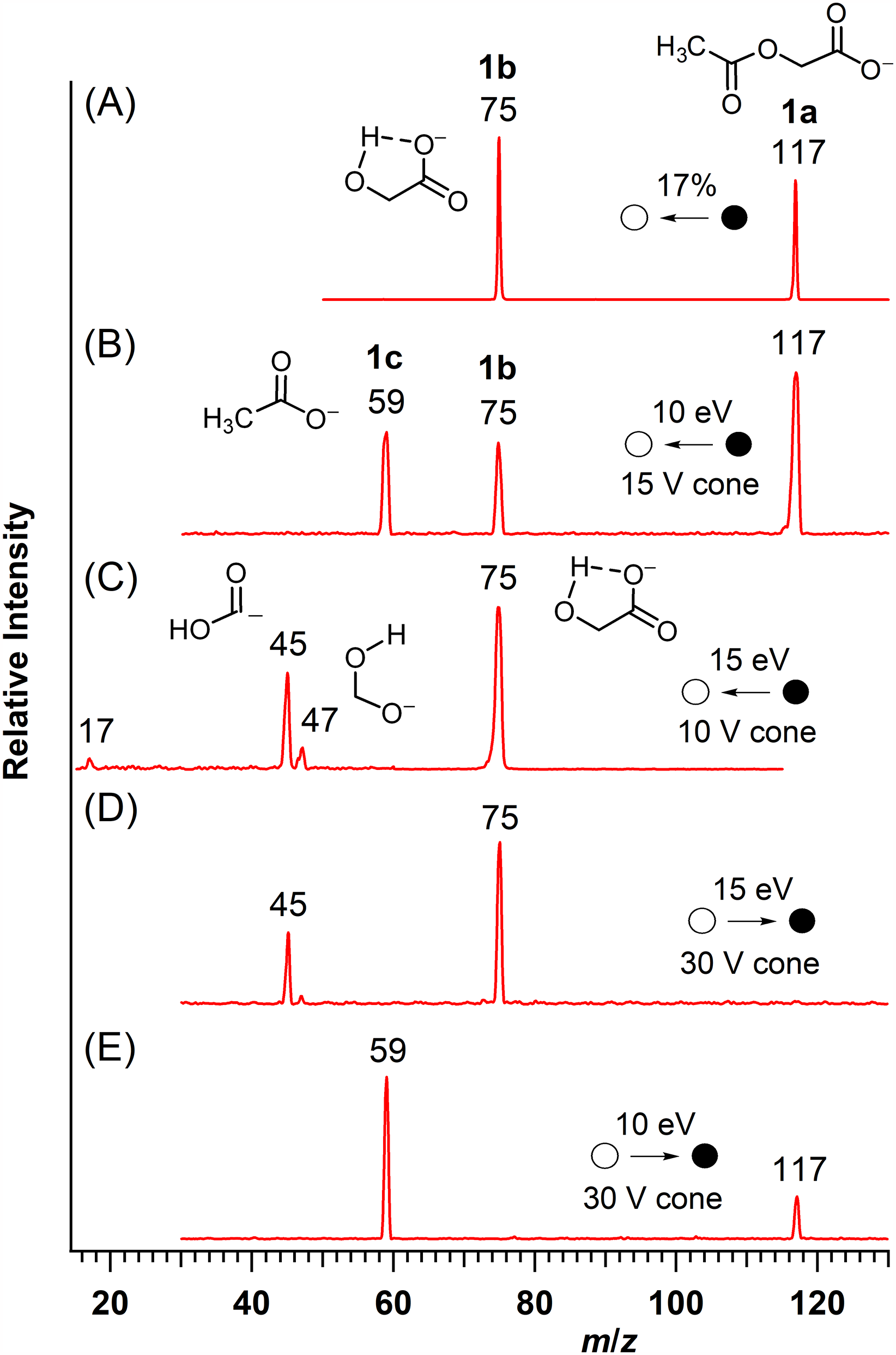
The tandem mass spectra of acetoxyacetate (1a, m/z 117; Figure 2, spectra A and B) showed the formation of an abundant product ion at m/z 75 (1b). A second product ion (1c, m/z 59) was also detected in the triple quadrupole mass spectrometer. When 1b (m/z 75) was formed from acetoxyacetate in the source of the mass spectrometer and selected for CID, the resulting pseudo MS3 spectrum (Figure 2C) matched that of deprotonated glycolic acid (HOCH2CO2–).11 A precursor-ion scan (Figure 2D) confirmed the precursor–product relationship for the ions at m/z 75 and 45 (HO2C–). The identification of the ion at m/z 75 as glycolate defined the neutral loss of 42 u from acetoxyacetate as C2H2O, the molecular formula of ketene (CH2=C=O).
Mass spectra collected for acetoxyacetate (1a). A. MS/MS of acetoxyacetate; B. MS/MS of acetoxyacetate; C. Pseudo MS3 of the ion at m/z 75; D. Precursor-ion spectrum of m/z 45; and E. Precursor-ion spectrum of m/z 59. Spectrum A was collected on the ion trap spectrometer, whereas spectra B–E were collected on the triple quadrupole spectrometer.
At a collision energy of 5 eV in the triple quadrupole mass spectrometer, glycolate (1b, m/z 75) was the most abundant product ion formed from acetoxyacetate (1a); however, at collision energies ≥10 eV (e.g. Figure 2B), the product ion at m/z 59 (1c) was more abundant. These observations, together with the observation of glycolate as the only product ion detected in the ion trap (Figure 2A) indicated that formation of the ion at m/z 59 required a higher input of energy. The pseudo MS3 spectrum (Figure 2C) and precursor-ion scans (Figure 2, Spectra D and E) demonstrated that product ion 1c and glycolate (1b) were formed from acetoxyacetate (1a) by independent, competing processes.
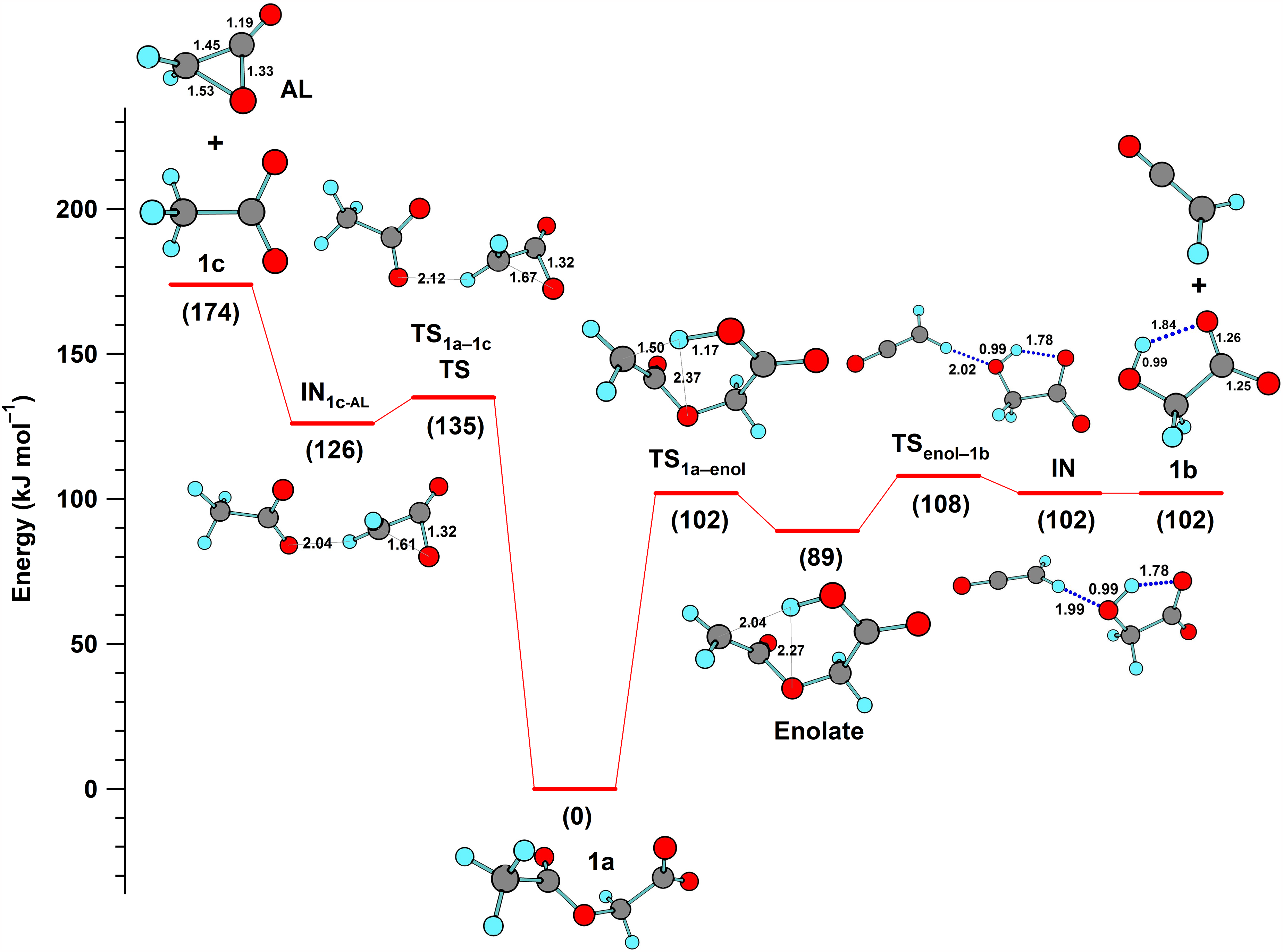
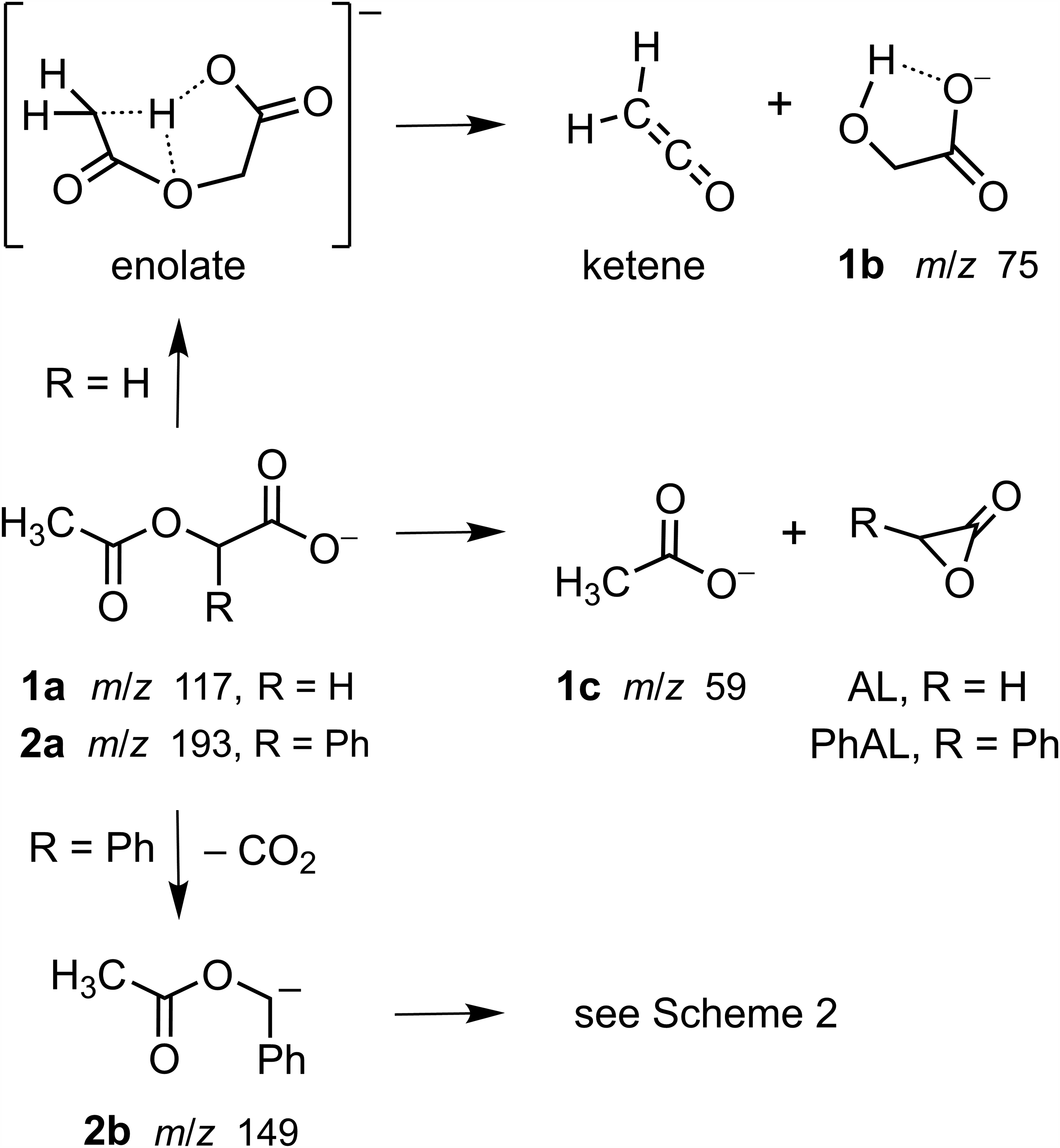
The formation of products with masses corresponding to ketene and glycolate (1b) from acetoxyacetate (1a; Scheme 1) requires a rearrangement consistent with the intramolecular abstraction of a moderately acidic hydrogen on the methyl group by the ionized carboxyl group followed by bond cleavage. Ketene formation by the analogous C–C bond cleavage of deprotonated methyl ketones (R-CO-CH2–)6 is a close precedent for this process. The moderate difference between the gas-phase acidities of analogous compounds (i.e. methoxyacetic acid, ΔrG° ≈ 1405 kJ mol–1 versus methyl and ethyl acetate, ΔrG° ≈ 1530 kJ mol–1)22 indicates that enolate ion formation by abstraction of a proton from the acetyl group in acetoxyacetate (Scheme 1) is energetically reasonable. When the abstraction process was investigated computationally (Figure 3), the energies of acetoxyacetate and its enolate ion differed by only 89 kJ mol–1, and a modest barrier of 102 kJ/mol–1 was computed for proton abstraction via a seven-membered, cyclic transition structure (TS1a–enol). The latter was similar in magnitude to the barrier for the abstraction of a benzylic proton (97 kJ/mol–1) as the first step in the rearrangement of dihydrocinnamate prior to decarboxylation.23 Also, the barrier for proton transfer in acetoxyacetate was lower than that computed for the abstraction of a proton from oxygen in 2-hydroxycarboxylic acids (140–190 kJ/mol–1).11
Potential energy profiles computed for the endergonic, competing fragmentation reactions of acetoxyacetate (1a): formation of glycolate (1b) and ketene (right-hand side); and formation of acetate (1c) and acetolactone (left-hand side).
Competing proton abstraction and nucleophilic displacement reactions of acetoxyacetate (1a) and competing decarboxylation and nucleophilic displacement reactions of O-acetylmandelate (2a). The dotted lines in the enolate structure indicate hydrogen bonding to three centers.
Subsequent C–O bond cleavage of the enolate of acetoxyacetate was facilitated by the transfer of the abstracted proton to the ether oxygen of the acetyl group via a five-membered, cyclic transition structure (Figure 3, TSenol–1b). An input of only 19 kJ mol–1 was required to reach a loosely bound ion-neutral complex (IN) of ketene and glycolate (1b).
By analogy with the formation of phenoxide ion (PhO– from phenoxyacetate (PhO–CH2CO2–)24 and halide ions from monohalogenated acetates,8,91c (m/z 59) was assigned as acetate ion (CH3CO2–), and its formation from the O-acetyl group (Scheme 1) was investigated computationally (Figure 3). The barrier for the intramolecular displacement of acetate by the carboxylate group in acetoxyacetate (135 kJ mol–1) was similar to that computed for the analogous displacement of phenoxide ion from phenoxyacetate (152 kJ mol–1).24 The neutral product for each process was acetolactone (AL), a three-membered lactone that also was formed by the displacement of halide ions from substituted acetate ions.8,9
The energetics computed for the fragmentation of acetoxyacetate (Figure 3) are consistent with the mass spectral observations. In the ion-trap mass spectrometer, where collisions with helium atoms add energy in small increments, only glycolate (1b), the product of the lower energy pathway, was observed (Figure 2A). In addition to the higher barrier computed for the initial step in the displacement pathway, additional input of energy (48 kJ mol–1) is needed to separate acetate and acetolactone from their ion-neutral complex IN1c−AL. This dissociation energy is greater than the small barrier (9 kJ mol–1) for the reverse reaction, and, when energy is added in small increments, return to the initial acetoxyacetate ion is favored. Consequently, only glycolate is observed upon CID in the ion trap. In the triple quadrupole mass spectrometer, collisions with argon atoms transfer energy greater than that computed for each process25 and two product ions are observed (Figure 2B). At low collision energy (5 eV, ELAB; 1.27 eV = 123 kJ mol–1, ECM), glycolate (1b), the product of the lower energy pathway, was more abundant, whereas the product of the higher energy pathway, acetate (1c), became the more abundant product ion at higher collision energies (e.g. Figure 2B: 10 eV, ELAB; 2.55 eV = 246 kJ mol–1, ECM).
O-Acetylmandelate, 2a
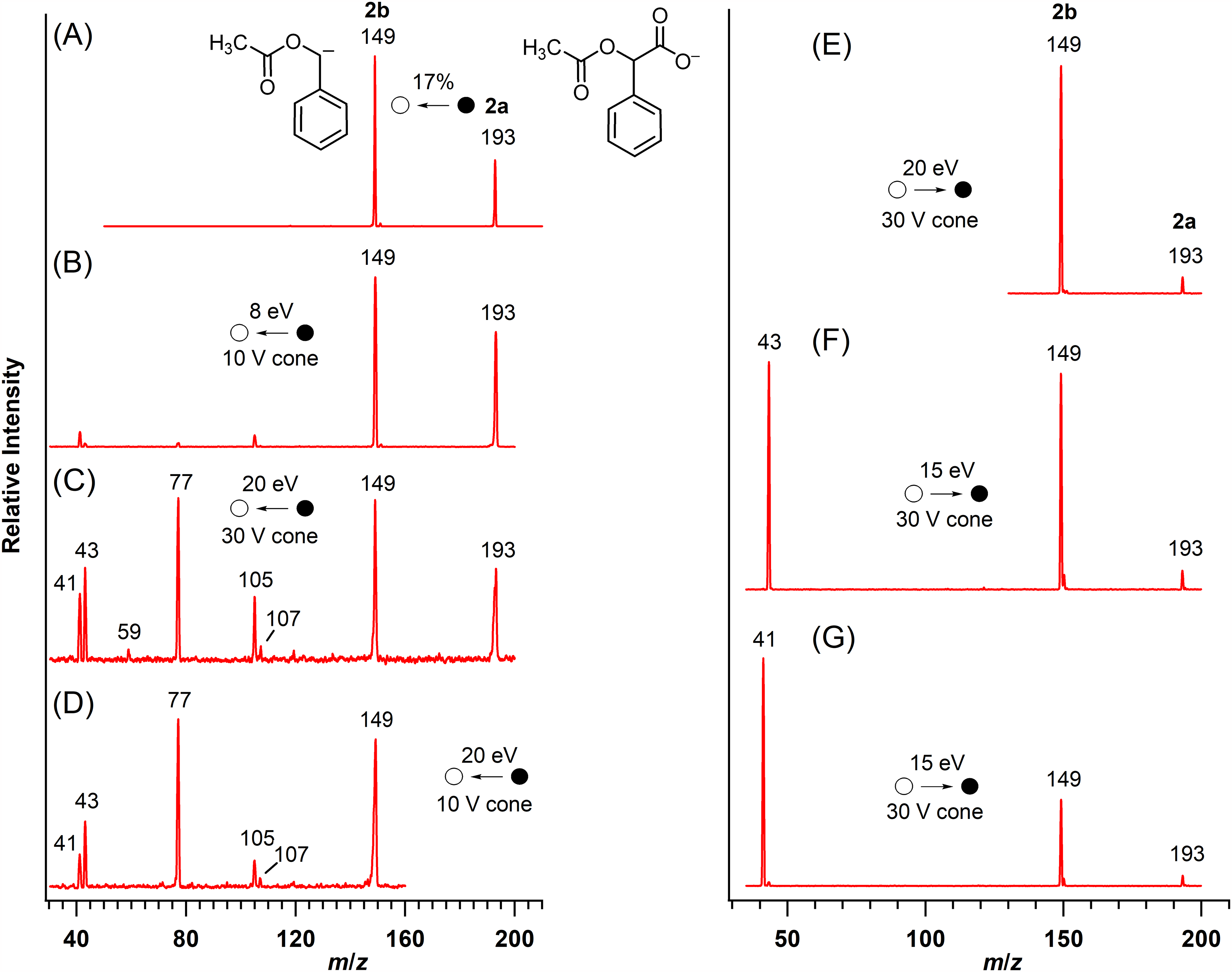
In contrast to the fragmentation behavior of acetoxyacetate (vide supa), decarboxylation was the primary fragmentation process observed for O-acetylmandelate (2a; Figure 4, Spectra A and B; Scheme 1). At higher collision energy, the tandem mass spectrum (Figure 4C) showed the formation of six other product ions. Pseudo MS3 (Figure 4D) showed that five of these ions (m/z 107, 105, 77, 43 and 41), including two pairs of complementary ions at m/z 41/107 and m/z 43/105,11,26 were formed from the decarboxylated ion 2b (m/z 149). Precursor-ion scans (Figure 4, Spectra E, F and G) linked the decarboxylated ion with the [M–H]– ion and demonstrated that the ions at m/z 41 and 43 were formed from the decarboxylated ion 2b by independent routes. The ion at m/z 59 (Figure 4C) was not detected in the pseudo MS3 spectrum of the decarboxylated ion 2b (Figure 4D), suggesting direct formation from O-acetylmandelate (2a) by a competing nucleophilic displacement (Scheme 1).
Mass spectra of O-acetylmandelate (2a). A. MS/MS of 2a; B. MS/MS of 2a at low collision energy; C. MS/MS of 2a at high collision energy; D. Pseudo MS3 of the m/z 149 ion; precursor-ion spectra. E. m/z 149; F. m/z 43; and G. m/z 41. Spectrum A was collected on the ion-trap mass spectrometer and spectra B–H were collected on the triple quadrupole mass spectrometer.
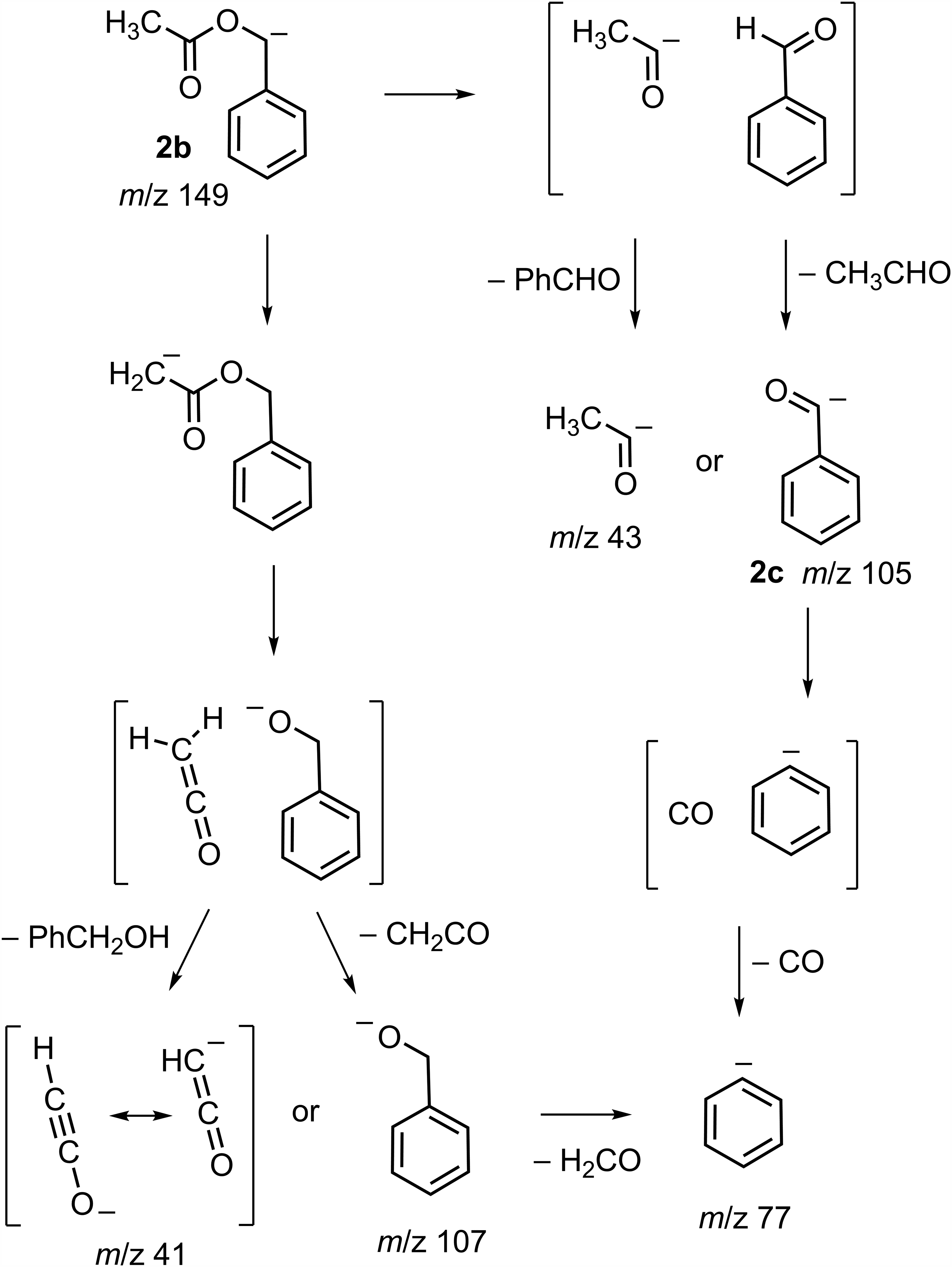
O-Acetylmandelate (2a) and acetoxyacetate (1a) are analogs differing by a phenyl substituent (Scheme 1). However, this single structural difference has a significant effect on the fragmentation behavior. The phenyl substituent facilitates the decarboxylation of O-acetylmandelate (2a; Figure 4, Spectra A and B) by effectively stabilizing the charge developed at the benzylic position upon the neutral loss of carbon dioxide (Scheme 1).3,27 The prominent decarboxylation of O-acetylmandelate is consistent with the low threshold energy measured for decarboxylation of the analogous ion phenylacetate.6,28 Also, the subsequent fragmentation processes of the benzylic ion 2b yielding product ions at m/z 107, 105, 77, 43 and 41 (Figure 4D) are consistent with the structure assigned (Scheme 2).
Plausible fragmentation reactions of the ion 2b formed by decarboxylation of O-acetylmandelate (2a) upon CID (Scheme 1). Note that 2b undergoes two competing fragmentation reactions each generating an ion-neutral complex.
Formation of five product ions detected at lower m/z (Figure 4D) is consistent with the fragmentation of 2b by two competing processes (Scheme 2). In one process, intramolecular abstraction of a proton from the methyl group precedes bond cleavage generating ketene and deprotonated benzyl alcohol (m/z 107) upon dissociation of the ion-neutral complex. Alternatively, abstraction of a proton from ketene prior to dissociation results in the formation of the complementary ketenyl ion at m/z 415 and benzyl alcohol. Note that the gas-phase acidity of ketene (ΔrG° ≈ 1497 kJ mol–1) is slightly higher than that of benzyl alcohol (ΔrG° ≈ 1520 kJ mol–1)22 and that the abundance of the ketenyl anion (an ynolate) at m/z 41 is greater than that of its complementary ion at m/z 107. Loss of formaldehyde from deprotonated benzyl alcohol is a potential route to phenide ion (m/z 77).24,29
In the competing fragmentation process of 2b, bond dissociation gives an ion-neutral complex from which the product ion at m/z 43 is generated by dissociation. Neutral acetaldehyde and the complementary acyl anion at m/z 105 (2c) are generated by proton abstraction prior to dissociation of the ion-neutral complex. Loss of carbon monoxide from the ion at m/z 105 yields phenide ion (m/z 77).30
Formation of the ion of low abundance at m/z 59 from O-acetylmandelate (2a) is consistent with the nucleophilic displacement of acetate by the carboxylate group with formation of a phenyl-substituted acetolactone. This is analogous to the formation of acetate from acetoxyacetate (1a; Figure 3). In both instances, acetate ion (m/z 59) is detected only when more energetic collisions are used to fragment O-acetylmandelate (Figure 4C) and acetoxyacetate (Figure 2B).
Acetylsalicylate, 3a
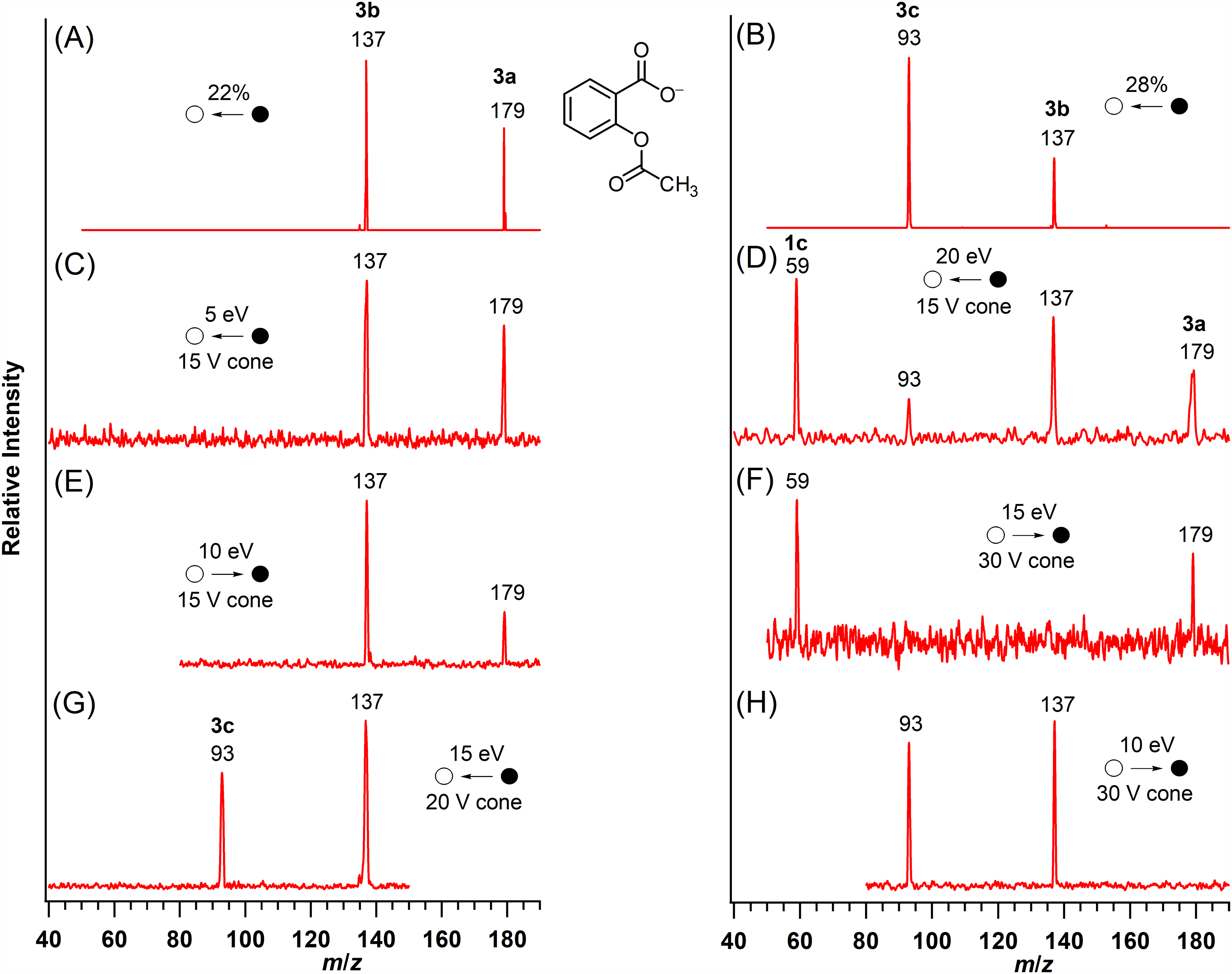
The tandem mass spectra of acetylsalicylate (3a, m/z 179; Figure 5, Spectra A and C) showed the formation of a product ion at m/z 137 (3b) by the demonstrated neutral loss of ketene (42 u).18 When a higher collision energy was applied in the triple quadrupole mass spectrometer, a product ion at m/z 59 was also formed from acetylsalicylate (Figure 5D). The pseudo MS3 spectrum of the ion at m/z 137 (Figure 5, Spectra B and G) and a precursor-ion scan (Figure 5F) demonstrated that the product ions at m/z 137 (3b) and 59 (3c) were formed from acetylsalicylate (3a) by independent, competing processes. CID of 3b (m/z 137) also yielded an ion at m/z 93 (3d) by decarboxylation (Figure 5, Spectra B and G), a common process documented for deprotonated aryl carboxylic acids.1–4 The pseudo MS3 spectra of 3b (m/z 137; Figure 5, Spectra B and G) matched that of deprotonated salicylic acid,31 the structure ascribed to the m/z 137 ion formed from acetylsalicylate (3a, m/z 179) by loss of ketene.18 Moreover, the m/z 137 → 93 transition has been utilized in analytical determinations of salicylate.13–17,32
Mass spectra of acetylsalicylate (3a). A. MS/MS of 3a; B. Pseudo MS3 of the m/z 137 ion; C. MS/MS of 3a at low collision energy; D. MS/MS of 3a at high collision energy; E. precursor-ion spectrum of the ion at m/z 137; F. Precursor-ion spectrum of the ion at m/z 59, 1c; G. Pseudo MS3 of the m/z 137 ion; and H. Precursor-ion spectrum of the ion at m/z 93. Spectra A and B were collected on the ion-trap mass spectrometer and spectra C–H were collected on the triple quadrupole mass spectrometer.
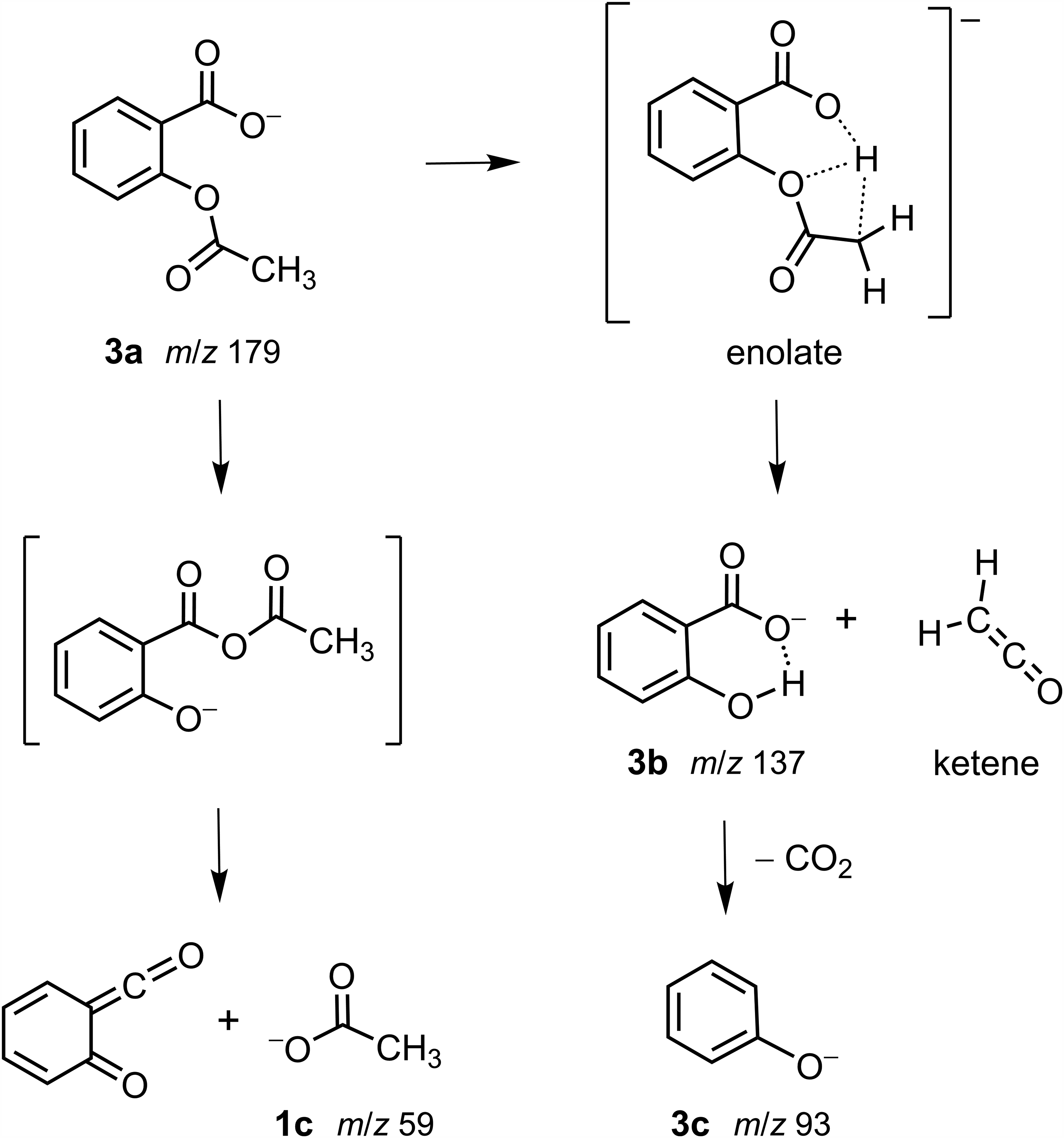
As characterized for acetoxyacetate (1a), loss of ketene from acetylsalicylate (3a) requires abstraction of a proton from the methyl group. The proximal positioning of the carboxylate and acetoxy groups on the aromatic ring and the rigid, planar alignment of four atoms in the eight-membered, cyclic transition state facilitate a proton transfer from the methyl group to a carboxylate oxygen atom (Scheme 3). Subsequent loss of ketene from the enolate generates salicylate (3b, m/z 137), an ion stabilized by internal H bonding. Loss of carbon dioxide and facile proton abstraction4 yields phenoxide as the ion observed at m/z 93 (3c).
Competing fragmentation processes of acetylsalicylate (3a).
At higher collision energy (Figure 5D), acetate ion (1c, m/z 59) is formed from acetylsalicylate (3a) by a competing fragmentation process (Scheme 3). Instead of an unfavorable nucleophilic substitution reaction on the aromatic ring, a likely reaction pathway is formation of an intermediate anhydride by acetyl group migration initiated by nucleophilic attack of the carboxylate oxygen on the carbonyl group of the ester. Subsequent heterolytic bond cleavage forms acetate (1c) and a neutral fragment containing the initial aryl ring.
Conclusion
The O-acetyl-substituted carboxylate ions readily fragmented upon CID. For both acetoxyacetate and acetylsalicylate, two competing pathways were associated with bond cleavages in the O-acetyl group forming either a neutral product (ketene) or an ion (acetate) that retained the structural connections of the O-acetyl group (Schemes 1 and 3). In the lower energy pathway, the abstraction of a proton from the methyl group by the basic carboxylate group led to the formation of ketene (loss of 42 u). When each carboxylate ion was subjected to more energetic collisions, acetate ion (m/z 59) was produced. For acetoxyacetate, acetate was formed by an intramolecular nucleophilic displacement. The energy input computed for acetate displacement was only about 30% higher than that computed for ketene formation. However, the O-acetyl group in acetylsalicylate is bonded to the aryl ring, and acetate ion formation was proposed to occur after the rearrangement to an intermediate anhydride (Scheme 3).
Unlike acetoxyacetate and acetylsalicylate, the O-acetylmandelate ion decarboxylated upon CID demonstrating the structural dependance of fragmentation processes and the significant charge stabilizing effect of a phenyl substituent. Subsequent fragmentations of the decarboxylated ion were consistent with bond cleavages at the O-acetyl group leading to two pairs of complementary product ions (Scheme 2).
Overall, the reactions characterized in this study showed the carboxylate group participating as a base, acting as a nucleophile, or undergoing decarboxylation. Which process (or processes) is observed depends on the structures of the ions and the influence of intramolecular interactions, providing yet another example of the importance of these factors for the interpretation and prediction of the tandem mass spectra of multifunctional ions.
Supplemental Material
sj-docx-1-ems-10.1177_14690667251346668 - Supplemental material for Competing fragmentation processes of O-acetyl-substituted carboxylate anions subjected to collision-induced dissociation
Supplemental material, sj-docx-1-ems-10.1177_14690667251346668 for Competing fragmentation processes of O-acetyl-substituted carboxylate anions subjected to collision-induced dissociation by J Stuart Grossert and Robert L White in European Journal of Mass Spectrometry
Footnotes
Acknowledgments
We thank X. Feng for the maintenance of the mass spectrometers.
Declaration of conflicting interests
The authors declared no potential conflicts of interest with respect to the research, authorship, and/or publication of this article.
Funding
The authors disclosed receipt of the following financial support for the research, authorship, and/or publication of this article: Financial support was provided by the Natural Sciences and Engineering Research Council of Canada (NSERC Grant No. RGPIN/04536-2014 to R.L.W.).
ORCID iDs
J Stuart Grossert
Robert L. White
Supplemental material
Supplemental material for this article is available online.
References
1.
PerezEHSchleifTMessingerJP, et al.Structures and chemical rearrangements of benzoate derivatives following gas phase decarboxylation. J Am Soc Mass Spectrom2022; 33: 1914–1920.
2.
DanikiewiczWZimnickaM. Negative ion gas-phase chemistry of arenes. Mass Spectrom Rev2016; 35: 123–146.
3.
BanduMLWatkinsKRBretthauerML, et al.Prediction of MS/MS data. 1. A focus on pharmaceuticals containing carboxylic acids. Anal Chem2004; 76: 1746–1753.
4.
BieńkowskiTDanikiewiczW. Generation and reactions of substituted phenide anions in an electrospray triple quadrupole mass spectrometer. Rapid Commun. Mass Spectrom2003; 17: 697–705.
5.
GraulSTSquiresRR. Generation of alkyl carbanions in the gas phase. J Am Chem Soc1990; 112: 2506–2516.
6.
GraulSTSquiresRR. Gas-phase acidities derived from threshold energies for activated reactions. J Am Chem Soc1990; 112: 2517–2529.
7.
LeBlancLMPowersSWGrossertJS,et al.Competing fragmentation processes of β-substituted propanoate ions upon collision-induced dissociation. Rapid Commun Mass Spectrom2016; 30: 2133–2144.
8.
RodriquezCFWilliamsIH. Ab initio theoretical investigation of the mechanism for α-lactone formation from α-halocarboxylates: leaving group, substituent, solvent and isotope effects. J Chem Soc Perkin Trans 21997: 959–965.
9.
GraulSTSquiresRR. Collisional activation of intramolecular nucleophilic displacement reactions: the formation of acetolactone from dissociation of α-haloacetate negative ions. Int J Mass Spectrom Ion Processes1990; 100: 785–802.
10.
GrossertJSCookMCWhiteRL. The influence of structural features on facile McLafferty-type, even-electron rearrangements in tandem mass spectra of carboxylate anions. Rapid Commun Mass Spectrom2006; 20: 1511–1516.
11.
GreeneLEGrossertJSWhiteRL. Correlations of ion structure with multiple fragmentation pathways arising from collision-induced dissociations of selected α-hydroxycarboxylic acid anions. J Mass Spectrom2013; 48: 312–320.
12.
BialeckiJBAxeFUAttygalleAB. Hydroxycarbonyl anion (m/z 45), a diagnostic marker for α-hydroxycarboxylic acids. J Mass Spectrom2009; 44: 252–259.
13.
ZhengWYooK-HAbd El-AtyAM, et al.Quantitative determination of carbasalate calcium derived metabolites, acetylsalicylic acid and salicylic acid, in six animal foods using liquid-liquid extraction method coupled with liquid chromatography-tandem mass spectrometry. Food Chem2019; 278: 744–750.
14.
SirokDPátfalusiMSzeleczkyG, et al.Robust and sensitive LC/MS-MS method for simultaneous detection of acetylsalicylic acid and salicylic acid in human plasma. Microchem J2018; 136: 200–208.
15.
ChhonkerYSPandeyCPChandasanaH, et al.Simultaneous quantitation of acetylsalicylic acid and clopidogrel along with their metabolites in human plasma using liquid chromatography tandem mass spectrometry. Biomed Chromatogr2016; 30: 466–473.
16.
XuXKoetznerLBouletJ, et al.Rapid and sensitive determination of acetylsalicylic acid and salicylic acid in plasma using liquid chromatography–tandem mass spectrometry: application to pharmacokinetic study. Biomed Chromatogr2009; 23: 973–979.
17.
BaeSKSeoKAJungEJ, et al.Determination of acetylsalicylic acid and its major metabolite, salicylic acid, in human plasma using liquid chromatography–tandem mass spectrometry: application to pharmacokinetic study of Astrix® in Korean healthy volunteers. Biomed Chromatogr2008; 22: 590–595.
18.
YangYDengJYaoZ-P. Pharmaceutical analysis by solid-substrate electrospray ionization mass spectrometry with wooden tips. J Am Soc Mass Spectrom2014; 25: 37–47.
19.
RamunaiduAPavankumarPRagiN, et al.Characterization of isomeric acetyl amino acids and di-acetyl amino acids by LC/MS/MS. J Mass Spectrom2023; 58: e4982.
20.
AsakawaD. Dissociation chemistry of protonated α-, β- and other amino acids using multiple stage tandem mass spectrometry. J Mass Spectrom2024; 59: e5100.
21.
GrossertJSBoschiDLolliML, et al.Intramolecular interactions and the neutral loss of ammonia from collisionally activated, protonated ω-aminoalkyl-3-hydroxyfurazans. Eur J Mass Spectrom2024; 30: 38–46.
22.
LiasSGBartmessJE. In gas phase ion energetics data, NIST Chemistry Webbook, NIST Standard Reference Database Number 69, National Institute of Standards and Technology, Gaithersberg MD. https://webbook.nist.gov/chemistry/ (Retrieved January 7, 2025).
23.
GillisEALGrossertJSWhiteRL. Rearrangements leading to fragmentations of hydrocinnamate and analogous nitrogen-containing anions upon collision-induced dissociation. J Am Soc Mass Spectrom2014; 25: 388–397.
24.
LeBlancLMCrowellAMJGrossertJS,et al.Phenyl group participation in rearrangements during collision-induced dissociation of deprotonated phenoxyacetic acid. Rapid Commun Mass Spectrom2015; 29: 2293–2301.
25.
McLuckeySA. Principles of collisional activation in analytical mass spectrometry. J Am Soc Mass Spectrom1992; 3: 599–614.
26.
NiessenWMA. Fragmentation of toxicologically relevant drugs in negative-ion liquid chromatography–tandem mass spectrometry. Mass Spectrom Rev2012; 31: 626–665.
27.
StringerMBBowieJHEichingerPCH,et al.Collision-induced dissociations of carboxylate negative ions from 2-ethylbutanoic, 2-methylpropanoic, and pivalic acids. An isotopic labelling study. J Chem Soc Perkin Trans 21987: 385–390.
28.
GraulSTSquiresRR. On the existence of alkyl carbanions in the gas phase. J Am Chem Soc1988; 110: 607–608.
29.
EichingerPCHBowieJHHayesRN. Stable negative-ion isomers in the gas phase. C7H70– species. Aust J Chem1989; 42: 865–874.
30.
KleingeldJCNibberingNMM. A Fourier transform ion cyclotron resonance study of the gas phase negative ion chemistry of benzaldehyde. Tetrahedron1984; 40: 2789–2794.
31.
CurtasuMVNørskovNP. Comprehensive quantification of flavonoids and salicylic acid representative of Salix spp. Using microliquid chromatography-triple quadrupole mass spectrometry: the importance of drying procedures and extraction solvent when performing classical solid-liquid extraction. J Chromatogr A2023; 1705: 464139.
32.
PastorVVicentCCerezoM, et al.Detection, characterization and quantification of salicylic acid conjugates in plant extracts by ESI tandem mass spectrometric techniques. Plant Physiol Biochem2012; 53: 19–26.
Supplementary Material
Please find the following supplemental material available below.
For Open Access articles published under a Creative Commons License, all supplemental material carries the same license as the article it is associated with.
For non-Open Access articles published, all supplemental material carries a non-exclusive license, and permission requests for re-use of supplemental material or any part of supplemental material shall be sent directly to the copyright owner as specified in the copyright notice associated with the article.