




Abstract
The benefits of book gifting schemes for infants, parents and families, are well documented. While book gifting schemes operate around the world, and are delivered in different ways (e.g., postal services, local libraries, maternity hospitals and community centres), little is known about the benefits and challenges for those involved in delivering the schemes. This mixed methods study, based on a book gifting scheme in Ireland, reports findings from public health nurses (PHNs) regarding their involvement in an infant book gifting scheme. PHNs incorporated the delivery of an infant book gifting pack, and information leaflets about reading with infants, into their regular infant developmental health checks at 3 months and at 7-9 months. The findings from over 300 developmental checks indicate that participating PHNs were positive overall regarding their involvement in the scheme. Despite their heavy workload, in general, PHNs reported they had sufficient time available during the health checks to incorporate the book gifting. They highlighted the benefit of the scheme for parents and infants but also for PHNs themselves and their professional practice. The present paper discusses the findings in the context of ecological systems theory, notably, the role of the PHN in supporting infants and parents, and considers the implications of the findings for the delivery of infant book gifting schemes.
Introduction
Children’s earliest literacy experiences, generally involving picture books, begin in the first years of life within the home environment (Edwards, 2014; Karass et al., 2003). One aspect of the home literacy environment that promotes emergent language and literacy development is shared reading; a process involving communication between a parent and child where the adult reads and discusses a story with a non-reading child (Barnes and Puccioni, 2017). According to Duursma et al. (2008), shared reading in early childhood is predictive of achievement over time across a broad range of developmental domains. Although a limited number of studies focus on the benefits of reading with infants (Vander Woude et al., 2009), those that do, point to similarly positive benefits for infants (e.g., Murray and Egan, 2014; Leech et al., 2022; Towell et al., 2019).
Beyond the family, other professionals, services and institutions within the community also support babies and young children (Government of Ireland, 2018). One type of intervention which has demonstrated positive effects for encouraging early shared reading in the home are book gifting schemes (Egan et al., 2020). Such schemes, which operate internationally (e.g., Bookstart, Reach Out and Read, Dolly Parton Imagination Library), aim to increase and improve children’s interest in books and their literacy skills (Burnett et al., 2014). As noted by Mooney et al. (2016), book ownership, reading for pleasure, enjoying books and book sharing (i.e., reading with parents/carers) are identified as important contributory factors in the development of literacy skills.
Overall, book gifting schemes are consistent with adopting an ecological systems approach to supporting child development (Bronfenbrenner, 2005), making connections between the family and professionals in the community. Bronfenbrenner (2005) proposed that there are five socially organised but interconnecting systems (ecological framework) that interact to influence child development (see Figure 1). Overview of ecological framework.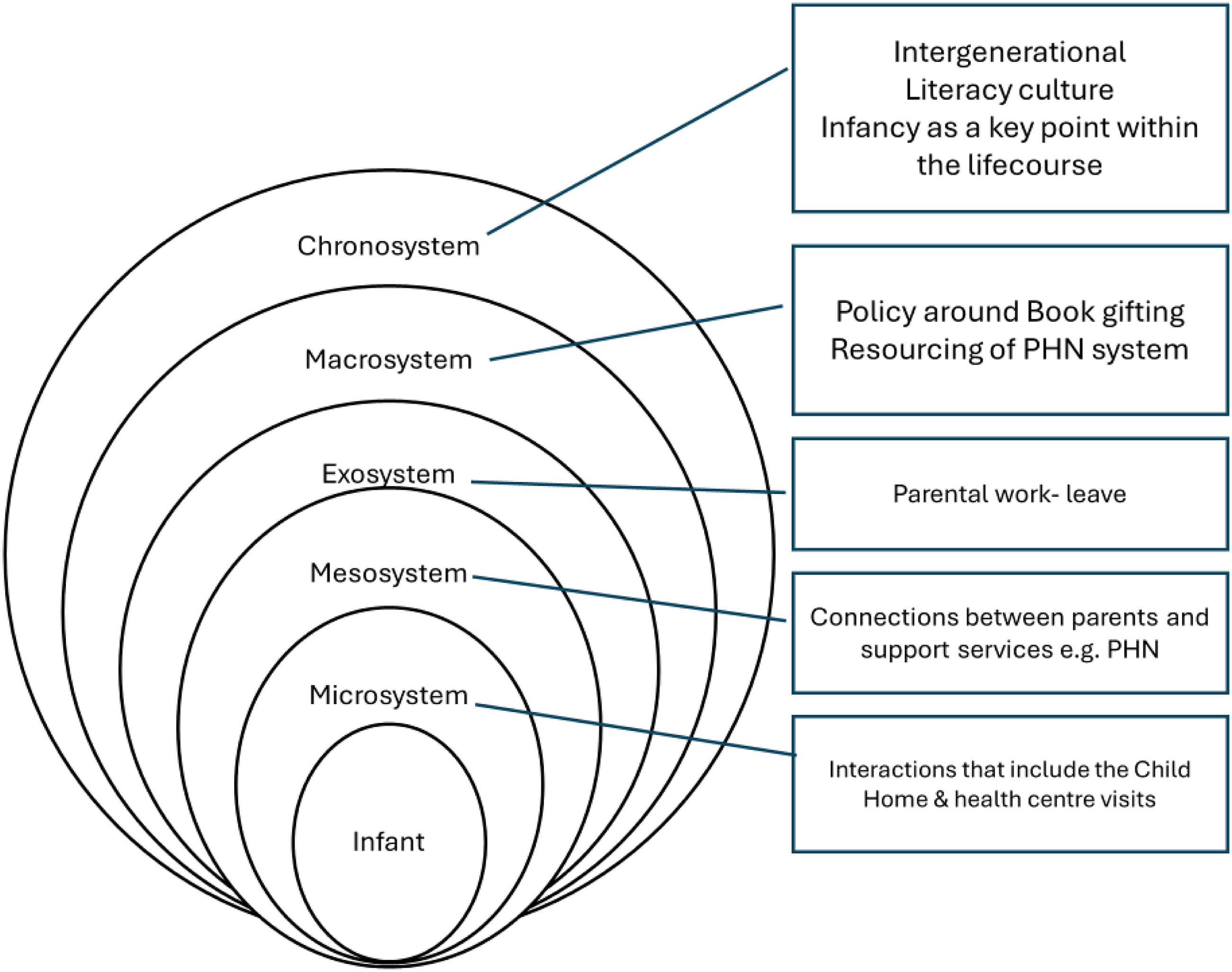
As illustrated in Figure 1, the interconnecting systems that influence child development include the microsystem, which refers to immediate environments such as the home environment and relationship with parents, and the mesosystem which refers to the links and interactions that occur between two settings that the child is directly involved in, for example, home and school. At a wider level, other ecological systems also influence development, such as the macrosystem, (e.g., wider sociocultural and political factors), the exosystem (e.g., parent’s work environment), and the chronosystem (e.g., points in time in a child’s life or societal cultural and intergenerational changes).
Infant book gifting schemes typically rely on professionals working in community settings to deliver the schemes, with books often gifted through maternity hospitals, health centres, libraries or schools, highlighting important mesosystem connections. While various book gifting schemes demonstrate benefits for infants and their families (e.g. Connolly et al., 2023; De Bondt et al., 2020) less is known about the impact on the professionals involved in delivering them. The aim of this paper therefore, is to explore Public Health Nurse views on their involvement in a book-gifting scheme in Ireland.
Importance of shared reading
As mentioned, early reading results in considerable benefits for children. Many researchers suggest that the age at which parents begin to read to their child is critical. Berkule et al. (2008), for instance, indicate that maternal attitudes to reading at birth predicted reading behaviour when infants were 6 months old. Niklas et al. (2016) further suggest that reading to infants before the age of 6 months is a predictor of later rhyming and concept formation and, is linked to improved language development at 2 years (DeBaryshe, 1993). When begun as young as 8 months, shared reading predicts expressive language scores at 12 and 16 months (Karrass and Braungart-Rieker, 2005).
A meta-analysis, involving eleven studies undertaken by Dunst et al. (2012) to investigate the effect of the age of onset and frequency of reading to infants, found that the average age that adults began reading to infants and toddlers was 22 months. Only two of the eleven studies (i.e., Raikes et al., 2006; Lyytinen et al., 1998) included in the meta-analysis examined children aged 18 months and under. Dunst et al., concluded that (a) shared reading promoted expressive and receptive language in young children and (b) the earlier the intervention began, the greater the developmental benefits. Other research also shows that the earlier parents begin to read to their children, the better their language and literacy development, including phonemic awareness and receptive language (DeBaryshe, 1993; Tomopoulos et al., 2006). Furthermore, Duursma et al. (2008) indicate that children who are introduced to shared-reading by four and 5 years of age, are more interested in shared reading than those who experience it when they are older.
By its nature, shared reading with young children is a reciprocal process involving both adults and children. As a collaborative activity, it promotes socio-emotional development (Kuo et al., 2004), by establishing physical closeness, and supporting parent/child bonding and attachment (Vanobbergen et al., 2009; Lusby and Heinz, 2020), and providing opportunities for children to acquire social skills, such as taking turns, self-expression and self-regulation (Farver et al., 2006). When read to by parents, children learn about the pleasure of reading and stories (Zeece and Churchill, 2001) and the literacy behaviours of the family appear to be reflected in families who read to infants routinely (Niklas et al., 2016).
In addition to socio-emotional benefits, shared reading significantly influences cognitive development across multiple domains. The frequency of shared reading experiences for example, impacts childrens’ language development (e.g., Egan et al., 2022). When undertaken regularly, shared reading is associated with increased receptive and expressive language in children under 2 years old (Richman and Colombo, 2007) with children overall, having greater vocabulary and comprehension (Mol and Bus, 2011). As well as benefits for language and literacy development, Murray and Egan (2014) found that reading to infants had a significant positive association with communication and problem-solving scores. They also found it to be an important influencer of current cognitive development in early childhood. Similarly, Niklas et al. (2016) indicate that shared book reading with infants aids specific cognitive domains such as concept formation (see Hoyne and Egan, 2019, for a review).
It may also have a snowball effect that boosts later language and cognitive development (Raikes et al., 2006). For example, it is thought that parents use more complex language during shared reading than that used in other contexts (e.g. during mealtimes, bath time or other types of play) (e.g., Aarts et al., 2016; Luzby and Heinz, 2020). Shared reading also encourages a child’s general language development (Niklas et al., 2016), and leads to gains in areas such as numeracy and mathematics (Barnes and Puccioni, 2017; Wade and Moore, 1998). In addition, Page et al. (2010) indicate that parental involvement, particularly verbal stimulation, positively influences cognitive development. Children’s own responsiveness and motivation in shared reading may also demonstrate later increased frequency of engagement in literacy-relevant activities (Sonnenschein and Munsterman, 2002). Overall, the more parents read to their children, and the more books there are in the child’s home, the better a child will perform in terms of their later academic and social skills (Law et al., 2018).
While the benefits of shared reading for young children are considerable, parents also benefit. Aside from positive interactions between parent and child, benefits include increased literacy activities such as reading aloud at bedtime (Egan et al., 2022; Letourneau et al., 2015). Against the backdrop of their 2015 study in three Canadian provinces, Letourneau et al., found that mothers who participated in a literacy intervention had higher literacy behaviours and values as well as higher interactive scores than the control group. Letourneau et al. (2015) suggest that involvement in new-born literacy programmes positively impacts parenting behaviours and attitudes, including a greater enjoyment of reading.
Likewise, following an intervention with low-income Hispanic families with infants aged 5–11 months, Golova et al. (1999) found increased literacy behaviours. In this intervention, parents received material guidance and books. On follow up, 10 months later, parents were more likely to read to their infants 3 days per week and, reported reading as one of their top favourite activities with their child. Infants in the intervention group also demonstrated significantly greater expressive and receptive vocabulary (Golava et al., 1999).
Book gifting schemes and health care professionals
Book gifting schemes, which operate internationally (e.g., Bookstart, Reach Out and Read, Dolly Parton Imagination Library), are a common intervention to support early shared reading in families (Egan et al., 2020). While these initiatives share many similarities, including gifting books to babies and providing literacy information, they vary considerably in terms of the overall aim of the scheme, whom they target, how they are funded and, who delivers the books. Some schemes include healthcare professionals, but others do not. For example, the Dolly Parton Imagination Library (DPIL), which runs in five countries (USA, Canada, Australia, UK, and Republic of Ireland) delivers books to families via the postal system. In the UK, Bookstart provides free books and resources to every local authority (LA) in England and Wales. The LAs then work across public services to meet local needs. BookStart packs are delivered in person to families by a mix of professionals including health, library and early years professionals, and also practitioners who support parents and carers.
In contrast, Reach Out and Read, operates in the U.S, and incorporates books into paediatric health care, encouraging families to read aloud together (Wray and Medwell, 2013). Another scheme involving health care professionals, the ‘Read to Me! Family Literacy Programme’ in Nova Scotia, gifts a literacy pack to new mothers in hospital following the birth of their baby. This pack includes age-appropriate books, a music CD, a booklet containing information on literacy activities and resources, an educational DVD, a library guide and coupons to local bookstores. In their 2012 evaluation on the effectiveness of this programme, Veldhuijzen, van Zanten, Coates, Hervas-Malo and Mc Grath found that new mothers who received the literacy pack read more to their infants compared to mothers in the control group.
These various schemes, which involve interaction between the child and their parent/guardian and a professional in the community (e.g., a paediatric heath nurse, librarian or early years professional), highlight the importance of these mesosystem connections in supporting babies and young children (Bronfenbrenner, 2005). While the positive outcomes for young children and their families as a result of participation in book-gifting schemes is widely acknowledged, much less is known about the benefits and challenges for professionals involved in delivering the schemes. The current study explores this topic, focusing on the role of health care professionals, specifically Public Health Nurses in Ireland, and their involvement in the infant book-gifting scheme at the centre of the present study.
In Ireland, the Health Services Executive (HSE) runs all of the public health services. Employed by the HSE, PHNs are generally based in local health centres and assigned to cover specific geographical areas. Macro-level policy determines the nature of their work. In addition to providing basic nursing care, PHNs provide advice and assistance to their clients and act as an important point of access for other community care services. Thus, they ensure that the overall health service meets client’s needs. Rather than a reductionist approach, which can be viewed as deductive, fixed and disempowering (Whitehead, 2000), Phelan (2014) suggests that ‘promoting health partnerships with families is the ultimate objective and is underpinned by the PHN’s competencies, technical skills, evidence-based practice, and tacit knowledge bases’. This is catalysed in the earliest years when they engage in postnatal visits to new-born infants and their mothers and families in their home within 6 weeks of the birth to facilitate ‘the opportunity to potentialize family partnerships’ (Phelan, 2014).
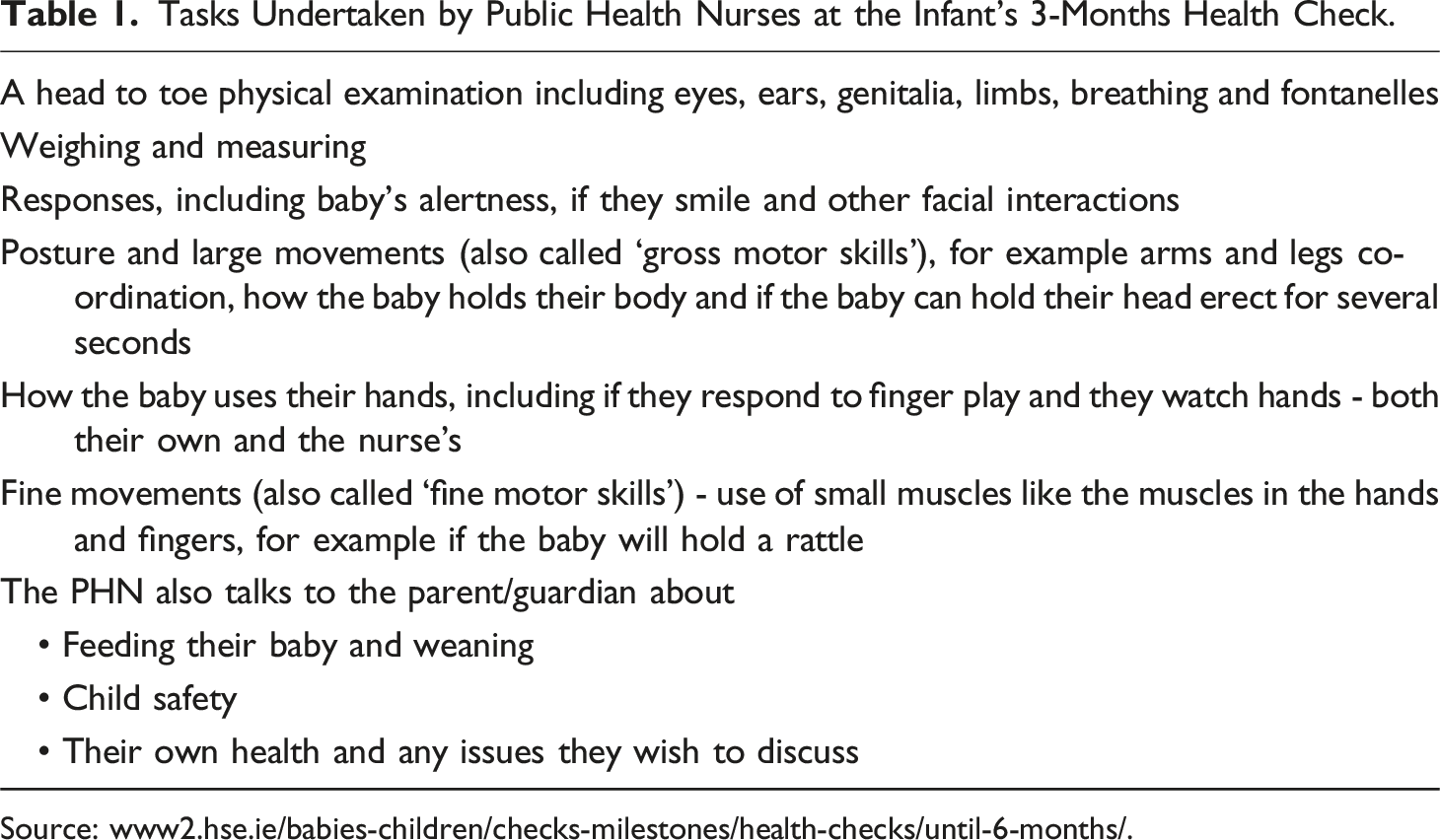
Tasks Undertaken by Public Health Nurses at the Infant’s 3-Months Health Check.
The role of the PHN in an infant book-gifting scheme
As outlined in Table 1, the 3-months health check is a busy time for PHNs in Ireland involving them in a multitude of developmental checks. In the book-gifting scheme reported in this paper, PHNs working in areas of socio-economic disadvantage distributed an initial book-gifting pack during the infant’s 3-months health check and introduced parents/guardians to the contents. The initial book gifting pack came in a cloth bag and contained one sturdy picture book and information about reading with infants, and library membership. In advance of commencing the scheme, PHNs were briefed by the book gifting scheme organisers in relation to the scheme, the aims, and how to go about introducing the pack to the parent (provided there was sufficient time in the health check). PHNs were asked to open the pack with the parent (the cloth bag) and take out and highlight the contents (e.g., the picture book, the information leaflet about reading, and the information about the library). Subsequently, PHNs were asked to gift a second book to parents/guardians during the 7-9-month-old health check at the health centre. A final third book was gifted when the infant was 1 year old and parents/guardians could collect this final book from their local library. Against the backdrop of their heavy and complex workload as outlined above, the study sought to determine how feasible it was for PHNs to provide and introduce parents/guardians to a book-gifting pack during the health checks, and to seek PHN views on their involvement in the scheme.
Method
Participants
Deprivation Index for Participating Areas.
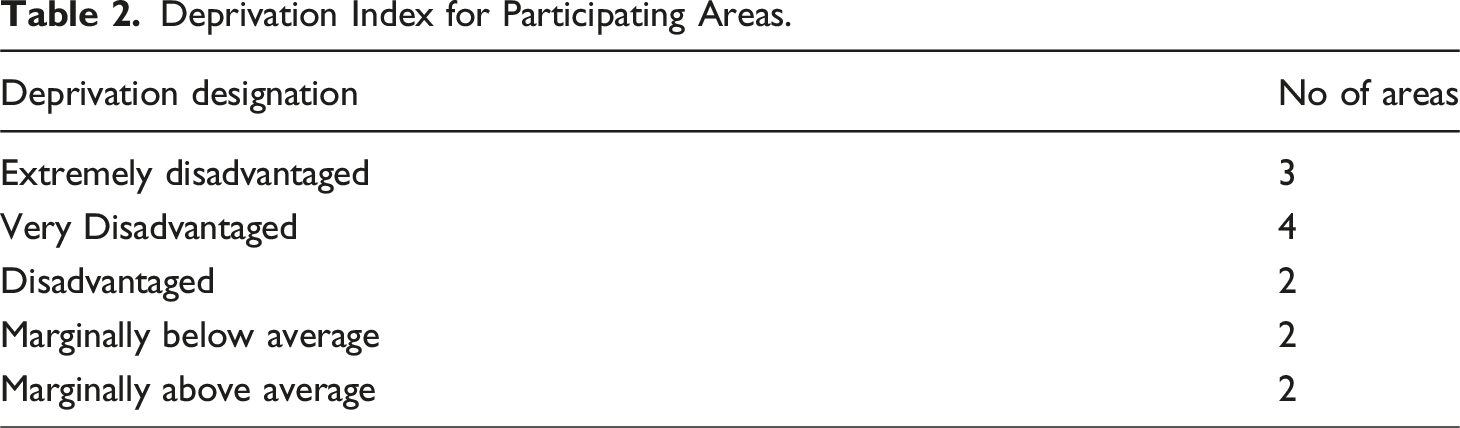
Each Health Centre received a supply of the book gifting packs and paper-based surveys to evaluate the scheme. PHNs could choose to participate in the book-gifting scheme, without participating in the study on their views about the scheme. During the time of the study (April 2019-April 2020), participating PHNs returned surveys for 323 health checks with 3-month-old infants, during which, they distributed the pack outlined earlier, and invited parents/guardians to participate in the book-gifting scheme.
Materials and procedure
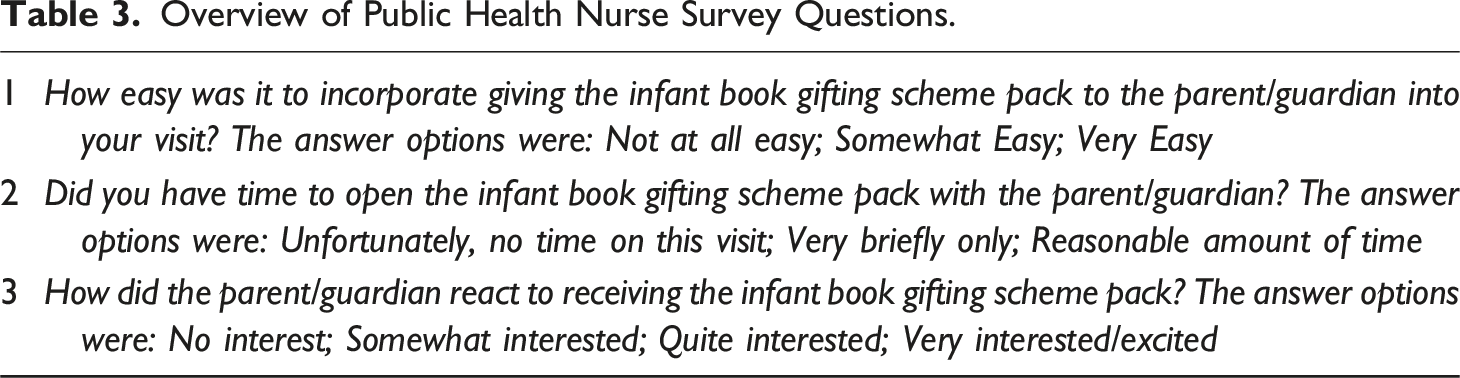
Overview of Public Health Nurse Survey Questions.
Approximately 6-8 months from commencement of the scheme, after the 7-9-months health check and the gifting of the second book to parents/guardians, PHNs were invited to provide additional overall feedback on their involvement in the scheme. They were invited to take part in a phone interview and/or provide written feedback back via an online form, whatever was most convenient for their work schedule. Eight PHNs provided this additional qualitative feedback. At this point in time, the objective was to: ➢ Gauge overall views on the book gifting scheme ➢ Determine if the scheme was easy to integrate into existing workloads ➢ Determine whether handing over the book-gifting pack contributed to the quality of the PHNs interaction with families ➢ Identify the extent to which the PHNs thought the scheme ran well as it was currently designed, or if it would benefit from any changes ➢ Establish whether the PHN would like to continue being involved if the scheme was to run in the future.
Data analysis
The quantitative data from the surveys were analysed using SPSS, while the qualitative data were analysed using Braun and Clarke’s (2006) six step process for thematic analysis. After becoming familiar with the data through immersion and note taking, initial codes were applied to the data, and then subsequently reviewed before being organised into themes. These themes were then reviewed for coherence and data extracts were selected to illustrate the themes.
Findings
Parental reaction to receiving the book-gifting pack
Parents’/guardians’ first experience of the scheme occurred at their infant’s 3-months health check, when they received the book-gifting pack, including the first book and information about the scheme, reading and libraries. Of the 323 health checks that PHNs returned information on in the surveys, PHNs noted in 60% (n = 194) of cases who attended the appointment with child. Of these, 99% were mothers, with the remaining being one father, one guardian, and in two instances both the mother and father attended the health check. In the remaining surveys (n = 129) the PHN did not identify who attended the clinic/appointment with the infant.
The findings from the PHN surveys and interviews indicate that most parents reacted positively to receiving the book-gifting pack. PHNs reported that the majority of parents (98.5%) expressed interest in receiving the book-gifting pack. As such, 69% were very interested or excited about receiving the pack, 22% were quite interested, with 7.5% of parents indicating they were somewhat interested in the scheme. During interview, one PHN stated, “they all responded very positively towards being given the lovely books…”.
PHN perspectives on incorporating the book-gifting into their clinics
As mentioned earlier, the 3-months health check is a busy time for PHNs in Ireland involving them in a multitude of developmental checks. In spite of their heavy work load, however, survey responses indicate that PHNs, overall, were positive about incorporating the book gifting into their clinics. For 71% of the 3-months health checks, PHNs indicated it was very easy to incorporate the book-gifting pack, reporting that it was quite easy for 22% of the checks, and somewhat easy for 7% of the checks. No PHN indicated that it was not at all easy to incorporate the infant book-gifting scheme into their health check (see Figure 2 below). Ease of incorporating delivery of the book gifting pack into the 3-months infant developmental health check.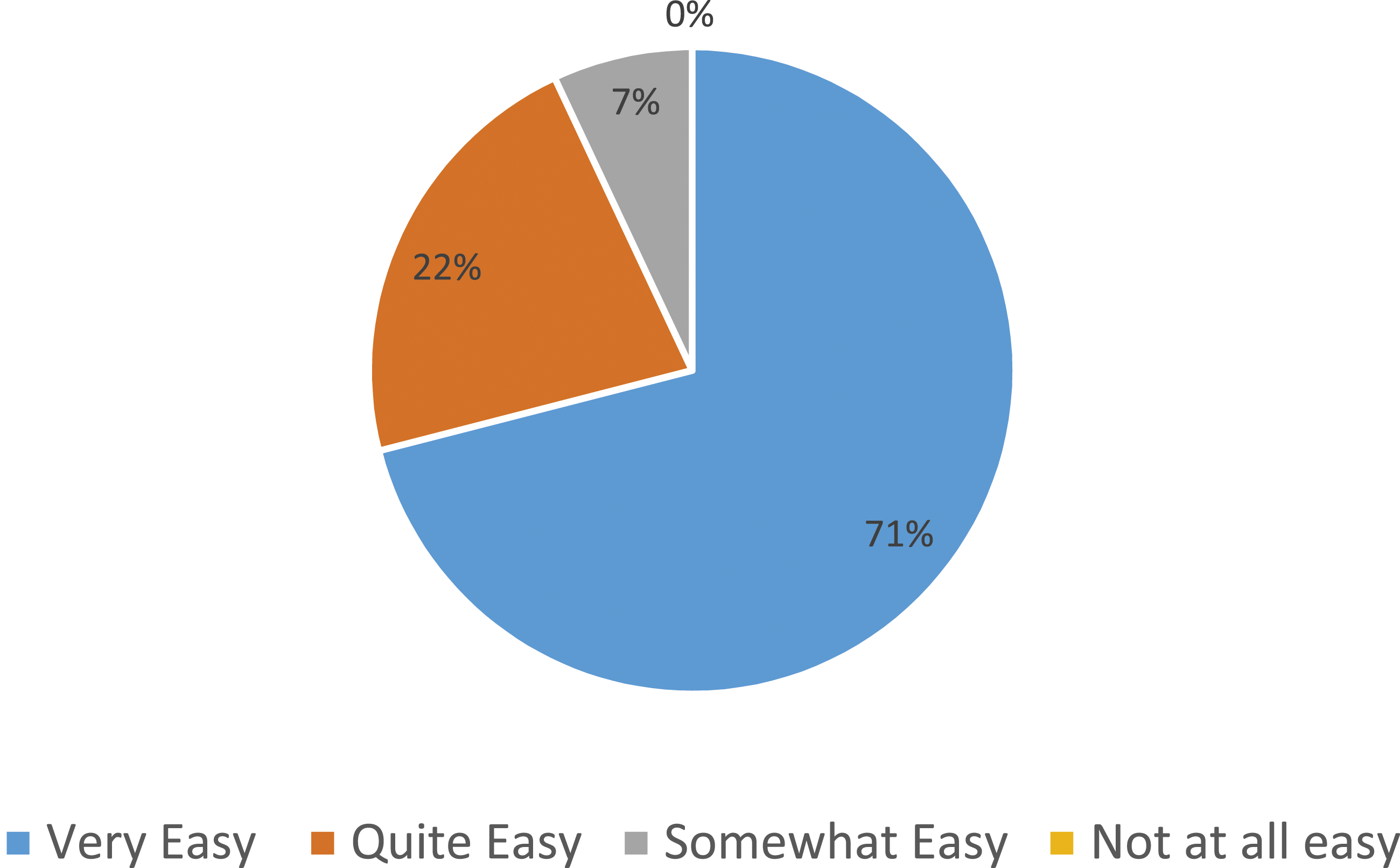
Similarly, when asked if they had time to open the pack with the parent/guardian during the health check, PHN responses were again, predominantly positive. As illustrated in Figure 3, the findings indicate that for 67% of 3 –month health checks PHNs had a reasonable amount of time to open the pack with the parent/guardian. In 31% of health-checks PHNs reported they only very briefly had time to open the pack. In a small number of health-checks (2%), PHNs stated that they had no time during the 3-months check to open the pack with the parent. Time available to Public Health Nurses to open the book gifting pack with the parent/guardian during the 3-months infant developmental health check.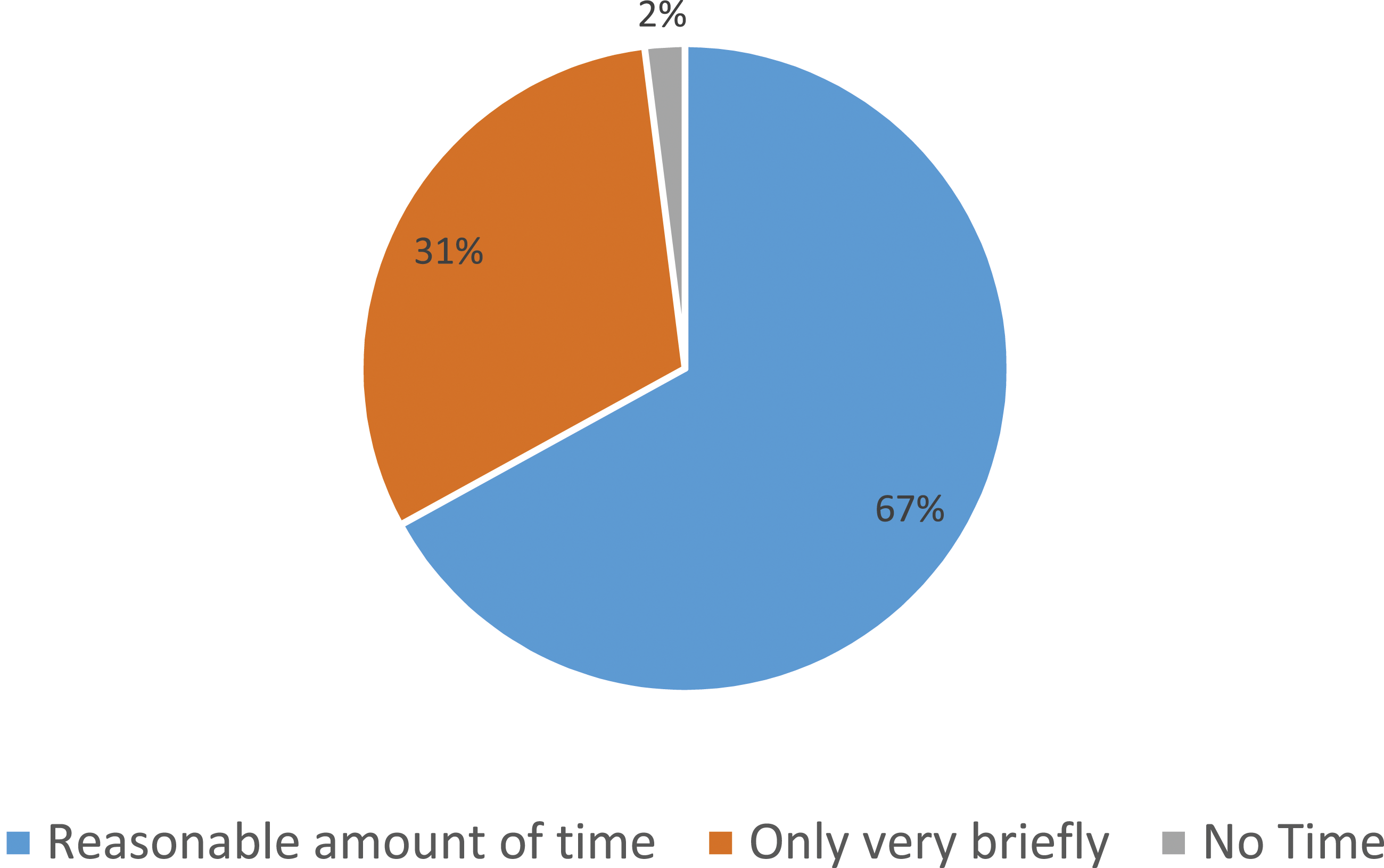
Ease of delivering the book-gifting scheme
In terms of the ease of delivering the scheme, during interview, one PHN described the scheme as “very straight forward, you just gave the packs out, talk it through, and complete the questionnaire so I thought that worked very well”. This PHN described how she introduced the pack to the parent/guardian, asking them about their “current reading habits” and, highlighting the ‘importance of reading with their infant’. As illustrated through the following interview excerpt, this PHN took considerable time and care to go through the contents of the gift-pack with the parent/guardian, providing information and advice on how to read the first book, and the benefits of reading for their infant’s development: So usually, I would just show them the bag and take out all the contents…go through the book with them, especially the first one and, show them that it could be turned in different directions and upside down. They could elaborate on the stories themselves. I asked them how much they read with their baby and, explained how important it was for their neurological development and, just advised them about the process…
She further explained the next steps in the scheme to parents/guardians, explaining that “they would get another book at the 7-9-month check, and they could collect one then at their local library and that the aim was basically to encourage their child to read from a young age.”
These findings suggest that in general, in spite of their busy work schedule, the PHNs did not encounter any significant challenges with disseminating the gift-pack and opening the first book with the parent/guardian during the 3-months health check.
PHN perspectives of their involvement in, and the benefits of the scheme
While the survey findings provided a snap shot of the ease of incorporating the book gifting into the health check, and was recorded at the end of each health check, the qualitative data PHNs provided after many months of involvement in the scheme gave valuable insight into their perceptions of the scheme overall, the benefits of reading to babies, and how they engaged with parents/guardians during the project. PHNs spoke very positively about being involved in the scheme, describing it as “very good”. They articulated how “lovely” it was “to be able to give parents something,” describing it as “a lovely gift and it is a lovely gift to be able to get from the public health nurse”. The books were described as “beautiful books particularly the second one”, and as “absolutely gorgeous”.
The PHNs highlighted benefits of the scheme for them, in terms of enhanced relationships with parents. In one instance, a PHN felt that into the future, the scheme would “influence me to discuss reading with your child even aside from giving out packs…you know to encourage the creative side, for the child rather than focusing on the physical assessment.” Another PHN described the distribution and provision of advice on reading with infants as “an extra dimension to add into our clinics.”. Rather than viewing this extra dimension negatively however, she felt that it “was nice for the mums and dads to see that this was something important to us.”
Another PHN spoke about giving “a lovely gift to parents…[when]…you know initially when they don’t even know us, a lot of the parents, it’s their first time (attending the clinic)”. At a time when parents/guardians “might have been thinking about breastfeeding, safety and all the things that go with bottles and formula and sterilising” this PHN felt that the book-gifting and information about reading reminds parents/guardians of the critical importance of spending time with their infant, supporting their development. In her words, it “brings the whole experience back down to time with your baby, to just be with your baby doing something that might be good for their mental development.” In general, the infant book gifting scheme seemed to have influenced how PHNs engage with parents. It helped to enhance PHN/parent relationships, by building greater rapport during the health-checks. PHNs had the opportunity to focus on something other than physical development, encouraging parents to support their child’s creativity through reading with them.
Challenges associated with PHN involvement
Nonetheless, although PHNs were positive about their involvement in the scheme overall, they identified a number of challenges, most notably, Covid-19, which resulted in ‘a lot of us [PHNs] being ‘sent to different health centres’. In one instance, the PHN ‘was covering a different health centre as well as my own’. In many cases, health checks were stalled or deferred for the duration of the pandemic. In general, though, PHNs stated that they would ‘love to see’ the scheme continued. They therefore suggested ways to support their ongoing involvement in the scheme so that any workload associated with it could be kept to a minimum given their already busy schedules. Indeed, their workload extends beyond the tasks outlined earlier in Table 1. As explained during one interview, PHNs “have so many other tasks to do like ordering dressings, bin collections and like all the other bits that we have to do here”. Consequently, incorporating the book-gifting scheme into their infant health checks could be seen as “a hassle that could cause resentment among staff when they might not feel it was the most important aspect of our care”. To redress this challenge, it was suggested a dedicated “link person” to visit the health centres “even once a month” and, ‘who could address any concerns or questions that we have… would take that hard work out for us’.
Discussion
Findings from the current study indicate that through their involvement in the book-gifting scheme at the 3-months and 7-9-months health checks, PHNs enhanced their relationship with parents/guardians. Rather than focusing solely upon the physical aspects of the infant’s development, PHNs welcomed the opportunity to advise and support parents/guardians in relation to their infants’ neurological and holistic development. Congruent with previous research (e.g., Canfield et al., 2020; Veldhuijzen van Zanten et al., 2012; Wray and Medwell, 2013), the findings discussed here clearly point to the benefits of infant book-gifting schemes for infants and parents, but the findings also identify advantages for those delivering the scheme. PHNs play a vital role within the community, supporting mesosystem connections between families and the health service, and a core aspect of their work, according to Phelan (2014) is to promote health partnership with families. Per se, postnatal visits to new-born infants and their mothers and families in the home within 6 weeks of the birth provide opportunities for PHNs to potentialize family partnerships (Phelan, 2014).
Book-gifting schemes that include guidance and support from health professionals have the added advantage of parents receiving guidance from a trusted professional about the benefits of reading for development (e.g., Reach out and Read) (Canfield et al., 2020), which seems to influence parental engagement. Canfield et al. (2020) indicate that guidance and support from both the paediatrician and the library results in greater levels of book sharing at home. Equally, while De Bondt, Willenberg and Bus (2020) found evidence that the books themselves incentivised parents to begin reading early, they found an even stronger effect on increase in literacy skills and behaviours when they considered the parent having contact with a healthcare professional with information regarding the long-term benefits of reading in infancy. In the context of the current study, through their involvement, PHNs discussed with parents/guardians, the critical importance of spending one on one time with their infant supporting their development by reading with them in the home. As reported by one PHN, distributing and providing advice on reading with infants was an extra dimension to their work that demonstrated to parents/guardians that early shared reading was important to PHNs.
There is little doubt that in the Irish context, PHNs have a considerable workload. As reiterated throughout, 3-months health checks are extraordinarily busy, involving PHNs in undertaking multiple developmental checks as well as providing information and advice to parents/guardians. In this context, it was important to determine whether PHNs were able to incorporate the distribution of the infant book gifting pack into their clinics. The findings suggest that in spite of their workload, in the main, incorporating the book-gifting scheme into their clinics had minimal impact on PHN workload. Based on their own self-reporting, for about two thirds of the health-checks, PHNs found it very easy to incorporate giving the book pack and, they had a reasonable amount of time to open it with parents/guardians.
In line with Giltenane et al. (2022), however, the findings point to some potential barriers for PHNs with regards to their involvement in the book-gifting scheme. The barriers identified are influenced by macro-policy, which determines the environment in which they work, and the nature and extent of their work. The PHNs noted workload demands and a potential lack of support within the working environment, which may detract from their ability to engage in the book-gifting scheme in the longer-term. Along with the multiple developmental checks they are required to undertake at the infant health checks, the findings from the current study highlight a range of other administrative and practical tasks undertaken by PHNs in their workplace, including ordering dressings and bin collections. Lack of support in these areas could potentially reduce the time available to engage with parents/guardians. In such circumstances, one PHN cautioned that incorporating the book-gifting scheme into the health-checks could be perceived as a hassle, resulting in resentment among staff who may view it as not being central to their core work.
The Covid-19 pandemic also compounded the challenges experienced by PHNs. Clearly, the pandemic had a significant impact on their working arrangements and their geographical areas of coverage. The impact that the pandemic had on healthcare professionals globally has been reported, with subsequent knock-on effects for waiting lists and access to services more widely (Pittman & Park, 2021; Kim et al., 2023). From an ecological systems perspective, this unprecedented time represents the chronosystem and illustrates the interconnectedness of the systems when decisions at a macro level directly impact the meso and microsystems and ultimately, the young infant (Egan et al., 2022).
Implications, limitations and future research
Findings from a number of book-gifting schemes demonstrate that primary care providers are well placed to provide programmes that promote reading to parents and their children (Canfield et al., 2020; MacDonald and Kinlen, 2017; Sloat et al., 2015). In their systematic review, Sloat et al. (2015) found that parent mediated interventions by paediatric primary care providers aimed at increasing interactive reading time in a collaborative way with their children, produced positive outcomes. As a result, they suggested that paediatric primary care providers could deliver parent mediated reading interventions that increase reading time in children 4 years and under, thus reinforcing the importance of interactions between parents/families and professionals within the mesosystem. If PHNs are supportive of being involved in a book-gifting scheme, they are well placed to deliver such an intervention, as they meet the parent/guardian and infant a number of times, in the child’s first year.
This may be particularly beneficial for children from lower socio-economic backgrounds, more marginalised or hard to reach families (Evangelou et al., 2013). According to some research, these children may begin school with lower language skills (Golinkoff et al., 2019; Hart and Risley, 1995; Shiel et al., 2012), although other more recent research suggests that socio-economic class may be less influential that previously thought in terms of language development (e.g., see Sperry et al., 2019; Bergelson et al., 2023). Importantly, as noted by Hoff (2013), poor language skills can have a long-lasting impact on the child. Han and Neuharth-Pritchet (2014) stress the critical impact of the home environment on children’s early literacy skills, considered to be ‘one of the most powerful influences on child development’ (OECD, 2012, p. 24). However, circumstances may prevent some families from dedicating time to read with their children, and recent research suggests that the amount of adult talk a young child hears is a significant predictor of the amount the child talks (Bergelson et al., 2023). A sensitive approach is therefore required when working with families to support reading and the home learning environment. Taylor et al. (2016) suggest it is too simplistic to expect that universal book gifting schemes would be effective in meeting the needs of some families who may be experiencing multiple psychosocial risks. Therefore, a tailored approach, building on the connection between parents and public health nurses within the mesosystem, may work best for harder to reach families.
The findings from the current study highlight the feasibility of a book gifting scheme being delivered by public health nurses, and also the benefits it may bring for the relationship between nurses and parents/guardians. We suggest that future book-gifting schemes consider these findings at the design stage, especially in terms of how the books will be delivered to families. These findings are consistent with adopting an ecological systems theoretical approach to supporting child development (Bronfenbrenner 2005), highlighting the influential role of multiple interconnected environments and agents. In the context of the book gifting scheme described in this paper, these interconnected systems include the microsystem involving the home literacy environment and the parents/guardians, the mesosystem connections to the health centre and the public health nurses, as well as the wider cultural and policy context of the macrosystem, involving the government and health service.
While the findings from this study are overall very positive, it is important to note that this study is premised on one infant book gifting scheme based in one geographical area and the findings therefore may not apply to all book gifting schemes. For future research, it would be useful to consider wider geographical areas and other international schemes. Similarly, the questions asked of PHNs at the 3-months health check were limited in scope, and future research might ask about other aspects of the delivery and impact on workload at this health check. However, the limited questions on the brief survey meant there was limited additional workload for the PHNs in taking part in the study, given their already busy schedule, hence being able to report back on over three hundred interactions with parents/guardians and their infants. The PHNs were key stakeholders in this particular infant book gifting scheme and their insights and experiences are useful to inform future schemes. Future research might explore the views of other professionals involved in book gifting schemes such as librarians and early years professionals. It is important to have a strong evidence base relating to the impact of such schemes on stakeholders too, not just for infants and their families.
Conclusion
The current study reported findings from public health nurses (PHNs) regarding their involvement as key stakeholders in an infant book gifting scheme, which few studies have explored before. PHN’s incorporated the delivery of an infant book gifting pack, and information leaflets about reading with infants into their existing health checks and workload. Overall, they reported a positive response to their involvement. From an ecological system perspective, PHNs have a unique role to play in developing co-partnership relationships with parents and their infants, during a crucial time of development for young children. PHN perspectives are very valuable in designing future interventions to support the delivery of infant book gifting schemes, shared reading in the home, and early literacy practices.
Footnotes
Declaration of conflicting interests
The author(s) declared no potential conflicts of interest with respect to the research, authorship, and/or publication of this article.
Funding
The author(s) received no financial support for the research, authorship, and/or publication of this article.
