



Abstract
As the world came to grips with the coronavirus diseases (COVID-19), educational institutions and the society at large faced the challenge of figuring out how to continue with teaching and learning in such a context. Many countries, including South Africa made efforts to help contain and suppress the spread of Covid-19. In the South African education sector, about 13 million learners and 440 000 teachers were released before the end of the first school term in March 2020. In addition, 30 000 Early Childhood Development (ECD) centres, about 100 000 teachers were also required to end their term before the official closing date. For many young learners, the lockdown period meant that they would be at home with (a) Limited access to age appropriate, fun and explicitly educational resources to play with as many shops considered resources that could be used to develop children’s sensory skills as not essential goods (b) They had limited exposure to structured learning and play as most caregivers are not qualified ECD practitioners (c) Children could not play outside, visit playgrounds and parks, yet, freedom of movement, activity and exercise is important for every child’s development and young children learn best through play and experimenting (d) Most of their curriculum content cannot be fully taught using online platforms. Given this background, through a semi-ethnographic study, the paper documents the early literacy experiences of two 3 year old children during the Covid-19 lockdown in South Africa. In addition, analysis of parents or caregivers’ feedback about their experiences in providing assistance to the young learners during the lockdown is presented. Findings of the study show that in both research contexts, literacy practices were different, but not lesser. Challenging as it was for the caregivers to support the development of literacy, the home environment provided many opportunities for learning.
Introduction
The outbreak of coronavirus disease (COVID-19 pandemic as it has come to be known) was first reported from Wuhan, China, on 31 December 2019, while, the first case in South Africa was reported on the 5th of March 2020. Since the outbreak, educational institutions especially in developing countries faced the challenge of continuing with teaching and learning. Efforts were made by many countries, including South Africa, to help contain and suppress the spread of COVID-19. This put most activities, including educational activities that demanded face-to-face interaction on hold. As a result, everyone not considered as an essential worker such as teachers and students, were directed to work from home as a measure to contain the spread of the pandemic (Wills et al., 2020). This measure took effect in South Africa on the 18th of March 2020. Since then, face-to-face academic activities have not been fully implemented in some institutions of learning.
School going children from well-resourced schools and homes with internet connectivity and information and communications technology (ICT) gadgets attended online lessons, while those from disadvantaged, under resourced schools and communities continued for months without access to updated school work. Considering the fact that many caregivers are not experienced early childhood educators and they had to spend every day with their young children at home, with limited learning activities set by schools, one begins to wonder what literacy experiences young children in different South African contexts had during the lockdown period.
Given this background, this paper documents the national lockdown literacy experiences of two young South African children from different socio-economic contexts during the national lockdown period of May to June 2020. In this semi-ethnographic study, data was collected mainly through observations, video recordings and interviews. Findings of the study show that although the country was in lockdown, the two case study children were not. Regardless of their social economic backgrounds, both children received rich literacy input from their unstructured, social, home learning environment. They learnt skills such as drawing, storytelling and also acquired knowledge of print which included experimenting with reading, writing/scribbling and were exposed to indigenous knowledge and ICT. Their home environment and the lockdown period did not constrain their experience with literacy activities, instead, they explored more literacy avenues which they would not have had time for before lockdown. This disputes the phrase ‘learning loss’ which implies that learners did not learn or retain anything previously learned during school closures.
Literature review
The impact of Covid-19 on education: Focus on ECD
In the South African education sector, about 13 million learners and 440 000 teachers had to close schools before the set date on the school calendar. This included 30 000 Early Childhood Development (ECD) centres, about 100 000 teachers. This resulted in most children and teachers missing formal teaching, learning and professional development time until they were back at school. In an effort to make up for the lost teaching and learning time, the Department of Basic Education (DBE) and other organisations came on board with emergency (remote) plans and interventions. These included activating partnerships that would support and resource contactless learning, the curation and production of relevant content materials and platforms to disseminate to all learners and teachers.
Alert level summary for South Africa (Gazette 43,599, 7 August 2020).
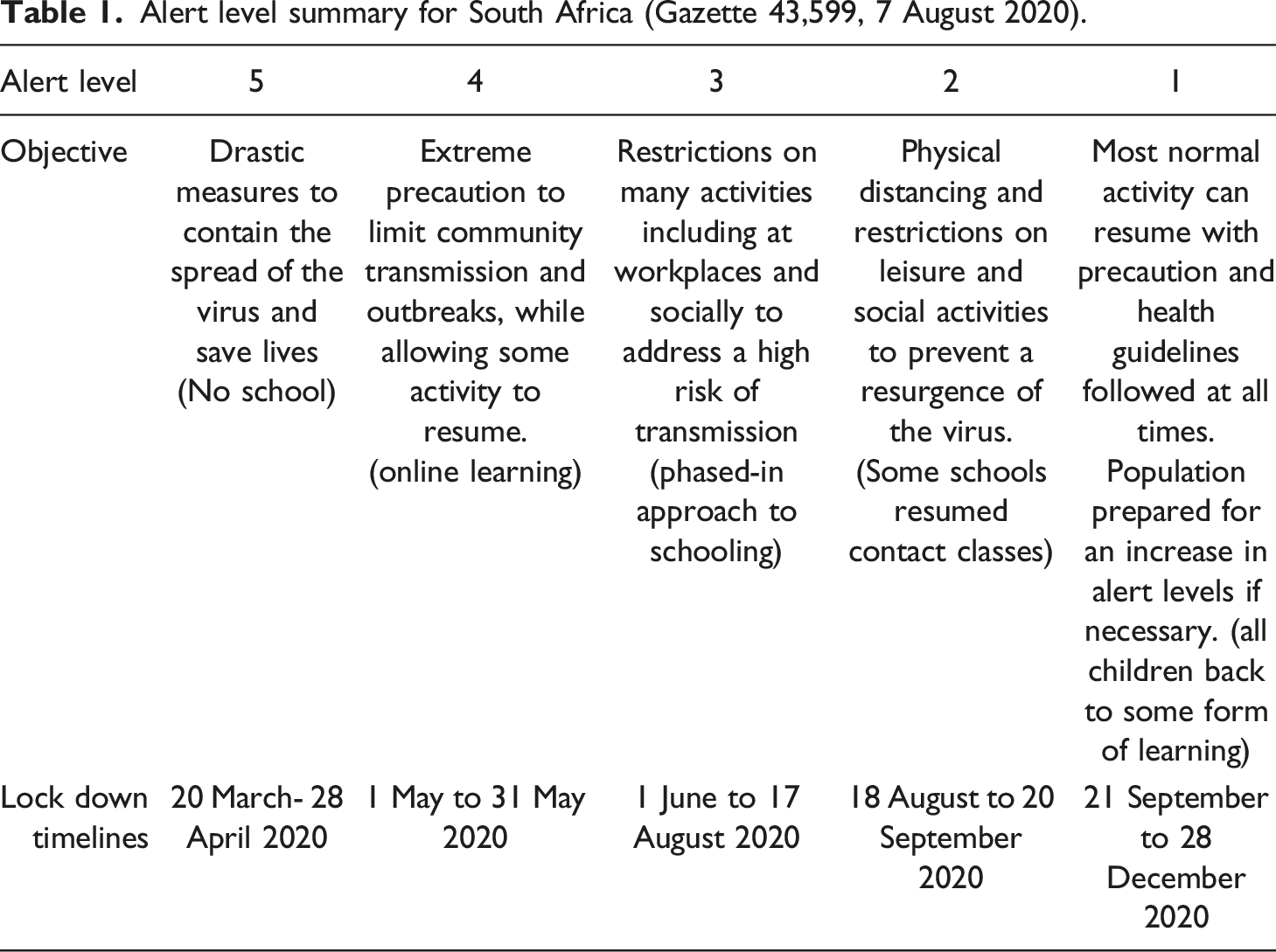
With regards to returning to school, in most public schools, great emphasis was placed on the exiting grades in both primary school (Grade 7) and high school (Grade 12), while in private schools learners continued learning online. Referring to the phased-in approach return of learners implemented in South Africa, learners in the lower grades particularly in the Foundation Phase (Grade R-3) were not given priority and were delayed during this shift (Wills et al. (2020); DBE: Guidelines for development of the school timetables reopening of schools COVID-19), yet for learners to be able to perform at their finest academic level, they need to have a solid foundation. Given that no-fee paying schools (70% of total schools) have larger class sizes, they essentially practiced rotational timetables in 2020 and for much of 2021. Rotational learning is where half of the children attend school on 1 day and half on another, so, at the end of the week one group would have attended school three times while the other twice. As a result of rotational attendance timetables, data released in January 2022 reveals that South African children ‘lost’ 1, 3 years of learning in 2020 and 2021 (Spaull, 2022). Learners in grades 1 to 5 ‘lost’ an estimated 60% of a possible 198 school days (Spaull, 2022). In addition, Bao et al. (2020) conducted a study on literacy loss in kindergarten children during COVID-19 school closures, comparing children’s literacy during the time with or without formal education. They concluded that kindergarten children would lose 67% of their literacy abilities during COVID-19 school closures.
In line with the call for papers by the Journal of Early Childhood Literacy (2022), it is important to consider the critical debate around the phenomenon of ‘learning losses’ which is penetrating national education systems and media. A number of researchers argue that the phrase ‘learning loss’ operates from a deficit perspective, implying that children did not learn anything during lockdown. Instead, they are suggesting phrases like interrupted learning, schooling loss or curricular loss, to capture the uniqueness of the pandemic challenges experienced by students and schools. A collaborative research conducted by Waters-Davies et al. (2022) actually shows that the pandemic was a period of learning for all involved in education. As also reported in this study, due to lockdown, children learnt many new skills which they may not have had the time for before lockdown. Learners did not stop learning and developing, but their learning experiences and environments were different than anyone could have anticipated before the pandemic hit. Gabriel (2020) neatly states that “it is loss of a previously imagined trajectory leading to a previously unimagined future”. Hence, the special issue of the Journal of Early Childhood Literacy (2022) focuses on experiences of ‘lockdown literacies’ as the researchers also acknowledge that the pandemic brought negative experiences for families, but, different types of home-learning occurred during the pandemic.
Of relevance to this study is the Early Childhood Development sector. In the South African context, the term ‘early childhood’ refers to children from the age range of 0–9 years, as noted in the ECD White Paper 5, (DoE, 2001), which was also not spared from the disruption caused by the novel COVID-19. When the state of national disaster was declared in a bid to contain the spread of COVID-19, operators of Early Childhood Development (ECD) programmes across South Africa were instructed to close. The rationale behind the ECD sector closure was probably well understood by that time. Wills et al. (2020), assert that the reopening of the ECD sector was problematic since it was delayed, confusing and contentious, even though there was a phased opening of the economy from 1st of June 2020. Many children were left homebound due to the closure of early childhood development centres, placing the responsibility to supervise them on parents and caregivers.
The closure of ECD sector in South Africa had dire consequences because it meant compromises in health and nutrition as ECD centres often run feeding programmes which, for many children is the only meal they receive in a day. According to a report by May et al. (2020) 30% of South Africa’s children live below the food poverty. Safety and security was another issue of concern as neglect, abuse, abduction, trafficking and sexual exploitation are just some of the dangers children were vulnerable to if left unsupervised. Children safety and security issues are also emphasised by the Department of Social Development (DoSD) in their National Child Care and Protection Policy of 2019 in South Africa. In addition, early learning opportunities in ECD especially for the most marginalised children were disrupted (UNICEF, 2021). The closure of ECD sectors due to Covid-19 led to the disruption in access to high-quality early learning programmes that have shown to have an impact on learning outcomes, particularly for the poorest children.
Many households and adults who rely on these ECD services for income were left struggling because their sources of income were no longer operating (Gromada et al., 2020; Ebrahim et al., 2021; Wills et al., 2020). According to Kansiime et al. (2021) many families lost their wages, houses and faced the increased health care cost and associated food insecurity. For those families falling within the low-income band, their savings were likely to quickly deplete and might be forced to sell their assets to make ends meet. The above-mentioned factors have the potential to spread the poverty level that will continue to drive further migration, displacement, and family separations, which severely affect early childhood nutrition, care and development (Yoshikawa, et al., 2020).
In light of the above, the current study sought to explore the literacy experiences of two young children who experienced the 2020 lockdown in South Africa, but in different contexts. The researchers investigated the two children’s literacy experiences and how they navigated the lockdown context at home in relation to their literacy development. Parents and caregivers’ experiences have been analysed, and the findings are presented.
The importance of the home environment in literacy development
This study recognises the two types of literacy interactions, namely the informal literacy interactions and formal literacy interactions. Informal literacy interactions include a variety of activities in which parents engage with their child, ranging from reading the print available to them to shared reading. Formal literacy interactions, on the other hand, include activities such as practicing print-related skills at home (Puglisi, et al., 2017). Parents are directly involved in teaching their children skills such as how to write their names, as well as letter names and sounds, during this process. According to Puglisi et al. (2017), informal literacy practices such as shared book-reading in the home appear to be more closely associated with the development of broad oral language skills, including vocabulary knowledge, and thus indirectly with later reading comprehension (Hamilton et al., 2016; Sénéchal, 2006).
Most studies on home literacy portray the home environment as the foundation for the development of young children’s literacy (Hamilton et al., 2016; Hannon, 2018; Inoue et al., 2018; Krijnen et al., 2019; Puglisi et al., 2017) and the home predictor of children’s language such as oral language and knowledge of print (Weinberger, 1996). According to Dong et al. (2020), a rich home literacy environment (HLE) promotes student academic achievement. As a result, it is thought that the family and home literacy environments have a significant impact on children’s early literacy development as well as later literacy achievement in school (Cairney, 2002).
For decades, researchers from all disciplines have provided a wide range of perspectives about the home as a centre for young children’s learning and development (Flewitt et al., 2015). In addition to supporting the development of a variety of developmental and educational outcomes, the home literacy environment has been shown to be an important factor in influencing certain developmental outcomes (Burgess et al., 2002). For example, in their study, Foster et al. (2005), found that the home environment has a strong impact on children’s literacy development and social competence. Another longitudinal study of 115 pre-schoolers conducted by Burgess et al. (2002) evaluated the relationship between oral language, phonological sensitivity, and early literacy development in the home. Findings from both these studies indicate that the home environment affects children’s social, language and literacy skills. These studies also show that the conceptions of literacy have evolved. For example, early definitions of literacy were limited to one’s ability to read and write (skills) while, Barton et al. (2000) maintained that literacy is more than reading and writing, literacy is a “set of social practices” (p.39.) Thus, in this section a variety of studies are discussed to reflect the multifaceted nature of literacy.
With the introduction of ICT gadgets such as cell phones, computers, and tablets, the home literacy environment has changed significantly resulting in digital home literacy environment (DHLE). The DHLE can be described as the amount of time children spend using digital devices on their own and the literacy activities parents engage in with their children while using digital devices (Segers and Kleemans, 2020). Many children growing up in post-industrial nations engage in digitally mediated literacy activities at home to connect with distant friends and family, find information, play games, and watch recorded or broadcast programs using devices such as smartphones, tablets, digital televisions, and computers (Flewitt et al., 2015). Thus, the current study also acknowledges the importance of the digital home literacy environment (DHLE).
A case study of 0-to-3-year-old boys and girls in Europe by Flewitt et al. (2015) about digital literacy practices at home found that HLE’s network is in an accepted state, its physical boundaries are accepted, and young children’s relationships with family and friends who use digital learning methods regularly may have a greater impact on literacy development. In their study, they called into question the relevance of traditional HLE definitions in today’s homes. Flewitt et al. (2015) expand on what Burgess et al. (2002) suggested when they stated that future studies of the HLE should consider how the home environment is conceptualised. According to Flewitt et al. (2015), HLE should be understood as an open platform that allows young children to discuss relationships and express meaning in various media while connecting with others in the digital world. Moreover, the variety of print and digital technologies used by children in their daily literacy activities at home, as well as the impact of young children on offline literacy networks, are not yet familiar to HLE concepts (ibid.). The HLE is conceptualised as a multidimensional construct that includes the activities, resources and opportunities children encounter at home, as well as their parents’ beliefs about literacy (ibid.). Recent research in the field of young children’s digital literacy has begun to cast doubt on these assumptions.
Another study by Fosteret al. (2005) looked at the relationship between family variables such as socioeconomic status (SES), social risk factors, and home learning variables and children’s emergent literacy competence and social functioning in 48 randomly chosen classrooms from three Head Start programs, with five girls and five boys in each class. The final sample included 325 families for whom information on both the child and the primary caregiver was obtained from a variety of sources (teacher, outside assessor, and primary caregiver). The findings were consistent with the hypotheses that family social risk and home learning experiences mediate the association between SES and head start children’s school readiness in the areas of emergent literacy competence and social functioning, which were hypothesized and tested using structural equation modelling.
Several studies on home literacy activities have found that when parents engage their children in literacy activities on a regular basis, it improves their emergent literacy skills such as oral language and code skills (Krijnen, et al., 2019). “Oral language skills include all of the abilities required to process the meaning of spoken and, eventually, written language, such as vocabulary knowledge, narrative knowledge, listening, and text comprehension” (Krijnen, et al., 2019: 208). Furthermore, home literacy activities aid in the comprehension processes of young children, such as knowledge integration and access (Hannon, 2018).
Hannon (2018) conducted a study with 120 children (49 girls, 71 boys) aged 5.75 years, who were English-speaking recruited from local schools and libraries. Findings of the study confirm that home literacy activities were positively related to knowledge integration and knowledge access, which are strong predictors of language and reading comprehension. This study’s findings also produced reports from parents and teachers indicating that all participants freely engaged in their learning and were not subjected to any pressure. This means that these children were able to freely participate in their learning because of the environment in which they learned.
Another study looked at the long-term relationships between children’s early literacy experiences at home and their kindergarten literacy skills, Grade 1 word reading and spelling skills, and Grade 4 reading comprehension, fluency, spelling, and pleasure reading. The study included 90 French-speaking Grade R and Grade 1 children who were followed until they reached Grade 4. The findings from the Grade R parents revealed that in the home environment, storybook reading has been found as one strategy that has contributed in developing young children’s literacy skills. Storybook exposure predicts young children’s vocabulary as well as the frequency with which they reported reading for pleasure in Grade 4. Furthermore, exposure to storybooks predicts Grade 4 reading comprehension indirectly.
A study, (Inoue, et al., 2018), examined the developmental relations between home literacy environment and emergent literacy skills and different reading skills with English-speaking children between the ages of 5–9. The researchers based their examination on the Home Literacy Model, (Sénéchal, 2006; Sénéchal and LeFevre, 2002; Sénéchal et al., 2017). The model grouped parent-child interactions during home literacy activities into two categories, formal and informal activities. The results showed that parent teaching predicted letter knowledge and phonological awareness while shared book reading predicted vocabulary and rapid naming speed after controlling for family socioeconomic status. The results also showed that parent teaching and shared book reading had an indirect contribution to reading accuracy and fluency in Grade 1. Parent teaching and shared book reading were found to be mediating the effects of home literacy environment on reading comprehension in Grades 2 and 3. Moreover, the results revealed that the effect of the home literacy environment on later reading development is distributed via more trajectory than were thought previously.
According to Allen and Kelly (2015), children learn and develop in a variety of ways and at varying rates, requiring adults to be aware of the characteristics of early learning in order to frame activities that are appropriate for the development of children’s learning. The environment in which children grow should provide opportunities for learning. When children’s learning is supported by their cultural context, they become highly motivated (ibid.). The first and most important environment for conscious learning is the family, followed by other daily environments (such as children gathering to play with other older siblings). Play and learning are synonymous for children; their primary focus is the activity that they are engaged in at any given time and place. Moreover, Zosh et al. (2017) argue that learning through play is essential for positive, healthy development regardless of a child’s circumstances. Children who actively engage with ideas and knowledge, as well as the world at large, are better prepared to deal with future reality, a reality they have created (ibid.).
In sum, all of the studies discussed in this section emphasise the significance of the home environment in the development of young children’s literacy. As a result, while children were bound at their homes with their caregivers during the national lockdown, it is critical to investigate the types of literacy (informal or formal) they were involved in, as well as the role their caregivers played in this context.
Research questions
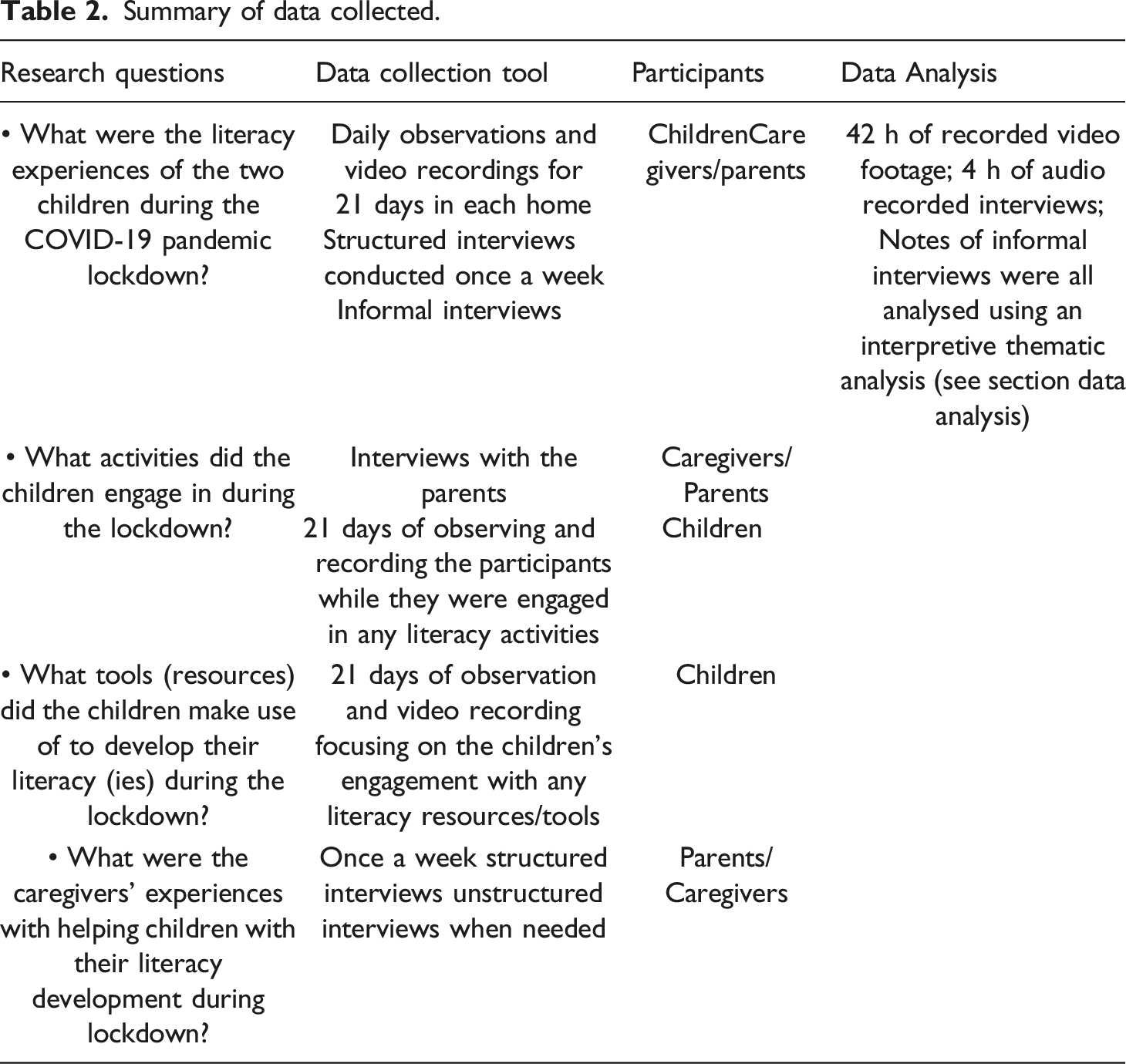
The main research question for this study is: What were the literacy experiences of the two children during the COVID-19 pandemic lockdown?
The sub-questions of this study were • What activities did the children engage in during the lockdown? • What tools (resources) did the children make use of to develop their literacy (ies) during the lockdown? • What were the caregivers’ experiences with helping children with their literacy development during lockdown?
Theoretical framework
Since the study focuses on literacy development, it is important to discuss the theoretical framing of literacy. Over the years, ideas of literacy have evolved. Early definitions of literacy were limited to one’s ability to read and write. For example, Hodges (1999) defined literacy as being able to read, write, make use of and comprehend print. However, various conceptions of literacy have evolved over time. New terms such as literacies, new literacies and multi-literacies define literacy to include visual literacy, digital literacy, multimodal literacy, media literacy (Walsh, 2017) and a variety of other literacies have been coined to reflect the multifaceted nature of literacy.
Barton et al. (2000), maintained that literacy is more than reading and writing, literacy is a “set of social practices” (p.39.) which include a range of practices with texts of traditional and new communication technologies via spoken language, print, and multimedia that exist within the individuals’ unique social structures. Literacy events involve written texts that are fundamental to the activity. While literacy practices involve “values, attitudes, feelings and social relationships” that are unique to the individual and are unobservable, literacy events occur in social setting and are observable (Barton et al., 2000: p.8). Street (2003) considers the cultural contexts within which reading and writing takes place. He argues that literacy is not merely. A set of skills and maintains that the cultural and ideological circumstances within which literacy exists as a social practice should be taken into consideration. He proposes an ideological model, which is a culturally sensitive approach to literacy.
Literacy is viewed as a set of social practices that are contextually embedded, situationally variable, historically situated and highly dependent on cultural understanding (Larson, 2006; Street, 2006). Barton et al. (1998) also agree with this view and suggest that literacy is mainly what people do and it is an activity that is located in the space between thought and text. For this study, we regard literacy as a social practice rooted in contexts, rather than as a set of skills. For us to understand the children’s literacy practices we had to consider the social, cultural, and historical contexts in which they are embedded. As a result, engaging with literacy is always a social act (Street, 2006). Since the participants of this study were located in two different contexts during the lockdown as discussed in the methodology section, it is important to investigate the literacy experiences they had, the kinds of tools they made use of and how their caregivers were involved.
Research methodology
This study adopted an ethnographically-informed approach because of the constraining environment due to COVID-19 lockdown regulations. The study was conducted during lockdown Alert level 4 (May et al., 2020) to the end of June, when the country moved to lockdown alert level 3 as shown in Table 1. In the 3 weeks of May et al., 2020, parents were requested to serve as research assistants, collecting data for the researchers who could not do this themselves since movement was restricted. Once the COVID-19 regulations were eased,, two researchers (one in each home) visited the participants’ homes and physically lived with them for 4 weeks (Monday- Friday). In line with the Covid-19, protocols, rather than staying longer at the participant’s homes as understood in full ethnography, we were also concerned about health issues, considering the increasing death rate that was reported in the province. We avoided commuting daily to the participants’ home, as this would have increased our chances of contacting and spreading the virus. Instead, we lived with the participants from Monday to Friday for 21 days. We travelled to our homes to restock our food supplies over the weekend. Hence, we consider this a semi-ethnographic study. During our stay in the homes, we recorded the literacy events we would have observed, we became participant observers and had formal and informal conversations with the parents in relation to the study and life in general.
Thus, findings from this semi-ethnographic study only demonstrate what learning at home looked like in these two homes during this particular stage of the pandemic and cannot be extrapolated to other stages of the pandemic.
Adopting a semi-ethnographic approach was relevant for this study as it helped us to study the behaviour of the participants in their natural settings (Morgan-Trimmer and Wood, 2016), with a specific focus on the cultural understanding of behaviour (Cronk, 2019). The aim of an ethnographic approach is to provide an explanation of what people do in specific settings; what results from their interactions; and how they understand what they are doing (Paltridge and Phakiti, 2015). Also, ethnography seeks to describe the set of understandings and specific knowledge sharing among participants that guide their behaviour in that specific context, whether it is the culture of community, classroom, event, or programme (Cassell et al., 2017).
Instruments for data collection
Two instruments were used for data collection. Observations and video recordings were considered to be the main data collecting instruments as they allowed the researchers to collect rich data from the participants in their natural settings. At the beginning of the data collection process (May et al., 2020), the country was on lockdown Alert 4 (see Table 1), and therefore the researchers could not visit the participants. However, parents/guardians were asked to video record their children whenever they were involved in emergent literacy activities. They were asked to pay attention to emergent literacy activities which included observing and recording children when they were engaged in shared storybook reading, pretending to write or draw, incorporating literacy themes into play, and engaging in oral wordplay such as rhyming and their use of digital tools.
In recording the emergent literacy, parents/guardians used their cell phones. Using data and airtime provided by the researchers, they sent the video clips via a WhatsApp group created for easy communication with the researchers. Throughout the observation process, pictures were taken and videos of the two children were recorded whenever they were engaged in emergent literacy activities at home. The researchers were able to follow up with parents and ask for clarity on the received video clips. However, we acknowledge that giving the parents the responsibility to record the videos is a limitation for this study as they might have missed some important literacy moments that the researchers would have captured.
Summary of data collected.
Data analysis
The study drew on both deductive and inductive strategies to organize and understand what was happening in the data, without forcing the data into what we thought (Bingham and Witkowsky, 2022). The video recordings and photographs produced by the parents and the researchers were used to generate verbal discussion with the caregivers. The video clips were transcribed by the researchers. Thus, the analysis process incorporated Noland (2006) and Thomas (2009) approaches to interpretive thematic analysis to ensure comprehensive analysis of the visual, verbal and written data. The data analysis process entailed organising the data, coding the data, structured analysis, detailed analysis, interpretative analysis, creating themes, and the write-up of findings.
In sum, step 1 of the analysis allowed researchers to familiarise themselves with data collected. This meant repeatedly going through the data with the purpose of finding recurring for themes and made notes about interesting ideas in the data. Step 2, involved identifying interesting aspects of the data and organising the data into meaningful groups. This was done manually by making notes and colour coding potential patterns. Photographs were given names (descriptors) as identified by the researchers and the caregivers. Each photograph was then placed into a theme. Step 3 and 4 involved a structured analysis of the data which involved the naming of the themes. The next step was the interpretative analysis to understand and make sense of the emerging data and record in detail the common themes emerged. The final step involved the write-up of the findings into a readable, interesting, and coherent piece of academic work and applying theory and literature to explain the findings.
Ethics
According to Alderson (1995), ethical considerations with young children should occur at all stages of the research process. After identifying the two families in our communities that were willing to participate, written informed consent to participate in this study was provided by the participants’ legal guardian/next of kin, following ethical guidelines of our institution. To engage young children in research, we were guided by Johnson, Hart and Colwell’s (2014) resource which identifies six steps to consider in deciding how to engage young children in research. They state that “…in order to successfully engage with young children, research needs to be fun and relevant.” Thus, we observed the children in an uncontrolled environment as they continued with their everyday activities.
In addition, reasons for the confidentiality and anonymising of research participants in publications were explained to the parents and pseudonyms are used in reporting the study findings. Since the study relied on the use of video recordings and still photographs, there was need for careful thought and negotiation, hence the children’s faces are blurred in all the images used so that they are not easily identifiable. This also addresses the issue of children’s rights.
Description of the two sites
Demographics of the two households.
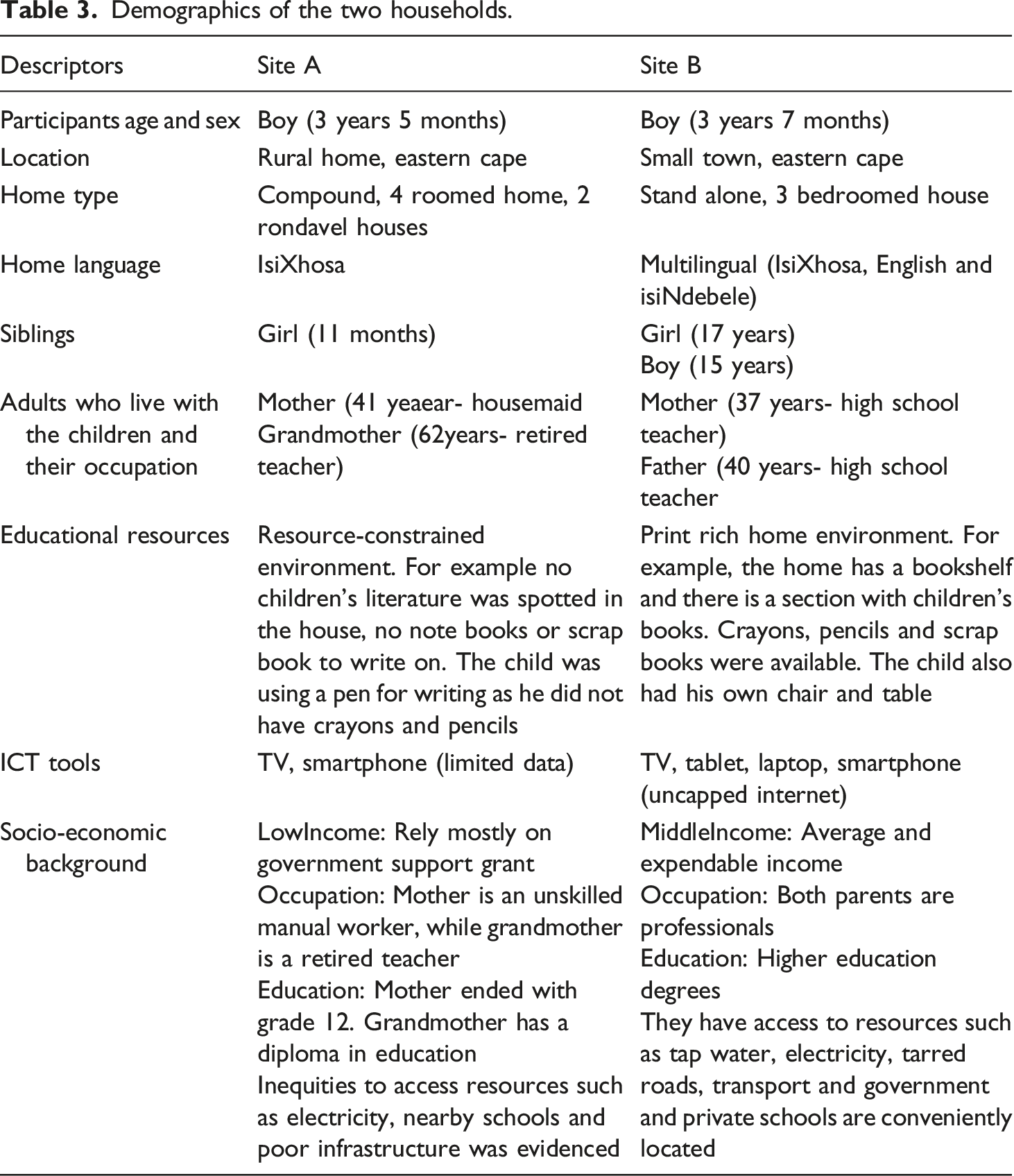
In South Africa, different terms can be used interchangeable to describe site A and B due to their location, infrastructure and the socio-economic background. According to Prinsloo (2019) site A is considered an underclass household while site B is a professional household. Guided by the 2018 General Household Survey Data based on the South African household profiling (Mdluli and Dunga, 2021) the two research sites can be categorised as low and middle households. In site A we observed poor infrastructure (lack of electricity) and children walk long distances to the nearest Government school. There is lack of adequate learning materials as will be discussed in the findings and the social grant remain a vital safety net. On the other hand, Site B, is located in a small town and the parents can be categorised as working class. They have easy access to local amenities such as schools, shopping centres, hospitals, libraries and other recreational centres.
Findings and discussion
In the section that follows, we infuse the findings with relevant literature and theory to make sense of the data collected. The Home Literacy Model proposed by Sénéchal and LeFevre, (2002) which distinguishes between informal and formal literacy activities and Hughes (2002) framework of play helped us to provide a nuanced understanding of the emergent literacy activities observed in both contexts and understand the caregiver’s experience of developing literacy during lockdown.
Literacy activities which children were involved in
Play: Different kinds of play were observed in both research sites. Using the framework by Hughes (2002) who identified and classified 16 different play types, the researchers were able to identify a variety of play types in both research contexts namely (1) Object play- Play which uses infinite and interesting sequences of hand-eye manipulations and movements. For example, children playing ball as shown in Figure 1. (2) Socio dramatic play- The enactment of real and potential experiences of an intense personal, social, domestic or interpersonal nature, that is, the child re-creates scenes from his own life. For example, in Site A, the child was observed playing church with his grandmother, while in Site B the child was observed playing school with his sibling. (3) Social play: Play which involves the rules and criteria for social engagement. For example, in both context children were observed playing games on their own or with the people around them. (4) Communication play: Play using words. The example of this play was observed when children participated in singing and storytelling activities. Finally, dramatic play was observed. This is play which dramatizes events in which the child is not a direct participator. For example, the children will act, recite and perform for their caregivers what they would have seen on TV or on the cell phones. Asi playing outside.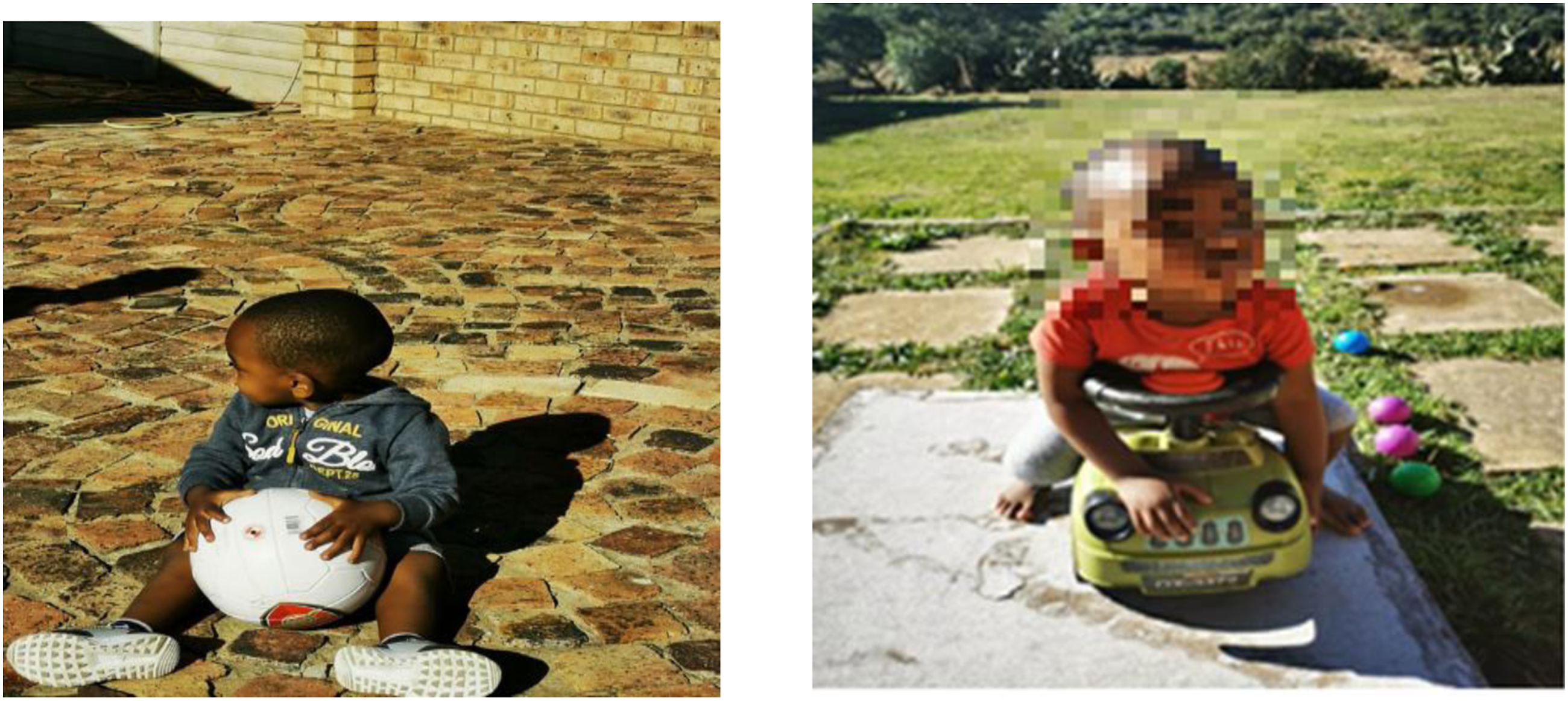
Past research has highlighted that all different types of play encompass a developmental purpose and are extremely important for a person’s holistic development (Whitebread et al., 2012). Socio-cultural-historical conceptions of play view play development as being related to kinds of experiences and social interactions that children have which build complexity of play activity (Fleer, 2011a, Fleer, 2011b). Additionally, the rights of children to play and engage in recreational activities have also been acknowledged by the United Nations Conventions on the Rights of the Child. This is because play has an educational aspect to it and that play influences children’s development and learning. In their study, Sibanda and Kajee (2019) explored Grade 3 children’s literacy practices through play in a multilingual township in South Africa. Findings of their study indicate that children’s play activities are potentially beneficial for learning. In addition, Wohlwend (2008) views play as both, a means to accomplish literacy and a part of children’s development. Wohlwend (2008) conducted a 3-year study of literacy play in K–2 classrooms, children used play to re-imagine power relations by assuming pretend identities and to explore literacy practices and materials in a risk-free zone, hence, she calls for policy makers to reinstate play in schools.
Storytelling: Many young children can read images and attach their own interpretation and meaning. In addition, they enjoy being told stories as it motivates them to be readers and enhance their creativity. During the national lockdown, stories were another easy and fun way to talk to children, keep them busy and arouse their curiosity on other things which interest them.
In this study, oral storytelling was observed in both contexts. In site A, Tumi had the advantage of staying with his grandmother who enjoyed telling him folktales and other stories in his mother tongue. In this household, storytelling also compensated for the lack of interesting and age appropriate books for Tumi. His mother mentioned that he enjoyed listening and watching stories about birds featured on Jim Jam, a children’s television channel. The researchers observed that oral storytelling usually took place in the afternoon when Tumi was tired. His grandmother alluded to this stating, “I always tell him a story about birds as he is familiar with birds from the Jim Jam channel. Although he cannot tell a story, he listens attentively and when I use gestures to imitate what the birds do, he laughs very hard”. His grandmother always started a story with an isiXhosa phrase ‘kwahlala kwahla kwalibali’ similar to the English phrase ‘Once upon a time’. Because the story was an everyday practice in the afternoon, Tumi would nod his head and smile and eventually learnt to agree to the phrase in isiXhosa, ‘chosi’ an indication that he was following the story. During storytelling, Tumi liked to sing along with his grandmother and the researcher also observed that singing was his favourite thing to do. Storytelling was a pleasurable, socially shared family literacy activity. The interaction between Tumi and his grandmother, supports research findings by (Adkins, 1999) that grandchildren benefit affectively and cognitively from having a close relationship with a grandparent, hence, Adkins (1999) considers grandparents as a national assert while in South Africa, Magoqwana (2018) writes of oomakhulu (grandmothers) as an “institution of leadership and knowledge”. Thus, family, including grandparents play a vital role in children’s literacy development (Newsome and Kelly, 2005).
In site B, Asi’s parents noted their son’s love of farm animals, hence, they repeatedly told him a story about farm animals. “Asi likes farm animals, every night we take turns to tell him a story in English about farm animals. This themed story has become his favourite bedtime story. He now knows that his story begins with the phrase… Once upon a time…and the moment he hears the storyteller saying …the end…, he starts crying asking for a repeat”. The comment by Asi’s mother shows that oral story telling is important in early childhood education as it encourages enthusiasm for learning and even reading. The child is now used to being told stories and enjoys them to an extent that he does not want the story to end. Asi’s parents use their literacy practices to form or align with Asi’s identity, as a child still developing emergent literacy skills. The parents’ choice of story is influenced by Asi’s literacy practices on things he loves (farm animals), referred by Barton et al. (1998) as ‘ruling passions’.
The benefits of storytelling in early childhood have been highlighted by researchers such as Peck (1989) and Cremin et al. (2017). Storytelling with children promotes brain development, develops their language and literacy skills and culture. In addition, it provides a forum for children and adults to interact within the rich cultural context of folktales and other stories. According to Strickland and Riley-Ayers (2006), oral language is an integral part of literacy development which includes listening comprehension, verbal expression, and vocabulary development. Mohana (2020) states, setting aside time every day to share stories with children exposes them to a wide vocabulary providing them with verbal and visual stimuli. Hence, it is fundamental for parents and teachers to build a strong oral foundation for children in their mother tongue. Young children’s ability to use language and to listen to and understand the meaning of spoken and written words is related to their later literacy achievement in reading, writing, and spelling (Joubert et al., 2008).
Reading aloud: According to Joubert et al., (2008), the ability to read is a foundation that paves the way for further learning. Therefore, the environment within which initial reading is taught is crucial for the future development of young children. In this study, Tumi’s home environment (Site A) was not print-rich. There were no children’s books for him to explore reading or books they could read for him. As a result, moments of reading aloud were not observed in this household. On the other hand, Asi from site B was exposed to a variety of children’s books in English and isiXhosa. Since he loved animals, his favourite story was Prudence the Pig which his parents repeatedly read for him. Research shows that reading and storytelling with children promotes brain development and imagination, teaches children about language and emotions, and strengthens relationships between the child and the caregiver.
Writing-like scribble: In both research sites, the young children were observed doing some form of writing. According to Larson and Marsh (2019), Hill and Nichols (2014) phases in literacy development, both participants can be classified under the beginning phase of writing. The two children have learnt that writing conveys a message as they have seen people around them write. They have learnt to scribble and to hold pencils, crayons and charcoal, which can be used as chalk. For example, in site A, Tumi enjoyed writing on the soil since they have a big compound. He also enjoyed writing on his slate using charcoal. In Site B, Asi had access to books, crayons, pencils and pens, and paper from his siblings. Figure 2 below shows samples of their writing which meant something quite different each time they read to their parents. Pretend writing (left to right) Asi, Tumi, Tumi.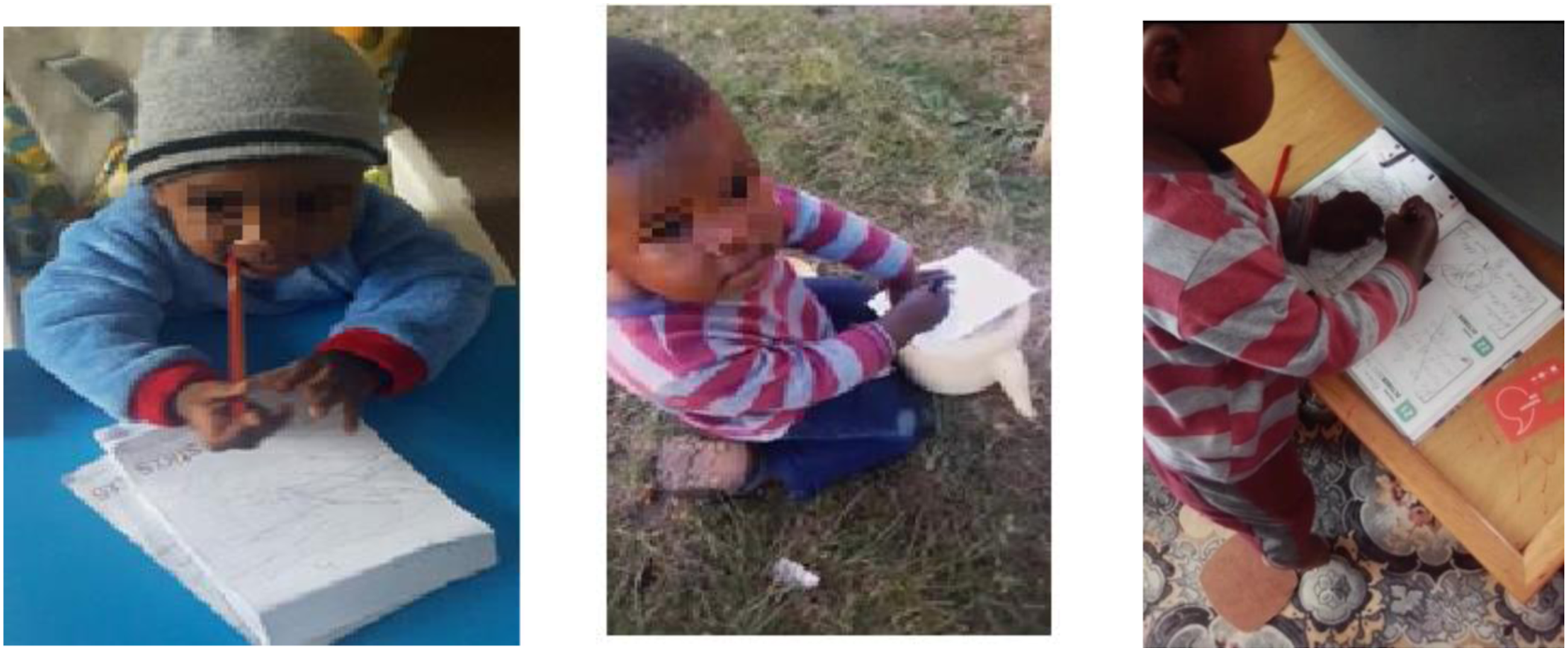
In the activities discussed, language was considered a powerful tool. Tumi was in a monolingual environment, while Asi was in a multilingual environment. Regardless of the differences in language in the two research contexts, Vygotsky, (1978) believed that a lot of the child’s learning takes place when they play because when children play, they constantly use language, which contributes to their language and social development. Language becomes more important, and children can switch between their roles and giving instructions. The theory further explains the importance of using language during adult-literacy interactions. Modelling reading books aloud, or one on one discussion encourages conversations and collaborative thinking and also helps children in gaining deeper understanding of stories. Language plays a powerful role in shaping the children’s thought process, and they learn most through their social interactions with their peers and teachers (Vygotsky, 1978).
As evidenced in the findings, young children need to participate in play, storytelling and read-aloud activities, as listening and speaking naturally integrate. Through play, storytelling and being read to, children develop their listening and speaking skills. The role of teachers and caregivers is significant in the development of the child’s natural acquisition of language (Baker, 2014).
Tools and resources which enabled literacy development during lockdown
In South Africa, the lockdown came with regulations that negatively affected the ECD sector and early childhood development in particular. While the Government prioritised Grade 7 and Grade 12 learners by providing them with ICT tools, online lessons and catch up programmes, children in the ECD were left bound at home. In towns or cities, children had limited or no access to playgrounds, parks and resources vital for their development. In many stores, toys and other resources that could be used for learning and craft by young children were considered as non-essential goods, therefore not accessible. Under such conditions, it was of interest to investigate what resources children and their caregivers used to develop literacy.
Site A, Tumi’s household was considered not print-rich. For example, minimal writing was observed in Tumi’s household and the book that he used was his grandmother’s old diary (Figure 2, Frame 2 and 3). He also had paper, pencil, slate and charcoal that he used to scribble. Although there were no peers to interact with him at home apart from playing with his mother and grandmother, he made use of the limited resources he had at home such as the book, paper and a pencil. He even made use of an old tea-pot as a table while writing outside (Figure 3 Frame 3).
In site B, Asi had access to a variety of resources, although during lockdown level 4 he mainly relied on his older sibling’s resources such as pens, pencils and examinations pads which were not age appropriate for him (Figure 3, Frame 1 and 2). For example, the curriculum states that children who are still learning to write should be provided with wax crayons, HB pencil and unlined paper to practice writing. Asi’s mother mentioned that “Lockdown caught us unaware, we focused on stocking up food and forgot stationery for Asi. I remember seeing how bored he was and we went to our nearest toy shop and hypermarket to look for toys, ball, and other art and craft stuff and we were told we can’t buy that, it was not considered as essential goods”. The family resorted to other kinds of play and activities as they waited for the lockdown regulations to be eased. However, during level 3 they managed to stock up all the necessary stationery and toys such as wax crayons, unlined colourful A4 papers, manila, playdough, glitters, scissors, glue and a soccer ball. Past research has highlighted that the home environment plays an important role in how children encounter and interact with literacy and become literate beings. The present study showed that children encountered different tools and resources within that home environment during the lockdown period. They made use of these resources to practice reading and writing. Children making use of the available resources to read and write (left to right) Asi writing; Asi reading a Grade 12 textbook with his sister; Tumi making use of a teapot as a table.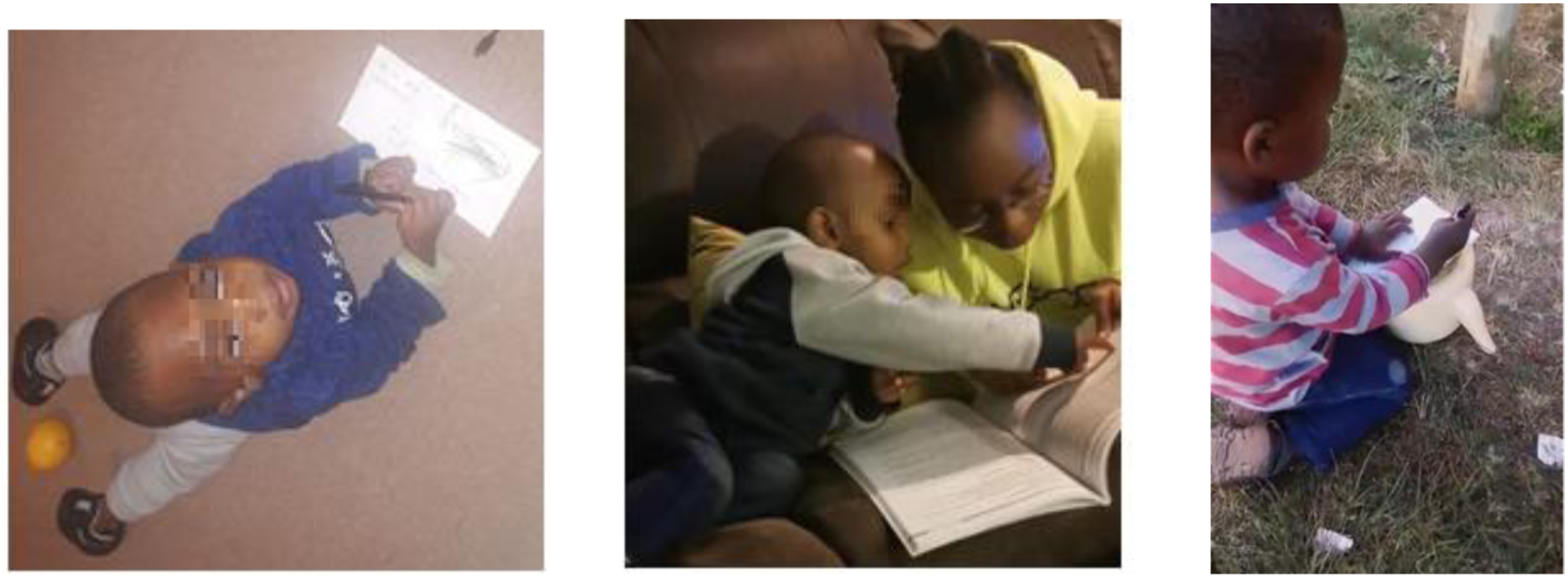
The use of media
Covid 19 exposed South Africa’s existing digital literacy divide (Prinsloo, 2019). During the lockdown in South Africa, some children were fortunate enough to be able to access online learning platforms right from the start of the lockdown, while others were dependent on government and private funders for smartphones, tablets or laptops and in some cases even free data. Some parents, especially in rural areas, had to spend their hard-earned cash buying smartphones and data for their children. Providing technological tools is a critical step because lack of technological skills in today’s context becomes one more obstacle in the learning process (Hanekom, 2020). A number of past studies have been conducted focusing on digital literacy home environments and young children’s digital literacy practices at home (Gillen et al., 2018; Scott, 2021; Marsh et al., 2021). Findings of these studies show that the use of digital tools promoted play and creativity across cognitive, physical, social and cultural domains.
In this study, Tumi had not yet started school and comes from a rural background. They have a television set (TV) at home with several South African channels and a DSTV channel. His mother mentioned that he liked watching children’s afternoon programmes on the TV and as the mother alluded, the child rarely missed watching his favourite daily programmes. His mother said “He loves television so much, while we are busy with our daily chores, he sits in the house and watches TV. You will find him dancing and singing along to kiddies’ songs. His favourite channel is Jim Jam”. In addition, the researchers observed that Tumi had limited access to a cell phone, the only gadget available in his home. However, his mother mentioned that “I have a cell phone but I rarely allow him to touch or play with it because he sometimes finishes my data when he downloads useless things. But he loves the already downloaded gospel music in my phone.”
On the contrary, Asi had access to a television with a number of local and international channels. He also had access to laptops, tablet, and cell phones with uncapped data. He had his favourite TV channels such as Mindset, and on Youtube (Figure 4), he enjoyed watching the popular children’s show Peppa Pig..However, like many parents, Asi’s parents had different views about the use and exposure to technology at such a young age, yet many scholars consider digital play as ‘real play’. His mother commented “It’s only that we are also working from home and we have relied on these gadgets to be our babysitters. I prefer children playing and getting dirty rather than being glued on these gadgets all day. They are missing out on real play”. Asi watching Masha and the Bear on TV.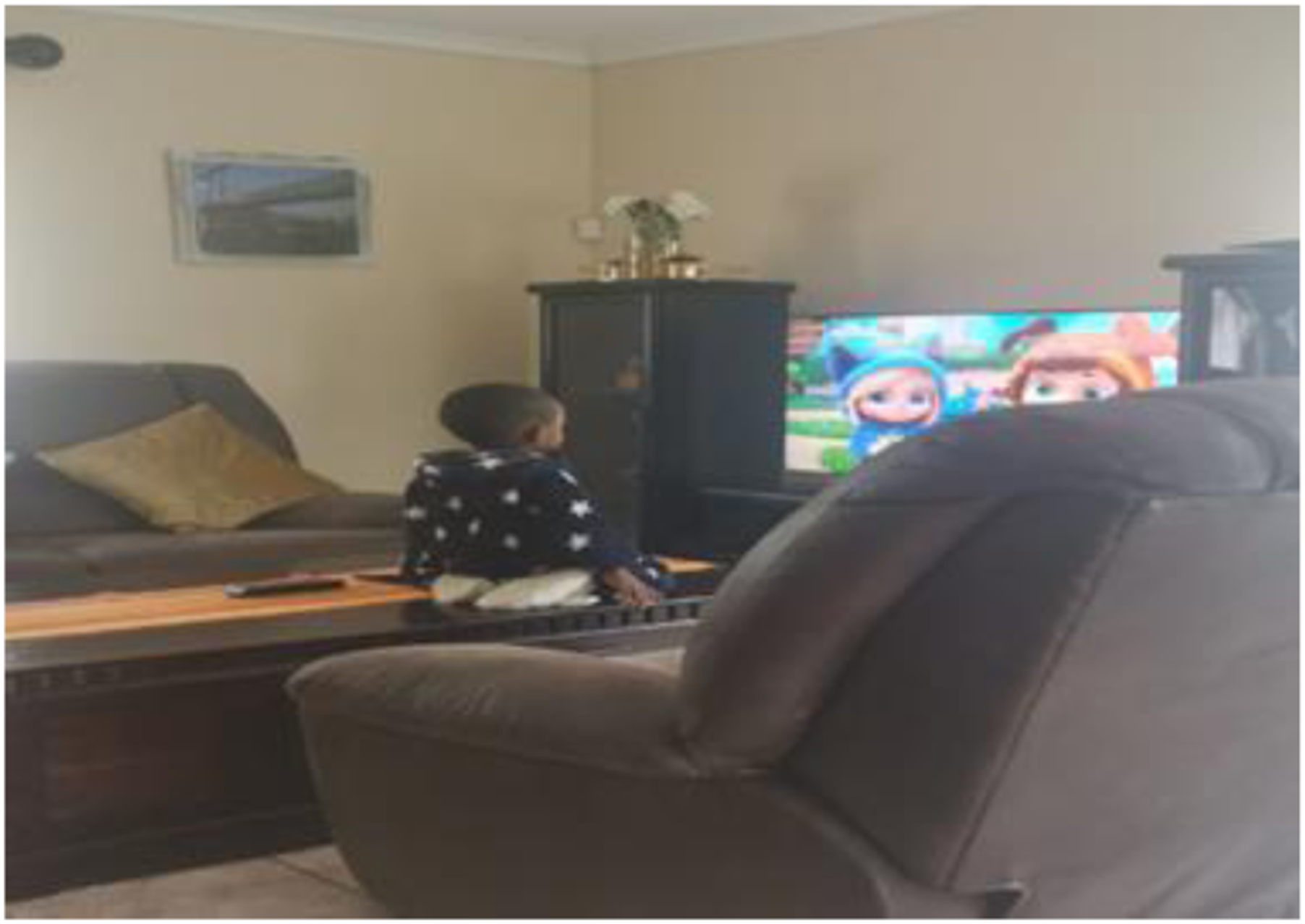
According to the two caregivers, they observed that the children had benefitted a lot from watching TV. For example, their vocabulary increased as they listened, watched their favourite TV programmes and sang along to their favourite songs. According to Asi’s mother “Asi now has Peppa Pig’s accent, he even says these big English words that we don’t use in our daily conversations.” Tumi’s mother added that by watching the local channel, “Tumi now knows most short adverts about the Corona virus and what children should do to stay safe. He can say sanitise, mask up and social distance. He knows that we should not touch our face”. These were very important observations considering that these two children are not English first language speakers, but due to being exposed to the language through digital platforms, they had acquired notable English vocabulary. Although they are notable benefits associated with the use of media and technology, in a study conducted by Genc (2014) many parents were not happy with their children’s use of smartphones as they believed these may cause health problems for their children or adversely affect their improvement. In addition, families worried about the resulting isolation from society and loneliness which we believe is true especially in homes where parents use their smartphones as a distraction for children resulting in children spending more hours on their gadgets. These are similar sentiments shared by Asi’s mother who prefers ‘real’ play compared to playing on the ICT gadgets (Figure 5). Children focusing on their phones/tablets (left to right) Asi and his father; Asi; Tumi.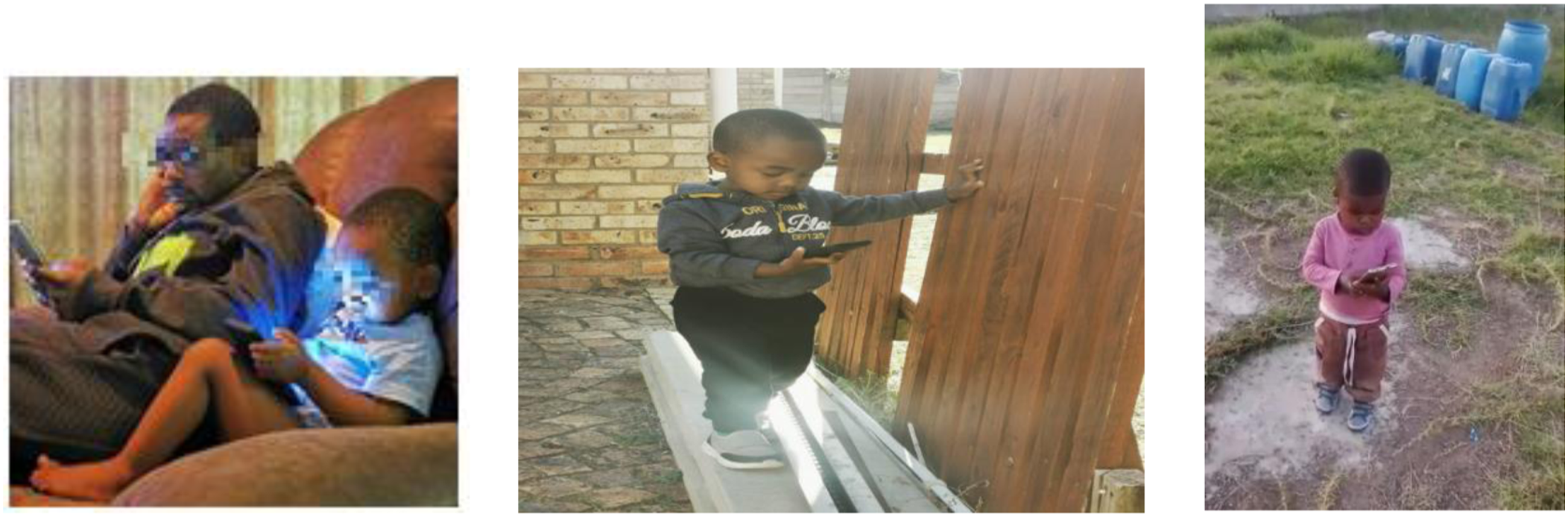
According to Kucirkova (2017), the world of young children is slowly becoming dominated by a range of digital texts and narratives. These digital texts and narratives can be used to enrich children’s literacy experiences (and inspire them to create their own stories (Flewitt et al., 2015; Kucirkova, 2017; Undheim and Hoel, 2021). However, as argued by Prinsloo (2019), children’s digital literacy practices, are always situated in and influenced by ideologies of social class, race, gender, language and place and they vary widely, and are tied up with social, cultural and idiosyncratic habits and uses that are specific to particular places and spaces. In site A, the parents’ restrictions regarding the child’s use of mobile phones gave the child limited access to digital play. While, in site B the child had his own table, a number of TV channels and unlimited access to internet. This is a clear example of the digital divide explained by Prinsloo (2019).
Learning from the more knowledgeable other (MKO)
According to Vygotsky (1978) a MKO can impart knowledge and lead to the cognitive development of the child. However, the MKO does not have to be an older adult but can also be a slightly older child who can impart knowledge. The observation data from both homes showed some amount of mediation from parents and siblings (MKO) through modelling and scaffolding. In Site B, Asi had 2 siblings of school-going age and due to lockdown, they were both learning from home. Through interacting with them and observing them while they engaged with their school activities he gained a love for pretend reading and writing (Figure 6, Frame 2). He would also pretend to use a laptop. His mother mentioned that “One day I called Asi to come and eat, and his response was “Mummy I am busy, I am in a meeting”. He had learnt this statement from his parents who were working from home and had back-to-back online work meetings.
In Site B, although Tumi had no peers and older siblings to interact with at home, he enjoyed playing with his mother and grandmother who made time for him. He enjoyed gospel music which his mother and grandmother had exposed him to. Tumi’s mother added, “Tumi likes singing and dancing to gospel music when it plays on the TV. He either listens to the songs from the phone or he just sings and we join him when singing and it becomes fun”. Therefore, having no peers or siblings to learn from did not stop him from utilising the limited resources he had at home and the people around him to develop his literacy such as his oral language skills. According to Vygotsky (1978), social interaction such as imitation, guided learning and collaborative learning enables children to go through a continuous process of learning with the adults in society, who foster children’s cognitive development in an intentional and systematic manner. Imitation of literacy activities (left to right) Tumi and his baby sister, Asi and his sister.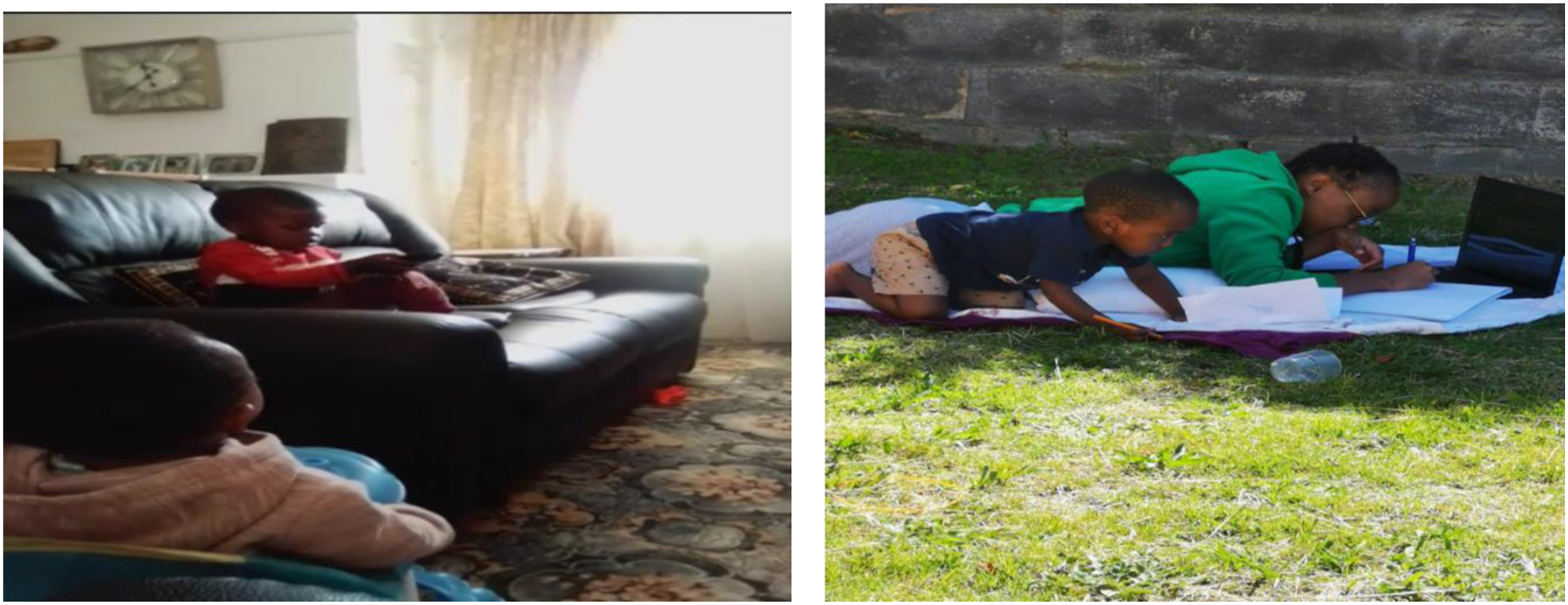
Dilemmas and challenges experienced by parents in developing literacy during the lockdown
Conversation with the parents and caregivers of the two participating children highlighted the dilemmas and challenges they faced in helping the young learners during the lockdown. In sum, both parents highlighted the lack of appropriate resources at home and their lack of knowledge or training on how they could successfully expose their children to both formal and informal literacy experiences. The crisis for learning at home placed a huge burden on the majority of parents who did not have prior teaching experience or teaching at primary school such as in the case of Asi’s mother who relied on asking Asi’s teacher via WhatsApp for more activities that she could do with his son. Also, in the case of Tumi’s mother, lockdown restrictions came at a time when they were ready to take him to preschool but, due to COVID 19, their dream was shattered as mentioned by Tumi’s mother.
In addition, they mentioned the limited time they had to focus on their children’s learning as they were working from home. Although parental involvement is found to be of importance in children’s learning (Johnson and Hall, 2014; McDowall and Schaughency, 2017), it is still lacking in South Africa, particularly in schools serving disadvantaged communities (Munje and Mncube, 2018). Progress in encouraging parental involvement in the country is being hampered by factors such as socio-economic backgrounds including among others, unemployment, poverty as well as lack of support from family structures (Munje and Mncube, 2018).
They also highlighted the issue of limited data and internet access to allow children to download games and other literacy activities. They also had a challenge of limited ICT tools such as phones and tablets, hence they shared their gadgets with the children. Aspects such as space, a conducive learning environment was also a barrier in terms of developing formal (school) literacy practices. In some homes parents had to change their homes to be a learning environment. For families from socially disadvantaged backgrounds this was a problem especially for small homes with many people. Families had to divide their small rooms to create space for children’s learning or space suitable for study and this had an impact on their academic achievement compared to children from middle-class families (Bonal and González, 2020).
However, there were also benefits that came about with lockdown as mentioned by the parents. For example, in site A, Asi’s parents mentioned that they became more involved in their young children’s curriculum and literacy development which did not happened pre- Covid-19 as parents were usually occupied with their work. Parents of the participants indicated that the lockdown also gave them enough time to work together with the teachers as expected. For example, Asi’s parents commented that “I am not a qualified pre-school teacher, so I had to constantly ask the teacher via WhatsApp for more practical activities I could do with my son”. On the other hand, Tumi’s mother also mentioned that “There are a number of teachers in our community, so I would ask them for more activities as well in addition to relying on my own childhood experiences around literacy development”. We can conclude that lockdown offered collaborative opportunities for teachers, parents or caregivers and their children. Parents also had to be prepared to learn how they could keep their children occupied with structured learning and play activities.
Limitations of the study
The major limitation of this study is that, fieldwork was conducted during a particular phase of the pandemic (Lockdown Alert Level 4) when there were strict Covid-19 restrictions and regulations in the country. This resulted in the researchers adopting a rapid qualitative research approach (Beebe, 2014) where data was collected and analysed within a short period of time. In addition, we conducted a semi-ethnographic study instead of an ethnographic study, and hence, we might have missed opportunities of collecting rich, thick data to fully respond to the research questions. According to Vindrola-Padros and Johnson (2020) this might therefore result in less credible findings due to the short-term immersion and interaction of the researcher with the participants.
Conclusion
In many disadvantaged communities in South Africa, young children were most affected by the closure of schools due to Covid- 19 as most of their learning and play cannot be fully done online. The ECD sector in South Africa was neglected, for example, during the national lockdown, The Centre for Early Childhood Development, a non-profit organisation committed to putting young children first (www.cecd.org.za) organised a protest outside the South African parliament with a hash tag
As evidenced in this study, there was an increased level of interaction and communication between caregivers and their children, caregivers and teachers, and between the children and their siblings. In their study, Sibanda and Kajee (2019), too, highlighted the importance of siblings and adults in young children’s learning. This collaboration was important during lockdown as there was need for learning from each other, co-creation of ideas that contributed to children’s early literacy development.
Collaborative engagement between parents and teachers is essential to enhance learning. As evidenced in this study, there was an increased level of interaction and communication between caregivers and their children, caregivers and teachers, and between the children and their siblings. In their study, Sibanda and Kajee (2019), too, highlighted the importance of siblings and adults in young children’s learning. This collaboration was important during lockdown as there was need for learning from each other, co-creation of ideas that contributed to children’s early literacy development. Hornby, (2000) lists multiple benefits of parental involvement which includes: good relations between the school and parents; positive parental attitudes towards teachers and the school; improved learner performance in adaptive and social skills; an improved school climates; increased parental satisfaction with the school; and overall school improvement (pg.1–2).
As acknowledged in the call for papers for special issue JECL on ‘Lockdown literacies, the pandemic brought negative experiences for families, however, there were types of home-learning which occurred during the pandemic that were more productive. In this study, data shows that literacy practices were probably different in context A and B but not lesser. Both children engaged in literacy-related activities utilising the tools and resources available at the time, such as pens, examination pads and charcoal. They also had reading and writing opportunities with their caregivers and siblings (see Figures 2 and 3), singing, dancing, and watching Television programs (see Figures 4 and 6), as well as using the ICT devices in Figure 5. The child in context A, did not stop experimenting with writing because he did not have a table like the child in context B. Instead he made use of the broken teapot to lean on as he was writing.
The findings provide crucial and real insights into how young children’s literacy develops by illuminating what transpired in this specific situation. However, the only distinction between the literacy levels of the two families could be found in the resources that each context offered. For instance, Asi had access to the computer that his younger sibling who attended school utilized whereas Tumi only had his grandmother’s cell phone and the television in home A. The two participants also came from different backgrounds; for example, while Asi was raised in a bilingual context, Tumi was raised in a monolingual environment. Tumi used literacy in the same manner as his peers, despite Asi having access to modernized material tools.
Finally, we concur with research which has highlighted the benefits and limitations of digital media in the development of young children’s literacy (Kumpulainen and Gillen, 2019). We are aware of the digital divide which exist in many disadvantaged communities in South Africa. When Covid-19 struck South Africa, the country, like other countries worldwide, was forced to close its doors, exposing the realities of children’s homes as well as the importance of education as a caring profession. Some children, particularly those from low socioeconomic backgrounds living in rural areas, were at a disadvantage because they had much less access to digital network than their urban counterparts as evidenced in the current research. The gap left by apartheid’s legacy appeared to be widened by the situation caused by Covid-19. It is worth mentioning that in this study, the children’s use of technology was boosted as they spent some of their time playing using gadgets as well as watching their favourite programmes in the television, an opportunity that would be limited if schools were open. Therefore, the pandemic and the lockdown boosted the use of technology as a result of this crisis, which dismisses the concept of ‘learning losses’.
It must be noted that this was a small-scale study, hence findings are not generalisable. However, findings show what happened in this particular context and provide important and authentic insights into the development of young children’s literacy, challenges experienced by caregivers at a time of (inter)national emergency.
Footnotes
Acknowledgements
A great thank you to the children and the caregivers who willingly allowed us into their homes and be part of their lives.
Declaration of conflicting interests
The author(s) declared no potential conflicts of interest with respect to the research, authorship, and/or publication of this article.
Funding
The author(s) received no financial support for the research, authorship, and/or publication of this article.
