




Abstract
This article examines young children’s conceptualisation of the images they encounter within the familiar environments of the home and community settings, focusing on case study data from two, 4-year-old children. The data discussed are taken from a study involving a group of children aged 4–5 years. A participatory mapping approach was adopted, enabling children to be positioned as both message creators, through the production of their multimodal map texts, and message receivers as they sought to make meaning with the image-based texts they encountered within their environments. The use of a mapping activity supported identification of the children’s knowledge of different texts which may not so easily be put into words. The study revealed that, for children, the context and location of images are important, with the presence of images and artefacts enabling familiarity with a place. Furthermore, movement was identified as an intrinsic part of their multimodal engagements. Adopting a social semiotics theoretical framework, this study aims to explore the ways in which young children conceptualise images in their environment. This paper emphasises the need to take account of the embodied, spatial and multimodal nature of making practices, given the importance placed on these by young children themselves.
Keywords
Introduction
This article presents findings from a study that explored young children’s meaning making practices with image-based texts. Drawing upon case study data from two, 4-year-old children, in their first year of primary school, the ways in which young children conceptualise the images they encounter in home and community settings are explored. The research is grounded in multimodal social semiotic theory (Halliday, 1978; Kress, 2010), and recognises that communication practices are increasingly multimodal in nature and shaped by developments in information and multimedia technologies (Jewitt, 2009a). Increasingly sophisticated digital media devices both demonstrate and facilitate the shift from monomodal texts towards multimodal texts which combine image, sound, animation and written language (Jewitt, 2006; Kress, 2003). Consequently, this study uses a multimodal definition of text as a cohesive unit of meaning in communication, rather than as a synonym for the printed word, with modes comprising a range of socially and culturally shaped resources which may be combined in the dissemination of texts (Bezemer and Kress, 2008).
In this article, I draw attention to children’s self-identification of their meaning making practices in order to explore how young children conceptualise the images that they encounter in familiar environments. Following the recommendations made within Burnett and Merchant’s (2015) Charter for 21st Century Literacies, which include acknowledging the multimodal nature of meaning making, there is a need to identify the existing engagements of young children on entering primary school. As Bearne (2009) asserts, it is important to discover what children think and know about the texts they encounter in order to recognise their thinking in the classroom. I begin by examining the familiar environments of young children and the significance of these in meaning making practices, before focusing more closely on the engagements with image-based texts which take place. The small-scale case study reported adopts a participatory mapping approach in order to articulate young children’s meaning making practices with image-based texts, and this is outlined ahead of the presentation and analysis of the children’s mapped representations of the images they encounter in familiar home and community settings.
Familiar environments
The familiar environments of a child are broad and varied. These may include, but are by no means limited to, the home, Early Years setting, parks, public transport, shops and cafés. Burbules (2004) uses the terms ‘space’ and ‘place’ to distinguish between those locations which are familiar and meaningful. Places have the objective, locational dimension of spaces, but in addition to this hold a subjective importance to an individual or group of people. Powell (2016) further extends this concept by highlighting the embodied nature of meaning making, suggesting that place ‘is on the move’ (403). This emphasises the active and ongoing nature of meaning making, also noted by Mackey (2010: 330) in identifying that, from babyhood onwards, individuals seek to turn the space around them into the kind of place that is familiar and meaningful.
Familiar environments are significant in young children’s wider multimodal engagements. It is within such environments that children are presented with what Kress (2003) identifies as complex combinations of ‘image and language’ in everyday texts. Significantly, Kervin and Mantei (2017) note that whilst theories related to school literacies, home literacies and community literacies exist within educational discourse, the experiences of young children span these domains. Young children’s multimodal knowledge and practices feature in their play across a range of contexts and reflect their experiences with a range of digital and non-digital media. Children make explicit reference to their preferred digital media content and re-enact characters and scenes from texts which are predominantly visual in nature, such as comics and television programmes (O’Mara and Laidlaw, 2011; Pahl, 2005). Where digital media devices are not physically present, children are observed to combine play and design to enact their experiences with these using self-made props (Wohlwend, 2009). Within the Early Years classroom environment, children are found to draw upon their ‘growing repertoires for meaning making’ in order to assign meaning to the space and materials around them (Daniels, 2016: 23). Finally, as part of their journeys throughout the local environment, children are faced with a range of multimodal texts, including the visual mode, such as street signs, shop hoardings, posters, food menus, maps and product packaging (Yamada-Rice, 2011a, 2011b, 2014), echoing Kress’ (2003) assertion that language and image are combined in increasingly complex forms.
Young children’s engagement with images
Young children use a range of media, including DVDs, drawing, picture books and websites, to engage with image-based texts comprising the visual mode as part of their wider multimodal practices (Marsh, 2004; Yamada-Rice, 2010). Such engagements do not occur in isolation, reflecting the social and cultural context of communicative practices emphasised within multimodal social semiotic theory (Halliday, 1978; Kress, 2010). Young children interpret images in light of their experiences alongside their families and peers (Yamada-Rice, 2014). In the case of screen-based media, Stephen et al. (2008) noted children’s engagements took place in the home environment alongside other family members, whilst young children’s demonstrations of using technology reflected their interactions with others rather than solo activity. Finally, in the school environment, young children were observed to engage in groups alongside their peers to design and create props which then allowed them to enact their engagements with technology and screen-based media in ‘print-centric’ classrooms (Wohlwend, 2009).
Yamada-Rice’s (2014) description of the communication practices of three-year-olds in urban Japan illustrates how they make meaning with the visual mode, primarily through their engagements in the physical world. Drawing upon the theories of Freire and Macedo (1987), Lynch (1960) and Mackey (2010), it is argued that young children develop their understanding of their physical environment, or ‘first world’, at the same stage in life as they begin to make sense of texts, with their knowledge of texts representing their ‘second world’. Yamada-Rice (2014) notes that the children in her study engaged within their environment in a way akin to reading a physical text, ‘learning the rules and conventions of the ways in which users interact with the urban landscapes’ (162). Furthermore, the visual texts they encountered within the urban environment, including signs and notices, supported their understanding of how to navigate and respond to the rules and expectations placed upon users of the environment. Whilst Yamada-Rice identifies the way images inform children’s use of the environment, what is less clear are the potential links they made between the images they encountered throughout their environment, and how the children saw these in relation to one another. If the environment is viewed as forming a wider, overarching physical text akin to Lynch’s (1960) conceptualisation of a ‘legible’ environment, it follows that individual images can be positioned as component parts which convey not only individual meaning, but also contribute to the overall meaning provided by the environment. This would subsequently inform children’s developing knowledge of deriving meaning from ‘second world’ texts. As a result, in identifying young children’s interaction and comprehension of images within their familiar environments, this study seeks to further Yamada-Rice’s findings and examine the links which children make between examples of the visual mode throughout their environment, and how the children perceive these in relation to one another.
Mapping the environment
Maps are a powerful means of conveying detailed information about a place or physical environment. It is the visual nature of maps which allows their purpose and communicative power to be extended beyond representing the geophysical terrain. Although maps are thought of as signposting the physical location of buildings, landmarks, routes and geographical features, additional layers of meaning regarding how these places are perceived and used may also be included. Burbules (2004) illustrates this point by asserting that a map ‘simplifies, selects, and schematizes the original’ (175), with these activities making the individual version of the space into a known, subjective place. Furthermore, certain choices are made whilst others are not, because they allow the individual to represent things in the space that are meaningful and of personal significance to them. Powell (2010) describes the activity of mapping as a ‘multisensory research method’ due to its ability to evoke relationships between place, lived experience and community. Within the Mosaic Approach, Clark (2017) demonstrates that visual maps are particularly well suited to eliciting young children’s ideas regarding their environment. Within traditional maps, symbols and markings exist to represent the reality, whereas visual maps use photographs to capture ‘real life’ images, and place these within an outline of an environment alongside drawings and annotations.
Within this study, the use of visual maps is further adapted to focus specifically on the occurrence of the image-based texts young children encounter within their familiar environments. Recognising that children are not static, visual maps offer a means to capture the sense of movement in and around the environment, which authors including Hackett (2014, 2016), Thiel (2015) and Daniels (2019) suggest supports young children’s meaning making practices across a range of settings. Yamada-Rice (2014) used an innovative combination of child-led photography, video recording and interviews during environmental walks in urban Japan and found that young children’s comprehension of the visual mode is drawn from their knowledge and engagement with the physical environment. This reflects the assertion that young children’s communicative practices are frequently grounded in the embodied and non-verbal (Hackett and Yamada-Rice, 2015). Although maps formed a component of the data collection process in Yamada-Rice’s (2014) study, map texts were not created by the children. One of the key reasons for incorporating a mapping element into this study was the desire to capture the ways in which the spatial location and contextual placement of images in the environment support young children’s emerging understanding of the visual mode. The creation of a map text enables children to articulate the extent to which they themselves identify spatial location and context as contributing to the meaning conveyed by an image-based text.
Kervin and Mantei (2017) engaged young children in the creation of multimodal map texts which brought together storytelling and their understanding of the known environment of the school. A task was designed for one Australian primary school class, to create their own map of the school using paper and coloured pens, alongside a 2D puppet figure. The maps were further innovated and enhanced when children were given access to Google Maps through a tablet device. The child-created maps then served as a basis for storytelling activities, both oral and digital. Support for Burbules (2004) notion of a known ‘place’ is found in Kervin and Mantei’s identification that children’s recent experience of the school context was significant in allowing them to visually represent and talk about their understandings. In addition to this, their familiarity with the setting enabled participation, as children were able to bring their existing knowledge and experiences to the task. A further key observation from the study may be found in children’s use of their 2D puppet character. Kervin and Mantei (2017) suggest that the movement of the puppet characters around the map ‘provided concrete spatial resources to prompt children’s recall of familiar events and practices’ (723). When considering this activity in light of Hackett’s (2014) observations of the embodied practices of younger children, the possibility arises that it is these physical engagements which the children in the study are representing and drawing upon to support and convey their own meaning. This raises the possibility of maps being used not only to record environments and the spatial locations of objects of interest, but also to represent the experiences and engagements which took place within them.
Introducing the study: Children and their familiar environments
The research focuses on two, 4-year-old children who attended the same Early Years Foundation Stage class within an English urban primary school in the East Midlands. The majority of pupils at the school are from White British backgrounds, with the proportion of pupils who speak English as an additional language being below the national average. The data discussed in this paper are taken from a larger study involving a group of five children aged 4–5 years, with data collection taking place individually across the three locations of the school, home and a community leisure centre. Each of these settings represents a familiar physical environment in which meaning making takes place and represents the range of domains which Kervin and Mantei (2017) propose that young children’s experiences span. In line with Lynch (1960) and Seyer-Ochi (2006), I recognise the different layers which make up an environment, including those which are culturally and socially shaped; the inclusion of home and community settings allows greater insights into young children’s meaning making practices.
In accordance with established ethical protocols, I sought the full consent of the children, their parents and the school before data collection took place. Parents were provided with an information sheet and consent form to complete should they wish their child to participate in the study. When working with each of the children I explained the aims and methods of the study verbally. Recognising young children as reliable informants in their own experiences (Christensen and James, 2008), I gave the children the ultimate decision on whether to participate. Thomas and O’Kane (1998: 339) describe this position as seeking the children’s ‘active agreement’ on top of the parents’ ‘passive agreement’. This reflects the distinct roles held by parents and children in relation to consent and assent. Both Alderson and Morrow (2011) and Nutbrown (2011) agree that parental consent provides an assurance that the children’s interests are safeguarded. In contrast, informed assent is defined by Cocks (2006) as ‘the sensitizing concept in gaining the children’s agreement’ (257). Within the context of this study, the children were active participants in the research and so it was important to consider their views and feelings about taking part on an ongoing basis. I sought the children’s assent to ensure that their approval was genuine, rather than given as an act of compliance towards a perceived authority figure (Harcourt and Conroy, 2011). As part of my ongoing assessment of children’s assent, I also upheld the ethical principle that they had the right to withdraw from the study at any time. This was specified not only in writing to parents, but also verbally to the children during each of the data collection phases and their decision would have been respected had it arisen at any point within the study. The children were assigned pseudonyms to anonymise their identities.
The home setting – Molly
Molly was four years and six months old at the start of the study. She took part in the home environment in which she lived with her parents, older sister and two pet cats. Her teacher told me that she was very interested in animals and sociodramatic play. Molly’s home setting was a terraced house located within the school catchment area and was typical of the local area. During my visits, Molly was at home along with their mother.
The community setting – Jeffrey
Jeffrey was 4 years and 10 months old at the start of the study. I met with Jeffrey at the community leisure centre where he attended roller skating and hockey training several times a week with his father. Jeffrey was the youngest child of five, with a relatively large age gap of 12 years between Jeffrey and his next sibling.His teacher suggested that Jeffrey take part in the community setting study due to his extensive sporting interests. The locations within the leisure centre which were mapped were in and around the roller skating rink including the main entrance, hallways and entrance to the skating rink, itself. Jeffrey chose to map these locations as he visited them several times a week with his parent to skate and play roller hockey.
Methodology
A case study methodology was used for this study to reflect the individual nature of each setting and to capture detailed information about the experiences of young children; this paper focuses on case study data from two, 4-year-old children who participated individually in a home and a community setting. A similar case study methodology has been adopted in other studies to identify children’s experiences of new technologies in the home (Stephen et al., 2008), to observe children’s imaginative play with technology in classrooms (Wohlwend, 2009) and to assess their comprehension of the visual mode in their local environment (Yamada-Rice, 2013, 2014). As a result, there is evidence that this type of research strategy is well suited to collecting data regarding young children’s meaning making engagements.
I had two main aims when working with the children in this study. First, to capture the range and diversity of images that young children engage with, and second to identify how visual mapping may be used to articulate young children’s meaning making practices with image-based texts. The data collection process for this study took place in two phases: a photography phase and a mapping phase. Data collection was completed in its entirety for each child in order to avoid changes taking place within the environment between the photography and mapping phases.
The photography phase
The photography phase was the first point at which I met with the children individually.I explained the task with the help of the picture book ‘My Map Book’ by Sara Fanelli (2006), as I sought to demonstrate to the children that you could use pictorial representations to record the different things you might find in, or associate with, a particular place. A similar approach to explaining a map-based task is taken by Kervin and Mantei (2017). Debate exists regarding the extent to which children’s participation is scaffolded (see Lambert and Clyde, 2000), particularly in relation to visual methods (Clark, 2010). As identified by Clark (2017), my role as researcher was to provide the tools to make the photography task achievable, whilst it is the children who engage in knowledge building. Once the photography task was explained, the children were accompanied individually as they used digital cameras to take photographs of the images they encountered within their environment. No feedback was offered to the children regarding the images they took, although some support was provided on using the digital cameras. The children were free to leave the task once they had taken as many photographs as they wished; I then made brief notes regarding the rooms or areas which they had visited and any significant events which had occurred during the photography.
The mapping phase
I returned to visit the children individually in their familiar environment one week later. The mapping phase began by showing the children printed copies of their photographs and allowing them to browse through these. During this time, the children showed familiarity with their images and recalled what was depicted in each verbally. The children were then asked to use their photographs and a range of mark making materials to create a map showing where they found the images in their environment. Multimodal social semiotic theory (Halliday, 1978; Kress, 2010) proposes that in comprehending images there is a need to understand their context and location, given that their inclusion and placement within texts is constructed by the social and is inextricably linked to their meaning. As a result, a central part of the methodology centred on the production of maps by young children to show their encounters with image-based texts, in their familiar environments, whether they be at home, school or within the wider community.
As the children completed the mapping activity, I conducted a focused conversation (Clough and Nutbrown, 2012) in order to find out more about their meaning making with the visual mode. Questions were posed to elicit children’s knowledge of the overall message conveyed by the image as a ‘text’ (Halliday, 1978), a cohesive unit of meaning in communication. Drawing upon the approach taken by Yamada-Rice (2013), this included questions relating to the producer, production methods and purpose, thus exploring the extent to which children understood the image’s meaning. This facilitated discussion in which children analysed the use of the visual mode, and how the affordances of the visual mode were deployed to convey a message. The questions reflected the positioning of children in this study as both message creators and message receivers and provided a context in which multimodal texts may be considered critically, in line with the recommendations of Bearne (2009) and Burnett and Merchant (2015).
Children’s mapped representations of the images they encounter in the home and community setting
My approach to data analysis was guided by social semiotic theory (Halliday, 1978; Kress, 2010), the components of text (Jewitt, 2009b) and previous participatory research with young children, including the Mosaic Approach (Clark, 2017). In drawing upon social semiotic theory, I position children’s visual maps as texts which communicate meaning. In common with the Mosaic Approach, I collected visual data alongside audio data drawn from my focused conversations with the children. As a result, I viewed the two data sources as complementary components, which together give insights into young children’s conceptualisation of the images they encounter in the home and community settings.
Within multimodal social semiotic theory, Halliday (1978) uses the term ‘text’ to signify a cohesive unit of meaning in communication. Texts comprise three metafunctions which operate simultaneously to make meaning: (1) the ideational, (2) the interpersonal and (3) the textual (Jewitt, 2009b). In this study, the positioning of children’s visual maps as texts allows them to be interpreted in terms of the metafunctions which they comprise. The ideational component, or subject matter, of the map text is identified as being images in the environment. The interpersonal component, or use of social interaction, may be evidenced through the children’s use of their photographs and annotations within the map text to convey their experiences and ideas. Finally, the textual component refers to the creation of coherence across the text as a whole. Within a map text this is achieved through composition, modality and framing, as visual images are configured to present the world and events in specific ways (Jewitt, 2009a). As Bearne (2009) proposes, it is meaning which drives the approaches taken to communicate with an audience and it was anticipated that this would be reflected in the choices the children made in creating their map texts. Analysing the map texts in this manner reflects the positioning of children as message receivers and message creators.
Throughout the mapping phase focused conversations took place which were subsequently transcribed. In common with the Mosaic Approach (Clark, 2017), the visual maps produced in this study were analysed as one piece of evidence which fits into a wider picture in eliciting young children’s perspectives. In this study, children’s voices are not only apparent in their verbal utterances, but also in their use of the visual mode to communicate meaning through their map texts. As Hackett and Yamada-Rice (2015) assert, the use of visual methods allows different modes and communicative practices to be foregrounded. In bringing together evidence from both the map texts and focused conversations, themes were identified from the range of data collected, in light of the children’s perspectives (see Clark and Moss, 2001; Waller, 2006). The key findings from this study are presented next under headings which reflect the emerging themes identified. This is aided by the inclusion of the children’s own words and images from their map texts, which not only represent their experiences but also orient the reader in relation to the individual setting for each child. The inclusion of annotations is intended to acquaint the viewer with a space which they are unable to physically visit. It should be noted that this posed a dilemma, as this may be taken as indicative of the ‘power imbalance’ between adults and children in research (Procter and Hatton, 2015), with my experiences of the space overriding those of the children. It is anticipated that presenting the maps initially as complete texts will allow the child’s original message and representation to be foregrounded ahead of any subsequent analyses. Using Burbules’ (2004) definitions, each of the mapped settings was a familiar local place to the child, whereas to me as a visitor it can only be said to be a space. It is the knowledge and subjective experience of a place which carries information regarding ‘what it means to be there’ (Burbules, 2004: 174).
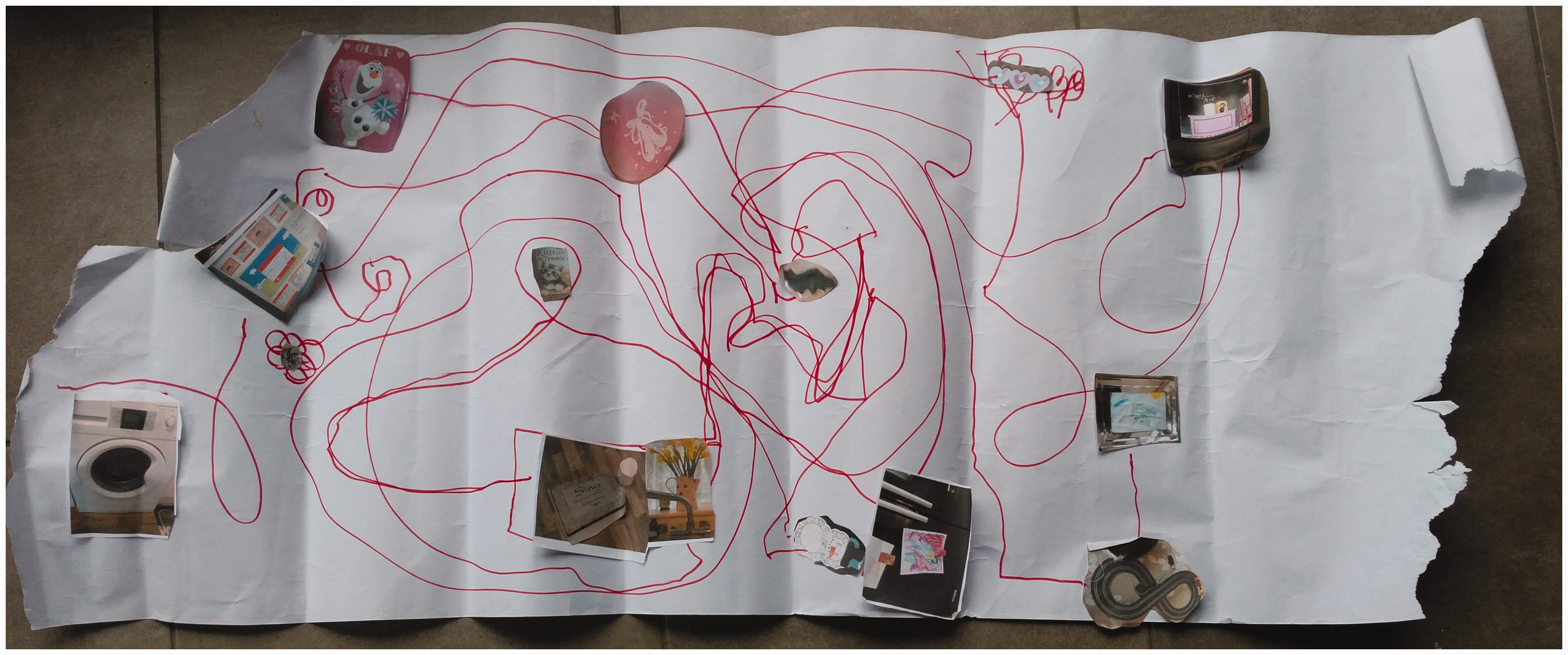
Molly’s home setting map.
Molly, four years six months, home setting
Molly’s map depicts the images she encountered in the open place lounge and kitchen areas of her home (Figure 1). Molly adopts a birds-eye view of her familiar environment, with information regarding relative distance and direction between the images presented. Within Molly’s map there is evidence of embellishments which serve to indicate the use of space within the home environment. Furthermore, the lines she has drawn across her map indicate connections and pathways between the images she has photographed. Many of these complex and overlaid pathways originate from the image of her pet cat, ‘Millie’, who is positioned in the centre of the map (Figure 2).
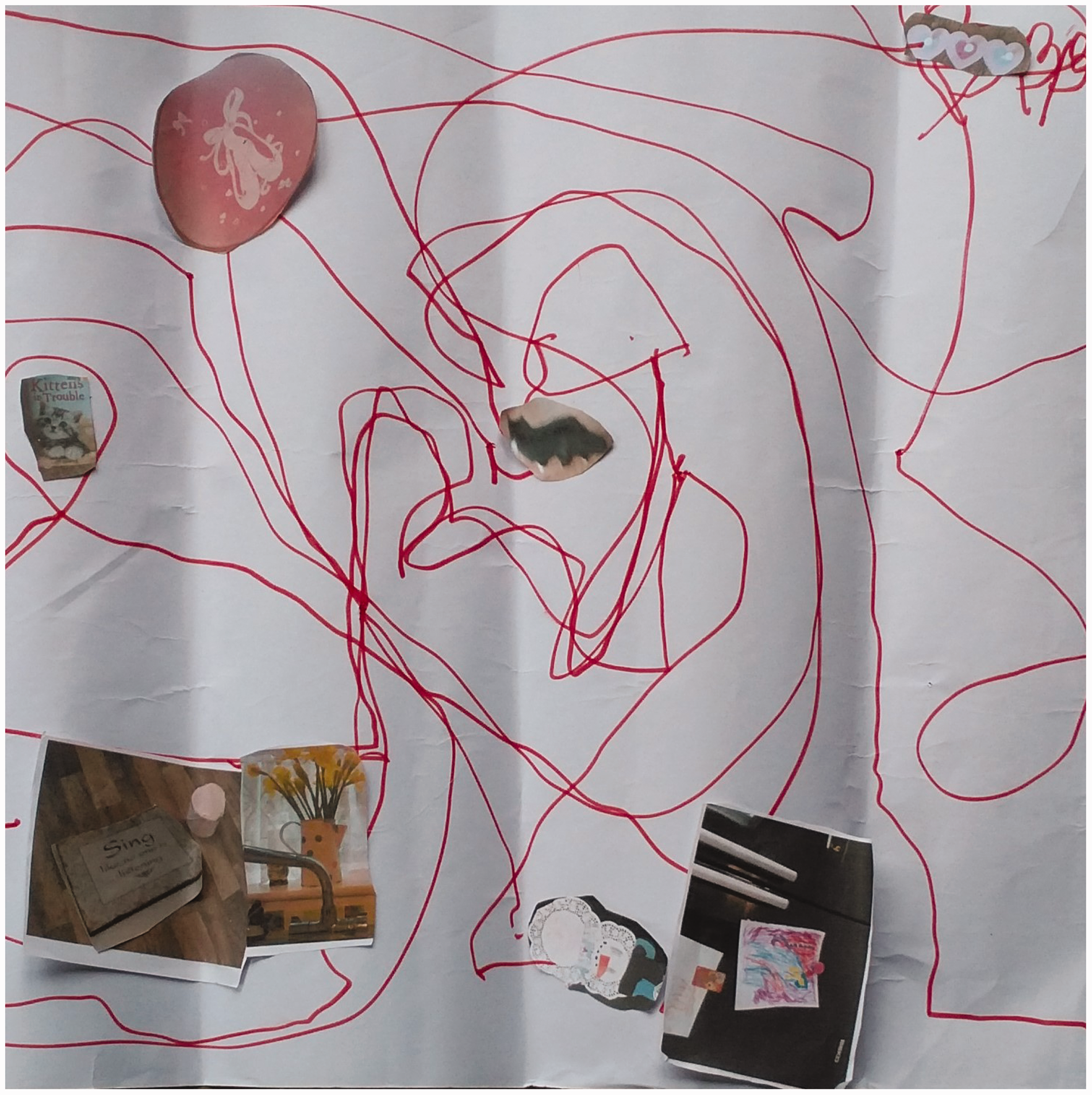
Millie the cat at the centre of the pathways around the home environment.
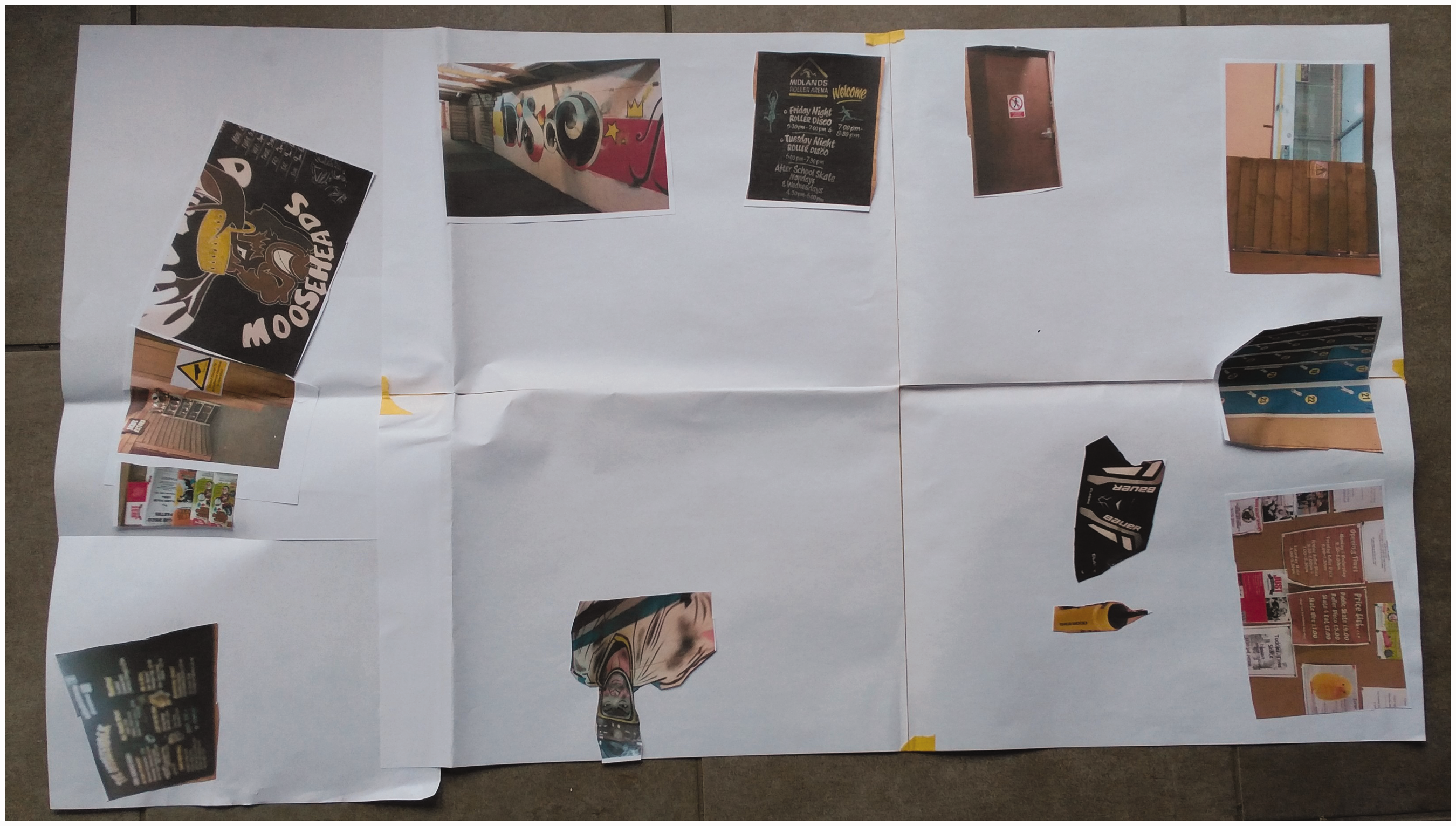
Jeffrey’s community setting map.
Jeffrey, 4-years 10 months, community setting
Jeffrey’s map gives the viewer a bird's-eye view of his community setting, a roller skating rink at a leisure centre (Figure 3). The map covers the space from the kiosk on the far right of the page, along the corridor which is flanked by graffiti-style artwork on the walls, to the entrance to the skating rink on the right hand side of the page. Working from left to right, Jeffrey indicates through his map text the images that the viewer will see should they come to visit his familiar environment. The map indicates both the spatial and angular relations between the images, including which images are found adjacent or opposite, relatively close or relatively far from one another.
Editing and adapting the map to reflect physical locations
A primary concern for the children who took part in the study was creating a mapped representation of their environment which identified where the images depicted in their photographs were originally found. Numerous instances were observed during the mapping phase of the children editing and adapting their maps to reflect where the images were found within the familiar environment. For example, Jeffrey placed images on his map initially but later moved and adjusted these in relation to the placement of other images. This initial placement may be thought of as approximation, which becomes more refined as further images, and therefore information about the environment to be mapped, were added. It doing so, the children showed awareness of the two-way relationship between maps and the environment that they represent. Furthermore, it also offers evidence that the children in this study conceptualised images as being linked to their specific physical location.
In creating the map texts, the children were working primarily with the photographs they had taken on an earlier occasion and they frequently referred to the image photographs by their locational names. Within photography the effects of the image on the viewer and the meanings attached to these are distinct from the object photographed (Barthes, 1993). Following this, Barthes describes first order meaning, relating to recognition of what is registered by the image or photograph, and second order meaning, which relates to the cultural and connoted meaning drawn from the viewer’s previous experiences and engagements. The findings of this study suggest that, for the children, place and locational names are a part of their connoted meaning, in so far as their experiences with images are tied to the locations in which they are found. When Burbules (2004) identifies ‘space’ and ‘place’ as two separate concepts, he notes that when people are within familiar places ‘they know where they are and what it means to be there’ (174). For Molly and Jeffrey, what it means to be in their ‘place’ reflects not only the prior physical experiences and engagements suggested by Powell (2016) but also the artefacts and images within it.
The lack of corrective feedback provided by the mapping task led the children to seek their own means of confirming that their map reflected each image’s physical location. Molly stood up repeatedly during the mapping phase and moved between objects and images in the environment in order to judge their placement relative to one another, thus informing the representational choices she made on her map text. Such observations present links between the act of mapping, proprioceptive responses (Powell, 2016) and the physical nature of young children’s meaning making identified by Mackey (2010) and Hackett (2014). It is the visual mapping methodology adopted within this study which allowed the link between children’s conceptualisation of images and the physical nature of their meaning making practices to be identified.
The significance of movement
In both the home and community setting map texts, the sense of a journey or movement around the environment is conveyed through the placement of images. Whilst no comment was given by myself, the children seemed concerned with using their maps to show not only where the images could be found within their familiar environment, but also how you could move from one instance to another and what you might see nearby. Lynch (1960) describes mapping as a tool to represent how people perceive the relationships between space, place and the social and physical features of the physical and built environment. Furthermore, a growing body of research identifies that children’s meaning making and movement are intrinsically linked (Daniels, 2016; Hackett, 2014; Mackey, 2010).
The order in which one encounters images as they move through an environment was of great interest to the children. Jeffrey’s map of his community setting not only recorded the location of each image relative to one another, but also showed in sequential order the images a visitor would encounter as they followed the pathway repeatedly taken by Jeffrey during his weekly visits to the skating rink. In the unedited photographs in Figure 4, the pathway through the images is immediately apparent, whilst the selections made by Jeffrey in Figure 5 show the images he engaged with. Jeffrey was keen to demarcate the edge or bounds of his map which formed just one part of the wider community setting, telling me, ‘my maps shows the image of the roller arena from the entrance as far as you can see in the picture, all the way up to the rink’. The space left between the images on his map signified a pathway, whilst the key images chosen to form his map may be thought of as landmarks along the route to the skating rink. The annotations made in Figure 6 emphasise the compositional choices made by Jeffrey in order to conserve space at the centre of his map.
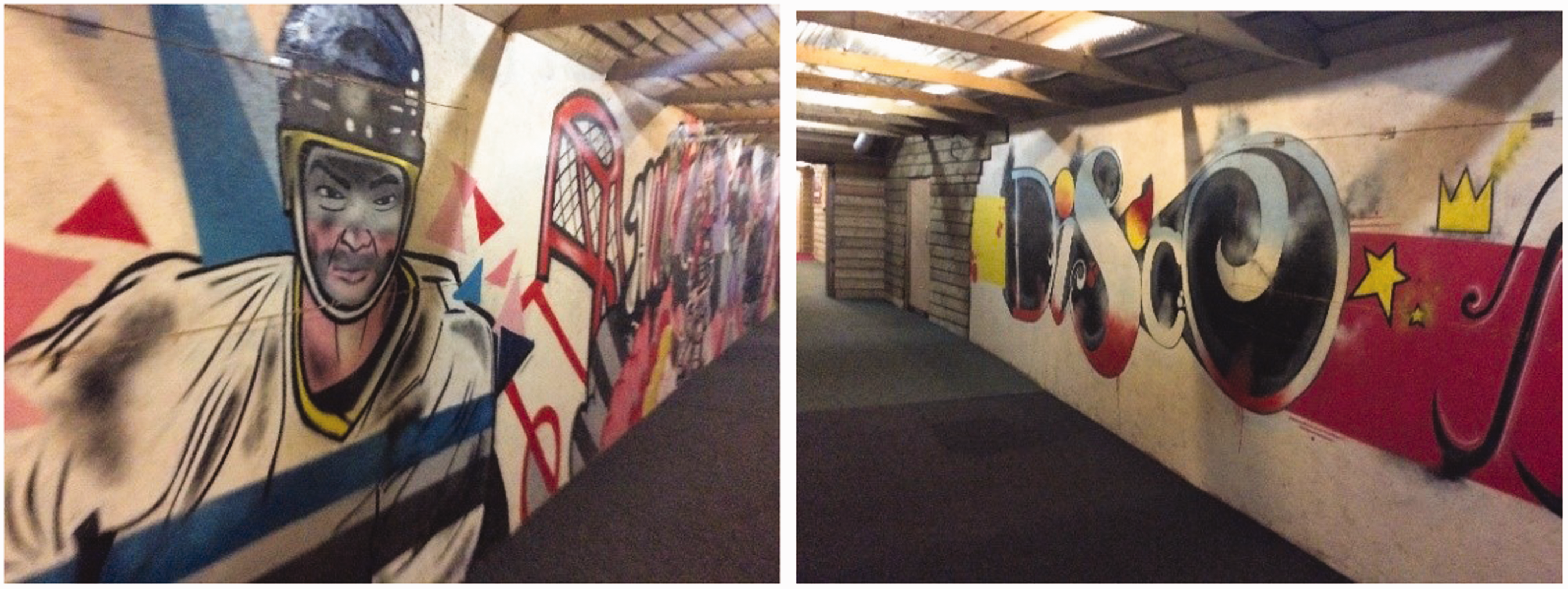
Jeffrey’s unedited photographs.
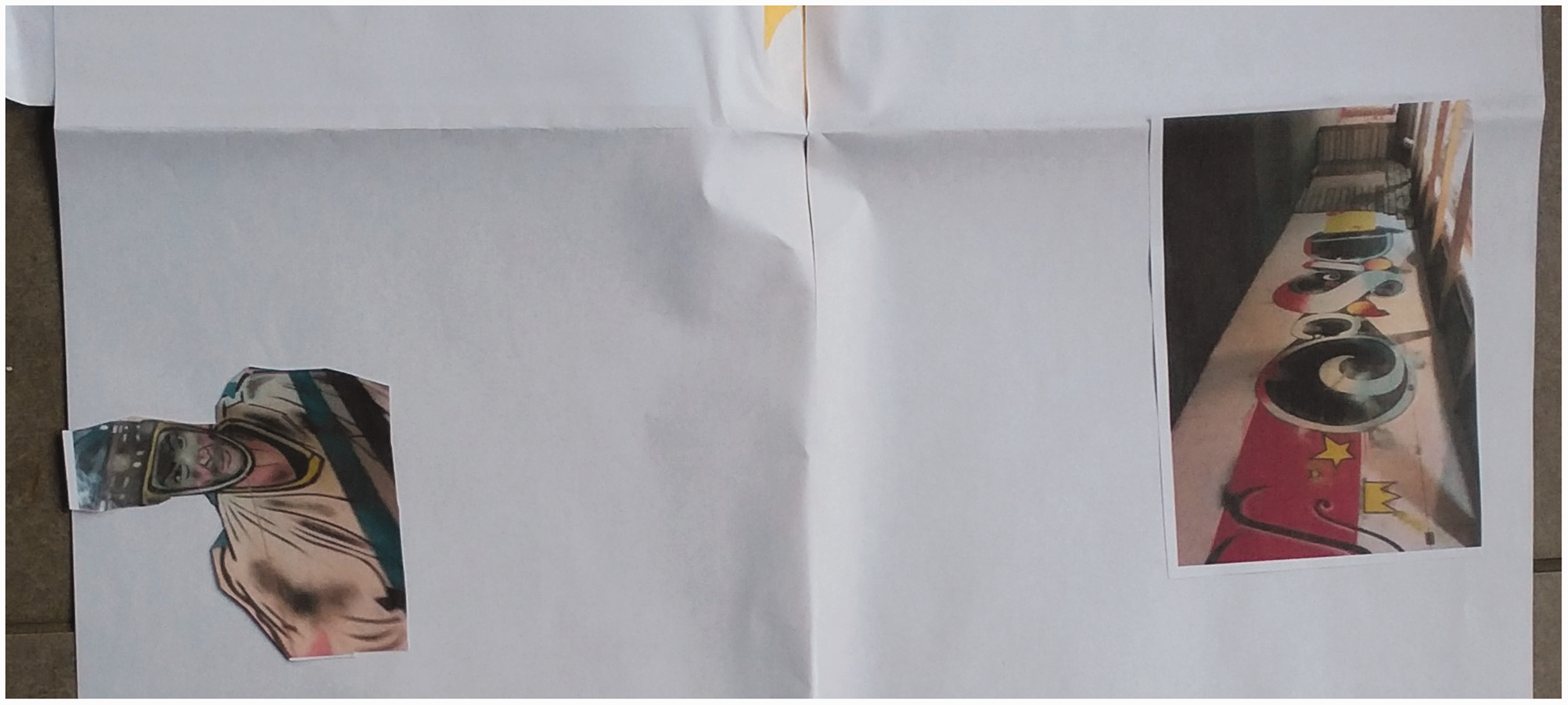
Excerpt from Jeffrey’s community setting map.
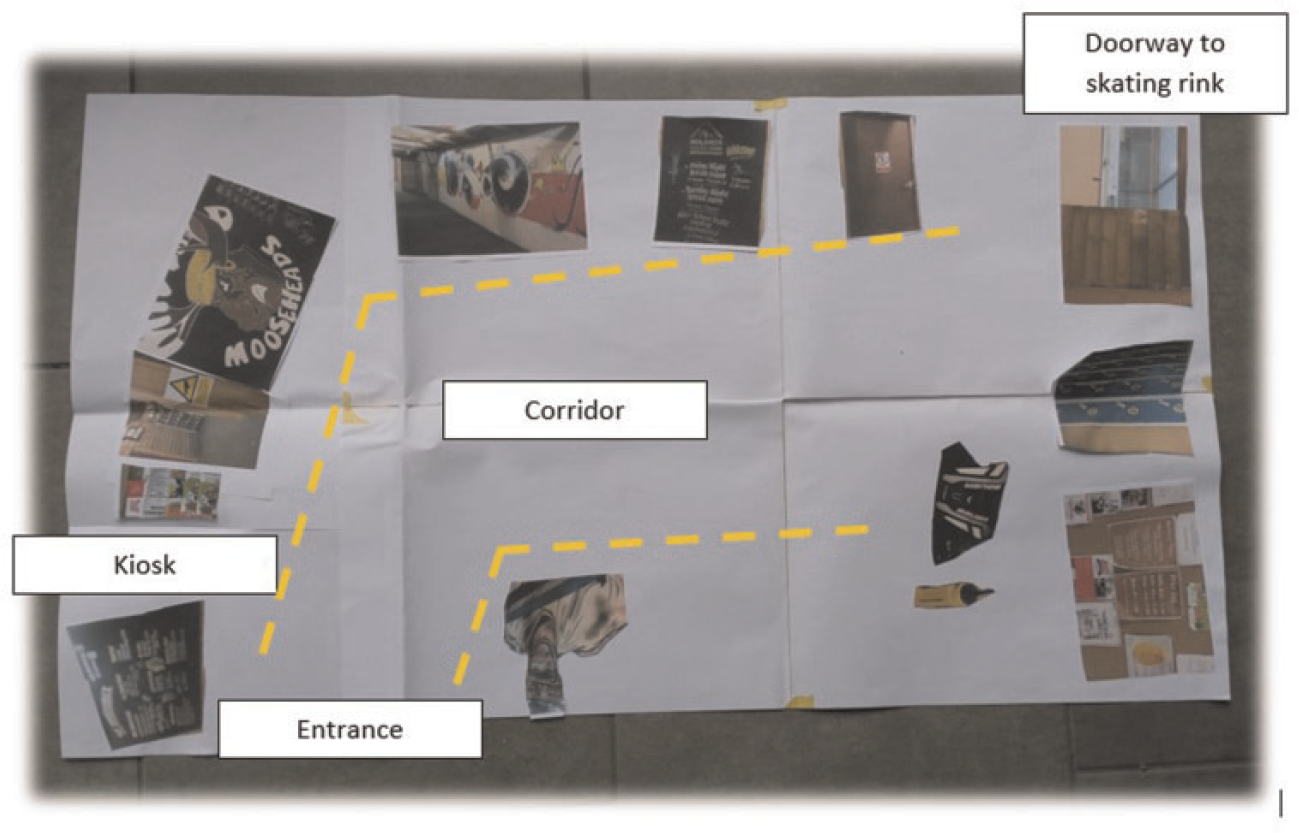
The annotated community setting map.
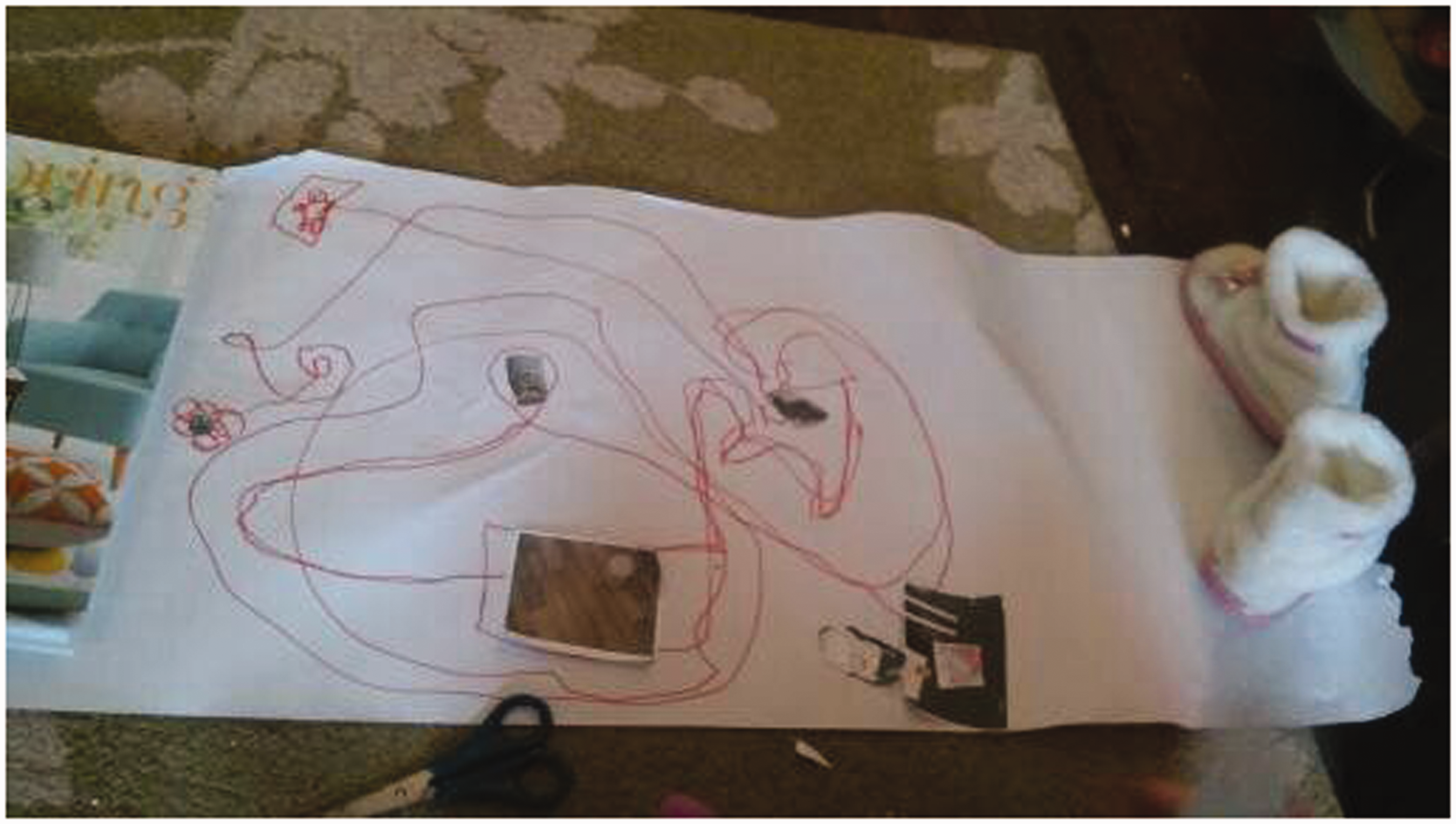
Molly’s map during the mapping phase.
The idea of movement as a journey in and around the images in their environment is particularly evident in Molly’s map of her home environment (Figure 7). She marked lines on her page to record not only the movements she took in capturing the images, but also the movements she took in returning to them during the mapping activity to check and clarify their position and meaning. Although she described her marks through the story of her cat moving around her home, the lines she produced documented the pathways she herself took. The overall map produced shows similarities to the maps created by Hackett (2014).
Images informing the use of an environment
In engaging with multimodal texts created by others, the children showed a developing awareness of texts being created with an audience in mind. The children perceived images within the environment as being adapted in order to suit the needs of a particular audience, with the children also identifying whom they felt the target audience were.
In discussing the image-based texts he encountered within the community setting, Jeffrey attributed many as being intended for those who were unfamiliar with the environment, which is perhaps a very literal sense of providing a message to an audience. This included signs, notice boards, flyers and leaflets. Jeffrey did not appear to consider himself as the audience to such texts, perhaps because he was so familiar with the skating rink. In relation to the general information on the notice board shown in Figure 8, Jeffrey suggested that his friends might look at the noticeboard. Whilst noting prices and types of session, Jeffrey identified information which would be useful to know, thus showing an awareness of how the environmental signage met the needs of an audience who were new visitors to the setting.
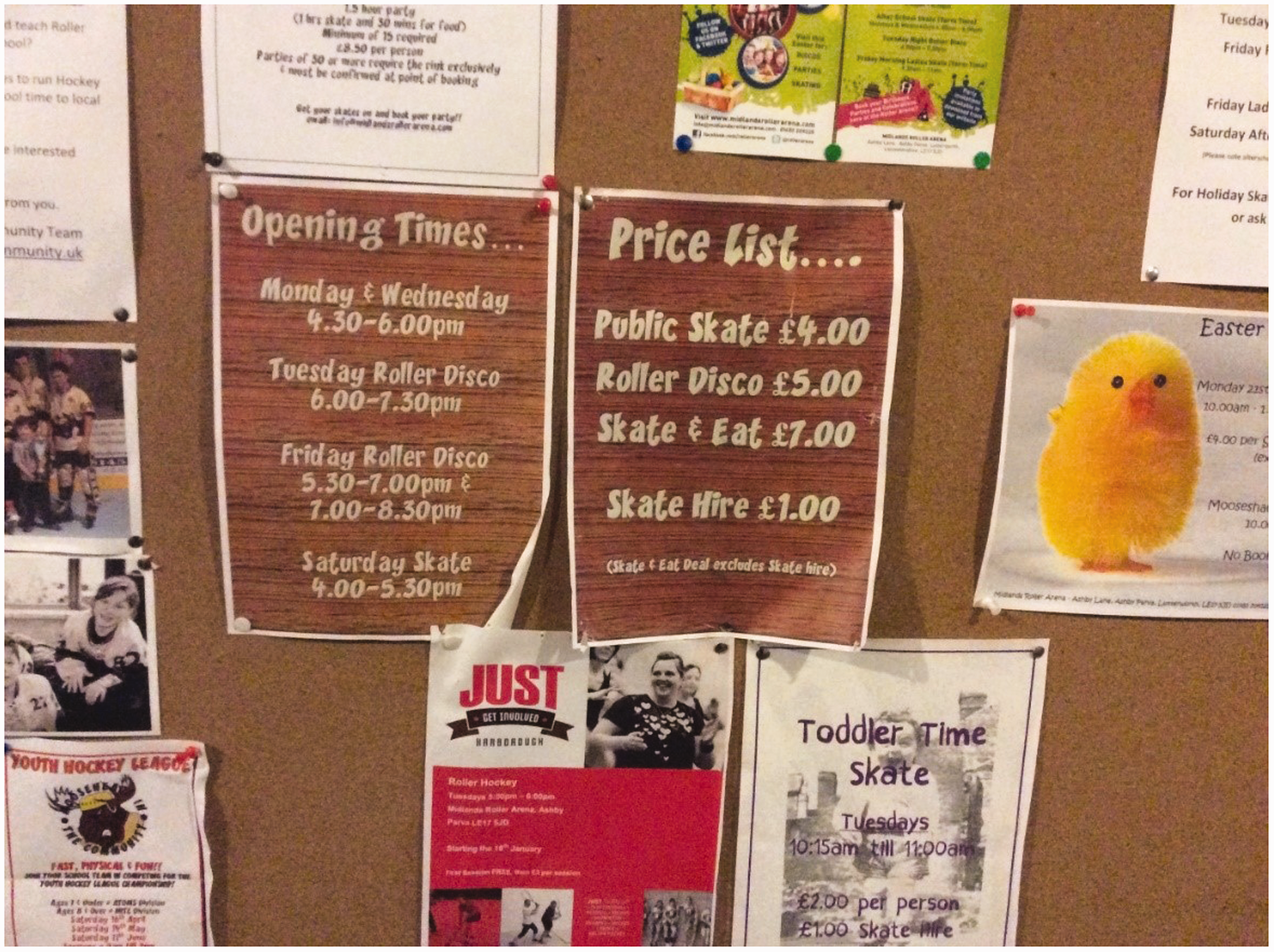
Jeffrey’s photographs and description of signs in his environment.
Jeffrey: It’s a pin board, it tells you stuff about the hockey and stuff that’s going on.
…
Jeffrey: There is a price list, so it tells you the price for the public skate, the roller disco, the skate and eat and skate hire.
Sophia: Why do you think it lists different prices?
Jeffrey: Because you can get more stuff for different prices, so you can skate and eat for 7 pounds or you can just skate for 4 pounds.
Sophia: Do you think people going there would know that before they went?
Jeffrey: No.
Both Jeffrey and Molly perceived images within the environment as playing a role in orienting or guiding the viewer. As identified previously, Molly organised her map to reflect the movements which her pet cat could make in relation to the images in her home. During the mapping activity, Jeffrey also identified images as having a role in how people could access and use the space. In relation to the images located throughout the corridor he told me, ‘well because you need to go down there. There’s the rink through there, and the wall there. So it’s showing you what’s past that wall.’ Jeffrey suggests that the images within his environment play a role in showing the audience where it is possible to go and define a pathway through the environment. Jeffrey’s comments and the consideration he gave to the orientation of images on his map bear similarities to Powell’s (2016) case study observations of both adults and children rotating maps in what she refers to as a ‘proprioceptive response to memories of walking through a space’ (403). Jeffrey articulated his responses both visually and verbally during the mapping activity. The findings of this study extend Powell’s observations to acknowledge that young children also make proprioceptive movements in relation to their environment and, more significantly, that they are aware of the role such movements have in supporting meaning making. The composition of the map texts, to include pathways and images deliberately oriented to indicate perspective, demonstrate that these embodied acts are not subconscious but are conveyed as an intrinsic part of young children’s meaning making practices with images within their environment. Furthermore, the children were aware of how the organisation of images in their map text could convey information to an audience regarding the use of an environment.
Discussion
This study has shown that young children hold a wealth of knowledge regarding the images that they encounter within their familiar environments. Through exploring the emergent themes which arose, it became apparent that the children in this study conceptualised the physical location of images as being tied to their meaning. Furthermore, the children captured the important role that they felt movement had in their meaning making practices.
One of the key ways that children conceptualised images was to relate these to the physical location and context in which they were encountered. This was evident both in the ways they placed their printed photographs onto their visual maps and in the comments they made during the activity, when referring to the images. Scollon and Scollon (2003) state that the location of a text contributes to its meaning. The findings of this study extend existing knowledge of children’s multimodal engagements as they capture the children’s own identification that the location and context of images are significant. A key difference between the findings of this study and those of Yamada-Rice (2014) is the links young children make between images and the environment. Yamada-Rice identifies that images inform children’s use of the environment, whereas this study extends this observation to children attributing the message conveyed to others who use the environment. Furthermore, whilst Yamada-Rice’s study does not directly report upon the links children make between images they encounter across the environment, in the context of this study the children articulated through their map texts the importance they placed on the spatial location of images across the environment and in relation to one another.
A further key finding of this study was the children’s identification of movement as being intrinsic to their understanding of images. This offers support for the recognition of embodied dimensions of meaning making within education (Burnett and Merchant, 2015). Hackett (2014) argues that not only are the children’s movements in themselves an act of communication, but that understanding children’s meaning making practices cannot be conducted in isolation from other communicative modes, including movement. Previous studies have made use of stop motion cameras (Yamada-Rice, 2014), or an adult transcriber to record movement within an environment (Hackett, 2014). This study offers an alternative approach, which in contrast to previous studies enables the children to record their own perceived movements within an environment as part of their wider meaning making practices. Thus, the use of participatory visual maps presents itself as a means, not only for capturing children’s perspectives regarding the texts they encounter within familiar environments, but also for their self-identification of the physical and active nature of such meaning making engagements.
Within this study the importance of multimodality in children’s communicative practices is reinforced. The children were asked to present the images that they encountered in their environment using a visual map as a 2D artefact. However, the children were not content with this representation and wanted to show how it was possible to move within their environment in relation to the images they encountered. This movement is represented on the map texts. This observation is significant as it contributes to the wider argument for multimodal education (see Burnett and Merchant, 2015; Taylor, 2014). Whilst educators are aware of the need to build upon young children’s knowledge of the written mode, gained through their prior experiences with environmental print (see Hannon and Nutbrown, 1997), it is identified that they also need to attend to children’s wider multimodal communication practices.This includes those involving the visual mode (Yamada-Rice, 2014), movement (Hackett, 2014) and, more broadly, engaging children in the creation of multimodal texts which allow them to make choices and consider the ways their message is conveyed across modes (Kervin and Mantei, 2017). Such practices are reflective of wider, evolving means of communication in society (Jewitt, 2002); continuing advances in information and multimedia technologies allow the creation of texts that select from and combine the full range of modes available for communication (Jewitt, 2006; Kress, 2003). The findings of this study therefore call for educators and policymakers to recognise such pre-existing multimodal practices and the impact they have on young children’s learning.
Conclusion
In engaging with images in their environment, young children identified movement as being intrinsic to their meaning. This reflects the assertion that young children’s meaning making practices are more embodied and more spatial than those of adults (Christensen, 2003; Hackett, 2014), with children showing complexity in their use of non-verbal modes of communication. The identification of young children’s perceptions of movement in and around their environment in relation to images would not have been possible without adopting the methodological approach of this study and demonstrates the need to develop pedagogical approaches which look closely at different modes and their affordances. Within the classroom environment there is a danger that non-verbal modes of communication may be overlooked (see Taylor, 2014). Recognising embodiment within practice involves acknowledging how meaning making matters to children ‘in the moment’ (Burnett and Merchant, 2015).
One of the limitations of this research is that it has focused on the experiences of two children drawn from a small-scale study with five participants. Although this allowed rich, detailed data to be gathered regarding how the individual children conceptualised images within their familiar environments, wider generalisations about the multimodal practices among different groups cannot be drawn. The findings discussed here, particularly in relation to the link children make between their own movement and meaning making, require further in-depth exploration with a larger sample across alternate settings, including the home and pre-school Early Years settings. A further area for future research is the use of the visual mapping technique with children of different ages. The two, 4-year old children discussed in this paper are older than those involved in Yamada-Rice's (2014) and Hackett’s (2014) studies. This raises unanswered questions regarding the significance of age in the findings reported. A longitudinal study of children capturing their perspectives at key points including the year before starting school, within the first year of school and within Key Stages would offer further information regarding the use and development of multimodal communicative practices.
These limitations notwithstanding, for children, the location of images both within the environment and in relation to one another is important. Within the classroom environment, Daniels (2016) identifies that practitioners’ organisation of space and materials relate closely to their conceptualisations of literacy practices. As an enacted pedagogy this may both enable and constrain meaning making practices. Practitioners need to recognise the ways in which young children perceive texts as multimodal, differing from a conventional linear view, and ensure that children are given opportunities to explore texts spatially. This would include consideration of factors including the exploration of the context and location of images, their relationship to one another and the passage of movement when engaging with texts. Tracing young children’s use of space and materials provides practitioners with a starting point for understanding children’s wider meaning making practices.
The findings reported have provided insights into the ways in which young children not only engage with images within their familiar environments, but also how they utilise the visual mode to convey their own meanings. The creation of mapped representations of environments allowed children’s perceptions of the spatial and embodied aspects of meaning making to be foregrounded. It is now imperative that these perceptions are not only recognised by practitioners and policymakers, but also supported within the wider Early Years environment. Young children’s engagements are multimodal and take place against a backdrop of shifting communicative practices in society. Therefore, the ways in which communication is viewed in the Early Years must also shift if settings are to facilitate young children’s meaning making.
