



Abstract
This article focuses on the representation of Jews in the Finnish general press before the Second World War. The data comprise of 313 texts gathered from newspapers and magazines that were targeted at general audiences and that appeared between the years 1821–1936. The texts were examined on three levels: First, the upfront topics pertaining to Jews were identified and grouped under 12 themes. Second, the tone of the mentions was evaluated as positive, neutral, or negative. Third, underlying assumptions, opinions and attitudes expressed aside the upfront topics were identified from the texts. Until recent decades, the idea in Finland has been that there was hardly any antisemitism in the country before or during the Second World War. As new research has emerged, this view has repeatedly been challenged. However, research on the general media’s representation of Jews has remained scarce. This article aims at filling this gap. In doing so, it offers a view on how Jews were seen and discussed in the Finnish society at large. So far, the studies on pre-WWII media have concluded that antisemitism was limited to far-right or ultranationalist papers. This article ends up with the opposite conclusion.
Introduction
The number of Jews resident in Finland has always been small. First individual Jews settled in Finland in the late 17th and early 18th century but a Jewish community only started to form after 1858. Finland gained independence from Russia in 1917, and the same year Jews were granted civil rights (Holmila, 2012: 521; Swanström, 2016: 43). Their number peaked at around 2200 during the World War II (Laitila, 2014: 37–38; Muir, 2013: 49).
Until recently, it was commonly believed that antisemitism hardly existed in the country prior to or during WWII. This idea was entrenched by the fact that although Finland was an ally of Nazi Germany in WWII, Finnish Jews were not deported to Germany, and Jews fought against Russia side by side with the Finns. During the last two decades, research on the attitudes toward Jews in pre-war Finland has increased notably, confuting the notion of a country practically devoid of antisemitism (see, e.g., Forsgård, 2002; Ahonen, 2017; Ahonen et al., 2019: 139–141; Muir and Salomaa, 2009; Muir and Worthen, 2013; Swanström, 2016). Research on how Jews were represented in the general press before WWII has, however, continued to be scarce—and somewhat unable to detect antisemitism in its less blatant forms (Muir, 2013: 51–53). Thus, this article is one of the first systematic reviews on how the general media represented Jews in Finland before the Holocaust.
Jews in Finland
Before the 1830s, hardly any Jews were resident in Finland. Until 1809, Finland formed the eastern part of Sweden, and Swedish laws only allowed Jews to reside in three cities, none of which were situated in Finland (Laitila, 2014: 15–16). In 1809, Finland became a Grand Duchy of Russia, but the Swedish laws concerning Jews were retained. A Jewish minority started to form in Finland after 1858, when Jewish soldiers who had finished their service in the Russian army were given a permission to stay in the location where they had served (Swanström, 2016: 43). Over the following decades, the number of Jews in Finland gradually increased: in the 1910s, the Jewish population in Finland was around 1 200, and during the Second World War around 2200 (Laitila, 2014: 66, 124; Muir, 2013: 49; Torvinen, 1989: 119–120). Today, about 1300 Finnish citizens identify as Jews (Söderling, 2020: 12).
After the war and the revelation of the Holocaust, Finns readily adopted a view that there had been no significant antisemitism in the country (Hanski, 2006: 293; Holmila, 2011, 2012; Laitila, 2014: 10, 224–226; Muir, 2013; Muir and Worthen, 2013: 2; Torvinen, 1989: 118, 162–166). This notion was further fortified by the fact that although Finland had been an ally of Nazi Germany during the war, Jews had fought alongside other Finns, and Finnish Jews were not deported to Germany (Torvinen, 1989: 132–136, 148–152; Worthen and Muir, 2013: 4–5). However, other Jews were deported by the Finnish authorities. 12 foreign civilians who were Jews, and almost 3000 prisoners of war, among them Jews, were handed over to Germany (Muir, 2013: 53; Silvennoinen, 2013: 194–195; Tilli, 2013: 156). In addition, a vessel carrying 60 Austrian Jewish refugees was refused entry into the Port of Helsinki in August 1938, and numerous applications for asylum were rejected (Muir, 2013: 53; Torvinen, 1989: 121–125).
A book published in 1951 by Santeri Jacobsson was the first to report evidence of antisemitic attitudes in Finland. In 1979, the deportation of Jewish prisoners of war was brought to public attention by Elina Suominen (1979). However, the discussion on Finnish antisemitism remained marginal until the 21st century. One reason for the post-war silence was Finland’s fragile position: a nation recovering from war in which it had been an ally of Nazi Germany was now under constant scrutiny and pressure from the Soviet Union. Another reason was the silence maintained by Finnish Jews in a very sensitive situation; they had been granted full civil rights in 1917, and did not want to make their situation as new citizens difficult by drawing attention to their experiences of antisemitism. On the contrary, they issued a memorandum denying that antisemitism had existed in Finland either before or during WWII (Ahonen et al., 2019: 139, 148; Ekholm et al., 2016: 46; Holmila and Silvennoinen, 2011: 613).
During the last two decades, publications challenging the conventional view on Finland and Jews have become more numerous (see, e.g., Bélinki, 2000; Sana, 2003; Hanski, 2006; Muir, 2009; Silvennoinen, 2008, 2009; Ahonen, 2008, 2017; Muir and Salomaa, 2009; Muir and Worthen, 2013; Laitila, 2014; Luukkanen, 2014; Ahonen et al., 2019). In addition, Antero Holmila (2011, 2012) has studied the silence that, in Finland, continued to surround the Holocaust long after the war years. This silence has very likely contributed to the unwillingness of the general public to accept the less flattering aspects of the pre-WWII history of Jews and Finland (Holmila, 2012: 519; Holmila and Silvennoinen, 2011: 606, 611, 616). As Ekholm et al. (2016: 47) state, ‘Denying antisemitism has been an integral part of argumentation that aims to distance Finland as a nation from anything that has to do with the Holocaust.'
Representation of jews in the press before WWII
Studying dailies and periodicals provides a way of approximating the general, widely shared views and attitudes of people (Brustein, 2003: 14, 17). Gerlinde Mautner (2008: 32) argues that quality papers ‘very much reflect the social mainstream,’ and are ‘obvious sources to turn to’ if a researcher is interested in the dominant discourses in a society. Also, during the research period, newspapers and magazines were the most important contemporary source of information and hence had a strong impact on the construction and dissemination of people’s ideas and attitudes (Brustein, 2003: 17; Mautner, 2008: 32).
Before the era of television, newspapers and magazines were an important source not only of information but also of entertainment (Landgren, 1988: 394–397; Leino-Kaukiainen, 1992: 190–193). The data used in this study include both non-fictious and fictious texts published in the source material, since both contributed to the image that was formed about Jews and/or Judaism. Whereas non-fictious texts were viewed by the readers as a reliable representation the world, fictious texts drew on shared narratives, meanings, and images, simultaneously creating and strengthening patterns of perception and interpretation (Achinger, 2012: 240–241; Brustein, 2003: 17).
Systematic research on the general media’s representation of Jews before WWII has been scarce. Studies have either concentrated on religious (see, e.g., Ahonen, 2008) or ultra-right papers (see, e.g., Karhu, 2014), or combined data obtained from general papers with other source material, such as political debates, official proceedings, literature, or satirical magazines (Hanski 2006; Jacobsson, 1951; Laitila 2014; Forsgård, 2002). One master’s thesis looked at general papers that were published in the years 1933 and 1938 (Kinnunen, 1975). A broader time frame, 1918–1944, was examined in Jari Hanski’s doctoral dissertation (2006) which looked at antisemitism in magazines and literature, including also ultranationalist papers in the data. Hanski’s work has later been criticised for not being able to identify antisemitism in its less blatant forms (Muir, 2013: 51–53). Also, general papers listed in Hanski’s data include explicitly antisemitic texts which have not been addressed in the research (e.g., Kuvalehti, 1938; Suomen Kuvalehti, 1936).
The representation of Jews in general media has also been discussed in a book by Teuvo Laitila (2014), which draws its findings from various sources. Both Laitila’s and Hanski’s works bring forth cases or antisemitism found in general papers (in Laitila, 2014, see, e.g.,: 52–54, 58–61, 63–66, 106, 110, 115–116, 157; in Hanski, 2006, see, e.g.,: 116–117, 134, 207, 235), but still they conclude that antisemitism was limited to extremist groups and individuals (Hanski, 2006: 104, 285, 287, 292–293; Laitila, 2014: 229–230). One reason for the conclusion might be that, in these studies, antisemitism was defined as a wide, intentional political program, and hence normalised anti-Judaistic attitudes, hate speech, or acts by individuals were not deemed as antisemitism proper (Hanski, 2006: 20, 207; Laitila, 2014: 8, 11, 230). Another reason may be the fact that Finland is a latecomer in the field of racism studies, and hence the ability of Finnish research to detect and identify racism has only recently started to catch up with that of its Central-European or Anglo-American counterparts (Ryynänen, 2020).
European studies on antisemitism have repeatedly shown how, preceding the Holocaust, Jews were represented as murderers of Christ and enemies of Christians, as fanatical, backwards, or superstitious, as conspirators, dishonest, power-seeking, or avaricious, as lascivious, smelly, or ugly, and as a threat to nations and their people, economy, or morality (at times likened to diseases or bacteria) (Berger, 1986: 11; Brustein, 2003: 46–47, 51–58, 77–79, 97–98, 119, 177–180, 265–266; Endelman, 1986: 95–96, 99; Katz, 1980: 55, 246–252, 304, 309). The European research has usually aimed at scrutinising antisemitism: how its ideas were developed and disseminated at different times. Thus, the data often include—alongside general papers—administrative proceedings, political statements, speeches, novels, theatre plays, movies, religious writings, or extremist propaganda. Consequently, the research seldom give specified information on how Jews were discussed in the general press. However, William I Brustein’s (2003) book Roots of Hate looks at the attitudes toward Jews in the major dailies of France, Germany, Great Britain, Italy, and Romania between the years 1899 and 1939. Brustein concludes that the multidimensional nature of antisemitism made it possible that Jews could be disliked for many different reasons: religious, racial, economic, and political (p. 351).
Research questions and data
This research aims at offering a view to how Jews were discussed in Finland from the beginning of the Finnish general press until the upbreak of the Second World War. The approach is that of cultural studies, and, instead of doing a thorough examination on specific news events or a detailed analysis of media content from a narrow time period, the data extend over one hundred years (1819–1936) and views the discussion at large. The broad time frame enables to look at general features of discourse beyond contemporary trends or currents. Thus, it helps to rule out the possibility that potential antisemitist discourses found in the study could be downplayed as only pertaining to certain historical periods or contexts.
1. What topics about Jews and/or Judaism were discussed in the Finnish general press prior to the Second World War?
The first research question seeks to gain a general idea of what was written about Jews and/or Judaism in the Finnish general press before WWII. As very little information exists on the broad societal discourses concerning Jews and Judaism in Finland at the time, an understanding of the general media’s representation of Jews is called for.
2. In what tone were these topics discussed?
If one wants to understand how Jews/Judaism was discussed, it is not enough to know what topics were dealt with; it is also important to identify the tone of each topic, whether it was positive, neutral, or negative in its orientation toward Jews/Judaism.
3. What kinds of underlying attitudes or preconceptions can be detected in the texts?
The third question examines the preconceptions, attitudes, and views present in the texts aside from the upfront topics. The texts were closely analysed to gain information on the underlying views the writers held on Jews/Judaism. The findings are regarded as indicative of the underlying attitudes of society at large.
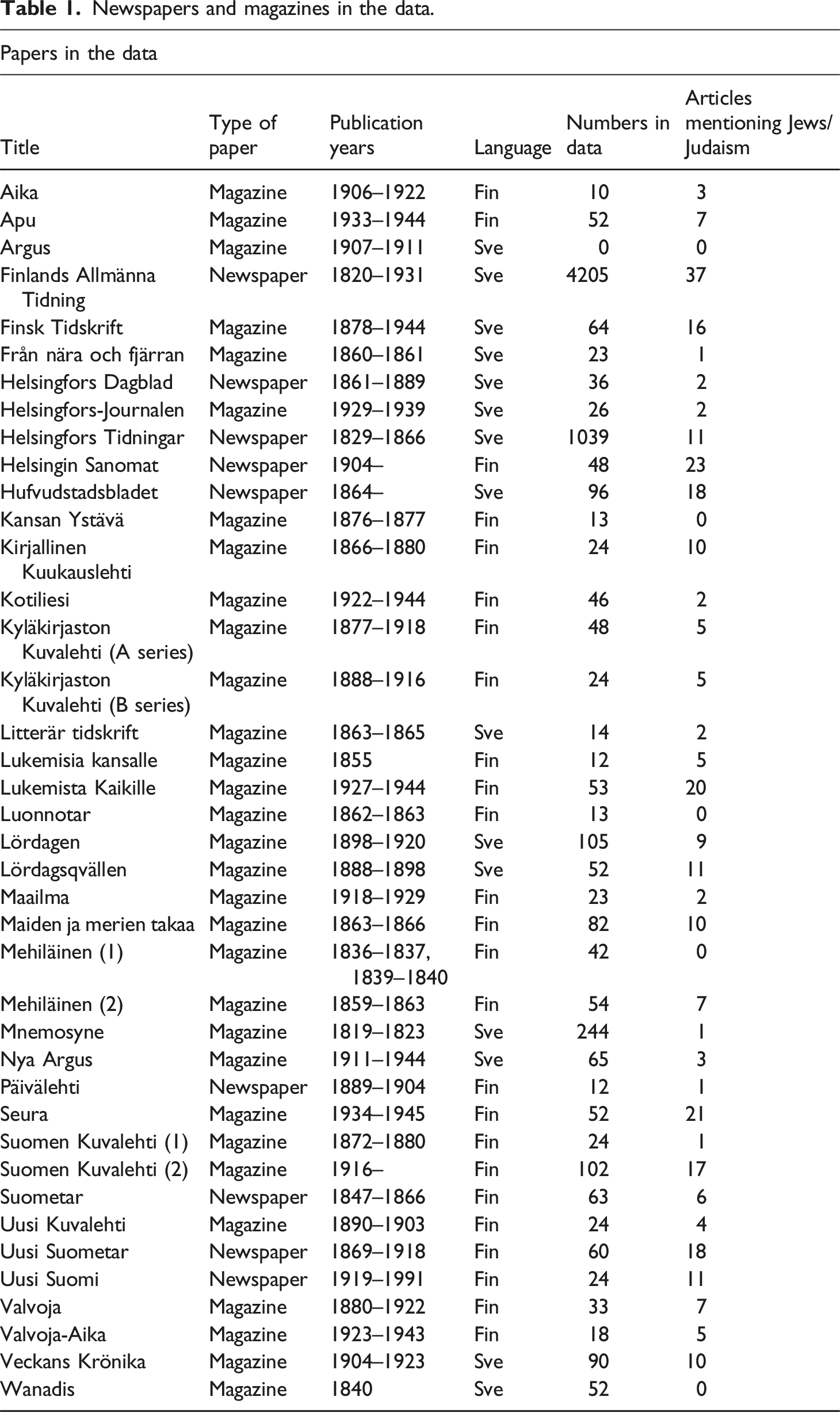
Data were collected from the Finnish National Library’s digital archive of newspapers and magazines. A search engine was used to search for mentions of Jews and/or Judaism. Search phrases were in Finnish and Swedish, and formulated to include mentions in all possible inflections (in Finnish ‘juutalai*', in Swedish ‘jude* judisk* judar*'). Opinion pieces, advertisements, and announcements were not included. Thus the texts in the data have undergone at least some kind of journalistic decision making or evaluation before publication.
Newspapers and magazines in the data.
Newspapers
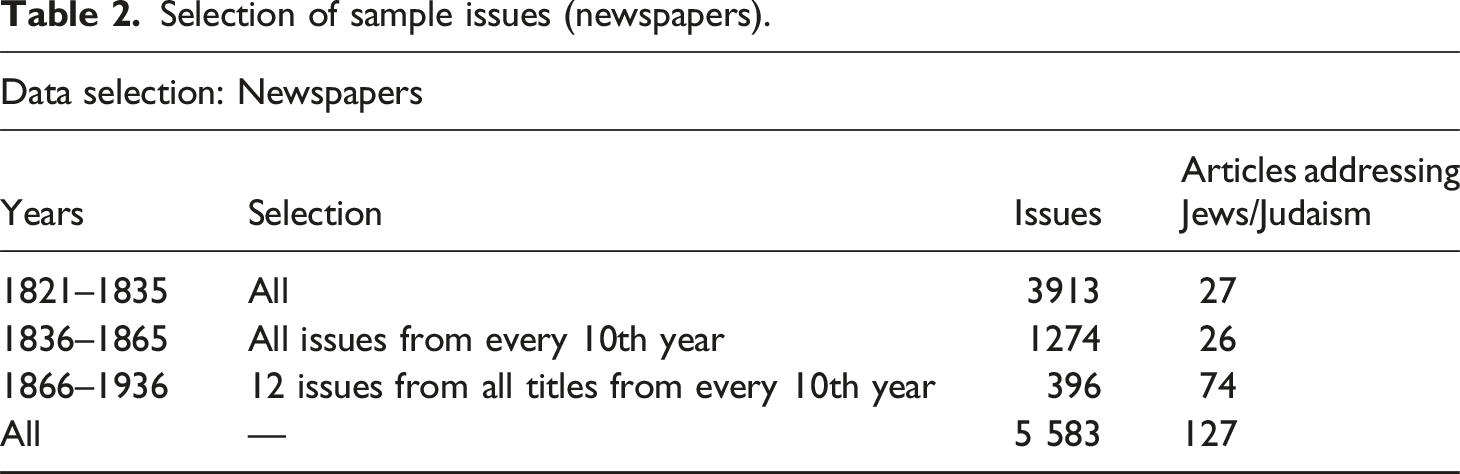
The oldest newspaper text in the data is dated 27 January 1821. Up to the year 1835, all issues of the selected newspapers were examined. At that point, the number of titles, days of publication and mentions of Jews had became so frequent that the data selection criteria had to be narrowed. From 1836 on, only issues from every 10th year were included in the data. Thus, from there on, the years of study always end in number six, thereby making 1936 the last sample year before the outbreak of war.
Selection of sample issues (newspapers).
Magazines
The oldest magazine text in the data is from May 1822. All issues from all the general periodicals were examined up to 1884. In the late 1880s, however, the number of magazines appearing in Finland started to increase rapidly, and the selection criteria had to be narrowed. From 1885 on, only the most influential or widely read titles were included (Tommila, 1991, 1992a). From 1866 on, for each title, all issues from every 10th year were examined (Table 3).
The number of mentions grows steeply in the last year group. This is due to the increse in fictious stories where the writers had often included Jewish characters—usually to play the parts of villains or greedy business owners. In the data from 1822–1865, only one fictious text mentioned Jews, whereas in the data from 1866–1926 fictious texts covered 35.6% of the articles mentioning Jews. In 1936 the proportion was as high as 53.5%. In the findings below, the role of fictious texts for the themes and their tone is examined more in detail.
Selection of sample issues (magazines).
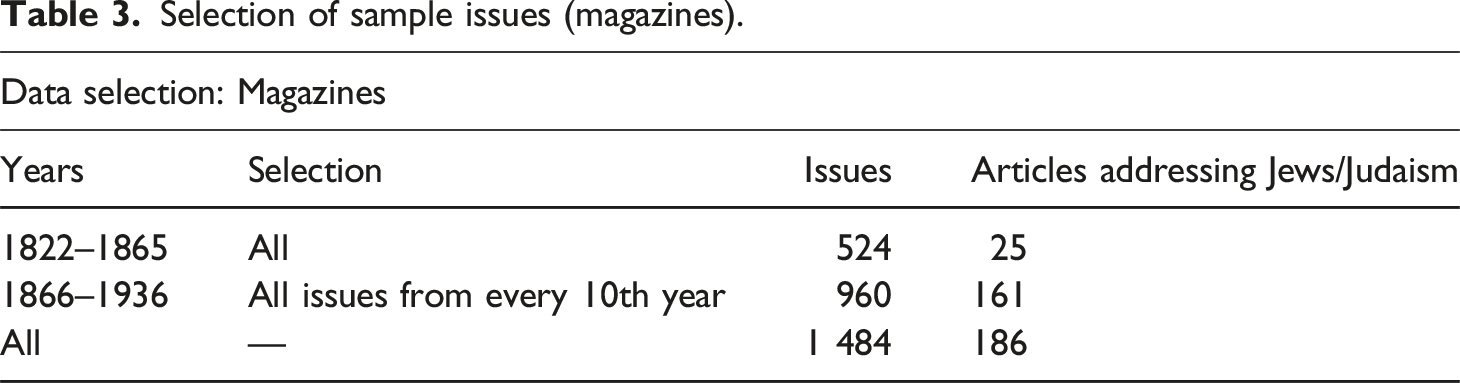
The search yielded a total of 313 articles that mentioned Jews or Judaism. Of these, 186 were in magazines and 127 in newspapers. In 71 cases, Jews/Judaism was the main subject of the article, and in the remainder Jews/Judaism was mentioned in articles that dealt primarily with other subjects. Because the data include only a small proportion of all the texts published during the years 1821–1936, this study is not comprehensive. It is, however, indicative of how Jews were seen in the Finnish general press from its early stages to the pre-war years.
Method
A three-level analysis was developed in order to examine the data, each level focusing on one of the research questions: 1. Upfront level: 1–3 main topics concerning Jews or Judaism were identified from each text. Topics were subsequently grouped into larger units of themes. 2. Tone: The tone of each topic unit was assessed as positive, negative, or neutral toward Jews/Judaism. 3. Background level: the texts were scrutinised more closely in order to detect claims, views, or ideas accompanying the upfront topics.
With two exceptions, the first two phases of analysis follow a method used by, for example, Brustein (2003) and a report made by WACC Europe and CCME (2017). First, this study differed from the two above-mentioned studies in that they evaluated the tone of entire articles (Brustein, 2003: 21–22; WACC Europe and CCME, 2017: 32), whereas this study evaluated the tone of individual topics, thus acknowledging that an article may include multiple topics, each discussed in a different tone. Second, the two former studies identified the tone as the tone used by the author in writing the text. Thus, a positive/negative topic was categorised as neutral if the style used was neutral. In this study, the tone of the topic was categorised as positive/negative in either of two cases: 1) if the topic itself was positive/negative (even if the author’s tone was neutral) or 2) if the tone was positive/negative. This is because a positive or negative image of an issue (such as a group of people) is not constructed solely by the way it is reported but also by the choice of what is covered about the issue (Krippendorff, 2013: 78). If the choice of topics is negatively slanted, it means that the issue is represented in a negative light, no matter how neutral the tone of reporting.
After concluding the first two levels of analysis, it became clear that some aspects of the representation of Jews/Judaism had not been captured in the findings. The texts contained claims and views which, while they did not appear to be topics as such, were, nevertheless clearly part of the press representation of Jews/Judaism. To include these claims and views in the findings, a third level of analysis was added. The texts were re-read paying attention to off-hand remarks, additional characterisations or viewpoints, together with signs of personal stances, reactions, or emotions expressed in the writing. These third-level findings were termed the background level in order to distinguish them from the upfront level topics and themes.
Upfront level themes and their tones
Description of themes.
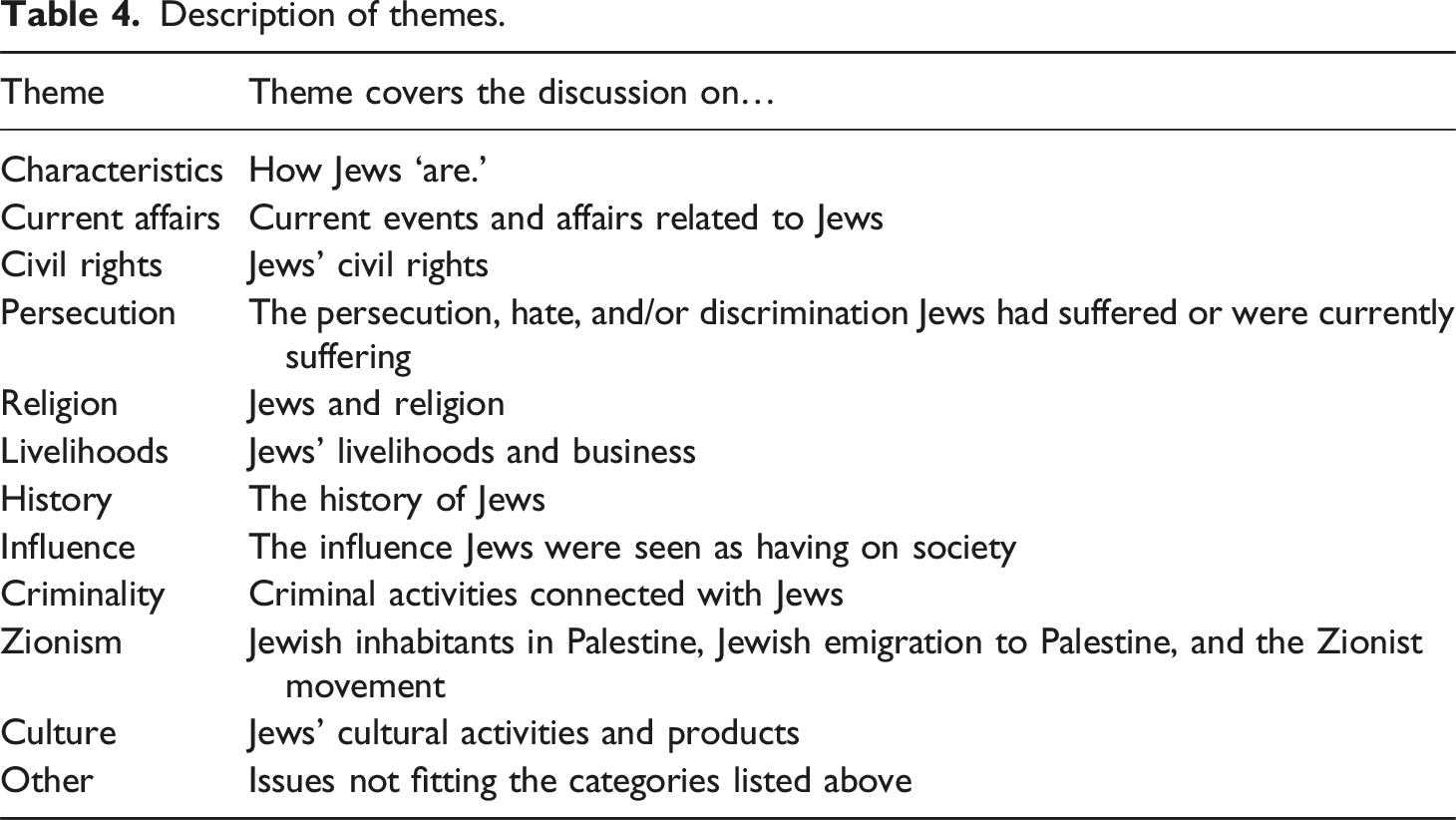
Defining the theme of each topic was not always unambiguous. For example, a text published in the magazine Lukemisia kansalle [1855, no 4: 55–61] 1 stated that in the biblical times Jews were wise because they worshipped the ‘true God’ instead of ‘false gods.’ Thus, the theme could have been characteristics (Jews are wise), or history (the religious life of Jews in biblical times). The choice was made based on emphasis, i.e., the point the text appeared to highlight—in this case, forms of worship or assessment of Jews' qualities in comparison to other nations and groups. Here, the topic was included under the theme characteristics.
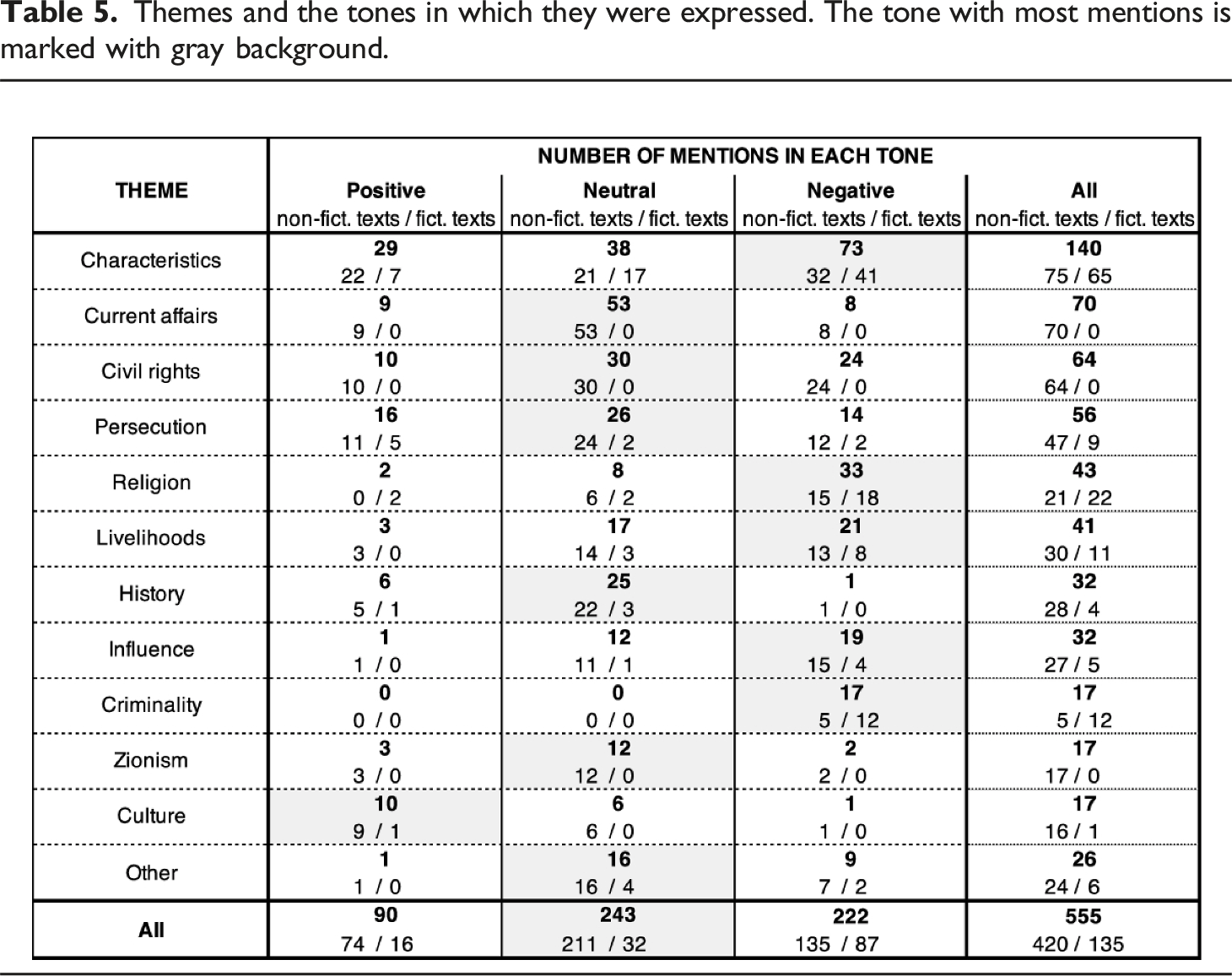
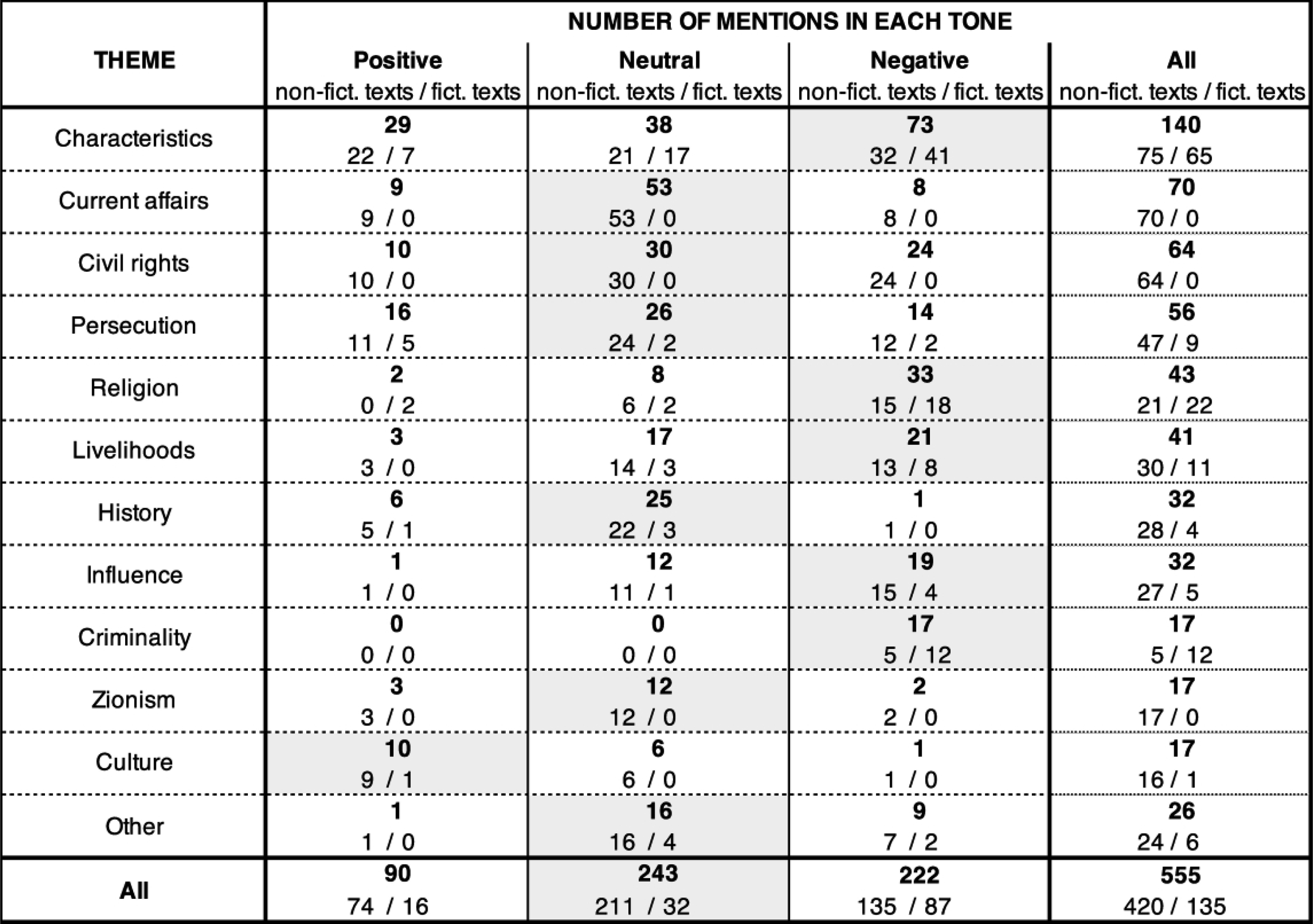
Themes and the tones in which they were expressed. The tone with most mentions is marked with gray background.
Characteristics
Topic units in the theme of characteristics.
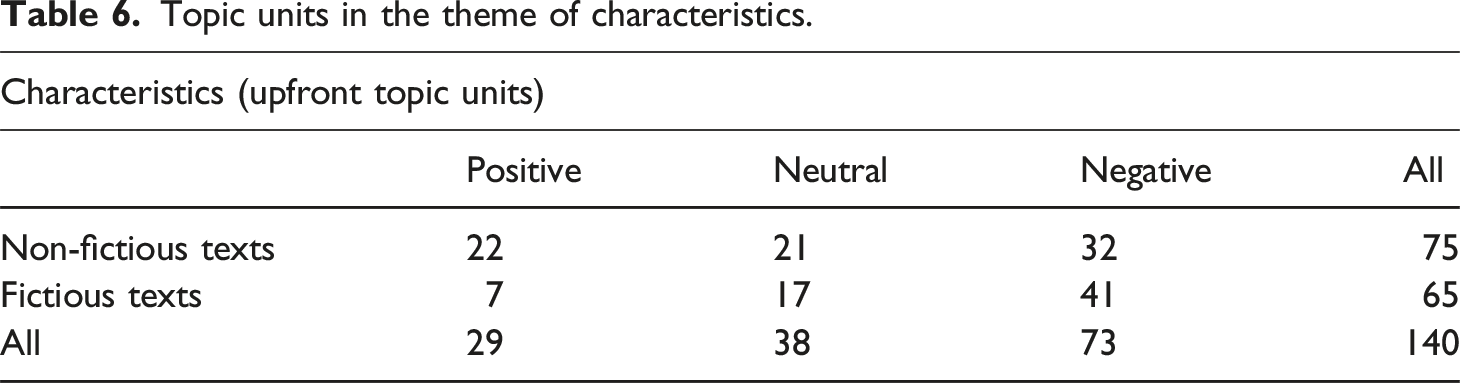
In the positive mentions of characteristics theme, Jews were often described as sophisticated, learned, wise, eloquent, or witty. One text reported the writer’s visit to the home of a Jewish merchant in Hamburg: ‘I was received with the same affability, the same calm politeness as always when I had paid a visit to the family' 2 [Veckans Krönika, 15.12.1906: 734]. Neutral mentions included, for example, texts that described Jews' language skills.
The negative mentions often depicted Jews as unpleasant, arrogant, deceitful, cunning, or greedy. A text from 1916 described the new Jewish inhabitants in the town of Kirkkonummi: ‘These Jewish businessmen who are now making colossal amounts of money in wartime, seem to have a great propensity for settling in this region, where they behave like true moneybags' [Lördagen, 15 July 1916: 229].
A noteable proportion of negative mentions described Jews as inferior to ‘others', i.e., Christians. A text in Finlands Allmänna Tidning [10 June 1846: 536] quoted an announcement by the Russian government: [The Jews] have diligently endeavoured to avoid all coalescence with the society to which they belong, and continue, for the most part, their habit of living at the expense of others’ labour, and thus validate the complaints continuously made about them by the inhabitants of the nearby areas.
Religiosity was considered a mark of respectability among Christians, but among Jews it was seen as hypocrisy, pretence, peculiar, or excessive.
In travelogues and fictious texts, the tone very often became balatantly derogatory; the writers used negative stereotypes associated with Jews in order to spice up their stories. For example, in one fictional series, the Jewish owner of a newspaper is described as dumb, greedy, cheap, ugly, and bad smelling [Lukemista kaikille, 1936, no 47: 9, no 48: 10–12, no 49: 8–10, no 51: 8]. In jokes and caricatures Jews were depicted as being dirty, stingy, avaricious, and/or prone to cheat. Sometimes Jews' speech was written to mimic a strong Yiddish accent. Their Jewishness was often marked by the use of common Jewish names, and in drawings a defining feature was a prominent nose.
Current affairs
Topic units in the theme of current affairs.
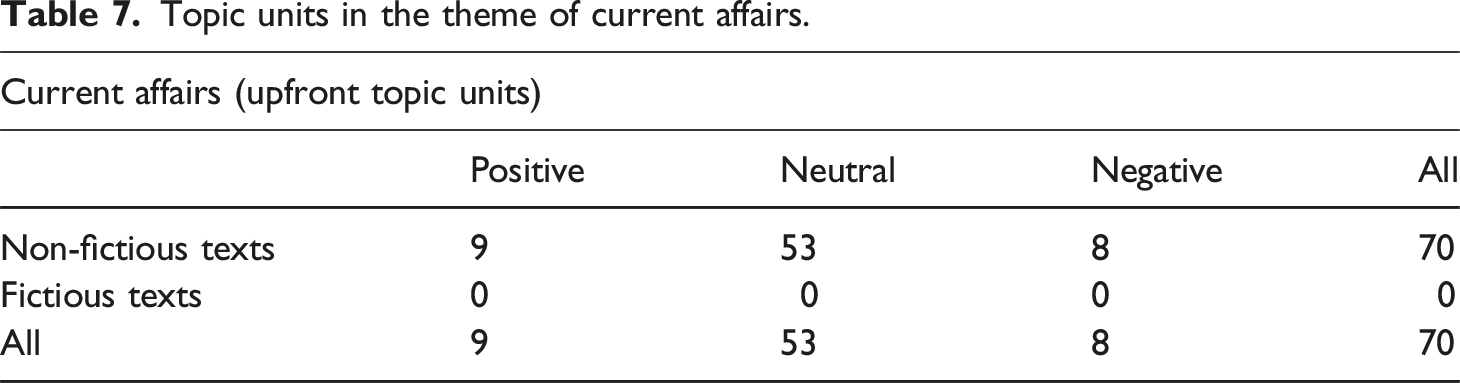
The tone was largely neutral, and the numbers of negatively and positively slanted topic units were almost equal. Thus, the results suggest that when reporting actual news, the Finnish press treated Jews in an objective manner (Table 7).
Civil rights
Topic units in the theme of civil rights.
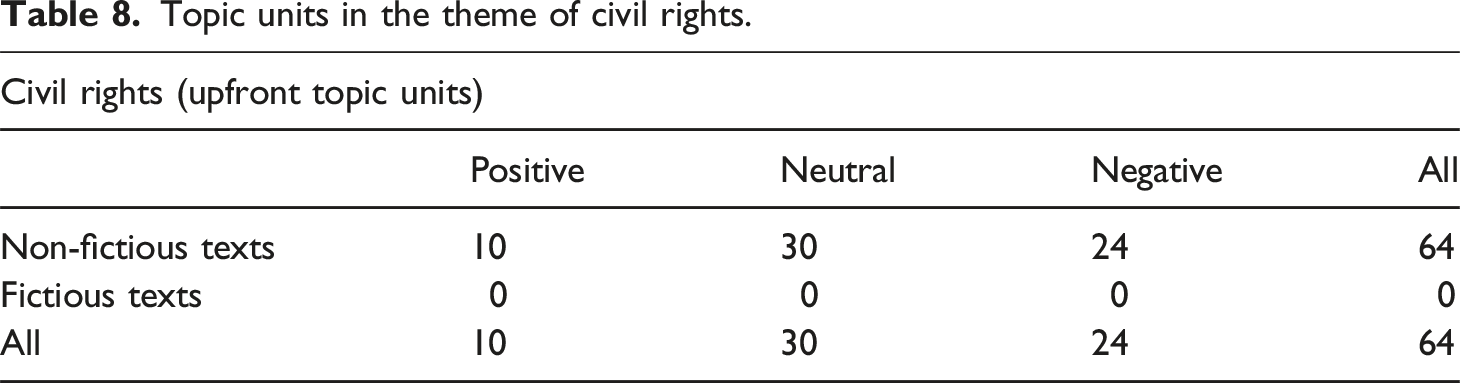
The overall tone of the theme was negatively slanted: 37.7% of all mentions were negative, whereas only 15.6% were positive (Table 8). The negative mentions argued that Jews should be stripped of some of their current rights or denied any new ones. The message was expressed in different forms: some texts listed what Jews must do in order to be granted more/full civil rights, whereas others listed the negative consequences which would ensue if civil rights were granted to Jews.
Persecution
Topic units in the theme of persecution.
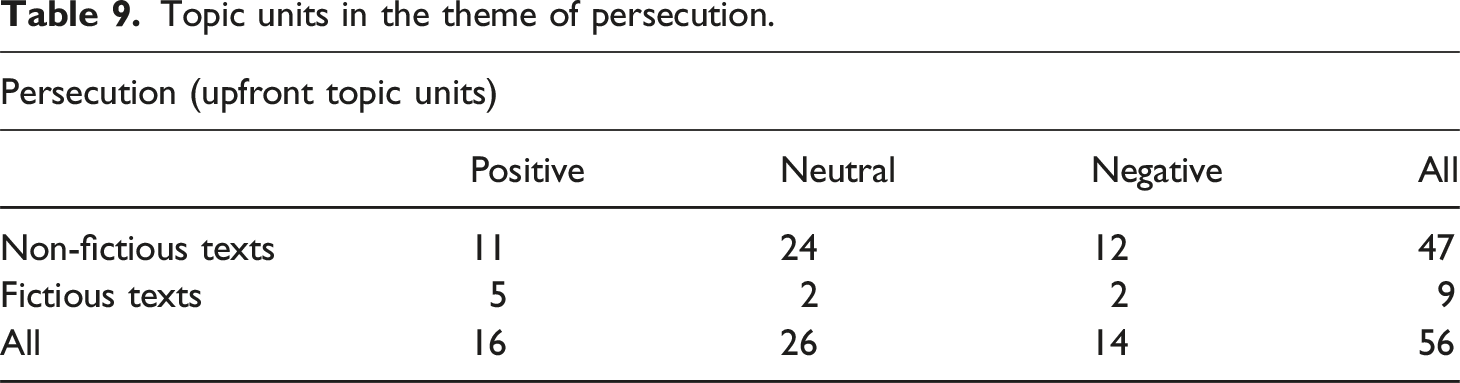
Little over half of the mentions on this theme were neutral in tone. Positive mentions included texts that disapproved of discrimination, or expressed compassion or concern for Jews. In the negative mentions, some cited antisemitic propaganda without negating or contradicting its claims, thus reproducing and enforcing the antisemitic message. In some cases, the harassment and persecution suffered by Jews was played down, and in some cases, hatred of Jews was depicted as an ordinary state of affairs.
Religion
Topic units in the theme of religion.
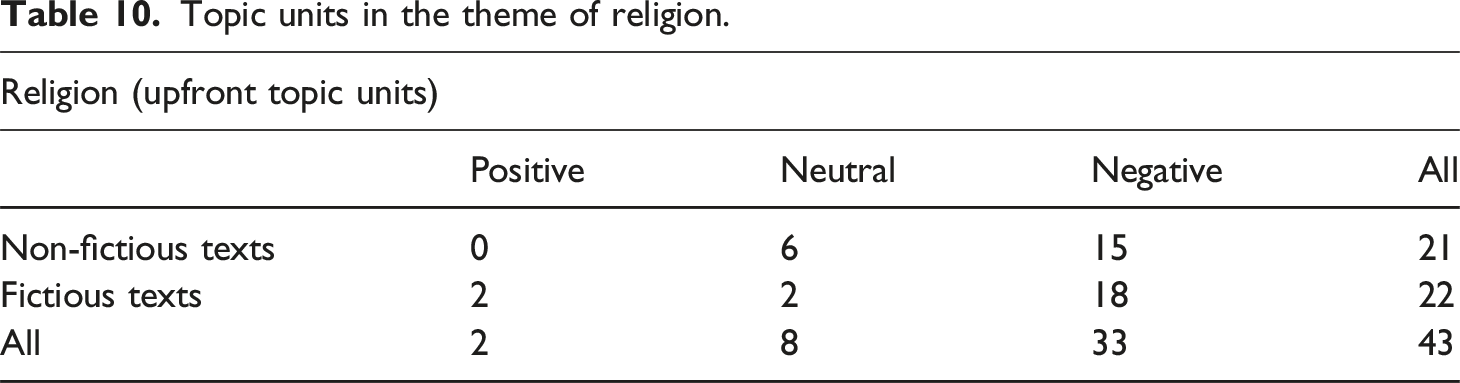
At the research period, Christianity had a strong foothold in the worldview of Finns. Until the latter part of the 19th century, the Bible was widely considered a valid representation of historical events, and for decades to follow Christianity continued to play a significant role in people’s beliefs and values (Langmuir, 1990: 311–314, 332; Ollila, 2000: 116–117). The writers in newspapers and periodicals were practically always Christians, since, in the 19th century, Finnish citizens had to belong to a Christian church. Consequently, Judaism was seen in a negative light. In the data, 76.7% of the mentions concerning religion theme were negative in tone, and none were expressed in a positive tone (Table 10).
One motive for this negative attitude was the view that Jews were wrong in refusing to believe that Jesus was the Messiah. Another was the view that Jews were stuck in an archaic religiousity. Moreover, Judaism was not seen as capable of offering true, satisfying spirituality. The texts conveyed the idea that Jews merely obeyed laws and commandments, whereas Christians were genuinely pious and unselfish. ‘Christian’ was a synonym for decent and respectable. Conversion was something Jews were expected to do, whereas conversion from Christianity to Judaism was deemed improbable and even bizarre.
In fictious texts, the tone was even more negative. This was due to the genre of these texts: they were devotional writings that aimed to strengthen Christian spirituality in their readers, and thus Jews and Judaism served to prove the righteousness of ‘our’ religion and to highlight the peace and joy ‘we’ had in our hearts because ‘we’ had faith in Jesus and would receive the promised salvation that came with it.
In both fiction and non-fiction, Jesus and his disciples were depicted as non-Jews; as pre- or proto-Christians. In texts dealing with Jesus’s life, the word ‘Jew’ is almost exclusively used on occasions where people are mocking Jesus or demanding his crucifixion, thus placing Jesus and Jews in opposition.
Livelihoods
Topic units in the theme of livelihoods.
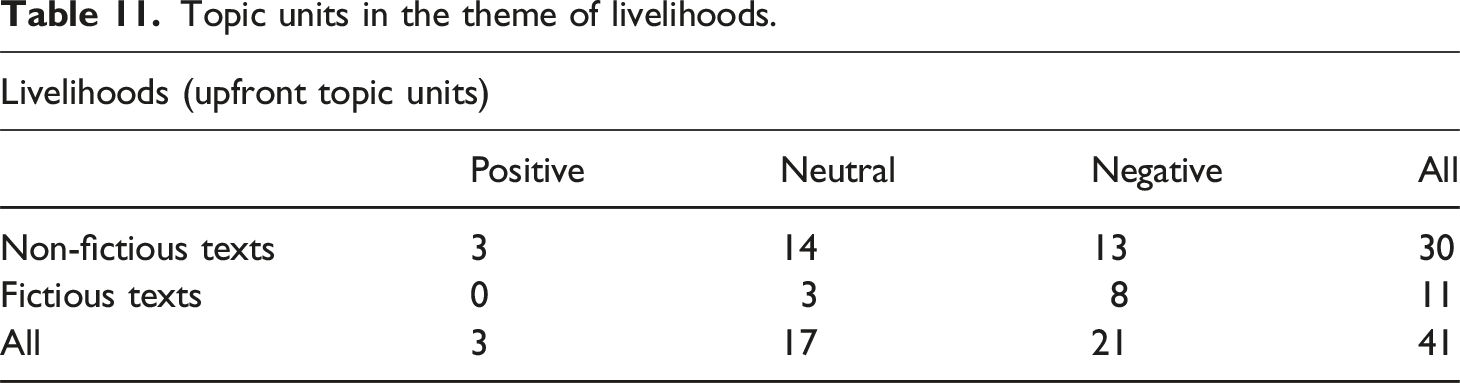
Positive mentions were rare; one example was an article on the Rothschild family. In it, various mentions were made of the honesty, trustworthiness, and the business sense of the family members [Maiden ja merien takaa, 1 December 1865: 179–180]. Negative mentions pictured Jews' businesses as puny and exuding an air of misery, as may often have been the case since many countries restricted what Jews could sell and where, which usually meant low-end merchandise, such as second-hand items (Brustein, 2003: 178; Kuparinen, 1999: 82; Laitila, 2014: 41, 66; Torvinen, 1989: 28, 61). However, such texts did not mention the reasons behind the shabby atmosphere, thereby giving the impression that dealing in low quality, broken, or pre-used items was Jews' own choice. In some texts Jews were accused of doing business in an unfair way, and by so doing, driving others out of business and causing a moral decline in whole areas of economic life.
The idea of Jews as greedy or selfish was regularly present in the livelihoods theme. The following text appeared in Seura (a popular weekly) on 1 April 1936: It is said that the sons of a certain nation, known for its selfishness, never become sailors, because it is a dangerous profession and does not offer an easy way to riches. On the contrary, the sons of this same nation happily become even great shipowners, who send whole fleets and armies of sailors out on the open seas to collect money for their masters' safes. … It is also said that the sons of this nation voluntarily become doctors but their daughters will not take to nursing, since this occupation is about sacrificing oneself for the good of one's neighbour [p. 3].
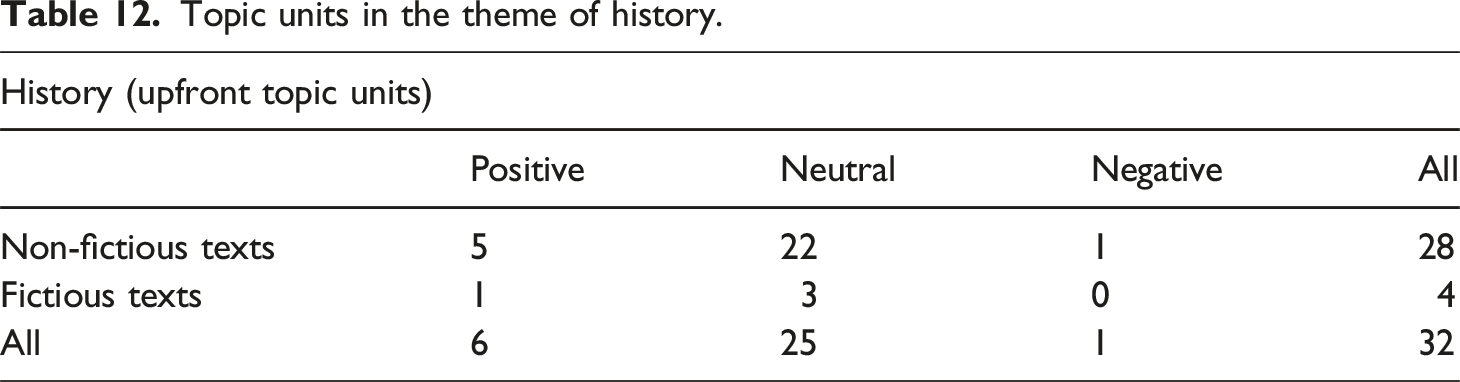
History
Topic units in the theme of history.
Influence
Topic units in the theme of influence.
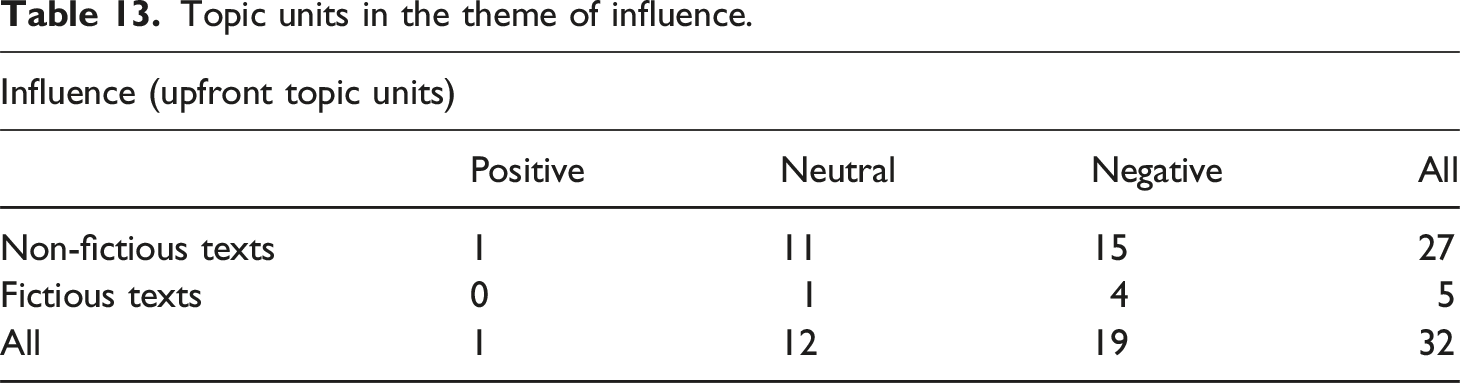
In the texts published in the 19th century, negative mentions under the influence theme usually concerned alleged Jewish involvement in organising or funding armed confrontations or revolts, whereas in the 20th century, they mostly concerned the influence Jews were seen as having on the economy or on certain branches of business. In Suomen Kuvalehti issue of 7 March 1936 it was asserted that the wealthy minority of Jews living in New York ‘actually rules New York, the United States and … the whole world’ [p. 372]. The text listed branches of business, which it claimed to be ‘in Jewish hands.’ Those were, for example, banking, insurances, scrap metal, liquor, tobacco, wool, silk, cotton, furs, newspapers, radio, theatres, cinema, and the clothing industry. Finsk Tidskrift [1936, no 10] contained a lengthy piece about Jews in the movie business: The great film moguls who governed and still control the main part of all the films being produced were without exception Jewish merchants, who excelled more in their race's marketing instincts than in education, fantasy or unique culture. …They became dealers of haberdashery, to whom the movie was geschäft, geschäft again, and a great geschäft to top it all [pp. 177–179].
In Aika [1916, no 8], the whole capitalist system was seen as a Jewish invention – and a reason for antisemitism: Well known is the research which has proven that the trailblazers of the modern capitalist economic era, the Jews, were the very first to perform as the worst disturbers of the old, respectable, decent ideal … All the anger that has arisen in different countries against Jews and their business methods, may ultimately have been caused by the arrogance with which Jews strive at destroying the old, 'respectable' economic principles … [p. 422].
In some texts, Jews were seen as the cause of just about every problem or vice that existed. On 28 November 1906, Uusi Suometar published a telegram which the Russian Monarchist Union had sent to the Czar to persuade him from granting equal rights to Jews. Its text states: Mainly, if not solely, the Jews have accomplished revolution, brought shame on the country and covered it in blood. Even without greater rights they have … enslaved the Russian people financially … brought the Russian young students in all institutions to lewdness, blemished our newspapers, and with their crafty ways sought after full mastery in all areas of Russian life [p. 6].
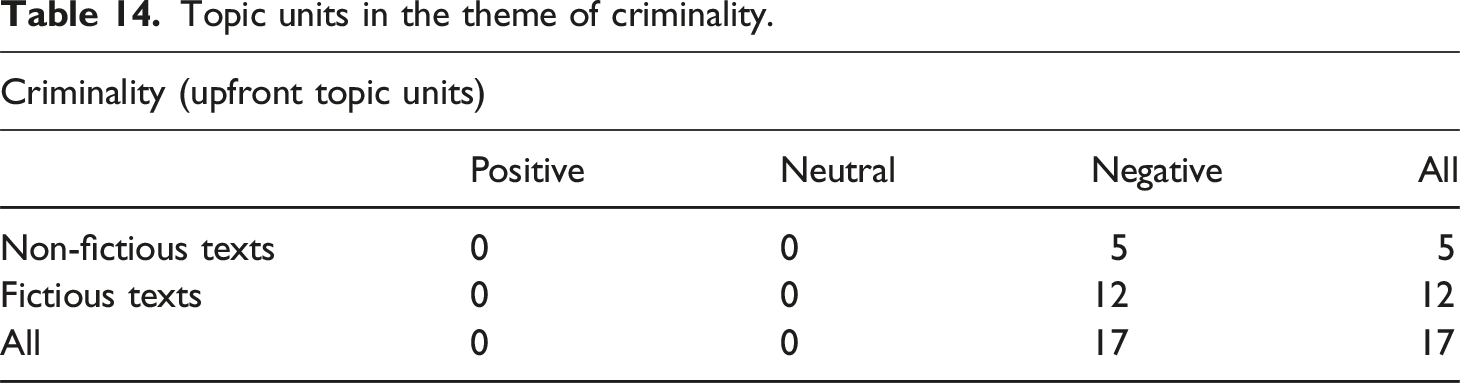
Criminality
Topic units in the theme of criminality.
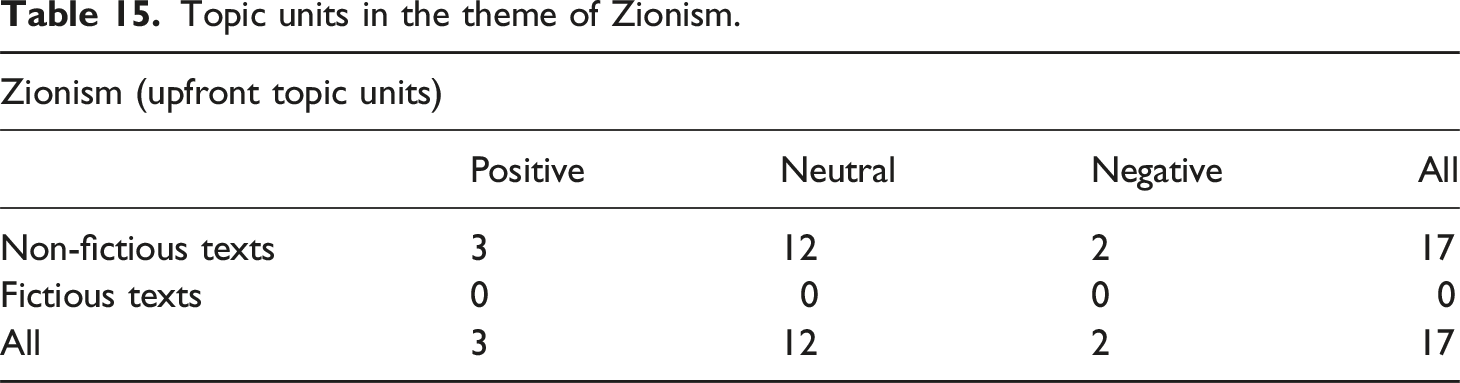
Topic units in the theme of Zionism.
Zionism
Zionism was mainly discussed in the data from the 1930s. The tone was very neutral, and even positively slanted (Table 15). However, this positivity masks an interesting feature, i.e., Jewish immigration, while mainly seen in Europe as a threat and harmful, was an almost entirely positive phenomenon when it occurred in Palestine. The following text is drawn from Finsk Tidskrift double issue 7–8 published in 1936: The whole region … has been changed into a flourishing cultural region as a result of Jewish colonisation. Looking at the colonies in these areas one cannot but wonder at the idalism and self-sacrifice of the Jewish colonists. Jewish immigration brings to Palestine capital, enterprise, a qualified workforce, etc. … [pp. 74–75].
Culture
Topic units in the theme of culture.
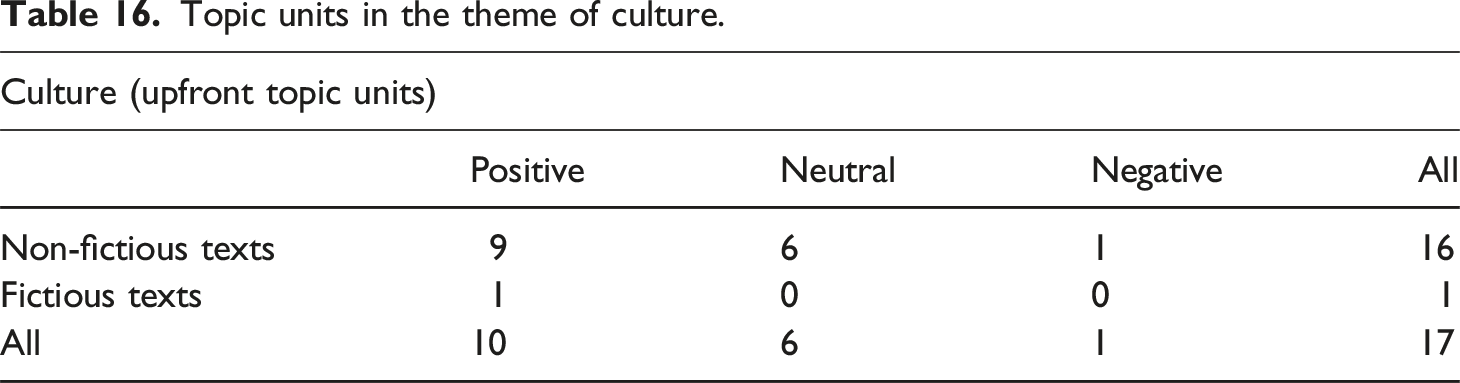
It is noteworthy, however, that such praise almost solely concerned biblical times and religious literature, such as the Psalms, the Song of Songs and the Book of Proverbs, and Christians saw themselves as the descendants of this same religious cultural heritage. Only one text posited that the high quality of Jewish literature can still be seen in Jewish writings today [Hufvudstadsbladet, 6 January 1926: 7].
Background level
The background level mainly echoed the messages already categorised as upfront level topics. However, the writers often used a more derogatory tone at the background level, repeating stereotypical hearsay, stating prejudices as self evident facts, or enlivening their text with ‘witty’ characterisations of Jews.
A noteable feature at the background level were some lexical choices associated with Jews' religion. The word remain was frequently used: Jews had remained stuck in an ancient way of life and religiousity, whereas the Christian world had moved on and become more secular and modern. The words command(ment)s, severity, fanaticism, misery, restlessness, anxiety, and longing were mentioned in connection with Jews and Judaism, whereas the words humility, gentleness, peace, rest, joy, and salvation were connected with Christians and Christianity.
Separate nation
The idea of a ‘nation within nations' surfaced regularly in the texts as a self-evident fact. It could be seen in, for example, claims about Jews not having their ‘own land’ or ‘fatherland,’ which continued to be made even after the Jews had been granted civil rights in their countries of residence.
A piece about the Swedish Jewish writer Oscar Levertin stated that Levertin ‘could never become Swedish in the same way as, for example, Fröding' (italics in original) because ‘his Oriental ancestry had introduced a more sombre undertone in his nature… [and he] either could not or would not violate it’ [Finsk Tidskrift, 1906, December: 443–444]. Thus, Lervertin was not Swedish even though he was born in Sweden, but he might have become a Swede had he denounced his Jewish heritage.
Own fault
Another theme that was constantly present on the background level but not discussed on the upfront level, was own fault. This was the recurring idea that Jews themselves were—at least to some extent—responsible for the inequalities, suffering, or persecution they endured. Some texts quoted the parts of the Old Testament in which God punished Israel for not obeying his laws or listening to his prophets. In the most severe and stubborn cases of disobedience, the punishment was exile. Thus, the fact that Jews were living scattered around the world, was seen as a proof that they had angered God by not believing in Jesus. At the same time, Christians lived in their own homelands, which was seen as proof of their having been right and righteous in the eyes of God.
Jews' poor living conditions, and in some cases outright misery, was described in many texts, but the idea of helping them was hardly ever mooted. The only ‘help’ that was discussed, was ‘helping’ Jews to become Christians. In fact, Jews' ongoing misery was sometimes seen as a blessing since it might precipitate their conversion.
One recurring idea in the texts was that Jews were constantly on the move because of their inner restlessness and compulsion—not because they were repeatedly forced to migrate as a result of discrimination, pogroms, and expatriation orders. A travelogue from Russia stated: ‘It appears … as if the railroads [in Russia] had been built solely to satisfy the need for wandering of this restless people...' [Kyläkirjaston kuvalehti, B Series, 1896, no 3: 22].
In some texts, negative measures against Jews were seen as necessary and justified, because nations had to be safeguarded against the alleged, vague threat that they presented. The estates from Margraviate of Brandenburg and Lusatia … proposed [that] … those belonging to this religion should not be allowed to marry before they have proved that they have the requisite assets, a good reputation and are adequately learned in commerce [Finlands Allmänna Tidning, 13 December 1825: 5].
Jews were seen as carrying shared responsibility for anything negative that one or some of them had been accused of doing and required to make joint compensation. Even when Jews themselves were the target of violent acts, they could be blamed for it. In 1906, having heard that Jews might be granted civil rights, the Russian monarchists sent a telegram to the Czar. As quoted in Uusi Suometar on 28 November 1906, it read as follows: ‘It is dangerous to test the kindness and patience of the peace-loving Russian people too hard, since they may, out of self-defence, transgress the boundaries of law and order and resort to violence against the Jews' [p. 6].
In the data from 1936, the universal guilt imposed upon Jews was detectable in the lexical choices used by the writers. Valvoja-Aika [no 3 1936] introduced a new play by Jewish author Franz Werfel mentioning: ‘[W]hat part Werfel’s own Jewishness played, or the defence he might have made for Jewishness, are completely shaded’ [p. 168, italics added]. Suomen Kuvalehti wrote on 7 March 1936: ‘Charlie Chaplin denies his Jewishness, because only his grandfather was a Jew’ [p. 373, italics added]. In 1936, Oslo’s national theatre was playing Professor Mamlock, a story about the hardships of a Jewish doctor under the Nazi regime. A text in Helsingfors-Journalen [11.1.1936] called the play ‘an apology for Jews against Nazism’ [p. 7, italics addes]. Thus, whatever the Nazis were doing in Germany, it was Jews who had to stand trial.
Conclusions
There has been a persistent idea in Finland that antisemitism hardly existed in the country before or during WWII. In the last two decades this idea has been refuted by numerous studies which have brought attention to, for example, the deportations of Jews during the war, cases of discrimination, or antisemitic narratives in political discussions, literature, and journalistic texts.
This article looked at the presentation of Jews in the general press within a broad time frame (1819–1936), hence, it aims at obtaining a view on how Jews were seen in the Finnish society at large. Earlier research has concluded that antisemitism was limited to far-right or ultranationalist papers; this study ends up with the opposite conclusion.
In this study, 313 texts from newspapers and magazines were examined, identifying 555 topic units altogether. The topic units were grouped under 12 themes, and the tone of each topic unit was assessed as positive, negative, or neutral toward Jews/Judaism. The overall tone of the texts was negative: 40.0% of the topic units were negative in tone, whereas only 16.2% were positive (43.8% were neutral). Most discussed themes were characteristics, current affairs, civil rights, and persecution. An interesting finding was that some themes were not discussed at the upfront level at all. They seemed to be considered self evident and were, thus, only referred to at the background level. Such themes were the idea of Jews as a separate nation living within other nations, and the idea that whatever hardships, discrimination, or persecution Jews might have endured or be enduring, those endurances were—at least to some extent—their own fault. For an oppressed minority like Jews, the background level messages are especially treacherous: Whereas the upfront level topics can be questioned, confronted, or negated, the background level is often expressed in a nonchalant manner, as common knowledge. Thus, the background level claims are more prone to be accepted without questioning; it is hard to challenge or confront them, or even to notice that they are there.
In the data, Jews were depicted as being dirty, smelly, ugly, backward, fundamentalist, and unable to adapt to the lifestyle and culture of the countries in which they lived. They were represented as being cunning, selfish, and greedy, having too much influence on several branches of business and planning to eventually take over the entire world. It is worth noting that even features and behaviour that would otherwise be deemed positive were seen as negative when associated with Jews. Religiosity was a virtue in a Christian but a sign of hypocrisy or pretence in a Jew. Wealth or high status were generally valued, but for a Jew they were signs of greed or unwillingness to undertake physical labour. Poverty or misery, in case of Jews, was not a pitiful misfortune but a sign of an angered God, or a divine lesson. Innovative business methods became suspicious and unchristian [sic] when practiced by Jews. Skillfulness and productivity were not necessarily merits, because they only made Jews more dangerous: more able to take over industries, countries, or the whole world.
Finland has been accustomed to seeing itself as an exception when it comes to racism. The fact that Finland never had colonies has been thought to implicate that the country can not be racist the same way as, for example, Great-Britain or France. I would argue that there is another, equally or even more potent self-narrative which has made it practically impossible to bring up racism in Finland: the story of a virtuous country void of antisemitism.
This study covered media texts published within a broad time span, 118 years (1819–1936), which meant that the data could not be exhaustive; from the years 1866–1936 only 1 year per decennium was examined. From each of these sample years, however, an average of 50 newspaper issues and 120 magazine issues were examined. Thus, this article provides a good overall view to the more than hundred years of pre-WWII writing of Jews in the Finnish general press.
Footnotes
Authors’ note
Ryynänen studies racism in the Finnish media. In her PhD, she compares the way the Finnish print media wrote about Jews before the Second World War to the way they now write about migration and migrants. Ryynänen has a background in journalism and non-fiction writing.
Declaration of conflicting interests
The author(s) declared no potential conflicts of interest with respect to the research, authorship, and/or publication of this article.
Funding
The author(s) disclosed receipt of the following financial support for the research, authorship, and/or publication of this article: This work was supported by Journalistisen kulttuurin edistämissäätiö. Suomen Kulttuurirahasto (00210947). Suomen Kulttuurirahasto (30181545). Suomen Kulttuu-rirahasto (30202243).

Data Availability Statement
The data used in this study is available in the Finnish National Library's digital archive, although restrictions apply to the texts published in the 1930s. More detailed information about the articles used in the study is available from the author upon reasonable request.