



Abstract
This paper introduces a design framework to facilitate qualitative research called reflexive and iterative thematic analysis (RITA), which incorporates thematic analysis (TA) as an ongoing, iterative, and reflexive process. The RITA framework proposes a three-stage research process: defining the research concern, conducting the study, and crafting the analytical narrative. It aims to leverage the strengths of TA and to help researchers implement it iteratively. While TA is usually employed during the data analysis phase, data collection itself is not merely a one-time event in RITA but an iterative process, necessitating iterative analysis. RITA takes a constructivist epistemological stance and uses abductive reasoning, emphasising reflexivity as a crucial ingredient in data analysis and interpretation. However, this framework is adaptable, provided that researchers shall strive to establish accurate and appropriate methodological alignment.
Introduction
The present paper introduces a qualitative research design framework that employs thematic analysis (TA) as an iterative and reflexive process, facilitating the research from its inception to the final analytical claim. TA is a widely used analytical approach across a broad range of disciplines that encompasses a variety of methods (Alvesson and Skoldberg, 2000; Braun and Clarke, 2021). Given that TA primarily offers an analytical approach, researchers are required to engage in careful conceptual and design thinking when adopting it; the present paper thus introduces a coherent framework for this purpose. While some view TA as a scientifically descriptive (small q, positivist) approach, others view it as an artfully interpretive (non-positivist, reflexive, Big Q) method for data analysis (Boyatzis, 1998; Finlay, 2021). However, viewing these TA approaches as contrasting binaries may lead to misinterpretations, and hence it is more accurate to see them as two ends of a spectrum, with various other TA variations positioned in between. Even though this diversity of TA applications is acknowledged, it is often employed as an analytical strategy that begins after data collection, although in some cases, TA can be integrated during the data collection phase (Braun and Clarke, 2021, 2023, 2024a). Various methodological discussions have contributed to the development of TA, which has led to a family of methods (Guest et al., 2012). The present paper advances this methodological discussion by incorporating TA into a comprehensive design framework that can independently support qualitative research rather than merely serving as an analytical approach initiated post-data collection.
Figure 1 summarises how the proposed framework unfolds, as the reflexive and iterative thematic analysis (RITA) framework recommends a three-stage research process. This primarily strives to leverage the strengths of TA to assist researchers in implementing research processes iteratively. RITA generally follows a constructivist epistemological positioning and employs abductive reasoning, highlighting reflexivity as an important source for data analysis and interpretation. Nonetheless, the RITA framework is customisable, and for that, researchers should aim to establish appropriate and precise methodological alignment.
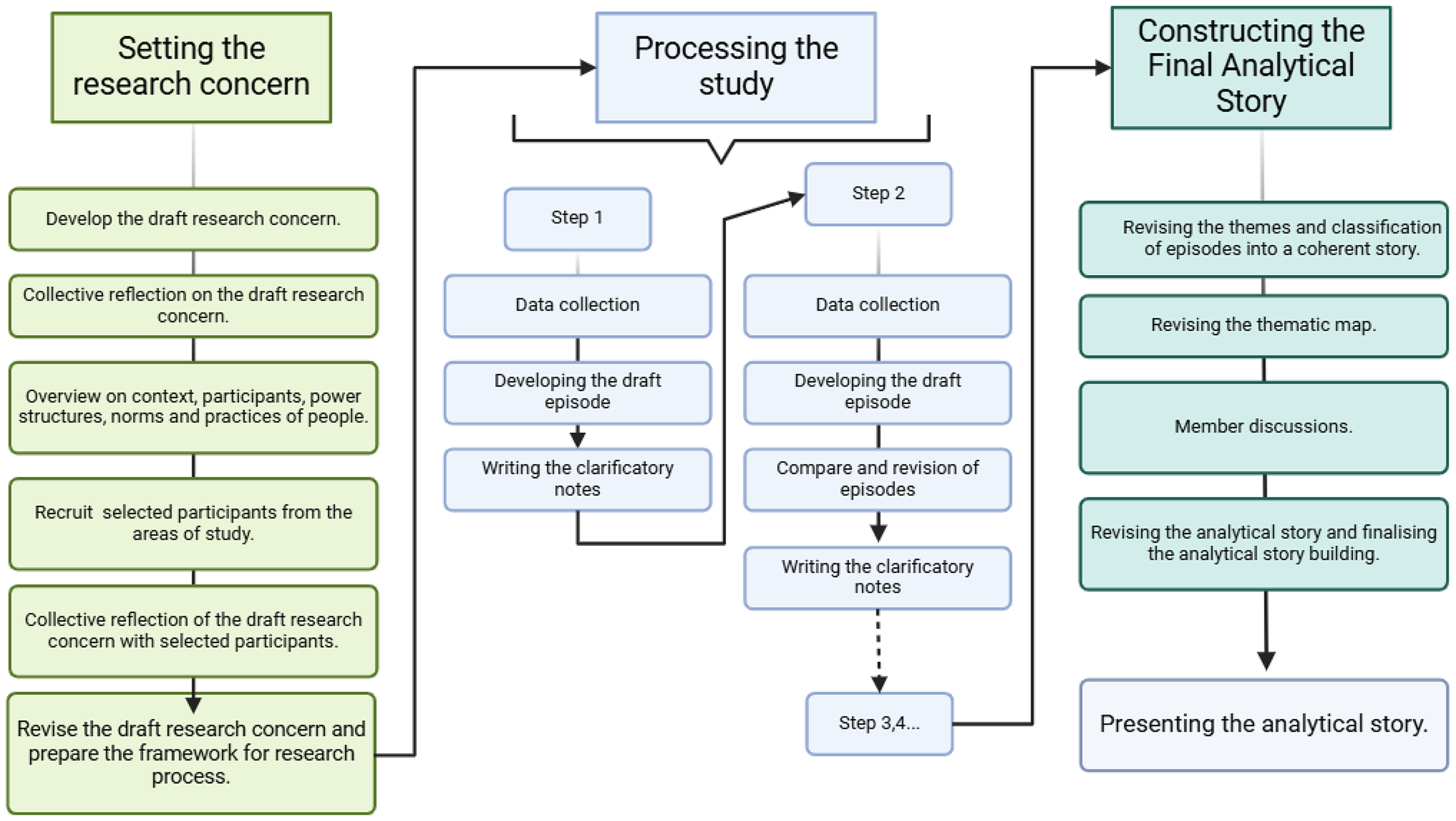
Process of the RITA framework.
One of the main concerns highlighted in TA is that it often involves the analysis of pre-existing data, with analysts who may not have participated in data collection, leaving them unaware of who the respondents were (Brett et al., 2014; Cashman et al., 2008; Hemming et al., 2021). TA does not typically involve in the design stage (e.g., selecting respondents or deciding on the data collection methods); however, analysing data without any understanding of the participants and research context may lead to false interpretations and misleading analytical narratives (Hirsch and Lazar, 2014; Olmos-Vega et al., 2023). Researcher subjectivity, rather than emerging only during familiarisation with the data, should be grounded in conscious engagement with respondents and their narratives (Cashman et al., 2008; Hemming et al., 2021). This tradition was initially developed within participatory research, drawing on (American) pragmatism (Ramanadhan et al., 2021). However, it places greater emphasis on direct engagement with local priorities and perspectives than on the researchers’ conscious role in constructing the analysis, with the aim of providing practical solutions to identified problems or concerns (Reason and Torbert, 2001). The use of TA in action research or participatory research approaches (though it is very rare) is typically considered instrumental, meaning that themes serve as guides for action rather than as analytical indicators (Braun and Clarke, 2023; Carr, 2006; Cooper et al., 2022). The RITA framework adopts an iterative approach, but it diverges (from action research) by treating themes purely as analytical and explanatory components of a complete interpretive story. Accordingly, the current framework provides a method for using TA iteratively, not only at the end of data collection but also during the process, thereby bringing analysts into the research context. This framework emphasises the importance of establishing a close connection between data, participant experiences, researcher reflections, subjectivity, and cultural contexts.
The use of an iterative approach in employing TA through the data collection and analysis process facilitates the adaptability of the design to emerging concerns (Srivastava and Hopwood, 2009). Emerging concerns or analytical claims are not inherently present in data even before data analysis (as described in the positivistic tradition) (Braun and Clarke, 2021); rather, they are co-constructed by both the researcher and participants through an active process of reflexivity and collaborative data analysis. This enables researchers to modify their strategies, research directions, sampling methods, and data collection techniques to adapt to emerging circumstances. This feature is expensive yet required for exploring more complex social realities, such as social meaning-making. For this purpose, RITA is based on constructivism rather than pragmatism, which emphasises action, change, and the relationship between knowledge and practice (Goldkuhl, 2012; Morgan and Nica, 2020). While RITA can be adapted for pragmatic approaches, the current framework is primarily intended to facilitate research focused on exploring the depth and breadth of social meaning-making, with the use of TA as an iterative and reflexive process throughout the study process.
Previous methodological inventions advocate for an iterative design in TA, yet they often restricted into the analysis stage (Morgan and Nica, 2020). However, repeated cycles of data collection and analysis provide an avenue to develop new insights that may not be apparent in a single round of data collection and analysis. Contrary to grounded theory (GT), this approach strives to generate a set of themes or analytical claims with an iterative research design. In addition, RITA is a collaborative research process, similar to collaborative ethnography (Lassiter, 2013); however, it primarily focuses on constructing analytical themes rather than conducting extensive fieldwork and participant observation to document cultural realities. Therefore, the RITA approach provides a way to employ TA with certain methodological alignments, which enables researchers’ constant engagement in research while allowing them to incorporate reflection at multiple stages.
The paper proceeds as follows: Sections 2 and 3 offer a brief discussion of the theoretical alignment of the present design framework, including how reflexivity and an iterative approach can be embedded into the design. Section 4 extends this discussion to include epistemological positioning, reasoning, and sample considerations. Section 5 provides a comprehensive elaboration on the implementation of the proposed design. Section 6 outlines the methods for adopting quality criteria. Finally, Section 7 discusses the limitations of the present design framework and presents the conclusion.
Themes as analytical claims
A theme is a central element of TA, referring to a higher-level descriptor or explanatory indicator of a recurring pattern within the data, which is interpreted for an audience (Braun and Clarke, 2006, 2019). A theme can also be defined as a consolidated answer, supported by a rich analytical description, to a question posed in the research. Two types of themes can be identified in studies employing TA: topic summary themes and shared-meaning themes (Braun and Clarke, 2019). Topic summary themes are typical in scientifically descriptive TA, capturing data clustered around a specific focus or topic (Finlay, 2021; Guest et al., 2012). In contrast, shared-meaning themes are developed by identifying similarities and organising data around ideas or concepts embedded within the data itself (Braun and Clarke, 2021). These themes emphasise the meanings conveyed through the data, rather than grouping data by predetermined topics. Each theme centres on a core idea, which can be further elaborated with related arguments and ideas. In reflexive TA, themes are considered products of researchers’ conscious engagement with the data during the analytical process (Braun and Clarke, 2023). This conceptualisation differs from that of scientifically descriptive TA. Since meaning-based themes have the potential to generate deeper and wider (even unexpected) insights that clearly indicate directions for practice, this paper highlights the importance of shared meaning themes.
Given the flexibility of TA, there is a possibility of employing it with different ontological and epistemological frameworks (Braun and Clarke, 2024a; Bryman, 2008). The use of TA thus depends on the nature of the research, the theoretical assumptions, and the researchers’ positionality. Compared to GT, TA does not strictly associate with any ontological or epistemological framework; this has led to the development of different types of TA methods (Bryant and Charmaz, 2019; Charmaz, 2006). However, recent developments in TA strongly advocate for exclusivity under appropriate qualitative paradigms such as constructionism, and interpretivism (Byrne, 2022). Morgan and Nica (2020) proposed a TA approach with an iterative design grounded in pragmatism, emphasising that the researcher's prior beliefs can be carefully considered during data analysis to focus more effectively on participants’ experiences. This approach also allows for the reformulation of both the original problem and the perceived means of addressing it. In contrast, RITA is rooted in constructivism, acknowledging that a complete escape from the researcher's preconceptions is challenging (Bryant, 2007; Charmaz, 2006). Instead, prior experiences and knowledge are seen as essential components of reflection and analysis, often contributing to the development of analytical claims. (RITA is not a process of knowledge discovery as in the positivistic or pragmatic sense, it is a knowledge construction process.)
Scientifically descriptive (small q or positivist) TA generally uses a positivistic framework, where coding reliability is emphasised. Coding reliability TA emphasises the reliability of data coding and often involves a structured codebook (Braun and Clarke, 2019, 2021). In this type of TA, multiple coders might be used to ensure a high degree of consensus. Coding reliability TA tends to be deductive in nature because themes are often hypothesised based on theory prior to data collection. Artfully interpretive (Big Q or reflexive) TA focuses data analysis on a non-positivist or reflective framework, where researcher subjectivity is greatly valued (Braun and Clarke, 2019; Finlay, 2021). Tebes (2005) explains that Big Q TA typically produces mind-dependent truths instead of mind-independent truths. Braun and Clarke (2019, 2024a, 2024b) identify Reflexive TA as a Big Q approach that acknowledges researcher subjectivity as a source of generating mind-dependent truth and rejects the belief that coding is an entirely scientific/mind-independent process because meaning is not fixed in data. Such reflexive TA calls for a back-and-forth approach to data analysis. It focuses on both the manifest (obvious) and latent (underlying) meanings while incorporating the researcher's reflexive stance on their engagement with the study. The framework presented in this paper also advocates for the use of reflexive TA with possible iterations and highlights the need of adhering to non-positivist positionings such as constructionism. A back-and-forth approach is also evident in action research, primarily aimed at identifying prior concerns through a feedback loop, and mainly empowering participants to think on positive change (Carr, 2006). However, the iterative process in the current proposal is intended mainly to construct an analytical story for understanding social meaning-making within a social context, and this does not consider concerns such as empowering participants for practical actions or decolonising methods to reduce power dynamics associated with the researcher–participant relationship. Thus, pragmatic appropriation is not considered in the present proposal (though it may be considered as a future methodological focus).
While reflexive TA attempts to highlight the researcher's active and informed role in knowledge creation, it still faces limitations (Alvesson and Skoldberg, 2000; Morgan and Nica, 2020). This is primarily because data analysis typically begins only after data collection, even though in some cases researchers begin data analysis during data collection. Here, codes are understood to mirror the researcher's interpretation of meaning as embedded in the data (Hirsch and Lazar, 2014). The heavy reliance on researcher-generated codes can potentially bias the analytical claims, as it may diminish the mirroring of the experiences, power dynamics, and social processes associated with the data (Braun and Clarke, 2023; Roberts et al., 2019). As a solution, acknowledging that subjectivity is inherent in data analysis and contributes to interpreting data, a collaborative approach to the research process is suggested. Such collaborative efforts in familiarising themselves with the data, coding, and generating themes lead to a broader understanding of social realities, which go far beyond merely reaching an agreement between researchers. Collaborative approaches are widely used in participatory studies and collaborative ethnography (Carr, 2006; Lassiter, 2013; Selwood and Twining, 2019), primarily to integrate participants into the research process, and to bring collaborative perspectives to the study. These approaches emphasise the need to recognise power dynamics in order to minimise researcher intervention (Selwood and Twining, 2019; Vaughn and Jacquez, 2020). RITA also employs a collaborative approach, involving multiple researchers in the process iteratively; however, a key distinction is that in RITA, researchers are actively involved in developing the analytical story, and their experiences are not viewed as external to the reality being studied.
Researcher subjectivity, reflexivity, and iterative design
One often-cited concern with regard to TA is dealing with researcher bias in analysing data (Braun and Clarke, 2023). In contrast to positivistic research, where the researcher remains completely detached from the phenomena under study and maintains complete control over participants, the impact of the researcher and participants on the phenomena under study in TA is evident and often perceived as a key influence on interpretations (Byrne, 2022; Hirsch and Lazar, 2014). Different types of TA address this problem differently; for example, by using intercoder agreement and involving separate analysts who are not part of the data collection (Braun and Clarke, 2021). However, the BIG Q, or artfully interpretive tradition of TA, highlights the importance of researcher subjectivity and participants’ experiences in analysing data and ultimately developing knowledge. Both pragmatism and constructivism acknowledge the researcher's subjectivity as an important source of data analysis (Charmaz, 2006; Morgan and Nica, 2020). However, in pragmatism, themes are often regarded as instrumental rather than analytical constructs (Puddephatt, 2007; Ramanadhan et al., 2021). RITA carefully considers these claims.
The subjectivity of the researcher and the experiences of participants embedded in the data serve as vital sources and are inseparable from the research process (Alvesson and Skoldberg, 2000). According to Bourdieu (1977, 1990), the researcher should be viewed as embedded in a social field, with specific ways of perceiving and responding to the social world through their dispositions – such as experiences, social networks, habits, and power dynamics – collectively called habitus. Therefore, the researcher's active engagement in the process of knowledge production can be beneficial in several ways, mainly by acknowledging and utilising the complexity of perspectives in real-life settings. This indicates that knowledge is not merely discovered from data external to the researcher or participants; rather, knowledge is developed interactively. While acknowledging the flexibility of relying on various approaches to TA, the present framework argues that meaning is not fixed in the data and that researcher subjectivity is an important source for designing the research and analysing data.
The present framework acknowledges that researcher subjectivity – which is also sensitive to participants’ experiences – is a fundamental part of the research process and data analysis. At the same time, collaborative reflexivity is proposed to develop multiple perspectives, which can, in a way, reduce researcher bias (even though this is not a primary objective, as researcher bias is not considered a problem in TA). A collaborative approach to research is also central to collaborative ethnography, which emphasises shared understanding, mutual engagement, and the co-creation of knowledge – primarily through extensive fieldwork and participant observation (Lassiter, 2013). While these principles of collaboration can be incorporated into TA, the purpose of TA extends beyond ethnographic inquiry, as it focuses on constructing interpretive knowledge rather than merely reporting evidence (Byrne, 2022). Moreover, generated themes are considered analytical outputs rather than preexisting constructs. Following these assumptions, RITA advocates relying on constructivism and an abductive approach, although researchers have the option to adapt the framework to their own epistemological assumptions. (A detailed explanation on the adoption of reflexivity into studies can be found: Finlay (2002) and Berger (2015).)
Recent proposals of the iterative design for TA advocate for a back-and-forth process of data analysis rather than treating TA as a linear process (Attride-Stirling, 2001; Naeem et al., 2023). Iterative design is also flexible and can align with any ontological position or epistemological direction to identify themes that not only initiate the analysis process but continue throughout (Morgan and Nica, 2020; Srivastava and Hopwood, 2009). However, this method of analysis is also restricted to the analysis phase once data are collected. Morgan and Nica (2020) suggest pragmatism as a paradigm for iterative TA, relying on the premise that existing beliefs and prior knowledge are important in interpreting data. Commonly, iterative TA proposes an analytical strategy that is applicable to any design and can be applied once data are collected. In contrast, the approach proposed in the present paper is not strictly confined to the analysis stage after data collection; instead, iteration is grounded in processing the entire research. The iterative design in the proposed framework considers in the gradual development of the entire research, culminating in the final analytical story.
As noted by Braun and Clarke (2021), TA is not a single method but rather a family of methods, including a variety of approaches, and is flexible in terms of specifying the ontological, epistemological, and theoretical basis by the researcher/s. Similarly, when a reflexive orientation of TA is applied to an iterative design, it advocates relying on more experiential, abductive, and constructivist reasoning within the presented framework while maintaining flexibility for adopting any theoretical lens with precise methodological cohesiveness. However, the present framework highlights the use of experiential, abductive, and constructionist theoretical alignment.
Experiential and critical orientations are two different stances in TA approaches, which are not contradictory but rather complementary. An experiential orientation in understanding data indicates the need to look deeper into how participants experience a phenomenon (Braun and Clarke, 2019, 2021; Wiltshire and Ronkainen, 2021). This stems from constructivist assumptions, which involve focusing on the meaning ascribed by the actor and the meaningfulness of the phenomena to the actor (Alvesson and Skoldberg, 2000; Jung, 2019). The experiences, feelings, thoughts, and beliefs of actors associated with their narratives provide the meaning of the data and illustrate how the considered phenomena are meaningful to the respondents. If the researcher strives to use an experiential orientation, these feelings, experiences, and thoughts should be central to the analysis (Schwandt, 1998).
In contrast, a critical orientation tends to analyse discourse as embedded in experience, which is constitutive rather than reflective (Burr, 2015; Byrne, 2022). Therefore, a critical perspective may interrogate themes of meaning with a close theoretical gaze. A critical orientation strives to reveal underlying factors of meaning and power dynamics impacting meaning-making, which might be a main focus for some researchers. Researcher/s have the option to adopt either one of these orientations or employ both, as informed by the research intentions. RITA can be employed with any of these orientations. If it follows an experiential orientation, researchers should exploit analytical claims generated in line with the feelings, experiences, thoughts, and beliefs of respondents as closely perceived by the researchers (Burr, 2015; Schwandt, 1998). Therefore, RITA is more interpretative rather than descriptive. As in small q, the basic purpose of RITA is not just to provide descriptive accounts; rather, it is more interpretative, resulting from the conscious engagement of researchers in the research process.
Social constructionism, abductive reasoning, and sampling criteria
In RITA, reflexivity is recognised as a collective effort rather than an individual task. Studies are thus encouraged to be conducted collaboratively to facilitate collective reflection. Reflection involves considering researcher's own positions in the research and engaging in dialogue with participants and other researchers, which can help reveal phenomena from different perspectives and enable iterative processing of the research (Braun and Clarke, 2019). Reflexivity refers to staying self-aware and thinking deeply on researchers’ experiences, biases, perspectives, and beliefs when doing the analysis. Iteration is also a key element of RITA. While the process of iteration is proposed in both GT and TA, in TA it is primarily applied during the analysis stage (Morgan and Nica, 2020; Saunders et al., 2019). Iteration in RITA does not necessarily mean repeating data collection at different stages. Instead, data collection and analysis are iterated through the evaluation of generating analytical claims. Therefore, RITA suggests that the research process can be divided into at least three stages, and that allows researchers to iterate data collection, revise methods, recruit participants for maximum variation, and acknowledge cultural importance.
Even though TA can be employed with several different epistemological viewpoints, constructionism is suggested because it indicates that reality is co-created by members of society, and their agency or active participation in reality-making is important (Bryman, 2008; Burr, 2015). Social constructionism acknowledges that many aspects of human life are socially constructed, and that the processes of culture and people's agency are important (Burr, 2015; Crotty, 1998). Therefore, conventional knowledge in society – which often includes patterns of human behaviour and social processes – is not essentially objective; it is subject to bias within prevailing power structures. Knowledge exists within a historical and cultural context, and hence there is a need for a method that captures the historical and cultural roots of human experience embedded in the data. Conventional knowledge in society – including patterns and social processes related to human behaviour – is not an individual construction but a collective, longitudinal one. Therefore, RITA follows the assumption that knowledge within society is collectively produced and can be influenced by various social forces.
Social constructionism emphasises the role of language and social interactions in constructing social realities (Burr, 2015). It posits that realities are not inherent but are shaped through human agency and interaction. Therefore, RITA advocates for understanding phenomena not as fixed entities but as continually evolving and reproduced through human action. Social truths are seen as multiple, context-dependent, and socially created, rather than universal. Adopting TA from a social constructionist perspective, researchers should concentrate on how individuals shape social realities and how participants mirror these constructions. For instance, in studying identity, a researcher may look for themes that reveal how participants describe themselves and others, reflecting socially constructed norms or categories. A key principle is to acknowledge that multiple realities may exist within the same area of inquiry, shaped by social, cultural, and historical dynamics. This perspective requires appropriate methods, contextual sensitivity, and reflexivity throughout the research process – all fundamental to the RITA approach.
Given the close association between pragmatism and constructivism, pragmatism is also considered suitable for iterative TA, as suggested by Morgan and Nica (2020). However, constructivism is better aligned with RITA, as it emphasises the co-creation of context-dependent knowledge and focuses on understanding how reality and meaning are socially constructed (Bryant, 2007; Phillips, 2023). In pragmatism, knowledge is evaluated based on its practical usefulness, a principle often reflected in participatory and action research (Carr, 2006; Ritz, 2020). While RITA can be adapted for pragmatic purposes, the present paper adopts a constructivist framework to understand (rather than describe, as in pragmatism or positivism) multiple realities that are co-constructed through language, culture, and social interaction. Themes or analytical claims in RITA are therefore seen as interpretative and explanatory, rather than instrumental.
The use of TA with both inductive and deductive reasoning is well documented, with each approach serving distinct purposes (Alvesson and Skoldberg, 2000; Naeem et al., 2023). Inductive and deductive reasoning have been widely applied in qualitative research for several decades, while abductive reasoning has gained attention in GT (Bryant and Charmaz, 2019). Later developments in reflexive TA advocate for an inductive approach aligned with a constructionist perspective (Braun and Clarke, 2021; Byrne, 2022). While allowing researchers the flexibility to customise the RITA framework, an abductive reasoning approach is recommended to support an iterative research process, in the present paper
Abductive reasoning enables researchers to provide the best possible explanations from an incomplete set of observations (Lipscomb, 2012). This approach involves initially observing a phenomenon and then developing plausible explanations in an iterative process. Abductive reasoning often begins by observing social processes, patterns, or behaviours that may not immediately align with existing theories or assumptions. Rather than seeking to confirm established hypotheses or create general theories, abduction aims to generate new interpretations and explanations. This requires an iterative process, as researchers revisit and refine explanations as more information becomes available. It is also important to note that researchers can incorporate inductive or deductive reasoning within this framework; however, the choice of approach may lead to significantly different outcomes. The adoption of an abductive approach to data analysis in detail can be found in Vila-Henninger et al. (2024).
Abductive reasoning is a common ground for both constructivism and pragmatism, though it differs in several important dimensions (Lipscomb, 2012; Rieger, 2018; Ritz, 2020). While pragmatism has evolved in various directions, its core focus remains the discovery of plausible and best explanations that are valued for their practical usefulness (Bryman, 2008; Crotty, 1998). In this context, abduction emphasises the utility of explanations, requiring a clear understanding of the researcher's role, often privileging participants’ perspectives in shaping meaningful outcomes (Ritz, 2020). In contrast, constructivist abduction centres on interpretation, sense-making, and the co-construction of meaning, rather than identifying a single best explanation (Bryant and Charmaz, 2019). This approach embraces the existence of multiple realities, which are interpreted through the shared experiences of both researchers and participants.
Determining how many participants should be included in a study is another concern often associated with qualitative research, which is difficult to determine precisely because the number of participants varies widely with the nature of the study. Qualitative studies often rely on saturation or information power as principles for determining the number of participants (Braun and Clarke, 2021; Bryman, 2008). Both approaches are open within the RITA framework, yet the principle of information power is recommended. Theoretical saturation originated in GT, and it refers to the point at which existing data are exhausted of new ideas, and collecting more would not contribute to the emerging theory (Charmaz, 2006; Hennink and Kaiser, 2022). However, focusing on information power to determine the sample size goes beyond just selecting participants and includes focusing on collecting every possible detail, even from other sources rather than from participants (Malterud et al., 2021). ‘Information power’ emphasises that the study requires fewer participants, the more relevant information the sample contains (Malterud et al., 2021). This principle aligns with the RITA framework, as described in the next section. A more in-depth explanation of the use of information power can be found in Malterud et al. (2021). In general, it indicates that the size of the sample with sufficient information power depends on the focus of the study, sample characteristics, use of theories, quality of dialogues, and analytical strategy. Thus, the use of reflexive TA in an iterative design focuses on the principle of information power.
A detailed description in the use of abductive reasoning and information power can be found in Annexure 1.
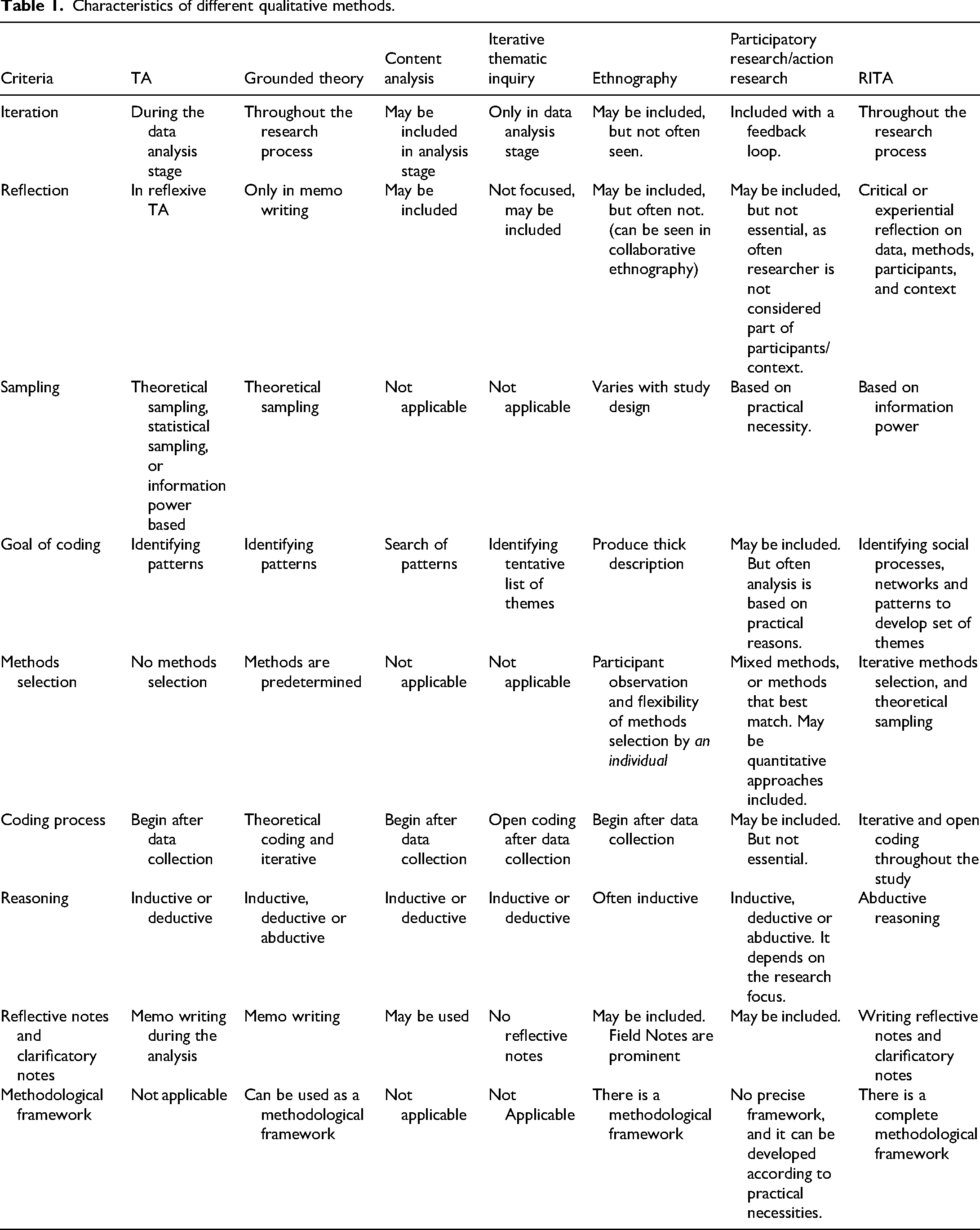
The place of RITA, among other frameworks is illustrated in Table 1.
Characteristics of different qualitative methods.
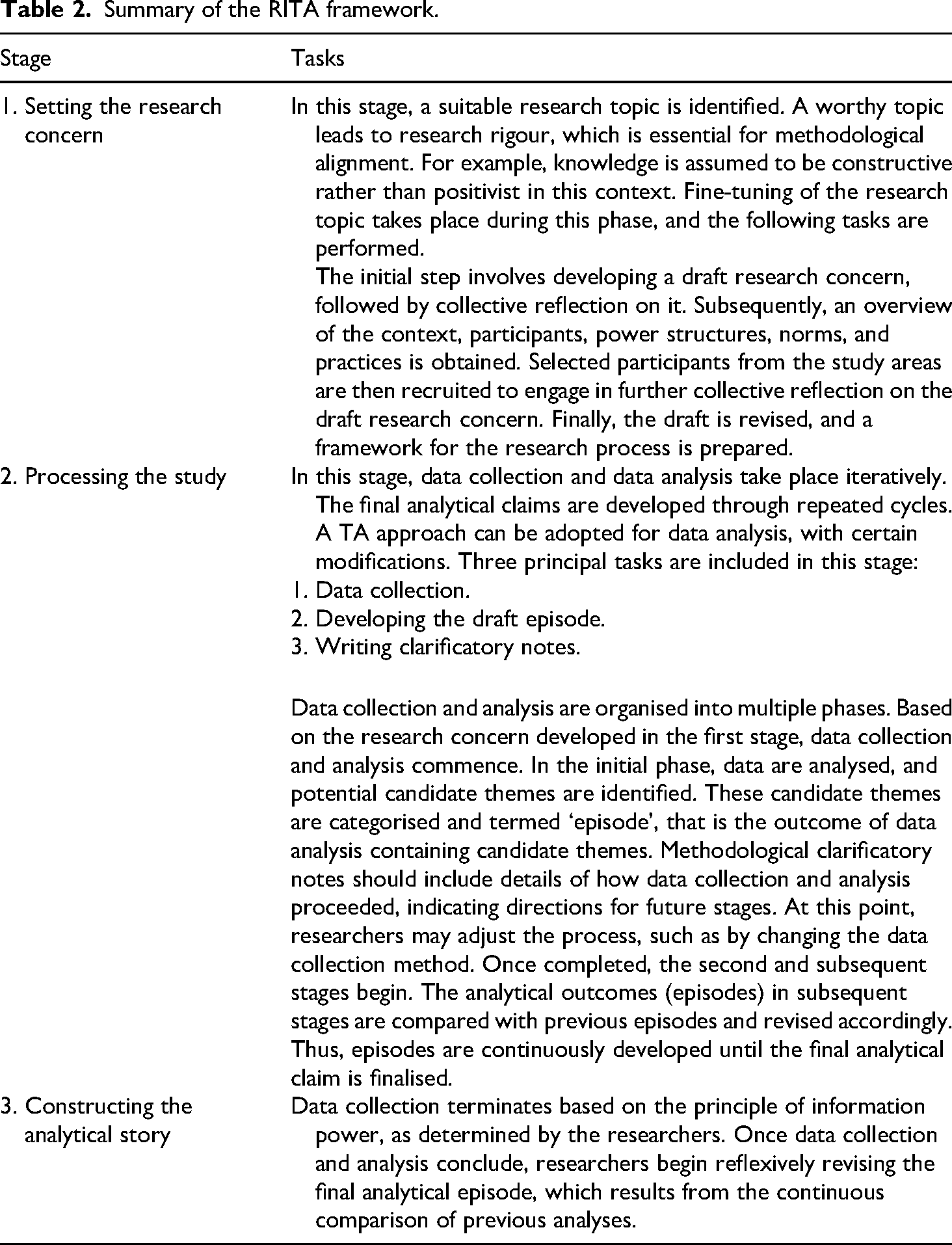
Summary of the RITA framework.
RITA framework and doing RITA
The RITA research process consists of three stages (Table 2 provides a summary of the RITA process):
Setting the research concern Processing the study Constructing the analytical story
Setting the research concern
The initial phase of RITA includes defining the research concern. This refers to a primary study focus that is likely to evolve over time. This is not a pre-test or pilot study but rather a process of identifying the research focus and revising the initial idea with the participation of both researchers and selected participants. Once the initial focus is identified, researchers should invite participants for a discussion to ensure that the initial proposal can be studied within the selected study contexts. The purpose of this is to prepare the study plan, which involves the perspectives of both participants and researchers. Some principles in collaborative research can be employed here, as indicated by Swaminathan and Mulvihill (2023).
Setting the research concern in RITA includes obtaining firsthand experience of the cultural context to be studied, understanding the participants, comprehending the nature of the data and context, and assessing the level of researchers’ or data collectors’ access to the community. Identifying the primary research concern is important because the selection of the main area of study might sometimes not be supported by existing studies. Furthermore, theoretically selected cases can lead to unconscious misinterpretations of data, because selecting a case or area without considering participants’ reflections first, might result in a poorly suitable case/area for study. Ethical considerations should be taken into account in this stage.
Therefore, when developing the research plan, researchers shall first look for possible topics of inquiry. They should present it to potential participants representing a wide range of variations (such as gender, place of living, etc.) and discuss what is going to happen, whom they are supposed to talk to, and which political and social structures are involved. Setting the research concern is a collective task in which all researchers and some selected participants discuss the matter of inquiry. This process consists of six steps.
Develop the draft research concern. Collective reflection on the draft research concern. Obtaining an overview of the context, participants, power structures, norms, and practices of people. Recruit some selected participants from the areas of study. Collective reflection of the draft research concern with selected participants. Revise the draft research concern and prepare the framework for the research process.
While every research project contains a proposal indicating the direction of the study, RITA advises researchers to integrate contextual perspectives and make informed selections of cases, areas, methods, participants, and interviewers. For instance, female data collectors may be more effective than male data collectors in some cases. However, in such situations, the cultural perspectives of the respondents must be made apparent to those planning the research framework. Once the initial research concern or problem has been identified and discussed among the researchers, they should observe all relevant aspects of the study areas with the participation of selected actual respondents. These respondents should represent maximum variation according to the focus of the study. For example, if the study is to compare the lived experiences of teenage mothers in rural and urban sectors, participants should be teenage mothers from both urban and rural backgrounds.
To illustrate the first stage, consider the following example, which aimed to understand how the religious affiliations of immigrants from their home country could influence the subjective well-being in their host country. This study focused on South Asian immigrants who had settled in Italy. Initially, the main goal was to explore how immigrants’ religious connections to the home country could impact their subjective well-being in Italy. After identifying what to study, three researchers convened to discuss potential approaches to this research, bringing in different perspectives.
During the initial discussions, the potential impact of caste differences among the participants, the impact of social class, intra-group religious conflicts, and a strong reliance on ethnic and religious divisions from their home country were observed. Through collective discussions within the research-team, it was realised that the research questions might be challenging to present to participants without acknowledging their caste and religious differences. Given these complexities, it was decided that it would be more feasible to conduct focus group discussions (FGDs) with Sri Lankan and Bhutanese immigrants and unstructured interviews with Indian, Nepali, and Pakistani immigrants.
In the third step of the first stage, researchers shall identify any power structures that could influence the study. Once a broad understanding of the study was obtained, the initial research concerns was discussed with selected participants representing various demographics (men, women, married and unmarried individuals, religious leaders, employed and unemployed individuals). These discussions could occur collectively or individually, but the ideas generated must later be collectively discussed by the researchers. Participants can guide the research concern into potential pathways, even illuminating which methods are suitable and what kind of data can be collected. During this stage, interview questions and observation protocols were developed. It is important to note that asking the same question across different cultures may not yield the same experiences; therefore, cultural nuances should be carefully considered when formulating questions. A detailed description on formulating qualitative inquiries can be found in Kvale (2013), and Tom Wengraf (Wengraf, 2001).
When recruiting participants for collective discussions in order to set the foundation research guideline, attention should be given to representing maximum demographic variations, as informed by the main research concern. During these initial discussions, researchers should determine the sampling criteria, selection of methods, area of focus, and who should participate in data collection. Once the collective discussions with participants have concluded, all researchers collaboratively prepare the framework for the research process. This should be a deliverable – a clear document consisting of the outcomes of the first stage. This document serves as a guideline that leads to the second stage of the RITA process. It should primarily outline the research concern, sample characteristics, potential methods, anticipated challenges and strategies, clearly articulated questions, demographics of the interviewers or data collectors, nature of the data and data sources, ethical considerations, and the main concerns of the researchers and participants.
Processing the study
The second stage of the research encompasses data collection, analysis, and generating candidate analytical episodes. An analytical episode refers to an incomplete analysis chunk that is likely to evolve over the next stages of analysis. Based on the research concern generated in the previous stage, researchers should now begin data collection. Those who are expected to analyse the data must participate in data collection – a fundamental aspect of the RITA framework. The active participation during data collection and reflections of the data collectors play a crucial role in the analysis stage. Analysts should bring their experiences in the research field to the data analysis stage, without excluding them from the interpretation. While not all researchers are required to participate in data collection, at least one member of the analysis team should be involved. This is because constructionism posits that data are intricately linked to the social context and the experiences of the respondents. Those experiences are vital ingredients in interpreting data and designing further steps in the research process.
The RITA framework emphasises a collectivist approach to data gathering, requiring at least three team members to participate in data collection while following a clear intervention protocol that outlines the roles of each member. The individual trained to ask questions should not be responsible for taking field notes. Instead, two other team members should listen to the conversation between the researcher and the respondent, facilitating note-taking and guiding the conversation as necessary. They should not directly intervene by asking questions, but rather moderate the conversation. To collect data from participants, any method, such as interviews, focus groups, or key informant interviews can be used. However, the main principle in RITA is the participation of analysts in the data collection in whatever capacity. The use of data collection techniques that enhance the quality of research can be found in Flick (2007). Data should also come not only from participants but from several other possible sources, including the context from which the participants are coming.
Understanding the positionality of the participants is crucial and should be achieved through collective discussions with those involved in data collection. Whenever possible, data coming from participants should be reflected upon by the participants themselves. This leads to asking questions about the coming data, and facilitate further elaboration on possible directions. For example, if a respondent speaks on ‘home country religious belonging’, it can be further reflected through questions such as ‘why home country religious belonging? why are you so attached to home country religious identities? what do other people think about that?’. The data collection process should be divided into at least two stages, allowing for iterative TA.
There can be several iterations during the research process, each of which mainly includes three steps.
Data collection Developing the draft episode Writing clarificatory notes
These three steps can be iterated during subsequent data collection and analysis stages, with certain modifications that may include revising previously developed themes. Data collection is a reflective process. When data is collected, participants should be allowed to reflect on their experiences and incorporate these reflections into their narratives (Wengraf, 2001).
The responses provided by participants may not fully capture their experiences, so data collectors should pay attention to how the data comes and how participants reflect on it. For instance, in the study mentioned earlier with South Asian immigrants in Italy, data were collected in the presence of family members without focusing solely on one respondent. It encouraged a conversation allowing participants to ground their experiences in the family context. These techniques should be identified in the first stage. The following example illustrates a case of focussing on a social process identified through conversations.
Example excerpt.
‘We found that people do not only speak for themselves but also for others. This is a key aspect of developing a conversation with people, as they strive to generalise their experiences, providing cultural meaning and insights into social networking possibilities. When they speak for other people or discuss how they relate to a broader society, social processes often come to light. We primarily focused on these social processes, as they are given significant attention in the analysis stage’.
‘We not only believe in Buddhism, but we also go to church. People here believe that this village is dedicated to Mother Rose, and we are obliged to pray to her. We have even installed an idol of her in our house. My neighbour told us that when we pray to Mother Rose, we are blessed and can ensure success. Several others have also provided testimony to that. So, we participate in religious activities surrounding Mother Rose, yet we continue to believe in Buddhism’.
‘This indicated how people speak of others and connect them to their everyday experiences. It highlights a social process and how immigrant groups connect into a network for resilience-making. Despite a Buddhist identity, this shows pluralistic behaviour regarding faith. Therefore, we had to revise the questions to understand religious pluralism among Sri Lankan immigrants, which was not observed in Indian immigrants. Social networks cannot be separated from culture and human experiences, and they can have a significant impact on people’.
The major intention of data analysis in RITA is to develop a well-cohesive story that can include a set of themes. A theme, or an initial set of themes, is recognised as an episode in RITA. A set of well-integrated episodes will lead to a complete analytical story. Therefore, the second step involves developing a draft episode. A draft episode can include a theme or a set of initial themes.
Data analysis in RITA can begin concurrently with data collection, or researchers can divide data collection into stages and initiate analysis after each stage. For example, after collecting data from FGDs, interviews, and observations in the first month, TA can commence. TA in RITA may follow the Braun and Clarke approach (Braun and Clarke, 2006), with some adjustments as described below.
The process begins by familiarising researchers with the dataset, which may have originated from various sources. This stage can include discussions about the data, field notes, and observations to reflect on participants’ experiences, research contexts, and the research questions. Following this, data transcription occurs, and the transcripts are linked to field notes and other observations. Secondly, RITA proposes culture-sensitive open coding for the coding process. This approach emphasises understanding the overall meaning embedded within responses rather than focusing on individual words or phrases. It avoids fragmenting participants’ collective experiences into isolated units, which can hinder the development of a robust and realistic analytical narrative. Culture-sensitive open coding involves grasping the holistic message conveyed by the data, including any underlying meanings. Moreover, identifying and interpreting latent meanings requires the presence of data collectors, as their contextual knowledge is valuable for interpreting these deeper layers of significance. The abductive coding approach is also appropriate in this regard (Vila-Henninger et al., 2024). In addition, researchers should begin developing “clarificatory notes” alongside the coding process. These notes serve as strategic links between different stages of the research process, ensuring continuity and cohesion.
Writing clarificatory notes is a key component of RITA, serving as a bridge between different stages of the research process. These notes should indicate emerging research directions, potential challenges, areas requiring clarification in subsequent stages, and possible revisions to sampling criteria, methods, or research questions. They help researchers navigate the forthcoming data collection and analysis phases until the final analytical story is developed.
While a codebook approach might be used (with possible epistemological alignments), open coding is recommended. Open coding involves examining the data both with and without preconceived knowledge, allowing for a more nuanced understanding. Next, codes can be examined alongside the experiences of data collectors to identify broader patterns, social processes, and social networks. This leads to a tentative set of themes that collectively generate candidate episodes. An episode is a partially completed segment of the broader analytical story, which is continuously revised. The themes included in the initial episodes can then be reviewed and refined. However, these developing themes may be revised, modified, or discarded in subsequent stages. Figure 2 illustrates the theme and episode generation process.
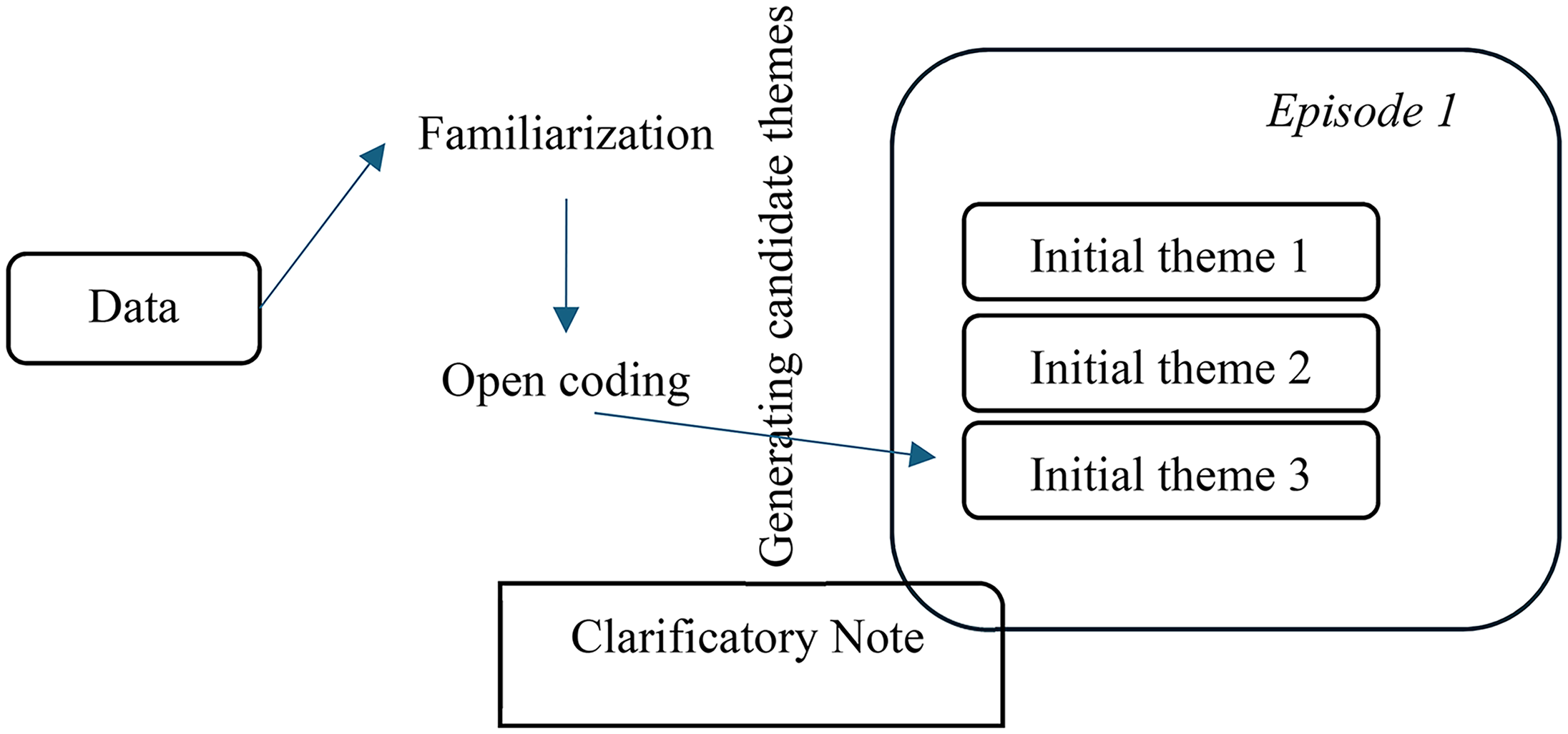
Generating themes and episodes.
Example of a thematic map.
In the initial stages of data collection and analysis, a limited number of themes may develop due to the scarcity of data. However, these initial themes still contribute to the evolving analytical story. Constant comparison with existing knowledge and reflections of researchers should be incorporated into the development of these initial themes included in the analytical episode. During coding and theme generation, researchers should pay close attention to all possible interpretations and hunches to understand how social processes unfold. These interpretations can then be contrasted with existing knowledge to build a more comprehensive picture. Drawing upon generating themes and analytical arguments, a thematic map can be constructed.
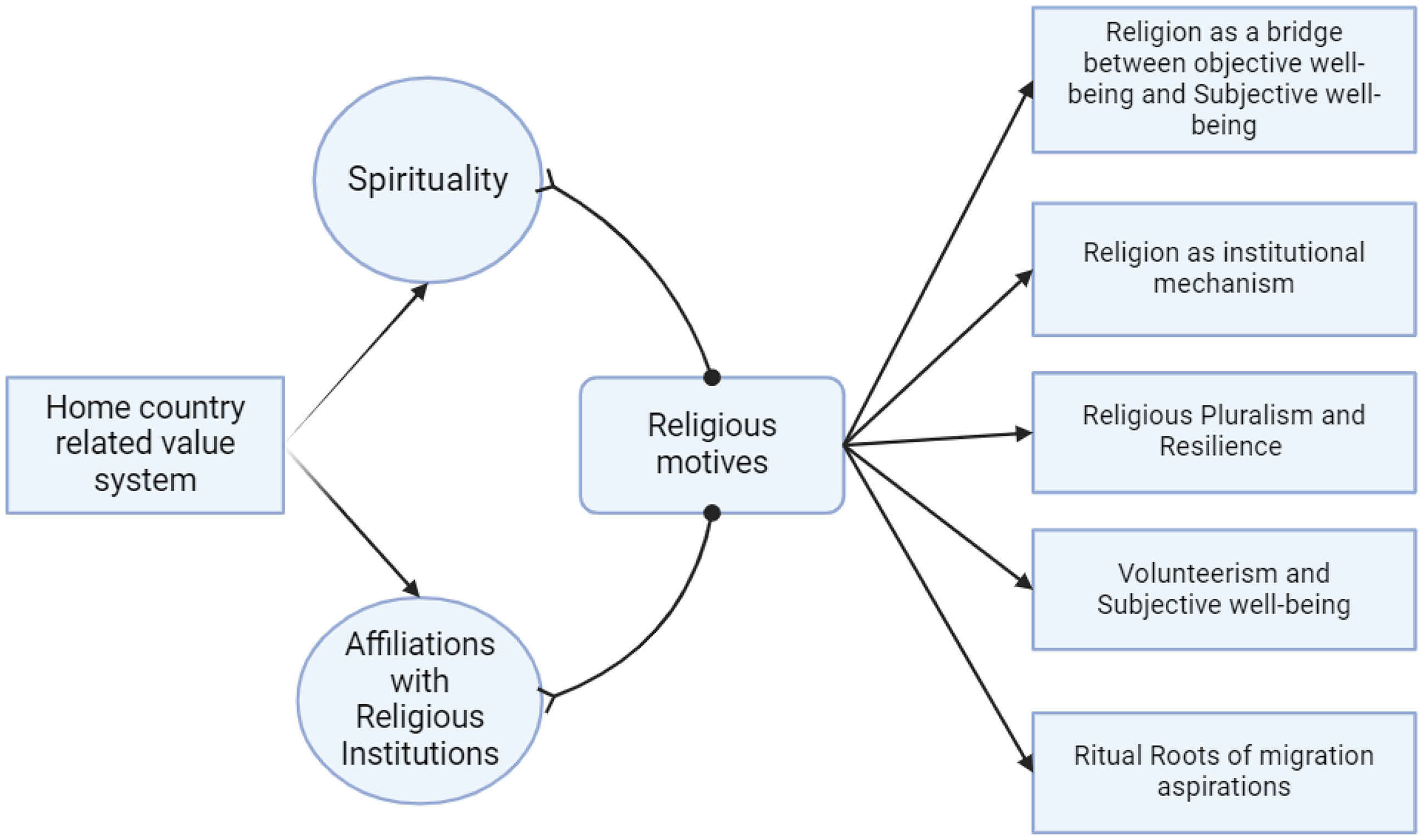
Creating (with possible revisioning) a thematic map at every data analysis stage is crucial. This map serves a dual purpose: it guides the Clarificatory Notes to connect smoothly with subsequent stages, and it provides a clear visual representation of the developing analytical story. Figure 3 provides an example of a thematic map. In the example research, five initial themes were identified, which were included in the draft episode. (Figure 4 illustrates a draft analytical episode.)
Spirituality and religious affiliations as ways to translate objective well-being into subjective well-being. Religion as an institutional mechanism to facilitate social networking. Religious pluralism as a resilience approach. Volunteerism is associated with religion as a way for subjective well-being. Ritual roots as access to immigration aspirations.
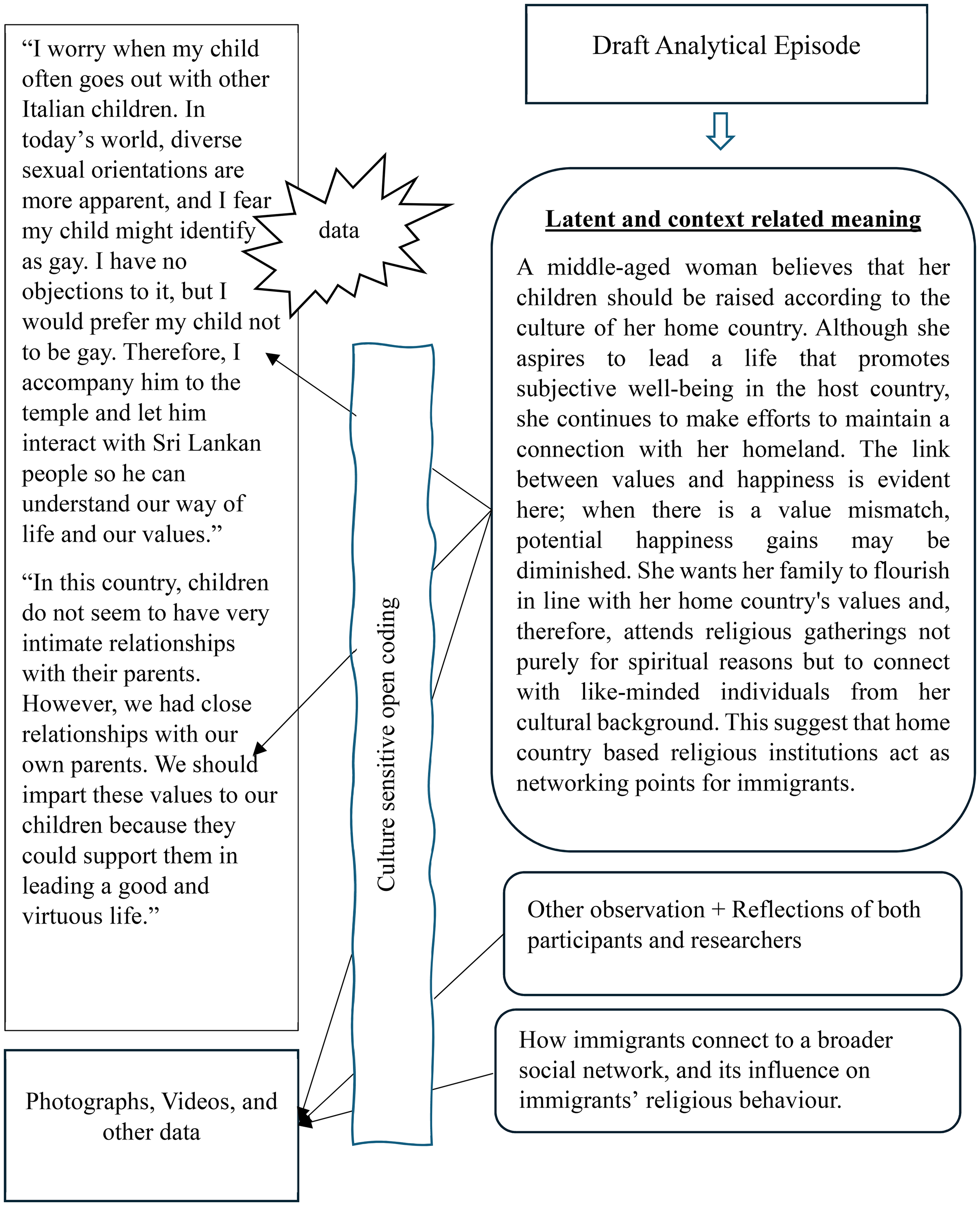
Example of a draft analytical episode.
All these themes were iteratively revised and refined throughout the analysis stages (Figure 5 illustrates a segment of an interactive process of RITA). In the final stage, all of them are combined into two overarching analytical claims, forming the core of the analytical story. Once the first stage of data collection and analysis is concluded, the second stage can commence. The same process is followed, with new data analysis informed by reflections on previous themes and prior analysis. The clarificatory note should then be revised to reflect these developments and provide recommendations for the next steps. Given the iterative nature of RITA, the clarificatory notes serve as a crucial guide, informing decisions about potentially adopting new methods, seeking additional data sources, or revising the initial research questions.
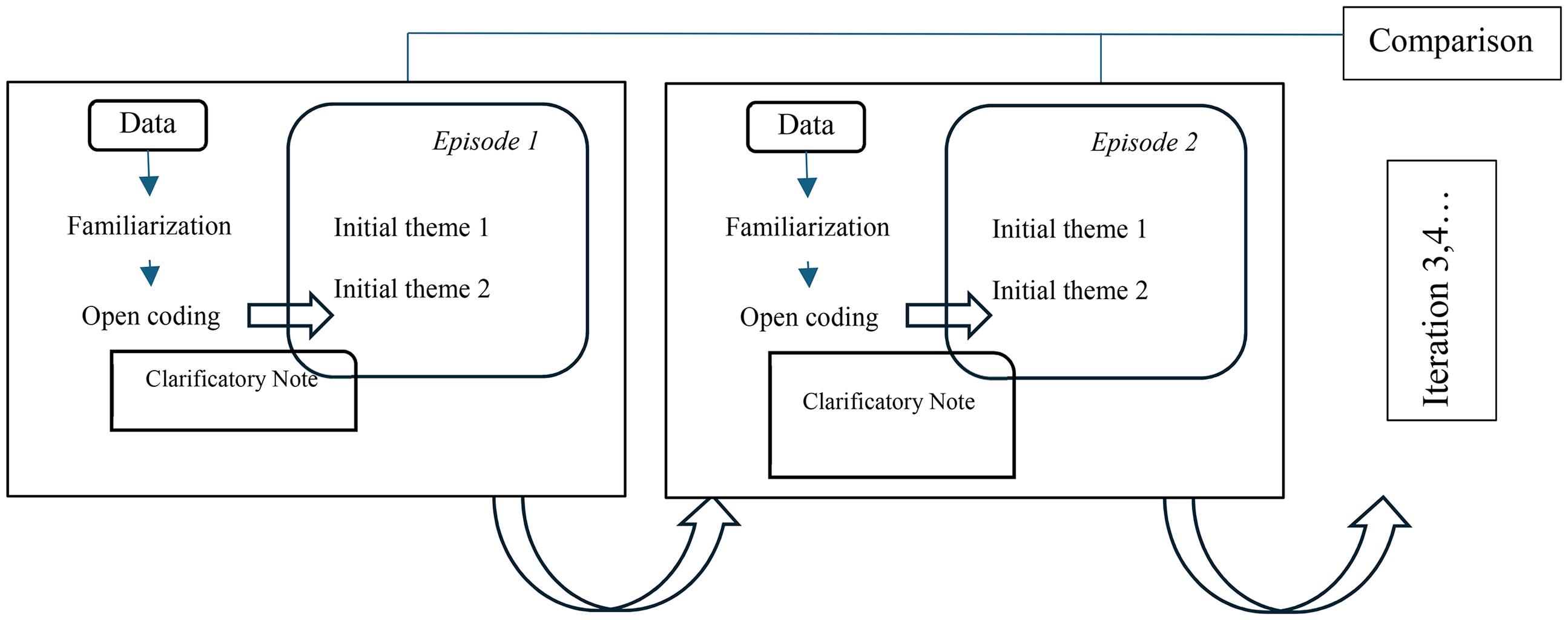
Segment of an iterative process of RITA.
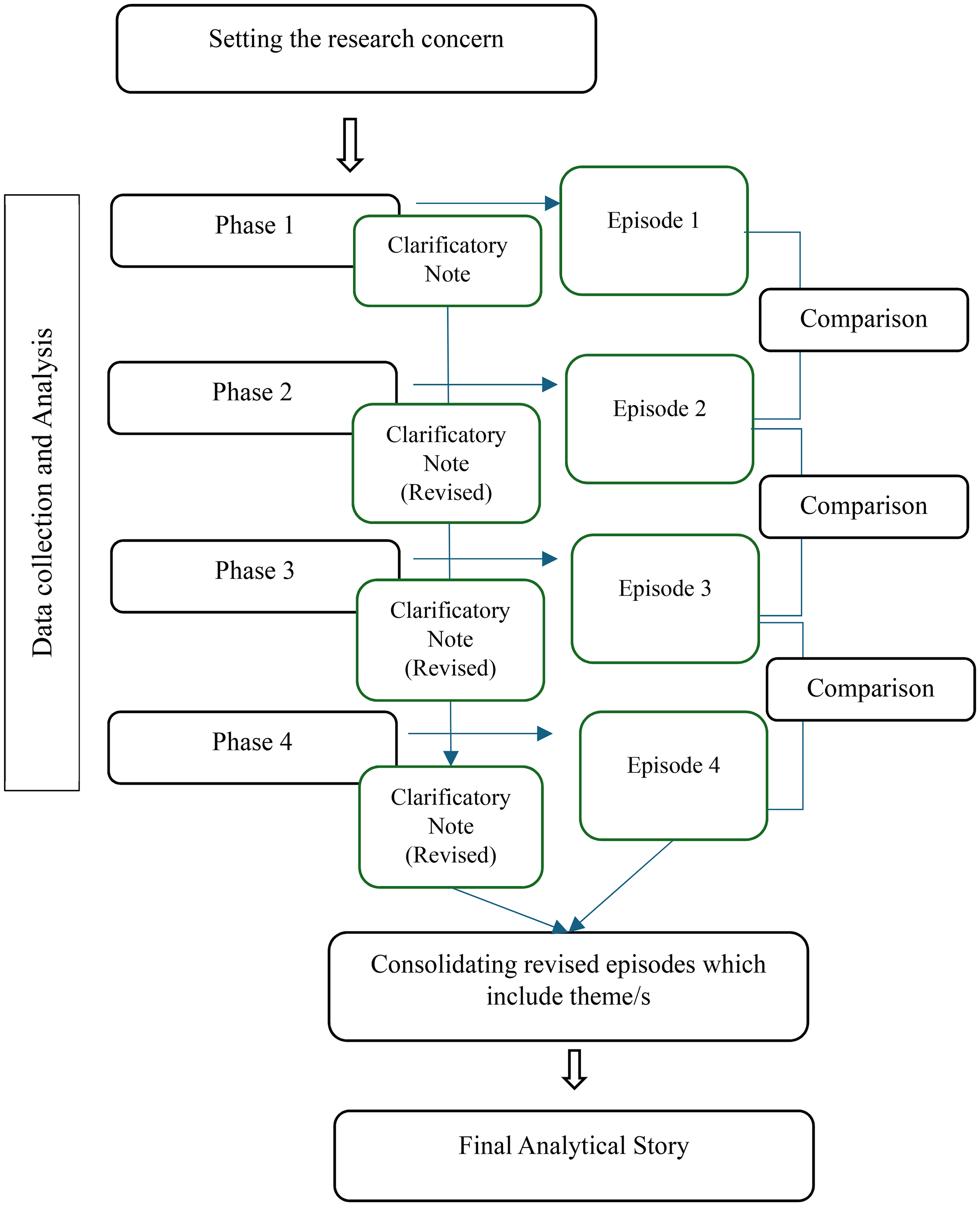
The iterative process of RITA.
The number of data collection and analysis stages in RITA is not predetermined but is instead informed by considerations of information power, which should be identified through the clarificatory notes collectively developed by researchers. These notes act as indicators for when to stop data collection. Data collection and analysis can conclude when one of two conditions is met. First, when no further avenues for exploration or clarification develop – a determination made through collective reflection among researchers, informed by the clarificatory notes. Second, data collection can cease when the initial research focus appears to be sufficiently addressed based on the collected data, a judgement also reached through collective reflection among researchers. Throughout the data collection and analysis stages, themes are continuously revised, analytical episodes are redefined, and the thematic map is updated iteratively. Maintaining an audit trail that logs every significant step is crucial for ensuring transparency.
Figure 4 illustrates a draft analytical episode, which is a holistic representation of a theme or set of themes representing patterns of human behaviour, social processes, and networks. Theme comparison and classification are ongoing processes during the analysis. This stage also incorporates reflection and continuous comparison with existing knowledge. Upon completion of the analysis, constant comparison with previous episodes resulted in early stages is essential. Researchers should continue to compare their findings with existing knowledge and incorporate participants’ reflections for a more nuanced understanding.
Constructing the final analytical story
The final analytical story consists of iteratively developed themes encapsulated in episodes (Refer to Figure 6). RITA, in this case, delves deeper seeking to uncover social processes, patterns, and networks embedded within the social context. Throughout the research process, researchers actively and collaboratively engage with data through a critical or experiential lens. This collaborative process involves the construction of multiple analytical episodes as researchers build a holistic understanding and identifying themes. When researchers collectively determine the information power of complete set of analytical episodes, further data collection can be terminated, and begin developing the final analytical story, which will be the outcome.
Upon completion of data analysis, researchers have access to several key deliverables, including a process log, clarificatory notes, thematic maps, and a draft set of episodes. Drawing on this comprehensive evidence base, the final stage involves constructing the analytical story. This can be initiated by consolidating the existing set of episodes. The analytical story should provide a theoretically sound explanation of the social processes, actors involved, networks, and patterns of human behaviour that emerged from the cultural setting in accordance with the research concern/intention. The third stage encompasses five key steps, which can occur concurrently.
Revising the episodes containing themes, and categorising them logically. (This will be the draft analytical story) Revising the thematic map. Member discussions. Revising the analytical story and finalising the analytical story building. In this step, core themes should be drawn from existing episodes. An episode can also be a theme itself, containing sub-themes. All core claims containing theme/s are called analytical claims. A theme/episode can be a coherent analytical claim. Presenting the analytical story.
Throughout data collection and analysis, themes are subject to ongoing revision, discarding, and redefinition. This iterative process culminates in a set of analytical episodes and consolidated episodes at the final stage. These episodes incorporate the revised themes and can refer back to specific data fragments as evidence when necessary.
A well-crafted analytical story transcends mere mention of evidence as narrative excerpts. It should integrate the initial research claims and findings and explain how these connect to participants’ experiences and existing knowledge. Once a draft analytical story is prepared, it should be presented to selected participants for their feedback. This member-checking process serves two key purposes: (1) to verify whether participants recognise the social processes, patterns, and networks associated with the emerging analytical claim, and (2) to gather insights for refining the analytical story through collective discussion. In the example study of South Asian immigrants in Italy, this iterative process resulted in a final analytical claim comprised of two core themes. Below in Box 2, it was summarised.
Summarised sample of an analytical story.
Introduction:
The role of religion and spirituality in promoting resilience among immigrants has been extensively studied, primarily through quantitative methods. These studies often reveal a positive association between religion and immigrant well-being. However, they typically focus on religious affiliations adopted in the host country, neglecting the impact of religious practices brought from the home nation. This study addresses this gap by exploring how retaining religious affiliations from the home country contributes to immigrants’ subjective well-being in the host society.
Methodology:
Employing a RITA approach, we collected data through four key informant interviews and 19 in-depth interviews with South Asian immigrants in Italy.
Findings:
Our analysis revealed two key analytical claims:
Reconnecting with Religious Practices for Resilience
While religious practices may not be immediately central upon arrival in the host country, facing life's challenges can reignite their significance. These practices, fostering psychological stability, contribute to both objective (material well-being) and subjective (emotional well-being) well-being. Notably, the observed increase in happiness among immigrants often integrates a crucial element: affiliation with religious institutions tied to their home country, alongside spirituality aligned with their native religion and culture.
Religion as a Bridge to Host Society
This theme highlights how religion acts as a bridge, introducing familiar traditions and practices from the home country into the host society. This process of ‘relinking’ with their heritage through religious involvement enables immigrants to build a fulfilling life. They integrate objective well-being into the new environment while preserving their existing value systems, ultimately leading to subjective well-being.
However, noteworthy differences identified between different immigrant groups. While Indian immigrants, despite their increased subjective well-being, generally consider returning due to strong ties to their home country's religion, Sri Lankan immigrants seem more inclined to integrate their home country's religion into the host society and settle in Italy long-term.
This was presented to selected participants for validation. During this session, some themes were revised and incorporated into the main themes. Concurrently, the thematic map was also updated.
A detailed description of the methodological approach, guided by the process log and clarificatory notes can be included in the writeup. Unlike positivistic approaches that separate findings from discussion, RITA encourages the direct presentation of the analytical story. This allows for clear demarcation of new findings, as existing knowledge is continuously compared with emerging themes throughout the analysis process. RITA discourages the mere inclusion of data excerpts, as this can obscure the broader social dimensions associated with human experiences.
Quality criteria in the RITA framework
While quantitative methods often rely on statistical analysis and model-fit criteria, qualitative studies establish trustworthiness through the criteria proposed by several scholars, including Lincoln and Guba (1985). Moreover, Tracy (2010) proposed a framework with eight quality criteria, which is particularly suited to RITA. The iterative process of data collection and analysis inherently strengthens trustworthiness. Recognising that establishing a robust model for trustworthiness in qualitative studies can be challenging, the RITA framework presented in this paper incorporates several practices specifically designed to meet these criteria while consolidating criteria proposed by Tracy (2010) and Lincoln and Guba (1985).
Worthy topic, research rigor, and sincerity
As Tracy (2010) suggested, these three elements contribute to enhancing the quality of research, ensuring that the study is timely, worthwhile, and feasible using a qualitative design. For RITA to be adopted, the topic or research concern should align with the RITA framework. Since RITA is more costly compared to other designs, the research concern should align with a reflexive and iterative approach that also tends to use TA. Therefore, the quality of output from RITA-based research essentially depends on a well-crafted research concern that is relevant, timely, and achievable through a qualitative approach. As Murray (1971) highlights, research should be interesting rather than obvious, and such studies often emerge from the exploratory tradition described in the RITA framework. For example, RITA may be adopted for a qualitative longitudinal study, taking advantage of its iterative design.
Research rigour refers to rich complexity and abundance of the analytical story, where interpretations and descriptions thoroughly explain complex social realities (Gioia et al., 2013; Tracy, 2010). Rigour is achieved through theoretical constructs, diverse data sources, contexts, and participants. RITA inherently advocates for such richness by focusing on multiple data sources, reflection, embedding participants’ perspectives, understanding social contexts, and iterating data collection and analysis. Rigour comes from having enough data to support analytical claims, spending sufficient time on data analysis and interpretation, using appropriate samples, and employing appropriate procedures. Defining the research focus encapsulates all these considerations. Therefore, the means for achieving research rigour are inherently included in the stages of RITA, which ultimately leads to quality in the study.
Sincerity in qualitative research is achieved through self-reflexivity, honesty, transparency, and auditing. These practices are essential aspects of ensuring authenticity and credibility in the research process. Upholding the genuineness of the research team is crucial, as authenticity originates from the researchers’ genuine engagement in the study. Ensuring transparency – including how researchers entered the research context, the extent of their intervention, and the level of detail in transcription – further contributes to sincerity.
Credibility
Credibility, also known as internal validity, refers to the degree to which research findings accurately reflect the participants’ lived experiences. As previously discussed, a major challenge in TA is the potential for data to deviate from participants’ real-life experiences. To address this concern, some of the best practices are recommended.
Construct the primary concern together with actual participants before beginning data collection. This approach can incorporate participants’ experiences into the formulation of the research focus. As a result, the study's concern will revolve around a pragmatic case, as reflected by both researchers and participants who are often influenced by social and historical facts. Select research methods iteratively through collective dialogue. Therefore, participant-informed methods should be selected. This is also true for participant recruitment. Focus on the emerging sample, which represents maximum variations. The RITA suggests selecting participants as directed by the initial data collection and analysis. Gather human experiences from various sources and methods, and ensure the participation of individuals from diverse backgrounds. Conduct iterative data analysis and continuously compare the findings with existing knowledge and the real-life experiences of participants. Engage in collective discussions on data and ensure collective participation in data analysis. The RITA framework emphasises culture-related coding. Reflection is a cornerstone of ensuring trustworthiness. This process entails researchers engaging in collective analysis, where they critically examine the data, participants, methods employed, and their potential impact on the research setting. Ensure the participation of respondents during the analysis stage to confirm that the analytical claims accurately reflect reality. During this stage, all ethical guidelines must be followed.
Transferability
While qualitative studies generally do not prioritise generalisability, transferability (the applicability of findings to other contexts) can be of interest in cross-cultural research. Although the context-specific nature of RITA's analytical claims can hinder transferability, some argue that thick interpretations or detailed narratives can facilitate transferability or at least enable cross-cultural comparisons.
Strategies to enhance transferability in RITA:
Clarificatory notes: Detailed notes documenting the research process can provide valuable insights for researchers seeking to apply their findings to similar contexts. Collective data analysis and methods selection: Engaging participants in discussions about data analysis and methodological choices can offer valuable perspectives that enhance the transferability of research findings. Audit trails: Maintaining a comprehensive audit trail throughout the research process fosters transparency and allows other researchers to assess the transferability of the findings. Constant comparison with existing theories: Continuously comparing emerging analytical claims with established theories allows for a deeper understanding of the context and facilitates comparisons with another research.
Dependability and resonance
Dependability deals with the research process and the extent to which researchers can adhere to a systematic method of inquiry. Thus, dependability is a core aspect of the RITA framework, which is achieved through the following methods:
Writing clarificatory notes Writing audit logs on the process of the research Reflective and iterative selection of methods and iterative data analysis
In addition, resonance refers to researchers’ ability to communicate the knowledge emanating from their analysis, which is one of the essential qualities of a researcher. Despite conducting a good analysis, researchers sometimes fail to communicate it appropriately to the audience. Resonance can thus be achieved through aesthetic merit and generalisability. Aesthetic merit involves writing the outcome eloquently, in an artistic and academic way. Collective writing can help achieve this, and also presenting initial ideas to participants and getting feedback from them can enhance resonance. Often, in qualitative studies, generalisability receives less attention; however, recent discussions highlight that the potential to be valuable across other contexts should emanate from qualitative studies. This is inherent in RITA, as the research process strives to maximise a holistic understanding of the phenomenon. Even though generalisation is difficult – just as it is in statistical generalisation – the knowledge derived from RITA-based research should be transferable and useful in other settings and populations.
Significant contribution and ethical concern
Tracy (2010) also highlights the importance of significant contributions and ethical concerns as quality criteria in qualitative research, which are crucial in the use of RITA frameworks. In this context, research should contribute to the understanding of social life, bring clarity to confusion, generate insights, and deepen comprehension. Employing a new research framework should support theoretical, methodological, and practical significance – the main purpose of innovative methodological approaches. RITA was developed for this reason, and its use is optimal for exploratory research that offers new contributions to understanding, even though it is customisable for any type of social science research. Ethical considerations are essential in qualitative research and should not be violated when dealing with people.
Meaningful coherence
Given the flexibility of TA, it is often challenging to establish meaningful coherence between ontological, epistemological, and theoretical aspects and results (Braun and Clarke, 2021). Although RITA is primarily recommended for reflexive and iterative research within a constructionist paradigm, it can be customised to fit any qualitative theoretical framework. Therefore, ensuring clear and meaningful coherence in aligning the framework is essential. To achieve this, researchers should carefully craft the intended purpose, apply methods and theoretical procedures consistently, and carefully situate their analytical claims within the existing body of knowledge. For example, in the RITA framework, member reflections are recommended over member checks to uphold the constructivist nature of knowledge generation.
Confirmability and other concerns
Confirmability is attained when all the aforementioned criteria are met. However, collective interventions and reflection are additional criteria that enhance the confirmability of the study, indicating the extent to which the analytical claim corresponds to reality. Peer debriefing or discussing the analytical claim with experts in the field is also an effective strategy for achieving confirmability. As a quality appraisal tool, many researchers have recently adopted COREQ (the Consolidated Criteria for Reporting Qualitative Research checklist) (Tong et al., 2007). However, Braun and Clarke (2024b) have strongly criticised COREQ, arguing that it undermines the principles of the ‘Big Q’ approach to qualitative research. Even in RITA, the use of such checklists is questioned, as they can lead to methodologically incongruent reporting that ultimately compromises the quality of the study. Instead, Braun and Clarke (2024b) advocate for a values-based approach to reporting qualitative findings, which they argue is more aligned with the epistemological foundations of qualitative inquiry and supports higher-quality reporting.
What can go wrong? and minimising mistakes
Given the flexibility of the RITA process, there is a tendency for errors in its adoption and implementation. Although RITA is recommended with a strong constructionist positioning, researchers have the freedom to adopt it within different ontological and epistemological positions. While the present framework primarily strives to offer a solution for using the TA approach iteratively, certain limitations should also be acknowledged. Inherently, this is a costly design, as it involves more resources and is time-consuming. An inherent belief in RITA is that data collection and analysis should proceed in parallel and stepwise until the final analytical claim is generated, which may require more time, resources, and labour.
Even though, as suggested by Braun and Clarke (2021) for TA, RITA can also be employed by a single researcher, a collective approach to the research process is recommended. This is because the phenomenon being studied should be viewed through collective reflexivity and perspectives. The research involves the participation of both participants and researchers, which can potentially lead to the influence of power dynamics. As commonly seen in collaborative research (Swaminathan and Mulvihill, 2023), power dynamics play a crucial role, which is inherent in RITA. Rather than focusing on collective reliability in research, collaboration in RITA is encouraged to deepen reflexivity and help smooth the research process, which is not predetermined but is evolving and constantly changing. The collectivist approach to research is suggested on the basis of this assumption. For example, the research direction might change because of the influence of power dynamics associated with certain inequalities such as gender, race, or rank, and this should be acknowledged while addressing such influences. Some studies suggest strategies to resolve this problem, such as bias training, positionality, and structural competency (Andress et al., 2020).
Another key challenge in RITA is achieving meaningful methodological alignment or methodological integrity. Although the main purpose of introducing RITA is to propose a solution for methodological integrity, this problem is likely to emerge when researchers try to customise it. Given the flexibility of TA and RITA, researchers may strive to align with different epistemological, ontological, and theoretical bases, which may result in incorrect specifications. For example, a codebook approach or positivist framework applied to RITA would not sufficiently align with its theoretical foundation. Research questions should also be formulated according to the theoretical basis. RITA is often compatible with both social constructionism and subjectivism, and their use can be adopted even when revising the coding and theme generation process. For example, in constructionism, abductive and open coding may be adopted. Furthermore, RITA is not atheoretical; indeed, it has a theoretical basis, yet researchers should ensure correct methodological alignment.
The subject matter or focus of the study should also be researchable within the RITA framework. This implies that not all qualitative research concerns can adopt the proposed framework. Research focusing on people's lived experiences, cultural meanings, and meaning-making processes can be effectively studied by adopting the RITA framework, provided there is a strong justification for a stepwise approach to data collection and analysis. The research concern should be suited to an extended study period rather than a quick, “in-and-out” approach where data analysis begins only after all data have been collected. For more positive enquiries, RITA offers limited customisation. It is particularly recommended for qualitative longitudinal studies, as the current design progresses stepwise, ultimately culminating in a comprehensive analytical narrative.
Another commonly observed challenge is the tendency to produce topic summaries rather than themes and a lack of reflexivity. As with many TA methods, researchers, even within the present framework, may sometimes create topic summaries rather than interpretative themes. A topic summary offers a general description, while themes are more interpretative, incorporating theoretical foundations and reflexivity. The current framework introduces ‘episodes’, which are analytical chunks upon which the final analytical claim is built. These episodes are not merely collections of themes; rather, they provide a broad interpretation that may point to social processes, networks, social actors, and/or causal relationships. Failure to appropriately carve out episodes can lead to misinterpretations and inaccurate analytical claims.
The RITA research process is guided by clarificatory notes, which highlight potential issues and research directions. As a result, researchers must collectively navigate upcoming stages of research. Moreover, another closely related challenge is analytical generalisability. Although generalisability is often less emphasised in qualitative research, analytical generalisability is still acknowledged. Analytical claims should be applicable to other contexts, albeit with possible variations. This form of generalisability emerges from a close interaction among developed analytical claims, existing theories and studies, and researcher reflexivity (Halkier, 2011).
In practice, qualitative research often aims to report original narratives as extensively as possible to substantiate analytical claims. However, RITA discourages the inclusion of large amounts of original narrative solely to support claims; instead, it emphasises the importance of the analytical claim itself. Providing excessive original narrative can obscure the analytical claim, leaving interpretation open to the audience. This is a common drawback in studies using TA, and it may also occur within RITA. The proposed framework, therefore, suggests limiting original narratives in the analytical claim to only those that are essential to supporting the argument. The analytical claim should be presented in a way that clearly conveys the main argument in line with the research question or concern, allowing the audience to grasp the precise findings of the research.
Another possible pitfall may arise when focusing on information power. The basic belief of information power is that if the information obtained from participants and from other sources is sufficiently detailed, varied, and meaningful for answering the research question, a smaller sample may suffice. Conversely, if the data lacks depth or does not cover the scope of the research question, a larger sample may be necessary. Information power is therefore shaped by factors such as: research aim, sample characteristics such as heterogeneity or homogeneity, theory application, data quality, and analytical mode. All these should be considered through collective discussions by researchers.
Conclusion
TA encompasses various methods that are primarily employed to analyse qualitative data and generate themes. Recent developments in TA extend its conventional application beyond the end of data collection, incorporating it as an ongoing process throughout the research process. Contributing to these methodological advancements, the present framework introduced a structured approach to adopting TA as an iterative and reflexive process, initiating prior to data collection. The primary aim of introducing RITA is to facilitate iterative research practices, mitigating certain limitations associated with post-collection data analysis. Implementing TA in an iterative design requires precise methodological alignment; hence, RITA is grounded in established methodological integrity while allowing for potential customisation.
RITA proposed a three-stage research design that consists of setting the research concern, processing the study, and generating the analytical story. Each stage promotes a close connection between participants, data, researchers, and the social context. Strong coherence among these elements is essential for understanding social realities. By engaging the researcher directly with real-life contexts, RITA supports the construction of well-founded analytical claims. Researcher subjectivity is acknowledged within RITA as an asset in data analysis, method selection, and participant recruitment. TA is applied with specific modifications to support iterative data collection and analysis. While the proposed framework may encounter limitations in practice, future studies are encouraged to document such challenges, thereby contributing to further methodological development.
Supplemental Material
sj-docx-1-qrj-10.1177_14687941251377282 - Supplemental material for Reflexive and iterative thematic analysis (RITA): A design-framework for qualitative research
Supplemental material, sj-docx-1-qrj-10.1177_14687941251377282 for Reflexive and iterative thematic analysis (RITA): A design-framework for qualitative research by Samitha Udayanga in Journal of Interactive Marketing
Footnotes

Funding
The authors disclosed receipt of the following financial support for the research, authorship, and/or publication of this article: APC are funded by the University of Bremen.
Declaration of conflicting interests
The author declared no potential conflicts of interest with respect to the research, authorship, and/or publication of this article.
Data availability
Example data used in the paper is available, upon reasonable request.
Supplemental material
Supplemental material for this article is available online.
Author biography
Samitha Udayanga is a doctoral candidate at the Bremen International Graduate School of Social Sciences, University of Bremen. His research engages with issues of subjective well-being, migration, and Asian studies, employing both qualitative and quantitative methodological approaches.
References
Supplementary Material
Please find the following supplemental material available below.
For Open Access articles published under a Creative Commons License, all supplemental material carries the same license as the article it is associated with.
For non-Open Access articles published, all supplemental material carries a non-exclusive license, and permission requests for re-use of supplemental material or any part of supplemental material shall be sent directly to the copyright owner as specified in the copyright notice associated with the article.
