



Abstract
Research in certain fields of study may carry emotional and safety-related risks. For example, scholars in the field of extremism and terrorism often navigate potentially uncomfortable or unsafe environments, face an emotional toll when exposed to extreme ideologies or risk facing backlash from extremists, either during the research process or after the publication of their findings or media appearances. However, support provided for them tends to be limited, often due to the lack of institutional awareness of the risks inherent in researching potentially dangerous populations. Drawing on 13 interviews with directors and coordinators of research institutions that have developed guidelines and protocols to protect researchers, as well as 7 internal documents produced by these institutions, this article examines institutional practices for preventing, mitigating and responding to harm, threats and harassment of researchers. The findings emphasize the role of institutions in establishing a safe organizational culture, implementing safety tools and protocols and considering the intersectional nature of risks and challenges.
Keywords
Research in certain fields of study may carry emotional and safety-related risks. For example, scholars in the field of extremism and terrorism often navigate uncomfortable or potentially unsafe environments, face an emotional toll when exposed to extreme ideologies, or risk facing backlash from extremists, either during the research process or after the publication of their findings or media appearances (Crayne and Shortland, 2023; Pearson et al., 2023; Segers et al., 2023). However, ethics guidelines are often inadequate in preventing or preparing them for these risks, and when researchers find themselves vulnerable, they often lack institutional support to address or cope with these challenges. Indeed, recent research points to the lack of guidance, training and support provided for researchers on extremism and terrorism (Conway, 2021; Gelashvili and Gagnon, 2024; Mattheis and Kingdon, 2021; Vaughan, 2023). While the risks faced by researchers are increasingly documented, we know relatively little about how to prevent, mitigate and respond to such harm. The current study discusses institutional support for researchers and asks the following question: How can institutions better support researchers studying extremism and terrorism?
To address this question, this study focuses on institutions that are specifically dedicated to research on extremism and terrorism and have developed guidelines and protocols to prevent and respond to harm, threats and harassment of researchers – often in response to the lived experiences of their researchers. It draws on 13 interviews with directors and coordinators of such institutions, as well as 7 internal documents produced by these institutions, to document institutional practices aimed at ensuring researchers’ emotional and physical safety. It highlights the importance of establishing a safe organizational culture, implementing safety tools and protocols and offering a variety of resources to take into account researchers’ identity and positionality. It is important to note that this study does not aim to compare and evaluate best practices and strategies, outline one-size-fits-all guidelines and protocols or argue that institutions should grant less autonomy to researchers; rather, it aims to share the experience of different institutions and stimulate a much-needed discussion on institutional support for researchers.
By examining how institutions can better support extremism and terrorism researchers, this study offers three broad contributions. First, this study argues that ethical procedures should focus on the needs of both the research participants and the researcher, particularly in the case of research with potentially dangerous populations and on controversial topics. In the past years, ethical procedures and guidance in research have substantially improved to safeguard participants’ well-being, including the establishment of ethics committees and the creation of standardized protocols and documentation, such as information letters and consent forms. However, ethical procedures to safeguard the well-being of researchers are still overlooked (but see Conway, 2021; Skinner et al., 2023; Vaughan, 2023). Indeed, while the dominant understanding of ethics and reflexivity places research participants in an unequal power relationship in which researchers control the research process and extract data from their subjects of study, in certain types of research, the power relationship can be more complicated or even shifted (Massanari, 2018; Segers et al., 2023).
Second, this study places particular emphasis on the proactive role of institutions rather than the individual researchers in developing protocols and measures to protect researchers. As explained by Dashtgard (2023), discussions about emotional and physical safety risks among researchers often revolve around self-care, stressing the importance of taking time for oneself, talking to friends, engaging in sports or self-reflexive activities, or around good research methods, like having a research protocol, anticipating and preventing incidents that may occur during fieldwork, etc. (see Kumar and Cavallaro, 2018). While these practices are fundamental to the conduct of any kind of research, they place the responsibility on researchers and ignore the responsibility of institutions in safeguarding researchers. Yet it is the duty of institutions to support and offer adequate tools to protect researchers (also see Marwick et al., 2016; Mattheis and Kingdon, 2021), and an overwhelming focus on self-care and individual responsibility risks overshadowing institutional responsibility.
Third, this study broadens and nuances the discussions on emotional and physical safety of researchers by emphasizing how intersectionality can be incorporated in efforts to protect researchers studying extremism and terrorism. Originally coined by Crenshaw (1989), the concept of intersectionality refers to the ways in which different systems of oppression, such as ageism, racism and sexism, intersect to reinforce inequalities (Labelle, 2020). Applied to discussions on emotional and physical safety risks, an intersectional lens highlights the ways in which these risks are unequally distributed among researchers based on their identity and positionality, thus increasing or limiting their vulnerability to harm (Segers et al., 2023). Yet discussions about emotional and physical safety risks tend to overlook their intersectional nature.
This article is divided into four sections. The first provides an overview of studies focusing on emotional and physical safety in research and offering recommendations for institutions to better safeguard researchers. The second section presents the method and data. The third section documents guidelines and protocols developed by research institutions focusing on extremism and terrorism to ensure researchers’ physical and emotional safety. The conclusion emphasizes institutional responsibility over individual responsibility and stresses that all research institutions should allocate resources and implement measures to protect researchers’ emotional and physical safety. While the focus of this study is on extremism and terrorism research, we maintain that the measures emphasized can be useful in safeguarding researchers in other complex and potentially dangerous fields (e.g. peace and conflict studies), or those working on topics that have become polarized (e.g. climate changes, gender and immigration).
Emotional and safety risks in research
Researching extremism and terrorism entails multiple challenges, including emotional and safety risks that are often intersectional. To begin with, research in these fields often involves tasks such as monitoring social media accounts, websites, blogs and forums, analysing propaganda, terrorist manifestos or terrorist attack videos and interviewing or observing extremists in a close-up fashion (e.g. Ebner et al., 2022; Froio et al., 2020; Ophir et al., 2023; Pearson, 2023). As such, researchers tend to repeatedly expose themselves to racist, misogynistic, dehumanizing and hateful texts, images, videos and so on, resulting in significant emotional labour.
Repetitive exposure to hate speech, threats of violence and actual depictions of violence can, however, result in acute stress, secondary trauma and symptoms consistent with post-traumatic stress disorder (Crayne and Shortland, 2023; Crayne et al., 2023; Lakomy and Bożek, 2023). In their investigation of the psychophysiological consequences of exposure to terrorist propaganda among researchers, Lakomy and Bożek (2023) find that terrorism researchers tend to experience mental harms such as anger and fear, problems with concentration or even memory loss from viewing violent content online. As explained by Duran (in Gagnon and Mathieson, 2023), researchers working with extremist and terrorist content should be aware of the symptoms indicating that they are affected by their work and are experiencing a form of trauma. These include the following:
(1) ‘Negative cognitions’, such as feelings of isolation or a lack of interest in things that they usually enjoy; (2) ‘avoidance’, such as being unable to sleep, concentrate and negative emotions; (3) ‘re-experience’, such as having flashback of events to which they were exposed; and (4) ‘arousal’, such as using alcohol to block out feelings or putting off work.
In addition to the emotional challenges researchers may encounter when studying extremism and terrorism, they may face safety-related challenges, including (online and offline) threats and harassment from their subjects of study (Massanari, 2018; also see Oksanen et al., 2022; Sharp and Kremer, 2006). For example, in their study of well-being issues among online extremism and terrorism researchers, Pearson et al. (2023) found that two-thirds of the 39 online extremism and terrorism researchers they interviewed had experienced harm, whether it was emotional, such as depression or anxiety, withdrawal or nightmares or safety-related, such as being the victim of trolling or receiving death threats. In their study of the challenges faced by women researchers when doing close-up research on the far right, Gelashvili and Gagnon (2024) report that most researchers had experienced emotional challenges in the context of their research, such as feeling discomfort and anger and being emotionally drained, and that some of them also faced safety challenges during their fieldwork or after the publication of their research findings, including harassment and threats.
Finally, while extremism and terrorism researchers face emotional and safety risks, these risks are embedded in researchers’ identity and positionality, increasing or limiting their vulnerability to harm. Indeed, Pearson et al. (2023) found that researchers’ identity and positionality influence how they can be affected by the nature of their work or targeted by extremists. They show that the challenges of researching extremism and terrorism are related to age, gender, race and religion. For example, while female researchers may be victims of misogynist harassment, other researchers may be attacked for their religious faith. Similarly, Gelashvili and Gagnon (2024) found that the emotional and physical safety challenges experienced by women researchers were sometimes explicitly gendered and could be elicited by a variety of actors, including far-right actors, but also anti-fascist activists – accusing them, for example, of falling in love with Nazis if they did close-up research.
(Lack of) institutional support for researchers and its consequences
Despite these challenges, research shows that many institutions do not sufficiently support researchers in reducing the risks associated with researching extremism and terrorism and are not prepared to mitigate and manage threats, harassment and violence (Gelashvili and Gagnon, 2024; Crayne et al., 2023; Lakomy and Bożek, 2023; Pearson et al., 2023; Vaughan, 2023; also see Gosse et al., 2023). For example, institutions often fail to offer appropriate training, care and support to their researchers. Moreover, the general discussion of risk in extremism and terrorism research tends to overlook its intersectional nature, which is surprising, considering that the subjects under study mobilize specifically on the basis of their opposition to certain identities.
Lack of institutional support has negative consequences not only for the researchers themselves but also for the research they produce. In recent years, researchers have considerably developed their research ethics and methods to better understand, measure and evaluate extremism and terrorism (e.g. Ashe et al., 2020; Toscano, 2019; Vaughan et al., 2024), producing important and rigorous studies. These advancements can, however, be profoundly affected by the multiple risks associated with this type of research. For example, in her discussion of the ethics and methods of studying white supremacists, Blee (2017: 92) explains that fear of danger can significantly impact the research process: When scholars fear that they are in danger of violent attack during, or as a consequence of, contact with those they study, they may reduce the scope of their study. Topics of inquiry, factions of people, or places and settings that are associated with violence may be sidelined and those deemed less risky overemphasized, possibly to the detriment of valid interpretation. Thus, the experience of danger can become a metanarrative, obscuring other salient features of the research experience.
Thus, beyond the ethical imperative of research institutions to protect researchers, ensuring their emotional and physical safety also involves empirical considerations related to research representativity, reliability and validity.
Lack of institutional support has forced many researchers to develop their own coping mechanisms to deal with emotional challenges. For instance, researchers of extremism and terrorism tend to employ different strategies, such as developing informal networks to share their experiences, seeking counselling and maintaining a good work-life balance (Gelashvili and Gagnon, 2024; Pearson et al., 2023). However, such strategies should be supported, facilitated and promoted by work institutions. In her investigation of the way Case Offices (COs) in the UK Metropolitan Police Counter-Terrorism Internet Referral Unit manage and mitigate the risks associated with exposure to disturbing online material in the context of their work, Reeve (2023) demonstrates that COs engage in various forms of coping mechanisms. For example, they tend to compartmentalize their work and personal lives, seek support from friends and family, become desensitized and develop a gallows humour to cope with the disturbing nature of the terrorist material they are exposed to. However, coping mechanisms can be supported, but also inhibited by their organization. Reeve stresses the importance of a supportive supervisor in promoting a good team environment, for example, by organizing team-building activities to find a sense of release and facilitate sharing with colleagues, enabling team-based coping mechanisms, such as burden-sharing strategies, as well as personal practice preferences, such as the capacity to choose when and for how long to view disturbing material.
In addition to supporting researchers’ emotional well-being, institutions have a duty to support their physical safety. Yet, as with emotional challenges, the lack of institutional support has prompted researchers to develop their own safety strategies. For example, researchers in different fields of study, particularly women, have reported experiencing sexual harassment, intimidation and violence during fieldwork and have thus developed strategies for increasing safety, like developing safety guidelines, meeting participants in a public place and during the day, dressing very conservatively to avoid sexual harassment and having a cell phone (Bucerius, 2013; Pini, 2005; Sharp and Kremer, 2006). Other researchers have discussed the need to introduce more formal safety protocols. For example, Paterson et al. (1999) propose general guidelines for developing a protocol to prevent or manage threats to researcher safety in the field. Specifically, they argue that safety protocols should include (1) ‘an assessment of the situation’, i.e. reflecting on the degree and potential sources of danger within the field; (2) ‘preventive strategies’, such as being equipped with appropriate communication devices and maintaining a state of acute awareness; (3) ‘identifying and responding to a threat’, or being aware of the cues before a potentially dangerous situation and leaving the setting if they feel uncomfortable; and (4) ‘follow-up’, including reporting to the appropriate authority and debriefing.
Although these measures and strategies are necessary, they rest primarily on the shoulders of researchers, and mainly concern fieldwork. It is therefore essential to broaden the discussion and address institutional measures and protocols to better protect researchers at all times. One exception addressing this topic is Marwick et al.'s (2016) document offering recommendations to institutions, advisors and senior faculty, supervisors and researchers on good practices for conducting risky research and protecting researchers from online harassment. They highlight, among other things, the importance of recognizing the harm that can result from online harassment, educating researchers about these risks, offering cybersecurity, social media and harassment assistance and psychological support, and promoting these resources so that researchers know they are available. In the case of researching extremism and terrorism online, Mattheis and Kingdon (2021) argue that institutions should develop better understanding of the risks and challenges of doing such research, develop guidelines and tools that highlight best practices, promote institutional resources and contacts and offer assistance or training for research on online security.
Thus, apart from a few exceptions, there is little discussion on the institutional responsibility to protect researchers. Moreover, we argue that this discussion is incomplete without taking into account the inherently intersectional nature of challenges and risks. This is particularly important in a field where identity plays such a crucial role, with extremists and terrorists targeting different groups across time and space, such as Jews, feminists, immigrants, Muslims and trans people, and thus also potentially targeting researchers seemingly belonging to these groups (see Pearson et al., 2023).
Research in certain fields of study may carry emotional and safety-related risks. For example, while there is a need to support researchers and help them negotiate and navigate identity-related harms, there is little information on how to proceed. However, and although not related to the intersectional nature of harm, Reeve's (2023) recommendations of good practices in mitigating well-being risks associated with work that involves being exposed to harmful content online provide some insights. Her study shows that individuals exposed to online terrorist material in the context of their work can experience being disturbed in different ways and with different types of material, depending on their capacity for empathy and personal circumstances. She therefore argues that institutions should build awareness and resilience to support the well-being of these individuals (Reeve, 2023: 906). More specifically, she maintains that awareness needs to be raised of the factors that can increase a person's vulnerability to exposure to certain materials and the type of support that can help mitigate the risks of such exposure. Moreover, she argues that individuals should build resilience, for instance by taking time to prepare by exposing themselves to increasingly disturbing content in a staggered way. Given that most researchers are unaware of the potential risks associated with research on extremism and terrorism prior to engaging in these fields (Pearson et al., 2023), it seems reasonable to argue that institutions should raise awareness among researchers of the multiple, intersectional ways in which they may be affected by their research and provide strategies to build their resilience.
Method and data
While the lack of institutional support for researchers may be explained in part by a lack of institutional awareness of the challenges and risks inherent in research on potentially dangerous populations, in some institutions dedicated specifically to extremism and terrorism research, researchers’ experiences have prompted more awareness of these risks and potential responses to them. This research thus draws on 13 interviews with directors and coordinators of research institutions working on issues related to extremism and terrorism in Europe and North America, as well as 7 internal documents produced by some of these institutions. We contacted a total of 20 directors and coordinators of research institutions. One declined, saying they had no guidelines or protocols in place, and six never replied. Of the 13 interviews conducted, 1 was a group interview with 3 research team leaders who wanted to combine their experiences and expertise on the topic to have a more in-depth discussion.
A first set of respondents was selected based on our prior knowledge of institutions dedicated to extremism and terrorism research that had developed guidelines and protocols to prevent and respond to harms, threats and harassment of researchers, with no other strict selection criteria. A second set of respondents was selected using the snowball recruitment method – that is, by asking respondents if they knew of other institutions that had also implemented such guidelines and protocols. We conducted interviews with directors and coordinators of research institutions, including research centres based in universities, independent think-and-do-tanks, investigative journalism teams, research networks and research companies. These research institutions all focus on online and/or offline (violent) extremism and terrorism, either as their main area of interest or as part of a broader focus on conflict and security. Some are large, centralized institutions, while others are smaller institutions or less structured research networks. Some are university research centres, others are NGOs. Conducting interviews with actors working in a diverse range of research institutions allowed us to benefit from a variety of perspectives based on different experiences. It also highlights some of the challenges that different types of institutions face when trying to implement guidelines and protocols to protect researchers and provide training. The anonymized list of interviews is provided in Appendix 1.
Prior to the interview, respondents were introduced to the researchers and the study, provided with an information sheet and a consent form detailing the nature and approach of the study and its purpose. Ethical approval for fieldwork was obtained from the Norwegian Centre for Research Data. Interviews were conducted by the authors between November 2023 and January 2024 and lasted about 1 h each. Interview questions are generally related to institutional practices for safeguarding researchers. Specifically, we asked questions about the institution and its research objectives and the challenges their researchers face and have faced in the past, as well as about the guidelines and protocols in place to prevent, mitigate and respond to challenges related to researchers’ physical and emotional safety. The interview guide can be found in Appendix 2.
In addition to interviews, we also analyse the internal documents produced by some of the institutions whose representatives we interviewed. The anonymized list of documents shared with us is provided in Appendix 3. They mostly relate to best practices and safety routines when conducting research, procedures to follow before engaging in research fieldwork, researcher welfare guide and guidelines on recognizing harassment or identifying relevant authorities to contact in case of need.
Interview transcripts and internal documents were analysed using NVivo 13. Categorization for thematic analysis was performed in such a way as to outline the different protocols and practices for protecting researchers, paying particular attention to practices that take into account the intersectional nature of research ethics and risk.
On safeguarding researchers
In the following section, we discuss the measures that some institutions have taken to prevent and mitigate harm to researchers (see Appendix 4 for an integrated list of strategies). We divide the broader notion of institutional responsibility into three main categories that emerged from the data: (1) strategies to develop what we refer to as a safe organizational culture; (2) formal tools and protocols for preventing and responding to harm to researchers; and (3) the importance of considering the intersectional nature of risks and harms to researchers when developing tools and protocols.
Before moving to the presentation of these findings, we want to emphasize that these measures should not be implemented in a way that limits or restricts researchers from doing their work. On the contrary, we believe that promoting guidelines and offering resources should aim at enabling researchers to produce better research and under safer conditions. Indeed, rather than suggesting researchers abandon their fieldwork, change their research topic or avoid public exposure, focus should be placed on the ways in which institutions can better support researchers and offset potential harms.
Practices to develop a safe organizational culture
Most of our respondents stressed the necessity to develop a safe organizational culture. This is essential to mitigate some of the emotional and safety challenges associated with researching extremism and terrorism, which can be exacerbated by the individualistic, fast-paced nature of academic work. 1 A safe organizational culture implies establishing ‘a climate where you can suggest there is a problem, raise that something is wrong, and not fear retribution’ (Interview 3; also see Edmondson, 2019). It also involves promoting practices that encourage researchers to prioritize their emotional and physical safety.
First, our respondents emphasized the need to establish a culture of openness and trust within research institutions to encourage and facilitate difficult discussions about the challenges associated with research and potential solutions. During these discussions, researchers can be encouraged to debrief with colleagues after a research project, or to share their experience with different coping strategies (Interviews 3, 4, 8 and 13). This can involve encouraging researchers to get to know each other better by fostering joint lunches, team-building activities and informal group discussions (Interviews 5, 8 and 13). During these interactions, institutional leaders play a particularly important role in normalizing emotions, acknowledging emotional labour as an essential part of academic work and breaking taboos about the difficulties of research (Interviews 3 and 8). Although such culture is easier to establish in institutions where researchers are physically based (e.g. research centres), it can also be achieved by research networks that encourage community building in their initiatives.
Second, implementing a safe organizational culture can also involve actively promoting strategies to mitigate emotional challenges. Specifically, some of our respondents stressed the responsibility of institutions to favour research quality over quantity. One respondent explained that their institution explicitly emphasizes quality-related requirements of research output, while deemphasizing deadlines and speed of publication (Interview 1). Another example is encouraging collaborations. In contrast to the highly individualistic work often found in academia, joint research projects allow researchers to share the emotional burden and, if necessary, to rotate tasks (Interviews 1 and 6; Internal document 3). For example, if one researcher feels overwhelmed because of exposure to harmful content, others can take over to collect and analyse primary data. Such collaborative work can also increase the quality of research.
Finally, respondents emphasized strategies that help researchers establish healthy boundaries in their work. For example, some respondents mentioned that their institution provides research-based recommendations to mitigate emotional harm, including limiting the number of hours researchers should spend watching violent content and avoiding eating or listening to favourite music while working to establish boundaries between pleasure and exposure to harmful and violent content (Interviews 1, 2 and 8). This is particularly the case for exposure to images and videos, which can be more harmful than textual material (Interview 8). In one institution, guidelines ask researchers to watch violent content only at the office and not at home and to use rooms specially allocated for this type of research, where physical barriers prevent other colleagues from being accidentally exposed to harmful material (Interview 8; Internal document 3; also see Cannon 2023 for more specific strategies). In another institution, researchers are asked to prepare trigger warnings on content before distributing or sharing any material internally within the organization (Interview 7). Many of these recommendations ultimately guide the work individual researchers. However, by offering them, institutions demonstrate that they are aware of the emotional challenges researchers may face and take responsibility for informing and guiding them in navigating these challenges, thereby contributing to a safe organizational culture.
Developing guidelines, tools and protocols to protect researchers
In addition to strategies to develop a safe organizational culture, our respondents outlined guidelines, tools and protocols their institutions have developed to prevent and mitigate risks and harms to researchers. In most institutions, these guidelines have been formalized into written documents available to all employees or members. These documents are easily accessible, and employees are regularly reminded of their availability.
First, some respondents explained that their institutions offer trainings to their employees and distribute internal documents containing relevant information on potential risks, harms and prevention and mitigation guidelines (Interviews 2, 7, 8, 9 and 13). For example, since research on extremism and terrorism involves risks of harassment and threats, institutions offer trainings on digital security, strategies to enhance physical safety during research fieldwork and legal training to avoid or respond to lawsuits if necessary (Internal documents 1, 2, 3, 4, 5, 6 and 7). Several respondents emphasized that such trainings should not be limited to new employees only (Interviews 2, 7, 8 and 9). They noted that given the fast-paced development of the research field and increasing discussions on research-related challenges, it is important to keep even the most experienced researchers updated. It should be highlighted that offering training to researchers is a practice mainly carried out by larger, centralized institutions (e.g. in comparison to research networks). However, we would like to emphasize that such initiatives are also possible in less centralized institutions or those with fewer resources, notably by collaborating with other institutions to organize or finance such training courses.
Second, many respondents emphasized the importance of paying attention to and actively protecting their employees’ well-being. For example, in one institution, a mental health professional is invited every month to facilitate a 1-h group discussion on different aspects related to the research process (Interview 8). Other respondents also emphasized the need to have regular check-ins with staff, including new and old employees, to ensure that issues are detected early on (Interviews 2, 5, 6 and 12). In some cases, these check-in meetings and discussions are conducted by managers with specialized training in mental health or mental health professionals specialized in trauma (Interviews 2 and 8). As these respondents highlighted, the aim of these interventions is to take proactive action, rather than waiting for employees to report problems once encountered (which is usually when the problem is already having negative impacts on their well-being, e.g. depression). Although respondents believed in the value of these initiatives, they also shared that some of their employees have nevertheless been psychologically affected by their work and that there is often no easy solution when this happens: the employee has to work on something else or take time off – a solution that is challenging in practice for smaller institutions that can hardly reassign tasks or delegate.
In addition, some respondents stressed the importance of research institution managers receiving trainings in recognizing symptoms of distress and secondary trauma in themselves and their colleagues or employees, as well as in providing psychological first aid (Interviews 2, 7 and 8). As one respondent noted, researchers are not necessarily aware of these symptoms or of their own coping strategies: When you ask people in this field if they feel that their work has traumatized them, most will reply no, but if you ask them if there are things in their life they do differently in response to their research, they reply yes. For example, some do not take mass transit anymore, including planes, trains, or busses, or they do not go to large events, they have to face the door when they go to restaurants, etc. Having a lot of changes in your life in response to the experience you have in your work is a coping strategy due to trauma. (Interview 3)
If institution leaders are able to recognize the symptoms of distress and secondary trauma, they can intervene and suggest appropriate measures before the situation deteriorates. It should be however noted that, while institution leaders interviewed stressed the importance of playing a role in protecting their employees’ well-being, those working in university settings also highlighted the lack of time to do so, with checking the emotional well-being of researchers being one of the many other important tasks they have to perform.
Third, institutions have developed specific measures for the prevention and management of incidents that put researchers at risk. For example, in several institutions, specific steps are taken to ensure that unauthorized persons cannot access researchers’ workspaces, e.g. by removing the physical address of the institution from the website (while retaining a mailing address), removing employees’ office numbers and other personal information from the website (Internal document 1) or adding entrance checkpoints that are only accessible with an employee card (Interviews 5, 6, 7 and 12). Some centralized institutions with more resources have acquired subscriptions to external software services that delete employee data from the Internet (Interviews 1, 2, 8 and 9), monitor online content for harassment and identify people who attempt to obtain information on researchers (Interviews 2 and 5). When it comes to social media, some institutions prioritize sharing of research work but never engage further with other users and their comments (Interviews 1 and 6). One respondent also noted that their institution mainly organizes events in spaces where attendance is controlled to avoid unwanted guests (Interview 5). Moreover, when organizing public events, researchers are encouraged to reflect on security in advance, establishing clear routines on addressing hecklers or interruptions (Internal document 1). In the case of incidents related to researcher safety and well-being, most respondents noted that their institutions have specific protocols in place (Interviews 1, 2, 4, 5, 6, 8 and 9). Internal documents available to employees outline different kinds of scenarios and suggest specific authority or institution to address, depending on the nature and severity of the threat or incident in question (Internal documents 1, 3 and 4).
Another measure for the prevention and mitigation of harm involves requirements for researchers to undertake risk assessment before engaging in a new research project, as well as a debriefing session after the project is completed. Thus, before embarking on the project, researchers are asked to consider the potential emotional and physical safety risks the project entails, as well as specific measures for prevention and protection (Internal documents 2, 3 and 4). This practice ensures that researchers take the time to reflect and assess the risks before committing to a research project, but also that each study has an explicit purpose. As some respondents emphasized, this requirement prompts researchers to critically evaluate the necessity of exposure to harmful material for the research purpose (Interviews 1 and 6). For example, in the case of researching extremism online, one respondent explained: We need to think about the kind of research questions we are asking. We have to think them through, and think about proportionality: is human exposure proportional to the impact the research might have? We have to ask this instead of just jumping into a platform and being immersed. (Interview 2)
Finally, for fieldwork conducted abroad, several respondents emphasized the need to follow official national travel advice, as well as UN travel guideline, and to register at respective embassies or consulates, in case there is a need to evacuate or seek shelter (Interviews 6 and 8). After fieldwork, some institutions require researchers to evaluate what worked well and what did not, so that good practices can be carried forward (Interview 6). These relatively low-cost measures to protect researchers’ safety seem to translate well into practice, with very few incidents reported by interviewed institutions. However, as noted by one respondent: ‘It is just like a fire: you prepare, have an emergency exit, a procedure, but you only know if it works when the fire is happening.’ (Interview 6)
Considering the intersectional nature of risk and harm
While the abovementioned practices and protocols are provided for all researchers, some of our respondents stressed that researchers with different backgrounds may need different kinds of support. Researchers minoritized due to their gender and sexual identity, ethnicity, religion or other identity markers may bring a more specific and in-depth understanding to the study of extremism and terrorism (Ramalingam, 2020; also see Ahmed, 2023); yet, exposing them to violent material targeting members of their community constitutes an additional, intersectional layer of harm (Interview 1; also see Skinner et al., 2023). As such, risks and challenges can be highly individual, varying from one person to another and sometimes in unanticipated ways. For example, one respondent explained that a researcher watching violent video content in their native language may be more affected than others for whom that specific language is not native, because of different degrees of familiarity with slang, tone, etc. (Interview 7). Researchers with personal experience with conflict, terrorism or other forms of violence might experience that ‘trauma feels closer to home … as there are fewer degrees of separation’ (Interview 8). The degree of separation between the researcher and the topic or subject of study also matters within communities; even people belonging to the same community or having similar identities may experience triggers in different ways, depending on their personality and personal experiences (Interviews 1 and 7). Moreover, identity salience can increase in times of crisis, international conflict or after events like terror attacks (Interviews 7 and 8). It is thus important that institutions help researchers identify their triggers and thresholds, understanding how their identities intersect and providing them space to distance themselves from certain kinds of work (Interview 7). However, it is important to underline that discussion of the importance of addressing risk and harm in an intersectional way was more limited during the interviews (regardless of the type of institution interviewed). Taking identity and positionality into account was sometimes mentioned by respondents as something that should be done (better) in the future.
First, as some respondents mentioned, the variations between individual identities and positionality, as well as between cases of risk or harm, suggest that institutions should strive to offer diverse set of tools to address different needs, so that individual researchers can choose the support they will benefit from most (Interviews 1, 5, 6 and 8). It is essential to offer, but also to actively remind employees of the different sources of support available to them, such as access to mental health support, informal group discussions and other opportunities for discussion in different settings, vacation time and the opportunity to work on something else when possible (Interview 7; Internal documents 1, 3 and 4). Moreover, some respondents emphasized how the risks and harms associated with research can also affect people at different career levels in different ways. Often, early career researchers are more exposed to harm, because they tend to work more closely with primary sources, while senior researchers or project leaders may be less exposed (Interviews 1 and 3). One respondent thus maintained that institutions should be particularly attentive to signs of vulnerability among graduate students and that it is their responsibility to discuss the importance of establishing boundaries so that ‘they do not burn themselves out or develop anxiety or depression doing this work’ (Interview 1).
Second, some respondents shared that part of the problem with emotional and safety risks for researchers on extremism and terrorism lies in the lack of awareness of these risks among researchers, especially early career researchers like interns, research assistants, or MA and PhD students (Interviews 1 and 3; also see Pearson et al., 2023). As a result, they stress that it is the duty of institutions to raise the awareness of new recruits and to refresh that of other employees, including more experienced and senior researchers, of the potential risks and harms associated with this type of research. Individual researchers need to be aware of the potential risks that their research may entail, including those related to their identity and positionality, so that they can make informed decisions about whether or not to join a research team, the type of research they feel comfortable conducting and the strategies they will put in place and the resources they will seek to protect themselves. This is in line with Reeve's (2023) recommendation to raise awareness pertaining to what can increase an individual's vulnerability to harm and what kind of support can help mitigate the risks associated with their work.
Third, institutions play an important role when employee safety incidents occur, in order to contact the appropriate authorities. As one respondent emphasized, minoritized populations are especially at risk when it comes to responding to actual incidents, not only because they are targeted by the people and ideologies they research, but because they might encounter extremist sympathizers also within law enforcement: ‘standard advice of going to the authorities may bring more problems than solutions. Should you report it? Will they protect you or cause more harm? This goes for people of color and trans people especially’ (Interview 9). In one institution, researchers have access to an internal document which includes guidance on how to decide when the police should be involved and outlines alternatives to contacting law enforcement if contacting the police can be risky or counterproductive (Internal document 6). In relation to this, one respondent argued that it should be the institution that gets in touch with the authorities, rather than the individual researcher experiencing these challenges (Interview 5). This is important not least to ensure that the authorities take the case seriously. In this respect, the respondent explained that the police thought that a (woman) researcher who had been victim of threats was ‘exaggerating’ when she reported the situation to them (which turned out not to be the case). Having the institution get in touch with the authorities with or as opposed to the researcher also helps to share the emotional burden and take into account the fact that some communities have historically complex relationships with the authorities.
Conclusion
While recent studies have drawn attention to the emotional and safety risks researchers face when studying extremism or terrorism, potential ways forward have not been discussed as much. By documenting institutional measures to prevent and counter these risks, we aim to contribute to a wider discussion on the well-being of researchers and the responsibility of institutions over individual accountability for self-care. We maintain that the measures described above could offer important lessons to institutions whose researchers work in other adjacent fields, like armed conflicts, democracy and autocracy, criminal networks or gender studies. In recent years, scholars and their academic freedom have been attacked by state- and non-state actors across the world, and harassment of researchers in general has become more prevalent (e.g. Foer, 2019; Jonge et al., 2021; Oksanen et al., 2022), pointing to an increased responsibility of institutions to safeguard researchers.
In the neoliberal academic environment, the lack of resources reproduces and exacerbates some of the challenges associated with research, through, for example, precarity, pressure to publish and emphasis on public outreach (e.g. Loher and Strasser, 2019; Vaughan, 2024). In addition, research in the field of terrorism and extremism will inevitably entail exposure to harmful or violent content. While recognizing that these challenges are inherent in the academic culture generally and the field more specifically, our findings highlight the role of institutions in establishing a safe organizational culture, implementing safety tools and protocols and considering the intersectional nature of risks and challenges. First, establishing a safe organizational culture involves creating an environment of trust and openness within institutions, but also developing sound research practices and healthy boundaries in the workplace. Second, implementing safety tools and protocols is not limited to prevention and mitigation guidelines, but also includes essential safety training for researchers (e.g. on digital security), as well as psychological support. Third, considering the intersectional nature of risks and challenges involves offering diverse set of tools to address different needs, raising awareness among researchers to the risks associated with this research and getting in touch with the appropriate authorities when incidents occur. Our analysis suggests that some initiatives and measures are more easily implemented by large, centralized institutions than by smaller institutions with fewer resources or less structured research networks. We maintain that it is nevertheless possible for all institutions to do their part: for example, they can encourage community-building initiatives, collaborate with other institutions to offer specific training courses to researchers or apply for funding specifically dedicated to psychological support for researchers.
It is important to highlight that the measures described above do not involve more bureaucracy for researchers, hinder their academic freedom or limit their autonomy in determining ethical practices. On the contrary, they ensure that researchers have the tools and resources to make ethical decisions, while being aware of the challenges and potential risks associated with their research. In the neoliberal academic environment, in which institutions (in particular, universities) tend to be more concerned with governance than with ethical practices (see Vaughan, 2024), we see the emphasis on their duty to protect researchers as a way of challenging this trend. The discussion on the challenges associated with the study of extremism and terrorism carries the risk of implying that researchers, especially those representing minoritized populations, should avoid engaging in this kind of research. However, while raising awareness on both the challenges and the potential measures to counteract them, it is fundamental to stress that this type of research is feasible and essential in deepening our understanding of extremism and terrorism (e.g. Deodhar, 2022; Ramalingam, 2020). Minoritized populations often targeted by these ideologies may be especially well-suited to conduct this type of research, as they ‘can bring unique perspectives to these research methods and should continue to push methodological boundaries in this field’ (Ramalingam, 2020). Thus, our aim is to make sure that institutions take their responsibility for the prevention and mitigation of harm to researchers, so that scholars, not least those from minoritized populations, can continue to this research.
Finally, while this study documented existing practices to prevent, mitigate and respond to harm to researchers, further research should delve into these measures deeper. Specifically, while we outlined practices to share experience among institutions, evaluating what actually constitutes best practices of prevention, mitigation and response is an important next step.
Footnotes
Acknowledgements
The authors would like to thank Jacob Aasland Ravndal, Anders Ravik Jupskås and Dagfinn Hagen for their comments on earlier drafts of this article.
Declaration of conflicting interests
The authors declared no potential conflicts of interest with respect to the research, authorship, and/or publication of this article.
Funding
The authors received no financial support for the research, authorship, and/or publication of this article.

Notes
Author biographies
Audrey Gagnon is an assistant professor at the School of Political Studies at the University of Ottawa. She is also affiliated with the Center for Research on Extremism at the University of Oslo. Her research focuses on national identity, far-right and right-wing populist movements, as well as qualitative methods and ethics for researching difficult populations.
Tamta Gelashvili holds a PhD in political science from the University of Oslo, and is affiliated with the Center of Research on Extremism (C-REX). Her doctoral research focused on far-right social movements in hybrid regimes, with a focus on Georgia and Ukraine. Her research interests include nationalism, social movements and far-right protest and violence. Her work has been published in Europe-Asia Studies, East European Politics, Feminist Media Studies, Eurasian Geography and Economics and Territory, Politics, Governance.
Appendix 1
List of interviews.
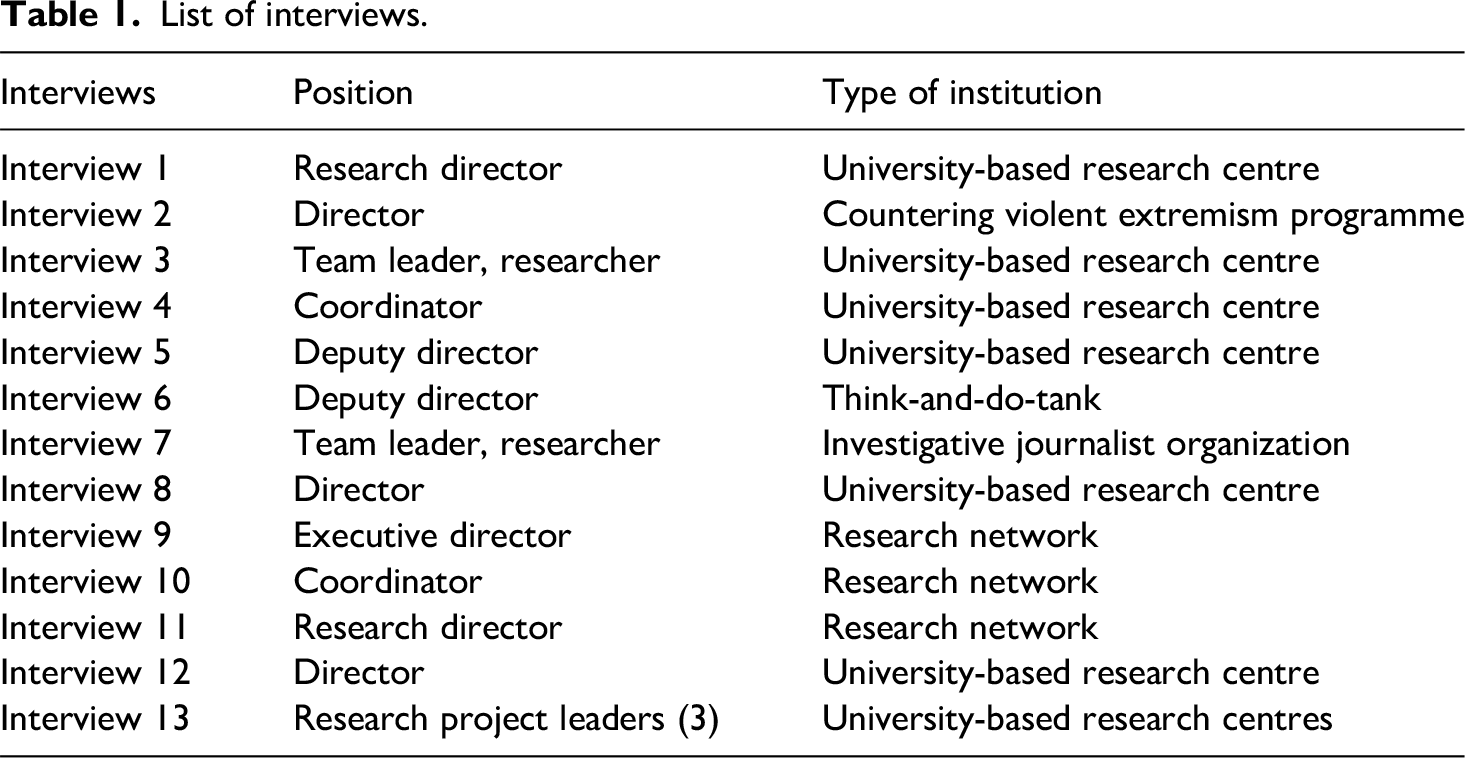
| Interviews | Position | Type of institution |
|---|---|---|
| Interview 1 | Research director | University-based research centre |
| Interview 2 | Director | Countering violent extremism programme |
| Interview 3 | Team leader, researcher | University-based research centre |
| Interview 4 | Coordinator | University-based research centre |
| Interview 5 | Deputy director | University-based research centre |
| Interview 6 | Deputy director | Think-and-do-tank |
| Interview 7 | Team leader, researcher | Investigative journalist organization |
| Interview 8 | Director | University-based research centre |
| Interview 9 | Executive director | Research network |
| Interview 10 | Coordinator | Research network |
| Interview 11 | Research director | Research network |
| Interview 12 | Director | University-based research centre |
| Interview 13 | Research project leaders (3) | University-based research centres |
Appendix 2: Interview guide
Appendix 3
List of internal documents.
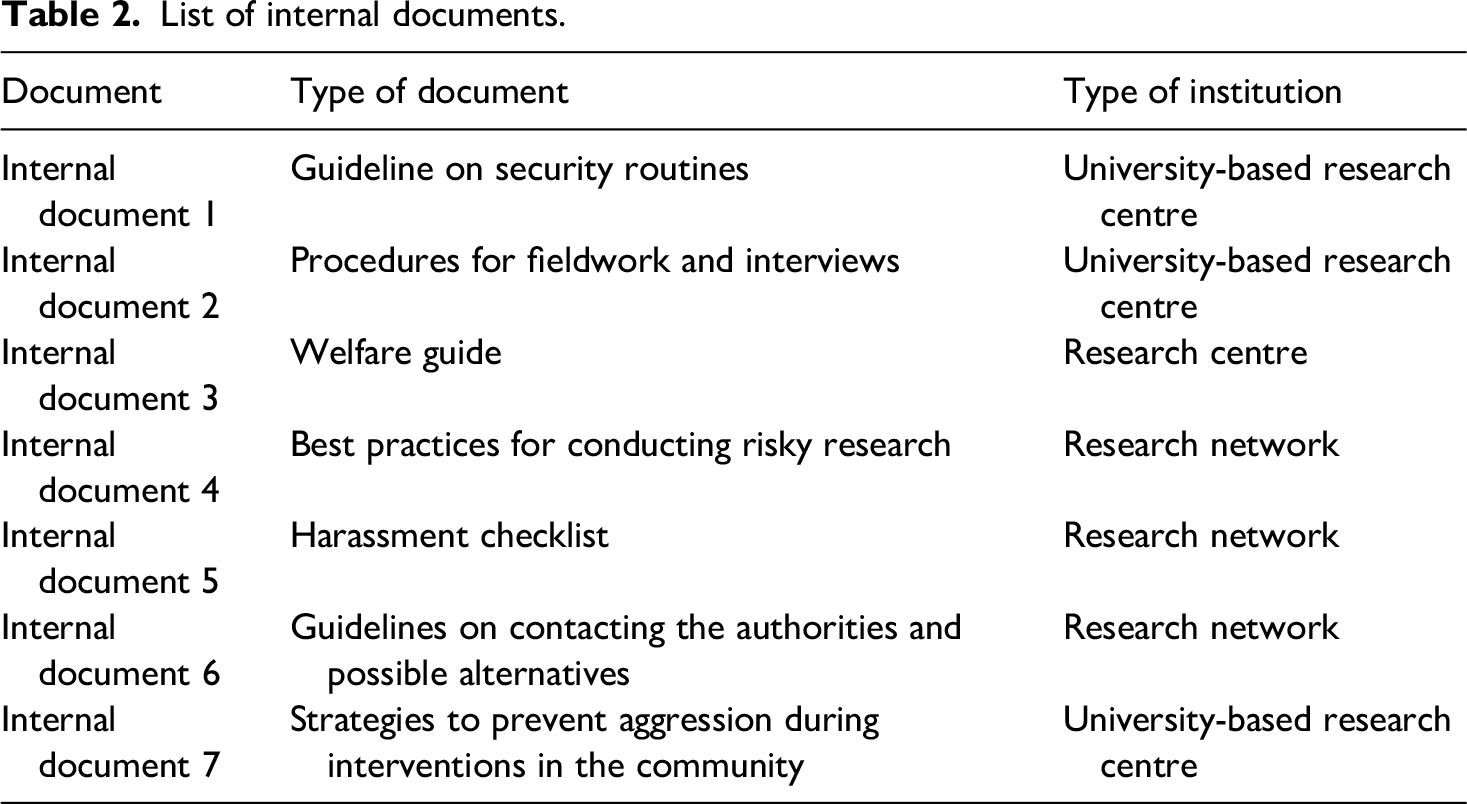
| Document | Type of document | Type of institution |
|---|---|---|
| Internal document 1 | Guideline on security routines | University-based research centre |
| Internal document 2 | Procedures for fieldwork and interviews | University-based research centre |
| Internal document 3 | Welfare guide | Research centre |
| Internal document 4 | Best practices for conducting risky research | Research network |
| Internal document 5 | Harassment checklist | Research network |
| Internal document 6 | Guidelines on contacting the authorities and possible alternatives | Research network |
| Internal document 7 | Strategies to prevent aggression during interventions in the community | University-based research centre |
Appendix 4
List of strategies.
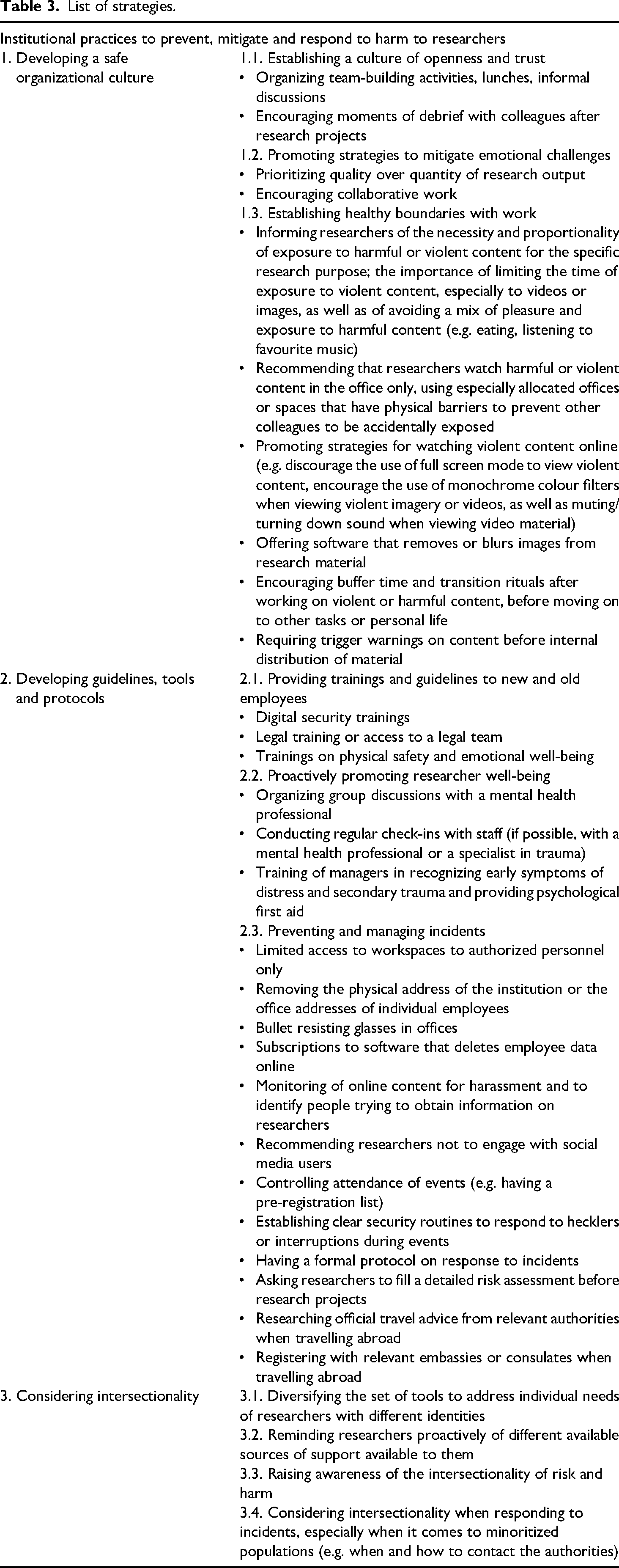
| Institutional practices to prevent, mitigate and respond to harm to researchers | |
| 1. Developing a safe organizational culture |
1.1. Establishing a culture of openness and trust
Organizing team-building activities, lunches, informal discussions Encouraging moments of debrief with colleagues after research projects 1.2. Promoting strategies to mitigate emotional challenges
Prioritizing quality over quantity of research output Encouraging collaborative work 1.3. Establishing healthy boundaries with work
Informing researchers of the necessity and proportionality of exposure to harmful or violent content for the specific research purpose; the importance of limiting the time of exposure to violent content, especially to videos or images, as well as of avoiding a mix of pleasure and exposure to harmful content (e.g. eating, listening to favourite music) Recommending that researchers watch harmful or violent content in the office only, using especially allocated offices or spaces that have physical barriers to prevent other colleagues to be accidentally exposed Promoting strategies for watching violent content online (e.g. discourage the use of full screen mode to view violent content, encourage the use of monochrome colour filters when viewing violent imagery or videos, as well as muting/ turning down sound when viewing video material) Offering software that removes or blurs images from research material Encouraging buffer time and transition rituals after working on violent or harmful content, before moving on to other tasks or personal life Requiring trigger warnings on content before internal distribution of material |
| 2. Developing guidelines, tools and protocols |
2.1. Providing trainings and guidelines to new and old employees
Digital security trainings Legal training or access to a legal team Trainings on physical safety and emotional well-being 2.2. Proactively promoting researcher well-being
Organizing group discussions with a mental health professional Conducting regular check-ins with staff (if possible, with a mental health professional or a specialist in trauma) Training of managers in recognizing early symptoms of distress and secondary trauma and providing psychological first aid 2.3. Preventing and managing incidents
Limited access to workspaces to authorized personnel only Removing the physical address of the institution or the office addresses of individual employees Bullet resisting glasses in offices Subscriptions to software that deletes employee data online Monitoring of online content for harassment and to identify people trying to obtain information on researchers Recommending researchers not to engage with social media users Controlling attendance of events (e.g. having a pre-registration list) Establishing clear security routines to respond to hecklers or interruptions during events Having a formal protocol on response to incidents Asking researchers to fill a detailed risk assessment before research projects Researching official travel advice from relevant authorities when travelling abroad Registering with relevant embassies or consulates when travelling abroad |
| 3. Considering intersectionality |
3.1. Diversifying the set of tools to address individual needs of researchers with different identities 3.2. Reminding researchers proactively of different available sources of support available to them 3.3. Raising awareness of the intersectionality of risk and harm 3.4. Considering intersectionality when responding to incidents, especially when it comes to minoritized populations (e.g. when and how to contact the authorities) |