




Abstract
The main purpose of the article is to present and compare various strategies aimed at encouraging research participants to voice their experiences of racism and discrimination. This is supplemented by the discussion on how scholars can unveil the intersections of multiple systems of oppression reverberating in research participants’ narratives, given the challenge of racial asymmetry in research and the politics of interpretation in a race-mute societal context. Based on their study involving young migrants, the authors argue that qualitative research instruments such as individual and focus-group interviews, visual elicitation, co-creative methods, and video interviews enable individuals to frame their experienced reality in complementary ways. Comparing how each method can conceal or disclose racism, the authors warn of treating narrations on racism on face value and plead for carefully analyzing the extent to which individual narrations align with political agendas and normative discourses within the research's contexts. Addressing each research tool's potential and limitations, the authors also show how the researchers’ epistemological and political positionalities shape their data collection and analysis.
Introduction
In this paper, we address the pressing but not sufficiently explored question of how to study racism empirically. Researching racism is a complex and sensitive task (Maiter et al., 2013). Despite, or maybe because of, its tremendous societal significance, researchers studying racism face a multitude of theoretical, empirical, and methodological challenges (Back and Sinha, 2018; Kimmel and Ferber, 2017). When it comes to operationalizing and quantifying the complex concept, explorative methods are often preferred (Quraishi and Philburn, 2015). But, as Pillow (2003) reminds us, research is never only about skillfully applying methods, but always depends on the researchers’ epistemological foundations. To understand racism requires us to acknowledge that our scientific practices and theories are never neutral. Addressing how knowledge is situated (Haraway, 1988) leads us to the crucial question of who can legitimately speak of racism, and how to talk about it best. Likewise, we need to address how being able to talk about experiencing racial discrimination not only depends on the researchers’ sensibilities and competences, and on their political positions and goals, but also on those of the research participants (Solomos, 1991). Reflecting upon the process of researching racism, we thus need to scrutinize both the research process and the context in which it is performed.
We, the authors, are perceived as white, female, migration researchers and we both grew up and studied in Poland, and some of our research – like the project discussed in this paper – takes place in Germany. This context is particularly challenging for studying racism for two major reasons. First, we both grew up in a culture of racial denial (Nowicka, 2018; Omeni, 2020) which left us with a limited vocabulary to speak of racism that we then were able to extend through our academic training abroad. Second, there is a paucity of empirical studies on racism in Germany, and the public discourse oscillates between rejecting the term race and externalizing the racial other (El-Tayeb, 2011). We thus believe that our research participants, like us, might struggle to describe their experiences as having to do with racism in first place. We expand on these issues in section three of this paper, as it is relevant to how the research participants’ cultural repertoire fashions their narrations on racial discrimination and privilege.
Notwithstanding the specific challenges of studying racism, our study also faces challenges inherent to qualitative research. Many of them have already been addressed in the literature, such as the subjectivity of experience and the possibility of introspection, the vulnerability of researchers and research participants, researchers’ positionalities, and the limitations of retrospective methods. We address these aspects in the paper's first section, focusing on the specificities of investigating racialized experiences.
The question driving our paper is how qualitative inquiry methods can make racism accessible to critical knowledge production – all within a research process rooted in a larger societal context that imposes its logic on the narrative (Buendía, 2003). In section four, we discuss how the research tools we applied in our project made it possible to “unveil” racism. We used individual in-depth interviews, focus-group interviews that included visual elicitation, as well as a co-creative workshop followed by an exhibition and video interviews. Each tool enabled us to see racism differently, verbally in the oral accounts, and metaphorically in the drawings that the participants produced. While reflecting upon each tool, we draw attention to the way the researchers’ and the research participants’ positionalities shaped their stories of racial privilege, and how these were in turn molded by each tool. Each time we ask where and why we – researchers and research participants – see racism, and whether we might overlook racism when it does not fit our epistemological position or cultural competences.
In the last section, we conclude that some research tools help researchers and research participants unveil racism better than others, although no one tool tells the complete story. We thus strongly encourage applying a more complex methodological approach to elicit and analyze narratives on racism and the positionalities they entail. We show how different tools help see racism from individual perspectives, giving the research participants space for resistance, ensuring their inclusion, and enabling subjectification within the research context. Finally, we stress the mediated nature of racism, which, when approached through different methods, turns out to be fluid.
Challenges of qualitative studies on racism
Qualitative studies share a desire to examine social phenomena through a person's perspective, paying attention to the context in which they emerge (Denzin and Lincoln, 2005). Considering this aim, any qualitative research faces the challenge of capturing the intersubjective dimension of the social while assuring transparency regarding the researchers’ subjective interpretations of the research data. There is no single solution to these challenges. Depending on the research's epistemological foundations, various methodologies have been proposed. For example, structural analysis and grounded theory suggest data-decomposition procedures to discover patterns across cases and allow for generalization by systematically moving away from the research participants’ subjective views (Daher et al., 2017). Methodologies rooted in hermeneutics and the sociology of knowledge assume meaning is always intersubjective and require researchers to review their own biases in a stepwise analysis that discloses the patterns of social action. Postmodern ethnographies, on the other hand, depart from the position that there is no way to methodically control for understanding the other and thus call for the researchers to increase their sensibility, solidarize with the participants, and give them a voice (Geimer, 2015). A psycho-societal approach that distinguishes between conscious and unconscious levels of subjectivity (Salling Olesen, 2012) advises researchers to draw attention to the levels of meaning that may not be (adequately) represented in the socialized language. To achieve that, researchers are encouraged to take advantage of their subjective relation to their field.
Research participants in studies on racism are potentially vulnerable in that they risk being re-traumatized during research, even if they experienced racism indirectly (Truong et al., 2016). They develop various strategies to navigate everyday racism they encounter that range between resistance, resignation, and denial (Mellor, 2004; Nowicka and Wojnicka, 2023). Researchers, meanwhile, may share experiences of racism with their research participants and equally be exposed. Evaluating research participants’ a priori vulnerability and coping with their posteriori vulnerability has been extensively discussed in literature on research ethics in various disciplines applying qualitative methods (Aldridge, 2014; Tisdale, 2004; van den Hoonaard, 2018). In order to do no harm, interviewers may avoid discussing experiences of violence. Yet for research participants talking about their experiences of racism might be an act of resistance, of regaining agency. Researchers thus need to be careful in whether and how to expose racism in their research.
While racial asymmetry is said to hinder research (Britton, 2020; Gunaratnam, 2003), it has been suggested that the presence of researchers of color might make research participants’ narrations easier (Deliovsky, 2017; Roulston, 2019; Twine, 2000). The same advantage of such racial symmetry applies to white scholars interviewing white participants about privilege (Vass, 2017). The positionality problem goes far beyond the (im)possibilities of creating a rapport. Racism affects every aspect of research, from choosing research questions to interpreting data (Hunter, 2002). The absence or marginalization of racialized academics delivers “color-blind” research and masks racist agendas, producing white researchers as having the sole authority to know and to speak (Pillow, 2003). Yet the question of who is legitimated to talk about racism is more complex: the traditions privileging African Americans as authentic knowers of racism or favoring Black academics as researchers within their own communities (Hunter, 2002; Yosso, 2005) also limit the possibilities of unveiling racism in research. Furthermore, Osanami Törngren and Ngeh (2018) remind us of the research process’ complex insiderness and outsiderness in relation to racial and ethnic demarcations that, in contemporary Western European contexts, are fluid and significantly mediated by class and migration status.
In a research situation, participants may thus choose not to share their racialized experiences with us, but they may also feel unable to vocalize their negative experiences or avoid talking about racism as an element of their personal coping strategy (Omeni, 2020). The capability to vocalize racism is a matter of resources specific to the person's sociocultural context (Yosso, 2005). But even if people developed a critical consciousness and recognized the “reality as an oppressive reality” (Freire, 1970: 175), they may still prefer to talk about aspects of their identity (ex. professional) that do not relate to the stigma they experience as migrantized or racialized subjects, and some research tools may be more sensitive to this challenge than others.
We thus face a triple challenge of the politics of interpretation, to borrow Mitchell's (1983) term: how can we encourage our research participants to talk about racism (and its intersections to other systems of oppression) if we might be racial outsiders to them? How do we avoid imposing our scholarly knowledge of racism in situations when research participants feel unable or choose not to vocalize their racial experiences? And how can we account for the fact that some participants might use the term racism to interpret their personal situation, which can become an instrument in political struggle.
Studying racism here and now
The context of our research is one which we can broadly describe as neglecting or even denying racism (Lentin, 2008). In Germany, the post WWII efforts to overcome Nazism hindered an effective engagement with racism. Speaking of racism in present-day Germany is marginalized on the fringes of society (extreme right), segregated to the former East German territory, or silenced through talking about other topics (Meng, 2015). While the denial of racism is common across Europe, Michael Meng (2015) argues that Germans particularly find it hard to see racisms as it is displaced by a specific constellation of normalized prejudice, sovereign claims, democratic idioms, and redemptive memories which centralize immigrants and their pathways to integration. In turn, racism in Germany in entangled with migrantization – ascription of migration – to some people, irrespective of their actual migration ancestry (Tudor, 2018). It thus goes hand in hand with constructing certain people as “at home” and thus externalising otherness (El-Tayeb, 2011). While racism and migrantization intersect, Tudor (2018) argues they are different phenomena. It is precisely their intersection that obscures racism and makes it difficult to see and discuss.
We believe that this context is reflected in the narrations of our research participants, who rather describe themselves as migrants, or descendants of migrants – even if they are born in Germany – than as racialized subjects. Accordingly, they may interpret any discrimination, microaggressions, or violence they experience as related to their ascribed migrant status and their capacity to integrate or assimilate, as the public discourse suggests, rather than to racism, thus overlooking how migrantisation and racism intersect. Thereby, racism in Germany is embedded in a complex net of intersecting subordinations based on sexuality, culture, religion, language, accent, or surname that goes far beyond the idea that racism only targets Black people.
At the same time, new counter-hegemonic alternatives in Germany started adopting a “postmigrant” perspective (Ohnmacht and Yıldız, 2021), which questions the dichotomy of migrant/native in how it attributes the difference to ambivalent socio-cultural positionalities. It opens space for new storytelling and visualizing otherwise marginalized positions.
Both authors of this article were born and raised in Poland. We designed the study together; one of us implemented the individual and focus-group interviews, the other facilitated the video interviews. We believe that our Polish origin matters in how we approach racism in our analysis, but our research participants also perceive our background, which might impact their narration about their experiences in Germany. For us, engaging with racism through research means overcoming the silence about racism we experienced during our socialization in Poland. A commonly stated reason for the blindness towards racism in Poland and other Eastern European countries is the region's lack of colonial tradition and the absence of a larger Black population; yet Polish society has long been suffused with racial ideas and stereotypes reproduced within its specific historical context (Nowicka, forthcoming). New forms of xeno-racism flourish in Poland, primarily targeting Muslims, refugees and Blacks, and intersecting with older anti-Jewish and anti-Roma prejudice, which often takes more overt forms than in western Europe (Zick et al., 2011). The attitudes towards foreigners continue to be shaped by Poland's liminal position as a (geographically) internal (political) outsider to Europe (Blagojević, 2009: 27).
It has to be underlined, that as white academics, we could have been perceived by our research participants as doubly privileged; as migrants, we might also be considered partial insiders to the research group. Both positions are certainly molded by our gender and age and have resulted in a variety of power relations that have been co-created during the fieldwork (Hoffmann, 2007; Presser, 2005). Power dynamics have been extensively discussed in the methodological literature, either with a focus on researchers’ race and ethnicity discussed above, but also in the context of gender (Koivunen, 2010; Pini 2005; Vanderbeck, 2005) social class (Ward, 2014), sexuality (Kaspar and Landolt, 2016; Thomas and Williams, 2016) and age (Thurnell-Read, 2016; Zubair et al., 2012) or on combinations of these categories (Wojnicka, 2020; Phoenix, 1994; Townsend-Bell, 2009). During the process of study design, data collection, and analyses, we, the authors have been constantly reflecting upon our positionality, privilege, and power relations that resulted from it during each phase of the research process, including our position as scholars socialized in race-mute Poland and Germany. The conclusion of these discussions enabled us to stay alert during fieldwork and beware of misinterpretation of the data we collected.
Study design and implementation
We conducted this study in Berlin during 2018/2019 with a group of young migrants, refugees, and people at last one of whose parents were migrants to Germany. The study's goal was to investigate the participants’ experiences, reflections, and expectations with regard to family, friendship, and intimate relationships, and to thematize the role of their religious and gendered self-identifications. Racism was not intended to be the focus of our research, yet the fieldwork's dynamics, the variety of research instruments, and the topics raised by the research participants resulted in data which we consider highly relevant to ongoing debates on racism. As racism defines the life trajectories of our research participants and shapes their subjectivity (Bonilla-Silva, 2019), the questions we asked about desirable family arrangements, partners, and lifestyles generated narrations on racial experiences in Germany.
All research participants expressed their consent to be part of the study and were instructed about the data-handling procedures. Additional consent was obtained for the co-creation workshop, video interviews, and publication of visual materials.
Recruitment
We mainly recruited our research participants in youth clubs across Berlin, as well as in so-called Sprach Cafes 1 . We targeted the Berlin districts of Wedding, Kreuzberg, and Pankow. Wedding and Kreuzberg are home to a large number of long-settled and new immigrants, while Pankow-Buch, the city's northernmost quarter, has a migrant population much below the Berlin average. We also recruited participants in a refugee center and used snowballing to reach more people. In the end, our sample included 23 people born outside of Germany, and 26 people of migrant descent, though this distinction seemed irrelevant to our research participants. We recruited more men (29) than women (14), which was partly a result of approaching refugees in a center with many male refugees. Snowballing followed the gender line as well, as male youths tended to recommend us to their male friends. All participants were reimbursed for their time (15€ for individual interview and 25€ for focus-group interview).
Research participants
In order to explore a variety of life experiences, worldviews, and attitudes, our intention was to recruit a heterogenous group in terms of the participants’ religious, ethnic, and national self-identifications and migration statuses. The interviewed young people self-identified as refugees, European Union citizens, or German citizens; some pointed toward their dual citizenship. Others identified as Germans or with reference to another country, for example Russia or Iran. These national or ethnic identifications did not necessarily overlap with their citizenship. Some German citizens also indicated their families’ roots in other countries or pointed towards more than one country of their parents’ origin. Some participants were born in Germany, but not necessarily in Berlin. Not all of them wanted to share the length of their stay, but the most recently migrated person had been in Germany for only 3.5 months prior to the interview. Most of the interviewees shared their faith with us; 19 declared to be Muslim, 4 were Christian, and 16 self-identified as atheist or agnostic. The youngest participants were 16, and the oldest 29; on average the participants were 20 years old, but two young men refused to indicate their age.
Our recruitment through youth clubs resulted in various life situations in our sample. We interviewed school pupils and students, interns, unemployed and employed people (e.g., as salesclerk, hairdresser). Typically for late adolescence/early adulthood, most of our research participants were unmarried and childless, but two men and five women were married. One of those men was childless, the other had a daughter, and two of the five married women had daughters. Few participants lived alone or in shared accommodation (including a refugee shelter); the majority lived with their families. All but one identified as heterosexual; one woman declared being bisexual.
Research tools and fieldwork dynamic
The initial research design included three main instruments: individual in-depth interviews, focus-groups discussions, and a co-creative workshop. This design, as we will explain in detail later, was modified due to COVID-19 restrictions and extended to include an exhibition visit and video interviews with selected participants.
Individual in-depth interviews
The script for the individual in-depth interviews (IDI) included open questions focusing on our study's key themes: friendship, current family, ideal family, future family, fatherhood and motherhood, parenting and partnership, religion and its role in own life, gender and sexual diversity, and general plans and wishes for future. The overall atmosphere during the interviews was good and narrations full and long. Two research participants requested permission to be accompanied by friends, as they felt shy about their language skills or felt the need for emotional support, which we permitted. The majority spoke German, but six people chose to speak English. Occasionally, some participants refused to speak about the families they left behind or their citizenship, which we relate to the fact that the researchers represented a German institution, but these refusals did not disturb the rapport. However, two participants asked the researcher for support in finding accommodation in Berlin and achieving a different legal status, which reveals their awareness of power discrepancies in the research.
We did 28 individual interviews, which were audio-recorded and transcribed. All except four were conducted by one of the authors; the remaining interviews were conducted by a German-native female researcher. The gender, age (around 40), religion (atheist) and social status positioned the main researcher as outsider to the research group, but her migration experience and foreign accent helped her to create a bond with the participants. The age of the junior researcher (around 25) positively affected the interviews, while her native status and German proficiency did not matter much in the interviews with participants who were also born and raised in Germany. We believe that both researchers involved in this phase of data collection were read as white and mostly heterosexual as they occasionally received questions about our husbands and male partners and children.
Focus groups interviews
The same two researchers implemented four focus-group interviews in three different youth clubs, whose staff provided significant technical and organizational support and showed commitment to the study's aims. We constructed the groups to include those who migrated to Germany themselves and those born in Germany to immigrated parents. Each session began with a screening of the first 20 minutes of the first episode of Mad Men, an American television series. Its action takes place in an advertisement agency in early-1960s New York City. The plot of the show tracks people's personal and professional lives, thereby illuminating gender performances and relations typical for the 1960s workplace, which can be characterized as hyper-traditional and sexist. The reason for choosing this form of visual elicitation was to trigger the research participants’ narration on gender relations in general, as well as to draw their attention to traditional role models, masculinities, and gender-equality ideals and their transformations. The participants commented eagerly on the excerpt and linked it to their own current situation and observations. The researcher facilitated the discussion, asking questions about the participants’ perceptions of the contemporary gender relations in Germany and other countries, gender-based discrimination experiences, and challenges to gender equality. Following this discussion, the participants were invited to engage in thematic drawing Mitchell et al. (2011). Application of this art-based qualitative method, also known as “draw and tell”; “draw and write” or “draw, write and tell” (Angell et al., 2015) is common in the research project where children and young people are involved (Martin, 2019; Wetton, 1999). This methodological choice was especially useful in the context of research on gender ideals, as it makes it easier to express thoughts on abstract concepts (Horstman et al., 2008) through drawing and describing the pictures, rather than by using only words. Moreover, according to scholars who successfully apply this method, children may have a tendency to tell researchers the “right answers” (Angell et al., 2015) and hence, incorporation of drawing enables capturing the complexity of their perceptions and experiences linked, in our case, to gender, race, and ethnicity.
During the interviews, research participants were asked to draw how they image an ideal man or woman. The researcher provided them with colored pencils. They were instructed to think of either how they would like to appear, a person they would like to date or marry, or a person they admire. Few participants wrote down the characteristics of an ideal man/woman; the majority used images to express themselves. Afterwards, the participants presented their drawings to the group and explained what they represented and why; others could then ask questions, comment on, and discuss the drawings.
Co-creative workshop
The workshop was implemented several months after we completed the individual and focus-group interviews, in collaboration with the art collective Migrantas, a Berlin-based NGO specializing in art-based educational projects targeting migrant communities and particularly migrant youth. Fourteen participants (11 men and 3 women) from the first project phase agreed to join the event. The workshop applied the co-creation methodology (Archibald and Gerber, 2018) that has become increasingly popular in migration studies (van Praag, 2021) and that included elements of “draw, write and tell” method discussed above (Angell et al., 2015). During the workshop, the participants shared personal stories (Drew et al., 2010) and produced drawings illustrating their experiences of being a migrant in Germany. They were asked to illustrate who they are and what they want to share with others in relation to friendship, partnership, family, and future. Afterwards, the participants condensed these drawings into pictograms as a generalized and anonymized form of artistic expression of shared experiences.
The workshop was moderated by the team of Migrantas, who are female first-generation migrants that speak different level of German with Spanish and Italian accents, and accompanied by two researchers from our team, one of them was engaged in the project from the beginning and conducted four individual interviews and co-conducted FGIs, and the second joined the team shortly before the workshop. Both were white native Germans. Their role was participant observation, which was captured in a form of a detailed report.
After the Migrantas team introduced the participants to the event's aim and methods, some participants expressed concerns about the way their drawings could be interpreted. Some feared the drawings were supposed to only illustrate negative experiences. Others said that the question of who they were needed to be addressed in the context of migration. After the first drawing exercise, participants were invited to share their stories with others and explain what their drawings represent. After a short break, another round of drawing and talking followed. This time, the participants were asked to focus on their personal vision of their future. The atmosphere was relaxed, and all participants were talkative and enjoyed the event.
Video interviews
Initially, the drawings and pictograms created during and after the workshop were to be presented in an exhibition open to all the research participants, their friends and families, and the general public. The COVID-19 restrictions did not allow such a public event, so it was postponed a couple of times and finally canceled. Instead, we invited the workshop's participants individually to our venue, where we displayed the printouts of the drawings made only during the workshop and the pictograms. We also invited a filmmaker, who has his own migration experience, to document the participants’ reactions to the display, and film short interviews. Except for the interviewee, only the researcher, the filmmaker, and his sound assistant were present in the room, which made the interview atmosphere intimate. Four research participants accepted our invitation; one was accompanied by a friend from the youth club who had not participated in the workshop but was a first-generation migrant herself. The video recording was used both for the scientific analysis as well as for a short documentary. The drawings and the pictograms, as well as the film were public as an online documentation.
Traces of racism in research data
At no point during the research process did we explicitly encourage narrations on racism; instead, we asked the research participants to share with us their ideas about key issues in their life: family, partnership, and love. That said, our analyses show that racism permeates all spheres of the young people's lives, but how they talk about depended on the possibilities of each of the research instruments we applied.
Naming racism
The terms racism or racist hardly ever appeared in the oral narrations we collected. One exception was an exchange on relationships by two young men during one of the focus-group interviews. One participant declared that he would not want to marry a German woman because they are too progressive, and he wants his wife to have more traditional perceptions of gender roles. Preferably, she would also be a migrant from his country of origin. Another participant reacted to this statement by calling him “racist” in a teasing, joking manner, which caused amusement than rather irritation in the group.
The second exception was a video interview with Adban, a 26-year-old student born in Yemen who grew up in California, US. 2 Adban said “racism comes with us humans (…) we are born with racism, all of us,” and then told us a story about a trip to Dubai. At the airport an officer asked him if he was Yemeni, and when he confirmed, he was asked to step aside for a detailed check. While telling us this, Adban stressed that he looks like an Arab and emphasized his words by gesturing at his body. He concluded by saying that the problem is not that people are racists, but what they do about it, whether and how they try to overcome their own racism.
The third context in which the word racism was used was in a drawing made in the co-creation workshop by a 20-year-old man who was born and raised in Berlin. His mother was born in an African country, his father in the Caribbean. When telling his story, he said he had “a normal childhood” for someone whose parents were born outside of Germany. He mentioned that he experienced racism, and this is what his drawings also tackle. The first shows him and a school building (Figure 1). The caption says “2005. School start. Primary School. Primary school time. First contact with racism,” which he explained in brackets by quoting a phrase he must have heard often: “Eww, why does your skin look like shit?”. The second picture is similar, related to his high school years and a football club (Figure 2). The captions include other offensive phrases such as “you monkey” and “monkey sounds.” During the workshop, he also said that he pictured a brain to describe himself, because it symbolizes his worries about family, friends, school, criminality in his neighborhood, and diversity. He also said each human is different and deserves individual treatment.
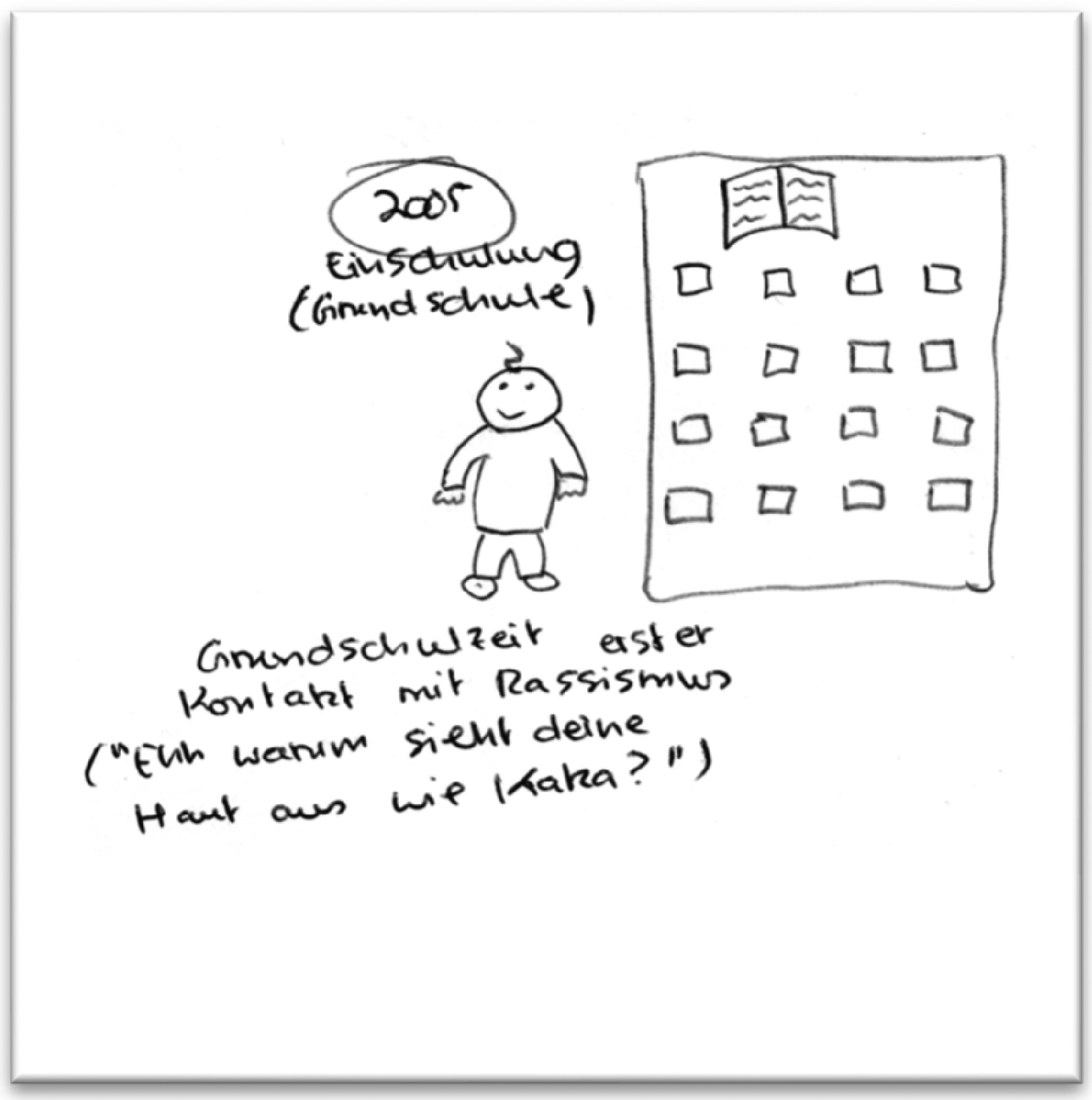
Example of a drawing produced during workshop.
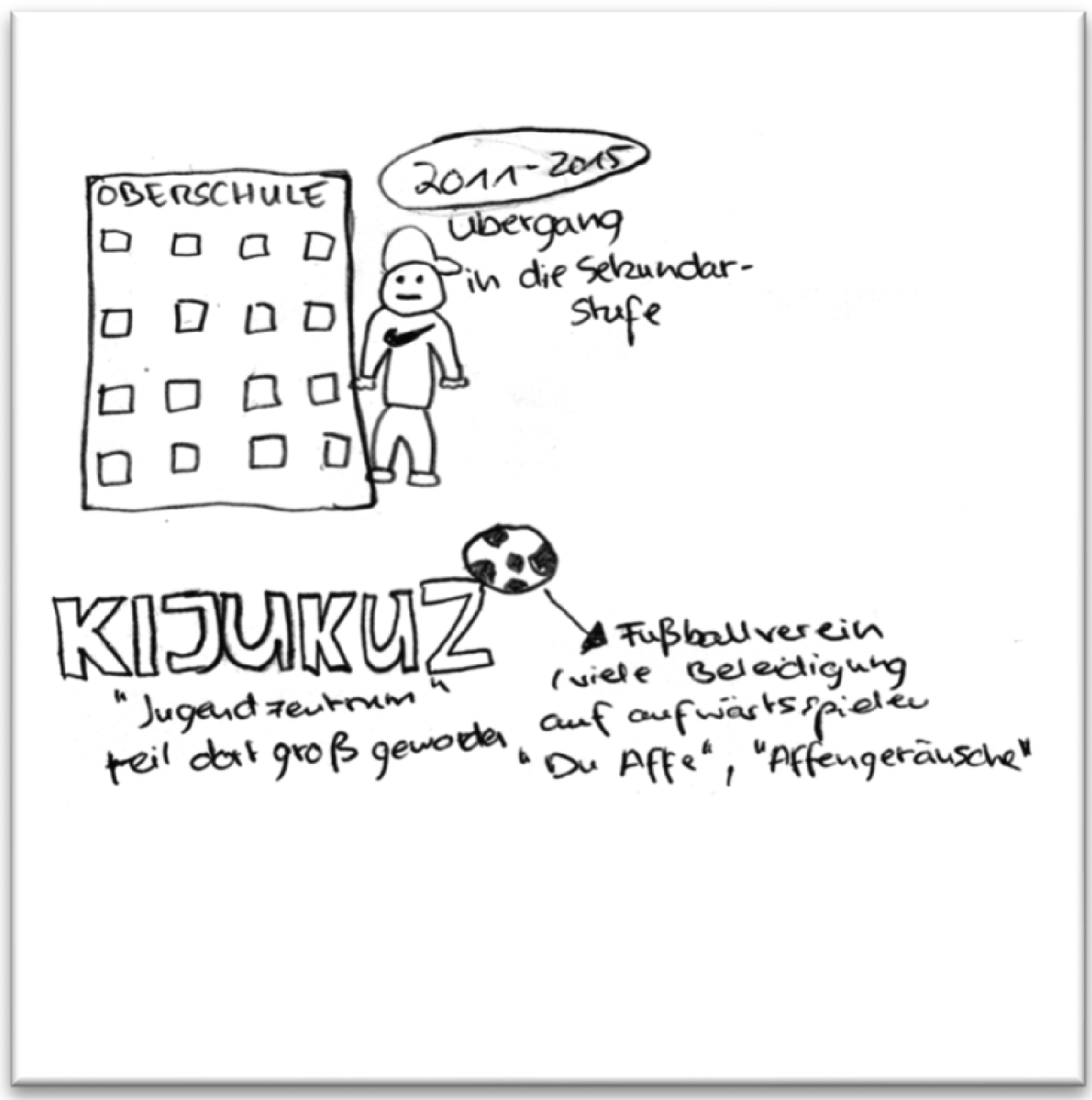
Example of a drawing produced during workshop.
These three research contexts in which the term racism was mobilized differ significantly. In the first, “racist” is used in direct interaction between people who understand the irony and won’t take offense. The use of the term is situational, and the humor detaches it from the person or personal experiences. In the second, Adban universalizes racism as a human feature (cf. Omeni, 2020); while he mentions his experience with racism, the situation is in the past and a distant place. In none of our other interactions did he mention encountering racism in Germany. He made a conscious statement about racism, knowing that the film would be made public. He explained to a white German researcher what it feels like to be a target of racial treatment but evaded confrontation by detaching it from the context he shared with the researcher. The third statement is very private and direct; it was first made through the drawing, which – despite being done during a workshop – offers a secure and intimate space for reflection. Through the workshop's atmosphere and the composition of the group, the participant felt encouraged to explain the drawing to others and thus vocalize his experience with racism.
Explicit articulations of rejection and injustice related to one's appearance
During the individual interviews, questions related to friendship triggered narrations on the participants’ school experiences that we consider articulations of rejection, discrimination, or injustice rooted in racism. Commonly, the participants told us about problematic interactions with other pupils. For example, Sarah said she experienced bullying and that classmates did not want to talk to her. Emil said he had problems making friends with German classmates. Sam also told us he feels rejected by German women. These narrations are followed by participants’ explanations. For example, Sarah told us she thought it was because of her accented or poor German, as it got rusty while she lived with her parents abroad, but then: “eventually I thought maybe it is because I come from [country's name], maybe it is because of my nationality? Even though I am also German. Despite the fact that I am German, they did this, so I think it's because I am Arab.” (…) here, it is difficult, if you don’t have blond hair but claim to be a German, this situation is a bit weird. Once I witnessed the situation where German women asked an African woman where she came from. She replied: ‘I was born in Berlin, I come from Berlin.’ But she was still interrogated, like: ‘No, you must have some other background.’ So, this is what I mean.”
This so-called “origin dialogue” (Battaglia, 2000: 188) – being interrogated about your “real” origin – was a frequent theme in the co-creative workshop as well. Here, one participant drew two figures, one symbolizing a German person and the other Ali, with a Turkish flag on his T-shirt (Figure 3). Yet the dialogue balloons alter a typical “origin dialogue”: asked “Do you fancy a Döner?” the Turk answers in a Berlin dialect: “I’d rather have a good old pretzel!” Various other drawings pointed towards more structural discrimination, for example in respect to labor-market opportunities, which are considered more rare for migrantised people, particularly for Muslim women wearing headscarves. Also, the drawings related to the future reflect a wish for more respect and tolerance in society.
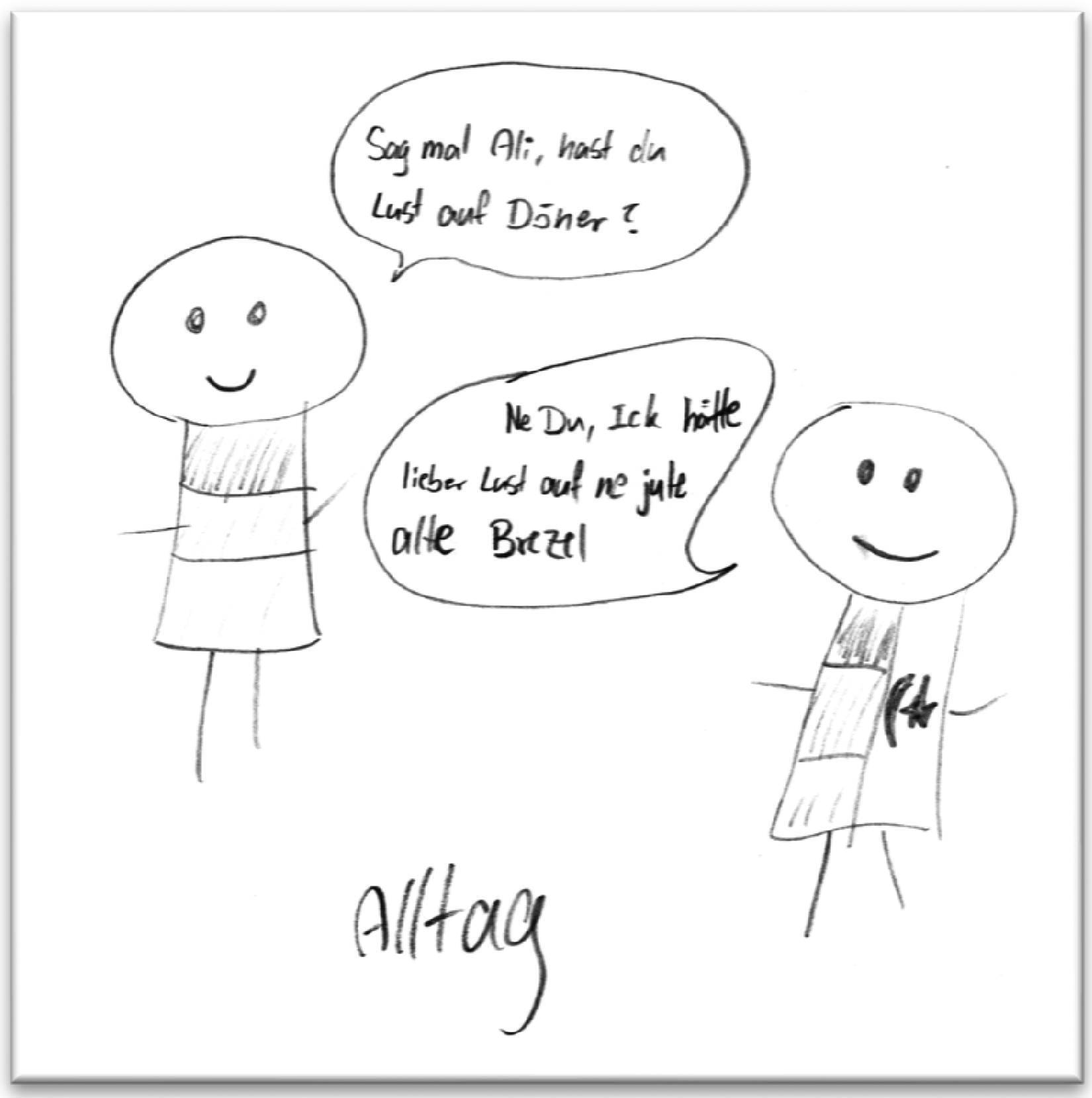
Example of a drawing produced during workshop.
The IDI context permitted honest reflections about the participants’ articulations of rejection they experienced from their peers. As our research touched on friendship and intimate relationships, it is no surprise that most narrations focused the school context, though several participants made a more general point about the attitudes of those they perceive as native Germans towards people those Germans consider to be immigrants or refugees. The co-creation workshop complemented these narrations and offered the participants a means of expressing themselves beyond oral narration. Here we can see how irony could be a way of coping with experiencing rejection and discrimination.
Video interviews offered another possibility for participants to share their experiences and wishes for the future. Sirin explained that her looks disappoints those who expect to meet a German. Asra told us that, although she is a German citizen, people perceive her as a foreigner because of her headscarf. Alena pointed to her accent which makes her an audible foreigner in German. In the film, these words mix with the display of the participants’ bodies, creating a powerful critique of German society.
We interpret these narrations as pointing towards racism because the participants make an explicit link between the rejection or discrimination and their supposedly non-German appearance. As researchers, we are aware that calling this discrimination racist is political. Our research results are not free from our ideological and political commitments, they are entangled with existing political debates about racism, and our research results could be used to impact policy initiatives both within the German government and the respective immigrant and BIPOC communities (cf. Solomos, 1991: 11ff). By unveiling racism through research, we need to take social responsibility.
One situation from our video serves as a reminder that researchers might rely too much on their professional lens and misread the material. When watching the exhibited drawings, Asra read out loud the “origin dialogue” and commented that it was about migration heritage, which appeared obvious to us too. Her friend then asked her how she knew Ali, the man on the picture, has a migration experience. Asra got confused by this question and re-read the text. Then she said that she could not know whether Ali is German. This situation reminds us that our scientific frames of interpretation can be skewed, and we might be blind to alternative readings. The mix of the applied methods, however, helps us to recognize this bias.
Silent white norm
None of the oral narrations touched upon white normativity explicitly. The white privilege was nevertheless implicit in narrations on how supposedly native German, non-migrant people have the power to decide on who belongs and who does not, who gets a job, who deserves friendship or love, and who has it easier in life. The pivotal role of whiteness was unveiled during the thematic-drawings phase of the focus-group interviews. The participants were asked to draw an ideal or perfect man or a woman, a person they admire, would like to become, or to be in an intimate relationship with. Several men drew images of women with white skin, long blond hair, and blue eyes (Figure 4). Some women also drew blue eyes (Figure 5 and 6). (We should note they had a full palette of colors to choose from). Among the portraits, only one of Muhammad Ali depicted a non-white person.
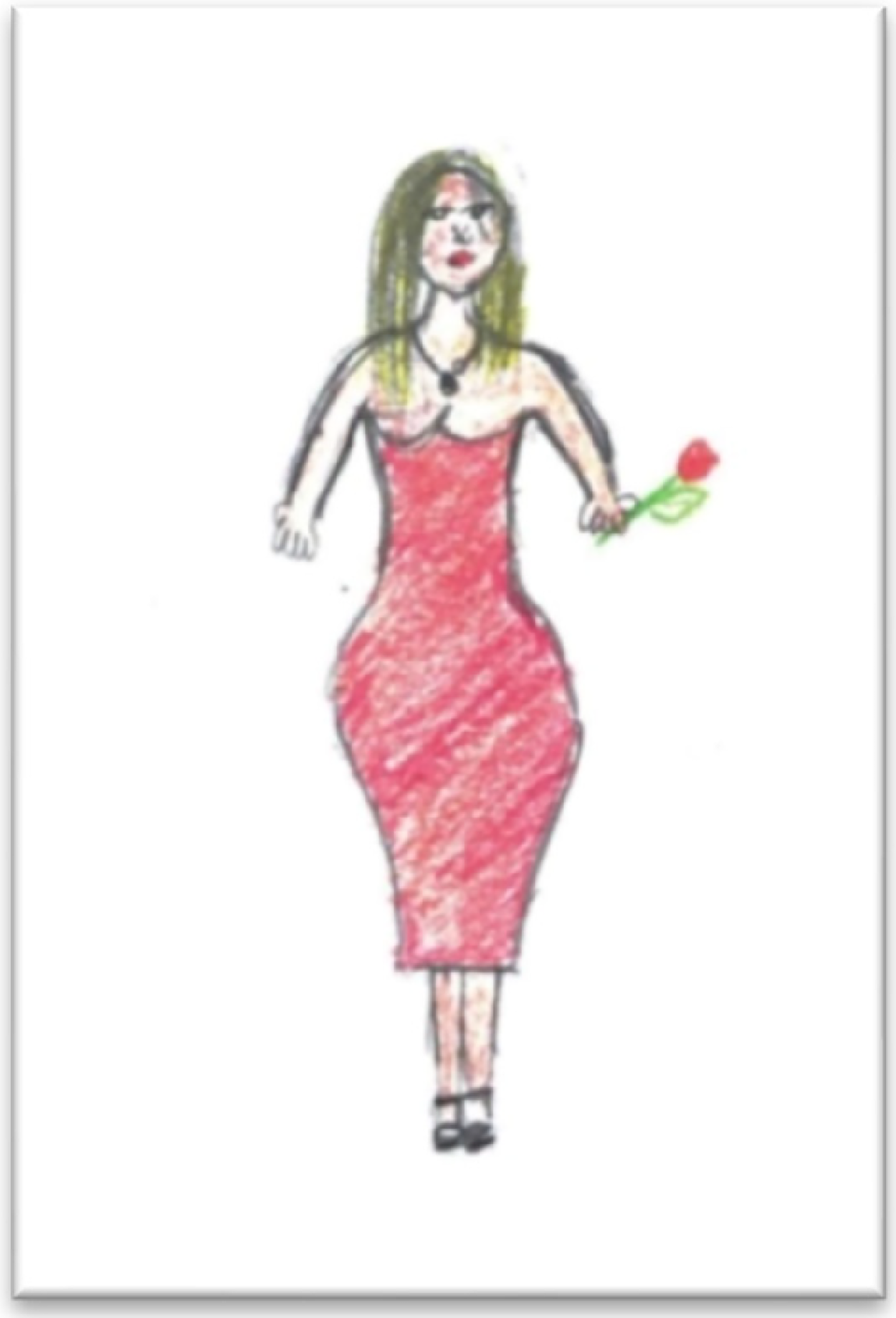
Example of a drawing produced during focus-group interview. (The color version is available online.)
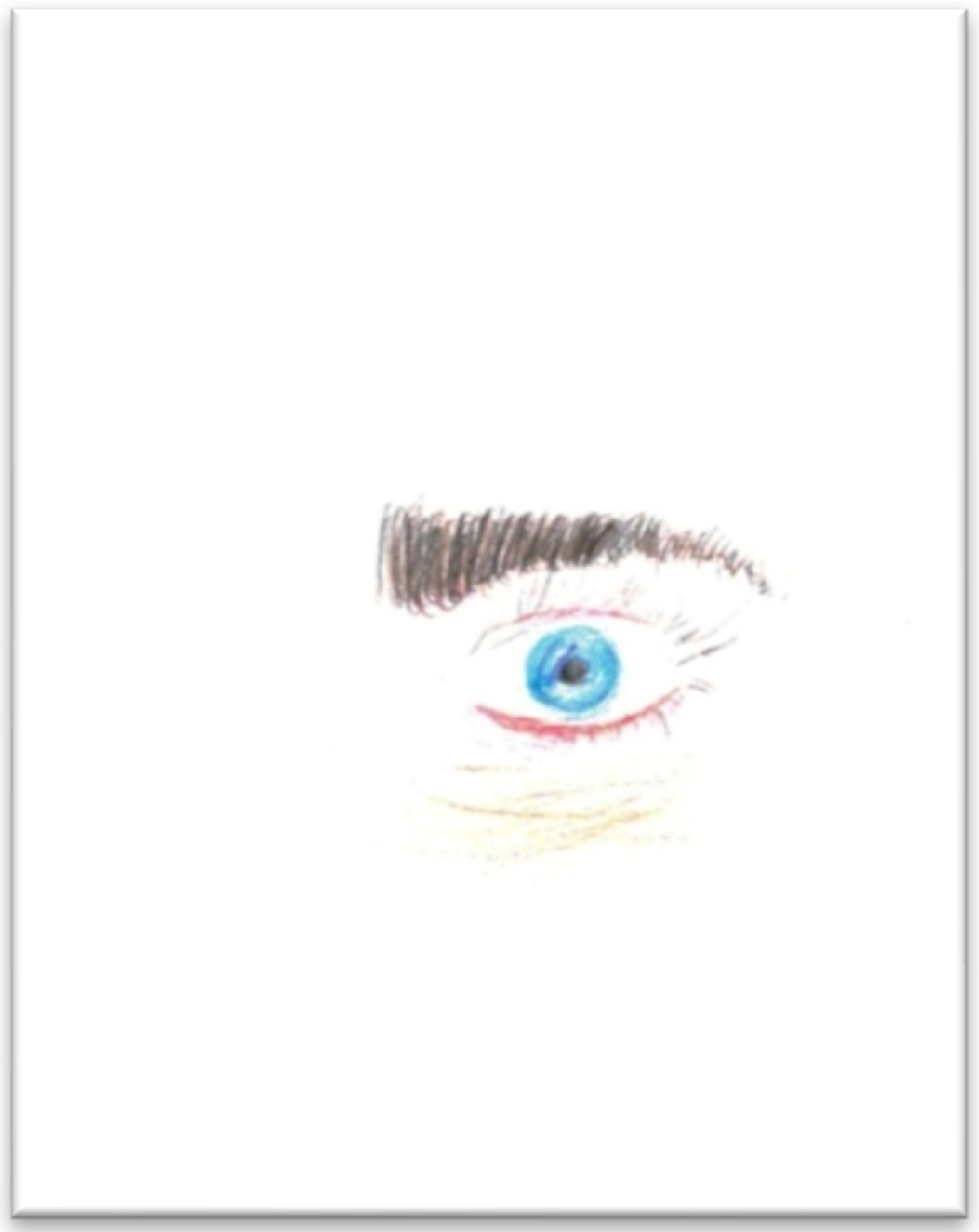
Example of a drawing produced during focus-group interview. (The color version is available online.)
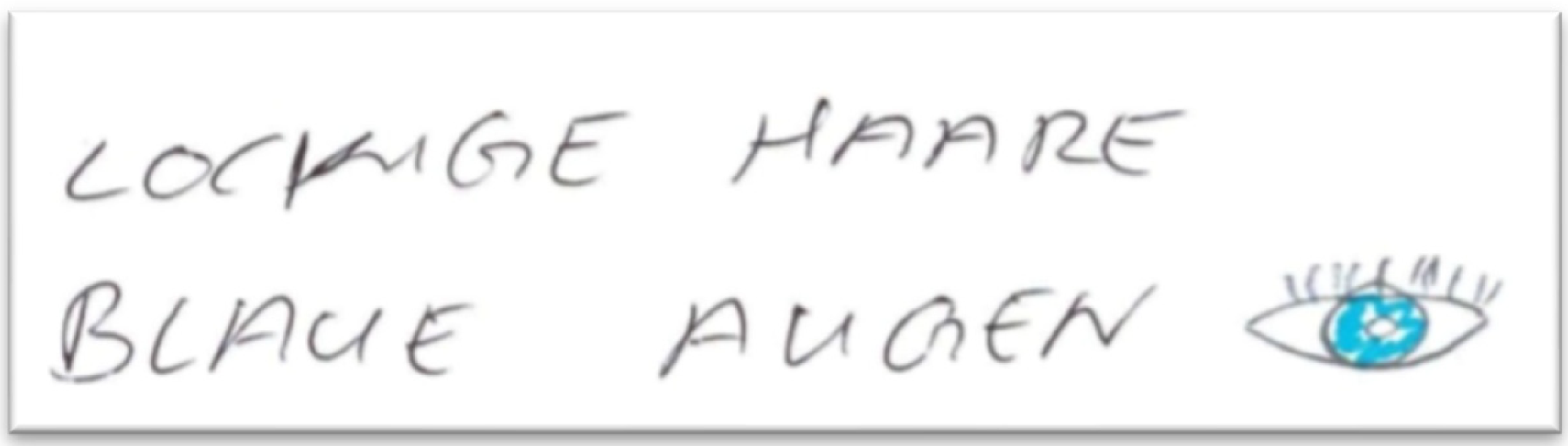
Example of a drawing produced during focus-group interview. (The color version is available online.)
The narrations and drawings we collected included normative ideas of good life – such as a nuclear family with two kids, a career enabling material wealth, owning a car and a house – that fit the heteronormative and white middle class norm.
The many drawings created during the workshop, on the other hand, show how the integration discourse prescribed by the (white) German majority permeates the participants’ ideas about a good life and future. Integration appears often explicitly and is visualized as a process by which people gain access to different institutions. Alena who drew stairs explained she felt like a baby having to learn how to speak and walk around in Germany. At the same time, the participants’ drawings emphasize that having roots in and relationships with various countries and traditions is something that contradicts the norm. We believe that such internalization of the dominant integration discourse is also a sign of hierarchical social relationships in Germany, where whiteness and sedentism are silent norms and transnational family ties are stigmatized (cf. Svendsen, 2014).
Discussion: Veiling and unveiling racism in research
Throughout our research, we experienced very few direct mentions of racism. Instead, narratives pointed to racism but used a popular and socially accepted vocabulary of migration and integration. In our opinion, this raises the question to which extent particular forms of expression are restricted or permitted in specific contexts. Considering the variety of research instruments we applied, we note that the interactive format of the focus group but also the workshop discussions required a high degree of trust between peers to address racism, so participants evaded the weight of the term with humor and irony. The co-creative methods enabled sharing personal experiences that “get under one's skin,” while video interviews encouraged participants to make a political statement in their vocal articulation of having experienced racism is emphasized by displaying their non-normative, foreign-read bodies. The drawings turned out to be important instruments facilitating the unveiling of racism, as we think they offer the right mixture of private and public: the very act of drawing is intimate, but the drawing itself is sharable with a larger audience and can thus transfer subjective experiences and personal thoughts across different context, but without the danger of the author being directly confronted with hostile or misguided reactions.
Individual interviews invited honest narrations on the rejection, discrimination, and prejudice that participants experienced. Yet these were framed without using the term “racism,” which we cannot fully explain. The social distance in terms of education, age, and social position between the researchers and participants must have mattered, but racial asymmetry also underscored this unequal power relation. As racism is negotiated in the research situation, we were very likely not considered equal partners in these negotiations. Possibly, some participants did not mention racism to avoid self-stigmatization, or because their experiences were too painful to be voiced. We also suspect that in the race-mute context of Germany, participants may feel uneasy using the term or avoid it in order not to make the white researchers feel uncomfortable (cf. Zembylas, 2018).
We must differentiate between accounts which refer to the ascribed migration status/foreignness/appearance and which do not. By interpreting discrimination as having to do with physical appearance, and thus indirectly pointing to racism, participants disturb a supposedly more neutral discourse on immigrant integration and pose politically highly relevant questions regarding social exclusion. When they say that the rejection they experience from Germans has to do with racism and not with personal preferences, interests or romantic chemistry, participants politicize the topic of interethnic relations. The question we researchers need to consider is whether we want to do the same – politicize social relations – when naming situations or experiences we see in the participants’ narrations or drawings, and which they interpret with reference to other vocabularies, or do we rather highlight those which are more likely caused by racism and focus less on others for the sake of more effective social critique. From a methodological point of view, we clearly see the advantage of applying tools that facilitate expressing subjective meanings that might not be captured as well with available and acceptable vocabularies, while remaining aware of their possibility and limitations for unveiling racism. We thus would prioritize postmodern approaches and exercise solidarity with participants by creating opportunities for them to voice their perspectives and encourage maximum transparency regarding the researchers’ and research participants’ positionalities that shape the narrative. We also plead for a comparative approach involving more complex methodologies that enable participants to individually frame their experiential reality and encourage researchers to analyse how these might align with political agendas. At the same time, we want to stress the risks of single-method approaches that treat the disclosure of racism on face value. Instead, researchers should exploit the potential of various qualitative methods to elicit the interests involved in framing narratives in a particular way.
Footnotes
Declaration of conflicting interests
The authors declared no potential conflicts of interest with respect to the research, authorship, and/or publication of this article.
Funding
The authors received no financial support for the research, authorship, and/or publication of this article.

Notes
Author biographies
Katarzyna Wojnicka, Associate Professor of Sociology at the Department of Sociology and Work Science and Centre for European Research at the University of Gothenburg. She is currently involved in several research projects concerning men and masculinities, migration and social movements in Europe. Before joining University of Gothenburg she worked as a Postdoctoral Researcher at University of Leeds, UK and Humboldt-Universität zu Berlin as well as Dissens: Institute for Education and Research and DeZIM e.V. - German Centre for Integration and Migration Research in Berlin, Germany. She has published in outlets such as Men and Masculinities, Gender, Work and Organization, International Journal of Qualitative Methods, Social Movements Studies and others.
Magdalena Nowicka, Professor, Sociologist, Head of Department Integration at DeZIM e.V. - German Centre for Integration and Migration Research and Professor for Migration and Transnationalism at the Humboldt-Universität zu Berlin, Germany. Her research is in the field of transnational migration and integration in Europe, cosmopolitanism and conviviality, social inequalities, diversity and solidarity, racism and qualitative research methods. She has published in Ethnic and Racial Studies, Current Sociology, Journal of Ethnic and Migration Studies and others.