



Abstract
In the field of critical research, there is significant interest about the extent and forms of the researcher's proactive engagement with marginalized and excluded communities being researched. However, it is not always clear what makes this involvement part of the research, or how much it serves as a moral position located in the process of building relationships with the community being researched. Based on a retrospective and reflexive observation of extended ethnographic fieldwork, between 2005 and 2016, with Israel's Mountain Jewish Community, this paper presents an analysis of Research from an Active-Involved Critical Stance (RAICS). In the conceptual-theoretical dimension, this position is anchored in the theory of intersubjective relationships, critical ethnography, and community-based participatory research. With respect to the structural aspect, RAICS will be explicated through the various positions taken up by the researcher within the field, and across three stages in the development of the relationship with the community during the study, namely: the store-windows; behind the scenes; and onstage. Eight principles of RAICS will be presented. Finally, RAICS will be discussed in the context of developments in the critical research field.
Introduction
This essay examines the conditions facilitating the application of Research from an Active-involved Critical Stance (RAICS) as part of a researcher–community relationship framework resulting from an extended ethnography. The focus in this stance is on the active involvement of the researcher with the studied community, and in a way that may be perceived as exceeding the limits of “conventional” research. The conceptual and practical basis of the RAICS emerged during extended fieldwork with the Mountain Jewish Community (MJC) of Israel between 2005 and 2016. In this context, the framework of the relationship between researcher and community representatives translated into my active involvement in the research field. Extending beyond the planned protocol of the ethnography, this created the possibility of adopting a participatory methodology. However, since there are different levels of involvement and forms of participation in RAICS, it should be seen as a basic research stand that can be accommodated on different models of participatory research. Subsequently, while writing the research report from a retrospective point of view, I anchored and conceptualized this active involvement, as will be shown in this essay.
To this end, I present a contemporary discussion about the active involvement and activism of researchers within the research field. I then present the relevant context for my extended ethnography with MJC, to place and refine the issue of my active involvement in the field. In the section that follows, I present the conceptual framework that theorizes and anchors RAICS. I then explore the structural aspects of this stance, describing how the stance developed during the research and the establishment of an engaged relationship with the MJC. Finally, I conclude by presenting the principles of a mixed critical position and discuss its relevance to developments within the field of critical research.
Thus, within the field of critical research, the active involvement of the researcher with the community being researched is not new and has been addressed with reference to various forms of academic activism, including critical performativity (e.g. Spicer et al., 2016), militant ethnography (e.g. Scheper-Hughes, 1995; Sztandara, 2021), and critical ethnography/ethnography and activist research (e.g. Baird, 2020; Petray, 2012). Indeed, there is a consensus that a researcher's active involvement in the research demonstrates solidarity with the community being researched, through advocating for and upholding values of social justice and equality alongside resistance to mechanisms of exclusion and oppression—with the intent of promoting social change and human rights (Baird, 2020; Bryant and Cain, 2017; DeWan, 2008; Hawthorne-Steele et al., 2015; Malka and Huss, 2023; Mathur, 2016; Pacheco-Vega and Parizeau, 2018; Petray, 2012; Scheper-Hughes, 1995; Spicer et al., 2016; Sztandara, 2021).
The researcher's active involvement has been described, for example, as a decision to “take sides” with vulnerable communities impacted by gender and/or institutional violence (Bryant and Cain, 2017; DeWan, 2008; Mathur, 2016), in a way that distances the researcher from “objectivity” and allows “personal inclinations” to play a role. Thus, here the researcher/ethnographer as an activist describes …a particular type of passion for the people and causes we’re working with. This means that we come with different assumptions and personal biases than you would in a traditional ethnographic setting and have to decide the extent to which we let those influence our work” (Bryant and Cain, 2017: 78).
It is a process that blurs the distinction between “researcher/ethnographer” and activist, the two blending into the personage of an active researcher who is involved with the people and the processes in the field, rather than learning about them from an external and distant position (DeWan, 2008: 52). Some have conceived this active involvement as a “double engagement” required of academics researching vulnerable communities; field investigation involvement that is sensitive to community vulnerability as an object of research, and therefore an application of bottom-up research (Pacheco-Vega and Parizeau, 2018). It has been proposed that active involvement be seen as a form of academic activism, one in which the academic uses his or her privileged position to promote vulnerable communities, advocates on their behalf, and uses his or her social capital to assist them. Such a process also incorporates the introduction of collaborative methodologies for using research as a tool for social change (Baird, 2020; Hawthorne-Steele et al., 2015; Malka and Huss, 2023). For example, studies have demonstrated how the accelerated adoption of a Community-Based Participatory Research (CBPR) approach engendered the development of a social movement in an indigenous group, manifesting as a community response to the goals of promoting public health and working to reduce the incidence of chronic diseases like diabetes (Tremblay et al., 2018). A separate case study, in Ireland, demonstrated how an academic–community partnership, together with CBPR, contributed to influencing social policy change and to developing best practices for professionals working with refugees and older people (Donnelly et al., 2019).
However, aside from the consensus on the contribution of active involvement in understanding the field of research, together with its ethical value in establishing relationships with the research community and adherence to the values of critical research, there has not been any systematic exploration of the stance from which the researcher can base one's active involvement. Thus, based on insights from my extended fieldwork with the MJC of Israel, the purpose of this essay is to address the idea of RAICS, which I define as: Active involvement of the researcher among the researched community, in a way that ostensibly deviates from the declared/conventional research
1
, to promote the implementations of participatory methodologies, reduction of power relations to democratized knowledge production and social change processes. In this stance, types of capital, areas of knowledge, expertise, and researcher identities are used in the creation and expansion of his\her\their active involvement in the field (Malka, 2013).
As I mentioned, this essay will present theoretical, structural, and practical aspects of RAICS. To this end, I begin with a brief background to my fieldwork with the MJC.
The context: fieldwork with the MJC, 2005–2016
Between 2005 and 2016, I conducted extended fieldwork with the MJC of Be'er Sheva, Israel. The MJC immigrated from Caucasus region to Israel in two major waves, in 1979 and in 1990. About 100,000 MJC immigrants scattered across various communities throughout Israel, with 13,000 of them located in southern Israel, constituting a distinct community in Be'er Sheva, a city of approximately 220,000 inhabitants. Over the years, solid evidence, based on academic research and the conclusions of public committees and government ministries, indicates that the MJC have been pushed to the margins of Israeli society (Bram, 2008; Goluboff, 2004; Krumer-Nevo and Malka, 2012; Malka, 2007; 2013).
My fieldwork began in 2005 with an MA thesis, which examined the masculine identity of male teens in the community; a group whose “protest masculinity” (Connell, 2020), forged in a process of attributed identity (Comaroff, 1995), was a somewhat rough one that served to justify stereotypes of the MJC being “violent” and “primitive.” As a research student in the process of socialization for the paradigm of qualitative-critical research, my goal was to “give voice” to their perspectives and interpretations of the social reality that they were a part of, as a way of providing an alternative to essentialist perceptions of the community (e.g. Qvotrup Jensen, 2010). Based on my thesis, I decided to extend my research into a doctoral research project, examining how community marginalization is replicated during the compulsory military service of young people from the MJC in the Israel Defense Forces (IDF)—considered a central social and cultural institution. During fieldwork, which conducted across various arenas and taking cues from evolving relationships with young activist leaders in the community, my involvement in the field and with the MJC expanded beyond the original remit of my research. While I initially perceived this extension to the parameters of my research as detached from the research topic and its goals, I later realized that it served to deepen my understandings of the field. This turnaround changed my perspective; my focus of interest now turned to how the MJC, represented by the activist youth, responded to being located within the margins of the various arenas of military service, and even beyond.
From a retrospective point of view, I could then sharpen the differences between the “conventional” research practices and what I identified as an additional involvement context, i.e. RAICS.
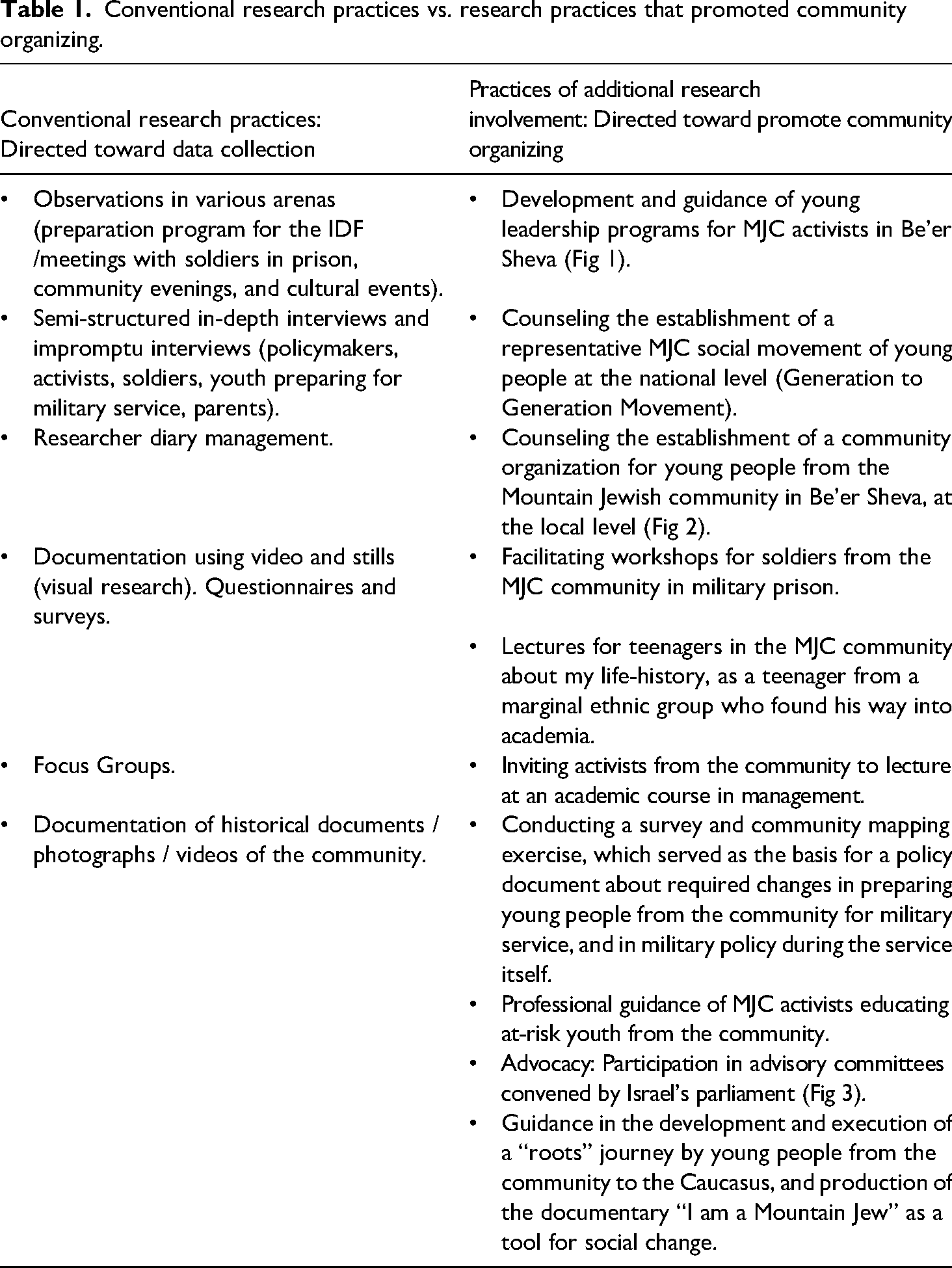
As reflected in the examples (Table 1) during the research, my professional and personal boundaries blurred, such that I became an ally, professional consultant (as a social worker), and conciliator between subgroups. Thus, when writing the research report, as presented below, the challenge I faced concerned anchoring my additional actions—that is, the active involvement with the MJC—within a theoretical-conceptual framework that would provide meaning and justification for explaining how these actions contributed to a more complete understanding of the research field, and for perceiving them as part of this field.
Conventional research practices vs. research practices that promoted community organizing.
The conceptual framework of RAICS
The theoretical and conceptual basis of RAICS emerges from three frameworks, each of which embodies a frame of reference for extended research with a grounded community (Schensul, 2009: 245–246)—yielding insights not only about the epistemological position with which the researcher enters the field of research, but particularly in relation to how it evolves as part of the community–researcher relationship and partnership.
Relational approach: the community as a subject
The relational approach emphasizes the importance of an intersubjective relationship between the researcher and the community; not just as an ethical epistemological position with which to reach the field of research, but as one evolving within the historical, social, and political context within which the research is conducted (e.g. Bessant, 2018; Phillips et al., 2021; Van Zyl and Sabiescu, 2020). Thus, the relational approach emphasizes perceptions of the community as a subject, precisely due to the risk of treating a marginalized community as an object: Communities that have been systematically studied, misconstrued, or abused by researchers often tire of being the mere object of investigation and hold researchers to higher standards of participation and engagement (Huffman, 2017: 10).
The active involvement as a researcher, anchored by a more complete and holistic view of the researcher as a person, seeks to be alert to the danger of exploitation that Huffman (2017) highlights, and favoring a relational approach to the relationship between the researcher, the community, and its representatives. The basic idea behind a relational approach is that of the perception of the “other”—whether an individual, a group, or a community—as a subject: that is, the ability to recognize his/her/their point of view as the basis for relationships that are intersubjective (Gillespie and Cornish, 2010). The relational approach is identified with the feminist point of view, which favors the ethics of care (Noddings, 2013), and uses a relational ethics reference as the basis for establishing relationships in the ongoing process of research (Phillips et al., 2021).
However, my experience with the MJC sharpened my awareness of the gap between a relational approach as an idea or philosophy with which one arrives at the research field, and the way in which it is applied in practice. I realized that this gap was created in view of two characteristics of the MJC, related to each other. The first is in the Israeli context, within which MJC became the object of various professional and political organizations; the other is that the MJC's marginality also made them as an object for critical research and researchers—as, for example, with my early desire to “give voice” to the community.
The agenda of the MJC, in common with other marginalized groups, is discussed within a professional-political space referred to as “the Israeli social program market” (Krumer-Nevo and Malka, 2012; Malka, 2007). This market results from a renewed equilibrium following privatization processes, a departure from welfare-oriented policies, and accelerated development of the third sector/NGO sector (Ben-Eliezer, 2003). Three criteria essential to understanding the power relations between policymakers, professionals (among them, researchers), and MJC as marginalized community exist in the social program market. These are (a) Recognition, i.e. how the state and social institutions recognize the historical, socio-cultural, and political circumstances that underpin the group's exclusion (Bram, 2008; Taylor, 1997); (b) policies designed by the Israeli state and its institutions to help marginalized communities deal with the impact of marginalization and exclusion (Bram, 2008); (c) the implementation of professional interventions models, as expressed in actions taken by various organizations and services in the social program market (Bram, 2008).
Following Comaroff and Comaroff (2009), I gained insights into how MJC ethnicity and marginality had become a commodity in Israel's social program market, used by the various organizations to justify the projects implemented with the MJC. This raises a pertinent question: who owns the goods and who receives the consideration for the act of trade? Moreover, it constructs a dual tension between the perception of the MJC as a “subject” entitled to self-determination (Smith, 2021), and its perception as an “object” upon which intervention approaches and patronizing ideologies are thrust upon from “upstairs” (Gbadegesin and Wendler, 2006; Huffman, 2017; Saunkeah et al., 2021).
Regarding the object-subject duality, my argument is that critical researchers must consider the possibility that they themselves are potentially vectors in the use of force, oppression, and subordination, and that relations formed with their subjects are an integral part of the research (Gbadegesin and Wendler, 2006; Huffman, 2017; Saunkeah et al., 2021). Moreover, the presumption or passion to execute a critical study with the objective of exposing oppression mechanisms, or to “give voice” to the weakened, may cause distancing, or even force ideologies and world views from above upon the research subjects. To resolve this tension, critical research must be realized through human encounters with members of communities as subjects, as well as through acknowledging the realities of their lives. This type of encounter is fundamentally authentic; it may include the disputes, mutual feelings of rejection, and suspicions of exploitation that are intrinsic to such relationships, as well as the gradual building of trust, and instantiations of surprises and tensions between the researcher and the subjects involved. All these elements are translated into relationships, in which the researchers discover that they themselves can also experience vulnerability within the research relationship—and can allow themselves to learn from such vulnerability (e.g. Sikic Micanovic et al., 2019).
Thus, the notion of RAICS emerged from my understanding that I too, as a “critical” researcher, came to the field with a philosophy ostensibly seeking to do good with the MJC—but it was precisely this desire that made them, once again, an object. The changes that took place during the research, which will be addressed later in this essay, contributed to the construction of relationships (not detached from conflicts) that made it possible to return to the importance of intersubjective relationships through the process and not as an external position to it (Smith, 2021).
Critical ethnography and social work profession
The second conceptual framework of a RAICS is related to critical ethnography as research methodology, and to its connection to (my) professional identity—in this case, as a social/community worker. Because RAICS emerges from an intense and close relationship with the researched community, it requires a methodology that demands a longer and closer stay in the study field. Thus, critical ethnography is an extension of conventional ethnography. Its uniqueness lies in its intentional focus on marginalized groups, directed toward exposing unequal social structures and encouraging extended and meaningful involvement in the life of the community (Thomas, 2021). However, it is important to note that because critical ethnography essentially deals with issues and mechanisms of power, its application is not limited to research with marginalized groups; it can also be expressed in research with vulnerable populations in communities that are considered privileged (e.g. Halvorsen, 2022). Thus, critical ethnography uses traditional ethnographic tools such as observations, logs, and fieldwork, but it examines the researched reality through the prism of social justice (Clair, 2012). Unlike the traditional ethnographer, who seeks to expose and describe social order “from within,” the critical ethnographer attempts to understand the community's perspective for its own good (Dennis, 2009).
The point at which critical ethnography as a methodology and social work as the researcher's disciplinary and professional identity cross paths outlines the conditions for the emergence of RAICS within the research field. It could determine the quality of this involvement, rendering it an involvement that goes beyond a researcher's “good intentions.” Indeed, as I will show, my identity as a social worker played a key role in the evolution of this stance. It was supported by the values and goals of social work, as well as the areas of knowledge and skills that it encompasses. As Hagues (2021) showed, the ethical principles and objectives of social work as a profession (NASW, 2017, Code Standard 5.02) overlap with the principles of critical ethnography. The pursuit of social justice, protection of human dignity, and action-taking that promotes a change in the living conditions of excluded populations all align with the principles of critical ethnography. Thus, in the field of social work, critical ethnography is a research methodology designed to create the change sought by the community, enabling research to have a practical dimension.
Another aspect that links critical ethnography and social work is that of focusing on a community as a unit of intervention, research, and action (Coulton, 2005). In social work, the community is defined as an organizational unit on the meso level—the level that mediates between individuals and the broader social structure (Schriver, 2011). The community too is a key reference unit in practice and research (Coulton, 2005). Grassroot organizations and community organizing have always been attributed great importance to the promotion of social change (Gambrill and Pruger, 1992). Researchers have suggested that the community, as a unit, will continue with time to be important for social work (Ife and Tesoriero, 2006), and community studies have also been discussed in the context of critical methodology development and employment (Viswanathan et al., 2004). Thus, the overlap between social work and critical ethnography has also been expressed in the desire shared by community social workers and critical ethnographers to make a change in a community's condition (Thomas, 2021).
Community-based participatory research
The third framework, in line with the idea of the relational approach, critical ethnography and its connection to social work, adds to them the idea of participatory methodologies. The literature on critical methodologies presents participatory methodologies as positioned toward promoting social change. Studies of this nature are described in terms of a research stance enabling the democratization of the knowledge production process and contributing to the realization of the right of researched populations to participate in studies of the social conditions that inform their realities (Appadurai, 2006; Torre and Fine, 2006).
Ideally, the strive to democratize the research procedure is expressed in all the stages of a research study: in the joint drafting of research questions and topic, methodology, data analysis, publication of findings, and translation of study into action. The shared process establishes a cycle of partnership, relations, and strength designed to promote change. It also builds a bridge between research and social action, enabling researchers and weakened populations to establish a critical viewpoint on current social conditions, and to decide what needs to be done and changed (Fine and Torre, 2004; Minkler, 2005; Ochocka and Janzen, 2014; Torre and Fine, 2006).
However, with respect to the active involvement of a researcher in community research, CBPR places greater emphasis on grounded community (Hacker, 2013; McNiff, 2013). The concept of community is engaged with from a critical, social justice-oriented perspective; criticizing the existence of an abstract discourse on community and communality, providing ideological cover for neo-liberal state policies designed to help avoid being held accountable for the resolution of social issues, instead transferring this responsibility to the “community” as an abstract and general idea (Everingham, 2003). Therefore, grounded communities must be strengthened to highlight and make political demands for social justice in response to social exclusion, positioning them as part of the attempt to advance community organizing and the ability of local communities to respond to the unequal neo-liberal agenda (Castells, 2004: 68). Following this line of thought, CBPR is not based on an amorphic or virtual community, but on communities that are located in a defined socio-economic space and time, in which there are interactions between its representatives, external organizations, and policymakers (Schensul, 2009).
In the context of this essay, the relationship between RAICS and CBPR manifests in my active involvement with the community, in addition to conventional research practices (See Table 1). This is embodied within the research process an opportunity for participatory process and the more engaged involvement of MJC representatives, as a grounded community, in decision making regarding the research in different arenas. It is important to note, however, that even if I did not start the research program with the clear intention of understanding it as a classic CBPR, a retrospective assessment of the research process revealed the role that I, and the entire study, played in promoting the community's ability to organize and respond to exclusion and marginalization, and how community representative participation in leading the research (e.g. Malcolm et al., 2020) matched principles of CBPR.
Structural dimensions: positioning and developing alliance with the community
Alongside the conceptual-theoretical framework of a RAICS, there are two essential structural issues for understanding this position: (a) the researcher's positioning, and (b) the developmental course of the research.
Researcher positioning
Reflexive practice occurs from the basic understanding that the process of knowledge generation in research cannot be detached from the researcher's social, cultural, and political position (e.g. as an academic–community representative); it seeks to fundamentally undermine and oppose the process of producing knowledge about the MJC as “the” other (Marcus, 1998: 196–201). More specifically, my reflective account process was based on my personal-social positioning as a researcher at the intersection of three main identities: (a) my ethno-class-gendered identity as a man with a Mizrahi peripheral identity, which embodies dealing with marginalization and exclusion in Israeli society; (b) my professional identity as a social worker and community organizer; (c) my academic identity as a researcher and university professor.
Regarding the ethno-class-gendered identity, my personal-social positioning emerges from my personal history as the son of immigrants from Morocco, who grew up in a peripheral locality in Israel. In short, throughout my life until my arrival at the academy at the age of 27, I lived in almost complete alienation from my ethnic identity. My military service and my involvement in sports were both intended to strengthen my Israeli masculine identity, based on the Israeli ethos of the melting-pot (Kachtan, 2012) and at the time perceived as the opposite of the Mizrahi identity. It was only when I came to academy that I began to absorb a critical philosophy that contributed to the revival of my ethnic identity, and to the process of liberation from internalized oppression. In this way, my professional identity shaped itself, embodied within this a corrective experience which contributed directly to my specialization over the years in radical community work designed to create social change. I have primarily expressed my research interests in locating and accompanying community organizers, as well as helping grassroot organizations evolve and grow. As a consultant to community organizations, I approached the study with the knowledge and methods relevant for these issues.
Thus, it is not surprising that when I started my career in 2005, first as a young researcher in academia and then as a lecturer, I found myself interested in and embracing a world of values based on critical research approaches as well as critical theories. However, as stated earlier, retrospective consideration of the process made it clear that at the beginning of my career as a critical researcher, I was like an avid teenager adopting a new philosophy and seeking to implement it in the field in a logical way—contrary to the values that they represented, as it turned out. I found that I was, perhaps, too eager to rescue the MJC from difficulty and make the community's voice heard, but without emphasizing the significance of that voice (Jack, 2010). I realized that researchers, critical though they may be, may also be party to paradigms of force, oppression, and subordination, and that the relations between them and their subjects are an integral part of their research (Kincheloe and McLaren, 2011). Moreover, the presumption or passion to conduct critical research seeking to expose the mechanisms of oppression and to allow the voice of the weakened to be heard may itself create distancing, or even force ideologies and world views on the subjects from above. It therefore became apparent that critical research cannot be implemented in any setting without the backing of daily encounters with the subjects and the reality of their lives, forging relations and respecting the subjects’ self-determination (Smith, 2021).
The course of the research: the process of forging an alliance
Retrospectively, I was able to identify three main stages to forging relations in the field, embodied the de facto development of RAICS: (a) the store-windows; (b) behind the scenes; (c) on stage. Thus, in presenting these three stages, I present illustrations taken from the study itself. This has been approved by the ethics committee of the academic institution in which the study was conducted. In addition, photographs taken over the years in various fields of the fieldwork will be presented; in all cases, informed consent from the photographed was received, in relation to their awareness that the photographs were taken as part of an ethnographic study with the MJC.
The store-windows
My initial motivation for conducting research with the MJC was to make the voice of the boys from the community heard. In the early 2000s, reports about boys from the MJC claimed that they were violent, belonged to street gangs, and were dropping out of schools—all these supposed characteristics of the community linked with a masculine-ethnic identity (Malka, 2007; 2013). Thus, as a preliminary step to my research, I participated in a meeting with Avner2, the head of the MJC: When I attempted to find out what he thought about conducting a study at the school where negative reports about teens from the MJC were obtained, Avner rejected the idea immediately, and proceeded to condemn their behavior. He then suggested a new idea, that sounded like a condition or ultimatum, requesting that the study be conducted at the community dance class. Avner described it as the community's greatest pride, and the crown jewel of community center activities. At first it was hard for me to accept, but I later realized I should “go along” with the community (Researcher's log, August 3, 2005).
I will candidly admit that, at that point in time, it was hard for me to accept Avner's position. He upset me, and his stance made the MJC seem “hard to get.” Avner sought to dictate the topic and nature of my study. As a researcher from the academia, I wanted to involve the community in a study that would contribute to its wellbeing, and to help it. I had the best of intentions but had been immediately rejected. I felt a great vulnerability at that moment.
However, I later learned and understood that these were the kind of daily politics informing the community, manifesting in various ways. It was the response of the marginalized to the study, which they perceived as means of colonial hegemonic control and supervision (Smith, 2021). Avner responded in this way to gain power and influence, and as a way of validating the community's existence and activity, as well as his own leadership. Thus, much like other organizations seeking to work with the community, I too, as an academic, first had to prove that the study would indeed be helpful to the community. Over time, my extended fieldwork with the community taught me that Avner's response was part of a discourse of interests, as typical of a leadership interested in advancing the interests of their community, and that it was extremely important to listen to these voices (Smith, 2021). At that time, I made a complete and wrong separation; between a community as I perceived it as a community organizer, and my perception as a researcher.
Such negotiations were also necessary in other instances. The community's ability to present itself as one that was “hard to get” was at the basis of this negotiation, underscoring the political nature of the research act (Huffman, 2017; Smith, 2021). In fact, the community itself dictated the choice of the initial research arena, and so, between 2005 and 2006 I conducted a study at a MJC dance class—the community's source of pride, its “store window,” so to speak. The study, designed to allow the voice of excluded communities to be heard (Mazzei, 2009), centered on the way MJC boys addressed and responded to the marginalization and exclusion that they and their parents had experienced in various social institutions within Israeli society after their immigration to Israel (Author, 2012) (Figure 1).
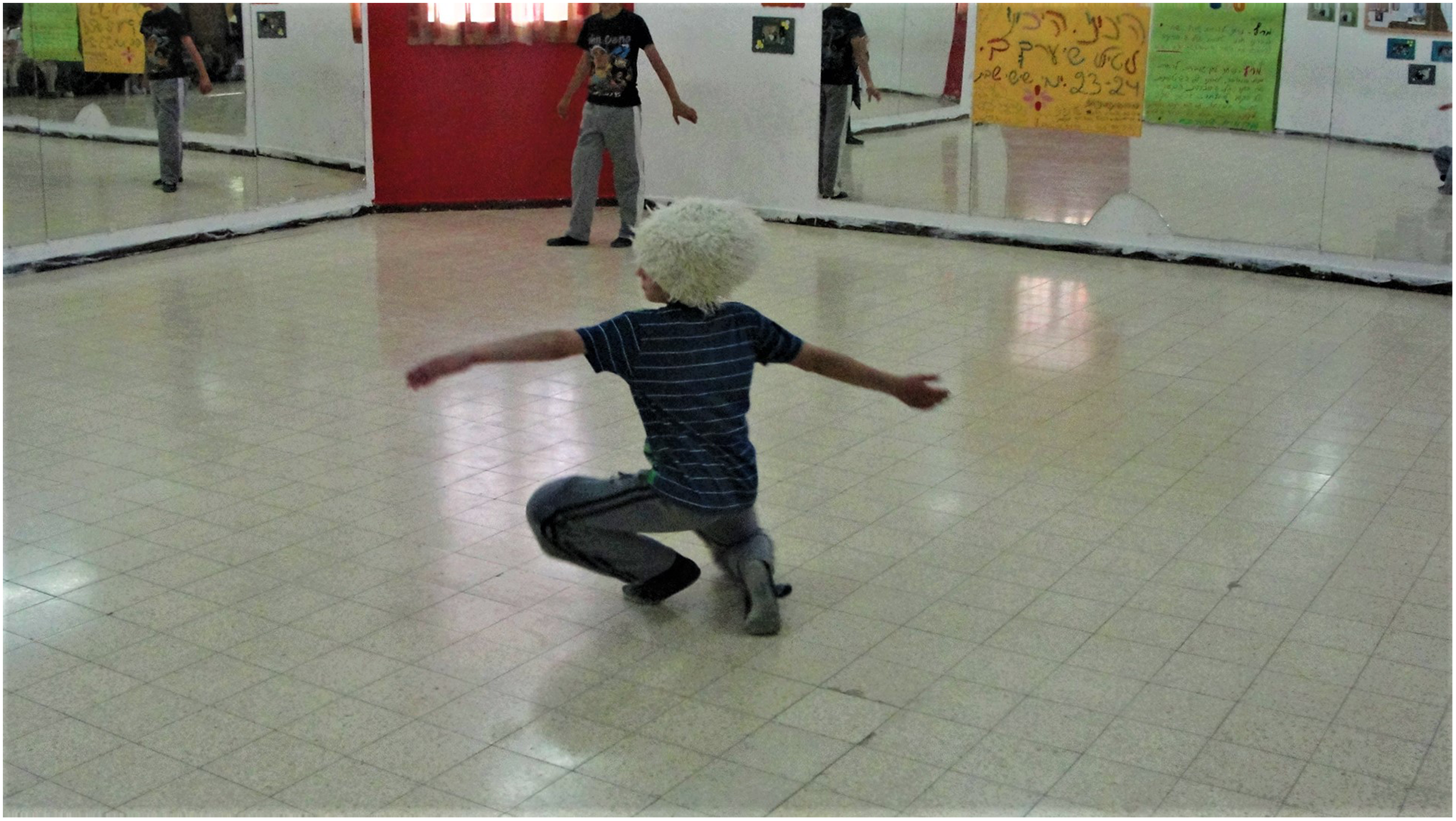
The traditional dance class - the community centre of the Mountain Jewish Community in Be'er Sheva. Photographed by Menny Malka, March 2006.
Behind the scenes
In the summer of 2006 I met Alex, a young man from Be'er Sheva's MJC, who worked at the MJC community center as the coordinator of a program designed to make conscription into the IDF a meaningful experience for teens from MJC, called Zinuk BaAliyah (“Springboard”). I asked to meet with him to discuss some of my research insights from my study at the dance class, and if possible to validate them (Figure 2).
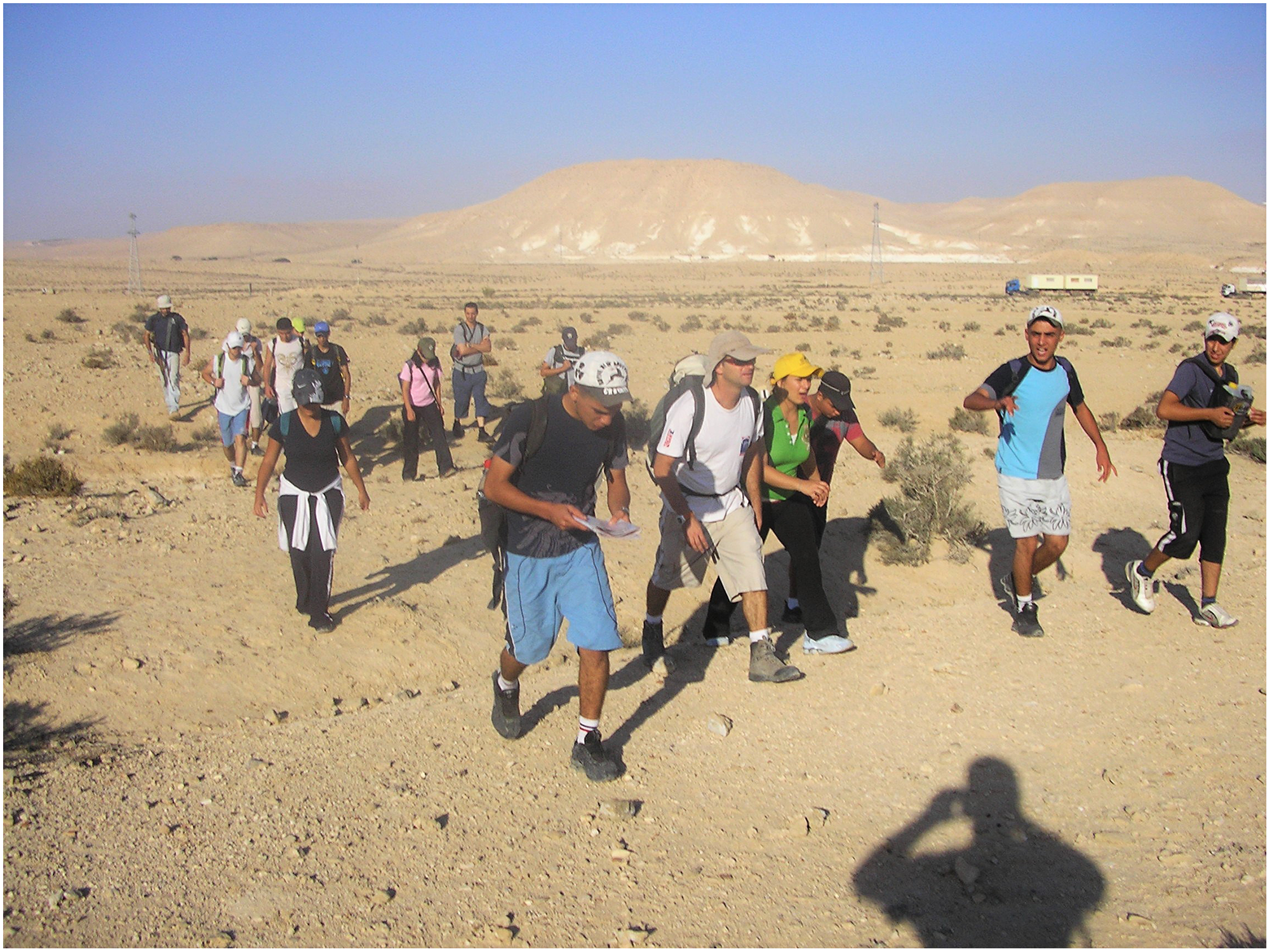
Survival journey with teenagers from the Mountain Jewish Community. Photographed by Menny Malka, August 2007.
However, when I contacted Alex, his answer was pragmatic: “You want to learn from us? Then come join us. I'm out for a week of Outdoor Training in Sde Boker with a group of teens, and I need an adult to join me. Come with me and talk there about everything you want [looking directly into my eyes, in an examining way, as he spoke, waiting for an answer]. We need an extra guide” (Researcher's log, May 12, 2007).
I accepted the invitation. Publishing the study findings and presenting them to community activists and policymakers did not suffice to reduce my discomfort during the personal encounter with these teens and their stories. One characteristic that repeats itself on a structural level in their narratives is the feeling that they, as MJC youth, members, are rejected and unwelcome within Israeli society, and their uncertainty about the prospects of future integration into core institutions in Israeli society such as the army, the higher education system, and the employment market. Thus, my professional experience working with social activists had contributed to my gut feelings in relation to Alex, as a natural community organizer (Mondros and Wilson, 1994).
In retrospect, being in the field for a whole week with Alex and the teens served not only as another entrance test for me as an outsider, but also and most importantly as a behind-the-scenes invitation to the community. Then, and later, I began to hear stories of youth at risk and of pain, accompanied by intra-community criticism of the older generation of community leaders, in that personal and political motives informed their choice to present the community as needy and weak. In July 2007, I was invited to an emergency gathering following the tragic murder of two teens from MJC—one of whom had participated in the Sde Boker excursion. The murder had opened the door to overwhelming feelings of discrimination and rage against the establishment, accelerating the involvement of State institutions and non-governmental organizations to support the MJC.
I therefore began to implement another research plan, a doctoral dissertation, in 2007. This focused on the processes used to prepare young MLC members for their IDF service, and on their actual service experiences. From an observer at a dance class, interviewing participants, I proceeded to an established position based on participatory observation and a close connection to a group of young adults who were acting as “informants,” alongside greater involvement in the daily lives of the MJC.
Onstage
Between 2007 and 2016, I was able to forge a close relationship with Alex and with a group of young leaders in the community, thanks in part to my long and intense fieldwork in various arenas within the MJC. This acquaintance allowed me to bring myself more holistically to the research, and especially in the process of establishing a community organization of the MJC youth (Malka and Huss, 2023). I use the term “on stage” as metaphor of a relationship whereby I was “standing by” the community and its representatives, shoulder to shoulder, in a way that strengthened partnership in the face of various challenges. The main aim of the young leaders was to break the vicious circle whereby community youth internalized the ethnic identity attributed to them—a stigmatized identity—and in its place attempt to instill in them the heritage of the Mountain Jews as a positive narrative. Thus, as part of the partnership forged with the community, my professional knowledge as an academic and social worker, my personal and professional ties were harnessed in favor of community organizing processes (Table 1). Standing alongside the community, on stage, embodies within it the full expression of RIACS, as an evolving process within the field of research.
Standing alongside on stage was embodied in a process in which the relationship of trust established with the MJC representatives facilitated my involvement via the close engagement engendered by organizing a group of young people at the local and national level. This process included, among other things, developing an activist course for young leaders of the MJC (Figure 3); building a community vision (Figure 4); and establishing a local organization from which a national movement (from generation to generation) emerged, advocating for the rights of youth in the community to integrate into Israeli society.
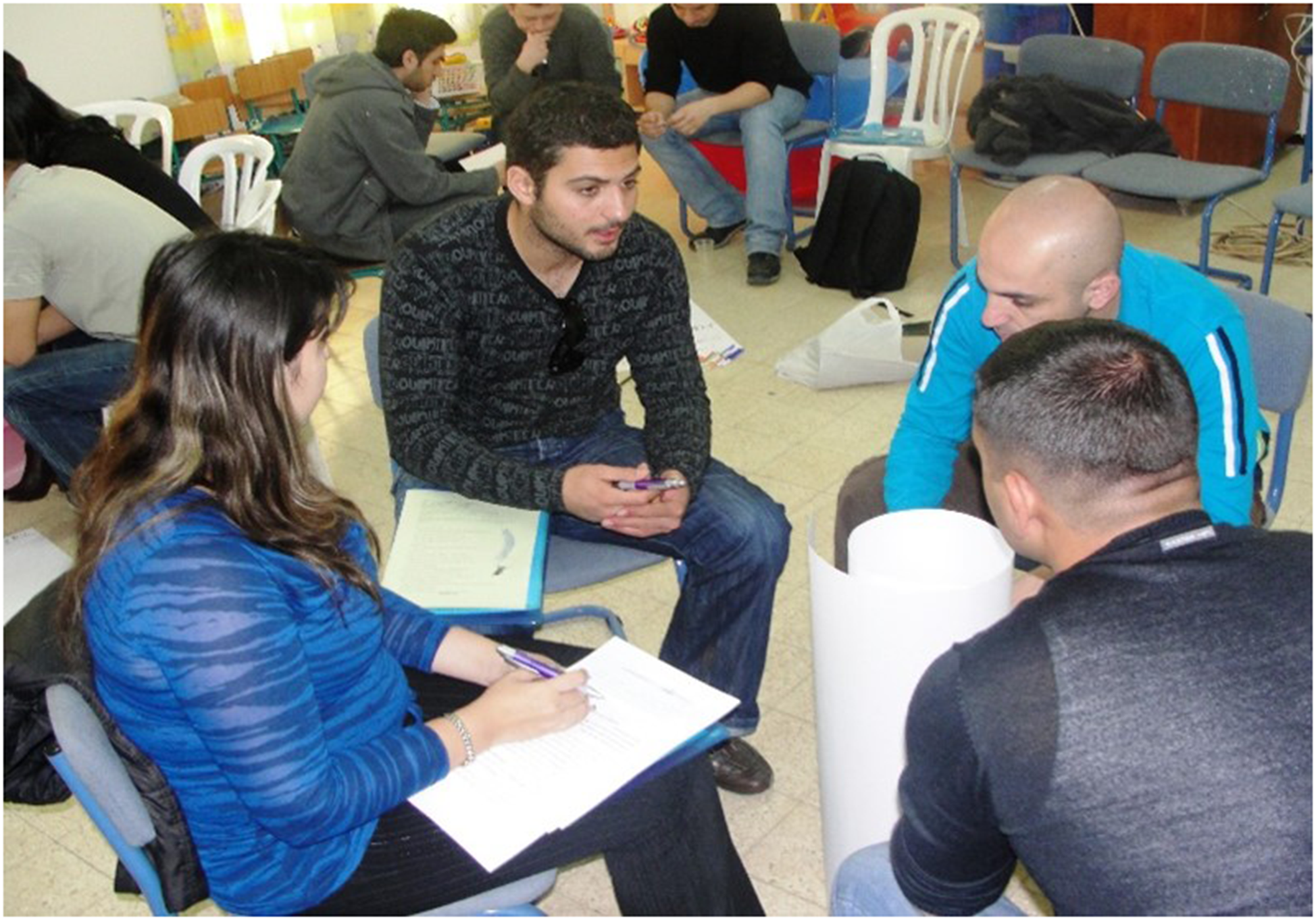
The youth organization of the Mountain Jewish Community in a community vision workshop. Photographed by Menny Malka, February 2010.
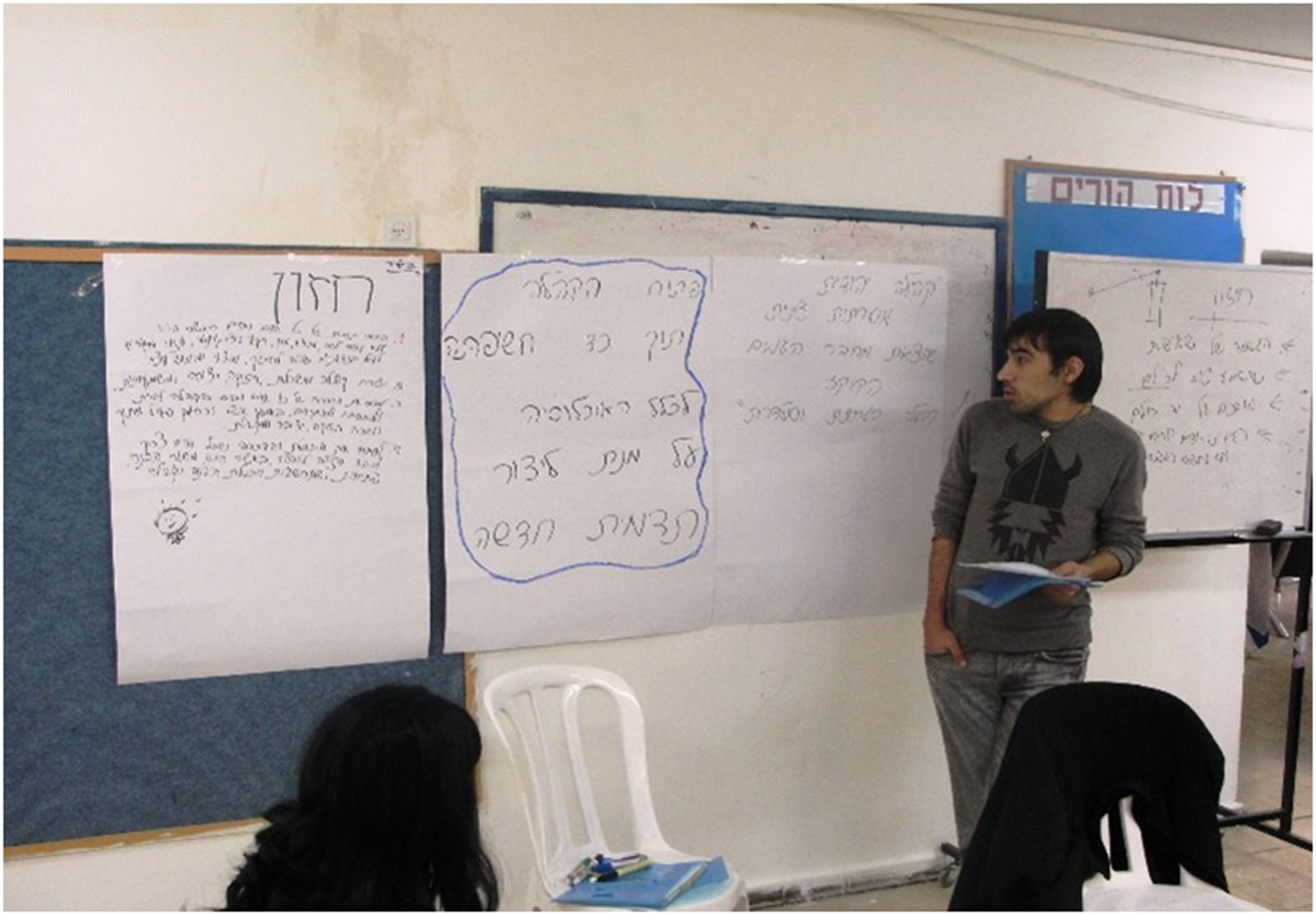
The youth organization of the Mountain Jewish Community in a community vision workshop. Photographed by Menny Malka, February 2010.
Along with advocacy (Figure 5), we carried out a root journey to the MJC's region of origin, the Caucasus region. From this, a documentary film “I am a Mountain Jew” (Katz, 2016) was produced. The film has since become an educational text for MJC youth in the process of forming their ethnic identity (Figure 6).
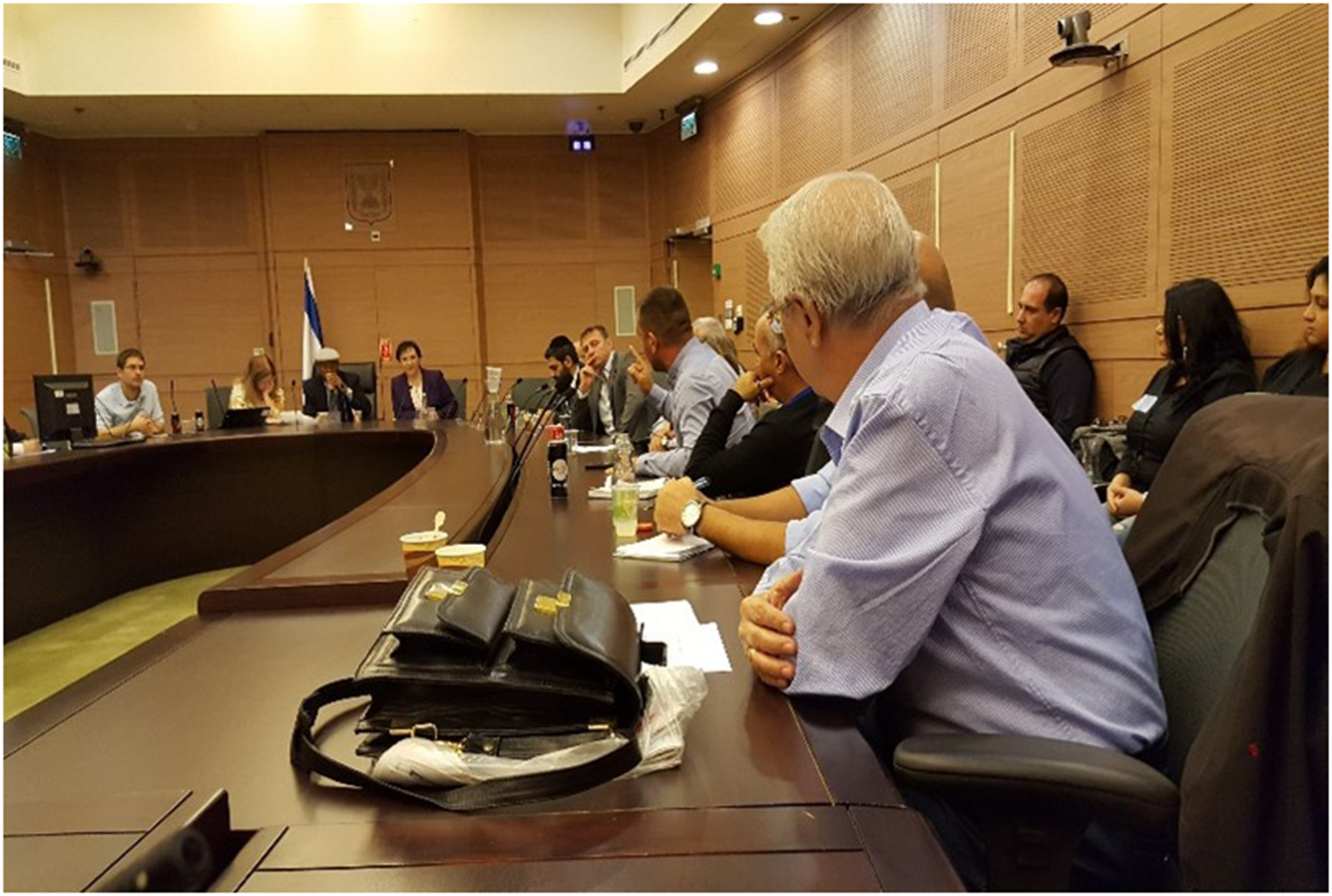
A meeting of Mountain Jewish Community youths in the Israeli parliament. Photographed by Menny Malka, May 2016.
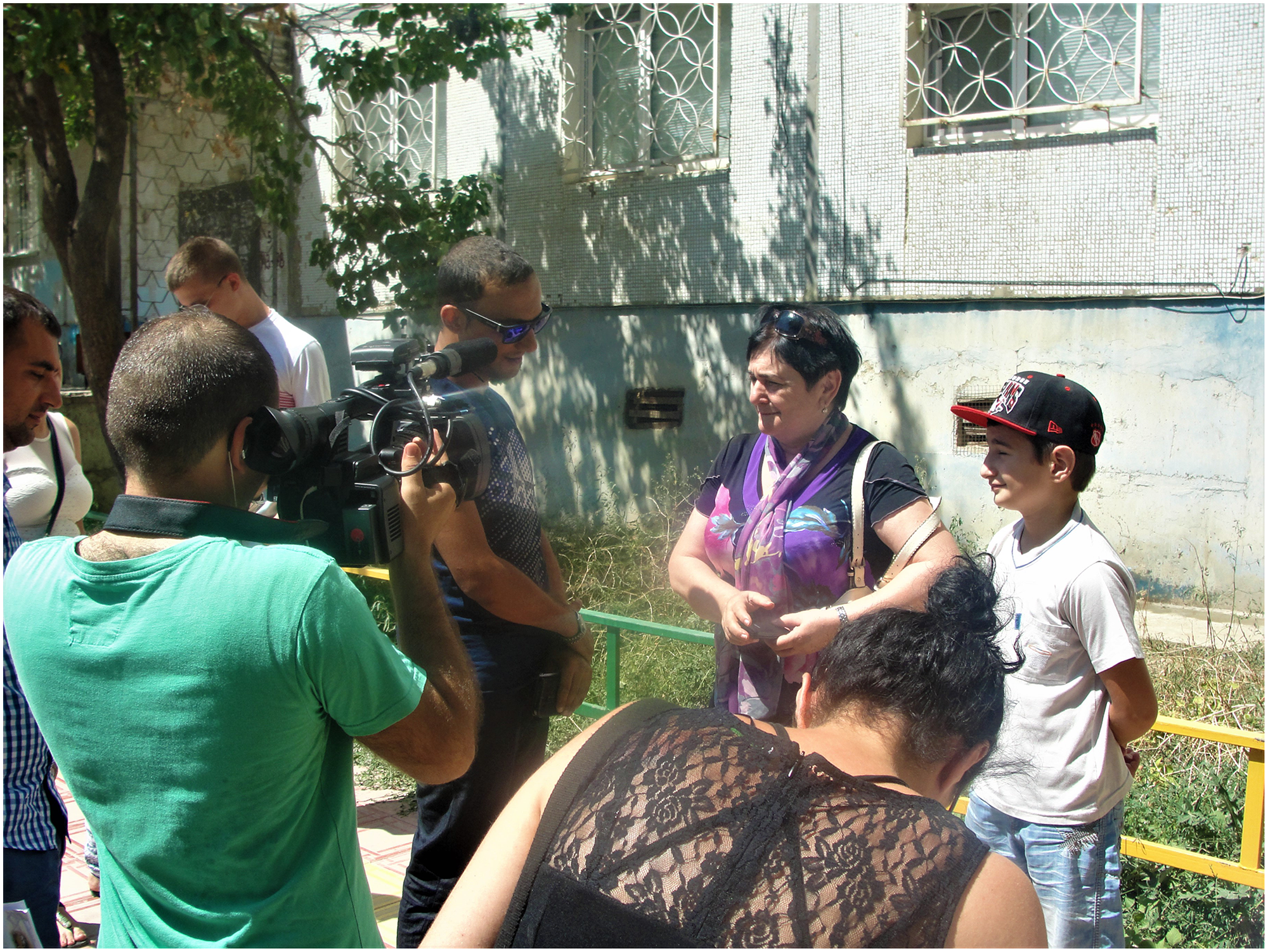
A meeting between young people from the Mountain Jewish Community and residents of a neighborhood in Darband, during a root journey in the Caucasus region. Photographed by Menny Malka, July 2013.
Thus, this involvement contributed to a change in the focus of the study, such that the initial question “How do young people from the MJC integrate into Israeli society?” with military service as a case study, became “How do the MJC respond to marginalization and social exclusion?” The answer to the new question was embodied in the RAICS, which on the one hand contributed to the processes of MJC organizing, and on the other hand observed and learned from these processes about the nature of the research field and the challenges facing the MJC as immigrant community. This point of view contributed to understandings about not just the MJC, but also to Israeli society itself.
RAICS: main principles
Based on the combination of the theoretical dimensions (intersubjectivity, critical ethnography, and CBPR) and the structural aspects (reflexive observation of the development of relations with the community and its representatives), this section presents eight central principles from the process of the development of the researcher's initial critical position into a more active involvement in the field. These principles embody moral, theoretical, and practical aspects of RAICS; they can be used by researchers and ethnographers as milestones, giving meaning to their active involvement in the research field.
Dual loyalty: walking a tightrope
RAICS sits at an equilibrium point: positioned between a researcher's ability to fulfill the protocol of “conventional” research in accordance with the expectations and requirements of the academic institution, and an additional and active involvement, embodying an extension of the research boundaries. To retain this position requires complex—some would argue subversive—"tightrope walking,” allowing the researcher to employ anti-establishment methods while working with the same establishment. This dual loyalty has been described by Doughty (1987) in terms of the metaphor of “walking a tightrope.” Thus, the ability to walk a tightrope enables a richer view of the research field. As Scheper-Hughes (1995) has argued, and as it emerged in relation to the MJC, my deepened involvement contributed to the establishment of partnership relations with agents of the community, closer and richer observation in the researched field, and an enhanced and diverse documentation of it. As part of my role as a “community researcher,” training youngsters in the community in an activist course prepared together with them, and also documenting these processes, I became an ally who was able to operate behind the scenes.
Empiricizing the researcher's active involvement
The discussion on active involvement in the field raises two fundamental questions: Should the researcher remain indifferent to social issues and injustices in the name of research neutrality? Is active involvement a part of research, or is this a separate kind of involvement, potentially “blemishing” it? Scheper-Hughes (1995) argues in favor of a research stance reflecting political commitment and moral intervention. She began her research with slum dwellers in Brazil by avoiding involvement in her subjects’ lives (as she did while volunteering) because academic research and discourse shaped and limited her vistas as a researcher. Thus, based on her experience, she discerned that neutrality constitutes an ethical and moral stance. Moreover, she argued that the involved and advocating stance should not be viewed merely as a moral action, but as a step that contributed to the theoretical validity of the study (Scheper-Hughes, 1992, 1995).
The over-involvement of researchers, conversely, can lead to accusations of over-involvement unbefitting scientific research (Schensul, 1987). Some academics have argued that researchers should, in their first research projects (i.e. in their doctoral dissertations), prove to the academic establishment that they are capable of conducting conventional research. Only then will they be allowed to conduct less ordinary research (Marcus, 1998). Moreover, conventional research and the academic discourse make it difficult for prolonged bottom-up involvement to evolve. Even the literature on indigenous studies emphasizes collaborations and the importance of the relationship forged between the researcher and the community (Chilisa, 2012) on the one hand, while underscoring the difficulties that emerge when research is not conducted on conventional topics on the other.
Schensul (1987) suggests, as a possible resolution of this conundrum, that research be conducted out of ongoing dialectics between conventional academic requirements and what he calls “radical involvement.” But at this point, the researcher's involvement and actions geared toward promoting social change must be rendered empirical.
In the case of MJC, my active involvement led to a different understanding of the field: the center became the way for the MJC to respond to social marginalization as a community, and to become active players in the social program market. In this market, being a MJ is perceived as a “commodity” with value; the MJC immigrant young leadership organization was designed with the objective of demanding ownership of these goods, and the right to participate in negotiation over the value of these goods (Malka and Huss, 2023). Thus, a researcher's combination of conventional and active involvement is manifested, inter alia, by transforming this involvement into a broader and deeper understanding of the social reality on which the study focuses.
Integrating research with researcher types of knowledge and expertise
RAICS is based, to a large extent, on the knowledge, areas of expertise, and links forged by the researcher and brought into the research. It should also match the community and its needs (Stoecker, 2005). Based on the study conducted in the MJC, one could argue that community researchers, particularly those who base their research on fieldwork, require basic knowledge and training in community work.
Much like the ethnographer in fieldwork (Schensul and Compte, 1999), the community worker aims to develop relationships, recruit key informants, and write reports. These relations are built on a set of mutual expectations, shared experiences, and on an exchange of goods. To establish them, ethnographers, like community workers, speak about themselves, reveal details about their lives, travel and give rides, even go through crises together with the community. Just as fieldwork serves the researcher as fertile ground for the establishment of lasting relations with the researched community so as to enrich the database and understand the field of research, so too does the community worker; while working with the community, accompanying it for a long time in order to forge relations of trust and partnership as a prerequisite for various professional interventions.
As demonstrated, my professional identity as a community social worker played a key role in the implementation of the RAICS.
Relations ethics and exchange relations
Extended stay in the field can contribute to the creation of personal relations with the younger members and leaders in the community, these people having been exposed to the researcher's various positioning, personal history, and areas of knowledge and expertise. During this process, the researcher's commitment to the community is based on relations ethics and exchange relations (Lavallée, 2009). The relations forged rely on a social exchange between the researcher and community, with room for each party's interests (Schensul, 1987). Exchange relations have both an ethical and a practical aspect. On the ethical level, researchers must ensure that their findings will benefit the community; the practical level pertains to the ties, knowledge, and skills of the community and its agents, as well as their ability to “operate” the researcher, and utilize the various “hats” that the researcher brings to the field. Exchange relations also contribute to the partnership relations established between the researcher and community; this kind of collaboration is one of the most common practices in critical research when opposing the community's otherness processes (Krumer-Nevo and Sidi, 2012).
For example: in 2009, during my fifth year in the field, I began to conduct a joint study, commissioned by representatives of the MJC following their request that their sons and daughters’ difficulties during military service be acknowledged and suitable solutions implemented. From its initiation until publication of the findings (Malka, 2013), this study was conducted and translated into action in accordance with the principles of participatory action research.
A bottom-up study
Participatory and critical research have been discussed as a research stance that enables the democratization of knowledge production, and the realization of weakened groups’ right to research the social conditions that inform their marginalization (Appadurai, 2006; Torre and Fine, 2006). It has been argued, however, that this new trend is being adopted for the purposes of the neo-liberal order (Hickey and Mohan, 2004). Fine (2009) analyzed an article in the New York Times, describing social artists who printed protest slogans opposing capitalism and social injustices on T-shirts. The article included an image, of the shirts being sold in Walmart, hung next to other, more elegant shirts. Fine maintained that this was a paradox: the T-shirts were conveying a message of objecting to commercialization, while being offered for sale in a space that sanctifies this very same ideology. In fact, Fine uses this image to express her concern that participatory and critical research will become a trendy approach and empty signifier, through which social research will coopt excluded populations as well as sensitive social issues and topics while preventing them from serving their original purpose.
The risk of such a trend is evident in the notion of participatory research that is dictated from “above": for the sake of being conducted, and without any affiliation with the people and processes taking place in the field, or their purposes. The MJC, as an example, demonstrate the importance of developing the conditions within which the community can identify the potential of such studies and take up a role in commissioning it. A key component of such a process is, I believe, extended stay in the field.
Extended stay in the field
Historically, extended fieldwork is regarded as a practice that can contribute to the quality of the study conducted, because it not only enables a deeper understanding of the field, but also facilitates the researcher's closer involvement—and even participation—in acts of social change and advocacy (e.g. Foster et al., 1979). Paul Stoller (1989) described how his decision to conduct prolonged fieldwork among the Songhay contributed to strengthening his relationship with his subjects, and even to the understanding that his earlier interpretations had been wrong. As one of the Songhay said: Today you are learning about us, but to understand us, you will have to grow old with us. (p. 6).
A common claim is that an extended stay in the field strengthens the reporter's authority as one who “was there” (Geertz, 2005). This principle is doubly true in a bottom-up PAR study. According to Lavallée (2009), through this process the long-term study can mature into profound commitment: [It] is a commitment that extends well beyond the final report, dissertation, [or] peer-reviewed article submission […]. It is a lifelong relationship and commitment. […] the research[er] must be prepared to assist the community with their requests. (p. 24).
In my research with MJC, participatory methodologies implemented only after I became involved and active in the various frameworks that promoted the MJC agenda. My extended stay (2005–2016) and active involvement with the community enabled the establishment of a significant trusting relationship. Due to the acquaintanceships formed thus, community agents were able to identify me and academia more generally as points of contact from whom to “order the study.” My extended fieldwork enabled a more accurate identification of the need for the research—and just as importantly, the right time to conduct it.
A grounded community-based study
Shared community cognition and the ability to identify shared community interests are necessary when implementing RAICS. Therefore, as previously mentioned, the key principle is that the community is not amorphic or virtual, nor some sample of a study population. It is a grounded community, living in a defined socio-demographic space anchored in a time and place (Schensul, 2009: 245–246). In a grounded community, members interact with organizations and policymakers. The same is true of a group of people who organize around a crucial shared characteristic—in this case, a functional community.
Translation into action
The meaning of this principle is that the impact of RAICS is not only expressed in the academic field, but that it also spreads out to issues of policy-shaping and change-driven actions too. Thus, the study with MJC was presented in various forums in collaboration with the community's agents and was found to be relevant to the MJC's range of demands for recognition by the State institutions and policy makers. One example of this is the use made by the young leaders of MJC of the findings of a joint survey, conducted in the format of PAR, about the challenges of integrating the young people of the community into the army (Malka, 2013). On the successful completion of this process, they were recognized by Israel's Ministry of Defense as a semi-professional agency contributing to training and preparing the community's young people for military service. Another impact of the research beyond the academic field is reflected MJC's organizing processes (Table 1) and the establishment of the social movement “From Generation to Generation.” Over the years, the movement has gained recognition and standing as a professional body engaged with the informal education of young people (Malka and Huss, 2023). In addition to this, another example of community action that emerged from the research is that of a “roots” journey to the Caucasus by young people from the MJC, and the subsequent production of a documentary film (see Katz, 2016) as a pedagogical tool for identity work with youth from the community.
Discussion
RAICS embodies within it a deep commitment to the promotion of social justice, and resistance to the processes of exclusion and oppression of marginalized communities. However, since it is not always clear to what extent the active involvement of the researcher is part of the study and to what extent it reflects active involvement enabled by an ethical position (e.g. Bessant, 2018; Phillips et al., 2021; Van Zyl and Sabiescu, 2020), the purpose of this essay was to anchor the RAICS as a research practice that develops during the research, and that is a part of it.
Thus, through a theoretical-conceptual anchoring of RAICS, the way it is embodied in the researcher's positioning, and the development of relationships with members of the community with whom the study was conducted, and the various principles embodied within it, RAICS can be seen as a research practice that allows for the active involvement of the researcher in the research process. Indeed, regarding the aims and roles of critical research, this involvement embodies a change in the designation and application of the critical point of view with which the researcher arrives at the field, as reflected in the developmental axis (Figure 7).
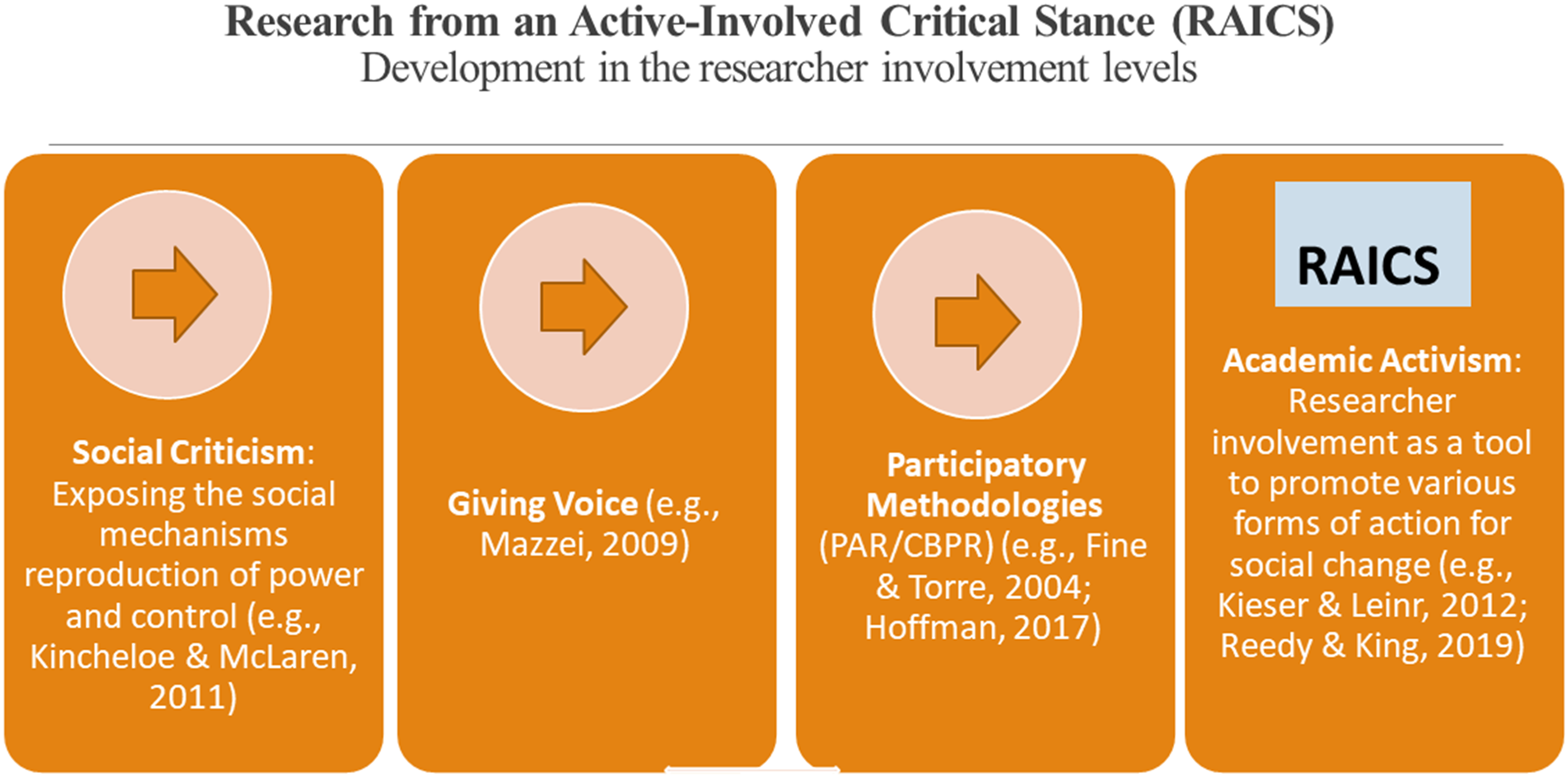
RAICS- theoretical development.
Social criticism is the traditional role of the critical researcher, who focuses on exposing the reproduction of social power and control mechanisms in order to raise social awareness and create a basis for resistance (e.g. Kincheloe and McLaren, 2011). The second role is giving voice: influenced by feminist theory, critical research takes up the role of “giving voice” to marginalized and excluded populations, that is, to give expression to other forms of knowledge and alternative ways of knowing, looking at, and interpreting social reality (e.g. Mazzei, 2009). The third role, embodied in/by participatory methodologies, reflects the understanding that giving voice to excluded populations is not enough, and that participatory methodologies intended to validate the interpretative perspective of these populations on their social reality and lived experience are also needed (e.g. Huffman, 2017). The idea of creating shared knowledge, the foundation for PAR/CBPR, embodies the notion of shifting to action that strives for social change. Thus, the development of participatory methodology ideas, and specifically PAR/CBPR, creates an opening for the researcher's greater involvement within the life of the community being studied, in relation to what is known as “conventional research.” Moreover, these participatory methodologies give the research project the status of a tool that can enable direct action for social change (Huffman, 2017). The fourth role, within which one can place the RAICS, is characterized by the perception of academic activism: researcher involvement as a tool for promoting various forms of action for social change (e.g. Reedy and King, 2019). This role, which is not detached from previous developments, gives room for various forms of academic and research activism. RAICS appears within it as an orderly stance, seeking to impart rationality and to conceptualize activism as an inherent part of research. As described in previous sections, RAICS did contribute to supporting the processes of organizing the MJC and establishing a representative organization, which in turn created a basis for community demands for policy change and institutional recognition of community knowledge and its various needs.
The advantages of using this notion of a RAICS are that it enables a fuller and deeper understanding of the reality of a community seeking to cope with oppression, marginalization, and social exclusion. It broadens the stance of “participatory observation” of everyday life to shared action in which the researcher takes part. However, employing RAICS is also associated with the researcher's institutional and professional positioning, as well as the scope of time and resources that need to be invested. For instance, young researchers starting out academically as scholars would probably be able to make such an investment, because their academic institutions require them to engage in a central research project (a thesis or dissertation) (e.g. Marcus, 1998: 231–236). The institutional positioning of researchers when they start out includes a demand for more stringent criteria with respect to what research is. By contrast, a senior researcher, well-integrated into the academic establishment has greater freedom of activity, as well as the ability to justify unconventional research. But we must not forget that the demanding schedule of an academic career does not often allow even established researchers to invest the time required for the employment of this stance.
Either way, researchers seeking to implement the notion of RAICS are best advised to examine this possibility dynamically and flexibly. This stance should not be viewed through the prism of strict criteria that must be met; but rather as a point of departure for a fascinating and intense journey, the results of which will only be discovered down the road
Footnotes
Author note
The authors of this manuscript have complied with APA ethical principles in their treatment of individuals participating in the research, program, or policy described in the manuscript.
Declaration of conflicting interests
The author(s) declared no potential conflicts of interest with respect to the research, authorship, and/or publication of this article.
Funding
The author(s) received no financial support for the research, authorship, and/or publication of this article.

Correction (September 2024):
The article has been updated online to correct Menny Malka's affiliation and details in corresponding author section.
Notes
Author biography
Menny Malka, PhD, MSW, is a Senior Lecturer at the School of Social Work, Ben-Gurion University, Israel. His research areas include children and adolescents in-risk situations, marginalized and vulnerable communities, domestic violence and everyday sexuality in social work research and practice. His research is based on qualitative collaborative methodologies, community-based research and community based participatory research. Since 2017, Dr. Malka has been developing and implementing the photovoice methodology in social work education, research and practice, and he is the head of the interdisciplinary lab for photovoice-based research at Ben-Gurion University.