




Abstract
This article examines the complexity and affordances of staying in ‘the field’. Time as a resource for qualitative research is widely experienced as diminishing. Yet increasingly, academic emphasis is also being placed on the merits of time intensive approaches, like participatory scholarship. This tension raises critical questions about the ethics and practices of collaboration within arguably narrowing parameters. Taking a view from the edges of conventional research practice, this article focuses on staying beyond the formal completion of a sociological research project. Drawing on over 10-years of collaboration with youth service providers in an English city, I examine the dynamics and complexities of staying, where temporalities, relationships and practices extend beyond research. In doing so, this article contributes to methodological debates about research exit and participation, by introducing staying as a practice that affords new collaborative freedoms and possibilities.
Introduction
Methodological reflections on withdrawal from fieldwork or ‘research exit’ are now relatively widespread (Batty, 2020; Caretta and Cheptum, 2017; Delamont, 2016; Michailova et al., 2014; Iversen, 2009). Endings are recognised as integral to qualitative research and accounts of ‘leaving the field’ are justified on practical, epistemological and ethical grounds. Yet, though there are many situations in which ‘research exit’ is the most appropriate course of action, sometimes researchers stay, and some maintain relationships across longitudinal, even indeterminate timeframes. These instances contrast with established methodological logics of leaving. They also disrupt the temporalities of ‘conventional’ research relationships and challenge assumptions of researcher-participant distance embedded within the language of ‘the field’.
This article focuses on ‘staying’ in the context of community engaged scholarship. Drawing on over 10-years of collaboration with Unity Gym Project 1 , a youth charity in the North of England, it examines the complexities and affordances of research relationships becoming ‘more than’ research project based. The original ethnography from which this article extends took place between 2010 and 2013, as part of a doctoral programme in sociology. Located in Maple, a diverse neighbourhood close to the centre of a Northern English city, this study sought to explore youth work relationships and racialized labelling practices, focussed around the concept of ‘risk’ (Mason, 2014). Maple is home to an established Somali population alongside a transient and predominantly white student population. Despite bordering both the city centre and two affluent university campuses, it is an area with pockets of concentrated deprivation. Maple is also a place with relatively strong social infrastructure (Klinenberg, 2018). The community centre, the Somali cultural centre, the Mosque and the local gym are all spaces where residents actively meet, spend time and enact community.
This article understands fieldwork as the emergent, interpersonal and necessarily engaged practice of co-learning through being with an accommodating group (Campbell and Lassiter, 2015). In this study, fieldwork was overt and employed multiple methods, including: (i) four evenings of volunteer youth work per week; (ii) focus groups conducted with a predominantly Somali sample of teenage boys (n = 2); and (iii) semi-structured interviews with youth work practitioners (n = 14). All of the research was conducted in and around two open access youth club settings and one after school homework club. The study was granted research ethics approval by the University of Sheffield and fieldnotes were completed daily as a running log.
This study surfaced new insights, evidencing the value and complexity of open access youth work (Mason, 2015). However – and perhaps as importantly – it also fostered new relationships that have endured and developed beyond the research process. It is the story of these relationships, alongside the collaborative freedoms and possibilities they have afforded, that this article examines. ‘Staying’ in everyday language signifies continuity and a sense of remaining in place. To stay, therefore, is a practice imbued with considerations of time and space. Staying is also relational. As Baraitser (2017: 14) has outlined ‘staying, maintaining, repeating, delaying, enduring, waiting, recalling and remaining are [all] forms of time’s suspension that tell us something about care’. These slow or ‘obstinate’ temporalities hold the persistent attachments we maintain with others despite more dominant temporalities of progress, productivity and work. Staying might hereby also be understood as something unconventional within the increasingly time limited experiences of the academy, alongside itself being one of the ‘temporal forms that care takes’ (Baraitser, 2017: 14).
In this article – and drawing from Baraitser’s (2017) explication of care – I use ‘staying’ to connote a careful, ongoing and collaborative engagement between researchers and people in the communities with whom they practice. Staying can take numerous forms. There are distinct relational differences for example, between the experiences of staying for those that do and those that do not live in the communities with whom they collaborate. It is also important to acknowledge that by introducing the subject of ‘staying’ in research sites as opposed to ‘leaving’, this article sets up a somewhat crude dichotomy. There is a lot of figurative space between hard conceptions of ‘leaving’ and ‘staying’ in research settings. Researchers might leave temporarily for example (Caretta and Cheptum, 2017), practice revisits (O’Reilly, 2012) or terminate formal research activities but retain some informal or advisory relationships with past participants. Given the rising popularity of online research methods, sustained contact might also take place remotely in synchronous or asynchronous forms (Pink et al., 2016). Notwithstanding this, it is my contention that staying as concept and a practice warrants further methodological attention and particularly so within our increasingly time limited academic context with its growing emphasis on time intensive practices, like participatory research (Costas Batlle and Carr, 2021).
Mountz et al. (2015) have acknowledged the increasingly strained and time-pressured experience of social research. Williams et al. (2020) have examined the implications for participatory scholarship and Edwards (2020) has highlighted emerging practices of resistance performed, for instance, through the pursuit of unfunded research. Despite the essential nature of time spent forming relational qualities like trust in qualitative research, there is a reported concern that devotions of time towards that which fails to produce ‘measurable outputs’, might be viewed as time wasted within ‘fast academia’ (Costas Batlle and Carr, 2021). Situating itself within that field, this article offers two methodological contributions. First, by offering a longitudinal and retrospective account of ongoing community engagement, I present staying as a productive relational practice with new collaborative ethics and affordances. Second, by taking a view from the edges of ‘conventional’ research practice, this article takes a ‘look back’ at the academy, explicating tensions between current valorisations of time intensive research practices and the apparently narrowing conditions that can inhibit ethical participatory forms.
The article is organised into five parts. The first parts offer an up to date overview of methodological advances in participatory scholarship and research democratisation. The article then sets the empirical scene, outlining the community setting in more detail, the original doctoral fieldwork and the decision to stay beyond its expected parameters. The next sections outline the relational dynamics and complexities of staying, focusing on time and space, before moving on to consider implications for collaborative practice. The article closes on staying, arguing that meaningfully productive and impactful collaboration can require dynamics of interpersonal commitment and reciprocity that exceed the timeframes and parameters of much ‘conventional’ research.
Critical advances in participatory scholarship
Co-production is becoming increasingly popular within the social sciences, to the extent that some authors have described a ‘turn’ to co-production, or a ‘shift’ towards ‘community oriented’ and participatory research (Bell and Pahl, 2018; Bennett and Brunner, 2020). Collaboration is increasingly valorised, particularly in terms of its association with ‘methodological innovation’ and practices of ‘knowledge exchange’, ‘public engagement’ and ‘research impact’ (Darby, 2017). Research impact has now become part of the governance of funding for UK universities (Evans, 2016). As such, “collaborations with community partners that demonstrate public benefit … increasingly have a monetary value, as these activities can be translated into ‘Impact Narratives’ that bring with them central funding for research” (Facer and Enright, 2016: 106).
Intersections between longstanding scholarly commitments to participation and more recent institutional drivers towards collaboration for impact have prompted mixed opinions. Whilst some have acknowledged the potential for the impact agenda to re-value more transformative, participatory approaches (Evans, 2016), others have critiqued the assumed linearity of impact stories (Darby, 2017), the parameters within which impact has been conceived (Blazek et al., 2015) and the structures of neoliberal universities, which can limit and undermine meaningful co-production practices (Williams et al., 2020). Critical commentators have acknowledged a proliferation of ‘light touch’ collaboration, ‘participatory bluffing’ and dubious claims to co-production, amidst apparent erosions of the institutional resources required to realise long term, participatory goals (Bennett and Brunner, 2020; Ritterbusch, 2019; Williams et al., 2020). Much long term research now proceeds unfunded (Edwards, 2020; Pain et al., 2016) and in 2016 the independent review of the UK Research Excellence Framework (REF) acknowledged that pressures from within institutions could discourage academics from complex and long-term studies, towards ‘safer’ short term projects that boost their chances of inclusion in the REF (Stern, 2016).
Renewed ethical concerns about the apparent proliferation of collaborative research have extended established debates about the unforeseen harms of participation (Bennett and Brunner, 2020; Cooke and Kothari, 2001; Ritterbusch, 2019; Wilson et al., 2018). Wynne-Jones et al. (2015: 219) suggest that the uptake of participatory methods may be occurring without ‘the necessary shift in epistemological orientation or political commitment’ (see also Darby, 2017). Advocates for co-production have expressed the need to devise alternative approaches to ‘impact’ that exceed current ‘donor-recipient’ models (Pain et al., 2016). More recently, Bussu et al. (2020) have argued for a re-centring of participatory research, away from institutionalised forms of impact towards radical ethical commitments to reciprocity and care (see also Popay, 2020).
Critical advances in participatory and activist scholarship have also placed renewed focus on the practical, temporal and relational dynamics of collaboration (Clarke et al., 2017). Beyond the strategic relationality of short-term partnerships, ‘built with the intention of being dismantled’ (Mayan and Daum 2016: 73), advocates for critical research collaboration have emphasized the quality of ‘relationships forged over time and the content and structure of those relationships’ (Ritterbusch, 2019: 1302). Pidgeon (2019) has detailed how commitments to reciprocity and care can prompt relational encounters that exceed conventional research processes. Blazek and Askins (2020) have also acknowledged the spaces beyond ‘fieldwork’, arguing that more than research commitments can produce both positive academic and non-academic outcomes, over time. As Clarke et al. (2017) put it, working with community partners means ‘being there’ in ways that are engaged and consistent.
These commitments are not new. Anthropology has an established history of long term and relationally driven research practice (Kemper and Royce, 2002). Lohmann (2011), for instance, has considered the merits of longitudinal fieldwork for approximating social understandings, based necessarily on empathic judgments and relationships. Hammoudi and Borneman (2009) have reflected on the slow accumulation of understanding derived from ‘being there’ and engaging in reciprocal practices with communities over time, including friendships. Interdisciplinary advances in collaborative ethnography (Campbell and Lassiter, 2015; Foley and Valenzuela, 2005) and qualitative longitudinal research (Neale, 2021) have emphasised similar priorities, stressing, for instance, the personal commitments that many ethnographers make to very real relationships developed in ‘the field’ (Lareau, 2014). Interpersonal relationships are integral to any participative work. ‘Being there’, as such, is about committing resources, like time and energy, to the priorities and activities of research collaborators, alongside mutual learning through research and practice. These advances point towards the importance of more democratised, careful and reciprocal research practices, even – and perhaps particularly – within the burgeoning field of collaborative research.
Democratising qualitative research
Democratising research is about ensuring that all parties share influence over the direction and implementation of research practices (Edwards and Brannelly, 2017). This begins with a critical recognition of the potential for social research to reinforce systemic inequalities. Qualitative research has an uncomfortable history in this regard (Denzin et al., 2008; Smith, 2012; Solórzano and Yosso, 2002) and contributors across various fields have exposed the harms of extractive research practices, advocating more egalitarian and ethicised methodological alternatives.
From their earliest days, feminist contributors have ‘sought to develop conceptual, epistemological, methodological and ethical approaches to challenge the alleged value neutrality of investigation and researcher distance’ (Doucet, 2018: 73). Starting with the principle question ‘Whose knowledge are we talking about?’ feminist scholars have confronted subject/object binaries in social research, arguing for more dialogical and relational knowledge practices. Haraway’s (1988) explication of ‘situated knowledges’ fundamentally challenged social scientific notions of objectivity, for example, insisting on the embodied nature of all knowledge. Associated with this claim is the assertion that subjugated standpoints can present more objective and transformative accounts of the world. Standpoint theory argues that shared experiences of oppression produce collective understandings of injustice. These experiences constitute a kind of ‘epistemic advantage’ for knowing and acting against otherwise obscured power relations (Code, 2006). Situated knowledge constitutes feminist objectivity as such, and this logic disrupts assumptions of researcher expertise, demanding more collaboratively oriented and engaged practices of inquiry. Developments in Black feminism, intersectional praxis and cognitive justice represent pertinent examples of the application and progression of these logics (Bhambra, 2015; Collins, 2009; Collins and Bilge, 2016; Santos, 2014).
Further advances towards research democratisation have arisen from anti-racist approaches (Solórzano and Yosso, 2002; Zuberi and Bonilla-Silva, 2008), decolonizing methodologies (Smith, 2012) and the expansion of the Indigenous Research Paradigm (IRP) (Pidgeon, 2019). Building from rich histories of Indigenous knowledge practices, IRP blends methodological, epistemic and axiological standpoints in ways that offer new, ethicised forms of thinking about research (Smith, 2012). Like community-based models of participatory research (Ersoy, 2017) IRP studies take on an explicitly relational and activist basis. However, decolonising methodologies arguably go further than community-based models of participation, in that project plans and applications necessarily emerge from processes that are community-led (Pidgeon, 2019). Indigenous research also shares core principles with critical pedagogy, including the transformative potential of dialogue (Freire, 1970).
Freire (1970) presents the theoretical basis of much participatory praxis (Horner, 2016). Freire (1970) emphasised the emancipatory potential of dialogical learning, understood as the collective process of naming the world in order to change it. Dialogue – as essential communication – is positioned as the defining feature of any cooperation and this is predicated upon an absence of distinction between the subject and the object. Freire’s (1970: 81) logic also extends beyond education per se to the operation of power in research or ‘investigation’: … in making people the passive objects of investigation in order to arrive at rigid models, one betrays their own character… the investigation of thematics involves the investigation of people’s thinking – thinking which occurs only in and among people together seeking out reality. I cannot think for others or without others, nor can others think for me (original emphasis)
As such, dialogical learning for Freire, is determined by: (i) shared commitments to understanding, rather than epistemic autonomy; (ii) the denunciation of knowledge hierarchies, rather than epistemic authority; and (iii) value driven commitments to action, rather than epistemic neutrality. Learning, through education and research is imagined as a democratised, collective enterprise and one that is predicated on mutuality and connection, rather than distance and separation.
Critical pedagogy, anti-racist approaches, feminist methodologies and the IRP each represent strong challenges to the conventional binaries between ‘subjects and objects, nature and culture, knowers and known’ (Doucet, 2018: 78). Models of co-production, collaborative ethnography, participant action research, community-based participatory research, engaged scholarship and scholar activism have each intersected with these approaches, through their rejection of the principles of extraction, objectivism and distantiation that can underpin conventional qualitative practices. Philosophically and methodologically this work creates important space for research practices that are more careful, dialogical and reciprocal (Sinha and Back, 2014).
In many respects, these commitments align with widely expressed institutional commitments to ‘public engagement’ and ‘knowledge exchange’, where universities espouse to contribute and share with the communities in which they are situated. Paradoxically though, much writing on the subject suggests that researchers in this field find themselves pushing against rigid and narrowing institutional parameters – sometimes at great personal cost – for the resources to do long term participatory work (Bennett and Brunner, 2020; Edwards, 2020; Williams et al., 2020). Despite interdisciplinary histories of participatory scholarship and renewed interest in critical methodologies, tensions remain between the institutional rhetoric of ‘knowledge exchange’ and the temporal realities of participatory practice within the neoliberal academy.
In what follows this article explores some of the dynamics and practices that can characterise more democratised participatory forms. Drawing on (i) reflections from over 10-years of research and volunteering engagement in a Northern English city (ii) doctoral fieldnotes, and (iii) correspondence with project stakeholders, I share a view beyond fieldwork, where relationships and practices can take on characteristics less constrained by institutional parameters. The next section sets the empirical scene detailing the original research setting and context.
On staying: from student ethnographer to volunteer practitioner
I am a white male researcher who is fortunate enough to work in the city where I live. My initial engagement with the Maple community began in 2009 when I joined a team of volunteers supporting the local homework club. The homework club ran on Monday and Thursday evenings from the community centre and provided access to technology like computers and printers, alongside one-to-one tuition for young people aged nine and above. After a year of volunteering at the homework club, I began my doctoral studies. The fieldwork (introduced above) spanned a 3-year timeframe and involved taking on the ‘dual role’ of a researcher and a youth worker (Bell, 2019). Here I participated actively across the homework club and two open access youth clubs. Practically, this involved staffing youth club sessions, leading activities within the youth centres (like decorating a music studio), supporting young people with their homework and having regular research conversations with youth workers and young people.
Since the completion of my doctoral studies in 2014, I continued to work with the homework club. I can recall being advised by academic mentors to ‘leave the field’ in order to create enough distance to write up my research findings. However, having spent 3 years by this point participating as a youth worker, terminating those relationships felt dispassionate and wrong. Across this timeframe I had become interpersonally invested in these relationships; relationships that had become mutual over time, as I grew to become a more capable and embedded member of the youth work team. Campbell and Lassiter (2015) have acknowledged that fieldwork is a practice that can challenge and change researchers. Beyond research, my experience of this timeframe was characterised by an interpersonal shift towards becoming a youth worker. The following fieldnotes, taken towards the end of that timeframe, are illustrative. Farooq and I are sat at reception by the youth club entrance making idle chat. The opening rush is over and it has been quiet for a while. Farooq asks how long I have left on my placement... I think about this for a moment and reply, “I might not go”. “That’s good” he says. “It wouldn’t be the same without you, you’re one of the lads” … Saturday. I’m out skateboarding at the park near the city centre. Maquil, a regular youth club attendee, arrives with three friends. A heated exchange follows between his group and one of the local BMXers. I head over to deescalate the situation. Maquil and his friends leave the park. As they do so one of the older skateboarders jokes, “Your teacher caught you”. Maquil replies, “He’s not my teacher, he’s my youth worker”
Becoming ‘one of the lads’ was not part of my doctoral plan. This undesigned relationality occurred over time, throughout my engagement as a participant observer taking on volunteer youth work duties (Bell, 2019). Though the identities of ‘youth worker’ and ‘academic’ have been described as potentially conflicting, particularly when researchers seek to take on practice roles without the prerequisite relationships or experience (Facer and Enright, 2016), there are also instances where these roles can be complimentary (Walsh and Harland, 2021). For instance, Gormally and Coburn (2014) have argued that the theory and practice of youth work offers a position of strength from which to undertake research. Pinkney (2019) has since argued that youth work offers an important vehicle from which to understand and respond to pressing local issues affecting young people and families. In this instance, it was taking on volunteer responsibilities that allowed me to offer a practical contribution to the setting. This blurring of ‘research’ and ‘community’ practices is not unusual within community-based scholarship. However, it is something that requires purposeful commitments to transparency, achieved through practices of reflexivity and dialogue (Facer and Enright, 2016). A constant revisiting of these issues has characterised our collective approach.
By this point, on more than one occasion, I had been offered paid youth work, which I declined. However, I did decide to continue my volunteering commitments. Staying, in this regard was a choice, based on: (i) the invitation to do so, presented by young people and youth workers in the setting; (ii) my privileged circumstances as an individual with the flexibility and resources to volunteer; and (iii) the will to continue participating in relationships that I had come to value beyond research. Consequently, and since 2014, I became more not less ‘implicated in the scene’ (Smith, 2012: 138). This was by way of continued tutoring at the homework club alongside involvement in the coordination and delivery of one other service in particular, the community gym.
Unity Gym Project (UGP) is situated on the outskirts of Maple, where the neighbourhood meets the city centre. It is entirely volunteer led and maintained by a small coordinating group of local activists. Beyond the provision of a gymnasium, the project offers a range of services including: weekly youth club sessions, football sessions and mentoring opportunities. I first encountered the gym as a researcher and youth worker, taking groups of young people to use the facility. Since then, I have become a regular user of the gym, attending at least three times per week, since 2015. Across this timeframe I have become more actively involved in the coordination and delivery of the project, taking on what Blazek and Askins (2020) have best described as a ‘volunteer practitioner role’. This role connotes academic participation in community spaces, but it also stresses a principal commitment to the professional duties of the host organisation, beyond research. Emphasizing this commitment is important, because it has been the starting point for all subsequent activities.
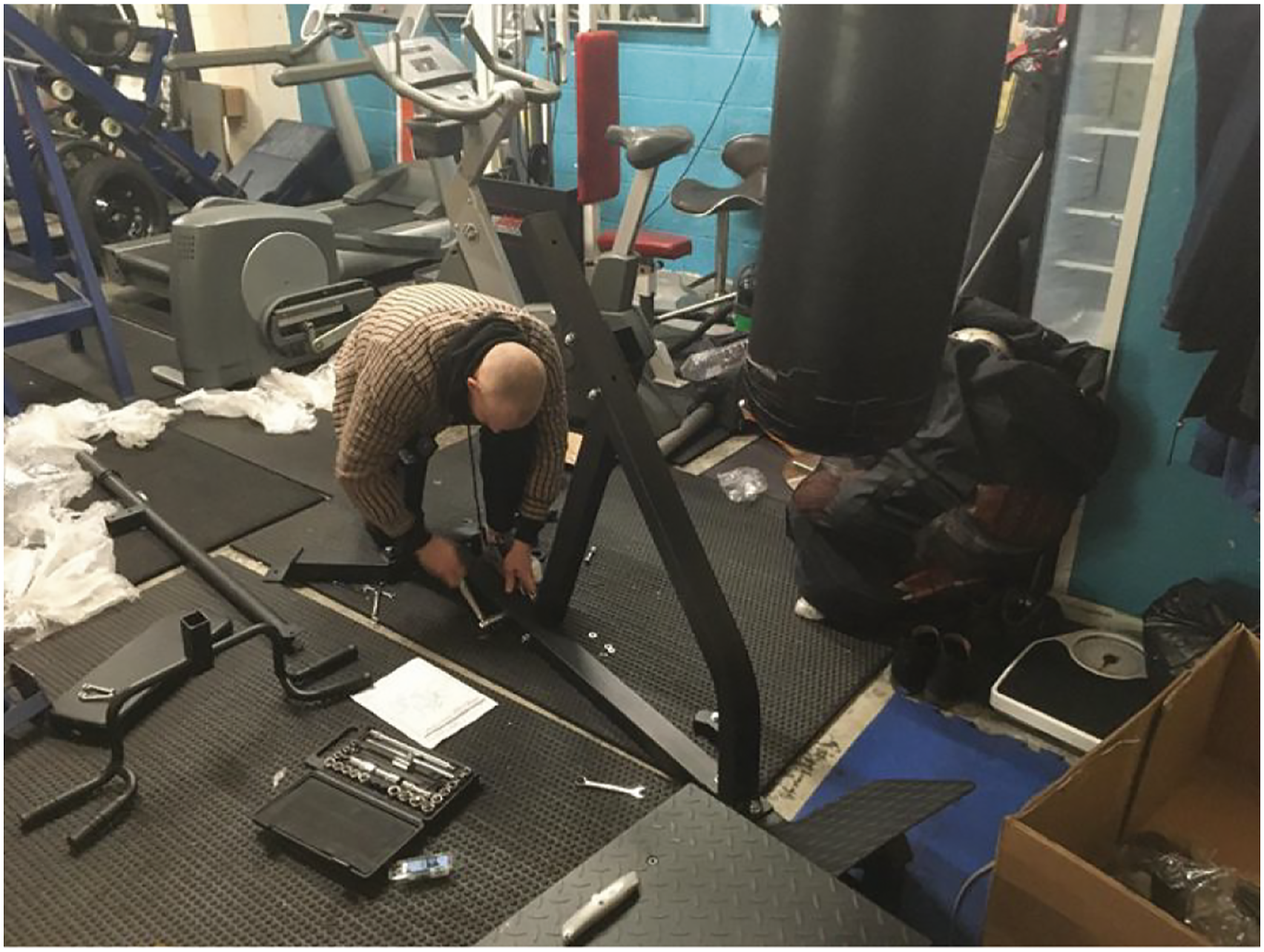
The scope of activities involved in my participation have been particularly broad, ranging from cleaning toilets and constructing exercise equipment to the co-development of community projects and funding bids (Figure 1 and 2). Beyond the standard weekly provisions listed above, we have hosted public events, produced collaborative publications (Mason et al., 2019; Mason with Unity Gym, 2020; Mason with Unity Gym Project, 2021), appeared on regional news, made a documentary film and co-produced pilot research projects. These commitments amount to considerable time spent in and around the gym, approximating three evenings per-week and at least one weekly meeting, on an ongoing basis. Detailed reflections on the practical and temporal dynamics of this engagement are published elsewhere (Mason with Unity Gym Project, 2021). Fixing the sink. Constructing fitness equipment.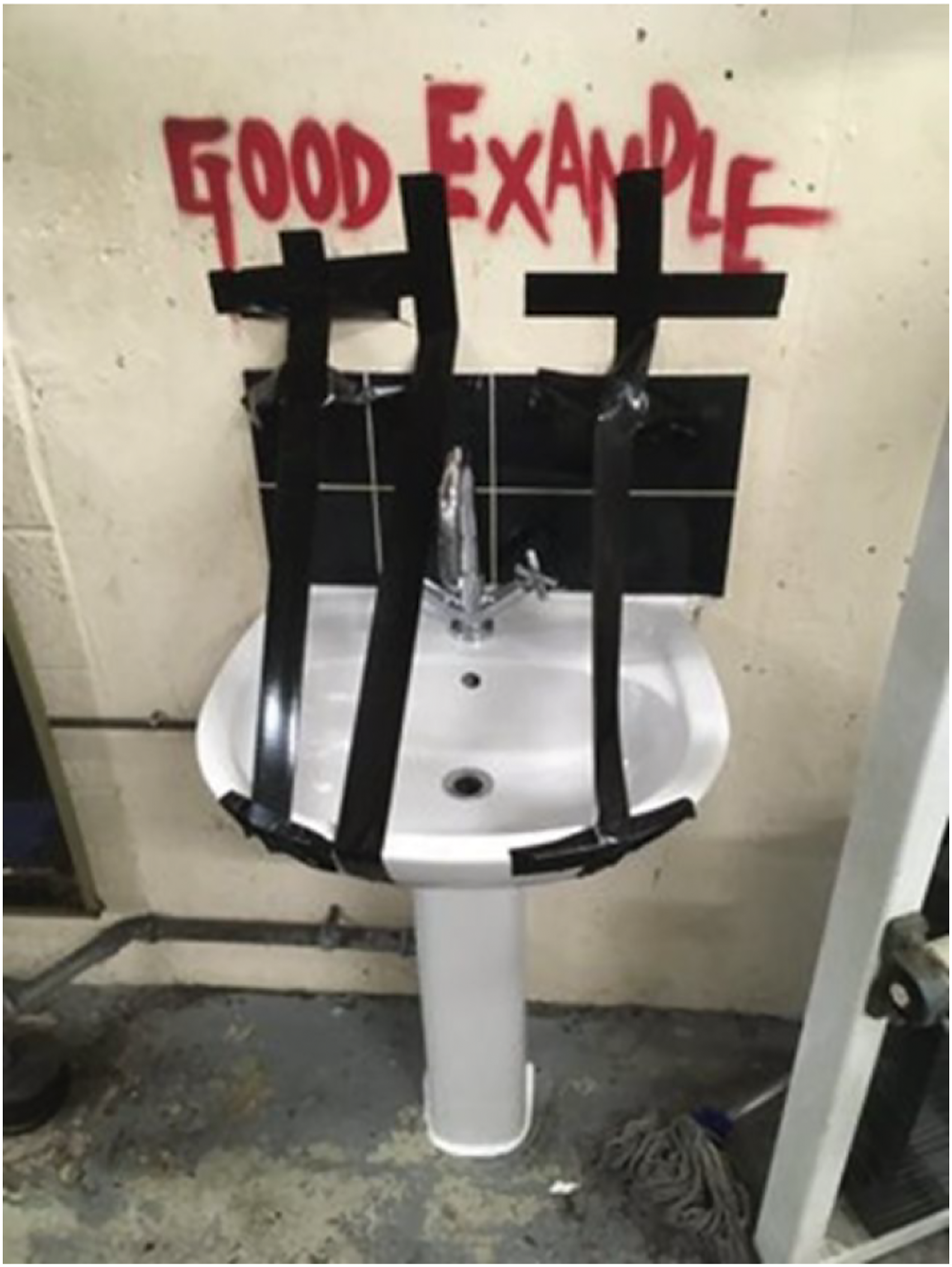
My own path towards engaged scholarship then, has been characterised by a transition, from the role of a student ethnographer to a volunteer practitioner with UGP (Blazek and Askins, 2020). This experience has encompassed the evolution of relationships and extended forms of participation that were both unforeseen and undesigned. Reflecting back on this transition offers an account of staying that introduces its affordances as a productive and democratised practice. It is to these more detailed reflections that the article will now turn.
Relationships: time, space and shifting standpoints
Staying, as I have experienced it, is relational, temporal and spatial. Staying disrupts the temporality of research relationships. This is at least to the extent that research ceases to be the central feature that defines (and restricts) their temporal basis. Staying extends temporal horizons and this extension creates room for the character of relationships to evolve and to shift. Like most relationships, staying is also conditional, in that it rests upon continued engagement and contribution (practically, socially or otherwise) to the host organisation or group. Staying can also create room for practices of reciprocity that are difficult to accommodate within more clearly delineated research parameters. My PhD research, for instance, was subject to the usual time pressures and expectations associated with postgraduate scholarships. Like Huisman (2008: 397), I found myself caught between academic expectations to complete the PhD and the desire ‘to move slowly, cultivate relationships … and give back to the community in a meaningful way’. Conversely, my subsequent involvement with the gym has not been subject to any of the same boundaries and expectations. It is within this figurative space beyond research (alongside the physical space provided by the gym) that the character and quality of relationships have shifted. That is, beyond a designed orientation driven by academic outcomes, towards an undesigned orientation characterised new spheres of engagement and the promise of future extension (Bell, 2019; Palmer et al., 2020).
Staying has also meant ‘being there’ and participating actively in situ. Social geographers have long recognised that space is inherently social (Bowlby, 2011; Massey, 2004). Despite significant advances in information and communication technologies time and space still constitute key ‘technologies of friendship’ (Bunnell et al., 2011). Weight training (to clarify) is an activity characterised by routine. By virtue of that routine gym users often enjoy regular and relatively synchronised co-presence. UGP, as such, is a ‘friendly space’ (Bowlby, 2011) and participation in situ connotes engagement in ‘friendships practices’, resulting in shared experiences and deeper affective ties (Neal and Vincent, 2013). Beyond weight training this gym is the site of collective discussions about physical and emotional wellbeing, mutual care and support as members seek to achieve their goals, and mourning, following the loss of shared friends and acquaintances. Staying then, is a relational practice (Cahill, 2007) and specifically, one that can permit the evolution of relationships towards qualities and depths that surpass most qualitative encounters. These dynamics are particular in terms of their ‘open-endedness’. Longitudinal ethnographers have reflected on the need to stay in ‘the field’ until one finds out what one needs to know (Lareau, 2014). However, these recommendations arguably remain somewhat predicated upon: (i) epistemic hierarchies, because it is the researchers, ultimately, that determine when the learning is done; and, (ii) endings. Staying, as I have experienced it, affords something different and more attuned to the negotiated and evolving nature of understanding that stems from continuing engagements characterised by future orientations. Staying creates the extensions necessary for relational parameters to shift. In this instance that shift has been characterised by a departure from researcher-participant dynamics, towards a collaborative peer-to-peer dynamic engendering shared practices, including research. Continued participation in situ has also meant maintaining ties with former research participants; blurring the boundaries between roles and relationships, against ethical convention (Delamont, 2016).
The risks of relational intimacy in qualitative research are already well recognised. For instance, notions of ‘fieldwork friendship’ have been problematized for ‘reasons of professional motivation, power imbalance, cultural differences, inequalities in purpose and potential gain’ (Taylor, 2011: 8). Mayan and Daum (2016) have also argued that research endings can provoke feelings of loss or abandonment. Still, very little has been said about the continuities that can exist beyond endings, where ‘relational praxis’ is ongoing and characterised by ethics of being and acting much closer to friendship and care (Bussu et al., 2020; Neal and Vincent, 2013; Rupp and Taylor, 2011).
Staying with UGP has created complexities and affordances in this regard. A notable challenge has involved the balancing of institutional pressures to do funded research, with moral commitments to resist exploitative or compromising practices. As a white male researcher I embody privileges and intellectual curiosities that can easily offset mutuality. A reflexive attentiveness to these issues, alongside a negotiated centering of the priorities of the coordinating group over and above research has shaped our collective approach. Both active dialogue, achieved in regular informal encounters (usually within the gym), and the practice of ‘refusal work’ have proven instructive to this end.
Tuck and Yang’s (2014) account of refusal work usefully argues that in community settings, the most ethical move can be choosing not to do research. There are indeed many instances in which ‘research is not the most useful or appropriate intervention’ (Tuck and Yang, 2014: 236). For instance, we recently turned down the opportunity to work with a major media organisation, because the project focus was more likely to feed misrepresentations of youth as ‘risk’ than it was to produce positive community outcomes. Collaborative friendships have proven ethically efficacious in this regard, because relational transparency and mutual understandings of intention have offered a constructive basis from which to understand and to act (Ramírez-i-Ollé, 2019). In some instances this has meant choosing not to pursue research invitations. In others – as the next section demonstrates – it has involved collective and careful responses to local matters.
These temporal and relational observations take on special pertinence when they are considered with reference to the burgeoning field of participatory research in time-limited academic conditions. My experiences of staying support the widely held assertions that community engaged scholarship rests upon qualities of respect, reciprocity and trust (Kral, 2014). These qualities are distinctively temporal, in that they accumulate over time, through demonstrations of respectability, commitment and trustworthiness (Costas Batlle and Carr, 2021; Pidgeon, 2019). To achieve reciprocity participatory projects also need to be conceived in dialogical encounters, where community partners are able to set desired outcomes, parameters and goals; even if this means not doing things. Where decisions not to act are precluded by research expectations, funds or requirements, this is a good indication that the conditions for dialogue have not been met.
Working democratically with UGP has therefore involved ‘sacrifices’ of epistemic autonomy, authority and control, promoting instead commitments to ‘being useful’ and giving time to the things that matter beyond research (Bennett and Brunner, 2020; Clarke et al., 2017; Taylor, 2014). Such commitments should be understood as inherent to the ethics of participation and structured into institutional commitments to collaboration and knowledge exchange. Where the conditions of ‘fast academia’ (Costas Batlle and Carr, 2021) fail to accommodate time and space for such applied work, it is likely that currently valorised forms of collaboration will remain marginal and wider costs will be incurred in terms of quality, reciprocity and ethics.
Practices: acting collectively ‘in time’
Staying with UGP has meant adopting a view beyond research and a purposeful commitment to ‘non-research’ tasks (Bennett and Brunner, 2020). Most recently this has involved pursuing the city council for recycling bins and developing strategies to make the gym safer throughout and beyond the 2020/21 Covid-19 pandemic. This is contested work, to the extent that it sits in conflict with the ‘pressures on researchers to achieve outputs with the greatest academic value’ (Bennett and Brunner, 2020: 13). Conversely, it is also institutionally valorised work, to the extent that it supports narratives of ‘civic engagement’, ‘knowledge exchange’ and the production of ‘impacts’ deemed meaningful at the local level (for a good example, see Lloyd-Evans et al., 2016).
Staying with UGP has also revealed something of a temporal paradox in the practice of community engaged scholarship. Sometimes moving slowly allows one to act fast. To clarify, one aspect of community-based youth work is responsiveness to need. Where practitioners experience ongoing pressures to act responsively in the evolving present, support needs to be timely. Here it is the ‘slow’ temporal extensions of staying that have afforded opportunities to ‘act fast’ and support timely responses to local matters. As the following example demonstrates this has included unforeseen and undesigned forms of collective practice and university-community partnership.
Intersections: youth violence masculinity and mental health
In 2019 UGP hosted Intersections a public event focused on violence, masculinity and mental health. Our event sought to prompt public dialogue and coordination around some of the present issues facing project members. In the months preceding the event our coordinating group had supported a number of service users, each of whom had directly encountered or witnessed serious violence. In this we had felt both underqualified and concerned by the lack of alternative provision available. The ‘problem’ then, and the impetus to act, concerned local experiences of violence and the need to communicate an outstripping of support for young people and families by demand. Beyond this Intersections sought to challenge the underrepresentation of those most affected by increases in violent crime within the design and implementation of localised service responses.
To this end UGP collaborated with two charities (i) a local mental health charity, and (ii) a national member-led youth organisation with a track record of empowering victims of interpersonal and state violence. We chose to host our event outside the university in a well-known community space. Intersections featured a purposefully dynamic and varied schedule, spanning half a day with short provocations from young people, artists and community representatives, permeated by breakout sessions to promote dialogue. A group of over 90 delegates attended, including community members and citywide representatives from public health, regional universities, the council, schools, youth services, local charities, community organisations and counselling services.
We enlisted student volunteers to take overt contemporaneous notes, alongside inviting all participants to leave their own written comments on A1 sheets of paper. With consent, these materials were collated and augmented by reflections from the organising group to form the basis of a co-authored conference report, presenting key themes and specific recommendations from the day (Mason et al., 2019). We co-produced our recommendations with a relevant cabinet member to maximise potential uptake and action. The publication of this report was accompanied by a university press release, presenting further opportunities to profile the work, including a collective appearance on regional news. Our report was widely circulated and functioned as a useful reference point to inform subsequent conversations with stakeholders and decision makers responsible for regional violence reduction strategies.
Intersections was a dialogical and outcomes oriented response to a serious local matter. The results have included opportunities for enhanced civic participation, including consultancy between UGP and the regional Violence Reduction Unit (VRU). This work has prompted further integration of community voice in the development of regional strategies, alongside additional funds and training opportunities for the project coordinating team. The following quotation from the former VRU Strategic Lead is illustrative. The links we have made with [UGP] have been invaluable in shaping thinking around how the VRU can work closely with local communities. Their expertise and knowledge has been key, and their support for this work, with so little resource, is commendable. Their recent report outlining the themes from their Intersections event and recommendations has been extremely useful in shaping our plans to March 2020 and we hope to continue working closely with them.
My intention here is not to suggest that Intersections was exemplary. In fact, the most productive discussion of this case engages some reflection of what it was not. Intersections was not a delineated research project, nor was it the result of research academy funding. The timeframes associated with these practices would have precluded a timely enough response (Edwards, 2020). Intersections was not researcher-led. Instead, the work was produced in dialogue between the coordinating groups alongside representatives from the participating charities. But, intersection was not entirely ‘community-based’ either, to the extent that it was supported by university-partnership, facilitated by my own volunteer practitioner role, bridging university and community resources and spaces. The event also received wider institutional support, to the extent that it suited institutional narratives of ‘civic engagement’ and ‘knowledge exchange’. Beyond the conventional ‘donor-recipient’ (Pain et al., 2016) models of impact, Intersections was a generative event, predicated on the value of situated knowledges (Haraway, 1988) for the purpose of dialogical action (Freire, 1970).
There is an important commentary here about the relationships between understanding and action in collaboartive practice. Collective action derives from a place of mutual recognition and commitment. This is a distinctively relational base and one that is necessarily predicated on relational qualities of trust and respect. To act with conviction, you first have to care (Held, 2006). These qualities can only be earned through practices of emotional and relational reciprocity; qualities and practices that – as we have seen – can take slower more obstinate temporal forms than much research would allow (Baraitser, 2017). Intersections was a successful event, in that it produced beneficial outcomes according to its aims. As I have tried to demonstrate, this was also only possible because of staying and the relational encounters and care practices that preceded and continue to proceed the event.
Conclusion
This article has contributed to methodological accounts of ‘staying’ in community engaged scholarship (Rupp and Taylor, 2011). Despite the well-recognised ethical complexities of failing to leave I have presented ‘staying’ as a productive relational practice with potential ethical affordances, derived from deeper affective ties and enhanced opportunities for reciprocity, rooted in purposeful investments beyond research. Staying, in this respect, can minimize the exploitations associated with extractive research, through the extension of relationships beyond contractual bargains, towards more critically reflexive forms of interdependency and mutual understandings of intention. As Freire (1970) and Held (2006) have each rightly acknowledged, these qualities are some of the perquisites for dialogue and ethics of care.
To clarify, it is not my intention here to suggest that all researchers ‘stay’. There are of course many instances where ‘research exit’ is the most appropriate course of action. Often, participants will not want researchers to stay. In other instances choosing not to do research in the first place may be the most ethical choice (Tuck and Yang, 2014). However, where staying is an outcome of mutual will, I have argued that it can be a positive endeavour and, paradoxically, one in which the relational conditions for more democratised research practices can be achieved because conventional research pressures are largely alleviated. Staying in this sense also reveals something about the boundaries of the academy and the extent to which institutional and epistemic conventions might preclude meaningfully reciprocal participatory forms, ironically, whist valorising them.
This tension has begun to receive some attention within the field of critical ethnography and co-production. Foley and Valenzuela (2005) have emphasised tensions between the political commitments of critical ethnographers and the need to work in ways that are recognised as academically acceptable. Bennett and Brunner (2020) have expressed the need to reframe ‘non-research tasks’ as intrinsic to participatory research, and Palmer et al. (2020) have sought to reconceptualise community-engaged scholarship as ‘spheres of engagement’ to account for the relational and temporal characteristics that necessarily precede and proceed delineated projects. As the practice of co-production becomes increasingly entwined with institutionally defined forms of ‘impact’, commentators have also acknowledged that the most valuable outcomes for communities can be ‘non-academic’, including the more instrumental investments of time and energy currently devalued within academic contexts (Costas Batlle and Carr, 2021; Evans, 2016; Pain et al., 2016; Williams et al., 2020). Staying, as I have documented it here, can afford the time and space (both literally and figuratively) for such activities and commitments.
Staying and becoming a volunteer practitioner (Blazek and Askins, 2020) takes one right to the edges of ‘conventional’ research; the borderland between research and activism. This is a useful place from which to ‘look back’ critically and make sense of academic conditions. If universities are to continue valorising co-production and encouraging researchers to build collaboration into research design, it is ethically imperative that these institutions accommodate and (re)value the investments necessary to carry out such work in democratised forms, with the appropriate levels of meaning and care. As this article has demonstrated, these investments can include relinquishments of control and commitments of time and energy to the things that matter beyond research. Accommodating such changes requires a concerted shift in the acknowledgment of ‘what matters’, with respect to community engaged research beyond the narrowing parameters of the neoliberal academy.
Footnotes
Acknowledgements
I am grateful to Professors Sarah Neal and Kate Read for reading and commenting on earlier drafts of this article. I would also like to thank the editorial team at Qualitative Research and the two anonymous reviews whose constructive feedback helped me to develop and improve the piece. Special thanks also go to my colleague and friend Dr Muna Abdi who has listened generously and helped me to develop some of the ideas shared in this article. Finally, and especially, I would like to thank to all those involved at Unity Gym Project.
Declaration of conflicting interests
The author(s) declared no potential conflicts of interest with respect to the research, authorship, and/or publication of this article.
Funding
The author(s) received no financial support for the research, authorship, and/or publication of this article.
